



Abstract
Technology-assisted care is transforming the home care landscape for older people requiring medication management. With evolving roles and responsibilities, nurse-led interventions are shaping the future of nursing practice in home care. This review aimed to identify and describe nurse-led roles in medication management in home care for older people within the context of technology-assisted care. A systematic review employing an integrative approach was conducted on the PubMed (covering MEDLINE), Scopus, CINAHL, ProQuest, and Embase, targeting studies published in English over the past decade, from 2014 to 2024. The initial database search identified 1629 studies, which were subsequently narrowed down to 20 studies selected for data analysis and narrative research synthesis. The review findings were classified into 3 categories: “fundamental principles,” “nurses and their role identities,” and “enhanced care quality and medication safety.” Given the effectiveness of nurses as leaders in technology-assisted home care for enhancing medication management safety, it is essential to implement policies that support and improve their involvement in multidisciplinary healthcare teams. Additionally, continuous education and training focused on technology-assisted care competencies are necessary to ensure nurses are well-prepared to enhance patient safety in home care.
Introduction
Physical and psychological frailty among older people as a global health problem 1 makes home care vital for maintaining their functional abilities and independence. Home-based interventions including rehabilitation and remote delivery of healthcare services have been shown effective. 2 However, the unpredictable nature of the home care environment can pose safety risks for older people,3-5 necessitating the identification and mitigation of potential harms. 6 For instance, medication management during transitions to home care is challenging due to medication discrepancies (38%), 7 polypharmacy (43%), drug–drug interactions (54%), 8 and nonadherence (60%). 9 These factors make the post-discharge period critical for preventing errors. 10 Medication management in home care involves the anticipation of medication issues, risks reduction, and resilience improvement by the multidisciplinary healthcare team. 11 Nurses in home care manage chronic conditions, reduce hospitalization rates, improve care outcomes, and build crucial relationships with patients and families. Their role in coordinating care and ensuring patient safety is vital for addressing the complex needs of older people.12,13 The complexity of older people’s needs in home care and the importance of continuous care underscore nurses’ roles 14 to maintain the standards of patient safety. 15 Nurse-led interventions have been shown to enhance medication adherence, 16 older people’s ability to self-manage medication at home, and address adherence issues. 17
Technology-assisted care, digital health, as the use of technology for personalized monitoring and care offers innovative solutions for preventing and managing chronic conditions. 18 It holds great potential for managing chronic diseases and enhancing patient safety for older people receiving home care. 19 Continuous and onsite monitoring by remote healthcare specialists in a timely manner, and continuity of care20,21 and communication with older people and their families 22 are the advantages of technology-assisted care. It improves medication review at home, 23 reduces medication discrepancies and adverse drug events 24 and time spent on medication administration by nurses (33%), 25 and improves medication adherence. 26 Technology-assisted care using the nurse-led approach increases older people’s awareness of their symptoms, encourages self-efficacy and self-control, 27 and improves self-care medication practices. 28
The effects of technology-assisted care on health indicators have been studied in acute care settings, with less focus on its use by nurses in home care. 29 Additionally, there is limited knowledge about the role of nurses as leaders in technology-assisted home care. Therefore, this review aimed to identify and describe nurse-led roles in medication management in home care for older people within the context of technology-assisted care. Accordingly, the review question was: “What are nurse-led roles in medication management for older people receiving home care within the technology-assisted care context, and how they influence patient safety?”
Methods
Design
This systematic review using an integrative approach combined quantitative and qualitative data to offer a comprehensive synthesis of existing knowledge, providing valuable insights for policymakers and managers to enhance practice. 30 It followed a five-step process: identifying the research problem, conducting a literature search, appraising data quality, analyzing and synthesizing data, and presenting findings. 30 It adhered to the PRISMA guideline for development and reporting (Supplemental File 1).
Protocol and Registration
A multinational team of researchers from Norway, Finland, and Spain, experts in patient safety, medication management, and systematic review methodology, collaborated to develop the review protocol. To ensure transparency, integrity, and reduce publication bias, the protocol consisting of objectives, methods, and analysis plan was registered under PROSPERO ID: CRD42023481881, which is accessible via the following link: [https://www.crd.york.ac.uk/PROSPERO/display_record.php?RecordID=481881]. The objectives and approach of the review were formulated using the PICO framework as follows:
Literature Search
This review was prompted by the lack of previous reviews integrating nurse-led initiatives and technology-assisted care for medication management in older people’s home care. A comprehensive literature search was conducted across databases, including PubMed (covering MEDLINE), Scopus, CINAHL, ProQuest, and Embase, targeting studies published from January 1, 2014, to April 30, 2024, to ensure a focus on the most recent research. A pilot search on the Google Scholar was conducted to identify relevant keywords, leveraging personal research experiences. Search strings were created by translating Medical Subject Headings (MeSH) and thesaurus terms into database-compatible terms. Boolean logic and truncation were applied, using AND/OR operators. A librarian was consulted to ensure the search’s accuracy. Various versions of key terms related to nurse-led care, medication management, technology-assisted care, older people, and home care were used (Supplemental File 2). Cross-references from article bibliographies and current review papers were also examined to enhance search coverage. Gray literature, including profiles on nurses’ roles in home care medication management, was retrieved through a Google search.
Selecting Relevant Studies
All original research studies using qualitative, quantitative, or mixed-methods designs were considered, with selection criteria emphasizing: medication management in home care; involvement of older people as the primary age group; application of digital solutions; publication in peer-reviewed scientific journals in English. Exclusions included: commentaries, letters, case reports, case studies, conference proceedings, and books; medication management led by healthcare professionals other than nurses; studies published before 2014.
The search results were uploaded to the Rayyan platform for screening. Two review authors (MV and RT) independently screened and selected studies according to the eligibility criteria, first reviewing titles and abstracts, then full texts. They reached consensus on article selection through discussions and shared findings. Tables summarizing study details were created, and the selection process was systematically documented. The authors discussed their perspectives to resolve disparities and decide on next steps. In cases of disagreement, input from the other review author (MLC) was sought to reach a final consensus.
Quality Appraisal
This review involved a thorough assessment of the credibility, relevance, and findings of the selected studies. The JBI Critical Appraisal Tools, 31 tailored to the specific research methodologies (randomized clinical trials, cohort, quasi-experimental, and qualitative studies), were utilized. To assess the risk of bias, the RoB 2, ROBINS-E, and ROBINS-I tools 32 were used for randomized clinical trials, cohort studies, and quasi-experimental studies, respectively. The robvis tool was employed to visualize the risk of bias assessment. The studies were evaluated independently to provide detailed explanations of their methodological quality. A joint decision was made on studies’ inclusion or exclusion, considering their importance, methodological rigor, and potential bias, ensuring a well-informed and rigorous selection process.
Research Synthesis
Substantial variations in research methodologies, objectives, data collection tools, and measurement outcomes across experimental studies, including clinical trials, quasi-experimental, cohort, and the inclusion of qualitative studies, made a meta-analysis unfeasible. Therefore, the review results were presented descriptively and narratively, encompassing both statistical and non-statistical details to provide a comprehensive overview. To synthesize data, an extraction table was used to organize, summarize, and compare studies’ results systematically. The data was arranged in a table format for easy comparison and categorization of characteristics relevant to the review focus. Collaborative teamwork allowed for thematic comparisons and analyses, resulting in meaningful categories that synthesized the findings.
Ethical Considerations
This review study did not require ethical approval as it did not involve human samples. However, efforts were made to properly acknowledge sources and adhere to citation practices respecting intellectual property rights.
Results
Search Outcome and Study Selection
The initial database search yielded 1629 studies (Supplemental file 3). After removing duplicates and excluding studies based on titles and abstracts, 78 remained. A detailed full-text review narrowed this to 20 articles. The primary reasons for exclusion were that the studies were not nurse-led initiatives or focused on acute and ambulatory healthcare settings like hospitals. After evaluations using appropriate checklists all 20 articles were included for research synthesis. Figure 1 shows the PRISMA-based search process.
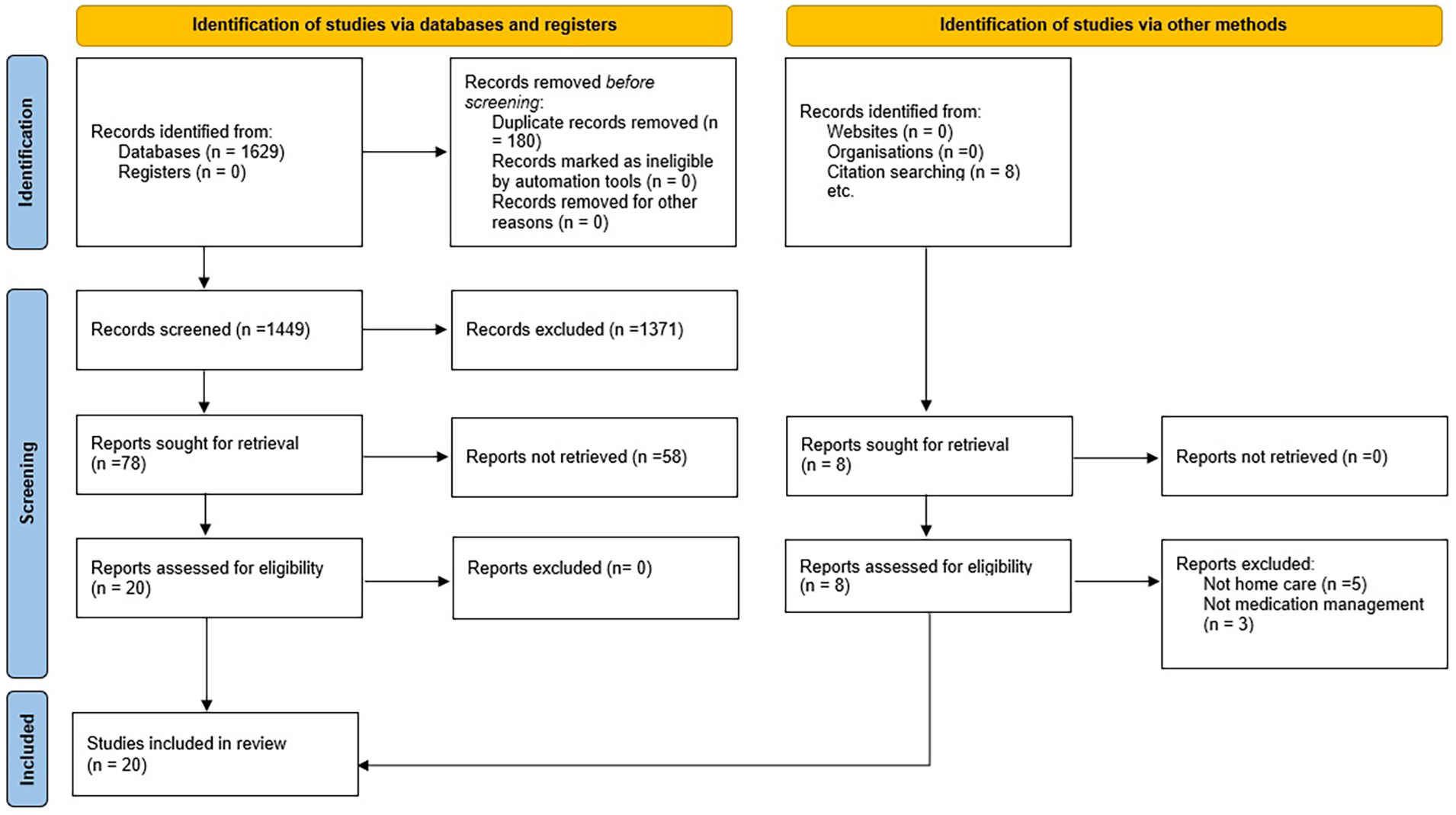
The search results according to the PRISMA.
Methodological Quality Appraisal
The non-randomized controlled trials 33 and randomized clinical trials34-44 showed a causal relationship between variables with low bias risks, though some issues were noted in participant selection, 33 randomization,34,38,41,42 and missing data. 44 The cohort study 45 had clear definitions and adequate follow-up but faced challenges with measurement consistency and selection bias. Quasi-experimental46-49 studies were transparent and consistent but had concerns about group similarities. 50 Qualitative studies51,52 demonstrated appropriate design and credibility. Overall, all studies were deemed sufficient in quality and included in the research synthesis (Supplemental File 4).
General Characteristics of Included Studies
They were published in English, covering the last decade from 2014 to 2024. They originated from the USA,34,36,38,40,42,43,45,46,50 Canada,47,49 Sweden, 44 Japan, 41 France, 35 Turkey, 37 Iran, 39 China, 48 and Finland.48,51,52 Regarding their research design, they were predominantly quantitative including 12 clinical trials33-44, 5 quasi-experimental studies46-50, 1 cohort study. 45 Additionally, there were 2 qualitative studies both employing inductive content analysis.51,52 Table 1 provides an overview of the selected studies and their general characteristics.
The General Characteristics of the Selected Studies in This Review.
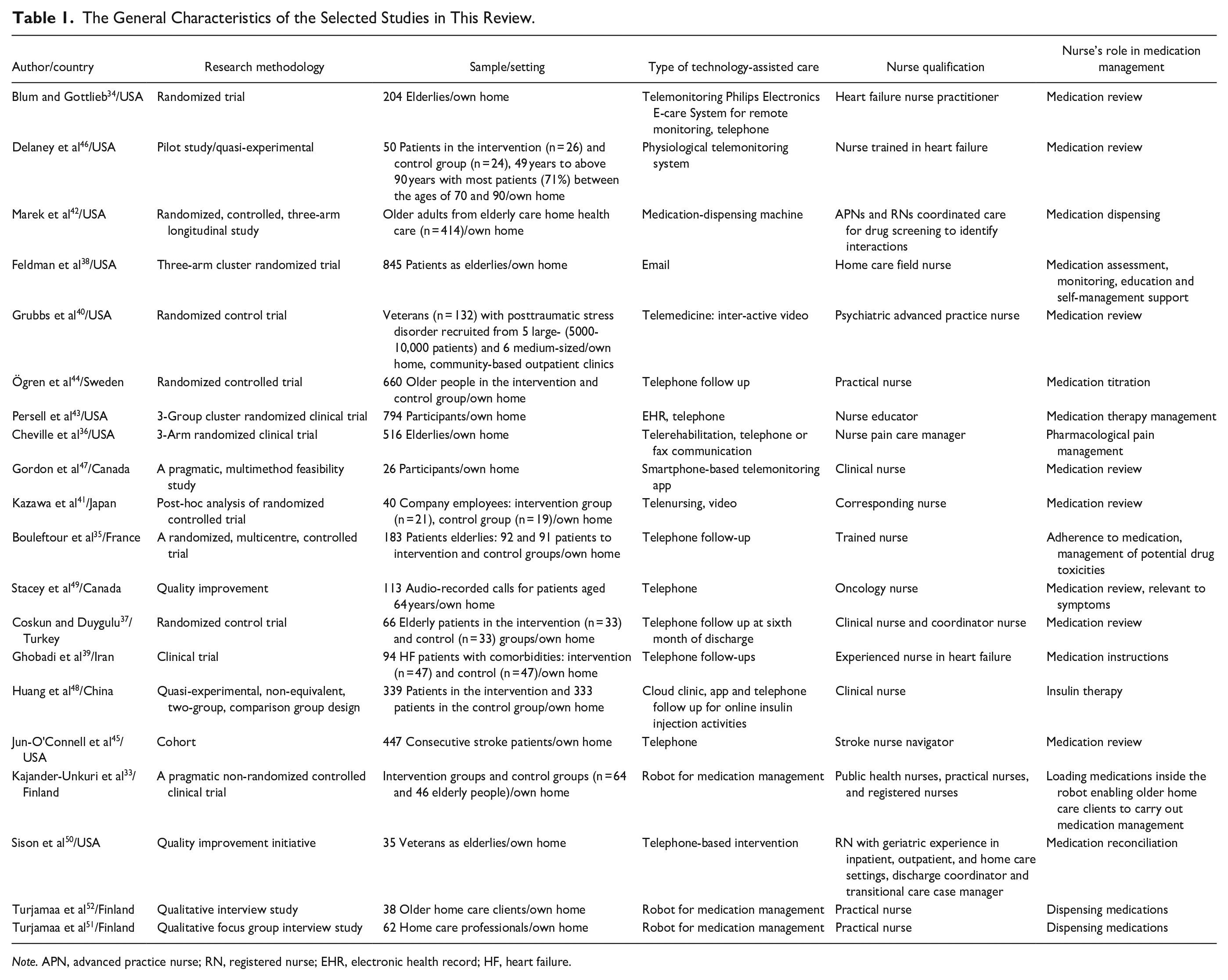
Note. APN, advanced practice nurse; RN, registered nurse; EHR, electronic health record; HF, heart failure.
Nurse-Led Initiatives for Medication Management in Technology-assisted Home Care
The review findings were classified to categories of ’fundamental principles’, ’nurses and their role identities’, and ’enhanced care quality and medication safety’ highlighting nurses’ roles in medication management and their impact on improving patient safety in older people’s home care (Table 2).
The Summary of the Selected Studies’ Results.
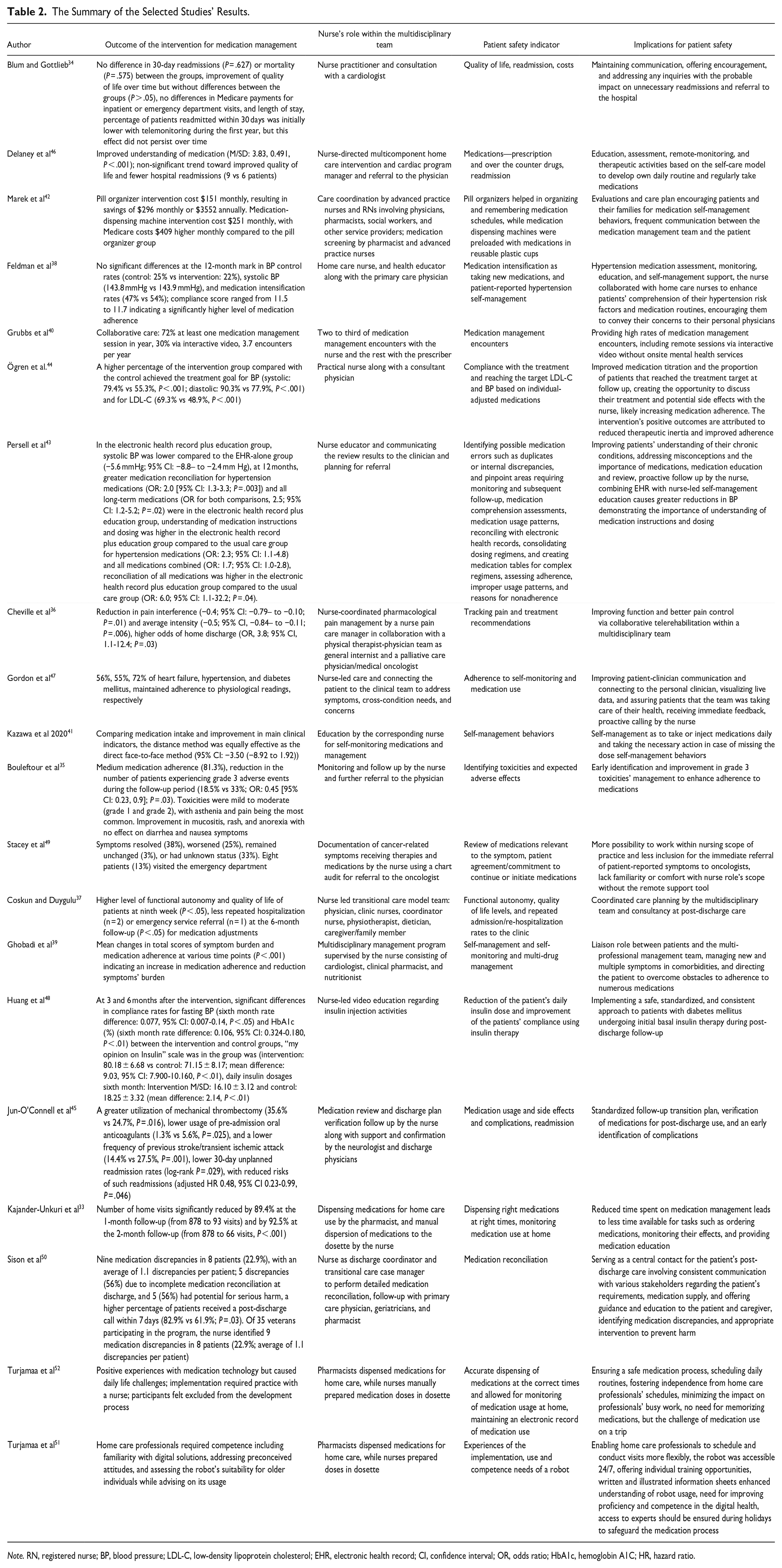
Note. RN, registered nurse; BP, blood pressure; LDL-C, low-density lipoprotein cholesterol; EHR, electronic health record; CI, confidence interval; OR, odds ratio; HbA1c, hemoglobin A1C; HR, hazard ratio.
Fundamental principles
Technology-assisted care, encompassing a range of diverse approaches facilitated communication and patient contact, as well as helped implement strategies for medication management in home care.
The most common method was telephone.35,37,39,44,49,50 Also, in some studies a multimethod approach was used consisting of telephone and interactive video 40 ; tablet computer and video education 41 ; tablet computers, electronic messaging, and electronic health records 38 ; cloud clinic, app and telephone follow up 48 ; electronic health record and telephone 43 ; telerehabilitation, telephone or fax communication 36 ; electronics E-care system for remote monitoring and telephone. 34 Other methods were smartphone-based telemonitoring app 47 ; telemonitoring system for collecting daily physiologic data and symptoms 46 ; robots and machines for medication management in terms of a pill organizer machine 42 ; medications dispensing robot.33,51,52
The foundation of nurse-led medication management initiatives in technology-assisted home care was a team-based approach, emphasizing the importance of teamwork and communication among healthcare professionals. Multidisciplinary collaboration, with nurses as central players, was crucial in fostering shared decision-making. Examples for the collaboration were: multidisciplinary healthcare teams with the variety of participants such as physicians, clinic nurses, physiotherapists, dieticians, and family caregivers to collaborate in transitional care program 37 ; collaboration by the pharmacist and nurse for loading medications into the machine and conducting a thorough pharmacy screening to identify potential drug interactions and inappropriate medication use 42 ; dispensing medications in single-dose bags by the pharmacist to be dispensed by the nurse into dosette33,51,52; continuous care coordination by the nurse, primary care physicians, community medical directors, geriatricians, and pharmacist 50 ; provision of support and confirmation of the nurse decision by the neurologist and discharge physicians 45 ; medication practice and care by the multi-professional team consisting of a cardiologist, clinical pharmacist, registered nurse, and nutritionist 39 ; continued care by the clinical physician based on the initial assessment, and chart audit and referral made by the nurse35,38,49; addressing needs and concerns by the special clinical team 47 ; education, assessment, monitoring, and therapeutic activities by the nurse and then referral to the physician 46 ; nurse assessment and collaboration by the clinician and planning for referal 43 ; nurse and physical therapist-physician consisting of general internist and a palliative care physician/medical oncologist 36 ; obtaining consultation by the nurse from the spesialist physician.34,44
Nurses and their role identities
The nurses’ expertise in older people home care were found essential for ensuring safe medication practice as they served as the point of reference for identifying and addressing risks and gaps in medication management. They also served as the central link between older people and the multidisciplinary healthcare team, facilitating coordination and communication among all parties.
Although the included studies did not specify the nurses’ educational levels and expertise, they noted that nurses typically received additional education and training to manage medication in older people’s home care. For instance, the nurses were introduced as psychiatric advanced practice nurse, 40 coordinator nurse, 37 advanced practice nurse, 42 public health nurse, practical nurse, and registered nurse,33,44,51,52 geriatric nurse as discharge coordinator and transitional care case manager, 50 stroke nurse, 45 experienced nurse in heart failure, nurse trained in heart failure, and heart failure nurse practitioner,34,39,46 trained nurse in toxicities and side effects of medications, 35 oncology nurse, 49 clinical nurse, 47 corresponding nurse, 41 home care field nurse, 38 clinical nurse, 48 nurse educator, 43 and nurse pain care manager. 36
The nurses’ role was mainly to educate older people and empower them and their families to actively participate in medication management initiatives. In line with their roles in continuous monitoring and evaluation, nurses assessed medications, identified areas for improvement, and adapted strategies to prevent harm. They encouraged the older people to attend medication management sessions 40 and engaged them and supported their families’ involvement through continuous communication. 37 The older people were empowered to report physiological readings online and use an automated phone call system for reporting missed readings, that was adjustable to their needs and requests. This direct connectivity facilitated patient-nurse communication and cooperation.38,47 Also, older people were monitored for functionality and pain through automated systems every other week during the first month, and then monthly using interactive voice recognition phone calls or web-based surveys. 36
While medication management was monitored online, the older people were responsible for taking their medications independently and remembering doses to ensure the safe use of medication robots.33,51,52 Regular visits to fill medication organizers or machines, with the frequency adjusted as needed, were carried out. 42
Older people could manage symptoms at home based on guidance from nurses.39,49 Nurses remotely monitored symptoms based on reports, flagged abnormal readings, adjusted medications accordingly, and discussed treatment, side effects, and strategies to improve medication adherence.34,44
Education through video tutorials and guidebooks focused on self-monitoring and symptom management aimed at encouraging behavioral changes and proper medication use, 41 as well as self-injection of medications post-discharge. 48 Nurses’ roles included training, counseling, medication reconciliation, follow-up, and planned contacts and check-ups. They reinforced medication use, managed refills and renewals, and addressed misconceptions on a weekly and monthly basis after discharge.37,39,43,45,46
Enhanced care quality and medication safety
Nurse-led medication management in technology-assisted care improved quality of care and medication safety for older people across various domains. Post-discharge follow-ups revealed higher autonomy scores, improved functionality, fewer symptoms, and a better quality of life among older people.36,37 Improved home discharge and reduced readmissions and emergency visits were also observed.34,36,37,45,49 Additionally, the improved medication reconciliation resulted in reduced use of coagulation medications, adjustments in medications, and titration for better symptom control, leading to less frequent occurrences of ischemia and stroke.38,43-45,48 Approximately one-fourth of older people had medication discrepancies identified, prompting early interventions. 50
Further improvements included increased medication adherence, reduced physical and psychological symptom burden, and observed behavioral changes over time.35,39,41,47,48 Also, streamlined daily routines, fostered independence from caregiver schedules, and lessened the burden on healthcare professionals were observed. 51 Moreover, there was an enhanced understanding of medication instructions and dosing.43,46,48 Cost-effectiveness for Medicare beneficiaries was demonstrated. 42
For medication management using robots, healthcare professionals’ responsibilities transitioned to tasks such as ordering medications, monitoring their effects, and providing medication education. It optimized time use and ensured efficient medication management. Also, electronic records were maintained ensuring round-the-clock availability and monitoring for timely interventions.33,51,52
Discussion
This review aimed to identify and describe nurse-led roles in medication management in home care for older people within the context of technology-assisted care. It also identified the advantages of technology-assisted care in home care for older people and its impact on medication safety (Figure 2).
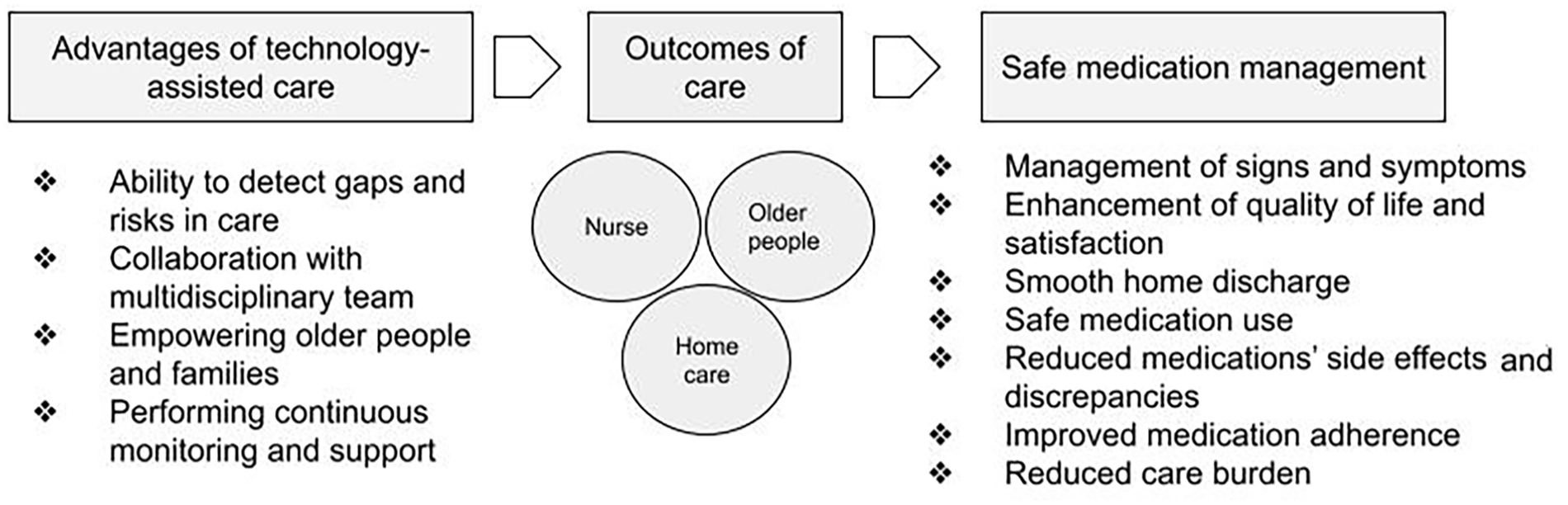
Advantages and impacts of technology-assisted home care on medication management.
Nurse-led technology-assisted care enhanced communication between older people and the healthcare team for medication management, employing home-based technologies. Telehealth, including telemonitoring, teleconsultation, teleassistance, tele-homecare, telerehabilitation, and mobile health, supports post-discharge care by enhancing quality of life, reducing re-hospitalizations, shortening hospital stays, lowering healthcare costs, and improving health indicators and symptoms.53-55 They enable monitoring and education by the multidisciplinary team and are central to modern healthcare delivery. 56 Home health technologies, often used for tracking daily activities and managing conditions such as cognitive decline and heart issues in older people, significantly enhance their care. 57 By offering smart home care, they support daily tasks and social interactions, thereby extending older individuals’ ability to live independently at home. 58 Technology-assisted care can enhance caregivers’ perceived competence 59 especially in medication management by improving medication adherence at home.60,61 However, addressing challenges such as patient and provider acceptance, low digital literacy, limited device access, individual customization, and healthcare system support for sustainable long-term use is essential.62-64
In this review, nurse-led medication management in technology-assisted care was established on the foundation of teamwork, highlighting the importance of collaboration and communication among the multidisciplinary healthcare team. Home-based medication management emphasizes care burden on family caregivers with risk factors such as inadequate interprofessional communication and unstandardized medication reconciliation.65,66 Therefore, an interdisciplinary approach to primary care is widely advocated, emphasizing the need for organized care and resources tailored to support family caregivers. This approach aims to provide individualized, integrated care by leveraging contributions from all healthcare providers to optimize long-term care.12,67 Key roles within interdisciplinary teams, such as patient education, coping, symptom management, follow-up, and care planning are crucial. 68 Collaboration is vital for implementing information and communication technology in care, positively influencing healthcare providers’ adoption. 69 Interprofessional collaboration can reduce hospital stays and readmissions, decrease medication errors, improve dose adjustments and medication deprescription, and enhance satisfaction and adherence.70,71
In this review, nurse-led initiatives highlighted the importance of nurses’ expertise in older people’s care for ensuring safe medication practices. These interventions include both long-term and short-term management efforts to improve the quality of older people care. 72 Nursing diagnoses have been shown to serve as valuable predictors for hospital stay length and care outcomes such as mortality and quality of life. 73 Nurse-led initiatives have been shown effective in reversing frailty, improving physical functioning, nutritional status, quality of life, social support perceptions, mental health, and reducing depression. 74 Nurses, when assuming leadership roles, can integrate their unique knowledge and practice to address potential barriers and conflicts within teams. 75 Implementation of nurse-led interventions is influenced by policies, organizational culture, management support, and attitudes toward the nurse’s role.76,77
The review findings indicated that nurses played a crucial role in educating and empowering older people and their families to actively participate in their care and safety, especially regarding self-medication and symptom management. Effective home-based transitional care programs should include education, training, and self-management components. 78 Patient-led educational approaches can reduce stress and financial burdens while improving care quality and knowledge. 79 Nursing support for family caregivers should offer psychological and educational assistance using information and communication technology.80,81 Attention should focus on the needs of both caregivers and older people, emphasizing self-management, decision-making, advance care planning, and shared responsibilities.82,83 Adherence to self-medication at home is associated with higher satisfaction, cost savings, and reduced healthcare referrals and readmissions.84,85
Nurse-led medication management in technology-assisted care in this review enhanced quality of care and medication safety across multiple dimensions. These improvements included better symptom management, reduced medication use, early detection of effects and side effects, and increased medication adherence. This led to enhanced quality of life, fewer readmissions, and reduced healthcare and emergency referrals. International literature shows that nurse-led interventions are more effective than standard care in alleviating symptoms and improving quality of life for older people. 86 Web-based interventions led by nurses have emerged as promising complements to routine clinical care. 87 Nurse telephone follow-up serves as a convenient method to ensure continuity of care leading to improved care adjustment, self-efficacy, higher satisfaction, and fewer complications. 88 Nurse-led interventions utilizing real-time communication through digital technologies enhance self-management in terms of medication adherence through patient-centered interventions and shared decision-making, overcoming space and time limitations.28,89 During the COVID-19 pandemic, nurse-led telehealth interventions for community-dwelling outpatients delivered effective, efficient, and high-quality patient care. 90
Limitations
To the best of our knowledge, this is the first systematic review to integrate current international knowledge on the evolving leadership roles of nurses in medication management in home care for older people within the context of technology-assisted care. Only 20 articles specifically examined this phenomenon. This review excluded material pre-dating 2014, potentially overlooking early concerns or challenges regarding technology-assisted home care in nursing practice. The limited existing knowledge impedes a comprehensive understanding and improvement of safety protocols specific to nurses’ leadership roles in medication safety via technology-assisted care. Focusing on English-language studies may have introduced language bias, potentially excluding relevant research in other languages. Selection bias was mitigated by including both qualitative and quantitative studies, though the varied quality and diverse study designs could have influenced the findings. Future research is essential to bridge the knowledge gap and detail nurses’ competencies in interdisciplinary teams for medication management in home care and its impact on care outcomes. Modeling research is needed to create clinical guidelines that support nurse-led medication safety initiatives in technology-assisted home care.
Conclusion
Nurse-led initiatives in technology-assisted home care can greatly enhance older people’s care, especially in medication management. It enables nurses to monitor patients more effectively, improve symptom management, and medication adherence. Standardized training programs are required for nurses to improve their knowledge and expertise regarding technology-assisted care to maintain high standards in nursing and improve patient safety. Also, policymakers and home care managers should support technology-assisted nursing care through funding, guidelines, and equitable access to digital health solutions.
A multidisciplinary team-based approach including nurses, physicians, pharmacists, and caregivers for optimizing resources and improving medication outcomes should be developed. In addition, nurses should prioritize educating older people and involving them and their family caregivers in care decisions to enhance their responsibility and awareness regarding medication management in home care.
Supplemental Material
sj-docx-1-hhc-10.1177_10848223241283415 – Supplemental material for Nurse-Led Medication Management for Older People in Home Care: A Systematic Review of Evolving Nurse Responsibilities in Technology-assisted Care
Supplemental material, sj-docx-1-hhc-10.1177_10848223241283415 for Nurse-Led Medication Management for Older People in Home Care: A Systematic Review of Evolving Nurse Responsibilities in Technology-assisted Care by Mojtaba Vaismoradi, Manuel Lillo Crespo and Riitta Turjamaa in Home Health Care Management & Practice
Supplemental Material
sj-docx-2-hhc-10.1177_10848223241283415 – Supplemental material for Nurse-Led Medication Management for Older People in Home Care: A Systematic Review of Evolving Nurse Responsibilities in Technology-assisted Care
Supplemental material, sj-docx-2-hhc-10.1177_10848223241283415 for Nurse-Led Medication Management for Older People in Home Care: A Systematic Review of Evolving Nurse Responsibilities in Technology-assisted Care by Mojtaba Vaismoradi, Manuel Lillo Crespo and Riitta Turjamaa in Home Health Care Management & Practice
Supplemental Material
sj-docx-3-hhc-10.1177_10848223241283415 – Supplemental material for Nurse-Led Medication Management for Older People in Home Care: A Systematic Review of Evolving Nurse Responsibilities in Technology-assisted Care
Supplemental material, sj-docx-3-hhc-10.1177_10848223241283415 for Nurse-Led Medication Management for Older People in Home Care: A Systematic Review of Evolving Nurse Responsibilities in Technology-assisted Care by Mojtaba Vaismoradi, Manuel Lillo Crespo and Riitta Turjamaa in Home Health Care Management & Practice
Supplemental Material
sj-docx-4-hhc-10.1177_10848223241283415 – Supplemental material for Nurse-Led Medication Management for Older People in Home Care: A Systematic Review of Evolving Nurse Responsibilities in Technology-assisted Care
Supplemental material, sj-docx-4-hhc-10.1177_10848223241283415 for Nurse-Led Medication Management for Older People in Home Care: A Systematic Review of Evolving Nurse Responsibilities in Technology-assisted Care by Mojtaba Vaismoradi, Manuel Lillo Crespo and Riitta Turjamaa in Home Health Care Management & Practice
Footnotes
Acknowledgements
N/A.
Author Contributions
All authors (MV, MLC, RT) made a substantial contribution to the concept or design of the work; or acquisition, analysis or interpretation of data, drafted the article or revised it critically for important intellectual content, and approved the version to be published.
Data Availability Statement
The data that support the findings of this review are available upon a reasonable request from the corresponding author.
Declaration of Conflicting Interests
The author(s) declared no potential conflicts of interest with respect to the research, authorship, and/or publication of this article.
Funding
The author(s) received no financial support for the research, authorship, and/or publication of this article.
Ethical Approval and Informed Consent Statements
Ethical approval was not required for this study as it did not involve human subjects as participants.

Supplemental Material
Supplemental material for this article is available online.
References
Supplementary Material
Please find the following supplemental material available below.
For Open Access articles published under a Creative Commons License, all supplemental material carries the same license as the article it is associated with.
For non-Open Access articles published, all supplemental material carries a non-exclusive license, and permission requests for re-use of supplemental material or any part of supplemental material shall be sent directly to the copyright owner as specified in the copyright notice associated with the article.
