




Abstract
To identify the characteristics of the users of the HOME FAST-SR, to explore the common home hazards identified and to determine the opinions of older people about the usefulness of the HOME FAST-SR. Data from completed HOME FAST-SR submissions were downloaded from the website hosting the tool, and data from participants who consented to provide additional anonymized information about themselves were included for analysis (n = 250). A further link to an electronic survey was used to gather data about participants’ experience of using the HOME FAST-SR (n = 27). Data were downloaded into SPSS and analyzed. Participants had a mean of 11.37 hazards which is in the high-risk category for falls. A total of 12 hazards were identified by more than half of the participants, most of which were modifiable. Participants indicated they agreed that HOME FAST-SR was useable across the criteria, and 57.9% of participants rated the HOME FAST-SR at 4 stars and a further 21.1% rated it at 5 stars. The online HOME FAST-SR is a useable tool that provides older people with an evaluation of their home hazards and information about how to modify these hazards. It also provides a way to make home hazard evaluation more accessible for older people living in the community.
Introduction
Falls experienced by older adults have long been considered a “giant” amongst public health concerns 1 and preventing and managing multimorbidity such as injury from falls remains an Australian research priority for 2021 to 2024. 2 In Australia 1 in 3 people over the age of 65 years are expected to fall each year 3 and this amounts to approximately 1.27 million older Australians. Of these 100,000 will be hospitalized each year following a fall. 4 This leaves a significant opportunity for falls prevention amongst the older population who do not access formal health services. However, access to community services to prevent falls and reduce falls risk are not easily acquired by older people, especially those in rural and regional areas who already have poorer health than older people in urban areas. 5
One aspect of effective falls prevention is the reduction of home hazards by modifying the home. 3 Modifying the home can reduce falls by 39% for high-risk fallers, and by 21% for low-risk fallers. 6 There are a number of tools that can identify and measure the extent of home hazards related to falls with varying levels of published psychometric properties, 7 including the HOME FAST for health professionals The HOME FAST is a 25 item tool designed in Australia for use by any health professional to screen for older people at increased risk of falling because of their home environment, and has evidence of validity, predictive validity, reliability and clinical utility. 7 However, most of home hazard tools rely on a health professional to use them in the homes of older people. This is a very resource-intensive method of assessing home environments and may not be sustainable or available to all older people at risk of falling. A self-report home environmental assessment of falls risk would mean that older people and their families can evaluate their own homes and seek help where needed. Only 2 falls-related home environmental tools were identified in self-report format by one recent review—the Home Falls and Accidents Screening Tool adapted for self-report (HOME FAST SR) and the COUGAR assessment. 8 However, the COUGAR was not recommended in a clinimetric review of home hazard assessments. 7 The HOME FAST-SR was created by an expert panel who reviewed each existing HOME FAST item and deconstructed these to minimize the necessity for users to use subjective judgments to score items. For instance, the item about being able to transfer on and off the toilet easily and safely was adapted to 5 sub-items (i—the toilet too high or low, ii—need to hold onto another surface e.g., sink to get up from the toilet, iii—is there a grab rail, iv—does it take more than one attempt to get up from the toilet, and v—can the person lower themselves onto the toilet without falling back onto the toilet), which could still be answered with a yes/no response. This led to 84 items in the HOMEFAST-SR which were mapped to the original 25 HOME FAST items using a scoring algorithm, 9 allowing an equivalent HOME FAST score to be calculated via self-report. The self-report version was implemented in a smaller validity study where the HOMEFAST-SR scores and HOMEFAST HP (health professional) scores had excellent to good/fair agreement for 52% of the HOME FAST items, 9 and falls and near falls were more likely with higher HOME FAST scores.
The need for an online version of the HOME FAST-SR emerged as a result of several factors. A hard copy version of the HOME FAST-SR was available, but this was not easily accessed by older people as it depended on a health professional giving older people a copy to complete and then score. The recent COVID-19 restrictions prevented health professionals visiting older people in their homes, and in other circumstances such home visits for preventative purposes would be regarded as costly, therefore an online version made the assessment accessible for older people and their families with internet access. Furthermore, older people in rural areas may not have equal access to health professional expertise to evaluate their home safety in person. Personal access to a home safety evaluation also allows older people more control in assessing their own home environments and gives them a tool to determine what they could put into place to make their homes safer. The use of the online HOME FAST-SR could also allow health professionals to refer older people to this tool to prepare them for a later home visit where indicated. As 62% of older Australians have a computer at home and 54% have access to the internet 10 an online tool would be available to large numbers of individual older people, and family members could have access to assist. It is also anticipated that more older people would have access to online resources in future years.
An online platform was designed for older people to access the HOME FAST-SR which included an algorithm to score the tool based on the ratings given by participants and convert the final score to the equivalent HOMEFAST-HP score. A report was then generated which identified the score as high, medium or low risk according to the risk of falling 11 and the participant was referred to information to help modify each hazard identified on the website (www.stopfallsathome.com.au). Another online tool called the FallCheck has also been produced which is based largely on the original HOME FAST tool although this was designed for health professional use. 12 The HOME FAST-SR website went live on 27 March 2019 and usage data were collected until 18 March 2022. Data was anonymized and this study aimed to use this data to identify the characteristics of the users of the HOME FAST-SR, to explore the common home hazards identified and to determine the opinions of older people about the usefulness of the HOME FAST-SR.
Methods
Ethics approval was obtained from the University of Sydney Human Research Ethics Committee (approval number 2018/827). In order to recruit participants to use the self-report online HOME FAST-SR, over 300 community organizations in New South Wales (NSW) were contacted seeking assistance to distribute information and website links, as well as presentations to computer clubs for older people, community forums and promotion at Seniors festival events in NSW and the Australian Capital Territory (ACT). A project advisory group for the online HOMEFAST-SR project was convened which consisted of partnerships with Council on the Aging NSW, Parramatta City Council, and North Sydney Primary Health Network and consumers. This group advised on the design of the online platform for the HOME FAST-SR such as the use of larger print and photographs of every item, and clear information on way to mitigate any risks identified.
Recruitment
Anyone who completed the online HOMEFAST-SR provided data for the study. Data from completed HOME FAST-SR online forms were downloaded from the website. Participants were asked if they consented to provide additional anonymized information about themselves and only those that consented were included for analysis. Furthermore, participants were sent another link to an electronic survey about their experience of using the HOME FAST -SR.
Instruments
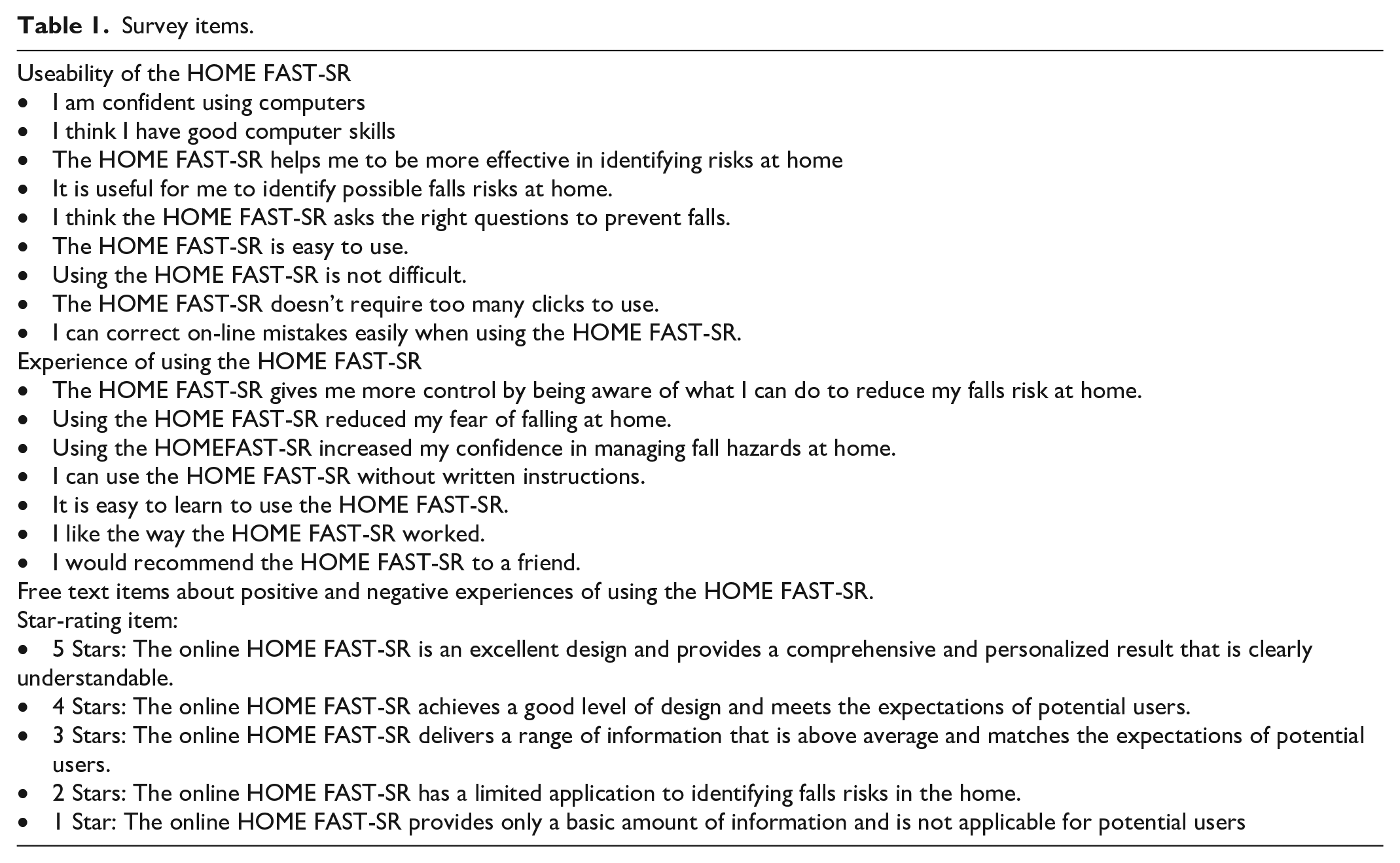
Three main sources of information were used for analysis: (i) the completed online HOMEFAST-SR forms, (ii) additional information provided by users (age, gender, location, fall status, medical conditions, home characteristics and living alone or not), (iii) a survey about the experience of using the HOME FAST-SR. This survey was informed by the Usefulness, Satisfaction, and Ease of Use (USE) questionnaire 13 and the form used for the evaluation of the FallCheck tool. 12 Statements were included about the useability of the HOME FAST-SR (participants are able to do what they want to do with the tool), and that the tool is efficient, effective, satisfying, learnable, accessible and intuitive, 14 and participants rated items on a Likert scale (strongly disagree = 1, disagree = 2, neutral = 3, agree = 4, and strongly agree = 5). Star ratings were also included to provide a measure of the overall popularity of the tool. See Table 1.
Survey items.
Data Analysis
HOME FAST-SR usage data and survey data were separately downloaded into SPSS for analysis, and descriptive analysis (frequencies and percentages) was conducted. Demographic information was reported as percentages for each category, and means for age and survey data used percentages and means.
Results
Usage Data for the HOME FAST-SR
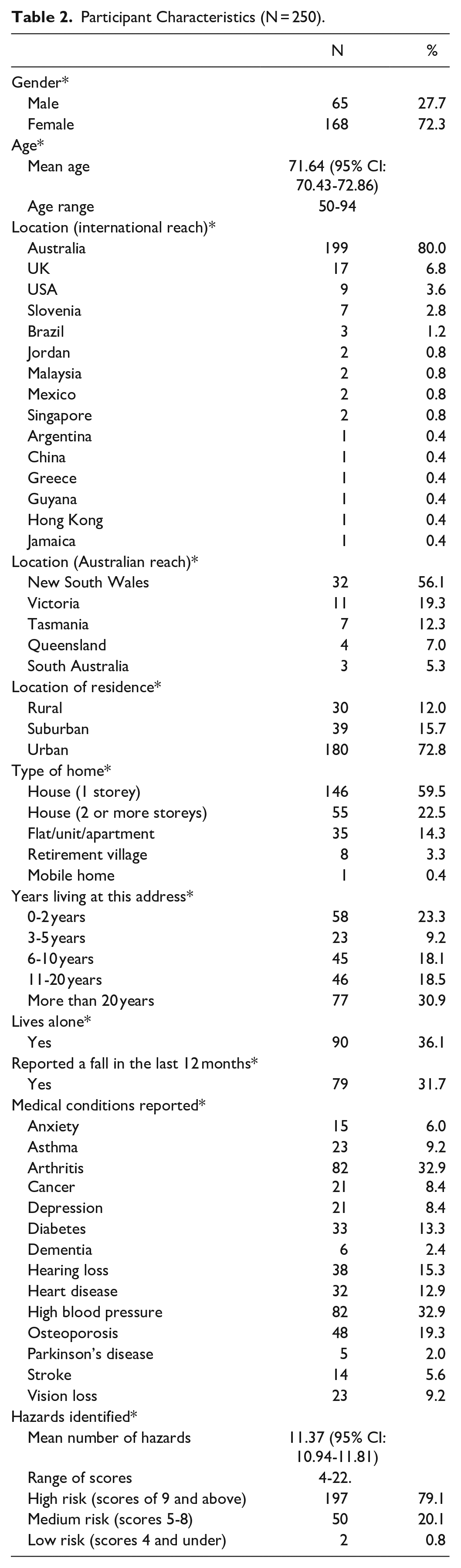
Following data cleaning a total of 250 were usable for analysis from participants who consented to provide personal information. A further 381 of users did not give their consent to provide personal information. Table 2 outlines the participant characteristics of the 250 respondents. Most participants were female (72.3%) with a mean age of 71.64 years. Whilst there were some international users, the majority were Australian (80%), most were from New South Wales (NSW) (56.1%) and lived in urban areas (72.8%). Most participants lived in a one storey home (59.5%) and had lived there for more than 20 years (30.9%). In all, 36.1% reported living alone and 31.7% reported having had a fall in the previous year. Arthritis and high blood pressure were the 2 most commonly reported conditions (31.8%) amongst participants. Participants had a mean of 11.37 hazards which is in the high-risk category for falls.
Participant Characteristics (N = 250).
The most commonly reported hazards are presented in Figure 1 and were related to floor coverings and walkways, lighting at night, toilet transfers footwear, absence of grab rails and hazardous pets.
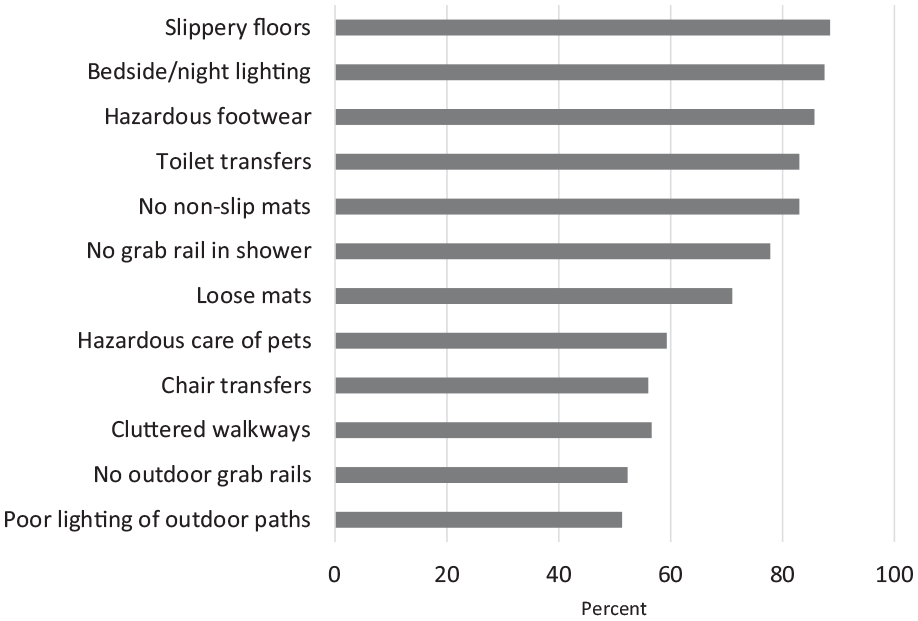
hazards reported by more than 50% of participants.
User Experience of the HOME FAST-SR
A total of 27 older people responded to the electronic survey. In all 95% of participants accessed the tool via a link provided by someone else and only one participant found the tool through their own search (5%). Most used a laptop or a desktop computer to complete the tool (72.7%) and the remainder used a tablet. No-one identified using a smartphone to access the tool.
Participants largely agreed with the statements presented to them about the useability of the HOME FAST-SR with scores ranging from 3.5/5 to 4.74/5. Participants scored themselves at a mean of 3.87 (range 1-5) for confidence using computers and 3.68 (range 1-5) for having good computer skills suggesting some room for improvement. Participants also indicated that the HOME FAST-SR did not strongly reduce their fear of falling (mean 3.5/5, range 1-5) and the HOME FAST-SR did not give them increased confidence about managing falls risk at home (mean 3.85/5, range 2-5). See Figure 2.
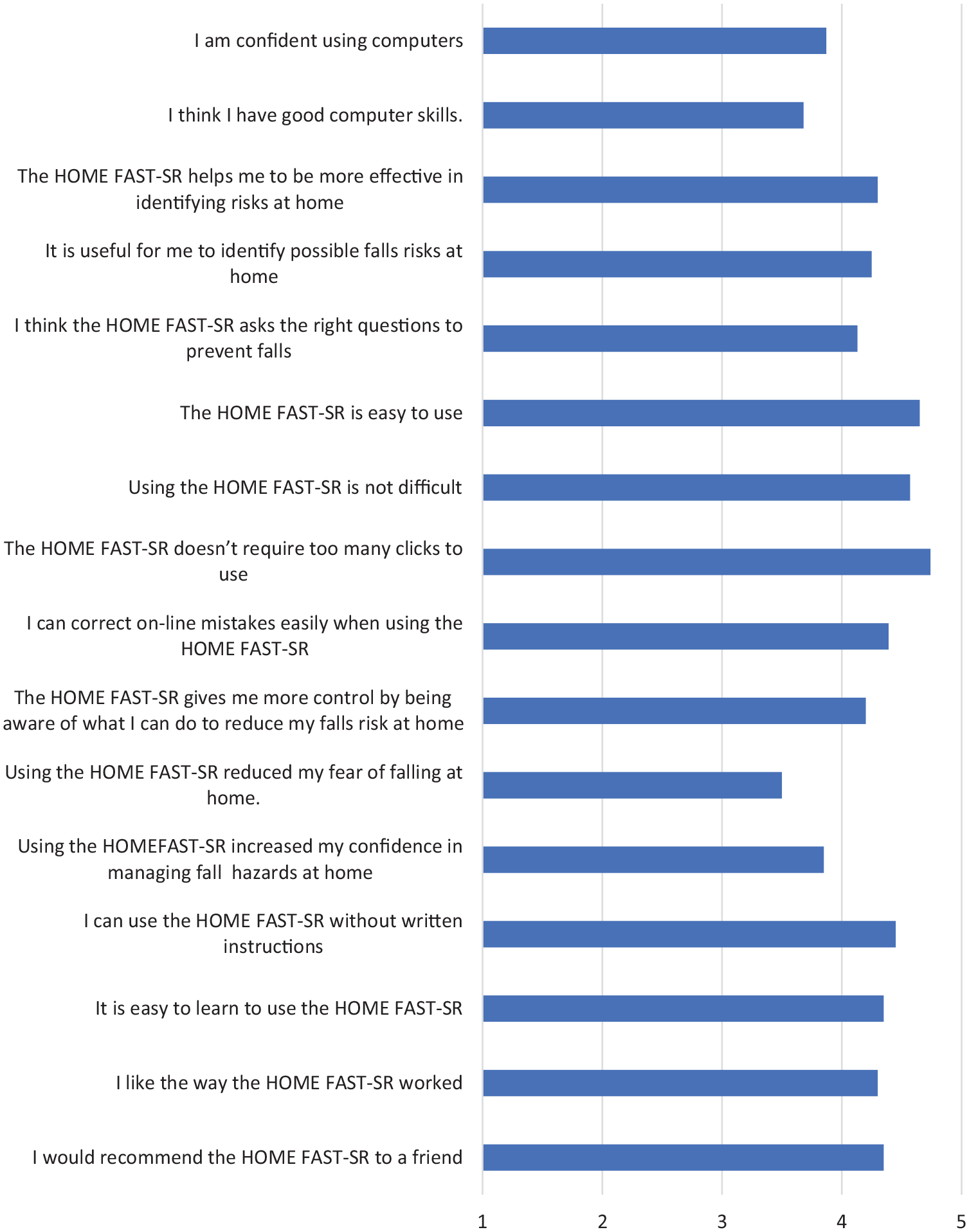
Mean scores for useability of the HOME FAST-SR (N = 27).
In all, 57.9% of participants rated the HOME FAST-SR at 4 stars and a further 21.1% rated it at 5 stars. See Figure 3.
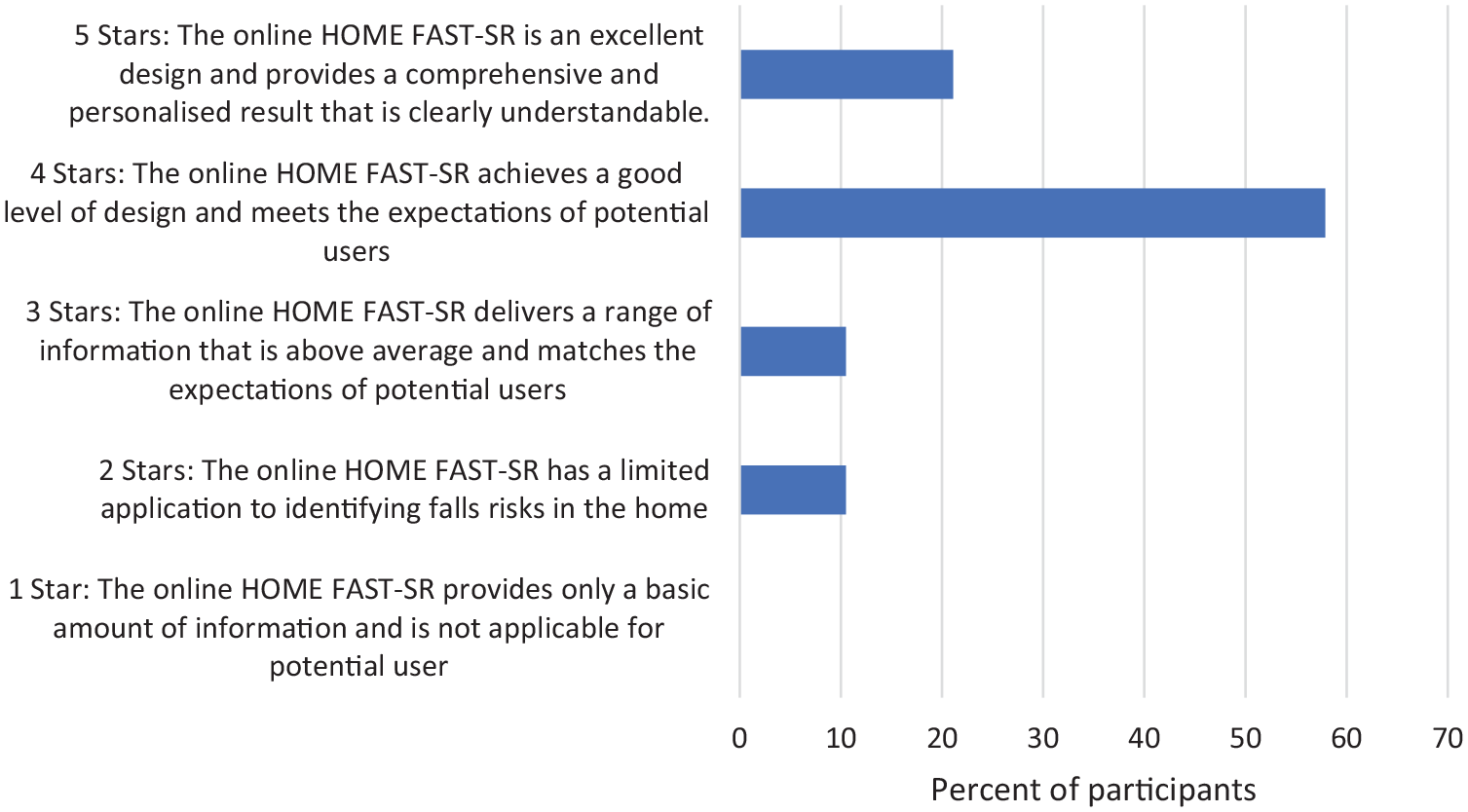
Participant star-ratings for the HOME FAST-SR.
Discussion
This study sought to identify the range and number of home hazards existing in the homes of older people in the general community using the online version of the self-report HOME FAST-SR amongst older people and its useability. and Results revealed that there was a high level of home hazards identified amongst the participants indicating a high risk of falls, and that the HOME FAST-SR was considered useable by older people.
The finding that most homes had a high number of fall-related hazards was of concern as the participants in this study represented a typical range of older people living in the community, and it is known that the majority of falls occur in the home and are associated with conducting daily activities in the home. 15 Australian data indicates that a high proportion of older people own their home 16 suggesting secure tenure and the capacity to make decisions to modify the home if necessary (p. 93). 17 However, awareness of the existence of home hazards likely to lead to a fall in the home may be low amongst the older population 18 and adherence to any home hazard reduction recommendations may also be low. 19 An Australian report indicated that only 17% of older people thought that their homes would require modification and only 40% of those experiencing difficulties at home acknowledged their potential need for modifications. 20 A third of participants in this current study had lived in their home for more than 20 years, which means that their home was probably designed with features that can become safety hazards and barriers to independence as occupants age, 21 therefore, modifications would be advisable. Most of the common hazards identified by participants in this study were easily modifiable (such as using a non-slip mat, installing grab rails or improving lighting), suggesting there were other barriers to reducing such hazards such as cost, availability of a contractor willing to complete any modifications. 22
One of the reasons why home modifications may not be adhered to is related to the level of control older people feel when making decisions about their own homes. Active participation in the modification process is very important to maintain a sense of dignity for older people within their own home, and satisfaction with the outcome is more likely. 21 Exerting control has been identified as reflective of older people’s self-efficacy or their sense of competency in managing their home environments and appraising any risk when making decisions about modifications to prevent falls. 23 The online HOME FAST-SR allows older people to maintain a sense of control over their identification of falls risk in their home, as they can complete the tool independently and consider the results themselves. This may allow them more time to come to terms with any hazards identified and make decisions to overcome them without pressure from a health professional. The tool could also be used prior to a health professional appointment so that older people are more prepared for a discussion about their needs.
The online HOME FAST-SR can also contribute to the broader aim for older people to age in place. Aging in place refers to supporting older people to stay in their own homes for as long as possible whilst building community support and informal care in the immediate neighborhood. 24 As the functional needs of older people are likely to change over time, different homes may not continue to offer older people a safe environment as they age, 25 and the HOME FAST-SR can provide older people with a resource to enable them to identify risks and make changes to extend the time that they can live with reduced risk of falls in their homes. Therefore, living arrangements in later life have an important role in the well-being of older people as they age in place, including well-designed living residential environments. 26
The availability of the HOME FAST-SR in an online format enabled a wide reach for the use of the tool throughout Australia and overseas, and this is likely to continue as more older people access the tool. Whilst the online nature of the tool may have biased access toward older people in higher socio-economic groups for this study, internet access is also likely to increase in the future as more people with internet skills gained at a younger age get older. Since the COVID-19 pandemic, online interventions from health professionals have become more commonplace. 27 A sense of control and digital literacy are important components for older people in their uptake of technology 28 and the study data suggests that the individuals who used the HOME FAST-SR had a high level of digital literacy given their responses to the useability survey. However, it is unknown how available the HOME FAST-SR is for older people with lower levels of digital literacy.
Study Limitations
No follow-up data was collected to determine if any home modifications had been put in place after the information from the HOME FAST-SR was made available to individual users, as submissions were anonymous. Therefore, it is not possible to conclude that increased knowledge of the home hazards existing in the home led to any reduction in fall risk. The number of participants who used the HOME FAST-SR in the analysis was limited by the number of people who agreed to provide further information about themselves, and whilst the number of participants n the useability survey was low, the responses were very consistent.
Conclusion
The HOME FAST-SR is an accessible online tool which enables older people to identify hazards in their home that are associated with increased falls risk. A cross-section of older people living in the community identified a high number of home hazards, most of which were modifiable. Furthermore, older people recognized that the HOME FAST-SR was a useable tool.
Footnotes
Declaration of Conflicting Interests
The author(s) declared no potential conflicts of interest with respect to the research, authorship, and/or publication of this article.
Funding
The author(s) disclosed receipt of the following financial support for the research, authorship, and/or publication of this article: This project received funding from the NSW Department of Family and Community Services, Livable Communities grant (LC – 0118).
