




Abstract
To prevent falls and other accidents among home care clients, it is essential to gather high-quality information on the factors contributing to the accidents. Incident reporting systems are used in home care units to generate information for risk management. This study aimed to explore the contributing factors of falls and non-fall accidents among home care clients and to evaluate the accuracy of the information on contributing factors gained from the incident reporting system. An existing dataset was used—safety incident reports concerning accidents involving home care clients. The incident reports (n = 323) were stored in the social- and health care organization’s incident reporting database from 2018 to 2020. The free-text narratives describing factors contributing to the event’s occurrence were analyzed using inductive content analysis, and the frequencies of the main category codes were recorded. The results were then compared with the frontline managers’ analyses of the narratives, where the managers used the classification of contributing factors provided by the system. According to incident reports, intrinsic (person-specific), behavior-related and extrinsic (environment-related) factors contributed to accidents among home care clients. Intrinsic and behavior-related factors were reported more often than extrinsic factors. The classified information on contributing factors did not correspond in all respects to the descriptions in the incident reports. To ensure high-quality information for safety management, incident reporting tools must be appropriate for use in the home care context. Both the reporter of an adverse event and the individual responsible for analyzing the report play essential roles in identifying contributing factors of accidents.
Introduction
Promoting safety in home care is a significant challenge. Frailty—a consequence of interacting physical, psychological, and social factors—is common among home care clients.1,2 Frail home care clients have an increased risk of falls and non-fall accidents, with potentially severe consequences.3,4 Falls are the most prevalent incident among home care clients. 5 In addition, falls are the leading cause of hospitalization for older adults, and the highest rate of fall-related deaths is among people over 60 years. 6 In addition to human suffering, falls are also an economic burden to society. 7 The goal in many countries is to enable older people to continue living at home for as long as possible, and it is important to prevent accidents among these older people to support this aim. Therefore, evidence-based information on promoting safety among home care clients is needed. 8
Accident prevention requires consideration of various factors, which have been classified differently in different studies. For instance, 3 distinct risk factors for falls can be recognized: intrinsic, behavioral, and extrinsic. 9 Intrinsic risk factors are individual-specific, physical and psychological factors, and extrinsic factors are environment-related.9,10 Whereas, behavioral factors are activity-based, such as hurrying. 9 System-level factors, such as the flow of information between social and health care professionals, have also been reported. 11 In addition, older people with lower socioeconomic status have unique risk factors associated with social determinants of health, which may increase their risk for falls. 12 Some risk factors for accidents cannot be changed (such as age). However, many factors are modifiable, such as lightning and assisting devices.6,9,13
In Finland, where this study was conducted, home care encompasses home services and nursing. 14 Unlike institutional settings, homes are not regulated environments, and nursing personnel are not present continuously. These factors may contribute to risks that home care clients encounter. 15 In many countries, including Finland, most home care clients are older individuals who need more services, care, and assistance than before.8,16 Home care clients’ physical and cognitive skills have declined during the past decade. 8 For instance, dementia increases the risk of falls. 17 Therefore, it is needed to invest in accident prevention. The client’s health status, functional status, and polypharmacy are associated with increased falls. 18 Also, particular medications increase the risk of adverse outcomes among older people and people with memory disorders.19,20
In Finland, accidents are the fourth most common cause of death in the general population. 21 Most fatal accidents, and accidents that lead to injuries, occur at home and during leisure time. A national target program for preventing home and leisure injuries aims to reduce the number of accidents leading to loss of health or death by 25% by 2030 from the levels in 2020. 21 In addition, “The Client and Patient Safety Strategy and Implementation Plan 2022–2026” aims to promote client and patient safety work, including self-monitoring, in organizations. 22 According to law, home care service units must have a self-monitoring plan and system to ensure the quality and safety of their services. 23 This client safety work includes identifying risks and learning from safety incidents.
Research on safety in the home care context is increasing. 24 However, previously safety studies have focused chiefly on hospitals and other institutional settings. 24 Limited data are available about adverse events related to falls and non-fall accidents among home care clients reported by the staff. 25 Non-fall accidents include, for instance, choking accidents, burns, poisoning, and electrical accidents. 21 Identifying risks in the home care environment involves specific challenges due to variability in home environments; no two homes are alike. 26 According to earlier studies, safety culture and work in the home care context need improvements.27 -32 The factors contributing to safety incidents must be identified to prevent falls and non-fall accidents among home care clients.33 ,34 The objective of reporting safety incidents is to prevent them from occurring in the future, not to blame individuals.
Both “near misses” and adverse events are reported in organizations to learn from safety incidents. This study focused on adverse events; incidents that caused harm to the client. The study aimed to explore the contributing factors of falls and non-fall accidents among home care clients and to evaluate the accuracy of the information on contributing factors gained from the incident reporting system. The following research questions were addressed: What factors contribute to falls and non-fall accidents involving home care clients? To what extent does the classification of contributing factors of accidents conducted by the frontline managers correspond to the descriptions of the contributing factors in the incident reports? It is essential to ensure the accuracy of the data used for informing accident prevention strategies in home care organizations. Based on the findings, recommendations will be suggested for the promotion of identification of contributing factors of accidents and accident prevention in home care organizations.
Materials and Methods
Design and Setting
A retrospective study was conducted using an existing patient safety incident reports database. The reports were from one social- and health care organization’s incident reporting database. This organization provided home care services (home services and home nursing) in several municipalities, remote areas and cities.
Sample and Data Collection
The Reporting System for Safety Incidents in Health Care Organisations (HaiPro) is Finland’s most commonly used web-based tool for reporting safety incidents. Using this tool, the “reporter” enters the details of the safety event into the incident reporting system, and the “analyst” (e.g., the unit’s frontline manager) then analyses the report. 35 The details entered into the system include a description of the incident, the circumstances at the time, and the factors that contributed to the incident.
The data in this study comprised accidents among home care clients reported to the Haipro incident reporting system in one social- and health care organization between 2018 and 2020. Inclusion criteria were: the report was analyzed and processed, and the consequence of the accident for the client was “mild harm,” “moderate harm,” or “severe harm” according to the analysts’ evaluation (frontline managers). Other options the system provides are “No harm” and “Not Known”; those were excluded. The system provides examples of the consequences of different severity categories. Only accidents that caused harm were included to provide information for preventing accidents with consequences. Unprocessed incident reports were not included because this study aimed to evaluate the accuracy of the information on contributing factors gained from the incident reporting system, and that list of contributing factors is based on analyzed reports. Adverse events were reported by staff. In total, 323 incident reports were included.
Data Analysis
The narratives in the incident reports about the circumstances at the time of the incident and factors that contributed to the incident were analyzed manually using inductive content analysis. Inductive content analysis is a data-driven qualitative descriptive approach, where the categories are derived from the data. 36 Inductive content analysis was chosen because it is suitable for qualitative analysis of textual material, and the evidence on this topic in the home care context is relatively scarce.36-38 The analysis started by reviewing the incident reports and recording preliminary thoughts to obtain a complete sense of the data. The text of each narrative was divided into meaning units (words, sentences, and portions of sentences) based on the manifest content, and the lists of categories were grouped under higher-order headings. In addition, the frequencies of the main category codes were recorded.36,37,39
After the inductive content analysis, the results were compared with the home care units’ frontline managers’ classifications of the factors contributing to the incidents. The organization’s electronic incident reporting system yielded a list of contributing factors.
To increase the credibility of the results, all categories were compared to the original data to ensure that the data represented the information the incident reporters provided. 40 The first author was primarily responsible for analyzing the material, but the researchers maintained an open dialog to increase dependability during the entire research process. 40 The possibility of researcher bias was considered and discussed. The transferability of the results was facilitated by clearly describing the context, the selection of the incident reports (inclusion criteria) and the analytic process. 40 With these actions, we aimed to provide trustworthy information that can be utilized in accident prevention in home care organizations.
Ethical Considerations
Permission for the study was obtained from the organization that recorded the original data. In Finland, neither legislation nor The Finnish National Board on Research Integrity’s guidelines requires ethical review by an ethics committee for research based purely on registry data. 41 No names of clients or professionals are included in the safety incident reports. However, a Privacy Statement and Data Protection Impact Assessment were prepared for the study. The results are reported so that neither the organization nor the unit can be identified.
Results
The types of accidents in the incident reports and the occupational status of the reporters are shown in Table 1. The majority of the incident reporters were licensed practical nurses or other nursing staff. The most common types of the accident were falls.
Occupational Status of the Incident Reporters and Types of the Accident According to Incident Reports (n = 323).
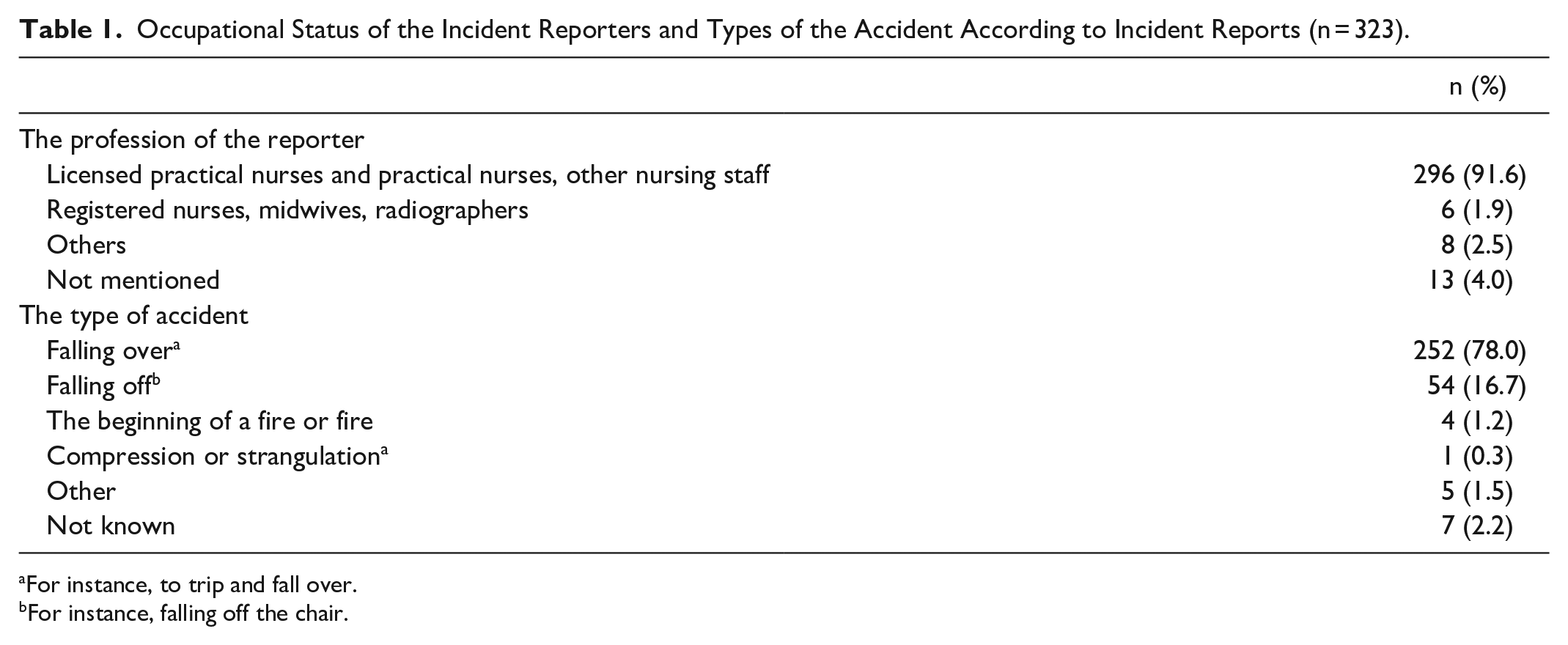
For instance, to trip and fall over.
For instance, falling off the chair.
Contributing Factors of Falls and Non-Fall Accidents Among Home Care Clients
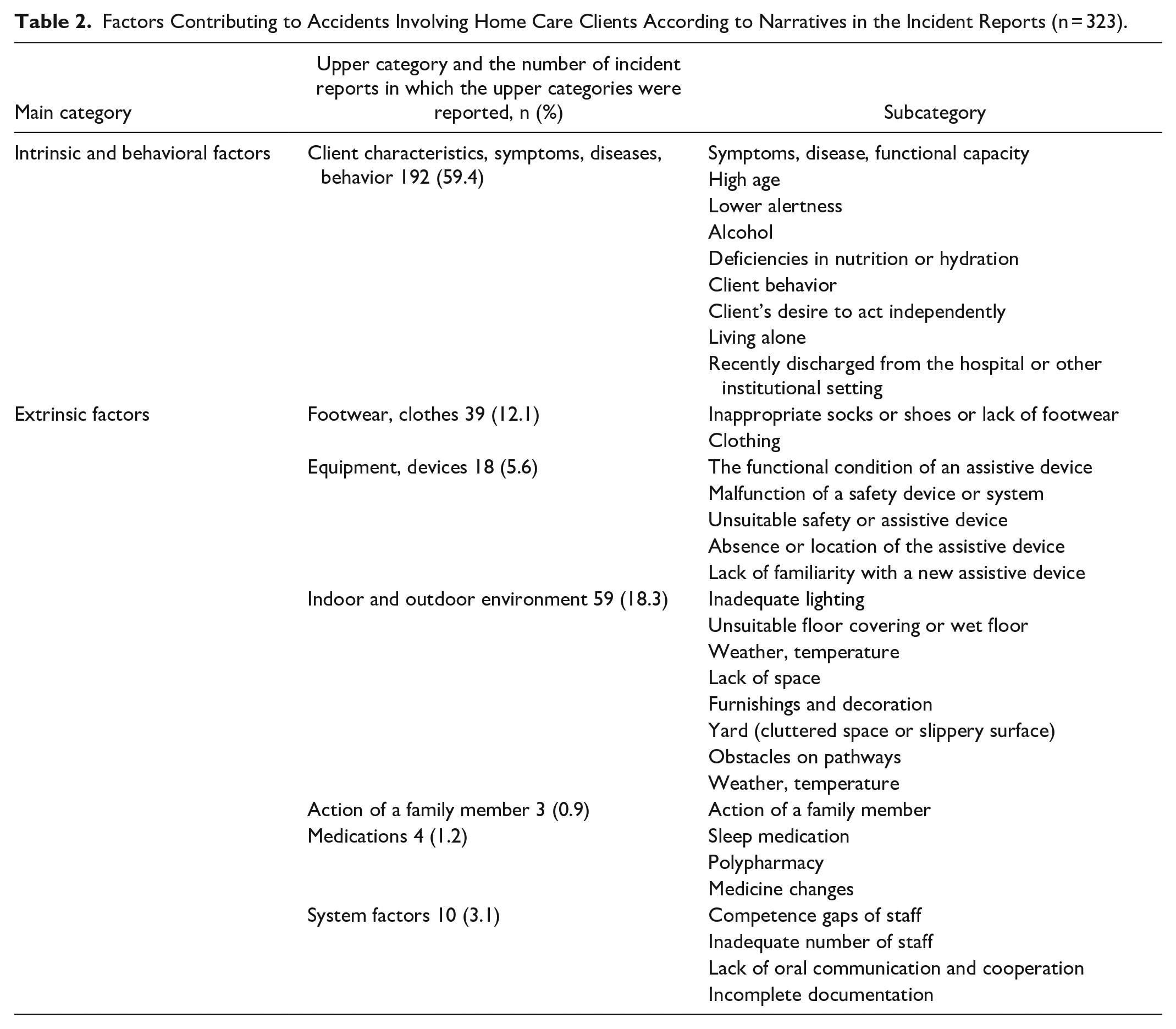
Table 2 presents the factors that contributed to the accidents among home care clients according to content analysis of narratives in the incident reports (n = 323). The contributing factors were not reported in some reports (23%). In these reports, the data were either missing (the person filling in the report had not answered the question about the factors contributing to the occurrence of the accident), the factors were not known to the reporter, or the situation was considered normal (i.e., no contributing factors). Intrinsic and behavioral factors were more often reported than extrinsic factors.
Factors Contributing to Accidents Involving Home Care Clients According to Narratives in the Incident Reports (n = 323).
Intrinsic and behavioral factors
Different intrinsic factors specific to the individual were reported as contributing factors to accidents among home care clients. These factors included deficiencies in a person’s functional capacity, diseases (e.g., memory disorder) and symptoms, such as dizziness. Other intrinsic factors reported were old age, lower alertness, inadequate fluid and food intake and alcohol use. According to the reports, client behavior, such as walking without aid and the desire to act independently, also contributed to accidents. In some cases, the fact that the person lived alone and not in the care home, where nursing personnel is present, was considered to have contributed to the accident’s occurrence.
Extrinsic factors
Extrinsic (environment-related) factors included clients’ clothing, such as socks, footwear, or lack of these items. At the time of the incident, the person wore, for example, slippery pants or wool socks. Equipment and devices were considered to have contributed to some accidents among home care clients. These included nurse call systems, other safety devices and systems (such as fire alarms) and assistance aids. Living environment factors reported as contributing to accidents included indoor and outdoor environmental issues. The indoor issues included poor lighting, floors with unsuitable coverings and cluttered spaces. The outdoor factors included obstacles on pathways, weather (heat or cold) and unsafe yards (cluttered or slippery surfaces). Some incident reports referred to the actions of a family member. In addition, the client’s medication was considered to have contributed to the incident in some cases.
In addition, system factors were reported. These included gaps in nursing staff knowledge and skills and staff shortages. Inadequate communication and cooperation within the nursing team, nursing staff, physicians, or other cooperating partners were also reported. Inadequate communication also included deficiencies in documentation.
Correspondence Between the Incident Reporters’ Descriptions and the Classification of Contributing Factors
The results of the analysis performed by the frontline managers are presented in Table 3. The classification of contributing factors of accidents conducted by the frontline managers did not correspond in all respects to the descriptions of the contributing factors in the incident reports. In some cases, the frontline managers selected contributing factors (i.e., categories) that were not mentioned in the narrative written by the incident reporter. In other cases, the frontline manager had not classified some of the contributing factors described by the reporter.
Contributing Factors of Accidents Among Home Care Clients According to Report Gained From the Incident Reporting System: The Report is Based on Analysis by Frontline Managers.
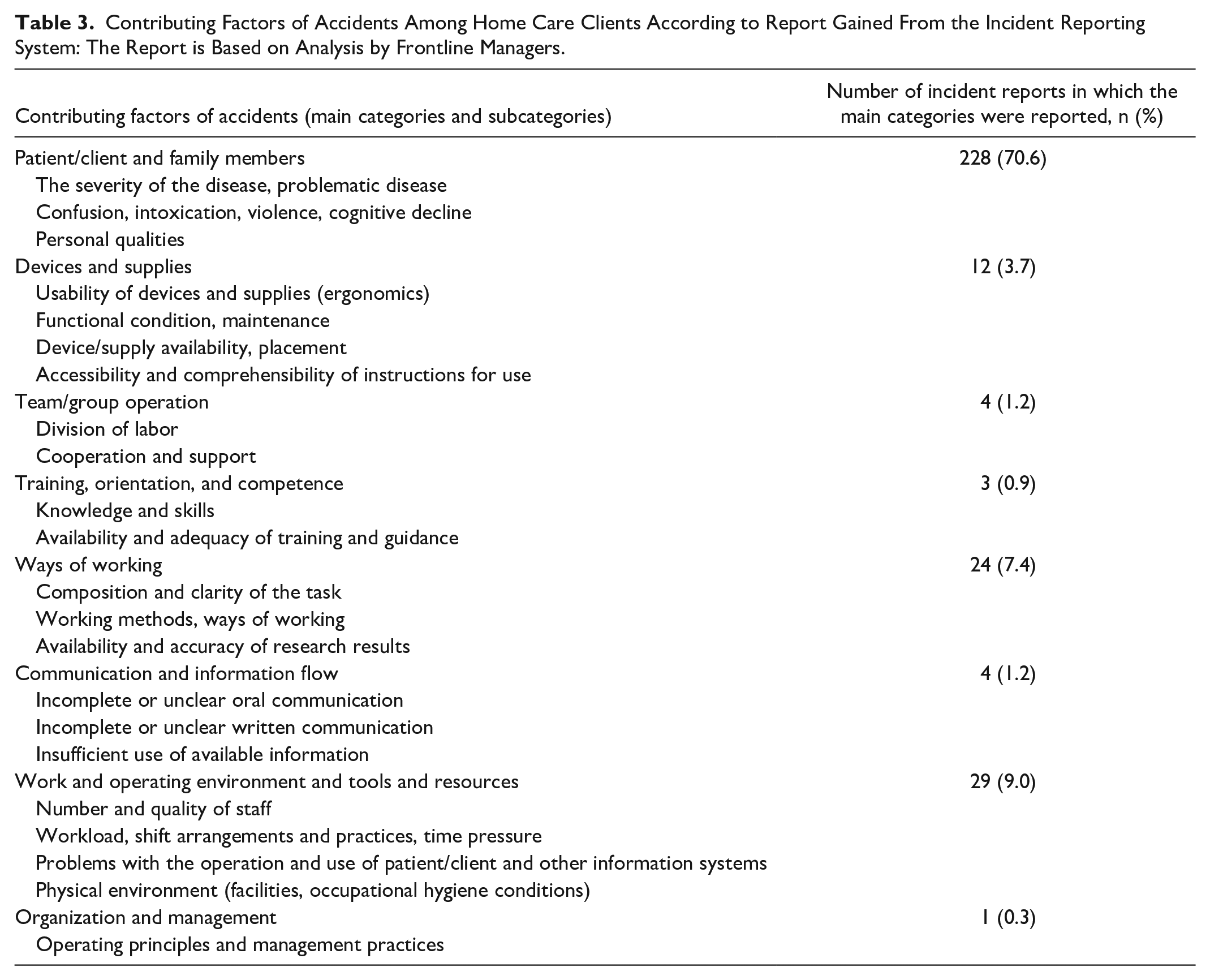
Differences between the incident reporters’ descriptions and the classification of contributing factors can be noticed, especially in relation to external factors. Some of these factors are not classified and therefore not presented in the list of contributing factors gained from the incident reporting system. The content analysis revealed the main categories “the client’s living environment” and “footwear/clothes.” However, these factors do not appear in the report available from the incident reporting system. For these factors, information was lost during the analysis of the incident reports in the organization. On the other hand, there are more system factors in the report than are described in the narratives. For example, according to one reporter’s view, client-related factors contributed to an accident. However, in this case, the frontline manager selected the option “working methods, ways of working” when analyzing and classifying the data.
Discussion
This study provides insight into risk management in home care, focusing on reporting contributing factors of falls and other accidents. According to this study, various individual-specific and environment-related factors contribute to accidents among home care clients. Intrinsic and behavioral factors were most often reported as contributing factors. Safety incident reports are analyzed in the organizations using the classification scheme. The classification of contributing factors of accidents conducted by the frontline managers did not correspond in all respects to the descriptions of the contributing factors of accidents in the incident reports. To our knowledge, no prior studies have examined reporting of factors contributing to accidents in home care settings. However, an earlier study has reported the need to develop the reporting and classification of medication errors’ contributing factors, consistent with our research results. 42
Falls were the most frequently reported accident among home care clients. Our findings align with previous studies reporting intrinsic fall risk factors, such as dizziness, diseases, alcohol, medications, and nutrition deficiencies.9,10,13,43 In addition, behavioral factors have been reported. 9 The fact that the person was living alone also appeared to be a risk factor for accidents in some cases. In several countries, older people remain in their homes despite deteriorating physical and cognitive skills. 8 Despite safety concerns, individuals may prefer home care instead of living in other care settings. 44 However, it is important to assess when the person cannot live in his/her own home safely anymore.
According to our study, different extrinsic factors contributed to accidents at home. Many extrinsic risk factors for falls among older adults have been reported in earlier studies.9,13 For instance, footwear and clothing are modifiable, extrinsic risk factors for falls. It is essential to consider both indoor and outdoor environmental variables as risk factors in home care. Indoor risk factors include, for instance, slipping on a wet floor with an unsuitable covering. Outdoor risk factors include weather-related variables, such as snow-covered ground. People with dementia may be unaware of the risks posed by these environmental factors. Thus, special safety measures need to be implemented for this vulnerable population. However, it is essential to recognize that home care clients have the right to decide how they decorate and furnish their own homes. Promoting safety in a person’s home requires ethical sensitivity, as these measures may conflict with a person’s right to self-determination. 45 In terms of home care client safety, it is essential to recognize the roles, responsibilities and perspectives of all the actors involved, including home care personnel, clients and their family members and caregivers. 44 According to earlier studies, older people accept renovations at home for safety reasons if they can participate in decision-making. 46
Home care clients and personnel use equipment and devices that involve different types of risks. The use of safety technology has increased in home care, and technological solutions can promote client safety in home care. 47 However, the results of our study indicate the need to ensure that the individual needs of the home care client are taken into account when selecting a safety or assistive device. In addition, it is important regularly ensure the functional condition of the devices.
Organizational (system) factors, such as inadequate staffing, were reported, which is not surprising considering research findings reporting time pressure in home care. 48 Research exploring system-level causes and contributing factors for “found-on-floor” incidents in the home care setting has reported a lack of informational continuity resulting from unstandardized documentation. 11 Our study also found deficiencies in information flow related to oral and written communication. Accidents involving home care clients often occur in the absence of the home care worker. As a result, these accidents can be difficult to associate with any specific organizational issue. However, accidents involving home care clients may occur due to organizational processes, suggesting that home care organizations are responsible for addressing them. 11
Social determinants of health were not presented in our study results. An earlier study suggests that socioeconomic status is linked to an individual’s risk of falling. 12 Our research results may be explained by the fact that in Finland, where this study was conducted, the lives of people with disabilities are supported in many ways. For example, older people’s independent housing is supported by granting reimbursements for housing renovation work. In addition, assistive device services are free of charge, including renewal and maintenance. However, as the population ages globally, it is important to explore how social determinants of health impact fall rates and other accidents among community-dwelling older people.
The classified information on contributing factors did not correspond in all respects to the descriptions in the incident reports. Some information was lost during the report handling process in the organization. Therefore, the information used in accident prevention is not accurate in all respects. It is beyond the scope of this study to determine the cause of the discord in some cases between the classified incident reports of the frontline managers on the contributing factors of accidents and the incident report narratives of the staff. However, one reason obviously is a lack of suitable categories (classification codes) in the incident reporting system. The classification scheme does not include factors related to the client’s living environment, footwear, and clothes. The incident reporting system used by the organization was initially developed for health care, and factors affecting adverse events are examined from the perspective of factors affecting work performance.
Another possible reason for differences between descriptions of contributing factors and classified information could be frontline managers having information on the incident that was not contained in the staff report. Possibly, incident reporters may be more inclined to identify intrinsic, individual-related factors (such as memory disorder) as the cause of an accident rather than extrinsic factors. Adverse events are reviewed in detail in home care units. However, the organization responsible for home care relies mainly on classified incident data at the management level. Therefore, it is essential that the information is comprehensive and accurately represents reality.
We acknowledge a few limitations to our study. The safety incident reports used in this study were not initially collected for research purposes. Instead, the organizations used these incident reports to improve the safety and quality of care and services. Previous studies have identified challenges in the preparation and processing of incident reports. For example, fear of conflicts, lack of technological knowledge and limited time are barriers to incident reporting.33,49 These challenges may also be reflected in the number and content of incident reports used in this study. However, incident reports include valuable information on the view of social- and health care staff on the occurrence of accidents. In some incident reports, the contributing factors of the accident were not reported since they were not known to the reporter. This is natural in the home care context, where most accidents occur while staff are absent. However, the results regarding the factors contributing to accidents should be treated with caution, as this study was based only on incident reports. Using different data in a mixed-method study could reveal more representative information on factors contributing to accidents among home care clients.
Implications for Home Health Care Management and Practice
Nursing personnel are essential in reporting and preventing adverse events among home care clients. However, the factors contributing to accidents are so diverse that multi-professional cooperation is recommended to prevent them. For example, implementing actions aimed at reducing the risk of falling may require, for instance, the expertise of a geriatrician, physiotherapist, and nutritionist, in addition to nursing expertise.
The incident reporting aims to find modifiable factors contributing to the occurrence of safety incidents. This study revealed that some information on factors contributing to accidents among home care clients is lost during the incident reports’ analysis. It is important to ensure that incident reporting systems and tools used in home care organizations are appropriate for the home care context and that no critical information is lost when handling the safety incident reports. Thus, there is a risk that the information used in the safety management in the organization is not comprehensive.
In addition, it is recommended to ensure that the data classifiers have sufficient understanding of accident prevention and skills to classify the incident report narratives, especially in relation to contributing factors which may lead to accidents among home care clients, including not only person-centered but also system-level and other extrinsic factors.
Conclusion
Accidents are a common adverse event with potentially severe consequences among home care clients. Identifying contributing factors to accidents and ensuring the accuracy of the information about these factors gained from the incident reporting system is essential. This study reported person-specific and behavior-related factors more often than environment-related factors. Our findings indicate a need to ensure the accuracy of the information used in accident prevention in home care organizations. As the population ages and older people with an increased risk of accidents live at home, further research that informs the development of effective operating models for home care risk management and safety work is needed.
Footnotes
Declaration of Conflicting Interests
The author(s) declared no potential conflicts of interest with respect to the research, authorship, and/or publication of this article.
Funding
The author(s) received no financial support for the research, authorship, and/or publication of this article.
