




Abstract
The primary objective of this study was to investigate the effect of adding olive mill wastewater (OMWW) to a diet on the meat composition and sensory profile of broiler chickens. The investigation involved an experiment with 100 broilers that were 45 days old. Meat quality assessments were conducted on the pectoral muscle immediately after slaughter. The study revealed a significant difference in meat composition between the groups, specifically noting variations in mineral matter, carbohydrates, total phenol (TP) components (P = 0.00), and flavonoids (P = 0.03). The identified increase in TP components and flavonoids that are well known for their antioxidant activity explained several positive outcomes. This increased antioxidant content resulted in inhibited lipid peroxidation after storage (as indicated by thiobarbituric acid-reactive substance values; P ≤ 0.0001) and protected meat color from oxidation where significant variations were observed in myoglobin content and the L, a, and b color parameters (P ≤ 0.0001), confirming the stabilizing effect of the OMWW diet on meat color. The sensory profile assessment also showed significant differences between the groups in several attributes: taste: differences were noted in salty taste and metallic taste; odor: variations were observed in fatty, plant, and animal odors. Crucially, the meat from the group fed with OMWW-supplemented diets was significantly preferred by panelists (P = 0.002). A preference test further showed that 65% of panelists found the meat from the OMWW group to be more tasty and tender. Relationship analyses confirmed that the diet supplemented with OMWW positively affected both the meat's biochemical composition and its organoleptic quality, leading to improved oxidative stability and enhanced consumer preference.
Introduction
Olive mill wastewater (OMWW), frequently designated as vegetation water, constitutes the primary liquid effluent generated by the olive oil extraction industry.
The Mediterranean basin is the predominant global source of olive oil, accounting for approximately 95% of the world's total production. Consequently, the scale of OMWW generation is vast, estimated to be concomitant with the region's annual production of 30 million tons of olive oil (Dermeche et al., 2013; Mekki et al., 2008).
This effluent poses a significant environmental burden and presents complex challenges for remediation. The primary source of the detrimental effects is the high concentration of polyphenolic compounds, which contribute to a highly acidic pH and are characterized by low biodegradability (Rais et al., 2017).
Consequently, treatment and resource recovery are crucial. The uncontrolled and untreated discharge of OMWW into the environment necessitates anticipation of widespread pollution, including groundwater contamination, surface water pollution, soil hydraulic clogging due to high organic load, and the emission of noxious volatile organic compounds (offensive odors).
In recent years, there has been a notable growth in both the production and consumption of poultry meat. A healthy diet that is rich in high-quality protein and polyunsaturated fatty acids must include meat; this is the reason why meat production and consumption have expanded in response to consumer expectations for a healthy diet (Qamar et al., 2019). Broiler chickens are the most common domestic species used to produce poultry meat, and the animal-farming sector has expanded rapidly in recent years. High prices and a shortage of feedstuffs, particularly protein sources like fishmeal and soybeans, are other significant issues affecting this sector. Consequently, it is necessary to search for substitute, easily accessible, and less expensive animal feed protein components.
Dietary supplementation with OMWW was investigated as a strategy to enhance animal health and performance, based on its documented potential to mitigate intestinal damage, stimulate innate immunity, beneficially regulate lipid metabolism (including fat deposition and cholesterol levels), and simultaneously increase protein output (Sabino et al., 2018). Furthermore, sensory analysis remains a foundational methodology in meat quality control. This process is essential for producers to accurately identify, understand, and strategically respond to consumer preferences, thereby maximizing product market viability (Matitaputty et al., 2015).
This investigation was designed to systematically assess the effects of OMWW incorporation into broiler chicken diets. The primary endpoints comprised meat proximate composition, lipid peroxidation stability, meat color parameters, sensory attributes, and overall consumer preference.
Materials and methods
Animal diets and sampling
Three thousand Cobb500 strain chicks from the same origin (Sarl N.A.P.) received primed vaccinations. Under the same circumstances, these animals were raised in the ground, classified into two groups, each with 1500 animals. A conventional diet was given to one group, while an experimental formula that included OMWW from a three-phase extraction system was given to the other. At 4 °C, OMWW was kept in a dark, oxygen-free environment. The only difference between the two diets was the 10% addition of the new formula. Fifty samples from each group were taken using the pectoral muscle, and 100 carcases were sacrificed for the meat's nutritional and sensory qualitative analyses.
Chemical characterization of feed
The composition of the standard diet and the new formulation incorporating OMWW at 10% of concentration were analyzed. Dry matter (DM) was determined by drying at 105 °C for 24 h in an oven and then calculated the difference in weight. Protein content was measured using the Kjeldahl method (ISO 5983-1, 2005), while fat content was analyzed with the Soxhlet method. Ash content was determined by incinerating the samples, and carbohydrate content was measured using the Dubois method (Dubois et al., 1956). The extraction of polyphenols was conducted according to Mahmoudi et al. (2013). The total phenol (TP) content was quantified using the Folin–Ciocalteu method. Total tannins were determined using the method of Makkar et al. (1993) and Koutouan et al. (2019). Condensed tannins were quantified using the butanol–HCl technique, according to Ben moussa et al. (2021). The level of flavonoids was determined using the colorimetric method of aluminum trichloride described by Abdel-sattar et al. (2012).
Meat quality traits
Biochemical composition
The chemical composition of the meat was analyzed using the pectoralis muscle. The samples were stored in plastic bags at −20 °C. Crude protein (nitrogen concentration × 6.25) content was assessed by the Kjeldahl method according to ISO 973-1987(F). Total lipids were extracted by cold treatment with chloroform/methanol (2 V/V) as a solvent as described by Folch et al. (1957). The ash content was determined by mineralization at 550 °C according to AFNOR (1985). To analyze DM, samples were oven dried at 105 °C to a constant weight (24 h) (AFNOR.NFV04-401). The total carbohydrate content in meat was estimated after acid extraction with a colorimetric method of the dosage with anthrone according to Shibko et al. (1967) and Amira et al. (2017). Absorbance was measured at a wavelength of 626 nm. The results are referred using a glucose calibration curve. The protocol for the extraction of polyphenols was that described by Branciari et al. (2017). The phenolic extract was used for the determination of TPs, condensed tannins, total tannins, and flavonoids according to the same studies described in the part of polyphenols of broiler feed.
Lipid peroxidation
Determination of lipid peroxidation was conducted by quantifying the level of thiobarbituric acid-reactive substances (TBARS) in the meat, a measurement that serves as an indicator of malondialdehyde (MDA) concentration.
The analysis employed the method described by Génot (1996), with modifications introduced by Balzan et al. (2021). This procedure involves the aqueous acid extraction of MDA from the meat sample. The subsequent thiobarbituric acid (TBA) assay is a spectrophotometric method based on the reaction between MDA and two molecules of TBA, forming a pink complex quantifiable at 532 nm.
The results are expressed as mg MDA equivalent per g of meat and are calculated using the following formula:

Instrumental texture measurement
In order to measure the hardness of meat which is defined as the force necessary to reach a maximum deformation at a precise moment of meat, a compressive force was applied to cubes of pectoral muscle meat having the same dimensions (2 × 1 × 1.5); for each sample four cubes were defined total of 400 compression areas. The areas before and after compression are scanned to calculate the deformation area using ImageJ 1.48 software, then the pressure is calculated with the formula below: P = F/A (N/mm2)

Myoglobin concentration
Myoglobin pigments in broiler meat samples were extracted based on the principles of Faustman and Phillips (2001). The absorbance of the filtrate was measured by a spectrophotometer (Jenway 7305) at a wavelength of 525 nm, using an extinction coefficient of 7.6 mM − 1 cm as follows:

where 7.6 mM − 1 cm − 1 × 1 cm is the millimolar extinction coefficient of myoglobin at 525 nm; 1 cm is the optical path of the cuvette; 17,000 Da is the average molecular mass of myoglobin; and 10 is the dilution factor (Canto et al., 2015).
Color analysis
The color of the broiler meat was determined according to the method of Derardja et al. (2019) using a Canon EOS-1200D digital camera (18 MP CMOS, 3× 18–55 mm f/3.5–5.6) and a computer with Adobe Photoshop CS6 software (Adobe Systems Inc., USA). To ensure that the color capture was not affected by ambient light, a closed polystyrene box (39 × 17 × 28 cm3) was used, and integrated with a 1.2 W 5 V white LED to obtain an evenly scattered light on top of the sample. For each assay, color measurements were obtained at four different points on the same pectoral muscle, then placed inside the photo shooting box on a white background.
The measuring procedures of the color were as described by Zhou et al. (2015). The CIE-L*a*b* color space mode was chosen. This is a mathematical color model based on the sensitivity of the human visual spectrum (Chen and Ren, 2014). The color coordinates lightness (L), redness (a), and yellowness (b) were obtained from the histogram of the menu bar by using LAB color mode in Adobe Photoshop. The rectangular marquee tool in the main menu was used to select the sample area. Then, the L, a, and b values of the selected area were transformed to CIELAB (L*, a*, b*) values using the below equations:

Sensory analysis
Pectoral muscle was chosen for sensory analysis including two tests: descriptive and hedonic while chicken thigh analysis is reserved for the pair preference test. Twelve identical pieces of meat in the shape of a cube with dimensions of 2 × 2 × 1.5 are cut and introduced into previously coded cooking bags; the bags are well sealed and immersed in boiling water at 80 °C for approximately 30 min. This cooking method was chosen to ensure a uniform thermal regime on the surface and inside the sample (80 °C) (Dubost et al., 2013). It also allows for a uniform texture by avoiding the formation of a crust on the surface (Honikel, 1998). This is carried out on a control sample using a thermocouple (Hanna Instruments). The samples are served hot. The panel is composed of 12 qualified persons. A training and explanatory session for the tasting jury members was launched the day before the sensory analysis in order to explain the sensory attributes to them with easy language.
The test was conducted in a room that complies with the guidelines of the Afnor NF EN ISO 8589 standard, in order to ensure maximum comfort and concentration for the tasters, with a well-controlled temperature and artificial non-colored lighting. The room was free of any decorative frames or source of distraction, noise, or odors that could distort the tasters’ judgment. Twelve isolation booths were set up with tables against the walls for separation. Each table was equipped with a spittoon, a toothpick to get rid of residue between the teeth, a plastic glass of water and a piece of bread to reduce the sensory characteristics of the previous sample according to Ricard (1961), and a towel.
Tasters are given the sensory evaluation forms, and they are required to mark each attribute with a cross on an unstructured, ungraduated scale (0 = white, none, not moist, not juicy, unpleasant, not very tender, I don't like; 10 = yellow, a lot, extremely moist, pleasant, very tender, I like extremely) (Fofana et al., 2021).
Each taster was served 16 samples of hot meat, divided into 8 coded areas in 2 glass plates. The paired preference test allows the consumer to choose between two samples according to their preference more.
The chicken thighs with skin were well washed, covered with aluminum foil, and cooked without additives or salts in an oven at a temperature of 250 °C for 1 h until temperature at the heart of products reached 80 °C, the internal temperature control of the product was monitored with a thermocouple. Following the completion of the cooking process, meat was simply grilled to give it the desired golden hue.
Three hundred persons who enjoyed chicken flesh participated in the tasters’ tasting. Tasters were required to circle their favorite sample and indicate which attribute they valued more on the sensory rating form.
Statistical analysis
Three measurements were taken for each parameter under analysis, and results expressed as the mean ± standard deviation. Differences between animal groups were assessed using a one-way analysis of variance at the 5% significance level. Data analysis was performed with XLSTAT 2023. The Shapiro–Wilk test was applied to assess the homogeneity of variance and normality between the two groups. Pearson correlation analysis was conducted to investigate potential relationships between the ingredients in the new food formula with olive wastewater and meat quality attributes. Finally, principal component analysis (PCA) was used to describe the discrimination of groups with all differences and correlations.
Results and discussion
Feed composition
Table 1 shows the average concentration of biochemical components of the two ration formulas. A significant difference was observed regarding DM, mineral matter (MM), total sugars, TPs, and total tannins. This issue has been discussed in detail in our previous study (Seghiri et al., 2025).
Broiler feed and meat composition of the two batches standard and with OMWW.
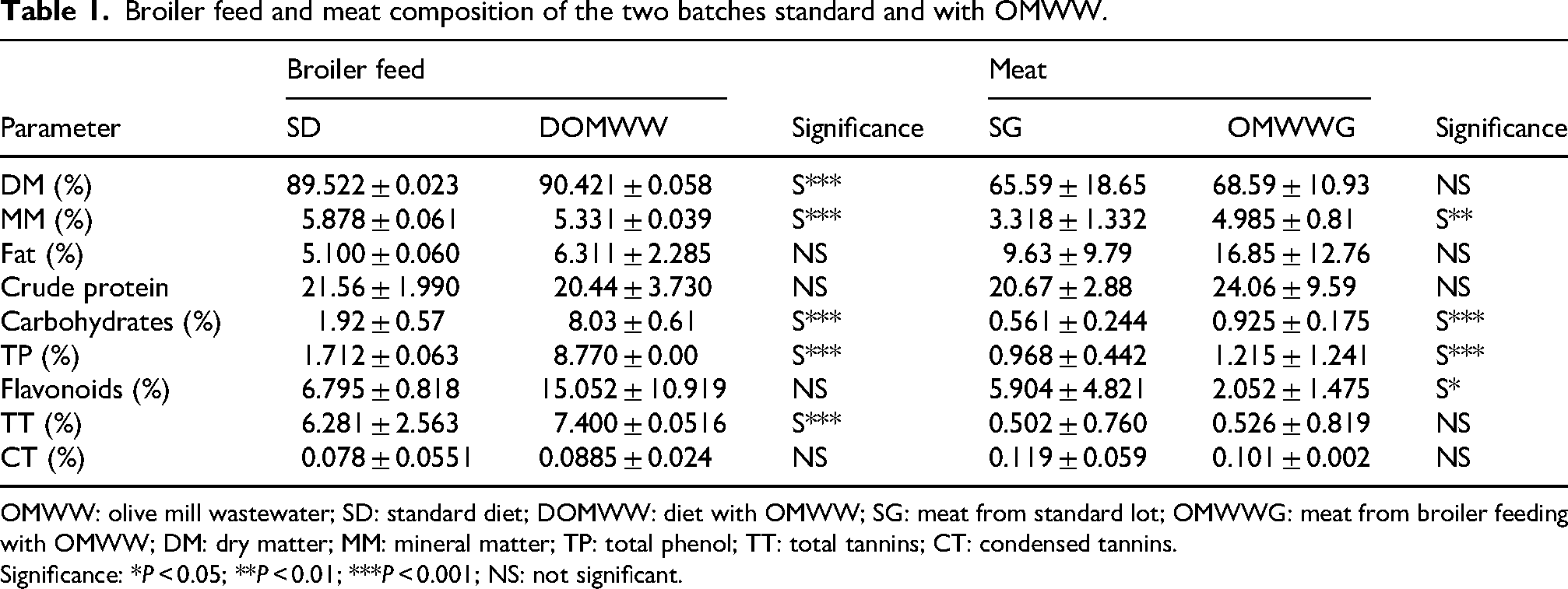
OMWW: olive mill wastewater; SD: standard diet; DOMWW: diet with OMWW; SG: meat from standard lot; OMWWG: meat from broiler feeding with OMWW; DM: dry matter; MM: mineral matter; TP: total phenol; TT: total tannins; CT: condensed tannins.
Significance: *P < 0.05; **P < 0.01; ***P < 0.001; NS: not significant.
Meat quality traits
Meat composition
According to results mentioned in Table 1, the difference between the two groups is significant, in terms of the rates of MM, carbohydrates, TPs, and flavonoids. The improved group recorded a higher content of MM, carbohydrates, and TPs. This may indicate that the absorbance of the diet was more effective during digestion for broilers from the improved group. The same is true for flavonoids, with a minimal content resulting from the use of the latter as antioxidants. This result is discordance with Branciari et al. (2017). On the other hand, adding polyphenols from olive pomace to chicken feed did not significantly alter the meat characteristics between the experimental and control groups (Balzan et al., 2021). In poultry, antioxidant effects of vitamin E, carotenoids, and polyphenols from plant extracts such as rosemary and oregano have been demonstrated (Bou et al., 2004).
Lipid peroxidation
According to Table 2, the current study revealed a significant difference in TBARS levels at 7 days and following 1 month of storage at −20 °C. The value in samples from OMWW lot were lower than in breast from the standard group. The presence of polyphenols in poultry feed can increase the antioxidant activity of meat, without affecting its quality and composition. Knowing that the OMWW are richer in phenols than the pomace, this can lead to better results concerning this phenomenon (Branciari et al., 2017). These results are consistent with those of Gerasopoulos et al. (2015), who observed a decrease in TBARS in the quadriceps femoris of chickens whose diets were supplemented with OMWW permeate and retentate. According to Roila et al. (2018), TBARS were significantly lower in the breasts of chickens fed with OMWW supplements.
TBARS value of meat from the two groups indicating lipid peroxidation after storage.
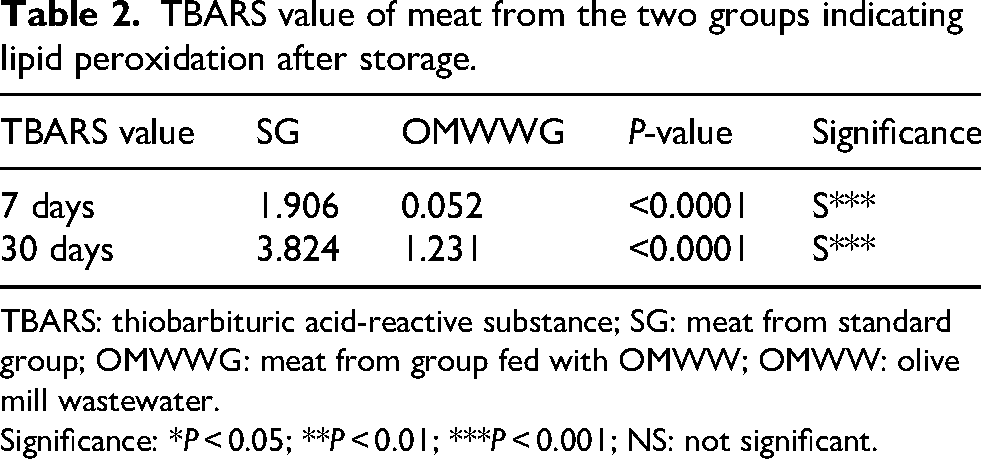
TBARS: thiobarbituric acid-reactive substance; SG: meat from standard group; OMWWG: meat from group fed with OMWW; OMWW: olive mill wastewater.
Significance: *P < 0.05; **P < 0.01; ***P < 0.001; NS: not significant.
Additionally, recent research has demonstrated the effectiveness of several of the main polyphenols present in the OMWW such as hydroxytyrosol, verbascoside, and isoverbascoside, in preventing lipid peroxidation (Cardinali et al., 2012). Following dietary supplementation with extra virgin olive oil, Tufarelli et al. (2016) observed a reduced lipid peroxidation and an enhanced antioxidant defense system in chicken liver, while several authors reported increased meat oxidative stability and decreased lipid oxidation during storage in lamb and beef muscles (Luciano et al., 2013).
Color parameters and myoglobin content
Table 3 shows that the broiler diet caused a significant variation in the color of the breast. These results are consistent with those of Tufarelli et al. (2022) and Papadomichelakis et al. (2019) and show that only (L*) and redness (a*) were impacted by the dietary changes, while yellowness variation was not. Following the addition of dried olive pulp, lightness in the control group's breast was higher than that in the experimental group, which is consistent with the findings of Tufarelli et al. (2022) and Papadomichelakis et al. (2019). However, the enhanced batch using OMWW had more redness than the two earlier studies. The yellowness of meat from the batch that was enhanced by a diet including OMWW can be attributed to either the presence of antioxidants in the OMWW ration, which are rich in polyphenols and vitamin E, or to the presence of corn, which caused the meat to have a yellow hue (Qamar et al., 2019).
Color characteristics of pectoral muscle of broiler from the two groups with different diets.
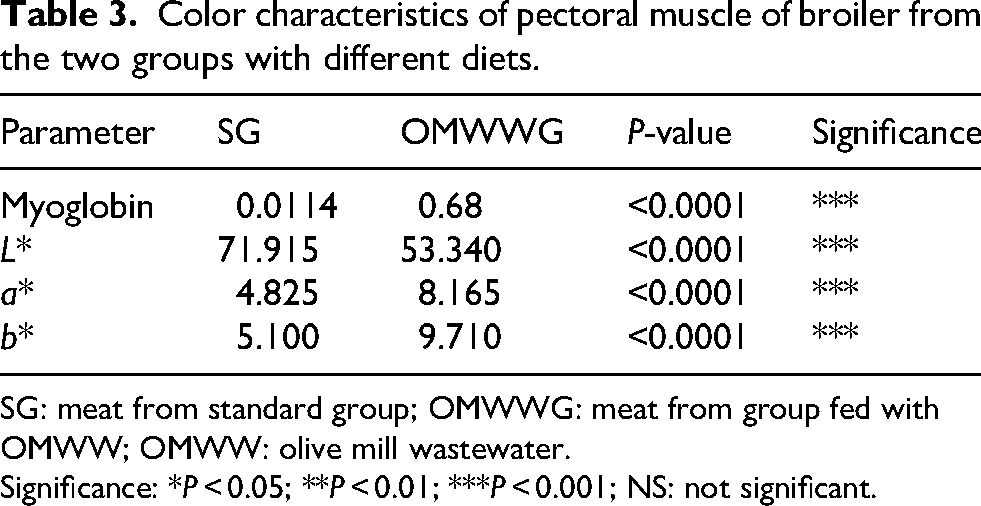
SG: meat from standard group; OMWWG: meat from group fed with OMWW; OMWW: olive mill wastewater.
Significance: *P < 0.05; **P < 0.01; ***P < 0.001; NS: not significant.
However, Branciari et al. (2017) show that the dietary supplement including olive cake had no effect on color; because vitamin E was present in meat from the improved batch (OMWW), the findings of Bou et al. (2004) suggested that supplementing with α-tocopherol acetate can prevent myoglobin oxidation and protect meat color. This could account for our finding.
Instrumental texture measurement
The instrumental texture measurement, specifically the analysis of compression areas, yielded a statistically significant variation between the two dietary groups (P < 0.0001).
Meat from the standard group exhibited an average pressure of 0.070 ± 0.025 (N/mm2), while the meat from the experimental group, supplemented with OMWW, recorded a lower average pressure of 0.060 ± 0.014 (N/mm2) for the applied constant force of 50.79 N. The lower pressure value recorded for the OMWW-supplemented meat suggests that this meat is more tender than the meat from the standard group. These instrumental results are consistent with findings from a comparable study by El Rammouz (2005) on turkey breast, where their measured values for 20% compression fell within the same range as the current study's results (i.e. within the interval [0.0058, 0.324] (N/mm2). However, the values differ significantly from those reported by Campo et al. (2000) for compression areas in beef. This divergence is likely attributable to inherent differences between the species and the contrasting meat maturity times; beef is typically evaluated after 10 days of aging, whereas chicken meat has a substantially shorter post-slaughter maturation period.
Sensory evaluation
The radar plot (Figure 1) visually summarizes the sensory evaluation results for both experimental groups. The most pronounced and distinguishing attributes evaluated were taste, tenderness, the presence of fibers between the teeth, color, heterogeneity, and animal odor. Conversely, the panel assigned less significance to the remaining attributes, which included plant odor, fat odor, and the presence of a greasy/oily film.
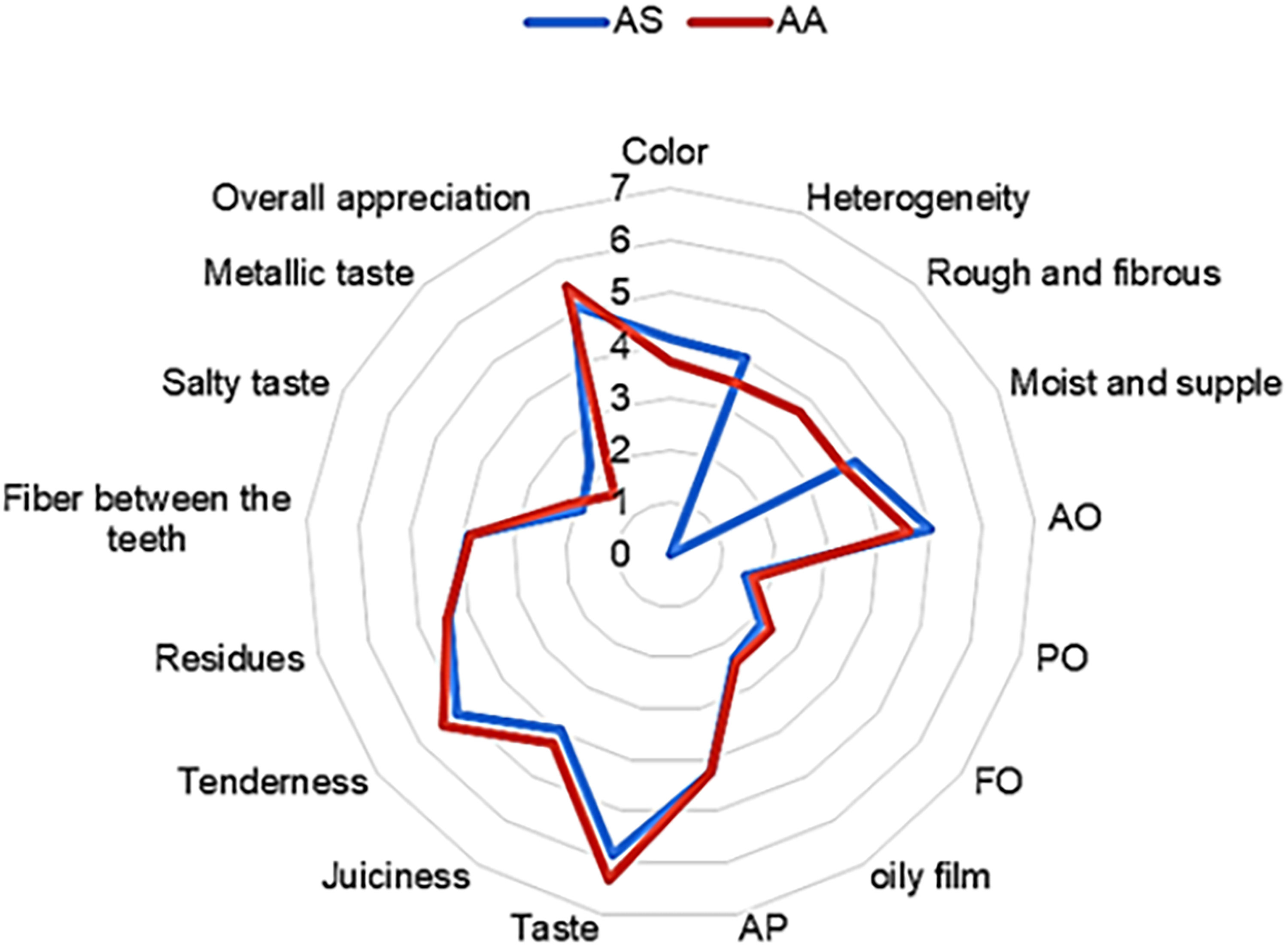
Sensory quality traits of pectoral muscle of broiler from the two groups. AA: meat from broilers with olive mill wastewater diet, AS: meat from broiler of standard diet; AO: animal odor; PO: plant odor; FO: fat odor; AP: aromatic persistence.
Analysis of the sensory panel results are presented in Table 4, which revealed a notable distinction between the two dietary groups across several organoleptic parameters. Significant differences (P < 0.0001) were observed for heterogeneity, animal odor, plant odor, fat odor, salty taste, metallic taste, and the overall appreciation of the cooked meat. More pronounced fat and plant aromas with a salty taste specifically characterized the meat with OMWW supplemented. This observation suggests that the aromatic compounds inherent in the OMWW were successfully metabolized and transferred into the chicken muscle tissue, the panel's findings indicated that the meat from the OMWW supplemented was more highly appreciated than the standard meat (P = 0.002).
Results of sensory perception of meat from the two groups.
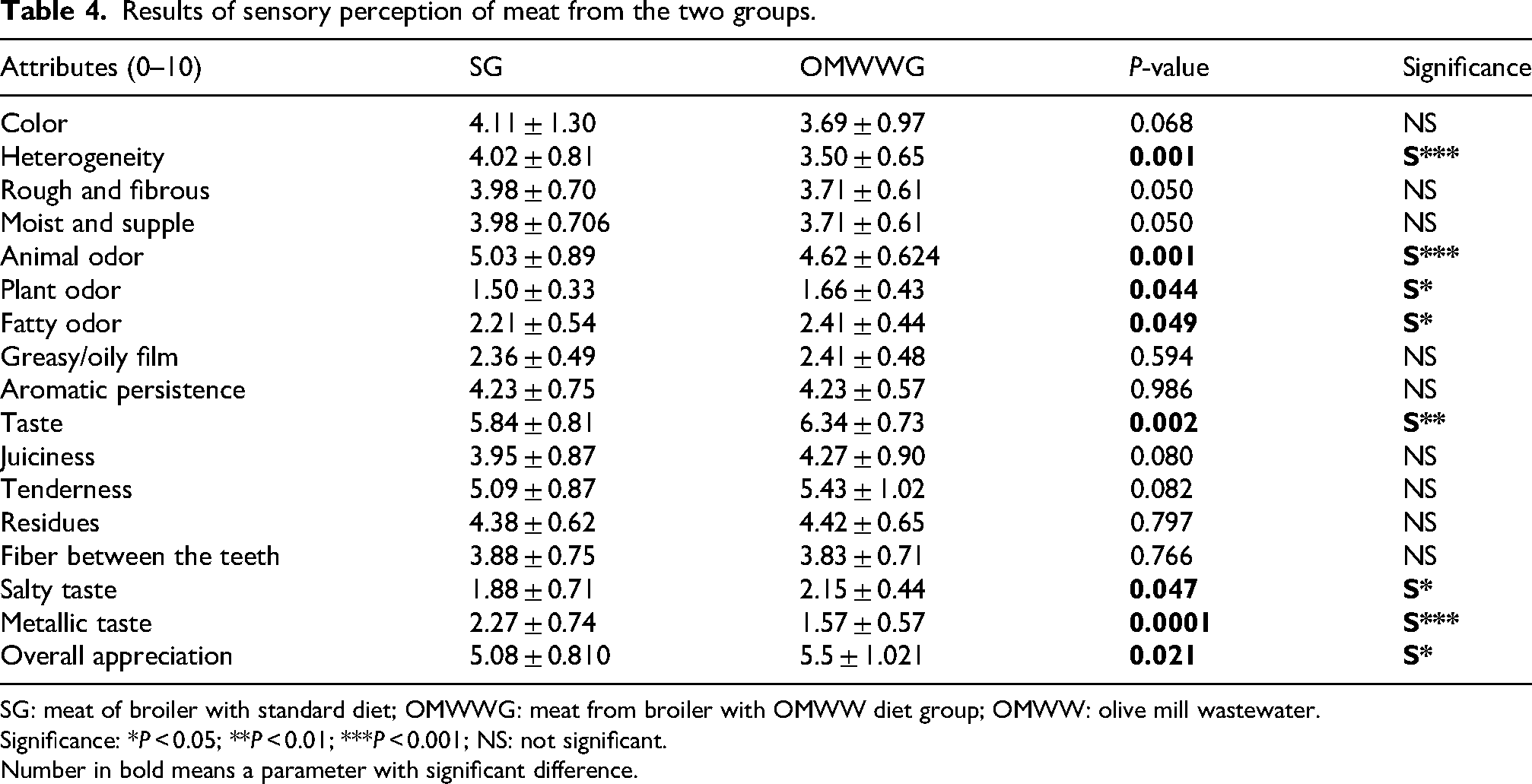
SG: meat of broiler with standard diet; OMWWG: meat from broiler with OMWW diet group; OMWW: olive mill wastewater.
Significance: *P < 0.05; **P < 0.01; ***P < 0.001; NS: not significant.
Number in bold means a parameter with significant difference.
This finding contrasts with a study by Fofana et al. (2021) regarding the incorporation of cashew skins in chicken feed. That study reported a significant difference in color and juiciness, whereas the current investigation found no significant difference in these two attributes between the standard batch and the OMWW-supplemented batch. Furthermore, Fofana et al. (2021) found no significant difference in the tenderness attribute, which also diverges from the results of the present study (as evidenced by instrumental texture and consumer preference data). These discrepancies underscore the variable impact of different agro-industrial byproducts on meat quality parameters.
Our results disagree with those reported by El-Hachemi (2008), who found that chicken meat from broilers supplemented with olive pomace flour at three different percentages was described, upon sensory evaluation, as tender, juicy, and having a more distinct flavor than the control fillet. Contrary to their findings, our study showed no discernible difference in these sensory qualities, cooking methods are the cause of the results’ variability.
Branciari et al. (2017) found that incorporating varying amounts of olive pomace into Ross broiler feed had no impact on flavor or customer acceptability, a finding that contrasts with our own. Conversely, their results concerning juiciness and texture showed no differences, which is consistent with our observations.
The results of the paired preference test illustrated in Figure 2 strongly confirmed the sensory panel's assessment. Sixty-five percent of participants significantly preferred the roasted meat samples from the OMWW-supplemented group (P < 0.05), rating them as superior in terms of taste, tenderness, and juiciness compared to the standard group.
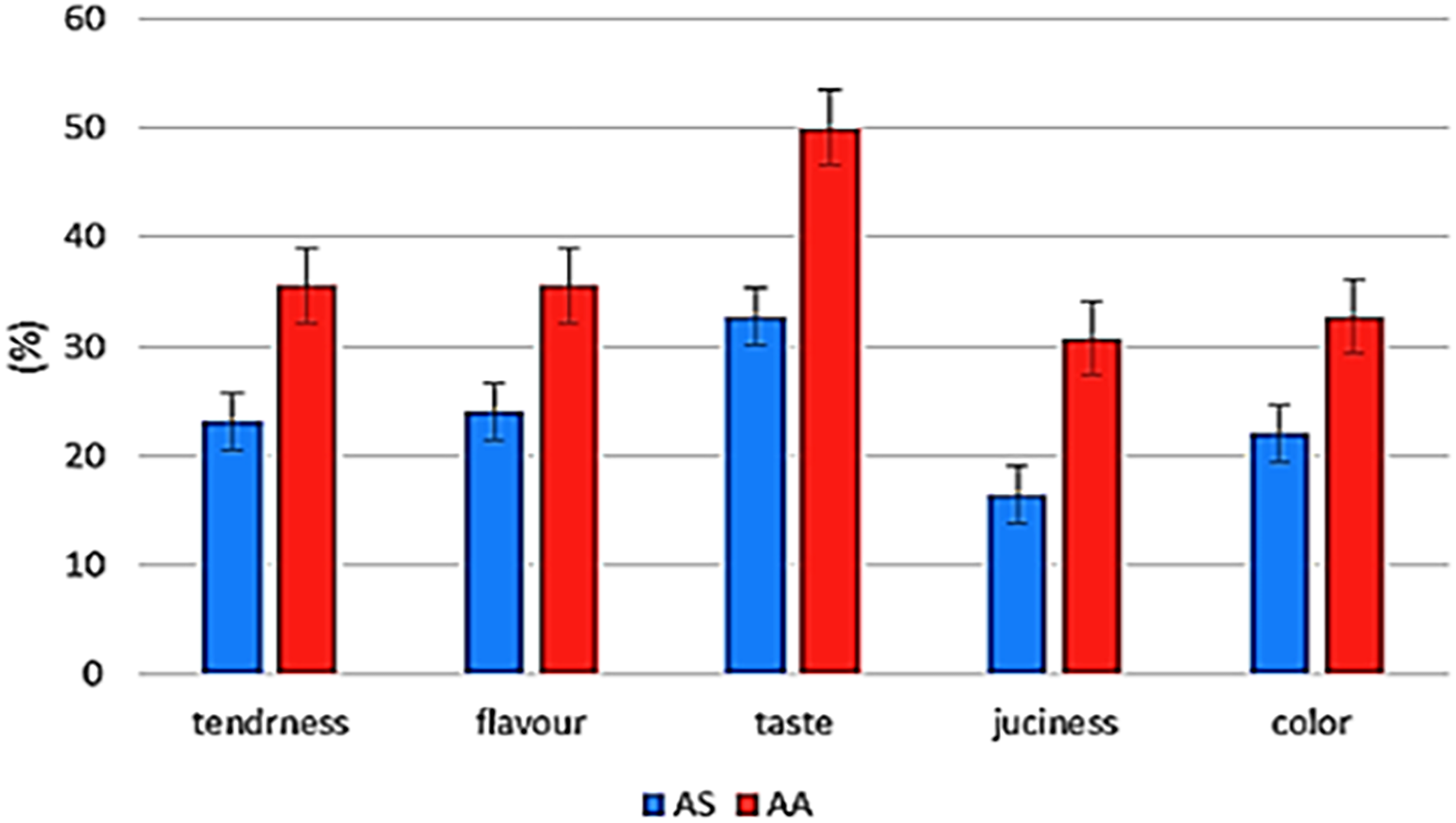
Preference test results according to the two diets.
These findings are in strong agreement with the instrumental texture measurements (compression forces), which independently verified that the meat from the OMWW-supplemented diet was physically more tender and juicy than the standard group. This concordance between instrumental data and consumer preference reinforces the positive impact of OMWW on the organoleptic and technological quality of the broiler meat.
Relationship between feed composition and organoleptic meat quality
The relationship between the poultry's dietary composition, including OMWW, and its impact on the sensory perception of the meat is illustrated in Table 5 and Figure 3.
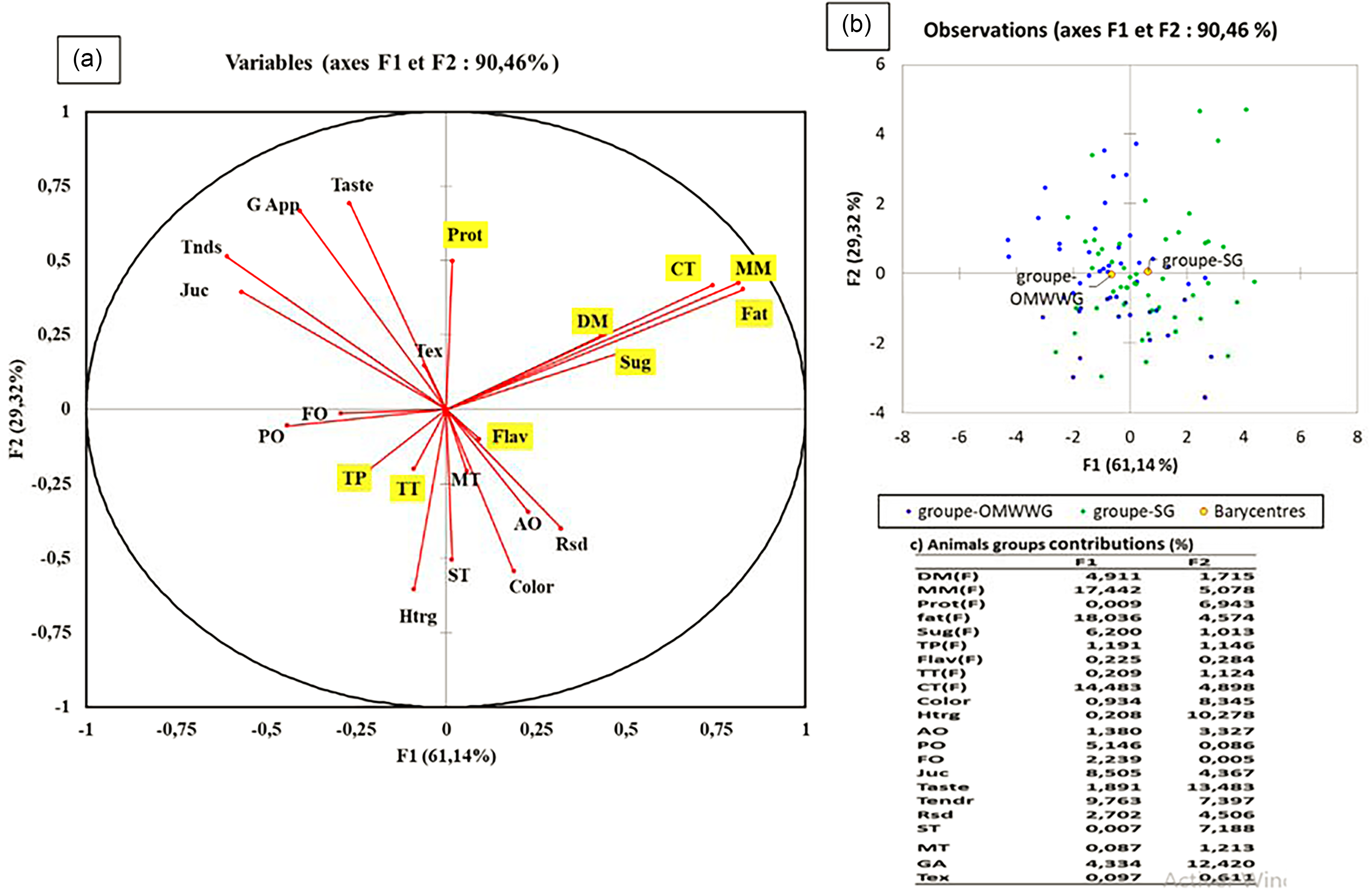
Principal component (PC) analysis of broiler meat sensory traits and feed composition with OMWW: (a) projection of the studied variables in the two first components; (b) bi-plot of the animal groups observations on the two first principal components; and (c) animals groups contributions (%). OMWW: olive mill wastewater; DM: dry matter; MM: mineral matter; Sug: sugars, TP: total phenols, TT: total tannins, CT: condensed tannins, Flav: flavonoids; Prot: protein; Htrg: heterogeneity; G App: global appreciation; Tnds: tenderness; Juc: juiciness, Tex: texture; FO: fatty odor; PO: plant odor; AO: animal odor; ST: salty taste; MT: metallic taste; Rsd: residue between teeth.
Matrix of correlation between the food's nutritional parameters and the meat's sensory qualities.
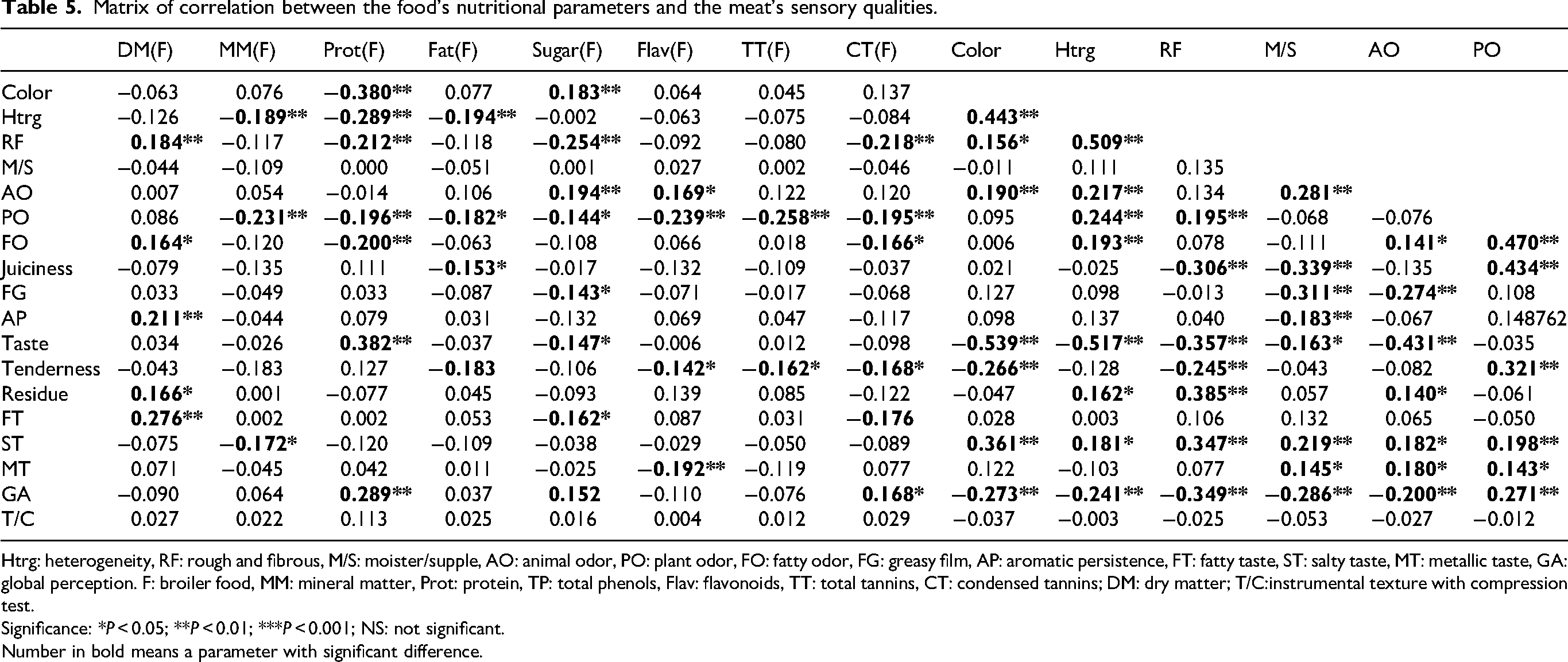
Htrg: heterogeneity, RF: rough and fibrous, M/S: moister/supple, AO: animal odor, PO: plant odor, FO: fatty odor, FG: greasy film, AP: aromatic persistence, FT: fatty taste, ST: salty taste, MT: metallic taste, GA: global perception. F: broiler food, MM: mineral matter, Prot: protein, TP: total phenols, Flav: flavonoids, TT: total tannins, CT: condensed tannins; DM: dry matter; T/C:instrumental texture with compression test.
Significance: *P < 0.05; **P < 0.01; ***P < 0.001; NS: not significant.
Number in bold means a parameter with significant difference.
MM and attributes
Our data reveal several significant relationships between chemical and sensory attributes. Specifically, a significant negative correlation was observed between MM and several sensory parameters, including heterogeneity, plant odor, tenderness, and salty taste. We notably found a negative correlation between MM and tenderness (r = −0.183). Conversely, a positive correlation was noted between flavonoid content and animal odor (r = 0.169; P < 0.001). Furthermore, the correlation between tenderness and metallic taste was also negative, with a coefficient of r = −0.239 (P < 0.001). These findings align with previous research indicating that dietary supplements, particularly minerals, can impact meat quality. Bou et al. (2004) similarly concluded that mineral supplements in broiler feed improve the nutritional value, oxidative stability, and sensory quality of poultry meat and eggs.
The influence of flavonoids, phenols, and MM on tenderness is further corroborated by Haščík et al. (2013a), who suggested that the addition of bee pollen—which is rich in predominant minerals (such as phosphorus, potassium, calcium, and magnesium) as well as phenolic compounds and total flavonoids (Carpes et al., 2009)—could affect meat quality. Haščík et al. (2013a) and Čuboň et al. (2013) confirmed that these minerals can enhance meat sensory qualities. Haščík et al. (2013b) explained that this improvement occurs because increasing the water content in broiler meat tissues can directly enhance sensory characteristics such as tenderness and juiciness. It is important to note that tenderness is not solely influenced by diet. Hafid et al. (2015) indicated that the age of the chicken also plays a role, reporting a negative correlation between age and chicken tenderness.
Juiciness, fat, and tenderness
Our findings indicate a positive relationship between the fat content of the meat and both tenderness and juiciness, demonstrated by a correlation coefficient of r = 0.153 (P < 0.001) (Table 5). These results align with those of Barbantia and Pasquini (2005), who noted that meat juiciness is influenced by fat and protein levels, as well as the feeding diet. Increased juiciness is typically attributed to a higher concentration of water and/or fat at the time of consumption.
However, the cooking process generally reduces juiciness by lowering the water-holding capacity and leading to moisture or fat loss. Consequently, while factors influencing meat lipid content are crucial, nutrition generally has only a minor effect on meat juiciness and, as noted by Baézaa et al. (2022), even less effect on tenderness. Similarly, Williams and Damron (1998) stated that the juiciness of muscle foods is significantly affected by the fat content.
Flavor and fat
The odor is an important sensory attribute of meat, which is sensed more easily than taste and flavor, and both affect acceptance of the product (Winiarska-Mieczan et al., 2016).
Even flavor is a significant sensory quality of cooked meat. It develops during the cooking process of poultry meat because of interactions between sugar and amino acids, nucleic acids, lipids, thermal oxidation, and thiamin, which result in the formation of volatile and non-volatile compounds (Mir et al., 2017; Kucuk ozet and Uslu, 2018). The lipids and fats in poultry are distinct and interact with odor to give them their distinctive “poultry” flavor, yet these chemical changes are not specific to poultry (Northcutt, 2009). Diet formulation will therefore have a strong influence on content of flavor components by modulating particularly the lipid content and composition and levels of antioxidants and water soluble volatile compounds. Fillets of overfed ducks, which are richer in fat, have a higher flavor than fillets of lean ducks (Baézaa et al., 2022).
Figure 3 presents the results of the PCA, providing a clearer view of the connections between the dietary composition (including OMWW) and the sensory quality of the meat. The projection of the variables onto the two principal components accounts for 90.46% of the total variability. The first principal component (F1, horizontal axis) captures 60.14% of the variance. The positive side (nutritional enrichment) on this axis is primarily driven by feed composition variables, including DM, fat, MM, crude protein (CP), and sugars (Sug). These components are all positively correlated with F1 and represent the nutritional enrichment of the diet. Moreover, negative side (sensory qualities) include the nutritional components show negative correlations with several desirable sensory factors projected on the left side of the plot, namely fatty odor, plant odor, tenderness, and juiciness. This inverse relationship suggests that diets richer in the measured nutrients (DM, fat, MM, CT, Sug) are associated with meat that scores higher in juiciness, tenderness, and sensory attributes related to fatty and plant odor.
The second principal component (F2, vertical axis) accounts for 29.49% of the total variability, where the upper side (positive sensory quality) of F2 is dominated by the overall measures of quality, including global appreciation, taste, protein content, and texture. While the opposite side features attributes like heterogeneity, color, salty taste, tooth decay, animal odor, and TPs (specific attributes/phenols).
In the PCA space, variables that are far from the origin contribute most significantly to defining the component, while variables that are close to one another generally exhibit a positive correlation.
The bi-plot (Figure 3(b)) visually confirms the dietary impact: the barycenter for the OMWW group is projected toward the negative side of F1 (left) and the positive side of F2 (upper). This placement signifies a strong association with the superior sensory profile: higher scores for juiciness, tenderness, texture, and better overall panel appreciation (upper F2), this observation is consistent with the known effect of polyphenols to enhance oxidative stability and thereby improve sensory perception, supported by the positioning of TPs on the lower side of F2. Conversely, the standard diet group is positioned toward the right side of F1, indicating that it produces meat of average or lower sensory quality compared to the OMWW group.
The clear separation between the barycenters of the OMWW and standard groups reflects a strong dietary effect. Overall, the OMWW supplementation produces a meat profile that is sensory superior, nutritionally correlated, and highly distinguishable from the standard group.
Conclusion
The introduction of a new diet containing OMWW for broiler chickens has impacted the nutritional value of the meat, increasing its fat and mineral content. Additionally, it has a high concentration of TPs and flavonoids, which are known for their antioxidant properties. These elements contribute to maintaining the color of the meat, significant difference was observed in the concentration of myoglobin and colorimetric parameters between the two studied groups. Moreover, they protect the meat against lipid peroxidation during its storage, as demonstrated by a notable variance in TBARS levels. They are also beneficial from a human health perspective. The consumption of foods rich in antioxidants (phenolic compounds, vitamin E) is now one of the main recommendations in public health. The tasters confirmed the improvement in the taste of the meat, deemed pleasant and salty, without the addition of salt. On the other hand, they brought a pronounced plant aroma, a fact described as very interesting: having meat without animal odors, which many consumers seek.
Therefore, supplementing the standard broiler chicken diet with the olive oil byproduct has improved the nutritional quality and preserved the organoleptic and technological quality of the meat.
Footnotes
Acknowledgments
The theme is articulated within the framework of a national research project of the Ministry of Higher Education and Scientific Research in Algeria. The success of this project is the fruit of SARL NAP the unit supplying with the chick and the food to which we address our respectful thanks and gratitude. Our sincere gratitude goes to the biotechnology research center (CRBT) and the National School of Biotechnology (Algeria) for facilitating this research.

Funding
The authors disclosed receipt of the following financial support for the research, authorship, and/or publication of this article: This work was supported by the Ministry of Higher Education and Scientific Research in Algeria.
Declaration of conflicting interests
The authors declared no potential conflicts of interest with respect to the research, authorship, and/or publication of this article.