




Abstract
Mopane worm (Imbrasia belina) has high protein content, unsaturated fatty acids and minerals. This study was carried out to determine the influence of incorporating mopane worm flour on the nutritional quality and technological and sensory properties of wheat flour biscuits. Wheat flour was partially replaced with 5%, 10%, 15%, 20%, 25% and 30% of mopane worm flour. The protein, fat and ash content of mopane worm flour was higher than wheat flour. Biscuits enriched with mopane protein flour had significantly higher protein, fat and ash content than the control biscuits. There was no significant difference (p > 0.05) between the moisture of control and biscuits added with 5% to 20% mopane worm flour. Nevertheless, the moisture of biscuits added with 20% to 30% mopane worm flour significantly increased, ranging from 3.92% to 3.99%. The incorporation of mopane worm flour increased the amounts of leucine, phenylalanine and lysine in biscuits. Results obtained for colour analysis showed that there was a decrease in L* (56.41–41.10), a*(13.00–8.47) and b* (31.35–24.17) values of biscuits with the addition of mopane worm flour. Nevertheless, the diameter, thickness and weight of enriched biscuits decreased. Spread ratio (2.70–5.87) and hardness (26.83–37.17 g) of enriched biscuits increased. Sensory scores showed that the panellists accepted biscuits enriched with 5% to 15% mopane worm flour. The results of this study show that mopane worm flour improved the nutritional quality of biscuits, and its usage in bakery products should be encouraged.
INTRODUCTION
Consumers nowadays demand healthy and high-quality food, and this poses a challenge to the bakery industry since they need to develop baked products with improved nutritional composition (Stoffel et al., 2021). Biscuits are small, dried, baked products, usually with a golden brown colour with a crisp texture (Cronin and Preis, 2000). They are ready-to-eat food mostly consumed by people of all ages due to their affordability, convenience, nutritive and availability in different flavours (Ayensu et al., 2019; Mahloko et al., 2019; Ochieng et al., 2023). The biochemical and physicochemical reactions that occur in a biscuit dough during baking are very complex and includes water evaporation, protein denaturation, starch destruction, Maillard reaction, and dough expansion due to production and thermal expansion of gas (Chevallier et al., 2000).
Wheat flour is an important ingredient used in bakery products such as bread, biscuits and cakes (Woomer and Adedeji, 2021). The flour is obtained from endosperm, which is the part of the kernel that is ground into flour during the milling process. Wheat flour is a suitable flour for the production of biscuits because it has the capacity to form a strong gluten network when mixed with water, as well as the capacity to form dough (Chioma and Chizoba, 2015). Moreover, the addition of water, salt and sugar causes wheat flour to undergo a hydration process (Nwosu, 2013). Wheat is the most extensively cultivated cereal grain around the globe and it is a rich source of carbohydrates, vitamins and phytochemicals (Aly et al., 2021; Yousaf et al., 2013). Mature wheat grains contain 8% to 20% proteins. Nevertheless, they lack certain indispensable amino acids such as lysine, threonine and methionine (Siddiqi et al., 2020). Processing wheat flour into different food products further depletes it of essential amino acids (Anjum et al., 2005). This limitation may be addressed by enriching wheat flour with ingredients that contain high amounts of essential amino acids such as insects. In this sense, edible insects might be a captivating choice because they are a rich source of important nutrients such as protein, vitamins, minerals, amino acids (leucine, threonine and others) and polyunsaturated fat (Nowak et al., 2016; Zielínska et al., 2015).
For many years, edible insects have contributed to the diet of humans in developing countries, and more than 2100 species are consumed in all stages of life (van Huis, 2020). Edible insects contain high protein content (varies between 25% and 75% d.b.) and are also rich in minerals such as iron and zinc (Jonas-Levi and Martinez, 2017). In addition, edible insects have low greenhouse gas emissions during production, some species have the ability to recycle agricultural by-products such as seeds and peels of fruits and vegetables (Barton et al., 2020; Gomes Martins et al., 2024). Mopane worm (MW) (Gonimbrasia belina) has black or dark-brown spines which protect its tough skin, and it feeds on mopane trees (Colophospermum mopane) that are found in Southern Africa (Kwiri et al., 2014). Women and children usually harvest MW in the summer season (January–April) for a period between 4 and 6 weeks, and its availability depends on the rainfall (Thomas, 2013). Gondo et al. (2010) reported that MW has high protein content, unsaturated fatty acids and minerals. Moreover, Zielinska et al. (2019) and Lategan (2019) demonstrated that dried MW has the potential to supply up to 54% to 65% of a human's daily protein, which is needed for human growth and repairing of damaged cells; MW also provides the required amount of vitamins and minerals including phosphorus, iron and calcium. It contains sufficient amount of lysine, tryptophan and threonine (Zielinska et al., 2019). Enriching wheat flour with MW flour will improve the protein content of biscuits with sincerely hopes to address the recent trend of consumers’ need for healthier bakery products. Nevertheless, insect foods are not known to some consumers because of religious and cultural beliefs (Erhard et al., 2018). For example, Muslims or Christians do not focus much on the nutritional advantages that are linked to consuming certain insects. Rather, single out different insects mentioned in the holy books and restricts their consumption (Burnside, 2015). On the other hand, some studies have uncovered national differences in attitudes towards insects consumption, such that Americans were more willing to eat insects than Indians (Ruby et al., 2015), and Chinese more willing to eat insects than Germans (Hartmann et al., 2015).
Presentation of edible insects as whole food might warrant rejection by the consumers since they do not view them as food and associate them with dirt, spoilage microorganisms and poverty (Cavalheiro et al., 2023). Therefore, the usage of edible insects as functional ingredients, such as flour, could improve their acceptance by consumers (Kim et al., 2017). Recently, various authors have incorporated insect flours in bakery products, including biscuits (Ortolá et al., 2022; Zielínska and Pankiewicz, 2020) and bread (Kowalski et al., 2022; Mafu et al., 2022). In a previous study, biscuits enriched with up to 25% Tenebrio molitor and Alphitobius diaperinus powders had high protein content although panellists perceived the enriched biscuits as very dark and not crunchy and suggested that increase in sweetness might improve their acceptability (Ortolá et al., 2022). Kowalski et al. (2022) supplemented wheat bread with up to 30% edible insect (buffalo worm, cricket, T. molitor) flours. Results revealed that incorporation of edible insect flours improved the protein, amino acids and fatty acid profile of the wheat bread. Sensory analysis showed that enrichment of wheat bread with edible insects is generally acceptable up to 10%. Zielińska and Pankiewicz (2020) enriched biscuits with mealworm (T. molitor) flour. The incorporation of mealworm flour improved the protein, ash content, antioxidant activity, and content of slowly digested starch of wheat biscuits. Nevertheless, mealworm flour decreased the lightness (L*), yellowness (b*) and total colour difference (ΔE) but increased the redness (a*), browning index and spread ratio of the biscuits.
To the best of our knowledge, the application of MW flour in baked products such as biscuits has not yet been studied. In this context, the objective of this study was to develop high-protein biscuits enriched with MW flour. Furthermore, the nutritional composition, technological and sensory characteristics of the developed biscuits were measured. We hypothesise that the incorporation of MW flour in an unrecognised form into widely consumed bakery products such as biscuits might be another alternative for their inclusion to the diet as well as introducing the product to the market. This study is important to the food industry and research community since developing countries such as South Africa do not have a standard or regulation to govern the sale of insects for human consumption.
MATERIALS AND METHODS
Materials and reagents
Wheat flour, dried MW and ingredients such as wheat flour, margarine, sugar, baking powder and salt were bought from local market at Thohoyandou, Limpopo province, South Africa. They were stored in a sealed container to avoid contamination and stored at room temperature (22 °C–26 °C) until used. All the analytical chemicals and reagents used in this study were procured from Merck (Kempton Park, Gauteng province, South Africa).
Preparation of mopane worm flour
Dried MW were cleaned using portable water to remove dirt and soil. The head and the tail were removed using a knife. Thereafter, MW were dried at 50 °C overnight, milled into flour using Retsch miller (ultra-centrifugal mill ZM 200, Germany) with grinding time of 2 min, 12 teeth, rotating speed of 18,000 rpm and sieved using a 250 µm sieve to produce finer flour, packed in a vacuum plastic bag, labelled and stored at refrigerated temperature until analysis. The MW flour was used to replace wheat flour at different ratios.
Biscuits production
Biscuits were prepared using the method explained by Egwujeh et al. (2018), using different ratios of MW flour (5%, 10%, 15%, 20%, 25% and 30%), which partially substituted wheat flour (Table 1). Control biscuit samples were made using 100% wheat flour. Fat was buttered with wheat flour, MW flour and baking powder separately, sugar and salt were added to water and vanilla essence in order for them to dissolve, they were mixed until cream was formed, then buttered dry ingredients were mixed with the cream and whipped for 5 min until the dough was formed; the dough was kneaded using a spiral mixer (model IM8, Famag Ltd, Messina, Italy) until uniform thickness, then it was cut into uniform shapes, then transferred into oiled baking pans. Biscuits were baked in a preheated oven (Defy, Model DSS700, Midrand, South Africa) at 180 °C for 25 min and allowed to cool for 30 min at room temperature. Afterwards, biscuits were packaged in polyethylene bags and stored at room temperature for further analysis. Three batches of biscuit samples were produced, and the experiment was repeated three times for the reliability of the results.
Formulation of ingredients for biscuit production.
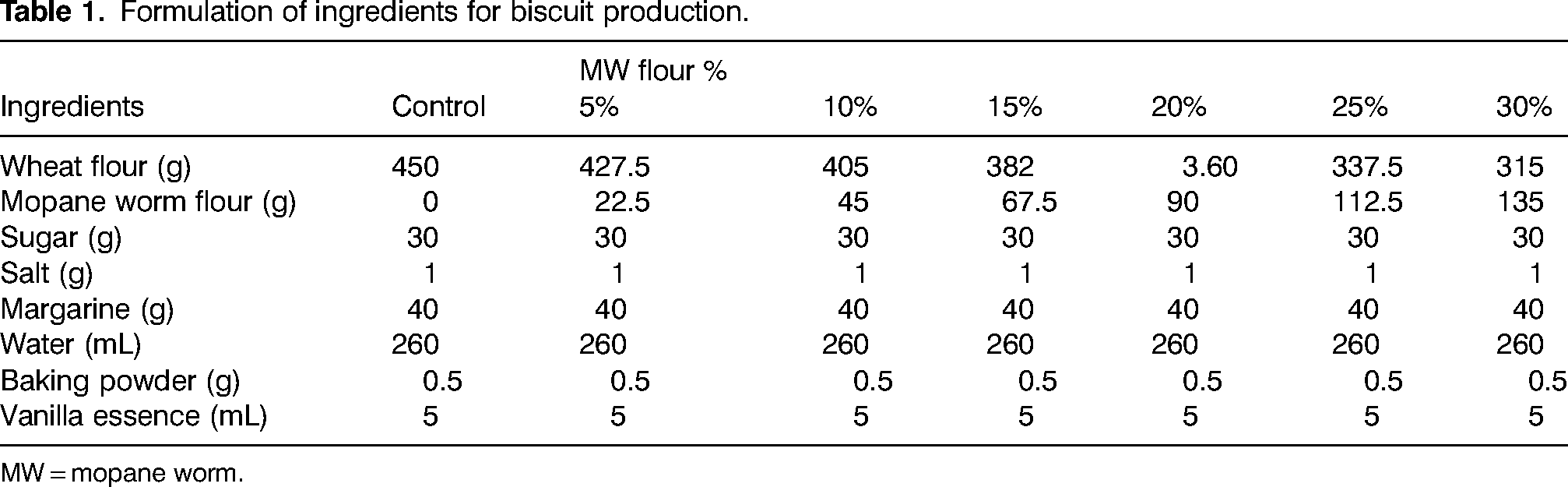
MW = mopane worm.
Proximate analysis of flour and biscuits
Proximate parameters (moisture, protein, fat and ash content) were determined following the Association of Official Analytical Chemists’ methods (AOAC, 2006). Moisture content was measured using AOAC method No. 945.32 through oven drying. Protein was measured according to the method of AOAC No 978.02 using a Kjeldhal analyser, a conversion factor of 5.60 was used for MW flour as recommended for insects’ determination (Janssen et al., 2017). Fat content was measured as described by method of AOAC No 920.39 using Soxhlet extraction system. The muffle furnace was used to measure the ash content according to the method of AOAC No.923.0.
Determination of amino acids in biscuits
The amino acid analysis was performed following the method described by (Zozo et al., 2022) with minor modifications. To prepare the samples, 500 mg of powdered biscuit was subjected to hydrolysis using 6 mL of 6 N hydrochloric acid (HCl) at 110 °C for 23 h. Post-hydrolysis, the samples were cooled to room temperature and then dried using a Reacti-Therm™ heating/stirring module at 70 °C under a nitrogen stream. The resulting residue was quantitatively transferred to 100 mL volumetric flasks and made up to the final volume with 0.1 M HCl. The solutions were filtered through 0.22 μm pore size cellulose membrane syringe filters (Sigma-Aldrich, Johannesburg, South Africa) and introduced into HPLC vials. Derivatization of the hydrolysed samples was performed with orthophthalaldehyde (OPA) and 9-fluorenylmethyl chloroformate (FMOC), followed by analysis using a Zorbax Eclipse-AAA column at 40 °C under fluorescence detection. The FAO/WHO method was used to calculate the amino acid score (AAS):
Physical properties of biscuits
Thickness (cm) of biscuits was measured using a digital Vernier calliper, six biscuits were stacked and average value was calculated. Diameter (mm) was measured by placing biscuit samples edge to edge into Vernier calliper, and an average of six biscuit diameters was measured (Ohizua et al., 2017). An electronic weighing balance (Adam, PGL 6001) was used to measure the weight (g) of the biscuits. Spread ratio was measured from the ratio of the average value of diameter to thickness of the biscuits (AACC, 2000). All analyses were replicated three times to ensure accuracy and consistency.
Colour measurement of biscuits
The colour of biscuits was measured using spectrophotometer (Konica Minolta, Inc., model CM-3600d, Tokio, Japan) at an angle of 10 °, D65 with 8 mm shutter was used as the illuminant. Hunter values L*, a* and b*were determined where L* measured the lightness from black to white (0–100), a* indicated the red (+) to green (−) and b* indicated yellow (+) to blue (−) (Mahloko et al., 2019). Hue, chroma and ΔE which is the colour difference was calculated from L*, a* and b* values using formulas:



Texture analysis of biscuits
The hardness of the biscuits was measured using the TA-XT plus texture analyser (Stable Micro System Ltd, Surrey, UK). A P/6 cylinder probe was used to perform the penetration test. A 5 kg load cell was used, the test speed was one mm/s while the distance was 2.00 mm and this was done to produce a hole through the biscuit. Hardness was calculated as the value of maximum force.
Sensory evaluation of biscuits
Panellists were verbally approached and recruited 48 h before biscuits tasting. A total of 92 untrained panellists (58 females, 34 males, aged 18–59) who consume wheat biscuits at least twice in a month evaluated the biscuits samples. A questionnaire was developed to screen panellists with specific condition such as wheat gluten allergy. Panellists who voluntarily participated in the study were given consent form prior to tasting. They were briefed about the procedure and the importance of the study. The sensory evaluation was conducted in a sensory laboratory in individual panel booths. The biscuits samples were randomly labelled with three-digit codes obtained from a Table of Random Numbers. Panellists were asked to evaluate biscuits based on colour, aroma, texture, taste and overall acceptability. Each sensory attribute was rated using a nine-point hedonic scale (1 = dislike extremely, 5 = neither like nor dislike, 9 = like extremely). Three-digit coded biscuit samples were served (on polystyrene plate) to the panellists in a random order. A cup of potable water was provided to panellists so they could rinse their mouths in between biscuit evaluations. Panellists were supplied with one biscuit for each sample to taste. No monetary incentives were given to the panellists. The permission to conduct sensory evaluation was approved by University of Venda ethical clearance committee.
Statistical analysis
Statistical analyses were carried out using SPSS 26.0 (Chicago, IL, USA). Significant differences in proximate composition, amino acids profiles, physical characteristics, colour profile and sensory attributes of enriched biscuits were determined using a one-way ANOVA. Means were separated by Fisher Least Significance Difference (LSD) test at p < 0.05. Means and standard deviation of three replicates were reported for each analysis. The primary sensory evaluation data were subjected to statistical calculations, and on their basis, a regression analysis was performed for each of the tested biscuit samples.
RESULTS AND DISCUSSION
Proximate composition of dried mopane worm and wheat flours
MW flour had a higher content of protein, fat and ash, while wheat flour had a higher moisture content (Table 2). The availability of bound water in the wheat flour might have contributed to higher moisture content (12.11%). Nevertheless, MW flour had a low moisture content of 7.83% due to less availability of bound water since it contains a high protein content (Wani et al., 2015). Siulapwa et al. (2012) obtained similar results wherein the moisture content of MW was 9.1%. The moisture content falls within the acceptable range of less than 14%, indicating that both flours will have longer shelf life during storage.
Proximate composition of dried mopane worm powder and wheat flours (dry basis).

Data were expressed as mean and standard deviation of triplicate values. Different superscripts in a column indicate significant differences between means (p < 0.05).
Protein content (60.66%) was the dominant nutrient in MW flour, followed by fat content (16.02%). High protein content indicates that MW might be used as a possible source of protein, particularly in developing countries where meat might be expensive for certain individuals. Moreover, MW can be used in a flour form to produce high-protein bakery products as well as reduce aversion in relation to the consumption of insects as food (Montowska et al., 2019). The value of protein content observed in this study was higher than that of Vanqa et al. (2022) (46.70%). The differences can be attributed to the fact that the nutritional content of MW is directly linked to the quality of the mopane trees on which they feed and any pre-treatment processes applied before transformation into flour. Nevertheless, Kwiri et al. (2020) reported a protein value of 55.41% in MW flour.
The fat content of MW flour was 16.02%, while wheat flour had a value of 0.97%. These results were expected since wheat flour is a poor source of fat (Uthayakumaran and Wrigley, 2010), whereas WM flour is rich in unsaturated fatty acids. Kwiri et al. (2020) reported that the fat content of MW is approximately 15%, wherein 38% of fatty acids are saturated while unsaturated is 62%. Vanqa et al. (2022) reported a fat content of 13.91% in MW flour, and the value was lower than that of this study.
The ash content of MW flour (9.84%) was higher than of wheat flour (0.28%). High ash content shows that MW is rich in minerals, and its incorporation in wheat flour might improve the mineral content of biscuits. The value of ash content of MW flour was lower than the value (11.38%) obtained by Vanqa et al. (2022). Currently, there are no standard processing methods for edible insects such as MW in the food industry. Processing methods, including drying and milling, drying conditions, storage practices, variability in MW characteristics, seasonal and environmental factors, the quality of mopane trees, pre-treatment processes, and particle size during milling, all play crucial roles. These factors collectively impact the nutritional quality of the MW flour (Vanqa et al., 2022).
Proximate composition of biscuits
The results of the proximate composition of biscuits enriched with MW flour are depicted in Table 3. The moisture content varied from 2.75% to 3.99% and biscuits enriched with MW flour of 25% and 30% having the highest values. Nevertheless, no significant difference (p > 0.05) was observed between the moisture content of control and biscuits enriched with 5% to 20% MW flour. The higher moisture content in biscuits enriched with 25% and 30% MW flour might be attributed to the higher fat content of MW flour (Table 1) which might have prevented the evaporation of water during the baking process and to the high protein content which might have bonded more water (González et al., 2019; Sriprablom et al., 2022). Nevertheless, the moisture content of enriched biscuit samples was within the acceptable limit of less than 5%, irrespective of the increase. The results show that control and enriched biscuit samples will have better shelf stability during storage since the shelf life of baked products has direct links to their moisture content (Ayensu et al., 2019). Ortolá et al. (2022) obtained similar results wherein biscuits enriched with T. molitor and A. diaperinus flours had higher moisture content than the control biscuit.
Proximate composition of control and enriched biscuits (dry basis).
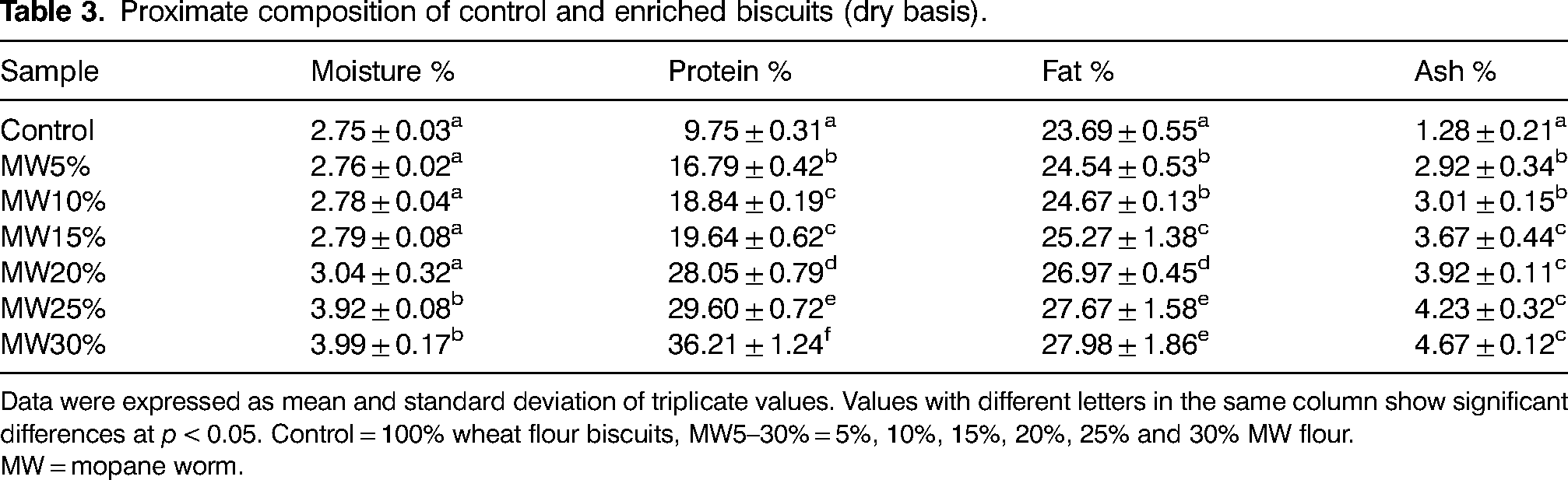
Data were expressed as mean and standard deviation of triplicate values. Values with different letters in the same column show significant differences at p < 0.05. Control = 100% wheat flour biscuits, MW5–30% = 5%, 10%, 15%, 20%, 25% and 30% MW flour.
MW = mopane worm.
The protein content of biscuits increased with values varying from 9.75% to 36.21%. High protein content in MW flour (Table 2) contributed to high protein content of enriched biscuits. Kwiri et al. (2020) indicated that insects are rich in protein and varies from 58% to 65%. Higher protein content of enriched biscuits might be desirable since intake of good-quality protein is needed for growth and development (Xiong et al., 2023). In this context, MW flour could be used to enrich other food products which contain less amount of protein such as wheat flour, and this will help to alleviate protein deficiency. Comparatively, incorporation of sorghum-termite flour into wheat flour increased the amount of protein of biscuits with values ranging from 10.5% to 41.0% (Awobusuyi et al., 2020a).
The fat content of enriched biscuits increased with the increase in the percentage of MW flour, ranging from 23.69% to 27.67%. The increase in fat content of MW-enriched biscuits might be attributed to high fat content of MW flour as shown in Table 2. MW contains major fatty acids with linoleic acid being the most prevalent along with palmitic and oleic acids (Amadi and Kiin-Kabari, 2016; Yeboah and Mitei, 2009). Awobusuyi et al. (2020a) obtained similar results on sorghum-insect flour-fortified biscuits, wherein the values of fat content varied from 14.3% to 28.2%.
The ash content of the biscuits samples enriched with WM flour (2.92–4.67%) was significantly higher compared to the control (1.28%). The greater ash content of enriched biscuits was probably attributed to the ash content of MW flour (Table 2). Moreover, MW is rich in minerals such as iron, magnesium, calcium and zinc (Glew et al., 1999). Similar data was observed by Koffi-Niaba et al. (2013) wherein the ash values of biscuits enriched with defatted termite (Macrotermes subhyalinus) flour increased from 3.36% to 4.33%.
Amino acid profile of the biscuits
Table 4 shows that enriched biscuits had significant amounts of amino acids, and the vital non-essential amino acids present were glutamic acid, tyrosine and proline. In general, all amino acids substantially increased (p < 0.05) with the incorporation ratios of MW flour. MW is rich in non-essential amino acids such as glutamic acid (7.4%), aspartic acid (6.6%) and tyrosine (4.1%); the essential amino acids includes phenylalanine (5.8%), leucine (3.3%), valine (2.65%) and threonine (2.1%) (Ledbetter et al., 2024). The high amount of glutamic acid on enriched biscuits is imperative since it biosynthesizes glutame, a key neurotransmitter. Tyrosine is another neurotransmitter which was higher in the enriched biscuits. Thus, the consumption of these biscuits will be beneficial since tyrosine is associated with cognitive task performance, fatigue and general alertness under different stressful conditions (Young, 1996). However, it should be noted that the body is able to produce its own non-essential amino acids. Despite the fact that insects such as WM are rich sources of phenylalanine, it was low in the biscuits compared to leucine, and it might be due to losses during processing (Cheng et al., 2014). Nevertheless, the values of phenylalanine and leucine in biscuits significantly increased, ranging from 0.38% to 0.84% and from 0.56% to 1.11%, respectively. The increase in aromatic amino acids such as tyrosine and phenylalanine would influence the flavour of the enriched biscuits (Kittibunchakul et al., 2023). Wheat flour is deficient in lysine (Bukkens, 2005), therefore, the inclusion of insect flour such as MW should be recommended since it improved the lysine content of the biscuits. This is particularly important since lysine is obtained from food as the human body cannot synthesise it (Tomé and Bos, 2007).
Amino acids profile of biscuits enriched with MW flour (mg/g).
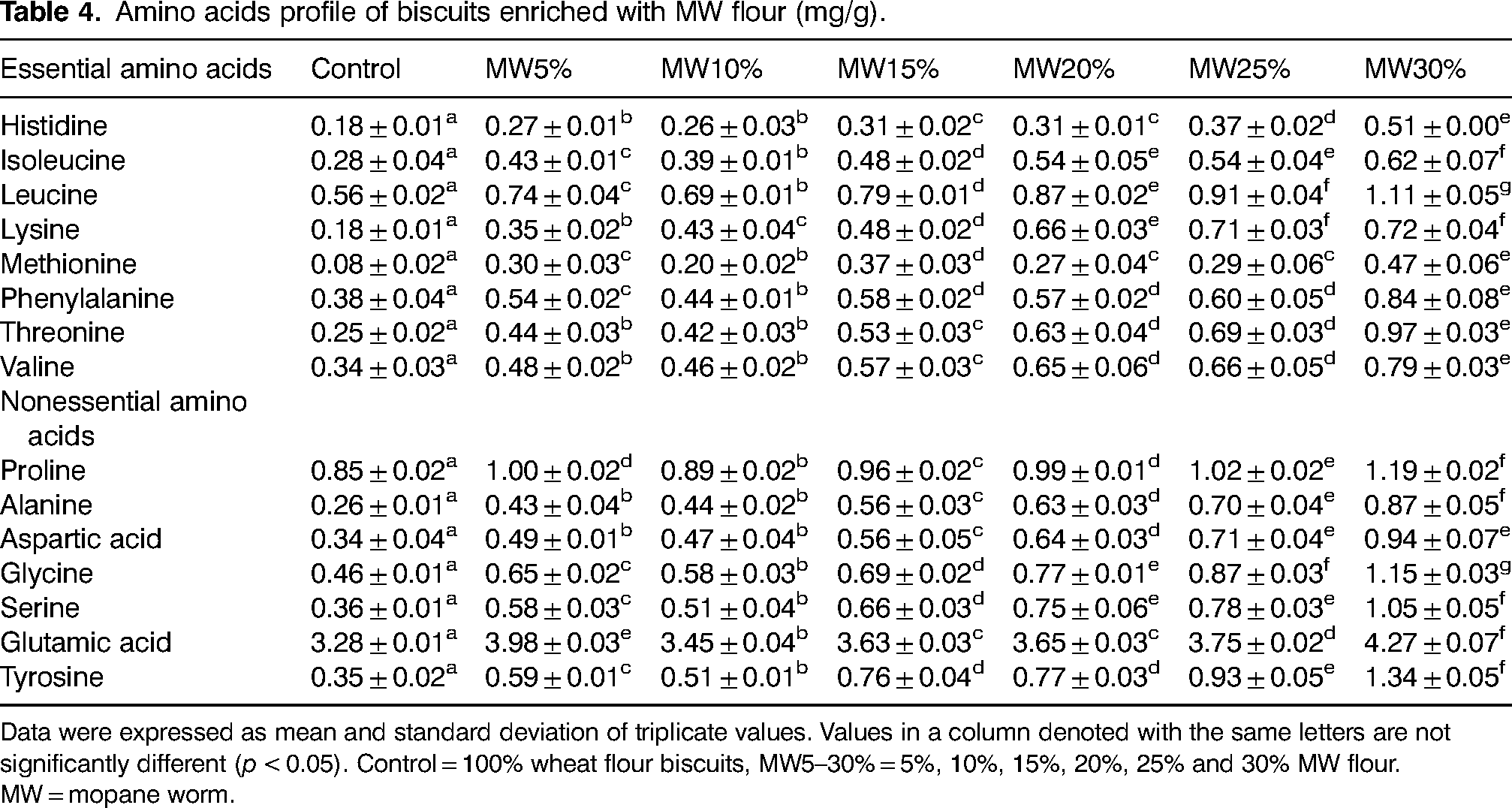
Data were expressed as mean and standard deviation of triplicate values. Values in a column denoted with the same letters are not significantly different (p < 0.05). Control = 100% wheat flour biscuits, MW5–30% = 5%, 10%, 15%, 20%, 25% and 30% MW flour.
MW = mopane worm.
The valine in biscuits increased with values varying from 0.34% to 0.79%. Threonine, which is also deficient in cereal grains, significantly increased with the inclusion ratios of MW flour varying from 0.25% to 0.97%. Fairly amounts of histidine and methionine were also found in biscuits (0.18–0.51% and 0.28–0.62%), respectively. Histidine is needed for proper growth and development of young children (Awobusuyi et al., 2020a; Ogungbenle et al., 2013). In this context, enriched biscuits with MW flour might be a good source of histidine needed by children. Nevertheless, the concentration of most amino acids was higher in biscuits enriched with 5% MW flour than in biscuits enriched with 10% MW flour. The variations might be the indication of degree of protection the polyamide structure provided to 5% enriched biscuits against the baking process carried out in the conditions of this study (Montevecchi et al., 2021).
Table 5 elucidates the novel impact of incorporating MW flour on the amino acid scores of biscuits, depicting an analysis of the nutritional improvements across various formulations. These results indicate an increase in the scores of histidine and threonine, with 30% MW flour enriched biscuits achieving peak values of 211.9% and 258.0%, respectively. This significant enhancement points to the unique nutritional properties of MW flour, particularly its high concentrations of these essential amino acids. Additionally, findings highlight the substantial improvement in lysine content – a traditionally limiting amino acid in wheat-based products – which reaches its optimal score of 119.5% in the 25% MW flour enriched biscuits. Methionine, initially a second limiting amino acid, demonstrates a substantial rise to 210.8% in the 15% MW flour enriched biscuits, further emphasising the unique capability of MW flour to augment this crucial amino acid. Conversely, a novel finding of this study is the reduction in phenylalanine and tyrosine scores with increased MW flour, with the lowest score recorded at 66.5% in the 30% MW flour enriched biscuits, identifying a potential limiting factor in high insect content formulations. The novelty of this study lies in its demonstration that while MW flour significantly enhances the overall amino acid profile of biscuits, it also necessitates precise formulation strategies to ensure a balanced and optimal amino acid composition, particularly in the context of lysine, phenylalanine and tyrosine.
Amino acid scores of biscuits enriched with MW edible insect.
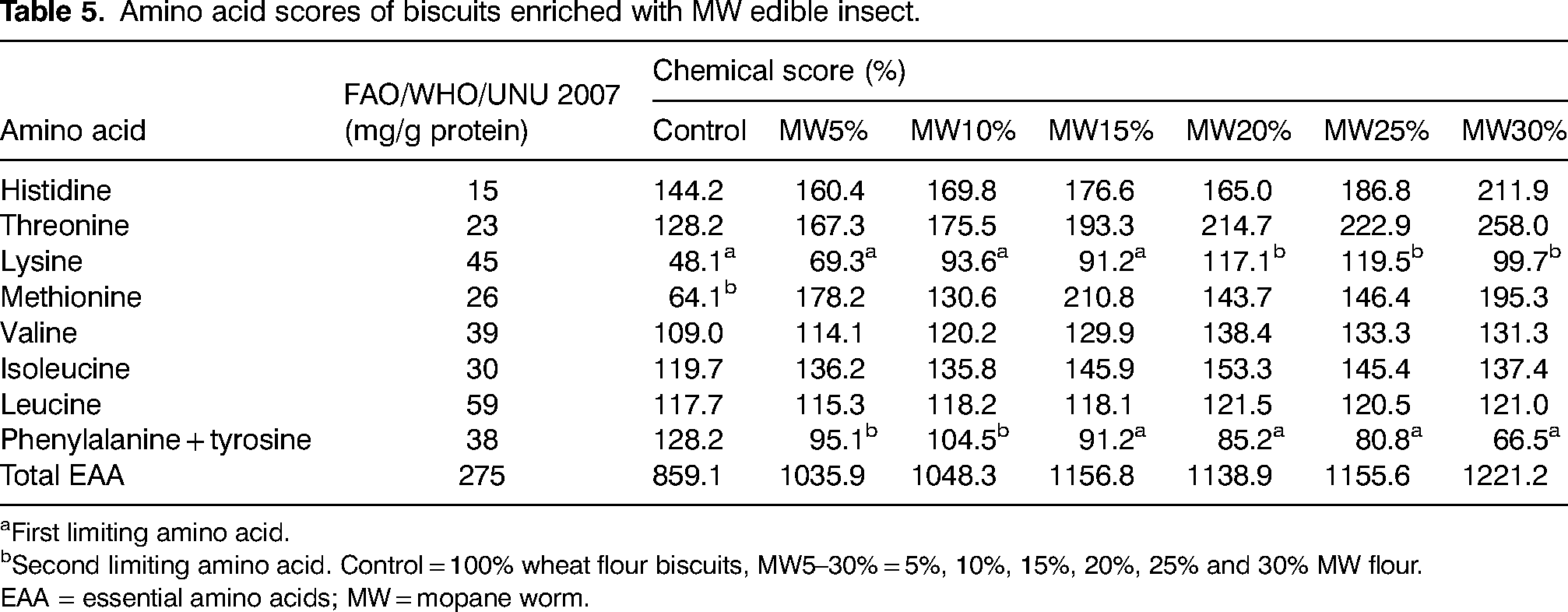
First limiting amino acid.
Second limiting amino acid. Control = 100% wheat flour biscuits, MW5–30% = 5%, 10%, 15%, 20%, 25% and 30% MW flour.
EAA = essential amino acids; MW = mopane worm.
Physical characteristics of biscuits
The physical characteristics (weight, thickness, diameter, spread ratio and hardness) of biscuits are shown in Table 6. The diameter of the control and enriched biscuits did not differ significantly (p > 0.05) with values ranging from 3.97 to 4.07 cm. Similar data was observed by Sriprablom et al. (2022) wherein the incorporation of Zophobas atratus flour did not influence (p > 0.05) the diameter of the wheat biscuits with values ranging from 4.74 to 4.76 cm. The thickness of the biscuits varied from 1.30 to 0.90 cm with biscuits enriched with 15% to 30% MW flour having lower values. Nonetheless, no significant difference (p > 0.05) was observed between the thickness of the control and biscuits enriched with 5% and 10% MW flour. The low thickness of MW flour enriched biscuits might be attributed to the role of gluten, which might have been weakened during the baking process since it is not available in the insect flour (Olalekan and Borokini, 2010). Nevertheless, the high protein content of enriched biscuits (Table 3) might also have contributed to the decreased thickness since it is not easily expandable as wheat flour (Sriprablom et al., 2022). Ortolá et al. (2022) obtained similar data for decrease in thickness of biscuits enriched with T. molitor and A. diaperinus flours. In addition, the incorporation of T. molitor decreased the thickness of biscuits with values ranging from 0.33 to 0.30 cm, respectively (Sriprablom et al., 2022).
Physical characteristics of biscuits enriched with MW flour.
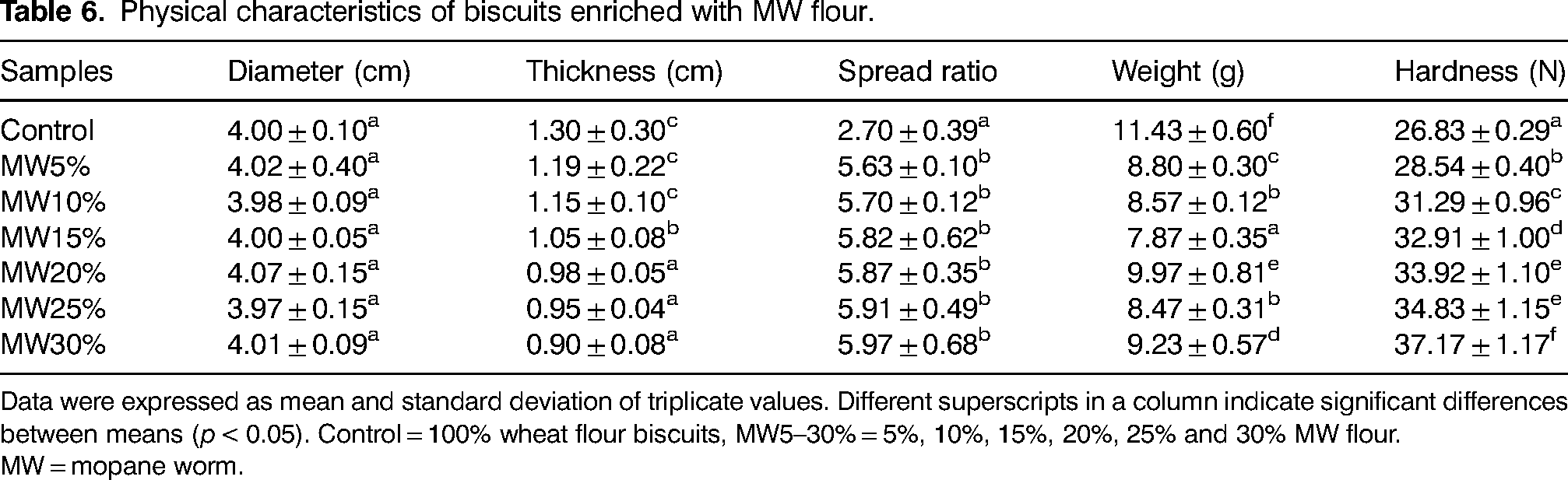
Data were expressed as mean and standard deviation of triplicate values. Different superscripts in a column indicate significant differences between means (p < 0.05). Control = 100% wheat flour biscuits, MW5–30% = 5%, 10%, 15%, 20%, 25% and 30% MW flour.
MW = mopane worm.
The spread ratio of biscuit samples substantially increased (p < 0.05) with the incorporation ratios of MW flour, with values varying from 2.70 to 5.87. The high fat content of enriched biscuits (Table 3) might have contributed to the increase in the spread ratio since it is related to fat content. Moreover, spread ratio is associated with the texture, bite, and overall mouth feel of biscuits (Bose and Shams-ud-Din, 2010). According to Lai and Lin (2006), melting fats during baking causes water molecules to migrate, making them available for sugars to dissolve and promoting the increase in spread ratio of enriched biscuits. A higher spread ratio is preferable for biscuits because it shows a higher product performance (Akande et al., 2020). In this context, MW flour increased the spread ratio of biscuit samples, and enriched biscuits were more desirable than the control sample.
The results show that the inclusion of MW flour decreased the weight of biscuits, with values varying from 11.43 to 7.87 g. The decreased weight in enriched biscuits could increase brittleness in the packaging and problems in appearance (Bas and Nehir El, 2022; Rodriguez-Garcia et al., 2013). Nevertheless, the decreased in weight of enriched biscuits contrasts with the results of moisture in Table 2 and this trend needs further investigation. Results obtained in this study are not in agreement with the data of Aboubacar et al. (2022), wherein the inclusion of caterpillar (Imbrasia oyemensis) flour increased the weight of biscuits (20.37–21.03 g). On the other hand, the incorporation of T. molitor and Z. atratus flours showed no significant variation (p > 0.05) in the weight of biscuits with values varying from 70.62 to 70.92 g and from 70.62 to 70.78 g, respectively (Sriprablom et al., 2022).
The hardness of the biscuits significantly increased, with values varying from 26.83 to 37.17 N. The increase in the hardness of enriched biscuits might be attributed to the high protein content (Table 3) which might have contributed to strong binding of protein and starch by hydrogen bonding which occurred during development of dough and baking (Sriprablom et al., 2022). The greater hardness of enriched biscuits might also be due to the addition of MW flour, which reduced the gluten in the dough, thereby affecting the formation of gluten matrix (Chauhan et al., 2016). A decrease in air entrapment might have occurred during baking and the formation of a denser texture, which required the higher force to break the enriched biscuits (Sriprablom et al., 2022). Nevertheless, high fibre content (8.92%) of MW flour could have resulted to the increased in hardness of biscuits (Mohamed et al., 2008). The enriched biscuits had higher hardness, but the incorporation of MW flour in bakery products should be promoted since it produces high-protein biscuits. Similar findings were reported by Ortolá et al. (2022), who observed higher hardness of biscuits enriched with T. molitor and A. diaperinus flours.
Colour profile of biscuits
Results obtained for colour profile show that the L*, a*, b*, chroma and hue angle values of enriched biscuits decreased compared to the control biscuits (Table 7). The L*, a* and b* values of biscuits decreased with increasing substitution level of MW flour. The control sample had the highest L* value (56.41), and the biscuits enriched with 30% MW flour had the lowest L* value of 41.10. The same trend of higher a* and b* values in control sample was observed, the a* values varied from 13 to 8.47 and from 31.35 to 24.17 for b* values. The reduction in L*, a* and b* of enriched biscuits were expected since MW flour has a darker colour than wheat flour. Therefore, the inclusion of MW flour gave biscuits a darker colour with black spots which is in agreement with their visual appearance shown in Figure 1. Biscuits enriched with 25% and 30% MW flour had a lot of black spots since MW contains chitin. In addition, the colour of raw materials used is also associated with the colour of the baked products. MW has a higher protein content (Table 1) than wheat flour which resulted to a higher level of Maillard reaction. In this sense, low L*, a* and b* values of enriched biscuits might be associated with Maillard reaction between sugar and amino acids during baking, which imparted darker colour in enriched biscuits because of generation of brown pigments (Akande et al., 2020; Mohamed et al., 2008).
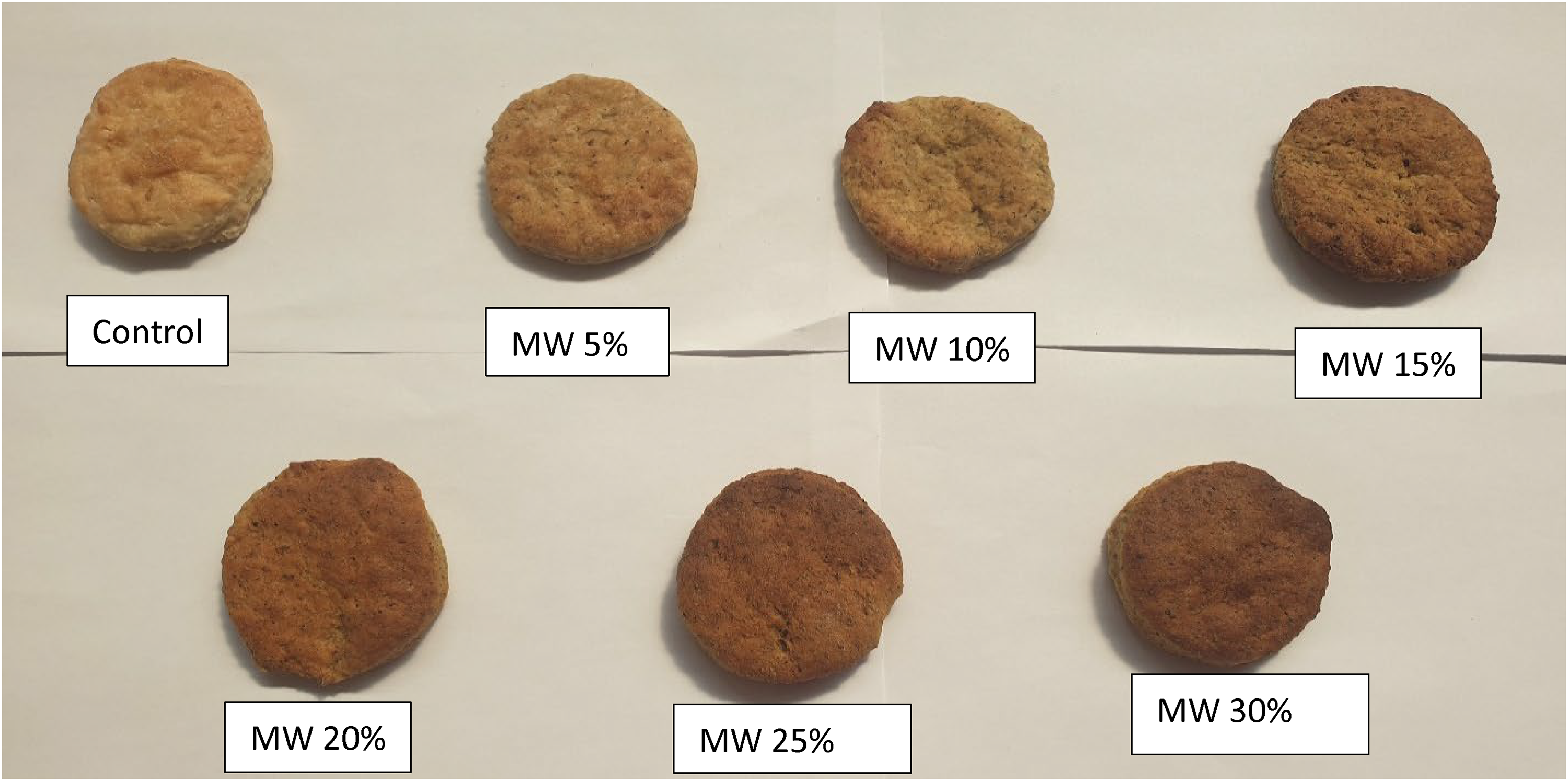
Biscuits enriched with mopane worm flour. Control = 100% wheat flour biscuits, MW5–30% = 5%, 10%, 15%, 20%, 25% and 30% mopane worm flour.
Colour characteristics of biscuits enriched with MW flour.
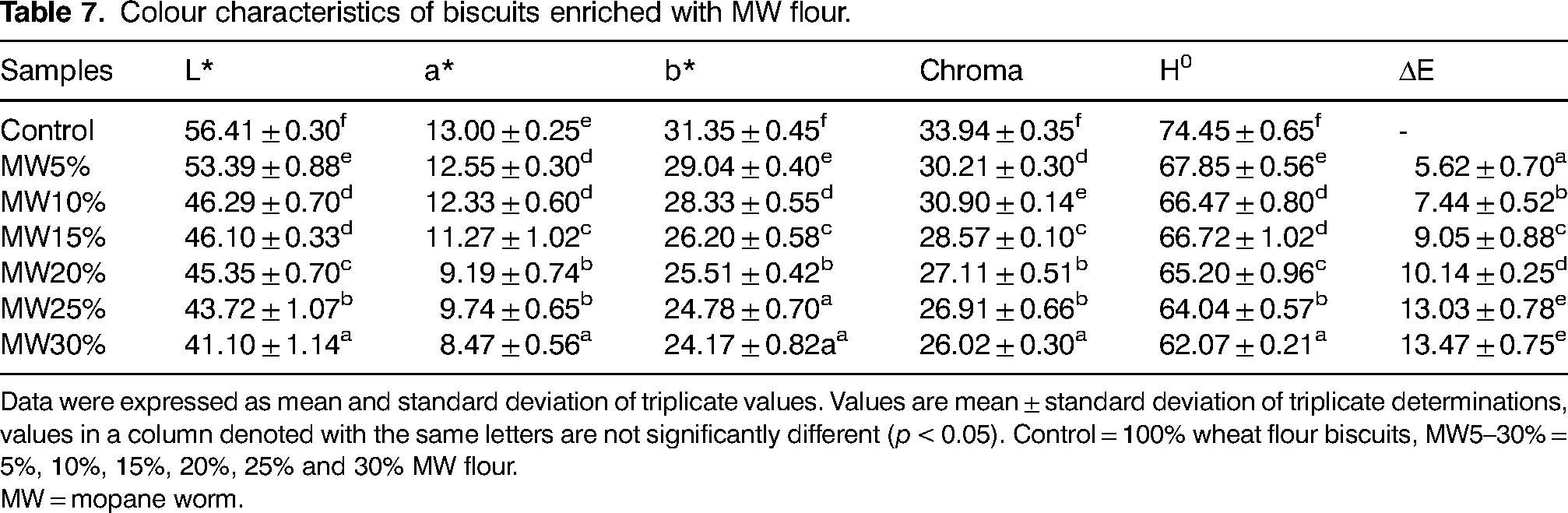
Data were expressed as mean and standard deviation of triplicate values. Values are mean ± standard deviation of triplicate determinations, values in a column denoted with the same letters are not significantly different (p < 0.05). Control = 100% wheat flour biscuits, MW5–30% = 5%, 10%, 15%, 20%, 25% and 30% MW flour.
MW = mopane worm.
Similar results for dark colour in biscuits enriched with mealworm powder were noted by Min et al. (2016). Moreover, Pauter et al. (2018) observed a significant lower L*, a* and b* values of muffins enriched with cricket flour.
The chroma and hue angles decreased with the inclusion levels of MW flour with values ranging from 33.94 to 26.02 and from 74.04 to 62.07, respectively. On the other hand, enriched biscuits had significantly higher total colour difference (ΔE) with values ranging from 5.62 to 13.47. The difference ΔE is more than three which clearly shows that there is colour difference between control and enriched biscuits (Cavalheiro et al., 2023).
Sensory evaluation of biscuits
The results of sensory evaluation of the enriched biscuits and the control sample are shown in Table 8. In general, inclusion of MW flour affected all sensory parameters. Nevertheless, biscuits added with 5% to 15% MW flour did not significantly differ with the control in all sensory parameters. Therefore, a lower substitution level of MW flour might produce biscuits with better sensory characteristics. The control sample had high scores ranging from 7.22 to 7.37 for all sensory attributes. Compared with the control sample, biscuits added with 30% MW flour had low (p < 0.05) scores for colour (5.34), aroma (5.19), texture (5.54), taste (4.81) and overall acceptability (5.42). Colour, texture and taste of biscuits are important attribute as they have a strong influence on consumer acceptability (Kolawole et al., 2018). The severe brown colour was noted in biscuits enriched with 20% to 30% MW flour, the colour of these biscuits was least acceptable by the panellists. The low score for colour and aroma for biscuits enriched with 20% to 30% MW flour might be attributed to brownish colour. Insect protein has a dark colour, which could be due to protein aggregates (Kim et al., 2021). Some consumers reported the dark colour of biscuits enriched with 20% to 30% MW flour during sensory evaluation with comment like ‘dark or burnt colour’. Such differences noted by consumers were in line with the results of colour difference (Table 7), wherein biscuit samples enriched with 20% to 30% MW flour had high values of delta E (above 10).
Sensory acceptability of biscuits enriched with MW flour.
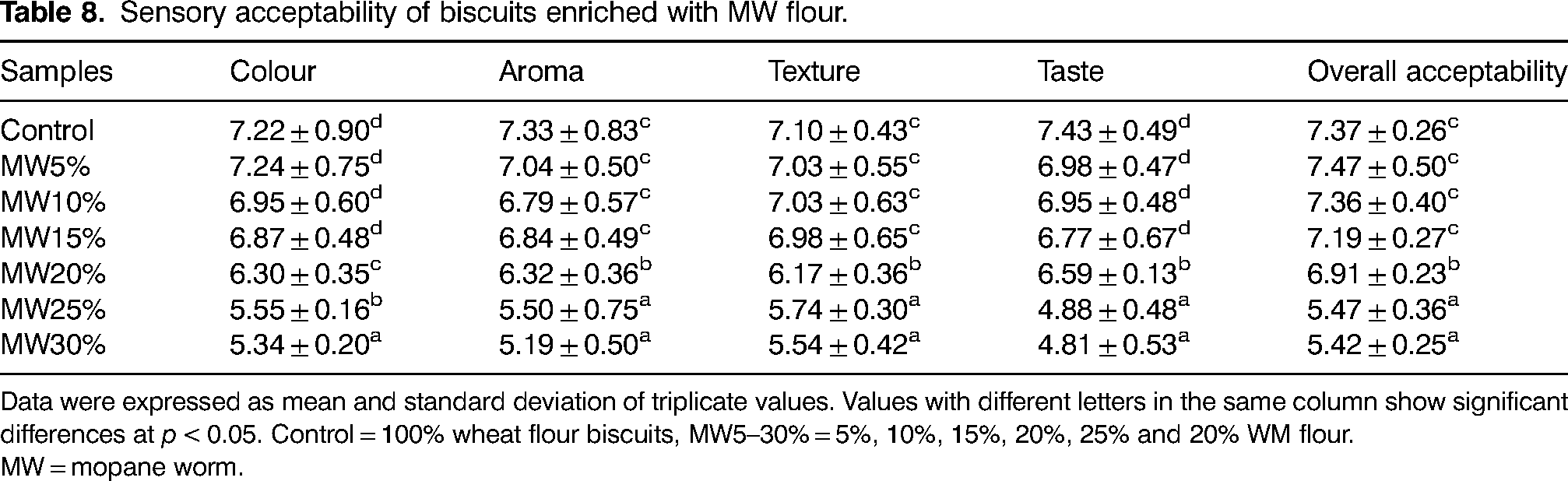
Data were expressed as mean and standard deviation of triplicate values. Values with different letters in the same column show significant differences at p < 0.05. Control = 100% wheat flour biscuits, MW5–30% = 5%, 10%, 15%, 20%, 25% and 20% WM flour.
MW = mopane worm.
The texture of wheat biscuits gradually decreased with increasing percentage of MW flour compared to the control sample. Nevertheless, the low scores for texture might be attributed to the hard texture of enriched biscuits (Table 6). The lower taste of biscuits enriched with 20% to 30% might be attributed to the usage of whole MW flour instead of defatted MW flour which might have contributed to undesirable flavour in the biscuit samples, thereby, affecting sensory acceptance. Previous studies by Ribeiro et al. (2019; 2022) showed that incorporation of defatted cricket (Acheta domesticus and Gryllodes sigillatus) and yellow mealworm flours had positive effect on sensory evaluations wherein the cereal bars with defatted insect flour had similar liking and willingness to eat scores than the control bar. On the other hand, this study show that biscuits enriched with 5% to 15% MW flour were more accepted. According to the comments by some panellists, MW flour strongly influenced the colour, texture, aroma and taste of biscuits. This result agrees with a report of Awobusuyi et al. (2020b) wherein biscuits enriched with 15% sorghum and 5% termites flour were acceptable by the panellists. On the other hand, biscuits enriched with termites flour up to 25% was also acceptable (Koffi-Niaba et al., 2013).
CONCLUSION
This study shows that biscuits enriched with MW flour are rich in protein and amino acids (glutamic acid, tyrosine, proline, leucine and lysine) than the control. Due to the high content of essential amino acids (leucine and lysine) and well-balanced amounts of other amino acids, the enriched biscuits have a protein of high biological value. Incorporation of MW flour had a negative effect on the colour and textural characteristics of biscuits. Sensory scores show that wheat biscuits enriched with 5% to 15% MW flour were acceptable by consumers; therefore, such levels of MW flour are recommended for the production of bakery products. Nevertheless, future studies of the effect of MW flour on the antioxidant, protein digestibility, microbial load and structural properties of biscuits should be explored.
Footnotes
AUTHOR CONTRIBUTIONS
MEM was involved in conceptualization; TR and MEM in methodology and writing – original draft preparation; MEM, TR, VVM and SER in data analysis; and MEM, SER and VVM in validation, writing, review and editing. All authors approved the published version of the manuscript.

DATA AVAILABILITY STATEMENT
The datasets generated during and/or analysed during the current study are available from the corresponding author on reasonable request.
DECLARATION OF CONFLICTING INTERESTS
The authors declared no potential conflicts of interest with respect to the research, authorship, and/or publication of this article.
FUNDING
The authors received no financial support for the research, authorship, and/or publication of this article.