




Abstract
The biomedical discovery journey from laboratory to population often encompasses meandering paths, iterative cycles, replication and validation efforts, complex trade-offs between adaptability and fidelity, long lag times and often high costs. The path is sometimes described as a translational spectrum or continuum, with linear or serial-parallel segments and specific transitions. The starting point is usually represented by the inception, ideation or funding opportunity (T0), progressing to laboratory studies (T1), toward human specimen-based studies (T2) and clinic or hospital-based trials (T3), then to community (T4), and populations at large (T5). The latter translation is often accomplished through new policies, laws, regulations or societal normative changes. An innovation-friendly ecosystem requires powerful, effective, and efficient platforms to accelerate the adoption of innovations and discoveries not only in academic organizations that generate new knowledge or provide cutting-edge education, but also in organizations trying to maintain their relevance and competitive advantage by embracing novelty, incremental or breakthrough discoveries, swiftly and efficiently. Local research and development hubs that provide nurture and upkeep of traditional, ‘secular’ innovation trees often must create de novo, ‘engineered’ trees to compensate for gaps in the investigative capability portfolio, and sometimes need to graft ‘engineered’ branches to create ‘hybrid’ trees, able to fulfill successfully and completely the discovery journey. This type of innovation orchard framework may be a powerful environment, ecosystem or milieu, regulating the growth and development of all these types of innovation trees, all with the purpose of agile functionality in implementing research and discovery in population health and clinical care.
Keywords
First movement (Largo): Initium
Since the turn of the 21st century, biomedical research has made tremendous and very fast progress, in parallel with an explosion in computational capabilities, impressive artificial intelligence tools and unprecedented technological advances. Even in very agile and functionally mature organizations, these high-speed advances represent significant barriers to nimble adaptation, successful implementation, adequate upscaling or cultural integration. All these processes are means to accomplish commercial go-to-market or to achieve the desired specific outcomes – epistemologically, in revenue, in health, in overall quality of life of their stakeholders, etc. These fast and unexpected developments may also induce organizational confusion or decision paralysis related to optimal resource allocation for research and discovery departments and innovation-related operations, or for best implementation strategies.
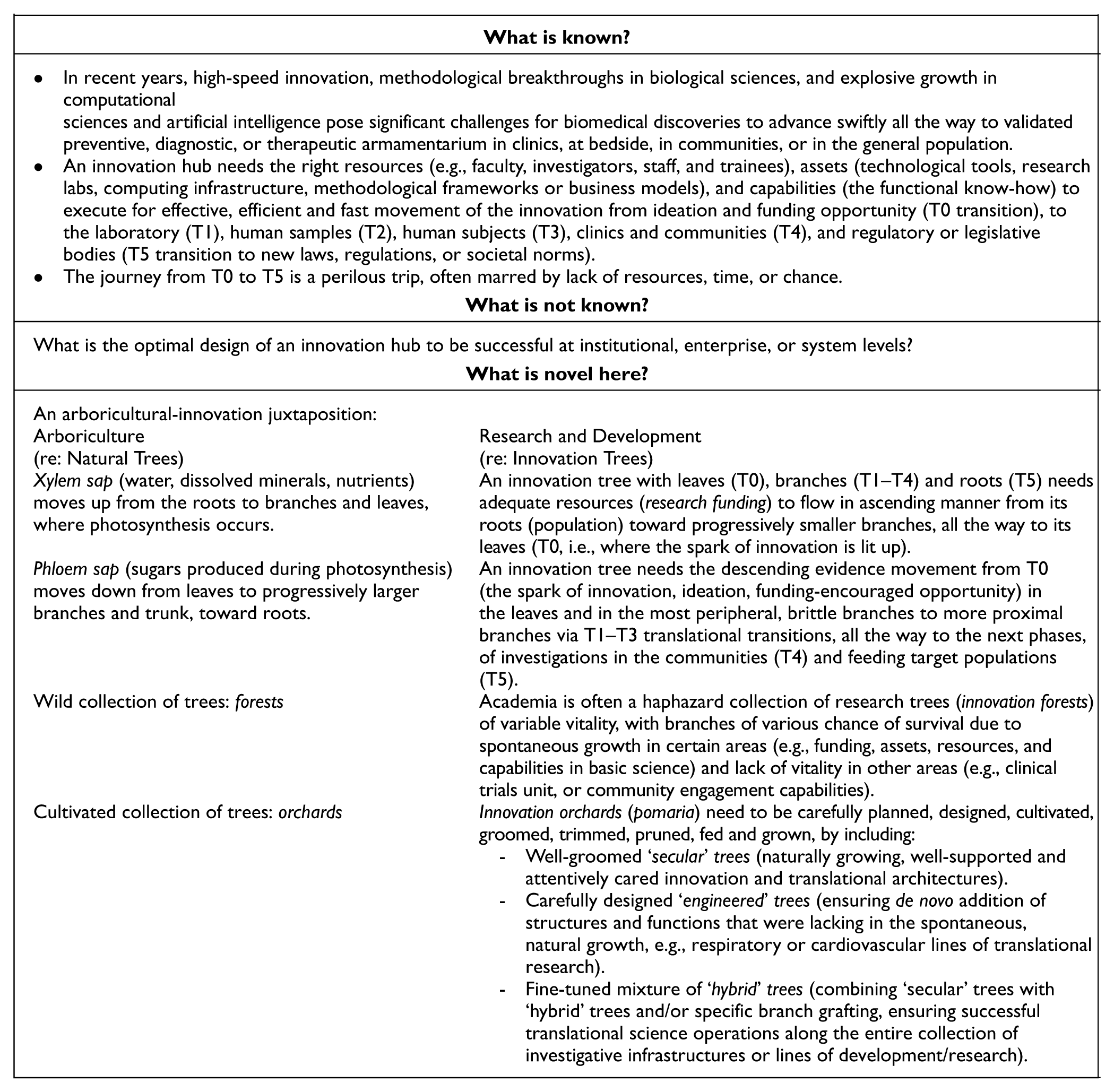
The article proposes a model of integration of the traditional organic growth in the translational research continuum (presented as ‘secular’ innovation trees), with strategically guided, complementary growth (‘engineered’ and ‘hybrid’ trees), all in a highly functional ecosystem conceptualized as innovation orchards (see Box). The proposed model invites leaders, managers and strategic planners to use this type of functional design for better alignment of current and future resources to ensure that more innovations, inventions, scientific discoveries, incremental improvements or breakthrough ideas make it to the real world, faster and with more palpable health benefits to the real end-beneficiary, the member of the society.
Second movement (Andante): Translation
The early and standard meaning of the term translation was associated with the art of rendering or moving text, symbols and words from one language to another. In biomedical areas, the term was linked initially to the efforts made by sorcerers, wizards and early physicians to codify chemical products and procedures used in various treatments. Interestingly, in the last century, the term translation was increasingly used referring to tools and general approaches in the fields of public health, population sciences and clinical medicine, taking its meaning to an abstract, zoomed-out, or more general connotation.
Translational research is a type of investigation aimed at crossing a particular step of the development spectrum for a specific diagnostic capability, therapeutic target or disease. Its goal is to bridge the gap between scientific discoveries and real-world applications in medicine and health(care). 1 Translational research is a multi-disciplinary venture, with several transition stages (T0–T5) that involve moving research findings across settings, specific languages, methodologies and study designs. As intended by various NCATS funding mechanisms, translational research has become a collaborative effort of many scientists, biomedical innovators, clinicians, patients and their families, community and society members, legislators, government officials and other stakeholders (‘team science’ approach) to ensure that research findings are effectively translated into clinical practice and public health policy. Due to the inherent vulnerabilities of the linear system represented by the translational spectrum, 2 we have made the case that the traditional, serially-structured pipeline model for translational research can be at least partially ‘fixed’ by replacing it with a serial-parallel system akin to a system of communicating vessels. 3 According to this model, each one of the communicating vessels represents different domains of research (e.g., laboratory, translational, clinical, public health, and population science), and each one of them benefits from customized and fine-tuned local firepower, ensuring adequate resources and support to provide a bidirectional flow of information and knowledge exchange between adjacent loops. 3
In contrast, translational science is the systematic study and practice of operationalizing the translation of content across languages, environments, contexts, ecosystems, cultures, areas, disciplines or knowledge domains. Translational science (TS) involves systematic and trans-disciplinary integration of knowledge from basic science, clinical and translational research, intervention and improvement science and many other contiguous disciplines, all with the ultimate goal to improve human health and increase disease- and disability-free longevity.4,5 It has been postulated that TS capabilities and competencies may allow team science approaches to flourish in their attempt to accomplish faster adoption of innovations and discoveries, more successfully, potentially more efficiently, and to more people overall. 6
Implementation science, often dubbed a subfield of TS, studies methods and strategies to promote systematic adoption and integration of evidence-based practices or interventions (EBPIs) into routine care. 7 Implementation science has evolved over time from the early, seminal work of E.M. Rogers and several other groups in the field of diffusion of innovation. 8 Implementation is an effort specifically designed to get EBPIs and related products into routine, sustained use via appropriate change, uptake or adoption interventions. Implementation, as a term, is not about the fidelity of the operational procedures used, for example, during a clinical trial, but how the intervention is applied. Dissemination focuses on the act of bidirectional communication of tailored information to and from target audiences, with the goal of engagement and information spreading. Dissemination is often considered a part of implementation science. Like TS, implementation science focuses on identifying, understanding and overcoming barriers, strictures, chasms, bottlenecks, constraints or challenges that can prevent successful implementation of the interventions, such as lack of resources, limited stakeholder reach or engagement, inadequate training, and lack of leadership support. Dissemination is also related to concepts and frameworks used by knowledge translation science, which deals with the processes of taking new knowledge generated through research, and making it accessible, understandable, and useful for broad audiences, especially for those who may ultimately benefit from the applied knowledge. The knowledge translation involves activities of synthesizing research findings, sharing them in formats (languages!) that meet the needs and understanding of different audiences, and facilitating the use of new knowledge in informing decisions, policies, procedures or specific practices to achieve the desired outcomes. Integrated knowledge translation is a model of research co-design and co-production where researchers partner with knowledge users or beneficiaries who can use or implement the research recommendations or findings. 9 It is also important to note that implementation science deploys rigorous approaches to designing, testing and further refining of the implementation strategies, often via randomized controlled trials or other standardized, systematic evaluation methods. The main attributes of various implementation strategies are represented by fidelity, adaptation, and sustainability. Fidelity refers to the degree by which an intervention is implemented as intended or specified in the original research study, or how it respects the specific characteristics of the initial EBPI. Fidelity is about how the core components of the intervention are delivered, the quality of the delivery and the consistency of the intervention across different settings. Adaptation often implies modifications or adjustments made to an EBPI to fit the needs of the target population, context or setting. Adaptation is sometimes necessary to increase reach, acceptability, feasibility or relevance of the EBPI to the local context, but can also pose significant risks to fidelity, generalizability, overall effectiveness or even sustainability of the intervention. As its name implies, sustainability relates to the long-term preservation and continuance of an EBPI after the initial deployment period. Factors influencing sustainability are often associated with dynamic environments, high-speed or frequent change, organizational culture, resource availability, stakeholder buy-in, ongoing leadership awareness and support, and continuous monitoring.
Third movement (Allegro): Pomarium
In 2011, the National Institutes of Health (NIH) created the National Center for Advancing Clinical and Translational Science (NCATS), with the specific aims to pursue, encourage, catalyze, and grow funding opportunities for disruptive translational innovation, using both intra- and extramural mechanisms. 10 Over the past decade and a half, the NCATS, through Clinical and Translational Science Award (CTSA) mechanisms, funded more than 60 hubs in order to spur the development of local and loco-regional translational research partnerships and to establish robust local translational science capabilities. The CTSA hubs and other local translational science engine models have been serving well the research stakeholders’ support needs and end-users’ necessities by creating these advanced translational research functionalities.3,6 Irrespective of the mechanism employed, an organization should consider core infrastructures and functions such as local CTSA hubs as powerful models of trans-disciplinary collaboration and translational science engines able to build and strengthen necessary investigative platforms, catalyze their functions and optimally calibrate long-term sustainment.
The current article proposes that the organic growth seen in some organizations in the areas of innovation incubators, scientific discovery, research and development resembles the structure of traditional fruit trees or a collection of fruit trees assembled in orchards (see Box). In arboricultural terminology, the tree’s xylem sap is represented primarily by water and dissolved minerals (i.e., the necessary nutrients; analogy: research resources), moving from the roots via branches toward leaves, where photosynthesis occurs. Conversely, the tree’s phloem sap (sugars produced during photosynthesis; analogy: information, innovation or new knowledge) flows from the leaves via progressively larger branches and trunk to the roots of the tree. Using this analogy, in our traditional research and development units the descending phloem sap movement often happens somewhat spontaneously or haphazardly from T0 (the spark of innovation, ideation, funding-encouraged opportunity) in the leaves and in the most peripheral branches—perhaps the most brittle structures, progressively to more proximal branches via T1–T3 translational transitions, all the way to the next phases, of investigations in the communities (T4) and feeding target populations (T5). As Figure 1 illustrates, this type of organic growth of ‘secular’ trees may or may not happen spontaneously or uniformly for the entire innovation orchard, as some trees or specific branches may lose their vitality and their ultimate survival, especially if not provided adequate care and nurturing.
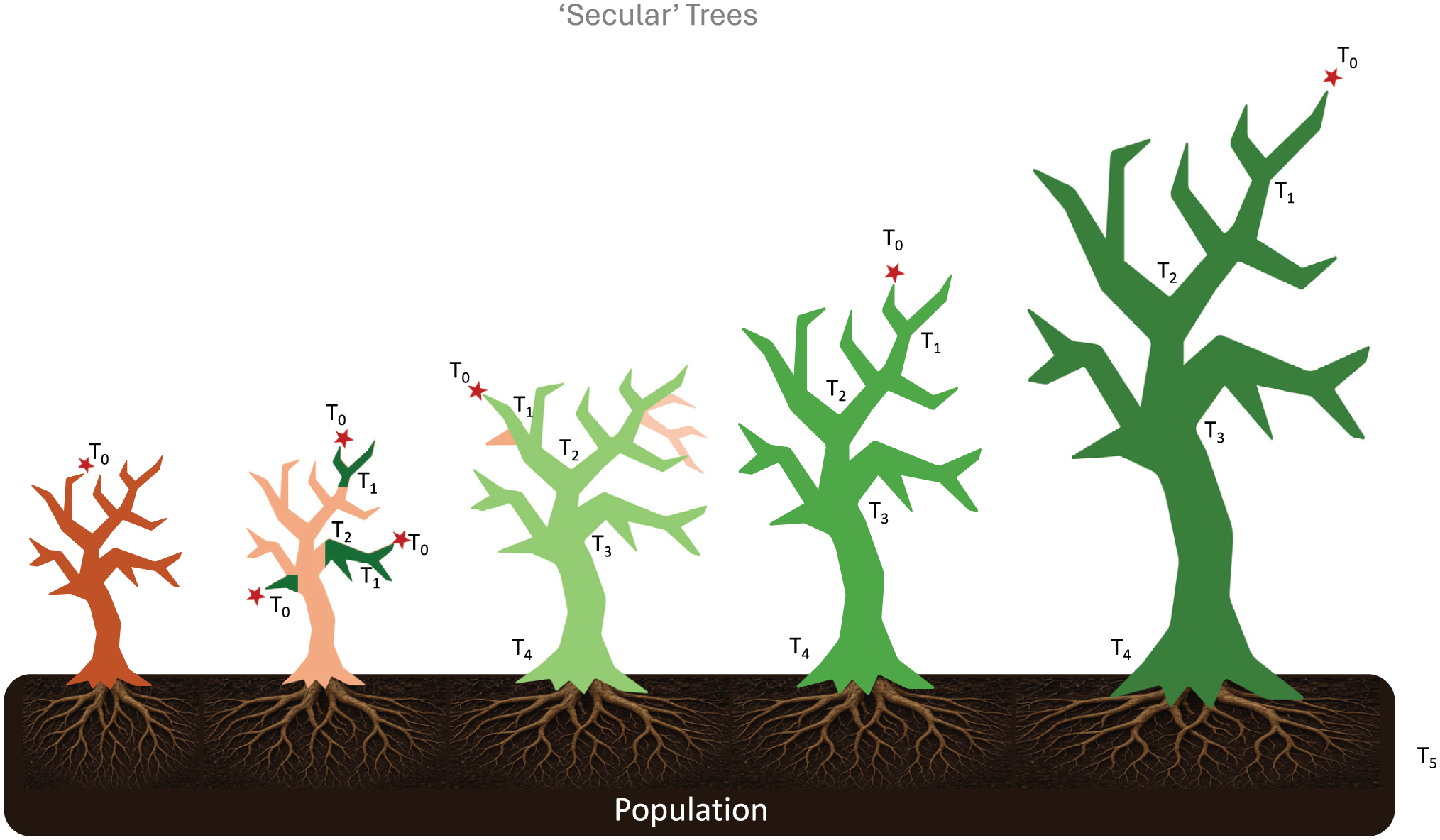
Organic growth patterns of the ‘secular’ trees of research and discovery, guided by spontaneous questions, organizational areas of strength or induced by specific funding opportunities.
The local care of an innovation orchard (pomarium, Latin), using institutional infrastructures, assets, wide knowledge bases, tools and frameworks of translational science and its contiguous disciplines, should be able to provide the necessary functionality for the innovation to travel successfully beyond T5, to the ultimate beneficiary, the general population. Recognizing that some ‘secular’ trees may not survive spontaneously or bear fruit in the respective natural habitats or climate, adequate watering and fertilization (upwards care, ensuring feeding/basic needs), but also specialized, customized and careful grooming, pruning, and treatments (downwards care) are needed. One can easily argue that the need to create the so-called species of ‘engineered’ trees becomes apparent very quickly. As such, after thorough gap analysis and coverage, deliberate and facilitated interventions for cross-pollination, fertilization, and watering are needed to ensure growth robustness, orchard harmony (research mission alignment or synergy), and completeness in the translational ecosystem. Figure 2 showcases what an innovation orchard of ‘engineered’ trees may look like, with specific structures and functions created strategically and deliberately to provide success in the research domains of need. Finally, Figure 3 illustrates the point that successful innovation cultivation and fostering, investigative grooming and fostering may entail a combination of spontaneously growing and attentively cared ‘secular’ trees with ‘engineered’ trees that fill together the inevitable infrastructural gaps in the translational continuum. Specialized and careful grafting and nurturing of a mixed version of ‘secular’—‘engineered’ trees (called here ‘hybrid’ trees) may represent the ultimate functionality to attain, that is, to grow, graft, revitalize, enhance and enrich existing innovation orchards.
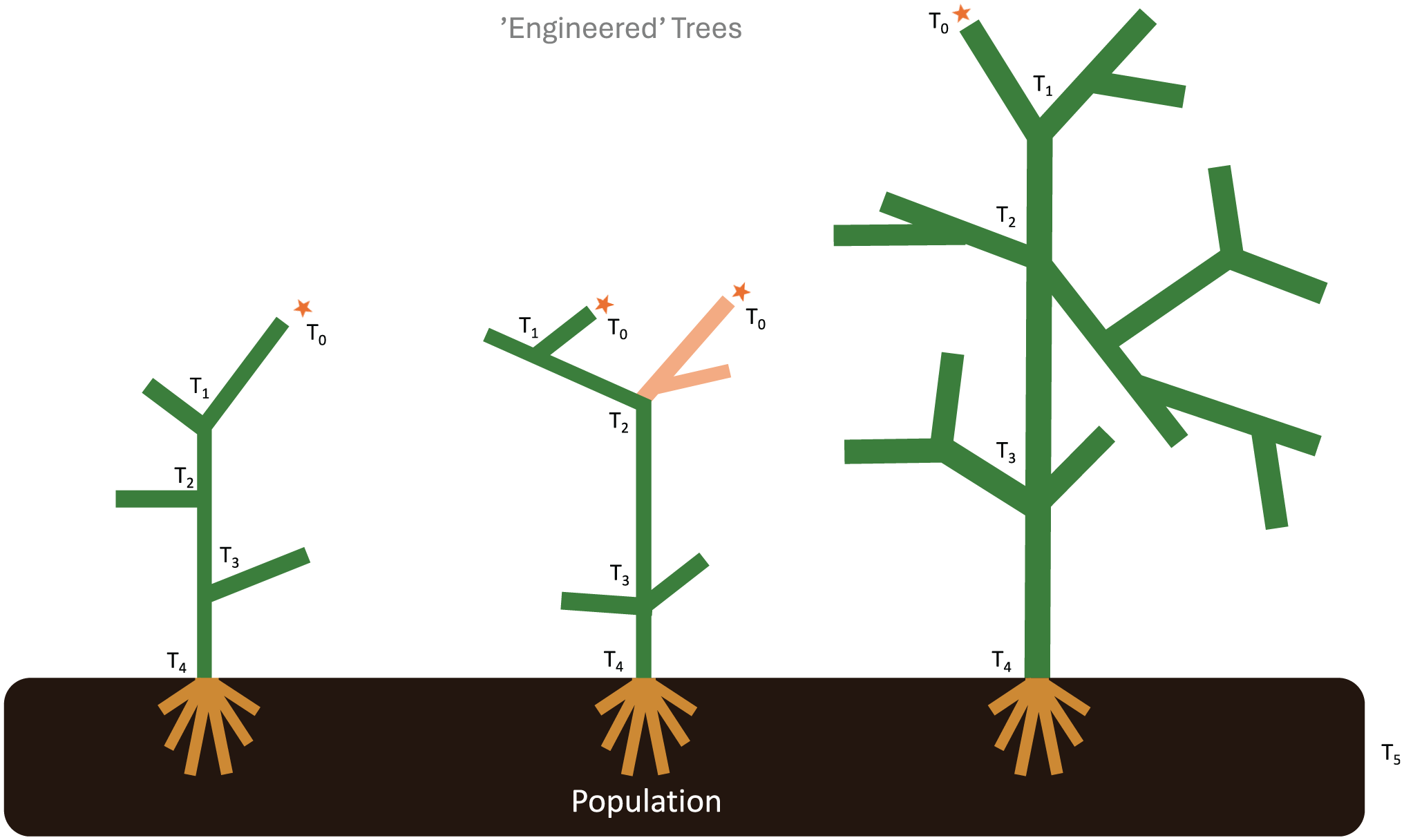
Strategically guided research and development capabilities (‘engineered’ trees), fulfilling known infrastructural gaps, weaknesses or needs.
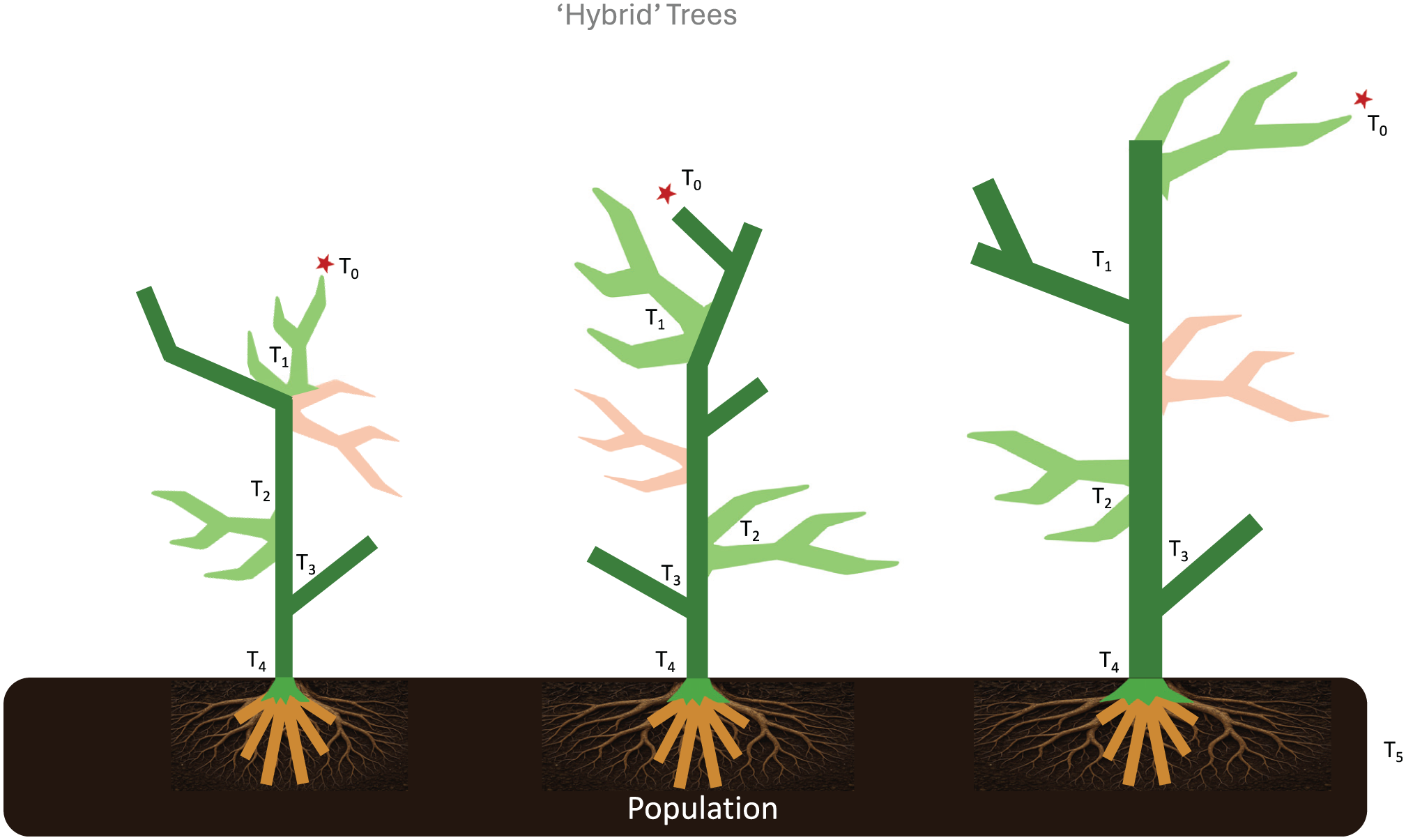
Grafted ‘hybrid’ trees, combining organic growth of the ‘secular’ trees with strategically ‘engineered’ trees to accomplish a more robust, comprehensive and sustainable investigative platform.
For example, organization X has a strong T0–T2 discovery segment in investigating airway disorders such as asthma (i.e., great external and internal funded opportunities, great basic and translational research infrastructures and capabilities, even capacity to perform well in early phase asthma clinical trials or first-in-human studies), but lacks the T3–T5 segment of the TS spectrum (i.e., it lacks the capacity to conduct larger phase II/III asthma clinical trials, comparative effectiveness, implementation or hybrid studies, population health studies or to get involved in health policy advocacy). ‘Engineering’ the novo a T0–T5 full spectrum under its new strategic priority of developing neurosciences allows organization X’s ‘controlled’ and capability-wide growth of a clinical trial unit (CTU), developing a disease-agnostic implementation science core and a data science support unit. This allows easy ‘grafting’ of a subunit of the new CTU for future asthma studies, effective intervention of the dissemination and implementation (D&I) consultative groups in the design and conduct of late-phase clinical trials, comparative effectiveness or hybrid trials and population-based studies. Furthermore, organization A has a strong T3–T4 arm of studies in the specific area of chronic obstructive pulmonary disease, which can easily be ‘grafted’ on the asthma tree trunk, creating an effective ‘hybrid’ tree.
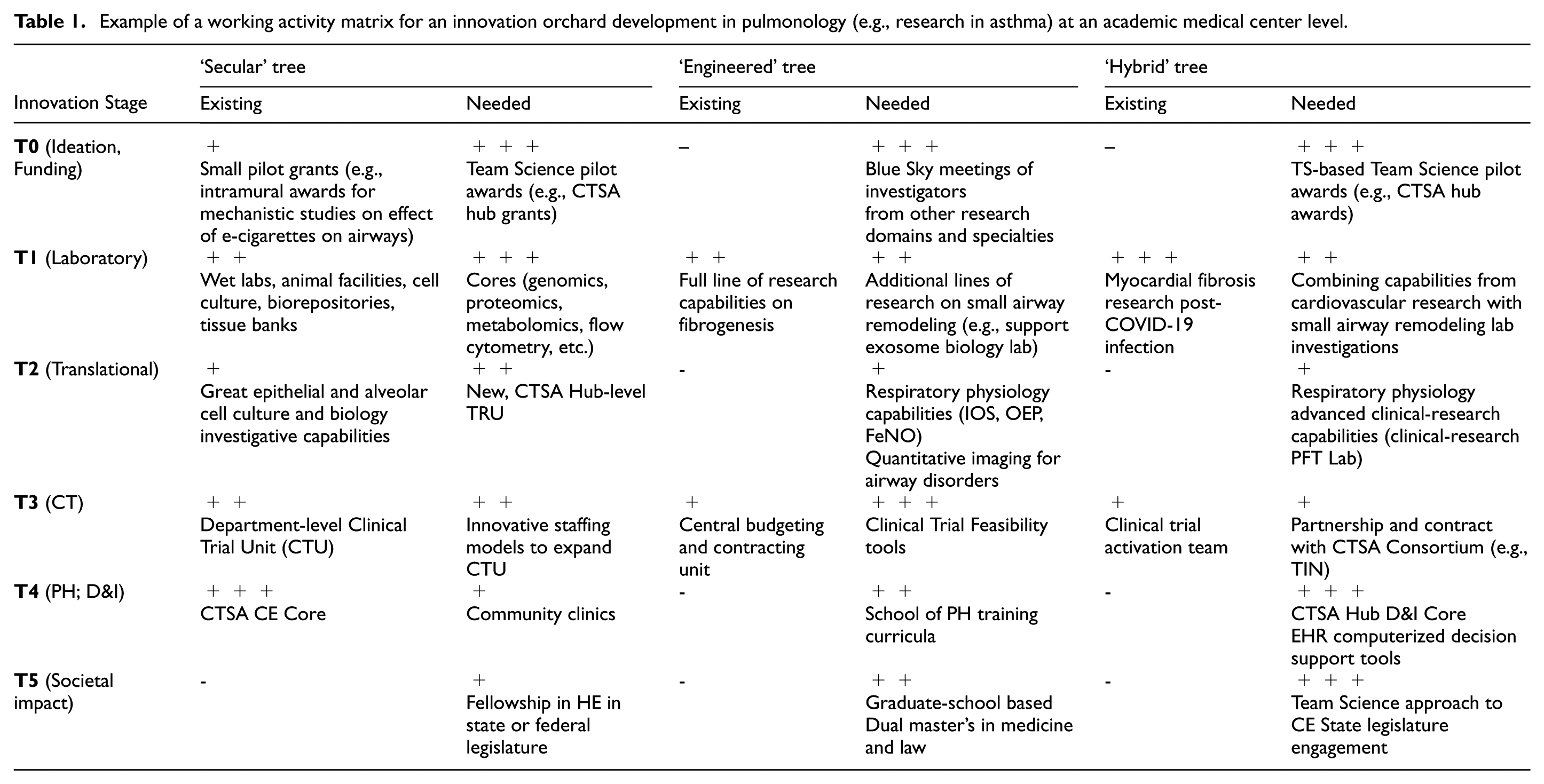
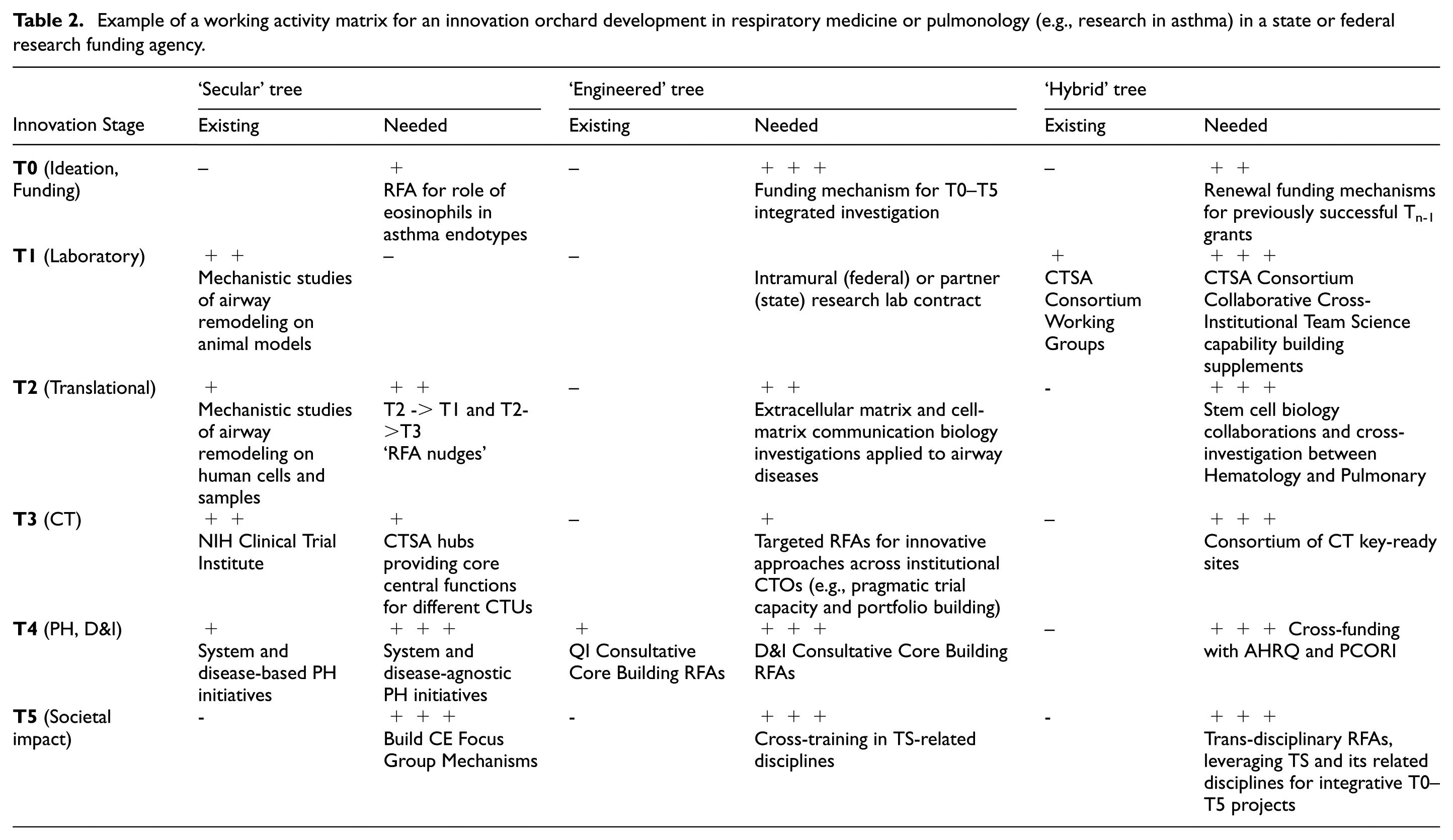
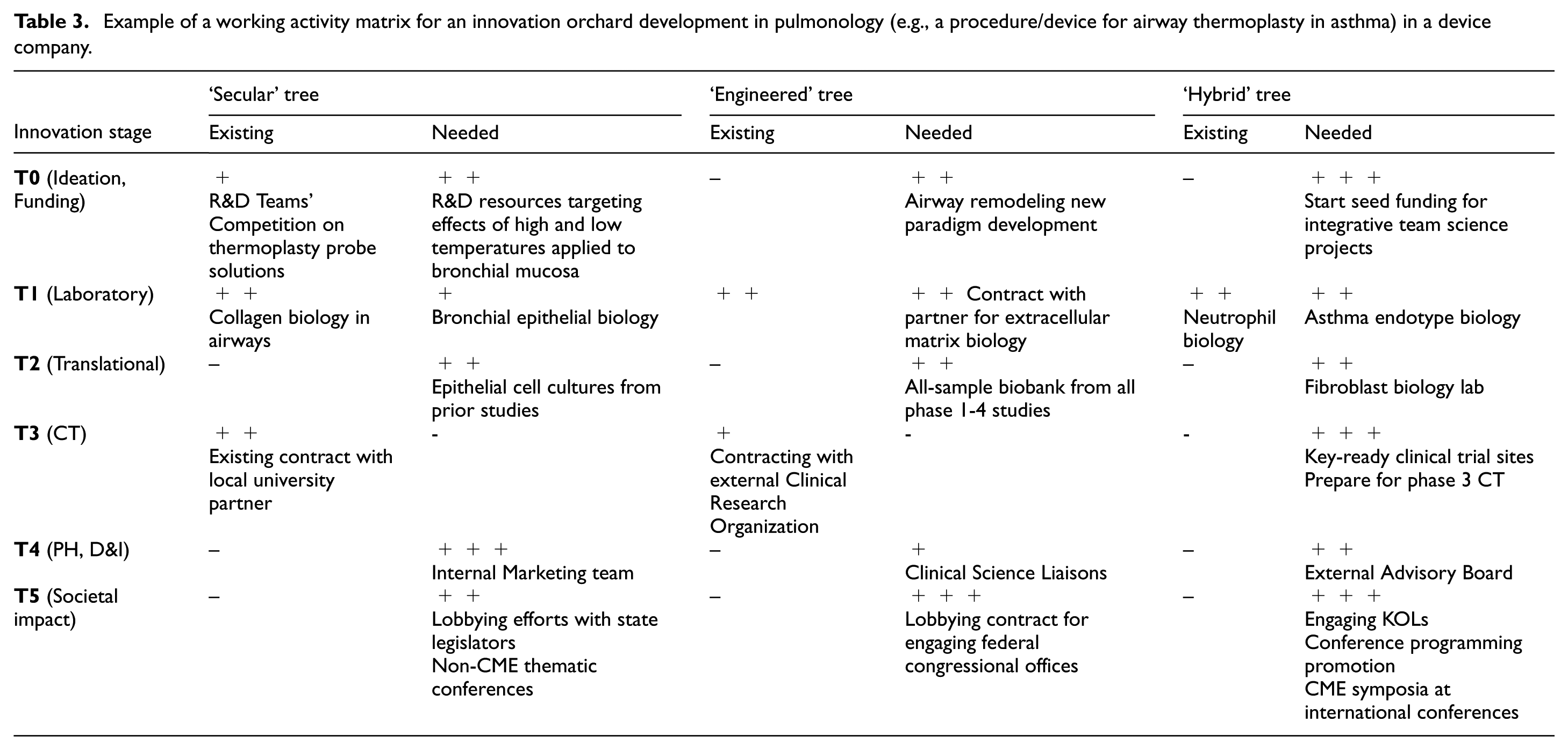
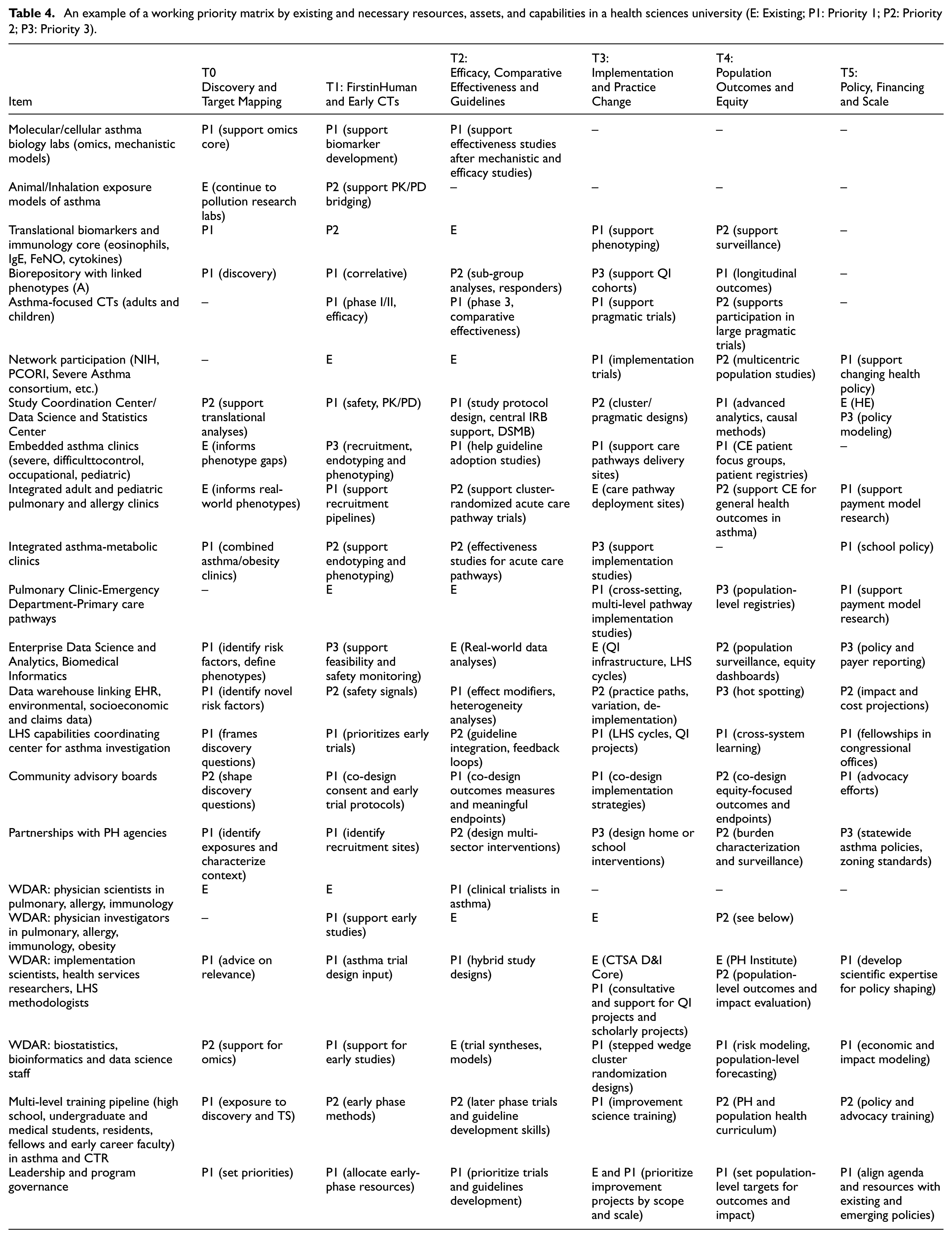
In another example, organization Y has a full complement of ‘secular’ trees in its innovation orchard, covering most of the TS spectrum except perhaps in leading and coordinating large-scale phase III and IV clinical trials. Its approach in assuming the role of the coordinating center for a large multicentric CT was to reach out to the Trial Innovation Network (TIN) of the CTSA Consortium, which provided the necessary resources and the know-how to run the proposed initial studies. As such, TIN becomes a temporary ‘grafted’ branch on the larger innovation ‘secular’ tree, thus this becoming a ‘hybrid’ tree. During the conduct of the study, the organization Y trains, organizes and sets up an internal coordinating center staffed by local investigators and staff who become more skilled at running future large-scale randomized controlled studies, and thus it becomes more adept in the T3–T4 segment of future discovery journeys (its own ‘drafted’ branch). Organization Y does not need to build for asthma studies a full complement of ‘engineered’ trees, but may require designing and building one for data science investigations, as it may lack the necessary and specific assets, resources and capabilities. Tables 1–3 provide a few more examples of activity matrices for innovation orchard development in a health sciences university or an academic medical center (Table 1), in a state or federal funding agency (Table 2), and an example pertaining to a device company (Table 3)—all, for consistency purposes, in the bronchial asthma field of investigation. We also show in Table 4 a proposed priority matrix assessment tool that leaders, system designers, entrepreneurs, managers in funding agencies and government members can use to perform in practice a more comprehensive evaluation, to ensure that the right mix of ‘secular’, ‘engineered’ and ‘hybrid’ trees are present and full of vitality in their innovation orchards.
Example of a working activity matrix for an innovation orchard development in pulmonology (e.g., research in asthma) at an academic medical center level.
Example of a working activity matrix for an innovation orchard development in respiratory medicine or pulmonology (e.g., research in asthma) in a state or federal research funding agency.
Example of a working activity matrix for an innovation orchard development in pulmonology (e.g., a procedure/device for airway thermoplasty in asthma) in a device company.
An example of a working priority matrix by existing and necessary resources, assets, and capabilities in a health sciences university (E: Existing; P1: Priority 1; P2: Priority 2; P3: Priority 3).
Fourth movement (Vivace): Summary
Using the proposed paradigm, one organization may find that its innovations flow easily down the branches of some ‘secular’ trees representing molecular biology capabilities, early and late clinical trials, but perhaps needs some ‘engineering’ for the branches required for implementation and dissemination capabilities. Other institutions may have competitive advantage at, for example, making very quickly AI-based 3D models and synthesizing various molecules based on the high-resolution scanned structure of patients’ receptors acting as personalized therapeutic targets in various diseases, but may lack the infrastructure to conduct the clinical trials on human subjects, so ‘engineering’ the branches required to perform this type of investigative work may be required. In another example, the throughput of discovery using cell biology departments in an organization may surpass significantly its ability to timely secure intellectual property rights for them or to conduct clinical trials involving these new products. Another institution may find its strengths in developing molecular targets for a certain disease, in data science capabilities, in securing intellectual property rights and in implementing its discoveries in the local hub, but lacks the reach to community stakeholders and potential target populations – this can be ‘synthesized’ the novo (organically or through acquisitions, alliances, innovation networks, etc.) for better efficiencies in the research ecosystem.
In summary, the current article proposes a conceptualization of what we call innovation orchards, applicable best to academic institutions, research and development departments, equipment and pharma industry, teaching hospitals, or research institutes. The model spells out the need for the organizations to identify the necessary resources, assets and capabilities to be able to design, build and maintain innovation orchards that provide the best care to existing translational ‘secular’ trees, synthesize adequate missing species of ‘engineered’ trees, and ultimately, provide the right grafting of ‘secular’ and ’engineered’ trees into necessary ‘hybrid’ innovation trees. The model may need further exploration and investigation, rigorous phenotypic and/or endotypic characterization, careful implementation and thorough outcome and impact evaluation, so that distinct models of successful translational science engines emerge and lead to the most agile innovation ecosystems of the 21st century.
Footnotes
Funding
The authors received no financial support for the research, authorship, and/or publication of this article.
Declaration of conflicting interests
The authors declared no potential conflicts of interest with respect to the research, authorship, and/or publication of this article.
