




Abstract
Investigating the mechanical properties of complex, porous microstructures by assessing model representative volumes is an established method of determining materials properties across a range of length scales. An understanding of how behavior evolves with length scale is essential for evaluating the material’s suitability for certain applications where the interaction volume is so small that the mechanical response originates from individual features rather than a set of features. Here, we apply the Kentucky Random Structure Toolkit (KRaSTk) to metallic foams, which are crucial to many emerging applications, among them shielding against hypervelocity impacts caused by micrometeoroids and orbital debris (MMOD). The variability of properties at feature-scale and mesoscale lengths originating from the inherently random microstructure makes developing predictive models challenging. It also hinders the optimization of components fabricated with such foams, an especially serious problem for spacecraft design where the benefit–cost–mass optimization is overshadowed by the catastrophic results of component failure. To address this problem, we compute the critical transition between the feature-scale, where mechanical properties are determined by individual features, and the mesoscale, where behavior is determined by ensembles of features. At the mesoscale, we compute distributions of properties—with respect to both expectation value and standard variability—that are consistent and predictable. A universal transition is found to occur when the side length of a cubic sample volume is ~10× greater than the characteristic length. Comparing KRaSTk-computed converged stiffness distributions with experimental measurements of a commercial metallic foam found an excellent agreement for both expectation value and standard variability at all reduced densities. Lastly, we observe that the diameter of a representative MMOD strike is ~30× shorter than the feature-scale to mesoscale transition for the foam at any reduced density, strongly implying that individual features will determine response to hypervelocity impacts, rather than bulk, or even mesoscale, structure.
Keywords
1. Introduction
It is an axiom of materials science that varying microstructure will vary the behavior of a given material. Pearlite, bainite, spheriodite, and martensite, though all composed of ferrite and cementite, form distinct microstructures and exhibit vastly different mechanical properties. Solid polycrystals are affected by the size, distribution, and texture of grains and fibrous materials by fiber aspect ratio, fiber orientation, and density. Likewise, porous materials–highly sought in critical applications like energy storage and water purification–can be tailored via careful control of porosity, ligament shape, and connectivity. By evaluating materials as representative volumes, as opposed to bulk samples, computational methods have provided unprecedented insight into the structure–property relationships governing many engineering materials [1, 2]. However, these computational approaches have been intrinsically limited when dealing with complex and/or randomly structured materials in that any volume representative of the bulk material must be sufficiently large to homogenize all structural complexity, while remaining sufficiently small to be computationally tractable. For porous materials in particular, an additional complication is associated with the fact that many engineered structures or components have sizes that approach the “mesoscale”—here meaning roughly on the scale of internal microstructural features—such that engineers aiming to use porous materials need reliable information on the variability in properties expected from small samples. Therefore, two computational challenges emerge for porous, randomly structured materials: (1) how to compute homogenized properties from representative volumes small enough to be computationally tractable and (2) how to determine the distinct minimum volumes required to capture the range of properties expected from “mesoscale” volumes and represent fully homogenized bulk properties.
The use of representative volume elements to sample materials properties has been widely explored in the literature. Bargmann et al. [1] presented a thorough review of studies utilizing RVEs, including references to both fully dense materials (e.g., polycrystals, bicontinuous composites, and matrix-inclusion composites) and porous materials (e.g., fabrics, agglomerates, and aggregates). In the realm of porous materials, the most widely applied model for predicting the elastic and bulk moduli of porous materials from the intrinsic properties of fully dense solids was developed by Gibson and Ashby for a cellular geometric structure chosen to represent a low-density, open foam. In the Gibson–Ashby (G-A) model, the stiffness of a porous material is calculated as a power law of the solid fraction of the porous material relative to the fully dense solid. For more complicated yet still periodic, hierarchical structures, several studies have developed continuum models for the deformation energy of pantographic blocks [3–5]. Roschning and Huber [6] investigated the mechanical properties of porous ligamented structures similar to those discussed in this paper. Beginning with a cellular structure resembling a diamond cubic lattice, all nodes were assigned a random displacement to create a non-cellular, heterogeneous porous material. Their study examined the average properties of 10 RVEs (termed “realizations” in the text), suggesting the importance of sampling multiple RVEs in order to determine the properties of randomly structured materials. Building on this idea, the Kentucky Random Structures Toolkit (KRaSTk) (described in detail in Seif et al. [7]) was recently developed to compute distributions of local properties by leveraging a geometric seed description of a material with complex structure to generate and compute properties of many model representative volume elements (mRVEs).
Here, we apply the physics-based, multiscale, high-throughput KRaSTk approach to materials where local properties of complex, porous microstructures are crucial: spacecraft shielding from micrometeoroid and orbital debris impacts. Micrometeoroids and orbital debris (MMOD) poses a significant danger to both robotic and crewed spacecraft operating beyond Earth’s atmosphere [8–13]. Despite sizes under 2 mm, even minuscule particles can have tremendous impact velocities (10–12 km/s) that result in catastrophic damage [8]. While spacecraft are generally maneuvered to avoid impacts with objects large enough to be detected and tracked, this is impossible with small particles and collisions are inevitable (Figure 1). Therefore, crews, payloads, and instrumentation must be protected with some form of energy-absorbing and damage-mitigating shielding that must itself be aggressively optimized to minimize both mass and volume.
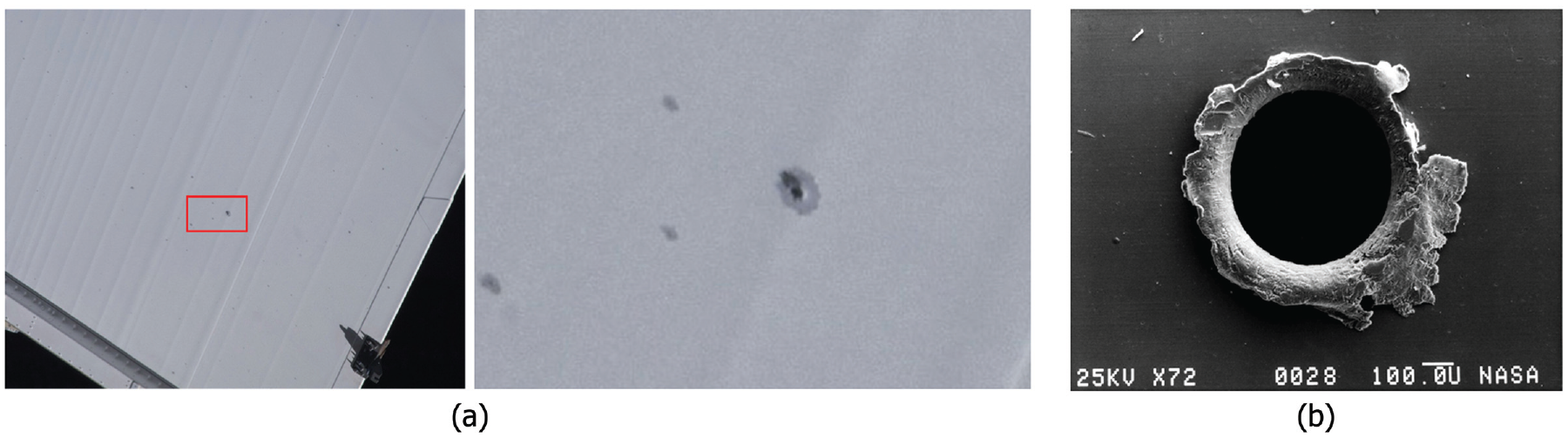
Open cell metallic foam sandwich panel structures have proven effective at reducing damage from MMOD strikes [10–12]. Commercially available metallic foams–e.g., Duocel by ERG Aerospace–sandwiched between solid metallic facesheets are widely used for MMOD shielding on a range of spacecraft. The foam core layer is composed of open networks of randomly oriented polycrystalline Al ligaments. Ligament lengths and pore sizes vary over some distribution characteristic of the specific material, but typically have lengths on the order of millimeters. Impacting particles penetrate the outer sacrificial facesheet of the sandwich structure and suffer repeated impacts with ligaments in the foam—deflecting, fragmenting, and vaporizing in the process.
In this paper, we apply the KRaSTk approach and show that a generalizable node–ligament seed geometry accurately predicts the elastic properties of a metallic foam, even extending experimentally available data by providing distributions of expected properties relevant to millimeter scale parts and component features. For the general node–ligament microstructures studied here, we demonstrate that sample volumes of at least 10 times typical microstructural feature sizes are required to model characteristic behaviors of the foam material (as opposed to behavior arising from individual ligaments and voids). We find that decreasing computational volumes (which increases computational speed) first causes deviations in predictions of the local variability of materials properties, and then affects predictions of expected bulk behavior, implying that larger volume elements must be used to reliably predict the range of properties expected from mesoscale volumes, as opposed to singular expected bulk properties. Finally, the present results demonstrate the feasibility of applying the KRaSTk approach to provide new insight into the engineering design considerations required for the use of porous materials (particularly metallic foams) and to discover underlying structure–property relationships governing the mechanical behavior of complex, heterogeneous microstructures.
2. Methods
2.1. mRVE generation
KRaSTk [7, 16] was used to generate sets of 200 mRVEs to characterize metallic foams (Figure 2). KRaSTk procedurally generates large numbers of stochastic mRVEs based on a geometric seed description of the characteristic structural features defining the material in question. Individual mRVEs are volumes that stochastically sample arrangements of structural features possible based on the seed geometry. Sets of mRVEs generated with common parameters (e.g., sizes or lengths of characteristic features) can then be used to quantitatively predict sample size-dependent properties of real materials with a structure described by the seed geometry.
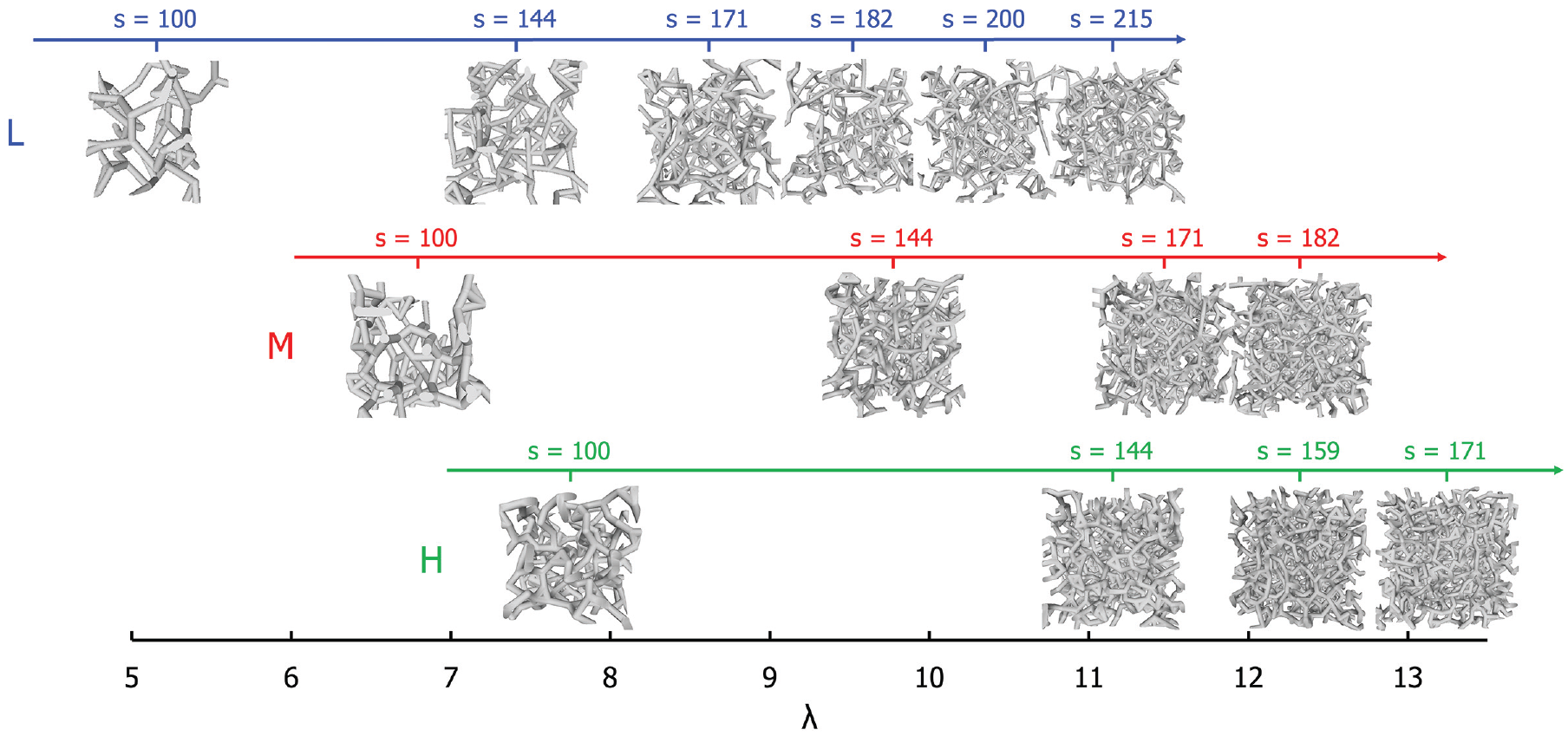
A “map” of each set of structures utilized in this study. It is important to note that the structure shown for each set of conditions is just an example mRVE; in reality, 200 mRVEs were generated for each set.
The prototype geometric seed used here to represent metallic foams consisted of randomly placed spherical nodes connected by conical frustum ligaments [7]. The spherical nodes have radii randomly distributed within a user-specified range and were separated by a user-specified minimum distance. Conical frustum ligaments with circular cross-sections were attached to nodes, which determine the end radii of each ligament. A stochastic network was constructed by creating ligaments connecting each spherical node to a user-specified minimum number of nearest neighbor nodes
For any complex microstructure, three length scales can be distinguished: the feature-scale, lengths on the scale of individual features in the seed geometry defining the microstructure; the mesoscale, lengths at which characteristic distributions of locally variable properties associated with stochastic volumes of material emerge; and the macroscale, lengths beyond which uniform, singular bulk properties are observed for sample volumes [7, 16]. For any particular material, these critical transition lengths are, necessarily, relative to the size of characteristic features in the material. To account for this, the parameter
Node–ligament geometries are a highly generalizable structure and can be generated with different ligament thicknesses (by using different node diameters), average ligament lengths (different volume densities of nodes and therefore greater separation between nearest neighbor nodes), and degree of constraint in the ligament network (different
To reveal structure–property relationships in node–ligament structures generally, and to encompass microstructures of existing commercially available materials currently used in mission-critical applications, mRVEs with three reduced densities (high, medium, and low)—each with two different network connectivities
2.2. Computing mRVE properties via FEM
The orthorhombic stiffness tensor for each mRVE was computed using an FEM-based approach, extending a previously developed method [7]. To extract the full stiffness tensor, total elastic energies were computed for each mRVE in nine independent strain states established using combinations of displacement and frictionless support boundary conditions. The nine strain states included the three independent uniaxial compressions

allowing direct calculation of
Finite element calculations were conducted using the FEniCSx general PDE solver package [18, 19]. A Krylov solver incorporating the generalized minimal residual method and a successive over-relaxation pre-conditioner was used. The absolute tolerance was set to
2.3. Determining material properties from mRVE properties
FEM calculations result in computed stiffness tensors which are distinct for each mRVE. The properties of the material represented by the chosen seed geometry are characterized by the distribution of computed properties for a sufficiently large set of mRVEs—i.e., computed distributions of properties for at least
At the feature-scale (i.e., for volumes with small
3. Results and discussion
3.1. Feature-scale to mesoscale transition
The elastic moduli computed for each
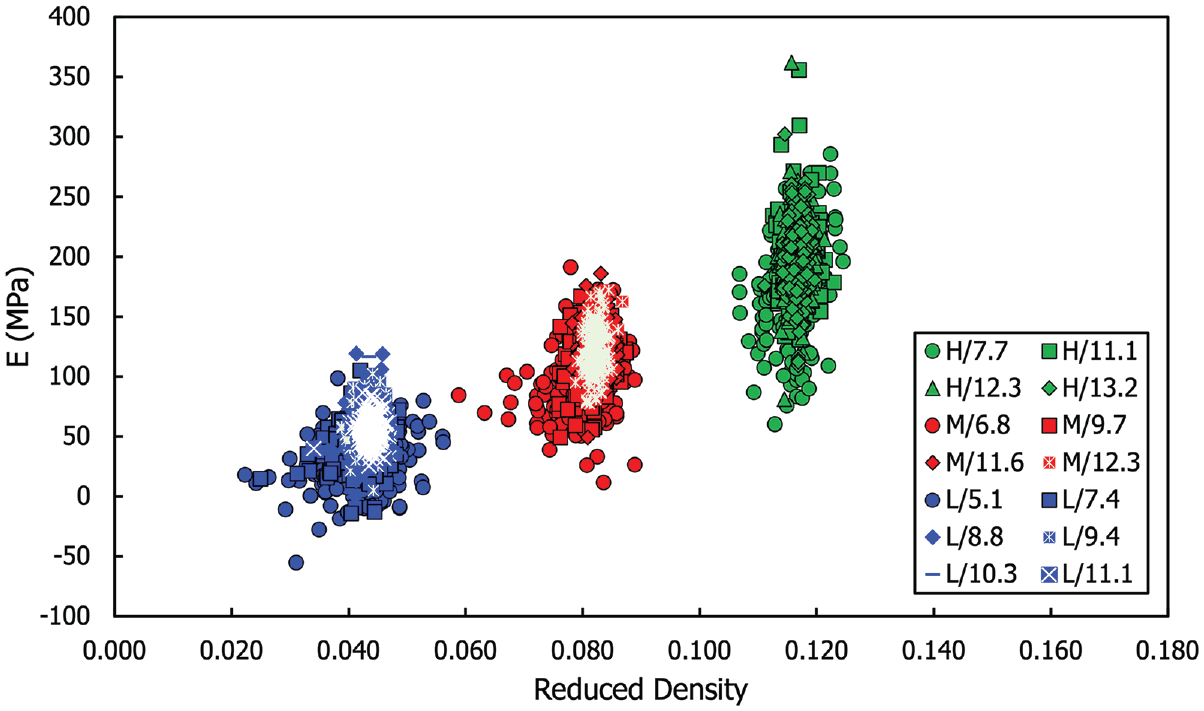
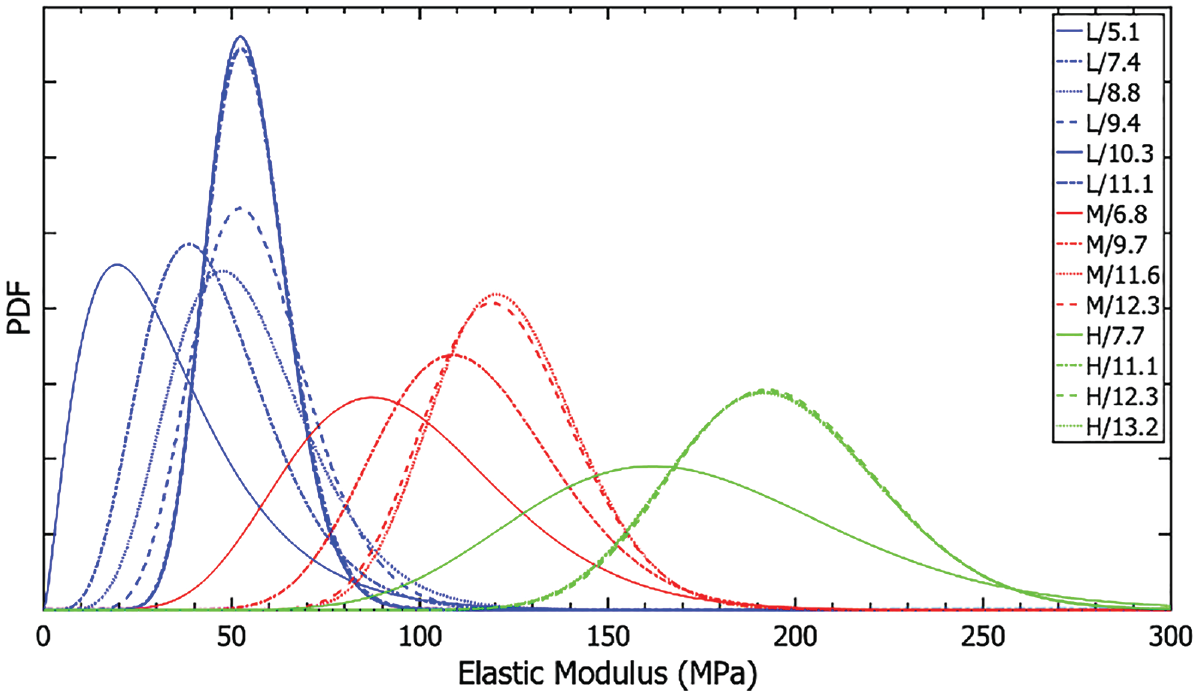
Figure 5 shows data for high-density mRVEs (sets H/7.7, H/11.1, H/12.3, and H/13.2) in the form of
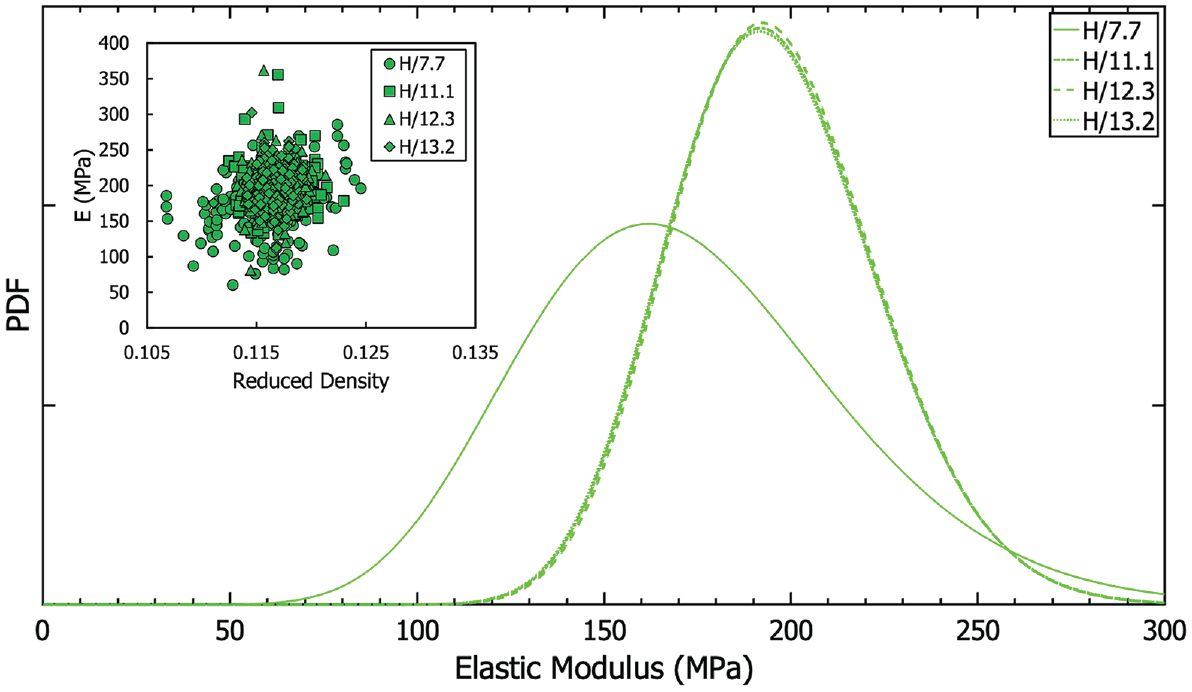
The gamma distribution parameters,
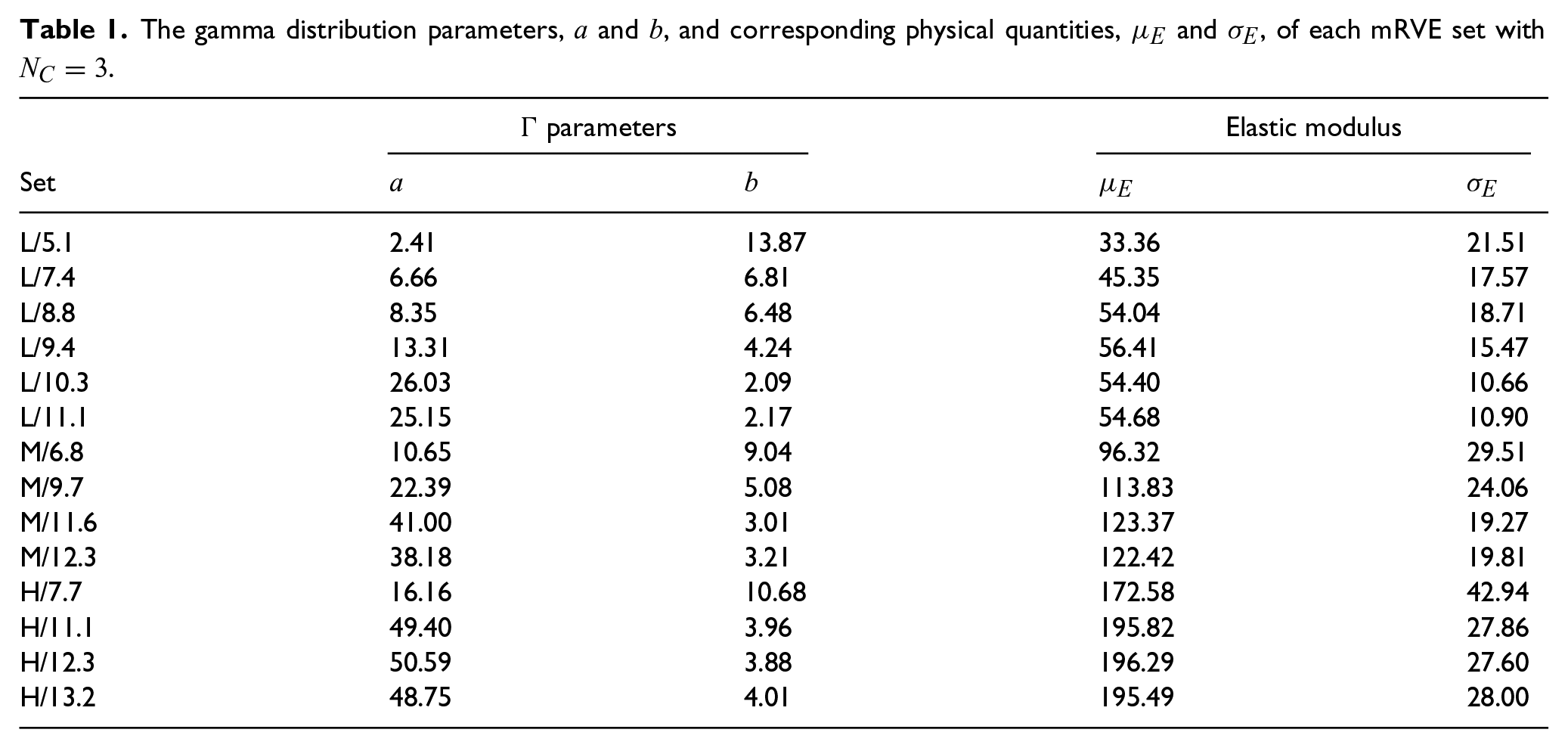
The same procedure was followed to determine
Figure 6 indicates the
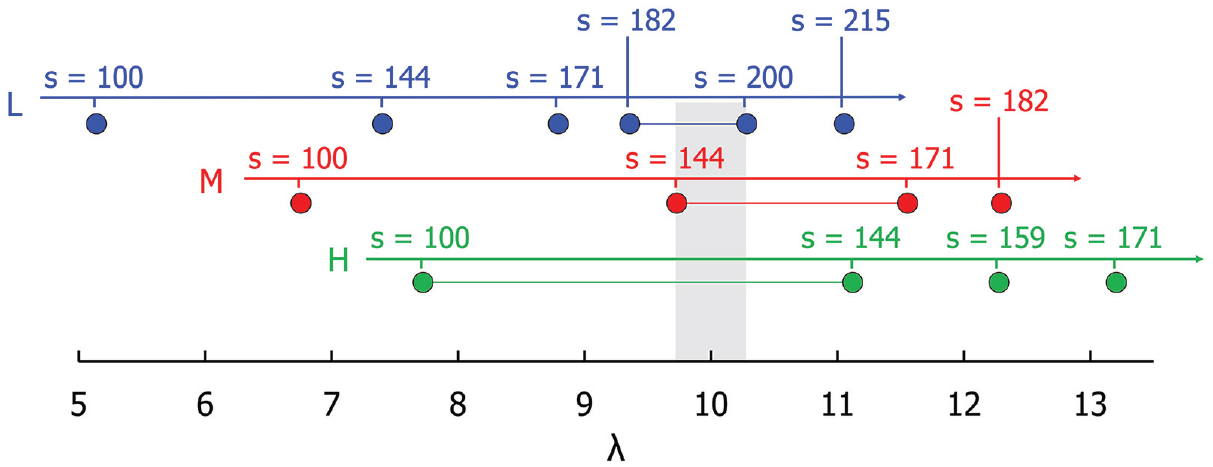
The quantity
While the relative length scale for the feature-scale to mesoscale transition is common to all structures with the same seed geometry, because self-similar foams with different average ligament lengths



It should be noted that, strictly, these values do not differ because the reduced densities of the mRVEs differ, but rather because the characteristic feature length
3.2. Stochastic model predictions of Duocel properties
Computed
Figure 7 plots properties (for both
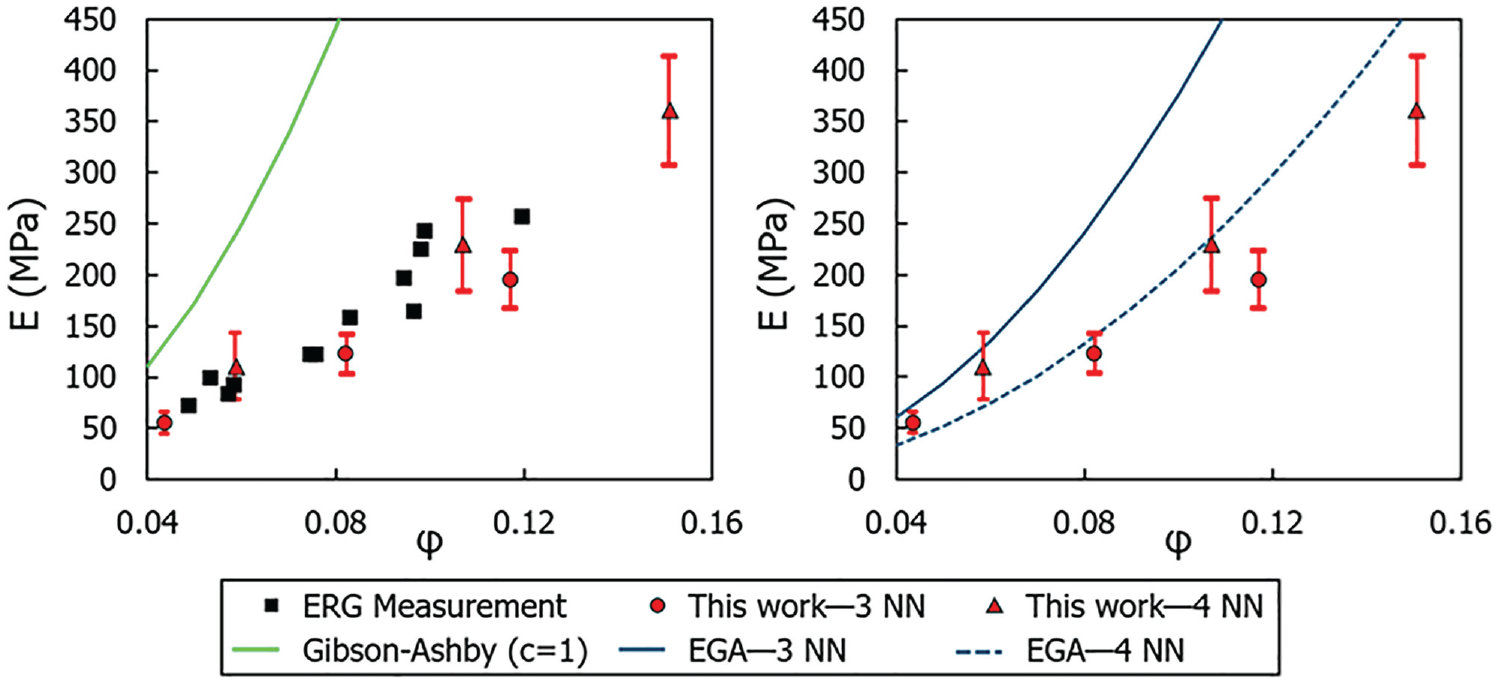
(Left) Comparison between KRaSTk prediction and Duocel measurements made by the manufacturer, ERG Aerospace. (Right) Comparison between KRaSTk prediction with EGA model [7].
In Figure 7, red markers indicate

where the quantity
The EGA model was developed to extend the long-standing Gibson–Ashby model for the mechanical properties of porous materials by accounting for the connectivity of node–ligament network structures. Careful consideration of Figure 7 reveals that computed elastic properties for mRVEs with
In aggregate, quantitative agreement between computed and measured mechanical properties demonstrates that the KRaSTk approach—taking only the mechanical properties of bulk Al and the node–ligament seed geometry as input—accurately represents the structure of Duocel and quantitatively predicts Duocel mechanical properties. In turn, this demonstrates that KRaSTk can be applied directly to address the needs of spacecraft and other system designers seeking knowledge of not just the bulk effective properties of Duocel, but also the sample-size-dependent variability in properties and the length scales bounding the feature-scale, mesoscale, and macroscale behavior of Duocel. As shown here, mean computed values of mRVE mechanical properties quantitatively predict measured Duocel properties, and the standard variability in mRVE properties quantitatively predicts the sample-to-sample variability that should be expected in finite-sized Duocel samples. Importantly, while the present study does not consider sample sizes large enough to determine the meso-to-macroscale transition (above which no sample-to-sample variability in mechanical properties would be observed), the computed feature to mesoscale transition length
3.3. Implications for applications in MMOD shielding
Operating under powerful imperatives to minimize weight and volume while robustly assuring mission success, component and spacecraft designers require accurate knowledge of foam properties and responses to MMOD strikes. This is complicated by the potentially small sizes of impacting MMODs and the intrinsically random nature of foam-based shielding materials, which exhibit different material responses depending on the length scale of the particle/foam interactions. For impacts affecting volumes at size scales similar to that of individual ligaments and/or pores—the “feature” length scale, on the order of 100s to 1000s of microns for many metallic foams—foam properties and responses to MMOD strikes are not characteristic of the bulk foam material, but rather of individual structural features (e.g., pores, ligaments, ligament junctions) within the structure. At length scales much greater than those of individual pores and ligaments—i.e., on the macroscale—uniform, singular bulk properties characteristic of the foam material can be observed and represent the homogenized, or “effective,” response of all structural features (ligaments and pores). Between these length scales—on the mesoscale—material properties become characteristic of the foam material, but are not singular or uniform, instead varying within characteristic distributions depending on the detailed arrangement of features in the affected volume.
In order to make appropriate design decisions—particularly ones that minimize mass and volume—spacecraft designers require quantitative knowledge of (1) expected bulk materials properties, (2) distributions of local properties characteristic of the material at the mesoscale, and (3) the physical lengths which bound the feature-scale, mesoscale, and macroscale. In particular, it is critical to know the length scale above which behavior representative of the bulk material will be observed—i.e., the transition length from the feature-scale to mesoscale—as this sets a hard minimum size for spacecraft components fabricated from the material.
The role of
This material-specific conversion to physical length scales has two important implications. First, it provides a justification for our comparison, in the previous subsection, of computed results for mRVEs with sizes (measured via
4. Summary and outlook
Direct comparison of computed properties of metallic foam mRVEs to experimentally measured properties of commercially available Duocel foam demonstrates that utilizing the KRaSTk approach with a node–ligament seed geometry allows for quantitatively accurate predictions of both expected average or bulk properties and the standard variability as a function of sampling volume. Leveraging this computational approach, the critical size scale at which foam samples will exhibit characteristic materials behavior (
For metallic foams generally, computed elastic properties at the low reduced densities considered here (<12%) do not align well with the predictions of analytic theories, including both the long-standing Gibson–Ashby model, which considers only variations in reduced density [21], and the recently developed Extended Gibson–Ashby (EGA) model, which adds a term accounting for variations in network connectivity [7]. In general, the EGA provides substantially better agreement, though both models could, retroactively, be scaled with arbitrary pre-factors to better coincide with computed (and experimentally measured) results. Direct KRaSTk calculations, comparatively, taking as inputs only a seed geometry and the bulk elastic properties of the constituent ligament metal, yield quantitatively accurate predictions of both expected or average elastic moduli and the observed variation in measured properties of mesoscale samples.
A potential issue related to extending the applicability of the present results to other materials with complex structure centers on determination of the characteristic structural length scale. For the metallic foam seed geometry used here, it is convenient to use the average ligament length, but, for example, in fibrous materials [24, 25], the relevant characteristic length for normalized system size may be the average fiber length or the distance between fiber-to-fiber mechanical contacts. In addition, for textured materials with orientation-dependent structures (e.g., fibrous mats or woven materials), it may be necessary to have a multi-dimensional
Regarding the response of Duocel foam (and similar materials) to hypervelocity impacts and MMOD strikes, specifically, the results presented here demonstrate that initial impact volumes are sufficiently small (relative to the key structural features of shielding materials) that the impacting particle does not interact with the bulk or even mesoscale material, but rather with individual elements of the constituent phases—generally voids and ligaments. Therefore, the material response of metallic foam shielding material to such impacts cannot be modeled accurately by treating the shielding material as a homogeneous bulk or mesoscale material.
Overall, as noted above, the modeling approach applied here yields quantitatively accurate predictions of both expected bulk homogenized elastic properties and distributions of local materials properties as a function of sampling volume (for volumes larger than
Footnotes
Appendix 1
Acknowledgements
We thank the University of Kentucky Center for Computational Sciences and Information Technology Services Research Computing for their support and use of the Lipscomb Compute Cluster and associated research computing resources.
Funding
The author(s) disclosed receipt of the following financial support for the research, authorship, and/or publication of this article: The research presented here was supported by M.N. Seif’s NASA Space Technology Graduate Research Fellowship (Grant Number 80NSSC20K1196).
