



Abstract
Objective
The aim of this convenience sampling study was to analyze incidents and accidents occurring in the context of canyoning so as to understand their causes, resulting injuries, and severity.
Methods
The sample consisted of 179 individuals (104 males, 75 females, age 35±9 y) who experienced an incident or accident while practicing canyoning and voluntarily participated in this convenience sampling study. The methods employed included the collection of information regarding incidents and accidents reported by canyoning practitioners. The most frequently associated activities for these events were identified as well as the body parts most affected by injuries. Additionally, an examination of the causes that posed a higher risk of accidents and injuries was conducted.
Results
Our results revealed that 21% of participants were beginners, among whom 23% were involved in accidents and 16% in incidents. In contrast, 79% of participants were experienced, with 84% involved in incidents and 78% in accidents. Additionally, 32% of accidents occurred during jumping progression, and 28% occurred while walking. Rope progression was the third most frequently associated activity with accidents, accounting for 24% of cases. Regarding incidents, rope progression was the most common activity, representing 49%, followed by water progression at 22%. Lower limb injuries were the most prevalent, particularly 25% affecting the tibia/fibula and 24% the ankles.
Conclusions
The main causes of accidents were jumping and walking progression, with rope progression being the most common in incidents. Lower limb injuries, especially to the tibia, fibula, and ankle, were most frequent. There is a need to increase awareness among canyoning practitioners about the risks of these activities.
Introduction
Canyoning is an adventure sport practiced in rivers and streams, which has seen remarkable growth worldwide in recent decades. 1 This nature-based sport involves exploring natural canyons and combines elements of climbing, hiking, swimming, and rope maneuvers. Several authors have described canyoning as the activity of navigating riverbeds in rugged terrain, where participants encounter natural obstacles such as lagoons, pools, and slides.2–5 This sport combines various movement techniques, including walking, swimming, sliding down natural formations, jumping, and rope maneuvers, with rappelling being the most common. It provides a unique opportunity to experience nature up close, requiring technical skills, specialized equipment, and a responsible attitude to ensure the safety of both participants and the environment.
Canyoning has grown in popularity, drawing adventure seekers who crave a deep connection with nature. However, this activity is not without its risks. Due to its often remote locations, participants must be aware of potential dangers and safety protocols and how to react in emergency situations. 6 As in other high-risk activities, canyoning can lead to incidents or accidents ranging from minor injuries to fatal accidents.4,5,7 These risks stem from both environmental factors and human error. 8
Previous studies have suggested that 80% of canyoning-related risks are associated with human factors, whereas only 20% are attributed to environmental factors.6,9,10 These data highlight the importance of companies, practitioners, and instructors focusing their efforts on managing human factors. This includes aspects such as the proper use of equipment, cognitive and technical abilities, physiologic conditions, behavioral balance, emotional and psychological factors, and preparation for rescue situations. 8
Understanding the factors contributing to incidents and accidents in canyoning is of utmost importance for the safety and well-being of practitioners. Continuous study and analysis of these events can provide insights to aid in implementing preventive measures, proper training, and adopting safe practices. Analyzing patterns and trends related to canyoning incidents and accidents can assist in formulating safety guidelines and creating a safer environment for this activity. 11
Through this analysis, we aimed to identify the patterns, trends, and primary causes of incidents and accidents among canyoning practitioners, leading to recommendations and practical guidelines for the prevention and mitigation of these events. To ensure safety and well-being in canyoning, it is essential to promote regular training, the use of certified equipment, and the supervision of qualified instructors. Additionally, prior planning and risk assessment, combined with emergency preparedness and the promotion of practitioners’ physical and mental health, are fundamental.10,12
Methods
Study Design and Setting
This convenience sampling study is retrospective cross-sectional research aimed at identifying and analyzing incidents and accidents related to canyoning, investigating injury patterns and their causes. A total of 179 individuals who experienced an incident or accident while practicing canyoning were recruited for this study. Participants completed specific incident and accident questionnaires using the Google Forms platform. The questionnaires were distributed through social media channels (ie, Facebook, Instagram, and WhatsApp) and email from April 12, 2022, to November 15, 2022.
Participants were recruited through social media posts, where it was stated that the study aimed to investigate incidents and accidents occurring during canyoning practice. Any individual who had experienced an incident or accident related to the activity was invited to volunteer and complete the questionnaire. Participants were selected based on their self-reported experiences.
Instruments
The injuries were classified into 5 groups and 19 categories according to the international classification of sports and leisure trauma. 13 To analyze the severity of the injuries, we used the injury and illness severity classification (IIC) system from the UIAA (International Mountaineering and Climbing Federation) Medical Commission (UIAA MedCom), which allowed us to evaluate different levels of severity. 13 Level 0 corresponds to the lowest level and is classified as “No injury or illness.” Level 1 represents “Minor injuries without the need for medical intervention, self-treatment (eg, bruises, sprains, strains).” Level 2 represents “Moderately severe injuries that do not pose a life-threatening risk, prolonged conservative surgery or minor surgery, outpatient therapy, the need for medical attention within a short period (days), absence from work related to the injury, recovery with or without permanent damage (eg, non-displaced fractures, tendon ruptures, pulley ruptures, dislocations, meniscal tears, minor frostbite).” Level 3 is reserved for “Severe injuries that do not pose a life-threatening risk, hospitalization, the need for surgical intervention, immediate medical attention required, absence from work related to the injury, recovery with or without permanent damage (eg, dislocated joints, fractures, spinal fractures, brain injuries, frostbite with amputations).” Level 4 represents “Imminent life-threatening risk, multiple traumas, immediate pre-hospital medical care or experienced trauma paramedic care, if available, acute surgical intervention, outcome: survival with permanent damage.” Level 5 represents an “Imminent life-threatening risk, multiple traumas, immediate pre-hospital medical care or experienced trauma paramedic care, if available, acute surgical intervention, outcome: death.” And Level 6 corresponds to “Immediate death.”
The questionnaire used in this study was developed in 4 languages: Portuguese, French, English, and Spanish. Initially, the questionnaire was translated from the original language (Portuguese) into the other languages by 3 fluent and specialized translators in each language, ensuring that linguistic and cultural nuances were preserved. Subsequently, a backtranslation was conducted, in which the translated questionnaires were reverted to the original language by independent translators with no access to the initial questionnaire. This procedure allowed for the identification and correction of any discrepancies in the translations.
To ensure the clarity, relevance, and cultural adequacy of the questionnaire items, a pretest was conducted with a total of 21 representative participants in Portuguese, 19 in English, 20 in French, and 24 in Spanish. The feedback from the participants was used to make final adjustments.
Participants
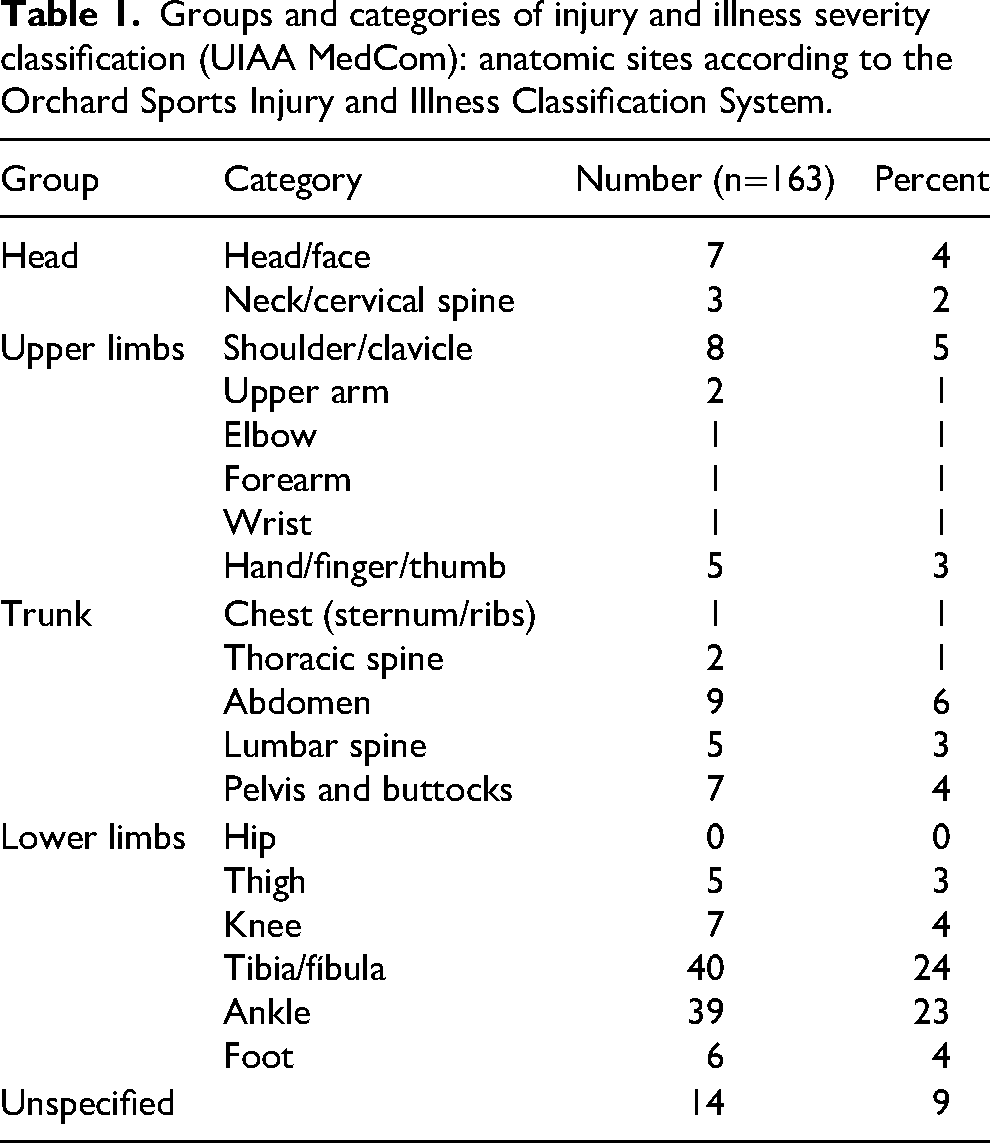
Participant selection was conducted through convenience sampling, and participants completed an online questionnaire after providing their consent to participate. Participants had the option to withdraw from the study at any point during questionnaire completion. A sample of 179 individuals who experienced an incident or accident while practicing canyoning voluntarily participated in this convenience sampling study (Table 1).
Groups and categories of injury and illness severity classification (UIAA MedCom): anatomic sites according to the Orchard Sports Injury and Illness Classification System.
The inclusion criteria in the study were 1) having experienced a canyoning accident or incident, 2) the accident or incident occurring within the last 15 y, and 3) giving consent to participate. Exclusion criteria were 1) incomplete or unclear questionnaire responses and 2) participants under the age of 18 y.
Participants were fully briefed on the study's design and the purpose of data collection. During the data-collection process, anonymity was strictly maintained, and researchers had no access to participants’ identities or contact information. All participants provided formal informed consent prior to completing the questionnaire, confirming their understanding of and agreement with the data-collection procedures and the main objectives of the study. If further clarification or additional information was needed, participants were informed of how to reach out for support. The study adhered to the ethical standards for research involving human subjects as established by the Declaration of Helsinki and received approval from the local ethics committee of the Polytechnic Institute of Viana do Castelo, School of Sports and Leisure (assigned code number IPVC-ESDL 36A/2022). (Figure 1)
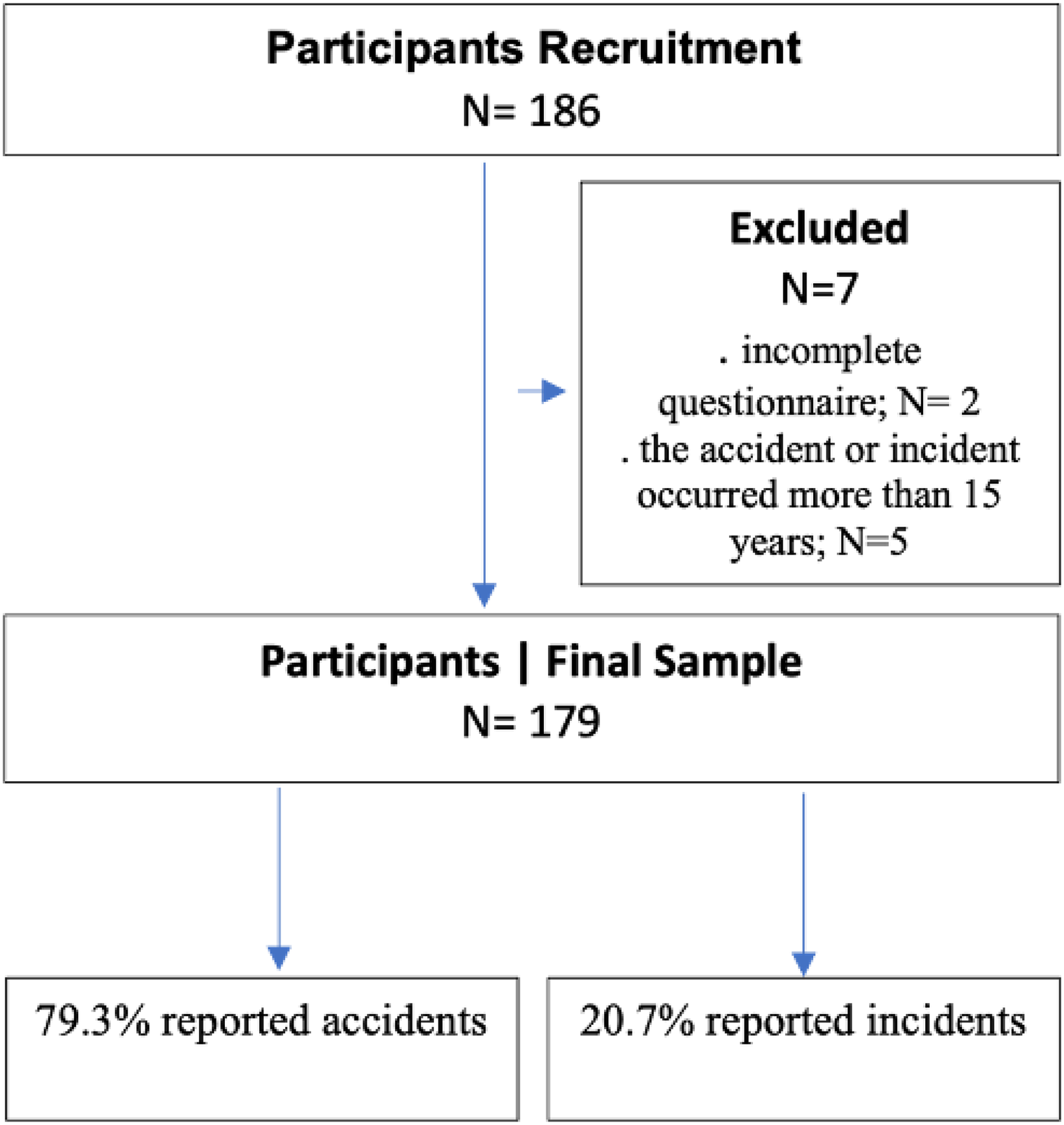
Flowchart of participants based on a consort statement.
Procedure
A questionnaire was created using the Google Forms platform for subsequent distribution through social media platforms (ie, Facebook, Instagram, and WhatsApp) and email. The average completion time for the questionnaire was 22 min. The online questionnaire was divided into 5 distinct parts.
In the first part, the study's objective was presented, and participants expressed their consent for the use of the data they provided. The second part requested information about group characteristics, including the number of people in the group, gender, the group leader's level of experience (ie, beginner or experienced), and years of practice. The third part included questions related to specific canyoning characteristics, such as the location where it was practiced and an evaluation of flow conditions. The fourth part included questions related to the specific incident or accident, covering the exact location where it occurred, the type of progression the victim was performing at the time of the event (eg, jumping progression, rope progression, walking progression, water progression, natural slide progression, others, and omitted), a detailed description of the incident, the affected body area, the severity of the injury, and the resulting consequences. The fifth and final part consisted of a message of gratitude to the participants for completing the questionnaire and sharing their experiences.
Data Analysis
The statistical analysis of the applied questionnaire was performed using SPSS version 26 and Excel software. Descriptive statistical analyses were conducted to characterize the data obtained. Various aspects were evaluated, including the number of people involved in the groups, the group’s experience in the specific canyoning route, the country where the incident or accident occurred, and the group’s level of experience. These data were presented in the results using descriptive measures and tables.
Using SPSS, the responses related to the reasons for incidents and accidents were quantified as well as an isolated comparison between incidents and accidents. The body areas affected by accidents, the reasons leading to accidents, the classification of injury severity based on the UIAA MedCom score, and the relationship between injury severity classification and the reasons for injuries were analyzed. Additional tables were created to assist in the discussion of the results. 8
Results
The main results obtained from the analysis of the collected data included a characterization of the sample, identification of the circumstances under which incidents and accidents occurred, and a description of the most common injuries observed.
The total study sample consisted of 179 participants with a mean age of 35±9 y (104 males and 75 females). Regarding the group leader, the average years of experience as a canyoning practitioner was 12.3 y.
The participants were asked how many members were in the group at the time of the accident or incident. In most cases, groups consisted of 4 people. However, on average, the groups were made up of 6 people, with the smallest group having only 1 person and the largest group consisting of 20 people.
Regarding the group's level of canyoning knowledge, 32% of the responses indicated that all members of the group had previously completed the same course; for 30%, it was the first time for >50% of the group; for 21%, it was the first time for <49% of the group members; and for 17%, it was the first time for all members of the group.
We recorded incidents and accidents in 12 countries, with most occurring in the Iberian Peninsula: 30% in Spain and 21% in Portugal. However, Germany, Chile, Jordan, and Greece accounted for 1%; Colombia, 2%; Italy, 3%; the United States, 4%; Brazil and Switzerland, 5%; Mexico, 6.1%; and France, 11% of the incidents and accidents. There was a 1% rate of missing data, specifically related to the location of the incidents and accidents.
The analysis of the cross-tabulation between experience level (ie, beginner vs experienced) and type of event (ie, accident vs incident) revealed that 21% of participants were beginners, of which 23% were involved in accidents and 16% in incidents. In contrast, 79% of participants were experienced, with 84% involved in incidents and 78% in accidents. The Spearman correlation coefficient (ρ=0.06, p=0.41) indicates that there is no significant relationship between experience level and the type of event (ie, incident or accident).
Regarding the reasons for incidents and accidents, based on the responses obtained, 7 categories were identified: jumping progression, rope progression, walking progression, water progression, natural slide progression, others, and omitted. The jumping progression category included occurrences related to jumps performed during canyoning. The rope progression category included incidents and accidents resulting from the improper use or handling of ropes. The walking progression category encompassed incidents recorded during walking, in the approach, during the canyoning course, and on the return. The water progression category referred to incidents and accidents that occurred during water progression, such as swimming. The natural slide progression category included occurrences related to the use of natural slides or the consequences of this activity. The others category was assigned to incidents and accidents occurring for different reasons, many of them due to factors external to the direct action of the practitioner. Finally, the omitted category was used when detailed information about the occurrence could not be obtained.
The results revealed that accidents most frequently occurred during jumping progression, accounting for 32% of cases, followed by walking progression at 28% and rope progression at 24%. As for incidents, it was observed that rope progression was the activity most associated with them, with a rate of 49%, followed by water progression at 22%.
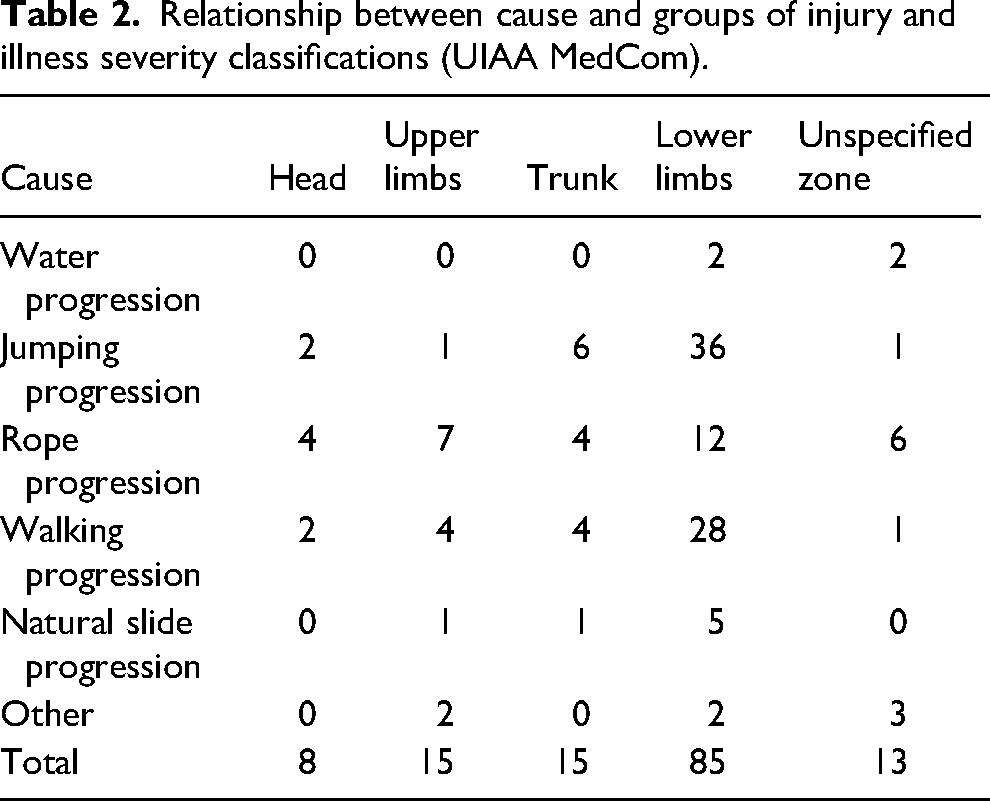
Analyzing the injuries (n=163) and using the main groups and categories to classify the locations of injuries according to the Orchard Sports Injury and Illness Classification System, it was found that most injuries were located in the lower limbs, accounting for 60% of cases. 8 This was followed by the trunk with 15%, upper limbs with 11%, head with 6%, and unspecified areas with 9%. In the lower limbs, when analyzed by categories, it was observed that the tibia/fibula had the highest incidence at 24%, followed by the ankle at 23%. The anatomic sites according to the Orchard Sports Injury and Illness Classification System are presented in Table 1. When we relate the cause of the accident to the injury location, we see that the lower limbs are mainly affected by jumping progression (n=36) and walking progression (n=28) (Table 2).
Relationship between cause and groups of injury and illness severity classifications (UIAA MedCom).
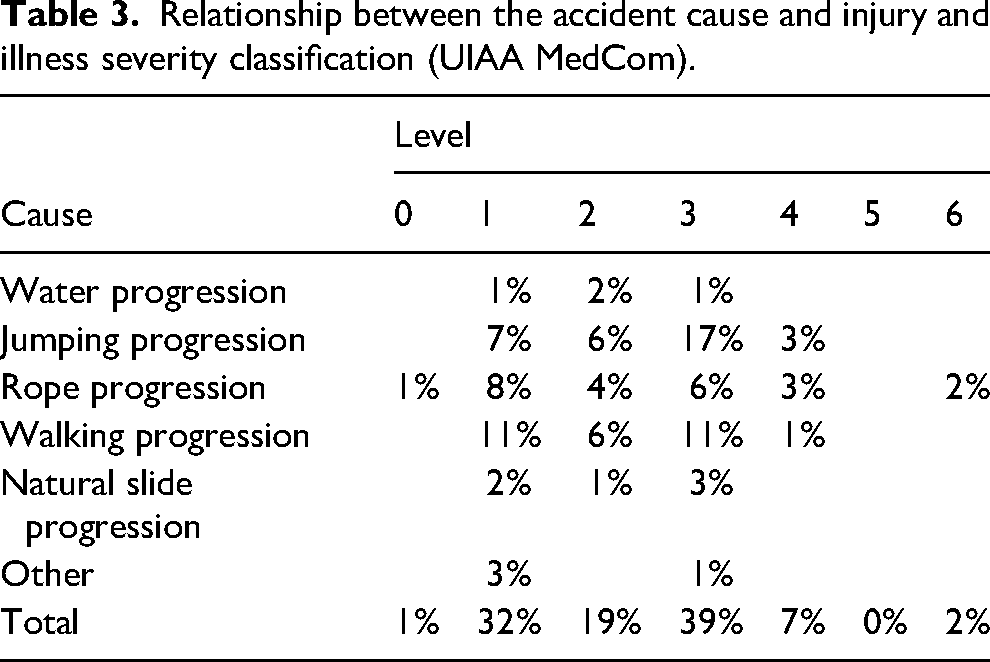
An analysis of injury severity using the IIC system from the UIAA MedCom revealed varying levels of severity. Level 3, which pertains to severe injuries without a risk to life, represented 39% of cases, followed by Level 1, indicating minor injuries that do not require medical intervention, at 32%. Additionally, we observed Level 2 covering 19% of the cases and Level 4 covering 7%. It is also important to highlight Level 6, representing 2.1% of cases, indicating immediate death. Levels 0 and 5 did not yield any results.
An analysis of the relationship between the accident motive and injury severity revealed the following findings: Jumping progression was associated with 17% of cases classified as Level 3, indicating significant severity. In contrast, walking progression accounted for 11% of cases with injuries classified as Level 1, suggesting lower severity (Table 3). Notably, although rope progression was not the most frequent accident motivator, it represented a significant proportion of cases classified as Level 6, indicating immediate death.
Relationship between the accident cause and injury and illness severity classification (UIAA MedCom).
Discussion
This convenience sampling study aimed is to analyze incidents and accidents occurring in the context of canyoning so as to understand their causes, resulting injuries, and severity. To contextualize the results, it is important to highlight the value of examining the knowledge and experience levels of canyoning practitioners. Our findings suggest a wide range of experience within the groups, with a notable proportion engaging in the activity for the first time. This indicates that canyoning appeals to both seasoned practitioners and beginners seeking new experiences, further emphasizing its increasing popularity. 1
When examining the incidents and accidents experienced by the participants in the study, our study found that they occurred more frequently among experienced individuals vs beginners. We can approach the idea that people with more experience are more likely to experience incidents or accidents not due to a lack of competence but simply because they are more exposed to the activity, accumulating more hours of contact with it. Practical experience can increase the total exposure to risk, which may explain why more experienced practitioners tend to experience more incidents or accidents. Even though their skills reduce the risk in each specific session, the accumulated time in risky activities increases the likelihood of accidents. This concept is widely discussed in studies on risk factors and exposure. 14 Additionally, continuous exposure to risk in operations, as demonstrated in aviation studies, has shown that individuals with more flight hours are more likely to be involved in accidents due to increased overall exposure. This same logic can be applied to canyoning, where technically capable practitioners spend more time in risky environments, leading to a higher number of incidents or accidents. 15
Regarding the countries where incidents were recorded, most events were reported in Portugal and Spain. It is important to note that we should not jump to hasty conclusions suggesting that these countries are more dangerous or have a higher concentration of practitioners in those regions. Instead, this result can be attributed to the ease of access to participants from these countries because the study sample was a convenience sample. The research team was familiar with individuals involved in these activities at the specified locations, which facilitated distribution of the questionnaire and the collection of responses.
The results reveal that certain canyoning progressions are more prone to accidents. Jumping progression stood out as the activity with the highest incidence of accidents, accounting for 32% of cases. This can be attributed to the inherent risks of performing jumps in aquatic environments, such as the possibility of colliding with submerged rocks or using improper jumping technique, as mentioned previously. 16
The same study reinforced the idea that all jumps should be preceded by a controlled descent in rappel to assess water depth and make the jump safer. However, in practice, participants often bypass this less favorable phase of the activity and proceed with jumping without adequate observation, which may account for the findings observed in our study. 10
Walking progression also showed significant incidents, accounting for 28% of accidents, indicating that even seemingly simple activities such as walking can pose risks when performed in rugged and unstable terrain, as is the case in canyoning. These occurrences prompt reflection on the importance of understanding environmental risk factors in making better-informed decisions.9,17
Regarding incidents, rope progression was the most associated activity, with a rate of 49%. This suggests that improper rope handling, anchoring failures, or sudden descents can lead to risky situations. 18 In contrast, water progression also showed relevance, accounting for 22% of incidents. Testimonies indicate that this is related to challenges such as strong currents and poor visibility in aquatic areas of the canyoning routes, which should be taken into account during canyoning progression. 19
When analyzing the results of accidents occurring during canyoning practice, we found that the most frequent injuries were located in the lower limbs, representing 60% of cases. This pattern of injuries aligns with findings from a previous study on canyoning accidents, 7 which found a significant proportion of lower limb injuries (n=133; 48%).
However, it is important to determine the specific areas of the lower limbs that are most susceptible to injury. Analyzing the categories, it was found that the tibia/fibula region had the highest incidence of injuries, accounting for 25%, followed by the ankle at 24%. Other areas had lower incidences.
When examining the relationship between the causes of accidents and the locations of injuries, it was evident that the lower limbs are particularly affected during jumping and walking progressions. These results align with the data obtained, which highlighted the significant number of lower limb injuries related to these activities. 7 These findings suggest that jumps and walks during canyoning may pose a greater risk of injuries in this region of the body. Therefore, it is crucial for canyoning instructors and trainers to address this information during practitioner training, aiming to increase awareness of the risks involved and encourage careful analysis before engaging in these activities. 10
Furthermore, when examining the severity of injuries, it was found that jumping progression was associated with a significant number of cases classified as Level 3. In contrast, walking progression was associated with Level 1 and Level 3 injuries. Therefore, even though injuries are more severe in jumping progression, it is also important to consider injuries during walking progression.
When analyzing the severity of injuries using the UIAA MedCom IIC scoring system, 13 the predominance of Levels 1 and 3 indicated the occurrence of both serious injuries without immediate life-threatening risk and mild injuries that do not require medical intervention, respectively. However, it is concerning to observe the presence of cases classified as Level 6, representing immediate death. These findings highlight the importance of promoting appropriate safety and prevention measures during canyoning practice to reduce the risk of severe accidents. 20
In this convenience sampling study, when it came to rope progression, we observed a mortality rate of only 2%. This rate is considered low, similar to other studies, where the overall mortality rate was 2%. 7 Although these numbers indicate a low incidence of death, it is important to emphasize that each death represents a significant loss. Therefore, it is crucial to continue working toward reducing these numbers and approaching a mortality rate as close to zero as possible.
Although rope progression was not the most frequent cause of accidents, it was linked to a notable proportion of cases classified as Level 6, indicating immediate death. This emphasizes the inherent risks associated with rope progression and underscores the crucial importance of proper training, strict adherence to safety protocols, and the implementation of appropriate technical procedures to reduce the risk of fatal incidents. 21 The results of this study reinforce the importance of raising awareness about the risks associated with jumping progression, walking progression, and rope use during canyoning.
Limitations and Recommendations for Future Studies
This convenience sampling study employed a convenience sampling approach, meaning that the sample was selected based on availability rather than being representative of all canyoning practices in different regions of the world. As a result, the findings of this convenience sampling study are based primarily on incidents and accidents recorded in Portugal and Spain. However, it is important to note that although the results are specific to these locations, it is reasonable to consider that other regions face similar challenges, making it possible, to some extent, to extrapolate these findings to diverse geographic and cultural contexts. Additionally, the study is subject to recall bias because participants were asked to recall details of their past canyoning experiences, some of which occurred up to 15 years ago. This reliance on participants’ memories may affect the accuracy of the data.
It is important to note that these results are influenced by the available sample and should not be generalized to provide a comprehensive global assessment of canyoning practices. Regarding the limitations, future studies should aim to use a more representative sample from a broader range of regions to enhance the generalizability of the findings. Additionally, researchers should consider using more objective data-collection methods, such as incident reports or real-time observations, to minimize the potential for recall bias.
Safety depends on various factors that increase awareness about the risks of canyoneering activities, and further research is needed on the effects of first aid and trauma management training in remote areas.
Conclusions
The conclusions of this study indicate that the main causes of accidents were jumping and walking progression, with the latter being particularly significant due to its higher frequency of occurrence. In incidents, rope progression was the most prevalent cause. These results highlight the importance of directing efforts toward more detailed training tailored to the different experience levels of practitioners. For beginners, a greater focus on safe progression techniques, especially in activities such as walking and rope use, is essential, whereas for experienced practitioners, the emphasis should be on the constant review of safety protocols. Such measures can contribute to a significant reduction in incidents and accidents, promoting safer canyoning practices.
The lower limbs, particularly the tibia, fibula, and ankle, were the most frequently injured body regions. A clear link was observed between the cause of the accident and the injured region, with jumping and walking progressions leading to most lower limb injuries.
In terms of injury severity, most cases were classified as Levels 1 and 3 on the IIC system from UIAA MedCom, although a few Level 6 injuries also were reported. Jumping progression was predominantly associated with Level 3 injuries, whereas walking progression was linked to both Level 1 and Level 3 injuries.
Practical Implications
With regard to experience, the higher rate of injuries in experienced practitioners suggests a need for continuous review of safety protocols and situational awareness. The higher severity of injuries in these jumping and walking progression phases reinforces the urgency to intervene at these critical moments of the activity.
