



Abstract
Introduction
Outdoor recreation and tourism providers, education programs, and outdoor recreation facilities are experiencing the effects of climate change and severe weather firsthand. This research assessed the impact that climate change was having on these operations in 2023.
Methods
Respondents from 127 outdoor organizations completed an online survey assessing the impacts of climate change and severe weather. Any outdoor operation that owed a duty of care to clients who they take outdoors or host at their facilities was invited to participate. This included outdoor tourism and recreation providers, outdoor education programs (both school and expedition based), groups involved in conservation work, and facilities such as parks, ski areas, and other outdoor recreation facilities. Respondents were from Canada's far north to Mexico, with 14% from further international locations.
Results
Climate change is having moderate to serious impacts on outdoor operations. Extreme heat and air quality were of primary concern, with storm event flooding, wildfires, snowpack, and changes in the ranges of disease-carrying insects top concerns. Fewer than half the operations have established criteria to aid in decision making, yet most had to revise operational plans in 2023 due to extreme weather.
Conclusions
There was pervasive uncertainty regarding decisions involving extreme heat and air quality, particularly the short-term health impacts on clients and the long-term health impacts on workers. There was uncertainty regarding trusted sources for guidance and the many overlapping or contradictory jurisdictional recommendations. Practical direction is required for operations and decision makers, as is further research specific to this sector's needs.
Introduction
After a difficult 2023 that saw Canada's worst forest fire season combined with the United States experiencing record-setting drought, flooding, and severe weather, a group of outdoor sector researchers assembled to assess how outdoor organizations are dealing with the impacts of climate change. The researchers represented professionals across outdoor education, tourism, and recreation providers, conservation organizations, and insurers.
Climate change represents the wicked problem of the era because it intertwines political, economic, health, and environmental knowledge bases and interests. 1 For the outdoor sector, a stable climate and predictable weather patterns have been a base-level assumption for the education, tourism, recreation, and conservation sectors. This assumption no longer holds. Wildfires and forest fires, unhealthy outdoor air quality, drought and flood, and erratic snowfall have become the norm in just a few short years. These severe weather events and their aftermath put the outdoor sector in the middle of the disaster preparedness and management fields. Less expected are the operational costs and loss of income associated with such events, specifically for sectors that rely on taking people outdoors as their primary venue and mission 2 (L Miller, paper presentation/unpublished conference proceeding, IOERC9, July 2022) or provide the infrastructure to host such activities. Interpreting emerging information and making programming decisions based on health and medical advice have proven to be a challenge. O’Toole et al2 wrote, “One of the major challenges of adapting recreation to climate change is translating broad concepts into specific, tangible actions” (p. 1). The impetus for this research is to articulate this gap from the perspective of outdoor organizations and to identify how organizations are dealing with climate change in its current state.
Some of the earliest sector-specific research on climate change impacts included consideration of outdoor tourism, recreation, and parks. In 1985, Wall et al modeled potential impacts on Great Lakes region parks and ski resorts. This early work predicted winners and losers in a warming climate, with Wall et al3 predicting that parks will have longer operating seasons and therefore more demand and ski resorts will have with shorter seasons. Rapid development in climate modeling turned general predictions into quantified economic impact values, 4 although still focused on net gain or loss per sector.
The ski industry was the first outdoor sector to develop a series of published articles on climate change research based on what is today an obvious foreseeable reduction in snow cover. McBoyle and Wall 5 anchored the North American development of this line of research, but importantly, the ski sector was the first to model operator-level mitigation—snowmaking—as an offsetting measure to climate change. 6 In effect, this introduced an alternative economic perspective beyond changes in demand or use patterns and introduced supply-side adaptation. 7 The Scott et al 7 article predicted an up to 145% increase in snowmaking requirements, and a follow up paper (2007) predicted that with snowmaking, climate change was not an immediate threat to Quebec, Canada's ski sector. However, the increase in costs to provide such snowmaking was a threat to financial sustainability at the operator level. There is scant research at the operator level of analysis, and for the outdoor sector, there is little empirical evidence of the impact climate change is having on individual organizations. Hewer and Gough 7 identified the reliance on outdated climate modeling data as a sector weakness in their 30-y review of outdoor tourism and recreation climate research. The elephant in the room is the sustainability of outdoor programs in an unstable climate. 8
This preliminary research surveyed individuals from 127 outdoor organizations to inventory the impact climate change was having on their operations and assess their readiness for a future with unpredictable weather and cascading disaster potential. For the purposes of this paper, the term outdoor organization was wide ranging, defined as any operation that owed a duty of care to clients who they take outdoors or host at their facilities. This included outdoor tourism and recreation providers who take individuals or groups for outdoor experiences, outdoor education programs (both school and expedition based), groups involved in conservation work, and facilities such as parks, ski areas, and other outdoor recreation facilities. Single- and multiday programs were included. Climate change, in this paper and in the survey, referred to changing weather patterns or unpredictability in a local environment compared with past typical weather patterns. Severe weather was to be widely interpreted as any intense, nontypical weather or hazard, such as forest fires, flooding, hurricanes, or rain events, or reduced air quality due to such events. The frame of reference for this research was a North American context given the research group's professional location, legislative framework, and land-management structure and permitting processes. Several international respondents beyond North America offered their perspectives on climate change impact and organizational readiness.
The research questions driving this survey were as follows:
What is the impact of climate change on outdoor organizations at present? How are outdoor organizations making decisions regarding extreme weather and a changing climate? What is the level of readiness of outdoor organizations for a future with extreme weather and a changing climate?
Methods
A 28-question online survey was distributed to individuals working in outdoor recreation, education, tourism, and conservation sectors. The survey questions queried severe weather and climate change impacts on outdoor operations as they were experienced in the northern hemisphere summer of 2023 and previously. The questions were multiple choice (with a text option “other, please specify”) with two final open-ended questions that captured qualitative comments. The specific question content was created by the research team based on identified emerging issues in the various outdoor sectors. The survey was managed via SurveyMonkey (http://www.surveymonkey.com). A pilot version of the survey was distributed to the researchers’ close personal network to test for readability and time to completion. Pilot results were disregarded; suggested edits were incorporated into the final survey. The final survey was distributed via online professional networks and outdoor association newsletters, with a request to respondents to further distribute the survey within their own professional networks. The survey was open from February 1, 2024, until March 31, 2024. Ethics approval was provided by the lead author's institution.
The survey was completed by 138 individuals, representing 127 different outdoor organizations (some organizations had more than one individual respond). Where there were multiple responses from the same organization, the multiple responses were compared for consistency. In any situation where the responses varied, the average between the two responses was used. Only four individual questions emerged where responses varied between multiple respondents from the same organization. The survey completion rate was 100%, with time to completion 14 min on average.
The invitation to participate included notification that all responses were anonymous and asked for consent to collect the organization's name. All respondents except for 11 provided an organization name (some respondents represented more than one organization, which accounts for the 127 organizations named). On data cleaning, organization names were removed from the individual responses. Organization names were categorized and organized for reporting separately from any individual response, thereby ensuring anonymity of the respondents. Any one response cited below is independent of the organization's name.
The data were cleaned in Excel. Numerical responses were tallied and graphed. Text questions were summarized and, in some cases, coded for response patterns using thematic analysis by the first two authors. Coded questions are identified in the next section.
Results
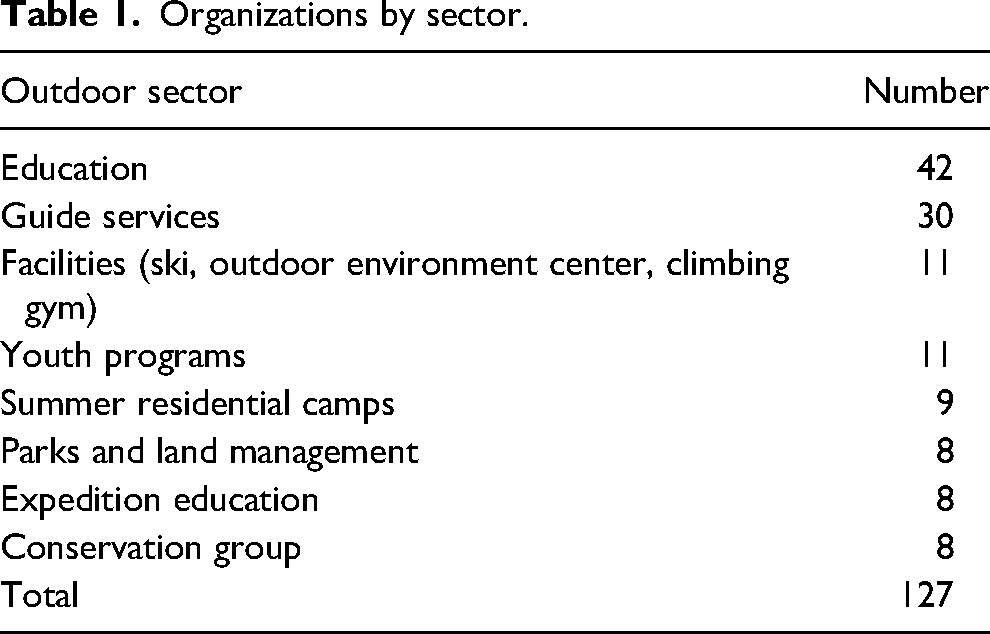
The survey was completed by 138 individuals, representing 127 different outdoor organizations. The organizations represented in the survey included outdoor guiding companies, outdoor education institutions or programs, expedition-based education and summer camp programs, recreation facilities such as outdoor education centers and ski areas, conservation work groups, and parks and land-management agencies (Table 1).
Organizations by sector.
Geographic regions from Canada's far north to Mexico were represented in the responses. Most of the organizations (52%) operate in Canada, 30% in the United States, 1.2% in Mexico, and a further 14% in locations outside North America (Figure 1). Respondents from the United Kingdom (13 responses), Brazil (1), Korea (1), Thailand (1), Singapore (1), Portugal (1) and Pakistan (1) comprised the range of geographic locations. The geographic areas noted represented operational regions rather than the base locations of the organizations. A further 5% of organizations operated across all of Canada, and 5% operated across all of the United States.
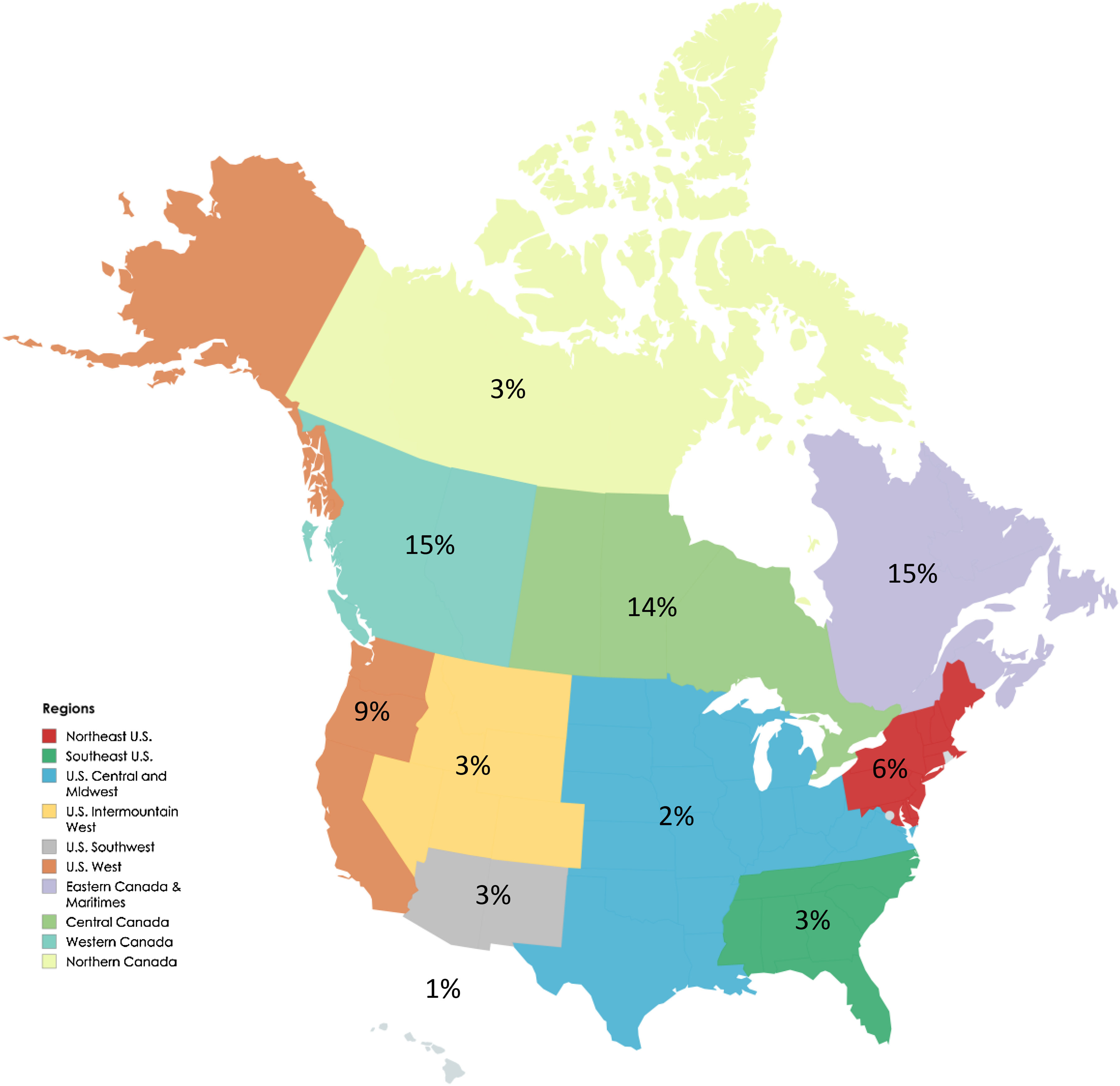
Geographic region.
The context for the various outdoor operations and their interactions with climate change or severe weather ranged from day-trip types of exposures, to multiday, self-sufficient wilderness expeditions, to land or facility management. These exposures were present for both workers and client groups or facility users (Figure 2).
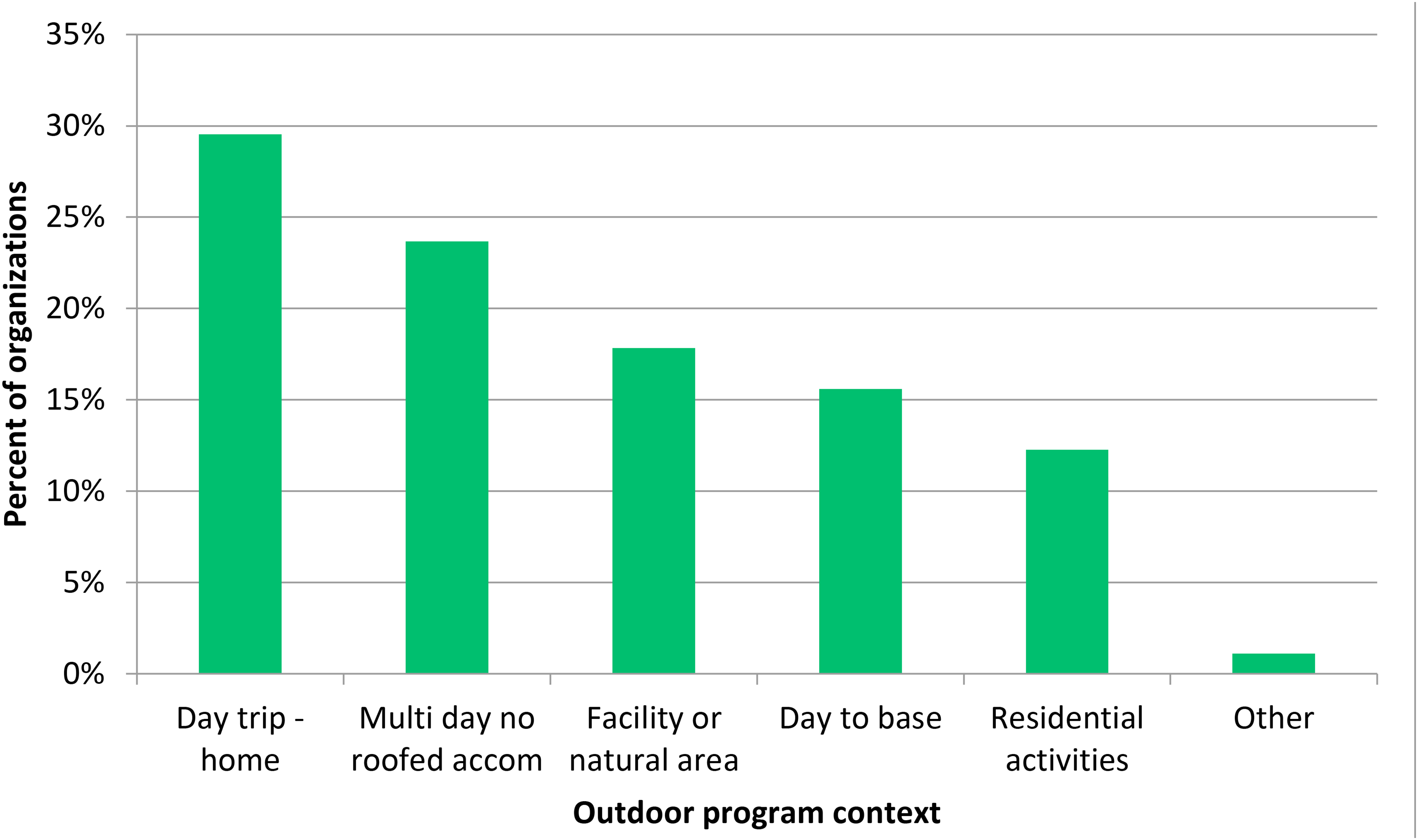
Outdoor context of climate change and severe weather impacts.
Respondents were asked to quantify the impact of climate change and severe weather on their operations to date on a sliding numerical scale, with zero representing “immense positive impact” and 100 representing “immense negative impact.” A score of 50 would indicate “no net gain or loss.” The average score was 69, indicating moderate negative impact. Scores ranged from immense negative impact (100) to moderate positive impact (30; median score, 70).
The actual weather or climate events of concern were tied to geography and operational activity type; operations in the south, for example, did not cite lake ice consistency as a concern. Events creating minor to major new or additional impacts over the previous 3 y (2023 compared with the previous 3 y; lower blue line per event type; Figure 3) included (1) extreme heat (86% of operations experiencing new impacts), (2) air quality (82%), (3) storm-event flooding (79%), (4) wildfires (70%), (5) changes in disease-carrying plants or insects (69%), and (6) seasonal flooding (68%).
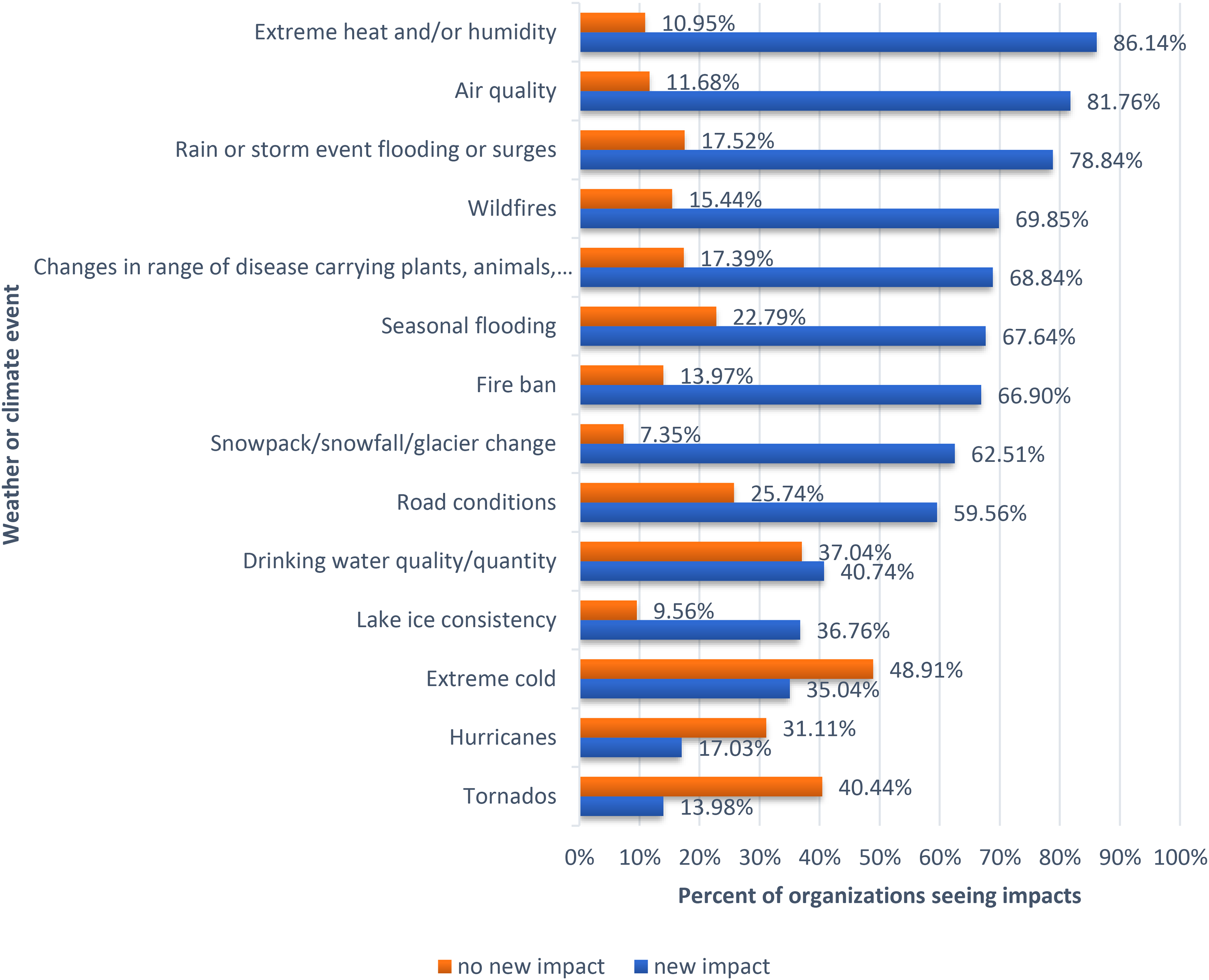
Percent of organizations seeing impacts from weather or climate events.
Events in the “Other” option included severe wind events (cited by four organizations) and inconsistent river levels (two organizations). Only hurricanes and tornados, of all the severe weather events listed, had more respondents cite “No new impacts” versus those who answered “New impacts.”
Isolating the events that were having serious or major new impacts (scoring 4 or 5 out of 5), 42% of organizations had serious new impacts from air quality; 36% from serious snowpack, snowfall, or glacier change; and 35% from wildfire impact.
These new weather or climate events were having a direct impact on outdoor operations. More than a third of organizations (39%) had to revise operations on 11 or more days in 2023, and two organizations had to revise every single operating day (Figure 4). Only nine organizations (6.5%) did not have to revise any operation plans due to weather in 2023.
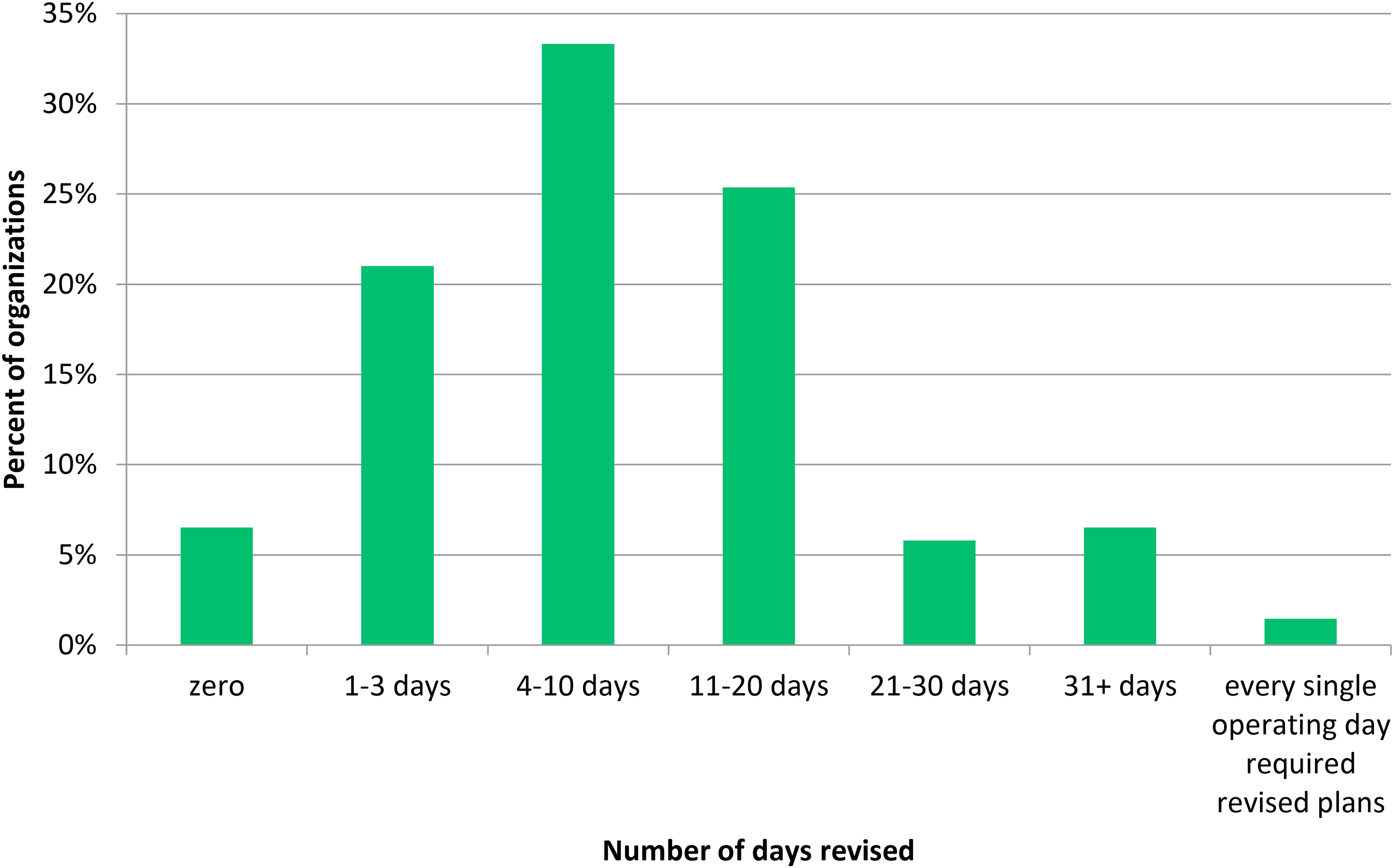
Number of days in 2023 that plans had to be revised due to severe weather.
For 48% of the outdoor operations, this marked an approximately small number of more days impacted over the previous year, and for 21% it marked a large number of more days (respondents were not expected to recall an exact number of impacted days). For 22%, this number of impacted days was about the same as the previous year.
Severe weather or climate impacts also were limiting where outdoor operations could travel or work. More than half of organizations (54%) lost access to operating areas in 2023; 20% lost access to areas for the long term (Figure 5). Fires, flood damage, and other natural disasters effectively removed areas from recreational or educational use.
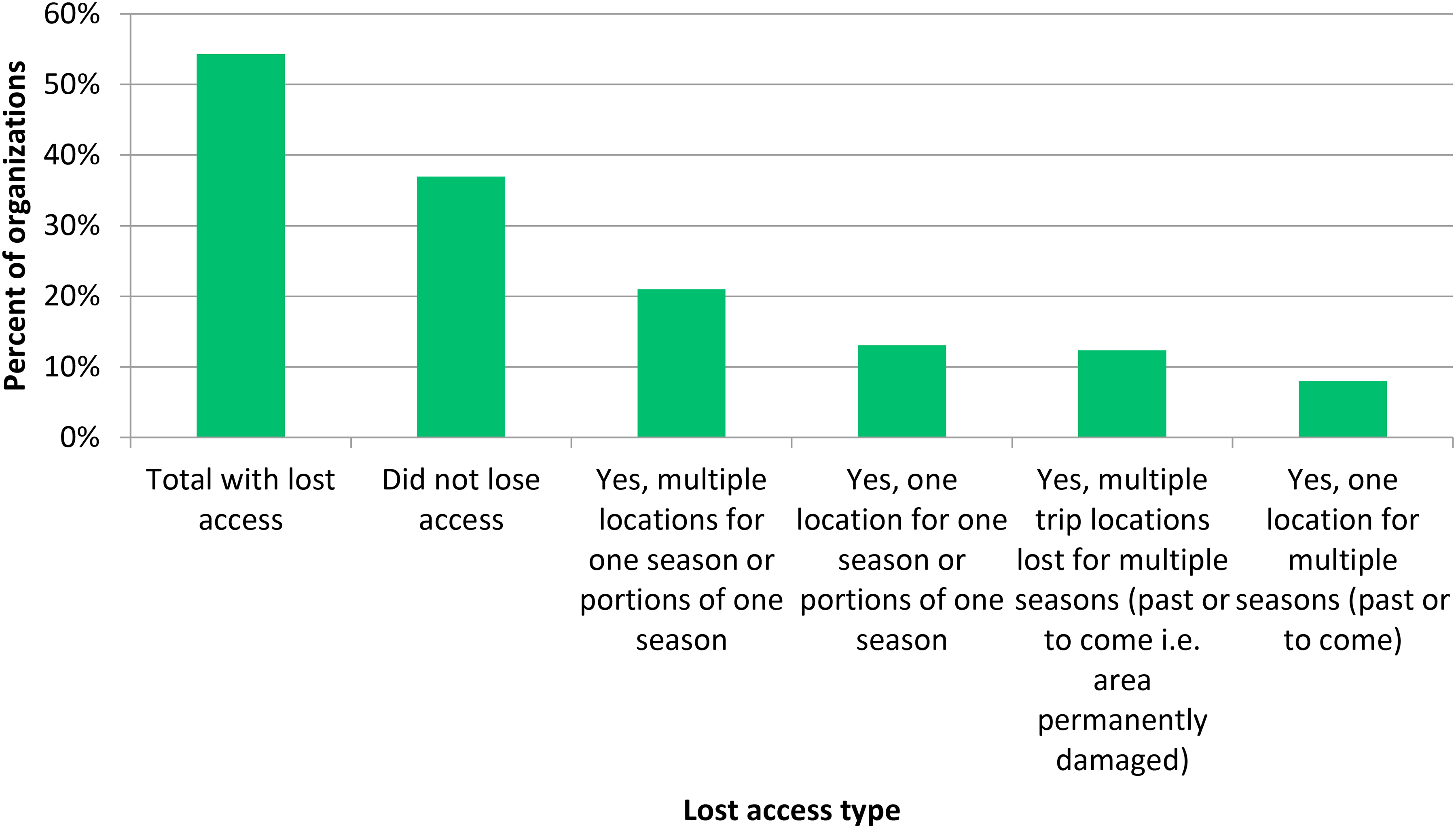
Lost access to operating areas in 2023 due to natural disasters, fire, floods, and so on.
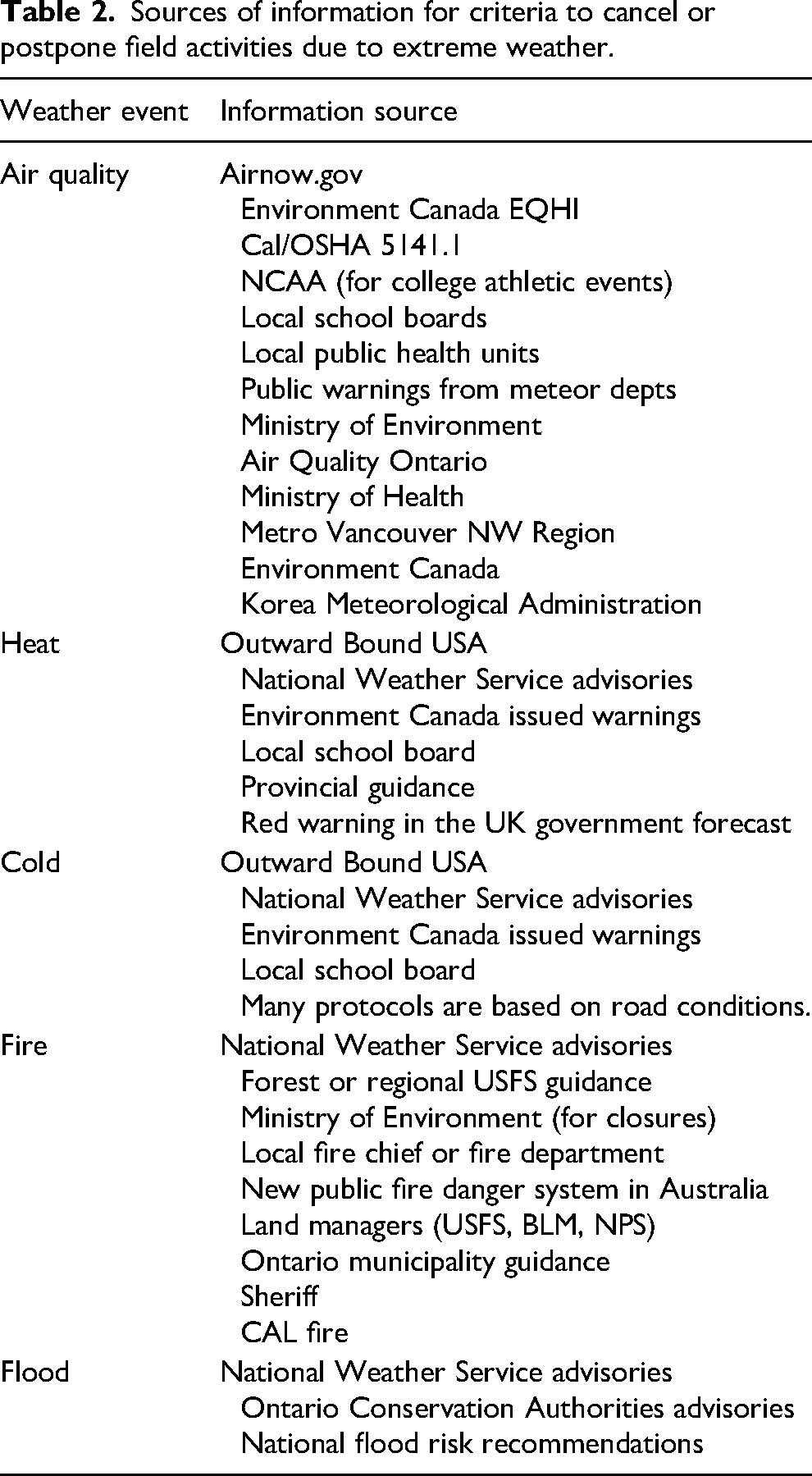
A minority of organizations (31–47%) had specific criteria in place to cancel or postpone outdoor activities due to extreme weather (Figure 6). Respondents were asked to elaborate on how they established these criteria and how they used them. There was a wide range of responses, typically anchored in resources provided by external bodies relevant to the jurisdiction. Sometimes these resources were regional or national government guidelines, and sometimes they were provided by local land managers or fire departments. Sometimes they were internally generated (Table 2).
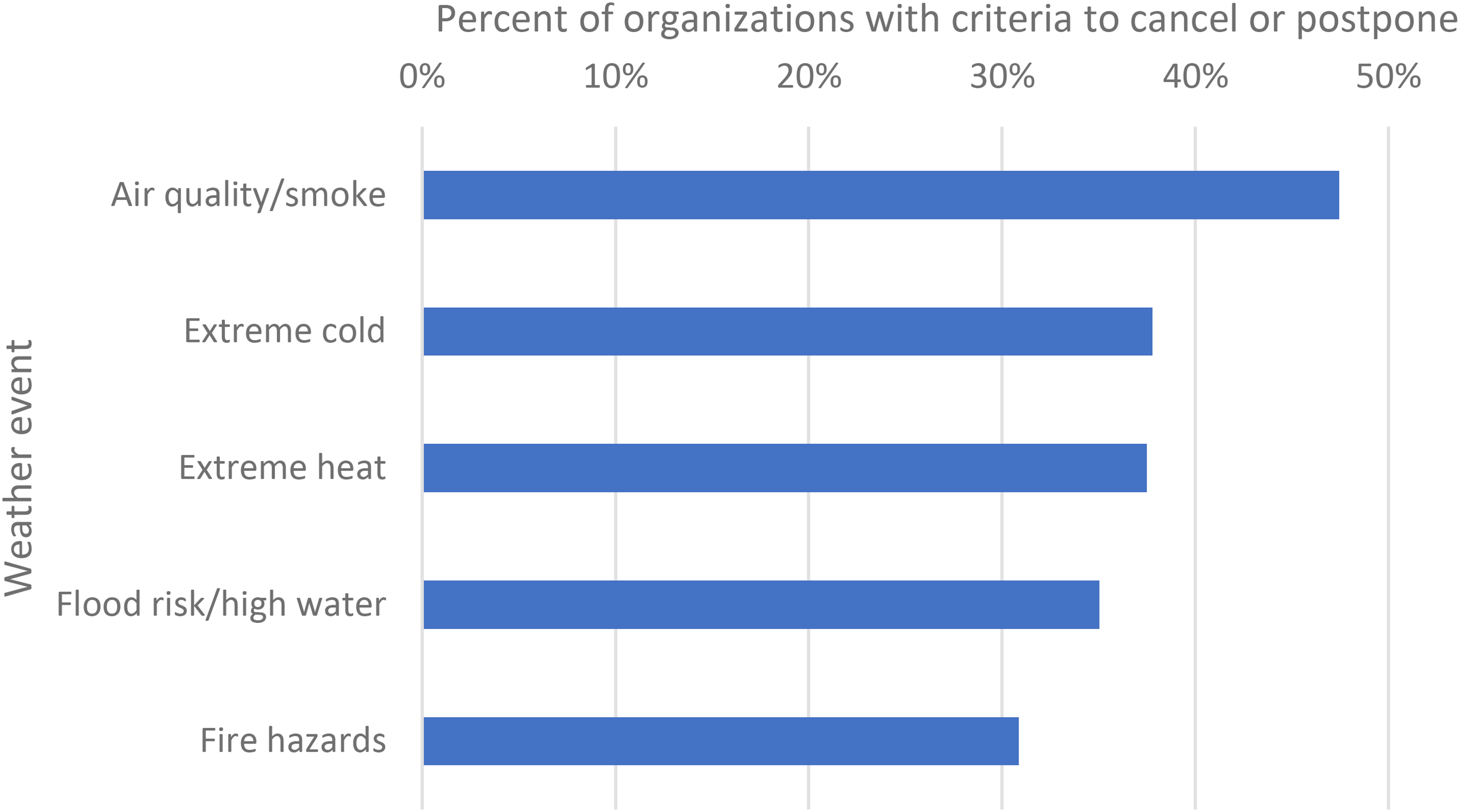
Organizations with established criteria to cancel or postpone field activities due to extreme weather.
Sources of information for criteria to cancel or postpone field activities due to extreme weather.
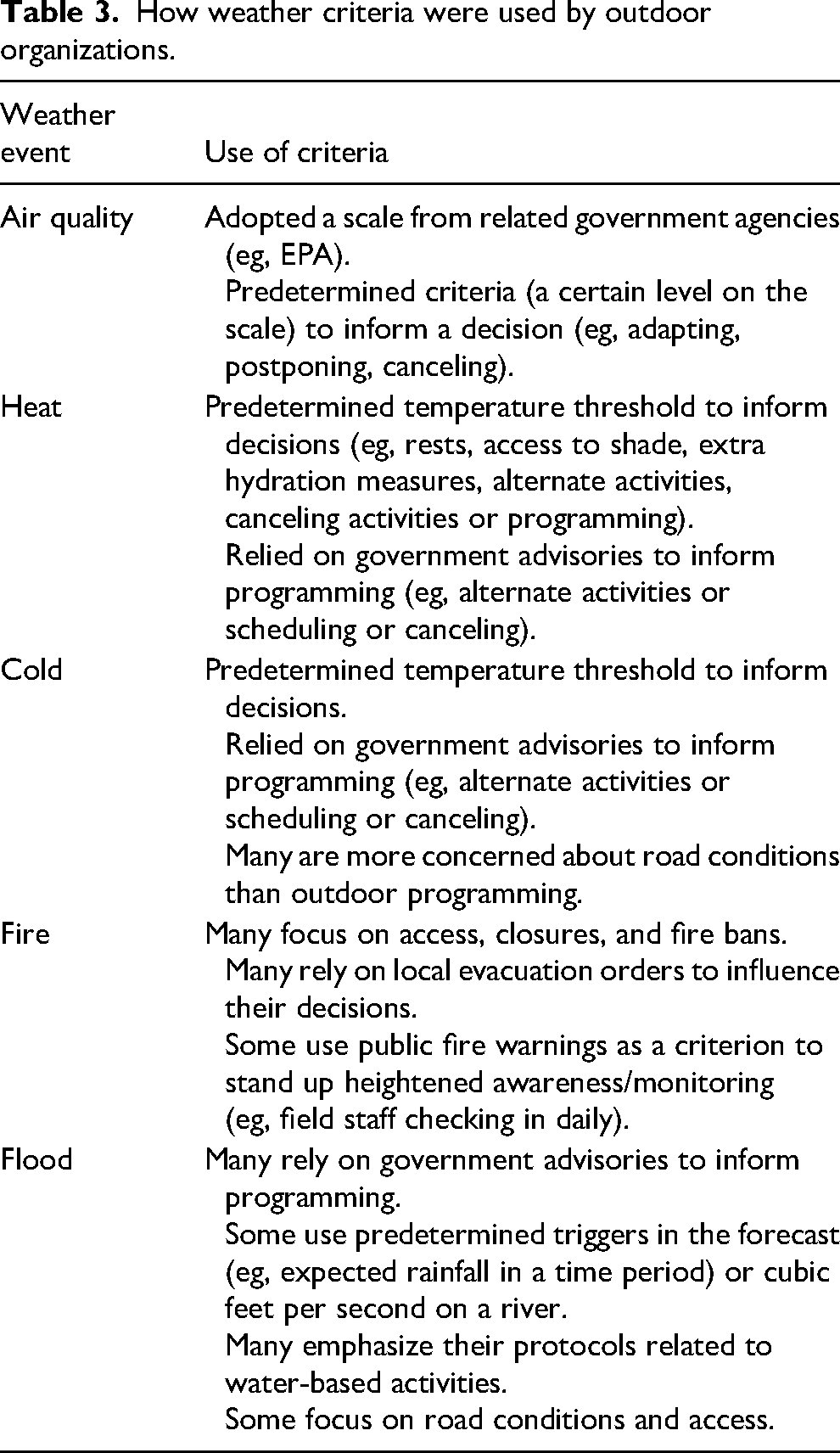
How these criteria were interpreted and implemented was less clear cut, with a common term of criteria informing decision making, implying that other factors were considered in addition to the listed criteria. The implementation seemed more flexible, and few respondents listed hard cutoff numbers (Table 3). Further commentary indicated that decisions were sometimes collaborative and evolving in nature. Participants, local authorities, or school officials were cited by some as having input into specific decisions regarding managing extreme weather events. Comments were provided that protocols for extreme weather events were not static and continued to evolve during an event.
How weather criteria were used by outdoor organizations.
From a severe weather preparedness perspective, all but one of the operations had some form of technology to communicate between workers or client groups in the field and home base. Some operations (24%) had a structured check-in procedure that included weather updates; 67% used communication technology on an as-needed basis. Most (92%) relied on standard weather apps for updates, and 86% further relied on visual monitoring of weather. Additional “Other” options included a wide range of resources, from handheld Air Quality Index monitors, river level gauges, various government websites, marine radio, and personal/elders/farmer experience and/or opinion. One respondent entered the following: [This] sounds silly, but we have a few farmers around that will update us when they’re “feeling the storm” or bad weather coming. They haven’t been wrong. We take their warnings as a heads up and prep clients and guides for there to be potential evacs or cancellations if something starts. We also keep an ear/eye out for wildlife. There is a lot of wild animals and insects (because of the marsh) so if we stop hearing them and they all disappear, something is coming. Again, just as a warning to put a pep in our step and prepare. We wouldn’t ever cancel or postpone because of these reasons alone.
Only 12% of organizations indicated that they are prepared for and proactively managing the future. Most organizations (60%) indicated that they are reacting to climate realities and are therefore only somewhat prepared for the future. A further 13% indicated that climate change is not on their organization's agenda.
A third of organizations (34%) have directly or indirectly taken steps to stormproof, fireproof, or floodproof their facilities because of the changing climate. A further 4% had plans to proof their facilities. Most respondents (64%) did not know whether their organization's insurance covered severe weather, climate impacts, or business interruption, but 12% did confirm that they were covered for these losses, and 7% confirmed that their coverage excluded these losses. When asked to rate their organization's overall health on a scale of 100 (the respondents interpreted “overall health” by their own criteria), the average score was 63, with a median score of 68. Some very low scores of 0, 1, and 3 were offset by some self-declared ratings of 90 or 100.
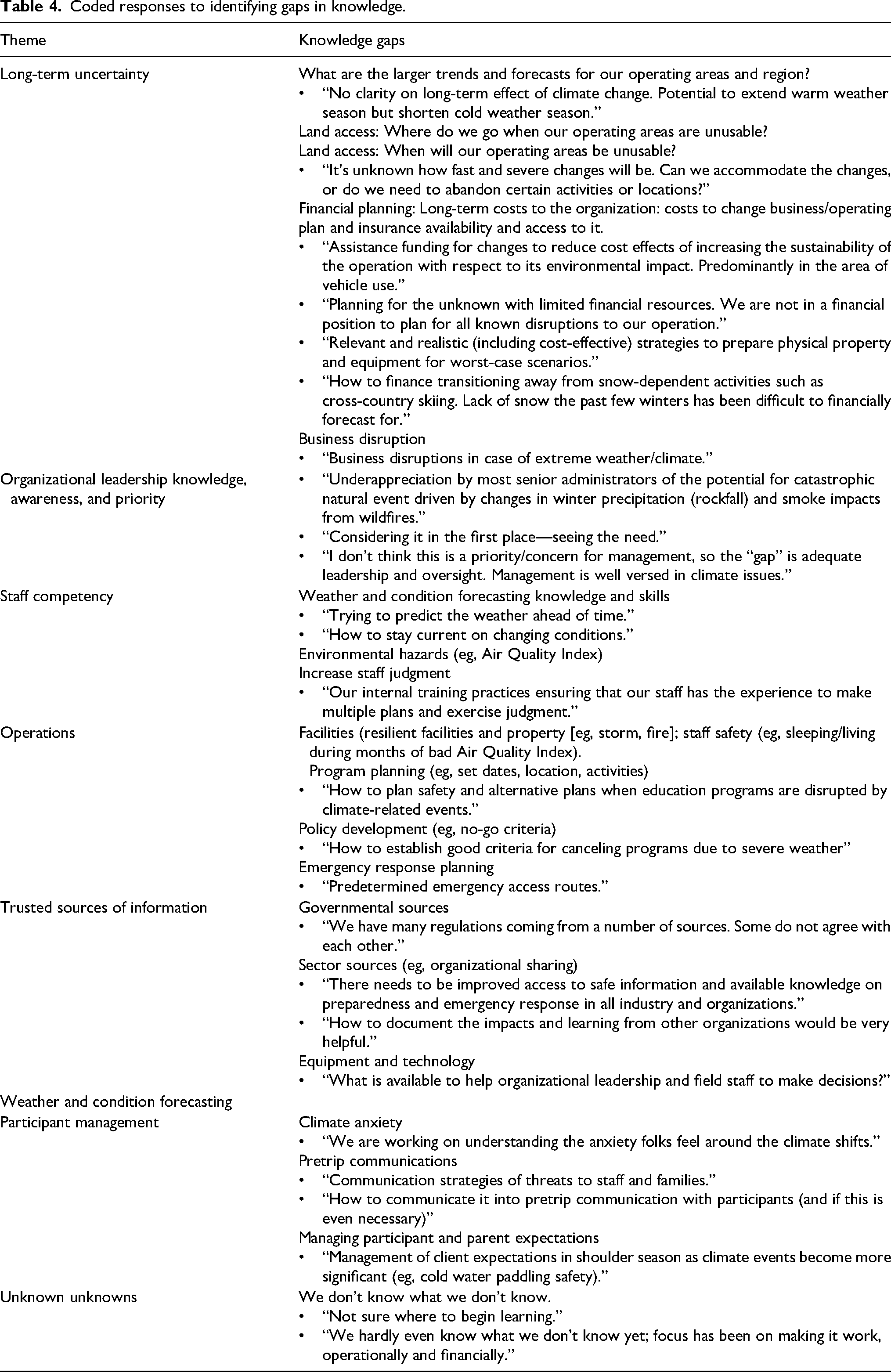
A final open-ended text question asked respondents what they believed to be their organization's greatest gap in knowledge in terms of climate resilience and readiness. Thematic analysis identified themes of long-term uncertainty around climate change, leadership and prioritizing climate preparedness, staff competency given severe weather, operation changes, identifying trusted information sources, managing participants given climate change, and recognizing all the unknown variables at play (Table 4). Some of the identified knowledge gaps were concrete, such as improving emergency response plans, finding better weather data, and financial planning. Some responses were more existential, wondering for how long the current business model can work and what they will do when their outdoor areas become unusable. One respondent commented, “Especially in winter it's tough to adapt to client desires when there are few or no safe but exciting options.” Another commented that climate and extreme weather “are all big issues which seem somewhat out of our control.”
Coded responses to identifying gaps in knowledge.
Discussion
The first research question driving this survey attempted to assess the present-day impact of climate change on outdoor organizations. Given these survey data, a reasonable summary statement is that all outdoor organizations are seeing and dealing with severe weather impacts and climate change. Most respondents characterized these impacts as negative, although three organizations viewed climate change as having a positive impact on their operations (without identifying what those positive impacts were). The nature of these impacts ranged from difficult operational decisions in dealing with air quality, for example, to fundamental business model uncertainty, continual management attention requirements, and financial impacts.
Outdoor organizations are struggling with decisions regarding extreme weather and a changing climate (Research Question 2). If severe weather is the new normal, then management structures will be required for effective and consistent decision making. Fewer than half the organizations had established criteria to deal with floods, fire hazards, extreme temperatures, or air quality (Figure 6).
Air quality and extreme heat were the two weather factors most organizations were impacted by. Given this, respondents asked questions regarding how to manage these factors: Whose safety criteria should we be following? Are these criteria hard rules or guidelines? When there is conflict between sources, how do we assess which one to adhere to? Some jurisdictions provided state/provincial guidance, whereas others didn’t, and sometimes neighboring state-level criteria differed. Some operations such as school-based outdoor programs, for example, relied on school board or executive decision making, which was at times absent or in conflict with government-published recommendations.
The health and medical implications of short- and long-term exposure to the above-mentioned hazards appeared repeatedly as uncertainties that undermined decision-making confidence. Respondents’ text responses inferred frustration at the lack of clarity of medical advice (or conflicting medical advice) regarding taking clients out or working in extreme heat or smoke. One respondent summarized, “So far we have not found any research that says what we are doing is wrong.” There was some desire to lean on external resources to defend operational go/no-go decisions to staff or clients, but later comments expressed distrust in the same resources. One response was, “We have many recommendations coming from a number of sources. Some do not agree with each other. Where does that leave us?” There seemed to be a view of using the resources they were advantageous and discounting them if they unduly constrained local operational decisions. One respondent stated that air quality guidelines that recommended to stay indoors “clearly do not work for us.”
The rapid rate of change of weather events was identified as a compounding factor. Operations had trouble getting reliable information in the narrow time frame needed to make critical decisions. Protocols were cited as dynamic, recognizing that old rules may no longer apply to current situations. A collaborative approach to decision making was evident in some responses, but even more respondents cited uncertainty in where to go for guidance and in who is considered a trusted resource. Commentary also was provided on how exhausting it was to be continually changing plans and the burdens of communicating these dynamic situations to staff, clients, parents, and decision makers.
Research Question 3 asked about the level of readiness of outdoor organizations for a future with extreme weather and a changing climate. Almost 90% of respondents stated that they are reacting to (and in some cases ignoring) climate change impacts. Only 12% claimed to be proactively managing these new impacts.
Front-line outdoor work historically has been autonomous—guides or workers made local decisions in the best interest of their clients or task completion. 9 The survey responses indicate unease or distrust in deferring to external authorities for something as immediate as weather-based decision making. A university outdoor program respondent stated, “We lock in our program events months in advance, and we’re reluctant to make changes based on a weather report that might be wrong.” Another respondent wrote, “We look at the [weather] monitoring sites but defer to our staff in the field.” Incorporating data such as Air Quality Index values into decision making was identified as ambiguous and complicating given that high ratings recommend staying indoors when no indoors were available given the purpose of the work. Compounding this ambiguity is the typical practice that outdoor guides do not get paid if a trip or program is canceled, creating an interesting conflict of interest and motivation to run trips regardless of the conditions. Beyond consideration of the suitability of existing business models for the future, the nature of outdoor decision making is changing given the presence of external guidance.
The ongoing and cascading effects of severe weather events are proving difficult for some organizations to deal with. One respondent wrote, “We were almost wiped out due to flood expenses, and now lack of clients due to heat.” Another wrote, “[We have] huge fears about the future of our business since we rely heavily on a positive outdoor experience. Blue algae in our lake, changing wind conditions, increase in fires and smoke, rising temperatures, these are all big issues which seem somewhat out of our control.” A third respondent stated, “Less climbable ice, wetter rock, a more unpredictable snowpack . . . things are getting scary from a climbing business standpoint.”
The outdoor sector's emergency-response approach was built n an assumption of a finite event with a beginning and end, such as an individual medical emergency. There is difficulty adapting to drawn-out climate events that cascade into further complications, spanning weeks or an operating season or years. A new resiliency skill set is required of outdoor decision makers that can be adapted to cascading events such as flooding leading to road washouts, leading to standing water, and leading to emerging vector-borne disease exposure, for example. There are new demands of adaptability that may be beyond the abilities of existing organizations.
The early ski resort climate change literature introduced supply-side adaptation. 7 Little of this was evident in the survey results. More than half the organizations have lost access to operating areas (Figure 5), yet fewer than half have established decision-making criteria for extreme weather (Figure 6). One respondent wrote, “We are running as though climate change does not exist.” Some respondents indicated that alternate trip locations are being established and that daily communication and weather reports are now being used. These could be considered minor variations on the present operational model rather than adaptations. Several respondents indicated that climate change is “not sufficiently considered as a priority” and that there is a lack of understanding of “the implications of climate change” for senior decision makers and operations. One summary statement said, “We need to know how to adjust our business to those major climate events.”
Scott et al 10 identified climate change adaptation as a threat to financial sustainability, a sentiment expressed by a number of respondents. One organization was “almost wiped out” by flood recovery expenses. Another stated, “The difference between knowing [how to adapt] and doing is the big cost issue.” Overall, organizations could be characterized as in response mode rather than proactively managing or adapting.
A broad range of outdoor organizations responded to this survey, providing breadth of context to the responses. The geographic scope of responses provided perspective on all types of climate impacts and weather issues from the far north to Mexico (and abroad). More responses from Canada could be either due to the effectiveness of the survey distribution network or to more recent and immediate climate and weather effects in that country. This survey was offered in English only, limiting participation to those proficient in that language. Further geographically targeted surveys could ascertain very regionalized impacts and point to resource and information needs at a level that is usable to the organization.
Uncertainty and change were the overriding themes in these organizations’ responses. Short-term uncertainty was evident in questions regarding immediate decision-making criteria, reliable sources of information, and what authorities to consult. Long-term uncertainty was evident in concerns over health effects on clients and workers, future access to impacted land and operating areas (whether there will be snow, for example), and existential uncertainty about the sustainability of any outdoor activity or organization. As one respondent concluded, “When we can no longer take people outdoors, what do we do?”
This study captures a firsthand impression of how outdoor organizations comprehend and dealt with climate change in 2023. Further research to assist with climate-related decision making could provide direction on short- and long-term health-related issues, such as exposure to poor air quality. Guidance on suitable decision criteria for severe weather was specifically requested in the respondents’ comments. Larger discussion on potential adaptation strategies and establishing the return on investment of such changes may move the sector toward solutions.
Conclusions
Outdoor recreation, tourism, education, and facilities providers are experiencing the effects of climate change and severe weather firsthand. Extreme heat and air quality were of primary concern, particularly the short-term health impacts on clients and the long-term health impacts on workers. Other emerging weather factors were recognized as storm-event flooding, wildfires, snowpack, and changes in the ranges of disease-carrying insects. Fewer than half the operations have established criteria to aid in decision making, yet most had to revise operational plans in 2023 due to extreme weather.
There was pervasive uncertainty regarding decisions involving extreme heat and air quality, and there was uncertainty regarding trusted sources for guidance and the many overlapping or contradictory jurisdictional recommendations. Little in the way of adaptation is yet present. Practical direction is required for operators, as is further research specific to this sector's needs. The ongoing and cascading effects of severe weather and climate-related events stress the ability of organizations to respond and point to new resiliency measures required to effectively adapt to new outdoor realities.
Footnotes
Author Contribution(s)
Declaration of Conflicting Interests
The authors declared no potential conflicts of interest with respect to the research, authorship, and/or publication of this article.
Funding
The authors received no financial support for the research, authorship, and/or publication of this article.
