



Abstract
Introduction
Epidemiologic data on hunting-related injuries is sparse. Most published studies in this arena come from case reports or case series from a trauma department or state trauma registry. Relatively few of the studies have attempted to calculate rates of injury by demographic characteristics or hunting-related activities. In this study, we summarize the epidemiologic trends in hunting-related injuries in Arkansas over the last 30 years.
Methods
A descriptive analysis of hunter injury data collected by the Arkansas Game and Fish Commission from 1993 to 2022 was performed.
Results
Analyses showed that the overall number of hunting-related injuries decreased by 0.16 per 100,000 licensees per year during the study period (P=0.0009). Projectile-related injuries decreased by 0.24 per 100,000 licensees (P=0.00001), and treestand-related injuries increased by 0.06 per 100,000 licensees (P=0.02) during the same time (both trends P<0.00001). treestand-related injuries now account for two thirds of all hunting-related injuries reported to the Arkansas Game and Fish Commission. Among hunters subject to hunter education certification mandates, compliance was 48.7%.
Conclusions
Although projectile-related hunting injuries have decreased in Arkansas in the last 30 years, treestand-related hunting injuries have increased. These injuries are largely preventable if the hunter follows treestand safety recommendations (such as using a body harness and tether at all times when off the ground), as recommended by the Treestand Manufacturers of America. In addition, implementing strategies to improve compliance with hunter education certification also may help reduce injury rates.
Introduction
Hunting is a popular pastime nationally, 1 including in Arkansas. In 2023, 306,915 persons, 10.2% of the total 2020 Arkansas population, bought hunting licenses to hunt in Arkansas. 2 There are many ways hunters can get injured when in the field in addition to gunshot wounds, and it can be useful in terms of public health to describe common mechanisms or patterns observed so that prevention or mitigation efforts can be brought to bear.
Since 1980 when hunting magazines popularized the practice, an increasing number of hunters, particularly deer hunters, began hunting from treestands, either commercial or homemade. treestands are often placed 10 to 25 ft off the ground and may or may not be enclosed. 3 These structures improve the hunter's vantage point and minimize being seen or smelled by wary game. 4 Also, as an added benefit, it is thought that when a hunter shoots down from an elevated position, the bullet is less likely to continue on past the quarry and hit another hunter downrange compared with a projectile fired parallel to the ground.
One unquestionable disadvantage of using an elevated treestand is the increased risk of falling. Commercial treestands are generally considered safer than homemade treestands, and treestand manufacturers have included safety harnesses for all nonenclosed treestands since 2003 to prevent fall injuries (American Society of Treestand Manufacturers Product Standard F3249, as cited in Sprinkle 5 ). It is recommended that treestand hunters use a tether and safety harness to remain secured to the tree at all times when off the ground. 6 A suspension-relief device is also part of this equipment to aid the hunter in maintaining blood flow and neurologic function in the event of a fall. A simple rope around the waist is not sufficient safety gear in that following a fall, the victim has only a brief period to extricate themselves from the rope before they suffer potentially fatal asphyxiation or limb-threatening suspension injury. 4
Falls from treestands are more common when the hunter is climbing in or out of the structure, but they can occur at any time and for several reasons. 7 For example, the treestand may fail, straps or fasteners securing it to the tree may break, or the supporting branch or whole tree itself may fall. Slippery or icy conditions may contribute to a hunter losing their grip or purchase in the treestand. Or the hunter simply may fall asleep in the treestand and slide out of it. Regardless of the initiating event, falls from treestands have been associated with severe injuries, including fractures, dislocations, impalements, head injuries, spinal injuries, neurologic impairments including paralysis, and death. 1
In the late 1940s, legislative efforts to develop more formal education for hunters began. In Arkansas, any person born after December 31, 1968, is required to pass a hunter education class and possess a current hunter education card. 8 Cards issued in other states are honored. Children under the age of 16 y are the only exception to this rule; they may hunt without hunter education if they are directly supervised by an adult who is at least 21 years of age. 8
Wearing high visibility clothing, traditionally blaze or hunter orange, is another requirement for Arkansas hunters. Blaze orange clothing improves the visibility of the wearer by other hunters while being unobtrusive to deer—which lack the retinal photoreceptor that senses long wavelengths that would be necessary to see orange or red. 9 Arkansas Game and Fish Commission (AGFC) hunting regulations (available at https://apps.agfc.com/regulations/05.20/) require hunters in Arkansas to wear an outer garment of blaze orange (or chartreuse) above the waist, at least 400 in2 in size, and a hunter orange or chartreuse hat during the gun deer, elk, and bear seasons.
Both formal education and high visibility clothing have been shown to decrease the number of firearm-related injuries hunters sustain.10,11 However, even with these laws in place, preventable injuries related to hunting continue to occur in Arkansas and elsewhere.
When a hunting-related injury occurs in Arkansas, it is passively reported to an AGFC game warden, who typically investigates the incident on site, often participating in the initial emergency response efforts, and who completes a standardized report from which these data are synthesized. By law, all gun-related injuries and hunting-related fatalities in Arkansas are required to be reported. The AGFC compiles these reports and since 1993 has been submitting the data to the International Hunter Education Association (IHEA). IHEA maintains the data from all participating states and makes them available on their website (https://www.ihea-usa.org/hunter-incident-database/) for researcher use.
The purpose of this paper is to describe the trends observed with respect to treestand- and projectile-related incidents over time, to detail age- and sex-specific rates of injuries, and to propose guidelines that, if followed, could prevent most hunting-related injuries.
Methods
Arkansas hunting-related injury incident data from 1993 through 2019 were acquired electronically from the IHEA in September 2023. These include injuries that occurred during a hunting season as well as injuries that occurred in the offseason when performing hunting-related activities—such as erecting treestands. Supplemental hunting-related incident data from 1993 through 2022 that included the hunter's sex, age, and hunter education graduate status and a detailed paragraph describing the incident were provided by the AGFC directly in the form of year-end hardcopy hunter incident summary reports in October 2023. In most reports, the electronic copy matched the paper copy perfectly. In 14 records (1.7%), when data fields in the IHEA dataset were blank or had obvious inconsistency with the hardcopy incident summary report incident description memo field, they were updated by the author as appropriate to agree with the incident description. AGFC data also included whether the injury was self-inflicted or not. All treestand-related injuries that did not involve a harness were considered self-inflicted. Aggregate data on Arkansas’ 2017 through 2022 hunting licensee demographic characteristics also were provided by the AGFC to allow rate estimation. Demographic data from 1993 through 2016 for the larger group of uninjured licensed hunters were not available. These data were imported into Microsoft Excel for the creation of figures and into SAS version 9.4 for calculation of rates, means, ranges, standard deviations, linear regression analyses, and significance testing. Because the data did not involve human subjects, institutional review board oversight was waived for this work (University of Arkansas for Medical Science IRB#287062).
Results
Hunting-related incidents are defined by the AGFC as a death or an injury involving more than basic first aid that occurs due to an activity directly related to a hunting or trapping excursion in the field. The most frequent examples of such activities include injuries related to the discharge of a firearm, vertical bow, or crossbow or falls from an elevated hunting platform. A total of 807 hunting-related incidents were identified from 1993 through 2022. All 75 Arkansas counties had at least one incident reported. One hundred and sixteen (14.4%) were fatal (Figure 1). The overall number of incidents reported decreased by a rate of 0.16 per 100,000 licensees per year during the study period from 35 (11.0 per 100,000 licensees) in 1993 to 17 (5.5 per 100,000 licensees) in 2022 (P=0.0009). Fatal incidents occurred in most years with a range of 0 to 10 deaths observed (0–3.1 deaths per 100,000 licensees). Linear regression demonstrated a nonsignificant 0.025 per 100,000 licensees decrease in deaths per year over the time period (P=0.12; Figure 1).
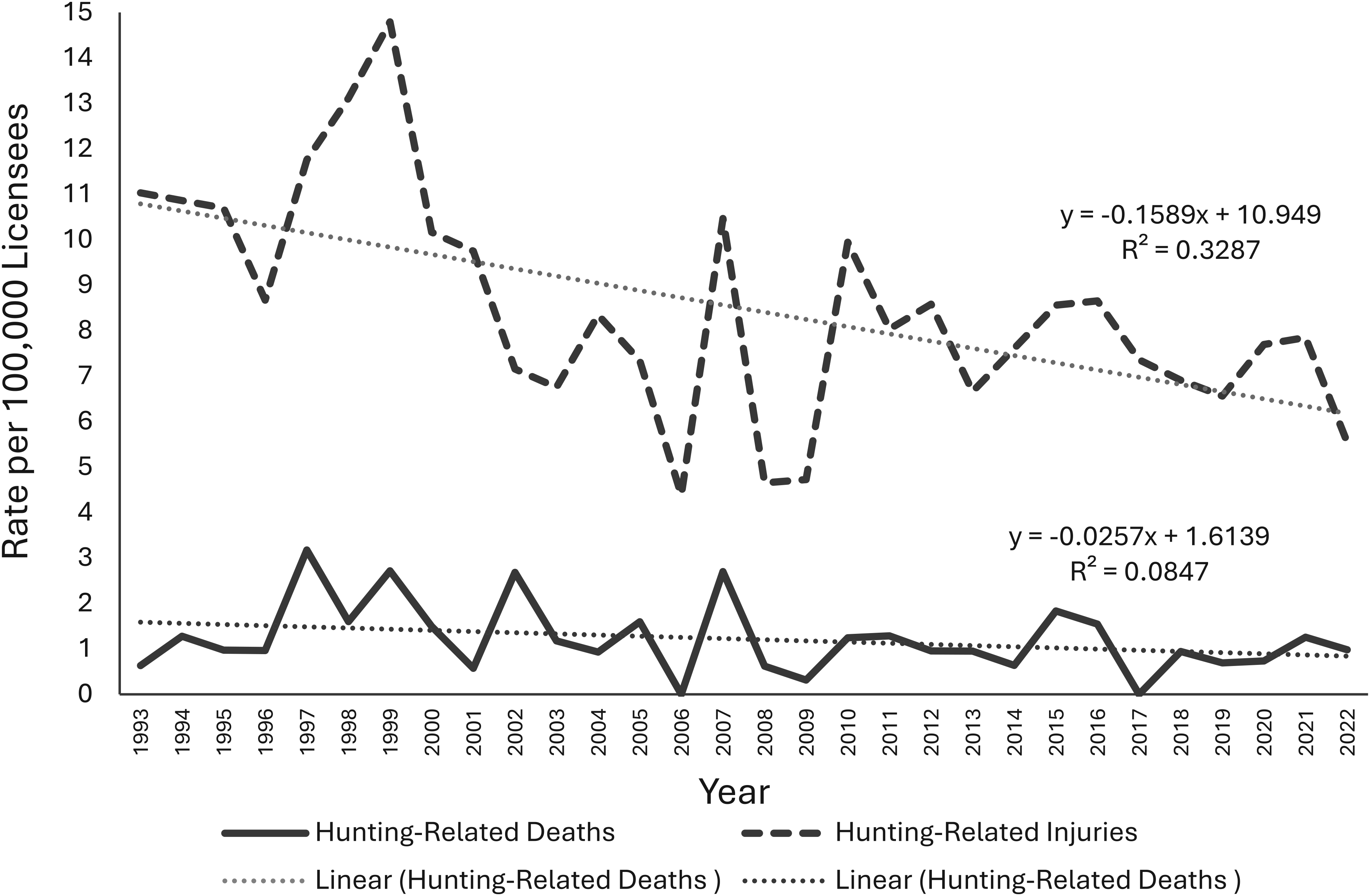
Hunting-related injuries reported to the Arkansas Game and Fish Commission, 1993–2022.
For this analysis, licensed hunters included both Arkansas residents and nonresidents who were licensed to hunt any game in Arkansas. Detailed rates of injury per 100,000 licensees are not expressed herein for hunters under the age of 16 y—because they are not required to be licensed—or for those older than 65 y—because licenses no longer need to be renewed above that age. For persons aged 16 to 65 y, the rates of hunting-related injuries dropped by 57% from 10.7 per 100,000 licensees in 1993 to 4.6 per 100,000 licensees in 2022. Of note, the total number of persons who were licensed to hunt in Arkansas averaged 316,234 (range 289,690–340,697 during the study period). A linear regression of licensee data showed a nonsignificant P=0.11 decrease of 568 licensees per year over the study period.
Table 1 describes the general characteristics of the injured individuals. Males accounted for 736 (91.4%) of the injuries and 83.2% of licensees. Females accounted for 28 (3.5%) of the injuries and 16.8% of the licensees. Sex was not reported for 41 (5.1%) of the injuries. Hunter education certification was attained by 393 (48.7%) of those injured. Three hundred and thirty-two (41.1%) of those injured were not certified. For 82 (10.2%) injured hunters, hunter education certification status was unknown. Among injured hunters with available data, the average age was 37.9 (1.6–87) y. Age was not reported for 88 (10.9%) of the incidents. The injuries were self-inflicted 58.1% of the time. Most of the injuries (66.2%) occurred while the hunter was pursuing deer.
Characteristics of hunting-related injuries in Arkansas, 1993–2022.
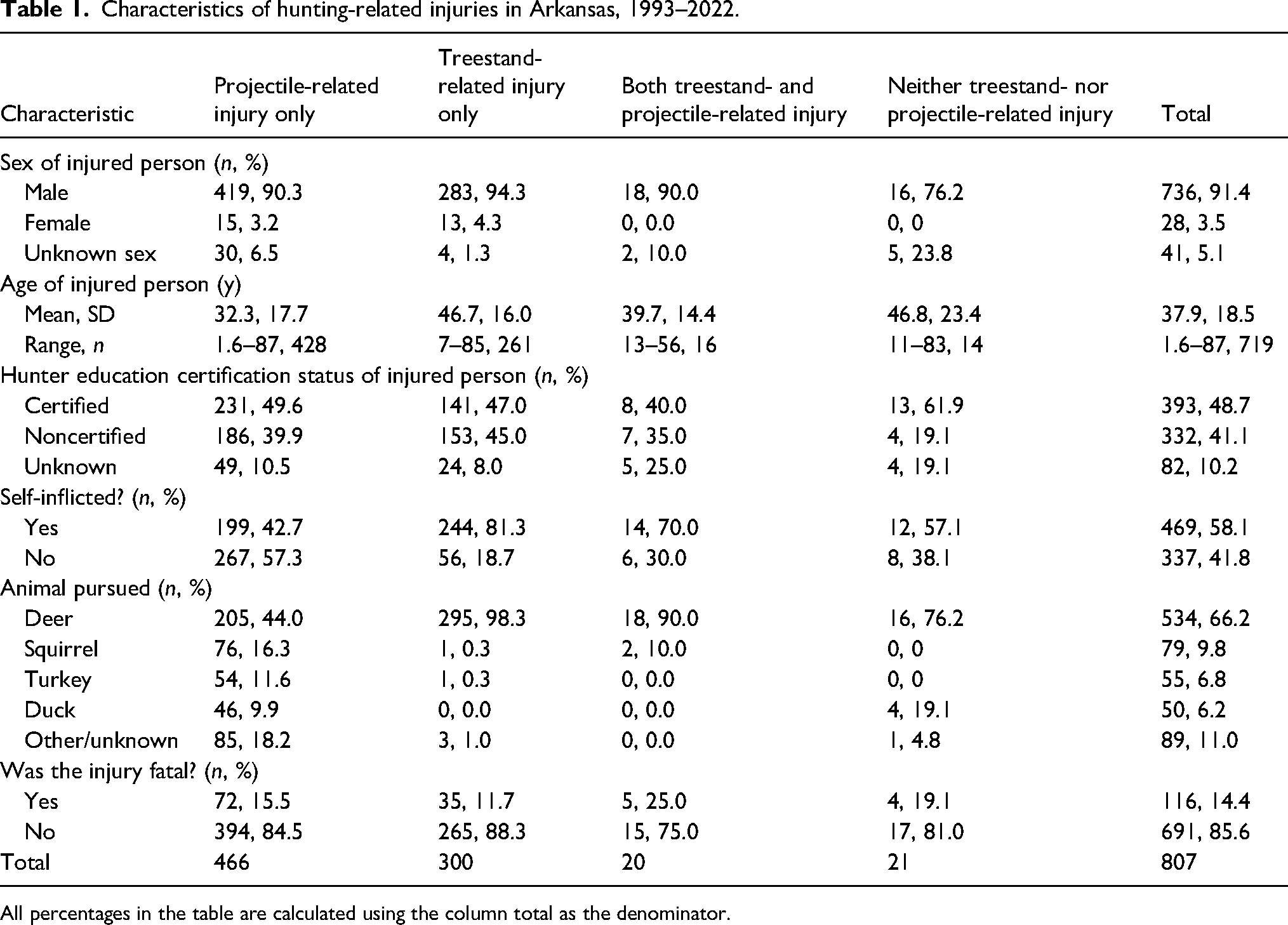
All percentages in the table are calculated using the column total as the denominator.
Projectile-Related Incidents
For this purpose, projectile-related incidents (PRIs) are defined as an incident involving injury or death caused by the projectile of a firearm, vertical bow, or crossbow. Of the 486 PRIs, 77 (15.8%) were fatal. Of the PRIs, 213 (43.8%) were self-inflicted. PRIs occurred when the hunter was pursuing deer most frequently (45.9%) but also when pursuing squirrels (16.7%), turkeys (11.1%), ducks/geese (10.2%), or other species (15.8%). The species pursued was unknown in 1.6% of PRIs. PRIs decreased by 0.24 per 100,000 licensees per year during the study period (P<0.0001; Figure 2). The proportion of hunting-related injuries related to PRIs decreased from 80% in 1993 to 33% in 2022.
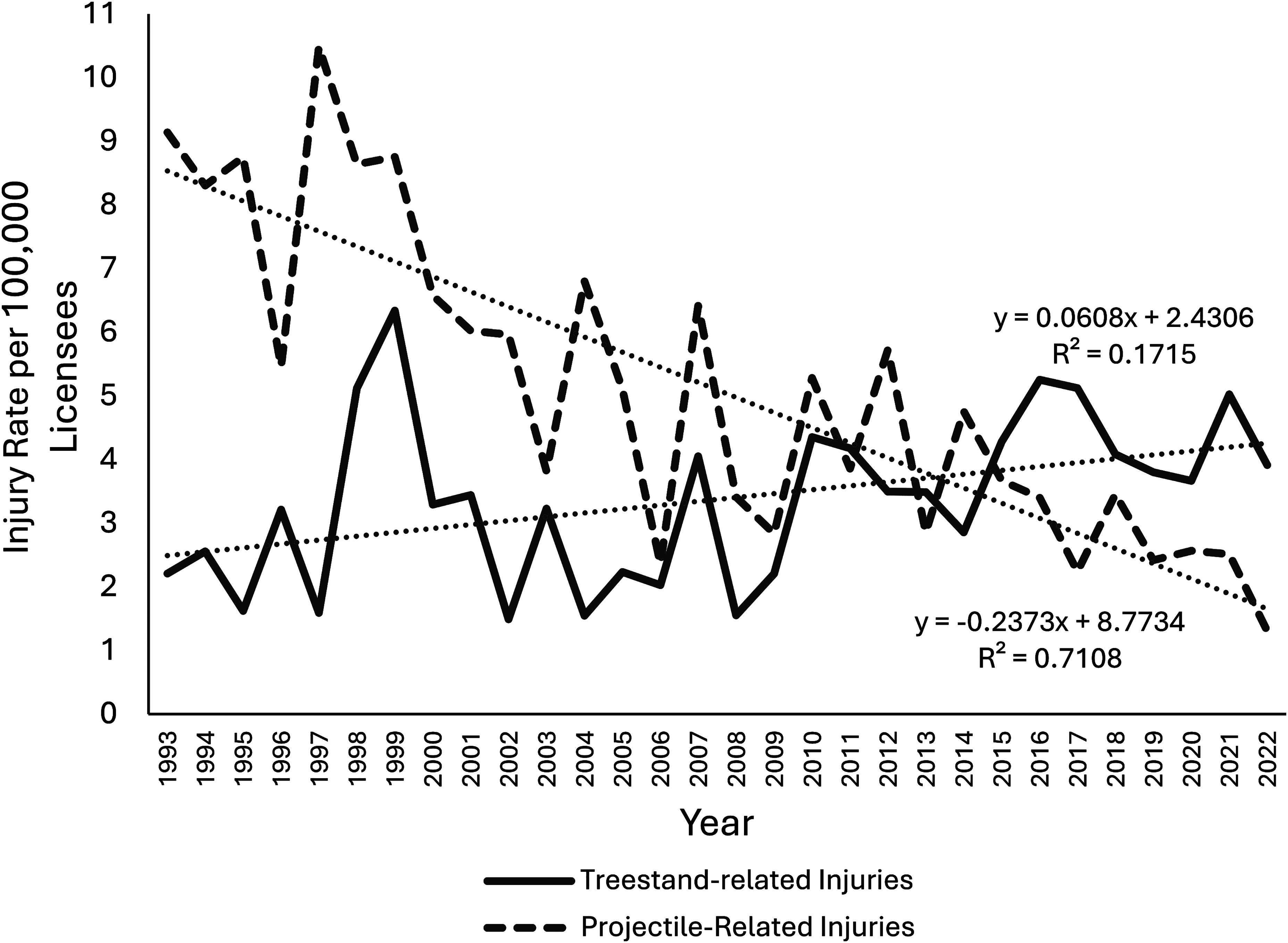
Hunting-related injuries reported to the Arkansas Game and Fish Commission—trend 327 treestand- and projectile-related injuries—1993–2022.
Treestand-Related Incidents
Treestand-related incidents (TRIs) were defined as any injury that occurred where an elevated hunting platform was principally involved in the hunting-related injury. This typically entailed falling from a treestand, tower stand, or elevated duck blind. TRIs accounted for 320 (39.7%) of the hunting-related injuries during the study period. Two hundred and fifty-five (77.0%) TRIs were self-inflicted. Forty (12.5%) of these incidents were fatal. TRIs increased by 0.06 per 100,000 licensees per year during the study period (P=0.02; Figure 2). Due to the simultaneous decrease in the number of PRIs, the proportion of incidents involving TRIs increased from 20% in 1993 to 67% in 2022. Most TRIs (97.5%) occurred when the hunter was pursuing deer. It is important to understand that although TRIs and PRIs typically are distinct events, the categories are not completely mutually exclusive (Table 1).
Deer Season Versus Other Seasons
A total of 534 incidents (66.1%) occurred during deer season. These include 223 (45.9%) PRIs and 313 (97.5%) TRIs. Most of the fatalities, 80 (69.0%), also occurred during deer season. Other seasons associated with at least 2% of the fatalities included squirrel (10 [8.6%]), duck (6 [5.2%]) turkey (5 [4.3%]) and coyote (3 [2.6%]) seasons.
Rates Of Hunting-Related Injuries By Age And Sex
The overall rate of PRIs among men aged 16 to 65 y was 7.3-fold higher than women of the same age (8.0 vs 1.1 per 100,000 licensees during the 30-y time frame; P<0.00001), but this difference is narrowing over time. In the last 5 y of data, from 2018 through 2022, the male rate of PRIs exceeds the female rate by 4.4-fold. The overall rate of TRIs among men aged 16 to 65 y was 3.6-fold higher than among women of the same age (4.3 vs 1.2 per 100,000 licensees; P<0.00001) during the 30-y time frame. From 2018 through 2022, the male rate of TRIs exceeded the female rate by 5.1-fold. Women had lower rates of either injury class at nearly every age stratum compared with men (Figure 3). Men younger than 40 y had a 2.0 (1.6–2.5) higher rate of PRIs than older men (P<0.00001).
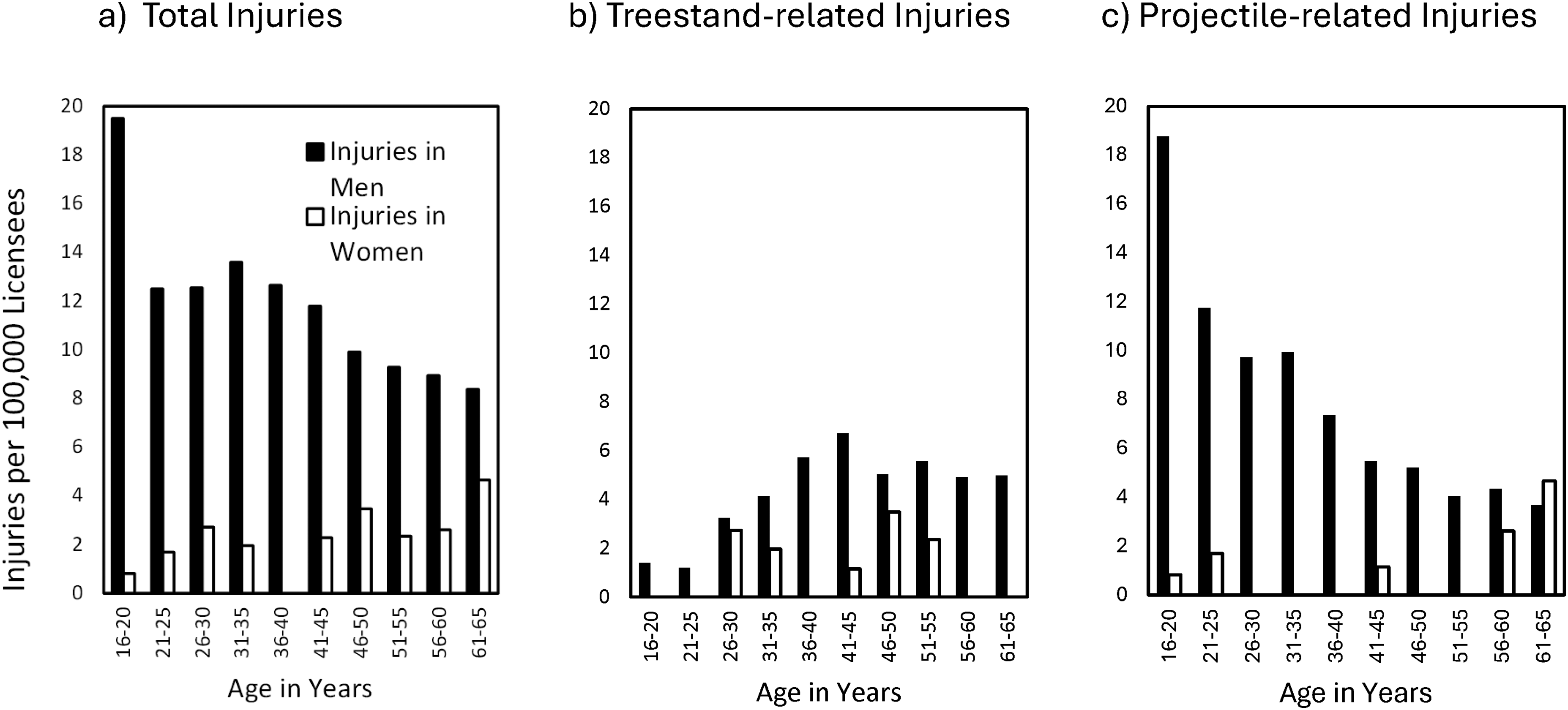
Age- and sex-specific rates of (a) total injuries, (b) treestand-related injuries, and (c) projectile-related injuries in Arkansas 1993–2022.
Other Factors Evaluated
Information on the timing of the event, topography (flat vs hilly), visibility (poor, fair, or good), cover (open, light, medium, or dense), lighting (dawn, dark, sunny, overcast, or dusk), and weather (clear, calm, windy, rainy, or foggy) are also included in the AGFC data, but these data are sparsely completed in general and particularly for TRIs. Use of alcohol or other drugs that may impair judgment was not formally included in the database. No crude associations were found when attempting to correlate PRIs with topography, visibility, or lighting, but PRI victims were 2.5 times more likely to report hunting in dense cover than TRI victims (P<0.00001).
Hunter Education Certification Status
In 1993, 31.4% of these hunters were subject to the hunter education certification requirements due to being born after December 31, 1968. This proportion increased gradually to 64.7% in 2022. The proportion of injured hunters actually certified increased from 37.1% in 1993 to 52.9% in 2022. In total, 376 of the 807 injured hunters were required to be hunter education certified. Of those suffering PRIs who were required to be certified, 185 of 270 (68.5%) were known to be certified. Of those suffering TRIs who were required to be certified, 85 of 106 (80.1%) were known to be certified.
Discussion
The predominant mechanisms of hunting-related injuries are either PRIs or TRIs. With respect to PRIs, there is a very encouraging trend. The number of PRIs reported to the AGFC from 1993 through 2022 dropped sevenfold from 29 to 4. Fatal injuries dropped about 40% during the same period from five to three. TRIs unfortunately increased 50% from 8 to 12 during the same period. TRIs now account for two thirds of all hunting-related injuries reported to the AGFC.
This analysis contributes to the literature by systematically describing the most common mechanisms of hunting-related injuries in a large group of hunters in Arkansas. It uses AGFC-collected data on hunting-related injuries over a 30-y period during which injury patterns have changed. Although AGFC data are an administrative data set, they still provide a marked advantage over many of the reports in the literature that originate from trauma departments or trauma registries because they likely capture a more accurate rate of significant hunting-related injuries because they are compiled by wildlife law enforcement officers who routinely assist in the acute emergency response and complete a standardized incident report form. This form is key in the determination that an injury occurred in the context of hunting as compared with data reported solely within a trauma registry for which hunting is not a primary focus. For example, a treestand fall in a trauma registry may be described as a fall from a ladder or a fall from an elevated platform rather than a fall from a treestand, and a hunting-related gunshot wound may be described as a gunshot wound in trauma registries.
The number of hunters who completed hunter education certification increased throughout the 30-y time period from 31.4% in 1993 to 64.7% in 2022. It is reasonable to expect that modest trends of decreasing hunting-related injuries will continue at least until the levels of hunter certification reach some steady state (ideally 100%), because one should expect overall compliance with hunter education certification to continue to improve as the requirement is phased in. However, compliance with hunter education certification in this group of injured hunters remains less than ideal, particularly among hunters suffering PRIs. One could potentially enhance or speed compliance by considering policies requiring that all hunters including those born prior to 1968 and those younger than 16 y get certified and that all hunters confirm hunter education certification status when purchasing a hunting license. Further, marketing and encouraging refresher training for certified hunters who had not been presented treestand safety content in their hunter education course could be beneficial.
Given the change in the increasing importance of TRIs as a cause of hunting-related injuries identified over the 30-y study period, it is appropriate to provide recommendations that are likely to prevent or mitigate TRIs. Table 2 includes a synthesis of treestand safety recommendations drawn from the literature and online, with one addition by the author. Each of these recommendations is further reinforced by the AGFC data. Specifically, a failure to follow each of these recommendations during the study period caused or contributed to the worsening of significant injuries to Arkansas hunters.
General treestand safety recommendations.
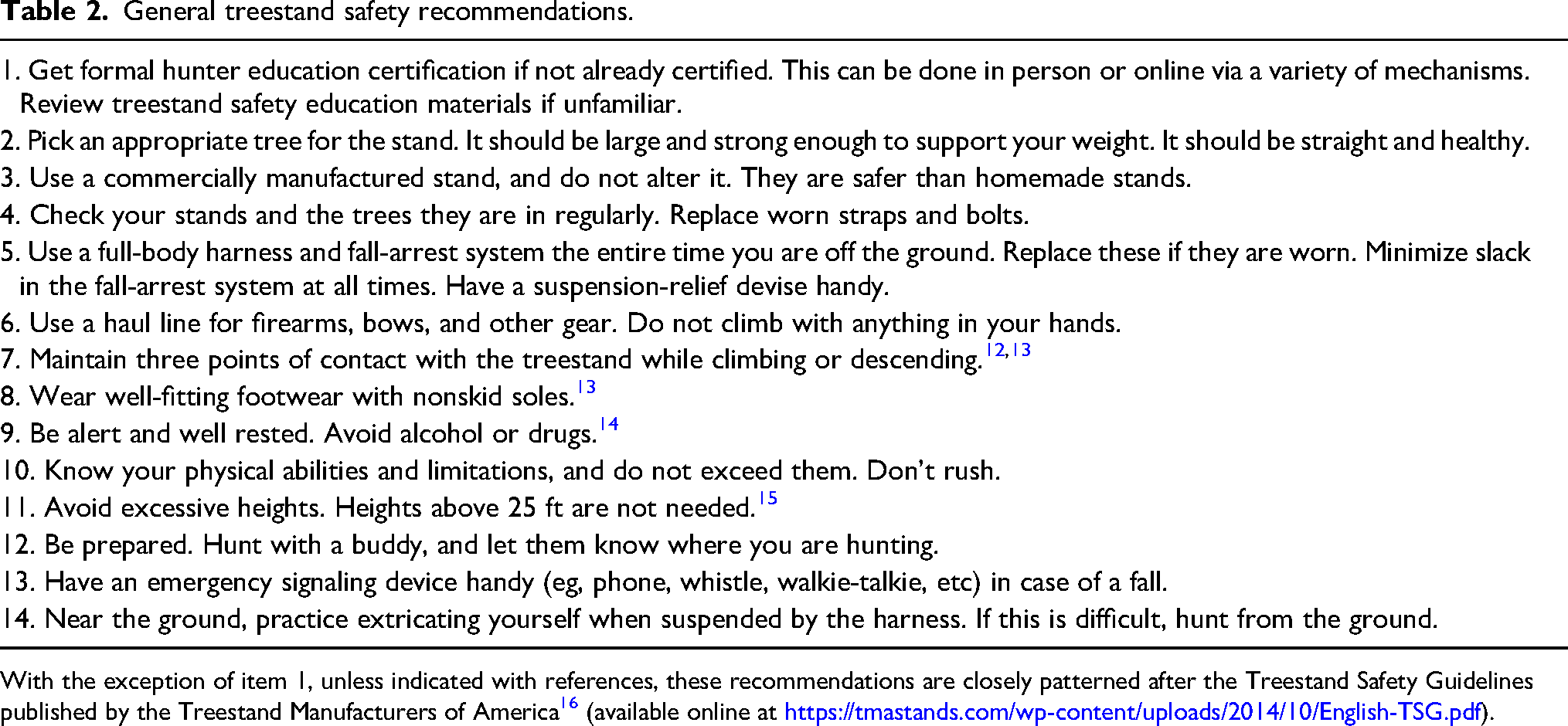
With the exception of item 1, unless indicated with references, these recommendations are closely patterned after the Treestand Safety Guidelines published by the Treestand Manufacturers of America 16 (available online at https://tmastands.com/wp-content/uploads/2014/10/English-TSG.pdf).
Limitations
This analysis is subject to several limitations. First, these data come from an administrative data set that is assembled passively. As a result, the dataset likely does not capture all hunting-related injuries, particularly those that did not result in a request for emergency services response. As a result, our data may not include some of the milder forms of hunting-related injuries—a limitation that is shared by other data sources such as trauma registries that are used in this arena of work. In contrast, due to reporting mandates and the involvement of AGFC police officers in both the acute injury response and the report generation, these data likely closely reflect the actual number of severe or fatal hunting-related injuries. Second, rate calculations using the number of licensed hunters as the denominator provide an interesting first pass into identifying risk factors for hunting-related injuries, but they are crude and do not address important variables such as frequency of hunting by age or season and/or risky behaviors that could be important. Of note, rate calculations in this paper used age and sex distributions from 2017 through 2022 and applied them to the number of licensed hunters over the entire 30-y study period. As a result, this study is not able to address potential age or sex distribution changes during the study period. It is worth noting that no changes in the relative age and sex distributions were seen in that 2017 through 2022 period, but this does not exclude the potential for a change in those distributions in prior years. Third, children younger than 16 y are not required to get a hunting license in Arkansas and thus are undercounted in estimates of hunters who rely on licenses. Conversely, persons older than 65 y are not required to annually renew their licenses, so the number of hunters in this group is likely overestimated because older persons with lifetime licenses may not actually be hunting or could even be deceased. These issues result in a lack of precise denominator information, limiting the ability to generate precise estimates or make inferences about rates of injuries in these age groups. Fourth, these analyses rely on definitions developed and operationalized by the AGFC, including what is basic first aid, a hunting-related injury, a TRI, a PRI, or a hunting-related death. Although these definitions, in many cases, seem self-explanatory, they were not developed with research in mind, and it is possible that they could have benefited from minor refinements. For example, deaths attributed to hunting-related injuries in nearly all cases reflected death sin the field, but one death that occurred in the hospital as late as 5 d after the event was included. This observation highlights a rigorous researcher's need to have a strictly defined interval of time that would indicate potential inclusion or exclusion as a hunting-related death—the lack of which conceivably could introduce opportunity for a minor misclassification bias in this measurement. Fifth, data presented here reflect only the injured person. Data from the shooter in non-self-inflicted PRIs are likely very important but not addressed here. Last, data on hunter compliance with wearing high visibility clothing (blaze orange) was not systematically collected, so regulation cannot be evaluated with this dataset.
Conclusions
This paper summarizes data on treestand-related injuries in Arkansas and builds on the body of evidence primarily due to it coming from a nontraditional and likely more inclusive data source but also due to its large size, long duration, recency, and depth of analysis. Falls from treestands are now the most common mechanism of hunting-related injury, accounting for approximately two thirds of hunting-related injuries reported to the AGFC. Our data support the conclusion that efforts to ensure compliance with hunter education certification and treestand safety recommendations would be straightforward methods to fill important knowledge gaps, in particular among the youngest and oldest hunters and among hunters whose primary targeted quarry is deer. In terms of future work, it would be interesting to formally compare the sensitivity of the Arkansas trauma registry data with AGFC data for the identification of hunting-related injuries. It also would be interesting to mimic the analyses performed in this paper with national data. Such work would provide a better understanding of whether these changing hunting-related injury mechanism trends observed in Arkansas are representative of what is occurring nationally.
Footnotes
Acknowledgments
The author thanks Megan Fedrick from the International Hunter Education Association for her provision of the Arkansas hunter incident data in electronic form, Joe Huggins from the Arkansas Game and Fish Commission for his provision of the hardcopy hunter incident data and thoughtful comments on the manuscript. and Susan Porter for her provision of the Arkansas hunting licensee demographic data.
Author Contribution(s)
Declaration of Conflicting Interests
The author(s) declared no potential conflicts of interest with respect to the research, authorship, and/or publication of this article.
Funding
The author(s) received no financial support for the research, authorship and/or publication of this article.