



Abstract
The rising occurrence of natural disasters linked to climate change has drawn the attention of disaster response leaders to the significance of addressing operational stress injuries among disaster response personnel. We define and describe operational stress injuries in this workforce and explore theoretical frameworks that can inform the development of programs and interventions to mitigate these effects. We aim to establish a conceptual framework for understanding an operational stress injury by introducing a model specific to disaster responders. We also emphasize strategies that can be employed within a stress injury awareness framework to promote the mental well-being of those who respond to climate-related disasters.
Introduction
We are witnessing a steady rise in the health impacts of climate change. 1 The increased frequency and severity of climate-related extreme weather events have become more prominent in recent years. Many regions worldwide are experiencing flooding, structural damage, and displacement due to more powerful hurricanes fueled by rising average temperatures. Recent fire seasons in Colorado and Chile demonstrate that wildfires are now more devastating and enduring.2,3 The prolonged exposure to wildfire-induced air pollution worsens suffering and causes adverse health impacts across large parts of the planet. 4 Given the heightened frequency and intensity of such disasters, there is a growing need to equip disaster response teams to manage the stressors experienced during crises effectively.
In the face of an escalating climate crisis, wilderness medicine practitioners and disaster response leaders must devise targeted strategies to tackle climate-related challenges, including the impact on the mental well-being of disaster response teams. Whether operating individually or as part of a professional team (Table 1), disaster responders are typically integral members of climate or disaster response teams, dedicated to providing immediate assistance and support to affected individuals or communities. Their primary objectives are to mitigate the health implications of disasters, safeguard lives, and facilitate recovery efforts. Recent reports emphasize the need for aid in training and retaining both permanent and temporary staff to effectively manage and respond to major disasters, coordinate long-term recovery operations, and bolster local and state planning, preparedness, and hazard mitigation initiatives. 5 These challenges are expected to intensify as the frequency of extreme weather events continues to rise and underlies the need for greater mental health resilience training.
Types of disaster responders.
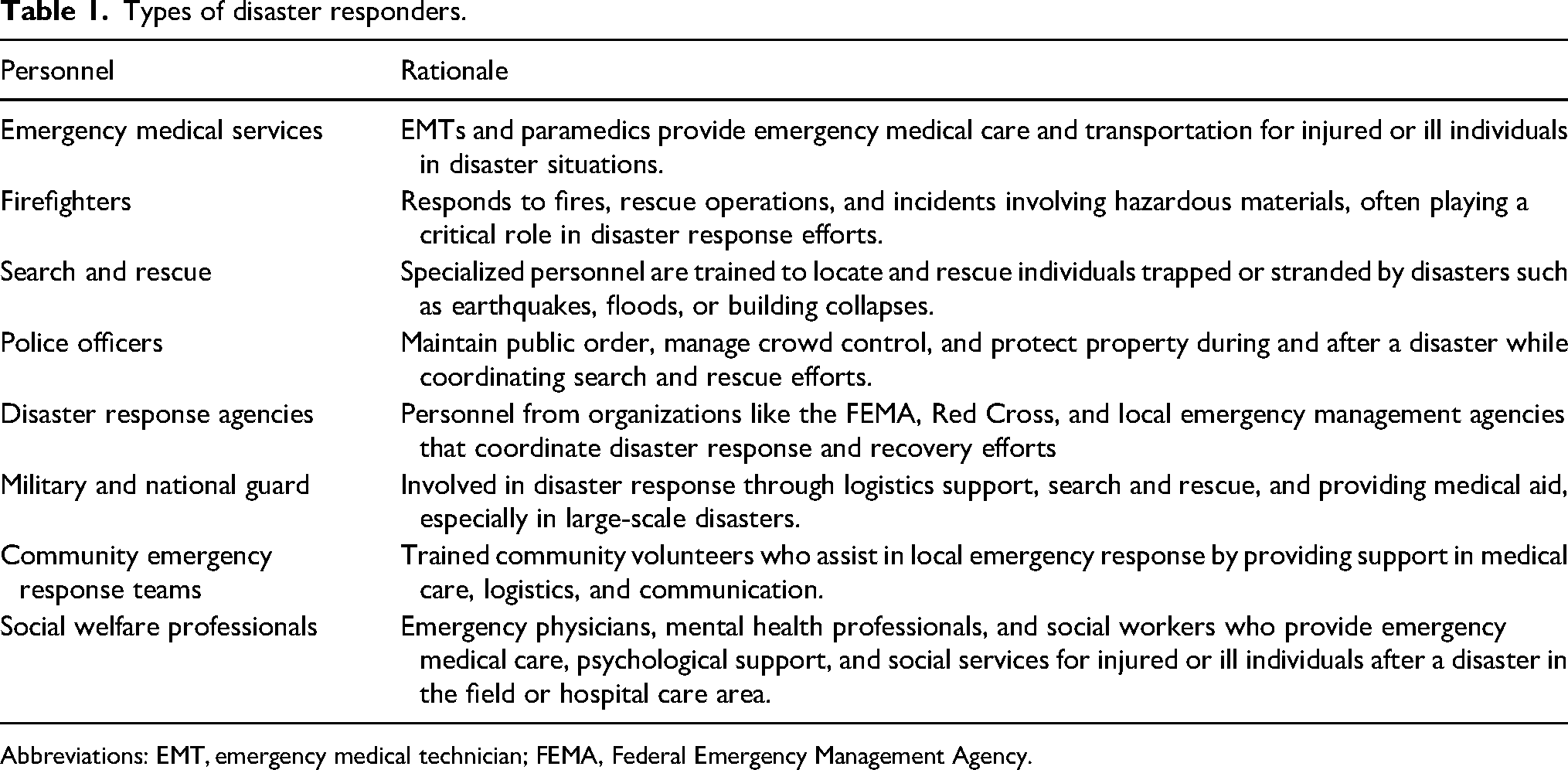
Abbreviations: EMT, emergency medical technician; FEMA, Federal Emergency Management Agency.
Issues of secondary traumatic stress (STS), burnout, and resilience among first responders in disaster response are fairly well-recognized problems.6–9 During times of crisis, disaster responders are exposed to various occupational hazards such as repeated exposure to traumatic events, long hours, low or no pay, and life-or-death situations resulting in increased risk of operational stress injuries (OSI).10,11 An OSI is a psychological, emotional, or physical strain caused by chronic stress, trauma, or overwhelming life events. 12 It can be associated with mental health illnesses like anxiety, depression, and post-traumatic stress disorder (PTSD). 13 OSIs often occur in the presence of risk factors like secondary traumatic stress (STS), and burnout outweighs protective factors like resilience (Figure 1).
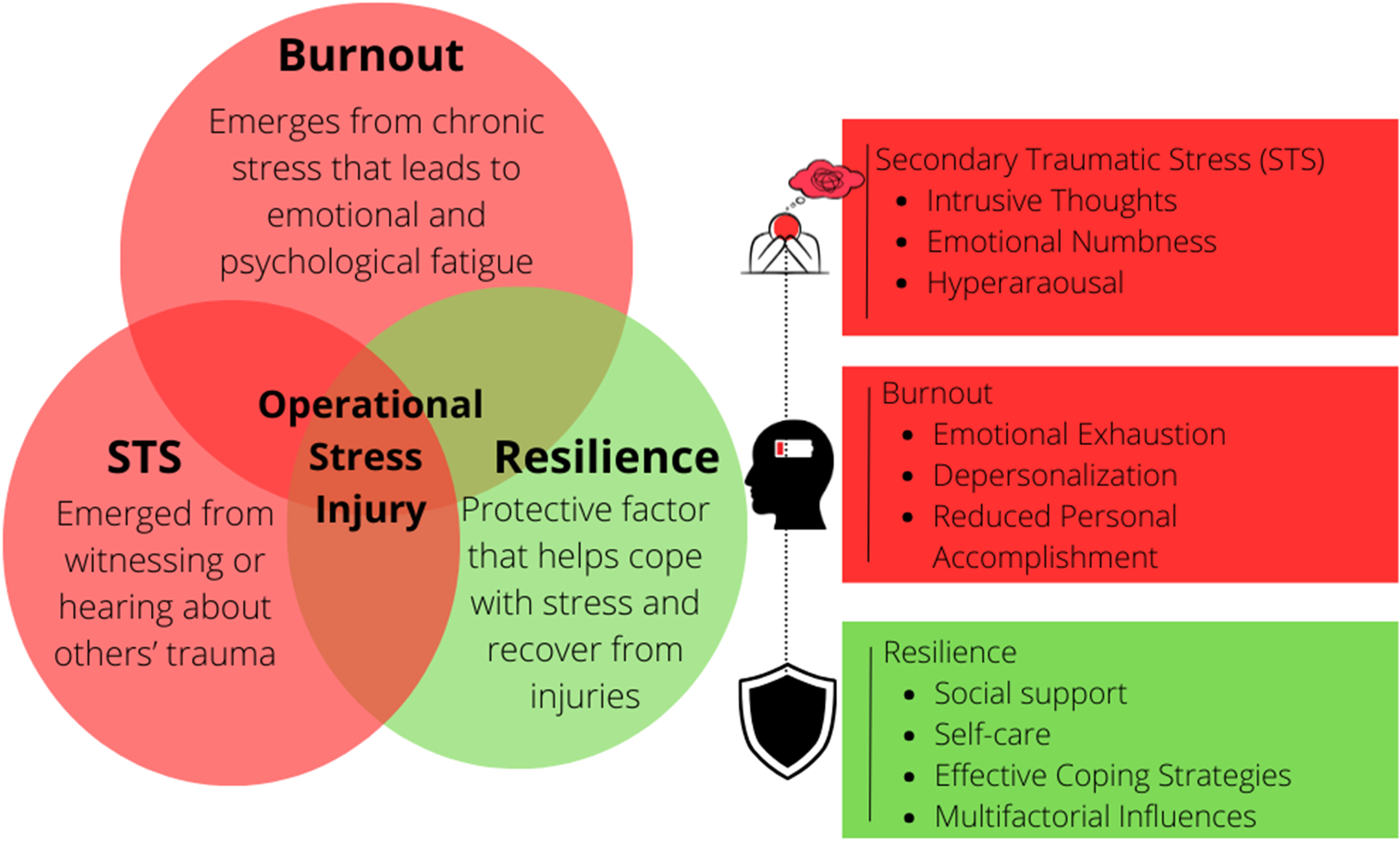
Understanding operational stress injury. The central circle represents operational stress injury, defined as the emotional, psychological, or physical strain resulting from chronic exposure to stress or trauma in the workplace. Surrounding this central concept are two key manifestations: (1) burnout, characterized by emotional exhaustion, depersonalization, and a reduced sense of personal accomplishment, and (2) secondary traumatic stress, which arises from witnessing or hearing about the traumatic experiences of others, leading to symptoms like intrusive thoughts and emotional numbness. The figure also highlights the importance of resilience as a protective factor, encompassing social support, self-care, and effective coping strategies to help individuals mitigate burnout and STS. The circles indicate the direction of influence, demonstrating how burnout and STS can contribute to operational stress injury, while resilience serves as a crucial mechanism for coping and recovery.
Symptoms of secondary traumatization can result from repeated exposure to traumatic situations, such as witnessing graphic injuries, seeing people in emotional distress, or listening to disturbing stories. These symptoms are considered in the Diagnostic and Statistical Manual-5 criterion A for PTSD. 14 In contrast, burnout is a state of emotional exhaustion caused by prolonged and excessive stress, typically in the work context, associated with symptoms such as emotional exhaustion, depersonalization, and feelings of reduced accomplishment. 15 When experiencing an OSI, burnout signifies a cumulative response to chronic stressors, leaving individuals feeling overwhelmed and unable to meet the demands placed on them. Resilience, on the other hand, is essential for preventing and mitigating the effects of secondary traumatization symptoms and burnout. Resilience is the ability of individuals to recover from stressful experiences and maintain mental well-being despite the challenges they may face. 16 These definitions highlight the importance of recognizing and addressing each element to promote mental well-being among disaster responders exposed to chronic stress and trauma.
Disaster response leaders are crucial in providing operational support to disaster responders during missions and deployments. Those who provide operational support to disaster responders during missions and deployments need a better understanding of the factors contributing to developing and mitigating OSI. While it is essential to discuss treatment approaches for STS and PTSD, such discussions are beyond the scope of this paper. Instead, we focus on potential efforts to incorporate education about OSI to reduce and prevent psychological harm resulting from hazardous working conditions. We aim to establish a conceptual framework for understanding OSI and introduce a model for disaster responders. Additionally, we discuss potential strategies to raise awareness of OSI and promote the mental well-being of those involved in responding to climate-related disasters.
Theoretical Frameworks
Various theoretical frameworks have been developed to elucidate the psychological impact of disasters and the role of psychological awareness in coping with crises. In formulating an OSI model, we consider stress appraisal theory, social support, resilience theory, early intervention, and resilience trajectory. These elements constitute a comprehensive framework for understanding the development of OSI. Although conservation of resources theory is pertinent, integrating it into the model could complicate matters by introducing multiple resource categories, thus potentially diverting attention from interpersonal experiences and resilience. By omitting additional theories, we can focus more closely on the individual and relational dynamics essential for comprehending stress experiences and recovery. These proposed theories serve as the cornerstone of an OSI model for disaster response efforts.
The Operational Stress Injury Model for Disaster Response
We propose using an OSI model for disaster responders to examine the factors contributing to OSI development and early intervention opportunities (Figure 2). In our framework, the combination of stress appraisal and an individual's position on the stress continuum is central to the likelihood of developing an OSI. Additional factors such as resilience and social support also affect the probability of developing an OSI.17,18 The stress continuum, initially described in military operations, represents the stress levels individuals may experience during deployment. 19 We have adapted this concept for responders as a tool for stress awareness identification (Figure 3). 20 Stress appraisal within the context of the stress continuum aids in understanding how individuals may respond to potentially traumatizing events (PTEs) in the context of climate crises.
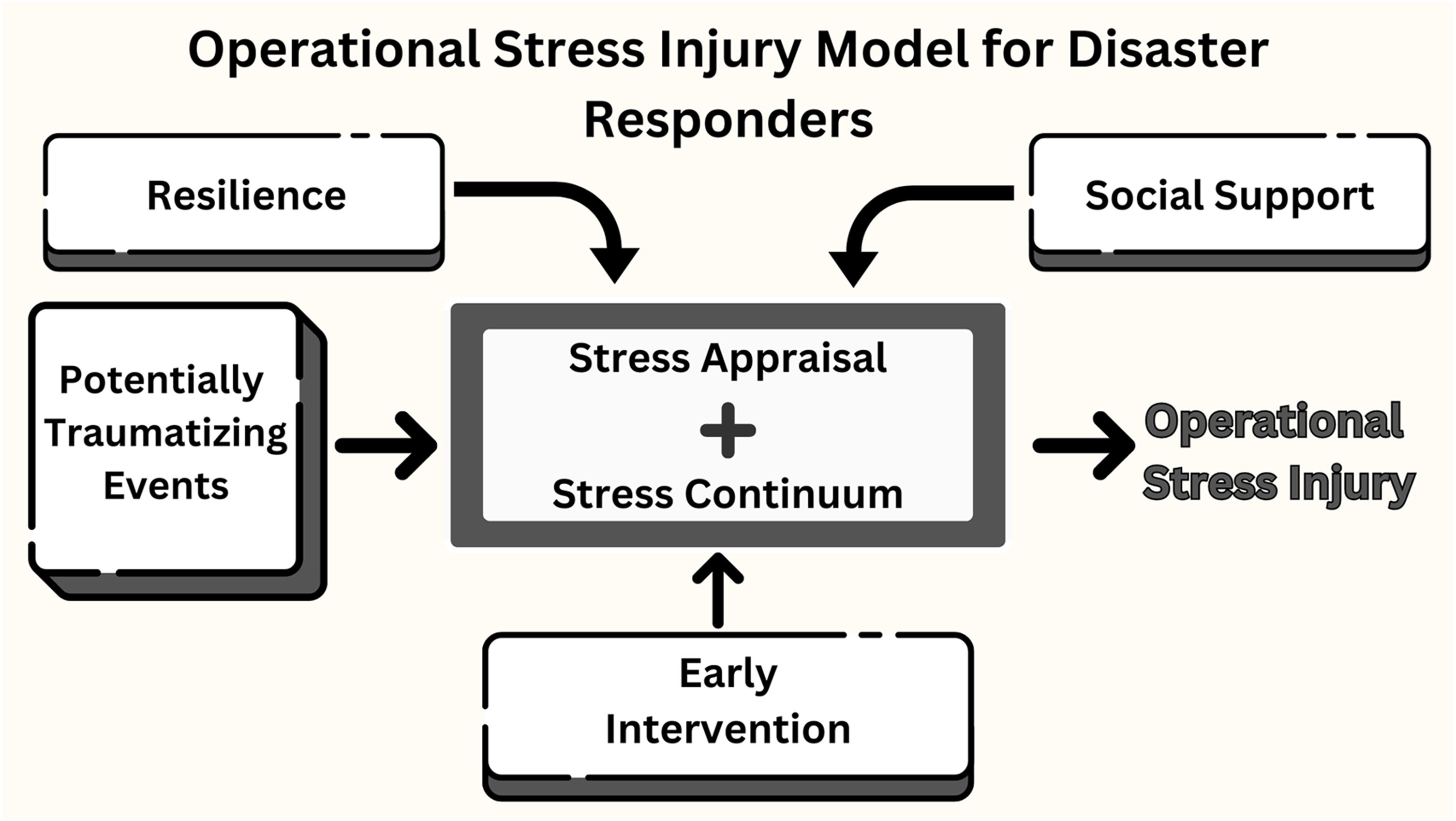
The operational stress injury model for disaster response. This illustration demonstrates the interplay between potentially traumatizing events and stress appraisal on the stress continuum, highlighting how resilience and social support mediate the development of psychological stress injury. The figure depicts a model where adverse experiences influence stress perception, with higher resilience and robust social networks serving as protective factors, ultimately mitigating the risk of operational stress injury.
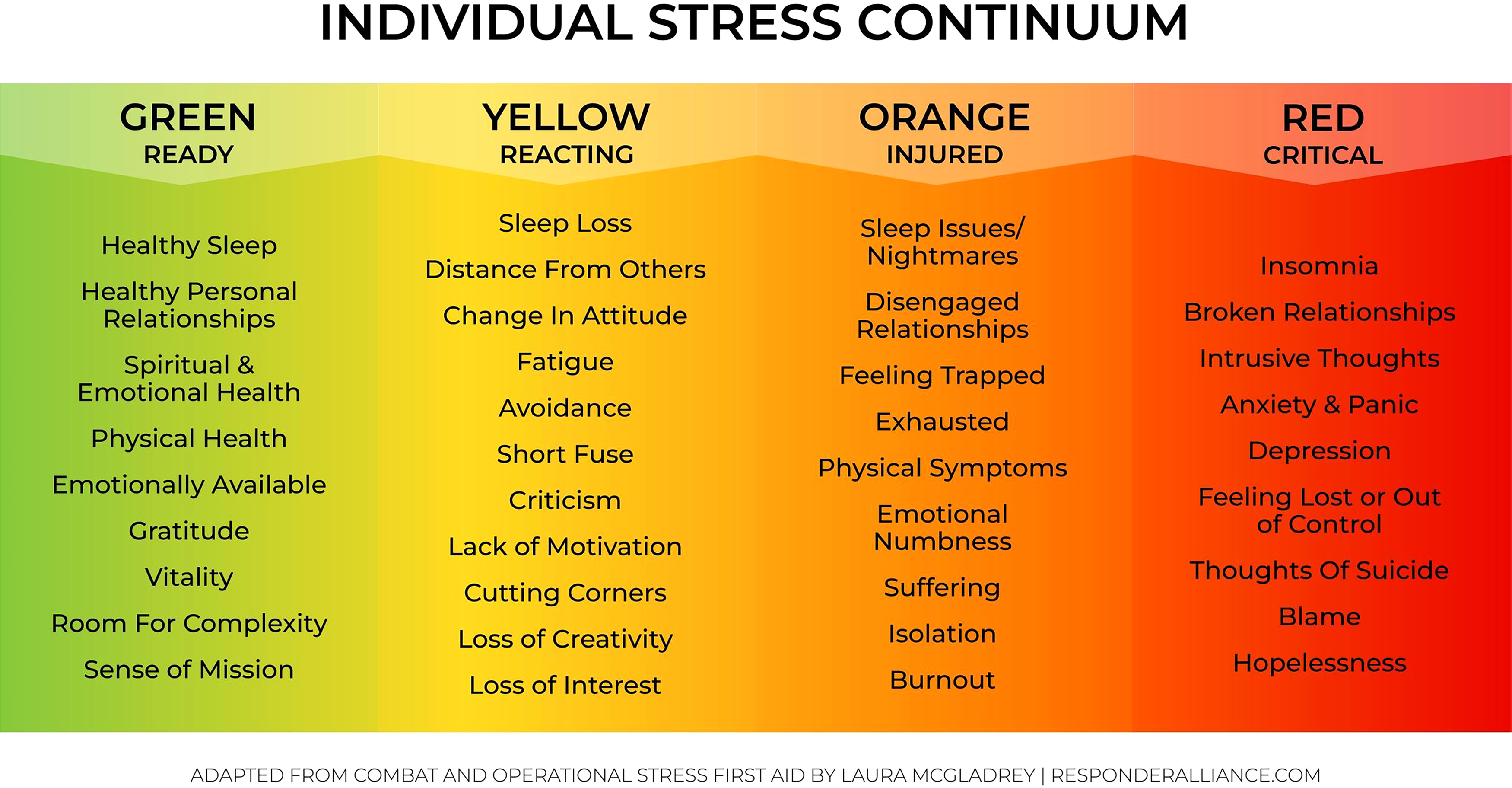
The stress continuum is a model demonstrating the spectrum of stress levels individuals may experience, from low to high. The figure illustrates varying levels of stress response and its impact on individual well-being and functioning. It was adapted from the Combat and Operational Stress First Aid Manual.
Our model for OSI is designed to promote awareness and provide tools to recognize and manage potential stressors. It aims to help disaster responders and their organizations effectively handle and respond to highly stressful events while considering individual factors. The model simplifies and enhances the identification of stress, early intervention, and provision of resilience and social support to mitigate stress at an early stage.
Potentially Traumatizing Events for Disaster Responders
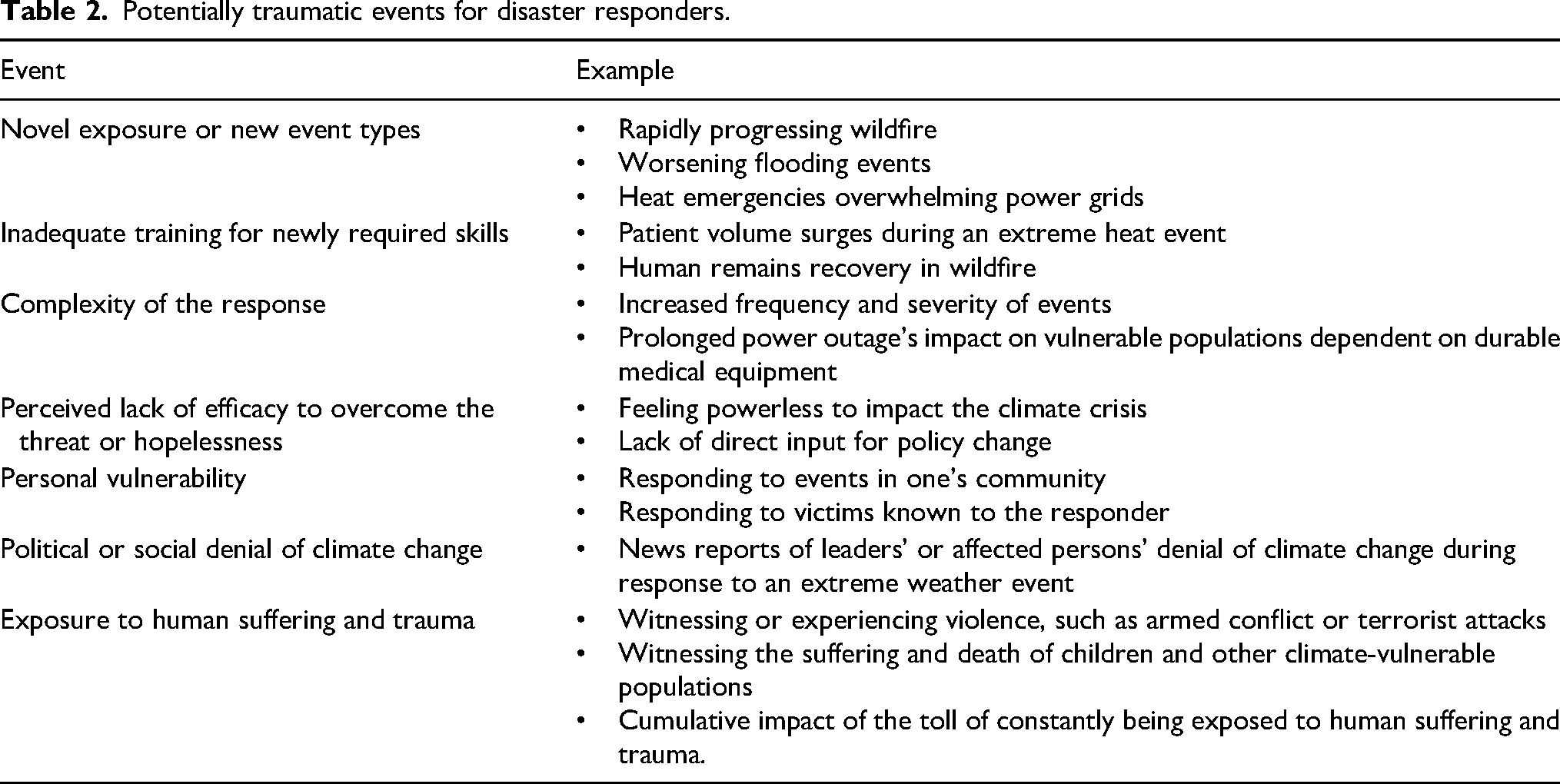
PTEs, or potentially traumatic events, encompass a wide range of incidents that overwhelm an individual's capacity to cope with stressors. 21 These events may be sudden or unexpected and can become prolonged and frequent, leading to chronic stress. There is evidence showing that one or more PTEs have been linked to the development of PTSD and physical illnesses.22–24 There is no high-quality evidence studying PTEs among disaster responders. Many responders fail to recognize the stressors related to climate response as PTEs because they occur in the line of duty or do not meet the typical trajectory of criterion A for PTSD as listed in the DSM-V. Many disaster responders face unique PTEs, as shown in Table 2. Understanding the relationship between PTEs and OSI awareness involves examining how traumatic exposures can lead to stress responses and how disaster responders can effectively prepare, manage, and recover from these experiences.
Potentially traumatic events for disaster responders.
Stress Appraisal Theory
The stress appraisal model is one of the most relevant theoretical frameworks for psychological response to injury and crisis. 25 There is evidence for the effective use of stress appraisal in clinical practice to aid in assessing, intervening, and evaluating psychological stress and coping responses after disasters. 26 Furthermore, appraisal theory has been used and evaluated in various disaster scenarios to promote effective coping strategies.27–30 This model suggests how individuals appraise the event will determine a disaster's psychological impact. If an individual perceives the event as threatening or overwhelming, they are more likely to experience psychological distress. However, if individuals can appraise the event as manageable or positive, they are more likely to cope effectively. Thus, this theory posits that stress is not merely the result of external stressors but a product of the interaction between the individual and the environment.
The stress appraisal model comprises two types of appraisals. The primary appraisal involves the initial assessment of whether an event is perceived as a threat, a challenge, or irrelevant. In a disaster response context, a responder may evaluate the situation as life-threatening, leading to heightened stress levels. The secondary appraisal assesses one's resources and options for coping with the identified threat or challenge. Rescuers and responders who perceive themselves as well-prepared and supported may experience lower stress levels than those who feel overwhelmed or ill-equipped. Understanding these appraisal processes is crucial in disaster response as they influence stress awareness and can equip responders to manage stress better.
Social Support and Resilience Trajectory Theories
There is evidence demonstrating that social support can be protective in disaster.31–33 Social support can provide individuals with emotional, practical, and informational resources to help them cope with their experiences and rebuild their lives. Resilience theory suggests that individuals can develop resilience to the psychological effects of disasters.34,35 Individual characteristics, social support, and community resources influence resilience. Resilience to biopsychosocial impacts of overwhelming PTEs was once thought to be wholly dependent on a combination of a lack of risk factors and a series of protective factors. While both are relevant to traumatic stress formation, emerging research demonstrates that trajectories of resilience and traumatic stress are also dependent on the responder's ability to recognize, respond, and adjust in the presence of unexpected or overwhelming events.18,21 The resilience trajectory theory demonstrates that most disaster responders who face overwhelming events will return to equilibrium without injury if they have access to appraisal of their needs, a repertoire of resilience-promoting practices, and the ability to evaluate and adjust interventions to promote a return to baseline. 21
Applying these models in disaster response is crucial to promote coping skills through providing education and training on stress management awareness and emotional regulation. Through these models, we can apply the stress continuum to assess stress levels and identify areas where further support can be provided to reduce injury. Understanding how to integrate this theory into the stress continuum can help create opportunities where social support can be applied and build resilience. 36
Elements of Early Intervention
Early intervention plays a crucial role in mitigating the effects of stress appraisal and awareness to decrease the risk of OSI. Hobfoll’s critical review of midterm mass trauma highlights early intervention elements in psychological response to disaster, which centralizes themes of establishing a sense of safety—decreasing arousal with calming techniques, a sense of self and community, connectedness, and hope. 37 Early intervention fosters a proactive mindset that encourages timely coping strategies by equipping individuals with tools to recognize and understand their stress responses. When individuals become more aware of their emotional states and the factors contributing to stress, they can internally challenge negative appraisals and engage in healthy self-regulation. Utilizing the stress continuum and concepts of early intervention applied to disaster workers equips the responder to recognize the effects of stress and avoid the common practice of minimizing the stressors they face.
Practical Applications
Developing techniques to mitigate these effects is crucial in light of the anticipated adverse impacts on disaster responders. While many stress mitigation and traumatic stress support programs focus on reactive recognition of stress injuries, they often neglect to establish an approach for early awareness and mitigation. Using a common language and readily available stress awareness methods, disaster responders may identify and address stress before it leads to clinical or subclinical issues. Developing and disseminating education to support disaster responders is vital, including toolkits, workshops, train-the-trainer approaches, and web-based teaching techniques.
The theoretical frameworks discussed previously have significant implications for disaster response. Firstly, they indicate that focusing on psychological awareness in disaster response efforts is crucial. This can be achieved through various methods, such as providing psychoeducation, training mental health professionals, and developing community-based programs that promote psychological well-being. Therefore, disaster response efforts should prioritize promoting resilience in individuals. This can be accomplished by offering opportunities to learn about and develop coping skills and fostering community cohesion and social connectedness.
Operational Stress Injury Awareness Education
As disaster responders are increasingly being thrust into the role of climate responder due to circumstance rather than choice, there is a growing need for just-in-time training to enhance stress awareness and mitigation. Each responder must receive training to identify factors leading to stress accumulation and injury, along with specialized tools tailored to the unique challenges responders face.
Similar programs have already been implemented in the military, structural fire context, and for frontline workers, volunteer search and rescue, and nursing students during the pandemic.36,38–41 During disaster response scenarios, first responders have been observed using a stress injury awareness framework.42,43 Additionally, there is compelling evidence of individual-level interventions to reduce occupational stress among healthcare workers. 44 Generally, heightened stress awareness among first responders is linked to lower anxiety and depression symptoms and is an independent predictor of lower PTSD, STS, and general stress. 45 Longitudinal studies among emergency personnel have shown that stress awareness predicts reduced depression, anxiety, and social impairment. 46 Ideally, this training is implemented early in a responder's career or deployment before any impact or injury begins.
Peer Support Programs
Peer support programs have been implemented in various settings, such as mental health organizations, recovery groups, and workplace wellness initiatives. 47 A peer support program is an evidence-based intervention that has been shown to help individuals feel supported, reduce feelings of stress and isolation, and provide practical advice and coping strategies. 47 Peer support teams have long been utilized in high-reliability organizations such as law enforcement and fire rescue, where operators are wary of showing vulnerability outside their peer groups. 48
Substantial evidence demonstrates that peer support programs effectively improve mental health among responders and public safety workers through various mechanisms. 49 Peer support has been implemented in individuals deployed to significant disasters and has received meaningful and impactful results, such as providing peer connection and post-traumatic growth.50–52 Peer support may be helpful in disaster response to aid teams in increasing stress injury identification. Such programs encourage peers equipped with OSI awareness to offer support and guidance to each other. This may take the form of small team assessments of mission and stress readiness or reminders to engage in healthy stress-alleviating behaviors (eg, exercise and time with family).
Incorporating Into Training and Certification Curriculum for First Responders
One effective method for raising awareness about OSI involves incorporating stress awareness curricula into existing national training and certification processes. Training and educational programs like the National Registry of Emergency Medical Technicians, Community Emergency Response Team Program, Federal Emergency Management Agency, or the American Red Cross can seamlessly integrate such curriculum. By infusing stress awareness into their training, responders can acquire vital coping strategies and resilience techniques, empowering them to manage stress during disaster response operations. Including curriculum in the certification process can ensure that responders are well-equipped to handle the demands of their roles while prioritizing their well-being.
Culturally Sensitive Considerations
When employing the OSI model, it's vital to consider the impact of racism, bias, and discrimination and the community context in which models are applied. Culturally sensitive adaptations for disaster responders should account for the cultural backgrounds and identities of the individuals served, as well as the influence of systemic racism, bias, and discrimination. Climate disasters disproportionately affect marginalized populations, making it essential also to address the stressors that disaster responders may face related to experiencing or witnessing racism, bigotry, or microaggressions, as these factors can exacerbate OSI.53,54 Fostering community-designed OSI models can ensure iterations are not only culturally sensitive but also practical and applicable to the community's specific needs. Community-specific models must include relevant support systems that resonate with the unique needs and experiences of diverse groups. These issues can be addressed by incorporating community stakeholders to determine priorities. Providing training in cultural humility that tackles implicit bias, integrating behavioral care systems targeting systemic racism, and fostering an inclusive environment with mental health providers who are knowledgeable about the effects of discrimination on specific cultures and communities should be emphasized.
Future Directions
Further research on the impact of OSI in disaster response could focus on several key areas. Firstly, there is a need for longitudinal studies that track the long-term psychological effects of disaster response on first responders.8,9,55,56 This research could yield valuable insights into the persistence and evolution of OSI over time. Additionally, there is a need for more comprehensive assessments of the effectiveness of various psychological interventions in mitigating OSI in the aftermath of disasters. Research exploring the intersection of cultural, social, and environmental factors in the manifestation and management of traumatic stress injuries in disaster response contexts could provide a more nuanced understanding of the impact and inform the development of culturally sensitive and context-specific interventions.
There are opportunities for disaster responders to enhance mental health support by incorporating specialized mental health programs into their training and preparedness efforts.57,58 These initiatives may involve creating training modules focused on bolstering psychological resilience, stress management, and coping strategies tailored to the specific challenges encountered by disaster responders. Advancements in mental health technology, such as accessible mental health services and digital courses like the Diploma in Climate Medicine, could offer timely support for responders working in remote or high-stress environments. Furthermore, fostering a culture of open communication, peer support, and mental health awareness within disaster response teams could contribute to a more supportive and resilient workforce.
Future research should aim to gain a deeper understanding of the psychological impact of climate disasters on disaster responders to inform the development of targeted interventions and support strategies. Future research can explore the intersection of environmental and psychological factors, shedding light on how specific aspects of the environment can contribute to OSI. Furthermore, research may identify actions and responses that are protective against the development of stress injury or other adverse climate-related mental health outcomes. 59 Advancements in research can lead to the development of evidence-based tools and protocols for identifying, assessing, and addressing OSI in the aftermath of climate disasters. Ultimately, the implications of OSI awareness in climate disasters for future research and applications underscore the importance of integrating psychological considerations into disaster response efforts and promoting the mental well-being of disaster responders affected by environmental crises.
Conclusion
As climate-related events become increasingly severe and widespread, disaster responders must cultivate new skills and innovative approaches to address emerging challenges effectively. It is essential to integrate OSI awareness into disaster response efforts in the context of climate change. With the escalating severity of climate change, the impact on the mental health of disaster responders can be easily disregarded. By incorporating a curriculum on OSI awareness, responders can be better prepared to identify and manage stress as it arises.
Footnotes
Author Contribution(s)
Declaration of Conflicting Interests
The author(s) declared no potential conflicts of interest with respect to the research, authorship, and/or publication of this article.
Funding
The authors received no financial support for the research, authorship, and/or publication of this article.
