



Abstract

On April 8, 2024, a total solar eclipse occurred when the moon's orbit completely blocked out the sun. This is known as totality, which represents the center of the moon's shadow as it falls across the earth. The first contact occurs when the moon appears to touch the edge of the sun (Figure 1). A special effect occurs when the last remaining tip of the sun is visible just before and after totality and is called the diamond ring (Figure 2). During totality, solar flares can be seen on the edges of the solar eclipse and are known as Baily's beads, named for Francis Baily, an astronomer who sighted them during the 1836 eclipse (Figure 3). The total solar eclipse in Cleveland, OH, lasted for 3 min and 49 s.
A darkening sky and lowering of ambient temperatures brought on by a total eclipse can cause wildlife to shift their behavior to nighttime routines. The first wildlife eclipse studies began in 1932 by entomologist William M. Wheeler. His team collected nearly 500 observations of wildlife behavior from the public that year. They reported observations that included crickets chirping, owls hooting, and bees returning to their hives. Furthermore, fireflies begin flashing with the arrival of darkness that triggers them to produce light. Spiders were observed during their daytime routines, until the darkness from the eclipse caused them to begin taking down their webs as if it were nighttime.
The U.S. Fish and Wildlife Service states that despite some anecdotal evidence, there are scant data on how an eclipse affects wildlife behavior because this phenomenon occurs too infrequently. However, in 2023, the National Aeronautics and Space Administration began a public science assistance program called the Eclipse Soundscapes Project designed to further document observations of how solar eclipses affect wildlife behavior.
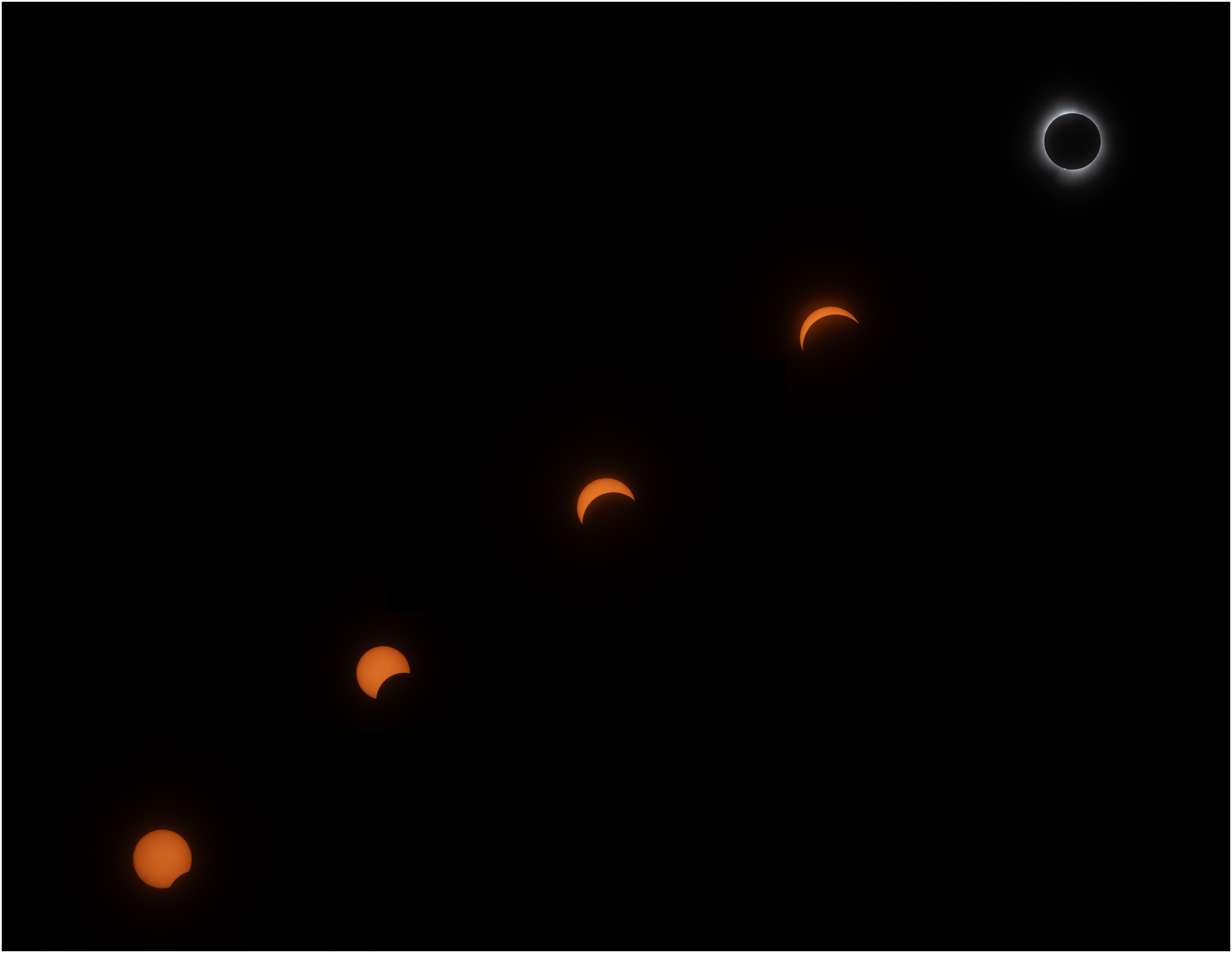
The first contact of the moon and sun (L to R) with progress to complete solar totality. Photo credit B. L. Bennett, PhD.
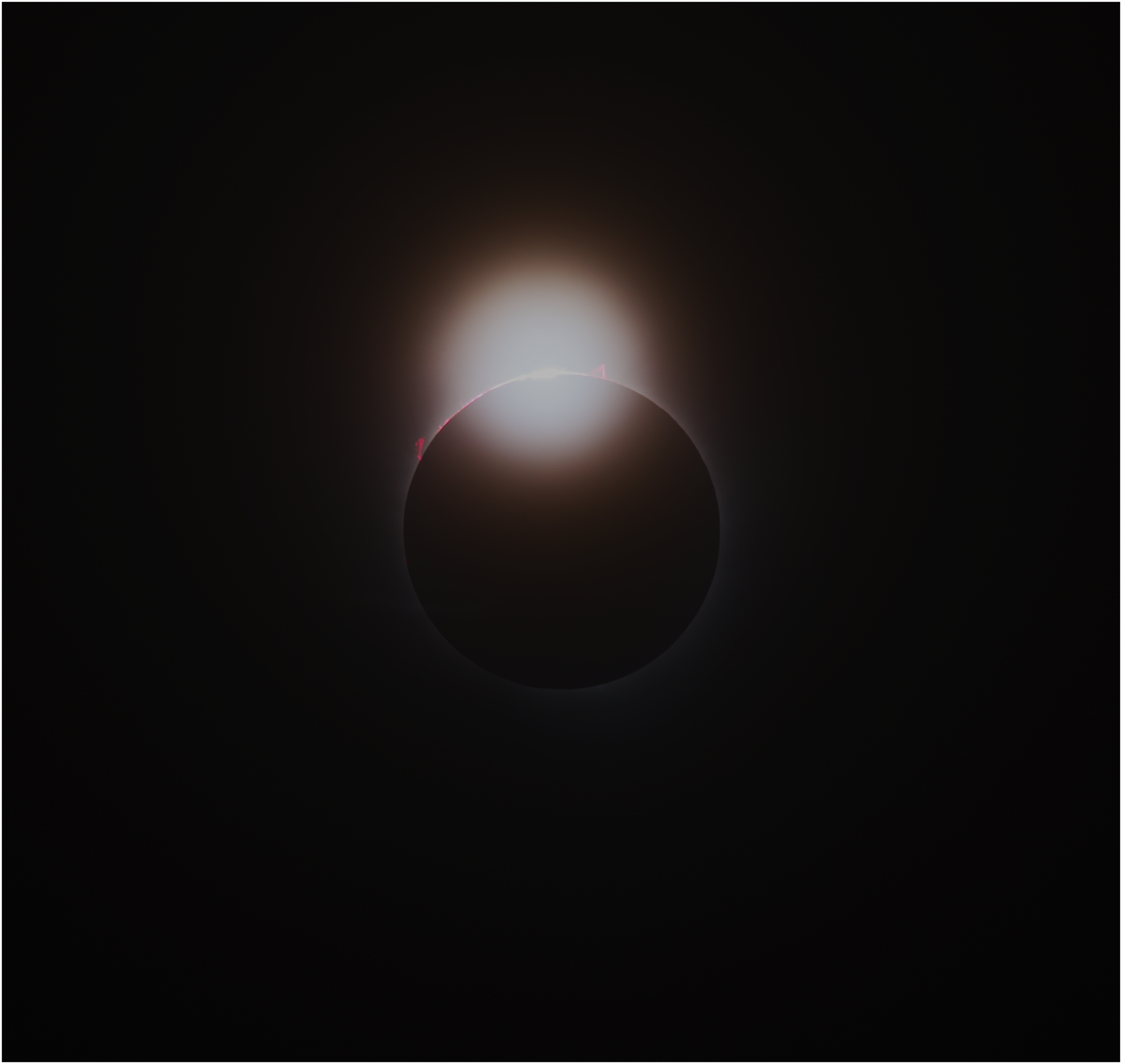
One special effect near totality called the diamond ring. Photo credit B. L. Bennett, PhD.
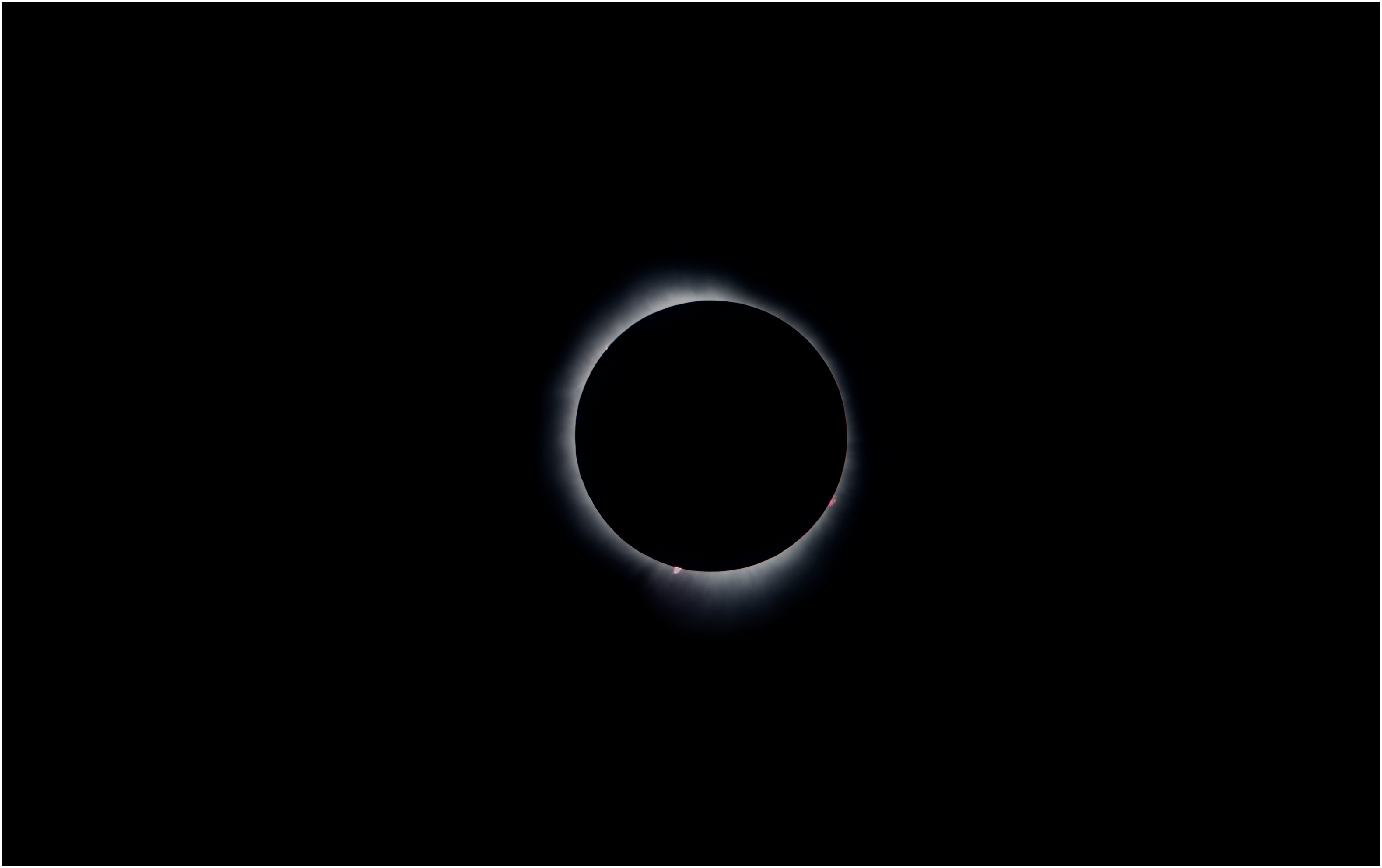
One special effect in the corona during totality is called Baily's beads. Photo credit B. L. Bennett, PhD.