




Abstract
We tested the discriminant and incremental validity of scores on the Attitude toward Sexual Aggression against Women (ASAW) scale, a self-report measure that asks men to evaluate (very bad to not at all bad) a range of sexually aggressive behaviors against women. An online panel of 647 men completed the ASAW scale and self-report measures of other offense-supportive cognitions (rape myth acceptance, cognitive distortions, and beliefs regarding rape) and sexually aggressive behavior (past sexual aggression, likelihood of engaging in sexually aggressive behavior, and likelihood to rape). We hypothesized that (a) the ASAW would be distinct from other measures of offense-supportive cognition and (b) the ASAW would be independently associated with sexual aggression after accounting for the other measures. Supportive of discriminant validity, exploratory factor analyses revealed that ASAW items clustered together to form a distinct factor from other measures of offense-supportive cognition. Supportive of incremental validity, hierarchical multiple regression analyses indicated that the ASAW explained an additional 5% of the variance in past sexually aggressive behavior (ΔR² = .05, p < .006) and 4–6% of the variance in likelihood of engaging in sexual aggression (ΔR² = .04–.06, p < .006) after accounting for other measures of offense-supportive cognition. If future research finds further support for the construct validity of its scores, the ASAW should be used to study the potential causal role that attitudes may play in sexual aggression against women, and whether changing them can reduce the likelihood of engaging in this type of behavior.
Social psychological theory and research indicate that attitudes (i.e., favorable or unfavorable evaluations of a psychological object) can be important determinants of behavior (e.g., Ajzen, 1991, 2001; Fazio, 1990; Glasman & Albarracín, 2006; Kraus, 1995), including violent behavior (e.g., Anderson & Bushman, 2002; Nunes et al., 2021, 2022, 2023). Furthermore, because of their hypothesized causal role in violent behavior, attitudes are often targeted in interventions aimed at reducing violence (e.g., Bonta & Andrews, 2024). Consistent with this broader literature, preliminary evidence suggests that men’s attitude toward sexual aggression against women may be associated with, and predictive of, sexually aggressive behavior (Hermann et al., 2018; Hermann & Nunes, 2018; Nunes et al., 2013, 2018; Pedneault et al., 2021, 2022). However, the measures used to assess attitudes towards sexual aggression to date have not been empirically validated and have several limitations, including gaps in construct coverage, highly redundant items, and severe floor effects (Hermann et al., 2018; Pedneault et al., 2021, 2022). To address these limitations and to facilitate more rigorous research on the relationship between attitudes and sexually aggressive behavior, Pedneault et al. (2025) developed the Attitude toward Sexual Aggression against Women (ASAW) scale.
The ASAW was developed from a large pool of potential items that were tested with three independent samples of men recruited through an online panel of participants (see Pedneault et al., 2025, for details on the development of the ASAW). The items ask respondents to evaluate, from very bad to not at all bad, a wide range of sexually aggressive behaviors (e.g., unwanted sexual touching; purposefully breaking a condom during sex; non-consensual sex) in a variety of contexts (e.g., the woman previously agreed to some sexual activity; woman is intoxicated). Psychometric analyses showed that the ASAW at least partly addressed the limitations of prior measures, such as covering a broader range of sexually aggressive behaviors, eliminating inter-item redundancies, and reducing floor effects (Pedneault et al., 2025). As a result, the ASAW can more efficiently and precisely detect variability in the construct being measured. Furthermore, exploratory factor analysis (EFA) suggested that the ASAW is unidimensional (Pedneault et al., 2025), which is consistent with the conceptualization of an attitude as a unidimensional construct (Ajzen et al., 2018; Fishbein & Ajzen, 1975) and research on attitudes toward general violence (Nunes et al., 2021). In this case, the ASAW items measure relevant evaluations and the ASAW score reflects the summary of these evaluations (i.e., attitude).
The purpose of the current study is to present preliminary evidence for the discriminant and incremental validity of the ASAW. Discriminant validity involves demonstrating that a measure is empirically distinct from measures of theoretically distinct constructs, whereas incremental validity is the extent to which a measure explains unique variance in a criterion beyond that which is already explained by other relevant measures (Clark & Watson, 2019). We chose to focus on the discriminant and incremental validity of the ASAW as a first step in the validation process because we consider these to be minimum requirements for adding value to the body of research on the causes of sexually aggressive behavior. If the ASAW does not provide unique and relevant information for explaining sexually aggressive behavior, then it would not be worth further pursuing its use in research or in practice. Alternatively, if findings provide evidence for the validity of the ASAW, this measure could help to further research on the potential influence of attitudes on sexual violence against women. It could also have practical applications in clinical settings, such as risk assessment and evaluating changes in attitudes after interventions.
Attitudes and Sexual Aggression
The theory of planned behavior may provide a useful framework for understanding the potential role of attitudes in sexual violence (Ajzen et al., 2018; Miller, 2010). This social psychological theory maintains that a person’s actions are determined by behavioral intentions, which are in turn influenced by their attitude toward the behavior in question (i.e., positive or negative evaluations of the behavior), subjective norms (i.e., perceived social pressure), and perceived behavioral control (i.e., perceived ability to act). Importantly, the theory of planned behavior specifies that it is the attitude toward the behavior that predicts intentions, not just any type of attitude relevant to the behavior. Furthermore, an attitude toward a given behavior is a function of salient outcome expectancies, which are the product of outcome evaluations (i.e., positive or negative) and perceived probabilities (i.e., likely or unlikely to occur). To illustrate, if a person believes there is a strong probability that they will be arrested if they commit sexual assault – and they evaluate being arrested negatively – this would be expected to have a negative influence on their attitude toward sexual assault. Outcome expectancies are formed or learned from past experiences, and an attitude is the product of these behavioral beliefs (Fishbein & Ajzen, 1975).
Meta-analyses generally report a moderate to large relationship between attitudes and a wide range of behaviors (Glasman & Albarracín, 2006; Kraus, 1995; Sheeran et al., 2016). In line with these findings, preliminary evidence suggests that men’s attitudes toward sexual aggression are associated with their likelihood of engaging in such behavior (Hermann et al., 2018; Hermann & Nunes, 2018; Nunes et al., 2013, 2018; Pedneault et al., 2021, 2022). For instance, in a sample of male undergraduate students, more positive attitudes toward rape were significantly associated with more self-reported past sexually aggressive behavior (r = .25) and likelihood of engaging in sexual aggression in the future (r = .32; Nunes et al., 2018). In a separate sample of male undergraduate students, more positive attitudes toward sexual aggression were highly correlated with self-reported past sexually aggressive behavior (r = .81) and fully mediated the association between subjective norms regarding sexual aggression and sexually aggressive behavior (Pedneault et al., 2022). Furthermore, in a prospective online study with men from the general community, more positive attitudes toward sexual aggression against women significantly predicted self-reported sexually aggressive behavior during a four-month follow-up period (Hermann & Nunes, 2018). Together, these findings suggest that attitudes toward sexual aggression may be associated with, and predictive of, sexually aggressive behavior.
Offense-Supportive Cognitions
Despite the hypothesized role of attitudes in violent behavior, the attitude construct appears to have been overshadowed by other offense-supportive cognitions when it comes to sexually aggressive behavior. Offense-supportive cognitions encompass a wide range of cognitions thought to be associated with sexually aggressive behavior, including rape myth acceptance (e.g., Johnson & Beech, 2017), cognitive distortions (e.g., Ó Ciardha & Ward, 2013), and justifications for rape (e.g., Maruna & Mann, 2006). Although attitudes may be considered under the umbrella of offense-supportive cognitions (Szumski et al., 2018), they are not specifically named in etiological models of sexual offending (e.g., Confluence Model, Malamuth et al., 1991; Integrated Theory of Sexual Offending, Ward & Beech, 2006). The latter typically refer to other cognitions, such as hostile masculinity, or to offense-supportive cognitions more broadly. Moreover, as a whole, empirically validated measures of offense-supportive cognitions appear to be measuring something other than attitudes toward sexual aggression.
To illustrate, most measures of offense-supportive cognition ask respondents to indicate the extent to which they agree or disagree with a series of statements on a Likert-type scale. To measure attitudes, these statements would have to reflect either a strongly favorable (e.g., Having sex with a woman without her consent is the best) or strongly unfavorable (Having sex with a woman without her consent is the worst) evaluation. They should also exclude any statements that are not clearly evaluative, such as factual statements (e.g., Rape is a crime) or non-evaluative belief statements (e.g., Rapists have a high sex drive; Fishbein & Ajzen, 1975). Now consider the following statements from three different measures of offense-supportive cognition: “When men rape, it is because of their strong desire for sex” (Illinois Rape Myth Acceptance Scale; Payne et al., 1999); “A raped woman is a less desirable woman” (Attitudes Toward Rape Scale; Feild, 1978); and “Women who go to bars a lot are mainly looking to have sex” (RAPE Scale; Bumby, 1996). Although endorsement of these types of items is correlated with sexually aggressive behavior (e.g., Ó Ciardha & Ward, 2013; Trottier et al., 2021), these items seem to fall into the category of non-evaluative beliefs. In other words, higher agreement with these statements would not necessarily indicate a more (or less) favorable attitude toward sexually aggressive behavior.
Consistent with this notion, preliminary evidence suggests that measures of offense-supportive cognition may be capturing something other than attitudes toward sexual aggression (Nunes et al., 2018; Pedneault et al., 2021). For instance, an EFA revealed that semantic differential scales designed to assess attitudes toward rape (e.g., Rape is: bad vs. good) formed a distinct factor from the items of a commonly-used measure of offense-supportive cognition designed to assess cognitive distortions regarding rape (Nunes et al., 2018). Furthermore, when entered into a hierarchical regression model together, the measure of attitudes was independently associated with self-reported sexually aggressive behavior after accounting for the measure of cognitive distortions. Pedneault et al. (2021) found similar results using different measures of attitude toward sexual aggression. These findings suggest that the measure of cognitive distortions may be capturing something other than attitudes toward sexual aggression, and that attitudes may explain incremental variance in sexually aggressive behavior.
Present Study
As an initial test of discriminant validity, we conduct a series of EFAs to explore the overlap and distinctiveness between the ASAW and three different measures of offense-supportive cognition. EFA can provide evidence of discriminant validity by demonstrating that the items from distinct measures load onto their expected factors (e.g., Flora & Flake, 2017; Kline, 2016). For instance, ASAW items would be expected to load onto a different factor than the items of other measures of offense-supportive cognition if they reflect distinct constructs. Alternatively, if the items from the ASAW load highly onto the same factor as the other measures, this would suggest a lack of discriminant validity. In line with discriminant validity, we hypothesized that the ASAW items would form a distinct factor, separate from other measures of offense-supportive cognitions.
To test the ASAW’s incremental validity, we used hierarchical multiple regression to examine the extent to which the ASAW is independently associated with self-reported indicators of sexually aggressive behavior after accounting for the other measures of offense-supportive cognition. Specifically, we examined relationships with self-reported past sexual aggression, likelihood of engaging in sexually aggressive behavior, and likelihood to rape. If the ASAW explains unique variance in these indicators of sexually aggressive behavior after accounting for the other measures of offense supportive cognition, this would provide evidence of incremental validity. Alternatively, if the ASAW is not independently associated with sexual aggression, this would suggest that it does not explain unique variance in sexual aggression, ultimately limiting its potential contributions to research and clinical practice. In line with incremental validity, we hypothesized that ASAW scores would explain unique variance in self-reported sexual aggression after accounting for other measures of offense-supportive cognitions.
Method
Participants
A total of 647 men living in Canada or the United States completed this study and met the inclusion criteria (i.e., men 18 years old or older living in Canada or the United States who are sexually attracted to women; passed at least two of the three attention check questions; did not speed through the survey). Due to an error in data collection, partial response data (i.e., data from individuals who did not complete the study or who were screened out because they did not meet the inclusion criteria) were only available for the second half of the data collection period. Among participants for whom partial data were available (n = 735), 33.7% (n = 248) formally withdrew at some point during the study, with most withdrawals (73.3%, n = 184) occurring on the first page of the survey (i.e., demographic questionnaire). Additionally, 11.2% (n = 54) of participants did not complete the study (e.g., closed the window before completing). Of the remaining 430 participants, 10.0% (n = 43) were excluded for failing more than one of the three attention-check questions and 8.4% (n = 36) were excluded for speeding (i.e., responding in less than half the median time of completion). These individuals were significantly younger (M = 30.1, SD = 8.3) than participants retained for analysis (M = 33.7, SD = 11.8), d = −0.32, 95% CI [−0.57, −0.08]; no significant differences were observed for race/ethnicity, ϕ = .10, p = .809, relationship status, ϕ = .11, p = .240, or education, ϕ = .06, p = .441. Excluding these participants resulted in a subsample of 351 men. Because we have no reason to suspect that partial data would have differed for the first half of the data collection period, we combined this sample with the first 297 participants who met the inclusion criteria but for whom partial data were not available. One additional participant was excluded because he demonstrated a response set (i.e., selecting the same response across long questionnaires, but alternating the extremeness of his response between measures) resulting in an extreme multivariate outlier. Thus, the final sample consisted of 647 participants. Similar inclusion criteria have been applied in previous research (Hermann & Nunes, 2018; Nunes et al., 2022, 2023; Pedneault et al., 2021).
The final sample of 647 participants was on average 35.3 years of age (SD = 13.16), ranging from 18 to 89. Most identified as White (68.0%, n = 440), followed by East/Southeast Asian (9.1%, n = 59), Black (6.8%, n = 44), South Asian (3.9%, n = 25), Latino (3.7%, n = 24), Indigenous (1.4%, n = 9), Middle Eastern (1.2%, n = 8), and another race category (1.1%, n = 7); 4.8% (n = 31) identified with more than one race category. Of those who reported their highest education level (n = 638), most completed college or university (67.4%, n = 430), 30.1% (n = 192) completed high school, and 2.5% (n = 16) did not complete high school. Of those who indicated their relationship status (n = 645), 42.9% (n = 277) were married, 37.4% (n = 241) were single, 16.1% (n = 104) were in a romantic relationship or living with a romantic partner, and 3.6% (n = 23) were separated, divorced, or widowed. Additionally, most participants reported being mostly sexually attracted to women (95.2%, n = 616) and 4.8% (n = 31) reported being mostly sexually attracted to both women and men equally. Those who reported being exclusively sexually attracted to men were screened out based on the inclusion criteria for this study.
Measures
Demographic Questionnaire
Demographic questions included age, gender, country of residence, race/racial background, education, relationship status, and sexual orientation.
Measure of Attitude Toward Sexual Aggression Against Women
Confirmatory Factor Analysis of the ASAW’s Unidimensional Structure
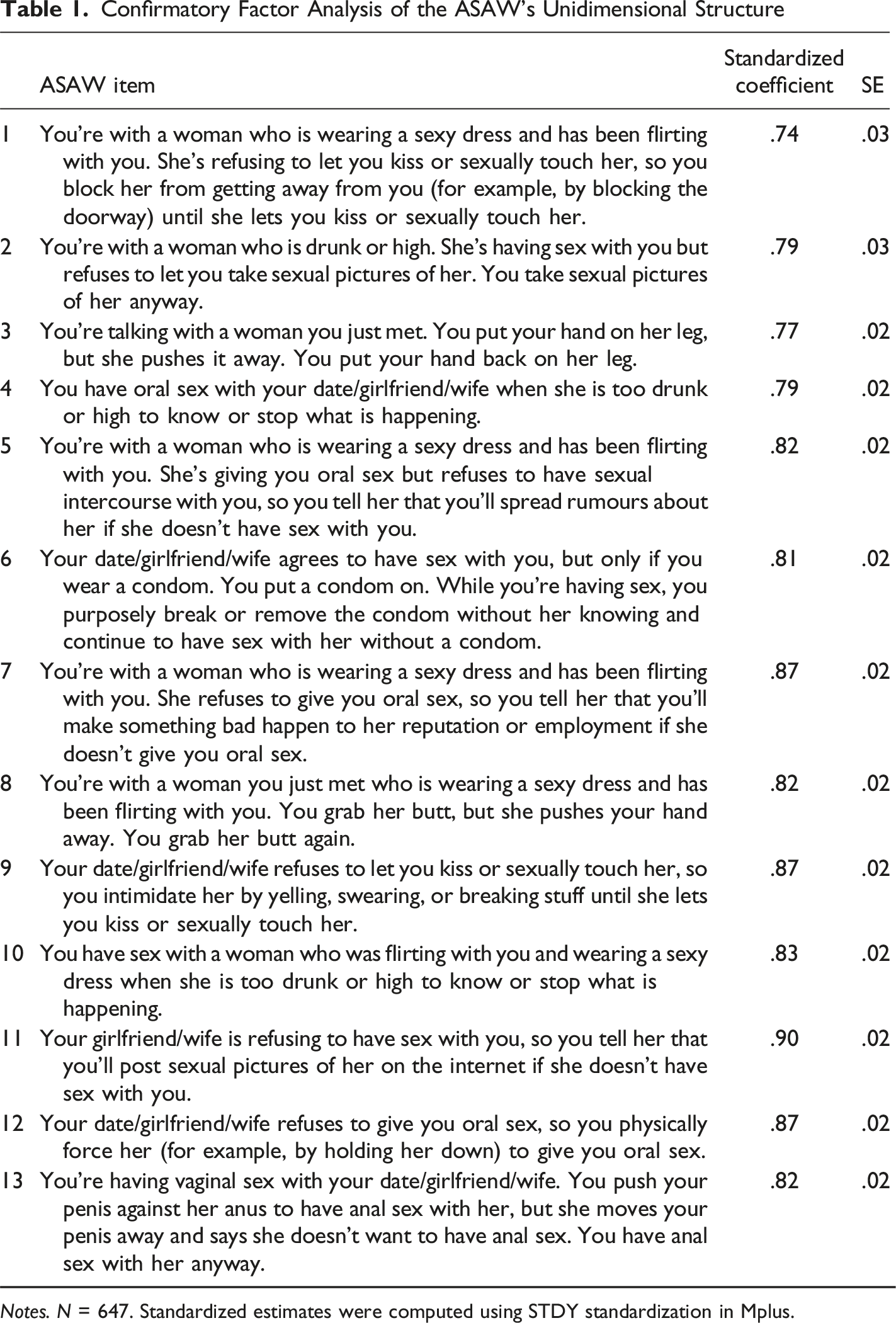
Notes. N = 647. Standardized estimates were computed using STDY standardization in Mplus.
Other Measures of Offense-Supportive Cognition
When selecting the other measures of offense-supportive cognition, we wanted to include measures that claimed to assess a range of constructs (e.g., rape myths, cognitive distortions, and attitudes). Potential measures were identified from meta-analyses that were available at the time (e.g., Trottier et al., 2021), and we assessed the frequency with which they had been used and cited in the literature. This process resulted in the selection of measures designed to assess rape myth acceptance, cognitive distortions regarding rape, and attitudes/beliefs regarding rape.
Illinois Rape Myth Acceptance Scale-Short Form
The Illinois Rape Myth Acceptance Scale-Short Form (IRMAS-SF, Payne et al., 1999) is a 20-item self-report scale designed to assess rape myth acceptance. Rape myth acceptance is defined as “attitudes and beliefs that are generally false but are widely and persistently held, and that serve to deny and justify male sexual aggression against women” (Lonsway & Fitzgerald, 1995, p. 134). Example items include “If a woman is raped while she is drunk, she is at least somewhat responsible for letting things get out of control” and “Men don’t usually intend to force sex on a woman, but sometimes they get too sexually carried away”. Participants were asked to rate their agreement with each item on a 4- point Likert-type scale from (1) not at all agree to (4) very much agree. A total score is computed by summing responses to 17 of the 20 items (three items are filler items). Total scores can range from 17 to 68, with higher scores indicating greater endorsement of rape myths. The IRMAS-SF demonstrated excellent internal consistency in the current sample (ω = .93).
RAPE Scale
The RAPE Scale (Bumby, 1996) is a measure of cognitive distortions, which are defined as “learned assumptions, sets of beliefs, and self-statements about deviant sexual behaviors […] which serve to deny, justify, minimize, and rationalize an offender’s actions” (p. 38). It is a self-report scale that asks participants to rate their endorsement of 36 statements on a 4-point Likert-type scale from (1) strongly disagree to (4) strongly agree. Example statements include “A lot of women claim they were raped just because they want attention” and “Men who commit rape are probably responding to a lot of stress in their lives, and raping helps to reduce that stress”. A total score is computed by summing the items (total scores can range from 36 to 144), with higher scores indicating greater endorsement of cognitive distortions. The RAPE Scale demonstrated excellent internal consistency in the current sample (ω = .96).
Attitudes Toward Rape Scale
The Attitudes Toward Rape (ATR) scale (Feild, 1978) was included as another measure of offense-supportive cognition because, although the name implies that it is a measure of attitudes, the items do not appear to reflect attitudes as defined here (i.e., favorable or unfavorable evaluation). Rather, the items appear to assess “people’s beliefs or opinions about rape” (p. 158), as was intended by the author of the measure. Each item is rated on a 4-point Likert-type scale from (1) strongly disagree to (4) strongly agree. Based on a principal components analysis of the ATR with a large community sample, Feild (1978) identified eight subscales: (a) Woman’s Responsibility for Rape Prevention, (b) Victim Precipitation of Rape, (c) Severe Punishment for Rape, (d) Favorable Perception of a Woman After Rape, (e) Resistance as a Woman’s Role During Rape, (f) Sex as Motivation for Rape, (g) Normality of Rapists, and (h) Power as Motivation for Rape. However, this factor structure was not replicated in the current study. As described in more detail in the Results section, ATR items separated onto two factors that appear to reflect pro-rape beliefs and anti-rape beliefs, respectively. Several items did not load onto any of the factors; thus, total scores were computed using only the items that loaded on either the pro-rape or anti-rape factors. Specifically, 19 items were summed to create a pro-rape beliefs total score (ATR Pro-Rape), with higher scores indicating relatively more agreement with rape supportive beliefs, such as “A woman should be responsible for preventing her own rape” and “It would do some women some good to get raped”. Total scores could range from 19 to 76 and internal consistency was excellent (ω = .91). Next, six items were summed to create an anti-rape beliefs total score (ATR Anti-Rape). Scores could range from 6 to 24, with higher scores indicating relatively more agreement with anti-rape beliefs, such as “All rapists are mentally sick” and “A man who has committed rape should be given at least 30 years in prison”. Internal consistency was lower for these items (ω = .68); thus, results involving this sub-scale should be interpreted with caution.
Measures of Sexually Aggressive Behavior
Sexual Experience Survey-Tactics First: Revised
Past sexually aggressive behavior was assessed using the Sexual Experience Survey-Tactics First: Revised (SES-TFR, Hermann et al., 2018), a modified version of the ‘Tactics First’ version of the Sexual Experience Survey (SES-TF) developed by Abbey et al. (2005). The 36-item SES-TFR asks participants about the frequency with which they have engaged in a number of sexual acts (e.g., sexual touching, oral sex, and vaginal sex) using various sexually aggressive tactics (e.g., arguments and pressure, giving a woman drugs or alcohol, and physical force) since the age of 16. Respondents could report frequencies of up to nine times or more, with scores truncated to three times or more for the calculation of total scores (Abbey et al., 2005). A total score was computed using the separate outcomes and tactics severity weighting scheme developed by Davis et al. (2014), with higher scores indicating more past sexual aggression.
Likelihood of Engaging in Sexually Aggressive Behavior
The Proclivity SES-TFR (Hermann et al., 2018) was used to assess likelihood of engaging in sexual aggression in the future. Participants are asked to rate the likelihood with which they would engage in each of the 36 sexually aggressive behaviors included in the SES-TFR. Each item is rated on a 7-point scale from (1) not at all likely to (7) very likely (anchors only). A total score is computed by averaging responses to the 36 items (ranging from 36 to 252), with higher scores indicating a greater likelihood of engaging in sexually aggressive behavior. The Proclivity SES-TFR has been found to predict subsequent sexually aggressive behavior over a 4-month follow-up period among men from the community (Hermann et al., 2016).
Likelihood to Rape
Likelihood to rape was assessed using the Likelihood to Rape Question (LR; Malamuth, 1981). Participants were asked about the likelihood that they would rape a woman if they could be assured of not being caught or punished on a 5-point scale from (1) not at all likely to (5) very likely. The LR has also been found to predict subsequent sexual aggression during a 4-month follow-up period (Hermann et al., 2016).
Attention-Check Questions
Three instructional attention-check questions designed to detect inattentive respondents were randomly distributed throughout the survey. For example, participants were asked “Data quality is important to us. Please select ‘not that bad’ to show that you have read this question. We appreciate your continued attention”. Participants who did not select “not that bad” in response to this item failed that attention-check question. Participants who failed more than one of the three attention-check questions were excluded from the analyses.
Procedure
Participants were recruited through Qualtrics from an online panel of participants (Qualtrics, 2020). Those who agreed to participate were presented with a demographic questionnaire followed by the ASAW. Next, participants were presented with the three other measures of offense-supportive cognition (i.e., IRMAS-SF, RAPE Scale, and ATR) in a counterbalanced order. Participants were then presented with the three self-report measures of sexually aggressive behavior (i.e., SES-TFR, Proclivity SES-TFR, and LR). Once participants completed the study (or if they withdrew), they were presented with pictures of nature scenes intended to elevate mood and a debriefing form. This study was approved by the authors’ university ethics board (Clearance #114623).
Overview of Analyses
The authors take responsibility for the integrity of the data, the accuracy of the analyses, and have made every effort to avoid inflating statistically significant results. The statistical analyses were determined a priori and are described next.
Discriminant Validity
Three separate EFAs were conducted to explore the extent to which ASAW items are distinct from the items of the three other measures of offense-supportive cognition (i.e., IRMAS-SF, RAPE Scale, and ATR). We chose to conduct three separate EFAs – each containing the ASAW and one of the other measures of offense-supportive cognition – because we were primarily concerned about the distinctiveness/overlap between the ASAW and the other measures, rather than the distinctiveness/overlap between the latter. 1 Additionally, we used EFA over confirmatory factor analysis (CFA) because the former allows the examination of cross-loadings, whereas the latter is a more restrictive model in which cross-loadings are fixed to zero. It was important to examine the pattern of cross-loadings in this study to determine whether items loaded primarily onto distinct factors or whether high cross-loadings were present (potentially indicating a lack of discriminant validity). This item-level analysis of cross-loadings was also more conducive to testing whether certain items from the other measures of offense-supportive cognition overlapped with ASAW items, potentially indicating that they are driven by the same underlying construct.
The EFAs were conducted in MPlus version 8.4. We used the same approach for factor extraction and retention as Pedneault et al. (2025). Factors were extracted from a polychoric correlation matrix using robust weighted least square estimation (i.e., WLSMV estimator) and rotated using oblique rotation (Geomin rotation). Three factor retention methods were considered when selecting the number of factors to retain: (a) Kaiser criterion (Kaiser, 1960), (b) parallel analysis (O’Connor, 2000), and (c) minimum average partial (MAP) test (Velicer, 1976). The Kaiser criterion (i.e., factors must have an eigenvalue grater than one) was used to prune factors that explained less variance than a single item, but more weight was given to the results of the parallel analysis and the MAP test when selecting the number of factors to retain (Schmitt, 2011).
When selecting the number of factors to retain, we also examined the pattern of standardized factor loadings on each of the extracted factors. Factor loadings ≥ .40 were considered to load onto a factor, with this threshold being the minimum proposed threshold for retaining an item (Matsunaga, 2010). All extracted models were also evaluated using the following three model fit indices: (a) root mean square error of approximation (RMSEA), (b) comparative fit index (CFI), and (c) standardized root mean square residual (SRMR). RMSEA and SRMR are badness-of-fit measures, with values > .10 indicating poor fit (Kline, 2016). CFI is a goodness-of-fit measure, with values > .95 indicating good fit (Hu & Bentler, 1999). The sample size for this study (N = 647) exceeds published guidelines for EFAs wherein multiple factors are extracted (e.g., Tabachnick & Fidell, 2007).
Although EFA is useful for conducting item-level analyses and identifying cross-loading items, simulation studies suggest that it can be poor at detecting lack of discriminant validity in some cases (e.g., Henseler et al., 2015). Therefore, we conducted a supplementary test of discriminant validity using the heterotrait-monotrait (HTMT) ratio (Henseler et al., 2015). Specifically, we computed the inter-item polychoric correlation matrices between the ASAW and the IRMAS-SF, the RAPE Scale, and the ATR, respectively. Next, we computed the HTMT ratio for each pair, which is essentially the average of the between measure inter-item correlations divided by the average of the within-measure inter-item correlation. HTMT values below 0.85 are indicative of discriminant validity (Henseler et al., 2015).
Incremental Validity
To test the ASAW’s incremental validity, we examined the extent to which its scores were independently associated with self-reported sexual aggression after accounting for the other measures of offense-supportive cognition. For these analyses, listwise deletion was used for participants with any missing data on the following measures: ASAW (1.1%, n = 7), IRMAS-SF (0.9%, n = 6), RAPE Scale (1.2%, n = 8), ATR Pro-Rape (1.4%, n = 9), ATR Anti-Rape (0.2%, n = 1), and Proclivity SES-TFR (7.6%, n = 49). None of the participants had missing data on the LR question. For the SES-TFR, which is a count variable of past sexually aggressive behavior, participants with more than 15% missing data (i.e., missing data on six or more items) were excluded listwise (1.9%, n = 12). For participants with less than 15% missing data on the SES-TFR, missing data were treated as zeros (never engaged in the sexually aggressive behavior). In total, 77 (11.9%) participants were excluded from the full sample of 647 due to missing data, resulting in a subsample of 570 participants. Participants who were excluded from the subsample did not significantly differ from the rest of the sample in terms of age, d = .04, 95% CI [−.20, .27], race ϕ = .07, p = .847, or education, ϕ = .06, p = .364. However, there was a significant difference in terms of relationship status, ϕ = .15, p = .007. Specifically, fewer participants who were excluded from the subsample were single (25.0% vs. 39.0%, OR = 0.52, 95% CI [0.30, 0.90]) and more were married (61.8% vs. 40.4%, OR = 2.39, 95% CI [1.46, 3.91]).
We conducted separate hierarchical regression models predicting (a) past sexual aggression (SES-TFR), (b) likelihood of engaging in sexual aggression (Proclivity SES-TFR), and (c) likelihood to rape (LR). Each model included one measure of offense-supportive cognition in the first step and the ASAW in the second step. A priori power calculations using G*Power indicated that a sample of approximately 200 participants would be sufficient to detect a small to moderate effect (f2 = .08) with power of .80 and alpha = .006 (Bonferroni correction of alpha .05 divided by 9 models); therefore, analyses were adequately powered with the subsample of 570 participants. Analyses were conducted with and without influential residual outliers. Residual outliers were defined as observations with standardized residuals +/− 2.24 and/or Mahalanobis distance greater than critical χ2, where the df = number of variables in the model and alpha level = α/n (Aguinis et al., 2013). Influential outliers were identified as residual outliers with DFFITS values
Results
Discriminant Validity
ASAW vs. IRMAS-SF
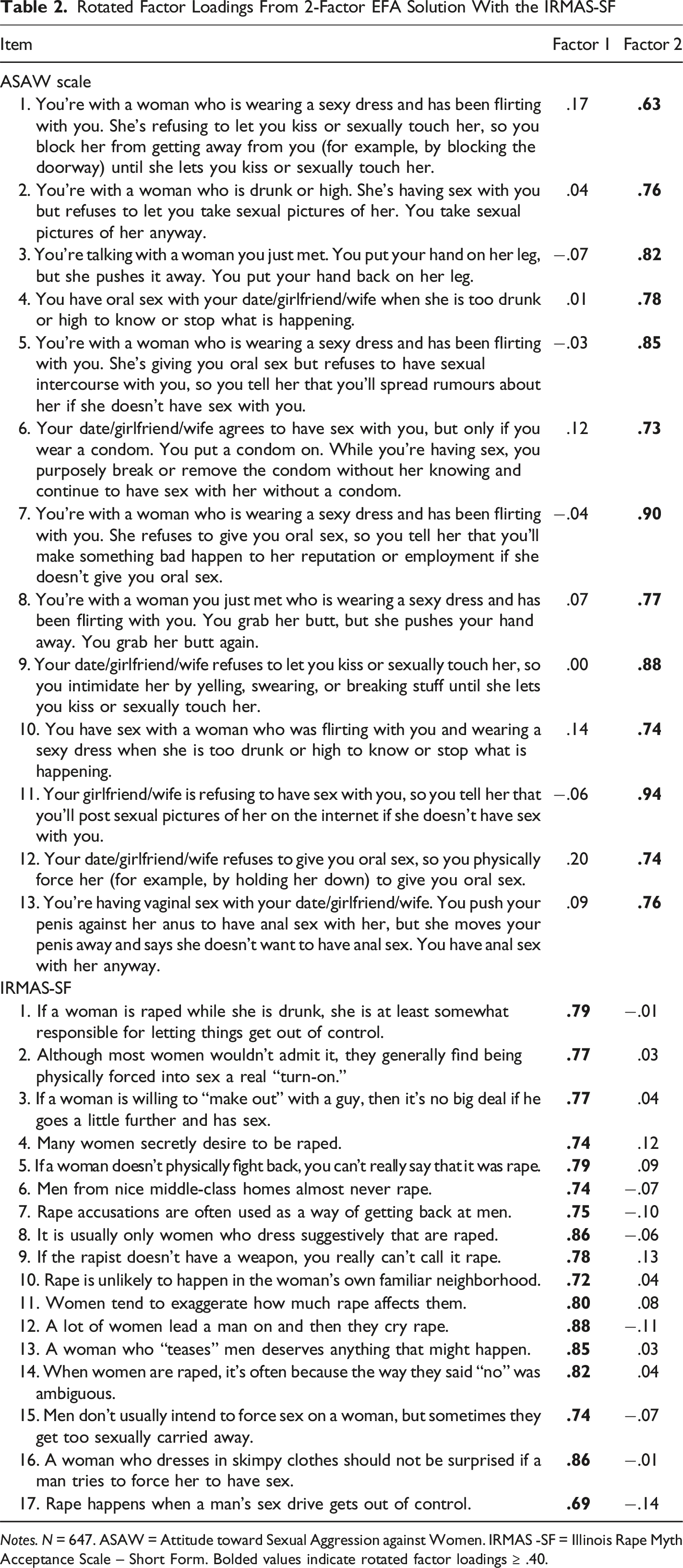
Items from the ASAW and the IRMAS-SF were examined in the first EFA. Based on the results of the factor retention analyses, models with one to three factors were extracted (see Figure 1 for the Scree plot of eigenvalues). In the one-factor model, all the items loaded (≥.40) onto a single factor, but fit indices indicated poor fit (RMSEA = .08, 90% CI [.079, .086]; CFI = .91; SRMR = .12). In contrast, the two-factor model fit the data well (RMSEA = .04, 90% CI [.037, .045]; CFI = .98; SRMR = .04). In this model, all the ASAW items loaded highly on one factor and all the IRMAS-SF items loaded highly on a second factor, with these factors showing a strong correlation (r = .64, p < .05). The three-factor model only provided trivial improvement in model fit (RMSEA = .03, 90% CI [.030, .039]; CFI = .99; SRMR = .03) and the third factor consisted primarily of weak cross-loadings (<.40). Thus, the two-factor model was selected (see Table 2). Scree Plot of Eigenvalues From Exploratory Factor Analysis including Items From the Attitude Toward Sexual Aggression Against Women Scale and the Illinois Rape Myth Acceptance Scale-Short Form Rotated Factor Loadings From 2-Factor EFA Solution With the IRMAS-SF Notes. N = 647. ASAW = Attitude toward Sexual Aggression against Women. IRMAS -SF = Illinois Rape Myth Acceptance Scale – Short Form. Bolded values indicate rotated factor loadings ≥ .40.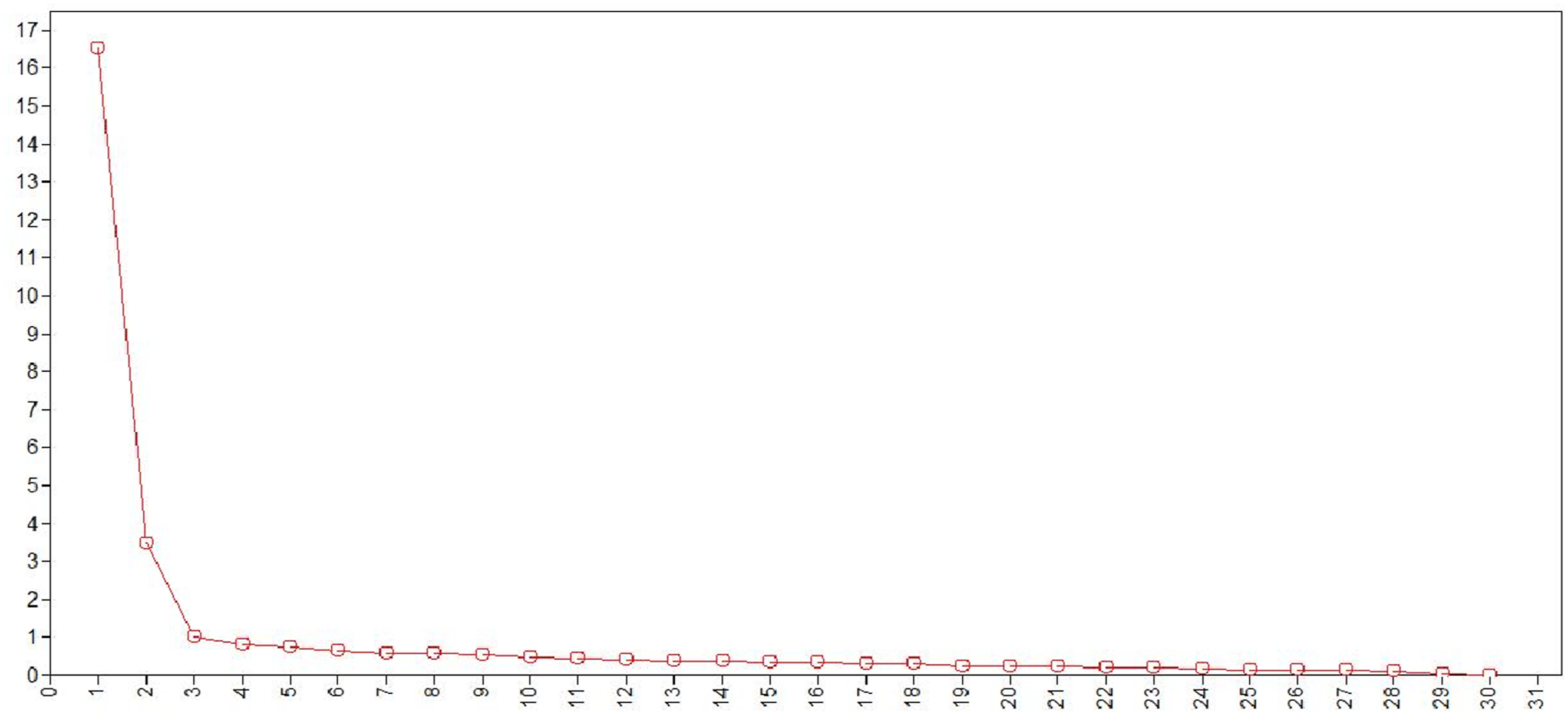
ASAW vs. RAPE Scale
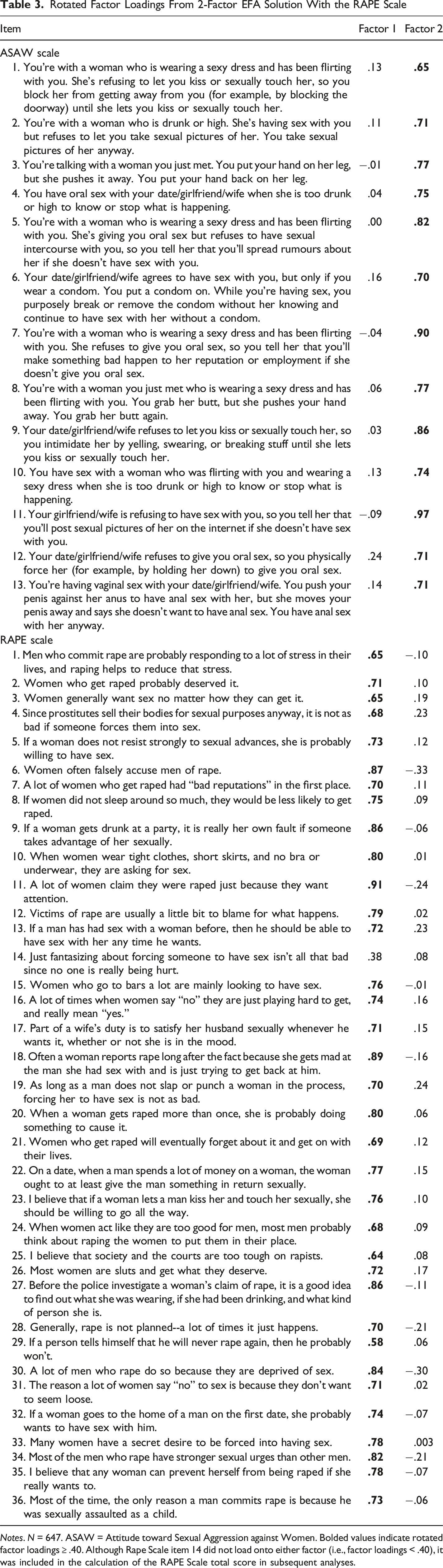
A second EFA was conducted with the ASAW and RAPE Scale items. Factor retention analyses suggested extracting models with one to six factors (see Figure 2 for the Scree plot of eigenvalues). As with the IRMAS-SF, the two-factor model fit the data well (RMSEA = .04, 90% CI [.039, .044]; CFI = .97; SRMR = .04) and provided improved fit over the one-factor model (RMSEA = .07, 90% CI [.064, .068]; CFI = .92; SRMR = .09). For the two-factor model, all ASAW items loaded highly onto one factor, and all but one RAPE Scale item loaded highly onto a separate factor. Both factors were strongly correlated (r = .65, p < .05). Models with three factors (RMSEA = .04, 90% CI [.034, .039]; CFI = .98; SRMR = .04), four factors (RMSEA = .03, 90% CI [.031, .036]; CFI = .98; SRMR = .03), and more factors provided trivial improvements in model fit and additional factors consisted mostly of cross-loadings. Thus, the two-factor model was selected (see Table 3). Scree Plot of Eigenvalues From Exploratory Factor Analysis including Items From the Attitude Toward Sexual Aggression Against Women Scale and the RAPE Scale Rotated Factor Loadings From 2-Factor EFA Solution With the RAPE Scale Notes. N = 647. ASAW = Attitude toward Sexual Aggression against Women. Bolded values indicate rotated factor loadings ≥ .40. Although Rape Scale item 14 did not load onto either factor (i.e., factor loadings < .40), it was included in the calculation of the RAPE Scale total score in subsequent analyses.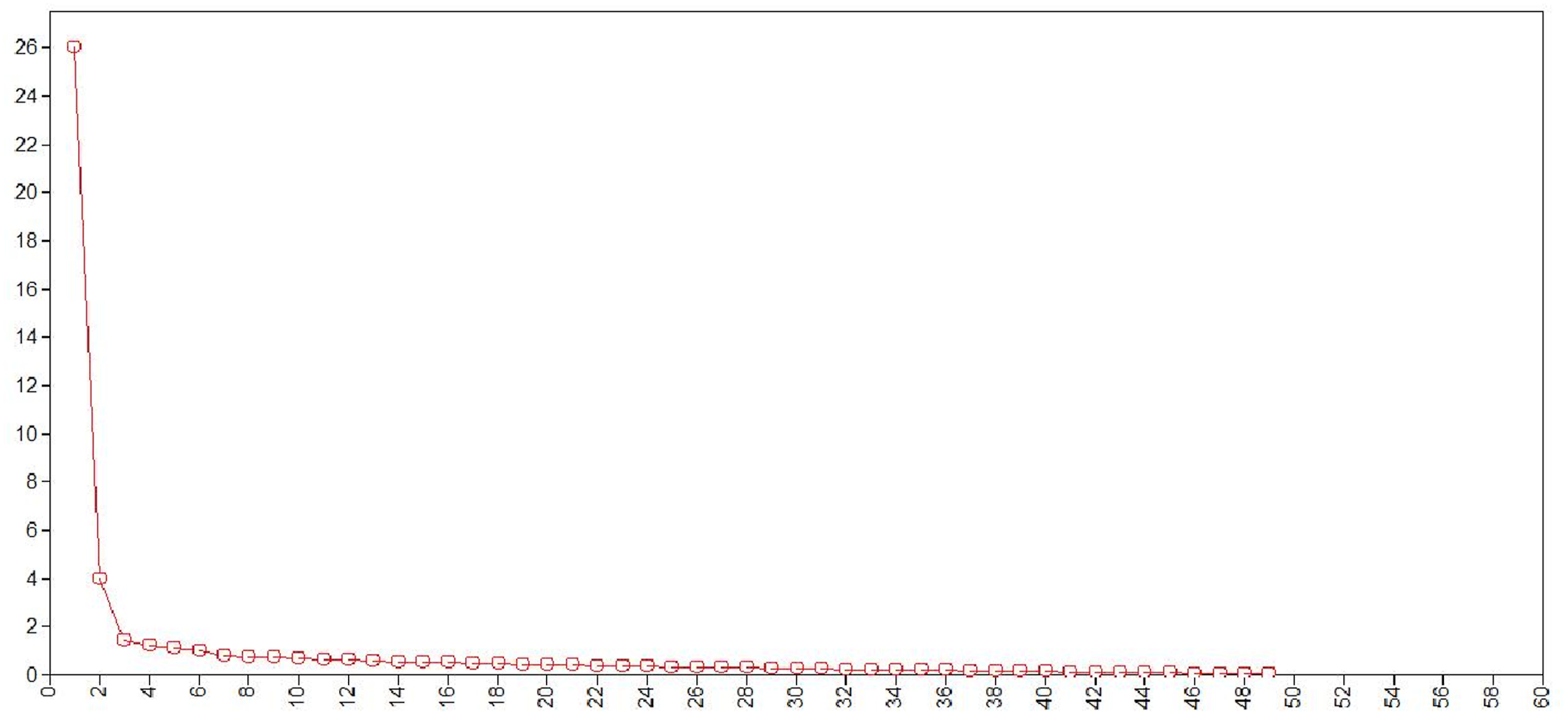
ASAW vs. ATR
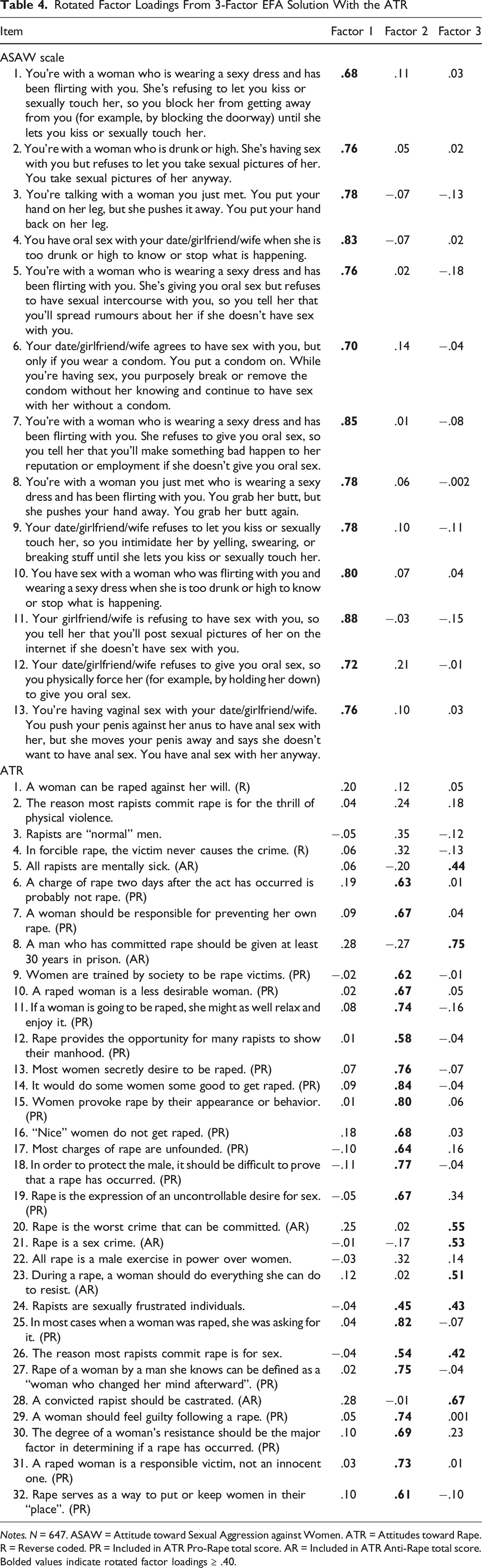
Next, ASAW and ATR items were included in a third EFA. Models with one to seven factors were extracted (see Figure 3 for the Scree plot of eigenvalues). The one-factor model demonstrated poor fit (RMSEA = .07, 90% CI [.072, .076]; CFI = .86; SRMR = .10), with several factor loadings < .40. The two-factor model showed improvement (RMSEA = .06, 90% CI [.056, .061]; CFI = .92; SRMR = .08), but still indicated poor fit. In this model, ASAW items clustered together onto a single factor and most ATR items loaded onto a separate factor; however, eight ATR items cross- loaded or had primary loadings on the same factor as the ASAW items. The three-factor model fit the data well (RMSEA = .04, 90% CI [.039, .044]; CFI = .96; SRMR = .05) and the factor loadings were more interpretable as few cross-loadings remained. All the ASAW items loaded highly onto a single factor, whereas most of the ATR items separated onto two distinct factors. These two factors appeared to reflect pro-rape beliefs (e.g., In most cases when a woman was raped, she was asking for it) and anti-rape beliefs (e.g., A convicted rapist should be castrated), respectively. Five of the ATR items (e.g., A woman can be raped against her will) did not load on any of the three factors. The factor on which the ASAW items loaded was highly correlated with the ATR pro-rape beliefs factor (r = .66, p < .05), but showed a small negative correlation with the ATR anti-rape beliefs factor (r = −.24, p < .05). Similarly, the pro-rape beliefs factor showed a small negative correlation with the anti-rape beliefs factor (r = −.20, p < .05). Models with four (RMSEA = .036, 90% CI [.033, .039]; CFI = .97; SRMR = .04), five (RMSEA = .03, 90% CI [.027, .033]; CFI = .98; SRMR = .04), and more factors did not show meaningful improvements in model fit and generally consisted of cross-loadings and trivial factors (i.e., factors with fewer than three loadings > .40). Therefore, the three-factor model was selected (see Table 4). Scree Plot of Eigenvalues From Exploratory Factor Analysis including Items From the Attitude Toward Sexual Aggression Against Women Scale and the Attitude Toward Rape Scale Rotated Factor Loadings From 3-Factor EFA Solution With the ATR Notes. N = 647. ASAW = Attitude toward Sexual Aggression against Women. ATR = Attitudes toward Rape. R = Reverse coded. PR = Included in ATR Pro-Rape total score. AR = Included in ATR Anti-Rape total score. Bolded values indicate rotated factor loadings ≥ .40.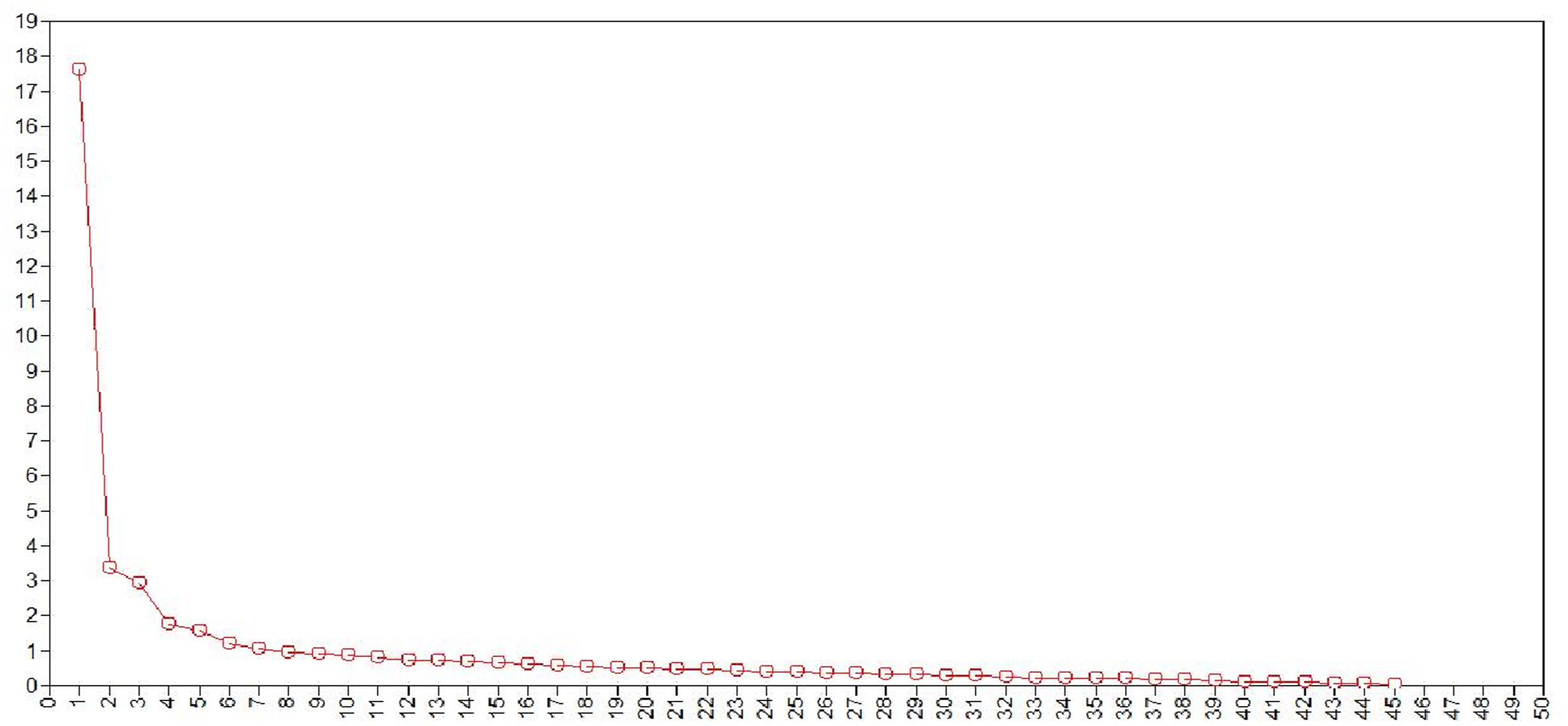
Heterotrait-Monotrait Ratio
We used the heterotrait-monotrait ratio (HTMT; Henseler et al., 2015) as a supplementary test of discriminant validity. Specifically, the HTMT ratio was computed from the inter-item polychoric correlation matrixes between the ASAW and the IRMAS-SF, the RAPE Scale, and the ATR, respectively. The HTMT ratio was below 0.85 when comparing the ASAW to each of the other measures of offense-supportive cognition, suggesting that the ASAW measures a distinct construct from the IRMAS-SF (HTMT ratio = 0.61), RAPE Scale (HTMT ratio = 0.65), and ATR (HTMT ratio = 0.65).
Incremental Validity
Descriptive Statistics and Pearson Correlations With Bias Corrected and Accelerated 95% Confidence Intervals
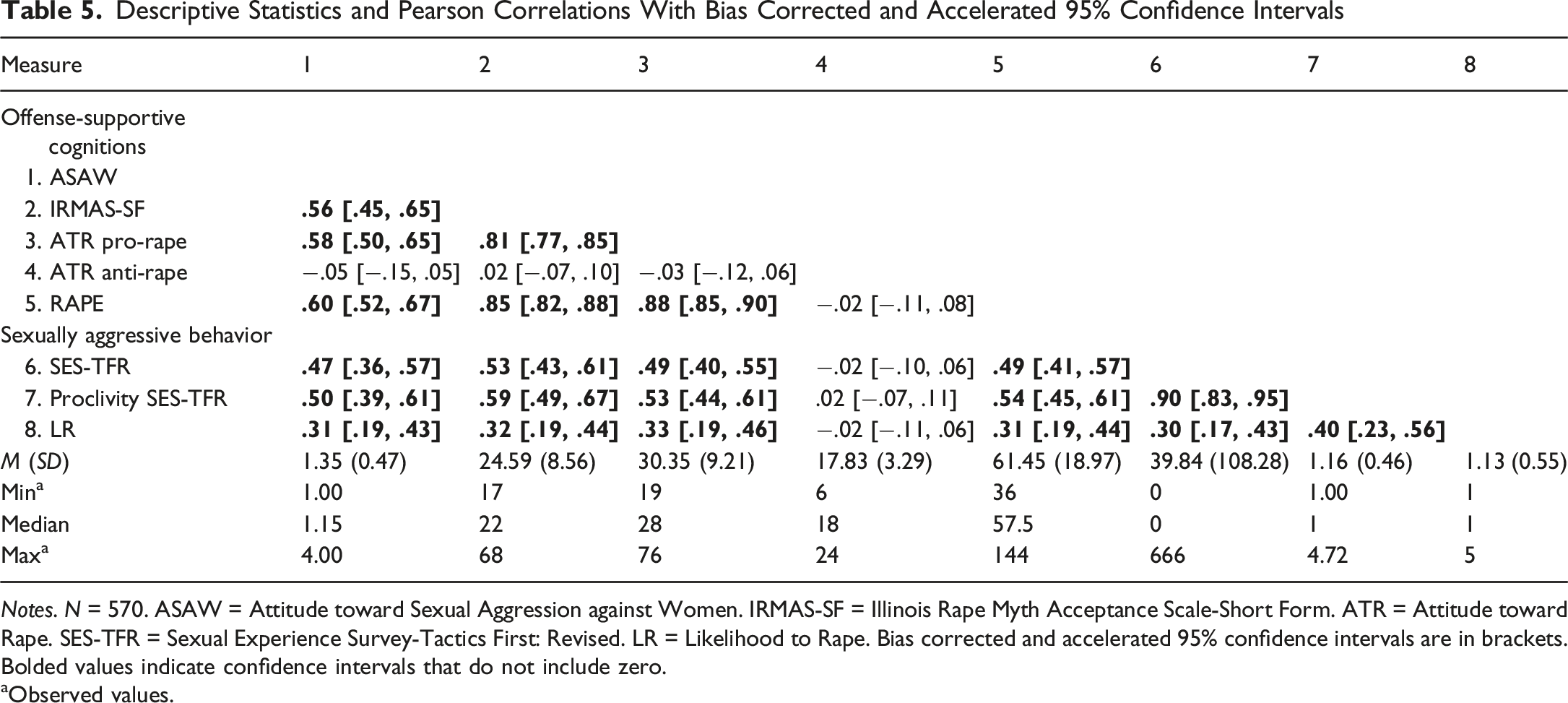
Notes. N = 570. ASAW = Attitude toward Sexual Aggression against Women. IRMAS-SF = Illinois Rape Myth Acceptance Scale-Short Form. ATR = Attitude toward Rape. SES-TFR = Sexual Experience Survey-Tactics First: Revised. LR = Likelihood to Rape. Bias corrected and accelerated 95% confidence intervals are in brackets. Bolded values indicate confidence intervals that do not include zero.
aObserved values.
Hierarchical Regression Models Predicting Self-Reported Sexually Aggressive Behavior
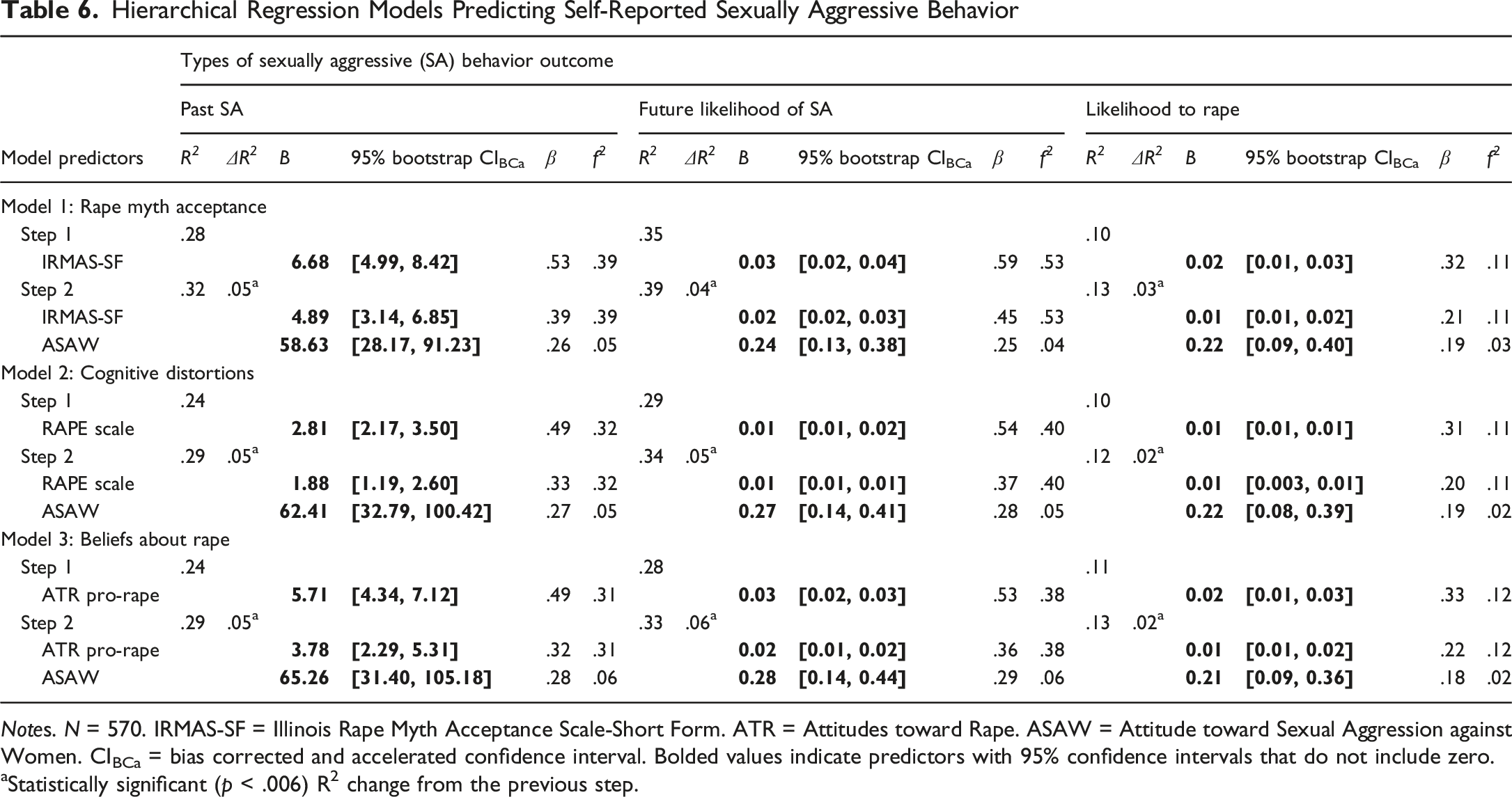
Notes. N = 570. IRMAS-SF = Illinois Rape Myth Acceptance Scale-Short Form. ATR = Attitudes toward Rape. ASAW = Attitude toward Sexual Aggression against Women. CIBCa = bias corrected and accelerated confidence interval. Bolded values indicate predictors with 95% confidence intervals that do not include zero.
aStatistically significant (p < .006) R2 change from the previous step.
Discussion
This is the first study to explore the validity of the ASAW, a new measure designed to assess men’s attitude toward sexual aggression against women. Attitudes fall under the umbrella of offense-supportive cognitions, for which several validated measures already exist. Consequently, for the ASAW to be useful, it should be distinct from other measures of offense-supportive cognition and provide unique information relevant to sexually aggressive behavior. As an initial test of discriminant validity, we explored the overlap and distinctiveness between ASAW items and the items of three other measures of offense-supportive cognition. Supportive of discriminant validity, results showed that items from the ASAW clustered together to form a distinct factor from those of measures of rape myth acceptance, cognitive distortions, and beliefs about rape. This suggests that scores on the ASAW may be driven by a distinct latent construct, and that its items assess something that is not currently captured by other measures of offense-supportive cognition. This was further supported by supplemental analyses using a different statistical approach (i.e., HTMT ratio), which also suggested that the ASAW items reflect a distinct construct from items assessing rape myth acceptance, cognitive distortions, and beliefs regarding rape.
These observed distinctions are perhaps not surprising given the obvious qualitative differences between the ASAW and other measures of offense-supportive cognition. As previously mentioned, the latter typically ask respondents the extent to which they agree with relatively simple statements about women, men, or rape using a Likert-type scale (e.g., strongly disagree – strongly agree). In contrast, the ASAW asks respondents to evaluate behaviorally specific scenarios using a unipolar response scale with evaluative anchors (very bad – not at all bad). Besides the ASAW items having an obvious evaluative component due to the evaluative response scale (i.e., very bad – not at all bad), they also ask respondents to evaluate scenarios in which they themselves are the perpetrators of specific sexually aggressive behaviors. This is a key distinction between the ASAW and other measures of offense-supportive cognition, across which items seem much broader in scope (e.g., women, men, rape) and the respondent farther removed (e.g., reference to men or women generally). The specificity of ASAW items is particularly appealing given research showing that the level of correspondence between an attitude measure and the behavior of interest moderates the strength of the attitude—behavior relationship (Ajzen & Fishbein, 1977; Kraus, 1995). Thus, at least at face value, the ASAW does appear to be asking respondents to consider something different than has previously been captured by other measures of offense-supportive cognition.
Interestingly, whereas the IRMAS-SF and the RAPE Scale formed distinct, unidimensional factors from the ASAW, items from the ATR separated into two distinct factors. These two factors appear to reflect (a) cognitions that are pro-rape or otherwise supportive of rape myths and (b) cognitions that are anti-rape or otherwise supportive of consequences for rapist. For example, items that loaded highly on the pro-rape factor include: “In most cases when a woman was raped, she was asking for it”, “If a woman is going to be raped, she might as well relax and enjoy it”, and “A woman should feel guilty following a rape”. In contrast, items that loaded highly onto the anti-rape factor include: “All rapists are mentally sick”, “Rape is the worst crime that can be committed”, and “A convicted rapist should be castrated”. In fact, some of the “anti-rape” items appear to reflect unfavorable evaluations of rape.
However, counter to expectations, bivariate correlations indicated that more favorable attitudes toward sexual aggression as measured by the ASAW were not significantly negatively associated with higher endorsement of the anti-rape ATR items. Indeed, the ATR Anti-Rape subscale may be conceptually distinct from the other cognition measures because it focuses only on the most negative evaluations of rape and rapists without capturing variance in terms of more favorable evaluations. Moreover, the ATR Anti-Rape subscale was not correlated with any of the self-report measures of sexually aggressive behavior. One plausible interpretation for these findings is that the level of correspondence between these items and sexually aggressive behavior may be too low for anti-rape beliefs or attitudes to explain variance in this outcome (Ajzen & Fishbein, 1977; Kraus, 1995). That is, asking about the consequences a rapist ought to receive is not the same as evaluating sexually aggressive behavior against a woman. Alternatively, the ATR Anti-Rape subscale had much lower internal consistency than the other measures (ω = .68), suggesting that the total score for these items may not be reliable. Future research should test these hypotheses using a different measure of anti-rape beliefs and/or attitudes. Research should also continue exploring the overlap and distinctiveness between the ASAW and other measures of offense-supportive cognition. The current evidence suggests that the ASAW measures a distinct construct from the IRMAS, RAPE Scale, and ATR Scale, which is not an exhaustive or comprehensive list of measures of offense-supportive cognitions.
Results were also supportive of the incremental validity of ASAW scores. After accounting for other measures of offense-supportive cognition, ASAW scores were independently associated with self-reported history of sexual aggression against women, likelihood of engaging in sexually aggressive behavior, and likelihood to rape. This suggests that the ASAW may explain incremental variance in sexually aggressive behavior, over and above that which is already explained by other measures of offense-supportive cognitions. Importantly, these results do not challenge the usefulness and contribution of other measures of offense-supportive cognitions. On the contrary, the current findings lend further support to the notion that offense-supportive cognitions are important correlates of sexually aggressive behavior. Indeed, the ASAW and the other measures of offense-supportive cognition were each independently associated with self-reported indicators of sexual aggression, and together these measures explained more variance in sexually aggressive behavior than either measure alone.
As expected, more favorable attitudes toward sexual aggression as measured by the ASAW were moderately to strongly associated with higher endorsement of rape myths, cognitive distortions, and pro-rape beliefs. This is the pattern that would be expected if the ASAW was measuring a distinct but highly intertwined construct. This has implications for future research attempting to disentangle the potential impacts of different offense-supportive cognitions on sexually aggressive behavior against women. There is no consensus in the sexual aggression literature regarding the developmental processes underlying the onset and maintenance of sexually aggressive behavior (e.g., James & Proulx, 2020); however, the multi-mechanism theory of cognitive distortions may be a useful framework when conceptualizing the different roles that different cognitions may play in sexual aggression (Szumski et al., 2018).
Limitations
It is possible that the results of the EFAs could be explained by a method factor, which is variance accounted for by the features of the measure rather than the underlying construct being assessed (Kline, 2016). For instance, the differences in response scales or the rating task itself (e.g., length of items) could explain the separation of ASAW items from the other measures. Nevertheless, the current findings are consistent with previous EFA results using two different measures of attitude toward sexual aggression (Nunes et al., 2018; Pedneault et al., 2021), which seems to suggest that the current findings may reflect more than just a methodological artifact. CFA could be used to confirm the factor structures observed in the current study and further explore the extent to which a method factor may explain the observed distinctions between measures.
All of the measures used in this study are self-report, meaning they are vulnerable to social desirability bias. This is the tendency for participants to answer in a way that makes them look good. If social desirability bias is present, this could at least partially explain some of the strong correlations observed between the measures of offense-supportive cognitions and sexually aggressive behavior. To reduce the risk of social desirability, the current study was self-administered online and participants were informed in the consent form that their data would be kept confidential. Research shows that these factors can reduce socially desirable responding when completing sensitive surveys (see Krumpal, 2013, for a review).
The cross-sectional design limits the conclusions that can be drawn regarding the relationship between the offense-supportive cognitions examined in this study and sexually aggressive behavior. That is, as all measures were completed at the same time, the temporal order of the variables cannot be established. Furthermore, as none of the cognitions were experimentally manipulated, no conclusions can be drawn about their influence (or lack thereof) on sexually aggressive behavior. However, the likelihood of sexual aggression and likelihood to rape scales can be considered measures of behavioral intention. According to the theory of planned behavior, behavior is determined by intentions to engage in that behavior (Ajzen, 1991). Further, there is some evidence that these measures do predict future sexually aggressive behavior (Hermann et al., 2016). Thus, these measures represent a reasonable proxy for future sexual aggression. Regardless, the goal of these analyses was to explore the extent to which the ASAW explained unique variance in sexually aggressive behavior; thus, a cross-sectional design was suitable for this purpose.
The current findings do not speak directly to the extent to which ASAW scores truly reflect attitudes toward sexual aggression against women (i.e., construct validity). For instance, although the EFA results suggest that scores on the ASAW are driven by a distinct cognitive construct from other measures of offense-supportive cognition, they cannot tell us whether that underlying construct is attitude toward sexual aggression or something else. Further tests of construct validity are essential to answering this question. Furthermore, although the sample was more diverse in age, race/ethnicity, and education than most sexual violence studies relying on post-secondary student samples, the findings from the current study may not be generalizable to all groups or populations. Notably, the validity of ASAW scores could be examined in forensic or correctional populations. Furthermore, it will be important to conduct tests of measurement invariance to explore whether scores on the ASAW function similarly across different groups.
Future Directions and Practical Implications
Future studies should more rigorously test the construct validity of ASAW scores to establish the extent to which its scores truly reflect attitudes toward sexual aggression against women. This question is relatively more difficult to address because there is no clear criterion against which the construct validity of the ASAW can be tested. That is, there are no validated measures of attitude toward sexual aggression with which to test criterion-related validity, nor can construct validity be gleaned exclusively from correlations with an external criterion, such as sexually aggressive behavior. One potential option that draws on the extensive attitude-change literature involves testing the extent to which scores on the ASAW are sensitive to well-established attitude-change manipulations (e.g., persuasive messaging and evaluative conditioning; e.g., Hofmann et al., 2010; Nunes et al., 2021; Petty & Brinol, 2012). If ASAW scores change in the expected direction following the attitude-change manipulation, this would be consistent with construct validity. Additionally, longitudinal studies should explore the ASAW’s predictive validity and its applicability to different populations and settings, such as college students and incarcerated individuals. Future studies could also incorporate analog measures of sexually aggressive behavior (e.g., Abbey et al., 2018; Hall et al., 1994; Hall & Hirschman, 1994) in addition to questionnaires.
If future research supports the validity of the ASAW scale and its ability to predict sexual aggression, it could be used in risk assessment to identify individuals at high risk of engaging in this behavior. Additionally, if changes in ASAW scores correlate with changes in the likelihood of sexual aggression, the ASAW could be used to monitor risk levels. Furthermore, if attitudes measured by the ASAW are found to play a causal role in sexually aggressive behavior, they could be targeted in prevention and treatment programs. Interventions aimed at preventing sexual aggression could target the general population through public health campaigns and community-based interventions. To influence prosocial attitude change, well-established methods from the social psychological literature could be implemented within such interventions. For instance, public health messages could be constructed to induce cognitive dissonance by highlighting incongruent beliefs, values, and behavior related to sexual aggression (e.g., Stiff & Mongeau, 2016). Research suggests that well-designed interventions can prevent sexually aggressive behavior, especially when they are rooted in theory and empirical evidence (e.g., Basile et al., 2016). In sum, if attitudes are found to influence sexually aggressive behavior, this would have important implications for the development of interventions to prevent sexual aggression among men from the general population. The ASAW could be used before and after interventions to assess change in attitudes in community and—potentially—clinical settings, although additional validation work is necessary to ensure its generalizability to clinical samples and special sub-populations.
Conclusion
Our findings suggest that the ASAW scale may make a novel contribution to research and practice aiming to explain and reduce sexually aggressive behavior. We presented preliminary evidence of the ASAW’s discriminant and incremental validity. If future research finds further support for the construct validity of its scores, the scale should be used to study the potential causal role that attitudes may play in sexual aggression against women, and whether changing them can reduce the likelihood of engaging in this type of behavior.
Footnotes

Funding
The authors disclosed receipt of the following financial support for the research, authorship, and/or publication of this article: The first author received funding for this research from the Association for the Treatment of Sexual Abusers (ATSA). The funding was awarded as a pre-doctoral research grant and contributed toward the costs of data collection.
Declaration of Conflicting Interests
The authors declared no potential conflicts of interest with respect to the research, authorship, and/or publication of this article.