




Abstract
Little is known about distinct factors linked with acting on paraphilic interests or refraining from engaging in paraphilic behaviors. Participants from Canada and the United States (N = 744), aged 19–42 years (M = 29.2; SD = 3.18), were recruited through Amazon’s Mechanical Turk. Participants completed questionnaires about their paraphilic interests and behaviors, as well as potential key factors linked to behavioral engagement (i.e., perceptions of consent, sexual excitation/inhibition, impulsivity, moral disengagement, empathy). Results indicated that higher moral disengagement and impulsivity, lower sexual control (i.e., high sexual excitation, low sexual inhibition), and maladaptive understandings of consent were best able to differentiate individuals who reported highly stigmatized (e.g., hebephilia, pedophilia, coprophilia) or Bondage and Dicipline, Dominance and Submission, Sadism and Masochism(BDSM)/Fetish paraphilic interests and engagement in the paraphilic behaviours associated with these interests relative to individuals who did not report such paraphilic interests or behaviors. Moreover, higher moral disengagement, impulsivity, and maladaptive perceptions of consent were best able to differentiate non-consensual paraphilic interests and behaviours (e.g., voyeurism, exhibitionism) compared to individuals who did not report these paraphilic interests or behaviours. These results provide future directions for the exploration of mechanisms that may contribute to engagement in paraphilic behaviors and may be targets for intervention aimed at preventing engagement in potentially harmful paraphilias.
Introduction
According to the Diagnostic and Statistical Manual of Mental Disorders (Fifth Edition; DSM-5), paraphilias are defined as any “intense and persistent sexual interest other than sexual interest in genital stimulation or preparatory fondling with phenotypically normal, physiologically mature, consenting human partners” (p. 685; American Psychiatric Association [APA], 2013; Dawson et al., 2014; Giami, 2015). Paraphilias can be separated into two distinct, but related constructs: paraphilic interests, which are inferred from reports of intense urges or fantasies, and paraphilic behaviors, which an individual reportedly acts on such urges or fantasies (APA, 2013). Although paraphilic interests and behaviors can be sexually satisfying (e.g., Pascoal et al., 2015), paraphilic disorders emerge when an individual is impaired, distressed, or causes distress to others because of their paraphilic interests and behaviors (APA, 2013). The International Classification of Diseases (11th Revision) define paraphilic disorders as “sexual thoughts, fantasies, urges, or behaviors, the focus of which involves others whose age or status renders them unwilling or unable to consent and on which the person has acted or by which he or she is markedly distressed” (World Health Organization, 2018). Of interest in the present study, there exists a sizeable percentage of the population who report atypical sexual interests, despite not acting on those interests (Dawson et al., 2014; Dombert et al., 2016; Santtila et al., 2015).
Individuals with paraphilic interests represent a diverse group with both positive and negative adjustment patterns (Connolly, 2006; Lodi-Smith et al., 2014). Paraphilias have been linked with a range of psychosexual and criminogenic outcomes, including sexual violence, antisociality, and mental health conditions (e.g., depression, anxiety) (Baur et al., 2016; Bradford & Ahmed, 2014; Chan et al., 2015; Fedora et al., 1992; Långström & Hanson, 2006; Lodi-Smith et al., 2014). In contrast, individuals with paraphilias, such as sadism or masochism, have been found to report increased life and sexual satisfaction relative to individuals without such paraphilias (Joyal & Carpentier, 2017; Pascoal et al., 2015; Shindel & Moser, 2011; Wismeijer & van Assen, 2013). Although some paraphilias may be harmful, this is not always the case, and some may be part of healthy adjustment.
Distinguishing Between Paraphilic Interests and Behaviors
As some paraphilic behaviors and disorders have been linked with a variety of negative outcomes (Baur et al., 2016; Bradford & Ahmed, 2014; Chan et al., 2015; Lodi-Smith et al., 2014), including sexual violence (e.g., Chan et al., 2015), it is important to examine the factors that influence the transition from having a paraphilic interest to acting on such interests (i.e., engaging in a paraphilic behavior). Despite past research highlighting the importance of distinguishing between paraphilic interests and behaviors (e.g., Bouchard et al., 2019; Turner-Moore & Waterman, 2017), limited research to date has investigated unique differences between individuals who possess, but do not act on, paraphilic interests and individuals who have acted on their paraphilic interests. A recent study (Joyal & Carpentier, 2021) is the first to our knowledge to attempt to assess concordance and discordance between paraphilic interests and behaviours. Indeed, this previous study indicated that paraphilic interests generally predicted paraphilic behaviours, yet such associations varied based on several factors, including gender and whether the paraphilia was illegal or legal. For example, more men reported paraphilias related to fetishism and exhibitionism, whereas more women reported masochism.
Given that paraphilias are largely viewed by society as acts of deviancy (Joyal, 2014; Joyal et al., 2015), it is reasonable to consider general criminological theories when conceptualizing and understanding factors that contribute to the transition from a paraphilic interest to a paraphilic behavior. One prominent theory, strain theory, was developed originally to conceptualize the processes by which drug use and delinquency occurs, proposing that delinquency occurs when others prevent or threaten to prevent an individual from achieving a positively valued goal, remove or threaten to remove positively valued stimuli the individual possesses, or present or threaten to present noxious or negative stimuli (Agnew, 1992). Individuals are pressured essentially into delinquency because of the nature of their relationships and the blockage of goal-seeking behaviors (Agnew, 1992). However, individual dispositional and cognitive factors, such as coping strategies, levels of self-control, emotional well-being, and early developmental environments, are also essential in understanding delinquent behavior (Agnew et al., 2002; Agnew & White, 1992; Cheung & Cheung, 2010; Nasi et al., 2016). In the context of paraphilias, strain theory can be applied to include the stigma and ostracization individuals with paraphilic interests face, particularly if their interests are criminal when acted upon (i.e., pedophilia, zoophilia). Further, the loss of positive stimuli (e.g., social supports) or the introduction of negative stimuli (e.g., experiencing victimization) may contribute to delinquent acts (Agnew & White, 1992). In addition, sexual gratification (i.e., the pleasurable result of goal-seeking paraphilic behavior) may be denied in individuals with paraphilias, resulting in frustration and potentially an emergence of delinquent or paraphilic behavior.
The personal, interpersonal, and community-reinforcement theory of crime (PIC-R; Andrews & Bonta, 2006, 2010) proposes that a variety of micro and macro factors contribute to the development and maintenance of contingencies, on which deviant behaviors rely. The density of potential costs and rewards are essential to engagement in deviant acts, with the likelihood of engaging in a deviant act decreasing as perceived costs increase (Andrews & Bonta, 2010). Consistent with PIC-R, individuals with paraphilic interests may engage in paraphilic behaviors, when the rewards of engaging in the behaviors (e.g., sexual gratification) are perceived to outweigh the consequences (e.g., impaired relationships, incarceration). Moreover, an individual may engage in paraphilic behaviors that are considered non-harmful to others (e.g., consensual sadistic acts) or when there is easy opportunity to engage in the behaviors (e.g., they have access to a child to engage in pedophilic acts).
The integrated application of strain theory and PIC-R is particularly relevant in the transition from having a paraphilic interest to acting on such interest. However, to our knowledge, these theories have not been applied in the context of paraphilias to understand factors that may influence individuals’ decisions to act on their paraphilic interest. Recent research has demonstrated significant positive concordance between paraphilic interests and behaviors, as well as moderating effects of gender, sexual orientation, and sex drive (Bártová et al., 2020; Joyal & Carpentier, 2021; Seto et al., 2021). However, consistent with strain theory and PIC-R and based on the literature on paraphilias and sexual violence in general, additional key correlates likely include perceptions of sexual consent, sexual excitation and inhibition, impulsivity (i.e., sexual self-control), and moral and interpersonal engagement.
Sexual Consent
Sexual consent is a complex construct intricately tied to sexual violence and sexual well-being (Beres, 2014; Giami, 2015; Simard, 2015). Unfortunately, confusion often surrounds the definitions and navigation of consent during sexual interactions (Muehlenhard et al., 2016). Some have argued that an individual’s understanding of sexual consent is a key factor in the perpetration of sexually aggressive acts (Warren et al., 2015). Confusion regarding consent may be amplified when dealing with taboo sexual activities such as paraphilias, particularly paraphilias that involve a lack of consent, such as pedophilia and exhibitionism (i.e., exposing one’s genitals to an unsuspecting person), making sexual consent an important construct to consider (Långström, 2010; Muehlenhard et al., 2016). In the context of paraphilias, discussions of consent largely surround what distinguishes problematic and non-problematic paraphilias (e.g., when paraphilic acts occur between two consenting adults, they should not be pathologized; Wright, 2014). Indeed, Jozkowski (2013) found that consent was linked to higher levels of sexual satisfaction in general. Due to increasing popularity and visibility of BDSM practices, consent has been discussed specifically in relation to sadism and masochism, with practitioners emphasizing the importance of obtaining complete consent before engaging in such acts (Barker, 2013; Tsaros, 2013).
Self-Control
Self-control has been linked broadly with delinquency, including sexual violence (Cheung & Cheung, 2010). In examining the decision to act on a paraphilic interest, three related but distinct aspects of sexual self-control may be particularly relevant: sexual excitation, sexual inhibition, and impulsivity. Research to date has focused on sexual offending in general. For example, Neutze and colleagues (2012) found that individuals who had committed a sexual offense for which they were not charged have more sexual self-control problems than do individuals who have engaged in non-sexual offenses. Self-regulation theories have shown that paraphilias in particular are related to less inhibition and more excitation (Moser, 2016; Stinson et al., 2008), and self-regulatory deficits are thought to be a key variable in the development of sexually inappropriate interests/behaviors (Stinson et al., 2008). In fact, Stinson et al. (2008) found that self-control deficits predict paraphilias and antisocial behaviors in men adjudicated for sex offenses. Finally, impulsiveness is linked with sexual excitation and inhibition, as individuals may engage in more sexual activities because they are both impulsive and have low sexual inhibition (Kafka, 2010). For example, Joyal and colleagues (2007) found that paraphilias were associated with deficits in areas relating to impulsive control, with pedophiles consistently reporting the highest level of deficits when compared to individuals with other paraphilias.
Moral Disengagement
Morality has long been considered in the context of paraphilias, largely related to perceived immorality (Bruce, 1984). Moral disengagement is the resulting behavior associated with cognitive distortions (i.e., beliefs or attitudes that violate commonly accepted norms of rationality; Ó Ciardha & Ward, 2013) and involves the justification, minimization, or denial of negative effects associated with their actions (Bandura et al., 1996). Moral disengagement has been linked broadly to unethical decision making, a lack of guilt and empathy, and externalization of responsibility for actions (Bandura, 1986; Detert et al., 2008; Moore et al., 2012). To our knowledge, only two studies have examined the relationship between morality and sexual violence among those with paraphilias, with inconsistent results on the role of distortions about morality of sexual violence on offending behaviours (Bailey et al., 2016; Harenski & Kiehl, 2011). Although Harenski and Kiehl (2011) suggested beliefs that adult-child sexual relationships are acceptable are associated with offending, Bailey and colleagues (2016) found a non-significant association between permissive attitudes of adult-child sexual relationships and offending. However, as paraphilias have been associated with abnormal emotional processing and sexual violence, it is important to further explore the relationship between moral judgments and paraphilias, particularly those associated with harm (e.g., voyeurism), as the individual may seek to justify their actions.
Empathy
Empathy describes the ability for an individual to understand cognitively and emotionally the experiences of another (Barnett & Mann, 2013a). Broadly speaking, empathy involves the recognition of distress; the ability to consider the perspective of others (i.e., perspective taking), the ability to generate the same or similar emotions in oneself, and the decision to take action to alleviate the distress in others (Marshall et al., 1995). Although empathy has scantly been examined in the context of paraphilias, an extensive body of literature has investigated the link between empathy and sexual violence (Barnett & Mann, 2013a, 2013b; Blake & Gannon, 2008; Gery et al., 2012; Schuler et al., 2019). For example, although one meta-analysis found that the predictive utility of empathy for sexual reoffending is low (Hanson & Morton-Bourgon, 2005), another meta-analysis demonstrated that individuals who have sexually offended lack emotional recognition skills compared to individuals who have engaged in non-sexual offenses, indicating that those adjudicated for sexual offenses may have deficits in social perception (Blake & Gannon, 2008). Based on this research, it is relevant to consider the role of empathy in the decision to act on paraphilic interests, particularly those linked traditionally with harm (e.g., pedophilia).
Current Study
Researchers have not comprehensively investigated how psychosocial factors differentiate individuals with paraphilic interests and individuals who act on their interests (i.e., those who engage in paraphilic behaviors). The current study aimed to investigate factors that may make it more likely to act on a paraphilic interest. Specifically, to what extent are perceptions of sexual consent, sexual self-control (i.e., sexual excitation, sexual inhibition, and impulsivity), moral functioning, and empathy linked with likelihood of acting on paraphilic interests? We hypothesized that more maladaptive perceptions toward the establishment of consent, higher impulsivity and excitation, lower inhibition, increased moral disengagement, and lower empathy would be associated with engagement in paraphilic behaviors. However, the degree of association between the variables of interest were expected to vary based on the type of paraphilia (e.g., paraphilic behaviors associated with harm, such as voyeurism, were more strongly related to these factors than were paraphilic behaviors that can be acted on without necessarily harming others, such as transvestic fetishism).
Materials and Method
Participants
Descriptive and Chi-Square Statistics.
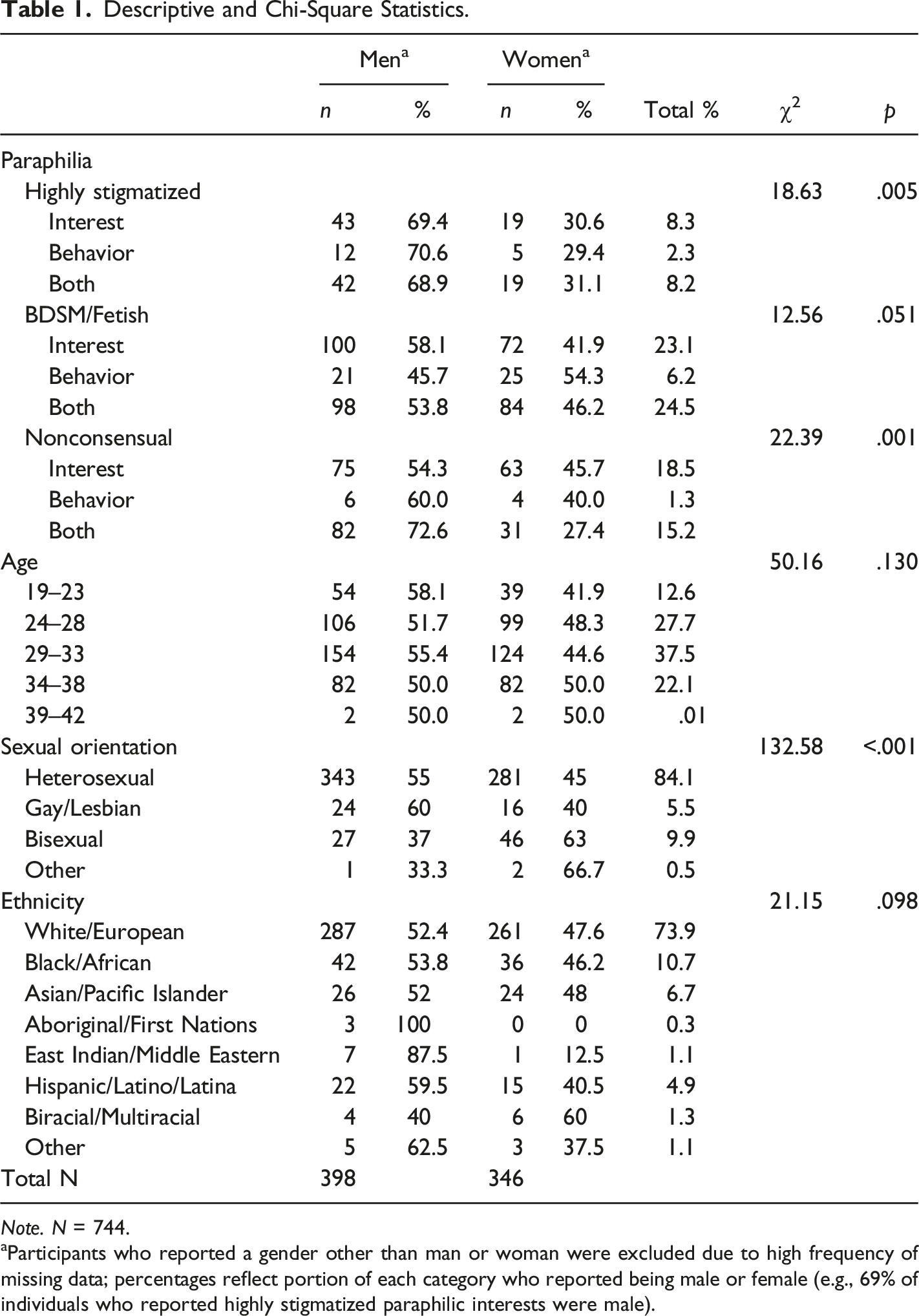
Note. N = 744.
aParticipants who reported a gender other than man or woman were excluded due to high frequency of missing data; percentages reflect portion of each category who reported being male or female (e.g., 69% of individuals who reported highly stigmatized paraphilic interests were male).
Procedure
Participants were recruited through Amazon’s Mechanical Turk, an online crowdsourcing marketplace. Participants were invited to complete a 45- to 60-minute online, anonymous survey on sexual experiences in exchange for $5 USD. Prior to beginning the survey, participants read and electronically signed an informed consent form explaining the study, confidentiality, and their right to withdraw at any time. All participants included in the final analyses stated that they were above the age of 19 and consented for their responses to be used in the study. Measures were administered in a pre-determined randomized order; the same order was used for all participants. At the completion of the survey, participants were redirected to a debriefing form that explained the purposes of the study and included contact information of the researchers. All study procedures were approved by the institutional review board at the University of New Brunswick.
Materials
Demographic Information
Participants reported their age, gender, sexual orientation, and ethnicity.
Paraphilic Interests and Behaviors
Descriptions of 14 Paraphilic Interests and Behaviors.
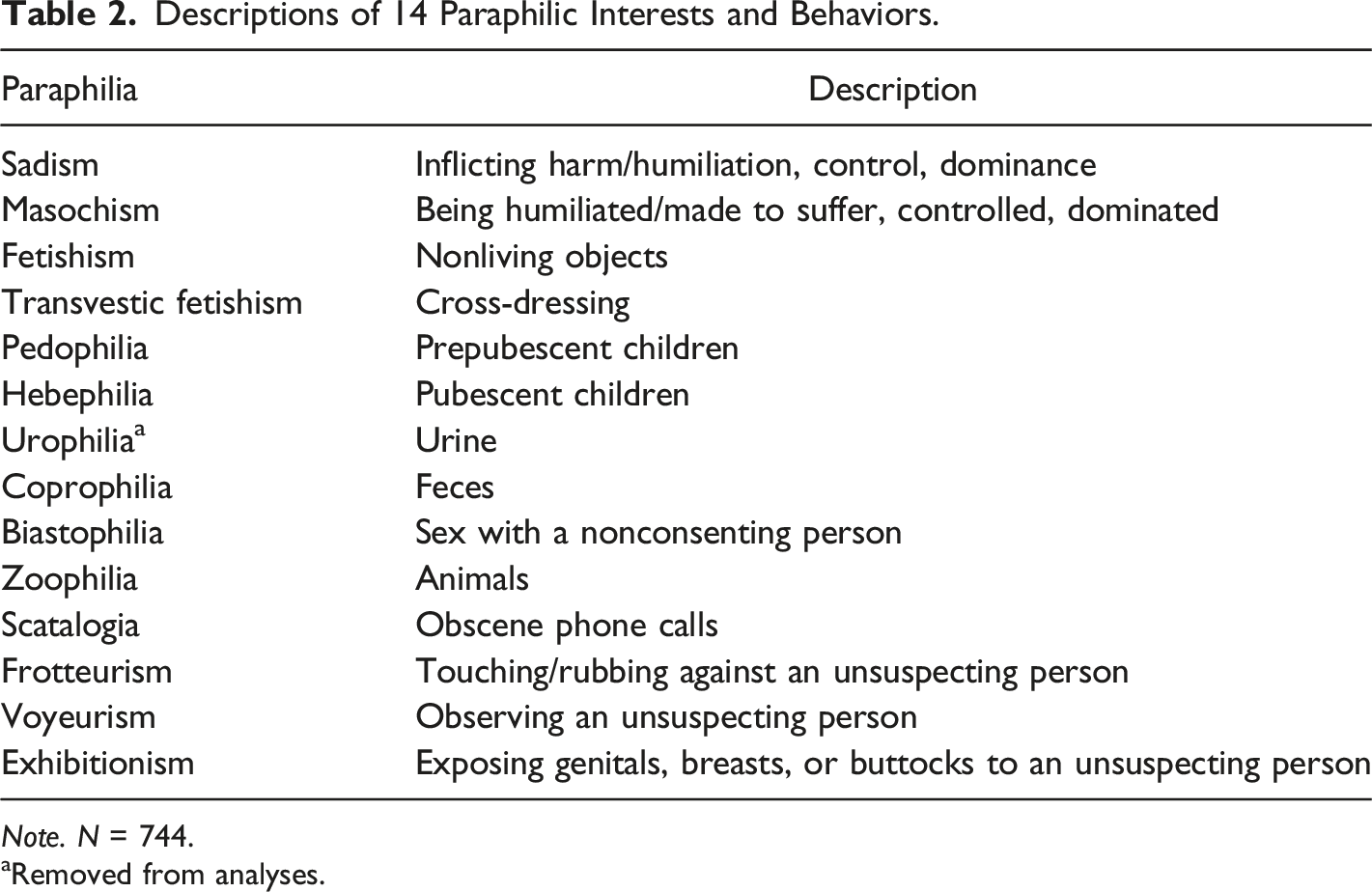
Note. N = 744.
aRemoved from analyses.
Exploratory Factor Analysis Results for Paraphilia Subscales.
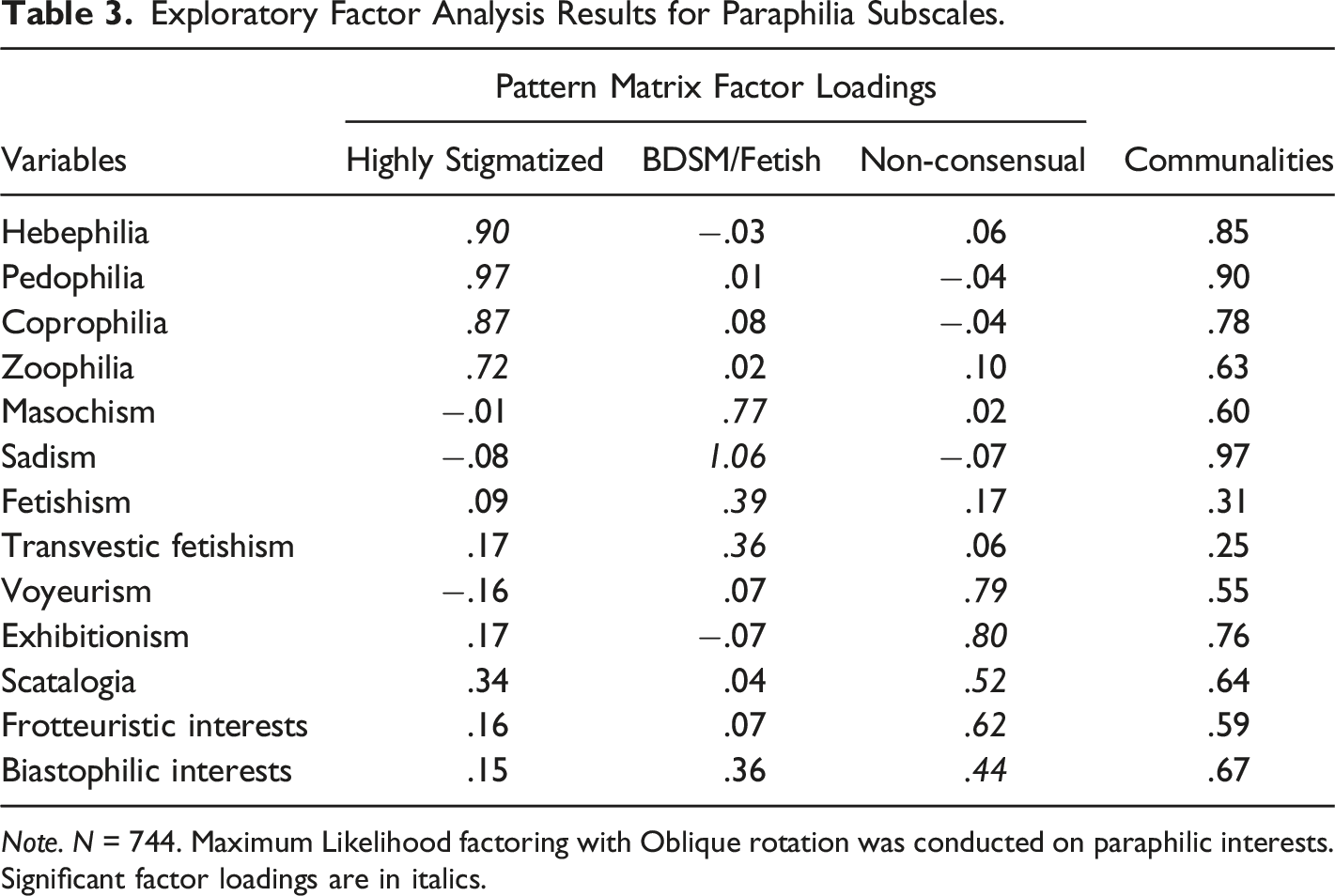
Note. N = 744. Maximum Likelihood factoring with Oblique rotation was conducted on paraphilic interests. Significant factor loadings are in italics.
Perceptions of Sexual Consent
Participants’ perceptions of consent were assessed with the SCS-R, a 39-item measure of beliefs, attitudes, and behaviors regarding how sexual consent should be and is negotiated between sexual partners (Humphreys & Brousseau, 2009). Participants respond to items (e.g., I would have difficulty asking for consent because it would spoil the mood) on a 7-point Likert scale ranging from 1 (Strongly Disagree) to 7 (Strongly Agree). The current study combined all items to create a global score, with an internal consistency of α = .81. This measure has adequate test-retest reliability across 5 weeks (mean correlations ranged from .66 - .79) and shows adequate construct validity when compared to other measures with similar constructs (e.g., sexual assertiveness, sexual sensation seeking; Humphreys & Brousseau, 2009).
Sexual Self-Control
Participants’ sexual self-control was assessed with the 30-item Sexual Excitation/Sexual Inhibition Inventory (SESII-WM; Milhausen et al., 2010). Items focused on inhibitory cognitions (e.g., Sometimes I have so many worries that I am unable to get aroused), relationship importance (e.g., I really need to trust a partner to become fully aroused), arousability (e.g., I think about sex a lot when I am bored), partner characteristics and behaviors (e.g., Someone doing something that shows he/she is intelligent turns me on), setting (e.g., I get really turned on if I think I may get caught while having sex), and dyadic elements of sexual interaction (e.g., If I am uncertain how my partner feels about me, it is harder for me to get aroused). Responses were rated on a 4-point Likert scale ranging from 1 (Strongly Disagree) to 4 (Strongly Agree). The SESII-WM adequately assesses sexual inhibition and excitation in both men and women. In the current study, the global score of the SESII-WM had an internal consistency of .82. The SESII-WM also displays good test-retest reliability over 56 weeks (mean correlation = .76), as well as good convergent and discriminant validity with similar and distinct measures (e.g., the behavioral inhibition/behavioral activation scales; Carver & White, 1994; the sexual sensation seeking scale; Kalichman & Rompa, 1995).
Impulsivity
The (BIS-11; Patton et al., 1995) was used as a general index of impulsivity. The BIS-11 is a 30-item scale that assesses participants’ self-report agreement with statements (e.g., I do things without thinking) on a 4-point Likert scale from 1 (Rarely/Never) to 4 (Almost Always/Always). The BIS-11 has been used extensively to assess impulsivity (see Stanford et al., 2009 for a review). Internal consistency of the BIS-11 in the current study was .81. Test-rest reliability is adequate, with mean correlations ranging from .27 to .83 across 4 weeks (Stanford et al., 2009). The BIS-11 is correlated with other behavioral and self-report measures of impulsivity (e.g., Behavioral Inhibition/Activation Scales; Carver & White, 1994; Zuckerman Sensation-Seeking Scale; Zuckerman et al., 1978).
Moral Disengagement
Moral disengagement was assessed with the MDS, an adapted version of Bandura’s 32-item scale (Detert et al., 2008). The adapted scale was included because the original scale was created for use with children and young adolescents and the questions (e.g., If kids fight and misbehave in school it is their teachers’ fault; Bandura et al., 1996) were inappropriate for a young adult sample. The adapted version includes 24 items on a 5-point Likert scale from 1 (Strongly Disagree) to 5 (Strongly Agree) and that load on eight overarching subscales of moral disengagement (i.e., Moral Justification, Euphemistic Labeling, Advantageous Comparison, Displacement of Responsibility, Diffusion of Responsibility, Distortion of Consequences, Attribution of Blame, Dehumanization). However, Bandura’s original theory proposes that moral disengagement should be measured as a combination of the eight subscales to represent a single overarching construct of moral disengagement (α = .87; Detert et al., 2008). Therefore, consistent with past research (e.g., Bandura et al., 1996; Detert et al., 2008; Moore et al., 2012), items (e.g., “people who are mistreated have usually done things to deserve it”, “stealing some money is not too serious compared to those who steal a lot of money”) were combined to form a single index of moral disengagement, with an internal consistency of .95.
Empathy
The IRI was used to assess empathy (i.e., how participants relate to others, including perspective taking, use of fantasy, empathic concern, and personal distress; Davis, 1980). Participants rated the degree to which 28 items described them on a 5-point Likert scale from 1 (Does not describe me well) to 5 (Describes me very well). Scores were summed to create a global score. The global score in the current study had an internal consistency of .85. Test-rest reliability of the IRI across 60–70 days ranged from .61 to .81 for both men and women (Davis, 1980). Convergent and discriminant validity has been supported by examining a variety of constructs, including aggression (Mayberry & Espelage, 2007) and prosocial behaviors (Sze et al., 2011).
Social Desirability
Participants also completed a measure of social desirability to ensure they were not responding in a socially desirable way. The Marlowe-Crowne Social Desirability Scale – Short Form is a shortened version of the original Marlowe-Crowne social desirability scale consisting of 13 items to which participants answer Yes or No (Crowne & Marlowe, 1960; Reynolds, 1982). These statements are common, and negative responses can be understood as participants answering in socially desirable ways (e.g., It is sometimes hard for me to go on with my work if I am not encouraged). In the present study, internal consistency was .76.
Data Analyses
Discriminant Function Results for Paraphilias.
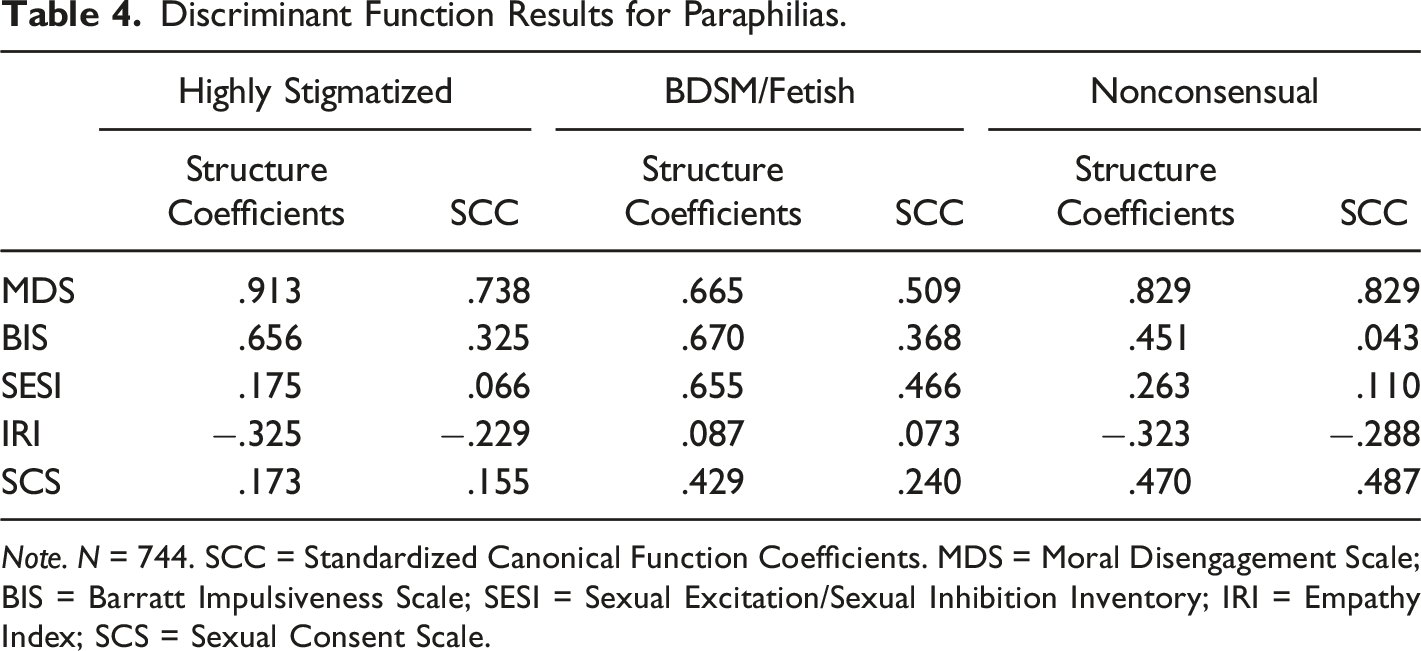
Note. N = 744. SCC = Standardized Canonical Function Coefficients. MDS = Moral Disengagement Scale; BIS = Barratt Impulsiveness Scale; SESI = Sexual Excitation/Sexual Inhibition Inventory; IRI = Empathy Index; SCS = Sexual Consent Scale.
Significant Results of the First Function at Group Centroids for Paraphilias.
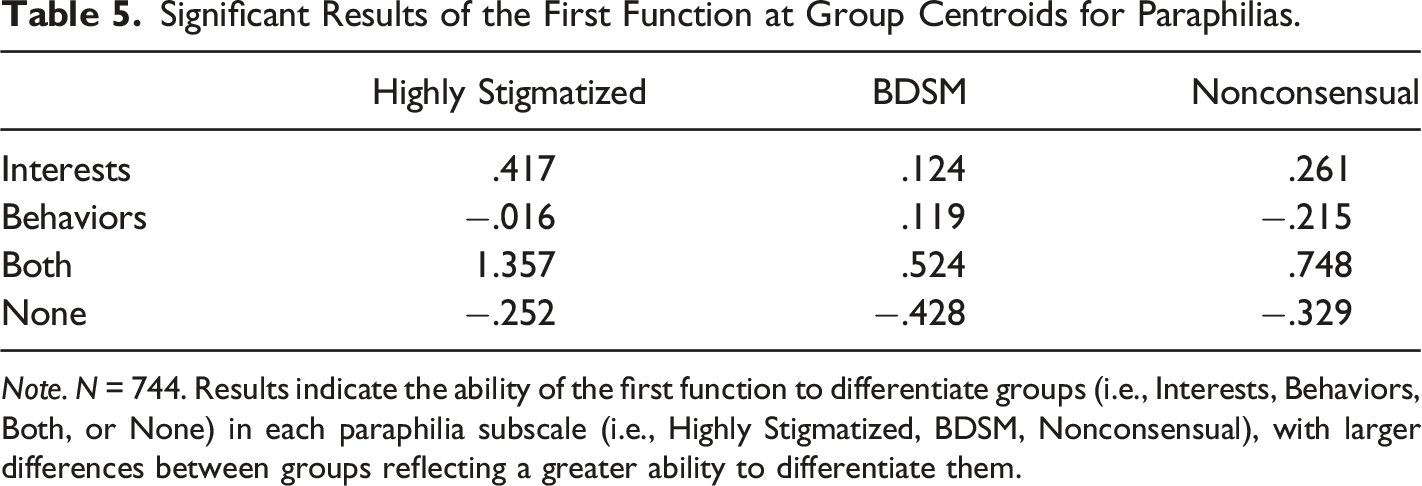
Note. N = 744. Results indicate the ability of the first function to differentiate groups (i.e., Interests, Behaviors, Both, or None) in each paraphilia subscale (i.e., Highly Stigmatized, BDSM, Nonconsensual), with larger differences between groups reflecting a greater ability to differentiate them.
Results
As shown in Table 1, there were significant associations between gender and highly stigmatized paraphilias, χ2(6) = 18.63, p = .005, and gender and non-consensual paraphilias, χ2(6) = 22.39, p = .001, in that significantly more men than women reported highly stigmatized or non-consensual paraphilic interests, behaviors, or both. In contrast, there was no significant association between gender and BDSM/fetish paraphilias, χ2(6) = 12.56, p = .051.
Highly Stigmatized Paraphilias
The discriminant analysis identified one significant orthogonal set of linear combinations of the predictor variables on which the centroids for the groups were maximally separated. The function (Canonical r = .40, Wilks’ Lambda = .828, p ≤ .001) accounted for 94.3% of the variance, with an Eigenvalue = .194. As shown in Table 4, moral disengagement, impulsivity, sexual excitation/inhibition, and perceptions of sexual consent contributed most to this function. Examination of group centroids (Table 5) indicates that this function best differentiates those who reported highly stigmatized paraphilic interests or behaviors from those who reported none.
BDSM/Fetish Paraphilias
The discriminant analysis identified one significant orthogonal set of linear combinations of predictor variables on which the centroids for the groups were maximally separated. This function (Canonical r = .344, Wilks’ Lambda = .869, p ≤ .001) accounted for 90.5% of the variance, with an Eigenvalue = .134. As shown in Table 4, moral disengagement, impulsivity, perceptions of sexual consent, and sexual excitation/inhibition contributed most to the function. As shown in Table 5, this function best differentiates those who reported both paraphilic interests and behaviors from those who reported none.
Non-Consensual Paraphilias
The discriminant analysis identified one significant orthogonal set of linear combinations of predictor variables on which the centroids for the groups were maximally separated. This function (Canonical r = .40, Wilks’ Lambda = .83, p ≤ .001) accounted for 94.3% of the variance, with an Eigenvalue = .194. As shown in Table 4, moral disengagement, impulsivity, and perceptions of sexual consent contributed most to the function. This function best differentiates those who reported both paraphilic interests and behaviors from those who reported none, although it also discriminates individuals who reported both (i.e., behaviors/interests) from those who only reported engaging in paraphilic behaviors (see Table 5).
Discussion
The aim of this study was to examine factors differentially associated with paraphilic interests and behaviors in a community sample. Results demonstrated both shared and unique correlates (i.e., perceptions of sexual consent, impulsivity, sexual excitation and inhibition, moral disengagement) of highly stigmatized, BDSM/fetish, or non-consensual paraphilic interests and behaviors. While acknowledging the research of Seto et al. (2021) and Bártová et al. (2020), the current study remains one of the first to explicitly examine factors that differentiate individuals who have acted on their paraphilic interests from individuals who have not acted on such interests. Overall, results from the current study, with one exception, did not support key factors that distinguish individuals who have paraphilic interests from individuals who have acted on their interests.
Perceptions of Consent
It is necessary that individuals with paraphilias understand and enact healthy sexual consent practices (Långström, 2010; Muehlenhard et al., 2016). Participants across all paraphilia factors reported more maladaptive perceptions of consent than those without such paraphilias (e.g., engaging in indirect behaviors such as body language to obtain consent and endorsing consent norms such as if you receive consent for one act you receive consent for all subsequent acts; Humphreys & Brousseau, 2009). Although it is unsurprising that those who reported non-consensual and, to some degree, highly stigmatized paraphilias (e.g., pedophilia) hold maladaptive views of consent, it is notable that all groups reported maladaptive perceptions. These individuals may experience difficulty obtaining consent, which could increase the likelihood that they will engage in problematic sexual behaviors or fail to see such behaviors as unacceptable.
Outside of clearly non-consensual paraphilic acts (e.g., voyeurism, exhibitionism, pedophilia), when consent communication is unclear, it is possible for misunderstandings to occur between sexual partners that result in unwanted sexual experiences (Muehlenhard et al., 2016; Warren et al., 2015). The BDSM community emphasizes the importance of obtaining consent during all sexual acts (Barker, 2013; Jozkowski, 2013; Tsaros, 2013). If individuals engaging in BDSM/fetish paraphilias do hold such maladaptive perceptions of consent, they may be less equipped to obtain consent (e.g., by assuming consent is given for all activities when it is given for one activity), thereby increasing their likelihood of engaging in non-consensual acts. Given the importance of consent during all sexual interactions (Beres, 2014; Giami, 2015; Simard, 2015), particularly those that require open communication and trust (e.g., sadistic and masochistic acts; Jozkowski, 2013), it is important that individuals with paraphilic interests who wish to engage in consensual paraphilic behaviors are adequately educated in consent, so they are better equipped to navigate consent during sexual interactions. Increased consent knowledge may lead to more positive and pleasurable sexual interactions among these individuals and reduce the likelihood of engagement in unwanted sexual interactions (Thomas et al., 2016).
It is worth noting that our finding that individuals with reported BDSM/fetishistic paraphilias hold maladaptive perceptions of consent may be due to the nature of our sample and questionnaires. We did not examine whether the reported BDSM/fetish acts were consensual. As a result, we may be capturing individuals engaging in coercive BDSM/fetishistic practices and not those engaging in consensual practices. Our results would, therefore, resemble research on men adjudicated for sexual offenses who engaged in coercive paraphilic acts, including sexual sadism and other non-consensual paraphilias (e.g., Chan et al., 2015). Indeed, individuals who engage in non-consensual sexual sadism have been found to exhibit increased arousal to depictions of rape (Lalumière et al., 2003) and often use cognitive distortions to justify not obtaining consent (Ó Ciardha & Ward, 2013).
Sexual Self-Control and Impulsivity
In the current study, individuals who reported highly stigmatized or BDSM-fetish paraphilias were more likely to report feeling less control during sexual encounters, including worrying about becoming aroused and thinking about sex frequently. This is consistent with past research that has found those engaging in highly stigmatized paraphilic behaviors, such as pedophilia, display a high degree of difficulty with self-control (Joyal et al., 2007). This may also reflect the composition of our sample as individuals who reported BDSM/fetish interests (i.e., potentially engaging in coercive paraphilic acts). Such challenges with self-control are in line with strain theory (Agnew & White, 1992) and with the PIC-R (Andrews & Bonta, 2006, 2010), such that individuals who report highly stigmatized and coercive BDSM/fetish paraphilic behaviors may have difficulty coping with their desires and focusing on the potential negative outcomes associated with engaging in their desired behavior (e.g., criminal justice involvement). In terms of impulsivity, individuals reporting any of the paraphilias also reported being more impulsive, which suggests they may not think about the consequences of their actions and thus act on sexual urges without seeking full consent. This is consistent with research on men with histories of sexual offenses, who display higher levels of impulsivity than men without histories of sexual offenses (Ryan et al., 2017), and suggests that finding ways to improve self-control among those engaging in problematic paraphilias will be important to reduce the likelihood of (re)engaging. Indeed, some research has found that treatment programs that aim to increase self-control among men referred for sexual offenses show reduced recidivism (e.g., Hanson, 2002; Stinson et al., 2017)
Moral Disengagement
Moral disengagement reflects the propensity to justify or explain actions (Bandura, 1986; Detert et al., 2008) and is frequently used to reduce self-blame or diffuse responsibility for actions. In the current study, those who reported paraphilias (both interests and behaviors) that bring harm to others and are illegal if acted upon (e.g., non-consensual paraphilias, such as exhibitionism; some highly stigmatized paraphilias, such as zoophilia and pedophilia; non-consensual BDSM/fetish paraphilias) also reported higher levels of moral disengagement. Notably, research on individuals adjudicated for sexual offenses has found greater use of cognitive distortions minimizes guilt, perceived harm of victims, and overall responsibility for offenses (Nunes & Jung, 2012). Therefore, consistent with strain theory (Agnew & White, 1992) and the PIC-R (Andrews & Bonta, 2006, 2010), this moral disengagement is likely a cognitive distortion utilized by individuals to reduce responsibility and negate the potential harm associated with acting on paraphilic interests, thereby making it easier for them to engage in such paraphilic acts. Indeed, past research on individuals who have sexually offended has found that such individuals frequently use cognitive distortions to justify their actions and reduce personal responsibility, even more than individuals who have engaged in non-sexual offenses (Harenski & Kiehl, 2011; Petruccelli et al., 2017). Furthermore, moral disengagement is a factor linked broadly with criminal behavior (Risser & Eckert, 2016; Rubio-Garay et al., 2016).
Another possible explanation for the higher levels of moral disengagement reported by participants with harmful/illegal paraphilias relates to the stress these individuals face. Consistent with strain theory, developmental researchers have found links among ostracization, moral disengagement, and later criminogenic behaviors (Fontaine et al., 2014). In particular, individuals with non-consensual and unusual paraphilias experience significant levels of stigma and are often ostracized if their interests become known (Jahnke et al., 2015). This ostracization can reduce their social supports and ability to cope with stressors (Agnew & White, 1992), and thereby may reduce their individual capacity to refrain from acting on interests that can cause harm to others. In addition, when individuals are ostracized, they tend to associate with others who are ostracized. However, when such associates hold less prosocial views, individuals are more likely to conform to antisociality to gain acceptance (Amiot & Sansfacon, 2011; Kruglanski et al., 2017). Indeed, group think (i.e., thinking or making decisions in a way that discourages individual responsibility) is extremely prominent among fringe communities (Janis, 1991; Neubaum et al., 2018) and may explain how individuals with paraphilic interests or behaviors come to exhibit greater levels of moral disengagement. Overall, results underscore the importance of understanding this marginalized population, working toward destigmatization, and creating positive environments for individuals engaging in non-problematic paraphilic behaviors.
Limitations and Conclusions
Although this study provides a unique examination in discriminating among individuals with paraphilic interests and behaviors, and those without paraphilias, it is not without limitations. First, because our sample was advertised on Amazon’s Mechanical Turk as a survey on sexual experiences and sexual interests, we may have attracted individuals who are more open to discussing sexuality or who exhibit differences in self-reported sexual interests and behaviors than those who did not complete the survey. Further, as noted above, because we did not assess whether BDSM/fetish paraphilic behaviors were consensual, we are not able to distinguish those practicing consensual, and potentially positive, sexual practices from those engaging in problematic coercive sexual behaviors. In addition, although self-control and impulsivity (described here as sexual self-control) were found to be important factors, there are likely key related factors beyond sexual self-control. For example, acting on paraphilic interests may be linked to individual differences in sexual shame and stigma. Future research should explicitly investigate the ways shame and stigma impact individuals’ decisions to act on their paraphilic interest. Although empathy was not found to be an important discriminatory factor in the current study, this may be due to our questionnaire assessing only general empathy (i.e., IRI). Although we are unaware of a questionnaire that adequately assesses sexual empathy, future research aimed at developing a measure tailored to sexual empathy may reveal additional characteristics that differentiate interest and engagement in paraphilic behaviors. Of note, because the current study is cross-sectional, we cannot determine whether the identified factors played a causal role in differentiating group membership (i.e., those who engage in highly stigmatized, BDSM/fetish, or non-consensual paraphilic interests).
As noted previously, the use of DFA was selected to differentiate among groups related to paraphilic interests or interests and behaviours based on theoretically relevant variables. Furthermore, we anticipated some difficulties with recruiting large sample sizes and were ultimately interested in specific predictions of participant membership. However, DFA can be challenging to interpret and has stricter assumptions compared to some other approaches. Although we believe the DFA was pertinent to our primary research question, we recognize that other approaches would be complementary. For example, recent research utilized regression to assess concordance and discordance (i.e., Joyal & Carpentier, 2021), which provides information about the underlying structure of the model, including about key individual predictors. Future researchers should consider incorporating both approaches to examine nuances surrounding interests and behaviours. Finally, because we used a factor analytic approach originally designed for continuous data (despite having ordinal data), it is possible our results may not replicate. Future research should consider polychoric correlations, as this is now considered the standard analytic approach for ordinal data (Holgado-Tello et al., 2010). Despite its limitations, the current study provides a unique contribution to the paraphilia literature by examining psychosocial factors that help to differentiate individuals who act on their paraphilic interests from those who refrain. This differentiation is particularly important for paraphilias associated with sexual offending (e.g., acting on voyeuristic or biastophilic interests), as it can help guide the identification of interventions aimed at reducing sexual offending. The current study identified several factors (i.e., perceptions of sexual consent, sexual self-control, and moral disengagement) that may contribute to engaging in paraphilic interests, and thus may be targets for intervention aimed at preventing engagement in paraphilias that are harmful. For example, interventions targeting impulsivity may help reduce engagement in non-consensual paraphilias and thus minimize harm to self and others. Future research should explore this association and attempt to dismantle the specific aspects of consent, sexual self-control, and moral disengagement that are relevant for potentially problematic paraphilias (e.g., the role of sexual inhibition in individuals with pedophilic interests who did vs. did not offend). Future research also should more closely examine the exclusivity of paraphilic interests (i.e., individuals with paraphilic and non-paraphilic interests, with multiple paraphilic interests) and potential differences in samples with more diverse respondents (i.e., gender, sexual orientation), so the generalizability of current results to the broader population can be assessed.
As research on paraphilias continues to evolve, it becomes more important to identify ways to prevent individuals from acting on illegal, harmful, or distressing interests. In addition to identifying ways to prevent harm, research can further illuminate why individuals with potentially non-problematic paraphilias (e.g., consensual sadism and masochism) act on their sexual interests. Doing so would both broaden our understanding of these individuals and permit clinicians to encourage engagement in paraphilias in a healthy manner, when applicable. Encouraging behavioral engagement in non-harmful paraphilias may reduce distress and increase sexual satisfaction and relationship functioning for individuals who have paraphilic interests but refrain from engaging in such behaviors. Although findings from the current study contribute to knowledge on paraphilias, further research is required to inform interventions and prevent sexual offending and distress among individuals with paraphilic interests.
Footnotes
Declaration of Conflicting Interests
The author(s) declared no potential conflicts of interest with respect to the research, authorship, and/or publication of this article.
Funding
The author(s) disclosed receipt of the following financial support for the research, authorship, and/or publication of this article: This work received funding from the Social Sciences and Humanities Research Council of Canada. Grant No. 435-2012-0628.
