




Abstract
This is a visual representation of the abstract.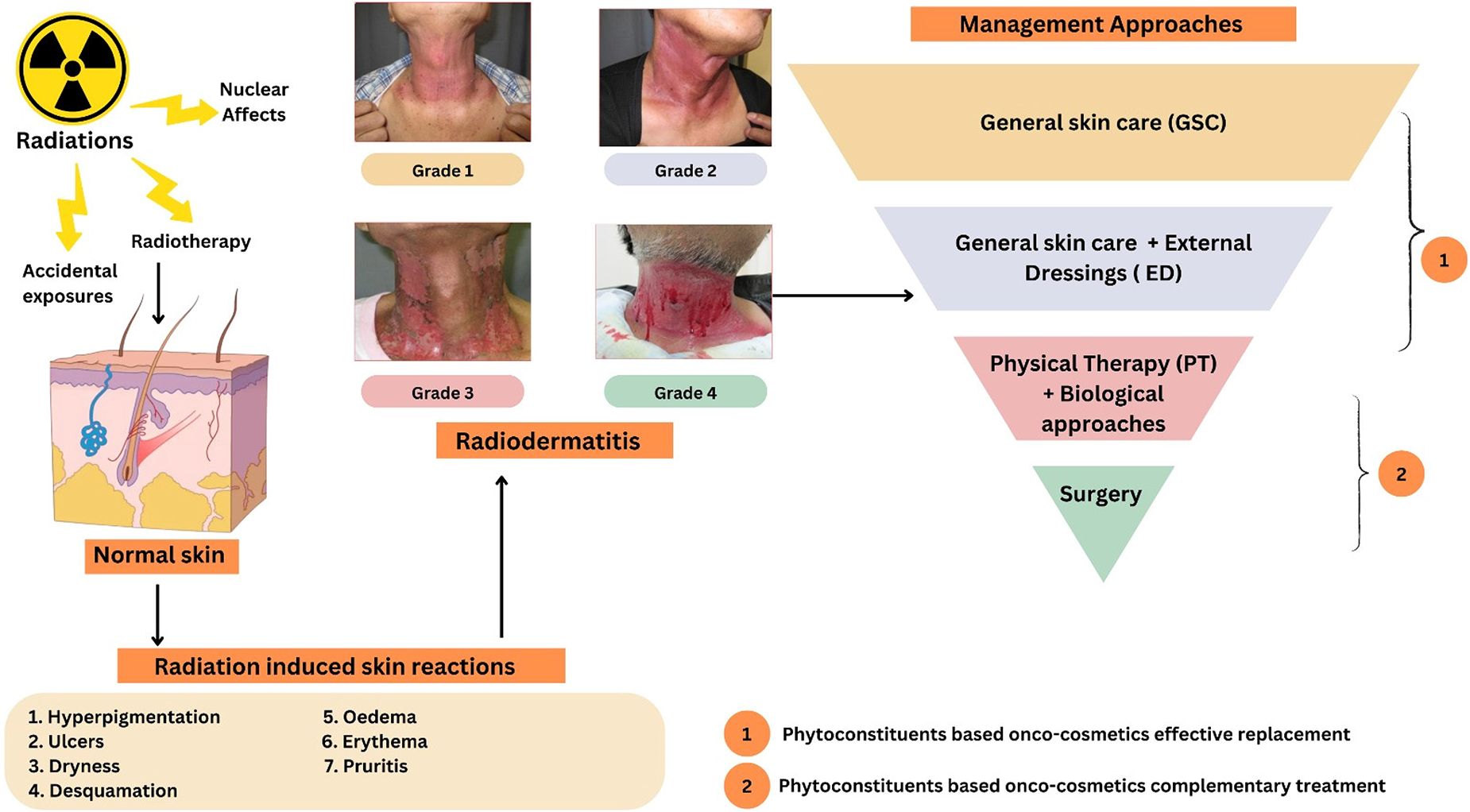
Objective
The article explores phytoconstituents as alternatives to corticosteroids for radiodermatitis, emphasizing antioxidant, antimicrobial, and anti-inflammatory properties. It summarizes recent research on phytoconstituents mitigating radiation-induced skin damage and contributing to “oncocosmetics” development for cancer patients undergoing radiotherapy.
Data Sources
Scientific literature was reviewed, including studies on radiodermatitis symptoms, phytoconstituent mechanisms, and their effectiveness in treating radiation-induced skin injuries. Search criteria included peer-reviewed articles on therapeutic applications and cosmeceutical formulations.
Data Summary
Radiodermatitis affects 95% of individuals exposed to ionizing radiation during radiotherapy, presenting symptoms like erythema, pruritus, ulcers, and necrosis. Current treatments rely heavily on corticosteroids, which cause side effects like skin atrophy and systemic reactions. Phytoconstituents offer safer alternatives by neutralizing free radicals and protecting against radiation-induced skin damage. Their antioxidant, antimicrobial, and anti-inflammatory actions align with mechanisms involved in radiodermatitis healing. Research highlights their efficacy in preventing bacterial superinfection and promoting skin recovery. Phytoconstituents are increasingly incorporated into cosmeceutical products for cancer patients.
Conclusions
Phytoconstituent-based preparations promise safer alternatives to corticosteroids for managing radiodermatitis. Their use in oncocosmetics can reduce side effects while improving patient outcomes. Further research into phytoconstituent formulations is needed for radiation-induced skin injuries.
Get full access to this article
View all access options for this article.