



Abstract
Public health capacity can be placed in local public health departments or alternative bureaucracies. Provision of local services through special district (SD) governments has been widely studied in local politics. What have not been examined are the implications of SD governance for the provision of public health services. Public health services are often categorically different from other types of local government services because they address problems affecting the entire local population. Siloing public health governance may influence not only agency capacity to carry out tasks, but the effectiveness and equity of public health solutions. We examine SD governance of local mosquito control in Florida, to analyze differences in policy-design and implementation between SDs and non-SDs across counties. SDs are primarily located in wealthy districts, have substantially greater resources, and provided over limited, sub-county, service-areas. Jurisdictions outside of SD service-provision often have no local mosquito control governance, relying on intergovernmental services.
Introduction
“Pestiferous numbers of mosquitoes were in large part responsible for the delayed development of Florida until the end of WWII. Today, the robust mosquito control programs throughout Florida allow our citizens to enjoy our natural resources while greatly curtailing the threat of yesteryear's deaths and illnesses due to mosquitoes.”
–David Hoel, Executive Director, Lee County Mosquito Control District, 2023.
The United States has thousands of special districts, government structures at the local level that focus on a single issue or delivering a set of interconnected services. Special districts in the US address education, economic development, management of the water supply, fire and emergency services, housing, and utilities, among other services. They often overlap with other general purpose jurisdictions, adding to the complexity of governance in many places. Even special districts of the same type vary enormously in form and function, shaped by local politics, history, demographics, and geography. They are so numerous, and so often short-lived, that the US Census Bureau has to regularly count them (US Census Bureau 2019).
The role and value of special districts is controversial and much debated. Much of the political scholarship examining special districts has focused on questions of efficiency, waste, and accountability to taxpayers and voters (Berry 2009, Bollens 1957, Burns 1994, Foster 1996). Some other, newer, works specifically question the impact of special districts on the distribution of public services and equity across communities and society (Mullin 2009, Goodman Christopher, Suzanne M and Olgam 2021, Saywitz and Switzer 2023). To both of those debates, we add a slightly different question related to effectiveness. We ask: to what extent do special districts improve, or diminish, government capacity to effectively tackle complex and pressing public health problems?
To answer this question, we conduct a case study of local mosquito control governance in Florida. Vector borne disease transmissions, when a disease is transmitted between hosts (humans or another vertebrate animal) by an arthropod vector, such as an insect, tick, or mite, are an important threat to public health (Rosenberg et al. 2018). Recently, vector borne disease transmissions have been responsible for the spread of Zika virus, West Nile virus, malaria, Leishmaniasis, and Lyme Disease, among others (Petersen et al. 2019, Rosenberg et al. 2018). Yet governing these transmissions is extremely difficult because they are caused by a complex, upstream set of conditions which often do not have high political salience until they become problems for politicians and the public -which is often at the point when transmission has already occurred (Stone 1989, 2022; Plowright 2021).
In order to effectively address vector borne transmission, understanding the role of governance structures in designing and implementing prevention and mitigation strategies is critical. Tackling mosquito borne diseases is an important test of government capacity, or in this case public health capacity. Definitions of capacity most often focus on whether or not governments have the institutional resources necessary to carry out policy tasks, including staff size, funding, and levels of expertise (Kelly and Kuo 2024; Huber and Shipan 2002). An important, generally overlooked definition of capacity also includes other measures of informal or semi-formal capacity such as the ability to coordinate, interact with, or otherwise leverage resources beyond formal institutions, such as professional or elite networks, private resources, or power hierarchies (Kelly and Kuo 2024, Strach and Sullivan 2022, Sullivan and Strach 2024). Finally, local capacity may be affected both in formal and informal ways by relationships with other units of government. We consider both definitions of capacity and the influence of these relationships in our measure of capacity.
The risks of vector borne disease outbreaks in Southeastern US states are high, particularly for mosquito borne diseases (Rosenberg et al. 2018). Florida, in particular, faces a higher burden from mosquito borne diseases even when compared to other Southeastern states (CDC 2024). There are currently at least 84 species of mosquitoes in Florida, causing the spread of diseases including Chikungunya (CHIKV), dengue (DENV), West Nile (WNV), Eastern equine encephalitis virus (EEEV), St. Louis encephalitis (SLEV), and Zika (Kondapaneni et al. 2021). Importantly, the risk of these diseases spans a range of ecologies, are vectored by different mosquito species, and so are moderated by different environmental conditions. Therefore, while Florida overall faces higher mosquito borne disease risks compared to the rest of the country, different localities may be more or less susceptible to different diseases based on seasonality, land use, and natural environments (Shaman, Day, and Stieglitz 2005; Lord et al. 2020; Ali et al. 2017; Stephenson et al. 2022; Shaman, Day, and Stieglitz 2002; Downs et al. 2024; Mundis et al. 2022). In the face of local variation in disease risk that may also fluctuate in the face of increasingly adverse weather, local mosquito control capacity for disease prevention –including surveillance and control–is essential.
This high disease burden paired with Florida's application of special district governance to address this risk makes Florida mosquito control governance an important case of this public health policy response. Florida's problems today are America's problems tomorrow: mosquitoes are a disease vector with a high likelihood of migrating north as the effects of climate change intensify, and so public health experts expect the burden of these diseases to increase in the coming years across the US overall (Colón-González et al. 2021, Butterworth, Morin and Comrie 2017). Understanding the origins, variety and limits of Florida's approaches to governing mosquitoes is important for both our understanding of how we developed our current governance of current public health problems and for improving public health responses in the future.
Importantly, there is limited data to date on the structure of mosquito control governance across the country (National Association of City and County Health Officials 2016). While special districts have been studied extensively in political science, the omission of the influence of special district governance for public health –problems that necessarily affect population health and require high levels of capacity to manage– makes the case of Florida increasingly important. Florida has a long and complex history of political conflict around policies targeting mosquito borne diseases. Paired with this long history, Florida employs very different types of governance structures responsible for designing and delivering mosquito borne disease mitigation policies. The two primary structures are 1) elected, independent special districts, and 2) mosquito control programs or divisions within county government. Each has the ability to raise local taxes, in local and sub-local jurisdictions, in order to fund mosquito control efforts, whether through county funds or as a special taxing district. 1 A third, much smaller group of jurisdictions have no or very little mosquito control. Florida's approach to mosquito borne diseases presents a unique opportunity to examine the influence of governance structures on local governments’ public health capacity.
We utilize a variety of primary data sources to investigate the ways in which mosquito control districts shape policy design and implementation of local public health capacity to mitigate mosquito borne diseases. We triangulate across qualitative documents, quantitative data, and historical accounts to: 1) understand historical development of and investment in mosquito control policy capacity through special district governments in Florida, and 2) measure contemporary policy capacity and best practices across governance structures and jurisdictions.
Our results suggest that special districts offer opportunities to strengthen public health capacity, but also reinforce the sense of public health services as locally-bounded club goods not available to those outside the district's borders. Historically, the push to create independent districts for mosquito control in Florida was most successful in areas that were already attracting capital investment, wealthy visitors and new migrants, and least successful in areas with poorer, marginalized or sparse populations. Today, Florida's specialized mosquito control districts are fewer in number but remain primarily located in wealthier areas, gather and expend more dedicated resources when compared to county governments, and have limited-service areas that only partially cover their counties. Jurisdictions that fall outside of these service areas often have no local mosquito control governance, relying on intergovernmental, private or voluntary services. To this end, mosquito control districts may exacerbate inequities within municipalities where people living in lower-resourced areas are effectively excluded from the benefits of adequate mosquito control.
The following sections discuss relevant theories pertaining to governance by special district, and outline our methods. We then present our findings in two ways: an account of the political development of mosquito control governance in Florida that explores how current governance and capacity evolved over time, and an analysis of current governance structures by type that assesses variation in capacity for mosquito control and its consequences.
Special Districts and Public Health Capacity
Research on local politics has long been concerned with the processes by which local governments distribute benefits and burdens to their populations, and the interactions between elected officials and street level bureaucrats who carry out these policy goals on the ground (Lipsky 2010; Trounstine 2009; Dahl 1959). Local governments are at the forefront of nearly all public health activities, applying prevention and management strategies to address a wide range of problems from clean water to vector borne diseases. Despite this, there is relatively little research in the field of political science that attempts to understand the impact of local governments, as opposed to state or national governments, on public health policies and outcomes. There is thus potentially much to gain from applying insights from studies of local governments to questions of public health, and vice versa.
Mosquito control districts in Florida are a specific example of a form of local government called special districts. Special districts are numerous in the United States. Although they deliver key public services, they are often not particularly visible to the public (Bollens 1957, Burns 1994, Killian and Le 2012). 2 They tend to have a narrow policy jurisdiction (often one specific function), frequently have their own independent sources of taxation revenue, and are governed by boards that are either appointed or elected. Importantly, special districts also function as a sub-unit of census tract municipal jurisdictions: they represent smaller areas within cities or counties often organized around neighborhoods (Bollens 1957, Foster 1996).
Local government in the United States is notoriously fragmented, and special districts contribute to that fragmentation. Excluding school districts, where some consolidation has occurred, there has been a significant increase in the number of special districts over the course of the twentieth century (Hall and Hail 2006). As of 2022, the latest year for which data are available, the US had over 90,000 different governments, of which over 39,000 were special districts. Florida alone had 1,374 (US Census Bureau 2022). 3 Special districts have proliferated for many reasons, including their ability to provide an alternative to existing jurisdictional boundaries built into the US political system or restrictions imposed on local governments by states, demographic changes over time, pressure from private interest groups and members of communities to prioritize certain problems, and their ability to raise additional funding for specific public service functions via direct taxation, user fees, and raising bonds (Burns 1994, Coyle McCabe 2000, Bauroth 2005, Carr 2006, US Census Bureau 2019, Morrill 1989).
Special districts, therefore, speak directly to the relationships between democratic governance, the public sphere, private interests, and individual behavior. These relationships are key for understanding the local politics of public health, as public health necessarily addresses problems that affect the collective, generating complex policy choices and tension regarding the mechanisms and goals of ‘collective’ solutions. Some authors argue that overlapping, specialized governments cause rent seeking behaviors that serve special interests, raise the tax burden on the public (Berry 2008, 2009), and undermine democratic accountability due to their relatively invisible, and ephemeral nature (Mullin 2009). Overall, special districts are criticized for being unaccountable, often short-lived, and catering to narrow interest groups within the population. The best case for special districts is when they provide a specialized purpose across jurisdictions (e.g., across cities or towns in a county) for which there is currently no role, or to provide services for over-stretched existing agencies within government (Bollens 1957; Hawkins and Hendrick 1997, Farmer 2010). However, multi-jurisdiction districts are far less common than fragmentation or proliferation of special district governments within municipal-jurisdictions (Mullin 2009).
Special district elections often have notoriously low turnout, even when compared to other types of elections in the United States with low turnout, countering the idea that elected boards provide significant accountability in their specific issue area (Burns 1994, Berry 2009). Although the presence of elected officials seems to have some impact on the reliance on property taxes as a source of district revenue, the evidence on this point is mixed (Bauroth 2005).
Fragmentation is a particular problem of interest for political scientists in regards to special district government elections, as a mechanism to undermine democratic accountability. Multiplicities of special district governments may further engender hyper-local coalitions, common across issue areas in local politics where participation is primarily dominated by small groups of economic elites (Strach et al. 2022; Trounstine 2009; de Benedictis Kessner and Hankinson 2019; Hackett 2020, Tedesco, Ruiz and McLafferty 2010, Einstein, Palmer and Glick 2019), limiting accountability and representation across municipal pluralities. Hyper-local coalitions of actors may have preferences for policies that run counter to the realities of public health problems or the interests of the broader community (Morrill 1989).
This stands in contrast to research on city-level elections and representation, which demonstrates that improving visible representation across demographic group constituencies in cities improves democratic accountability in local politics (Schaffner, Rhodes and La Raja 2020; Stout, Tate and Wilson et al. 2021; Farris and Homan 2017, Farris, Holman and Sullivan 2022; Trounstine and Valdini 2008) as well as the distribution of public goods. Further, new research examining representation in policy discourse of issues affecting at-risk or marginalized communities finds use of public health declarations may improve the salience of public health issues affecting these groups in local media markets (Moreira et al. 2024). Here, not only are policy benefits distributed to less visible, less powerful or marginalized groups, but salience of issues related to the needs of these groups also grows, further increasing the likelihood of recognition and thus distribution of policy benefits for these issues (Michener 2019; Schaffner, Rhodes and La Raja 2020; Trounstine 2018). In places with persistent institutional or spatial fragmentation (e.g., where many governments are layered on top of one another) improving visible representation may come with some benefits but may not mitigate the harms of fragmentation, whether viewed as inefficiencies and complexity or barriers to equity, for example, if special districts provide benefits to some neighborhoods but not all (Berry 2009, Pinch 2014, Trounstine and Valdini 2008).
In addition to questioning whether special districts are accountable, efficient, or equitable, we must also ask whether local governments and special districts are actually effective. Do they actually deliver public services as intended, and do they have more specialized expertise with dedicated resources to do so? A body of literature has begun to address this question but there is still much to be learned (Galvan 2006, Leland and Smirnova 2008, Mullin 2009, Goodman Christopher, Suzanne M and Olgam 2021, Saywitz and Switzer 2023).
Effectiveness is determined by factors that might potentially include formal measures of capacity, such as access to finance, a sufficiently trained workforce or expertise, and informal capacity such as strategic actions, relationships with other organizations and the public, and political and legal constraints (Kelly and Kuo 2024). Hypothetically, if special districts were to deliver a specific public service at a more substantial level than county governments -to demonstrate higher effectiveness- this might be due to their ability to raise additional finance, their ability to ring-fence resources for a specific purpose, and or the existence of more specialized staff with dedicated knowledge of an issue.
An important component of informal capacity for mosquito control officials is maintaining relationships with private organizations that provide necessary products and services. Mosquito control programs do not themselves have the capacity to carry out all necessary control methods. They must instead manage local markets for pesticides and other products used in control, contract for services, obtain private finance and insurance, and lease equipment. Some of these markets are, by nature, niche, serving a limited and relatively stable number of government and private clients. They must also constantly evolve, as mosquitoes continually develop resistance to chemicals in use. Mosquito control officials in Florida have expressed concerns that the sector may not be able to maintain an adequate supply of effective products, on which they are highly dependent (Carlson et al. 2022). The role of capacity intersects with the political economy here, where mosquito control districts with specialized experts are likely to have a more effective rotation of products to protect against resistance. An underexplored aspect of special district governments here is the potential for clientelism or corruption in hyper-local jurisdictions catering to wealthy constituents and obtaining services from small numbers of private providers in niche markets (Foster 1996).
In the specific case of mosquito control, did the creation of special districts lead to increased ability to address the risk of mosquito borne diseases? If so, this highlights some important tensions. Mosquito control is often portrayed as a public good -one that is non-excludable (it is not possible to exclude people who do not pay for the good from not enjoying the absence of mosquitoes or mosquito borne disease) and non-rival (a person's use of the good does not diminish the amount available to others). Yet this portrayal fails to capture the complexity of mosquito control in practice (Carson 2023), particularly when it comes to the variation in who is served by each district (Foster 1996). The first point -excludability- is somewhat contentious in the context of multiple governments potentially delivering different levels of service in different areas and the inequities this entails. While the ‘public good’ of freedom from mosquitoes can be enjoyed by everyone, the inputs that create the good -in this case, the surveillance and control methods- can be packaged (Ostrom, Tiebout and Warren 1961). In this case, does some property of the US political system, specifically the use of special districts funded by local property taxes, turn a public good into something more like a club good?
We argue that it does. Like public goods, club goods are non-rival, but unlike public goods, they are excludable (Buchanan 1965, Adams and McCormick 1987). Growing literature on the political development of American cities demonstrates how public goods were formed into club goods, often in the cases of public health, for the specific purpose of excluding Black, Latino, other immigrant communities, and low-income communities, from economic and social mobilization in the post-Reconstruction and Civil Rights Era (Rugh and Trounstine 2011, Trounstine 2016, Kruse 2005, Sugrue 2014). To this end, zoning was first used as a mechanism to form club goods specifically out of pluralistic tax bases (Trounstine 2018; Toll 1969). Here, low-income communities of color were excluded from access to public health resources like fluoridated water, paved roads, electricity, and garbage removal, at the district level, creating a walled garden of institutional service exclusion (Trounstine 2018; Strach and Sullivan 2023). Importantly, in these cases, all residents were footing the bill for these services, even if they were not receiving them.
While zoning set the stage, special districts allowed communities to further institutionalize club goods. As exclusionary zoning protected wealth and political power in white neighborhoods, the creation of special district governments allowed for a hyper-local approach to further leverage wealth through property-tax revenue. In this way, neighborhoods, if not pre-empted by state laws (Carr 2006), are able to generate new special districts with discretion over the geographical boundaries of the district and with tax raising powers for specific purposes for that neighborhood. Here, the public becomes the neighborhood, and the good produced from the special district government becomes a club good, packaged solely for the neighborhood (Mullin 2009; Foster 1996). The same mechanisms that cause special districts to serve a narrow set of interests also potentially create a walled garden for public services. In highly-resourced constituencies and districts, the revenue generating capacity can enable a higher level of services that are unavailable in poorer areas, providing effective resource gatekeeping (Trounstine 2009; Mullin 2009).
The creation of special districts enhances excludability of the benefits of mosquito control. The distinction between an inequity and club good, we argue, relies on the nature of this exclusion. A policy inequity occurs when some government jurisdictions receive higher quality services or funding to combat mosquitoes. In a county-wide mosquito control program, neighboring counties may experience an inequity, but they would not experience an exclusion from a service within their own jurisdiction. Special districts, therefore, can effectively institutionalize exclusion of benefits from public services, like mosquito control.
In order to better understand the relationship between efficiency, equity and effectiveness in local public health provision, it may well be theoretically useful to think of these local public goods as club goods where geographic fragmentation creates exclusion. The mosquito control provided in Florida is largely funded at the local level through property taxes -although in prior decades the state had provided significant amounts of matching funds, these funds are now a very small part of districts’ overall budgets. 4 Without significant redistribution across districts, and absent vertical intergovernmental funds (Sellers and Lidstrom 2002), people living in lower-resourced areas are effectively excluded from the benefits of adequate mosquito control. The limited geographic footprint which mosquitoes travel enhances the “local” nature of control strategies. Without human intervention, lifetime mean dispersal distances of the vectors of DENV, CHIKV, and Zika are approximately 100 meters (Moore and Brown 2022) and between one and three kilometers for the vectors of EEEV, SLEV, and WNV (Estep et al. 2014, Ciota et al. 2012). Control strategies employed often only benefit their constituents, with minimal “spillover” into other jurisdictions. Elected mosquito control boards in special districts arguably intensify this effect by deliberately creating a more direct connection between mobilized and well-resourced members of the public and mosquito control programs (Tedesco et al. 2010).
In summary, we hypothesize that wealthier counties will have a greater number of special districts compared to lower-resourced counties, and that special districts will add public health capacity in those areas. Elected mosquito control boards, through increased elected representation and direct taxation purposes of this special issue at the hyper-local level, may create a unique opportunity to improve public health effectiveness by increasing rates of professional staffing and funding. This is important given the current context of steadily decreasing federal and state funds to support local public health efforts. However, elected special districts present a unique risk of catering to powerful, well organized constituent groups of economic elites, resulting in the creation of club goods for a public health problem (Foster 1996). Increased salience on the issue of mosquito borne diseases thus may result in improvements in professional capacity and finance prioritized to high-income areas, and exacerbating inequities in public health capacity and outcomes across neighborhoods.
Methods
To examine these questions, we conducted a case study of mosquito control programs in the state of Florida. We employed a mixed-methods approach, leveraging primary quantitative and qualitative data as well as secondary sources. Qualitatively, we examined historical and contemporary accounts of mosquito control governance, finance, and control methods contained in academic literature, gray literature, maps, program web sites, budget reports, policy documents, and newspaper articles and court decisions accessed via Nexis Uni, to understand the political development behind different mosquito control governance structures, and begin to identify factors influencing capacity across different governance types. Most of this information was publicly available, through local government websites and the Florida Auditor General. 5 We also accessed programs’ operational plans via a public records request.
We also designed maps indicating the locations of existing programs and land types that require special consideration by mosquito control programs such as salt marshes, mangrove forests, above ground impoundments, and bodies of water. Integrating historical data on the development of mosquito control districts in Florida with ecological need allows us to better understand the factors influencing mosquito control policy capacity, the relationship between capacity and governance structures, and how these mechanisms have changed over time.
Quantitatively, we built a dataset of all mosquito control jurisdictions and their programs in the state of Florida, by county, in 2023. We coded local mosquito control programs by governance structure and jurisdiction level (county-level, special district), staffing levels and staff expertise, budgeting and finance, geographic characteristics, and mosquito control and surveillance methods, based on the sources used in our qualitative research. For each special district government, we also qualitatively coded whether or not the special district covers the entire county, and if not, what mosquito control programming is in place, if any, in lieu of formal governance. We also added county-level indicators from the CDC/ATSDR's Social Vulnerability Index (SVI). The SVI aggregates 16 indicators from the American Community Survey over a 5 year period (2016–2020), including indicators on poverty levels, unemployment, housing cost burden, education level, health insurance access, household characteristics, English language proficiency, racial and ethnic minority status, housing type and density and vehicle ownership. As an additional check on our findings, we first examined the aggregated scores and then disaggregated measures by category. Although special districts are not contiguous with county-level borders, the available data provide us with a baseline level of understanding of the heterogeneity between counties that may adopt special districts and those that do not.
After assembling the qualitative and quantitative data, we generated descriptive statistics for programs across different types of governance structures to understand the differences between these groups, and triangulated between these quantitative indicators and our qualitative findings, to begin to understand how capacity and equity vary across governance types. Because of the wide variation in governance types and the small number of districts overall, we felt that probability based analysis would be inappropriate for this dataset.
Our study has some important limitations. Comparing resources between counties and special districts is hampered by different reporting structures for budget and workforce information and by data scarcity for some indicators. Publicly available information on mosquito control programs in large cities like Jacksonville and Miami is surprisingly scarce. Without conducting primary research with participants in those settings, our picture of those programs is somewhat incomplete. What information we do have suggests that large cities are relatively less resourced on a per capita basis than some other districts, but this must be interpreted with caution as mosquito control looks very different in a large city compared to a less populated jurisdiction that contains large salt marshes or mangrove forests.
Results: Political Development of Mosquito Control Capacity and Governance in Florida
Given its geographic location and climate, mosquitoes have long been associated with the land we now know as the state of Florida, mostly in a negative way. In the sixteenth century, Spanish conquistadors who encountered what would become the West coast of central Florida referred to the area by ‘Los Mosquitos’ and other similar labels (Strickland 1965). Participants in congressional debates about including Florida in the union described Florida derisively as ‘a swamp full of alligators and mosquitoes’ (Patterson 2004). Orange County, where Orlando is located, was named ‘Mosquito County’ from its creation in 1824 until the Territorial Council renamed it in 1845 (University of South Florida 2009), while ‘Mosquito Lagoon’ retained its name until the state legislature renamed it in 1951 (Mulrennan and Sowder 1954).
Attempts to counter the prevalence of mosquitoes and mosquito borne disease have likewise been an integral part of Florida's history and an important part of its politics. Florida's first public health policies came about in the wake of a yellow fever epidemic in the late 1880s that affected Key West, Tampa, and then Jacksonville, with the latter worst affected. At the time, the disease vector was completely unknown and frighteningly random, forcing cities into a hysteria. Many unaffected cities introduced mass quarantines, denying entry to travelers and causing severe economic disruptions (Graham 2018). In Jacksonville, mass migration of those who could move transformed the city into a majority Black municipality with only 13,000 inhabitants. The Jacksonville Auxiliary Sanitary Association tried a range of strategies to combat the spread of disease, including shooting guns into the air to kill germs by ‘concussion’, burning pine and tar around the city to ‘purify the air’, covering the streets with toxic chemicals, setting up quarantine camps, and draining standing water and sewers. Overall, Jacksonville experienced 4,656 known cases and 427 known deaths (Delaney 2021).
The disastrous consequences of the yellow fever epidemic created momentum for the formulation of the Florida State Board of Health in 1889 (Patterson 2004). Once yellow fever transmission had been attributed to mosquitoes in 1901, the Florida State Board of Health took special interest in the control and understanding of all forms of mosquito-transmitted disease (Table 1). Florida's first statewide mosquito control program began. At this time, options to control mosquitos included port inspections, digging ditches to drain standing water, burning foliage, and coating water surfaces with oil (Table 1).
Mosquito Control Strategies and Forms of Governance Over Time.
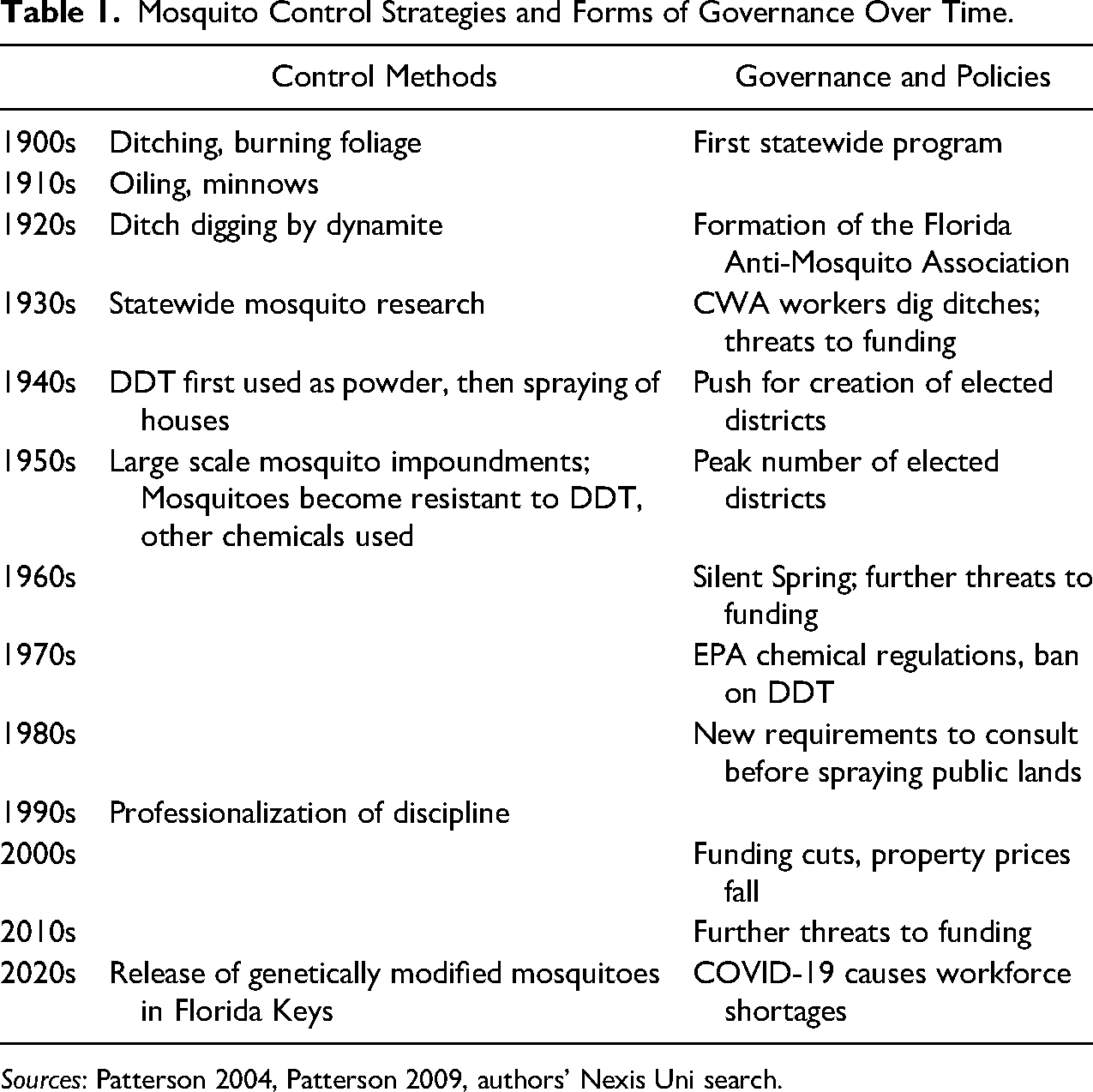
Sources: Patterson 2004, Patterson 2009, authors’ Nexis Uni search.
This effort coincided with a period of rapid development. Railway expansion had made it more feasible for wealthy people from the North to travel to Florida and produce from Florida to move North. Rich investors were keen to capitalize on this development, buying up land, building hotels, and extending railways. But further development in Florida relied on the creation of drainage canals, and every change to the landscape risked creating new habitats for mosquitoes (Price 2010). In the east coast city of Flagler Beach, for example, the landscape changed dramatically as dunes were levelled to enable construction. The city's government prioritized building roads and bridges alongside drainage and mosquito control, as well as constructing facilities to attract tourists (Boda 2018). By the time that public health efforts called for improving drainage, Governors were also attempting to drain the Everglades as part of promises to support development (Graham 2018).
In the years that followed, policy advocacy organizations formed around mosquito control. Based on a growing body of scientific knowledge about mosquito borne disease, these groups sought democratic representation for their ideas, both in the form of statewide policies and programs and new institutions. Advocates in New Jersey and California were successful in their campaigns for the creation of new special districts centered on mosquito control (Patterson 2016). In Florida, a combination of policy entrepreneurs from the newly established Florida Anti-Mosquito Association, local advocates, and statewide women's groups pushed for independent districts starting in the 1920s, spurred on by a serious outbreak of dengue in the state. Opposition to governance at the state level was considerable, with local control preferred (Chapin 1915, Price 2010). Many believed that elected and independent districts would not only increase the visibility of mosquito control as an issue among local residents but support coalition building across different groups of stakeholders, including farmers and developers, allowing revenue to be raised for costly ditching and drainage projects. For farmers and ranchers, the volume of mosquitoes in some parts of the state was a threat to livestock, while developers were incentivized to create and maintain mosquito-free environments that would be appealing to new residents and tourists (Patterson 2004).
In 1925, advocates were able to convince the state legislature to pass legislation allowing counties to vote to create mosquito control districts and for residents to ‘tax themselves for the work’ (Mulrennan and Sowder 1954). The first mosquito control district was established by vote that year in Indian River County (Mulrennan and Sowder 1954) and others soon followed. More authorizing legislation was passed in 1929, and again in 1941, despite economic pressures during the great depression dampening support for mosquito control in the interim. The combination of loosely structured authorizing state legislation and diverse local laws meant that districts were organized in a variety of different ways. Localities could opt for governance by 3 or 5 new elected commissioners or rely on the existing board of county commissioners, allow the new district to set a millage and/or raise bonds for the purposes of mosquito control, and form districts all or part of a county, or across multiple counties (Patterson 2004).
In the 1940s, links between advocates for mosquito control, primarily the Florida Anti-Mosquito Association and its members, and political leaders were relatively strong. Mosquito control proved to be a very important part of the war effort, and a new chemical, DDT, was providing extraordinary results in terms of eradication of mosquitoes, first among the military and later in households and communities. Policy entrepreneurs worked hard to push for legislation that would cement their position (Patterson 2004). Local government spending on mosquito control increased dramatically during this period after a lull in the 1930s (Mulrennan and Sowder 1954). The first state law providing state aid to counties and mosquito control districts was passed in 1949, with a more generous state aid law passed in 1953 that allowed state matching funds. These matching funds allowed mosquito control districts to be established in places where financial constraints had previously prevented their adoption (Patterson 2004).
The number of special districts would reach its peak in the 1950s. Substantial state funds for mosquito control districts saw total spending from all sources triple between 1950 and 1954. In 1954, there were 23 independent mosquito control districts in Florida, spanning 21 out of 67 counties. In a further 23 counties, there was no mosquito control board, but the county boards of commissioners had assigned themselves responsible for mosquito control. The remainder of counties had ‘no mosquito or arthropod control except the slight amount of work performed by a few cities’ (Mulrennan and Sowder 1954).
These types of mosquito control governance cluster imperfectly around three kinds of areas present in Florida. First, areas experiencing rapid development on the east coast and around the bigger cities in the South and West tended to have special mosquito control districts established by popular vote. Second, relatively empty agricultural areas in the middle interior with low population tended to have no control, although some had programs governed by counties. Third, inland counties to the north that formed part of the old cotton belt and were struggling economically were evenly split between programs governed by counties and no control. What is clear from this analysis is the link between economic development and mosquito control -special districts were more likely to be present in areas experiencing rapid development, population growth, and economic growth. This also meant that more rural areas, areas with higher poverty, and Northern inland areas with high Black populations were the least likely to have mosquito control programs in place.
This decade was also the beginning of efforts to create a large number of impoundments, dikes constructed around areas of salt marsh or mangrove forest to allow these areas to be artificially flooded during mosquito breeding season and preventing eggs from being laid (Florida Medical Entomology Laboratory 2024). Impoundments were constructed on a much larger scale than the hand-dug or dynamite blasted ditches of previous decades, with 40,000 acres of coastal wetlands impounded by the 1970s (Indian River Lagoon Species Inventory 2024).
After this peak development of special districts in the 1950s, paired with investments in mosquito control capacity from the state, twin pressures to cut budgets and regulate the environmental impacts of control methods gradually took their toll on districts. State agencies came under strong pressure from the legislature and Governor's office to cut back funding deemed non-essential, and public health budgets were a key target in these efforts (Patterson 2004). Given the devolution of mosquito control policy in Florida, where programming was not mandated on any level and thus left up to municipalities to opt-in, budgetary declines were consequential. When the state provided matching funds, it helped incentivize local programming, but in effect only worked well to boost capacity for economically powerful municipalities (Mulrennan and Sowder 1954). Thus, in the face of budget cuts, low-income communities were further disadvantaged and at risk of declining mosquito control capacity, without a local mechanism or local funding to supplant state resources.
After the publication of Silent Spring in 1962, mosquito control faced challenges from the nascent environmental movement and members of the public who began to oppose its use of chemicals. This opposition occurred despite the fact that DDT use in Florida had been discontinued due to rapidly developing resistance among the mosquito population (Patterson 2004). The criticism was with good cause, as over time evidence emerged of environmental risks posed not only by chemical adulticides but also by the creation of impoundments in marshland and mangrove forests (Florida Coordinating Council on Mosquito Control 2018, Rey et al. 2012). Political leaders in the state began to distance themselves from mosquito control, and policy entrepreneurs quickly found that they had lost many of the connections to decisionmakers that had allowed them to push successfully for legislation in previous years, a pattern that would continue through the 1980s (Patterson 2004, 2009).
Results: Current Mosquito Control Capacity and Governance
Survival and Development of Contemporary Mosquito Control Governance
What does mosquito control governance and capacity across Florida look like now compared to its development? By the 2020s, Florida had more than 60 state-approved mosquito control programs (Carlson et al. 2019, Moise et al. 2020; Kondapaneni et al. 2021). Statutory language remained in effect, and any city, town, county, or part of these jurisdictions could be created as a special taxing district for mosquito control, largely under the same configurations as before. In counties where no dedicated mosquito control board had been created, the law specified that the County Board of Commissioners had responsibility for mosquito control and could delegate the administration of these activities to the county health department (388.241 and 388.251).
Governance of these programs remains varied. In 2023, we counted 66 mosquito control programs across Florida's 67 counties. The vast majority of these mosquito control programs (62) were state approved, meaning that they submitted regular financial reports to the state and, if eligible, received a small amount of matching funds in return. 48 programs were governed by counties under 5-member boards of elected County Commissioners (Figure 1). 18 programs were governed by special districts, with three of these special districts run by County Commissioners (dependent special districts), and 15 run by boards of 3 to 5 elected Mosquito Control Commissioners (independent special districts). 6 Information on mosquito control programs run by municipalities and other organizations is rare, although recent research counted 62 state approved programs in 2020, and 27 additional ‘open programs’ which could be organized by municipalities or non-governmental organizations, but did not differentiate (Moise et al. 2020, Moise et al. 2021). Considering that Florida has over 400 municipalities and 47 municipalities with 60,000 residents or more, it is important to understand the role that municipalities themselves play in mosquito abatement. As before, a few counties had no apparent coverage by any mosquito control program, although the number of these areas (5) was lower than in the 1950s.
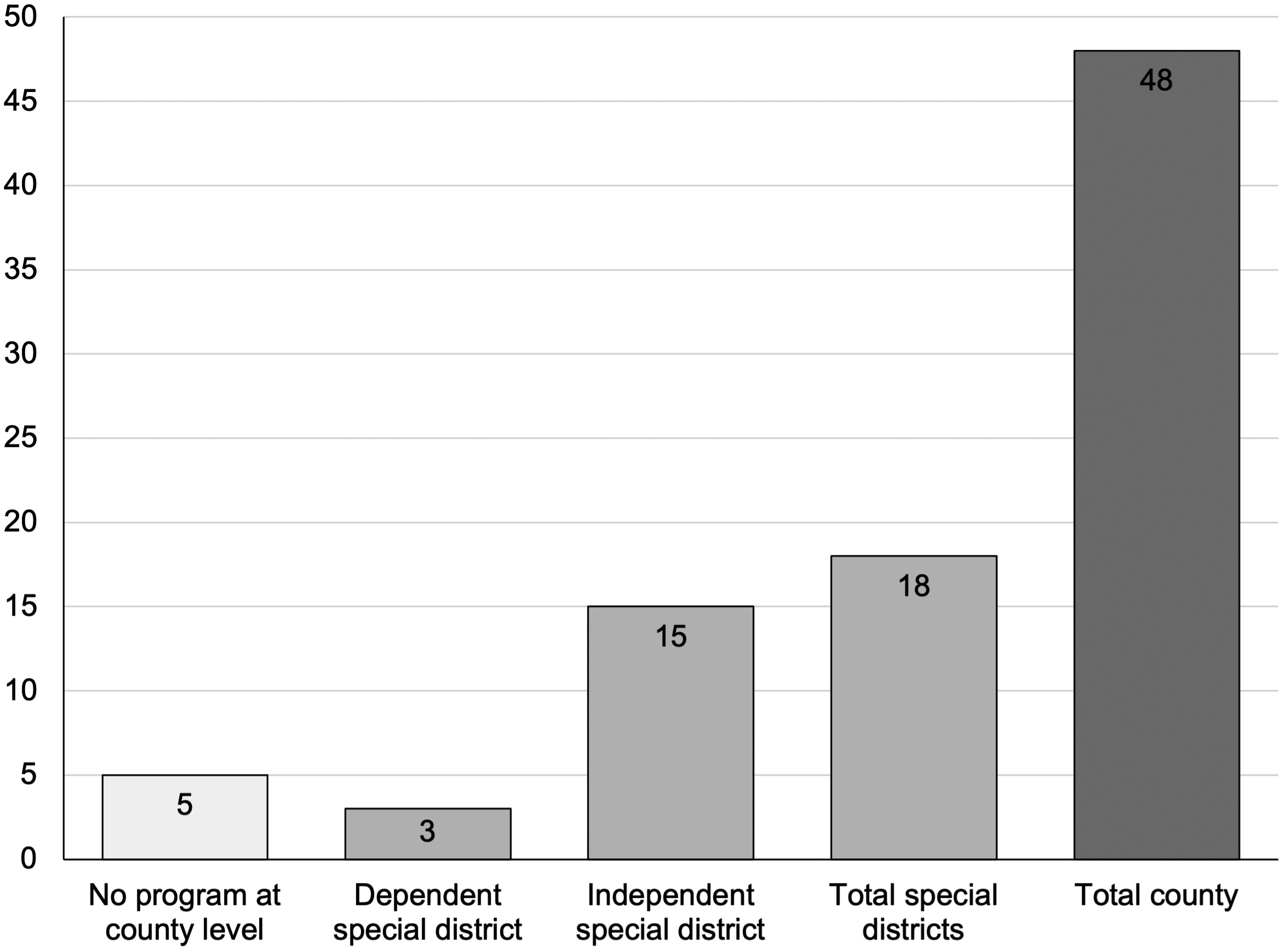
Mosquito control governance in Florida counties and special districts, 2023.
As shown in Figure 2, the distribution of government types responsible for mosquito control has shifted significantly over time, with counties assuming a larger role. In both 1954 and 2023, 22 county mosquito control programs and 11 special district programs were active. During the same time period, nine special districts were inactivated and replaced by a county program, while three special districts became dependent entities under county governments. Overall, special districts represented 50 percent of all programs in 1954, but only 27 percent in 2023. The most notable trend is the increased role of county-level programs.
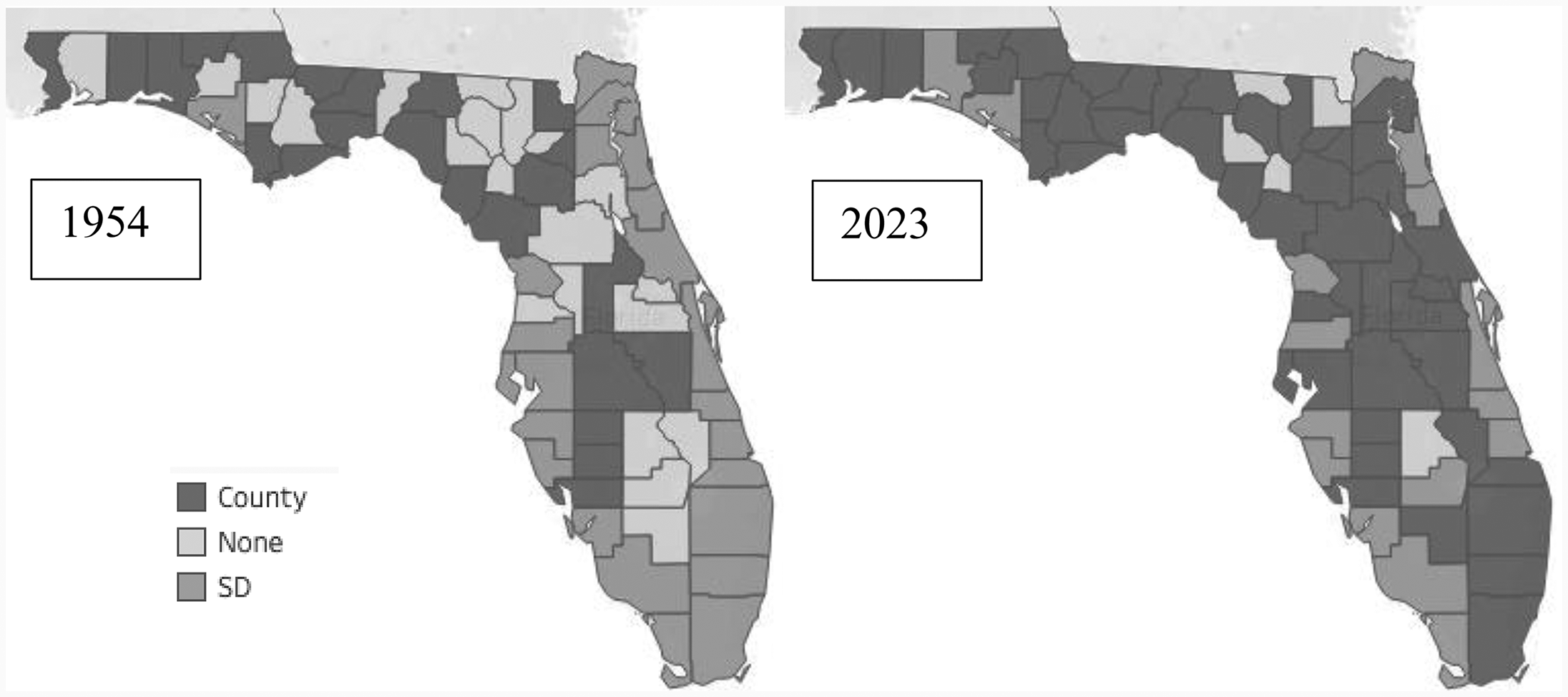
Mosquito control programs by governance type (shown at county level), 1954 and 2023.
There are two key factors that likely drove this change: changes in state law that made county government the default authority where no special district exists (388.241), and very substantial decreases in state matching funds for special districts over time. It is important to note also that the existence of a county program does not make it fit for purpose. County programs vary considerably in the resources they have to hand and the level of service they can provide. 7
Many of the special districts that survived the intervening period exist in areas that are difficult to manage and likely far outstrip the means of a typical county government- Manatee, Lee, Collier, and Key West special districts, for example, are all large in terms of landmass and face difficult challenges in managing specific habitats. Others, like Indian River and East Flagler, were early adopters of the elected special district model as a part of their development and tourism strategies. Notably, mosquito control in some of the state's most populous counties, Miami-Dade, Palm Beach and Broward, is now managed by county governments, suggesting that there might be less need of, or political tolerance for, special mosquito control districts in dense urban areas.
Overall, mosquito control governance structures have persisted since their development in the mid-twentieth century. Special districts were more likely to develop and persist in areas with ecological challenges and high economic development. By comparison, more rural and impoverished areas were less likely to have mosquito control programs mid-century, and are now more likely to have county-level programs with varying degrees of capacity, discussed below.
Current Approaches to Control
The current accepted best practice for these mosquito control programs is known as Integrated Mosquito Management (IMM), a specific form of Integrated Pest Management (IPM) (Carlson et al. 2022). Throughout the US, IMM is used to control both mosquito populations that pose a nuisance, as well as those that carry disease (CDC 2022). IMM programs across Florida vary by location, but common components include surveillance of mosquito populations and animals affected by mosquito borne disease; source reduction activities that prevent mosquitoes from breeding by modifying habitats, e.g., removal of standing water near housing, constructing and maintaining drainage systems, ditches, and impoundments to improve water flow; control of larvae and pupae via physical or chemical means or introducing fish that eat larvae; control of adult mosquitoes using pesticides; resistance testing that attempts to measure mosquitoes’ developing resistance to existing pesticides; and education and outreach efforts that seek to advocate for mosquito control among the public and policymakers (CDC 2022, Gray 2022, American Mosquito Control Association 2021, authors’ review of program annual reporting).
From this list, it is obvious that IMM and its historical predecessors come with a set of problems that stem from the need to maintain adequate capacity, primarily adequate finance and human resources, while managing relationships with policymakers, the public, and private contractors.
Finance and Human Resources
Many of the core activities of IMM require substantial financial and human resources that must be committed in perpetuity to be effective. Surveillance activities are labor intensive and require specialized training. Building and maintaining drainage ditches or impoundments is expensive, requires considerable expertise in engineering and planning, and an understanding of potential environmental harms. Spraying requires capital investment for relevant equipment and significant labor. Outpacing mosquitoes’ developing resistance to pesticides, or finding new ways to control the mosquito population such as via genetic engineering, require significant investment in scientific research, and so on (Hribar 2013, Carlson et al. 2019, Moise et al. 2020; Kondapaneni et al. 2021).
While the governance structures of mosquito control programs have stayed somewhat consistent since the 1950s, their finance has changed dramatically. In the 2020s, the state government provides only a small amount of state aid to supplement local funding and dedicates a much smaller amount of money to mosquito research. Significant cutbacks occurred in the 1990s, followed by frequent cuts and threats to residual funding in the 2000s and 2010s, which some mosquito control advocates attribute to their decreased ability to influence the state government and legislature, as well as the overall success of programs in preventing disease outbreaks, which reduced the salience of the issue (Florida Coordinating Council on Mosquito Control 2018, Tabachnick 2013, Jackovics 2016, Sherman 2016).
Counties or special districts budgeting local funds for mosquito control with a state-approved mosquito control program can now receive state matching funds of up to $120,000 per year, an amount far below the operating budgets of most mosquito control programs (388.261). In the event that the state does not appropriate the full amount of funding needed, programs with less than $1 million in revenue are prioritized for matching funds. In 2022, the legislature appropriated a total of $2,837,181 in state aid for mosquito control (SB 2500, 2022), which pales in comparison to the aggregate level of local spending. As might be expected, variation in funding and resources across jurisdictions is significant, with one recent study finding expenditures ranging from $32,000 to $19,500,000 per year among vector control programs responding to their survey (Peper et al. 2022).
The vast majority of programs for which data are available are therefore substantially funded by local governments (Florida Auditor General 2016–2022, authors’ calculations) and subject to the variation that implies. 8 For our purposes, special district and county programs are not directly comparable in terms of their finances as special districts are required to report out their exact expenditures for mosquito control whereas counties report aggregated budget categories at a more abstract level. Special districts must submit every five years to an external review of their operations that is passed on to the legislature and made public (388.241). Although all mosquito control programs that want state-approval are required to provide monthly and annual reports of their finances and activities to state government, these reports are not generally available to the public outside of a public records request.
This raises an important point- it is difficult for an interested member of the public in an area with a county-governed mosquito control program to see exactly how much money has been spent on mosquito control, whereas an equivalent person living in a special district has easier access to a precise accounting of revenue and spending. A further complication arises in that it is likely that better-resourced counties are leveraging economies of scale for core functions such as personnel management, accounting or communications.
Despite the data restrictions, when examining the most specific category of spending data available for each type of government, we can see that some mosquito control programs have substantial capacity in terms of finances, while others have far fewer resources available to them (Figure 3). Expenditure among special districts grew significantly between 2016/17 and 2019/20. Overall, special districts have about 20 percent greater mean financing compared to non-special districts average financing from 2017–2021. Importantly, we also see less heterogeneity in the range of financial capacity across special district programs compared to County programs. The median is substantially lower for non-special districts, less than 20 percent proportionately of mean non-special district spending. Yet the median for special districts is much higher, comparable to the mean, reflecting less heterogeneity in financial capacity across special districts. As might be expected for programs almost wholly funded by property taxes, the variation in funding from year to year is greater for programs run by special districts compared to those governed by counties.
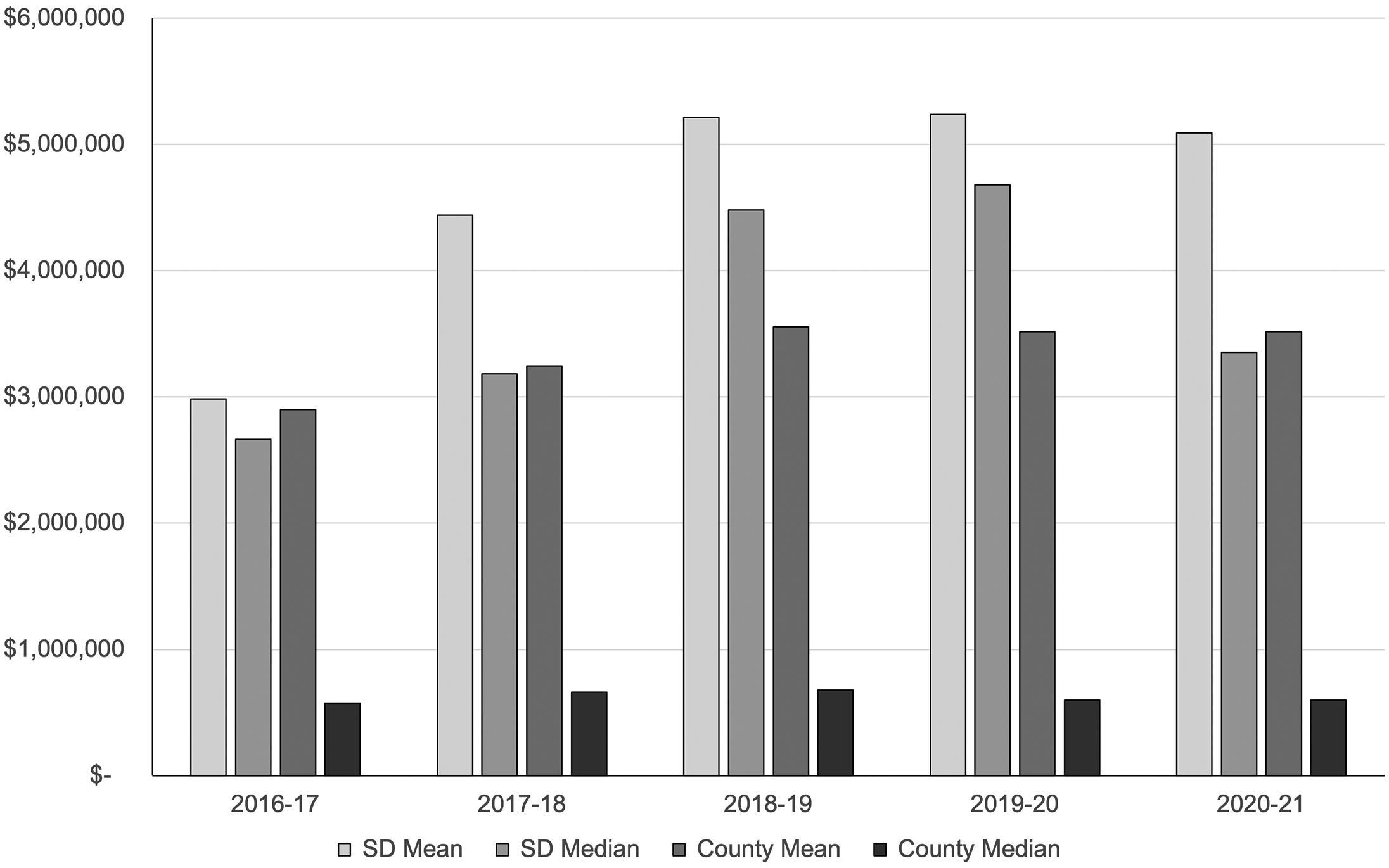
Mosquito program annual expenditure trends by governance type.
Qualitative evidence backs up this point: in times when property prices fall, local public health officials express their concerns about being able to maintain capacity (authors’ Nexis Uni search, for example, see Ortman 2009).
Trained staff are an important aspect of mosquito control capacity; programs need a range of trained people who can carry out tasks from accurately identifying mosquito species and running public education activities to mosquito surveillance and detection, to handling chemicals and piloting aircraft. Again, publicly available data on this point are far from perfect. In terms of numbers, we do know that programs run by the 15 Independent Special Districts in Fiscal year 2023/4 retained between 6 and 100 paid staff, with a median of 32 (The Balmoral Group 2023). Information on county employees is extremely sparse, but it is common for smaller counties to retain 4–6 employees, and medium to large counties to retain between 10 and 15 staff (program web sites, authors’ calculations). In 2016, the large districts of Broward and Miami counties both retained 15 staff (Galewitz 2016).
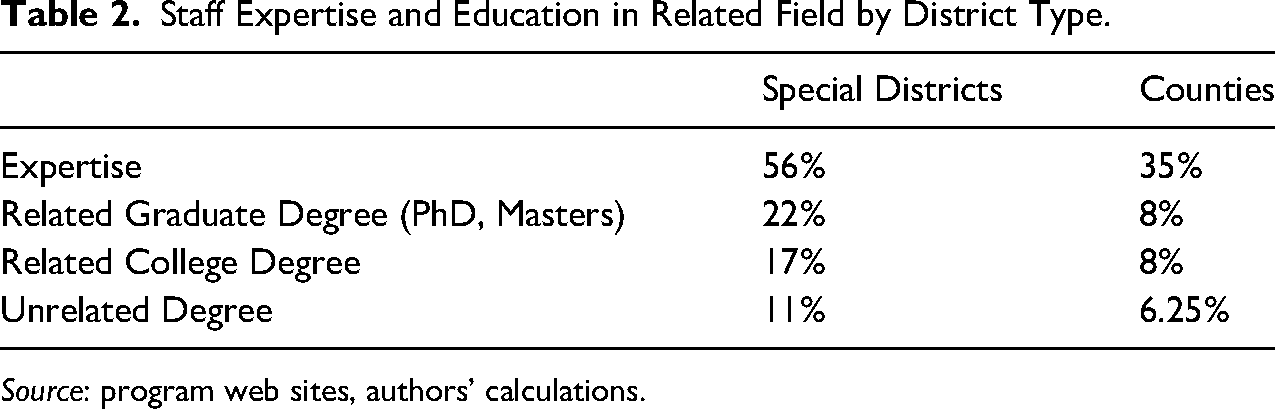
A review of publicly posted biographies for program core staff suggests that there may be some important differences in recruitment and training for county and special district programs. Overall, 56 percent of core staff employed by special district programs have specific expertise relating to mosquito control, compared to 35 percent of core staff in non-special districts. Expertise here is defined as at least one staff member having an educational degree in a field related to mosquito control. A higher percentage of staff in special districts versus non-special districts has a related graduate degree, related college degree or any college degree in general (Table 2).
Staff Expertise and Education in Related Field by District Type.
Source: program web sites, authors’ calculations.
While we do not have historical data about the professional expertise of mosquito control governance models mid-century, we do see the heterogeneity in financing, persist across both time points for special districts and counties. Mid-century and today, special districts had and retain higher levels of capacity to address the risks of mosquito borne diseases. Mid-century, most county-level programs were not established, and those that were, were not eligible for special district matching funds from the state. Although we see greater county-level programs today, county-level programs have substantially less financing and over 20 percent less professional staffing compared to special districts.
Capacity and Need: Public Goods vs. Club Goods in Contemporary Mosquito Control
The final step in understanding the capacity of Florida's mosquito control programs is to assess the relationship between capacity, or resources, and need across governance structures. To do this, we need to ask both who is being served by what type of mosquito control programs and how programs are situated in relation to mosquito habitats. Differences in the capacity of mosquito control programs reflect the diverse needs for mosquito control in different parts of the state, but they also represent how perceived needs are framed, how they have been articulated in political debates, and how they are represented in legal structures.
Mosquito control programs throughout the state face difficult but disparate challenges because habitats for mosquitoes are so varied. Programs’ service areas can include natural mosquito habitats found in salt marshes, mangrove forests, lakes, rivers, barrier islands and areas experiencing heavy rainfall. They also include human-made habitats created in connection with rapid construction or urbanization, agriculture, poorly maintained properties, tourism, refugee displacement, or transport of commercial goods (Rey et al. 2012, Florida Fish and Wildlife Conservation Commission 2022, Florida Department of Agriculture and Consumer Services 2023, Atlas of Global Conservation 2016, The Balmoral Group 2023). Programs encounter different combinations of these features, and so are not all addressing the same problems, targeting the same species, or adopting the same control methods (The Balmoral Group 2023, Kondapaneni et al. 2021). Addressing this diversity is one of the arguments put forward in support of local mosquito control by its advocates (Patterson 2004).
Special district and county mosquito control programs cover ecologically distinct service areas. Special district programs serve fewer people -between 1,500 and 750,000 residents compared to 8,000 to 2.6 million for county programs. But that does not mean they are unpopulated, partly because special districts are smaller than counties, covering areas from 1200 square miles (including 56,000 acres of salt marsh) in Lee County MCD down to just 1 square mile in Moore Haven MCD. Excluding the two smallest special districts in area, the population density of special districts is between 993 and 204 residents per square mile, comparable to that of medium to large counties in the state.
In terms of the who they serve, Florida's mosquito control programs fall into a pattern that will be familiar to local government researchers. Florida's 67 counties fall between the 16th (low vulnerability) and 99th (very high vulnerability) percentiles for social vulnerability when compared to all counties in the US using the CDC/ATSDR Social Vulnerability Index. In general, special districts exist in areas with higher median property values, yet serve populations that are less likely to be economically disadvantaged or socially marginalized. Overall, people in areas where mosquito control is governed by counties are more socially vulnerable than those covered by special districts (Figure 4).
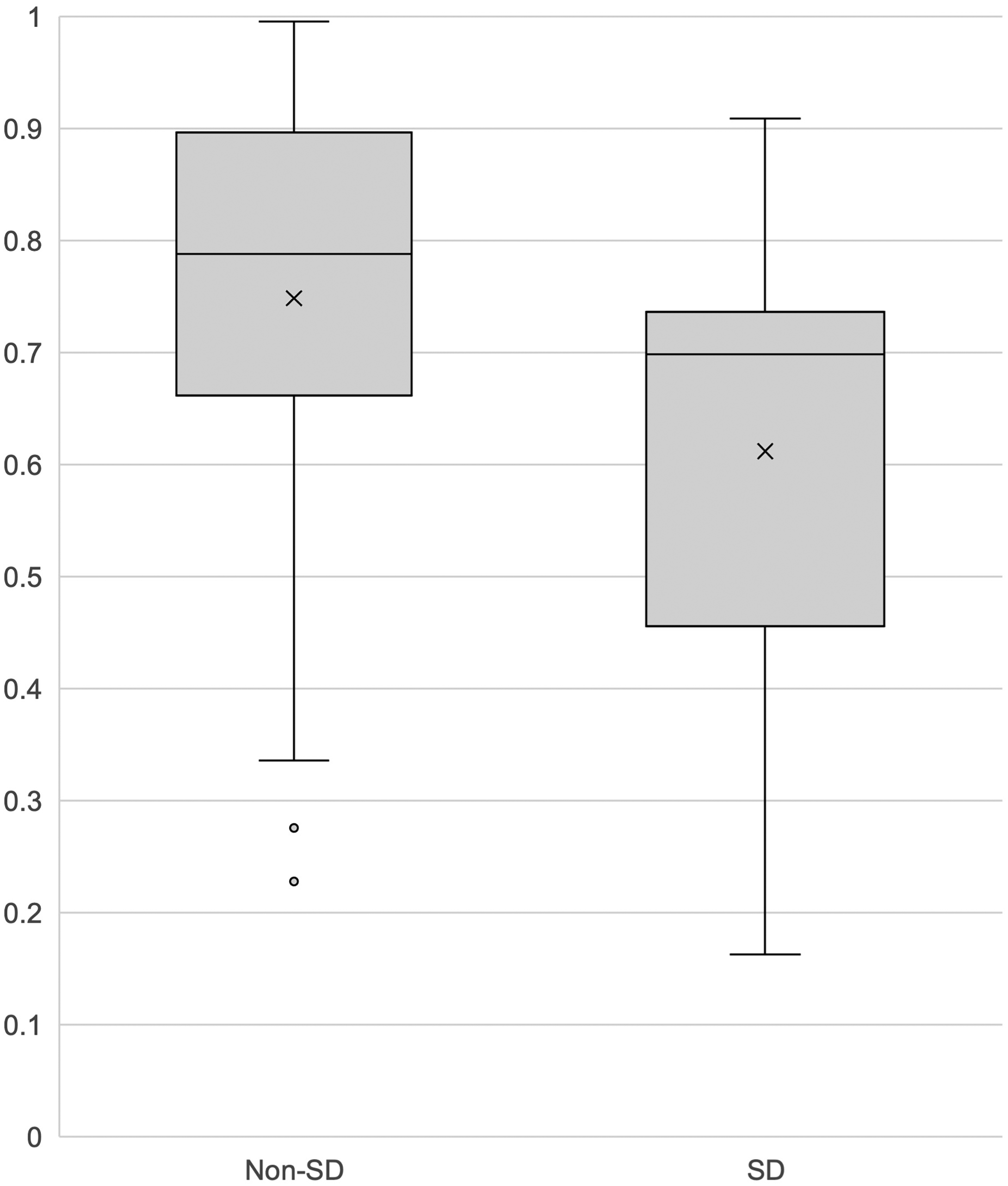
Social vulnerability of populations covered by Non-SDs and SDs.
At the same time, property values are higher in areas where mosquito control programs are governed by special districts (Figure 5). This raises important questions about causation that are difficult to answer clearly: does a higher level of mosquito control improve actual or perceived property values? Does local wealth improve resources for mosquito control? Or is there a virtuous cycle between these two factors? Given that the number of special districts fell after state matching funds declined, the presence of special districts in wealthier parts of the state may make sense. Regardless of directionality, these findings indicate a clear picture of disparate mosquito control programs between special districts and counties that has persisted over time. Special districts were more likely to develop and persist in areas with high economic development and established and retained higher levels of capacity. By comparison, more rural and impoverished areas were less likely to have mosquito control programs mid-century, and are now more likely to have low-capacity county-level programs. Taken together, the resources, density, wealth and social vulnerability of special districts versus counties suggests that special districts, in this case, add capacity to already higher capacity areas.
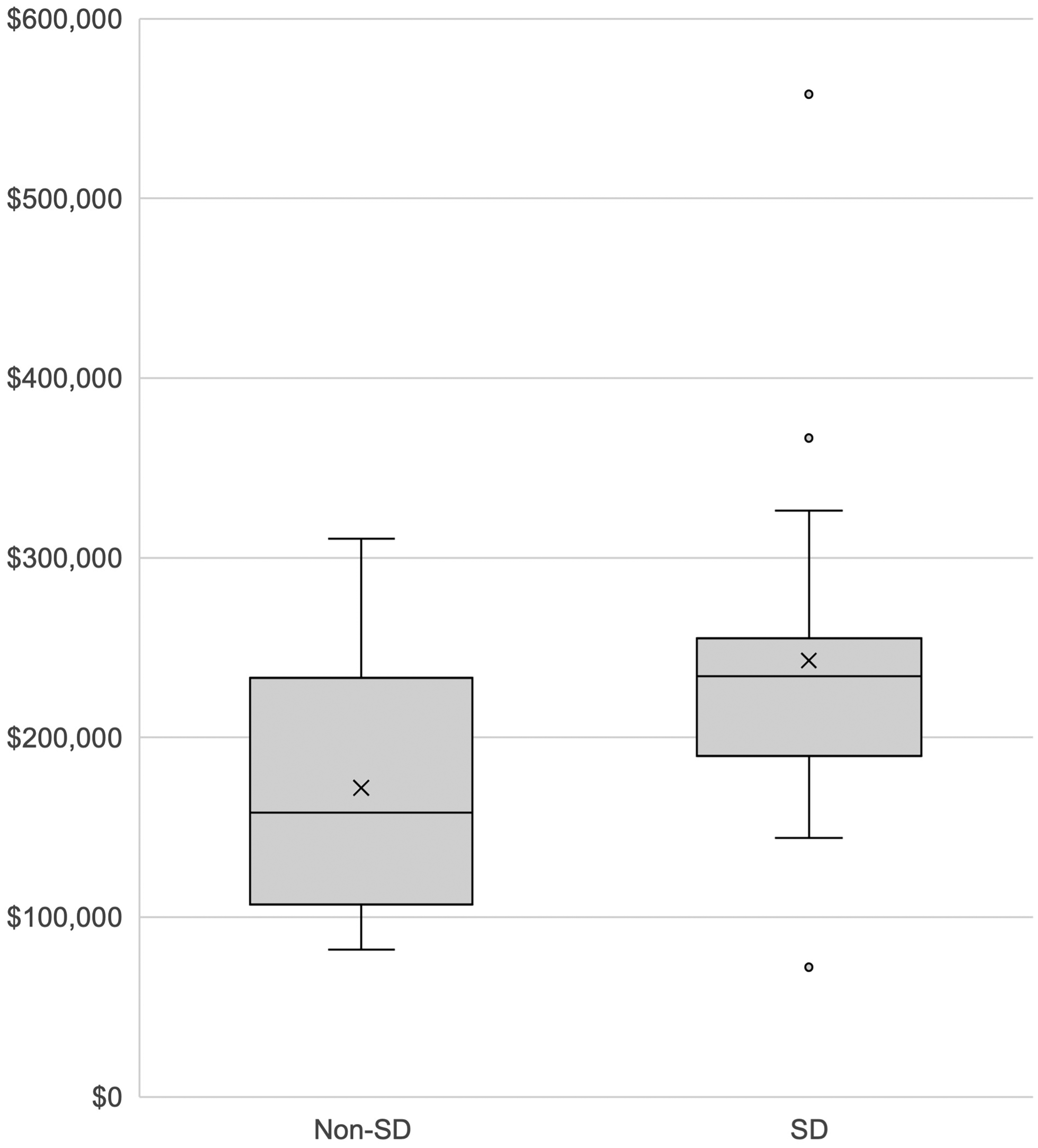
Median property values, January 2023, Non-SDs and SDs.
A final point that affects whether capacity meets public need is that most special districts are not contiguous with county lines, while all county programs are by definition. This means that county mosquito control programs provide mosquito control services for the entire county while special districts do not (Figure 6). If most special districts only provide services for the district itself, who provides mosquito control services for the rest of the county, and to what extent does that matter?
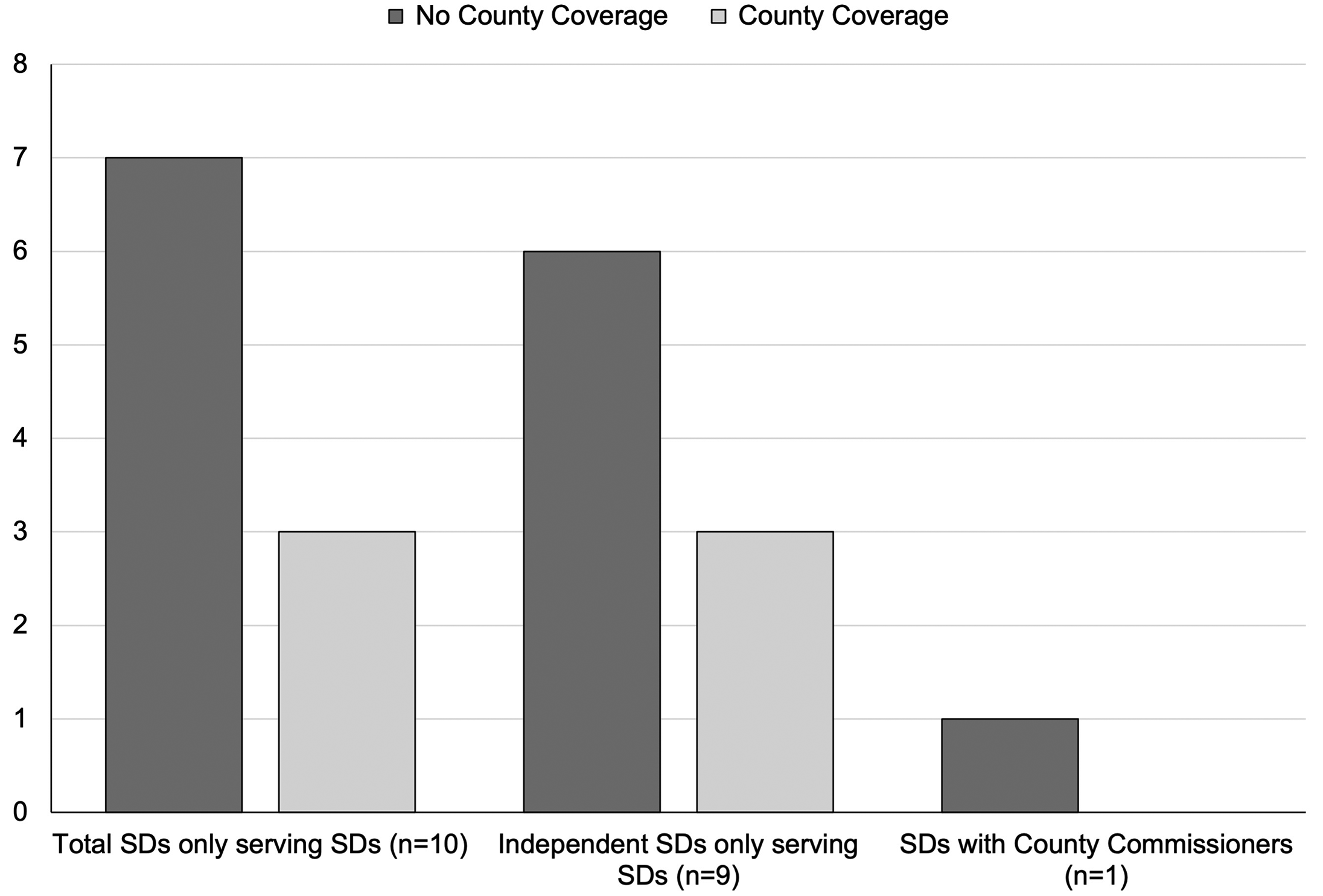
County coverage of special mosquito control districts.
There are practical reasons for some special districts to offer partial service coverage within a county. In Monroe, for example, where 99.9 per cent of the population lives on the islands of the Florida Keys, it does not make sense to provide mosquito control services in the largely uninhabited mainland part of the county. At the other extreme, some few counties house more than one special district, or have a special district cohabiting with a county program, which may in itself cause other problems such as difficulties in coordinating services. 10 out of 18 total special districts only provide services to the special district itself, and do not contract out or provide any additional services to other jurisdictions.
As shown in Figure 6, the majority of special districts only serving special districts have no concurrent coverage for mosquito control services from a county program. When putting this into context with all mosquito control special districts, we see that over one third of all total special districts (7 out of 18, see Figure 6) and elected special districts (6 out of 15) provide services to their district with no concurrent county program for the remainder of the county. For these special districts with no concurrent county program providing services for the rest of the county, we find substantial heterogeneity across districts in availability of services, and mechanisms of service delivery. In all cases, mosquito control services for jurisdictions external to special districts with no county services, are inconsistent, informal, and mostly voluntary.
Although county-level coverage increased substantially from mid-century to present-day, the exclusionary nature of special district governments, where services are only provided to residents within the special district, leaving residents in the remainder of the county without adequate mosquito control if any, is consistent with mid-century mosquito control governance. Here, special district governance functions as a club-good that excludes access to public health services for non-special district residents living in the same-county.
Conclusion
The development of mosquito control policies has been an integral advancement in public health policy in the United States. In the case of Florida, mosquito control was both a visual manifestation of public health capacity, as well as offering tangible economic and personal benefits by limiting disease.
While the public health practice of mosquito control has been a success, the governance of these practices is much more divided. Our results demonstrate that wealthier counties, in terms of property values and social vulnerability, are more likely to have special districts governing mosquito control compared to lower-resourced counties with higher social-vulnerability. Special districts add substantial public health capacity in wealthy areas, by at least twenty percent on average across measures of both funding and staffing expertise. Furthermore, in over one-third of all special districts, mosquito control services are not provided for the rest of the county residing beyond the special district. Ultimately, mosquito control governance structures have endured since their development in the mid-twentieth century, where special districts were more likely to develop and persist in areas with high economic development and retain high-levels of capacity, and more rural areas and more impoverished areas were less likely to have mosquito control programs mid-century and are now more likely to have poorly funded or low-capacity county-level programs.
Elected mosquito control boards, through their unique mechanisms of elected representation and direct taxation on mosquito control services at the hyper-local district level, may engender a unique opportunity to improve public health effectiveness by increasing capacity through professional expertise and funding. In the case of devolution and steadily declining federal and state funds to support local public health efforts, special districts may be more likely to sustain services (Goodman and Leland 2019). However, elected special districts present a risk of catering their services to powerful, well organized constituent groups of economic elites, resulting in the creation of club goods for a public health problem (Foster 1996). Times of increased salience for mosquito borne diseases thus may result in improvements in professional capacity and financing prioritized to high-income areas, and exacerbating inequities in public health capacity and outcomes across neighborhoods. Our results demonstrate that contemporary mosquito control governance in Florida functions like a club good, where mosquito control special districts exacerbate inequities within and between municipalities where people living in lower-resourced areas are effectively excluded from the benefits of adequate mosquito control.
As mosquito control includes prevention, or detection and surveillance, as well as mitigation measures such as spraying to reduce mosquitos, there is likely a bidirectional relationship between capacity and perceived disease risk (Aryaprema et al. 2023, Karunaratne and Surendran 2022, Kampen et al. 2015; Gu et al. 2008). High-capacity areas may report more cases solely by virtue of conducting surveillance, or more frequent and effective surveillance. Yet high-capacity areas may also be more likely to have improved mitigation efforts. Ultimately, if mosquito control functions as a club good, communities with insufficient mosquito control may be less likely to conduct surveillance in order to prevent and respond to rising rates of disease, particularly with regard to seasonality and weather, leading to underreported disease risk.
A second concern raised from our analysis is the role that politics has in shaping governance, capacity, and public health. Public health is not, nor has it ever been, immune to politicization and partisanship. COVID-19 has ably demonstrated the ways in which public health policies are shaped by politics. While elected mosquito control boards have not demonstrated contentious partisan elections, managing political relationships is an integral activity for high-capacity mosquito control programs. Managing public perceptions of mosquito control operations is considered by mosquito control advocates to be essential as public perceptions can influence available resources (Butterworth 2019) and public compliance facilitates some control methods such as managing bodies of standing water on private land. If mosquito control becomes politicized, like other public health policies, it could result in diminished public health mitigation strategies and trust in public health institutions. As of March 2025, the Centers for Disease Control and Prevention have retired arbovirus disease maps due to politicization and substantial retrenchment of federal public health capacity (CDC 2025).
When members of the public pay attention to mosquito control it is often in relation to its most visible component, spraying. Officials in Florida report that they often receive a surge of phone calls after spraying activities have taken place, with members of the public concerned about damage to humans, animal, and plant life. Yet members of the public also complain when mosquito control is absent or insufficient and mosquitoes cause a nuisance, or worse, a disease outbreak. Other elements of IMM, such as surveillance activities and research, are often far less visible than spraying in local neighborhoods. This too must be managed, by attempting to raise the visibility and awareness of the work among the public and policymakers. The political risks of not maintaining these relationships are significant, including the potential for budget cuts, additional bureaucratic or legislative scrutiny, and litigation. A recent decision by Florida Keys Mosquito Control District to test a new potential control method by releasing a small number of genetically modified mosquitoes at test sites was met with resistance among residents and a lawsuit, for example (O’Hara 2021).
Many fundamental public health activities, and the science supporting them, are not popular in Florida among the public and political elites. Although a majority of Floridians have some trust for public health officials, this trust is much higher among Democrats (81 percent) than Republicans (50 percent) (University of South Florida / Florida Atlantic University 2023). Political leaders and political appointees in Florida's state and local governments, including those within the health sector, are incentivized to take anti-public health stances in order to obtain and stay in office. In January 2024, for example, Florida Surgeon General Dr. Joseph Ladapo publicly called for physicians in the state to stop using mRNA vaccines against COVID-19 on the grounds that they contain trace amounts of DNA (Florida Health 2024), echoing talking points from the anti-vaccine movement that have been flatly contradicted by a large body of scientific evidence (Lewis 2024). The politics of mosquito control are not those of COVID-19, but anti-public health sentiment, public health misinformation, and anti-science rhetoric are likely to have a negative impact on how the public view mosquito control programs and impact budgets. Arguably county programs face bigger problems in this regard, as less general public health funding will automatically impact their available resources.
Special districts may be slightly less impacted by general public health cuts, but are still a target for critics who perceive them as wasteful. This is not a new sentiment- in the 1960s, Pinellas County challenged state laws on special taxing districts with the intent to show that the creation of districts like Pinellas Mosquito Control District, which shared boundaries with the County, was unconstitutional, 9 and legal cases have been brought since that challenge mosquito control districts’ ability to raise funds, secure financing, and use public money to lease equipment. 10 More recently, a bill was introduced in the state legislature that would require independent special taxing districts to seek voter approval for their continued existence, in 2026 and every 10 years after that (HB7013 2023, SB 1058 2023), but was ultimately tabled. Going forward, it has yet to be seen if the local political economy that shares a penchant for special districts and its’ accompanying capacity and expertise can contend with state politics that favors anti-science policies. Alternately, maintaining exclusionary club goods for some level of devolved public health capacity for wealthy constituents may align with state administration's preferences in the case of rising rates of vector borne diseases.
Taken together, our research raises questions about the efficacy and equity of special districts on mosquito control, as well as broader public health policy. Enhanced federal and state support for public health interventions like mosquito control, increasing more broadly access to abatement measures that are more likely to be provided in high-wealth areas, would both improve the public's health and increase the public's salience of interventions. Better resourced districts trialling innovative approaches to mosquito management are being hampered by movement of mosquito populations from neigboring areas lacking similar interventions (Moreale et al. 2024). In addition, increased rates of spread of endemic and novel vector-borne diseases caused by climate change, habitat disturbance, and human travel could lead to outbreaks of disease across wider spatial scales, requiring national coordination for containment (Beard et al. 2019, Petersen et al. 2019). As it currently stands, mosquito control governance in Florida, without significant redistribution across districts, and absent vertical intergovernmental funds, effectively excludes persons living in low-income areas from the benefits of adequate mosquito control. Yet, enhanced funding is unlikely to occur at the federal or state level, requiring flexibility in governance of local public health policies.
Footnotes
Declaration of Conflicting Interests
The authors declared no potential conflicts of interest with respect to the research, authorship, and/or publication of this article.
Funding
The authors received no financial support for the research, authorship, and/or publication of this article.
