



Abstract
A large body of research has shown that American politics have been highly influenced by conservative movements born in American White suburbia. Yet, suburbs are also moving left and becoming more diversified. I argue that this context has led to new cityhood movements in unincorporated areas of some regions of the US. By forming cities, unincorporated communities detach themselves from shared county-level authorities and the wider populations served in these jurisdictions. What triggers municipal incorporations today and how are recent incorporation movements different from those of the postwar era? To answer these questions, I conduct fieldwork in Georgia. I find that municipal incorporations are a modern type of segregation triggered by sentiments of racial threat and conservatism, which I call White fortressing. I update the study of government formation by analyzing a new wave of municipal incorporations and contribute to the literature works on White flight, racial threat, and residential segregation.
When Sandy Springs, a suburban community in Atlanta’s metropolitan area, incorporated as a new city, it became a majority White municipality. It detached itself from direct control of a county’s government in charge of a large Black population. Soon after, several other White communities in the area followed suit, creating various White pockets of government in counties with large Black populations. While similar stories occurred often during the postwar period, the incorporation of Sandy Springs took place in 2005. Ever since, Georgia and other states have seen other incorporation movements (Mock 2022), including in Atlanta’s wealthiest and Whitest district, Buckhead, who has attempted to secede from the city on various occasions.
What triggers municipal incorporations and how do these movements differ from White flight and segregationist actions from the 20th century? To answer these questions, I conduct fieldwork in Georgia and collect a series of in-depth interviews. I speak with the various actors involved in the incorporation process of all new cities and ongoing movements in the state in 2020. While I focus on Georgia, I intend to understand the broader economic, social, and ideological changes these communities face.
This paper provides three main arguments. First, I contend that sentiments of racial threat and conservatism trigger incorporation movements in the US. These perceptions of threat are pushed by population growth and demographic shifts that have taken place in suburban areas over the years (Parker et al. 2018; Lacy 2016). Second, I posit that incorporation movements today are a mechanism of segregation that I refer to as White fortressing. I identify that White fortressing movements have differences and similarities vis-a-vis segregationist movements from the 20th century. Third, I argue that White fortressing differs from incorporation movements in majority Black communities.
There is a rich body of work that sets the foundation for research on municipal incorporations (Burns 1994; Purifoy 2021; Rice, Waldner, and Smith 2014; Briffault 1990; Leon-Moreta 2015a; Smith 2018); in this manuscript I complement it in various ways. First, a lot of important previous work has focused on government formations that took place before the 2000s. However, the context under which these incorporations occur today has changed. I study a new wave of incorporations that has taken place since 2000. I research the role of conservative political elites as crucial and active actors in these movements. I also analyze the degree to which geographical diversity and segregation trigger incorporation movements today. Second, while previous accounts study which factors are correlated with the formation of local government, no study, to my knowledge, has interviewed leaders of these movements to understand what motivates them and the types of rhetoric that they use. Third, I incorporate a more central consideration to the role of race and conservatism in recent incorporation movements.
I contribute to the work of a myriad of scholars that have studied White flight and segregation (Kruse 2013; Duncan and Duncan 1957; Taeuber and Taeuber 2008; Guest and Zuiches 1971; Lee and Kye 2016; Hackworth 2019). Even so, some accounts still question whether these movements were/are racially motivated or only related to other aspects, such as housing characteristics or neighborhood factors (Gould Ellen 2000; Harris 2001; Frey 1979; Taub, Taylor, and Dunham 1984). In this paper, I advance this debate by showing how municipal incorporations function as mechanisms of segregation.
When do Communities Decide to form a New City?
Burns’s (1994) account on the formation of American local government has been central to understanding the driving forces of municipal incorporations through time. In conjunction with other more current studies, her findings suggest that there are a variety of reasons and contexts under which people create new governments (Rice, Waldner, and Smith 2014). One overarching cause is that communities want to access local power and institutions (Briffault 1992; DeFronzo Haselhoff 2002). Including controlling land use and local growth (Rice, Waldner, and Smith 2014; Hogen-Esch 2001), promoting economic development (Leon-Moreta 2015b), or improving the delivery of services (Kenny and Reinke 2011). Research also suggests that communities create new local governments when they want to diminish tax redistribution to other parts of unincorporated counties (Kenny and Reinke 2011; Musso 2001). Finally, other work has found that incorporations are born as a defensive response to the threat of annexation into other neighboring cities. Findings reveal these patterns are particularly observed in majority White communities that are seeking to annex and control land in Black communities to build and sustain viable economies through creative extraction processes known as “predatory inclusion” (Durst, Wang, and Li 2022; Seamster and Purifoy 2021; Aiken 1987).
Race has indeed played an important role in municipal incorporations through various mechanisms. Burns (1994) found that race was a primary predictor of municipal incorporations in the 50s and 60s but observed that by the 80s, these effects virtually disappeared. I contend that the changing context under which groups create cities today has made race a central feature of these movements again. Newer research has already backed this observation in several contexts. Studies have suggested that government fragmentations are linked to the process of “predatory inclusion” (Seamster and Purifoy 2021). Other work looks at how majority White and majority Black incorporations differ from each other (Smith, Waldner, and Richardson 2016; Purifoy 2021). Purifoy (2021) argues that residential patterns, including those of city boundaries, are shaped by White communities’ social and geographic preferences.
I also contend that incorporations in the last two decades are different in a number of ways from White flight and other segregationist movements of the 20th century. First, the overall number of cities formed in the US has declined since 2000 because of stronger state laws, fewer annexations, and slowing suburbanization (Waldner, Rice, and Smith 2013). However, some states still show persistent high numbers and others have shown a relaxation of incorporation rules. What these states have in common is their institutional structures for local determination (Waldner, Rice, and Smith 2013) and their changing demographic patterns.
Moreover, recent demographic changes in suburban areas have triggered cityhood movements. Most of these movements have occurred in majority White communities, but there are a number of Black communities that are starting to incorporate (Smith, Waldner, and Richardson 2016). Previous work has shown that these two types of movements are different in a number of ways, including having different socioeconomic contexts (Smith, Waldner, and Richardson 2016; Smith and Waldner 2018). But few academic accounts have looked at what motivates leaders to push these movements (Mock 2022). Here, I claim that White incorporations, which I call White fortressing movements, are triggered by different reasons compared to incorporations in communities of color.
Lastly, I show that founding works on urban politics fail to understand the critical role that race plays in local politics. For example, by presuming that cities’ residents are able to shop for communities according to their preferences, Tiebout (1956) doesn’t acknowledge how residential patterns, including those of forming a new city, have been shaped by the geographic and political preferences of White communities (i.e., through redlining, White flight and other segregationist policies and actions) (Purifoy 2021; Douglas and Massey 1993; Taylor 2014; Pattillo 2013). White fortressing illustrates just that. Similarly, Peterson (1981a) contends that residents are benefited alike from local policies seeking to maximize economic positions. Yet, White fortressing movements show that by maximizing their economic development, White communities affect communities left-behind (Smith and Moye 2021; Purifoy 2021).
What is White Fortressing?
During the 1960s and 1970s, White homeowners lost the political power in cities to control the distribution of resources to their communities, which, among other things, encouraged Whites to move to suburban areas (Trounstine 2018; Kruse 2013; Sugrue 2014; Self 2005). As has been documented by a great deal of academic work, White flight to suburban unincorporated areas was brought about by a vision of urban decline associated with Blackness (Hackworth 2019; Kruse 2013; Sugrue 2014; Self 2005).
Since then, however, American suburbs have grown dramatically. Suburban and small metro counties have grown more than urban centers since 2000. The Pew Research center estimated that a net of 6.4 million people from urban and rural areas moved into the suburbs since 2000, while both urban and rural areas lost people (Igielnik and Brown 2018). Poverty has also become a central feature of the suburbs (Murphy and Allard 2015). These changes in American suburbia are reshaping the demographic composition of these areas. Although suburbs have never been universally White (Greason 2012), they have seen changes in the last three decades, particularly in terms of an influx of low-income people, immigrants, and Black people (Lacy 2016). Many of these families have moved to the suburbs of metropolitan cities as a result of being priced out of inner-city property values and drawn to unincorporated areas (Anderson 2007).
While these two types of communities—White and communities of color—remain physically distanced, they often share county-level authorities that decide all local matters. Elected officials in these areas generally reflect the diversity of the populations that live in them. These communities also share resources that are distributed across the whole county.
I claim here that these changes have created perceptions of racial threat in White communities. These perceptions are triggered by the presence of an increasing population of Black people and communities of color with growing political power (Hackworth 2019; Blalock 1967; Brief et al. 2005; Key 1949; Stolzenberg, D’Allesio, and Eitle 2004; Rocha and Espino 2009). Indeed, research on the psychology of racial threat shows that it is construed as a collective menace to White people’s political, economic, and social standing (Blalock 1967). Likely, White communities do not feel represented by officials elected in Black or more diverse parts of the county (Broockman 2014; Gay 2002), and fear the implementation of policies that may benefit other communities (Sances and You 2017). Indeed, Ray (2019) showed that changes in the status of racial relations can enhance racial group agency. For example, he argues that White people’s sense of lost cultural mainstream has shaped the national political landscape.
Based on these findings, I contend that in counties with large populations of Black people and when state laws enable government formation, White communities will feel threatened and push for the formation of city governments. I call this phenomenon White fortressing. I argue that municipal incorporations share similarities (i.e., wanting to hoard taxes and control land, reacting to threats of annexations), as well as differences (i.e., a fear of losing political power and advantage) with respect to movements of the 20th century.
I argue that White fortressing serves as a mechanism of segregation. By creating a city, communities can detach themselves from county-level authorities and, more importantly, from the broader populations served by these elected officials. Importantly, by deciding the borders of their communities, White fortressing leaders often exclude low-income and Black unincorporated communities. This process is similar to municipal underbouding or gerrymandering of municipal borders which is when cities annex territory by excluding low-income and minority enclaves (Marsh, Parnell, and Joyner 2010). Just as previous segregationist movements, White fortressing, is rooted in the idea that Blackness is associated with urban decline/dissatisfaction; I claim that it is fueled by a sentiment of racial threat and of conservatism (Hackworth 2019; Kruse 2013).
Academic work has shown that feelings of racial threat have often influenced policymaking in the US (Hackworth 2019; Kruse 2013; Bobo and Smith 1998; Rothstein 2017; Alexander 2011; Trounstine 2018). During Jim Crow, racism was expressed in overt ways, and anti-Black bias was state-sanctioned (Hackworth 2019). However, since the 50s and 60s, racism transformed into what Bobo and Smith (1998) coined as laissez-faire racism. This form of racism is based on notions of Black cultural inferiority, which are used to argue for alternate justifications for racist policy. Similarly, Bonilla-Silva (2006) documented the structure of what he called color-blind racism when Whites appear moral but oppose abolishing de facto racial inequality, showing that it was a subtle, slippery ideology that replaced the old Jim Crow order, allowing White people to avoid directly racial language to safely express their racial views.
These theories have been tested in the context of Georgia and other regions. In the postwar era, Kruse (2013) identified a new rhetoric of White flight used in the Metropolitan area of Atlanta, where people appealed to ideals based on rights, freedoms, and individualism, rather than mentioning overt racial reasons. Hackworth (2019) showed that visions of urban decline, racial threat, and conservatism resulted in the creation of neoliberal urban policy in the American Rust Belt. More recently, Connor (2015) illustrated spatial dynamics of color-blind racism in secession movements that took place in the 2000s in the northern part of Fulton County, Georgia.
It is therefore likely that racial threat triggers White fortressing movements today too. I expect to see this type of laissez-faire rhetoric and colorblind racism reflected in conversations with movement leaders. Participants may allude to feelings of loss in services and rights that have typically been associated with racial bias including, land use policy and infrastructure (Trounstine 2018; Rothstein 2017; Hackworth 2019), police (Alexander 2011; Page and Soss 2017) or tax redistribution (Schaffner, Rhodes, and La Raja 2020).
But I can likely also expect more explicit appeals to race and ethnicity in White fortressing campaigns compared to segregationist movements from the postwar era. Research has shown that there has been a shift in the acceptability of explicitly racial political language in the last decade, likely related to the partisan realignment of racially conservative Whites into the Republican Party (Lublin 2004; Valentino and Sears 2005) and an increase in White identity in the last few elections (Jardina 2014; Knowles and Peng 2005; Valentino, Neuner, and Vandenbroek 2018). The latter—belonging to a cohesive group—has fueled a sentiment of legitimate pursue of collective interests (Effron and Knowles 2015). In terms of the former, previous work has found links between conservatism, racial conservatism, and racism (Hackworth 2019). Robin (2017) argues that conservatism is based on a feeling of loss. Hackworth (2019) shows that conservatives have harnessed White racial resentment in their narratives by appealing to the association of urban decline and Blackness. This has been particularly true in the deep South since the postwar era (Valentino and Sears 2005). Importantly, we know from previous work that White people living in the South have displayed over time more racial antagonism and ideological conservatism compared to White people in other regions (Black, Black, and Black 2009; Valentino and Sears 2005). I therefore expect to see more explicitly racist language in some of White fortressing leaders’ arguments.
Why is cityhood in communities of color different?
I posit that White fortressing differs from incorporation movements in Black communities in several ways. There is ample evidence that unincorporated areas left behind, which are often Black, low income, and immigrant communities, are impacted by processes such as White fortressing (creating a new White city), municipal underbounding (excluding communities of color from a city) or creative extraction mechanisms (by annexing communities of color to a city with plans to dispossess their land). Consequences range from impacts on fiscal matters, governance and representation, planning, land use, resource depletion, and quality service delivery (Smith and Smith 2018; Purifoy and Seamster 2021; Purifoy 2021; Smith and Moye 2021).
With White fortressing, by separating themselves from the county, new cities take shared resources away from the common pool of unincorporated areas, often leaving behind Black communities (Tyson 2013; Seamster and Purifoy 2021). These communities are further harmed because they are managed under county governments that are not equivalent to municipalities (Purifoy 2021). In addition, after being left behind, communities compete against several White pockets of municipal governments for the shared state and county resources and political power (Anderson 2010), leading to a lack of regional cooperation and resource distribution (Rusk 2013).
Previous work has documented that racial justice has played a central role in the formation of majority–minority cities, particularly when municipal underbounding or other processes have resulted in inequities in service provision for communities of color (Smith and Waldner 2018) or lack of Black resident’s political representation (Fences 2006). Dent (1992) for instance showed that Black suburbs formed as an affirmative deliberate choice. Other scholars have found that municipal incorporations can function as a civil rights’ tool (Goel et al. 1988), even when there are mixed findings when it comes to whether these incorporations end up benefiting or hurting communities (Ihn 2010; Waldner, Stilwell, and Smith 2019).
Based on these findings, in this manuscript I argue that the impact of White fortressing is an important element in pushing Black communities to seek incorporation today. I therefore expect to hear leaders of Black movements talking about racial justice and the effects of White fortressing in their communities.
Municipal Incorporations in the US
Incorporations in the US have decreased over the years. Figure 1 shows that still at least 145 new cities and towns have been incorporated since 2000. In 23 states, there were no incorporations in this period, which indicates that these movements are not widespread throughout the whole country. Research indicates that today these movements occur in specific areas of the country (Waldner, Rice, and Smith 2013). Map 1 shows that some states have had relatively high numbers of incorporations in the last two decades. Texas stands out, with 26 new cities and towns, followed by Illinois, Alabama, North Carolina, Georgia, Florida, Missouri, and Utah.
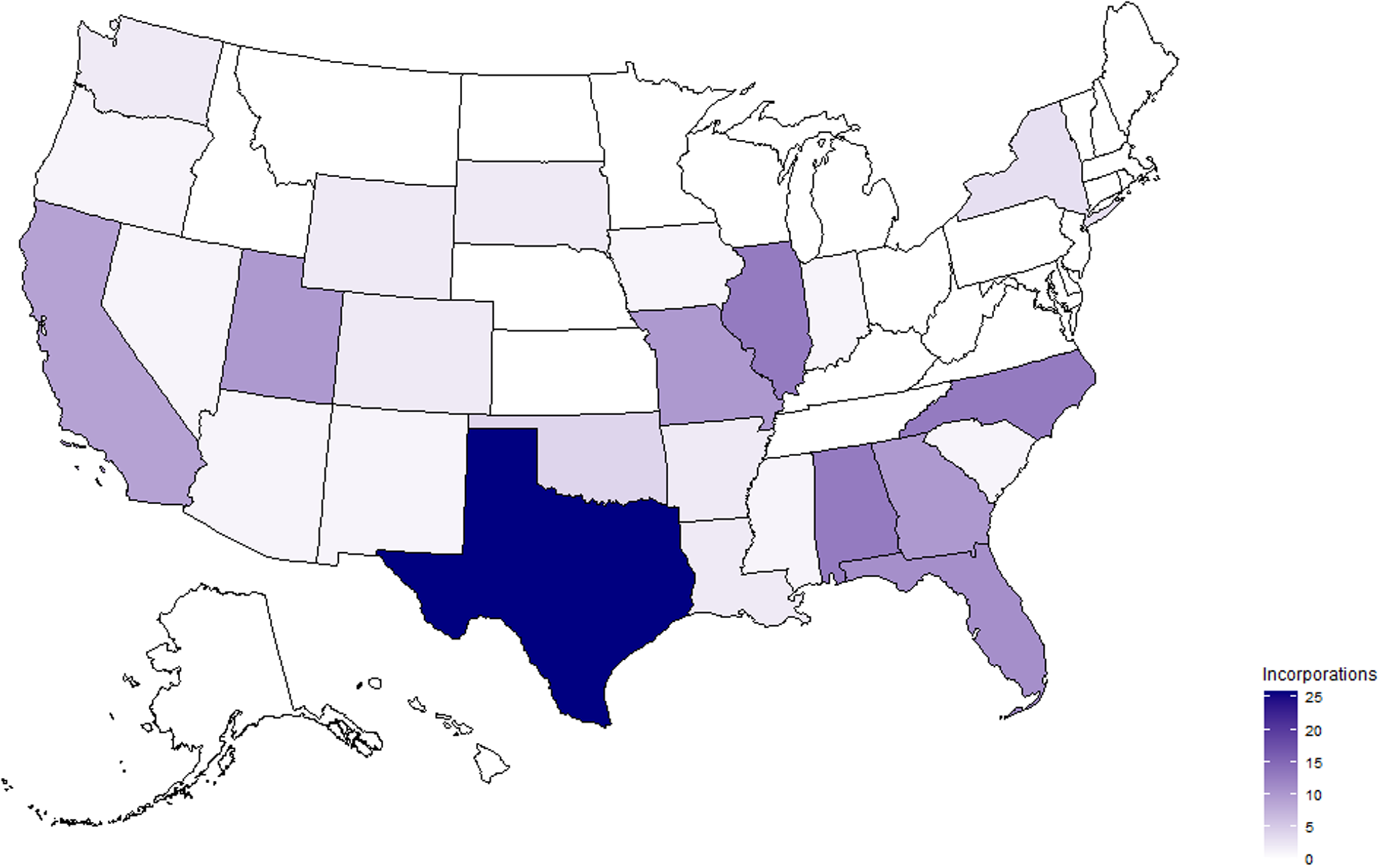
New Incorporations between 2000–2020 in US states. Source: Smith (2018) and non-exhaustive personal desk search in States’ Municipal Leagues and State webpages.
Incorporation rules also affect how prevalent movements will be depending on how easy it is for movements to be successful. Municipal incorporations in Georgia are granted through local acts by Georgia’s General Assembly. The process for incorporation has three stages: (1) community organization and canvassing; (2) state legislators draft a bill for incorporation making them active actors in these movements; and (3) referendum for citizens within the new city’s boundaries to vote for or against the new city. If the referendum passes, newly formed cities have two years to prove their success. Because each sponsor of the bill sets the requirements for each movement, requirements may vary between movements.
Data and Methodology
To understand why communities incorporate, I conducted fieldwork in Georgia in February of 2020. This work was informed by 20 pilot interviews conducted in January of 2020 in Colorado, California, and Louisiana. These conversations allowed me to detect general patterns and strategies for the interviews. While I don’t include these conversations in the analysis, they did confirm what I observed in Georgia. These exchanges are thus indicative of a broader trend occurring in other regions of the US, though these dynamics may also be unique to the political and legal structures of the deep South.
This paper presents data from in-depth interviews from that trip, with people involved in incorporation movements from all new cities and current ongoing movements in Georgia from 2005 to 2020. I emailed invitations in January and February of 2020. I conducted all interviews face-to-face in coffee shops, offices, the Georgia state legislature, town halls, and over zoom between February and June 2020. Conducting the interviews directly with participants in these movements ensured that the views I captured were of people with direct knowledge of the creation of these cities.
I spoke with 30 members of these movements, including six state legislators, three mayors, 14 council members, one county official and six citizens. From the participants, four were members of counter-incorporation movements, four were neutral and 22 were for the formation of the city. In my sample, 19 participants were leaders in their respective movements. I located and emailed 59 mayors and city council members who were elected at the inception of the cities. I reviewed all incorporation bills in Georgia’s State Legislature since 2005 and emailed all 31 legislators that sponsored incorporation bills. Finally, I looked for active incorporation and anti-incorporation groups online and invited 15 leaders of these movements. This approach allowed me to target all actors involved, without overlooking critical respondents in incorporation processes in Georgia since 2005 (Beamer 2002). The response rate of this study was 31.15%, slightly higher than those of comparable surveys with political elites (Broockman and Skovron 2017; Farris and Holman 2017; Einstein, Godinez Puig, and Piston 2020).
Of the 30 interviews I conducted in Georgia, 11 were conducted with women, 22 with White participants, and 22 with people in favor of cityhood movements. Because I could speak to people involved at different levels and from different perspectives, I reached saturation in the interview process. In the last interviews, conversations within and across networks revealed no new information about the incorporation process. While I was only able to interview one member of an anti-incorporation movement, I spoke to various participants who were reticent about the formation of new cities at first. I also talked to several state legislators who were not supportive of the movements. Their views were very similar overall (Berry 2002).
I chose to study municipal incorporations in Georgia because the state has experienced a wave of such movements since 2005. I was then able to study these movements at different stages of the process to get a broader understanding of this phenomenon: Before incorporation, mid incorporation, and years after the city is created (Beamer 2002). To accomplish my goals, I decided to conduct semistructured interviews, using open-ended questions to allow participants to engage in comprehensive discussions (Leech 2002). I took several steps to avoid selection bias from participants. First, I did not share interview topics with participants before the interview, it is unlikely that interviewees were selected into the survey for a particular interest for any of these subjects. Indeed, the conversations featured various topics related to incorporation, including public-private partnerships, race, party dynamics, and institutional design. Finally, all participants were informed that their responses were anonymous (Leech 2002). This part was particularly important when I discussed sensitive questions related to race, power, and party dynamics.
I designed the interviews to produce talk about three aspects of the incorporation process: The triggers for incorporation, the steps to incorporation, and the consequences of the creation of the city (Leech 2002). I transcribed all interviews and read through them many times to identify patterns between and among interviews. I used text-analysis in R to understand general patterns of our conversations. I then coded interviews manually using NVivo 12 (Saldaña 2021).
Throughout my fieldwork and analysis, I wrote memos detailing the patterns I observed. I complemented these observations with additional information that I could find, such as data on revenue at the county level, incorporation bills, data on council members and county commissioners, data from previous work ,and quotes from previous work on segregationist movements. I considered my positionality and its effects in the conversations I had and the analysis I conducted (Feldman 1995).
In this sense, my presence may have created some degree of respondent bias (MacLean 2013). First, I often directed the conversations to discuss the main aspects of the incorporation process, which I was investigating. More importantly, their responses may have been influenced by my positionality as a Latina woman. However, respondents were very open to speaking frankly about all issues, including race, indicating that the direction of the bias is likely not affecting conclusions in this study (Gunaratnam 2003; Mellor et al. 2014).
White Fortressing in Georgia
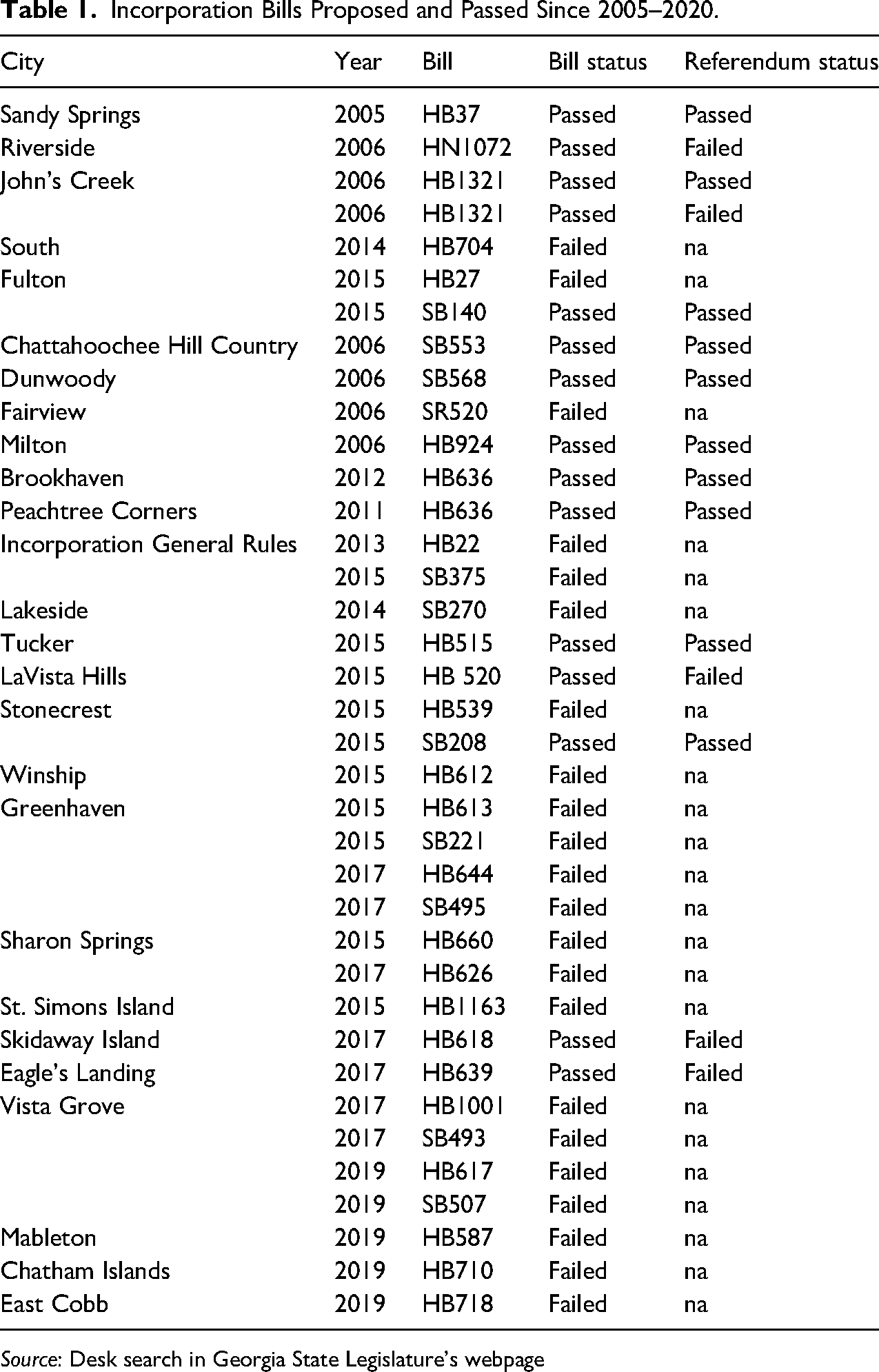
Between 2005 and 2020, Georgia has added ten new cities (see Table 1). There has been a myriad of unsuccessful proposals too, that failed during the first stage of incorporation at the state legislature, such as Greenhaven or in the referendum, such as LaVista Hills. Some movements succeed after years of organization, such as South Fulton.
Incorporation Bills Proposed and Passed Since 2005–2020.
Source: Desk search in Georgia State Legislature’s webpage
Figure 2 shows that most new cities were created in White communities. Two new cities stand out as predominantly Black areas: Stonecrest and South Fulton. Both cities are the newest additions to these cityhood movements created in 2016, and both attempted to incorporate at least two times before gathering political support to do so. In November of 2022, Mableton, a majority Black, Latino and Asian city in Cobb County also voted for incorporation, but the city had not officially started its operations at the time this manuscript was written (Mock 2023).
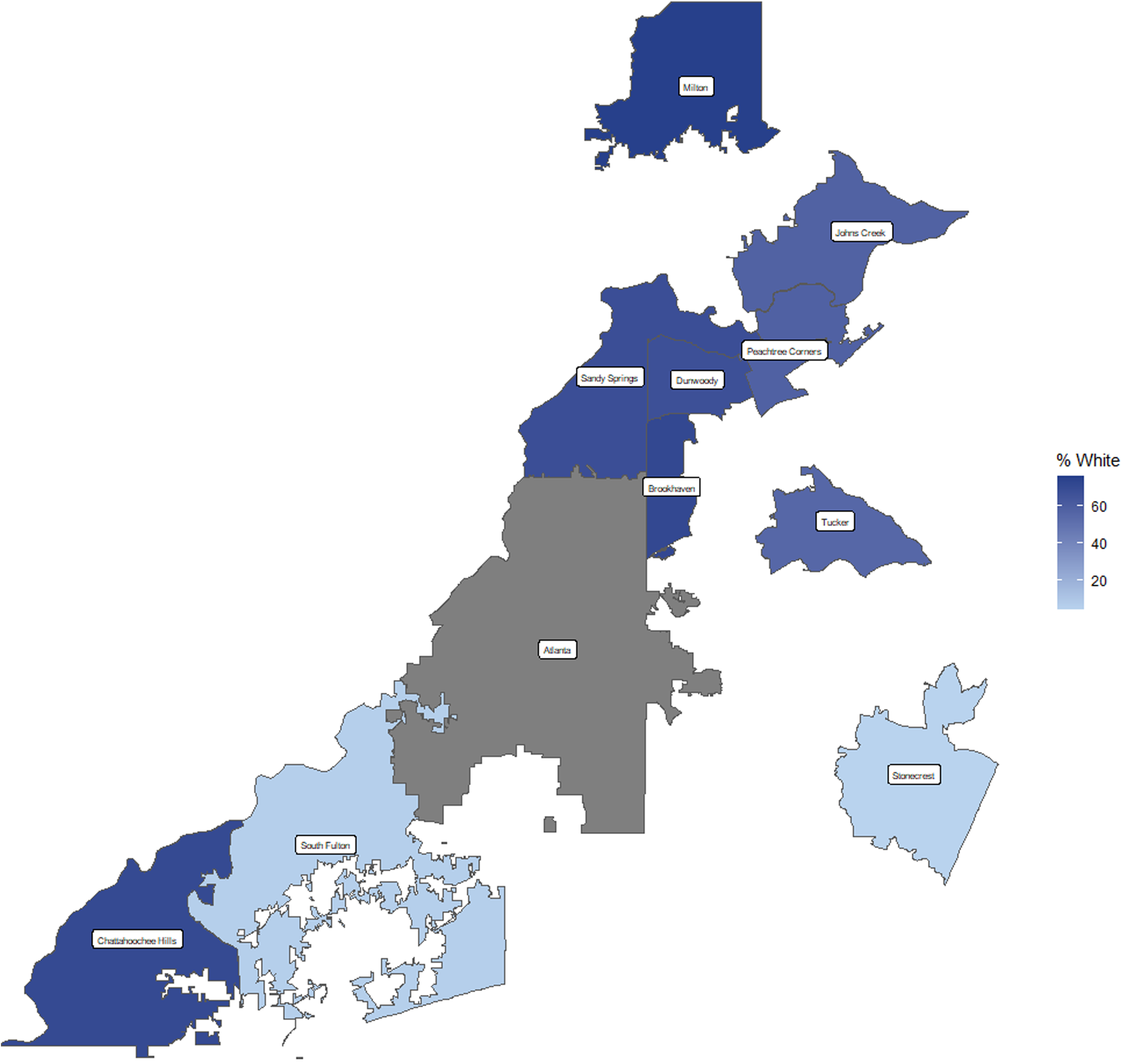
% White in Newly Incorporated Cities in the Metropolitan Area of Atlanta in 2020.
Racial Threat and Conservatism in White fortressing
Allegations of Resource and Service Inequality
Consistent with previous literature, participants mentioned a variety of reasons when asked what triggered the formation of their movements. Nearly all White fortressing leaders started by talking about dissatisfaction with the delivery of county services as a reason for creating new cities (Kenny and Reinke 2011).
Most arguments referenced dissatisfaction with areas of policy control and services that have been highly associated with racial bias, including zoning (
Importantly, when mentioning these types of reasons, participants often talked about a before and an after, as if the county used to provide better services before it became more racially diversified. A White state legislator told us: In Sandy Springs, they had seen what had once been a very vibrant suburban area. The County had put in a lot of apartments, thousands of them …A smaller government might have stronger code enforcement, they became essentially like slums, almost. A lot of drugs and that kind of thing, so people were kind of alarmed.
These types of arguments are similar to the ones made in the 60s by segregationist leaders looking to protect new White suburbs from becoming diverse. Kruse (2013) references a 1966 segregationist leaflet against the annexation of Sandy Spring to Atlanta that read: the citizens of Sandy Springs are well aware that the people who have rendered Atlanta’s public parks virtually useless to its White citizens would soon monopolize new parks in Sandy Springs [if the city is annexed]
Also in line with previous work (Kenny and Reinke 2011; Musso 2001) many participants ( So the driving force of this area was that the county was an outside threat being driven by geographical distance. With that the claim was it allowed a revenue that was generated up here and was going south and we weren’t seeing any of the services that we wanted to have.
Both White and Black respondents expressed similar frustrations with respect to where money was being used in the county. Specific data on resource distribution was not available at the time of the research and are beyond the frame of this manuscript. Regardless, these conversations reflect racial resentment sentiments vis-a-vis the sharing of resources between Black and White areas.
Still, data on county-level revenues for government activities confirms that revenue at the county level considerably declined for Fulton and DeKalb counties since 2005, when incorporations started to take place (see Figure 3). This is not unexpected since property taxes, the largest sources of revenue for unincorporated areas, is transferred away from county-level authorities to new municipalities as they get created. With new municipalities, unincorporated areas left-behind are left with fewer overall resources. This dynamic is not observed in Gwinnett County probably because only one new city was created in this time period.
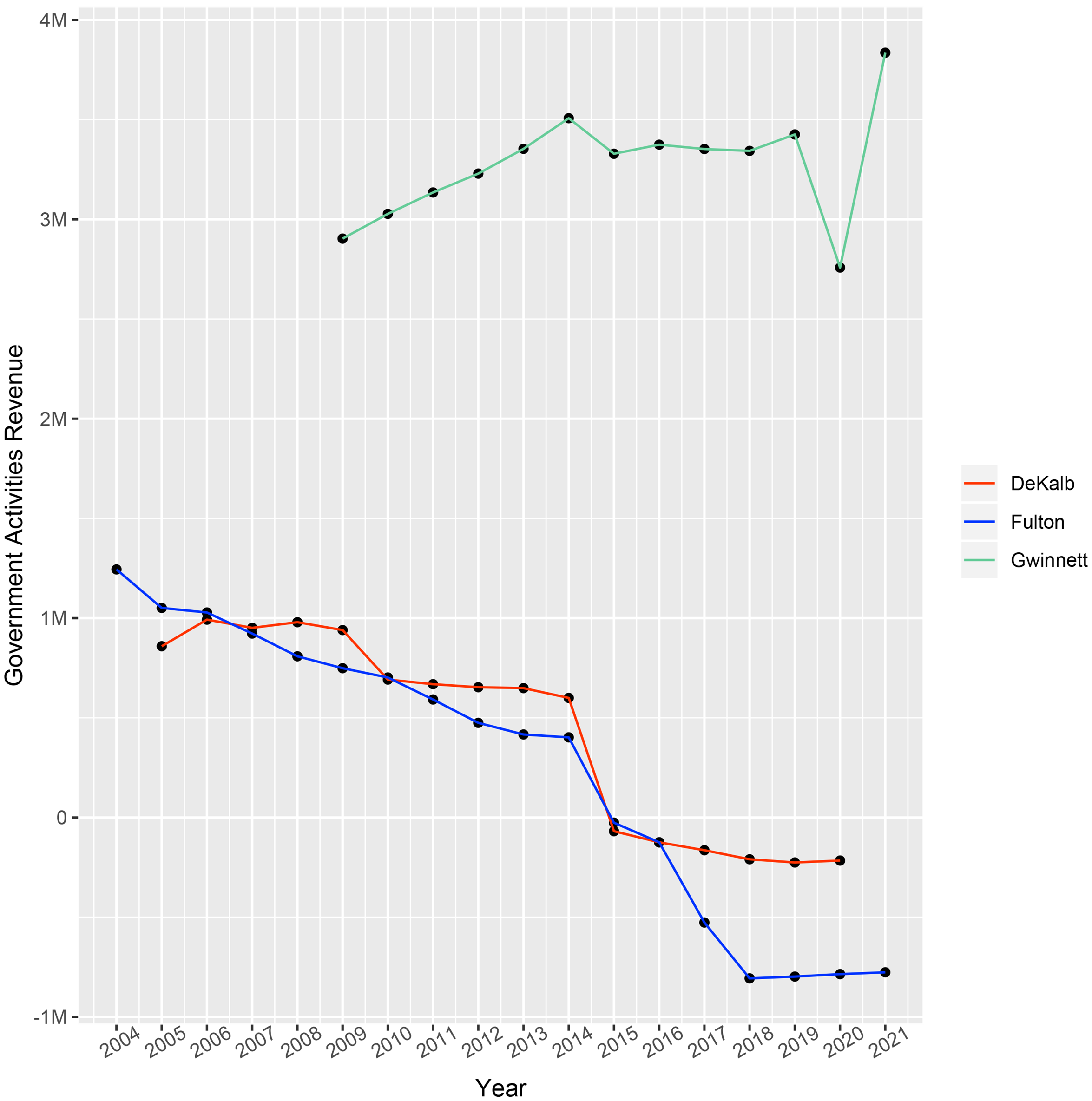
Government Activities Revenue per County.
Fear of Loss of White Power
Many of these reasons amounted to having more power and control over institutions (Burns 1994). Thirteen participants talked about the importance of having more local control over their communities. Two-thirds of interviewees ( I’m telling you, this has a racial component, and you all need to bring it out. I’m not accusing anybody of being a racist, but it was race-based. Because it came down to control. Whites don’t mind Whites spending their money. They don’t want Blacks spending their money. And Blacks don’t mind Whites spending their money.
Indeed, many counties in Metropolitan Atlanta have seen changes in the racial composition of county CEOs and commissioners. For instance, in Dekalb County, the first Black county CEO was elected in 2000 and all subsequent CEOs have also been Black 1 . Similarly, (Connor 2015) illustrates how the racial composition of Fulton and Dekalb counties’ commissioners and other local officials was one of the elements that created dissatisfaction with county governments.
Many conversations talked about the fact that representation had switched hands from officials who would represent the interest of their communities to those who would focus their attention to other unincorporated areas. The sentiment was that a lack of White local representation was a menace to the wellbeing of White communities and articulated a fear that Black government officials would revenge against White communities for previous segregationist policies (Bonilla-Silva 2006). A White council member said: It is largely based on race. So, the county was a majority White County for a very long time. And then when it became a majority Black County, I guess it was payback, right? So basically, no money went to the North County, […] So that inequity kind of manifested itself and like, oh, we don’t feel safe. Oh, our parks are horrible. They don’t listen to our voice when we say we don’t want certain zoning categories to happen in here.
Importantly, many comments directly referenced the race of local county officials. Commonly, these various allusions amounted to a fear by White communities of losing the advantage they had in unincorporated places within a county government that used to protect their interests (Blalock 1967). A White member of an ongoing movement used the following argument: [Our] County has four Black commissioners and three White commissioners, or five and four. Bottom line is, there’s a majority of African Americans, and they’re almost all elected from the southern part of the county, and so they usually vote to spend the county money on their areas because that’s where they get their votes. So that’s why we now get ignored.
A focus on power and race in the perceptions of White fortressing leaders often showed how participants attributed many deficiencies and features of county-level governance, that have been shown to not be analogous to municipal governments (Purifoy 2021) to the fact that low-quality services were linked to Black public officials being elected for county government. For instance, some people told me that their communities had no sidewalks because they had no representative who looked after their interests as a community.
When conversations alluded to a before and after, there was often also a mention of changes in the demographics of the unincorporated areas and of the political make up of local county officials. Interestingly, many conversations with Black participants confirmed that this sentiment was very present in White leaders’ arguments. I heard from a Black state legislator: You ever heard of a term, NTL? […]Negro tolerance level. What do I mean by that? If too many Blacks move in a White community, they can only tolerate so many before they start to bail out. If too many Blacks move and start going to a particular White church, once that tolerance level is met, they’ll start to go to another church.
The fear of lacking White descriptive representation was paralleled in the White flight movements of Atlanta from the 60s and is exemplified in this quote from Kruse (2013): Under the one-man/one vote ruling, the lowest, least educated and most irresponsible biped taxpayer has the same vote as does the educated […] what kind of government will this give us in the melting pot of Atlanta?.
The before and after mentioned by interviewees can be attributed to demographic changes experienced in the three primary counties of the Metropolitan area of Atlanta where new cities seat: DeKalb, Fulton, and Gwinnett County. Figure 4 shows that in all three cases, the percentage of Black people has increased gradually and significantly since the 60s. In DeKalb and Gwinnett Counties, the Black population increased from an average of 8% in the 60s to 64% and 46.2% respectively today. In Fulton County, Black people constituted 34.7% of the county in the 1960s to 54.4% today. A contrast with overall demographic changes in Georgia confirms that changes in the suburbs were much more marked.
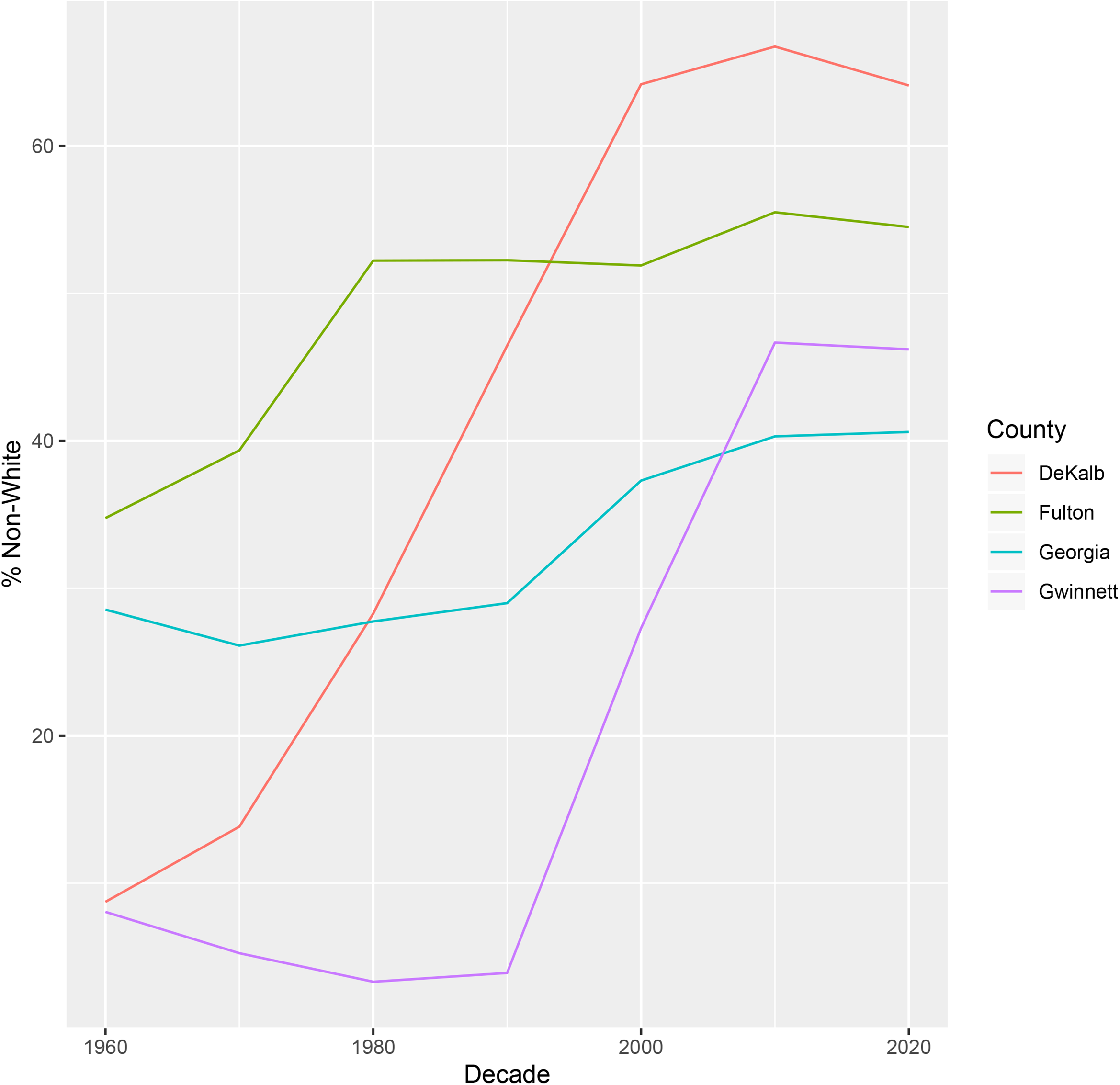
% Non-Whites per County 1960s–2020s.
Many conversations were often resentful and conveyed a perception that racial equality constituted a threat to White communities because it meant giving up previously available advantages (Norton and Sommers 2011). These feelings were backed up by conversations with Black legislators and leaders of Black incorporation movements. Two contrasting conversations with a White fortressing leader and a Black council member illustrate this same point: So, it’s worth noting that we are an affluent area, and while we are only 7% of the voters, we were 11% of the budget and I think there was some sense that they treated us a little like a cash cow. That it was our job to deliver tax revenue to be spent in other parts of the county.—White fortressing leader There was a sense that, not born from empirical data, but how much of politics is these days, but just the sense that [our city] or Black parts of [the county] got everything and that they got nothing. I would hear complaints all the time from proponents saying, Hey, they got new sidewalks and roads and all this kind of stuff.
Fear of Annexation
In contrast to movements during the 20th C, very few participants ( [X City] was going to take a piece of us, [X City] have a piece, [X City] have a piece, and then what they were going to do is they were just going to take it in bits and pieces. […] We were going to be trapped, little pockets of residential unincorporated surrounded by all these cities. So for us, we finally got to the point that …We thought we were one of the most diverse places in the county. We had no problem with that. We love it.
Race Rethorics Before and Now
A racial lens structured most ideas about why communities decided to incorporate (Smith, Waldner, and Richardson 2016; Purifoy 2021). More than two-thirds of participants (
A comparison between 20th C segregationist movements and today shows that communities are concerned with similar issues more than 20–30 years later. Kruse (2013) quotes a man from Gwinnett County who opposed the construction of the Metropolitan Atlanta Rapid Transit Authority (MARTA) who said during the 80s: “These people [that moved to Gwinnett] have been sensitized to public transportation and the population of the inner city and moved away from it. It boils down to personal security”. In a very similar conversation, a White citizen of a new city told me: “People in the southern part of the county have tried to get the MARTA built in their areas for years, but we know that if you connect people from those high crime areas to us, they will bring the crime to our community.” In both cases, the concern expressed by White communities was to limit the influx of Black people into specific White suburban communities, reminiscing of Greason (2012) and Rothstein (2014) similar observations in New Jersey and St. Louis in the 50’s.
Just as during the postwar era, most of our conversations used colorblind arguments, particularly those based on abstract liberalism, through which they appeared to avoid directly racial language but nevertheless supported White fortressing. For example. participants suggested that people felt alienated from resources by Black people, appealing to the feeling of loss used in conservative movements (Robin 2017). A White member of a current incorporation movement said: It’s your money, yeah, and so these areas down here get an inordinate amount of park money and police money and all that, and partly because in poor areas, you have higher crime. There’s the racial component, because the poor areas tend to be more African American, and so they have higher crime in their neighborhoods, and therefore they spend most of the police resource and in those parts, but most of the money comes from our area.
During the postwar era and today, communities still expressed discomfort with tax redistribution and shared representation. Kirp, Dwyer, and Rosenthal (1995) identified that suburbanites in New Jersey in the 90s were concerned with having to assume responsibilities for those they expressly left behind. With respect to resource distribution many of our participants believed it was unfair that their resources were being used by other communities and some used this example to invoke reverse racism ( I know that some people wanted a city government that could help rectify that disparity that shouldn’t have occurred. It shouldn’t have occurred any more than the opposite. Resources should not be allocated based on race. That was not a motivator for me, but I think it was a motivator for some.
During the postwar era, people used a discourse that was predominantly based on rights and freedoms. Leaders of these movements today still appeal to similar arguments. A state legislator from the Atlanta area in the 70s said: “The suburbanite said to himself: the reason I worked for so many years was to get away from pollution, bad schools and crime, and I’ll be damned if I’ll see it all follow me” (Kruse 2013). A White member of a current movement said: And so we thought to ourselves, well probably it’s a good idea for us going on in the future if we form borders […] a city limit district, so that we could have representatives on things like school decisions, on stuff like traffic, restructuring, on stuff like where they build new roads, and then even more specific things like permitting and all that.
However, unlike during the postwar era, many participants also felt more comfortable making explicit appeals to race (Valentino, Neuner, and Vandenbroek 2018). Without being prompted, half of the participants ( it’s the same school system that operates in the south part of the County and the north part of the County. But they are very different communities. But they’re one school system. And so, the demographics are different, the family makeups are different. So, the results of the school success, if you will, or student success varies greatly from North [name of County] to South [name of County]].
An Elite and Conservative Movement
Incorporation movements are officially led by private citizens. Two-thirds of participants (
Participants often talked about the political side of these movements. This observation has been indeed backed-up by how state and local politics have developed in the state. For example, before 2005, laws in Georgia established that communities could not incorporate when located less than 3 miles from an existing city. This law prevented several potential cityhood movements, including Sandy Springs. However, a partisan change in the state legislature in 2004, which gave the majority in the General Assembly to Republicans after years of Democratic leadership, led to an amendment of this rule (NCSL 2020). This change marked the beginning of a new wave of cityhood movements in Georgia.
Nearly all participants ( This is all about power. Make no mistake about it, it’s a matter of who’s fighting who for the power. And I readily tell people that we were able to get on the ballot because we did not pose a threat to White Republicans. […] We stayed with the most powerful senator that was in the state of Georgia. Finally, it was because of him, he let us through. But he could have killed this right there at the last minute also. Oh, and he reminds us every time we see him,“If it wasn’t for me, there wouldn’t be a city there.
A bit more than half of the participants talked about the role of partisanship without prompt. Five of those interviewees mentioned that partisanship was not crucial in the process, implying that both parties favored incorporation movements. At the same time, 11 participants suggested Republicans were behind the formation of most of these cities. One mayor mentioned: “Quite frankly we got the right Republicans on our side.” Data on incorporation bills indicates that legislators from both parties have sponsored incorporation bills since 2005. However, Figure 5 shows that Republicans sponsored more than half of the bills that passed in both chambers, while most of those that failed were sponsored by Democrats.
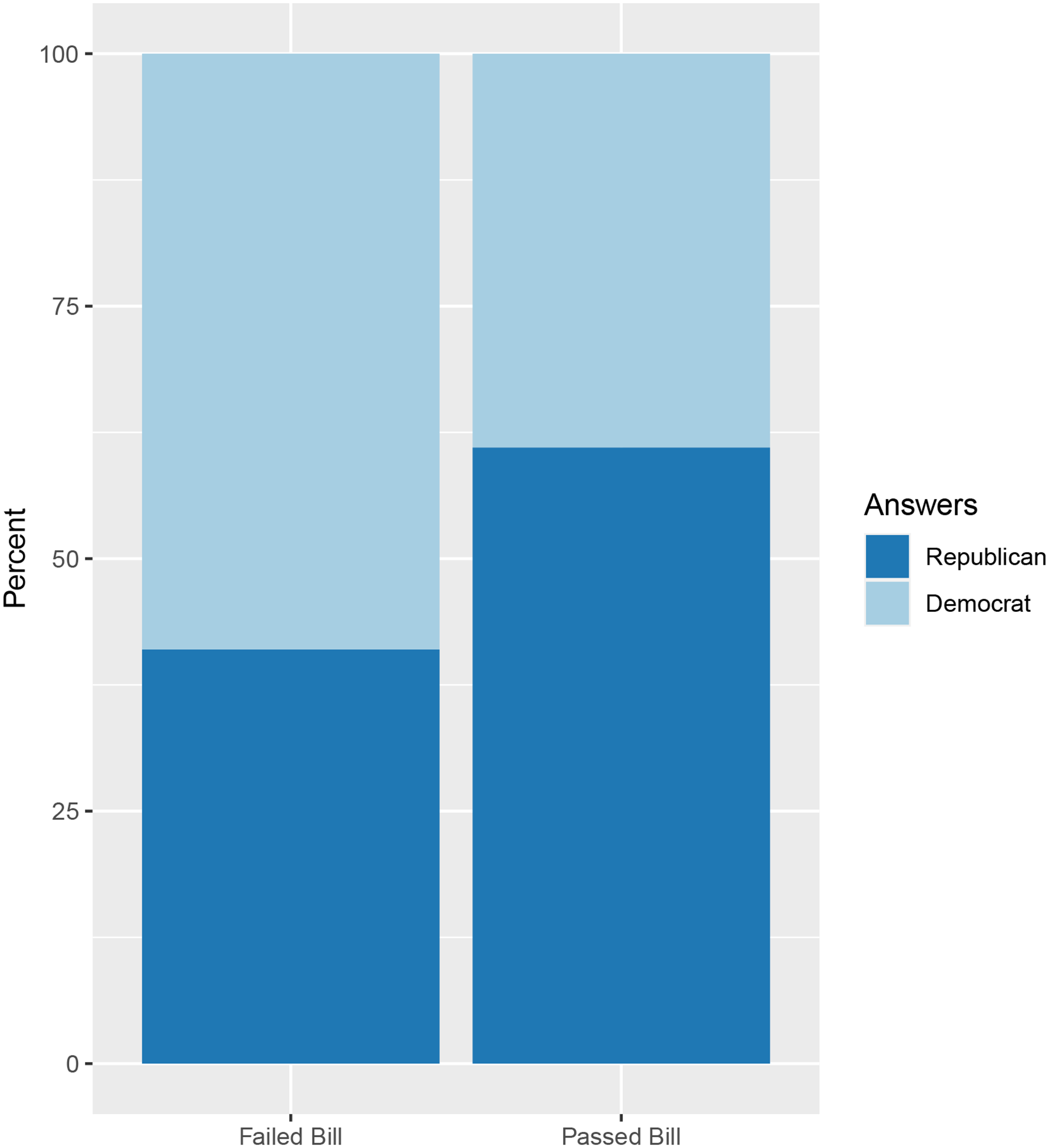
Successful and Unsuccessful Incorporation Bills by Party. Source: Desk search in Georgia State Legislature's webpage.
Beyond partisanship, many conversations harnessed feelings of loss and racial resentment, including loss in resource availability, loss in representation at the county level and loss in the amount and quality of services available. These opinions often were linked to other conservative ideals such as the freedom of self-determination (Hackworth 2019; Black, Black, and Black 2009). A White council member said: when [the] County became majority Black and he was the first Black CEO, he announced to the White community, It’s our turn, guys. Don’t expect anything. You’ve controlled the county. The White majority has controlled the county forever, and we’ve been picking up table scraps, and now the tables have been turned so you can get out of town. He basically, within a very short period of time, he replaced every White department head in the county with a Black department head, and every contract went to a Black owned business, and he basically said, I’m not even going to pretend that we are colorblind.
Black cityhood movements
Leaders of Black cityhood movements suggested that it was more complex for communities of color to harness the political support to succeed compared to White fortressing movements (Smith and Waldner 2018). Often it was mentioned that if the incorporation board was composed of solely Black people, state legislators were less likely to support the movements or to “entertain a meeting with [them]”. These opinions were expressed even by members of successful cityhood movements, who strategized to minimize the Black part of their movement when they were campaigning. A Black council member of a Black city also mentioned: this country has had a very, very tough time dealing with the issue of race, especially Black folks and White folks and that kind of thing. That was never part of our sales strategy for the city. We never brought it up, never talked about it. It was never even mentioned that this was a 95% African–American community. Part of our thinking was, well, once you see us.
Table 1 (above) shows that Black movements have indeed had more difficulties passing incorporation bills and getting political support for their movements. While some White fortressing movements failed in the referendum phase, Black movements failed both at the state legislature and referendum phases. To date, there have only been three successful and one unsuccessful Black cityhood movements in Georgia: Stonecrest, South Fulton, Mableton, and Greenhaven, respectively. Black movements are also more recent compared to White movements. The two thriving Black cities, South Fulton and Stonecrest, were incorporated within a ten-year gap of the first wave of prosperous White cities. Mableton was approved by voters in November of 2022 and is already facing factions of the new city that want to secede (Mock 2023). Greenhaven has unsuccessfully pursued incorporation every legislative year since 2015, but the bill has picked up very little political support.
Part of the argument used when talking about Black cityhood failures is that to be successful, communities have to demonstrate the feasibility of the cities and that many Black communities are not capable of demonstrating that. However, in these conversations there were little mentions about how previous segregationist policies, land annexations and predatory inclusions, creative extractive processes had already deprived communities from resources resulting in this situation (Durst, Wang, and Li 2022; Seamster and Purifoy 2021; Aiken 1987; Smith 2018). Black participants often expressed frustration with this situation and talked about having to fight without true representation against all White municipal governments for shared resources.
Similar to White fortressing movements, but pushed by different dynamics, more than half of the Black participants (5/8) mentioned wanting to be better represented as a reason for incorporation. Most did so in reference to the status of their communities vis-a-vis that of newly formed White cities. A member of an ongoing Black movement said: we are largely neglected when it comes to services and opportunities, development, road maintenance, code enforcement, because you don’t have anybody as a champion that’s specifically working on your behalf. All the other municipalities have mayors and city council, right?
Aside from having more difficulty with harnessing the political support for their movements, leaders of Black cityhood conveyed different motives for seeking incorporation, compared to White fortressing leaders. Namely, participants provided three main reasons for seeking incorporation: Correcting inequalities between White and Black communities in the county, increasing the quality of services in their communities, and having better representation to face other White municipal governments. Conversations also alluded to a sense of justice and fairness, I often heard “If White people can form governments, so should we” (Goel et al. 1988). A Mayor mentioned that while the arguments between Black and White movements for incorporation were similar, their reasonings were different: The largest driver for me was that our sector of town that was unincorporated was completely ignored economically and for development. And we were just stagnant. […] All this kind of neglect that’s been going on over the years, no one is focused on this because we’re in the South. All the money, all the attention goes to the North, where we’re normally going to work and all those kinds of things. […]What was implied in the [first] cityhood movements was, I’m tired of my money being spent in the South part of the county. They had a very similar argument [to us], but their reasoning was a little bit different. Their reasoning was well, you’re spending my money in [a city in the South] with those Black folks. […] Our thing was, well, you’re now taking a disproportionate large amount of our money and spending it somewhere else. What we want to do is we want to take all our money and spend it in our area as well.
In addition, unlike White fortressing leaders, more than half of Black participants (5/8) mentioned inequalities between White and Black parts of the county as a reason to incorporate, alluding to the nuisances created by the formation of other governments (Smith and Waldner 2018; Purifoy and Seamster 2021). A Black council member said: I was always curious as to why there was so much inequity from South of the county and the rest. All of the great stores, all of the great restaurants, everything was moving up north, and I couldn’t understand that we had wealth, and we had the amount of people in the South, why weren’t we entitled to those type of things? So that concerned me a lot, and I also thought about how fast it was to get things done in the North, like getting the roads paved, like not having to fight to get street signs or lighting and things of that nature. So it was always a struggle, and for me, what I looked at was us becoming our own city, we’ll be able to prosper
A few Black participants talked about the desire to have better quality services as a reason to incorporate. When participants referenced this reason, they often did so by talking about how White fortressing affected their communities by diminishing the quality of services received or in comparison to how White cities were thriving (Smith and Waldner 2018). A state legislator told us that after White cities were created what was left “was nothing but the bones”. Data on county finances (presented above in Figure 4) shows a deep decline in county revenue since new governments were created.
Conclusions
By interviewing actors of White cityhood movements in Georgia, I analyze a new wave of government formations that has occurred since 2000. I find that these movements serve as a modern form of segregation that takes on new characteristics. I call this phenomenon White fortressing and show that it consists of White communities building barriers to limit their interactions with Black people and communities of color.
White fortressing leaders use a language based on conservative ideals of freedoms and individualism, reminiscing of the rhetoric used during the White flight period, which was based on what Bonilla-Silva (2006) called colorblind racism. Unlike then, however, many participants are starting to make more explicit appeals to racial motives and resentments, fueled by a new sentiment of legitimate pursue of collective interests (Effron and Knowles 2015).
Some Black cityhood movements have started to emerge too, but I show that they are less successful at incorporating. Likely because White communities have more access to political influence at the state level, resources, and societal networks. Still, I identify three successful Black cityhood movements that differ in certain ways from White movements. They are more recent, and they are mostly triggered by feelings of inequality and nurtured by a sense of justice.
While this manuscript focuses on Georgia, new work has started to document the degree to which racial and economic exclusion influence municipal incorporations in the rest of the country (Wyndham-Douds 2023). These interviews complement such accounts by providing evidence of the motivations behind these movements, which are likely to be replicated in other parts of the country.
Incorporations have decreased in numbers in recent years in the US, leading some to believe that the effects of these movements are also fading. Such a conclusion, I believe, is misguided. While it is true that these movements are now localized in certain regions, their effects are genuine. Entire communities can be left behind and depleted from resources. More importantly, the occurrence of one successful incorporation can also be the trigger for more such movements in the region and throughout the country (Mock 2022). It is crucial to understand how segregation plays out in the suburbs because since the 90s, suburbs, where many of these cities are created, have gained increasing power. While individual movements might seem benign, and many of these have taken place in the south, the amalgamation of these movements could transcend to the national sphere and influence national politics (Kruse 2013).
Some may be skeptical about the racial dimension of these movements. White fortressing indeed differs from previous segregation mechanism in dimension, nature, and form. However, as we see in this manuscript, many of these differences are not as large as they initially appear, even when they take place decades later. Understanding the causes and consequences of municipal government formation is thus crucial for analyzing how institutions and individuals still shape racial segregation today. This is particularly true given that leaders of incorporation movements can insert their private values and interests into the legal structures of new cities (Burns 1994; Miller 1981; Purifoy 2021).New cities may then institutionalize racism, individualism, and conservatism (Purifoy 2021).
Through the example of White fortressing in Georgia, I reveal that founding works on urban politics fail to understand the critical dynamics of local politics (Tiebout 1956; Peterson 1981b), because they fail to recognize how racial inequities triggered through local policies can have deep consequences for communities of color. This manuscript exemplifies how from its inception, cities are built on racial grounds. I also contribute to a body of scholarly work that explores the causes and consequences of residential integration and segregation by illustrating how entire communities are left behind (Charles 2003; Crowder, Hall, and Tolnay 2011; Crowder and South 2008; Kruse 2013). Finally, while the literature on boundary change has highlighted the role of racism and White hoarding of resources in annexations, incorporation, and secessions (Durst, Wang, and Li 2022; Seamster and Purifoy 2021; Aiken 1987), I advance this area of research by providing the first in-depht analysis of the motivations behind White fortressing.
This manuscript focused on the politics and triggers behind incorporation, but as shown growingly in new research, the incorporation of these communities has racial consequences. Most of these areas are demographically White, more affluent communities and their incorporation results in hording of opportunities and resources (Highsmith 2020). More work is needed to document these effects on unincorporated demographically diverse areas that are left behind.
Footnotes
Acknowledgments
The author thanks Katherine Levine Einstein, Maxwell Palmer, Wilson K. Graham, David M. Glick, and the blind reviewers of the manuscript for very constructive and helpful feedback. Thanks to the Initiative on Cities at Boston University and its staff for the research grant and overall help with the project. Thanks to Gabriella Garriga for outstanding research assistance.
Declaration of Conflicting Interests
The authors declared no potential conflicts of interest with respect to the research, authorship, and/or publication of this article.
Funding
The authors received no financial support for the research, authorship and/or publication of this article.
