



Abstract
Despite the increased scholarship on sanctuary localities in the United States, there is little research analyzing the factors that lead to the adoption of sanctuary resolutions at the municipal level. Drawing on a new dataset of sanctuary and nonsanctuary cities, we theorize that policy adoption is driven primarily by two factors and their interaction: the size of the foreign-born population and local partisanship. We examine cities that passed sanctuary policies between 2000 and 2018 and compare these localities to nonsanctuaries. Using a novel time series cross-section dataset (TSCS) of all cities and designated places and a Cox proportional hazard model, we find that Democratic-leaning cities with high foreign-born populations predict sanctuary passage, whereas Republican-leaning cities with larger foreign-born populations are unlikely to adopt these policies. We thus find that while partisanship motivates sanctuary policy adoption, at the same time, the size of the foreign-born population also increases the likelihood of passage.
Introduction
Since the 1980s, localities in the United States have adopted a variety of policies that seek to increase incorporation and access for local immigrant, refugee, or asylee communities. Borrowing their name from the Sanctuary Movement which had sought to shield Central Americans asylum seekers from deportation by the Reagan administration, today these policies limit the cooperation of local officials and police with federal immigration authorities. Opponents of these policies contend they can foster lawlessness and encourage undocumented entry, or even lead to increased crime. Proponents argue that as immigration enforcement is the duty of the federal government, there is no requirement, or need, for local officials to cooperate with Immigration and Customs Enforcement (ICE) or participate in enforcement operations. In fact, supporters of these policies argue that they are beneficial to all residents because they increase trust in local officials on the part of immigrant communities and make it more likely undocumented residents will report criminal activity.
While sanctuary policies have always been controversial at the local level, they did not emerge as a national political flashpoint until the shooting of Kathryn Steinle in San Francisco on July 1, 2015. Seizing on Ms. Steinle's death as an example of the threat posed by undocumented immigrants, Donald Trump made opposition to sanctuary policies a central part of his campaign, and later his administration. Just days after taking office, Trump signed Executive Order 13768, which ordered then-Attorney General Jeff Sessions to find a way of defunding sanctuary localities for their defiance. Past presidents had for the most part chosen to ignore these policies, as had Congress, though conservative media outlets had begun to criticize them in the second half of the 2000s (Collingwood and Gonzalez O’Brien 2019a; Collingwood, O’Brien and Tafoya 2020; Gonzalez O'Brien 2020). Opposition to sanctuary policies was part of Trump's broader anti-immigrant platform, which helped to further polarize the issue of sanctuary along partisan dimensions (Collingwood and Gonzalez O’Brien 2019a; Collingwood, O’Brien and Tafoya 2020; Collingwood and O’Brien Gonzalez 2019b).
Functionally, sanctuary policies typically prohibit local officials at the municipal or county level from inquiring into the immigration status of residents, though some states 1 have also passed sanctuary legislation. Some policies go further and forbid local law enforcement from holding individuals who have been taken into custody on ICE detainer requests, though there are often exceptions for certain types of crimes (Avila et al. 2018; Collingwood and Gonzalez O’Brien 2019a).
There is a growing scholarly debate around what leads localities to initially adopt these policies at the state and local levels. Given the arguments proponents typically advance in support of sanctuary policies, we focus specifically on the roles played by partisanship and demographics in predicting city-level sanctuary policy adoption. We have chosen to analyze adoption at the city, rather than county, level as this is where sanctuary policies are the most numerous and because cities were the first level of government to adopt these policies.
Supporters often emphasize the security these resolutions can provide for residents without legal status, but is the adoption of these policies is driven by the needs of the local immigrant community or the appeal they have to Democratic voters? Do cities adopt sanctuary policies strictly in response to the size of the foreign-born population? Or do more liberal (Democratic) localities—who presumably have more left-leaning and immigrant-friendly city councils—adopt sanctuary policies regardless of the size of the city's immigrant population, perhaps as a way of signaling opposition to existing immigration policy or enforcement operations? While this question has been explored at the county level by Vandegrift and Weyand (2020) and it is common knowledge that Democrats are more supportive of sanctuary policies, it remains unclear whether city-level sanctuary resolutions are passed based on ideological considerations, if these localities are primarily responding to the needs of the local immigrant population, or some combination of the two.
We draw on an original event history dataset consisting of the demographic and partisan characteristics of every city or municipality in the United States (including 295 different sanctuary cities) to better understand the role played by local ideology and the size of the foreign-born community in the passage of sanctuary policies. This allows us to demonstrate that sanctuary city adoption has been driven by both partisanship (percent Democrat) and the size of the city's foreign-born population in both the period predating Donald Trump, as well as following his election. Cities with large shares of Democrats and foreign-born residents are especially likely to adopt a sanctuary policy and when interacted, partisanship and demographics together have been strong predictors of sanctuary adoption since 2000.
In the sections to follow, we begin with a discussion of the history of sanctuary legislation in the United States and changes in these policies from their first adoption in the 1980s through the administration of Donald Trump. We next examine existing scholarship on immigration and sanctuary policy making before presenting our analysis of sanctuary policy adoption.
Sanctuary Cities: A (Somewhat) Brief History
To inform our core hypotheses, it is necessary to provide a brief history of the development of sanctuary cities in the United States. It is also worth noting that sanctuary policies exist along a continuum, from policies more symbolic in nature affirming the locality's commitment to all its residents, to those that expressly forbid any kind of local cooperation with ICE and prohibit local officials from inquiring into immigration status. Two examples are illustrative of this continuum.
The city of Berkeley, CA, passed the earliest known sanctuary policy in 1971. However, this policy had nothing to do with refugees or immigrants, the two groups that these policies are most associated with today. Instead, Berkeley's Resolution 44,784 provided safe harbor to conscientious objectors to the Vietnam War, some of whom were sheltered by local churches (Berkeley 1971). It drew on the ideological currents in the city, with Alameda County, where Berkeley is located, being one of the only six counties in California that went to George McGovern in the 1972 presidential election (Leip 2022). Berkeley's resolution was largely symbolic, meant as a statement against the war and President Richard Nixon, whose policies were particularly unpopular in California's liberal enclaves.
But another California city would become the first to have a sanctuary policy to address concerns among the local immigrant and Latinx population about local enforcement of immigration law. In 1979, the Los Angeles Police Department implemented Special Order 40, which prohibited officers from inquiring into the immigration status of residents. The LAPD designed this policy to facilitate cooperation between Los Angeles’ large Latinx and immigrant populations and the LAPD (Los Angeles Police Department 1979). Then Police Chief Daryl Gates, in an interview in 2008, acknowledged that the order was not seen as either a contentious or partisan issue at the time it was passed (40 on 40; Forty Prominent Angelenos and Southern Californians Sound off about Policing, Illegal Immigrants and the LAPD 2008).
The policies of Berkeley and Los Angeles highlight how both partisanship and the local Latinx or foreign-born population can drive the adoption of sanctuary policies, as well as how the policies themselves can differ from one another. In Berkeley's case, the strong local opposition to the Vietnam War made the adoption of the nation's first piece of sanctuary legislation both politically safe, as well as potentially popular. Special Order 40 on the other hand was not driven by politics, but instead an acknowledgment that some level of incorporation of the undocumented community was necessary if police were to be able to effectively perform their duties.
Sanctuary policies as we know them today formally came into existence in the 1980s, as civil conflicts in Guatemala and El Salvador led refugees to flee their home countries and seek refuge in the United States (Freeland 2010; Golden and MacConnell 1986; Ridgley 2008; Villazor 2007). Cities like Berkeley, Madison, and Seattle were, in many cases, passing these resolutions not as a result of a sizable Central American or Latinx population, but instead as a reflection of ideological opposition to the Reagan administration's actions in Central America and the denial of asylum claims from Guatemalan and Salvadoran refugees. This would become such a popular position for Democrats that support for the movement was included in the party's platform in 1984 (Collingwood and Gonzalez O’Brien 2019a).
Many of these early resolutions in the 1980s expressed support for the Sanctuary Movement but lacked some of the more functional elements of later policies that would expressly forbid local officials from cooperating with or assisting federal immigration officials. Following the September 11th attacks and subsequent crackdown on undocumented immigration, a new wave of sanctuary policies passed in cities and counties throughout the United States. As the Bush administration began encouraging localities to sign 287(g) agreements 2 and responsibility for immigration enforcement was brought under the newly formed Department of Homeland Security, some cities passed new sanctuary resolutions or revised their existing policies to shift their focus to the undocumented community. Legislation passed during this period would often both condemn the immigration policies of the Bush administration, but also highlight, as had Special Order 40, the need for the cooperation of local immigrant communities for effective law enforcement.
For example, Berkeley would revise its sanctuary policy, but retain its largely ideological nature. Referencing the policies passed in 1971 and 1985, Resolution 63,711 (2007) stated: “Whereas, the spirit and intent of Berkeley's refuge Resolutions would be violated if City funds, facilities or staff were utilized to assist the Federal government's inhumane immigration policies and practices” (Berkeley 2007). Berkeley's revised resolution criticized Bush administration policies and was openly ideological in nature, citing family separation and the violation of the rights of undocumented immigrants under the post-9/11 immigration regime. There was little mention of a functional basis for the policy, either in facilitating access to resources or cooperation with law enforcement, with the policy clearly meant to be a form of symbolic defiance.
Other cities chose to take a different tack in their resolutions. Oakland's 80584 (2007) repeated many of the criticism of the Bush administration's policies on immigration that also appeared in the Berkeley resolution, but went on to state, “Whereas, the enforcement of civil immigration laws by local police agencies raises many complex legal, logistical, and resource issues for the City, including: (1) undermining the trust and cooperation with immigrant communities; (2) increasing the risk of civil liability due to the complexity of civil immigration laws and the lack of training and expertise of local police on civil immigration enforcement; and (3) detracting from the core mission of the Oakland Police Department to create safe communities (Oakland 2007).” It is important to note the demographic differences between Berkeley, where Latinx residents made up only 9.7% of the population and 20.4% were foreign-born, and Oakland where 21.9% of residents were Latinx and 26.6% were born outside of the United States. Berkeley leaned more heavily on an appeal to local Democrats through its updated resolution, while Oakland chose to frame it in a manner that was meant to highlight the benefits to the broader community, one-fifth of whom were Latinx. Chicago, IL, in updating its municipal code in 2006, would specifically reference the size of its immigrant population and their representation in the workforce as a factor in prohibiting local officials from inquiring into immigration status (Chicago 2006).
Sanctuary policies have always been reactive in nature, but the election of Donald Trump and his aggressive stance toward undocumented immigration would lead a number of new cities to declare themselves as sanctuaries beginning in 2015. Trump's anti-immigrant rhetoric and threatened crackdown on undocumented immigration 3 led Democratic leaders to push for sanctuary resolutions to protect local immigrant communities, even in places that had relatively negligible immigrant populations. This raised the question of what was driving passage of these policies, and how local demographics interact with one another to increase the likelihood of a city becoming a sanctuary.
Partisanship, Demographics, and Sanctuary Policies
Research to date on state and local policy on immigration suggests that a number of factors can influence the likelihood of passing restrictive or pro-immigrant legislation. There is a large body of literature on the predictors of state-level policymaking on immigration, with local partisanship or the size/growth of the Hispanic/foreign-born population often found to play a role (Chavez and Provine 2009; Commins and Wills 2017; Creek and Yoder 2012; Filindra 2013; Marquez and Schraufnagel 2013; McLendon, Mokher and Flores 2011; Ramakrishnan and Gulasekaram 2012; Wallace 2014; Zingher 2014). Generally, growth in the size of the local foreign-born or Latinx population has been found to lead to more restrictive legislation, while the size of this population locally tends to result in more immigrant-friendly bills. For example, examining state-level immigration policymaking, Boushey and Luedtke (2011), found that the size and change in the foreign-born population played a significant role in the adoption of bills by the state legislature aimed at both the integration and control of immigrant populations. For liberalizing legislation, it was the overall percentage of the foreign-born population that had a positive effect on the likelihood of adopting pro-immigrant legislation. In contrast, it was the growth in the foreign-born population that made the passage of restrictive legislation more likely. Boushey and Luedtke (2011) argued that members of the public in states with a more recent immigrant population, as measured by the growth of the foreign-born population, were more likely to see immigrants as a threat, resulting in more restrictive legislation. States with a larger foreign-born population on the other hand were more likely to have a longer history of immigrant group presence, increasing contact and reducing the perceived threat of immigrants to local citizens. This seems borne out by research on immigration attitudes and policymaking, with Collingwood and Gonzalez O’Brien (2019b) finding that the growth of the Latinx population at the county level reduced support for sanctuary policies. Affirming the role played by the size of the foreign-born population in the adoption of pro-immigrant legislation, McLendon, Mokher and Flores (2011) found that in-state resident tuition policies for undocumented students are more likely to pass in those states with a larger percentage of foreign-born.
Marquez and Schraufnagel (2013) built on the work of Boushey and Luedtke (2011) by analyzing the effect of eight different variables on the likelihood of passing liberalizing or restrictive legislation: the percent of the Hispanic population, the growth in the Hispanic population, unionization, citizen liberalism, Democratic state government, the percent of college graduates, state GDP, and legislative professionalism. Their primary goal was to assess the effect that uneven growth of the Latinx population had on state-level immigration policymaking, while Boushey and Luedtke (2011) had looked at the foreign-born population more broadly. They found both the size and growth of the Hispanic population were statistically significant in increasing the likelihood of passing both liberalizing and restrictive state legislation. However, a 1% increase in the size of the state's Latinx population led to the passage of one less liberalizing law and one more restrictive law, on average.
Yet both Boushey and Luedtke (2011) and Marquez and Schraufnagel (2013) analyze state-level laws, whereas most sanctuary policies are passed by cities and counties. At the local level, Ramarkrishnan and Wong (2010) found that the percentage of Republican voters in a county played a significant role in the likelihood of restrictive immigration policies both being proposed and passed at the county level. The size or growth of the Latinx population had little effect on the introduction of either restrictive or pro-immigrant legislation, but the growth of the Hispanic population did make it more likely that restrictive legislation would be passed. The percentage of the local immigrant population who were new arrivals influenced both the introduction and passage of pro-immigrant legislation.
Walker and Leitner (2011) examined 174 municipalities and found, as did Ramarkrishnan and Wong (2010), that the percentage voting Republican at the county level made it more likely that exclusionary policies would be passed, while unemployment and higher college education rates were more common in municipalities with inclusionary policies. The percent foreign-born played no role in the passage of either inclusionary or exclusionary policies in Walker and Leitner (2011)'s study, but growth in the size of the local immigrant population did increase the likelihood of restrictive policies being passed.
Both Ramarkrishnan and Wong (2010) and Walker and Leitner (2011) analyzed the passage of pro- and anti-immigrant legislation broadly, which includes the passage of sanctuary policies, but did not consider this legislation independently. A study by Collingwood, El-Khatib and O’Brien (2018) did analyze predictors of anti or pro-sanctuary legislation being introduced at the state level. The authors found that the likelihood of pro-sanctuary legislation was not influenced by the size of the foreign-born population in the state, though unsurprisingly, the measure of state-level partisanship (percent of the vote for Trump in 2016) did have a significant and negative effect on the introduction of state-level pro-sanctuary legislation. The likely influence of partisanship is further reinforced by research on the polarization of pro- and anti-sanctuary attitudes. In a study of support or opposition to sanctuary policies in Texas and California, Collingwood, O’Brien and Tafoya (2020) found that the biggest predictor is negative partisanship, with Democrats increasingly likely to support sanctuary policies as opposition to these policies became associated with Donald Trump. They found increased support for sanctuary policies among White, Black, Latinx, and Asian Democrats in 2017 compared to 2015.
More recently, Vandegrift and Weyand (2020) analyzed the effect of a variety of variables on the adoption of county-level sanctuary policies. Higher unemployment, low home ownership, and higher rents were associated with the adoption of sanctuary policies, suggesting that local political preferences for labor and land regulation predict the passage of sanctuary policies at the county level. Based on their findings, we have included a measure of median rents, unemployment, and home ownership in our own models to better assess the role of partisanship and demographics on sanctuary adoption.
We can posit a number of reasons that both the ideological leanings of a locality and the size of the foreign-born population could increase the likelihood that a sanctuary policy will be adopted. There is strong evidence that Trump's stance on sanctuary cities led more self-identified Democrats to be supportive of these policies in California and Texas, two states on opposite ends of the ideological spectrum politically that both share a border with Mexico (Collingwood, O’Brien and Tafoya 2020; Oskooii, Dreier and Collingwood 2018). This suggests that Trump's opposition to these policies likely increased Democratic support nationally, though to date there is no literature examining whether the strength of this support varies regionally, which would be a fruitful path for future research.
Support for sanctuary policies thus may be both a safe, and popular, position for politicians to take up in left-leaning localities across the United States. In a 2019 Pew Research Center poll, only 10% of self-identified Democrats supported increasing deportations of undocumented immigrants (Daniller 2019). This figure rises to 31% if those who lean Democrat are included, but this is still less than 1/3 of potential Democratic voters. Democrats also strongly favor allowing undocumented immigrants to normalize their status, with 82% of those identifying as a Democrat or leaning Democrat seeing this as a very or somewhat important goal for U.S. immigration policy. Between 2016 and 2019, support for increased deportations among this group actually dropped by 10 percentage points, from 41% in 2016 to 31% in 2019. A pro-sanctuary stance by local officials, and the passage of a sanctuary resolution, thus could be electorally advantageous, making it more likely that these localities would adopt sanctuary policies.
Yet sanctuary policies also have very real benefits for local immigrant and Latinx communities that could potentially magnify the electoral benefits of passing a sanctuary resolution, as well as the pressure to do so. Research has shown that local enforcement of immigration policy can reduce trust in local officials and police, as well as decrease the likelihood that crimes will be reported. Theodore (2013) found that 70% of undocumented immigrants agreed that if the police were able to ask about their immigration status, they would be less likely to report a crime. Similarly, Wong et al. (2019) found that undocumented immigrants reported less trust in the police if local law enforcement was known to cooperate with ICE. These effects were not confined to the undocumented community alone though, as Theodore (2013) also found that 44% of Latinx residents said they would not call the police if they were the victim of a crime because of a fear that they could be asked about their immigration status, or the status of friends or family members. There have also been signs that sanctuary policies can have a positive effect on Latinx political incorporation, as measured by either turnout or participation in the local police force (Collingwood and Gonzalez O’Brien 2019a).
This makes it likely that both the ideological leanings of the local electorate and the size of the local foreign-born population will play a significant role in the passage of sanctuary policies, though to date there is little empirical evidence to support this at the municipal level. In an unpublished manuscript, Hendrick (2011), did not find any support for the proposition that percent foreign-born or percent Latinx predict sanctuary passage at the city level, suggesting that more work is needed on this question.
Our research seeks to fill this gap by examining not just the effect of a locality's foreign-born population and ideological leanings, but also the interaction of these two in predicting the passage of a sanctuary resolution at the municipal level. We also seek to supplement the existing literature on county-level sanctuary policies by using Census-designated places (cities and municipalities) as our unit of analysis. Additionally, our study analyzes the predictors of sanctuary adoption from 2000 to 2018, allowing us to assess how our two variables of interest (partisanship and the size of the foreign-born population) have influenced sanctuary adoption across this period.
Hypotheses
The existing literature on state-level and county-level immigration policymaking leads to three hypotheses regarding the passage of city-level sanctuary policies:
Considering the political polarization around sanctuary cities in the wake of Donald Trump's election, as well as the number of cities that passed resolutions during this period, we feel it is likely that partisanship will play the largest role, even if local demographics do influence the likelihood of passage.
4
This leads us to pose the following third hypothesis:
Data and Methods
To precisely test our hypotheses, we constructed a time series cross-section (TSCS), or panel, dataset of every city in the United States between 2000 and 2018. For the sake of this analysis, once a city becomes a sanctuary, it is dropped from the dataset (failure). 5 The unit of analysis in our dataset is the city-year. We downloaded the full Census Designated Place (i.e., mainly cities) file for the entire United States, and replicate the dataset for years 2000−2018. We include two types of theoretically relevant covariates: nativity (percent foreign-born) 6 and partisanship (percent Democratic measured at county). 7 To capture a measure of partisanship, for each city, we attach its county's most recent presidential election result (percent Democrat). Thus, for years 2000−2003, we use 2000 percent Democrat, 2004−2007 = 2004 percent Democrat, 2008−2011 = 2008 percent Democrat, 2012−2015 = 2012 percent Democrat, 2016−2020 = 2016 percent Democrat.
We also include the following controls either because they are known correlates of immigration policy or because research has shown them to be associated with sanctuary policy at the county level: median household income, percent 4-year college graduate, unemployment rate, percent home ownership, and gross median rent. 8 We log both income and rent. We weigh all models by total population logged taken from the most recent American Community Survey (ACS) 5-year average or Census.
Our dependent variable (sanctuary policy passage = 1, no sanctuary = 0) is constructed based on several sources. First, we include cities listed by the National Immigration Law Center's (NILC) list of sanctuary cities, dated to 2014. We augment this database with lists from CIS, the Ohio Justice and Jobs PAC, and Federation for American Immigration Reform (FAIR). These three groups promote a restrictive immigration agenda and may rely on unsubstantiated claims that a city is a sanctuary. However, these sources are quick to report cities they think are sanctuaries to highlight what they deem a growing threat to Americans’ safety.
Often the aforementioned sources provide links and evidence to their claim. We, therefore, culled through each source's list of sanctuary cities. These links and Google searches provided links to news reports, city council websites, and ordinances such that we could easily determine whether the suggested city is in fact a sanctuary city—and when it became, or ceased to be, one. To be classified as a sanctuary city, the city must at least: (1) Resist cooperation with ICE/immigration enforcement in some way, and (2) Prevent city officials/employees from inquiring into individuals’ immigration status (Collingwood and Gonzalez O’Brien 2019a). In total, we classified n = 295 sanctuary cities that were a sanctuary for at least one year between 2000 and 2018. Finally, we code our sanctuary data to also indicate the year each city implemented a sanctuary policy. Figure 1 plots the yearly sanctuary city passage distribution from 1979 to 2020.
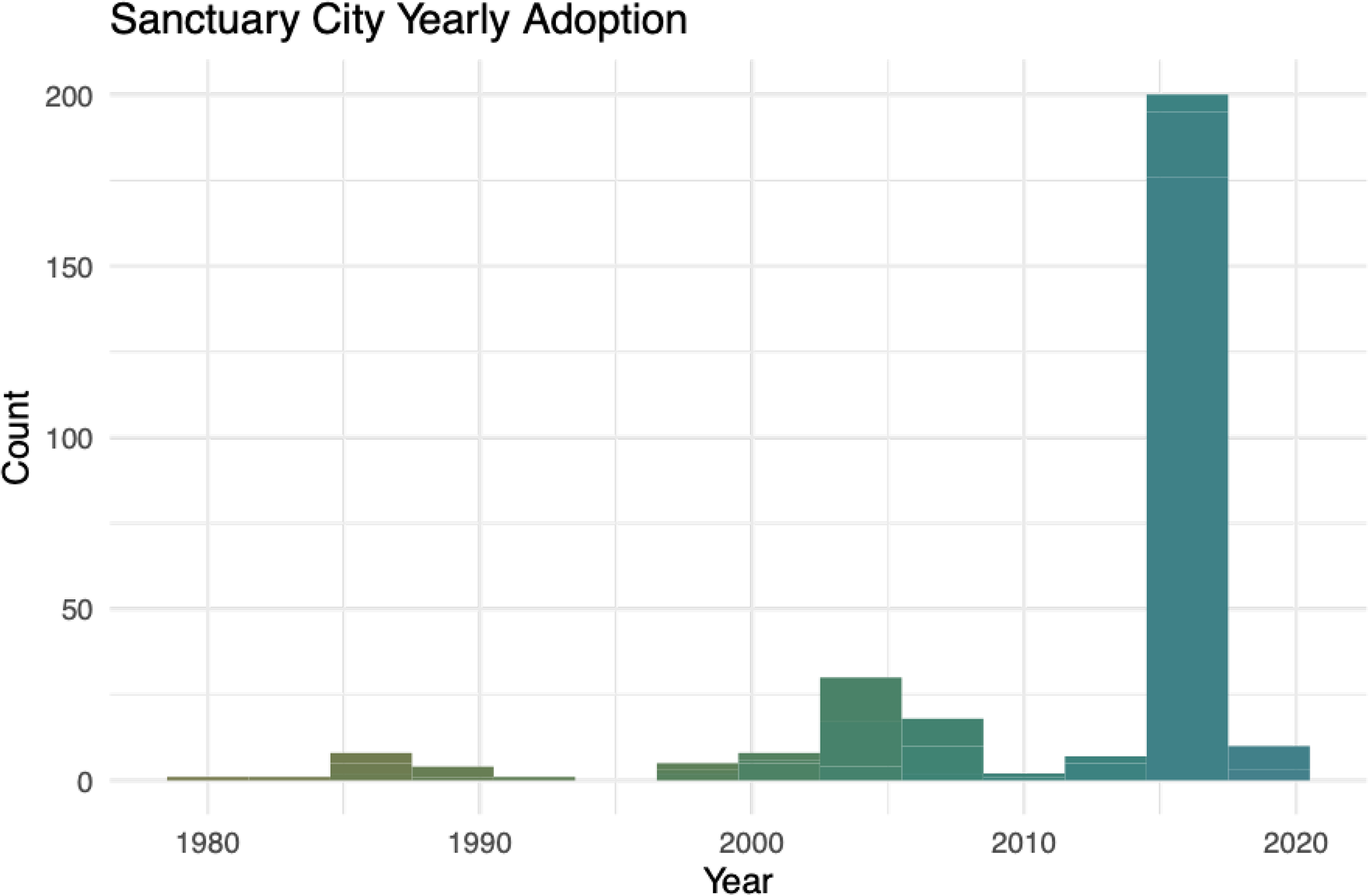
Sanctuary city adoption by year.
In the present analysis, we strictly look at whether the city has a resolution on the books or not—not the content of the resolution. 9 For the purpose of our model in the present endeavor, we maintain a dummy variable for sanctuary status: if an ordinance passed and currently still in place in a municipality adheres to any of these indicators, the city is classified as a sanctuary city.
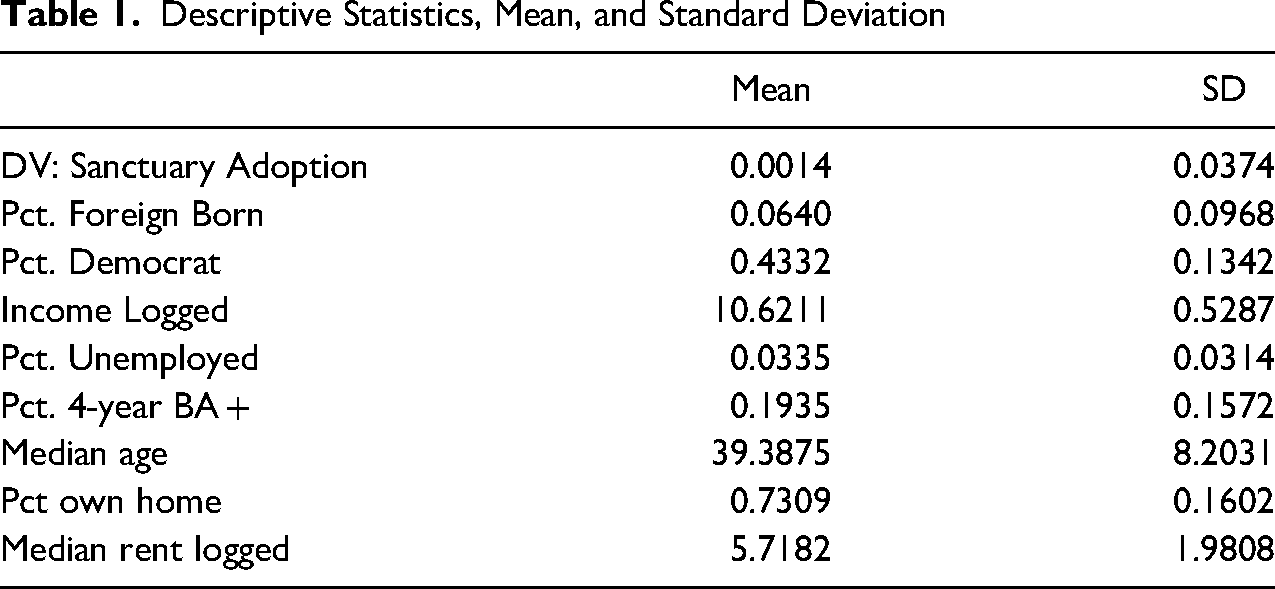
Table 1 presents model variable descriptive statistics.
Descriptive Statistics, Mean, and Standard Deviation
Given our panel data structure, we rely on a Cox proportional hazard model with mixed effects (both fixed and random) for the city state to evaluate our hypotheses. The Cox model takes into account the panel and censoring structure of the data, which entails left and right censoring of the data (Box-Steffensmeier, Box-Steffensmeier and Jones 2004). Therefore, cities that remain sanctuaries throughout the study time period (2000 − 2018) are left censored and therefore dropped from the analysis. 10 Units that become sanctuary cities during the study period earlier than others are right censored and therefore remain in the data for fewer city-years. Thus, once a city becomes a sanctuary in a given year it is now classified as having failed and any remaining years in the overall time period are dropped for that city. The overall dataset has n = 475,258 observations; however, due to missing observations on some variables, our analyses presented below are out of 472,970 observations.
Results
To begin, we plot the over-time Kaplan Meier survival curve (see Figure 2). The plot shows the probability of failure (a city becoming a sanctuary) over time. While overall the probability of failure for any given city in any given year remains exceedingly low (because there are so many nonsanctuary cities), Trump's election increased the rate of cities becoming sanctuaries. Amid the aggressive rhetoric on undocumented immigration by the Trump administration, it is also likely that local officials felt increasing pressure to try to provide some sense of security for this population, both for partisan and demographically driven reasons.
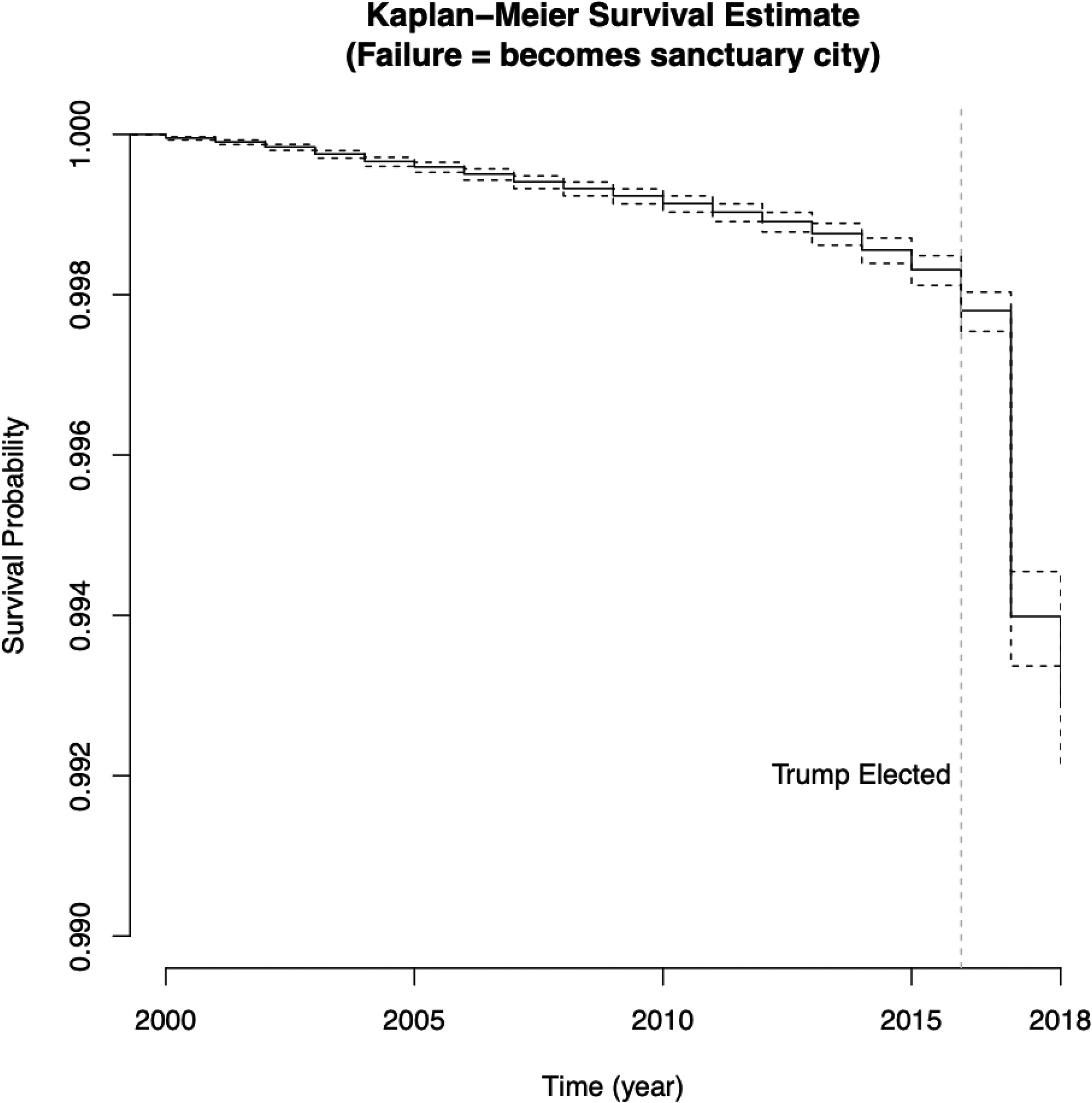
Kaplan Meier survival curve.
To assess our four hypotheses, we turn to our results presented in Table 2, based off our Cox proportional hazard with city-level mixed effects results models. Positive coefficients are associated with an increase in the probability of a city becoming a sanctuary, whereas negative coefficients the converse. Model 1 leaves out percent Democrat, Model 2 leaves out percent foreign-born, Model 3 includes both, and Model 4 presents the full interaction model with controls. We will focus our initial discussion on these two variables followed by a discussion about our controls.
Pr(Sanctuary City Adoption), Base and Interaction Models. Z-Scores in Parentheses
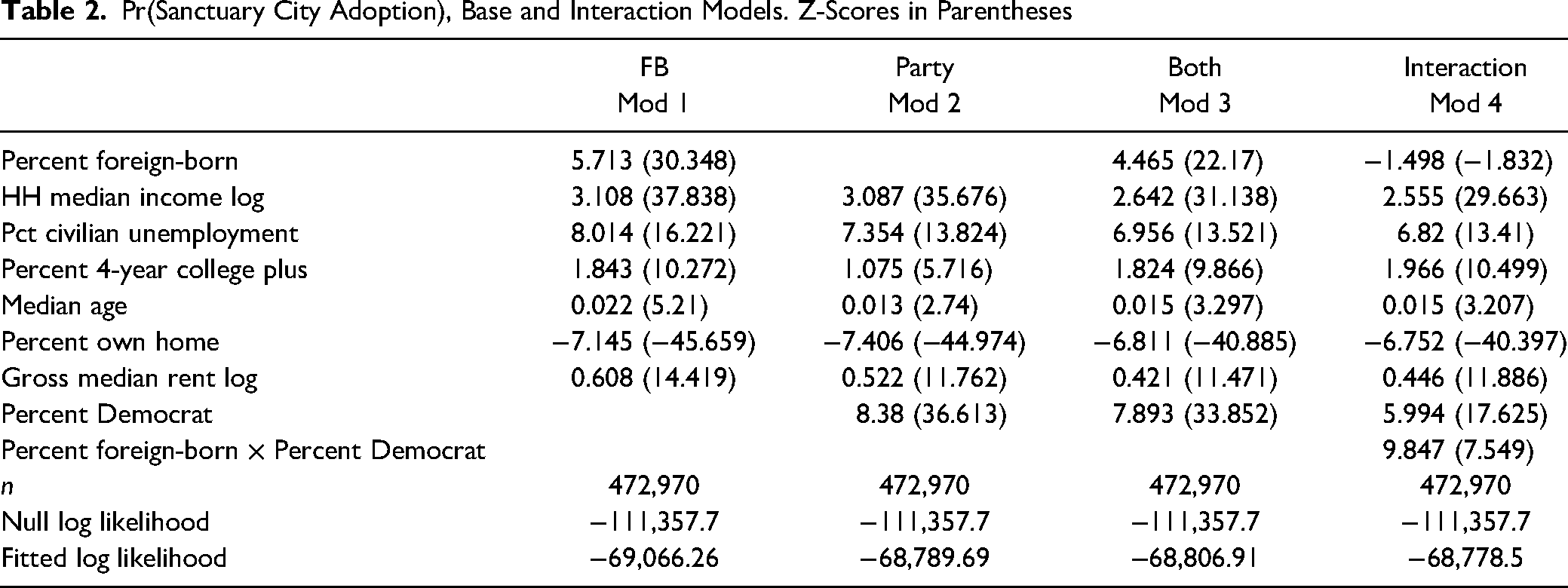
To provide support for H1 and H2 we expect positive and statistically significant coefficients for percent foreign-born (H1) and percent Democrat (H2) in the first three models. Table 2 indicates support for both hypotheses. In all three models, the coefficients for foreign-born and Democrat are positive and statistically significant—that is the Z-scores are vastly above 1.96 (95% confidence). In Model 1, the percent foreign-born coefficient is 5.71. When exponentiated the hazard ratio is 302.77. This is a very large effect and indicates that holding all other covariates constant, a city with a large foreign-born population is much more likely to become a sanctuary relative to cities with lower foreign-born populations. Model 2 drops out percent foreign-born and swaps in a measure for partisanship. In Model 2, the percent Democrat coefficient is 8.38 which when exponentiated produces a hazard ratio of 4,358.56. Model 3 includes both measures along with controls: both foreign-born and Democrat are substantively similar to their respective effect sizes in Models 1 and 2 and are statistically significant. These three models provide strong support for hypotheses 1-2.
These results for our main covariates of interest suggest support for hypothesis 4 (that partisan considerations are a greater predictor of a city becoming a sanctuary than foreign-born). However, we formally test the hypothesis by conducting a linear hypothesis f-test post-regression. We find strong support for hypothesis 4: the percent Democrat covariate is statistically significantly larger than the foreign-born covariate (χ2 = 105.79, p < 0.001).
Finally, Model 4 reveals a positive and statistically significant interaction term (Foreign Born X Democrat), which supports hypothesis 3. Because coefficients in this statistical context and hazard ratios are difficult to interpret, we generated post-estimation analyses which we display in Figure 3. The figure simulates four scenarios to estimate the probability of survival (in this case not becoming a sanctuary city), while controlling for other model covariates. In the first scenario (low Democrat, low foreign-born)—the red line—we observe no change in survival. That is cities with low foreign-born and few Democrats have no change of adopting sanctuaries during the study period. Meanwhile, high Democrat and mean foreign-born cities (the green line) have a slight probability of becoming sanctuaries but overall the probability is still low. The same is true for high foreign-born but mean Democrat cities (turquoise). However, cities with both high Democrat and high foreign-born (purple) become exceedingly likely to adopt sanctuary policies over time. For example, a high foreign-born, high Democrat city that is in the data 15 years has less than a 70% chance of survival (not becoming a sanctuary). A similar city in the data 17 years has a mere 50% of survival. These results are consistent with the observed frequency of sanctuary adoption presented in Figure 1—where a swift sanctuary adoption occurred in response to Trump's election.
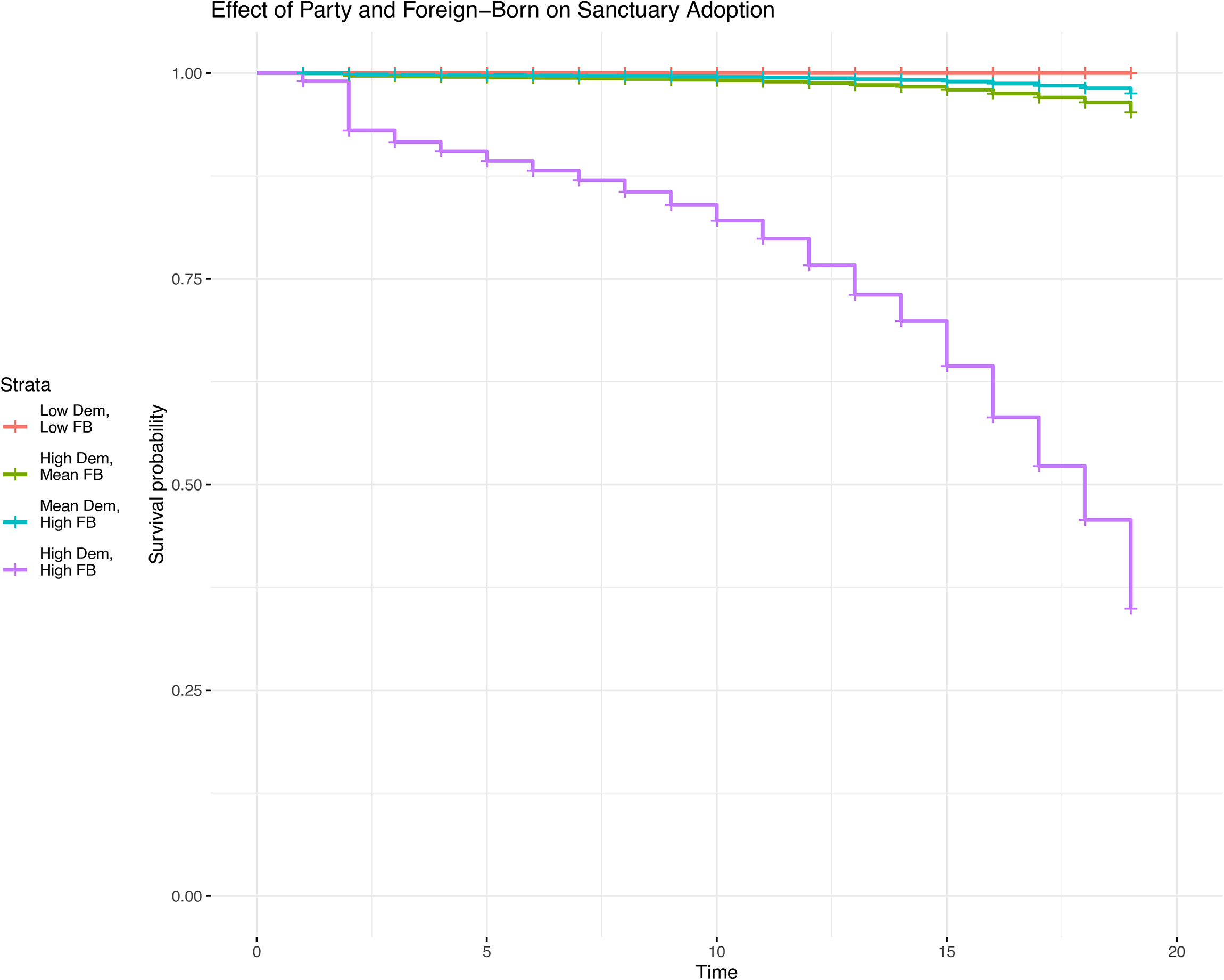
Effect of partisanship and foreign-born on sanctuary adoption.
From the literature, it is likely that additional, nonpartisan, and nondemographic factors impact sanctuary policy consideration. Other variables of interest show that cities with better-educated people and greater household income are more likely to become sanctuaries, something we also find in our study. Fitting with prior research, a city's unemployment rate and median rent are positively associated with sanctuary adoption, while the homeownership rate is negatively associated, in line with findings by Vandegrift and Weyand (2020). 11 Our measure of unemployment is not lagged, and thus serves to control for the overall economic health of a city rather than a measure of labor market regulation. These covariates remain significant in the interacted model, suggesting that cities with a large population of renters and those experiencing job insecurity, in addition to large immigrant and Democratic populations, are most likely to adopt sanctuary policies. 12
Using a similar postestimation strategy, we simulated the effect of key model controls on sanctuary adoption: unemployment rate and home ownership. The other controls, while statistically significant have substantively small exponentiated coefficients relative to partisanship, unemployment, and home ownership. Figure 4 reveals the estimated effects of unemployment on sanctuary adoption. Holding model covariates at their central tendencies, cities with 0% unemployment are essentially unmoved in their probability of becoming a sanctuary city across time. However, cities with high unemployment—the green line—have around a 5%–10% chance of adoption over time. Cities with very high unemployment (blue line) begin to near 45%−50% adoption by the end of the study window.
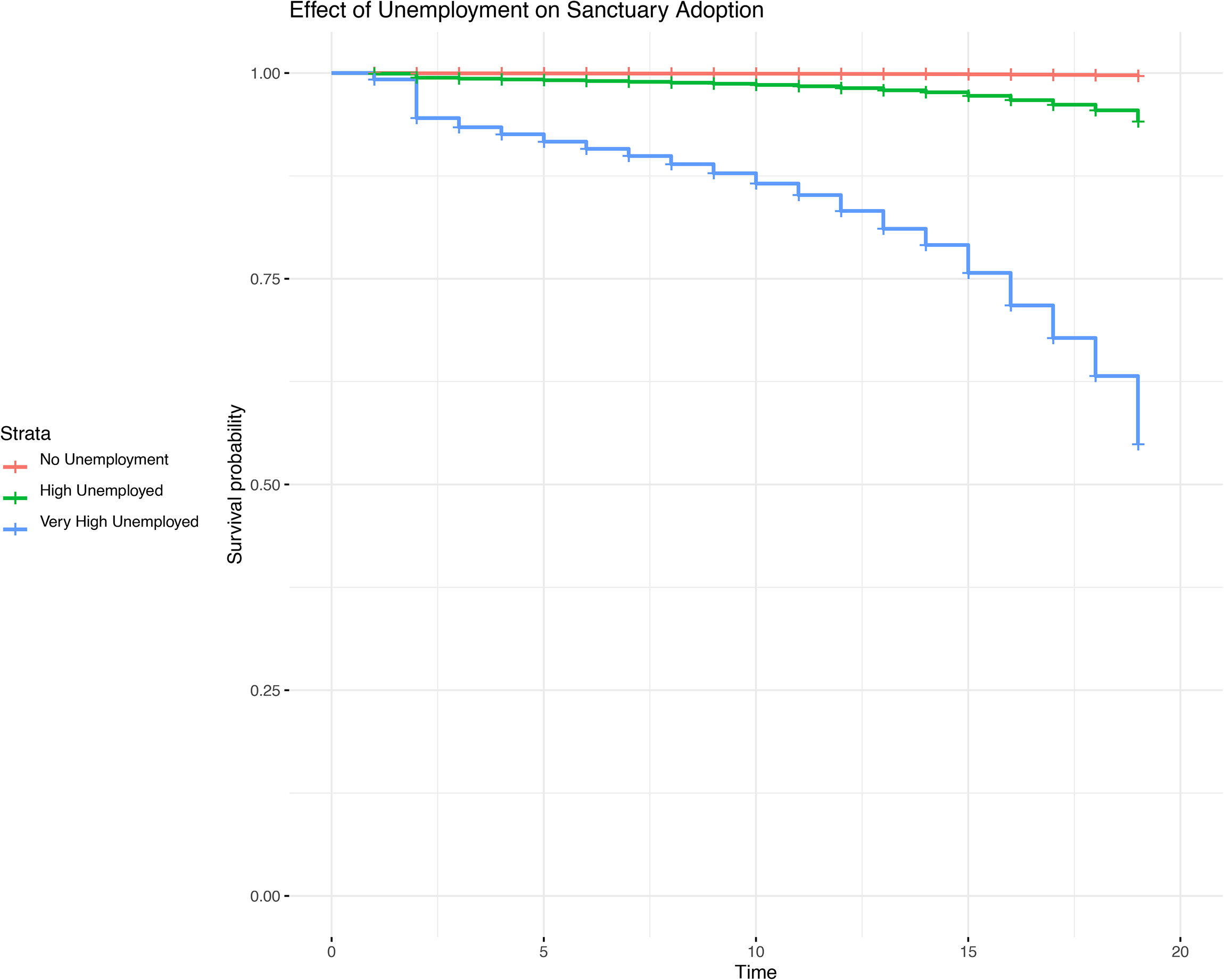
Effect of unemployment rate on sanctuary adoption.
We also simulated the effect of home ownership. Figure 5 plots out the effects of home ownership on sanctuary adoption. Fitting with the negative sign on the model coefficient, both high and mean home ownership have no effect on sanctuary adoption over time. Instead, areas with low home ownership (the red line) are about 25% (.25) probability of adoption of a sanctuary policy by the end of the study period.
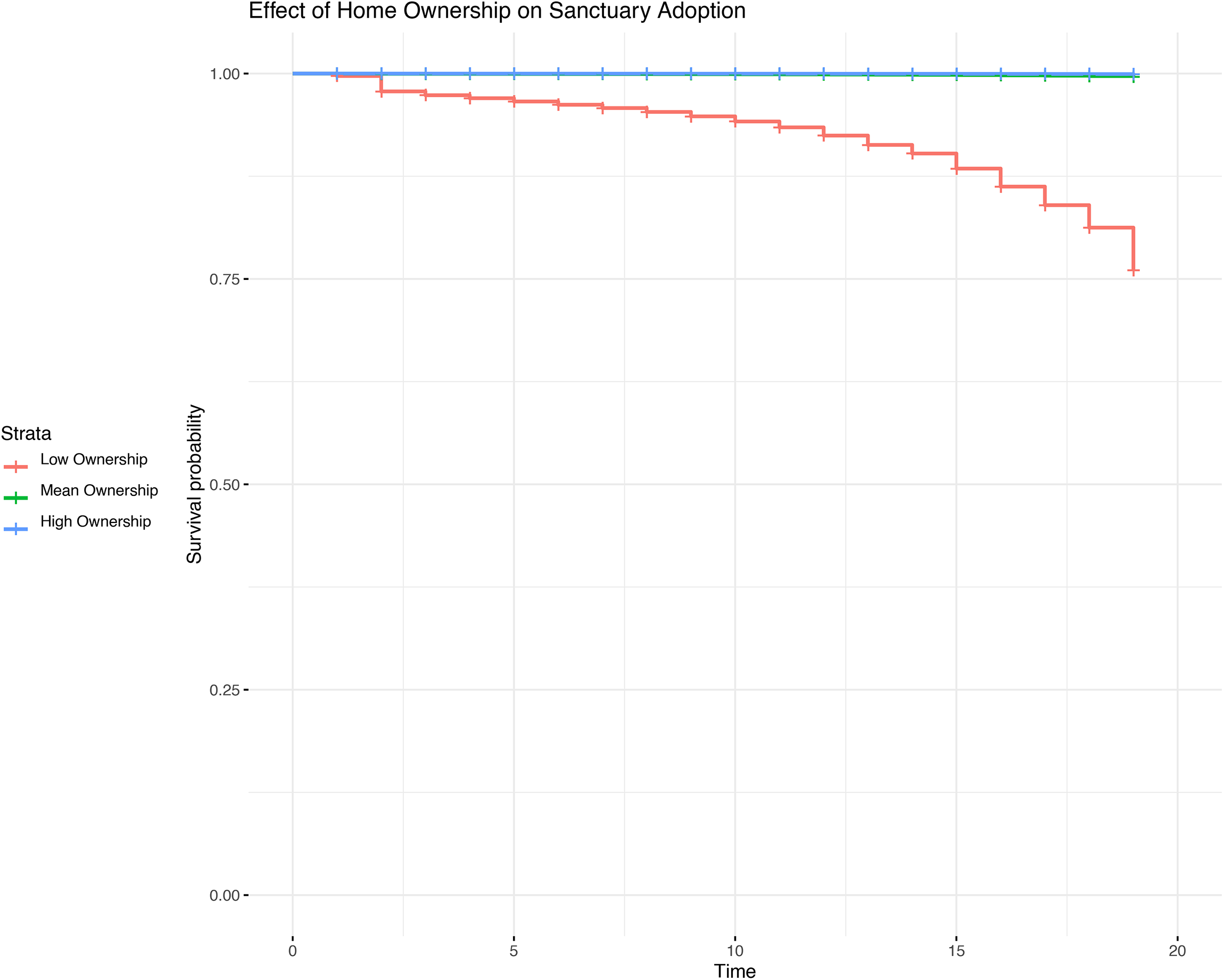
Effect of home ownership rate on sanctuary adoption.
Conclusion
Sanctuary policies, and the broader universe of policies seeking to integrate immigrant, asylee, and refugee communities, often attest that they seek to provide identifiable benefits to these local communities. Accordingly, we anticipated that cities with higher foreign-born populations may react to the interests of these populations and disproportionately become sanctuary cities. Yet we find that the passage of sanctuary policies is driven by more than just the size of the local immigrant population. In some cases, these policies are passed despite the lack of any sizable undocumented or foreign-born population within the city's borders—for example, the many towns in New England that enacted sanctuary policies after Trump became president despite having small foreign-born (or Latinx) populations.
The decision to pass sanctuary policies is ultimately a political one, driven by the ideological leanings of the local population and electoral concerns on the part of officials. This in fact plays a larger role in predicting the likelihood of a city becoming a sanctuary than the size of the local foreign-born population. Sanctuary policies are more likely to be passed in cities with a more left-leaning population, where these policies are both safe and can potentially provide electoral benefits for local officials who introduce or support them. Furthermore, it may well be the case that elected officials generally responsible for voting on sanctuary ordinances in these areas are more likely to heed the interests of the local immigrant population because they do not need to fear a backlash from a right-leaning populace.
The intense partisanization of the issue of sanctuary made the defense of these policies increasingly part of Democratic opposition to the Trump administration, something that past research has shown in regard to public opinion (Collingwood, O’Brien and Tafoya 2020). 13 Yet even before Trump entered office, it was partisan considerations that played a larger role in the passage of sanctuary policies than local demographics in regard to the size of the local immigrant community.
We cannot write off the importance of the size of the local foreign-born population though, as this was statistically significant in our analysis, but simply played a smaller role than ideological considerations. Both of these factors influence the likelihood of a city becoming a sanctuary, something that was suggested by research on state-level immigration policymaking. We also must reiterate that even if sanctuary policies are passed in cities without a sizable foreign-born population, these can still serve a functional purpose in terms of consciousness-raising. The passage and defense of these policies can help to bring attention to the nation's draconian immigration policies and the marginalization of undocumented immigrants, regardless of the benefits they may provide to a locality's residents.
Footnotes
Declaration of Conflicting Interests
The author(s) declared no potential conflicts of interest with respect to the research, authorship, and/or publication of this article.
Funding
The author(s) received no financial support for the research, authorship, and/or publication of this article
