



Abstract
Gender-based violence (GBV) prevention programs have long played an important part in both teaching the realities of GBV and training people in techniques to avert, mitigate, and respond to violence. This article examines the current state of GBV prevention training in Canada through an analysis of 81 GBV education programs provided by antiviolence organizations and universities. We identified notable gaps in topics relating to technology-facilitated violence and abuse in programs targeting men and in the provision of bystander intervention training. Each of these areas represents important, but as yet unrealized, opportunities in violence prevention.
Keywords
Gender-based violence (GBV) is defined as harm done to people based on their actual or perceived gender identity and expression (Cotter & Savage, 2019). GBV has been recognized as a global pandemic which disproportionately affects women and LGBTQIA+ people (Bows & Fileborn, 2020) and remains a persistent and prevalent worldwide issue (Borumandnia et al., 2020). Antiviolence community groups have long played an important role in combating GBV, employing outreach programs and training workshops to raise awareness and teach prevention (Crooks et al., 2019).
In recent decades, institutions have made efforts to integrate teaching consent, gender-based discrimination, and sexual violence prevention into education curricula (Crooks et al., 2019; Horeck et al., 2021; Ringrose et al., 2021; Ringrose et al., 2024). Many schools and universities around the world have partnered with community organizations and other specialists to deliver antidiscrimination, antiharassment, and antiviolence training (e.g., in Canada, between Western University and Anova 1 ). Furthermore, many Canadian Provinces have passed legislation, such as Bill 132 in Ontario (Sexual Violence and Harassment Action Plan Act, 2016), intended to address sexual violence at postsecondary institutions.
Violence-prevention initiatives such as Green Dot, 2 and Bringing in the Bystander, 3 among others, have accomplished a great deal in their work (Crooks et al., 2019). However, many training programs are lacking in their coverage of technology-facilitated violence and abuse (TFVA), “an umbrella term used to describe the use of digital technologies to perpetrate interpersonal harassment, abuse, and violence” (Bailey et al., 2021, p. 1). In particular, women suffer disproportionately in toxic online environments where violent, abusive, and hateful behavior is common, expected, or normalized (Banet-Weiser & Bratich, 2019; Barlow & Awan, 2016; Burkell & Gosse, 2019; Dunn et al., 2023; Ging, 2017; Henry & Powell, 2018; Horeck et al., 2023). The gendered contours of TFVA show up in two ways: (a) women often experience a higher volume of TFVA, with women 27 times more likely to be abused online than men (UN Broadband Commission for Digital Development, 2015) and (b) the kinds of attacks experienced by women are highly gendered, often involving derogatory and misogynistic language, invasions of sexual privacy, and threats of distinctly sexual violence (Horeck et al., 2023; Powell et al., 2022). 4 Based on these factors, gender-based TFVA (GBTFVA) has been recognized as an important problem around the world (Bailey et al., 2021; Dietzel, 2021; Dunn, 2020; Powell et al., 2021).
Despite a large body of academic literature on the harms of GBTFVA (Dunn et al., 2023; Henry et al., 2020), broader societal attitudes, which have long treated online abuse as inconsequential and unimportant, have not kept pace (Gosse, 2021). As a result, targets of GBTFVA are typically tasked with protecting themselves from their abusers and the harm they experience (Gosse, 2022; Veletsianos et al., 2018). In “offline” contexts, bystander intervention training programs have helped to shift the burden of GBV prevention and mitigation away from being the sole responsibility of targets and have shown efficacy in improving problematic attitudes toward gender (Mujal et al., 2021; Orchowski et al., 2020; Salazar et al., 2014). However, programs teaching online bystander intervention are still rare (Rebollo-Catalan & Mayor-Buzon, 2020).
This article is part of a larger research program which explores how the issue of GBTFVA can be successfully addressed. While evidence from the literature suggests that bystander intervention training and engaging men as allies in violence prevention are both promising approaches to combating GBV, in general, there has yet been limited research about their applicability to GBTFVA. In this study, we investigate the extent to which men's engagement and bystander intervention approaches have been adopted by Canadian GBV prevention programs and whether these programs incorporate teaching about GBTFVA. Our work is guided by the following research questions:
Based on our open-coding analysis of 81 GBV education programs in Canada, we found that (a) GBV prevention programs targeting men are relatively rare; (b) only a few of these programs include a bystander intervention approach to GBV prevention; (c) these programs do not yet adequately incorporate teaching on GBTFVA; and (d) there are no programs offering GBTFVA-related bystander intervention training to men at this time. Taken together, this paper highlights key gaps in current GBV education programs within Canada.
Literature Review
GBV Prevention Training
Conceptions of GBV have changed over time and so have approaches to address it. Today, GBV is understood as encompassing “sexual, physical, mental and economic harm” and may take forms including “threats of violence, coercion and manipulation” (UNHCR, 2024). One important shift was recognizing GBV as a public health epidemic, rather than simply a criminal justice issue (Cook-Craig et al., 2014). This has led to a focus on preventing the perpetration of GBV rather than seeking retributive justice after the fact (DeGue et al., 2012). Furthermore, whereas the earlier paradigm placed the burden of prevention on potential victims and survivors, perpetration prevention programs instead aim to address the causes of GBV. These newer programs approach perpetration prevention using a socioecological model, aiming to address the social and cultural norms that allow GBV to happen (Cook-Craig et al., 2014).
Drawing from the socioecological model of GBV, bystander intervention approaches have become a preferred strategy in prevention programs (Cook-Craig et al., 2014). These programs train individuals to safely recognize and respond to situations where they witness a risk or occurrence of GBV. Bystander programs aim to reach people beyond just the perpetrators and victims of GBV, and so, they have the potential to change problematic social norms, as well as individual minds (Cook-Craig et al., 2014). Pioneering bystander programs, such as Green Dot, have indeed shown efficacy in reducing violence perpetration rates (Coker et al., 2019).
Since men are more likely to be perpetrators of GBV (Black et al., 2011), effective bystander intervention must engage men and boys as allies (Carlson et al., 2015; Storer et al., 2016). Proponents have argued that rigid and traditional notions of masculinity are associated with greater acceptance of GBV (Murnen et al., 2002), and that ending the social norms and structural inequities that foster GBV would benefit all genders (Carlson et al., 2015). In the following sections, we discuss both men's allyship and bystander intervention in greater detail and also draw attention to the growing importance of technology in facilitating GBV.
GBV Training for Men
Around the world, women are significantly more likely to experience gendered violence than men (Borumandnia et al. 2020). In the United States, twice as many women as men have reported unwanted sexual contact (Basile et al., 2022), and in Canada, women are disproportionately more likely to suffer the most severe forms of violence at high rates (Cotter, 2021). Therefore, prevention efforts have increasingly focused on engaging men, “because largely it is men who perpetrate this violence” (Flood, 2018, p. 4). Furthermore, toxic notions of masculinity have been associated with the acceptance and perpetration of GBV (Vechiu, 2019).
A comprehensive review of studies of violence prevention programs in the United States targeting men and boys concluded that the six most robustly evaluated programs all showed evidence that they could impact violence perpetration (Casey et al., 2022). Furthermore, these six programs also demonstrated efficacy in improving attitudes and beliefs related to gender stereotyping and sexual aggression (Casey et al., 2022). One recent metaanalysis of the literature found evidence that interventions targeting men can improve attitudes related to sexually aggressive behavior and violence prevention (Wright et al., 2020). Outside of North America, a scoping review of studies investigating interventions targeting men in low- and middle-income countries found that half of the studies reported efficacy in preventing intimate partner violence (DeHond et al., 2022).
While research has suggested that interventions targeting masculinity may be more effective than those that ignore the roles that systems of gender inequality play in sexual violence (Jewkes et al., 2015), one challenge that GBV prevention programs targeting men face is resistance and backlash from the very people they hope to reach. Studies have found that men may be unwilling to attend these programs because of perceptions that they would be unfairly characterized as perpetrators (Flood et al., 2021). A bystander intervention approach may help allay these concerns by providing an opportunity for men to see themselves as active participants in the prevention of GBTFVA, rather than as potential perpetrators. A more positively oriented focus aligns with recent discussions about the effectiveness of “calling-out” versus “calling-in” confrontation styles (Ross, 2019). Call-outs are typically public and assume malicious intent on behalf of the perpetrator. On the other hand, call-ins are typically more private, empathetic interactions intended to educate the person to whom it is directed. Whereas call-outs have been criticized as performative and self-serving for the confronter, call-ins have been seen as more sensitive and learning-focused: teaching versus shaming (Woods & Ruscher, 2021). Bystander intervention training “call-ins” situate participants as allies, rather than as perpetrators. The intent is not to chide men into compliance, but to effect cultural change by addressing harmful social norms (Carlson et al., 2015).
Bystander Intervention Training
As a response to GBV more broadly, many antiviolence organizations and activists have created bystander intervention training programs to help individuals learn how to support targets at the moment while the violence is occurring (Crooks et al., 2019; Mujal et al., 2021). Bystander intervention models have typically addressed street harassment and physical abuse (Vera-Gray, 2017), but there is great potential to adopt the scaffolding, values, and spirit of bystander intervention and adapt it as a support structure for targets of GBTFVA.
In addition to teaching ways to identify and intervene in “high risk” situations, like in cases of sexual assault, bystander intervention training programs also raise awareness about “low-risk” behaviors, such as degrading language, pornography use, and sexist jokes, as normalizing a “rape supportive culture” (McMahon & Banyard, 2012). As a means to empower everyday citizens to play a role in mitigating abuse as it occurs and countering harmful sexist beliefs and rape myths, bystander intervention training can be effective at promoting prosocial behavioral change (Brush & Miller, 2022).
While bystander intervention programs have existed since at least the 1990s (Hoxmeier & Casey, 2022), robust measures of the efficacy of these programs are still limited. The majority of bystander programs have been targeted at secondary and postsecondary students, athletic teams and associations, and military personnel, so correspondingly, these are the populations that have been most studied (Hoxmeier & Casey, 2022). Systematic reviews and metaanalyses of empirical assessments of bystander intervention programs have generally concluded that such programs can increase willingness to intervene and promote prosocial attitudes and beliefs, but there is no strong evidence that they can reduce rates of sexual assault (Jouriles et al., 2018; Katz & Moore, 2013; Kettrey & Marx 2019; Kettrey et al. 2019).
Looking at specific bystander interventions, Mentors in Violence Prevention, one of the longest-running programs, has demonstrated that participants show improvement in their ability to recognize sexual aggression and willingness to take action (Katz et al., 2011). Bringing in the Bystander, one of the most-studied programs, has shown efficacy in increasing intervention behaviors and reducing rape myth acceptance and sexually coercive behavior (Elias-Lambert & Black, 2016; Moynihan et al., 2015; Senn & Forrest, 2016). Green Dot, another popular program, has been found to decrease both the perpetration and acceptance of sexual violence among high school students (Coker et al., 2019). Broadly, one limitation of bystander program assessments is that they measure self-reported intervention intention, rather than actual intervention behavior. However, evidence suggests that bystander programs can help to change problematic social norms (Mujal et al., 2021; Salazar et al., 2014) and the few studies that have assessed prosocial actions have also been promising (Moynihan et al., 2015).
While researchers point out that there is no “silver bullet” to solve sexual assault, bystander intervention programs do show promising results with respect to changing beliefs about GBV (Orchowski et al., 2020). However, it is “an unfortunate oversight” (Kettrey et al., 2019, p. 8) that bystander intervention training efforts have largely been concentrated in limited contexts, such as postsecondary education institutions. Thus, a broader application of these techniques is called for.
Gender-Based Technology Facilitated Violence and Abuse
GBV has been and continues to be a significant global concern. In more recent years, increasing attention has been drawn to the role of digital technologies in facilitating GBV. In the past 2 decades, GBTFVA has become a highly prevalent (Powell & Henry, 2017; Reed et al., 2016) and consequential (Powell et al., 2021) form of harm growing in tandem with digital culture. GBTFVA has many manifestations, ranging from inappropriate and vitriolic comments to the unauthorized disclosure of private information (e.g., doxing) or intimate images (Dunn et al., 2023; Ringrose et al., 2021; Vepsä, 2021). Common to all of these harms is an effort to use information communication technologies to perpetrate GBV.
The consequences of GBTFVA can devastate all aspects of a target's life, leading to financial hardship (Jane, 2018), emotional distress (Lewis et al., 2017), social isolation (West, 2014), and fear (Vera-Gray, 2017). GBTFVA also causes online spaces to become hostile environments, which is a problem when online spaces are essential and inescapable parts of personal and professional life (Gosse, 2021). Exacerbating these consequences is a lack of support for targets of GBTFVA. Despite this litany of ill effects, there remain few clear options through which to seek redress. Social media companies have repeatedly proven unwilling or incapable of substantively addressing GBTFVA (Jane, 2017; Roberts, 2019). Legal institutions, including lawyers, judges, and police officers are also ill-equipped to understand the nuances of GBTFVA (Dodge & Spences 2018; Dunn 2020), and even friends and family of individuals impacted by GBTFVA remain unsure of how they can support their loved ones (Horeck et al., 2023). The lack of clear support has at times led targets to take matters into their own hands, sometimes escalating conflicts (Jane, 2016).
Given this barren landscape of support, researchers have demonstrated that responding to TFVA often falls squarely on the shoulders of victims, henceforth known as targets, many of whom rely on personal provisions to cope. For example, targets tend to rely on the help of family and friends to outsource reading, reporting, and documenting the abuse (Hodson et al., 2018; Mendes, 2015; Veletsianos et al., 2018). In other cases, they minimize and monitor their online presence, or remove themselves from online spaces altogether (Chadha et al., 2020; Mendes et al., 2019).
An equitable society means that those who suffer from GBTFVA should not bear the brunt of the responsibility for mitigating the online violence and abuse they face on their own. Instead, they need to be supported by a wide variety of institutions and individuals (Hodson et al., 2018): social media companies, law enforcement, government, physical and mental healthcare workers, employers, schools, universities, and, importantly, bystanders. Indeed, many forms of GBTFVA are particularly suited to the bystander intervention approach. Common types of GBTFVA, such as posting offensive, abusive, or humiliating comments or content, are publicly visible and share much in common with offline street harassment as a form of “men's stranger intrusion on women in public” (Vera-gray, 2016). Earlier research has established that street harassment perpetuates hostile male sexism by threatening women's “dignity, privacy, and safety while pushing women out of the public sphere” (Fairchild, 2023, p. 1142)—similarly, a recent scoping review has established that misogyny is a critical factor in online abuse, much of which aims to silence women and deprive them of professional and social interaction in digital spaces (Watson, 2023). Street harassment has been a key focus in bystander intervention efforts, including organizations like Right to Be (formerly iHollaback) 5 , which has led campaigns to raise awareness of this issue and provides training on effective intervention strategies (Fairchild, 2023). In fact, Right to Be, through its HeartMob platform, has been a pioneer in applying the bystander intervention approach to address GBTFVA since 2016 (Blackwell et al., 2017).
Digital Bystanders
As yet, bystander intervention research and training in the context of online violence and abuse is minimal, with a few notable exceptions such as HeartMob (Blackwell et al., 2017; Henson et al., 2020). Three reasons may explain why this is the case. First, society has been slow to recognize the real and tangible harms of GBTFVA (Powell & Henry, 2017), meaning that bystander intervention that focuses on technology-facilitated violence has received much less attention than bystander intervention that focuses on in-person contexts. Second, it may be difficult for bystanders to decipher which digital behaviors and attitudes warrant a reaction. For instance, the first step in bystander intervention is deciding when to help, which is driven by how an individual interprets the severity of the situation (Brody, 2021). Third, men's understandings of which online behaviors are permissible and which warrant intervention is also shaped by problematic cultural scripts and discourses around toxic masculinity, rape culture, the ideal-victim, and victim-blaming (Dawtry et al., 2019; Jones et al., 2020; Lumsden & Morgan, 2017). These reasons also constitute a powerful argument for the necessity of bringing bystander intervention principles to bear in the fight against GBTFVA.
As discussed above, we believe that there are several reasons why the bystander intervention approach can be appropriate and effective in addressing GBTFVA. First, many forms of GBTFVA share features in common with offline forms of GBV, such as street harassment. We therefore expect that existing bystander intervention training strategies can be similarly applied in these online situations. Second, the persistent and often public visibility of many forms of GBTFVA essentially renders everyone participating in online environments potential bystanders, vastly increasing opportunities to intervene. Third, while perpetrators of GBTFVA can hide or obfuscate their identity using digital technologies, this relative anonymity can also protect intervenors who try to help. Previous research has found that fear of retaliation or other personal consequences is a common barrier to intervention (Mainwaring et al., 2023), such inhibitions might be lessened in digital situations. Finally, as the phenomenon of networked misogyny is among the main drivers of GBTFVA (Banet-Weiser & Miltner, 2016), we believe it is imperative that men be engaged in helping to solve this problem. In what follows, we will detail our assessment of the state of bystander intervention training in Canada, to determine whether this issue is addressed and how.
Method
Two national-level organizations were consulted to determine the sampling frame for this study: the Canadian Association of Sexual Assault Centres (CASAC) 6 and the Ending Violence Association of Canada (EVA Canada). 7 Both EVA Canada and CASAC maintain lists of Canadian antiviolence and sexual assault centers with links to their websites. After eliminating broken website links, we examined the websites of each of the listed organizations to identify those that offered instructor-led or facilitated training programs to the public. As delivery by qualified and well-trained staff has long been identified as an important component of successful prevention programs (Small et al., 2009), organizations that provided only textual, prerecorded, or self-guided educational resources that did not include a live, facilitated component were excluded. Based on these criteria, we were able to identify a sample of 67 community organizations across Canada.
We also examined programs offered by the U15 group of Canadian research universities, 8 made up of the 15 most prominent universities across Canada. We accessed these university's websites directly by searching for their campus sexual violence centers via Google search and each institution website's own search function. Of the U15 group of Canadian universities, only one did not appear to offer instructor-facilitated training and so, was excluded in this sample. In total, we examined 81 organizations: 67 community-based and 14 universities. Basic descriptive statistics by province and type of program are shown in Table 1.
Training Program Categories.
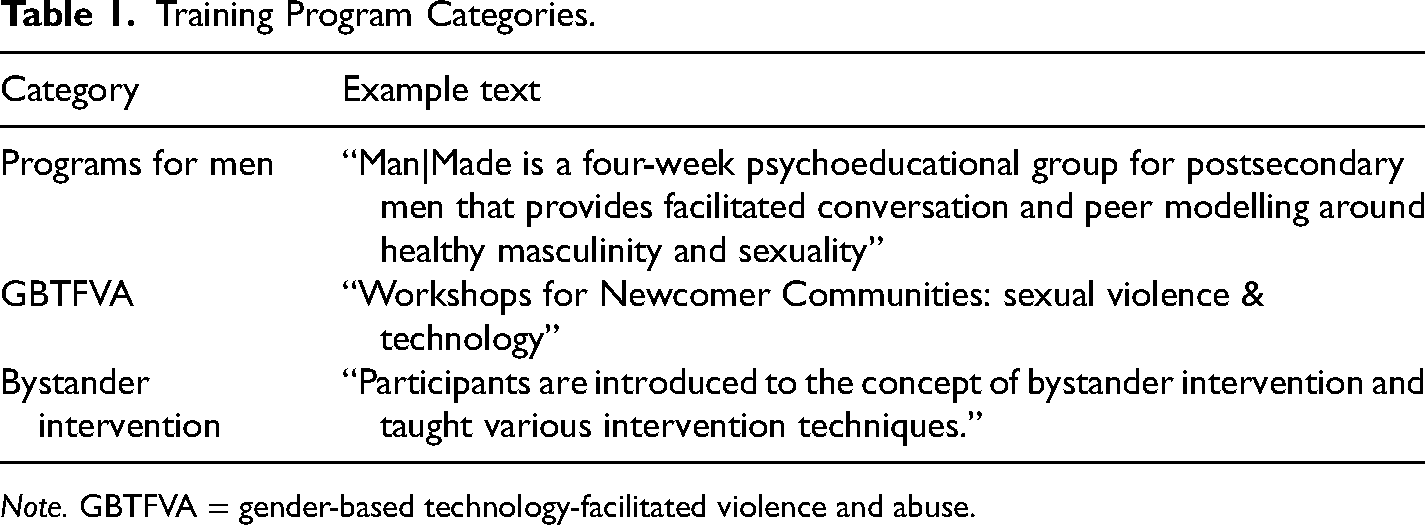
Note. GBTFVA = gender-based technology-facilitated violence and abuse.
To answer our four research questions, we conducted an open coding content analysis of the websites of these 81 Canadian antiviolence organizations. Open coding is a common qualitative analysis technique to derive research codes from raw data by “labeling concepts, [and] defining and developing categories based on their properties and dimensions” (Khandkar, 2009, p. 1). We concentrated on three categories of training programs for data collection: (a) programs targeting men; (b) those incorporating bystander intervention training; and (c) those incorporating GBTFVA (see Table 2). Data from the organizations’ and universities’ websites were collected in February of 2023. Each website was investigated for documentation relating to the educational and training programs offered. When a search function was available on the website, searches were conducted using keywords associated with each of the three categories (e.g., “online abuse,” “bystander,” and “men”) to ensure that all relevant information was collected.
Canadian Organizations Offering Sexual Violence and Abuse Training Programs.
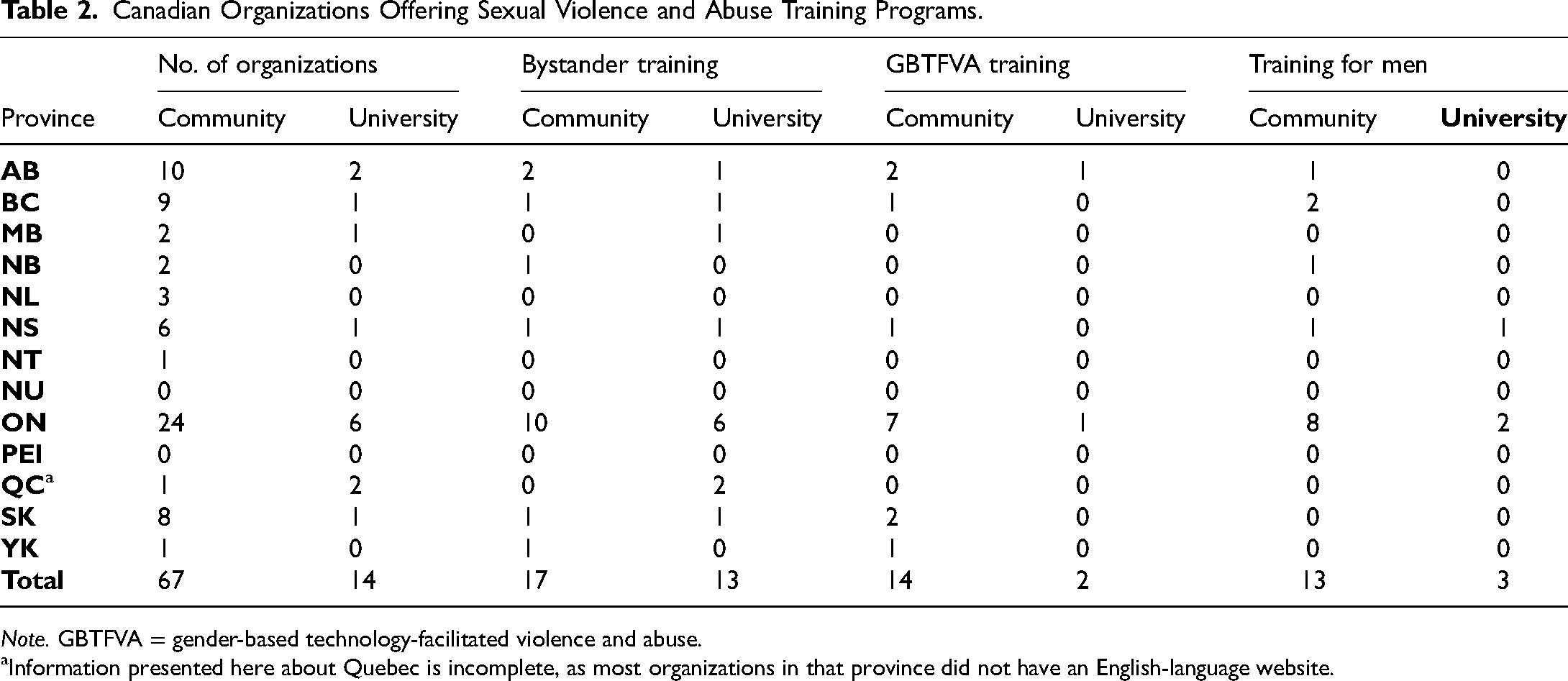
Note. GBTFVA = gender-based technology-facilitated violence and abuse.
Information presented here about Quebec is incomplete, as most organizations in that province did not have an English-language website.
Findings
In the following sections, we present the results of our open coding analysis, highlighting the gaps in coverage of GBTFVA topics, the scarcity of programs targeting men, and opportunities for future developments in these areas.
Men's Training
Of the 81 organizations examined in this study, only 20% (16/81) offered GBV prevention training programs specifically for men. Nineteen percent (13/67) of the community organizations had training programs targeting men, as compared to 21% (3/14) of universities. Details about what these programs covered were not always readily available: 10 organizations (seven community-based and three universities) provided a complete description on their website of their men's GBV prevention programs, while the other six listed only the title of their program without further elaboration. Because most GBV is perpetrated by boys and men (Flood, 2018), it is surprising that very few programs specifically focus on these groups. Given the numerous examples of the positive effects that violence prevention programs have on men, as discussed earlier (Wright et al., 2020), this finding highlights a significant gap in antiviolence efforts.
Bystander Intervention Training
Despite the known effectiveness of bystander intervention training in violence prevention, only 37% (30/81) of organizations offered bystander intervention training as part of their work. While we found that bystander intervention training programs were prevalent in university settings (13/14 or 93%), they were far less common among community organizations (17/67 or 25%). Universities were also more likely to provide detailed descriptions of their training (12) than community-based organizations (4). This disparity is likely because the majority of Canadian provinces, since 2015, have mandated that universities adopt sexual violence policies (Albert & Perry, 2024), which often include prevention training.
GBTFVA Training
Although GBV is increasingly facilitated by digital technologies, our examination of 81 organizations’ websites found that only 20% (16/81) explicitly mentioned topics relating to GBTFVA among their offerings for public education and training. Within this category, GBTFVA was mostly addressed by community organizations (14/67 or 21%) as compared to universities (2/14 or 14%). These statistics show that community organizations have been marginally faster at integrating the technology-facilitated elements of GBV into their programs than universities. Overall, despite recent research which shows experiences of GBTFVA are as high as 87.9% (Snaychuk & O’Neil, 2020), the vast majority of Canadian programs do not include information relevant to how much modern-day GBV takes place.
Digital Bystander Intervention Training for Men
Based on our investigation, we were unable to identify any organizations that combined teaching about GBTFVA with bystander intervention training in their programming for men. We offer some possible explanations for why such programs are so rare. First, efforts to engage men in violence prevention have long been met with suspicion and resistance (Colpitts, 2019; Wells et al., 2024), so organizations might decide that their resources are better spent on other initiatives. Second, as we discussed earlier, there remains a pervasive attitude that what happens in online contexts is not “real life” (Ross, 2015). If online harms are perceived as less damaging than offline harms, it stands to reason that there will be less motivation for antiviolence organizations to develop training programs. Third, these organizations may be interested and willing to offer digital bystander intervention programs but lack the resources to do so. Despite the vital role these organizations play in our communities, they tend to be chronically underfunded, underresourced, and may simply not have the required expertise, labor hours, or money to pursue new initiatives like digital bystander intervention training. Finally, there may be a lack of knowledge about how digital bystander intervention works. Reporting abuse to authorities is one common tactic, but tech companies and law enforcement have historically offered only piecemeal attempts at online antiharassment solutions, which has led to a widespread sense that formal reporting of abusive online behavior is pointless and ineffectual (Barker & Jurasz, 2019; Dodge & Lockhart, 2022; Taylor-Dunn et al., 2021). Likely, it is a combination of all of these factors that have contributed to this dearth of digital bystander intervention programs for men in Canada.
Discussion
This study of GBV prevention programs in Canada presents three main findings. First, the vast majority of community-based and university organizations examined in this study did not specifically address GBTFVA at all. Only one-fifth offered some kind of GBTFVA programming and only one-quarter of those provided any details about that programming on their websites. GBTFVA is increasingly recognized as a serious issue and researchers and activists have been calling for action to address its harms (Bailey et al., 2021). However, our findings indicate that only a few community-based and postsecondary organizations in Canada have taken steps to incorporate GBTFVA topics into their educational and training programs. This is a worrying mismatch, and it is clear that what is being taught does not match contemporary experiences of GBV. While it's difficult to know for sure why programs have been slow to incorporate technology-facilitated aspects of GBV, as Crooks et al. (2019) observed, the pace of change is often slow in organizations, and intervention research and development can take 10–20 years. Nevertheless, this dearth of GBTFVA education and programming resources represents an immense and concerning deficiency in efforts to combat GBV in all of its forms.
Our second main finding is that while bystander intervention training is a standard offering in the university context, it is still relatively rare outside of higher education, despite research indicating its efficacy (Mujal et al., 2021). All but one of the Canadian U15 universities examined provided some variety of bystander intervention training, compared with only 25% of nonuniversity organizations (17/67). This may be as a result of specific provincial mandates, such as Bill 132 in Ontario, which oblige educational institutions to respond to GBV. However, there seem to be untapped opportunities to bring bystander intervention training outside of the academic context to the wider public. Indeed, a number of ready-made resources already exist. Several bystander intervention training programs identified in this study were developed as provincial violence-prevention initiatives. For example, Draw the Line 9 was a program funded by the Ontario provincial government and adopted by several community organizations and Waves of Change 10 was a similar initiative in Nova Scotia. These, along with other independently developed programs, like Man|Made 11 from Anova in Ontario, could feasibly be adapted and adopted more widely across Canada. The network of Quebec universities has developed its own bystander training program, 12 but it is an entirely self-guided online course, so did not meet the inclusion criteria for this study.
Finally, we have found that, while GBV programs are common, few organizations are specifically targeting men. Nearly all offerings appeared to be aimed at a mixed, general audience. Although, as Flood (2015) notes, it is wrong to simply proclaim that, “engaging men to end violence against women works,” because most programs have not been fully evaluated, research shows that well-designed engagement programs can be one promising path toward a more equitable society. While some recent literature reviews and metaanalyses suggest that there is no significant difference in efficacy between gendered GBV interventions over gender-neutral interventions, this may be as a result of limitations in the current body of literature (Kettrey & Marx, 2019). Nevertheless, a consistent finding in studies of GBV prevention programs targeting men has been that those which treat men as potential allies are more effective than those which cast men as potential perpetrators (Casey et al., 2018).
The absence of GBTFVA bystander intervention programs targeting men may be due to several factors, such as structural, political, and cultural constraints. With respect to cultural constraints, for example, universities are often mandated to provide GBV prevention programs that the entire university community must complete, but may not have the time or resources to develop or facilitate specific programs for different demographics, including men. While some community organizations are already focused on challenging toxic masculinity and harmful gender norms (such as White Ribbon), 13 there may also be political and cultural constraints impeding programs targeting men. Getting men to acknowledge the highly gendered nature of violence is, as Flood (2015) argues, a feminist political achievement. Yet, it is also a highly delicate one, particularly in our contemporary era in which antifeminist sentiments are on the rise (e.g., #notallmen). 14 Flood (2015) also notes how funding for “work with men and boys, as a proportion of all work addressing gender equality, appears to be very small.”
While we do believe that calling men in as allies in ending GBV and GBTFVA is important, we are also mindful of which men are being called in or targeted in these programs. As Flood (2015) noted, men are not a homogeneous group and hierarchies within masculinities mean that some men are more likely to experience or enact GBV, while others are more likely to be held accountable and criminalized, particularly if they are members of poor or racialized communities. As such, it is important that these programs targeting men are not uniform or “colorblind,” but are culturally relevant and sensitive to the lived realities of the men it targets (see also Crooks et al. 2019).
Ways Forward
What might be some ways to move such efforts forward? Recent initiatives like Tech Safety Canada 15 represent an important and promising step, but more can be done. It is imperative that all programs should work to include material about GBTFVA. As our lives become increasingly enmeshed in digital technology, cyberstalking, trolling, and other forms of online harassment have similarly increased in prevalence and seriousness. Only one-fifth (20%) of the organizations sampled in this study explicitly dealt with GBTFVA subjects in any capacity. While organizations like the ones examined in this study have done and continue to do vital work in the fight to end gendered violence, there are important, unrealized opportunities to expand these training programs into the digital context.
Although broad initiatives and education efforts aimed at raising awareness about GBTFVA in the general populace are important, interventions targeting men and digital bystander interventions may be particularly effective complements to such efforts. Critical conversations about men and masculinities have become more prevalent in recent years, partly bolstered by feminist advocates and movements like #MeToo (Flood, 2022). However, there has also been growing antifeminist backlash, especially within the online “manosphere,” a loose network of blogs, podcasts, and forums, which seeks to attack and undermine social justice efforts (Dickel & Evolvi, 2022; Marwick & Caplan, 2018). The internet plays a significant role in facilitating GBV and abuse, so it is important to meet the challenge of prevention there as well. Online-focused efforts, such as digital bystander intervention, are necessary to counter online sources of GBV and abuse. As we have argued earlier, the devastating consequences of GBTFVA cannot be left for targets to deal with on their own—the importance of a concerted, community-based effort to effect cultural change cannot be understated.
A digital bystander intervention model for addressing GBTFVA does, of course, face a number of challenges. For one, the bystander effect suggests that people may be less likely to help in situations where other witnesses are present (Fischer et al., 2011). This effect can be exacerbated in online spaces, where the public and asynchronous nature of interactions on platforms like Twitter creates a sense that any number of people could be watching at any time. Anonymous or pseudonymous profiles and the lack of social and physical communicative cues further depersonalize these interactions to a point where it can feel like other people on the internet are not fully real. These factors also contribute to the online disinhibition effect (Suler, 2004), and in particular, to toxic inhibition, which may manifest in harassment, flaming, trolling, and other forms of aggression (Keum & Miller, 2018; Kordyaka et al., 2020). Unfortunately, this aggression often takes the form of GBTFVA against women (Banet-Weiser 2019; Burkell & Gosse, 2019; Ging 2017).
Finally, we suggest that a successful digital bystander intervention program would address GBTFVA in two ways: through mitigation and prevention. First, there is evidence that bystander intervention programs lead to more frequent intervention behaviors (Miller et al., 2012). If this holds true in online situations, then we can expect that increased rates of bystander intervention could help to mitigate the harms of online abuse. Second, and perhaps most importantly, digital bystander training frames GBTFVA as an issue that affects everyone, not just the people who are directly involved. By approaching the problem of sexual violence and abuse from a position of positive action rather than remedial lecturing or blaming and shaming, bystander training may be able to bypass men's resistance to engage in gender-equality initiatives. Increased buy-in to digital bystander intervention programs would allow GBTFVA awareness and antiviolence messages to reach greater numbers of people, and men, in particular. In this way, broader cultural and social practices can change as more people understand what kinds of behaviors and attitudes are not permissible online.
Limitations
A key limitation of this study is that information provided by these organizations through their websites was often minimal and details about the specific content of their training/workshops were not always readily available. It is possible that some of these organizations do, in fact, have GBTFVA, bystander intervention, and/or men's programs that we were unable to identify because they were not listed on their websites. As a result, such programs may be more common than this study suggests. Also, even if training programs do not explicitly list topics such as GBTFVA, there is the possibility that such topics will be brought up organically during sessions and discussed. However, this would still mean that such topics are not consistently and comprehensively covered. Conversely, it is also possible that some of the organizations that do advertise GBTFVA, bystander intervention, and/or men's programs do not actually deliver these programs as advertised. As a result, this study may have overestimated the number of such programs. Finally, this study focused on cisgender, heterosexual men as targets of engagement because they are the target population preponderance of such programs. We do not mean to ignore or diminish the experiences and accomplishments of gay, bisexual, transgender, nonbinary, and gender-nonconforming men in GBV prevention and invite future research to expand on this work. These findings are also not intended to be an exhaustive account of all sexual violence and abuse prevention programs in Canada. However, we believe that they provide direction for future efforts in GBV prevention.
Conclusion
This article examined the current state of GBV prevention training provided by community antiviolence organizations and by major universities in Canada. While many such training programs are available, GBTFVA-focused programs and those targeting men are a relative rarity and the provision of bystander intervention training is most prevalent in university settings. Each of these areas represents important, but as yet unrealized, opportunities in violence prevention. In tackling the online manifestations of GBV, we argue that a comprehensive digital bystander intervention approach targeting men would be a powerful, concrete, and necessary step towards creating a gender-equitable world.
Footnotes
Declaration of Conflicting Interests
The authors declared no potential conflicts of interest with respect to the research, authorship, and/or publication of this article.
Funding
The authors disclosed receipt of the following financial support for the research, authorship, and/or publication of this article: This work was supported by the Social Sciences and Humanities Research Council of Canada (Grant No. 936-2021-00275).
Notes
Correction (August 2024):
The reference ‘Mendes et al. 2023’ has been updated to ‘Ringrose et al. 2024’ in the reference list and its citation on page 2.
Author Biographies
