



Abstract
Human trafficking is a crime that is often shaped by violence, particularly for women who are trafficked. Additionally, trafficking survivors often report severe psychological distress, though research on the causes of this psychological distress is lacking, as there is little longitudinal data available on trafficking survivors. Informed by past literature on the links between violence and mental health among other traumatized groups of women, we investigate how experiences of violence influence posttraumatic stress, depression, and suicide ideation among a unique longitudinal sample of 116 labor-trafficked women in Ghana. We find that experiencing sexual violence while being trafficked is associated with higher levels of both depression and posttraumatic stress years after the trafficking period ended. This indicates both the long-term effects of stress and the enduring nature of psychological distress among the women in this study. Our analytic account of how violent experiences while trafficked impact mental health over the period of reintegration contributes to the general literature on violence and mental health among women, as well as to literature on the health implications of human trafficking.
Introduction
Human trafficking occurs when sex or labor is obtained through force, fraud, or coercion (Palermo Protocol, UN Human Rights Office of the High Commissioner, 2000). It is a traumatic experience that often involves violence. Indeed, nearly half of victims experience some form of violence during the trafficking event (Kiss, Yun, et al., 2015), with rates of violence often higher for women than for men (Oram et al., 2016). The experiences of violence can be both severe and varied, contributing to heightened levels of trauma. We know very little about the long-term effects of trafficking-related violence, however, as there have been few studies of survivors that extend beyond the initial end of the trafficking period (García-Vázquez & Meneses-Falcón, 2023; Iglesias-Rios et al., 2018). Thus, we have limited knowledge about how violence shapes the long-term reintegration experiences of trafficked women.
Additionally, a host of mental health problems have been documented among survivors of human trafficking, including depression, posttraumatic stress, and suicide ideation (e.g., Lederer & Wetzel, 2014; Oram et al., 2016; Zimmerman et al., 2011; Zimmerman & Kiss, 2017). Yet, there is considerable variability in mental health among women trafficking survivors, despite the fact that this is a highly traumatized population (Hossain et al., 2010; Oram et al., 2016). It is important to understand what experiences shape mental health problems among women trafficking survivors, as this will not only inform interventions but may also provide insight about factors shaping mental health problems among other highly traumatized groups of women.
One experience that might shape mental health problems of trafficking survivors is violence experienced during the trafficking event. Indeed, extant research has shown that violent victimization is linked to negative mental health outcomes (Abbott et al., 1995; Jonker et al., 2019; MacIsaac et al., 2017; Ullman & Najdowski, 2009). This literature suggests that violent victimization may exacerbate the trauma of trafficking, leading to high levels of psychological distress even years after the trafficking and violence have ended. Alternatively, violent victimization may have limited long-term effects on mental health of trafficking survivors, given their already high baseline of trauma. Because the vast majority of studies focus on survivors in the days and weeks immediately after the end of the trafficking period, however, we have little information about the long-term effects of trafficking-related violence on survivors (García-Vázquez & Meneses-Falcón, 2023; Nodzenski et al., 2020; Turner-Moss et al., 2014).
To address this question, we use a unique longitudinal dataset to examine how trafficking-related violence impacts posttraumatic stress, depression, and suicide ideation during the period of reintegration among a group of women who were trafficked for labor in Ghana. We explicitly test the hypothesis that violent victimization leads to increased mental health problems among this already traumatized group of women. While past longitudinal studies have explored mental health outcomes among trafficking women (e.g., Ostrovschi et al., 2011), this is the first longitudinal study that examines the specific relationship between trafficking violence and mental health outcomes for trafficked women and, thus, the first that is able to suggest causal effects. Further, by considering the effects of violent victimization on an already traumatized population of women, our findings test, implicitly, the hypothesis that violent victimization is a unique form of trauma that exerts particularly powerful effects on mental health. Thus, our study speaks to the larger question of how violence may compound the effects of other traumatic events (Kerig et al., 2009; Kwon et al., 2021; Leiner et al., 2008)
Background
Violence Against Trafficked Women
Many trafficking victims experience violence (e.g., García-Vázquez & Meneses-Falcón, 2023; Kiss, Pocock, et al., 2015; Kiss, Yun, et al., 2015; Pocock et al., 2016; Oram et al., 2016; Turner-Moss et al., 2014; Zimmerman et al., 2008), and the violence that trafficking victims face is likely varied. That said, research finds that trafficked women experience high rates of sexual violence, although most of this research has involved women trafficked for sex and not for labor (McCauley et al., 2010; Oram et al., 2016; Sarkar et al., 2008; Zimmerman et al., 2008). The high rate of sexual violence that sex-trafficked women face is in addition to the exploitation routinely experienced through forced engagement in commercial sex work (Oram et al., 2016). Further, the risk of sexual violence is particularly high in the early stages of trafficking, which suggests the use of sexual violence as a control strategy (Ottisova et al., 2016; Sarkar et al., 2008).
Again, though, much of this past research on trafficking-related violence among women survivors has focused on women trafficked for sex. In fact, even most research on labor-trafficked women involves largely samples of women who were trafficked for both labor and sex. This reflects a long-standing overemphasis on sex trafficking, leading to calls for more research on women survivors of labor trafficking (Cannon et al., 2018). Violence against labor-trafficked women is a significant problem, as evidenced by Kiss, Yun, and colleagues’ (2015) finding that 44% of the women in their study, approximately half of whom were trafficked for labor and not for sex, experienced sexual violence while being trafficked. Thus, labor-trafficked women likely face significant violence; however, we know relatively little about how this violence might impact their mental health once trafficking has ended.
Trafficking and Mental Health
Consistent with the broader literature on traumatized populations, research has documented high levels of mental health concerns among trafficking survivors. Most studies find that at least a third of sampled human trafficking survivors display PTSD symptoms (Abas et al., 2013; Kiss, Pocock, et al., 2015; Rimal & Papadopoulos, 2016), with one study finding that over three-fourths of sampled trafficking survivors met the criteria for possible PTSD (Hossain et al., 2010). Several studies indicate that more than half of human trafficking survivors display depressive symptomology (Kiss, Yun, et al., 2015; Rimal & Papadopoulos, 2016; Zimmerman et al., 2008), with studies generally finding that trafficked women report higher levels of depression than trafficked men (Oram et al., 2016). Suicide ideation is also prevalent. For example, some studies find that a fifth to a fourth of sampled trafficking survivors display suicide ideation (Kiss, Yun, et al., 2015; Ling et al., 2004), while other studies find that as many as half to two-thirds of sampled survivors experienced suicide ideation (Lederer & Wetzel, 2014; Oram et al., 2016; Raymond & Hughes, 2001). Among studies that specifically consider the mental health of individuals trafficked for labor, studies find high rates of PTSD symptoms, depression, and other psychological distress (Hopper & Gonzalez, 2018; Turner-Moss et al., 2014). Overall, mental health is a serious concern for trafficking survivors, and one that deserves increased attention, as it likely impacts reintegration.
Violence and Mental Health
While there is limited literature examining the relationship between violence and the mental health of labor-trafficking survivors, the extant literature on violent victimization leads us to expect that trafficking-related violence affects the mental health outcomes of trafficked women. Indeed, related literature has demonstrated links between violent victimization and poor mental health outcomes for other victimized groups of women and children. For example, suicide ideation is high among people who have experienced physical and sexual violence, including women who are survivors of domestic abuse and sexual assault (Abbott et al., 1995; Ullman & Najdowski, 2009) and children who are survivors of physical and sexual abuse (Hillis et al., 2017). Emotional and psychological violence, too, predicts suicide ideation, with studies documenting higher rates of suicide ideation in children and adolescents who have been exposed to emotional and psychological neglect than among those who have not experienced emotional and psychological neglect (Miller et al., 2017; Seff & Stark, 2019).
Further research finds that violent victimization triggers both posttraumatic stress and depression, specifically (Creamer et al., 2001; Kessler et al., 1995; Leiner et al., 2008; Mueser et al., 2002; Nam et al., 2022; Zlotnick et al., 2006). Women who are survivors of domestic assault and other forms of intimate partner violence (IPV) often display extraordinarily high levels of posttraumatic stress and depression (Astin et al., 1993; Estefan et al., 2016; Lilly et al., 2015; Weaver et al., 2007), with increased exposure to violence linked to increased PTSD and depressive symptomatology (Anderson et al., 2003; Coker et al., 2005; Jonker et al., 2019; Weaver et al., 2007). In addition, violent victimization increases the risk of posttraumatic stress and depression among the young (Boney-McCoy & Finkelhor, 1996; Kerig et al., 2009; Kilpatrick et al., 2003). Interestingly, studies have also demonstrated that violent victimization is more likely to increase the risk of posttraumatic stress than are many other forms of trauma, such as disasters and accidents (Resnick et al., 1993). Additional studies have found that women who experience multiple forms of violence are also at heightened risk for psychological distress (Lee et al., 2022; Nam et al., 2022).
As this review suggests, the literature on trafficking and health documents high rates of violent victimization and psychological distress among survivors of human trafficking, and violence likely plays an important role in shaping mental health outcomes in the posttrafficking period. There are few studies, however, that have examined whether trafficking-related violent victimization increases negative mental health outcomes among trafficked women during the posttrafficking period. Hossain et al. (2010) found that sexual violence was associated with higher odds of PTSD symptoms in their sample of sex-trafficked women. While this study provides insight into the role violence might play in posttraumatic stress among trafficked populations, data were gathered immediately after the trafficking event, and the research only considered the effect of sexual violence. Relatedly, a cross-sectional study of women and men trafficking survivors in the greater Mekong subregion found that women who experienced both physical and sexual violence during the trafficking period had significantly higher symptoms of anxiety and depression during the posttrafficking period (Iglesias-Rios et al., 2018). While this study provides valuable insight into the role of multiple forms of violence on mental health, the sample was largely focused on women trafficked for sex and was cross-sectional. In all, there is limited research that has considered how violence may lead to long-term mental health concerns among labor-trafficked women, as most research on trafficking and mental health among women is cross-sectional, occurs immediately after the end of the trafficking period, and focuses almost exclusively on women trafficked for sex.
Current Study
In this study, we examine the ways that violent victimization shapes mental health outcomes among women survivors of labor trafficking. Our study goes beyond previous research on trafficking victimization and women's mental health by testing a longitudinal model of the effects of trafficking-related violence on mental health, which allows us to document the effects of violence on mental health several years after victimization. Further, by testing the effects of three types of violent experiences simultaneously, we also consider how different types of violence influence mental health outcomes in already traumatized populations of women more generally. Finally, we add to literature on trafficked women and mental health by considering the effects violence has on the mental health of labor-trafficked women, which is an understudied population.
Figure 1 presents the conceptual model that summarizes our predictions. We expect that violence experienced during trafficking leads to higher rates of posttraumatic stress, depression, and suicide ideation, which is based on previous empirical evidence from both trafficked and non-trafficked populations (Hossain et al., 2010; Iglesias-Rios et al., 2018; Mazza & Reynolds, 1999; Ullman & Najdowski, 2009). While we test multiple forms of victimization, we refrain from making specific predictions about which types of violence will lead to which outcomes, given the literature that links all types of violence to negative mental health outcomes. We use two waves of data, collected 1 year apart, to test predictions.
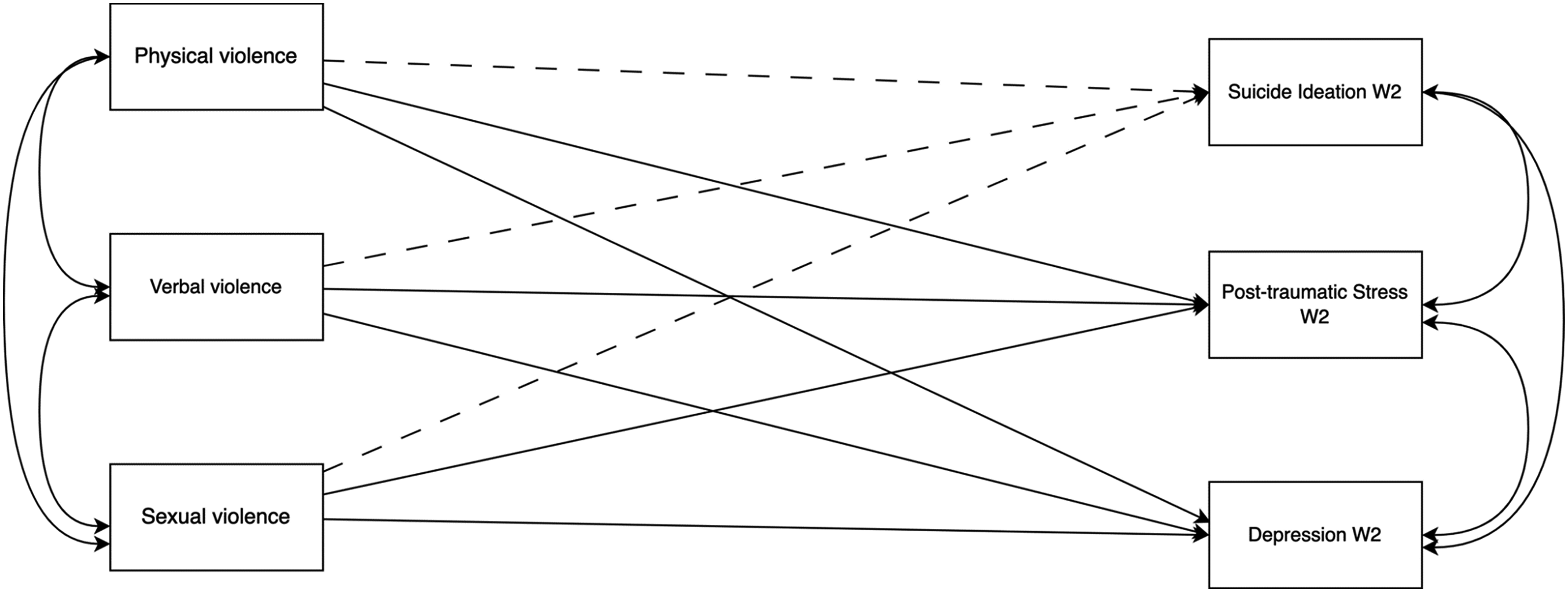
Conceptual model.
Data and Methods
Participants
Participants were former clients of a live-in residential facility in Accra, Ghana, that offers services for girls and young women who have previously experienced trafficking and those who may be at risk of being trafficked. These women came primarily from the more disadvantaged rural areas of the country, and, thus, the sample reflects geographic diversity from across Ghana. While residing in the facility, clients completed a service-based program that included education and job training, which typically lasted from 6 to 9 months. After successfully completing the program requirements, clients exited the residential facility and reentered their various communities with the support of a community mentor (for program details, see Okech & Danikuu, 2017)
Participation was contingent on meeting two main eligibility requirements. First, participants must have enrolled in the residential program sometime between 2010 and 2015 and have completed the program by the summer of 2016. Participants must also have experienced some form of trafficking. This was determined by an affirmative response to any of the following questions: “Have you traveled to Accra and been offered a job as a Kayeyei (female street porter), in a house, or elsewhere with no pay?”, “Were you offered a job but not allowed to leave?”, and “Were you offered a job that involved forced sexual services?”. While sex trafficking is an experience that made participants eligible for our study, no participants reported being offered a job that involved forced sexual services. Instead, all of the participants were trafficked only for labor. This is reflective of the local area, where labor exploitation in a nearby market is common.
Of the 311 women who met the inclusion criteria, 144 women were located and agreed to participate. The initial wave of data collection occurred in the summer of 2016, and the second wave of data was collected in the summer of 2017. Expectedly, there was some sample attrition, with 116 women participating in the second wave of data collection. Demographic characteristics between the wave 1 and 2 samples are not significantly different, despite this attrition. Only women who participated in both waves are included in this study.
Data Collection
Local female research assistants conducted face-to-face surveys at the site of the residential service agency in Accra. Survey questions were written in English and then translated into Twi, which is Ghana's most common local language. After initial translation, an independent translator translated the Twi version back into English, compared this version to the original English version, and addressed any discrepancies. Finally, one of the coauthors, who is a native Ghanaian fluent in Twi, reviewed the translation alongside the local bilingual research assistants who conducted the face-to-face surveys. Participants were compensated $30 for each wave of data collection, and travel expenses were paid for any women who lived outside Accra. Ethical and Institutional Review Board approval was obtained from both the University of Ghana and the University of Georgia.
Measures
Suicide ideation was assessed at wave 2 with the Ultra-Short Suicidal Ideation Scale (Nugent, 2005). This scale contains four questions, each measuring some aspect of suicide ideation. The four questions are “I feel that my life is over, and I may as well end it,” “I think about committing suicide,” “I actually think about different ways that I could kill myself,” and “I have actually decided that I am going to take my own life and I now think about my final plan for doing that.” Original response categories ranged from 0 to 7, measuring how often the person engaged in each type of suicidal thought, with 0 representing “not at all” and 7 representing “all of the time.” Because there were very few responses in the middle and upper ranges of each question, we recoded each of these questions into a dichotomous variable, with 0 indicating “none of the time” and 1 indicating at least “very rarely.” The numerical value of each of the four question items was then added together to form a scale that ranges from 0 to 4, with higher values corresponding to a greater presence of suicide ideation. The Cronbach's alpha for this scale is 0.87.
Posttraumatic stress was assessed at wave 2 using the Posttraumatic Diagnostic Scale (PDS) (Foa et al., 1997). This scale is composed of 17 items that assess arousal, avoidance, and intrusive thoughts related to the trafficking event. Examples of questions include “How often do you have bad dreams or nightmares about the event?”, “How often do you relive the traumatic event?”, and “How often do you have trouble concentrating?”. Each question ranges in response from 0 to 3, with 0 indicating “not at all/almost never” and 3 indicating “3 to 5 times a week/very much/almost always.” The Cronbach's alpha of this scale is 0.90.
Depression was also assessed at wave 2 using the Hopkins Symptom Checklist (HSCL) (Derogatis et al., 1974). This scale consists of 11 items, which asked how much various “problems” bothered the respondent during the past 7 days, including “feeling blue,” “crying easily,” “blaming yourself for things,” and “feeling no interest in things.” Each question ranges in response from 1 (not at all) to 4 (extremely). The Cronbach's alpha for this scale is 0.81.
Three forms of violent victimization while trafficked were assessed at the initial wave of data collection. Participants were asked if, during the period of trafficking, they experienced any form of sexual violence, physical violence, and/or verbal violence. For each type of violence, we created a dichotomously coded variable with “1” indicating that the participant experienced that particular type of violence.
We also control for several factors that could be related to suicide ideation, posttraumatic stress, or violence. First, harsh living conditions while trafficked is a count of the number of adverse conditions experienced while being trafficked. This includes living and sleeping in overcrowded rooms, sleeping in dangerous conditions, nowhere to sleep or sleeping on the floor, poor basic hygiene, inadequate water for drinking, insufficient food, and overexposure to sun or rain. Next, we control for the length of time that the participant was trafficked via a dichotomous variable coded “1” for those who were trafficked more than 12 months. We also control for how long ago the trafficking ended by including years since trafficking, which is a discrete variable. Finally, we controlled for age, marital status (married vs. never married, separated, widowed), and education (coded “1” for completed junior secondary school or higher).
Analytical Strategy
We utilize path analysis to test for a relationship between experiences of three forms of violence (physical, sexual, and verbal violence) reported at wave 1 and three distinct mental health outcomes at wave 2. Path analysis is useful for longitudinal data analysis, as it uses a structural equation framework to consider the effects of multiple independent variables on multiple dependent variables at once (Olobatuyi, 2006). Furthermore, path modeling allows for the correlation of errors between the three types of violence and mental health outcomes, allowing us to account for common underlying factors among the variables. We control for age, marital status, education, the time spent in trafficking, time since the end of the trafficking period, and harsh living conditions during trafficking, all measured at wave 1.
Missing data were primarily present on the variable measuring whether respondents were trafficked for more than 12 months (there were 13 cases of missing data on this variable). We handled these missing cases using full information maximum likelihood analysis (FIML). FIML can produce unbiased parameter estimates under ignorable missing data conditions and is more efficient than other missing data techniques (Enders & Bandalos, 2001).
Results
Descriptive Statistics
Table 1 presents descriptive statistics for the study sample, which consisted of 116 formerly trafficked women in Ghana. Over half (56.31%) of the women reported that they had been trafficked for more than 12 months. The trafficking period had ended an average of 4.22 years before the first wave of data collection. Their average age was 23.35 years old at the time of initial data collection. Approximately 13% were married, and 64% had completed junior secondary school or higher. Additionally, around 46% of the sample reported that they were involved in domestic servitude, and 46% were involved in street vending, followed by home businesses (25.86%), agriculture or farming (22.41%), and portering (18.97%).
Descriptive Statistics (N = 116).
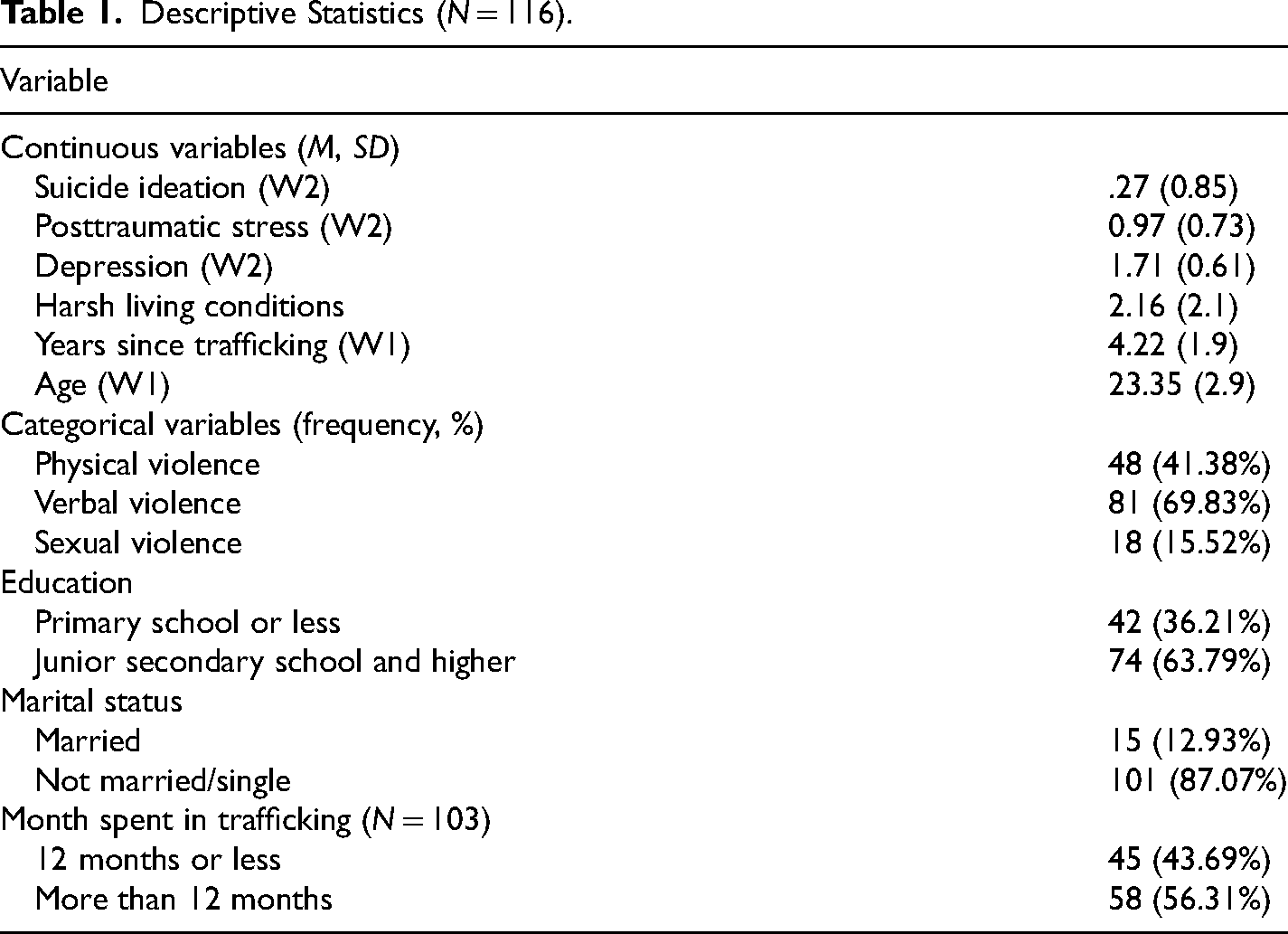
Violent victimization was common among our study sample. Approximately 70% of the women reported verbal violence, 41% physical violence, and 16% sexual violence while being trafficked. They also experienced an average of 2.16 out of 7 possible harsh living conditions. The average score on the PDS was .97 (SD = 0.73; range = 0 to 3) and the average score on the depression scale was 1.71 (SD = 0.61; range = 1 to 4). The average suicide ideation scale score was .27 (SD = 0.85; range = 0 to 4).
Path Analysis
Figure 2 summarizes the results of the path model in which three forms of violence (physical, sexual, and verbal violence) experienced during trafficking (measured at wave 1) predict suicide ideation, posttraumatic stress, and depression on the year later at wave 2. All coefficients have been standardized. The chi-square test statistic (χ2 = 104.239, p < .001) indicates that our proposed model fits the data better than the baseline model. The Root Mean Square Error of Approximation (RMSEA) of the final model was .000 and the Comparative Fit Index (CFI) and Tucker-Lewis Index (TLI) were both exactly 1.000, which is likely the result of having no degrees of freedom in the model due to the small sample size. As such, the RMSEA, CFI, and TLI should be read with caution.
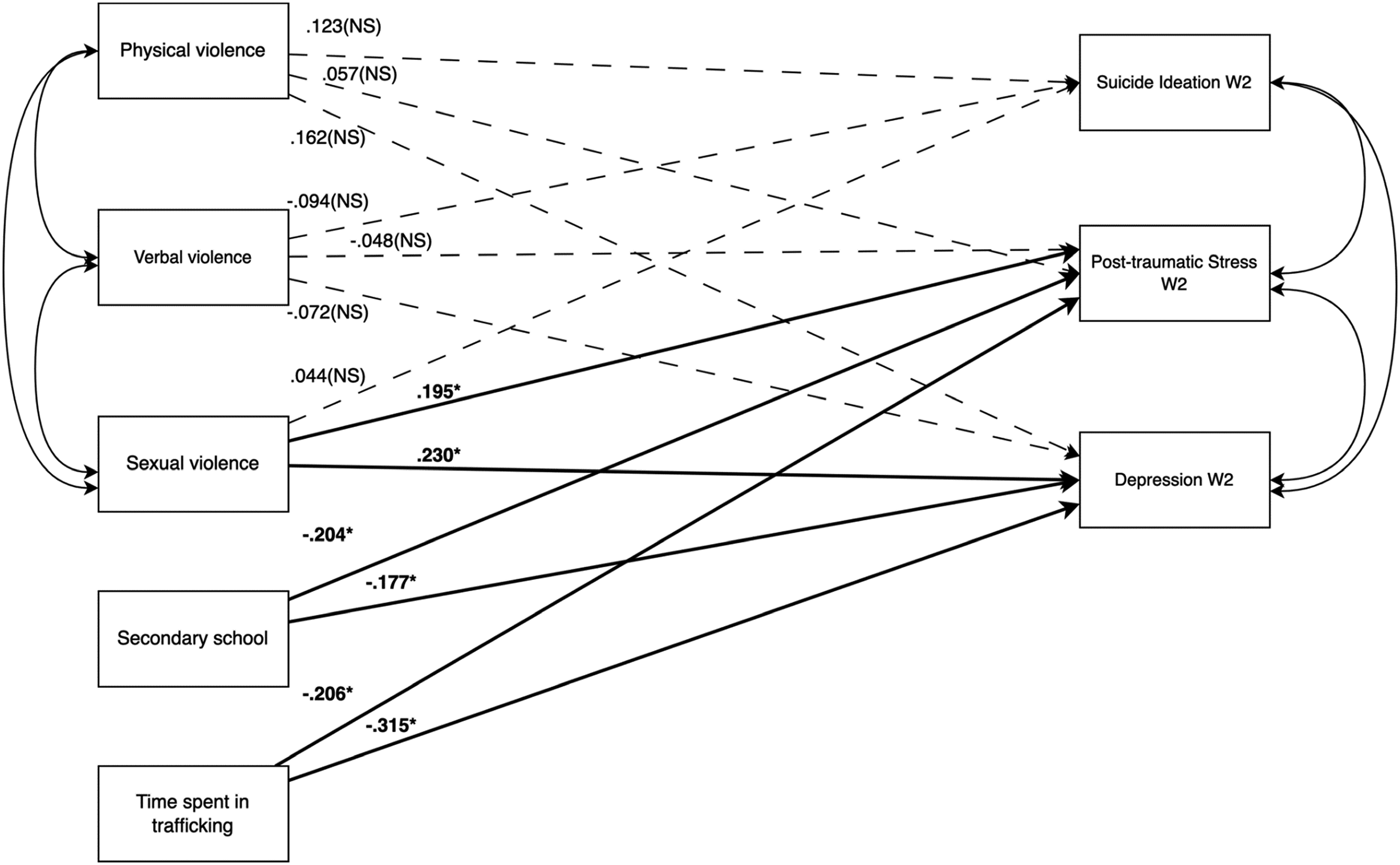
Standardized effect of three types of violence at wave 1 on three mental health outcomes at wave 2 (N = 116).
The path model highlights intriguing relationships between different forms of violence and mental health outcomes at a later time point. Specifically, we found that sexual violence is positively associated with increased level of posttraumatic stress at wave 2 (β = .195, p < .05) as well as with increased level of depression at wave 2 (β = .230, p < .05). This was not the case for suicide ideation, however, as sexual violence was not a significant predictor of suicide ideation at wave 2. Contrary to our expectation, we did not find a significant effect of physical violence or verbal violence on any of the mental health outcomes for wave 2. These finding suggests that sexual violence has a long-lasting impact on mental health outcomes, as individuals who experienced sexual violence during the trafficking event reported higher levels of posttraumatic stress and depression years after the trafficking period ends. However, other forms of violence did not have the same observed effect.
Additionally, we found two of the control variables to be significantly associated with depression and posttraumatic stress measured at wave 2. Firstly, having completed secondary school was negatively associated with depression (β = −.177, p < .05) and posttraumatic stress (β = −.204, p < .05). These findings indicate that higher educational attainment served as a protective factor against negative mental health outcomes among these formerly trafficked women. Secondly and unexpectedly, we also found that having been trafficked for more than 12 months was also negatively associated with depression (β = −.315, p < .05) and posttraumatic stress (β = −.206, p < .05). This contrary finding is likely due to data limitations, as the patterns of missing data on this particular variable may have biased results.
Discussion
Human trafficking is widely recognized as a global problem with significant consequences for victims (Zimmerman et al., 2011; Zimmerman & Kiss, 2017). While literature has examined violence experienced by sex-trafficked women, far less attention has been paid to violence experienced by women trafficked for labor. Recent research on labor-trafficked women finds that trafficking can have long-term effects on victim's physical health (Clay-Warner et al., 2021), suggesting the need to examine how trafficking continues to affect women's mental health even after the trafficking event has ended. In response to this need, our findings illuminate how violence and victimization during the trafficking event can shape mental health long after the trafficking ends.
Similar to past studies of trafficked populations, our findings indicate a high prevalence of violent experiences, posttraumatic stress, depression, and suicide ideation among our participants (e.g., Hossain et al., 2010; Kiss, Pocock, et al., 2015; Kiss, Yun, et al., 2015; Zimmerman et al., 2008). Further, as with past studies, we find links between violent victimization experienced during the trafficking period and subsequent psychological distress and poor mental health in the posttrafficking period (García-Vázquez & Meneses-Falcón, 2023; Hossain et al., 2010; Iglesias-Rios et al., 2018). Findings from these studies, however, only reflect the effects of trafficking in the immediate posttrafficking period. Most previous research is also cross-sectional (Iglesias-Rios et al., 2018; Nodzenski et al., 2020; Turner-Moss et al., 2014). Thus, our study adds to the literature, as it considers the longitudinal effects of trafficking-related violence on trafficked women years after trafficking had ended. Women in our study had been removed from the trafficking incident an average of 5.22 years before collection of the wave 2 data. The fact that the levels of posttraumatic stress, depression, and suicide ideation that our participants report years after trafficking are similar to the levels reported by participants in other studies immediately after the conclusion of the trafficking period suggests the durability of mental health problems in trafficked populations, which confirms recent literature on the enduring nature of trafficking-related violence on a host of health outcomes (Clay-Warner et al., 2021; García-Vázquez & Meneses-Falcón, 2023). In addition, many past studies have exclusively focused on the rates of psychological distress among women trafficked for sex. Our findings add to this literature by demonstrating that rates of psychological distress among women trafficked for labor are similar to rates among those trafficked for sex.
While the current study is limited to a sample of women trafficking survivors, our findings inform a more general understanding of how violent victimization operates in already traumatized populations of women (Weaver et al., 2007; Lu et al., 2019). By utilizing longitudinal data, our study reveals complexities in the relationship between violence and mental health for an already traumatized population. Findings suggest that experiences of trafficking-related violence are implicated in the psychological distress of human trafficking survivors and that these effects continue well into the reintegration period. By linking the path between violent victimization and suicide ideation through posttraumatic stress and depression, we demonstrate the deleterious mental health effects that violent victimization can have for survivors of human trafficking above and beyond the effect of the trafficking event itself and thus document how violent victimization can be a potent source of chronic mental health problems for populations that have already faced considerable trauma (Weaver et al., 2007). By doing so, we highlight that interpersonal violent victimization, in particular, is likely an important factor in explaining longitudinal variations in the mental health outcomes of already traumatized populations.
Our findings also highlight that certain forms of violent experiences may be particularly relevant for the mental health of labor-trafficked women, with sexual violence as an important driver of both depression and posttraumatic stress. This conforms with past literature on posttraumatic stress and trafficking finding that sexual violence is significantly related to posttraumatic stress and depression among sex-trafficked women (Hossain et al., 2010; Iglesias-Rios et al., 2018); however, this is the first study, to our knowledge, to link sexual violence with depression and posttraumatic stress in a longitudinal sample of labor-trafficked women. Our findings reinforce the argument that sexual violence is as important a consideration for labor-trafficked women as it is for sex-trafficked women.
Interestingly, the broader literature finds that physical, sexual, and emotional violence are all predictors of both suicide ideation and posttraumatic stress in non-trafficked populations (Hillis et al., 2017; Kilpatrick et al., 2003; Seff & Stark, 2019; Ullman & Najdowski, 2009), as well as of other mental health problems like depression and anxiety (Hawker & Boulton, 2000; Johnson et al., 2014; Kimmel, 2014; Ruback & Thompson, 2001). Thus, our finding that sexual violence was the only form of violence to have a significant effect on psychological distress may be specific to this particular group of trafficking survivors. Additional research should consider how different types of violence might uniquely affect the mental health of trafficking survivors.
Finally, our findings highlight the need for continued mental health support for women trafficking survivors throughout reintegration. Consistent with past findings of mental health in other non-Western samples of trafficked women, we found that respondents reported high levels of psychological distress, including depression, PTSD symptoms, and suicide ideation (Kiss, Yun, et al., 2015; Ling et al., 2004). Levels of psychological distress were particularly high among those who experienced violence during the trafficking period. The high levels of psychological distress found among labor-trafficked women likely impede posttrafficking reintegration and should be addressed along with other practical concerns such as job training and social support. In all, understanding the roles that violence and subsequent posttraumatic stress and depression play in the posttrafficking reintegration is an important step toward understanding how to address the mental health issues facing trafficking survivors.
Limitations and Conclusion
Our study does have notable limitations. First, we have a relatively small sample. Our sample size, though, is typical of studies of trafficking survivors, as they are a hard-to-reach population (Zimmerman et al., 2011). Second, our findings likely underrepresent the prevalence of mental health problems among labor-trafficked women, as all of the participants in this study completed a residential program that, among other things, provided support for mental health issues. This likely means that we are not capturing the most vulnerable trafficking survivors, limiting the generalizability of our findings. While this is a limitation, the fact that we find such high levels of psychological distress among this group of women also speaks to the pervasive impact that trafficking-related violence can have on the mental health of survivors.
Our findings also suggest areas for future research on violence and mental health among trafficked women that consider other variables of interest. For one, social support plays a critical role in mental health (Aneshensel, 2015), and future studies would do well to consider how social support moderates the impact of violent victimization and psychological distress on the mental health of trafficked and otherwise traumatized populations of women. Additionally, while we test for several different types of violence, the amount and duration of the violent events likely matter for mental health. Finally, there are several facets of mental health that our study does not cover, including anxiety, which are fruitful areas of investigation for future studies on labor-trafficked women. Overall, our research evidences the need for additional longitudinal research on how violent experiences trigger and shape the process of stress over time among groups of people already experiencing high levels of trauma.
Limitations notwithstanding, our research is the first study to investigate how trafficking-related violence affects the mental health of labor-trafficked women over time and the only study, to our knowledge, to gather longitudinal data on the mental health of trafficked women years after the trafficking event occurred. Further, our study highlights how understanding violent experiences can contribute to a more holistic understanding of how mental health operates in trafficked and otherwise traumatized populations of women. In doing so, our findings fill a void in the literature and serve as an important foundation for future investigations into the mental health of trafficked populations.
Footnotes
Declaration of Conflicting Interests
The author(s) declared no potential conflicts of interest with respect to the research, authorship, and/or publication of this article.
Funding
This research was funded by grants from the University of Georgia Office of Global Engagement and the University of Georgia President's Interdisciplinary Seed Grant Fund.
