



Abstract
The content validity of the Measure of Psychologically Abusive Behaviors (MPAB) was examined via qualitative content analysis of interviews conducted with 262 women who experienced intimate partner violence. Data were coded using MPAB categories and items. Approximately 73.4% of the data were represented by the MPAB at both the category and severity levels; half of the data mapped onto “severe” items. At the category level, 12.3% of the data did not map onto the MPAB; 15.5% of the data mapped onto a category but did not match a severity level. Results support the content validity of the MPAB.
Examining the Content Validity of the Measure of Psychologically Abusive Behaviors: A Qualitative Approach
Intimate partner violence (IPV) is a significant problem in the United States, with approximately 35% of women endorsing exposure to IPV during their lifetime (Black et al., 2011). IPV is defined by the Centers for Disease Control and Prevention (CDC) as physical, sexual, or psychological abuse or stalking that is perpetrated by a current or former romantic partner (Breiding et al., 2015). Psychological IPV is the most frequently experienced form of IPV, with approximately 48% of women reporting psychological IPV during their lifetime (Black et al., 2011). In the past few decades, psychological IPV has been recognized as a distinct form of IPV; research on the impact of psychological IPV has noted associations with symptoms of depression, posttraumatic stress disorder, and anxiety, suggesting that the emotional impact of psychological IPV can be notable (Lagdon et al., 2014). Many authors have noted that conceptualization of psychological IPV has not been straightforward (e.g., Follingstad, 2007), although numerous assessment instruments have been developed. The current report focuses on the Measure of Psychologically Abusive Behaviors (MPAB; Follingstad, 2011), a self-report measure of psychological IPV that was designed to address measurement issues in this area. Despite advancing assessment of psychological IPV, the MPAB has not been widely used. To expand this literature, the current study examined the content validity of the MPAB using qualitative interview data from a sample of women who sought mental health assistance following exposure to IPV.
Psychological IPV
The CDC defines psychological IPV as the use of verbal or nonverbal tactics to elicit mental or emotional harm or exert control over a partner (Breiding et al., 2015). Similarly, the World Health Organization (WHO) stratifies the construct into two parts: (a) emotional abuse and (b) control (World Health Organization, 2013). According to the WHO, emotional abuse refers to insults, humiliation, intimidation, and threats, and control refers to controlling behaviors such as isolation and monitoring. Consistent themes are noted in other definitions of this construct within the literature, particularly the use of verbal or nonverbal behaviors with the intention of causing psychological harm, eliciting fear, and coercing/controlling the romantic partner (Follingstad, 2007; O’Leary, 1999).
Despite similar overarching definitions, an overall lack of consensus regarding the conceptualization of psychological IPV has been documented (Dokkedahl et al., 2022; Follingstad, 2007). Definitions of psychological IPV typically have been created within the context of instrument development, wherein behaviors considered to be psychologically abusive were created and explored for their measurement properties (Kelly, 2004; Winstok & Sowan-Basheer, 2015). Further, psychological IPV is considered a multidimensional construct, and its inherent complexity poses complications for measurement, given that some measures have been developed specifically for different facets of psychological IPV (e.g., economic abuse, controlling behaviors). This lack of consensus regarding a standardized conceptualization of the multifaceted nature of psychological IPV poses complications for comparing results across studies, deriving accurate prevalence rates, and developing comprehensive measurement tools for this complex construct.
Common Measures of Psychological IPV
Despite issues with conceptualization, measures of psychological IPV have been developed and validated. Typically, measures are devised with a specific purpose (e.g., to determine the risk of future violence, to serve as a brief screen, to expand research on psychological IPV). In a systematic review and evaluation of IPV measures, Alexander et al. (2022) recommended the use of the following scales for nonphysical forms of IPV: the Psychological Maltreatment of Women Inventory (PMWI; Tolman, 1989) and the Multidimensional Measure of Emotional Abuse (MMEA; Murphy & Hoover, 1999). Other commonly used measures of psychological IPV include the psychological aggression subscale of the Conflict Tactics Scale (CTS; Straus et al., 1996), the Index of Spouse Abuse (ISA; Hudson & McIntosh, 1981), and the Composite Abuse Scale (Hegarty et al., 1999). Concerns have been raised about these measures, as they were developed without a theoretical foundation or an a priori definition of psychological IPV (Winstok & Sowan-Basheer, 2015). Other concerns have been raised regarding these measures, such as their lack of contextual information (i.e., victim's perceptions of abuse duration of abuse, severity of abuse, perpetrator intent, outcome of the behavior) and their failure to capture the overall complexity of psychological IPV (Carney & Barner, 2012; Follingstad, 2007). Additionally, neither the ISA, CAS, nor CTS psychological aggression subscale clearly separate the type of IPV (e.g., psychological, physical) from severity. Lastly, these measures were normed in samples of white, cis-gendered, heterosexual women and underrepresent the experiences of racial, sexual, and gender minoritized individuals (e.g., Mason et al., 2014). Given the complexity of psychological IPV, these measures may not reflect the entirety of this construct, leading experts to note the need for improved measurement of psychological IPV (e.g., Bender, 2017; Follingstad, 2007). It is worth noting that these commonly used and recommended measures are older and the limitations noted are expected given how much the literature has evolved. A plethora of measures have been created in response for specific purposes, populations, and psychological IPV subtypes (see Alexander et al., 2022 and Lohmann et al., 2023 for systematic reviews).
The Measure of Psychologically Abusive Behavior
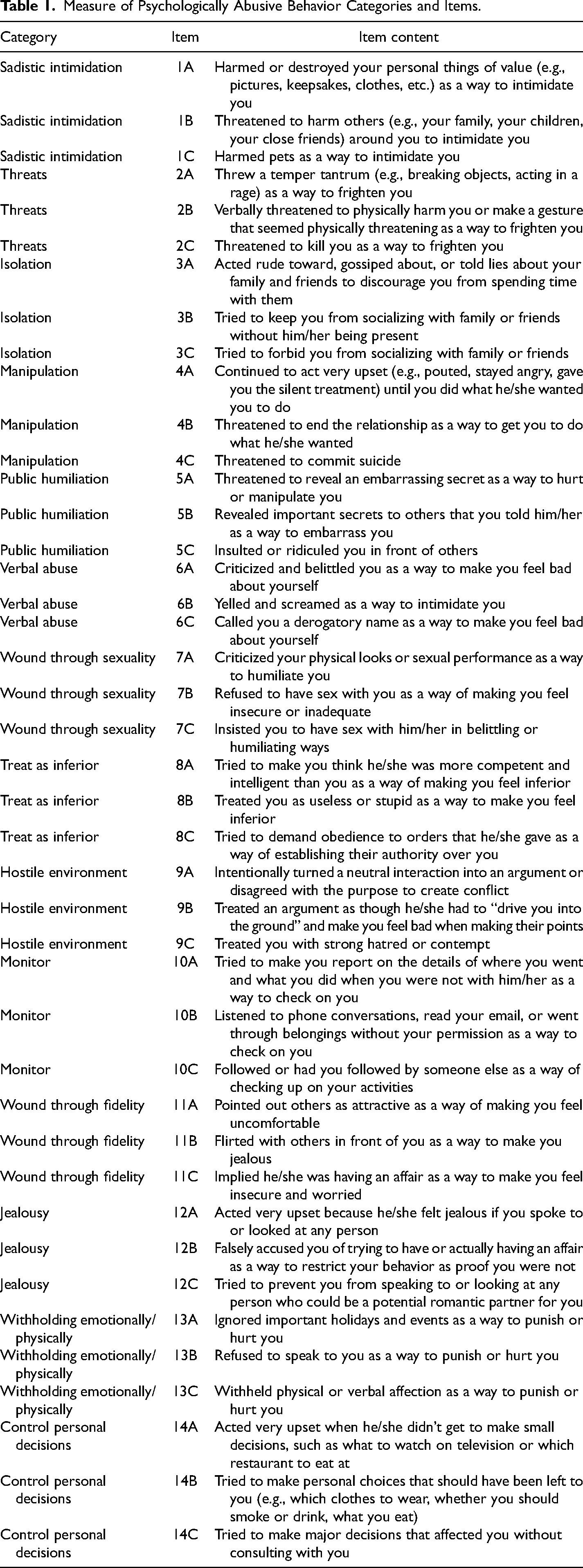
To expand sensitivity of research on psychological IPV, Follingstad devised the Measure of Psychologically Abusive Behavior (MPAB; 2011) to assess the full spectrum of this form of abuse. The MPAB consists of 14 nonoverlapping descriptive categories (see Table 1) that are considered to be “severe” forms of psychological IPV and include (a) sadistic intimidation, (b) threat, (c) humiliation, (d) isolation, (e) verbal abuse, (f) wound through sexuality, (g) wound through fidelity, (h) monitor, (i) control, (j) jealousy, (k) hostile environment, (l) treat as inferior, (m) withhold physical affection/emotional connection, and (n) manipulation. Additionally, each category consists of three items that reflect “mild,” “moderate,” and “severe” forms of abuse, as indicated by a nationally representative sample of adults (Follingstad, 2011). The severity dimension is an important measurement feature of the MPAB and provides salient contextual information that may be relevant for understanding outcomes of psychological IPV (see systematic review by Lagdon et al., 2014). Likewise, given that psychological IPV occurs on a continuum of intensity (Follingstad, 2007), the creation and inclusion of severity levels within categories provide additional information beyond a dichotomous conceptualization of abuse, expanding the sensitivity of research in this domain. The MPAB items build upon other widely used measures, as it is gender neutral, assess a wide scope of experiences, and infer perpetrator intent. Taken together, the MPAB has many advantages relative to other measures of psychological IPV as a research tool.
Measure of Psychologically Abusive Behavior Categories and Items.
Available Psychometric Support for the MPAB
Though the MPAB has many advantages, limited research has been conducted to examine its psychometric properties. In developing this measure, a nationally representative sample rated the MPAB items as “egregious,” providing support for the measure capturing overall severe instances of abuse (Follingstad, 2011). The MPAB then was normed and psychometrically validated in a sample of college women who were in distressed relationships (Follingstad, 2015). Two samples were examined: a normative sample (women, aged 18–29 in relationships) and a criterion sample (women, aged 18–29, who endorsed being in a distressed and conflictual relationship). The MPAB evidenced excellent reliability in both the normative sample (total scale α = .97; subscale α range = .90–.92) and criterion sample (total scale α = .97; subscale α range = .91–.93). Mean scores on the MPAB were significantly greater in the criterion sample relative to the normative sample, with women in the criterion sample endorsing higher frequencies of abuse. These results provide evidence for criterion validity. Follingstad (2015) also conducted an exploratory factor analysis (EFA) to examine the factor structure of the MPAB and noted three factors in both samples: controlling behaviors, terrorizing behaviors, and jealousy behaviors, elucidating the preliminary factor structure of this measure. Though the MPAB has been used in subsequent studies (e.g., Coker et al., 2012, 2016; Jetelina et al., 2020; Rogers & Follingstad, 2014), psychometric indicators, such as internal consistency, were not included in these reports. Thus, available psychometric information centers on the experiences of college-aged women in “distressed and conflictual” relationships, limiting current generalizability of this measure to gender, racial, or sexually diverse populations.
Purpose
To date, the MPAB appears to advance measurement of psychological IPV, as this scale includes more dimensions of this form of abuse relative to other measures, includes measurement of contextual information (i.e., perpetrator intent), and incorporates a severity dimension beyond the frequency of exposure. However, as previously noted, available psychometric support for the MPAB has only been provided by the scale developer in a sample of college students. Further exploration is warranted in other populations to assess external validity, given that different samples (i.e., individuals in the community, help-seeking samples) may have different (and possibly more severe) experiences of abuse. Moreover, as noted by Alexander et al. (2022), mixed research methods would serve to strengthen assessment and validation of measures, through the addition of qualitative approaches. Additional forms of validity, such as content validity, warrant investigation. Content analysis is one way in which content validity can be assessed, such that data are examined for the presence (or absence) of terms/concepts that are representative of a specific construct. Examining qualitative data provides a rich insight about a specific phenomenon (i.e., psychological IPV) at the individual level.
To address some of the gaps previously noted, the current study examined the content validity of the MPAB at both the category and severity levels. A conceptual content analysis of interview data that were obtained as part of a diagnostic assessment at a mental health research center with IPV-exposed women was conducted. The MPAB's categories and items were used as a theoretical framework to code the interview data, and any form of psychological IPV reported by participants that were not reflected by the MPAB were noted and discussed to better understand women's experiences of psychological IPV. It was expected that the majority of experiences reported by participants that are consistent with the MPAB would fall within the “severe” subscale, given that help-seeking samples often report more severe abuse exposure (Duterte et al., 2008).
Method
Participants
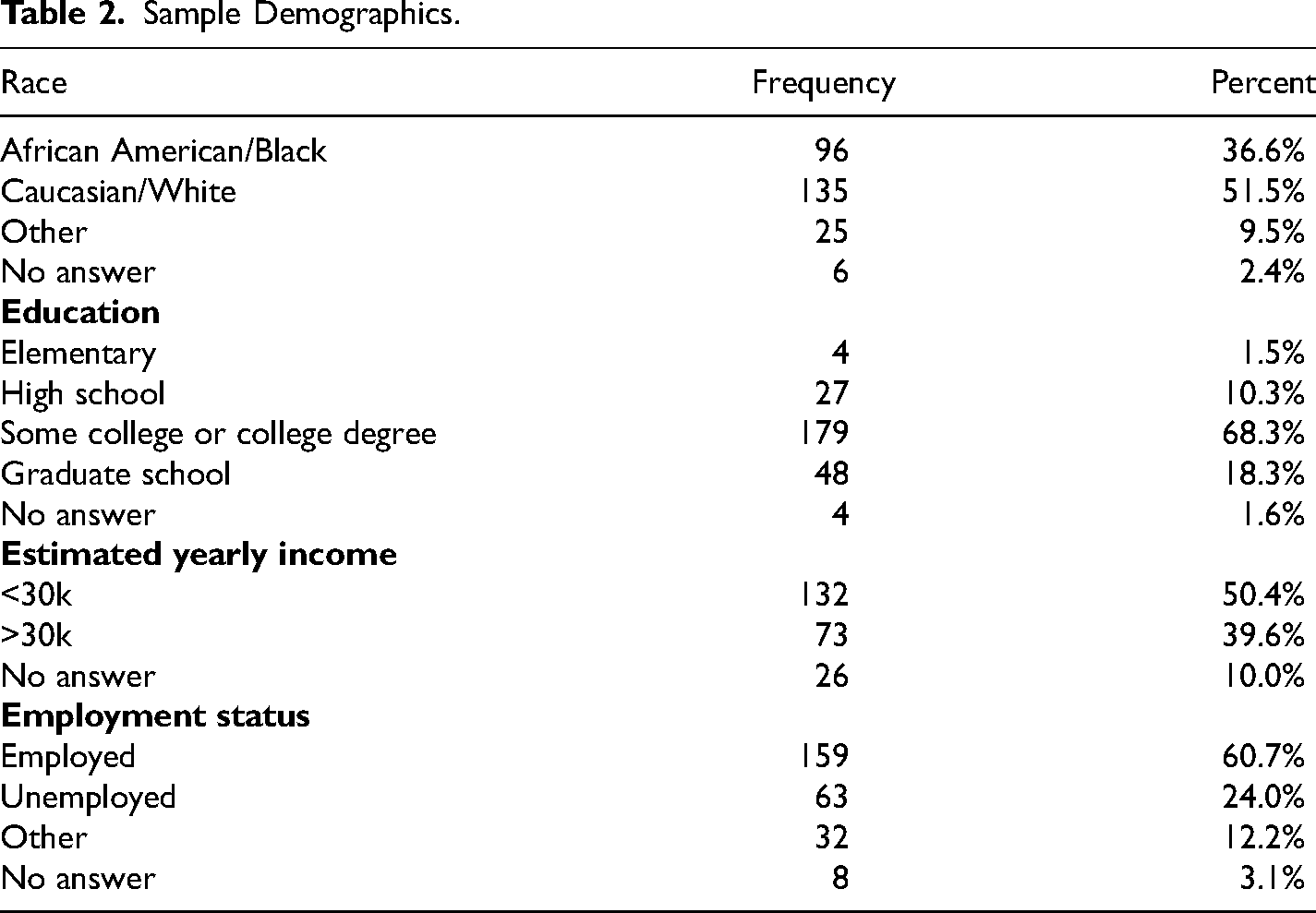
The sample was drawn from a pool of 569 adult women who sought a mental health evaluation at a university mental health research clinic following exposure to IPV. Participants were recruited from the community via community and health fairs, radio announcements, outreach to medical providers, and flyers on college campuses. Because the aim of the current study was to examine psychological IPV, participants were excluded from the current study if they did not endorse exposure to psychological IPV (n = 26). Participants were also excluded if they noted psychotic symptoms (n = 14), were inconsistent in their reporting per the interviewing clinician (n = 9), were experiencing cognitive impairment as evidenced by the Montreal Cognitive Assessment (Nasreddine et al., 2005; n = 18), or did not complete relevant measures (n = 203). An additional 19 participants were removed from the current study due to illegible interview notes, and 17 participants were removed due to clerical errors prior to coding. The final sample for this study included 262 women, aged 18 or older (M = 37.65, SD = 12.69, range = 18 to 75). The Psychological Maltreatment of Women Inventory- Short Form (PMWI-SF) was used as a sample descriptor to quantify overall psychological IPV exposure; the mean for the current sample was 52.40 (SD = 16.29). Additional sample demographic information is reported in Table 2.
Sample Demographics.
Measures
Domestic Violence Interview
The Domestic Violence Interview (DVI) was used to capture qualitative reports of psychological IPV. The DVI is a semistructured interview developed as part of a diagnostic assessment at a mental health research clinic. The DVI was administered by trained graduate- and PhD-level interviewers. Using the DVI, the interviewer asks the participant to describe experiences of physical, sexual, and psychological IPV in their most recent and worst abusive relationships. For each type of abuse, participants are asked to report when the abuse began, how frequently the abuse occurred in an average month (or ever), any injuries sustained as a result of the abuse, and to describe what happened. Interviewer notes from the psychological IPV section relating to the participant's worst abusive relationship were coded as the unit of analysis.
Measure of Psychologically Abusive Behavior
The MPAB (Follingstad, 2011) is a 42-item self-report measure of psychological abuse. It includes 14 overall broad categories of psychological abuse (see Table 1). Each category is reflected by three items that increase in severity (“mild,” “moderate,” “severe”). For example, the category of verbal abuse includes the following three items: (a) criticized and belittled you as a way to make you feel bad about yourself (mild), (b) yelled and screamed as a way to intimidate you (moderate), and (c) called you a derogatory name as a way to feel bad about yourself (severe). Items are rated by the participant as occurring in the past year on a 4-point Likert scale ranging from never (0) to almost daily (3). The MPAB evidences excellent internal reliability (α = .97), and each severity subscale evidences good internal reliability (α range = .90 to .93; Follingstad, 2015). For the current study, the MPAB was used as the conceptual system to code the qualitative DVI data but was not administered.
Psychological Maltreatment of Women Inventory
The PMWI-SF (Tolman, 1989) was used as a sample descriptor to quantify overall psychological IPV experiences. It is a 14-item self-report measure of psychological abuse. The PMWI-SF consists of two seven-item subscales that reflect dominance/isolation (e.g., “My partner interfered in my relationships with other family members”) and emotional/verbal abuse (e.g., “My partner called me names”). Each item is rated by the participant as the frequency of occurring in their worst abusive relationship on a 4-point Likert scale, ranging from Never/NA (1) to Very frequently (5). Scores for each subscale are calculated and summed to create a total score ranging from 14 to 70; higher scores reflect higher frequencies of psychological IPV. The PMWI-SF evidences good internal and factorial validity (Tolman, 1999). Internal consistency in the current study was excellent (α = .94).
Procedure
Study procedures were approved by the university's institutional review board (ID number: PRO-FY2019-542). Following provision of informed consent, participants completed a thorough diagnostic assessment that included self-report questionnaires and interviews (including the PMWI-SF and DVI). Assessments were administered by a trained graduate- or PhD- level clinician. Upon completion of the assessment, participants were provided with feedback and referrals for treatment, if appropriate. Given that the current study was part of a larger project, data collection spanned 14 years (from 2008 until 2022).
Analytic Strategy
The principal investigator (PI) reviewed the interviewer notes from the DVI and separated notes into single, codable units (i.e., specific words, phrases). The PI derived a code book including the MPAB categories and items. Additional codes were added to the code book for (a) irrelevant information or experiences that are not considered abuse, (b) forms of abuse that are not psychological (i.e., physical or sexual abuse), (c) illegible handwriting, (d) data that were too vague to code at either the category or item level, and (e) experiences that were not represented by the preexisting categories or items. Three undergraduate research assistants (two women and one man) were trained by the PI to code the DVI notes using the MPAB categories and items in a consistent manner. An iterative training process was implemented in which the coders worked with “practice” data derived from participants who were excluded from the study. During training, a practice set of data was coded and discussed as a group. The coders were assigned new training datasets each week, and weekly meetings were held to discuss coding and discrepancies. During the training process, any themes of psychological IPV that recurred, but were not included in the MPAB, were added to the codebook as an overall category (e.g., financial abuse). Interrater reliability was analyzed via Cohen's Kappa between each rater, as well as Fleiss' Kappa for all three coders’ overall agreement. This iterative process continued until interrater reliability reached an acceptable level (Kappa = .80).
To examine the MPAB categories and items, each separate DVI unit was coded to reflect the best-fitting category. Coders then noted which severity level within the category best described each DVI unit. Coders were asked to note data that were more severe than the “severe” category in addition to exploratory themes in the data that were not represented by a severity level. Weekly meetings were held throughout the coding process to prevent rater drift, in which practice datasets were coded and discussed. Once all data were coded, interrater reliability was calculated. Any data that had 2/3 agreement between coders were assigned the majority code. Any data that had disagreement among all three coders were resolved as a group and assigned a final code reflecting consensus. To describe and quantify the data, percentages were calculated for the occurrence of each category and each severity level. In addition, percentages of additional codes were calculated, which permitted the examination of additional themes that occurred in this population that were outside the scope of the MPAB.
Results
Coding and Interrater Reliability
Training lasted approximately 1 month and ended when interrater agreement reached an acceptable level at the category level (Fleiss’ Kappa = .80). Coding for the current study lasted for 2 weeks. Approximately half of the coded data had complete agreement across raters (53%; n = 711), and an additional 32% (n = 429) had 2/3 agreement. Approximately 15% (n = 196) of the data had complete disagreement across raters, and discrepancies were resolved as a group.
Interrater reliability across the three raters (calculated prior to consensus ratings) ranged from fair to good for category-level coding (Fleiss’ Kappa = .71; Cohen's Kappa = .69 to 72) and was fair for severity-level coding (Fleiss’ Kappa = .63; Cohen's Kappa = .61 to .65). Interrater reliability varied widely across the MPAB categories (Fleiss’ Kappa range = .42 to .87), in which the lowest level of agreement was for the “treat as inferior” category and the highest level of agreement was for the “jealousy” category. Agreement was particularly low for the “hostile environment,” “withholding emotional or physical affection,” and “manipulation” categories (Fleiss’ Kappa < .50). In contrast, higher levels of agreement were noted for the “threats,” “isolation,” “public humiliation,” “verbal abuse,” “monitoring,” “wound through fidelity,” and “jealousy” categories (Fleiss’ Kappa > .80). Kappas across all categories can be found in Table 4. Regarding severity-level coding, Fleiss’ Kappa was .66, .64, and .70 for the “mild,” “moderate,” and “severe” severity levels, respectively.
Primary Analysis
Overall, 59.9% of the data mapped onto the MPAB at both the category and severity levels. Approximately 16% of the data were either not considered IPV (e.g., “I took my sister to the hospital” or “I thought I could fix him”), too vague to code into a category (e.g., “controlling”), illegible, considered physical or sexual IPV, or missing (see Table 3). Percentages excluding data that were not coded are reported henceforth.
Overall Frequencies and Percentages of All Data.
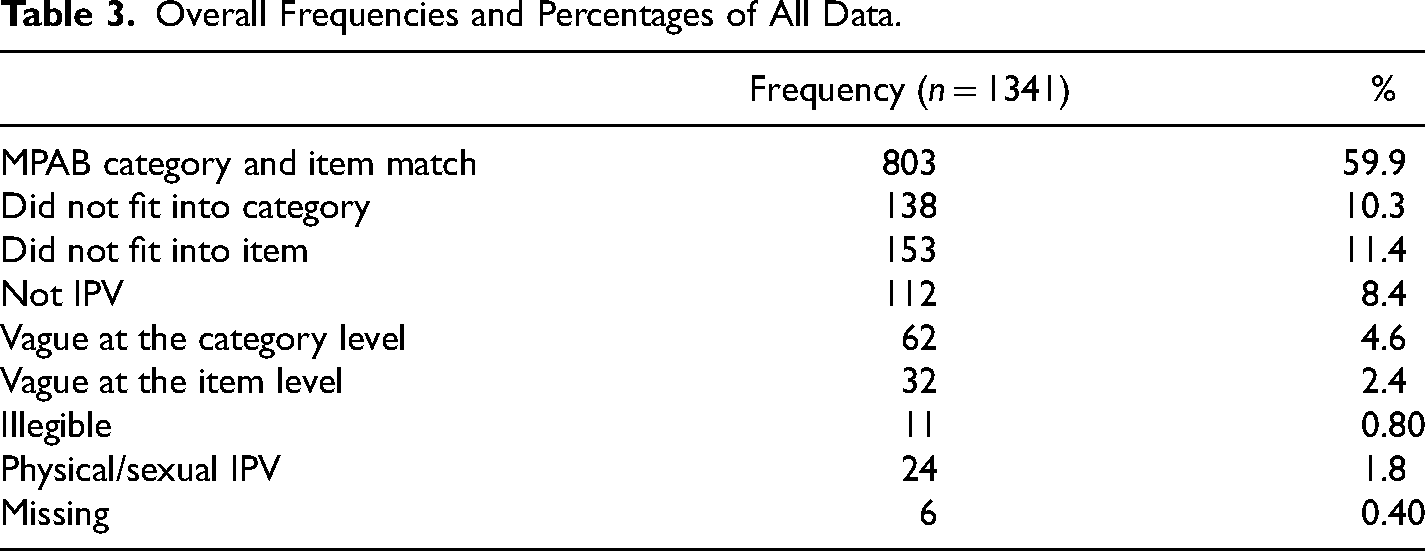
Experiences of the sample were overall represented by the measure's categories; approximately 87.8% (n = 988 out of 1,126 codable units) of participants’ experiences matched one of the MPAB categories. Of the data that mapped onto an MPAB category, a quarter of these experiences were classified as “verbal abuse” (24.8%), followed by “threats” (12.3%), “controlling personal decisions” (10.8%), “monitoring” (8.9%), and “manipulation” (6.5%; see Table 4 for frequencies and percentages of each category). Of the data that mapped onto MPAB categories (n = 988 out of 1,126 codable units), 81.3% of experiences also mapped onto one of the severity levels in its respective category; approximately half of the data were coded at the “severe” level (49.2%), followed by “mild” (28.0%) and “moderate” levels (22.8%). Percentages of each severity level for each of the 14 categories are reported in Table 4.
Categories and Respective Severity-Level Frequencies and Percentages.
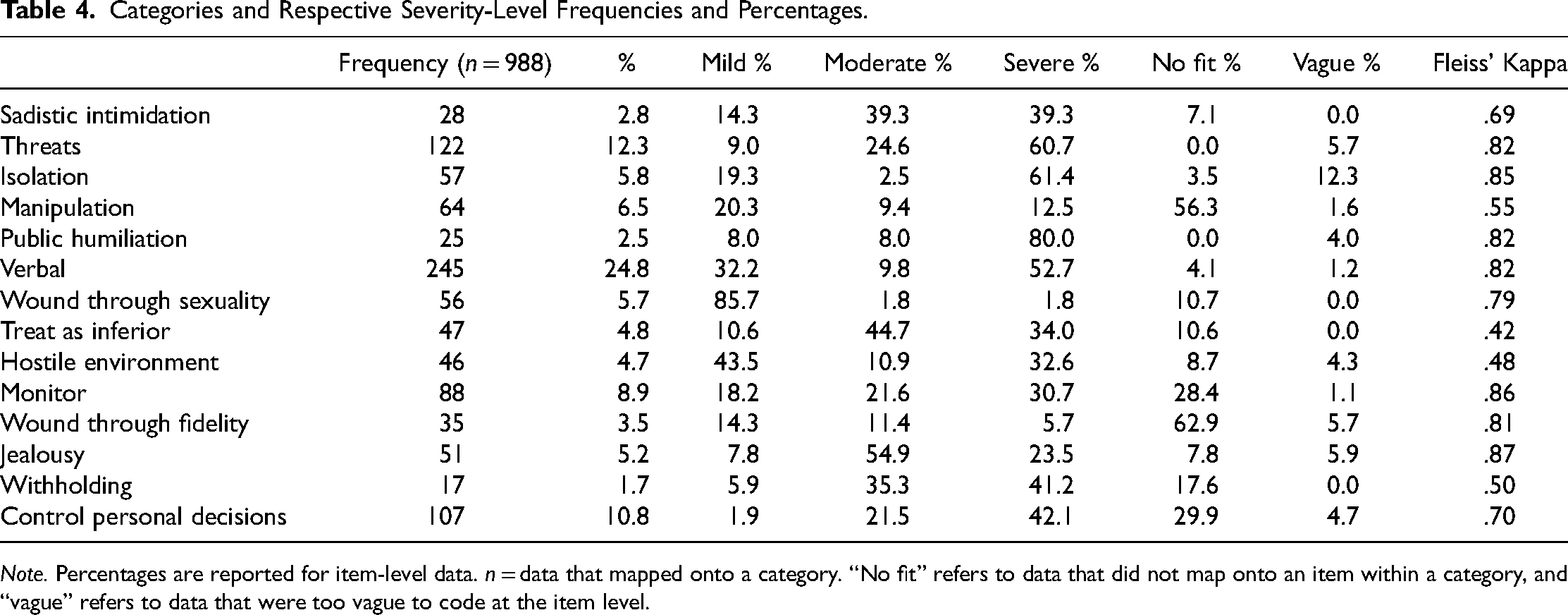
Note. Percentages are reported for item-level data. n = data that mapped onto a category. “No fit” refers to data that did not map onto an item within a category, and “vague” refers to data that were too vague to code at the item level.
Approximately 12.3% (n = 138 out of 1,126 codable units) of the data did not map onto an MPAB category. These data were subsequently grouped thematically: abandonment/imprisonment (e.g., “held hostage”; 13.8%; Kappa = .58), blame (e.g., “everything blamed on me”; 21.0%; Kappa = .81), financial abuse (e.g., “controlled money”; 40.6%; Kappa = .86), harassment (e.g., “intentionally harassing after breakup”; 11.6%; Kappa = .51), lying (e.g., “living a separate life”; 7.2%; Kappa = .65), and religious abuse (e.g., “wouldn’t go to church to punish me”; 5.8%; Kappa = .65). See Supplemental Table 1 for experiences noted in the DVI that comprise these added categories.
As well, some data that mapped onto the MPAB categories were not represented by the severity levels (15.5%; n = 153 out of 988 codable units). Exploratory themes for these experiences were documented, such that within the manipulation category, gaslighting (making someone question their sanity to manipulate them) and threats via children, drug use, or to kick the participant out of the home emerged. For the controlling personal decisions category, experiences related to control via interference, such that the control was indirect (e.g., slashing tires), were highlighted. Within the monitoring category, experiences of being stalked were noted. Supplemental Table 2 includes DVI notes that comprised each of these themes. As well, some data that did not map onto a severity level were noted as more severe than the most severe item in the category. In particular, instances of actual infidelity were noted for the “wound through fidelity” category (see Supplemental Table 2).
Discussion
Overview of Results
The current study aimed to extend the available literature on the validity and generalizability of the MPAB by examining the content validity of the MPAB via qualitative analysis of interview data collected from a community help-seeking sample of women who sought mental health assistance following IPV exposure. Approximately 73.4% of the qualitative interview data directly mapped onto the MPAB, such that experiences were coded at both the category and severity levels. The high percentage of matching overall suggests that items included in the MPAB are representative of the range of psychological IPV, providing evidence for its content validity. Given that help-seeking individuals often report more severe IPV exposure relative to nonhelp-seeking samples (Duterte et al., 2008), it was expected that majority of participants’ experiences would be reflected in “severe” items of the MPAB. Consistent with our hypothesis, almost half of experiences were coded with the “severe” items from the MPAB.
The most frequently reported categories in the current study included “verbal abuse,” “threats,” “control personal decisions,” “monitor,” and “manipulation.” By comparison, Follingstad et al. (2015) noted that the most frequently endorsed categories of psychological IPV in their college sample were “verbal abuse,” “manipulation,” “treating as inferior,” “hostile environment,” and “withholding physical/emotional affection.” The occurrence of verbal abuse and manipulation appears to be particularly salient experiences irrespective of sample. These findings suggest that experiences consistent with “threats,” “control,” and “monitoring” may be particularly relevant in community help-seeking samples. Although it is impossible to rank types of psychological abuse as more severe than others (due to other factors like context, frequency, experiences of co-occurring abuse), a recent meta-analysis examining associations of specific facets of psychological IPV noted that coercive control had a larger effect on PTSD symptoms relative to verbal/emotional or domination/isolation (Dokkedahl et al., 2022). Taken together, given that participants in the current sample reported higher frequencies of controlling behaviors in addition to experiences that fall onto the “severe” severity level, the notion that help-seeking samples report more severe IPV exposure relative to other samples is evident.
Additional Content Not Reflected by the MPAB
Regarding experiences that did not map onto any MPAB category, coders developed a set of additional overarching categories. Notably, some of the added categories have been documented in the literature. For example, Goodfriend and Arriaga (2018) note that victim blaming is often present in abusive relationships. As well, financial abuse has been identified as a facet of control that captures exploitation, financial control, and employment sabotage (Postmus et al., 2012). Additionally, researchers have begun to discuss religious abuse as a form of psychological IPV that warrants greater attention (Bent-Goodley & Fowler, 2006). Lying was also reported in the current study, which was previously included in the MPAB but removed due to its conceptualization as relatively normal in relationships (Follingstad, 2011).
These added categories underscore the importance of contextualizing psychological IPV, particularly in women who have experienced more severe levels of abuse. For instance, depending on the context of the relationship (e.g., presence of abuse vs. not) and the content of the lie (e.g., “white lie” vs. a more substantial lie [“he was living a separate life”]), lying may be perceived as abuse. As well, the emergence of religious abuse extends the importance of context beyond the relationship dyad. It is possible that this theme emerged in the current study as participants resided in the South, where religion is a central facet of people's lives. This finding highlights the relevance of regional and cultural contexts when conceptualizing psychological IPV. Taken together, these issues suggest that context warrants close attention when considering psychological IPV, which is consistent with recommendations regarding IPV broadly (Follingstad, 2007).
Additional exploratory themes were also noted by coders at the severity level. Specifically, within the threat category, the following additional threatening content was highlighted: threatening via drug use, threatening to kick the participant out of the house, and threatening via children. These additional threatening behaviors have been highlighted by Semple (2001) in a review on psychological IPV. Within the control category, control via interference was highlighted, which was used to conceptualize instances of indirect control. Instances of gaslighting were noted within the manipulation category, which is not surprising given that this form of IPV has garnered attention recently in popular media. Lastly, instances of actual infidelity were noted as being more severe than the “severe” level for the wound through fidelity category, as the most severe level within that category only referred to the partner implying infidelity.
Both the added categories and severity-level themes highlight experiences of psychological IPV that were not originally part of the MPAB. Inclusion of these experiences may be useful for scale expansion, depending on the desired use of the MPAB. Specifically, longer scales like the MPAB are not efficient for use in some settings (e.g., primary care settings) where the purpose of assessment is to provide a brief IPV screen. Longer measures, such as the MPAB (with or without added content) may provide more utility in research settings or as more thorough follow-up assessment, given increased participant burden.
Coder Agreement
It is worth noting that between-coder agreement varied considerably between MPAB categories. In particular, coders appeared to disagree on instances of manipulation, withholding affection, hostile environment, and treatment as inferior (Kappa range = .42 to .55). Given that the MPAB categories were developed to be nonoverlapping, coder disagreement for these categories suggests that these forms of IPV may not be easily distinguished. Moreover, some behaviors appear to overlap with multiple categories. For example, item content within the isolation category could be conceptualized as a form of control. Similarly, lying, a potential category added by coders, could be captured in other types of psychological IPV (e.g., “telling lies about your family and friends to discourage you from spending time with them” was conceptualized as an isolation tactic, which is inclusive of lying). Additionally, coders may have disagreed due to their own subjectivity or naivety regarding psychological IPV, given that they were undergraduate psychology students with limited familiarity in this research area. Despite being outside of the scope of the current study, the overlap among these behaviors warrants closer consideration when categorizing the nuances of psychological IPV.
Limitations and Future Directions
Findings should be interpreted in light of study limitations. First, given that the current study was part from a larger study that did not include the MPAB, the MPAB was not directly administered. As such, comparison of coded qualitative data and scores on the self-report measure could not be conducted. Further, the current study examined content validity qualitatively; other forms of validity should be examined quantitatively, including convergent and discriminant validity. As noted by Nunnally and Bernstein (1994), the validity of measures should be routinely evaluated over time to assess their relevance as the literature evolves. Future research should continue to investigate this measure. Importantly, race was the only sociodemographic variable considered in the current study, and more work is needed to address generalizability to other populations (i.e., LGBTQ+). Additionally, as previously noted, the overall interrater reliability between the three coders was .71, which is below the acceptable level. Similarly, it is also worth noting that coders’ unique perspectives and understanding of psychological IPV may have impacted interpretation of the data, such that added categories and severity-level themes may be idiosyncratic to the current study. Another limitation of this study was the use of interviewer notes related to participants’ experiences, such that all instances of psychological IPV experiences may not have been recorded in a detailed way, resulting in some data being “too vague” to code. Similarly, some data from interviewer notes were unusable due to illegible handwriting. Future studies should consider transcribing audiotaped interviews to circumvent these problems.
Conclusions and Implications
Despite its limitations, the current study offers a unique perspective on the MPAB, a measure of psychological IPV designed to capture both contextual factors and IPV severity, by examining its content validity via qualitative content analysis. Data collected from a relatively diverse sample of women who sought mental health assistance following IPV exposure were examined as the unit of analysis, expanding the generalizability of the MPAB's content beyond a sample of young college students who were in distressed or conflictual relationships. The current study also highlights potential areas of measure expansion, at both the categorical and severity levels. Results provide support for the content validity of the MPAB, and researchers should consider utilizing this measure alongside other validated measures of psychological IPV in future studies, as continued examination of its validity, reliability, and utility is warranted.
Supplemental Material
sj-docx-1-vaw-10.1177_10778012231203614 - Supplemental material for Examining the Content Validity of the Measure of Psychologically Abusive Behaviors: A Qualitative Approach
Supplemental material, sj-docx-1-vaw-10.1177_10778012231203614 for Examining the Content Validity of the Measure of Psychologically Abusive Behaviors: A Qualitative Approach by Bre’Anna L. Free and J. Gayle Beck in Violence Against Women
Footnotes
Declaration of Conflicting Interests
The authors declared no potential conflicts of interest with respect to the research, authorship, and/or publication of this article.
Funding
The authors disclosed receipt of the following financial support for the research, authorship, and/or publication of this article: This work was supported by the Lillian and Morrie Moss Chair of Excellence in psychology.

Supplemental Material
Supplemental material for this article is available online.
Author Biographies
References
Supplementary Material
Please find the following supplemental material available below.
For Open Access articles published under a Creative Commons License, all supplemental material carries the same license as the article it is associated with.
For non-Open Access articles published, all supplemental material carries a non-exclusive license, and permission requests for re-use of supplemental material or any part of supplemental material shall be sent directly to the copyright owner as specified in the copyright notice associated with the article.
