




Abstract
Sexual exploitation and abuse (SEA) of women and girls by United Nations (UN) peacekeepers is an international concern. However, the typical binary measurement of SEA (indicating that it occurred, or it did not) disregards varying exposure levels and the complex circumstances surrounding the interaction. To address this gap, we constructed an index to quantify the degree to which local women and girls were exposed to UN-peacekeeper perpetrated SEA. Using survey data (n = 2867) from the Democratic Republic of Congo (DRC), eight indicators were identified using a combination of qualitative (thematic analysis of narrative data) and quantitative variables. With further development, this index may offer a more comprehensive and nuanced perspective of peacekeeper-perpetrated SEA that can better inform SEA prevention and intervention efforts.
Introduction
Overview
While the responsibility of the United Nations (UN) Department of Peacekeeping Operations is principally to protect, prevent conflict, and build law and security institutions in conflict and disaster-stricken settings (United Nations Peacekeeping, 2020b), this effort has been undermined by the significant harms stemming from the sexual exploitation and abuse of local community members across 32 peace support operations (Simić, 2014; Tull, 2018; United Nations Peacekeeping, 2020a; United Nations Secretariat, 2008; Utas & Ruden, 2009). The UN defines sexual exploitation as “any actual or attempted abuse of vulnerability, differential power or trust, for sexual purposes, including but not limited to, profiting monetarily, socially or politically from the sexual exploitation of another” (United Nations, 2017, p.6). This encompasses prostitution, transactional sex (TS), and solicitation of TS interactions. Sexual abuse is similarly cited as “an actual or threatened physical intrusion of a sexual nature, whether by force or under unequal or coercive conditions” within which sexual interactions under the age of 18 are always considered abusive (United Nations, 2017, p.5). For the purposes of this work, we combine sexual exploitation and sexual abuse into an umbrella term of sexual exploitation and abuse (SEA).
Both within the UN reporting system of peacekeeper-perpetrated SEA and more globally external to the UN such as in current academic literature, SEA is most often dichotomously measured where those affected are classified as either a case or not (Heise & Hossain, 2017; McAlpine et al., 2016). However, this approach provides an over-simplification of the experiences of affected women and girls by disregarding the degree of exposure to SEA, the complex circumstances and consequences of the interaction(s), and the variation of agency in cases of sex work and TS. An index composed of causal indicators of SEA is proposed as a more nuanced tool to measure UN peacekeeper-perpetrated SEA in a manner that would allow researchers to improve their understanding of manifestations of SEA and how to best respond to the medical and psychosocial needs of affected women and girls.
Sexual Exploitation and Abuse by UN Peacekeeping Personnel
The current UN conceptualization of SEA in the peacekeeping context remains influential in how sexual violence is reported (Franchino-Olsen, 2019; World Bank, 2017) and is based on SEA allegations reported across various peace support operations (PSO) over the past 20 years (Higate, 2003; Simić, 2012, 2014; Utas & Ruden, 2009). Perhaps most notably, increased levels of trafficking with the intention of forced prostitution have been alleged since 1992 at the time of the UN operation in Mozambique (Simić, 2012), as well as during UN missions in Cambodia (Phal, 1995), Somalia (Lupi, 1998), as well as Bosnia and Herzegovina (Vandenberg, 2002). Sexual violence perpetrated by peacekeeping personnel, on the other hand, has been noted from missions in Cambodia (Olsson, 2009), Somalia (Kent, 2007), Kosovo, Sierra Leone, Sudan, and Haiti (King et al., 2020), among others (Nordås & Rustad, 2013). Peacekeeper-fathered children have been acknowledged in the UN operation of East Timor, Liberia (Simić, 2014), and most recently, Haiti (Lee & Bartels, 2019; Vahedi et al., 2019).
The United Nations Organization Mission in the Democratic Republic of Congo (MONUC) (with 181 SEA allegations from 2007 to 2010) and the United Nations Organization Stabilization Mission (MONUSCO) (with 217 allegations from 2010 to 2020) are the two operations contributing the highest number of sexual misconduct reports (36.4% of the total 1,094 allegations across all available data). This high number of SEA allegations from the Democratic Republic of Congo (DRC) may relate to the duration and size of its PSO. For example, MONUC, which was positioned to oversee the peaceful departure of armed forces and aid the transition of the government after the Second Congo War, was operational for 10 years (Tull, 2018). After modest implementation success and violence reduction, the PSO was reconfigured in 2010 to MONUSCO to support civilian protection and peaceful government stabilization (Tull, 2018). Ongoing 10 years later, MONUSCO currently represents the largest UN PSO in the world with a collective deployment of approximately 18,500 troops, police, staff, and volunteers, contributed in large part from Pakistan, India, Bangladesh, Indonesia, and South Africa, with pre-deployment cultural and gender-based training (Simić, 2012; United Nations Peacekeeping, 2020a). Although 202 allegations among 18,500 MONUSCO personnel represents a small number, SEA in this context is considered to be greatly underreported (Alexandra, 2011; Human Rights Watch, 2002; United Nations, 2019). Also, given the zero-tolerance policy for SEA, 202 allegations suggest that there has been considerable breach of UN protocol in the context of these peacekeeping missions. In turn, the DRC is an environment that is conducive to studying the prevalence and manifestations of UN-peacekeeper perpetrated SEA.
Measurement of SEA
Both within the UN reporting system of peacekeeper-perpetrated SEA and more globally external to the UN, such as in current academic literature, SEA is most often dichotomously measured (Heise & Hossain, 2017; McAlpine et al., 2016). Individuals are examined against case criteria as either having experienced SEA or not, and are equally weighted by reporting institutions regardless of the circumstances of the incident, likely due to the convenience of this method. In turn, these reporting methods often portray the experiences of affected women and girls through a uniform lens. For example, a violent sexual assault would receive the same weight as a much less invasive negotiated TS interaction. It is also apparent that consent, agency, and the conditions of the sexual interaction can evolve over time as circumstances change. Initially, women who engage in TS may have consented to an ongoing exchange of money for sexual acts, but may later find themselves with little bargaining power around the frequency or type of sexual act, condom usage, compensation, or ability to end the arrangement entirely (Human Rights Watch, 2001; Luke et al., 2011; Mudgway, 2017; Underwood et al., 2011). In some cases, women engaging in TS experience rape and/or forced prostitution, despite having an initial mutual agreement or negotiating power (Human Rights Watch, 2002). Therefore, the consideration of events across the entire interaction span is important to understand the victim’s experience and the degree of SEA. Similarly, structural inequalities that impact the interaction should be considered within this realm.
The binary approach to measuring SEA also fails to recognize that the physical, psychological, and socioeconomic sequelae may be different depending on the degree and nature of the SEA. Research on women experiencing sexual violence suggests that long-term health effects are dependent on the severity of violence experienced (Heise, 2012). Consequences such as poor accessibility to health services and stigmatization are well reported in these settings (García-Moreno, 2014; Johnson et al., 2010; Kitharidis, 2015; Mansfield, 2009), and when recognized in relation to exposure level, they could be especially useful for the development of interventions targeted at known consequences of SEA.
Furthermore, the UN’s conceptualization of sexual exploitation and its subsequent measurement is controversial in its broad distinction of agency and has been challenged for its blanket victimization of all adult women (Mudgway, 2017; Otto, 2007; Simić, 2012). As the purpose of this article is to design a more nuanced measure of SEA, this remains an important discussion. Much of the controversy around the agency versus victimization of women who experience SEA centers on TS. TS is defined as “non-commercial, non-marital sexual relationships motivated by the implicit assumption that sex will be exchanged for material support or other benefits” (Stoebenau et al., 2016; Strive, n.d.). This is not to be conflated with sex work, which involves a direct exchange of sex for money or goods with an identified sex worker and often involves little emotional intimacy (Wamoyi et al., 2019). The traditional conceptualization of TS categorized all sexual transactions as inherently exploitative and equivalent to interactions such as forced prostitution, while presenting a passive female role (Simić, 2009). Similarly, the UN’s Zero Tolerance Policy assumes that all SEA is exploitative because of the inherent power imbalances between foreign peacekeepers and local women/girls. To this end, the UN’s policy has been criticized for failing to recognize that some women who engage sexually with peacekeeping personnel do so with informed agency in spite of the societal and economic disparities they face (Otto, 2007; Simić, 2009). Stoebenau et al. (2016) offer three paradigms to conceptualize TS based on a systematic review of the literature in an African context. Their work provides some clarification on the debate of agency and the traditionally homogenous representation of TS. Under this framework, types of TS are distinguished by the woman’s motivation for participating, and include “sex for basic needs,” “sex for improved social status,” and “sex and material expressions of love.” The “sex for basic needs” paradigm depicts transactional interactions for food, money, or other basic support items, whereas the “sex for improved social status” paradigm encompasses interactions involving items of social value such as jewelry. Lastly, the “sex and material expressions of love” paradigm describes transactional relationships that are grounded in an expectation that the man provides material support as a demonstration of intimacy (Stoebenau et al., 2016). From this work, women’s agency is seen as a continuum, ranging from “vulnerable victim” to “powerful agent” and is paralleled by the woman’s level of deprivation (Stoebenau et al., 2016). Women engaging in “sex for basic needs” are distinctly identified as the most disadvantaged and therefore the most vulnerable. The suggestion that conditions of severe disparity underlying the sexual interaction diminish a woman’s agency to engage is reiterated in other studies (Jennings, 2010; Mudgway, 2017). A multi-dimensional index approach as proposed would provide a more comprehensive and nuanced understanding of SEA that better encapsulates the dynamic and varied nature of women’s agency and victimization.
In summary, a binary approach to measuring SEA disregards its complexity by ignoring factors such as the exposure level and heterogeneity of the abuse and exploitation among those affected, the long-term health consequences, and the perceived variation of agency particularly in cases of TS. Therefore, the objective of this study was to construct an index to quantify the degree to which sexual interactions between local women and peacekeepers were exploitative/abusive using the example of MONUSCO in the DRC. For the purposes of the current work, we focused on basic needs-driven sexual exploitation (for essential goods, services, money, or job opportunities), since more severe disparities are more likely to diminish a woman’s agency (Jennings, 2010; Mudgway, 2017) We propose that utilization of an index that measures the type and degree of exposure to SEA, rather than a binary Yes”/“No” approach, is critical to understanding how women/girls are affected by SEA, as well as key to being able to better respond to their medical and psychosocial needs.
Methods
Data Collection
To develop indicators for a SEA index, we conducted a secondary analysis of a 2018 cross-sectional, mixed-methods dataset that explored the interactions between UN peacekeepers and women/girls in the DRC (n = 2,867). Male and female participants over the age of 13 were recruited by a team of local research assistants using convenience sampling around MONUSCO bases in Kisangani, Bukavu, Goma, Benia, Bunia, and Kalemie. Over a 9-week period between June and August 2018, face-to-face interviews were conducted in Swahili or Lingala. Participants were approached in naturalistic settings such as markets, shops, and transportation depots. Beyond the initial sample, snowball sampling was utilized to recruit within a 30 km radius. While this survey was created with the intention of assessing peacekeeper sexual interactions with women and girls, the data collection and survey development, as subsequently described, was conducted independently of this secondary analysis.
SenseMaker Survey
English-speaking experts in the fields of children born of war, humanitarian crises, sociology, political science, SenseMaker methodology, and sexual and gender-based violence developed the survey questions (composed of 33 variables). Data collection was implemented by Marakuja, a Congolese non-profit research network, and Solidarité Féminine Pour la Paix et le Développement Intégral (SOFEPADI), a Congolese non-governmental organization (NGO) focused on women’s rights and addressing gender-based violence. The survey was translated from English to Lingala and Swahili, and then independently back-translated to ensure accuracy.
The mixed-methods data collection was facilitated by SenseMaker®, a research tool designed to measure complex social patterns through the collection of self-interpreted short stories or micronarratives (Cognitive Edge, 2020). Using SenseMaker, participants were prompted to audio-record a micronarrative about interactions between local women/girls and UN peacekeepers. These micronarratives could have been first-person accounts about interacting with a peacekeeper or third-person accounts about someone else in the community interacting with a peacekeeper. Participants were then asked to report their own demographic information. Since demographic characteristics were asked only of the narrator, we did not have demographic data about the protagonist in the micronarrative unless it was a first-person account.
Using SenseMaker, participants were also asked to quantify their perceptions about the events in the story by responding to a series of pre-defined questions, which were in the form of continuous visual-scale representations between two (dyad) or three (triad) possible options (see Figures 1 and 2). In contrast to traditional Likert-type scale questions, the most extreme possible responses on the dyads and triads were either all positive, all negative, or all neutral in tone, which reduced social desirability bias. When quantified, each data point on a dyad retained a percentage value from 0 to 100% for each dimensional extreme represented. Figure 1, for instance, depicts a dyad that measured the extent to which the UN personnel (dimension 1) or the woman/girl (dimension 2) initiated the interaction described in the micronarrative. A value placed in the center of the dyad indicated that the interaction was equally initiated by both parties with values of 50% for each. The left-most extreme represented a value of 100% for the dimension of the peacekeeping personnel and 0% for the woman/girl. This percentage concept also applied to the triad; however, the data point retained a numeric value on three dimensions that summed to 100%. A point placed in the center of the triad in Figure 2, for example, numerically indicated an equal 33/33/33% split on the dimensions of the woman/girl benefitting (dimension 1), the UN personnel benefitting (dimension 2), and the family benefitting from the interaction (dimension 3).
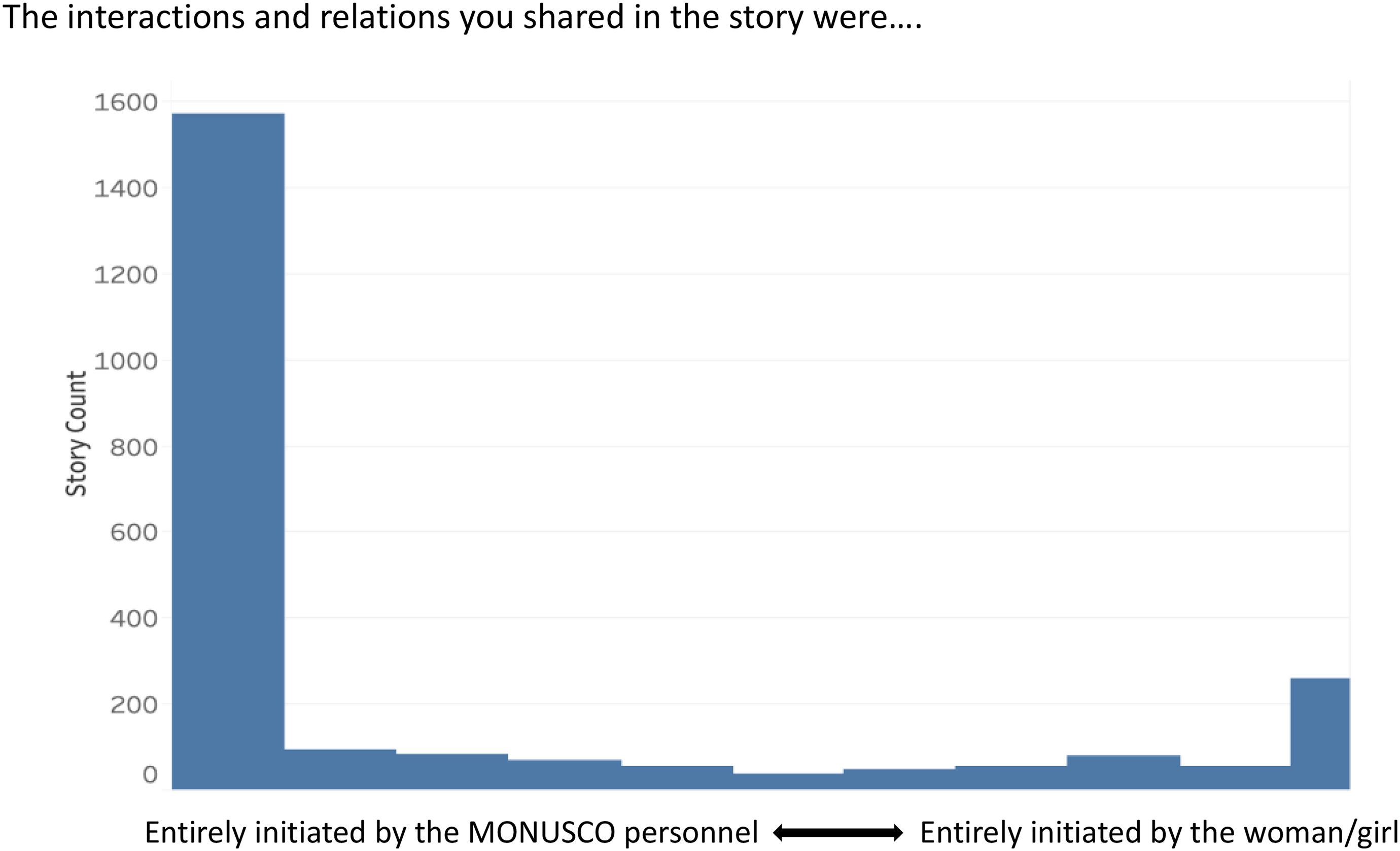
Dyad representation.
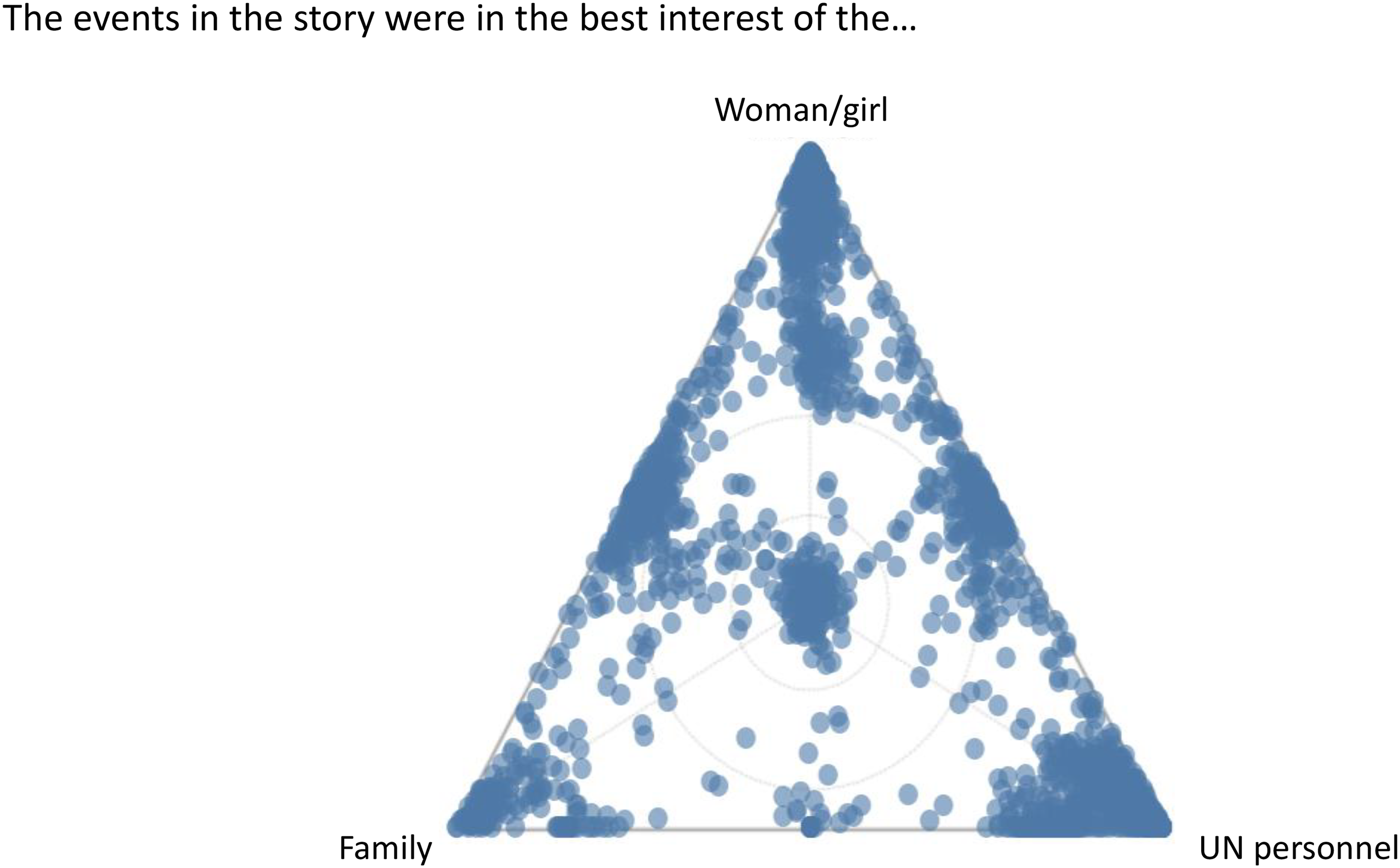
Triad representation.
Data Sampling for Secondary Analysis
Figure 3 illustrates how the micronarratives were selected for this secondary analysis. Narratives were accessed as English transcripts after undergoing transcription and translation from Lingala and Swahili audio by a Congolese translator. Of the 2,867 micronarratives collected, 499 were excluded due to missing or incomplete stories, 520 were omitted for irrelevancy or uncodability, and 26 were excluded for irrelevant subjects/narrators (Figure 3). The remaining 1,822 narratives concerning sexual interactions were utilized for indicator development for the index measure. Uncodable narratives were identified as stories with multiple unrelated sexual interactions involving different protagonists. These were removed as it was important to be able to attribute the sexual interaction to one female subject. Narratives which discussed one female subject experiencing multiple different sexually exploitative or abusive events were not removed under this criterion and were kept in the analysis. Additionally, sexual interactions involving staff of international NGOs rather than UN peacekeeping personnel were excluded, and study participants under the age of 13 were removed as they were outside the study’s target population. Both first- and third-person accounts were included in the secondary analysis to capture a wide variation of experiences.
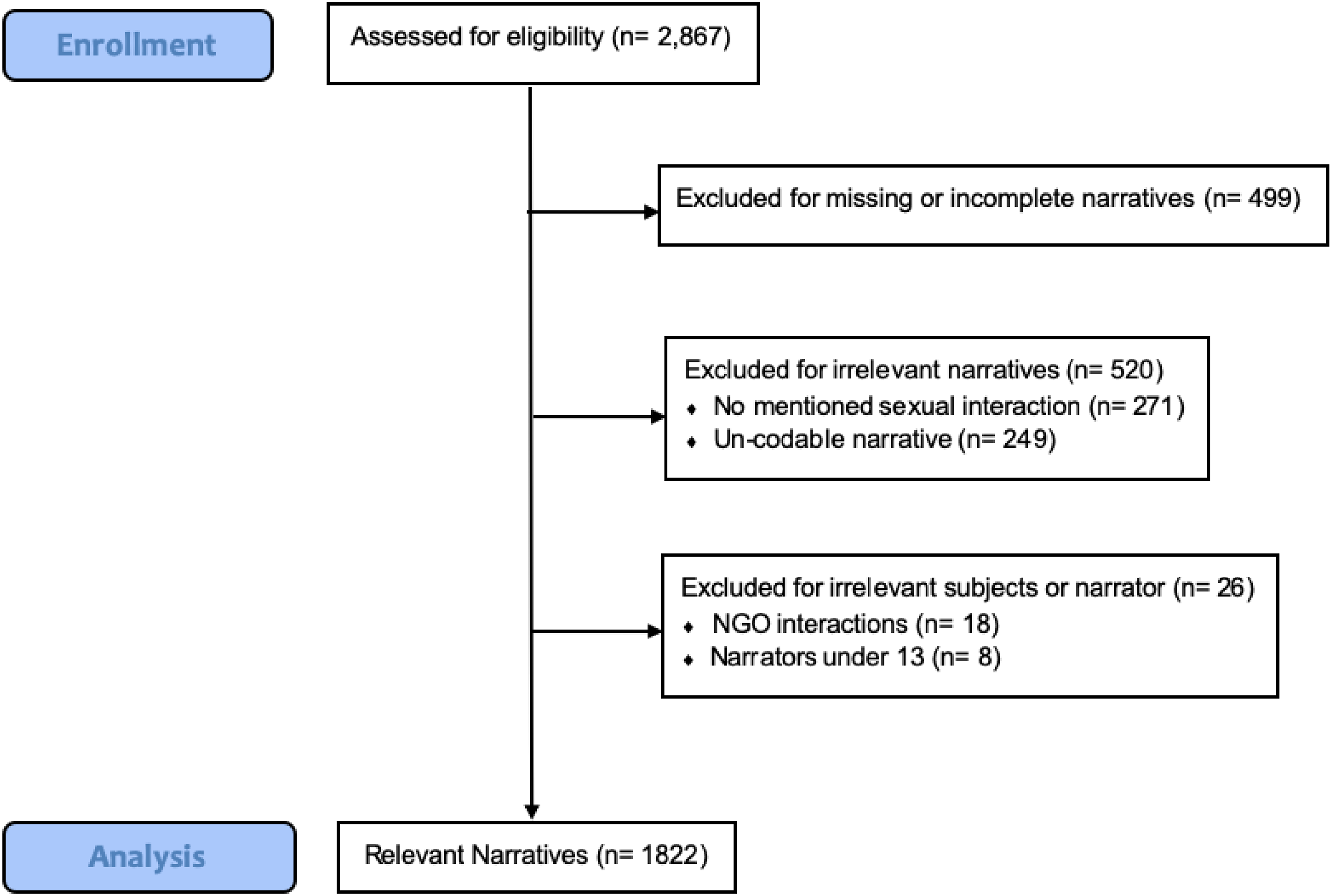
Data sampling flow diagram.
Index Measures
An index is a composite measurement tool comprised of causal indicators to measure a construct (Babbie, 2012; Steiner et al., 2014). This draws some similarities to scale measurement. While causal indicators in an index represent variables that define the construct, scales use effect indicators, which instead echo the construct’s effect (Bollen & Lennox, 1991; Steiner et al., 2014). Causal indicators are not expected to be inter-correlated, but are developed with the intention to comprehensively measure the construct (Steiner et al., 2014). Furthermore, causal indicators comprising an index measure would consider events across time regardless of their correlation with each other, and without diminishing preceding events. For example, an interaction that evolved from TS into prostitution could be accounted for as an interaction where both TS and sex work occurred as separate indicators, as opposed to just being considered a case of prostitution. An index measure that can account for this dynamic nature of SEA would not only be more accurate, but it additionally would allow for a more in-depth understanding of the complexities surrounding evolving consent for sex engagement. Since we do not expect SEA causal indicators to be inter-related but seek to more comprehensively understand SEA as a dynamic construct, we believe that an index is the more appropriate measure when aiming to move beyond the current practice of measuring SEA as a binary variable.
Indicator Development
A two-part approach was utilized to develop indicators. First, quantitative survey variables relating to the interaction (19 in total) were examined to determine if they contained components of SEA using the UN definition as the framework.
Second, a thematic analysis was performed on the micronarratives (n = 1,822) to gain insight into the contextual nature of peacekeeper-perpetrated SEA. This analysis was performed using NVivo 12 with an evolving hybrid coding approach derived from Saldaña (2015). Deductive coding was first applied using a provisional coding lens. This provisional method utilized a pre-set list of anticipated codes that were formulated from existing literature, including three relevant and measurable demonstrations of SEA: sexual transactions, non-consensual sex, and unsupported pregnancies (Kent, 2007; King et al., 2020; Lee & Bartels, 2019; Lupi, 1998; Nordås & Rustad, 2013; Olsson, 2009; Phal, 1995; Simić, 2014; Utas & Ruden, 2009; Vahedi et al., 2019; Vandenberg, 2002). These codes were combined with other aspects of the sexual interactions that were coded directly from the data including emotional intimacy, the frequency of engagement, the length of the relationship, and the public visibility of the interaction. The predetermined list was then modified as the analysis progressed and new concepts emerged (Saldaña, 2015). A “level of meaning” approach was used to assign codes with meaningful information, regardless of whether expressed in a few words, a sentence, or a paragraph (DeCuir-Gunby et al., 2011).
Ethics
The study protocol for original data collection and secondary analysis was approved by the Queen’s University Health Sciences and Affiliated Teaching Hospitals Research Ethics Board (protocol #6019042 and #6027552, respectively). Participants aged 13 to 17 were included in the study because they were known to be affected by SEA and we believed it would have been unethical to have excluded them. We considered these participants mature minors and, since involving parents could have introduced bias and put adolescents at risk of parental conflict and/or abuse (Weir, 2019), parental consent was not sought. As no participant identifiers were collected in the original study, individual confidentiality was maintained.
Findings
Two quantitative variables were identified from the survey questions, and six additional indicators emerged from the thematic analysis. Figure 4 exhibits the causal relationship between all eight indicators and SEA. The selection process for the identified quantitative survey variables is outlined in Table 1.
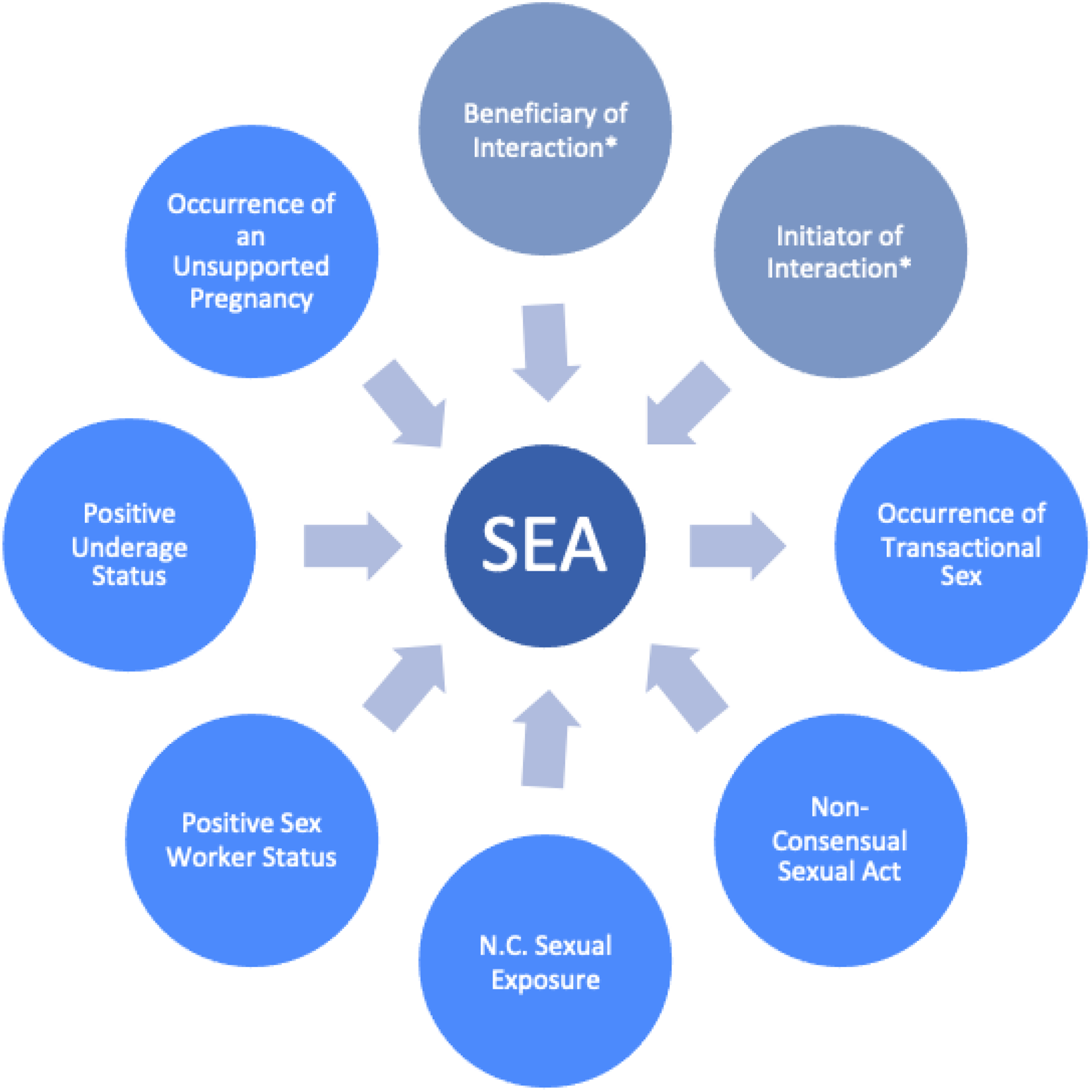
Visual representation of causal indicators; *survey-derived indicators.
Identification of Relevant Survey Variables.
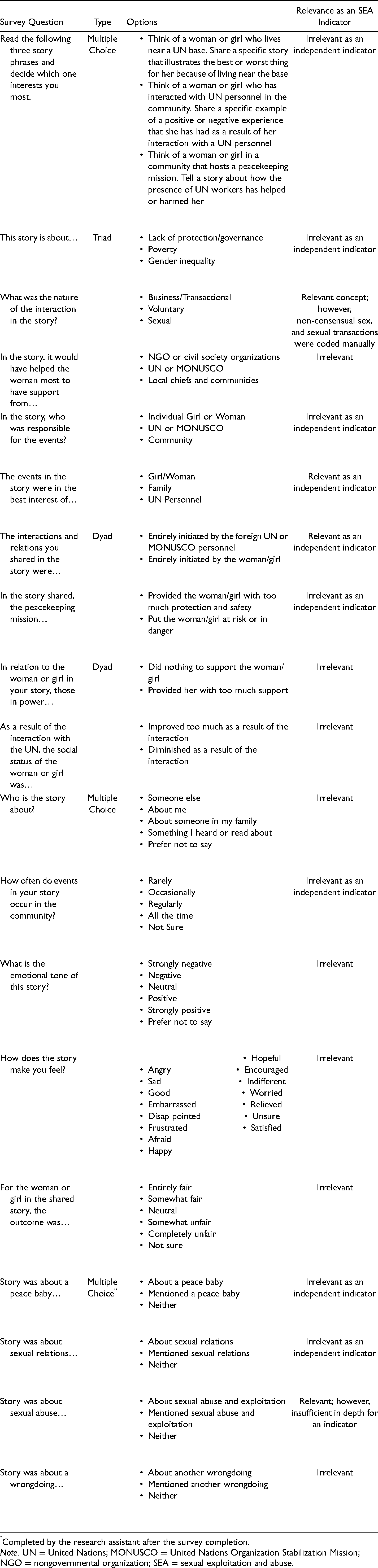
Completed by the research assistant after the survey completion.
Note. UN = United Nations; MONUSCO = United Nations Organization Stabilization Mission; NGO = nongovernmental organization; SEA = sexual exploitation and abuse.
Survey Derived Indicators
Cut-Point Analysis for Continuous Variables
All indicators derived from the quantitative dyad and triad questions were dichotomized to correspond to a binary format. Potential cut-points were assessed by identifying a natural break in the frequency distribution of the data as suggested by Carle et al. (2011) as follows:
Beneficiary of the Interaction
The beneficiary of the sexual interaction was a quantitative variable that used a triad to measure the extent to which the woman/girl (dimension 1), UN peacekeeper (dimension 2), or her family (dimension 3) benefitted from the sexual interaction. The term "benefit" was intentionally left open to interpretation by the participant in the original survey and could have indicated a financial, social, political, or romantic benefit, or any combination thereof. Because the focus of this research was on peacekeeper-perpetrated exploitation, only values that pertained to the peacekeeper dimension were analyzed. More specifically, interactions where the peacekeeper maintained at least 78% of the benefit of the interaction were proposed as a cut-point for the case definition of exploitation for this indicator according to the natural break in the frequency distribution shown in Figure 5. As per the definition of SEA, this indicator was utilized as a proxy for an actual abuse of differential power for sexual purposes for monetary, social, or political benefit.
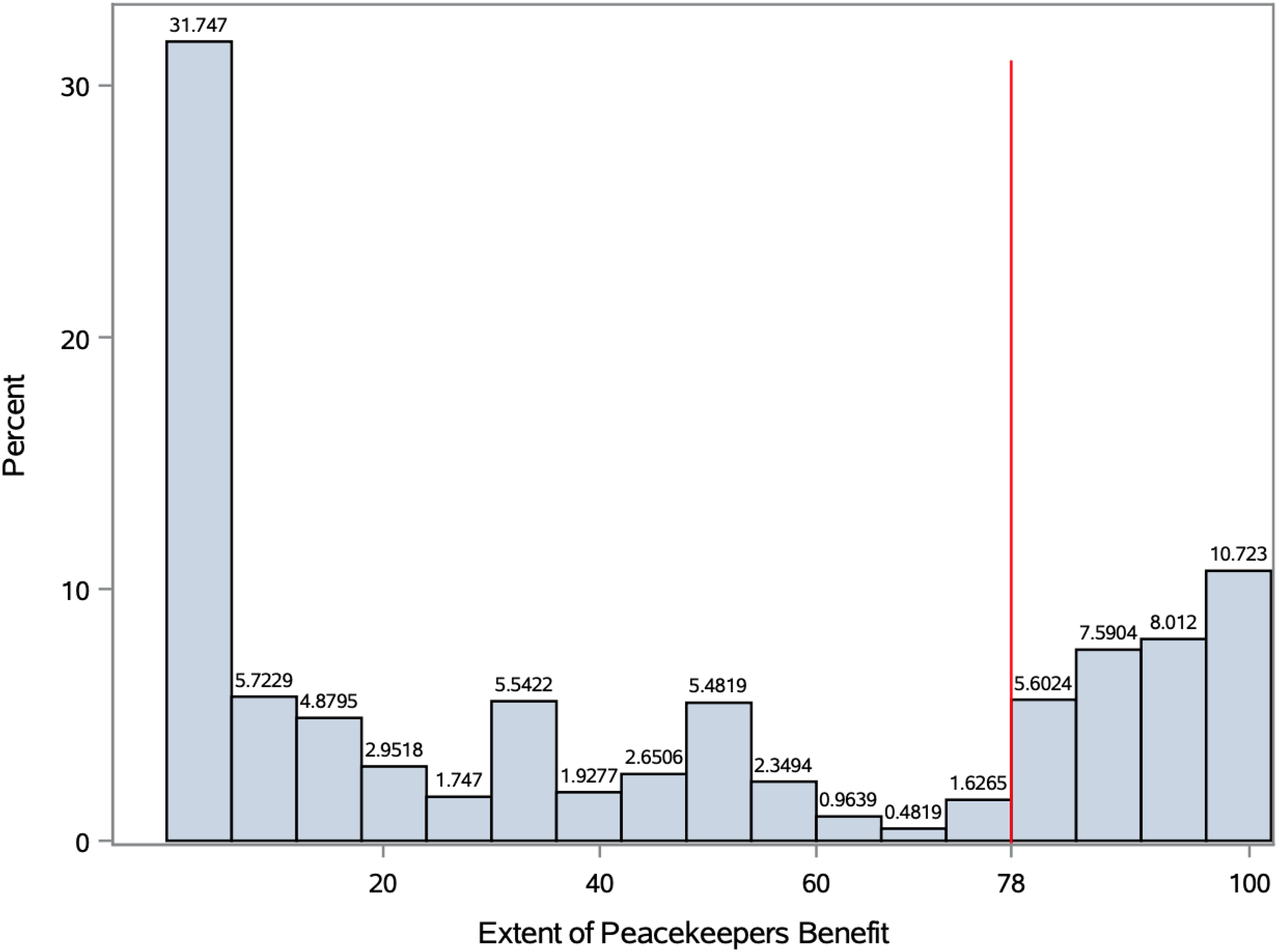
Frequency distribution and Cut-point for the beneficiary indicator.
Initiator of the Interaction
Using dyad data, the initiator of the sexual interaction was used to measure the extent to which the UN peacekeeper (dimension 1) or woman/girl (dimension 2) initiated the sexual interaction. Interactions where the peacekeeper expressed at least 96% of the initiative to engage in the sexual interaction were used as the cut-point for this indicator according to the natural distributional break shown in Figure 6. It was implied that interactions that were overwhelmingly initiated by the peacekeeper involved an underlying pressure that was exerted on the woman/girl as a result of the peacekeeper’s underlying authoritative power. A peacekeeper’s role in maintaining safety and distributing resources presents a situation in which host communities are sometimes reliant on the UN personnel for survival. Their authoritative presence is further compounded when military soldiers, representing 70% of peacekeeping personnel, are openly armed with weapons (United Nations Peacekeeping, 2020a). These factors combined to formulate a context in which peacekeepers have considerable coercive power (Alexandra, 2011). While the cultural normality that a man should initiate a sexual interaction remains relevant in this discussion, a sexual interaction initiated by a peacekeeper should be analyzed beyond this expectation, as the leveraging power of peacekeepers places them in a position that is not comparable to the influence of an average citizen. As per the definition of SEA, this indicator was utilized as a proxy for potentially unequal conditions within a sexual interaction.
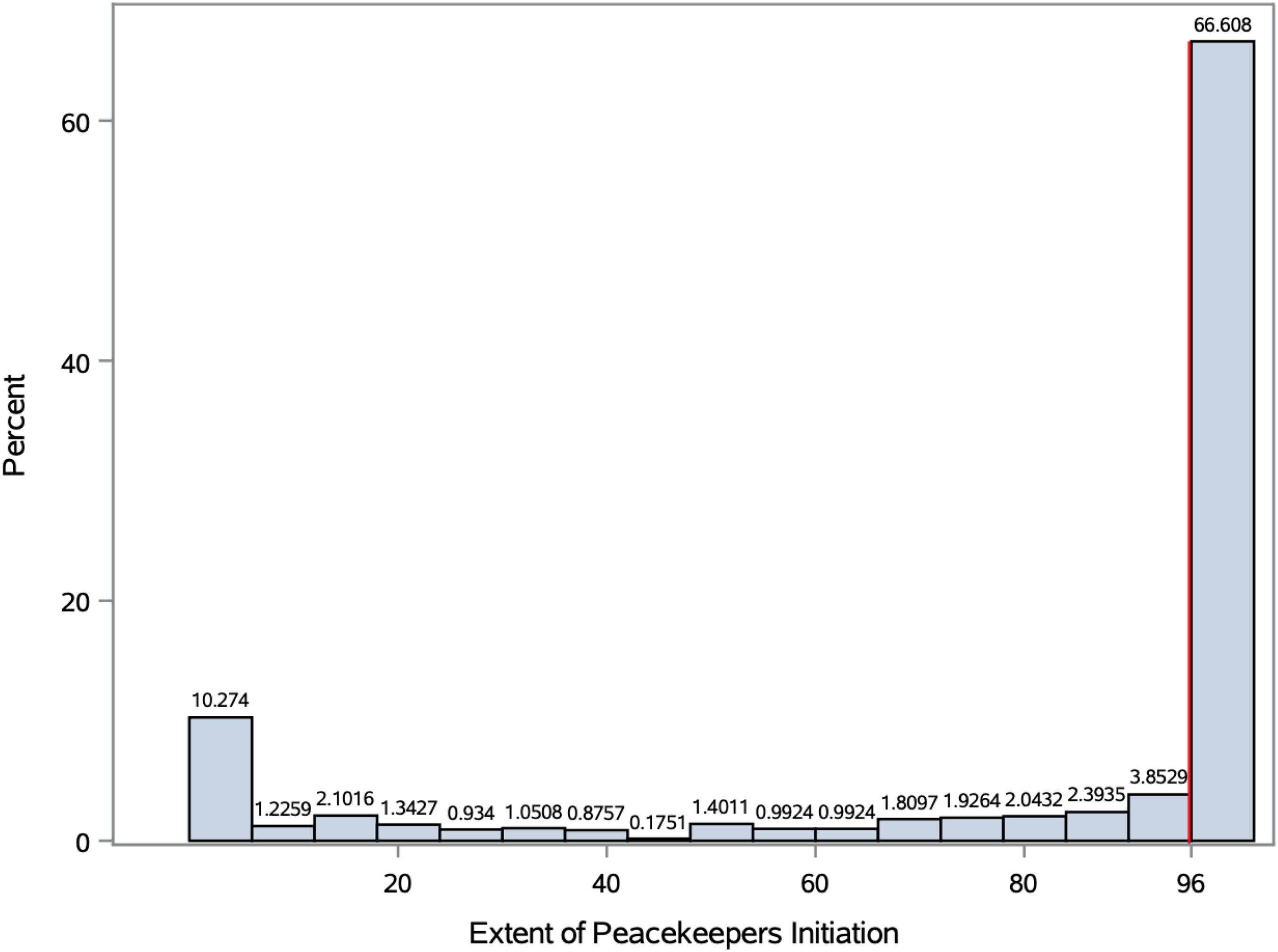
Frequency distribution and Cut-point for the initiator indicator.
Qualitative Indicators
Table 2 outlines the thematic analysis-derived indicators and an example of their corresponding codes. Additionally, the two quantitative indicators are included to demonstrate the code–category–theme approach.
Summary of Thematic Analysis and Categorization of Indicators.
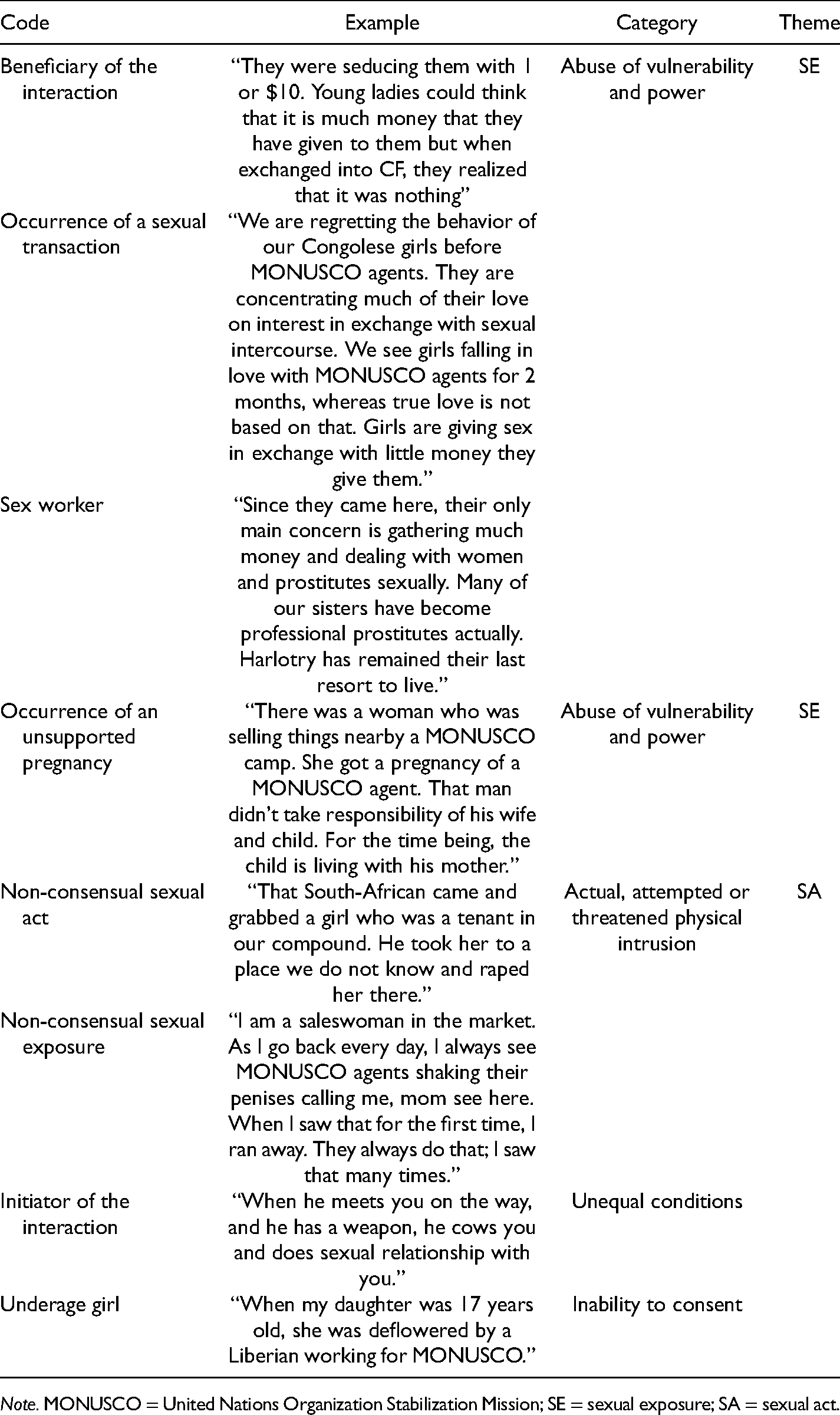
Note. MONUSCO = United Nations Organization Stabilization Mission; SE = sexual exposure; SA = sexual act.
Occurrence of a Sexual Transaction
The occurrence of a sexual transaction was defined as a non-commercial, non-marital exchange of any of the following: basic-needs goods, services, money, or opportunities (such as a job) for sex. TS was considered to have occurred if any of these were present in the micronarrative. The exchange of sex to meet basic needs directly measures the concept of an abuse of vulnerability by profiting monetarily, socially, or politically from engaging in sex with another and falls within the realm of sexual exploitation.
Non-Consensual Sexual Exposure
Non-consensual sexual exposure referred to actual or threatened non-physical sexual encounters that were non-consensual. This comprised cases of exposure to nudity, pornography, and/or exposure to crude sexual language or threats of a sexual nature in the micronarrative. As per the definition of SEA, this indicator (which emerged inductively) was utilized as a proxy for a threatened physical intrusion and subsequent sexual abuse.
Sex Worker Status
Sex worker status of a woman or girl was determined through examination of micronarrative terminology. Women or girls who self-identified as prostitutes or a synonymous term (such as harlot, or sex professional), and women or girls who were identified as such by a third-person narrator, or who were discussed as engaging in acts of sex work were included. Sex work was defined as a direct exchange of sex for money or goods with an identified sex worker that typically involved little emotional intimacy (Wamoyi et al., 2019). A positive sex worker status, like the occurrence of TS for basic needs, measured the concept of an abuse of vulnerability by profiting monetarily, socially, or politically from engaging in sex with another. However, it depicted a pattern of engagement in which commercial sexual work was relied upon for survival. It is recognized that a woman engaging in sex work may have overtly benefitted in situations of highly profitable clients, in turn, reflecting a possible spectrum of agency in sex work in this context. However, the elements of pay and prosperity in these interactions could not be uniformly disentangled in the narratives to document this occurrence. Therefore, the theme of an abuse of vulnerability was utilized to broadly reflect the relative economic prosperity of peacekeepers compared to sex workers in this environment. Finally, since SenseMaker measured community perceptions around sexual interactions between host community women and UN peacekeepers, the tool does not necessarily capture the truth or reality, and it is possible that the identification of some women or girls as sex workers in third-person micronarratives was inaccurate.
Underage Status
In first-person stories, a designation of underage status was made if the girl identified as being under age 18. In community member micronarratives, age was determined by the first author through examination of micronarratives for an underage descriptor identification of the girl such as: “underage,” “young girl,” or “age under 18.” As sexual acts with a minor are sexual abuse, this indicator met the SEA criteria.
Unsupported Pregnancy
The criteria for an unsupported pregnancy were refined by micronarrative analysis to constitute an accidental or planned pregnancy where the UN peacekeeper was cited as not providing consistent and reasonable financial support to the woman or girl for the child’s welfare. This indicator represented SEA as it is an abuse of vulnerability and power, as the disparity of wages between UN peacekeepers and local women is extreme (Alexandra, 2011).
Frequency of Indicators and Index Scores
Table 3 outlines the frequency of each indicator. Of the total sample of 1,822 narratives, 226 were first-person accounts and 1,596 were third-person narratives. The peacekeeper primary initiator variable was the most prevalent of the eight indicators at 62.6% of the total sample. The least prevalent indicator was an occurrence of a non-consensual sexual exposure at 0.7% of the total sample. Additionally, considerable variation was demonstrated in the frequency of the indicators, with a difference of 61.9% between the most and least prevalent.
Prevalence of Indicators Among Sample.
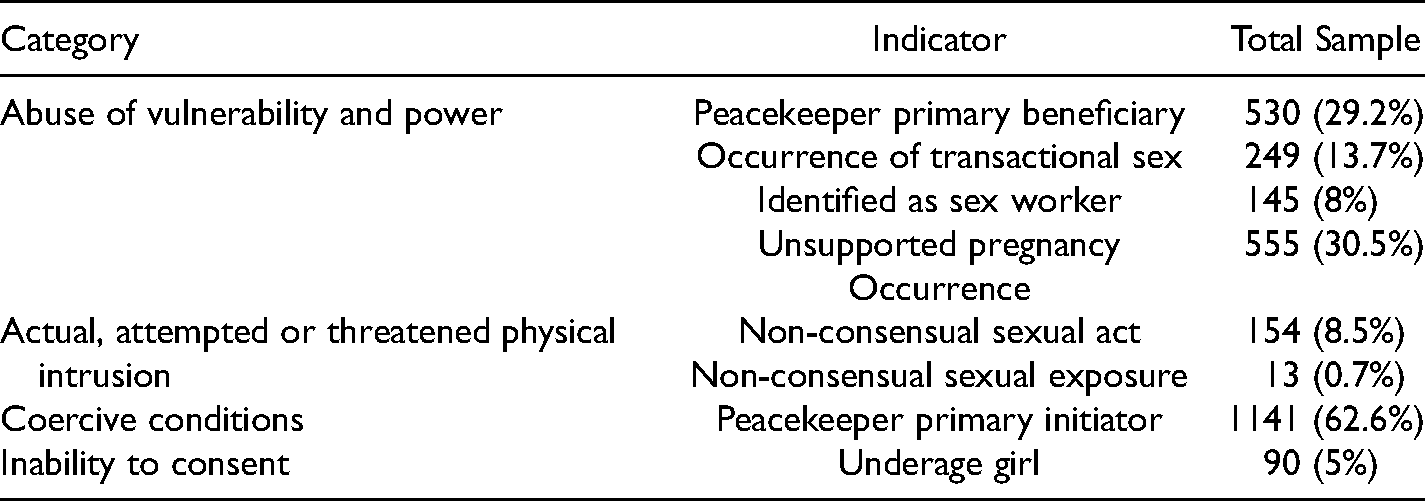
Index scores for each participant were calculated by summing the counts for each indicator. The frequency distribution of scores is highlighted in Table 4. Possible scores ranged from 0 (representing no exposure to SEA) to 8 (high exposure to SEA). The most frequent score in this sample was a 1, indicating that the woman or girl experienced one sexually exploitative or abusive event. The highest score in the sample was 6 with a prevalence of 0.1%. Approximately 15% of the women in the sample participated in sexual interactions that were not sexually exploitative or abuse.
Index Score Frequency Distribution Among Sample.

Note. SEA = sexual exploitation and abuse.
Discussion
The objective of the study was to construct an index that quantified the exposure level of peacekeeper-perpetrated sexual exploitation/abuse among host-community women in the DRC. Measuring the level of exposure to SEA is particularly important for understanding the nuances of the interactions, which in turn will provide more accurate information and allow responders to better meet the needs of affected women/girls. Our goal was to provide a conceptualization of SEA that was sensitive to these components and expressed the heterogeneity of these interactions while diverting away from the dichotomous measurement and the assumption that all women/girls who experience SEA are affected in the same way. The variability of the frequency among the indicators substantiated the choice of an index, as the infrequency of some indicators weakened the potential correlation between the events.
In development of the index, an effort was made to more comprehensively measure the degree to which sexual interactions were exploitative/abusive, with the combination of indicators representing a gradation of exposure. Four key categories were addressed: the abuse of vulnerability and power, conditions of coercion, an inability to consent, and an actual or attempted physical intrusion. An abuse of vulnerability and power was encompassed by four indicators: the beneficiary of the interaction, occurrence of a sexual transaction, a positive sex worker status, and the occurrence of an unsupported pregnancy. As a result of operating under survival-based conditions, women who engaged in TS to meet their basic needs or worked as a sex worker were regarded as more vulnerable. Although it is recognized that there is agency involved in participating in TS, and particularly so when self-identifying as a sex worker or when sex is exchanged for improved social status, it was clear within this sample that agency was constrained because of the survival-based conditions in which many of the women were operating. In the opposite direction, peacekeepers who maintained a vast majority of the benefit from the sexual interaction, regardless of type (monetary, social, political, sexual) or avoided paternal responsibility were seen as abusing their power. Actual or attempted physical intrusion was indicated by a non-consensual sexual act or non-consensual sexual exposure. This was further expanded by the addition of a non-consensual sexual exposure to include threatened physical intrusion. Furthermore, a primarily peacekeeper-initiated interaction was classified as coercion as it was implied that consent was either reduced, in the case of unequally initiated interactions, or absent, when women were not involved in the initiation. Sex with underage girls was categorized as an inability to consent since minors under the age of 18 are unable to consent to sexual acts. Each indicator therefore represented an independent aspect of SEA according to the UN definition.
The indicators were also sensitive to both the evolving nature of sexual interactions as well as the post-conflict and economically deprived environment of the DRC. For example, the initiator of the sexual interaction, the occurrence of an unsupported pregnancy, and the beneficiary of the interaction were all sensitive to the dynamic and evolving nature of power differentials between the peacekeeper and the local women/girls across time. By assessing for the presence of SEA at the start (initiator), the end (beneficiary), and at a point after the interaction (unsupported pregnancy), a timeline of the summation of exposure to SEA could be built that would otherwise be missed in a binary measure. For instance, while a woman may have been the initiator in a sexual encounter with a peacekeeper, the interaction may still have become exploitative due to a later withdrawal of consent, a loss of ability to negotiate for herself, or an inability to protect herself. The occurrence of an unsupported pregnancy extended this timeline further by measuring an exploitative outcome that could have occurred well beyond the time period of the sexual interaction. This is particularly useful for evaluating sexual interactions that start as mutually consensual but evolve to be exploitative or abusive, and is especially relevant in instances of TS or sex work, where bargaining power is often compromised around condom usage and compensation (Human Rights Watch, 2001).
Using the accounts of SEA in this dataset and the proposed index, approximately 15% of the sexual interactions were not considered to have evidence of SEA. Another two-thirds of the sexual encounters were considered mildly exploitative/abusive with a score of 1 or 2 (66.7%), and 17.2% were considered moderately exploitative/abusive with a score of 3 or 4. Only 1.2% of the described sexual interactions had a score of 5 or 6 and were designated as highly characteristic of SEA. While the total case count of 1,552 in this sample is larger than the UN allegation count of 398 in the DRC since 2007, this remains an imprecise comparison as allegations may represent multiple affected women/girls. Furthermore, it is currently unknown how these scores compare by level of exposure and with contexts involving other PSOs. We note these comparisons as an area for future research.
With residual conflict in parts of the DRC and ongoing political instability, 77% of the Congolese population lives under conditions of poverty (United Nations Development Programme, 2018). As such, the economic and societal disparities faced by women in this sample cannot be overlooked when measuring SEA. The apparent power disparity between the peacekeeper and the local population is emphasized by the prevalence of poverty within the local population. As a peacekeeper’s salary is 500 to 1,000 times greater than that of the average local woman or community member (Alexandra, 2011), sexual interactions between peacekeepers and local women and girls are often characterized by the peacekeeper’s ability to provide money or improved economic opportunities for the woman or girl involved (Simić, 2014; Utas & Ruden, 2009). The context was taken into account when developing the indicators. The occurrence of a sex-for-basic-needs sexual transaction, a positive sex worker status, and an unsupported pregnancy all measured how SEA manifested because of economic inequalities.
Finally, it was important that the index branched beyond the binary approach and toward a measurement that meaningfully contributed to the development of prevention and intervention efforts in this population. The suggested heterogeneity of SEA in communities surrounding MONUSCO bases, both by degree of exposure and occurrence of events, indicates that the needs of the woman and girls affected are diverse and warrant consideration based on the type of abuse or exploitation experienced and also the degree to which the interaction was exploitative/abusive. When considering type, it is expected that the immediate support needed by a survivor of rape (such as psychological and medical services) would differ from that needed by a single mother of a peacekeeper-fathered child (such as financial and childcare support). While the current standard of care within the UN aims to best address these needs with a multitude of referral services (United Nations, 2020), women/girls affected by compounding forms of SEA may still be underserved when the measure of SEA utilized to inform appropriate support is binary and does not comprehensively account for the events that were experienced. The index, on the other hand, would measure the timeline of events in the woman or girl’s experience such that services for experiences of TS, sexual assault, and/or threats could be properly identified. Likewise, the more detailed account offered by the index measure may better inform punitive action taken against peacekeeper perpetrators. The acknowledgement of an unsupported pregnancy, in particular, would highlight the need for child support and therefore financial legal action that would otherwise be a non-priority. Additionally, a recognition of the degree of exposure to SEA may help to determine who is in greatest need of assistance, as it is expected that in many cases women and girls with moderate-to-high exposure levels of SEA would require additional psychosocial, medical, financial, and/or legal support.
In terms of prevention efforts, a measure of SEA by type and level of exposure may also offer insight into the development and scaling of preventative actions such as training protocols. The variation of events displayed in this sample suggests that a one-size-fits-all approach to anti-SEA training for deploying peacekeepers is likely not the most effective. By taking the heterogeneity of SEA experiences into account, training curricula may be tailored to address the nature and exposure level of SEA that is perpetrated by particular missions in given locations. An index measure, such as the one developed here, is a first step toward recognizing and appreciating that heterogeneity.
As this measure is rooted within social and economic factors pertaining to sexual interactions between peacekeepers and women in host communities, it is believed that it serves practical applicability within other peacekeeping contexts. It is unclear, however, to what degree the eight indicators composing this index would serve to comprehensively capture the nuances of SEA outside of peacekeeping contexts; this is an area for future research.
Limitations
This study has some noteworthy limitations. Due to the convenience sampling, the results cannot be considered representative of MONUSCO-affected communities in the DRC. However, the range of events reported by participants is thought to be comprehensive as they reflect patterns of SEA reported in current literature and encompass the major themes of sexual exploitation and abuse. By asking participants to recount a past event, there may be recall bias, particularly in third-person narratives that share another individual’s experience. Those who personally experienced SEA may be more likely to accurately recount their experience of SEA than participants sharing another individual’s experience. As a result, misclassification of SEA may be presented disproportionally in third-person narratives. Furthermore, indicators such as the occurrence of non-consensual sex, non-consensual sexual exposure, unsupported pregnancy, as well as the reporting of sex work and sex with underage girls may have been under-reported due to the perceived stigma. The exclusion of narratives with multiple unrelated female subjects, while necessary for this analysis, may have additionally reduced the variation of SEA captured if interactions of moderate-to-high exposure were discussed. The SenseMaker design has also been criticized for its potential susceptibility to utilizing a "scientism" approach whereby the quantitative portion of data only weakly measures the social phenomenon of the short-form narratives (Van der Merwe et al., 2019). The provisional coding method utilized in the thematic analysis has also been cautioned for its ability to encourage researchers to resist diverting from their original hypothesis (Saldaña, 2015). The pre-established list of codes that characterize this approach may promote intolerance to altering codes and examining new ideas (LeCompte & Schensul, 2013). An effort was made to mitigate this concern by regularly consulting the research team throughout indicator identification. Additionally, the absence of formal validation of cut-points and indicator weighting measures presents an area of action for subsequent analyses. Furthermore, misclassification may be presented in the conceptualization of all sex work as an abuse of vulnerability as the level of agency exhibited by each woman could not be confirmed across narratives.
Lastly, it is important to acknowledge that this conceptualization of SEA is proposed by a team of non-Congolese academics, and an intrinsic cultural and interpretation bias may be present. To mitigate this, Congolese team members were consulted regarding interpretation of the themes. These consultations helped to shape the terminology utilized when defining each indicator.
Strengths
To our knowledge, this study represents the first attempt to measure the level of exposure to SEA within a UN peacekeeping context. The mixed-methods SenseMaker data coupled with the thematic analysis allowed for the indicators to be informed directly from primary accounts of sexual interactions between local women/girls and UN peacekeeping personnel. An index measure offers a more comprehensive and nuanced understanding of sexual interactions between UN personnel and local women and girls than the traditional dichotomization of SEA as present or absent.
Conclusion
The purpose of this study was to develop an index measure that would serve as a more nuanced and comprehensive tool to measure UN peacekeeper-perpetrated SEA. With future development and validation, it is believed that the 8-item index measure of SEA exposure will serve as a valuable tool to improve SEA prevention and intervention efforts. The measure is intended for use among MONUSCO hosting communities affected by peacekeeper -perpetrated SEA; however, it may be relevant for other UN peacekeeping missions. Further research is needed to determine the applicability of this tool to more comprehensively understand degrees and types of SEA outside of peacekeeping contexts.
Acronyms
Democratic Republic of Congo
United Nations Organization Mission in the Democratic Republic of the Congo
United Nations Organization Stabilization Mission in the Democratic Republic of the Congo
Non-governmental organization
Peace support operation
Sexual exploitation and abuse
Transactional sex
United Nations
Supplemental Material
sj-pdf-1-vaw-10.1177_10778012211045713 - Supplemental material for Development of an Index to Measure the Exposure Level of UN Peacekeeper-Perpetrated Sexual Exploitation/Abuse in Women/Girls in the Democratic Republic of Congo
Supplemental material, sj-pdf-1-vaw-10.1177_10778012211045713 for Development of an Index to Measure the Exposure Level of UN Peacekeeper-Perpetrated Sexual Exploitation/Abuse in Women/Girls in the Democratic Republic of Congo by Samantha Gray, Heather Stuart, Sabine Lee and Susan A Bartels in Violence Against Women
Supplemental Material
sj-docx-2-vaw-10.1177_10778012211045713 - Supplemental material for Development of an Index to Measure the Exposure Level of UN Peacekeeper-Perpetrated Sexual Exploitation/Abuse in Women/Girls in the Democratic Republic of Congo
Supplemental material, sj-docx-2-vaw-10.1177_10778012211045713 for Development of an Index to Measure the Exposure Level of UN Peacekeeper-Perpetrated Sexual Exploitation/Abuse in Women/Girls in the Democratic Republic of Congo by Samantha Gray, Heather Stuart, Sabine Lee and Susan A Bartels in Violence Against Women
Footnotes
Acknowledgments
We are grateful to all participants for the knowledge they shared and for taking the time to speak with our research team. Additionally, we would like to express our sincere thank you to Solidarité Féminine Pour la Paix et le Développement Intégral (SOFEPADI) for their guidance and assistance in conducting this research. Finally, we would like to pay our sympathies for the loss of Ms. Zawadi Mambo Albertine without whom this research would not have been possible. As a SOFEPADI coordinator, Zawadi compassionately and tirelessly worked to empower women in the DRC.
Declaration of Conflicting Interests
The author(s) declared no potential conflicts of interest with respect to the research, authorship, and/or publication of this article.
Funding
The author(s) received no financial support for the research, authorship, and/or publication of this article.

Supplemental Material
Supplemental material for this article is available online.
Author Biographies
References
Supplementary Material
Please find the following supplemental material available below.
For Open Access articles published under a Creative Commons License, all supplemental material carries the same license as the article it is associated with.
For non-Open Access articles published, all supplemental material carries a non-exclusive license, and permission requests for re-use of supplemental material or any part of supplemental material shall be sent directly to the copyright owner as specified in the copyright notice associated with the article.
