




Abstract
We, a diverse group of South African academics, study embodied reflexivity through poetry, and this article is an account of poetic inquiry inspired by assemblages created by the participants in a symposium, Object Inquiry for Social Cohesion in Public Higher Education. As the symposium’s cofacilitators, we wondered how and what we might learn from reading the assemblages poetically as embodied explorations of social cohesion. We describe the symposium before demonstrating how we used poetry to represent, analyze, and synthesize our responses to the assemblages. Through the presentation of dialog pieces derived from our discussions, we articulate the collective growth and development of our understanding. Then, we share a final poem, which encapsulates our learning. Finally, we consider how this poetic study could help us and others in higher education seeking to understand and strengthen social cohesion and social justice.
We are three South African academics of different ethnicities, races, and genders who question and theorize lived educational experiences through self-reflexive methodologies and arts-inspired processes. Daisy’s research is about teacher identities, Kathleen’s is about professional learning, and Inbanathan’s is about educational leadership.
Given South Africa’s history, where apartheid “locked doors between people and denied them access to each other’s experience” (Haarhoff, 1998, p. 10), our diversity is noteworthy. It holds special significance for us as individuals because of our experiences growing up in segregated environments (institutional, geographical, social, etc.) mandated for people classified as Indian (Daisy and Inbanathan) and white (Kathleen). Separateness is the English translation of the Afrikaans word apartheid. During the apartheid era (1948–1994), the Nationalist government segregated people based on racial categories. White people received a disproportionately larger share of government funding. They had access to better resources overall, whereas people of color were routinely denied these benefits and subjected to widespread injustice and oppression (Clarke & Worger, 2016). Although race was the most overtly used category, other taxonomies such as gender, ethnicity, sexuality, religion, and ability/disability were also used to divide and stratify South Africans (South African Human Rights Commission, 2012).
The traumatic colonial and apartheid regimes have left South Africa with a legacy of social fragmentation, including violence and abuse, poverty, and discrimination. Higher education institutions, academic staff, and students still feel the effects of apartheid’s mandate for separate, unequal education for people of different races. Given the persistence of segregation and prejudice after apartheid, social cohesion has been designated as a policy priority for higher education (Council on Higher Education, 2013).
In our understanding, social cohesion is about the quality of human relationships and interconnections. As such, it is frequently referred to metaphorically as the glue that holds people together (Capshaw, 2005). We believe social cohesion is inextricably linked to social justice and equity, especially in post-apartheid South Africa (Le Roux et al., 2018). As academics, we are aware of the potential of our work to foster greater social cohesiveness and fairness or deepen divisions and injustice (Capshaw, 2005). Because we lived through apartheid, we value our collaborative research relationship and share a commitment to promoting educational and social justice by fostering self-reflexive research communities.
Self-reflexivity in research, in our interpretation, refers to researchers turning back to question themselves (Pithouse-Morgan et al., 2020). This self-questioning is frequently absent from accounts of educational research, which appear to be disconnected from the researchers’ lived experiences. As Graham Badley (2019) warned, “too many academics . . . fail to write like humans” because we were taught to write like “disembodied professionals” (p. 180). Because the body and emotions play such a pivotal role in allowing us to “feel the questions” we are exploring, we are drawn to writing styles that reveal the embodied selves, relationships, and modes of knowing of researchers and participants (Vettraino et al., 2019, p. 220).
Personal stories “that matter” can be more potent as “ways of helping us make sense of our lives, cultures, and experiences” (Badley, 2019, p. 185) than abstract explanations. Consequently, this article offers a personal account guided by the quality standard of vigor in poetic inquiry as a more artistically rewarding alternative to rigor (Faulkner, 2016). We prefer an approach to research and writing that is lively, flourishing, and thriving (Harper, n.d.a) to one that is numbing, stiff, and rigid (Harper, n.d.b).
In this study, we work with dialogic assemblages: three-dimensional collages of objects that talk to each other (Pahl, 2017). We ask how and what we might learn from a poetic reading of these arts-inspired creations as embodied explorations of social cohesion.
The assemblages were made during a 2019 symposium we cofacilitated for 24 academics from six South African universities. We begin this article by describing the symposium. Then, we explain how we each wrote five poems about the assemblages and a collective poem for synthesis (Pithouse-Morgan et al., 2017). Next, we present dialog pieces to discuss this collective poem. And then, we offer a final poem to summarize our learning. In conclusion, we consider how this poetic research might be helpful to us and others in higher education seeking knowledge about social cohesion and social justice.
The Object Inquiry Research Symposium
Our 4-year funded project to study and foster social cohesion in higher education began with the Durban symposium, which we organized with three other team members (Pillay et al., 2022). A visual display book was produced to record the events and creations of the symposium (Pillay et al., 2022).
We designed the symposium to evoke and explore academic identities in the context of social cohesion by using local, everyday objects. Tangible things can prompt us to reconsider our values, beliefs, and practices (Mitchell, 2011). Objects can embody abstract ideas (Turkle, 2009), assisting in understanding concepts such as identities and social cohesion (Pillay et al., 2021; Pithouse-Morgan et al., 2020).
The symposium began with a scavenger hunt designed to gather items that could be physical catalysts for introspection and discussion. On a bright winter’s morning, the participants were dispersed to the beach with brown paper bags. They had to scour the beach for items that piqued their interest and place these in their bags (Figures 1 and 2). They sifted through the flotsam and jetsam, collecting driftwood, shells, seedpods, leaves, flowers, bits of discarded plastic, old toys, and other assorted litter and abandoned items, including a shoe, a lighter, a paintbrush, and a sales receipt.
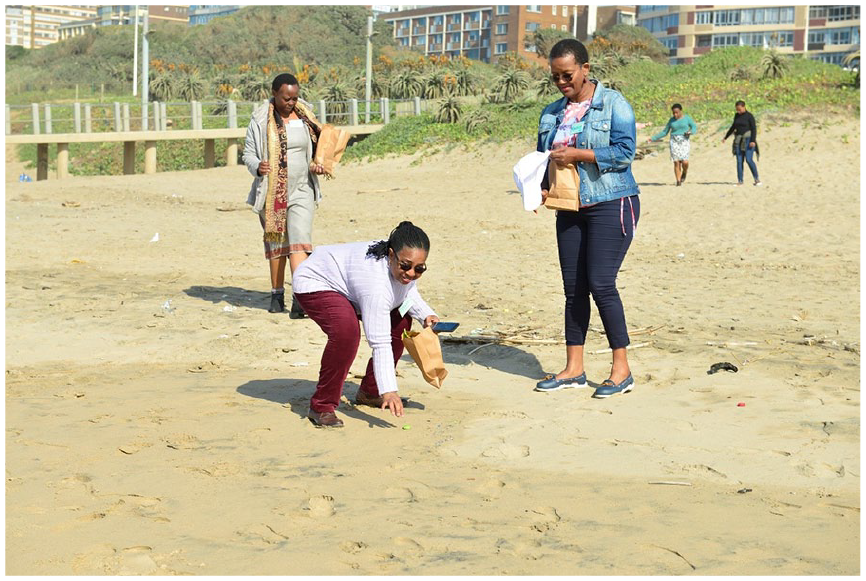
Scavenger Hunting: “Picking up Treasures, I Got This . . . ”.
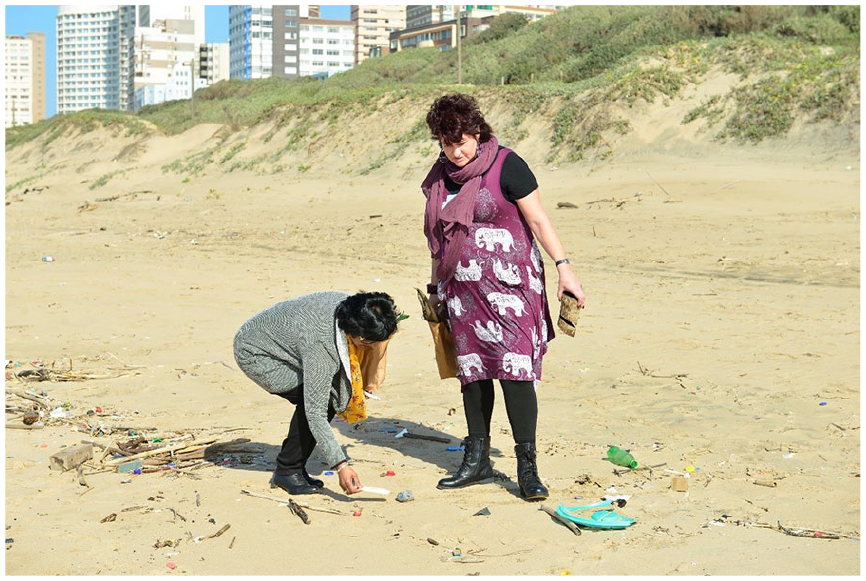
Scavenger Hunting: “This Looks Interesting!”.
Participants brought their treasures to the event space and displayed them on tables. Each person was then asked to take a picture of and share one object on a group Instagram account. The chosen objects included a piece of coral, a feather, a matchbox, a plastic spoon, and a doll’s head. Participants were encouraged to think about what influenced their choice of objects when they set them up to photograph.
Next, the attendees embellished their chosen objects with the materials provided, including buttons, string, wire, lace, glue, and black paper. “What does this enhanced object say about you and your relationship with the world?” was the prompt. We also asked them to consider the following question: “What does the object have to do with who I am as a person and an academic?” The enhanced objects were then used to create an interactive visual exhibition, prompting further discussion on academic identities.
Although the items chosen by each participant are intriguing in their own right, this poetic study focuses on the creations that resulted from group work. The symposium attendees were divided into five groups, each tasked with creating a collaborative assemblage that spoke to social cohesion in higher education by using items collected during the scavenger hunt. We introduced assemblage as an arts-inspired research method. Assemblage is a multifaceted art form in which the artist creates a new work by assembling various found or fabricated materials, often including everyday items (Tate, 2022). Using disparate elements and images, the artist playfully arranges the materials to create a new design (Arnason, 1986). This playful incorporation of everyday life into art challenges traditional, formal art practices.
The assemblages were created on large sheets of brown paper using magazine pages, colored paper, yarn, buttons, wire, and other embellishments, as well as a variety of glues, scissors, and pens. Each group had to choose various found objects from the scavenger hunt and collaborate to create a cohesive design highlighting connections between the items.
People began arranging and debating their collaborative creations (Figures 3 and 4). There were lively discussions about which items to include and how to place them so that they spoke to each other and the symposium theme. Group members shared personal and professional stories prompted by the objects as they worked. Professional artists and fellow academics Lee Scott and Chris de Beer assisted and advised the teams on the aesthetics of their compositions.
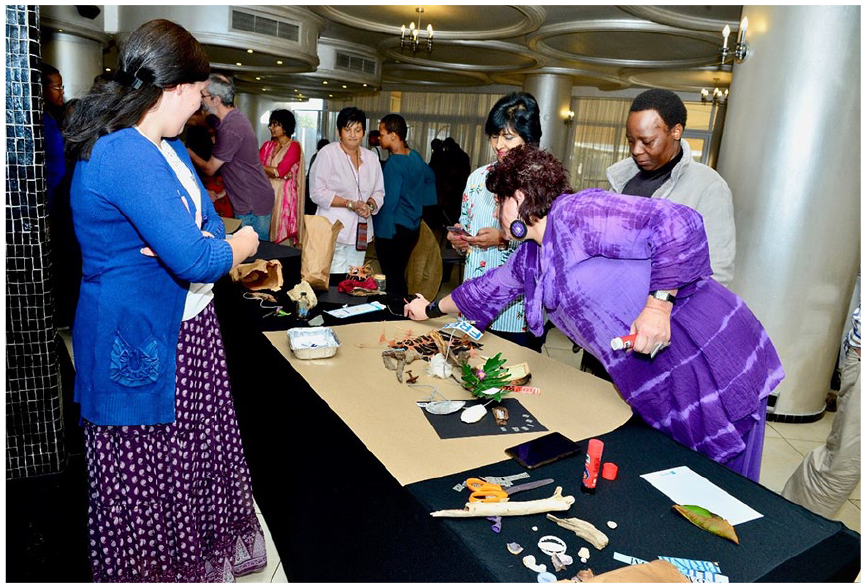
Creating an Assemblage: “Gluing It Down—How About This?”.
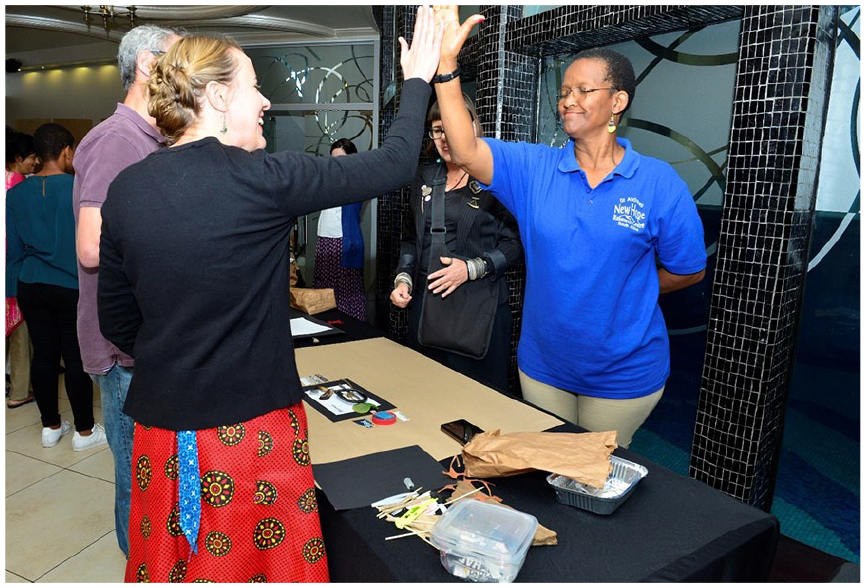
Creating an Assemblage: “What an Interesting Connection!”.
Groups were asked the following questions after completing their assemblages to encourage them to think about the collaborative arts-inspired process and how they are connected as academics in different institutions of higher learning in South Africa:
Describe your group’s experience working with this collaborative assemblage.
Write a collective statement on what our assemblage tells us about who we are.
Each group set up a table with their finished assemblage for all to see, and people moved about looking at the various creations. During this gallery walk, participants shared their thoughts on other groups’ assemblages and helped others to understand them differently.
The finished assemblages (Figures 5, 6, and 7) were photographed, and each group selected a representative to present their work to the entire symposium. Questions and comments followed each presentation. The symposium’s overarching theme of social cohesion in higher education served as a lens through which attendees could engage in meaningful conversation to explore the connections between personal values and goals and the larger community’s aspirations.
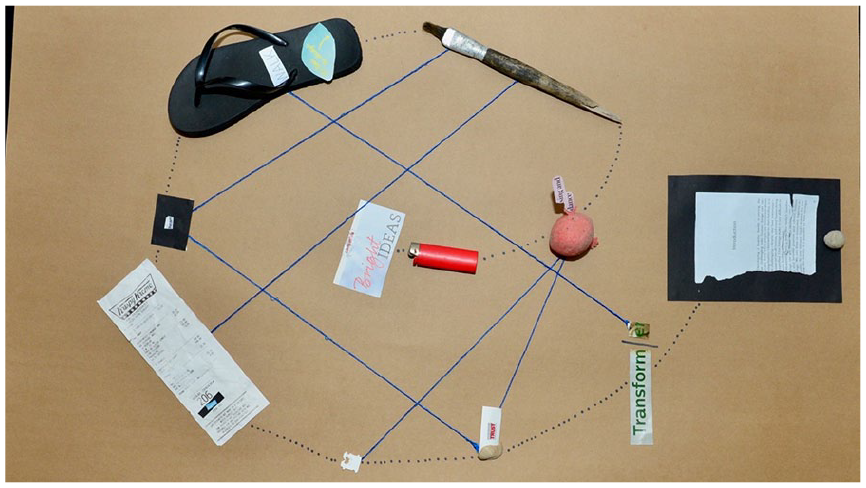
Assemblage 1: “Compatible Bright Ideas”.
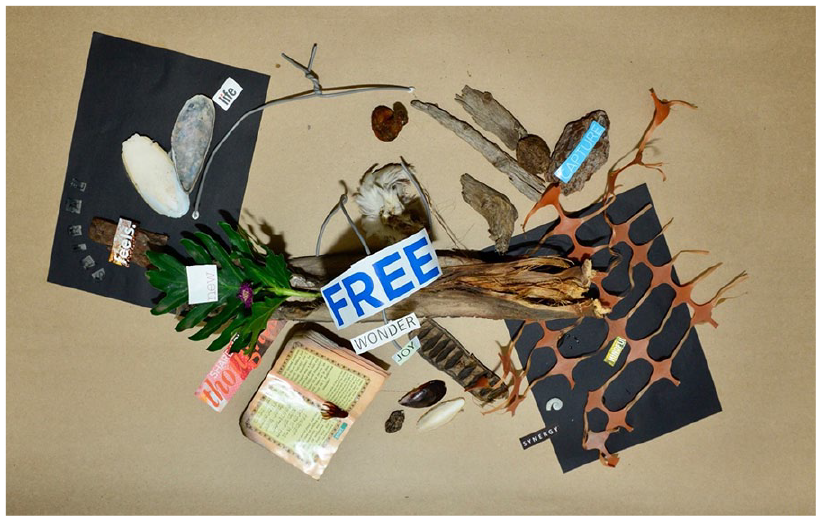
Assemblage 3: “Spirals of Life”.
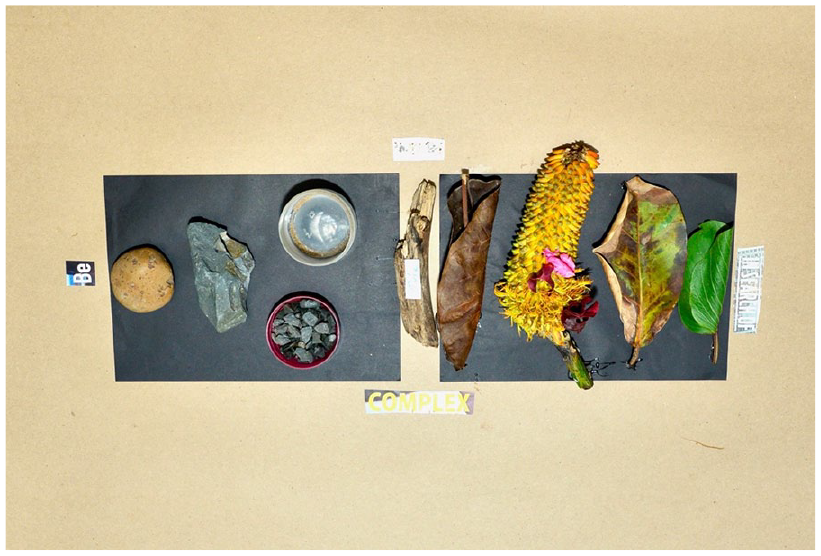
Assemblage 5: “In Search of Being”.
Poetic Representations of the Dialogic Assemblages
We decided to study the assemblages through poetic inquiry. Poetic inquiry is a literary arts-inspired method that elicits, analyzes, and articulates research findings through poetic language, seeing, hearing, and interpretation (Prendergast, 2009). The words of Carl Leggo (2008) encouraged us to explore embodied reflexivity through poetry: Poetry creates textual spaces that invite and create ways of knowing and becoming in the world. Poetry invites interactive responses—intellectual, emotional, spiritual, and aesthetic responses. Poetry invites a way of uniting the heart, mind, imagination, body, and spirit. (p. 167)
We sought to approach our data in an embodied way by depicting it poetically (Langer & Furman, 2004). Accordingly, we turned the participants’ collective written descriptions of each assemblage (Pillay et al., 2022) into found poems. Working individually, we each created five found poems, one for each assemblage. A found poem is text rearranged from other sources to compose poetry (Butler-Kisber, 2005). Our found poems were conceived of as “research poems,” condensing information and providing illustrative summaries in a concise format (Langer & Furman, 2004, p. 3).
For these research poems, we used the French–Malaysian Pantoum form. The repeated lines emphasized the most prominent or emotionally evocative aspects of how the groups of participants wrote about their assemblages and the assemblage-making process (Furman et al., 2006). We intended for the Pantoums to spark a conversation between us. After sharing our Pantoums, we merged them into a single document with five Pantoum clusters (Butler-Kisber & Stewart, 2009), one cluster per assemblage (Figure 8).
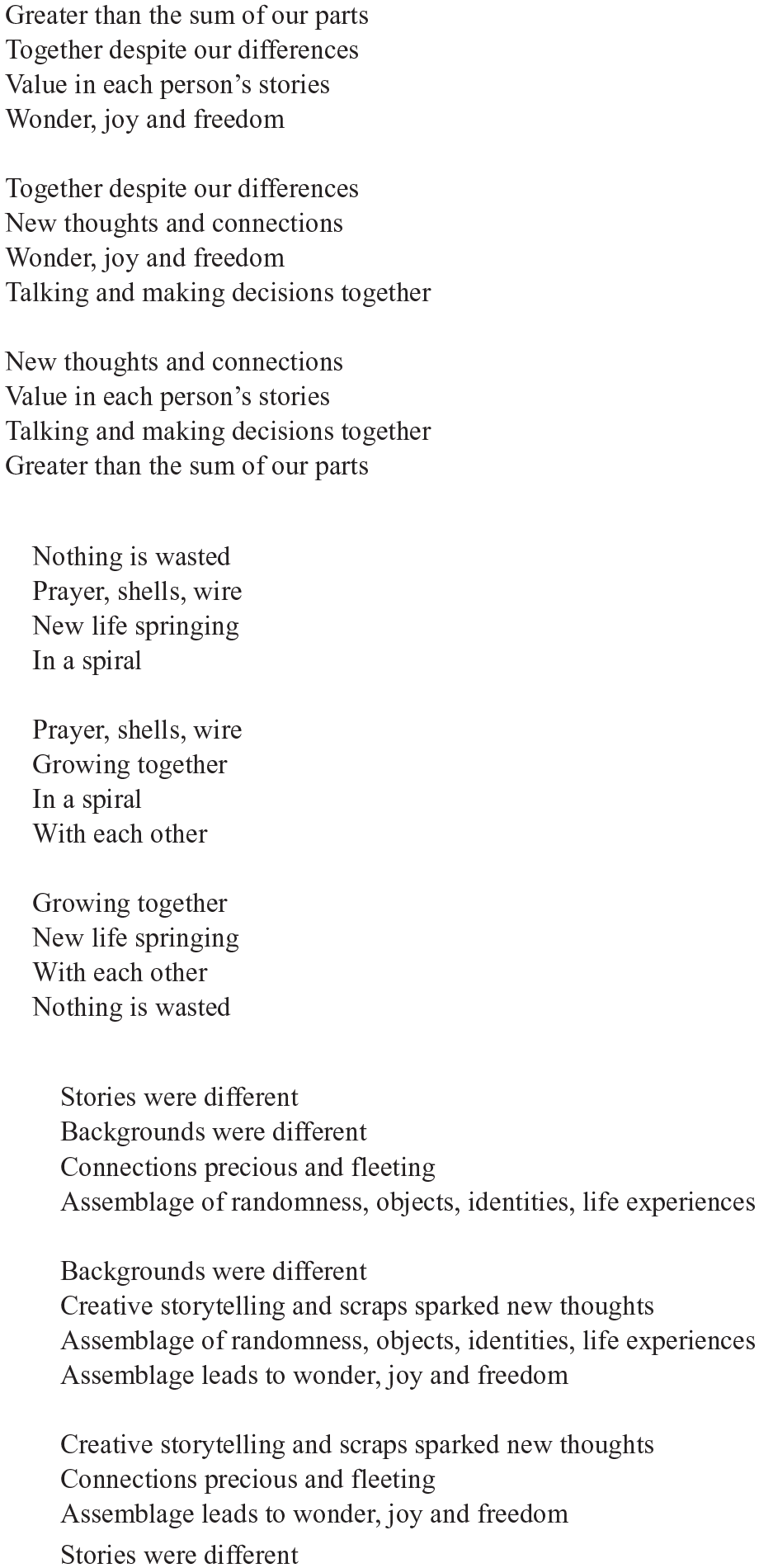
The Pantoum Cluster for Assemblage 3, “Spirals of Life”.
Next, as the first layer of analysis, we worked individually to write interpretive poems (Langer & Furman, 2004) to capture our subjective reactions to the medley of Pantoums. We chose the Japanese five-line Tanka poetry form with a syllable pattern of five, seven, five, seven, seven (Furman & Dill, 2015). Traditionally, Tankas have expressed human emotion and personal voices (Breckenridge, 2016). We created Tankas to communicate our feelings about the Pantoum clusters.
Inbanathan composed two Tankas, one inspired by the Pantoum cluster for Assemblage 1 and one for Assemblage 2. Kathleen created Tankas for Assemblage 3 (Figure 9) and Assemblage 4. And Daisy wrote a Tanka for Assemblage 5.
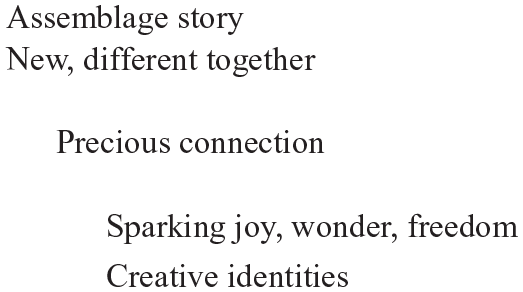
The Tanka Inspired by the Poetry Cluster for Assemblage 3, “Spirals of Life”.
The Tankas provided inspiration for a composite poem in the Renga form, a Japanese form of linked-verse poetry traditionally created by two or more poets as a conversation (Lahman et al., 2019). We collaborated in an online meeting to compose the Renga (Figure 10). We used a linking syllable pattern of five, seven, five for the left-hand stanzas, and seven, seven for the right-hand stanzas.
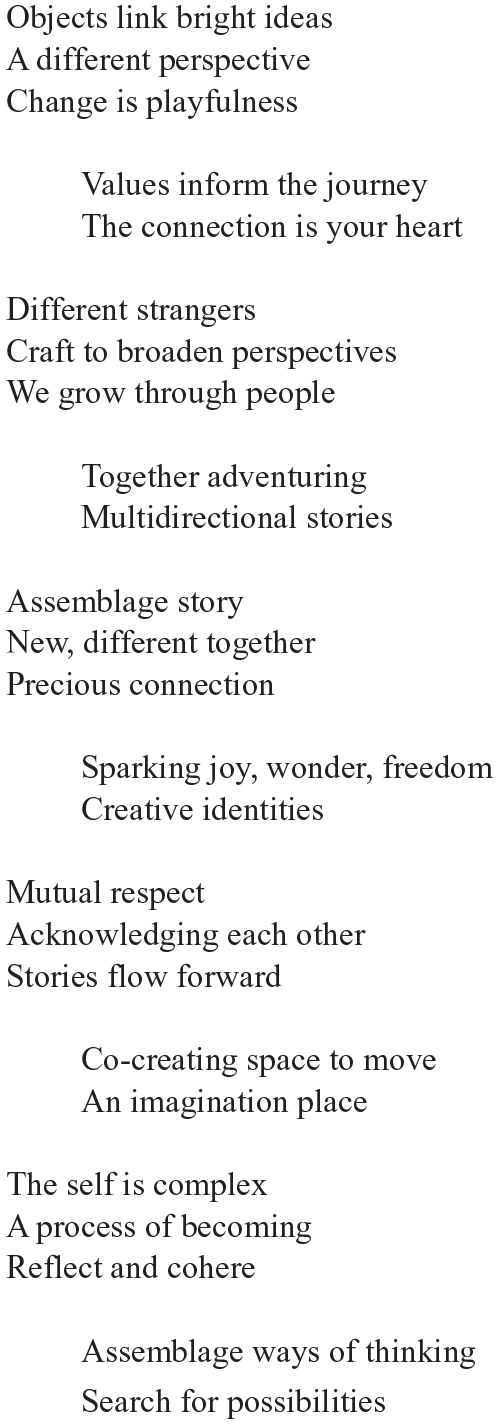
The Renga Inspired by the Tankas.
Our Dialogic Learning
We had a 90-minute recorded online discussion about the Renga. After reflecting on the conversation, we listened to the recording and created three dialog pieces from lightly edited excerpts. Dialog is a literary and performing arts-inspired genre that shows how conversation and interaction can help people learn and grow (Coulter & Smith, 2009). The following dialog pieces express our interactive, evolving understanding of the Renga.
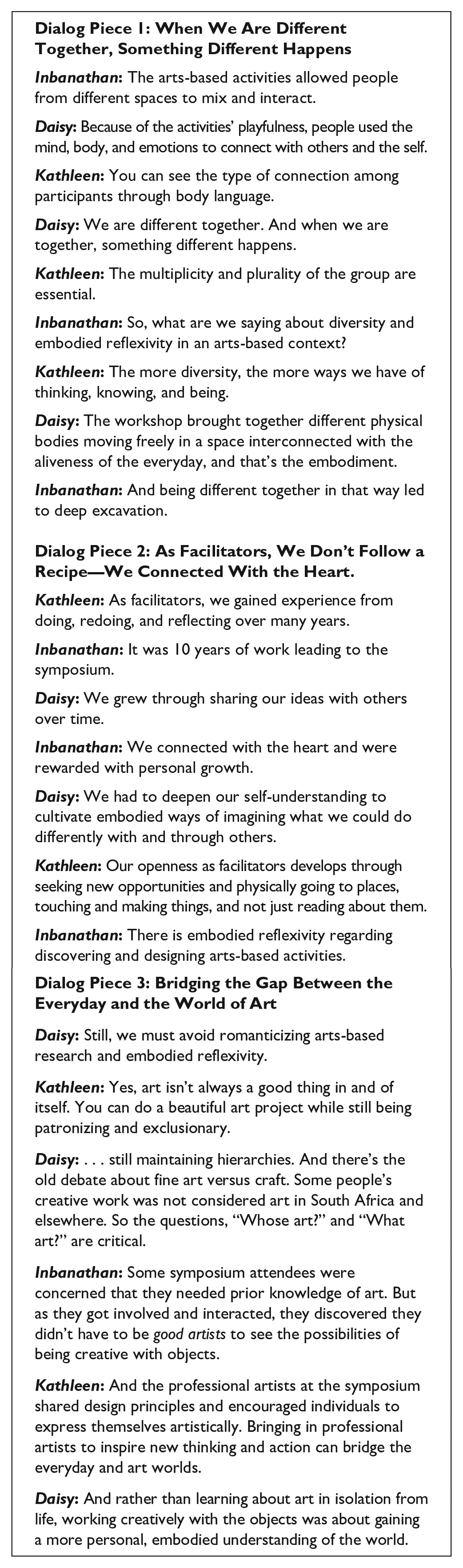
Crystallizing Our New Knowing
Together, we created a final Tanka (Figure 11) through our reflections and conversations on the dialog pieces.
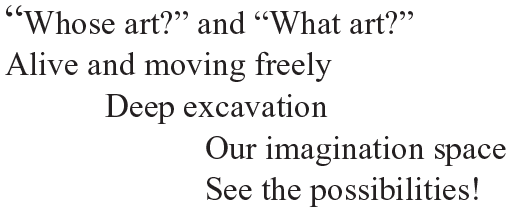
The Tanka Inspired by the Dialog Pieces.
Each line of the Tanka elicited a response to our guiding question of how and what we might learn from a poetic reading of others’ arts-inspired creations as embodied explorations of social cohesion.
The first line, Whose art? and What art, raises questions about artmaking and creativity. We recognize, as facilitators, that arts-inspired activities can help us realize how we want to work with lived experiences as creative opportunities to confront the singular narratives we embody of who we are as people. Working with the arts can help us reimagine what it means to be an academic.
The line Alive and moving freely reminds us that even those who do not consider themselves creative can reveal something about themselves and their aspirations through the things they make and do. Creating a visual artwork gives substance to people’s thoughts and feelings, bringing them to life and transcending the merely physical aspect. Artistic representation opens new perspectives on how we can express ourselves in our bodies in terms of what we sense, know, and do. Participating in collaborative artistic creations allows for expressing reflexive selves and interconnections. When people gather to make art, they can find freedom in each other’s company and bring hidden voices to the surface.
Deep excavation reminds us that we can learn profound things about ourselves and how we relate to others when engaging in collaborative artistic endeavors that are playful, unexpected, and supportive. As facilitators, we recognize the importance of creating a caring, respectful space for the various traumatizing and disembodying experiences we carry. Through dialogic assemblages and sharing of each other’s arts-inspired visual forms, the potential of art to authorize and affirm the ideas and voices of every individual to openly question who am I and what can I be in relation to others is made possible.
Facilitating a shared imagination space can allow people to explore their creative selves. As South Africans who live with the apartheid legacy, we understand the harm and suffering that social segregation and discrimination cause. By curating various arts-based activities, we can scaffold the opening up of self with and through others as a caring, trusting experience. From the standpoint of social cohesion, the imagination space should be a safe, respectful setting for experiencing and expressing ourselves in various ways and voices.
The collaborative, reflexive sharing facilitated by (re)creating and making in a shared setting stimulates the imagination. The space created to see the possibilities must be carefully curated. When it comes to helping people become more self-aware in social contexts, thoughtful planning is crucial. We found designing a cumulative buildup of arts-inspired activities, beginning with the self and moving outward to connect with others, was beneficial. Recreating and making in a secure, shared space stimulates the imagination with trust and confidence, freeing up ways of being, thinking, and doing.
Conclusions and Implications
How can this poetic study assist us and others seeking to understand and strengthen social cohesion and social justice in academic work and life? This article was written openly and expressively to demonstrate our embodied, collaborative, reflexive work with objects and poetry, guided by the quality standard of vigor. Over time, we composed a series of poems to make sense of our complex and multifaceted experiences in designing and facilitating an arts-inspired imagination space with fellow academics. In so doing, we saw how poetry linked us to the creative processes and works of others. When it comes to understanding the dynamics of the self in relation to social cohesion and social justice, we believe that poetic inquiry can be a valuable anchor for research, teaching, and learning.
We distilled our response to the assemblages using progressively more condensed poetic forms. The poems showed how facilitating and engaging in creative activities with people from diverse contexts can open new perspectives on our interactions with others, our artistic creations, and our selves. According to Elliot Eisner (2002), the imagination paints pictures of the possible that help us to see how things could be different. Creating and sharing supportive imagination spaces for embodied research can contribute to a shift away from segregated and exclusionary higher education (in South Africa and elsewhere). Through creative collaboration, we can see how we might heal social, political, and historical wounds and overcome the obstacles perpetuating injustice.
As a result of this study, we are encouraged to continue working on arts-related projects with others who may or may not consider themselves artistic. We hope our personal story and poetic method will serve as a welcoming jumping-off point for scholars interested in using the arts for self-reflexive explorations of social cohesion and social justice in higher education and beyond. Furthermore, we wish to inspire academics to pursue artistic endeavors that will enrich their scholarly connections and propel them forward in novel ways, paying attention to embodied emotions, experiences, and sensations to inform and transform actions for social change.
Footnotes
Acknowledgements
We appreciate the contributions of all symposium facilitators and participants, as well as the photographer, Albert Hirasen. We appreciate their permission to share their images, creations, and words in this article. Theresa Chisanga, Lungile Masinga, and Anita Hiralaal, our fellow project leaders, are acknowledged for their vital contributions, enthusiastic support, and collaboration.
Declaration of Conflicting Interests
The author(s) declared no potential conflicts of interest with respect to the research, authorship, and/or publication of this article.
Funding
The author(s) disclosed receipt of the following financial support for the research, authorship, and/or publication of this article: We gratefully acknowledge project funding from the National Research Foundation, Human and Social Dynamics for Development Funding Instrument (Grant Number 118539).
