




Abstract
Indigenous trans-systemic approach is a lifelong unlearning and relearning process, with no endpoint. Indigenous peoples have long called for decolonizing minds so as to support self-determination, challenge colonial practices, and value Indigenous cultural identity and pride in being Indigenous peoples. Indigenous trans-systemic approach is also a political standpoint toward valuing and revitalizing Indigenous knowledge and methodologies while weeding out colonizer biases or assumptions that have impacted Indigenous ways of knowing, doing, and being. Drawing from Indigenous Participatory Action Research (IPAR), I explained how I learned the meanings of trans-systematic knowledge from Indigenous Elders and Knowledge-keepers.
Keywords
Introduction
This article draws on Indigenous trans-systemic knowledge to share my decolonizing learning journey with Laitu Khyeng Indigenous Elders and Knowledge-keepers at the Chittagong Hill Tracts (CHT), Bangladesh. Following a relational theoretical framework, I learned that the Indigenous-led trans-systemic approach could initiate the decolonizing processes (Datta, 2015). Trans-systemic knowledge is essential for many reasons, including understanding and practicing decolonization in everyday life, reclaiming Indigenous meanings of research, and advocating for Indigenous land rights. In exploring the Indigenous trans-systemic approach from the Indigenous community perspectives, I used a relational theoretical framework as it “not only challenges Western fixed meanings of actors but also makes actors responsible for their actions” (Datta, 2015, p. 102). Elsewhere, I explained how a trans-systemic framework considers “multiple realities, relationships, and interactions based on our traditional knowledge” (Datta, 2015, p. 107). Moreover, I used a trans-systemic framework, as I learned that it helps understand the benefits of using Indigenous ways of knowing and doing (Datta, 2018, 2020, in press).
Following a trans-systemic framework, I used Participatory Action Research (PAR) as my research methodology with the Laitu Khyeng Indigenous community in the CHT, Bangladesh. This article endeavored to explore my learning experience from the Laitu Khyeng Indigenous Elders and Knowledge-keepers regarding community perspectives on the trans-systemic approach through the PAR. For doing this, we (i.e., Indigenous Elders and I as a researcher) used four research methods, including traditional collective story sharing, individual story sharing, commonplace book, and photovoice.
Two of my main goals are (a) sharing my learning experience from the Laitu Khyeng Indigenous community Elders and Knowledge-keepers regarding how they explained the meanings of the trans-systemic approach from and within Indigenous perspectives, and (b) why and how the Laitu Khyeng Indigenous community Elders and Knowledge-keepers think the trans-systemic approach is helpful to learn decolonization, reclaim Indigenous research, and know Indigenous rights.
Situating Me as a Researcher and Methods
I begin this article by first situating myself as an Indigenist researcher (Datta, in press). In Indigenist research, who we are, where we come from, and why we do this research are important to us. Situating the researchers also honors the participants we work with and demonstrates that we value their perspective, cultures, knowledge, and building a relationship with them (Kovach, 2010; Simpson, 2012, 2017; Wilson, 2008). I need to clearly acknowledge our socialization, identity, education, and professional experiences to situate ourselves in the research and to build relationships with the participant community (Wilson, 2008). Situating ourselves as Indigenist researchers is an ongoing process of negotiation as we work with our participants and get to know them. I want to make sure to lift up Indigenous voices, identities, and land rights as we share Indigenous perspectives on self-determining actions that lead to sustainable communities (Datta et al., 2015). In Indigenist approach, situating ourselves and building relationships with the participants’ community help us to understand participants’ needs and make researchers accountable to their research participants (Datta et al., 2015; Kovach, 2010; Wilson, 2008).
My cross-cultural identity through my socialization, education, and professional experiences has made me well aware of my own position and responsibilities toward my participants’ communities. I was born and raised in minority in Bangladesh. As minority peoples in Bangladesh, we have different relationships, cultures, spirituality, and practice with land from the mainstream people. Our land-based ways of knowing, education, and practice are interconnected with land, water, plants, hills, and animals. Our Elders, Knowledge-keepers, and leaders taught me about my responsibilities, and I am relationally accountable to my participants regarding my research activities. Being part of a minority community, I have seen how my family struggled in our everyday life for self-determination.
In exploring trans-systematic approach from an Indigenous community perspective, I use a relational theoretical framework, as it “not only challenges Western fixed meanings of actors but also makes actors responsible for their actions” (Datta, 2015, p. 102). An Indigenous trans-systematic approach considers “multiple realities, relationships, and interactions based on our traditional knowledge” (Bang et al., 2014; Datta, 2020, p. 107; see also Cajete, 1994, 2016; Simpson, 2014, 2017; Wilson, 2008). In a relational framework, we, as human and non-human, living and non-living, become responsible to each other for our understandings and actions. Moreover, an Indigenous land-based framework demonstrates the benefits of using Indigenous ways of knowing and doing. My learning reflection is also part of PAR as it transformed me into who I am as a researcher and who I should be as a researcher in the community (Datta, 2018). According to the Elders and Knowledge-keepers in this study, sharing my learning is also part of my relational responsibility, as my learning helps to reshape who I am as a researcher (Datta et al., 2015; Wilson, 2008).
There are many themes discussed in this research, and one of the themes is land-based education. I endeavor to explore my learning experience with the Laitu Khyeng Indigenous Elders and Knowledge-keepers regarding how the community envisions Indigenous trans-systematic approach. Elders are recognized as respected knowledgeable elderly people in the community who can guide the community. A Knowledge-keeper holds significant traditional knowledge for the community. In the community, a Knowledge-keeper can be both Knowledge-keeper and Elder, but an Elder may not be identified as Knowledge-keeper. Both Knowledge-keeper and Elder are respectful to the community. Elders provide their guidance through their knowledge and wisdom, and Knowledge-keepers hold important knowledge on culture, tradition, and well-being. I developed my learning reflections on Indigenous trans-systematic approach from three research methods: (a) Elders’ and Knowledge-keepers’ collective traditional story sharing (we had a total of five traditional story sharing events during my six-month field research, including beginning of field research for exploring research objects, during field research, after field research, after collective data analysis, and during research sharing); (b) individual story sharing with the Elders and Knowledge-keepers (we had a total of 15 story sharing events from 15 Elders and Knowledge-keepers); and (c) my personal learning reflections derived from my notes. Most of the quotations in this article were transcribed and translated in a collaborative process with four Khyeng Indigenous co-researchers from the community and myself as an academic researcher. Elders and Knowledge-keepers reviewed transcriptions; however, once I had done the second step in translating to English, the Elders and Knowledge-keepers, who do not speak English, could not review them. For protecting Indigenous Elders’ and Knowledge-keepers’ identities according to their choice,I did not use their names, as they believed it would be risky to disclose their names. As Khyeng Indigenous people’s names are culturally connected and as it is a small community, it would have been easy to find out their identity, even if I used pseudonyms. Therefore, to protect Elders’ and Knowledge-keepers’ identities, I did not use pseudonyms for their quotations, but rather amalgamated the data.
Trans-Systemic Approach
The Laitu Khyeng Indigenous peoples of the CHT bring fundamental beliefs with no compromise with other knowledge systems. However, trans-systemic approaches are about relationality, about diverse groups working together in respectful ways. Thus, the Laitu Keng Indigenous peoples ground their beliefs in non-linear perspectives, complexity thinking, and creative inquiry; they share philosophical principles congruent with Indigenous knowledge systems from other locations on the planet and with the principles of trans-systemic, propelling decolonization movements in Indigenous research (Battiste, 2013, 2021; Smith, 2019; Styres, 2019). Their knowledge systems are interconnected with Indigenous everyday practice (Smith, 2019). Smith (2019) and Battiste (2021) suggest using the trans-systemic approach as a process, not an event. It is a lifelong process of relational ways of understanding and practicing. It is connected with Indigenous land, water, traditional knowledge, culture, and Western scientific knowledge. For instance, a Knowledge-keeper explained the meanings of trans-systemic approach to the community: What does the trans-systemic approach mean to our Indigenous people? Indigenous control over the land, the jungle, the water that controls the Indigenous people’s life means collective control, social control. The mainstream people call someone an asset—my wealth, home, land, and cattle. However, Indigenous people understand wealth as ours, collective sharing. Indigenous people believe that Indigenous people belong to nature, not nature belongs to Indigenous people. Like the sun is for everyone, the wind is everyone. As the water of the river is for everyone, so is the land near the Indigenous people. So everyone’s responsibility is to protect our land, water, forest, and animals. Protecting it all together and using it all together is our sustainability. This knowledge is the beauty of Indigenous living.
Similarly, another Elder explained the philosophy of the trans-systemic approach in their everyday practice: The philosophy of the Indigenous life is how I can leave what I have found, what my nature has given me or us, to my next generation—not just my children, my grandchildren, the next generation. Moreover, it is not just that we talk about our people; we think about collective ways of living. We do not refer to the collective as only for humans. Our collaborative way is everything, including humans, animals, plants, birds, water, everything around us, the way for all living things. We believe the tree has a life and has the power to provide us food and protect us; we have a responsibility to protect it. Therefore, we want to keep everything for everyone in the larger world, human beings, plants, animals, and animals.
On a similar point, another knowledge-keeper said, Our ways of knowing are to challenge the colonial system. This capitalist system stands on the personal profit system. This system and its philosophy are essentially anti-Indigenous. Therefore, this capitalist system’s central ideology is to destroy Indigenous collective and holistic understanding and practice. The result is that where everything is counted with money, the economy is arranged in the monetary economy’s currency, where everything is considered profit. The capitalization of profit in the capitalist system, whose highest form we see is imperialism. Indigenous knowledge and their everyday practice became the first target of this greedy colonial system. Therefore, outsiders [mainstream settlers] came with logging, land ownership, colonial religion [Islam] to grab our land. They [mainstream settlers those who are mostly from Muslim religion] came only for ownership of the land. Their colonial understanding and practice became oppression to our women and the environment. Their [mainstream settlers] come with oppression, arms trade, killing, raping Indigenous women, and profit maximization.
Therefore, I learned from the Elders’ and Knowledge-keepers’ stories that the trans-systemic approach is a continuous process of challenging the colonial systems and reclaiming land-based learning from everyday practice, particularly how to be responsible for our land and relationships.
Decolonizing
Decolonization is critical for understanding the trans-systemic approach from the community perspective (Battiste, 2013; Smith, 2012; Tuck & Yang, 2012). Decolonization from the trans-systemic approach helps to understand the legacy of the colonial system. For instance, Smith (2019) explains that the colonizers created the colonial system for their benefit, and this system did not benefit Indigenous people. Smith suggests that the colonizers’ target is to make a benefit from the colonial system, maximizing profits for the colonizers. Smith argues that the colonizers have been using Indigenous land, water, and other natural resources to colonize. She further suggests that the colonial system was created to destroy the traditional sustainable system. Linda argues that since the colonizers destroyed traditional sustainable systems, they cannot rebuild them. The colonizer will not ruin their colonial system as they are standing on it. For achieving decolonization goals, she suggested challenging the colonial system.
In my research, one Elder also explained how a trans-systemic framework could help understand Indigenous people’s lives in Bangladesh. The Elder says, We need to understand the everyday colonial practice, particularly how mainstream people [i.e., Muslim] have grabbed Indigenous land, forest, and natural resources to displace Indigenous people from their land. Every day many mainstream people were coming to our land illegally and grabbing our land.
At a similar point, in the UN Development Programme (UNDP) survey of 2008, 62% of Bangladeshi mainstream migrations occurred in the Indigenous hilly region illegally. Many Indigenous and non-Indigenous studies suggest that in the last 30 years, Bangladeshi mainstream people have become more than half because of illegal migration (Adnan, 2004; Chakma, 2010; Human Rights Reports, 2018; Roy, 2000).
The Colonial system is the root of most of the challenges to the Indigenous people in CHT. For instance, a Knowledge-keeper argues that the colonial system cannot destroy their colonial system as they stand on this system. Indigenous displacement is increasing daily in Bangladesh because of Bangladesh’s government and non-government colonial settlement projects: Bangladeshi illegal immigration increased day by day by the name of many unwanted governmental projects such as the Kaptai Electric Dam [a hydroelectric project for outsiders] displaced more than 300000 to 400000 Indigenous people from their land. The Bangladeshi government and non-governmental agencies have created many projects for displacing Indigenous people from their land. For instance, 500 military camps in our lands, many lumber plantation projects cutting our natural forests, many national and multinational agencies, such as Tabaco, gas, and oil companies. In 95-99% of cases, Indigenous people have not been involved with these exploitative projects. These projects were created by the outsiders, for the outsiders for grabbing Indigenous land. You can find all this information from many previous types of research. I think the Bangladesh government will not destroy their colonial system as they benefit from this system.
Similarly, another Elder explained how the colonial system has been challenging for their community. He described that the Bangladeshi mainstream people destroyed the traditional system by imposing a Bangladeshi mainstream system over the Indigenous system: I have seen that the Bangladeshi Administrative and military have violated the traditional land rules. Out of the 23 villages, 18 villages became Bangladeshi mainstream people dominated. Every day Bangladeshi mainstream people push in, and the Indigenous people move to the borderline with limited land.
Another essential factor brought by many Elders is the Bangladeshi military camps on the Indigenous land. For instance, one Elder explicitly says that Another issue there is the presence of the Bangladeshi army. The military camps have been seriously disrupting the traditional Indigenous life, ceremonies, customs, and culture for a few decays. At the same time, sexual harassment is happening everywhere. The army has acquired 75686 acres of Indigenous land in Bandarban [name of the Indigenous district area] in the hills. They occupied our land without consultation with the Indigenous leadership and the Chittagong Hill Tracts regional council. The Bangladesh state takes away traditional Indigenous land through its various tactics, military, district administration, rubber cultivation, commercial farming, and social forestry.
Another colonial issue is to understand the unwanted developmental project from the outsiders. A knowledge-keeper explained that: Outsiders created tobacco, rubber, teak projects for outsiders’ profit. These projects are dangerous for our traditional cultivation. Because of these outsiders’ projects, the water level is coming down now. Moreover, tobacco has exclusively occupied most parts of Indigenous land. Because the tobacco leaves require heat to dry, and that is provided by wood. Furthermore, tobacco leaves are being taken, and that tree is being thrown into the river. The river has been polluted as a result. Moreover, tobacco farming is destroying the soil’s vitality, production capacity, fertility.
Therefore, I learned from Indigenous Elders and Knowledge-keepers that the trans-systemic approach to decolonization is not an event; it is lifelong learning, unlearning, and relearning. This process connects with Indigenous meanings of research and Indigenous rights.
Trans-Systemic Approach and Reclaiming Indigenous Meanings of Research
As Linda Smith (2012, 2019) suggests, the trans-systemic knowledge of the Indigenous perspectives on research is essential. In a trans-systemic framework, the Indigenous meanings of research help build trust among researchers and participants (Simson, 2012). Smith suggests (2012, 2019) that Indigenous meanings of research help unlearn colonial perspectives and relearn from Indigenous perspectives. I also learned how Indigenous Elders and Knowledge-keepers guidelines helped build trust among researchers and participants in my research. According to Elders’ and Knowledge-keepers’ suggestion, we as researchers need to know from the participants and share our knowledge. It includes understanding participants’ needs, respecting their research view, and making participants as research part (Datta et al., 2015). According to Elders and Knowledge-keepers, trans-systemic research from the Indigenous perspective means for the community, community, and community. Similarly, North American Indigenous scholar Shawn Wilson (2008) also describes it as relational. Smith (2019) suggests that Indigenous meanings of trans-systemic research help rebuild the system by challenging the colonial system.
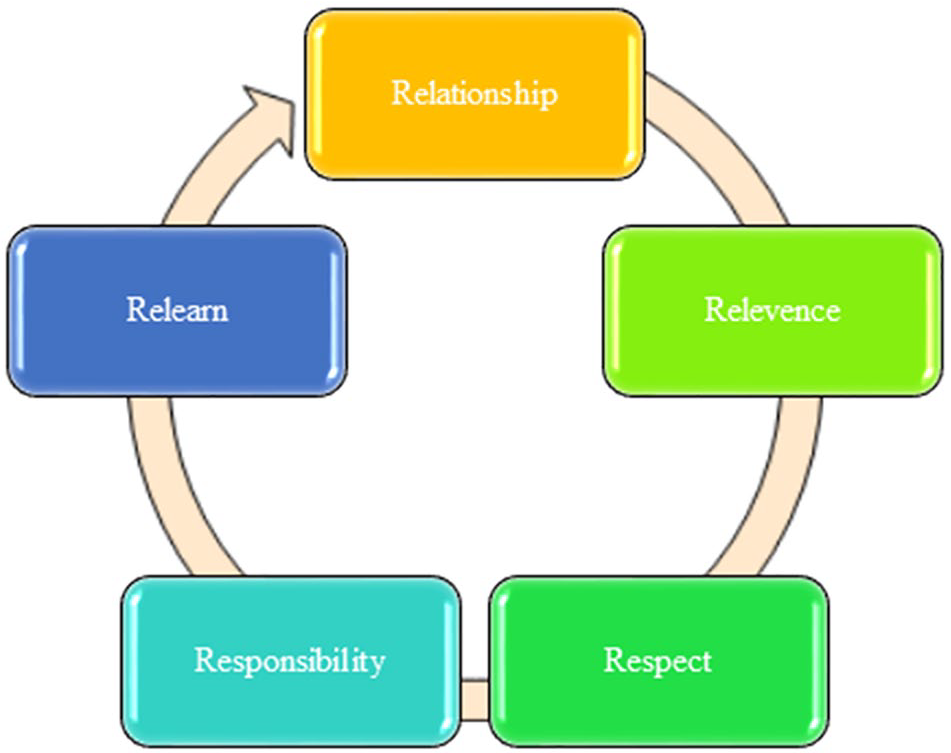
In a trans-systemic approach, Indigenous research meanings help build a new system from the holistic and collaborative processes. I had many opportunities to relearn the Indigenous meanings of research from the trans-systemic approach in my research. In this section, I shared my learning ceremonies on how the community understands and refers to research meanings from the trans-systemic approach, particularly how Indigenous Elders and Knowledge-keepers connected with 5R (i.e., relationships, relevance, relearning, responsibility, and respect), referring community ownership of research, respecting Indigenous knowledge, and relearning Knowledge-keepers and Elders and medicine men as the community scientists.
Connects With 5R
I learned that research needed to connect with 5R: Relationship: What relationships are formed during my research?; Relevance: What do Indigenous communities need or want?; Respect: Do I respect, acknowledge, and honor community knowledge and practice?; Responsibility: What must I do to achieve community-center success?; Relearn: Do I consider myself a learner from the community?
Community Ownership of Research
In trans-systemic knowledge, research participants need to consider a researcher in the research (Smith, 2019). Wilson suggests that if our study does not change us as researchers, we are not doing enough. It is a lifetime process; we learn from everyday relationships. Wilson explained why and how he considers participants as a researcher. In Indigenous meanings of research, the Indigenous community has to own the research questions/objectives, research results, and research design (Datta, 2018). Indigenous scholar Linda Smith (2008) suggested that if the community does not do the research, it is objective; analysis can be used as a colonial tool. Similarly, many Indigenous community Elders, Knowledge-keepers, and youth suggested that they are afraid whenever they hear the term research. Research has been used as a colonial tool for a long time. One of the Elders expressed her anger of only Western forms of research. She said, Many researchers from academics, government, and non-governmental organizations come to our community for research. They did many surveys and collected many of our stories. Once they are done, we never see them, and they do not inform us of anything. They are like foreign birds. Whenever they need, they use us for their needs and leave.
Another Elder explained why community ownership of research is needed for their community and how research has misused community knowledge. She said, When a researcher comes to our community, they take our knowledge and write their report on their own. In most cases, they write their findings to benefit them, the government, and other agencies. Dangerously, I have often seen that they use the research to exploit us, our natural resources, and our knowledge. We do not trust any researcher. If anyone wants to research with our community, we need to be part of their research. We need to own the research findings to know what, why and how research has been done and what purpose.
An Elder explained how the meanings of research are different from the community: We have been using research for many, many years. If you look at our medicine men, you will see that they have been researching which plant would suit what sickness. Again, our Elders and knowledge-keepers always research which knowledge is vital for our youth, cultivation, hunting, and ceremonies. Our community people did the research. All of this research is for our community’s needs, solving community problems and celebrations. We knew what, why, and how the research was going to benefit us. Now, if you look at the research, both research and research have changed. We do not control it; even our community Elders, knowledge keepers, and medicine men do not count as researchers. Outsiders come to our community to do research and suggest what we need to do for our betterment as if we do not know what to do. Our ancestors have been living in our land for a hundred years. Do you think they were living without doing research?
Indigenous Lead
In the trans-systemic approach, knowledge is how I learned at an Indigenous cultural system that leads the Indigenous way of doing things (Wilson, 2008). Wilson’s example helps us understand trans-systemic knowledge. He explains, Say you have a fire and have people sitting in a circle around the fire. Moreover, you ask any person to describe the fire. While they describe it and look at the same fire, it is not the same thing. However, that does not mean they are wrong. They are at a different vantage point altogether. So we say, if we share this information in the circle, we share this experience, the collective experience; we will get a bigger picture. (Wilson, 2008, p. 112). Similarly, Hawaiian Indigenous scholar Manu Meyer (2001) explained why Indigenous participants need to consider as a researcher by saying that “we have information, knowledge, and understanding, but understanding is the highest frequency, and the one that is most important” (n.p). The goal is not just about information and knowledge production about participants, she says, but also, ultimately, the production of understanding.
No Need of Scientific Validation From Western Research
Indigenous people know that their experience is scientific in trans-systemic knowledge, as their understanding has been successful for hundreds of years. They used their expertise for their everyday practice, their spiritual and mental health. Their traditional medicine person is mainly from their community; their medicines are also collected from the community, and they know it is working in their everyday life. While Indigenous traditional ways of knowing and doing are helpful for their community, Elders and knowledge-keepers mentioned that they do not need validation from Western science regarding their traditional knowledge as science. Community people, they know it is scientific. Community Elders suggested that Western knowledge needs to decolonize their narrow ways of understanding the community’s adequate knowledge. For instance, one of the Elders says, Our medicinal person is right for our community people. We are all relatives. Here we do not call our people as the client; we call as our relatives. Once we are relatives, we are responsible for our people. We are not far from our doctor. But, outside the doctor calls us a patient, we need to make an appointment and buy our medicines from a shop. It is all about money, and they care more about money than people. Our traditional knowledge is all about our people and our relationships.
Many Indigenous communities consider Knowledge-keepers, Elders, and medicine men as researchers, scientists, and educators. Similarly, one Elder explained why they think their Knowledge-keepers, Elders, and medicine men as researchers. She said, I am 78 years now; maybe I will die soon. I will die with many successful stories. I have learned many successful stories from my ancestors. I have learned that knowledge is good for my life, our community, and our youth generations. I have seen many successes from my stories in my life. I think our future generations will benefit from our knowledge as we benefit from our ancestors. Like me, there are many Elders, Knowledge-keepers in our communities; they have many successful stories. Our young generations can be benefitted when they learn how to combine our knowledge with their school learning.
Lifelong Learning, Unlearning, and Relearning
Trans-systemic knowledge asks how the process of decolonization can be helpful for a researcher (Smith, 2019). The concept of decolonization refers to a lifelong unlearning and relearning process. The term unlearning refers to asking critical questions on how only western research is not engaged, not directed through the participants’ community; and the term relearning refers to knowing how to engage the community in the research, how to lead research from the community, and how to learn from the community. In trans-systemic knowledge, Linda Smith (2019) suggests that knowing answers to fundamental questions is essential for researching Indigenous communities. For instance, who am I as a researcher in the community? Where do I come from (i.e., my identity and my academic training)? What is my destination (how I will do my research, how I am going to follow community protocols)? How should I go there (i.e., building trust and relationships with the research participants’ community? How far am I (i.e., what do I do to build a trustful relationship with participants in the community)? What is my relational accountability (i.e., how my research is going to benefit community participants)? Who can support us (Elders and Knowledge-keeper)? What are our stories (i.e., knowing community Elders and Knowledge-keepers as community knowledge-holders and their knowledge should be referred to as science)?
Trans-Systemic Approach and Promoting Indigenous Rights
The trans-systematic approach refers to Indigenous rights, including constitutional rights on Indigenous identity, land, water, forest, language, and customary practices. According to our community Elders and Knowledge-keepers, knowing Indigenous rights, including Indigenous land rights, identity rights, and traditional education rights, refers to the trans-systemic knowledge for the community. They also suggest that knowing Indigenous rights can help move forward for environmental sustainability within and from the Indigenous communities.
Constitutional Land and Identity Rights
The trans-systemic knowledge provides meanings of constitutional land and identity rights for the community. For instance, a Knowledge-keeper says, “Our Indigenous people do not have their constitutional recognition in Bangladesh, but it is the first fundamental right Indigenous needs.” Another Elder explained how constitutional rights should look like: In Bangladesh, people of many nations, people of many cultures. People of many languages. The reality of this matter has to be recognized in the country, and its path is constitutional recognition. In the constitution’s preamble, the plurality of Bengal, the plurality of Bangladesh, it should come, and here at least one of the schedules should include names of all nations, names of all languages should be mentioned. The second that I think is to ensure all nations’ equal rights to all races, languages, and religions. In the sense of ownership, I mean that our constitution has three types of ownership. It is called private ownership, state ownership, and cooperative ownership. However, the method of owning indigenous land is through collective ownership. There is no recognition of Collective ownership in our constitution.
Another Elder suggests collective ownership as constitutional rights in the trans-systemic approach.
We need to amend our constitution to bring about collective ownership. We need collective ownership in land, forests, jungle, and water. Traditionally, we had collective rights in our Indigenous communities written in our Hill Chittagong Regulation Three. However, it does not have constitutional recognition. We need this recognition in our constitution so that these things can be implemented.
Traditional Education Rights
Many Elders and Knowledge-keepers suggested recognizing and implementing traditional educational rights is one of the significant parts of the trans-systematic approach. For instance, one of the Knowledge-keepers suggested that Primary education should be ensured in the native language of the Indigenous people. Traditional knowledge should be part of our education. Traditional knowledge also needs to consider a significant part of our education so that our future generation can see its significance. By protecting our traditional knowledge, we should have the opportunity to use other knowledge to find solutions to our everyday issues.
Traditional Customary Rights
Trans-systemic knowledge refers to Indigenous traditional customary rights in their land. An Elder explained why Indigenous people need customary rights: Traditionally our people [the Indigenous people] did not feel that we needed to record the customary practice we practice every day. As mainstream people have been gabbing our land and forcing their culture on us, now we need recognition of our customary practice.
Similarly, another Knowledge-keeper explained why community needs customary rights: Some of our lands are in individual ownership; some are collectively owned. The Bengalis [Bangladeshi mainstream people] think that there is much land in the hills [Indigenous land], which must be occupied. Due to this thought, the Bangladesh government-sponsored sending 300,000-400,000 settlers to the Indigenous land from 1975-1985. As a result, there is a demographic change in the entire area. For this government-sponsored illegal migration, many Indigenous people were displaced, killed, and became labour in their land. Terrorism, violence on Indigenous women, and landlessness significantly increased. Therefore, we need our customary rights to our cultivation so that we can protect our traditions.
Land and Forest Rights
Land and forest rights are significant parts of the trans-systemic approach for the many Indigenous communities. Similarly, many Elders and Knowledge-keepers explained that the trans-systemic approach refers to this research’s Indigenous land and forest rights. For instance, one of the Elders says, We, as Khyeng Indigenous people, do not have our rights in our forests and mountains. There were different types of trees here before. They cannot be seen anymore. Earlier, different kinds of animals were seen in this forest. There were various animals, including tigers, pigs. Since outsiders have been clearing our forest for their lumber plantation over our natural forest, there are no big trees, animals. There are only rubber and teak trees.
Another Knowledge-keeper gave a specific example from his village: The hill on which I am now standing is the Langu Hills. Earlier, there were different types of animals, such as deer, deer. We have lost our biodiversity. Outsiders cleaned our forests, planted lumber plants, and destroyed our biodiversity. We used to hunt animals from our forest. Now the rubber and teak garden have been planted here.
Conclusion
As Battiste (2021) and Smith (2008, 2019) suggest, everything is connected to everything in the Indigenous trans-systemic approach. We cannot separate one from others. This relational learning makes us responsible for understanding, thinking, and acting. Thus, this article had two objectives: (a) exploring the meanings of the trans-disciplinary approach in decolonization from the Indigenous perspectives, and (b) analyzing the benefits of the trans-disciplinary approach to the communities, including self-determination and sovereignty. Elders and Knowledge-keepers refer to the trans-systemic approach as everyday decolonization, meanings of research from their traditional knowledge, and Indigenous rights to achieve these two goals. These diverse meanings and practices are connected with their Indigenous identity, ways of everyday practice. For instance, one Elders says, “We need to know the identity that we can belong. How did we grow-up and connect in our land? Our language, culture, songs, stories are still alive. We need to connect with land, ceremonies, spiritualities, animals, plants.” Knowing Indigenous identity from a trans-systemic approach is helpful to redefining the meanings of research and reclaiming Indigenous meanings of sustainability. For instance, one of the Knowledge-keepers suggested trans-systemic approach is a practical way of knowing and doing: The trans-systemic approach is how I have found my life and the world to leave it for the next generation. That is Sustainability. I can live on my own, and I will not eat everything. I will use it in my life’s needs but develop and do it again so that my next generation can adopt it and further enhance it. That is the trans-systemic approach.
Trans-systemic knowledge centers Indigenous voice. Maori Indigenous scholar, Linda Smith (2019), suggests that trans-systemic experience refers to a lifelong decolonizing process for researchers and participants. She relates to decolonization of trans-systemic knowledge as many ways of knowing and doing, including micro, macro, and many mid processes. They come from the self-determining reflection of researcher and participants’ communities. I learned that trans-systemic research from Indigenous perspectives promotes/supports community knowledge and practice. It builds trust in community knowledge and practice and reflects social and community interest.
As Battiste (2013) writes, trans-systemic knowledge is as “Bringing two diverse knowledge systems together needs some consideration of the assumptions underlying each foundation and where the points of inclusion or merging might seem advisable. . . Such a practice has begun” (p. 123). Battiste (2013) recommends trans-systemic knowledge to analyze education policy, curricula, and pedagogy. A trans-systemic approach to analysis involves braiding diverse knowledge systems to stabilize peace-building education that is socially just, accountable, and tenable to a forward vision of the most significant potential for all.
In trans-systemic knowledge, research is a process of celebration. For instance, Indigenous scholar Shawn Wilson (2008) refers to research as a ceremony. He suggests that once we, as a researcher, consider our research as a ceremony, we will be accountable to our research and research participants. Our accountability in our study will benefit both the researcher and participants. He discussed, “Research by and for Indigenous peoples is a ceremony that brings relationships together” (p. 8). Indigenous research includes relationships with other living things, the land, objects, and places. Everything is connected to everything.
Indigenous trans-systemic knowledge needs to be understood from a holistic perspective. It means that knowledge in Indigenous communities has diverse perspectives. Knowledge varies according to the Indigenous community-to-community, generation-to-generation, land-to-land, water-to-water, ceremonies-to-ceremonies. All of this diverse knowledge is important for many Indigenous communities. (Focusing on Indigenous knowledge and capabilities) My learning about Indigenous trans-systemic knowledge approach refers to Indigenous self-determination from all perspectives, including in their meanings of research and rights.
Footnotes
Declaration of Conflicting Interests
The author(s) declared no potential conflicts of interest with respect to the research, authorship, and/or publication of this article.
Funding
The author(s) received no financial support for the research, authorship, and/or publication of this article.
