




Abstract
Public trust in the news media has eroded in the United States. This study examines how perceptions of misinformation (PMI) and disinformation (PDI) affect the consumption of traditional media, social media, and artificial intelligence (AI) news, and whether this relationship is moderated by political ideology and media trust. Findings from a pre-registered experiment (N = 637) revealed that PMI and PDI regarding traditional and social media news lowered intentions to consume news from traditional, social, and AI sources. We found no significant moderating effect of political ideology or media trust. The implications of the findings are discussed.
Trust in the news media has declined globally, with a noticeable decrease observed in the United States (Hanitzsch et al., 2018). As skepticism toward news media outlets grows, people turn toward alternative news channels for information (Tsfati & Cappella, 2003). This shift is likely influenced by increasing perceptions of misinformation (PMI) and disinformation (PDI) in mainstream news, which can impact trust in news media and further alter traditional news consumption behaviors (Hameleers, 2022). PMI can be conceptualized as negative perceptions about the unintentional lack of reliability and inaccuracy of news, whereas perceptions of disinformation reflect the idea of intentionally reporting false information to mislead (Hameleers, Brosius, & de Vreese, 2022; Pinkleton et al., 2012). A consequence of these perceptions could be lower trust in the news media (Van Aelst et al., 2017) and increased use of alternative news media (Benkler et al., 2018).
Amid declining trust, artificial intelligence (AI) offers an alternative source of information to traditional media. AI refers to technology that is equipped with capacities that are associated with intelligence, such as machine learning, natural language processing, communication, problem-solving, reasoning, planning, learning, computer vision, and speech recognition (Russell & Norvig, 2010; Rzepka & Berger, 2018). AI technologies include conversational agents like ChatGPT and Microsoft Bard, voice assistants like Siri and Alexa, and autonomous systems like Tesla’s self-driving cars. These tools are capable of understanding commands, providing recommendations, and improving their performance over time through learning.
With recent technological advancements, AI technologies are also increasingly used to access information or provide personalized news (Simon & Isaza-Ibarra, 2023). As AI becomes a more prevalent source of information, understanding how PMI and PDI affect individuals’ news media consumption patterns is crucial. Furthermore, AI may be perceived as a useful alternative channel for providing unbiased, aggregated news by the public.
Theories of selective exposure and motivated reasoning indicate people tend to select media sources that align with their pre-existing attitudes over those that are incongruent with their pre-existing attitudes (Hart et al., 2009; Kunda, 1990). Individuals may gravitate toward alternative media channels, such as AI, rather than traditional news media when they perceive that news media spread mis/disinformation. Similarly, PMI/PDI may be dependent on political ideology, where individuals may prefer media that align with their political identity (Garrett & Stroud, 2014). Recent work by Mourão and colleagues (2018) found that conservatives are less likely to trust the news compared to liberals. Partisans may be more likely to shift media sources when they perceive mis/disinformation to be present in traditional sources, particularly those that challenge existing views—likely due to the hostile media effect, which suggests that individuals find belief-challenging sources as hostile, resulting in reduced trust and use of such sources (Gunther et al., 2017).
This research involves a pre-registered experiment that examines the causal relationship between PMI/PDI and individuals’ intentions to consume traditional and social media news and adopt AI as an alternative news source. We also test whether traditional media news trust moderates the relationship between PMI/PDI and news use.
Literature Review
Understanding Perceptions of Mis/Disinformation
As trust in media has declined, individuals view traditional and social media news sources as dishonest and unreliable for obtaining information (Bachmann & Valenzuela, 2023). Trust in news media can be influenced by multiple factors, such as individuals’ pre-existing beliefs and how the information in the news is framed (e.g., negativity bias; Lindgren et al., 2024), as well as perceptions that incorrect information is being presented (Hameleers, Brosius, Marquart, et al., 2022). Mistrust in news media due to the presence of false information has been conceptualized into perceptions of mis/disinformation. Scholars have defined misinformation as inaccurate information that does not necessarily intend to deceive but can be regarded as being untruthful, as well as information that contains errors or is incorrect based on experts’ knowledge (Hameleers, Brosius, Marquart, et al., 2022; Vraga & Tully, 2021). Meanwhile, disinformation is pertinent to purposeful manipulation and fabrication, which is a more extreme form of misinformation (Hameleers, Brosius, Marquart, et al., 2022).
News consumers proactively decide which media channels they wish to rely on for obtaining information, which may be contingent on different levels of trust and skepticism toward media channels (Hameleers, Brosius, & de Vreese, 2022). It has been implied that those with greater trust in the media, in general, are more likely to expose themselves to mainstream media when it comes to news source selection and those with greater media skepticism tend to lean toward choosing non-mainstream, alternative media sources (Fletcher & Park, 2017; Rasul et al., 2025; Tsfati & Cappella, 2003). On the contrary, exposure to alternative media has been associated with exacerbating PMI/PDI (Egelhofer & Lecheler, 2019). This means that reliance on alternative media sources that attack the mainstream media could increase one’s tendency to believe the media delivers false information with or without intention, thus potentially causing a vicious cycle of mistrust and alternative media usage.
The media are expected to provide the public with reliable information. Therefore, perceptions that the media is unintentionally or intentionally dishonest are likely to erode media trust (Pinkleton et al., 2012). Indeed, there is evidence which shows that increased concerns about the accuracy and reliability of political information are related to lower media trust (Van Aelst et al., 2017). It is important to note here that while PMI/PDI and media trust may seem related, they are theoretically distinct. For instance, PMI and PDI focus specifically on perceptions regarding the accuracy or intentional deception of news content. In contrast, media trust captures broader confidence in news organizations, journalists, and the institutional independence of the news media (see Newman et al., 2021). While trust focuses on dimensions such as credibility and reliability, PMI/PDI specifically focuses on perceptions, especially the attribution of intent in the case of PDI, which media trust measures do not directly assess. Although there are some correlational investigations, existing empirical evidence remains insufficient to definitively establish a causal relationship between media exposure and perceptions of news sources (Hameleers, Brosius, & de Vreese, 2022). Furthermore, since PMI/PDI call into question the reliability and accuracy of the media, individuals may turn to alternative media sources for information consumption (Prochazka & Schweiger, 2019; Tsfati & Cappella, 2003).
Consequences of Perceptions of Mis/Disinformation: The Role of Selective Exposure on News Media Use
When individuals perceive the news to be intentionally or unintentionally misleading, they may respond by limiting their use of such outlets. For instance, a recent study by Hameleers, Brosius, and de Vreese (2022) found that PMI/PDI were associated with lower traditional media news consumption and increased consumption of news on social media and non-mainstream alternative outlets. However, recent findings from public polls in the United States suggest that individuals are also concerned about mis- and disinformation in the news they encounter on social media (Boulianne & Hoffmann, 2024; Vigderman, 2024), particularly when it is aimed at disrupting democratic processes (Sanchez et al., 2022). While correlational, these findings suggest that there is a clear link between PMI/PDI and reduced traditional but also social media news use in the U.S. context.
Theoretically, the impact of these perceptions on media consumption can be understood through theories of selective exposure and motivated reasoning (Hart et al., 2009; Kunda, 1990). Foundational work in selective exposure research argues that individuals tend to select information that aligns with their pre-existing views over information that does not align with their views (Frey, 1986). For example, Garrett and Stroud (2014) found that regardless of political affiliation, individuals were more likely to select congenial news stories, although only Republicans were more likely to also avoid uncongenial news stories compared to individuals with other political affiliations. This congenial bias is likely due to one’s motivations to defend one’s own attitudes and hold accurate beliefs (Hart et al., 2009). Indeed, studies have found that concerns about misinformation on traditional and social media lead to selective exposure (Harris et al., 2024; Wu-Ouyang, 2024). Individuals may perceive information that they consume as not biased, while the general “media” are biased (see Barnidge et al., 2020). Research from misinformation literature also suggests that individuals tend to verify headlines congruent with their political ideology (Chan et al., 2024; Edgerly et al., 2019).
Although both traditional and social media are seen as potential sources of misinformation and disinformation, they are distinct in terms of their structure, users’ consumption patterns, and effects. Traditional media typically operates under editorial scrutiny, and journalistic standards which are designed to limit the spread of false information. Because fake news websites reach only small segments of the public, most people may indirectly be confronted with such stories via mainstream news coverage, and those who trust these outlets are especially likely to accept the information they provide (Tsfati et al., 2020). Therefore, traditional outlets may paradoxically amplify false information during efforts to debunk or report on misinformation (Tsfati et al., 2020). By contrast, on social media, news spreads through peer-to-peer diffusion, allowing news, especially the false stories to travel farther, faster, and deeper than fact-checked content (Vosoughi et al., 2018). Empirical evidence shows that social network platforms are the leading conduit for disinformation, particularly during the election periods (Benaissa Pedriza, 2021). These structural advantages such as their popularity and massive use, ease of generation and dissemination, and high velocity make social media a particularly powerful source of fake news dissemination (Aïmeur et al., 2023).
Tsfati and Cappella (2003) found that individuals who have more distrust in news media are less likely to consume traditional media sources, such as television news and newspapers, and more likely to consume other media sources, such as talk radio or the internet. More recently, Fletcher and Park (2017) found that across 11 countries, greater distrust in news media was associated with increased use of non-traditional outlets as a main source of news, including online-only or digitally born sources. These findings indicate that individuals who do not trust mainstream news media may be more likely to seek out alternative sources. However, individuals increasingly also do not trust social media for news either (Karlsen & Aalberg, 2023). A study by Park et al. (2020) found that across 26 countries, social media news use was associated with lower trust in the news in general. Since the majority of users are concerned about being exposed to misinformation online (Knuutila et al., 2022), these individuals may focus on selecting sources they perceive are trustworthy. In line with past research on selective exposure and motivated reasoning (Hart et al., 2009; Kunda, 1990), users who have higher PMI/PDI may not seek out traditional and social media news outlets for information.
AI as Alternative News Media
Amid declining trust in traditional outlets, AI has become an increasingly common means of information seeking, with AI-powered tools now capable of aggregating and personalizing news content (Simon & Isaza-Ibarra, 2023). Advances in natural language processing and machine learning enable AI-powered platforms to streamline data collection, analysis, and news writing, offering fast and scalable news production. Advocates of automated journalism highlight AI’s potential for offering what some may view as more accurate and objective coverage of events (Graefe, 2016).
Previous research suggests that AI as a news source can reduce perceived human bias. For example, a study by Cloudy et al. (2022) found that attributing a news story to an AI journalist, rather than a human journalist, mitigated hostile media bias. Similarly, Waddell (2019) demonstrated that news attributed to an automated author was perceived as less biased and more credible compared to news attributed to a human author. These findings align with the concept of the machine heuristic, which posits that machine sources are viewed as more objective and systematic than humans (Sundar, 2008). The perceived objectivity of AI may appeal to those concerned about bias in the news. Therefore, we can expect that those with PMI/PDI in traditional and social media news outlets may turn to AI as an alternative.
A large body of research suggests that when people perceive low objectivity and trustworthiness of traditional news outlets, they often seek alternative sources of information. For instance, Fletcher and Park (2017) found that individuals with low trust in the traditional news media tend to favor non-mainstream sources, such as social media, blogs, and digital-born news providers to fulfill their information needs. In a qualitative study, Edgerly (2017) highlighted that a skeptical orientation toward news has led individuals to seek information from multiple sources, even after reading information from legacy outlets like the New York Times and the Washington Post, to verify and ensure that they have good, unbiased information about a topic or event.
Social media platforms, although they were once thought of as democratizing forces for news, have also faced significant barriers to maintaining accurate and objective information sources due to a large volume of misinformation shared through online social networks (Newman et al., 2022). Recent public polls have revealed that the percentage of social media news consumers in the U.S. who cite inaccuracy as their primary concern has risen from 31% to 40% over the past 5 years (Wang & Forman-Katz, 2024).
Together, these studies underscore that as distrust in traditional and social media news intensifies, especially amid growing concerns about mis- and disinformation, individuals may increasingly turn to AI for information seeking. AI-driven news aligns with these preferences, as AI has been perceived to be less biased (e.g., Waddell, 2019). Moreover, research from the Reuters Institute has found that 36% of individuals in the U.S. trust news from AI (Arguedas, 2024). As AI-based information and news enable personalization, meaning that the audience gets to seek out information they desire proactively, AI may further appeal to individuals who feel unfulfilled by existing news channels. Based on this overview, we propose the following hypotheses and research questions:
However, similar to the influence of PMI/PDI on traditional and social media news use, the reliance on AI as an alternative source of news could differ along ideological lines, especially in a politically charged context such as the U.S..
The Moderating Role of Political Ideology
In the U.S., public trust in the news media has declined. Recent longitudinal analyses of media trust have revealed that both Democrats and Republicans have reported lower trust in the media since 1972 (Brenan, 2024). This mistrust is correlated with a concern that misinformation and disinformation are present in the news across the ideological spectrum (i.e., liberals and conservatives; BBC, 2024). Furthermore, concerns about the presence of misinformation and disinformation extend to news on traditional and social media outlets (Sanchez et al., 2022; Vigderman, 2024). These concerns may result in lower media news use on traditional and social media for individuals, regardless of ideology. Therefore, it can be argued that the relationship between PMI/PDI and traditional/social media news consumption may be negative for both liberals and conservatives. However, a growing body of research suggests that the strength of this effect could vary between liberals and conservatives.
The relationship between news consumption and media trust has increasingly become split along ideological lines in the United States. For instance, recent public opinion polls suggest that only 40% of Republicans trust national news organizations, while 78% of Democrats reported trust in national news organizations (Eddy, 2024). There is also growing evidence that compared to liberals and Democrats, Republicans and conservatives are alienated in that they only trust a small minority of news outlets, such as Fox News (Jurkowitz et al., 2020). Existing research has argued that this could be due to the hostile media effect, which suggests that individuals perceive news media to be biased against their point of view even when the coverage is neutral (Kelly, 2019; Vallone et al., 1985). More specifically, the tendency to perceive news media as biased is higher among Republicans and conservatives (Hansen & Kim, 2011). Another explanation for this effect could be due to a perception among conservatives that the media is biased toward liberals (see Lee, 2005). This perceived bias has been amplified since the ascent of Donald Trump, who has repeatedly attacked non-conservative media and referred to them as the enemy and “fake news” (Meeks, 2020). In turn, conservative and Republican voters have been increasingly distrustful of mainstream media (see Mourão et al., 2018) and engage in selective exposure due to hostile media perceptions (Barnidge et al., 2020; Stroud, 2010). PMI/PDI likely exacerbate these perceptions and news consumption patterns. This is not to say that liberals or Democrats do not engage in similar behavior. However, based on existing research, we can expect the strength of these effects to be stronger for conservatives (Garrett & Bond, 2021; Nikolov et al., 2021; Rao et al., 2022).
Similarly, conservatives may be less likely to accept AI as a source for news. For example, Yang et al. (2023) found that conservative ideology was positively associated with AI risk perceptions and negatively associated with support for the use of AI. Furthermore, political conservatism has also been linked with aversion toward AI (Castelo & Ward, 2021). One explanation may be that conservative individuals may perceive AI as a liberal-biased media source. Recent work has found that responses from ChatGPT may indeed indicate a left-leaning bias (Hartmann et al., 2023). Conservatives may aim to approach news sources that are perceived to be more aligned with their existing views, rather than selecting a perceived left-leaning news source. Finally, since conservatives place less trust in scientists to develop AI compared to liberals (i.e., Yang et al., 2023), they may be more hesitant to use AI as an information source due to an overall lack of trust in scientists (Gauchat, 2012). Thus, we argue that conservatives are less likely to rely on AI as a news source compared to liberals. Specifically, we propose the following:
Moderating Effects of Media Trust
In addition to political ideology, general trust in news media may interact with PMI and PDI to shape media news use. For instance, the impact of PMI and PDI on media news use may be driven by distrust in the news media. Existing research indicates that lower trust in news media is associated with reduced news consumption (Hameleers, Brosius, & de Vreese, 2022; Tsfati & Peri, 2006). Furthermore, existing research has found that distrust in mainstream news drives consumption of alternative news channels (Benkler et al., 2018). As such, we propose the following:
Here, we conducted a pre-registered experiment (https://osf.io/j59fe) 1 to examine whether PMI/PDI have a causal effect on traditional and social media news consumption, as well as AI news consumption. In addition, we investigated whether political ideology and media trust moderate these relationships (see Figure 1 for a visual representation).
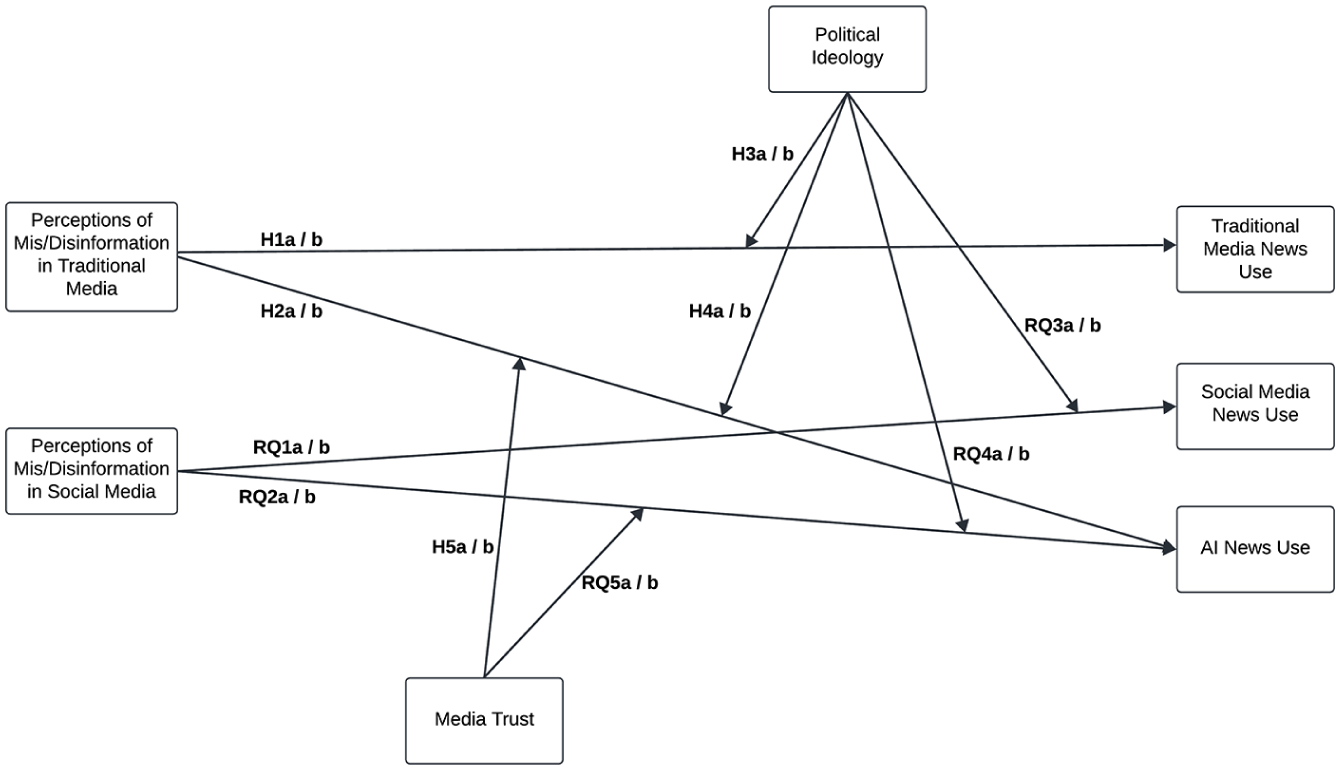
Conceptual Model and Summary of Hypotheses and Research Questions.
Method
Sample and Procedures
We conducted the pre-registered survey experiment in December 2024. A priori power analysis for F-tests (analysis of covariance [ANCOVA]) using G*POWER 3.1 (Faul et al., 2009) indicated that 612 participants would be required to detect a medium effect (f = 0.15) at an alpha of 0.80. We recruited 838 U.S. adults using CloudResearch’s Connect, which uses verification strategies to confirm that respondents are actual people (Hartmann et al., 2023). The sample was matched to the U.S. Census in terms of age, gender, and race/ethnicity. As online survey participant pools are often skewed toward Democrats/Liberals, we set political party quotas to reflect a roughly even number of self-reported Democrats and Republicans, in addition to Independents. We removed participants who failed two attention checks asking them to recall which type of media was discussed in the story they read and the name of the town (n = 201). The final sample consisted of 637 participants, out of which there were 294 (46.2%) self-reported Democrats, 249 Republicans (39.1%), and 94 Independents (14.8%). In total, 51% participants were males (n = 325). The participants’ ages ranged from 18 to 82 years (Mage= 45.98, SDage = 15.80). In terms of race, most of the participants were White/Caucasian (67.2%), followed by Black/African American (13.3%), Hispanic/Latino (8.3%), Asian (6.8%), Multiracial (2.2%), Biracial (1.4%), and Others (0.6%). Regarding education, the majority of the participants held a bachelor’s degree (45.9%), followed by some college but no degree (17.5%), master’s degree (12.1%), high school diploma or lower (10.7%), associate’s degree (9.4%), and doctoral or professional degree (4.4%). Participants provided informed consent and were compensated $1.50 for participating. The study was approved by the institutional review board (IRB) from one of the authors’ institutions.
This study used a 3 (PDI vs. PMI vs. Accuracy) × 2 (traditional vs. social news media) between-subjects design, along with a control condition. Participants completed a pretest questionnaire, which included questions about political affiliation, ideology, and interest, as well as media trust and media use questions. Then, participants were randomly assigned to one of the seven conditions, including the control group. In each condition, participants read a story where the media (either traditional or social media) provided misinformation unintentionally, provided disinformation on purpose, or provided accurate information about a health crisis in the fictional city of Greenfield. In the control group, participants read a story about residents of Greenfield celebrating an annual harvest festival. Across all conditions, participants had to spend at least 30 seconds reading the story before they could proceed. Existing research has argued that factors such as the length of a message or how much evidence is provided can impact findings (Han & Fink, 2012). As such, all the stories in each condition and the control group were created to be identical in length (roughly between 160 and 182 words) and to have the same number of arguments (see Supplementary Materials, Appendix A, for the stimuli).
Manipulation Check
For the manipulation check, we asked participants to indicate what they thought the story was about (see Supplementary Materials, Appendix B, for response wordings). Results from a chi-square test of independence revealed that the manipulation was effective, χ2(18, N = 636) = 1390.17, p < .001, Cramér’s V = .85 (p < .001). A vast majority of those in the PMI × misinformation in traditional media (76.1%) and social media conditions (71.4%) correctly indicated that the story focused on the news media providing false information unintentionally. Likewise, a majority of participants in the PDI × disinformation in traditional media (94.7%) and social media conditions (90.7%) correctly indicated that the story focused on the news media providing false news intentionally and deliberately. Then, those in the accuracy × traditional (92.5%) and social media conditions (84%) correctly identified that the story was focused on the news media providing accurate information. Finally, 96.5% of those in the control group correctly identified that the story was focused on celebrating an annual harvest.
Measures
Pretest Measures
Political Ideology
Participants were asked to report their political ideology on a scale from 1 = Very liberal to 7 = Very conservative (see Table 1 for detailed descriptive statistics and inter-item correlations).
Zero-Order Correlation Between Key Variables With Descriptive Statistics.
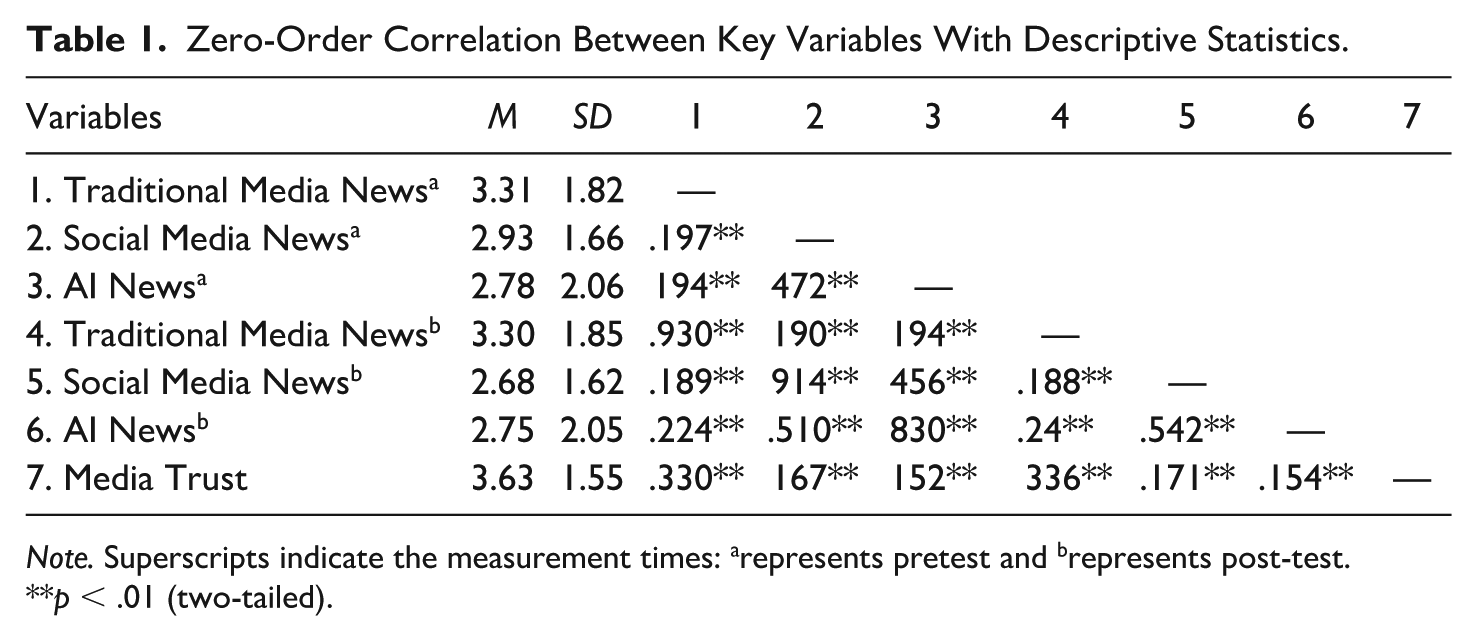
Note. Superscripts indicate the measurement times: arepresents pretest and brepresents post-test.
p < .01 (two-tailed).
Media Trust
We measured media trust by asking participants to indicate their agreement with five items on a 7-point Likert-type scale (1 = Strongly disagree to 7 = Strongly agree). Some items included, “I think you can trust the news most of the time,” and “The news media are independent from undue political or government influence most of the time” (see Supplementary Materials, Appendix B, for item wordings). Participant responses were averaged to create the media trust variable (Newman et al., 2021; M = 3.63, SD = 1.55, α = 0.91).
Post-test Measures
Media News Use Variables
Participants were asked to indicate how often they used television news, newspapers, Facebook, Twitter/X, Instagram, and TikTok to get news about social, political, or public matters in a typical week on a 7-point Likert-type scale ranging from 1 = Never to 7 = Six or seven days (see Ahmed & Rasul, 2022; Ahmed et al., 2022 for a similar approach). Responses for television news and newspapers were averaged to create the traditional media news use variable (M = 3.30, SD = 1.85, r = 0.37, p < .001, Spearman-Brown = 0.54). Responses for Facebook, Twitter/X, Instagram, and TikTok were averaged to create the social media news use variable (M = 2.68, SD = 1.62, α = 0.71). We asked participants to indicate their intentions to use the media for news in the next week.
AI News Use
Participants were asked to indicate how often they intend to use AI technologies to get news about social, political, or public matters in a typical week on a single-item 7-point Likert-type scale ranging from 1 = Never to 7 = Six or seven days (M = 2.75, SD = 2.05). Since people are generally not aware of AI technologies (Kennedy et al., 2023), we provided participants with examples of such technologies (i.e., ChatGPT, Microsoft Bard, Alexa, Siri, etc.).
Analytical Approach
We controlled for participants’ age, gender, political interest, 2 prior media news use, and AI news use in our analyses. To test the direct effects, we relied on ANCOVAs and corrected for multiple comparisons using Fisher’s Least Significant Difference (LSD). 3 For the moderation analyses, we relied on general linear models (GLMs) with robust standard errors and maximum likelihood estimation. Furthermore, analyses of hypotheses and research questions related to traditional media news were conducted only on participants who were assigned to traditional media news conditions and the control condition (n = 359). Similarly, analyses about hypotheses and research questions related to social media news involved participants who were assigned to social media news conditions and the control conditions (n = 359).
Results
We conducted randomization checks to assess whether assignment to conditions was random. No significant differences were found between conditions for age, gender, or education, suggesting that randomization was significant. 4
Direct Effects of Misinformation and Disinformation on News Consumption Intentions
First, we tested
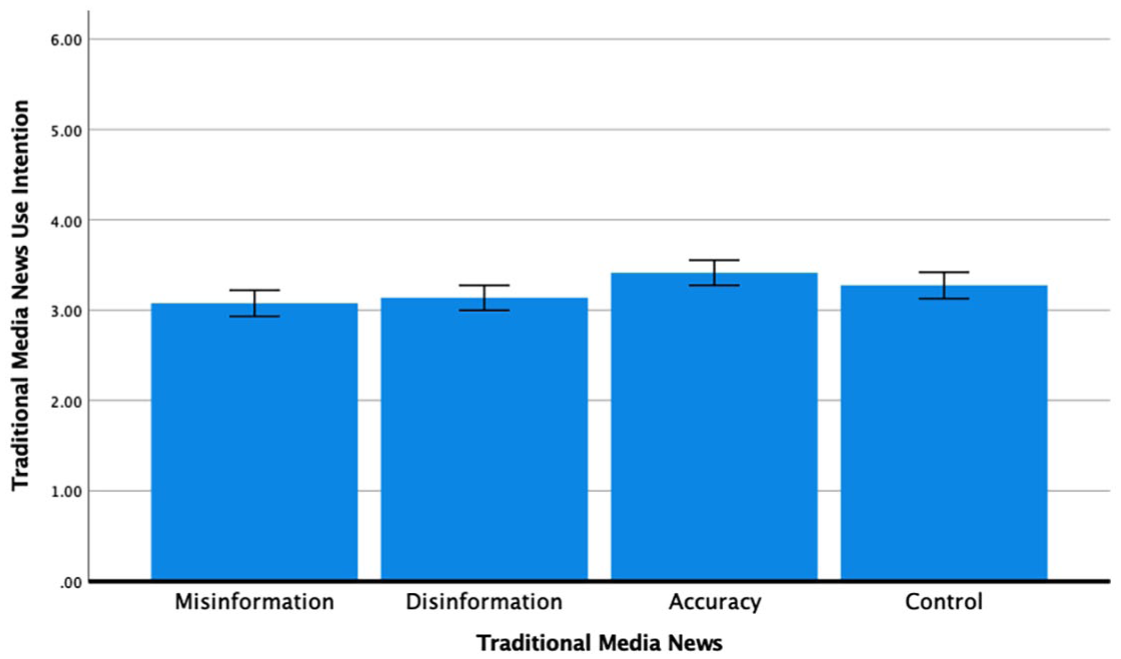
Traditional Media News Use Intentions by Experimental Conditions (
For
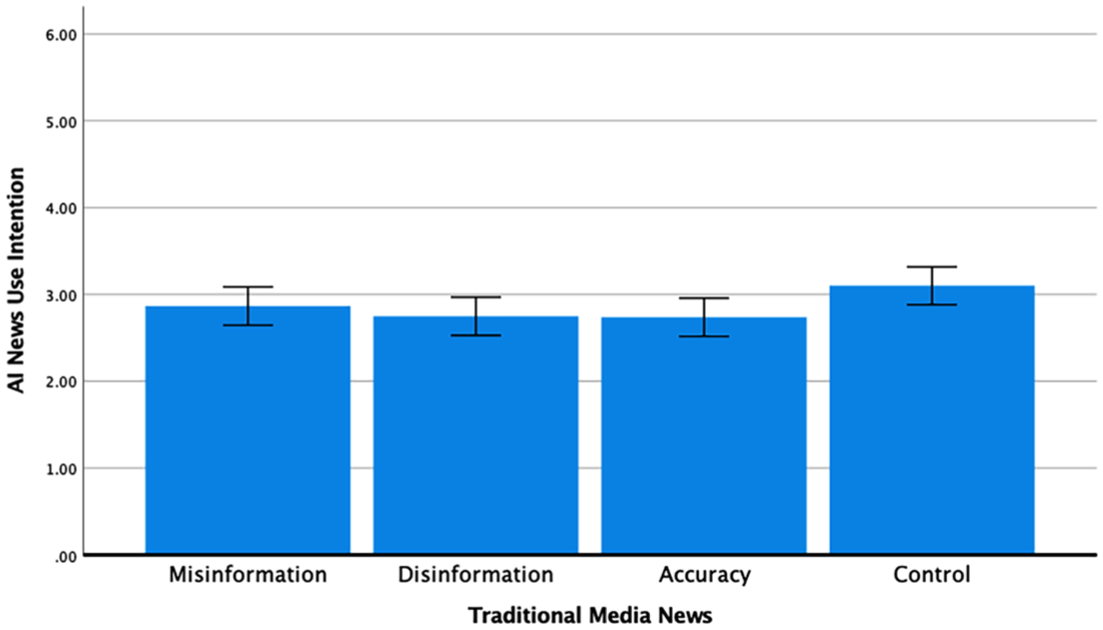
AI News Use Intentions by Experimental Conditions (
Next, we assessed
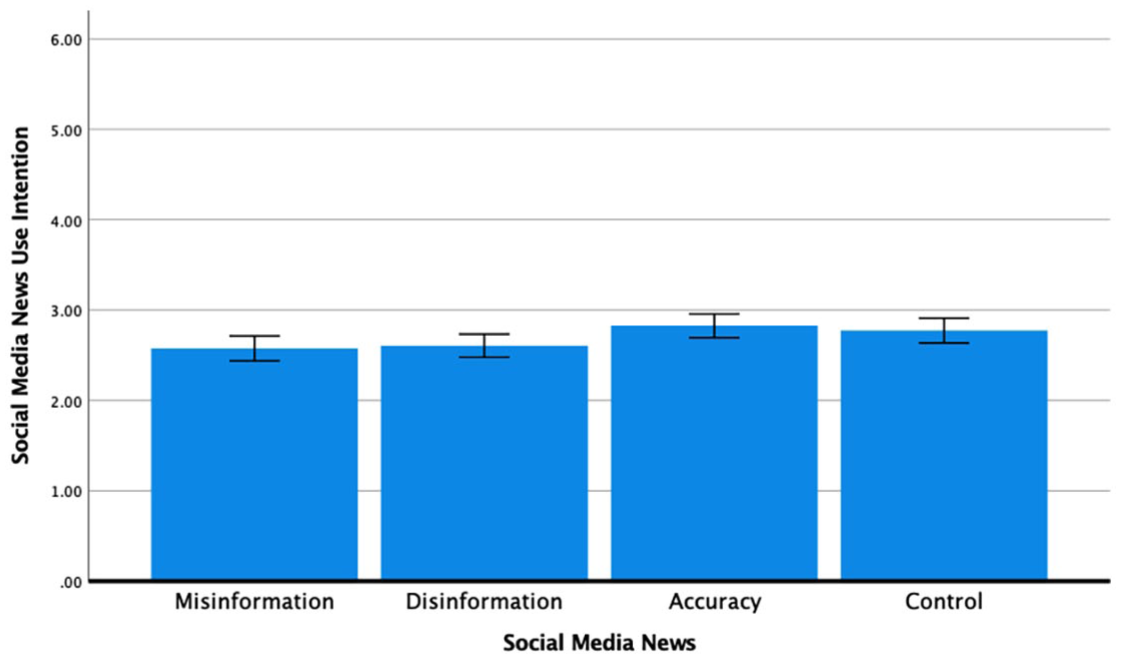
Social Media News Use Intentions by Experimental Conditions (
Means and Standard Deviations for Dependent Variables by Condition.
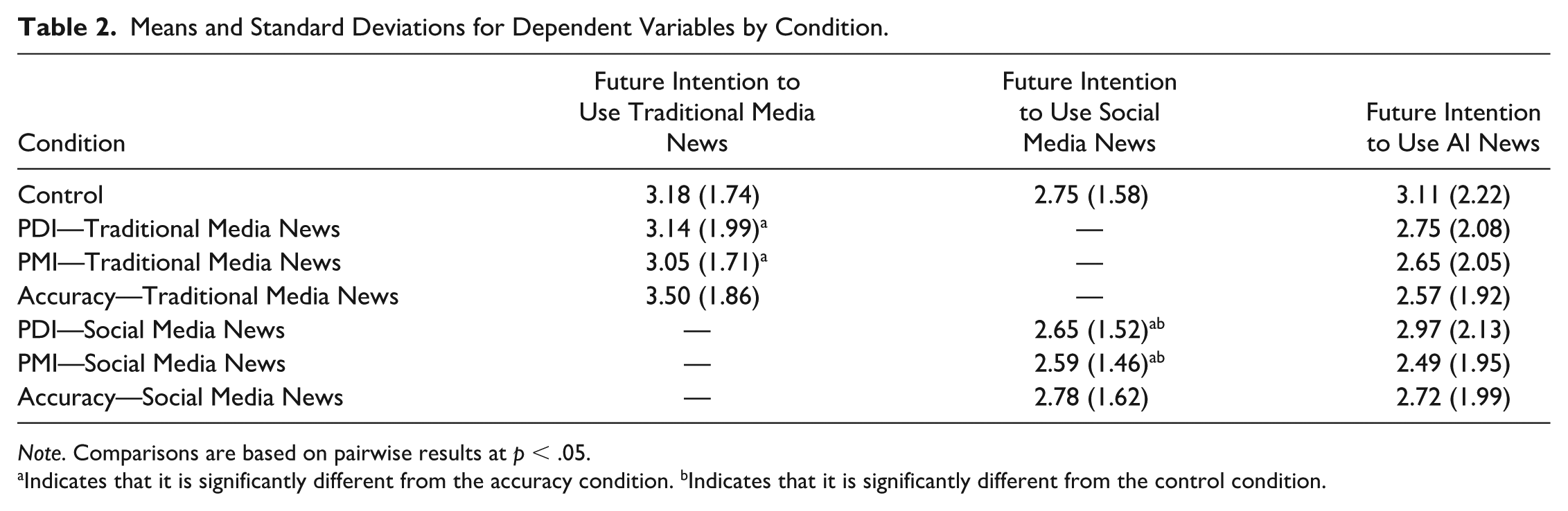
Note. Comparisons are based on pairwise results at p < .05.
Indicates that it is significantly different from the accuracy condition. bIndicates that it is significantly different from the control condition.
For
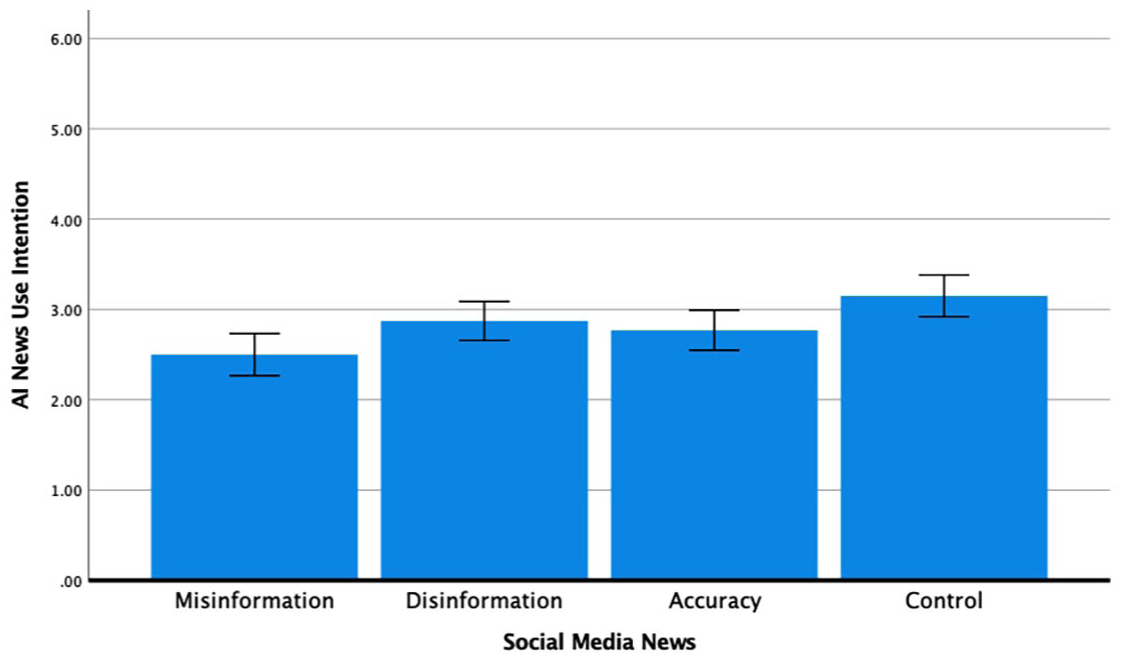
AI News Use Intentions by Experimental Conditions (
Moderating Effects of Political Ideology
Regarding
We then examined
Moderating Effects of Media Trust
Finally, we tested
Summary of Hypothesis and Research Question Testing Results.
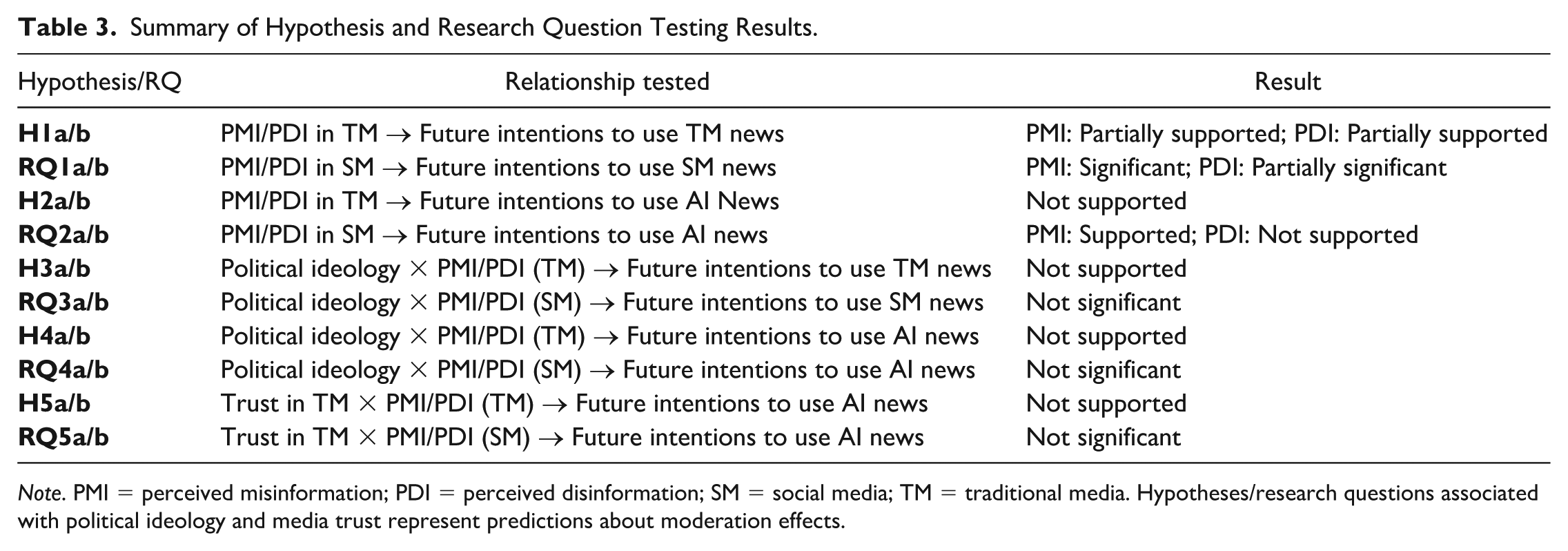
Note. PMI = perceived misinformation; PDI = perceived disinformation; SM = social media; TM = traditional media. Hypotheses/research questions associated with political ideology and media trust represent predictions about moderation effects.
Discussion
This study provides insights into how PMI/PDI plays a significant role in shaping news consumption intentions across various media platforms. As expected, exposure to perceptions of PMI/PDI in traditional media led to a decrease in future intentions to consume traditional media news. This effect was particularly notable when compared to the accuracy condition. In a similar vein, PMI/PDI about social media as a news outlet lowered intentions to consume news from these platforms in the future. This reduction was evident when compared to both accuracy and control conditions, suggesting the negative impact of untruthful information perceptions on social media news consumption.
PMI/PDI in the traditional media also affected the intention to consume AI-generated news but in the negative direction. Notably, these perceptions led to lower consumption intentions compared to the control condition but not compared to the accuracy condition. Finally, the experiment investigated the potential moderating role of political ideology and media trust on the relationship between PMI/PDI and media consumption intentions: We did not observe a significant interaction effect among the suggested variables despite our predictions.
These findings are contrary to theories of selective exposure and motivated reasoning (Hart et al., 2009; Kunda, 1990), which contend that individuals are likely to seek and interpret information that is congruent with their pre-existing beliefs. However, our findings revealed that PMI/PDI causally reduced news use intention regardless of the source. While prior research has found that as PMI/PDI increase, individuals may turn to alternative sources for news (Hameleers, Brosius, & de Vreese, 2022),we found that these perceptions decrease social media and AI news consumption intentions. This reflects contagious cynicism, which originally theorized that cynicism about politicians spilled over to the media, resulting in lower trust (Cappella & Jamieson, 1997). In this case, PMI/PDI in traditional and social media news could make audiences cynical, which may extend to alternative news sources such as social media and AI (see Hopmann et al., 2015). Rather than viewing AI news as an alternative, individuals may perceive all mediated news as potentially compromised, reflecting a general erosion of trust in the news media. Ultimately, this raises questions regarding which sources individuals with higher PMI/PDI may turn to for news.
Political ideology did not moderate the relationship between PMI/PDI and traditional, social media, or AI news use in our experiment. One possible explanation is that specific content or attributes of different news media lead individuals to perceive those sources as biased. For example, our experimental stimuli were strictly controlled between conditions and provided no cues regarding the news source’s partisanship. In a less controlled setting, it is possible that manipulating the news source would introduce a partisan cue, which can function as a cognitive shortcut (Fiske & Taylor, 1991) and lead to different effects among liberals and conservatives. Existing research has shown that partisan cues lead to selective exposure (Stroud, 2010), or news avoidance depending on whether the cue is in-party or out-party (Mukerjee & Yang, 2021). Future work could expand on the role of political ideology, as well as explore the relationship between PMI/PDI and partisan news content over time.
We also did not find a moderating effect of media trust on the relationship between PMI/PDI and news use intentions. One explanation for this could be that media trust develops or erodes over time (see Hanitzsch et al., 2018), and therefore, exposure to a news story at one time is likely not enough to activate differences based on trust (i.e., reinforcing spirals; Slater, 2007). This is further reflected in our findings, as, notably, prior news consumption (measured in the pretest) was identified as a stronger predictor of media behavior than our experimental manipulations. Furthermore, this suggests that existing low levels of news consumption could likely be exacerbated by PMI/PDI. This aligns with past research highlighting a broader trend of disengagement from news consumption. For example, Wojcieszak et al. (2024) found that approximately only 3% of individuals’ browsing histories were dedicated to news websites. These results are concerning, as democracy is dependent on informed citizens. This highlights the necessity for strategic interventions that not only address distrust of news media and PMI/PDI but also foster engagement with a broad spectrum of media outlets to reinforce the foundations of democratic governance.
One way to increase news trust and lower PMI/PDI could be to highlight the accuracy of news in the media. For instance, we found that when individuals in the accuracy conditions reported higher intentions to consume traditional and social media news. This falls in line with prior work that examines the role of accuracy motivations when interpreting and detecting misinformation (Albarracín, 2021; Chan, 2024; Rathje et al., 2023). Another way to increase public trust in the news media could be through transparency cues. Recent work has argued that increased transparency about an outlet’s partisan and ideological leanings may increase trust in a limited way, especially when an outlet does not lean toward one group or side (DuBosar et al., 2025). This further highlights a general distrust of traditional media news and should prompt future action to restore the credibility of traditional media news. In addition, future research should examine how PMI/PDI in AI news may impact future intentions to adopt AI news as an information source, consistent with accuracy-based motivations for selective exposure (Hart et al., 2009).
Our findings also have real-world implications for news organizations and policy makers, who are struggling to restore public trust in news. First, our findings demonstrate that increasing perceptions that the media is spreading mis- and disinformation make individuals hesitant to consume news from traditional media, social media, and AI. Researchers have long argued that the media’s role is to inform citizens in an ideal deliberative democracy (Strömbäck, 2005). However, PMI and PDI could significantly weaken the ability of the media to inform citizens. Furthermore, while skepticism of social media news has been well documented, our results indicate that PMI and PDI also suppress intentions to consume news through AI. This suggests that increasing efforts by newsrooms to integrate AI in their production may be met with resistance among the public. For example, recent work suggests that while AI disclosures by news outlets spark curiosity, they also result in lower trust and credibility (Toff & Simon, 2024). Therefore, interventions aimed at rebuilding media trust should not only address PMI/PDI but also take into account how newer technologies such as AI are perceived by individuals.
Limitations and Future Directions
One limitation of this study is the reliance on an experimental design to manipulate PMI and PDI in traditional and social media news. While this approach allowed for causal inferences, the observed effect size was small. This may be because trust in media channels develops over time rather than from a single exposure (Slater, 2007); an experimental stimulus may therefore only have a limited effect. Therefore, future studies may consider employing longitudinal designs using digital trace data to track changes in trust and capture news media use patterns. Another limitation of our study is that we rely on self-reported measures of media use, which are often underreported or exaggerated in some instances (Prior, 2009). In addition, while we distinguish between traditional and social media news use at a broad level, we do not account for the online presence of news outlets (e.g., following a TV or newspaper’s account on social media) or differentiate between curated versus incidental exposure to news on social media. Future research could benefit from measuring platform-specific news use more precisely. Combining survey data with novel techniques, such as tracking web browsing data, could also provide a deeper understanding of individuals’ actual media diets and help capture incidental exposure more accurately (Wojcieszak et al., 2024). Moreover, while our study operationalized and conceptualized AI news use, more work is needed in this area. Future research could benefit from a more in-depth conceptualization and operationalization of what AI news use encompasses. For instance, is it AI-curated or completely AI-generated news? Our experiment was also highly controlled to isolate the effects of PMI/PDI and to avoid any confounds. However, as with most tightly controlled experiments, this may have resulted in a tradeoff between internal and external validity.
Through an experiment of U.S. adults, we find that PMI/PDI generally reduces news media consumption. While our study focused on the potential for AI news as an alternative source that people may gravitate toward, our experiment demonstrated that PMI/PDI in traditional and social media reduces individuals’ intentions to use AI news as well.
Footnotes
Data Availability Statement
The data for this study will be made available upon reasonable request.
Declaration of Conflicting Interests
The author(s) declared no potential conflicts of interest with respect to the research, authorship, and/or publication of this article.
Funding
The author(s) received no financial support for the research, authorship, and/or publication of this article.
ORCID iDs

Supplemental Material
Supplemental material for this article is available online.
Notes
Author Biographies
References
Supplementary Material
Please find the following supplemental material available below.
For Open Access articles published under a Creative Commons License, all supplemental material carries the same license as the article it is associated with.
For non-Open Access articles published, all supplemental material carries a non-exclusive license, and permission requests for re-use of supplemental material or any part of supplemental material shall be sent directly to the copyright owner as specified in the copyright notice associated with the article.
