




Abstract
This paper analyzes whether articulated populist dichotomies or fractured populist styles attract more user engagement on social media focusing on the 2023 Turkish presidential and parliamentary elections via Twitter, considering the tweets of individual candidates and parties (n = 4,139). Negative binomial regressions revealed that the explicit populist style, which articulates “the people” and “the harmful others” in the same message unit, predicts user engagement. The study shows that explicit populism triggers more favorites, retweets, and replies than any other populist style. Although implicit people-centrism has positive associations with retweets and replies, implicit antagonism has no effect on user engagement data.
Keywords
Populism has been a hot topic in the social sciences, especially since the Brexit referendum and Donald Trump’s victory in the 2016 U.S. presidential elections (Eatwell & Goodwin, 2018). Scholars argue that populism can be variously a logic that unites unsatisfied demands (Laclau, 2005), a thin-centered ideology that juxtaposes the so-called corrupt elite with the good people (Mudde, 2004), a discourse that challenges the status quo (Aslanidis, 2016; Panizza, 2005), a strategy by which parties or political movements can be developed (de Nadal, 2020; Weyland, 2001), a performative style that creates distance from the elite (Moffitt & Tormey, 2014), citizens’ attitudes that reject plurality and endorse the general will (Akkerman et al., 2014; Castanho Silva et al., 2020), the fuel of social movements (Aslanidis, 2017), and a political communication style that includes people-centrism, anti-elitism, and exclusionary features (Jagers & Walgrave, 2007; Rooduijn et al., 2024).
As early as 1998, scholars already argued that the internet would structure political power in a one-on-one populist direction by decentralizing communication (Bimber, 1998). As a result, political agents can reach citizens directly in contrast to mainstream politics, which keeps a distance from the people (Bimber, 1998). Moreover, scholars have also claimed that the internet helps people access political information more easily; therefore, citizens’ engagement in politics can increase (Bimber, 1998). Extensive research has explored the way that social media helps populists create the feeling of their being directly in touch with the people without the mainstream media’s mediation, and citizens are engaged with the populist communication phenomenon via different user reactions (Bene et al., 2022; Jost et al., 2020; Klinger et al., 2023; Schmuck & Hameleers, 2020). Given the network characteristics of social media, populists can address public grievances directly and citizens respond to these appeals via user reactions (Kriesi, 2014; Tønnesen et al., 2023). Scholarly evidence suggests that posts can be more popular on these platforms if they include populist features (Blassnig et al., 2019). Even though these analytical perspectives and observations are fruitful, there is still room to develop the populist political communication style (PPCS) research approach that scrutinizes user engagement on social media platforms. Specifically, we have little knowledge on whether or how (a) fractured 1 or (b) explicit populist communication styles affect user engagement. Fractured populist styles either consist of people-centrism or antagonism, while the explicit version articulates both the people and the harmful others in one specific message unit (Engesser et al., 2017; Tóth et al., 2024).
Analyzing the connections between political communication styles and user engagement is pivotal because politicians and parties can indirectly reach more users as they trigger more engagement with their posts, creating a rich-get-richer scenario (Bene, 2017). In other words, politicians can capture citizens’ attention for their campaigns by increasing user engagement (Jost et al., 2020). Attracting user engagement is an important segment of political communication strategies because user reaction is an essential feature for algorithms to amplify message circulation (Tønnesen et al., 2023). In addition, higher user engagement and greater visibility can lead to extensive media coverage for political agents (Boulianne & Larsson, 2023), which in turn boosts the number of followers and user reactions (Keller & Kleinen-von Königslöw, 2018). Although various factors can trigger user engagement on social media, scholars argue that the content of the message is a key element for eliciting user feedback (Bene et al., 2022). Against this backdrop, we focus mainly on the possible connections between the different populist styles and user engagement. Our aim was to study the extent to which messages that openly use the us versus them dichotomy attract user reactions differently to those that include one single feature of populist communication, namely people-centrism or harmful minorities. To fill this gap, we scrutinized the PPCSs during the 2023 Turkish election campaign on Twitter. 2 In this study, we focus on the 2023 Turkish presidential and general elections because the prevailing political communication of the ruling elites in Turkey has been shaped by PPCS for over two decades (Balta et al., 2022). We scrutinize the campaign period because users are more engaged with political messages during electoral campaigns than in routine periods (Peeters et al., 2023).
We have three goals in this study. First, we analyze the ratios of populist styles relying on a recent style categorization within the field: implicit populist antagonist (IPA), implicit populist people-centrist (IPP), and explicit populist (EP). Second, we aim to contribute to another rarely analyzed segment of the field by assessing what campaign topics were associated significantly with populist styles during the 2023 elections (Bene et al., 2023). Finally, we have striven to discern whether we are able to predict the volume of retweets, favorites, and comments for the various populist styles. In a nutshell, this paper deals with both the supply and demand sides of Turkish populism via Twitter during the 2023 elections campaign. Our methods include manual quantitative content analysis, chi-square tests, and negative binomial regressions.
Our results show that IPP is the most frequently used style among Turkish political agents. Furthermore, we found that terrorism has moderately strong connections with the opposition’s IPA and EP styles. Finally, our analysis revealed that EP—characterized by articulated dichotomies between the people and the corrupt elite—consistently showed significant positive associations with favorites, retweets, and replies on Twitter, underscoring its extensive influence on user engagement.
Our study is valuable for at least three reasons. First, it provides a novel focus on the effects of explicit and implicit PPCSs on user engagement. Second, it explores the effectiveness of explicit populism in triggering user engagement with empirical evidence. Finally, this research shares nuanced contextual insights into Turkish populism; a scarcely analyzed segment of the field.
The PPCS and its Explicit and Implicit Versions
Many communication researchers have observed that PPCS surges for live speeches, manifestos, news, debates, and social media posts (Aslanidis, 2018; Bucy et al., 2020; Farkas et al., 2022; Jagers & Walgrave, 2007; Ragragio, 2022). The main features of PPCS are (a) glorifying the will of the people, (b) criticizing the elite, and (c) emphasizing the exclusion of certain out-groups purportedly to protect the majority (Jagers & Walgrave, 2007). These characteristics are incontestably used by many politicians in the realm of social media platforms (Ernst et al., 2019). Moreover, scholars suggest that the populist style frequently consists of fragmented communication methods in which political agents can disregard one aspect of the phenomenon (for instance, anti-elitism) while emphasizing another, such as people-centrism (Engesser et al., 2017; Ernst et al., 2017). Consequently, depending on the ideological positions and communication tactics of the political agents, the ratios of these stylistic features can vary (Ernst et al., 2017). For example, extensive analyses found that anti-elitism was a more prominent stylistic feature of populism on social media than people-centrism when emerging populist styles were examined in the communications of Austrian, Dutch, Swiss, German, British, French, and American political agents (Ernst et al., 2017; Schmuck & Hameleers, 2020). Similarly, another extensive study revealed that anti-elitist styles dominated the agenda on Facebook for the 2019 European Parliament Elections, followed by people-centrism and combinations of the two elements (Bene et al., 2023). In turn, in a comparative study, scholars also explored the way that the elements of the populist style, first and foremost people-centrism, appear not only in the social media communication of populist parties but also in that of social democratic and conservative parties (Engesser et al., 2017). Finally, extant research also found that oppositional parties use populist features more in their social media communication than governments (Ernst et al., 2017).
EP and implicit populism (IP) are recent concepts that support content analysis dealing with textual materials, such as live speeches, debates, written social media posts, transcripts, and manifestos (Tóth, 2020). Scholars have developed EP and IP to analyze the PPCS of political agents by making distinctions between fragmented styles and articulated dichotomies. Researchers argue that many political agents have at least three ideas in mind when they use fractured populist styles. First, they try to keep their communication plain to get closer to the political views of ordinary citizens (Bene et al., 2022). Second, political agents aim to cut across ideological differences between citizens as either stylistic feature can touch those who feel left behind, regardless of their ideological positions. Third, politicians and parties try to avoid being labeled as populist, which has a rather negative public connotation (Engesser et al., 2017). However, researchers also suggest that those message units that include both people-centrism and antagonism could be part of diverging communication strategies and possibly influence the masses differently to message units containing only one of the above stylistic features (Tóth et al., 2024). To examine the latter presumption and to advance the current literature, we provide a more nuanced analysis by splitting IP into two distinct categories, namely IPP and IPA, while EP is retained as former studies have used it. Finally, and similarly to former research (Tóth, 2020), we also include the non-populist style (NP) in our analysis to label coding units where none of the populist features were perceived.
Without people-centrism, populism is unimaginable (Jagers & Walgrave, 2007; Mudde, 2017). The category of the people is the reference group, thus every agent, including the corrupt elite or any other minority perceived as a threat, can be interpreted in contrast to the masses. Therefore, references to the people are pivotal elements in content analysis that scrutinizes the populist style (Jagers & Walgrave, 2007). On the one hand, IPP implies the above argument; on the other hand, it adds a more nuanced interpretation of the PPCS than the analytical approaches. IPP appears when references to the people or the general will are perceived in the communication. In addition, IPP messages imply that the masses face some serious threat; however, the source of the threat is not articulated. Previous research has highlighted relevant instances demonstrating features of IPP, such as one of Donald Trump’s tweets from January 3, 2017 (Tóth, 2021b, p. 41): “Instead of driving jobs and wealth away, AMERICA will become the world’s great magnet for INNOVATION & JOB CREATION.” The above tweet contains a reference to the people (i.e., “America”) and introduces the problem (i.e., disappearing jobs pave the way for deprivation), but the source of the threat remains unknown. In other words, Donald Trump’s communication draws attention to a threat that keeps the people in an underdog status, which is an essential condition of populism (De Cleen & Stavrakakis, 2017), but the harmful others are not named. Still, the above message suggests that unknown entities are responsible for people’s decline (Martelli & Jaffrelot, 2023).
IPA is apparent when anti-elitism or other exclusionary features appear in political agents’ communication that revolve around moral issues that threaten the general will, but when the people are not articulated in the message. Morality is important for two reasons in this case. First, in populism, the distinction between the people and the harmful others is always based on Manichean dichotomic thinking: the former group is always glorified while the latter is corrupt and dangerous. Second, moral distinctions help researchers create more accurate and precise coding instructions: lying to the people, misleading the masses intentionally, disregarding the general will, risking the welfare, culture and security of the citizenry, or keeping them in a state of deprivation are essential for populists in defining corruption. However, lacking experience in politics/leadership, having questionable stamina, or being too old or young to fulfill the people’s demands do not connect to morality. Therefore, these stylistic elements are not parts of IPA. The following tweet from Donald Trump, posted on February 16, 2017, demonstrates the characteristics of IPA (Tóth, 2021a, p. 185): “FAKE NEWS media, which makes up stories and ‘sources,’ is far more effective than the discredited Democrats—but they are fading fast!” The above tweet articulates the culprits and introduces their harmful activities, but it lacks any references to the people. The message has at least two important suggestions, namely that the media lies about Donald Trump, and more importantly, it lies to the people. Therefore, the people, misled by the media, are included in this communication in a hidden way. This is why scholars consider similar messages implicit antagonist ones. Theoretically, IPA is close to the following scholarly argument:
. . . we do not believe that populists . . . are always opposed to the elite. . . and it may be the case that the primary antagonism of the people may be other groups in society (for example, asylum seekers or immigrant workers, as in the case of Geert Wilders’ welfare chauvinism, or Pauline Hanson’s targeting of Asian immigrants), or even institutions. (Moffitt & Tormey, 2014, p. 391)
If the communicator blames (a) only the elite or (b) ostracizes only other minorities, or (c) uses both stylistic features in the same massage unit, IPA kicks in.
Researchers argue that EP relies on articulated dichotomies (Tóth, 2021b). Conceptually, EP is a safer way to emphasize the distinction between the decent citizens and culprits rather than the implicit styles, in which citizens’ perceptions of people-centrism or antagonism can be touched via concealed suggestions. Thus, we interpret EP as a style that aims to maximize user engagement by avoiding suggested tensions between the masses and the harmful others. One might argue that this concept is very close to Jagers and Walgrave’s (2007) thick populism. They argue that if “. . .political actors talk about the people and combine this with an explicit anti-establishment position and with an exclusion of certain population categories, one can speak of thick populism” (p. 4). However, EP does not sufficiently require that all three features of the populist style (people-centrism, anti-elitism, and exclusionary style) have to emerge in the same analysis unit. In turn, only one articulated us versus them dichotomy is sufficient to label a message as EP. For example, the following populist, left-wing Irish Sinn Féin’s Facebook post, created on September 6, 2022, fits this category: “Energy bills are sky-rocketing and families across the country are worried sick about paying their bills, yet the government is failing to act. People can’t wait; they need help and they need it now.” In the above message, there is one articulated dichotomy, namely that the struggling people are contrasted with the failing government. It is important to mention that if two or more antagonist minorities are explicitly contrasted with the people, then that type of communication still falls under EP.
The concepts of explicit and implicit PPCSs have brought new opportunities for researchers. For instance, they can use them to categorize political agents’ content by taking into consideration fractured styles and articulated dichotomies. Since researchers argue that “it is still unclear what elements of populist communication can increase what engagement type” (Bene et al., 2022, p. 437), the explicit and implicit categorizations can help scholars to analyze the possible effects of the concealed populist blame game or the impact of the articulated dichotomies. Finally, while IPP and IPA require a more open mindset to adjust coding schemes to different political situations to avoid overlooking populist appeals (Bene et al., 2023), EP remains the more focused analytical perspective.
Although researchers have tested the explicit and implicit styles descriptively and methodologically, there is no scholarly experience of their possible effects on user engagement or associations with the election topics used by political agents. However, we now have some findings attached to the explicit and implicit styles. Tóth (2020) tested EP and IP in Hungary by comparing the communications of the Hungarian Prime Minister Viktor Orbán and Fidesz, and revealed that they use EP more than IP in their campaigns. Similarly, in another study, researchers conducted extended research scrutinizing Viktor Orbán’s speeches and concluded that he consistently exhibited the latent form of populism, IP, with its presence never dropping below 50% in the different coding units (Tóth et al., 2024).
User Engagement and Populist Styles
Analyzing user engagement has been a hot topic in sciences. There are a number of reasons why users tend to engage with political content on social media via likes, favorites, shares, and other feedback types. For instance, user engagement with political content can be related to the expression of social identity, reinforcing users’ ties to peers who have similar beliefs, acquiring social approval by being aligned with popular political opinions, helping others to stay informed, following the actions of a larger group to conform to perceived social norms, and demonstrating emotions (Hong & Kim, 2016; Lee & Ma, 2012; Litt, 2012; Muchnik et al., 2013).
Many scholars argue that PPCS can trigger user engagement on social media (Bobba, 2019; Bobba & Roncarolo, 2018; Boulianne et al., 2020; Engesser et al., 2017; Ernst et al., 2017; Jost et al., 2020; Judge, 2024; Sinha, 2018). Furthermore, scholars found that political parties across Europe used populist content over time because these features significantly boosted user engagement on social media (Klinger et al., 2023). In addition, Bene et al. (2022) argue that populist communication styles trigger user engagement: the anti-elitist and people-centrist styles elicit reactions and shares on Facebook significantly. Therefore, one can logically assume that the combination of those elements can trigger more user engagement.
Against this backdrop, we outline our hypothesis:
Since scholars argue that it is still unclear which element of the fractured populist styles can elicit user reaction more, we pose the following research question:
Populist Communication Styles and Campaign Topics
Although many researchers have conducted content analysis to understand the nature of the populist styles in detail, only a small segment of the field deals with the possible interconnections between the PPCS and campaign topics. Bene et al. (2023), however, provided a fruitful contribution in which they analyzed the national parties’ campaign communication during the 2019 EP election and measured to the extent to which the features of the populist communication connect to four topics. Their findings outlined the way in which anti-elitism is associated with Immigration and the Economy, people-centrism is attached to social policy issues, and posts that include both people-centrism and anti-elitism are associated with the Economy and Immigration. In this study, we employ 18 campaign topics (see footnote 5) to provide a more nuanced contribution to this segment of the literature.
Turkish Populism
To understand Turkish populism, one needs to pinpoint the primary societal divisions because populists often exploit and intensify such cleavages (Aytaç & Elçi, 2019). According to the work by Mardin (1973), Turkish politics revolves around the distinction between the ruling center (comprising bureaucracy, military, and intellectuals) and the periphery, historically traditionalist groups (religious, lower-class people who struggle with modernization) who are sidelined from power (Demiryol, 2020). Referring to Mardin’s center-periphery discussion, Demiryol (2020) explains that peripheral parties view politics as a stand-off between the conservative majority and the Western-inclined secular elites, which are perceived as being out of touch with the values of the broader public, and who impose their foreign lifestyles. In contrast, conservative parties champion nationalism, nativism, and Islamism, diverging from the Republican elites’ Western-centered nation-building approach (Aytaç & Elçi, 2019). For instance, according to the ruling elite’s populist narrative, the Cumhuriyet Halk Partisi (CHP) aligns with the Western-oriented elites, while Erdoğan’s Adalet ve Kalkınma Partisi (AKP) resonates with the conservative majority (Sandal, 2021).
The majority of academic work on Turkish populism leans on qualitative methodologies. In a theoretical study, Türk (2018) analyzes Erdoğan’s populist leadership based on three critical years during his rule: 2007, when Erdoğan and the AKP were challenged by the political establishment regarding the election of a new president; 2013, when the Gezi protests spread nationwide; and 2016, when a failed coup attempt challenged Erdoğan. Erdoğan secured his incumbency until 2028 by winning the 2023 presidential elections. Türk (2018) concludes that Erdoğan’s leadership approach can be seen as a blend of Weber’s concept of charismatic leadership and an inclination toward authoritarian populism. Furthermore, he elaborates on the way Erdoğan’s populism often avoids detailed ideologies and specific plans, drawing inspiration from established or authoritative symbols. These key features lead to Erdoğanism, which can be described as a blend of majoritarian politics that merge elements of competitive authoritarianism (Levitsky & Way, 2010), emphasizing the leader’s personal attributes and reducing democracy primarily to voting processes.
Researchers consider religion to be a crucial tool in Turkish populism and present the way in which populists maintain their power via sacramental politics built on (a) a moral mission directed by President Erdoğan, (b) the sanctification of the Turkish nation, and (c) political theatrics where myths and symbols generate “fanatics with pragmatism” (Yabanci, 2020, p. 110). Similarly, Kaptan (2020) reveals the way in which people-centrism was reinvented based on the ethos of political Islam and embedded into the political discourse by media outlets that support AKP. According to the work by Kaptan (2020), the pro-government newspaper Yeni Şafak played an important role in reducing democracy, redefining the citizens in a passive position rather than as active subjects, and reinforcing President Erdoğan as the strong leader who represents the real people as opposed to the elites, intellectuals, secular people, the left-wing, and center parties. Other scholars, such as Akcay (2018), argue that Erdoğan’s Turkey was built on neoliberal populism, which changed the power struggle and created an intra-elite conflict rather than a class conflict. However, Kaliber & Kaliber (2019) point out that de-Europeanization and anti-Western populism in Turkey have been key elements in creating the harmful others.
Although the contributions of the abovementioned works are illuminating, we argue that quantitative analyses are necessary in the study of Turkish populist styles. Although there are seminal contributions that have adopted quantitative approaches in dissecting populist tendencies in Turkey, the stylistic dimensions of populism have mostly remained an unexplored domain. One of the exceptions is Elçi’s (2019) study focusing on the populist style of parliamentary group speeches between 2011 and 2019. Elçi (2019) suggests that in terms of style, the least populist leader is Kılıçdaroğlu of the CHP, whereas the most populist leader is President Erdoğan. While Erdoğan exploits anti-elitism, the Manichean outlook, and people-centrism, the far-right MHP (Milliyetçi Hareket Partisi aka Nationalist Movement Party) leader, Bahçeli, leans heavily on ethnonationalism. The other study that analyzed the populist discourse in Turkey focused on the AKP’s campaign communications in 2015, 2017, and 2018 and found that its populist discourse relied on fear, love, and fidelity (Erçetin & Erdoğan, 2023). Moreover, Erçetin and Erdoğan (2023) also revealed that in 2015 and 2018, the AKP mixed the topics of terrorism with victimization of the people, which aligns with the populist logic. Finally, the socialist, pro-Kurdish Peoples’ Democratic Party (Halkların Demokratik Partisi), aka HDP (which entered the 2023 elections under the Yeşil Sol Parti’s aka Green Left Party’s banner, which we refer to below as “YSP”), significantly uses anti-elitism, emphasizing a united rally against the AKP-MHP government. Against this backdrop, we propose our second research question that deals with the supply side of populism:
Issues with strong populist ties, such as immigration, corruption, crime, economic disparities, and so on, should encourage the use of populist communication. These topics are, therefore, expected to be highlighted in the analyzed campaign, particularly on social media (Ernst et al., 2019). Consequently, our last research question is the following:
Method
We analyze Twitter in this study because Twitter plays an essential role in Turkey’s political landscape, especially since the Gezi protests (Bulut & Yörük, 2017). At that time, Twitter was the platform on which tapes revealing corruption, demands for media censorship, and email leaks from Turkey’s leading media conglomerate were disclosed. Moreover, Twitter has been targeted by President Erdoğan as “the worst menace to society” (Letsch, 2013, para. 4). Last but not least, the social media platform reached its peak during the 2023 election period, with a 29.68% market share (Social Media Stats Turkey, 2023). Finally, there is little bidirectional engagement between political parties and the general population on Facebook in Turkey (Sobaci & Hatipoğlu, 2017), while Twitter performs better in terms of generating political participation (Bossetta et al., 2017).
We collected tweets (n = 4,202) from the two major presidential candidates: Recep Tayyip Erdoğan (@RTErdoğan) and Kemal Kılıçdaroğlu (@kilicdarogluk), and the five major parties that entered parliament by exceeding the 7% threshold limit (Table 1). We analyzed tweets but disregarded retweets, quotes, and @mentions because we assume that the tweets were the content provided by the scrutinized agents, while the rest of the messages were produced by other users. Since the Supreme Election Council in Turkey designated March 18, 2023 as the official beginning of the election process, our data collection process began on that day and continued until May 28, 2023, which was the last day of the general election process.
Number of Tweets in the Dataset and Account Details.

It is noteworthy that the Turkish parliament now hosts 15 political parties, a change attributed to Turkey’s 2021 political amendment law. This law permits political parties to form electoral alliances, enabling them to contest elections collaboratively. As a result, smaller parties that might struggle to cross the 7% entry threshold can align with larger parties, directing their votes to the latter in return for parliamentary seats. In our study, we aimed to assess whether the main independent variables, namely EP, IPP, IPA, and NP (which was the reference category in the regression), predict user engagement among the primary figures in Turkish politics. Thus, we excluded parties and presidential candidates with marginal vote counts.
After collecting the tweets using Apify, we excluded those that were not written in Turkish because the official language of the election campaign was Turkish. In addition, we focused strictly on textual content, disregarding any visuals or videos. We focused on textual elements, including hashtags, because past research has indicated that textual messages trigger the most reactions in the realm of viral politics (Bene, 2017). Following the data cleaning process, we conducted an analysis on a reduced dataset consisting of 4,139 entries. The distribution of the tweets and followers for each candidate and party can be seen in Table 1. 3
We chose manual quantitative content analysis because former studies have developed a nuanced theoretical background that helps researchers develop meticulous coding procedures through which implicit and EP styles can be perceived (Engesser et al., 2017; Tóth, 2020, 2021b; Tóth et al., 2024). Moreover, researchers argue that hidden tensions within the populist styles cannot be captured via computer-assisted content analysis methods because software (including artificial intelligence–driven methods) has not been developed and trained to the point at which implicit tensions are perceived with acceptable reliability and high validity (Gründl, 2020; Tóth et al., 2024). After cleaning the database, tweets were subjected to coding by two native Turkish coders, trained in accordance with the analytical framework used in the literature (Tóth, 2020). Two different intercoder reliability tests were then conducted. The first pilot test was run on 100 randomly selected tweets, whereas the second one was run on a set of 400 tweets selected through random sampling. The latter accounts for approximately 10% of our data (Neuendorf, 2017). This coding aimed to identify EP, IPP-centrism, IPA, and NP styles. The coding procedure exclusively targeted the overt populist expressions present in the tweets, disregarding blurry contexts. To illustrate this logic, pronouns such as we or they were omitted from coding because determining the precise individual(s) they referred to could be challenging due to potential ambiguity. We chose tweets as coding units. Our decision relies on the presumption that tweets are usually more extensive coding units than single sentences, and as a consequence, tweets mitigate thematic discontinuities (Rooduijn & Pauwels, 2011).
To further elaborate on the coding process, EP emerges when a person explicitly articulates both the people and their enemy within a single coding unit, underscoring the harm caused by the latter to the general will (Mudde, 2004). However, IP revolves around either the concept of popular sovereignty or the peril posed by the dangerous entities in relation to the general will (Hameleers, 2018). If a tweet only includes people-centrism, it is coded as IPP, whereas if it only includes an antagonistic/hostile style to the dangerous entities, it is coded as IPA. 4 Furthermore, if a coding unit does not include any of these styles, it is coded as NP. Last but not least, each unit is coded based on the topic(s) the tweet addressed (e.g., the economy, terrorism, housing, ethnic minorities, public appearance, and so on). Both intercoder reliability tests show a significant overlap between the two coders, resulting in high reliability in our manual quantitative content analysis. Specifically, the test coding was conducted on 100 coding units, attracting 0.79 Krippendorff’s alpha, while the extended coding was conducted on 400 coding units, resulting in 0.97 Krippendorff’s alpha. Thus, we could proceed to the coding of the remaining data. The reliability scores for all variables can be found in Table 2.
Intercoder Reliability Test Results Including the Populist Styles and Election Topics.

Not Applicable (100% agreement).
Since the distribution of the dependent variables (favorites, retweets, and replies) was not normal, we used non-parametric tests. In addition, we conducted multiple chi-square tests to find significant associations between the populist styles and the campaign topics. For this part of the analysis, we used the R Version 4.2.3 and the VCD package (Zeileis et al., 2007). We coded 18 topics when a tweet referred to at least one of them. 5 During the training sessions, we cautioned the coders that a single tweet could include more than one topic.
Finally, we conducted negative binominal regressions using SPSS to analyze the possible relationships between populist styles and user engagement data. We operationalized user engagement through three ratio-level dependent variables that can take only positive integers but has no upper bound: favorites, retweets, and replies. Our independent variables are nominal, representing different populist styles. Control variables include the number of followers at the beginning of the election process, the ideology of the agent (mainstream right-wing, far-right, conservative, socialist/pro-Kurdish, and social democrat) date, and the total number of posts. The distribution and descriptive statistics of these variables are presented below. 6
Results
Negative Binominal Regression Analysis of Populist Styles and User Engagement
Table 5 summarizes the paper’s most important findings. To analyze whether EP has the most powerful impact on user engagement, we created three different models based on each dependent variable: favorites, retweets, and replies. The following part presents the results of each analysis. Exp(B) is presented in Table 3. Exp(B) represents the multiplicative change in the expected count of the dependent variable for a one-unit change in the predictor variable. In the context of this analysis, if Exp(B) for EP is, say, 1.33, this would mean that tweets with EP elements would be expected to receive 1.33 times as many favorites compared to tweets without such elements, assuming all other factors are equal. However, if the Exp(B) value is below 1, it implies that the presence of such elements diminishes the chance of observing that particular outcome. The goodness-of-fit results can be found in Table 4).
Negative Binomial Regression: Populist Styles and User Engagement.

p ≤ .05; **p < .01; ***p < .001.
Goodness-of-Fit Negative Binomial Regression.

Results Summary.

Descriptive Statistics of Engagement Metrics.

Descriptive Statistics of Populist Styles by Engagement Metrics.

Favorites Model
The examination of the Favorites Model reveals that EP was positively correlated with user engagement, evidenced by a significant increase in favorites, Exp(B) = 1.33, p < .001. In contrast, IPA had a marginal, non-significant negative association with favorites, Exp(B) = .92, p = .063, and IPP showed no significant impact, Exp(B) = .99, p = .96.
Regarding the control variables, ideological affiliations also significantly influenced favorites; notably, posts from social-democrat accounts attracted considerably more favorites, Exp(B) = 24.35, p < .001, in comparison to other ideologies. The posts from conservatives were significant with Exp(B) = 2.81, p < .001, indicating a heightened engagement compared to the reference category (socialist/pro-Kurdish). The posts from far-right accounts also showed significant engagement levels, with Exp(B) = 1.82, p < .001. Posts from the mainstream right-wing also exhibited significant engagement, with Exp(B) = 5.42, p < .001. However, despite their significance, none of these ideologies matched the substantial engagement observed with social democrats. Finally, the date and the number of followers at the beginning of the elections were significant but had negligible effect sizes, Exp(B) = 1, p < .001, underscoring the pivotal role of ideological leanings and populist styles in user engagement variations on Twitter.
Retweets Model
When it comes to the interaction between retweets and populist styles, the results in Table 3 show that EP once again emerged as a significant predictor of user engagement, revealing a substantial increase in retweets, Exp(B) = 1.56, p < .001. However, IPA did not exhibit a significant relationship with retweets, albeit showing a marginal positive association, Exp(B) = 1.08, p = .081. However, IPP demonstrated a significant positive impact on retweets, Exp(B) = 1.13, p = .002, but this effect was smaller than EPs on retweets.
Similar to the previous findings, posts originating from social-democrat accounts garnered significantly more retweets, Exp(B) = 29.43, p < .001, compared to their ideological counterparts. Although the control variables—date and the number of followers at the beginning of the elections—were statistically significant, their effect sizes were negligible, Exp(B) = 1, p < .001 for both, emphasizing the preeminent influence of ideological leanings and populist messaging styles in shaping retweet variations on Twitter.
Replies Model
Building on the insights from the Favorites and Retweets Models, the analysis was extended to the Replies Model to further understand the nuances of user engagement in terms of replies received on Twitter. Similarly to the previous models, EP was identified as a substantial driver of user engagement, significantly elevating the number of replies, Exp(B) = 2.05, p < .001. It is noteworthy that EP had the most powerful effect on replies when compared to favorites and retweets. Conversely, IPA maintained its trend of negligible and non-significant influence on user engagement, with Exp(B) = 1.01, p = .891 in this model. However, a deviation was observed in the case of IPP, which, unlike the Favorites but similarly to the Retweets Model, demonstrated a significant positive correlation with replies, Exp(B) = 1.11, p = .009.
Further extending the control variables, posts from social-democrat accounts continued to receive the highest engagement, securing Exp(B) = 52.15, p < .001 in the Replies Model. Other ideologies, such as conservative/right-wing, far-right/nationalist, and mainstream right-wing, while significant, did not achieve comparable engagement levels, with Exp(B) values of 7.96, 3.42, and 24.33, respectively, all with p < .001, echoing the patterns seen in the Favorites and Retweets Models. To end, reaffirming the findings from the earlier models, the date and the number of followers at the beginning of the elections, while statistically significant, had a small impact, Exp(B) = 1, p < .001 for both, on the number of replies. This continuous pattern emphasizes the principal influence of populist styles and ideological alignments over other factors in shaping the landscape of user engagement on Twitter, spanning favorites, retweets, and replies.
Since EP triggers user engagement data positively and significantly and attracts user engagement more than other implicit styles, H1 is fully supported. Considering RQ1, IPP positively and significantly triggers replies and retweets, while neither IPA nor NP attracts any user engagement on Twitter.
The Ratios of Populist Styles Among the Turkish Political Agents
We answer RQ2 in this subsection. Figure 1 illustrates the distinctive populist styles employed by the various political parties and candidates. The social democrat CHP predominantly employs the EP style at 8.99%, IPP at 15.12%, and the IPA style at 23.20% of their tweets. Conversely, the conservative AKP mirrors the EP style of CHP at 7.95% but relies more on implicit people-centrism than antagonism. The far-right MHP and the center right-wing İYİ party distinctly favor the IPP style over other populist styles, emphasizing people-centric narratives. Remarkably, over half of MHP’s tweets manifest a populist style, contrasting sharply with the socialist/pro-Kurdish YSP, which predominantly refrains from populist styles but leans toward the IPA style in 17.51% of their tweets when they do.
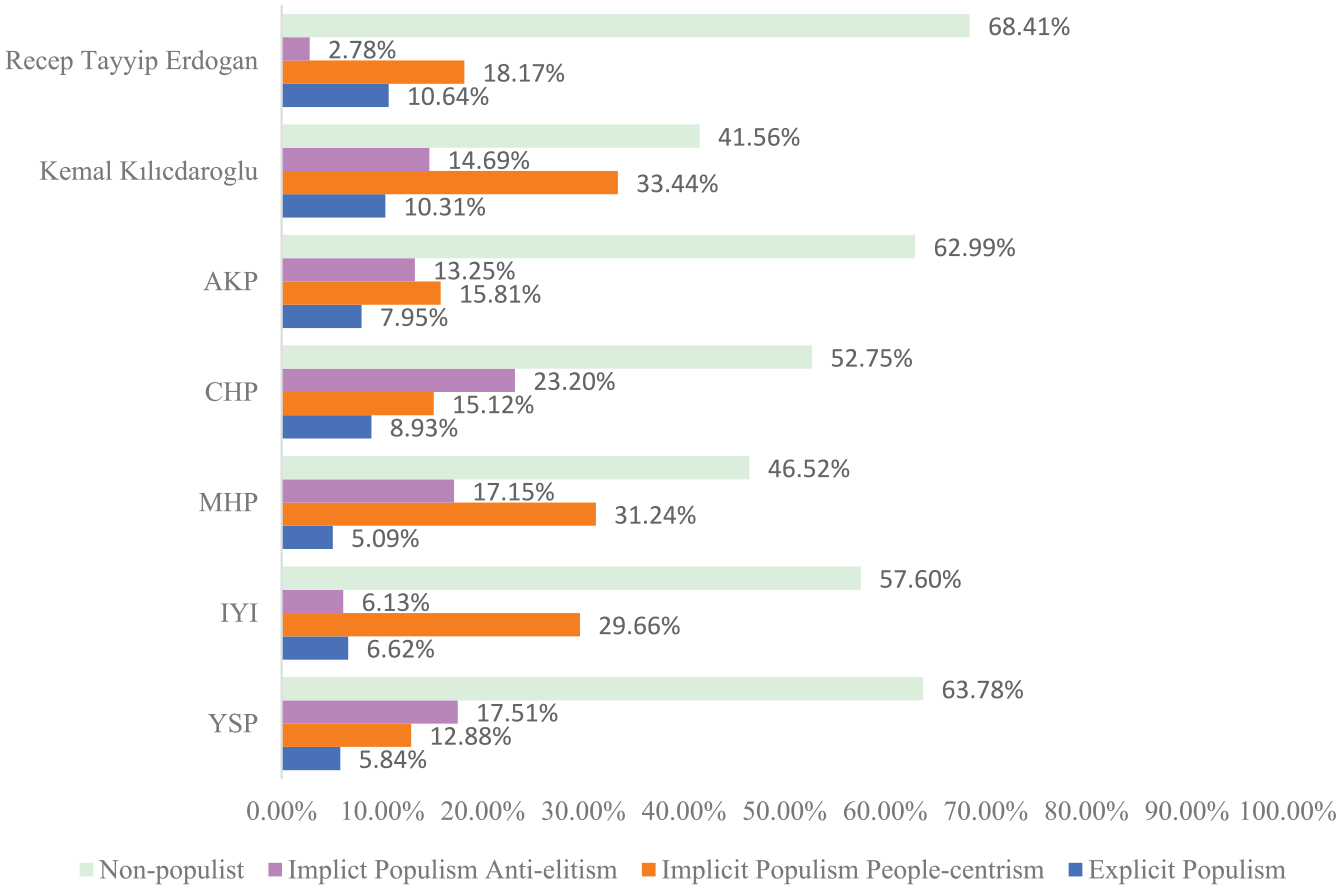
Distribution of Populist Styles Per Political Actor.
When examining presidential candidates, Figure 1 illustrates that President Erdoğan employs the EP style in 10.64% of his tweets, slightly more than the united opposition’s leader Kemal Kılıçdaroğlu, who uses this style in 10.31% of his tweets. However, Kılıçdaroğlu employs IPP and IPA styles substantially more when compared to Erdoğan’s style. Notably, 58.44% of Kılıçdaroğlu’s posts contain some form of populist style, whereas only 31.59% of Erdoğan’s posts exhibit populist elements. In essence, both anti-elitism and people-centrism are more prevalent in Kılıçdaroğlu’s social media communications compared to Erdoğan’s. Below, we provide an example from our dataset showing how the Turkish president used EP style during the 2023 Turkish election cycle. Translation and italics, by which we highlighted the two juxtaposed groups, is provided by the authors.
Example 1 from @RTErdogan: “The AK Party has once again taught the CHP mentality, which is the heir of the single-party era, that in this country, politics cannot be conducted by disregarding the people, let alone openly insulting them” (Date: March 29, 2023).
This example emphasizes both people-centrism and antagonism, explicitly portraying a conflict between “the people” and the CHP, which is characterized as the heir to a morally inferior, single-party era when the CHP was the only legal party in Turkey (1923–1945). The phrase “disregarding the people” emphasizes the centrality of the people in the political process, while the criticism of the CHP for insulting and ignoring them highlights the antagonism toward the political elite. In addition, Erdoğan emphasizes that AKP is the party that taught this lesson to the CHP by defeating them in the elections.
Associations Between Campaign Topics and Populist Styles
To answer RQ3, we sought interconnections between the populist styles and specific election topics, portraying the dynamics between different political agents in Turkey (see Figure 4). Specifically, as Figure 2 demonstrates, when the opposition discusses “Public/Private Meetings,” there is a moderately strong connection with the IPA style, indicating a preference for antagonist narratives when portraying interactions with the public. Moreover, the opposition shows a balanced use of both EP and IPA styles when talking about a range of topics, including the Cost of living, Terrorism, Immigration, and the Economy, highlighting their flexible communication strategies to address diverse issues and connect with the voters.
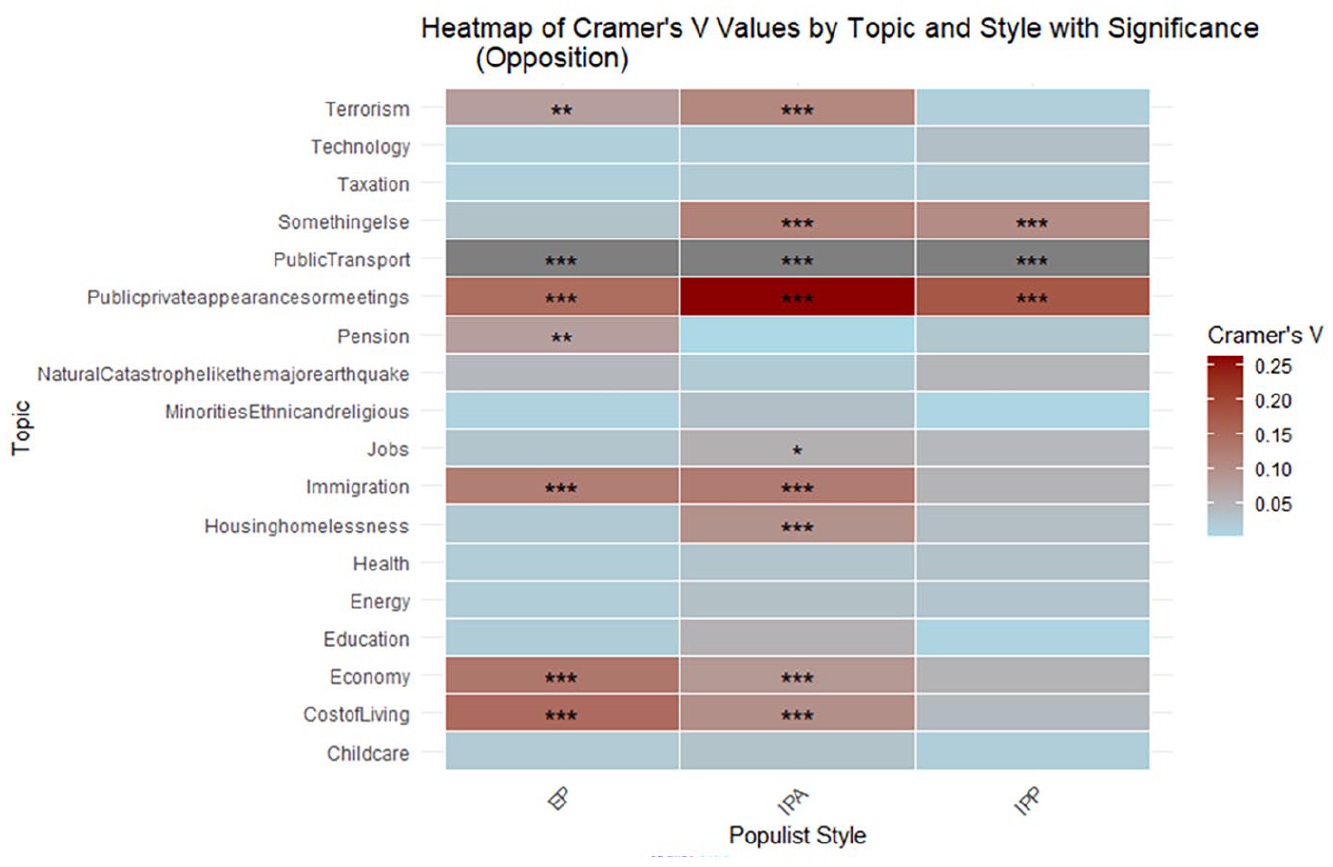
Association Levels and Significance Between Election Topics and Populist Styles (Opposition).
However, the government links terrorism moderately strongly with the IPA style, revealing their tendency to use antagonism when discussing matters of national security. Furthermore, the government also prefers the EP style when talking about terrorism, showing their strategy to be more overt when portraying the threat. Figure 3 summarizes the results.
Based on these findings, it can be deduced that the opposition tends to articulate the enemy when it tweets about private or public meetings, whereas terrorism has a strong link to explicit and antagonist populist styles in the context of Turkish politics in the government’s communications.
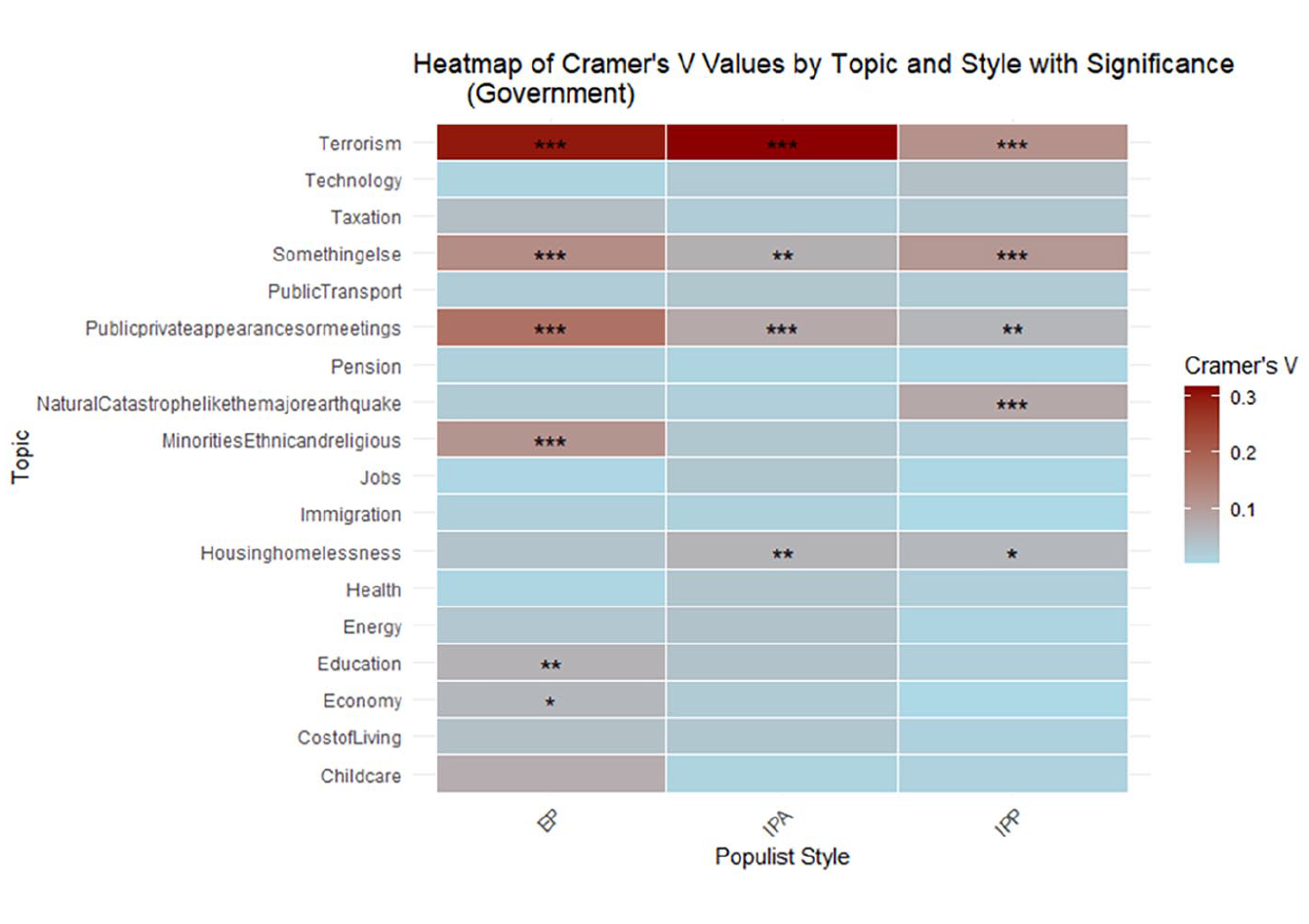
Association Levels and Significance Between Election Topics and Populist Styles (Government).
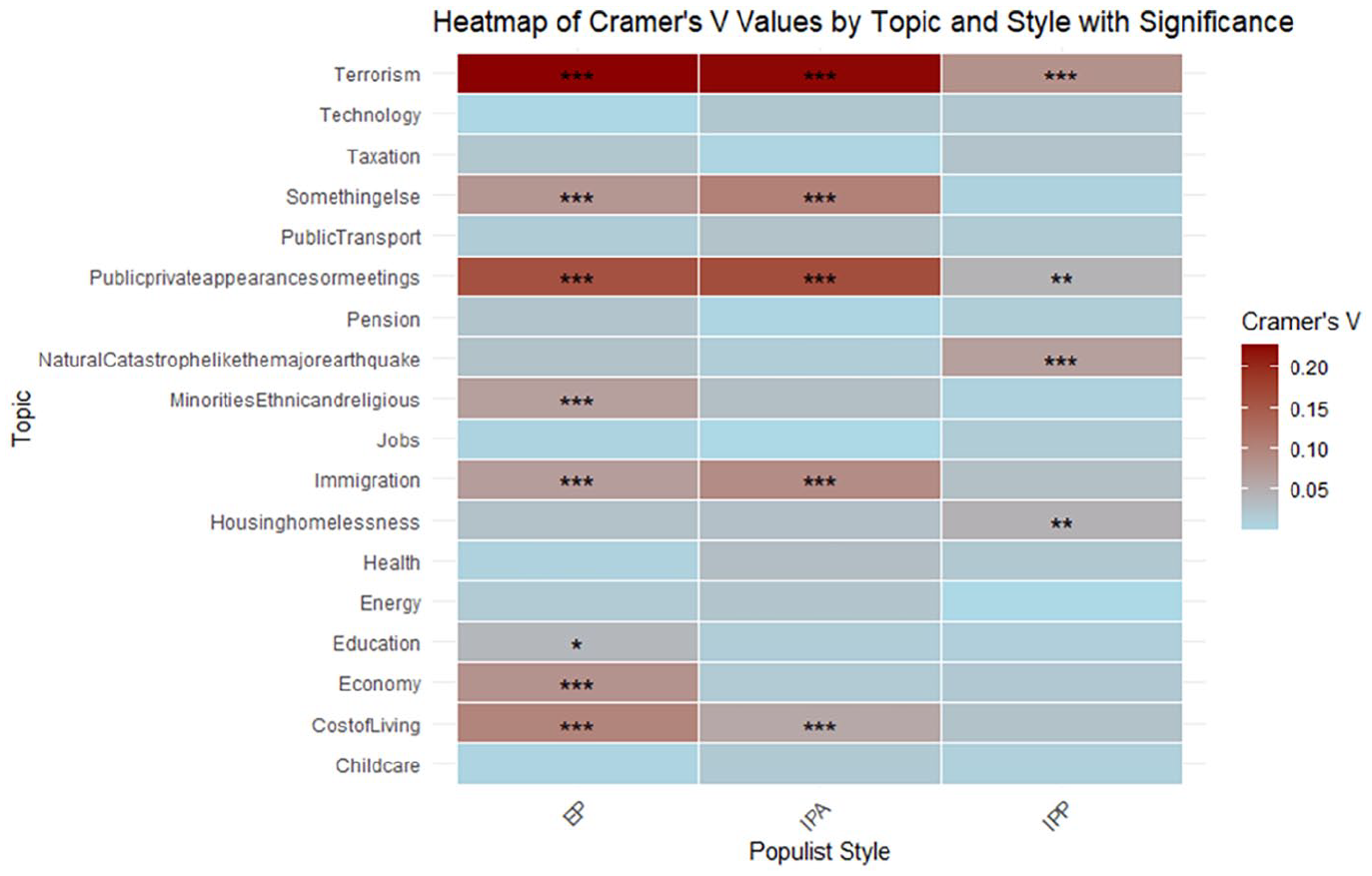
Association Levels and Significance Between Election Topics and Populist Styles.
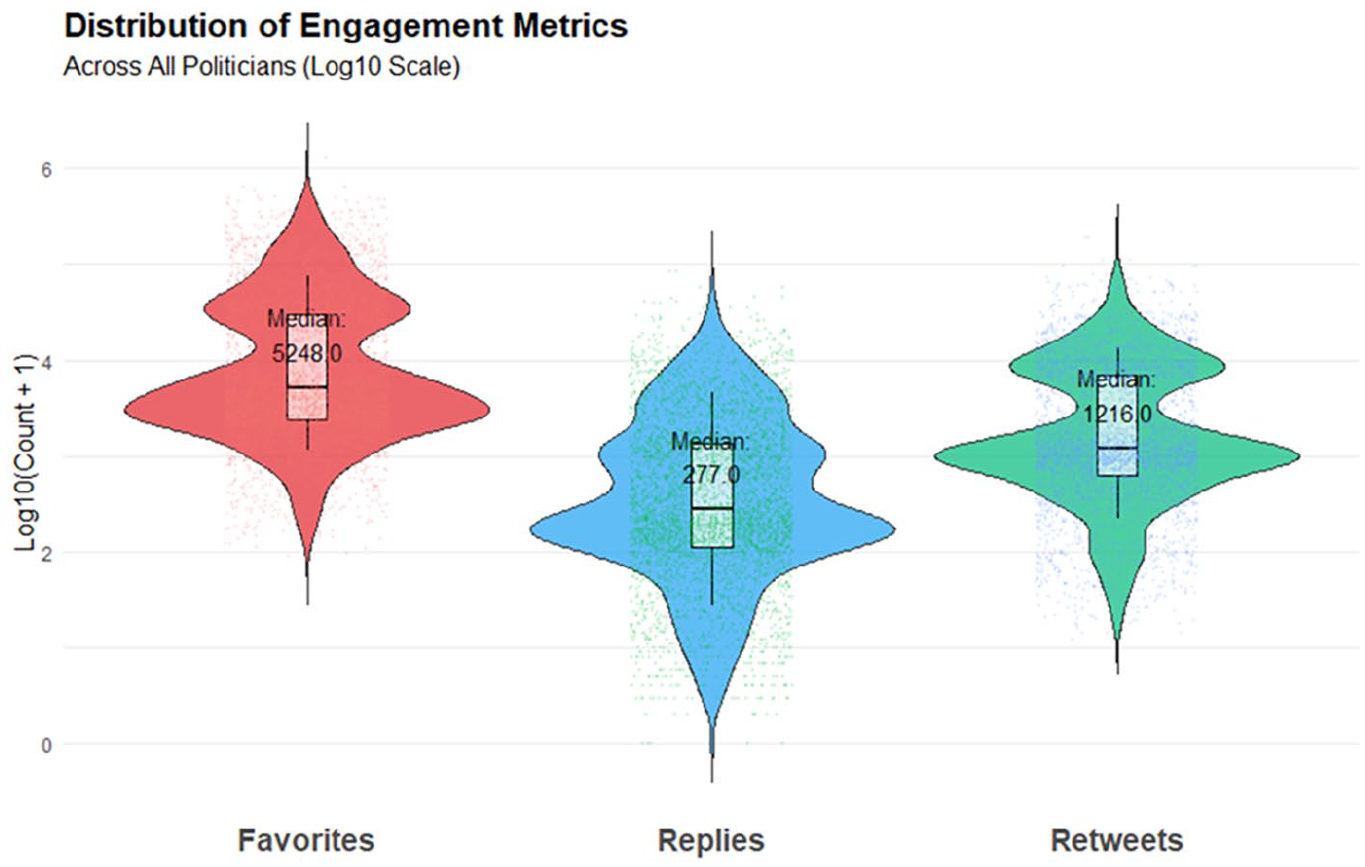
Distribution of Engagement Metrics.
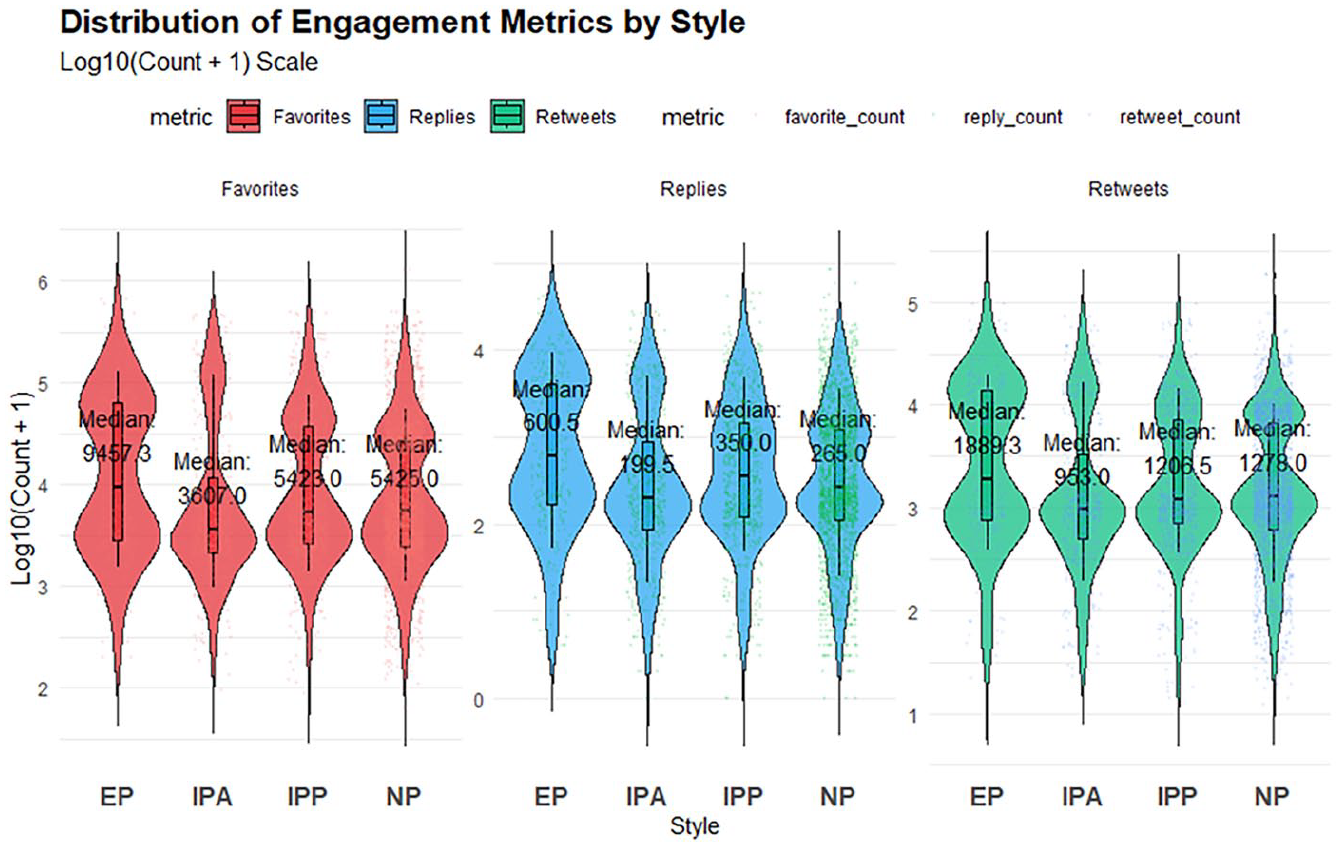
Distribution of Engagement Metrics by Populist Styles.
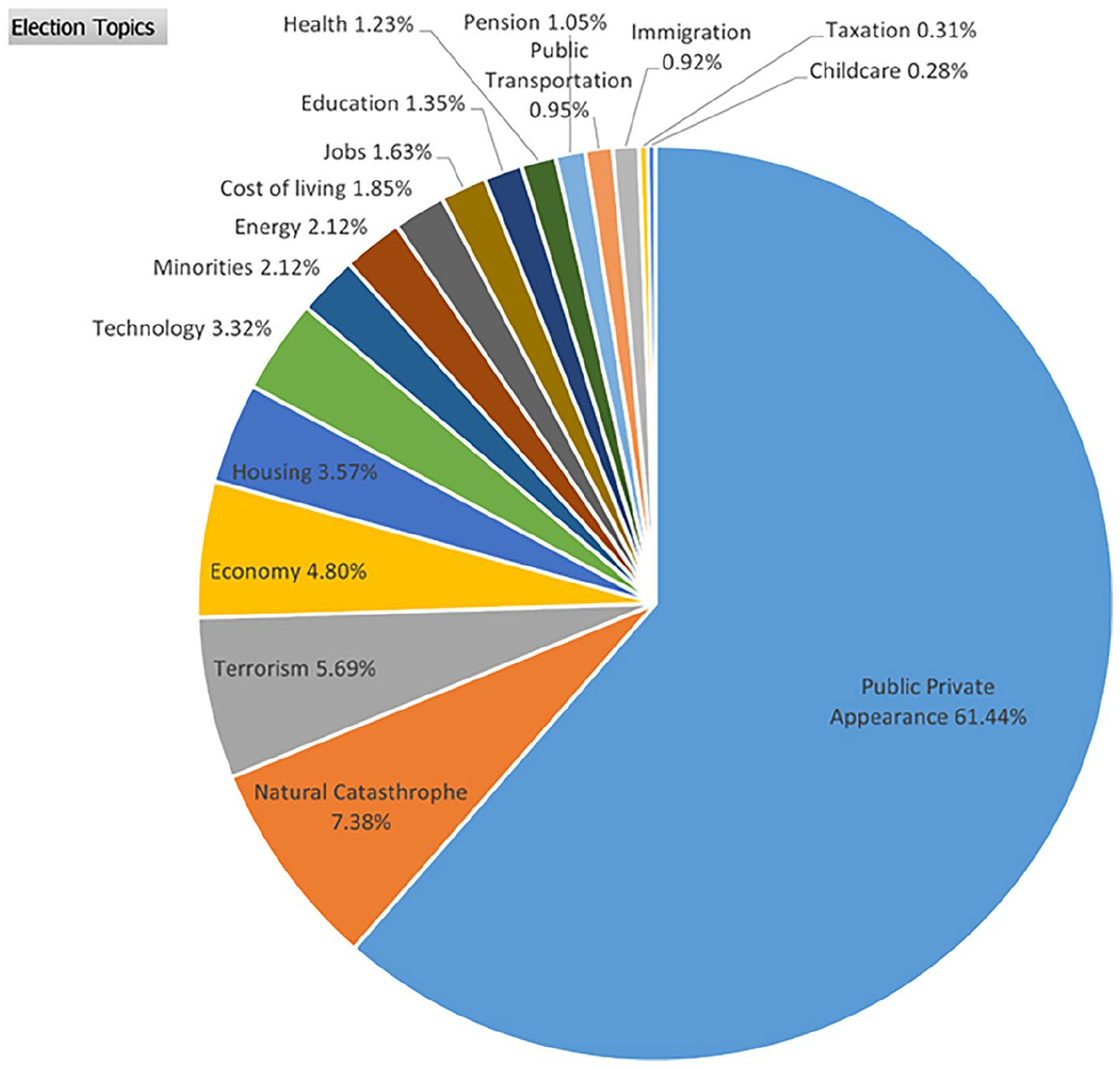
Pie Chart Showing the Distribution of Topics in the Dataset.
Discussion and Conclusion
Social media paves the way for populism’s success because it provides an opportunity for populists to communicate with the people directly, address the grievances of the masses, gain larger mass media attention, and disseminate campaign messages (Boulianne & Larsson, 2023). Scholars have revealed that populist styles are important elements of political agents’ social media communication (Bene et al., 2023; Engesser et al., 2017; Ernst et al., 2017; Schmuck & Hameleers, 2020) and they also observed that populist styles can enhance user engagement, which can boost politicians’ social media audience (Tønnesen et al., 2023). Although scholars have found that PPCS elicits user engagement (Bene et al., 2022), the way in which concealed populist tensions and articulated dichotomies relate to these reactions has been an open question. Our study aimed to contribute to the fields of communication and populism studies on social media (Valenzuela et al., 2023), and we attempted to explore how the major political actors in Turkey used EP and IP communication styles during the 2023 elections. Specifically, we strove to explore (a) whether there are any associations between the populist styles and user engagement, (b) what the ratios of the populist styles manifested among Turkish political agents are, and (c) which topics have the strongest associations with the populist styles.
Our hypothesis revolves around the assumption that operationalizing EP dichotomies is a more powerful communication tool in terms of attracting user engagement than implicit populist styles. Our argument relies on the idea that explicit populism functions as an unambiguous reminder for citizens about the struggle between the good people and the harmful minorities that disregard or threaten the general will. We learned from the results that EP messages can maximize user engagement in contrast to the implicit styles, by clearly articulating the tension between the culprits and the good people who fight an endless political battle. We argue that it can be risky to disregard the people and at least one of the antagonist groups if the political agent aims to maximize user engagement. Regarding our hypothesis, our findings reveal that EP demonstrated a consistent and significant impact across various models, outperforming other styles in every scenario in terms of eliciting user reactions. Exploring the way in which the EP style attracts user engagement significantly and to a larger extent than the other styles is the most important finding of this study. If the aim of political agents is to activate their followers by enhancing user engagement (Bene et al., 2022), they may not risk missing this boost using either implicit people-centrism or implicit antagonism. Conversely, to trigger more engagement among users by operationalizing the populist style, the safest and most effective way seems to be employing both elements of the populist blame game openly in the same message unit and by dropping the fractured populist styles. In addition, if user engagement is boosted by EP, then possibly (a) more users will see those political agent’s tweets that use the explicit style, (b) thus larger mass media attention could be gained for politicians, (c) consequently, their follower numbers can expand, and (d) can convince more users that their demands have been heard. Although EP triggers user engagement most among the analyzed styles, we admit that it is difficult to explore whether it boosts mass media attention on social media visibility/presence, or further user engagement on social media, or both.
Second, in relation to the first research question, our results highlight the significance of people-centrism in populist discourse. People-centrism is fundamental in populism studies as it represents the essence of the populist style (Jagers & Walgrave, 2007); even the definition of the elite is rooted in people-centrism (Mudde, 2017). It has been observed that messages incorporating a people-centric narrative tend to generate more user engagement, particularly in the form of retweets and replies. This underscores the essential role of people-centrism in eliciting user engagement on social media platforms, emphasizing the power of the people-centric narrative in the populist discourse. However, the level of user engagement generated by the people-centric style does not match the engagement generated by EP. In addition, the observed difference in significance of IPP between the Favorites and Replies Models may be attributed to the inherent disparities in user engagement behaviors; where a Twitter favorite usually signifies a basic, low-effort agreement on the content (Bene, 2017), a reply tends to involve more user effort, often embodying more active and detailed feedback to the message. The people-centrist messages are also positively associated with the number of retweets. One possible explanation could be for this outcome that users might feel that those messages in which political agents appeal to the people, glorify the masses, or emphasize the general will are worth sharing because these claims can touch the people, especially if they feel left behind.
Third, the findings illustrate that mere antagonism, represented by the IPA style, is not sufficient to elicit heightened user engagement. However, when antagonism is intertwined with people-centrism, evolving the message to EP, a significantly more active response is triggered from users. This suggests that the antagonist style does not trigger user engagement but it does have an upgrading function by which (a) explicit populism can be developed (Tóth et al., 2024) and (b) more user engagement can be achieved. This finding supports Jagers and Walgrave’s (2007) idea, namely that even though people-centrism is the pivotal element of the populist communication style, expressed antagonism creates a different level in the populist communication phenomenon if it is mixed with references to the people or with the articulation of the general will. In other words, IPA is a populist feature that can indirectly trigger user engagement if it is combined with people-centrism.
Considering our second research question, the distribution of populist styles varied significantly between political accounts. President Recep Tayyip Erdoğan predominantly employs people-centrism in his tweets, with minimal use of antagonism and explicit populism. In contrast, Kemal Kılıçdaroğlu exhibits a more balanced approach, incorporating substantial amounts of both IPA and IPP and modestly using EP in his discourse. Therefore, our findings surprisingly indicate that even though President Erdoğan is known to be one of the most populist right-wing leaders (Lewis et al., 2019), his rival Kılıçdaroğlu used populist messages more during the election campaign. In addition, in contrast to other research (Bene et al., 2023; Ernst et al., 2017; Schmuck & Hameleers, 2020), none of the presidential candidates use antagonism more than people-centrism. One possible explanation for these findings might be the fact that President Erdoğan and the AKP have established themselves as the new political elite by being in power for more than two decades as of 2023. Therefore, any narrative of them fighting against the corrupt elite has to shift more toward international entities, foreign governments, and undefined forces perceived to be against Turkey (Balta et al., 2022; Çelik & Balta, 2020). This tendency shows clear parallelism with the Hungarian example, where the government has been in power for more than a decade now, and thus, the anti-elitist feature of its PPCS needs to be addressed to external elites, such as Brussels or George Soros (Tóth, 2020). Moreover, it is possible that the presidential candidates chose to use appeals to the people more than antagonism because they try to rely on the fundamental element of populism, namely people-centrism to convince the masses that they listen to their demands instead of blaming the harmful others. Reducing the extent of antagonism in favor of people-centrism could be driven by other goals for the presidential candidates. Although Erdoğan suggests that for him, it is still paramount to care about the nation, he also implies by disregarding the culprits that no one can harm the people while they are under his protection (Tóth et al., 2024). Kılıçdaroğlu, however, might have kept the level of antagonism lower than people-centrism to avoid being labeled a populist since antagonism is a more remarkable tactic in PPCS than referring to the people (Engesser et al., 2017).
At the party-level analysis, we found that the AKP party demonstrates a slightly stronger inclination toward people-centrism in contrast to antagonism, while explicit populism emerges the least frequently. Conversely, the social democrat CHP has a marked preference for antagonism, with moderate usage of people-centrism and explicit populism. Thus, this distinction between the two biggest parties indicates a clear dynamic regarding the people and the corrupt elite in Turkey. Furthermore, the İYİ Party and the MHP distinctly favor people-centrism, with a lower representation of the other two styles. The strong ideological inclination of both İYİ and MHP toward Turkish nationalism can arguably explain this phenomenon. Indeed, the İYİ Party emerged from internal strife within the MHP between those members who supported the long-standing leader, Devlet Bahçeli, and those who opposed his decision to back Erdoğan and the AKP. A substantial portion of the İYİ Party membership consists of those who rebelled against the MHP leader Bahçeli, following his alignment with Erdoğan and the AKP. Hence, the utilization of similar populist rhetoric by the two parties is unsurprising.
Finally, the socialist/pro-Kurdish YSP, when employing populist styles, mainly opts for antagonism, highlighting the culprit AKP-MHP alliance. YSP’s anti-elitist style is deeply connected to the turbulent political events after 2015, when a peace agreement between Turkey and the Kurdistan Workers’ Party fell apart (Karakas & Ozdal, 2023). Following this event, Erdoğan adopted a harder line against the socialist, pro-Kurdish HDP, resulting in widespread arrests and accusations of militancy. We argue that Erdoğan’s constant labeling of the opposition, particularly those supporting Kılıçdaroğlu, as being in league with terrorists seems to have influenced the YSP’s style, given its close alignment with the HDP. These patterns of style utilization highlight the strategic adoption of varied populist styles by different political factions in Turkey, underscoring the complex and fragmented nature of political communication during elections.
In addressing our third research question, noticeable patterns between styles and election topics were identified. Topics such as Public/Private Appearances and Terrorism are notably linked with populist styles, while other subjects exhibit weak associations. Previous research has found that the topic of terrorism is a pivotal feature of the AKP’s campaign communication (Erçetin & Erdoğan, 2023). Our study also confirmed this finding and revealed that terrorism stands out in the government’s tweets as being particularly intertwined with populist styles, having a remarkable association with antagonism and a moderately strong connection with explicit populism, signaling that discussions on national security are loaded significantly in populist narratives. This could imply a strategic attempt to increase the impact of the exclusionary discourse (Jagers & Walgrave, 2007) on terrorism, potentially aiming to evoke stronger emotional responses. Terrorism can be attached to horizontal populism, as this interconnection relies on the narrative that outlines that the good people have to be defended from the dangerous others who threaten the safety of the citizenry (Hameleers, 2018). Communication-wise, however, the situation regarding terrorism and the populist styles is more nuanced in the Turkish case. In the analyzed tweets, both the government and the opposition accuse each other of collaborating with terrorists, thereby indirectly risking public safety. Within this populist blame game, each political side portrays the other as the terrorists responsible for the citizens’ sufferings. More precisely, the association between EP and terrorism is stronger for the Turkish government than for the opposition in their Twitter communication. Regarding the opposition’s Twitter communication, “Public/Private Appearances” has strong ties with implicit antagonism. When meetings are emphasized in the tweets, the opposition juxtaposes those who are not part of the crowd (the harmful others) with the people who are the pivotal elements of the masses. Although the good people are present in these appearances, the harmful others are not: this suggestion can imply that the elite does not want to share the same space with ordinary citizens.
Finally, although this case focuses on Turkey’s 2023 national elections, we contend that extending the analysis to longer periods would provide a more comprehensive understanding of Turkish political developments. The 2024 Turkish local election results—which were a shockwave for Erdoğan and the ruling party—support this assumption as they produced an outcome that was the direct opposite of the 2023 elections. In contrast to the previous year, when Erdoğan had secured a narrow victory, the 2024 local elections saw the opposition makes significant gains, winning control of many key municipalities. Although it was not entirely surprising that the two popular mayors of Istanbul and Ankara kept their seats, the scale of their victory was unexpected. In addition, the CHP won in other cities, including traditional AKP strongholds. Overall, the CHP emerged as the leading party with 37.77% of the votes, achieving this for the first time since 1977. Conversely, the AKP received 35.49% of the votes, marking the first time it became the second party since its founding in 2001 (Çevik, 2024). In light of these developments, Turkey offers important insights into how the populist styles employed by the ruling elite and the opposition compete with each other.
Finally, we have three concluding remarks. First, explicit and implicit styles are not just theoretically different concepts, they also influence user engagement differently. Second, the results highlight that clarity in the articulation of populist messages—particularly those that clearly define an us versus them narrative explicitly—is crucial in maximizing engagement. In other words, users on social media are more likely to engage with content that includes articulated dichotomies rather than the fragmented ones. Finally, even though the outcomes suggest that EP is paramount in eliciting user engagement, it is possible that populist communication styles affect feedback differently in other political contexts and audiences. Furthermore, extended research is necessary to scrutinize this question.
Limitations
This study is subject to several limitations. First, the study’s single-country focus on Turkey limits its generalizability to other political contexts. Second, the study’s focus on textual content, excluding visual content from the analysis, might overlook significant aspects of user engagement and interaction, considering the essential role images and videos play on social media. Third, the study’s time period, conducted during election times, could inherently influence user reactions and engagement on Twitter, possibly leading to altered responses due to the polarized political atmosphere prevalent during electoral periods. Fourth, political activists or bots can inflate user engagement, which harms the reliability of studies. Fifth, Twitter makes efforts to remove fake accounts, and this process can lead to unexpected fluctuations in user reactions that skew the results of analyses. Sixth, it is important for future research to look beyond populist tweets and investigate the overall Twitter usage patterns of political parties and leaders since NP tweets also hold significance. Furthermore, we acknowledge that disregarding pronouns does have some pitfalls and might have led to missed analysis units. Finally, it is possible that Erdoğan uses the populist style more intensively via other mass media channels than Twitter, in which he and his party dominate political communication in contrast to the opposition due to the diminishing plurality. This is also an important approach that should be taken into consideration in future research.
Supplemental Material
sj-docx-1-jmq-10.1177_10776990241284579 – Supplemental material for When Articulating Populist Dichotomies Is Paramount: Exploring the Effects of Explicit and Implicit Populist Styles on User Engagement in Turkish Election Tweets
Supplemental material, sj-docx-1-jmq-10.1177_10776990241284579 for When Articulating Populist Dichotomies Is Paramount: Exploring the Effects of Explicit and Implicit Populist Styles on User Engagement in Turkish Election Tweets by Utku Bozdağ, Tamás Tóth and Márton Demeter in Journalism & Mass Communication Quarterly
Footnotes
Declaration of Conflicting Interests
The author(s) declared no potential conflicts of interest with respect to the research, authorship, and/or publication of this article.
Funding
The authors disclosed receipt of the following financial support for the research, authorship, and/or publication of this article: In this paper, project no. TKP2021-NVA-16 has been implemented with the support provided by the Ministry of Culture and Innovation of Hungary from the National Research, Development and Innovation Fund, financed under the TKP2021-NVA funding scheme.

Supplemental Material
Supplemental material for this article is available online.
Notes
Author Biographies
References
Supplementary Material
Please find the following supplemental material available below.
For Open Access articles published under a Creative Commons License, all supplemental material carries the same license as the article it is associated with.
For non-Open Access articles published, all supplemental material carries a non-exclusive license, and permission requests for re-use of supplemental material or any part of supplemental material shall be sent directly to the copyright owner as specified in the copyright notice associated with the article.
