



Abstract
The present study shows that science journalism does not move beyond its traditional borders; however, the Gulf Corporation Council (GCC) countries emphasize science and technological development enough. Therefore, bibliometric analysis has been adopted to examine science journalism research gaps in the GCC countries. The result indicates a substantial keyword issue and a gap in science journalism research in North global countries and GCC countries. This research paper is a must-read in the typical scarcity of science journalism research in GCC countries. Furthermore, this paper can be a reference document for policymakers and course developers in the science communication field.
Introduction
Journalism studies are getting broad interest in the Arab world. In the past three decades, a transformation has been noticed in how Arabic countries deal with Journalism studies. Overall, journalism schools and colleges are doing better than 20 years ago. However, most of the improvement has been made in the technical and skills training (Self, 2015). Similarly, Gulf Corporation Council (GCC) countries have also emphasized journalism studies. Top GCC universities such as King Saud University, King Abdulaziz University, King Abdullah University of Science & Technology, King Fahd University of Petroleum & Minerals, United Arab Emirates University, Umm Al Qura University, Qatar University, Sultan Qaboos University, Kuwait University, and the American University of Sharjah are offering several journalism programs. (Ziani et al. (2018) research study reveals a developmental trend in journalism education in the GCC region. Several research studies have focused on journalism quality of production (Deuze, 2004; Mensing, 2010; Pavlik, 2000; Terzis, 2009). Qatar University offers one of the leading journalism programs, which several Western universities recognize. However, their emphasis is on improving the quality of journalism graduates with minimal practice chance in real-world journalism (Ziani et al., 2018). Saleh (2011) found that journalism schools and colleges are heavily inclined toward theoretical studies in many Arabic countries. In his article, Self (2015) mentioned that almost half of the journalism studies programs had been established in the past 15 years, yet their qualities vary greatly. GCC countries have witnessed a surge in the number and size of media institutions, but the focus on specialized journalism studies and research branches still needs to be expanded. Science journalism is one such journalism study missing in the GCC region.
The Purpose of the Study
The present study examines the status gap of science journalism research between global north countries and GCC countries. The study focuses on the need for science journalism research that helps transform journalism studies in the GCC countries into its specialized need and foster science journalism for local and global development (Osama & Irwin, 2011).
Significance of the Study
The present study is the first research work focusing on the gap in science journalism studies in the GCC countries. The study pulls journalism program developers’ attention to developing several other branches of journalism studies. It urges a need for science journalism research in the GCC region to reduce their dependency on the Global North countries for scientific expertise. This study is needed as GCC countries focus on enhancing their technological expertise and building a robust infrastructure to meet fourth industrial revolution challenges to promote their economy. In such a scenario, science literacy becomes essential for a better result.
Science Literacy and Its Significance at Time of Socio-Political Changes
During socio-political change, Science literacy has been defined in many ways. This term is used for public understanding of science, which they use to benefit their routine life. The National Research Council (NRC, 2007) has used the term “scientific proficiency,” which can be considered science literacy. It has four elements: (a) knowing science, interpreting, and using it; (b) creating and evaluating scientific evidence and explaining it; (c) understanding the level of development in scientific knowledge; and (d) actively participating in scientific practices and discourse (Liu, 2009). An old definition by Laetsch (1987) emphasized science literacy as it enables us to make effective political decisions. It helps earn high returns, reduces societal superstition, improves individual behaviors toward new changes and creates a more ethical world. Similarly, NRC (2007) emphasizes including science in the primary education system.
Literature Review
The fourth industrial revolution is about to alter our way of living. The world is on the edge of transformation due to the fusion of technology, robotics, the Internet of Things, and artificial intelligence (Xu et al., 2018). The fourth industrial revolution is exciting as it brings scope, scale, and complexity that no one has experienced before (Schwab, 2015). Jee (2017) reveals that technological innovation will bring miracles to the supply chain and create more effectiveness for the global supply chain. As a result, trade costs, communication, and transportation costs will drop (Schwab, 2017). However, it will raise many challenges related to cybersecurity, online fraud, hacking, and other risk assessments (Lambert, 2018). Science and technology have brought drastic changes into our lives and shaped the living and knowledge of human society at the world level. In such a scenario, science journalism articulates science news and information based on data and statistical facts (Nguyen & Lugo-Ocando, 2016). Science Journalists are vital in communicating science-related information to the common public. They are the one who creates awareness about science literacy and facilitates understanding of key components of science and its impact on our routine lives to handle critical social issues (Dorling & Simpson, 1998; Fioramonti, 2014). As science and technology are advancing and gearing up at the world level, Gulf corporation countries also heavily focus on science and technology to meet fourth industrial revolution needs and requirements to boost their national economy (ritimo, 2011). However, no specific science journalism course is offered by GCC universities. Instead, several esteemed universities in GCC countries provide courses in journalism or communication, including Qatar University, Northwestern University in Qatar, King Saud University, Imam Abdulrahman Bin Faisal University, King Abdulaziz University in Saudi Arabia, American University of Sharjah, Zayed University and University of Sharjah in UAE, as well as Sultan Qaboos University and the University of Technology and Applied Sciences in Oman.
Under Vision 2040
Research Work on Journalism Studies in Oman.
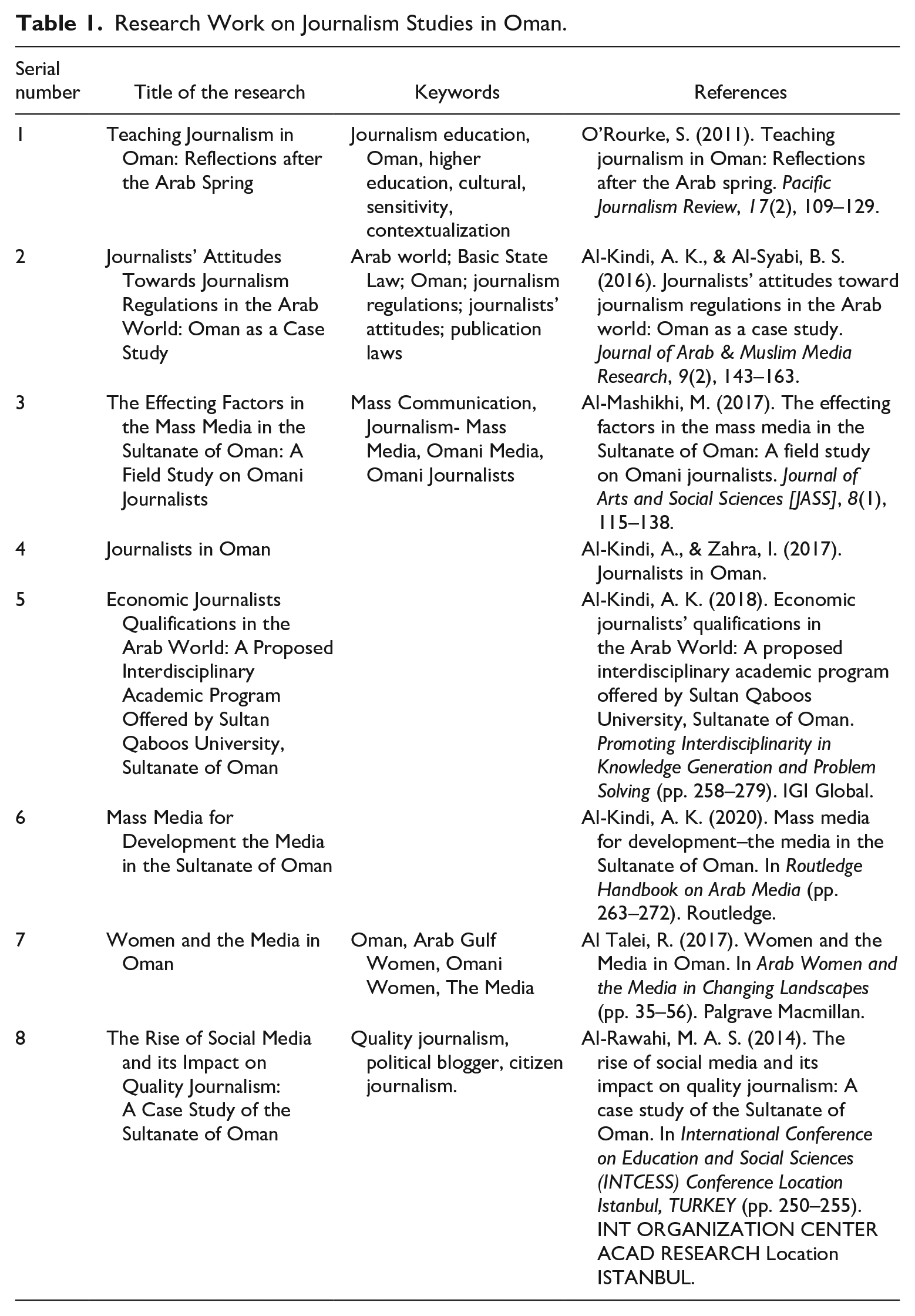
Similarly, Saudi Arabia’s journalism has been shaped by geopolitical, religious, and economic needs (Kraidy, 2021). Since the inception of Vision 2030, the Saudi government has been focused on the modern education system and continuously working on improving the quality of education. They aspire to become global research, development, and innovation leaders. Their strong pillar of development is technology (nationalnews.com). In this direction, the Saudi government is willing to increase its research, development and innovation (RDI) by around 2% of its GDP by 2025 (Saudi Arabia innovation plan, 2022). According to their seventh national plan, the budget allocation has become 1,674.9 million Saudi Rials for science and technology development (Alshayea, 2013). However, here again, science journalism appeared to be legging behind. According to Ziani et al. (2018), Arab journalists used their practices and learned skills after completing their higher or secondary school education.
El-Feki (2008) has observed that journalists need basic science, technology, and medical knowledge. This creates a contextual restriction for practicing science journalists, becoming a core problem in the GCC region (Eid, 2008; El-Awady, 2009). However, the latest technology and changing socio-political circumstances have created a new demand for higher journalism and mass communication degrees. Many Journalism studies and research work have been done. Scientific research publication has accelerated in Saudi Arabia in the past 30 years. Many open-access scientific journals in business, marketing, engineering, tourism, science and technology and medicine have increased exponentially. King Abdulaziz City for Science & Technology and Saudi Universities have a considerable emphasis and investment that helps create a scientific environment in the country (Alsanea et al., 2014). A study titled “The obstacles facing scientific and medical publishing in Saudi Arabia” mentioned that science and medical journalism do not have a properly laid foundation regarding mission, vision, and objectives in Saudi Arabia. It needs a more transparent framework at the national level. The King Abdulaziz City for Science and Technology has started many projects to support scientific publishing. However, there is a strong need to develop a country-wide program with dedicated resources to help the Saudi scientific journals (Alsanea et al., 2014).
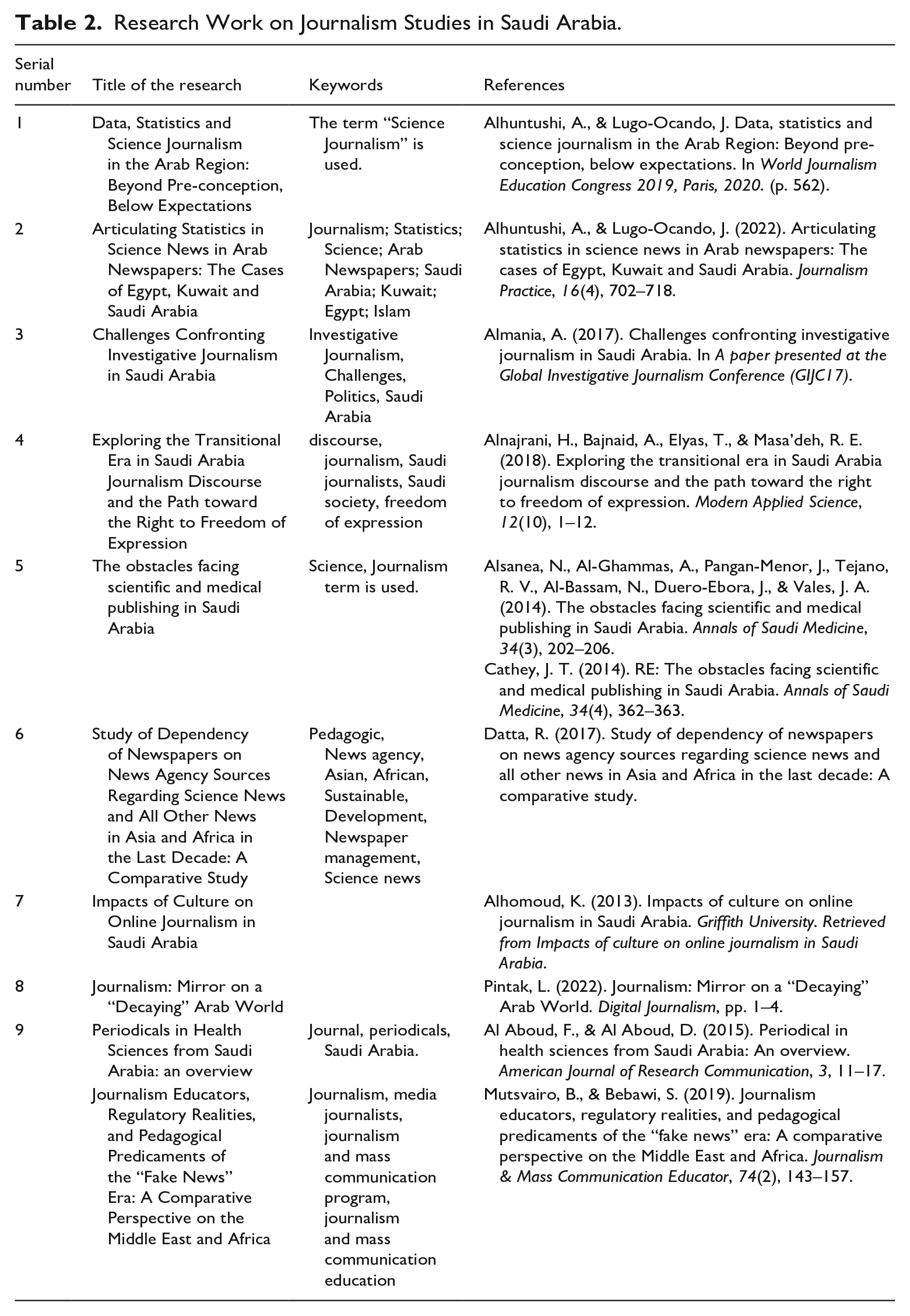
Table 2 shows three research papers that used the science journalism keyword in Arab countries’ contexts. First, Alhuntushi and Lugo-Ocando discussed data statistics and science journalism in Saudi Arabia and Kuwait. Their second research indicates a significant gap in journalists’ use and interpretation of data and numbers in news reporting. Finally, in comprehensive work, AL-Qafari (2009), El-Awady (2009) and Mahmood (2008) revealed that Arab countries’ core problem is a lack of scientific communication culture. It aggravates contextual restrictions on news practices and science news writing.
Research Work on Journalism Studies in Saudi Arabia.
Kuwait’s media system is partially accessible in the Gulf region (AlSalem, 2020). After the amelioration of Kuwait media in 2006, several opportunities have been opened for licensing private newspapers (Alsalem, 2021). Now, 11 Arabic and 2 English newspapers are published in Kuwait. The press law (2006) restricted the publication of specific topics connected to religion and the ruling family. National Assembly approved many amendments to the Kuwait Press and Publication Law 2006 in 2020. These amendments were considered essential steps for the success of the press in the country. Journalism in Kuwait emerged under different circumstances than GCC counterparts (AlSaleem, 2020). In other Arabic countries, journalism was established as a government tool to reform and develop the country along with religious and intellectual awakening, while journalism in Kuwait began independently (Al Rasheed & Chenoufi, 2008). Kuwait journalists believed that the press law and legislative atmosphere of the press affect their work and quality of expression (Alrajhi, 2015).
His study “Factors influencing practices in Kuwait” revealed Kuwaitis are less in journalism due to the social concept of journalism. This profession is not considered a prestigious job in Kuwaiti society. This does not attract qualified Kuwaitis to journalism (AlSaleem, 2020). Historically, it has been noticed that most journalists were expatriates (Alkazemi et al, 2017). One study, “Attitudes towards journalism in Kuwait,” reveals that mass media students’ perception of journalism has changed. They hope journalism will improve (Alkazemi et al., 2017). This may increase research in the field of journalism studies in the future. As per these studies, two reasons are behind the lack of science journalism studies in Kuwait. First is the need for more interest in science journalism among Kuwaitis. Second is the old perception of the journalism profession in Kuwait. Due to a lack of demand from journalism students and the common public, academic institutions and media organizations ignore science journalism research studies (Alhuntushi & Lugo-Ocando, 2022). This shows a clear gap in science journalism studies. According to El-Awady (2009), AL-Qafari (2009), and Mahmood (2008) studies, there is a substantial lack of scientific communication demand in Arab countries. Among journalism studies in Kuwait, the authors found two research works focused on science journalism in Saudi Arabia and Kuwaiti. However, these studies are not indexed in the Scopus and Web of Science databases.
Qatar has been transitioning toward a knowledge-based society and becoming an international education hub (Ahmed, 2019). Under Vision 2030, Qatar aimed to provide a world-class education system by equipping its citizens with high-quality education and training opportunities for lifelong learning. Science, technology, and innovation are prioritized along with comprehensive health care system development (Qatar Vision, 2030). Qatar Foundation (n.d.) for Education, Science and Community Development was established in 1995 to promote excellence in research and innovation. It aims to nurture future leaders in partnership with world-class universities (Al-Sharqawi, 2013; www.qf.org.qa/education). As a result, Qatar University scored 224 in 2022 and 245 in the education section in 2021. This shows a remarkable accomplishment in education. From 1998 to 2012, 11 international universities from the United Kingdom, Canada, France, the United States, and the Netherlands opened their international branch campuses in Qatar. They offered various specialized courses (Ahmed, 2019).
Northwestern University Qatar (NUQ) campus is playing a significant role in nurturing the media industry in Qatar. NUQ offers a Bachelor of Science in Journalism and a Bachelor of Science in Communication (Hukoomi Qatar e-Government 2020). Doha Institute for Graduate Studies offers a Master of Journalism and Master of Social Sciences and Humanities in Media and Cultural Studies (Hukoomi Qatar e-Government 2020). A World Conference of Science Journalism 2011 was also organized in Doha by the World Federation of Science Journalists. More than 600 science journalists have participated worldwide (Gillies, 2011–2022, The Communication Initiative Network, 2011, Doha). The conference aimed to raise science journalism’s quality in developed and developing countries to promote professional growth and encourage new collaborations in science and technology (CIN,201).
Along with this conference, a workshop had also been organized under the sponsorship of UNESCO in connection with this conference. It aimed to implement a curriculum of science journalism in the Arab world. Forty people from a dozen countries attended the workshop. This shows the status of journalism studies, which are gearing up steadily in Qatar. However, research related to science journalism seems rare. Some research has been done in the journalism section, but specific work in science journalism has no place till now. No one has addressed the keywords science journalism or science communication. Mahmood (2008) argues that media in Arab countries suffers from inaccurate data. He raised serious concerns and pulled attention to address this gap (Alhuntushi & Lugo-Ocando, 2022). Science journalism research is very significant in the present time as changing socio-political circumstances require more public awareness of science development. It also helps translate complex terms for ordinary people and educates them about the role of science in issue-solving and the decision-making process. Science journalism promotes science literacy and enables us to verify information before debating or engaging in scientific issues.
UAE has developed a comprehensive and diversified approach to establishing itself as an international education hub in the Middle East (Knight, 2014). As the country’s reputation is increasing as a booming international hub, the country is more focused on improving education quality, skills, and training to retain students as a pool of talents (Fox, Shamisi, 2014). Courses related to journalism and mass communication are being offered at Al Hosn University, Al Ain University, University of Sharjah, American University in the Emirates, Middlesex University UAE, Zayed University, Murdoch University Dubai, Abu Dhabi University, Ajman University, and Amity University (bachelorstudies.com). Journalism studies show a better landscape in the UAE than in neighboring countries. However, when it comes to research in science journalism, no research work is found that addresses the keyword science journalism. However, some research has been done on journalism and environmental journalism in the UAE (Reinisch, 2010). State of Science Index Survey (2022) reveals that 92% of UAE people want to hear more about scientists and their work. They also want to listen to science-related opportunities in the news and social media channels. Furthermore, the survey reveals that 92% of UAE people accept that science helps create awareness and make the world more promising and sustainable. The survey results explained the need for science journalism studies in UAE, which needs to be included in the research section (Zawya.com).
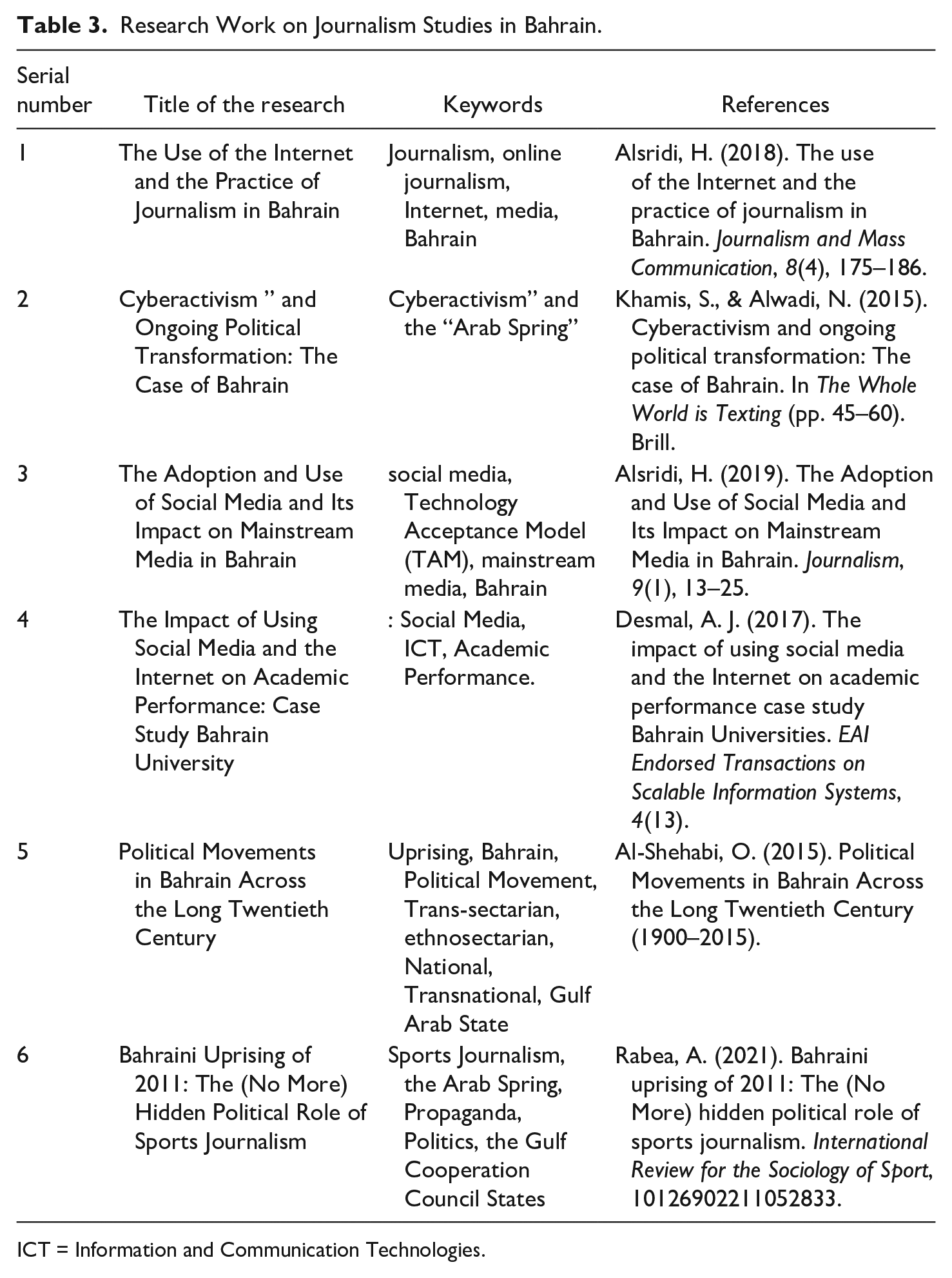
Regarding science journalism, Bahrain is not different from other GCC countries. Table 3 shows the status of journalism studies in Bahrain.
Research Work on Journalism Studies in Bahrain.
ICT = Information and Communication Technologies.
Table 3 indicates a severe gap in science journalism studies in Bahrain that needs to be addressed as it is the need for the hours in the fast-changing science and technology landscape.
Method
The bibliometric tool has been used to demonstrate the absence of local researchers (Rees et al., 2021) or no research in specific regions (Keshri & Tigga, 2020). The present bibliometric study conducted on documents indexed in Scopus and Web of Science databases that deal with the science journalism issue will determine the gap between countries and reveal the countries with no authors or documents related to this theme.
Data Collection
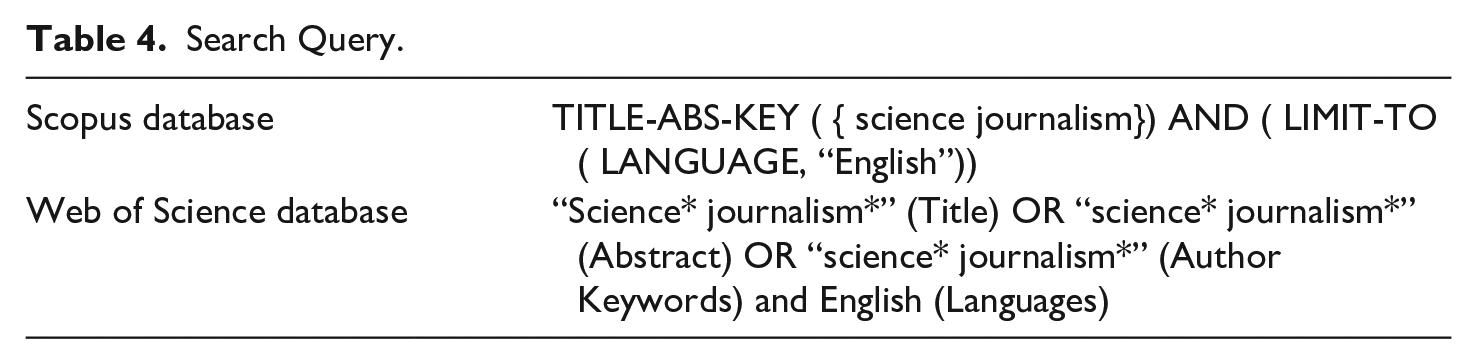
The search for documents dealing with the science journalism theme was carried out on July 20, 2022, in the two databases of Scopus and Web of Science, the two most used databases in academic research (Zhu & Liu, 2020). The search involves selecting documents containing science journalism words in titles, abstracts, and keywords. In addition, we limited the search to papers published in English. The search procedure in both databases is presented in Table 4.
Search Query.
The first search realized on June 30, 2022, selected 368 papers from the Scopus database and 257 papers from the WoS database. Among these 625 downloaded papers, 335 documents were excluded according to the Preferred Reporting Items for Systematic Reviews and Meta-Analyses (PRISMA) protocol (Figure 1).
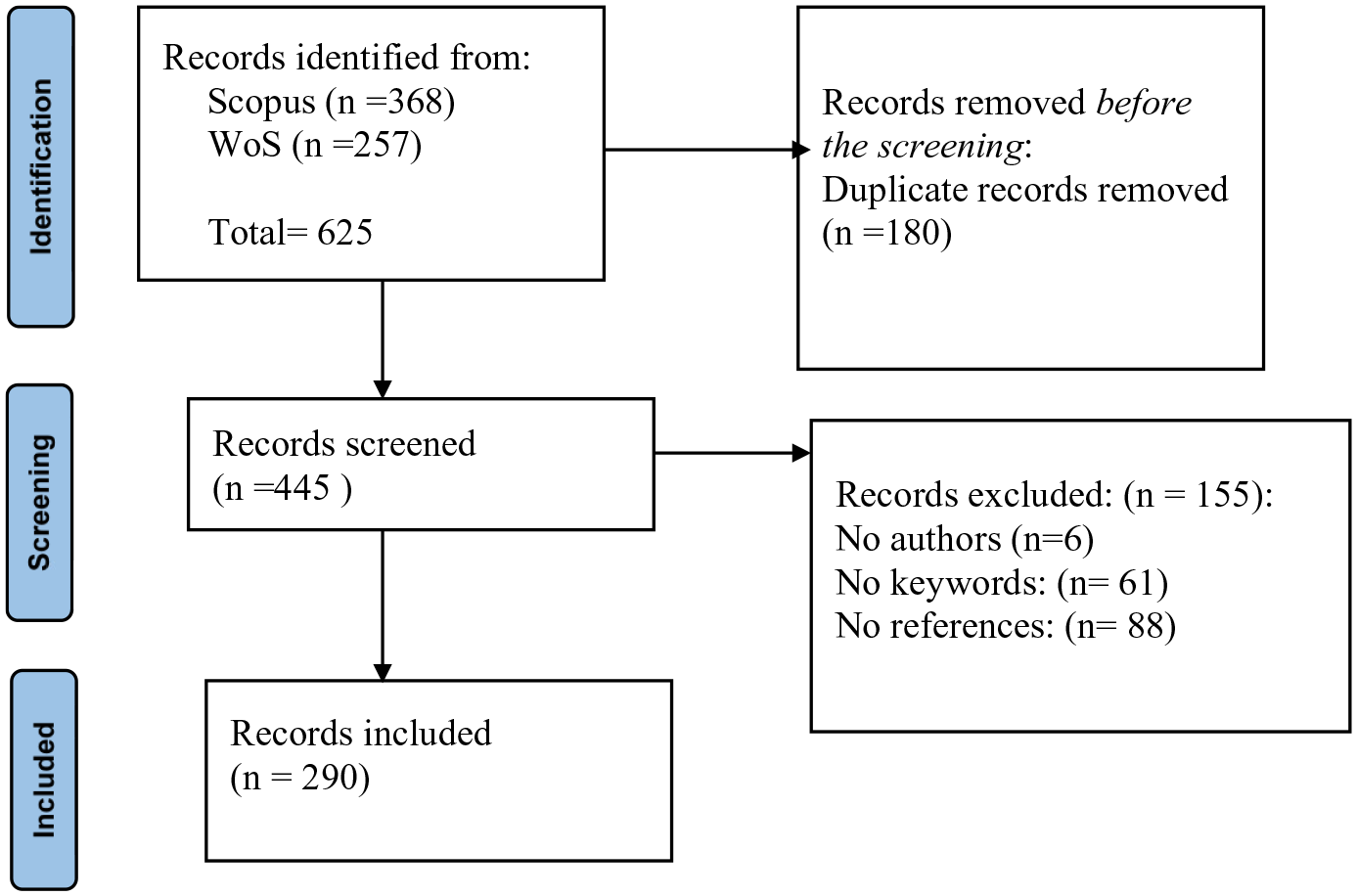
PRISMA Flowchart.
Tools and Software of the Bibliometric Analysis
The program bibliometrics of the software R 4.1.2 and the bibliophily function of this program will allow for analysis of the 233 selected documents. The visualization of the networks is done with the CiteSpace 6.1.R2 software. The analysis comprises performance analysis (Luwel et al., 1999) and network science mapping. The performance analysis consists of determining the most productive authors and sources and calculating indicators of the quality of this scientific production. In the science mapping, we will analyze the collaboration networks and the global collaboration network (Aria et al., 2020) that allow us to reveal the countries and regions that have not developed and worked on the science journalism theme and encourage them to produce in this exciting theme.
Results and Discussion
Performance Analysis
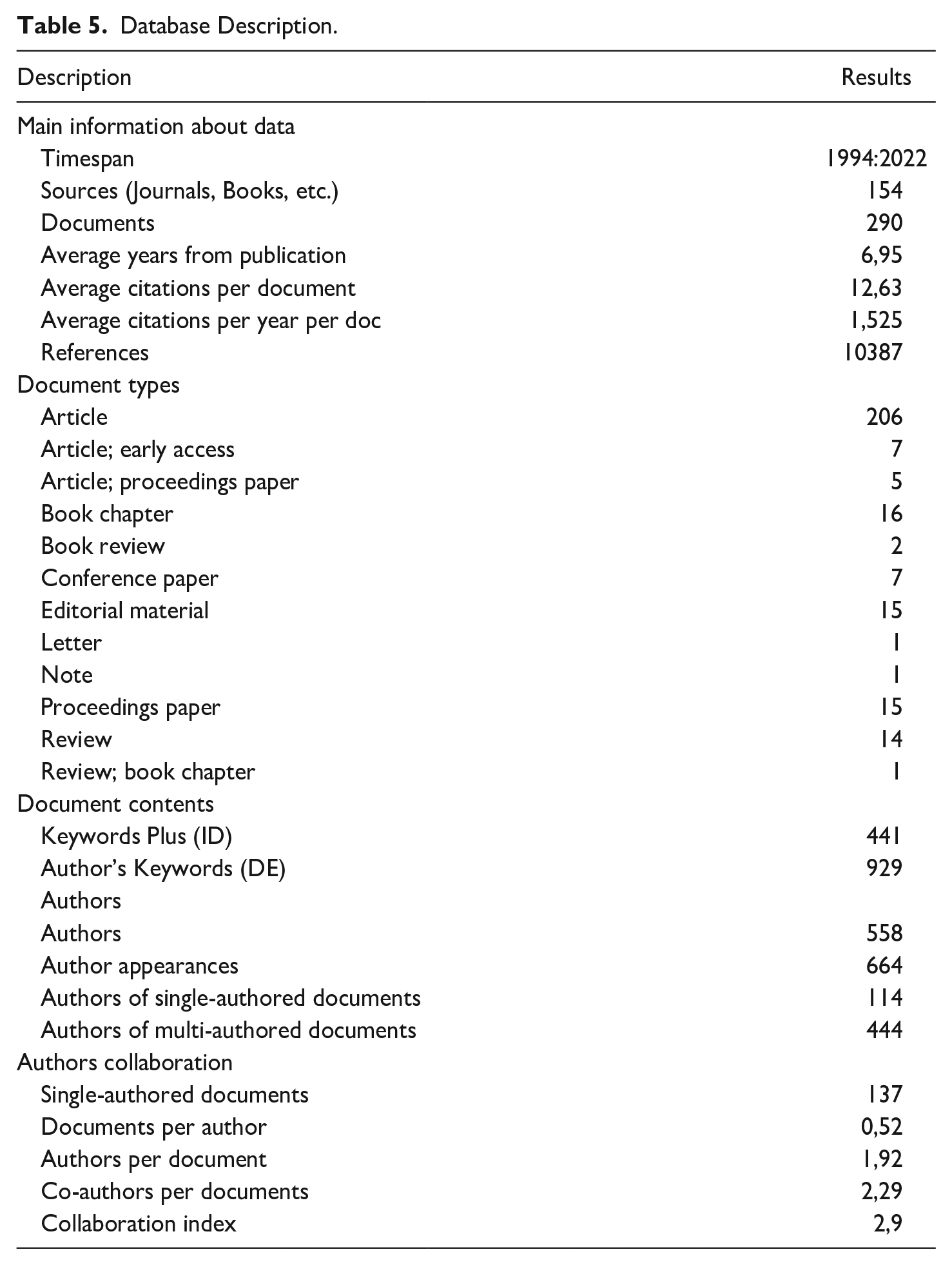
Table 5 shows that the selected papers were published between 1994 and 2022 in 154 journals. The average age of a paper is 7 years. Each paper has an average citation of 12 times. The number of references used is about 10387. The 558 authors of these documents used 929 keywords. The average number of authors per document is 1.92, with 114 documents elaborated by a single author. The level of collaboration between the theme authors measured by the collaboration index (Donthu et al., 2021) equals 2.9.
Database Description.
The Annual Growth Rate is about 13.05%, and the publication of papers dealing with Science journalism exceeded the five articles per year mark in 2006 (Figure 2). The year 2011 has seen the appearance of many publications higher than 15. In 2016, the number of publications doubled to reach the highest threshold of 32 articles per year. This curve shows that even though the theme appeared in 1994, this theme began to have importance in scientific production only in 2011. The scientific production realized in 2011 represents 83% of the papers published from 1994.
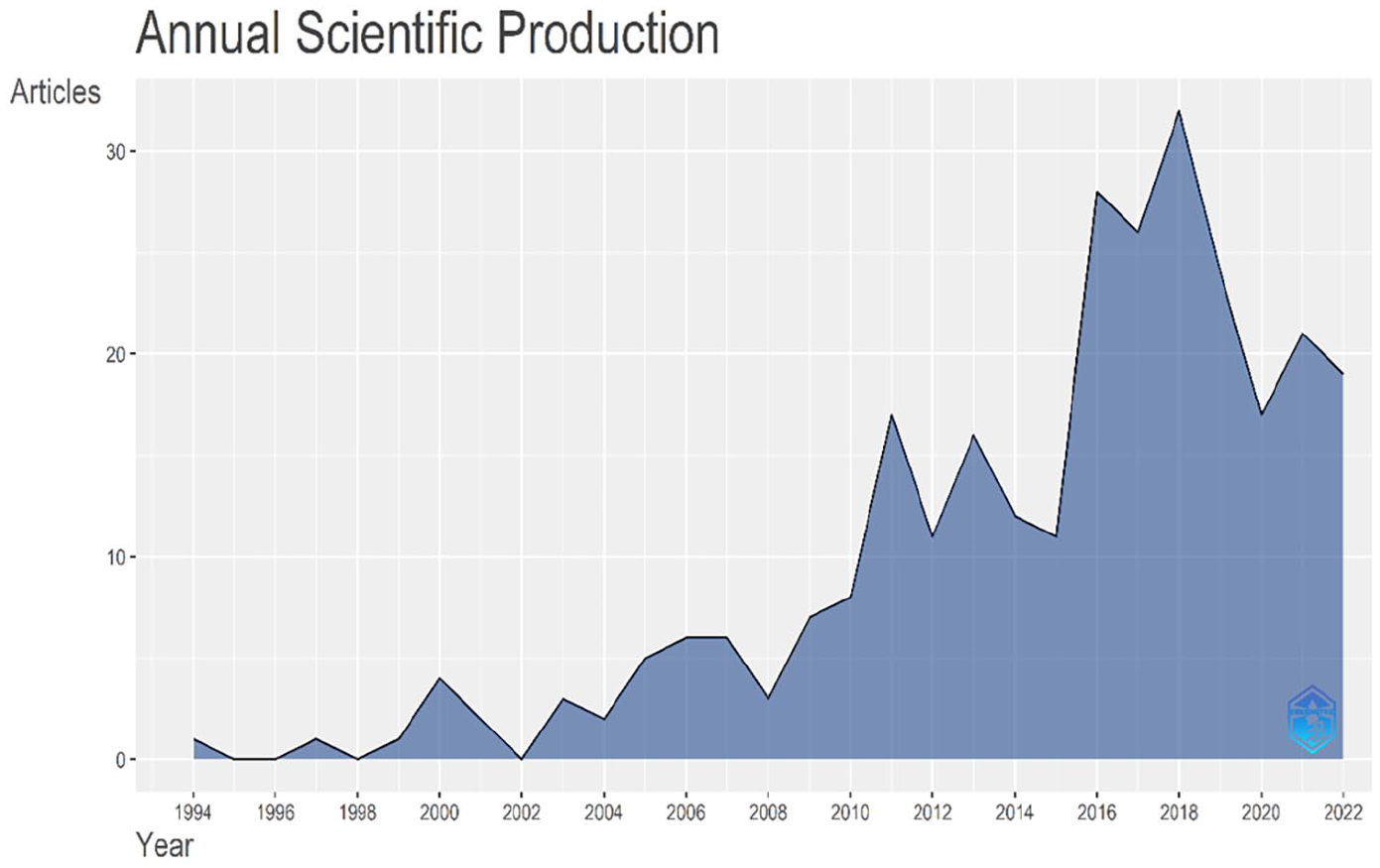
Scientific Publication Evolution.
Scientific Production by Country
Figure 3 shows the distribution of scientific production by country. This graph reveals the gap between the northern hemisphere countries, essentially the United States with 142 publications, Germany with 52 publications, Spain with 47 papers, the United Kingdom with 42 publications, Canada with 25 papers, and Russia with 19 papers. The Arab countries published in this theme are Lebanon with one paper. This graph shows that research in science journalism needs to be present in the GCC countries.
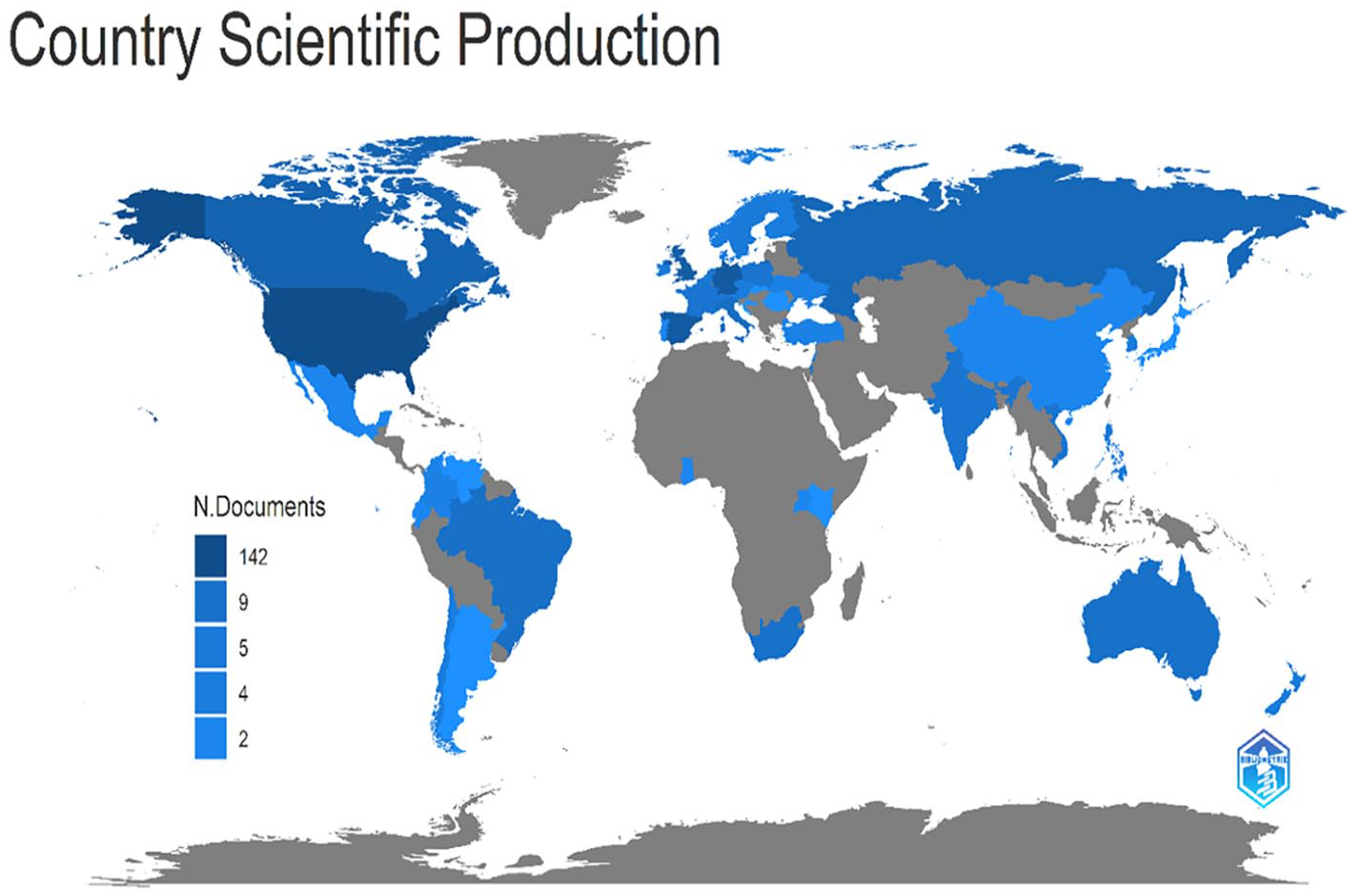
Scientific Production by Country (Two Papers and More).
Repartition of Corresponding Authors by Country
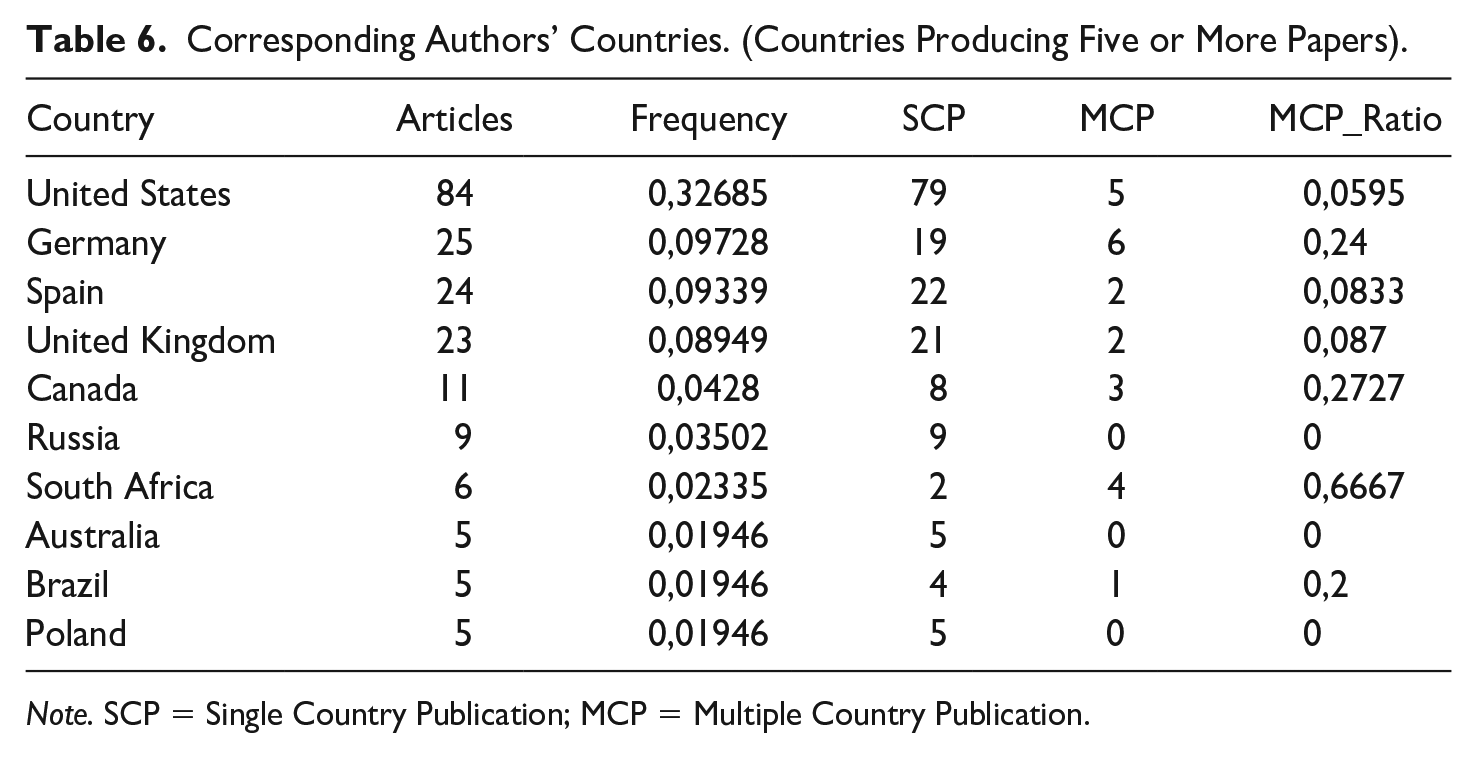
Table 6 shows that American authors have submitted 84 papers (32%), and 94% are Single Country Publication . German, Spanish, and English authors each submitted 9% of the papers, with Collaborative published articles (CPA) accounting for the most crucial share; Canadian authors are the correspondents of 4% of the published papers.
Corresponding Authors’ Countries. (Countries Producing Five or More Papers).
Note. SCP = Single Country Publication; MCP = Multiple Country Publication.
Three-Field Plot of Keyword Countries and Sources
Figure 4 links the most used keywords to the producing countries and journals with the highest number of publications. The thickness of the gray band going from the field on the left to the field in the middle is proportional to the frequency of use of the keyword. The thickness of the gray band going from the middle to the right field is proportional to the number of publications. The science journalism theme is the most used by all countries. The theme of science communication is the second most used theme in terms of several appearances, and it appears in the documents published by all countries. The media theme ranks third in appearance and is not used by Spain and Brazil. American and English authors mainly treat the theme of science news. The climate change theme is mainly treated by American, Spanish, and German authors. The American and Spanish authors have the highest number of users of the theme of public understanding of science.
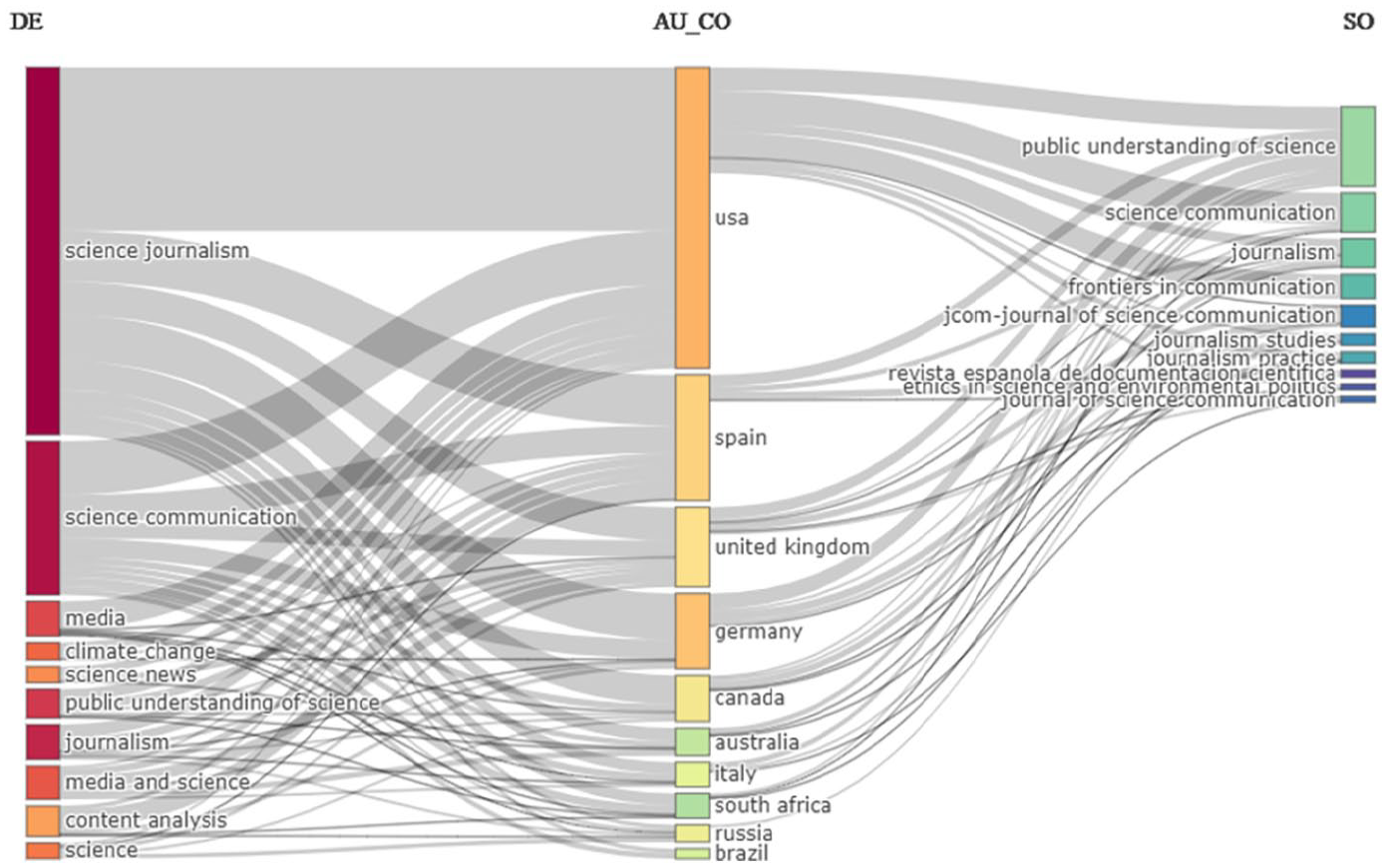
Three-Field Plot.
Regarding the relationship between the source countries, apart from Russia and Brazil, all other countries have published in the journal Public Understanding of Science. In addition, the United States, United Kingdom, Canada, and South Africa are the countries that have published Science Communication. These results will allow GCC researchers to choose the country to collaborate with according to the chosen research theme.
Countries’ Collaboration Network
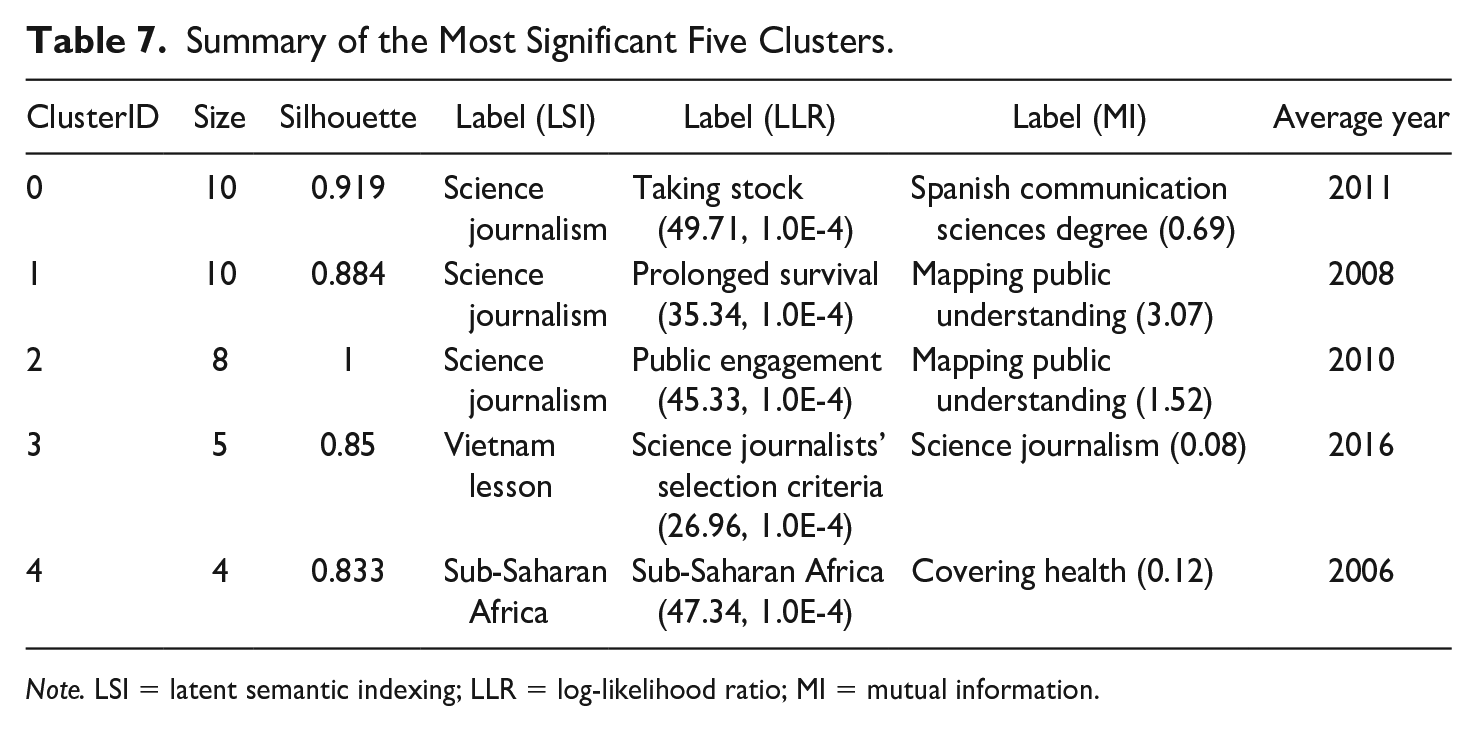
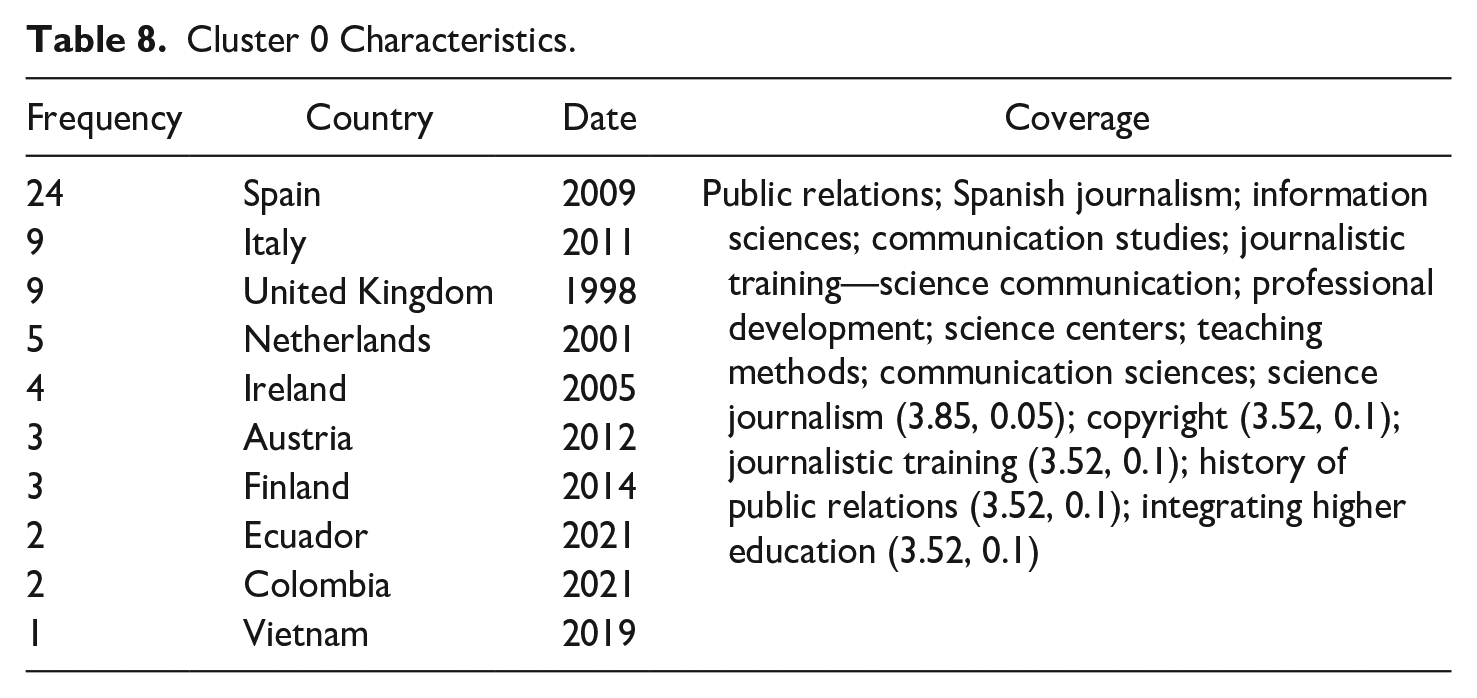
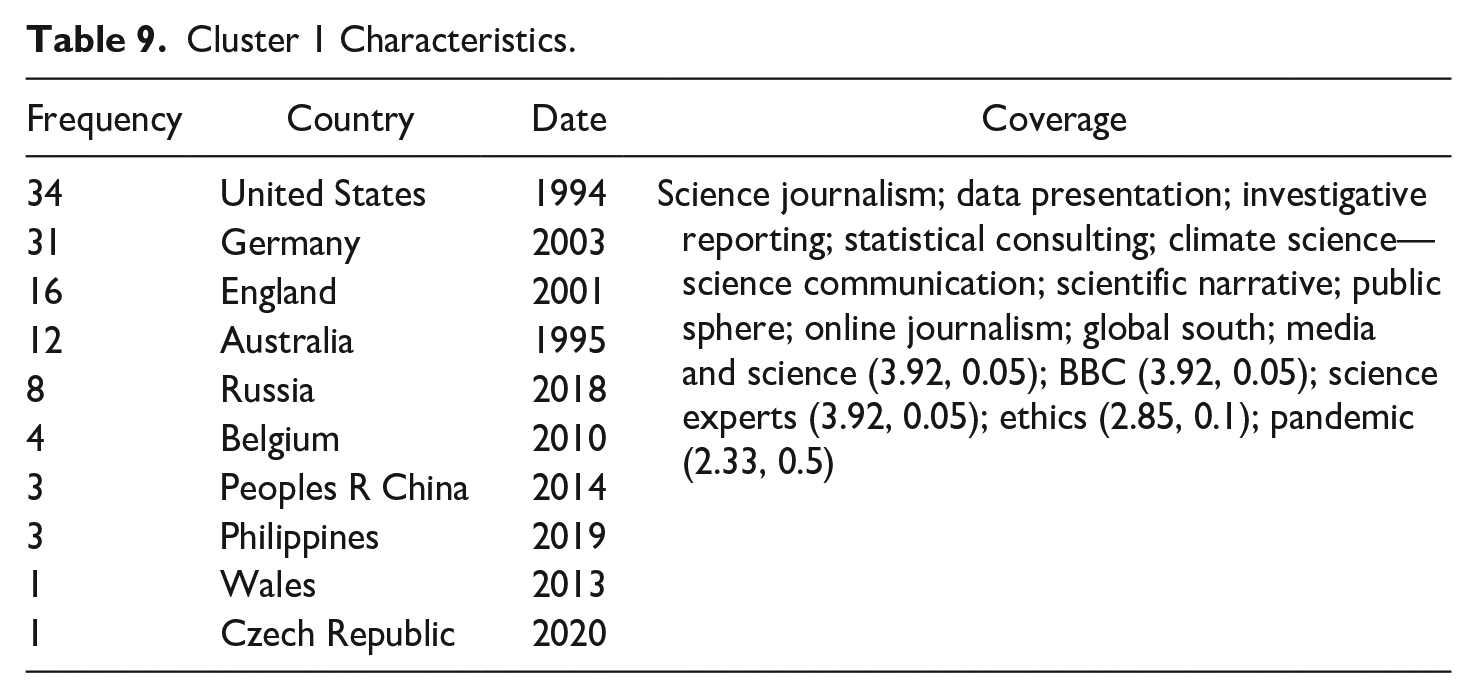
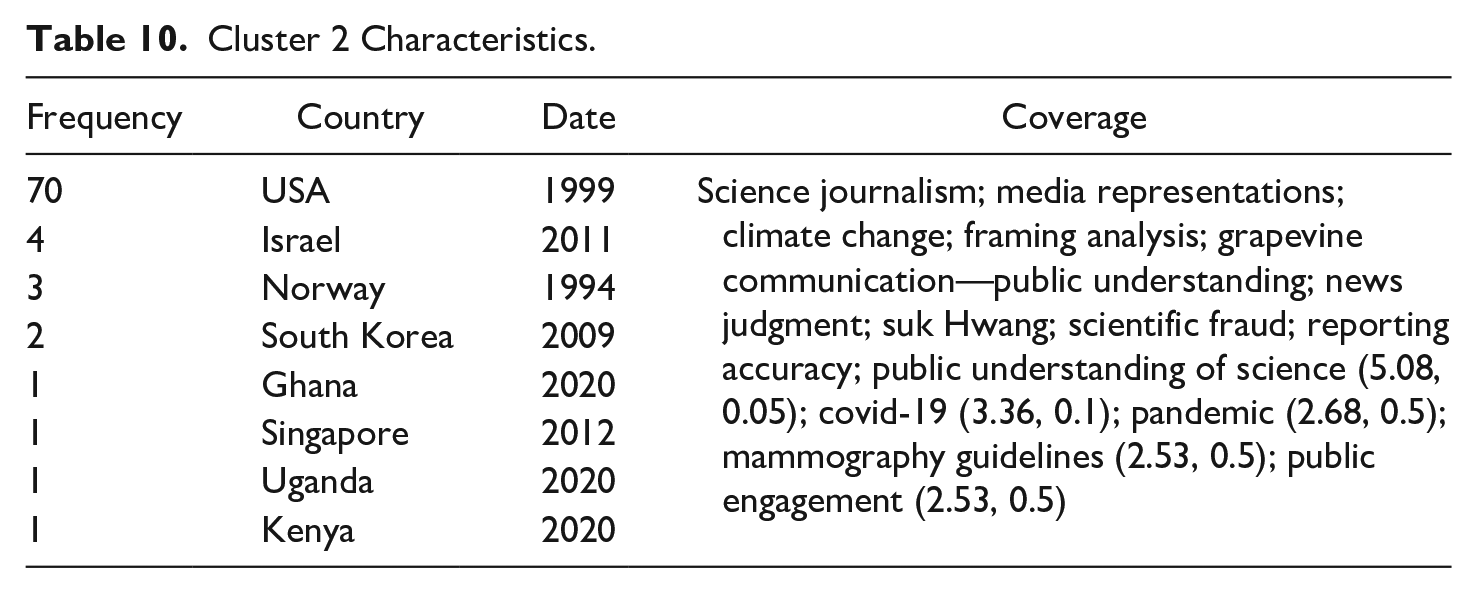
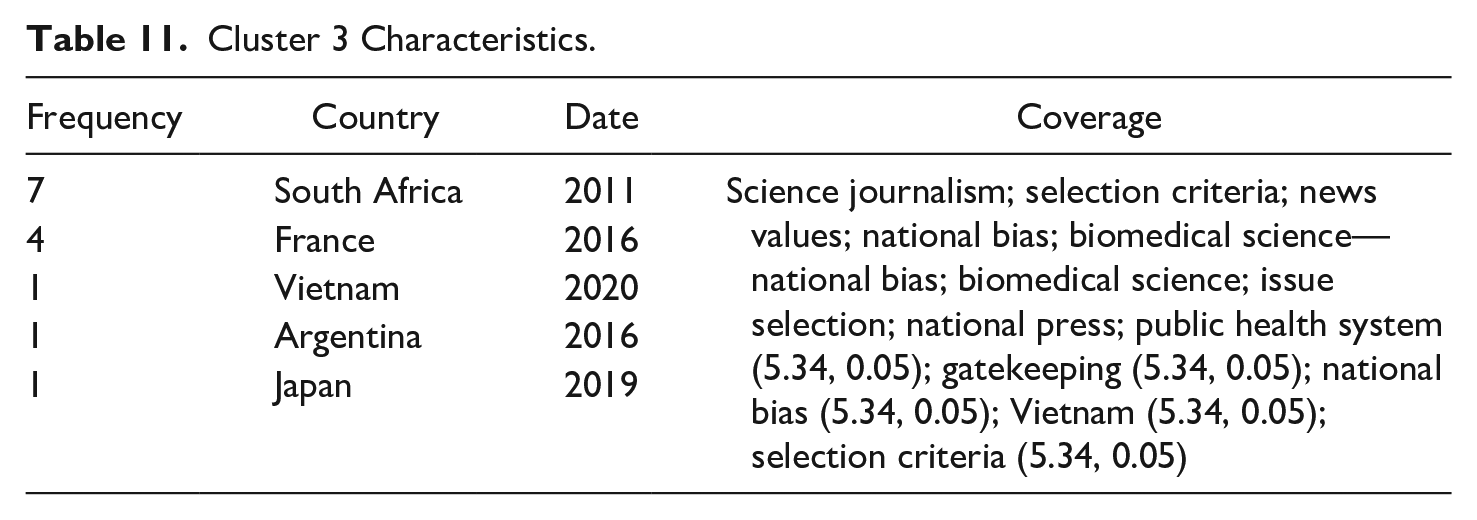
Figure 5 illustrates the country’s collaboration network. This network is composed of five clusters. The characteristics of these five clusters are presented in Tables 8–12. Table 7 shows each cluster’s labels and the number of countries that compose it.
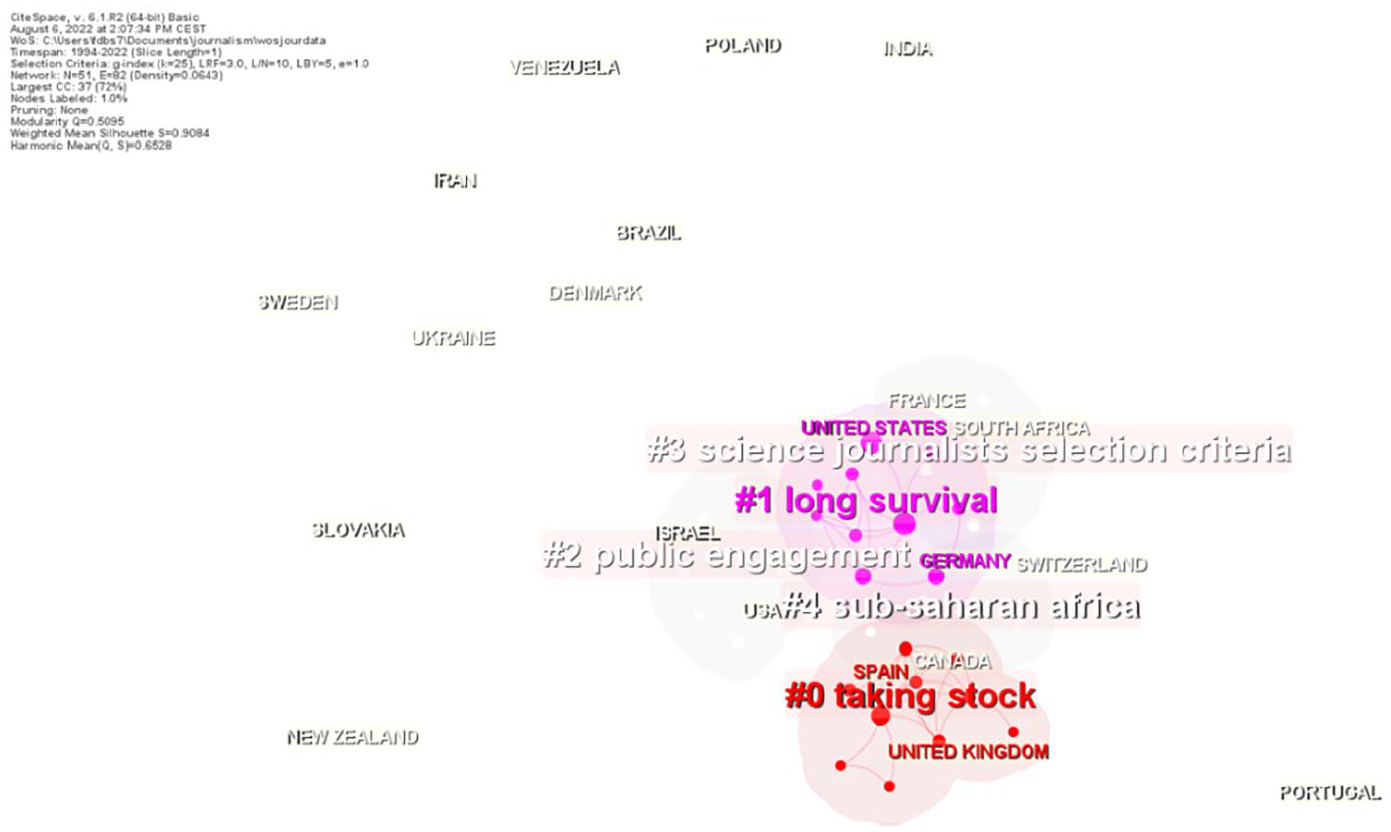
Countries’ Collaboration Network.
Summary of the Most Significant Five Clusters.
Note. LSI = latent semantic indexing; LLR = log-likelihood ratio; MI = mutual information.
-Silhouette: This metric was developed by Rousseeuw (1987) and measured the degree of uncertainty about the existence of a cluster. This metric varies between −1 and 1. A value close to 1 indicates that the cluster is perfectly separated from the others.
Cluster labels are selected from titles of cited papers, and the selection criteria are based on to identify the nature of clusters and based on one of three selection algorithms–latent semantic indexing (LSI), log-likelihood ratio (LLR), and mutual information (MI; Dunning, 1993). The best result is delivered by the LLR (Lee et al., 2022)
The largest cluster (#0) has 10 members, presented in Table 8, and a silhouette value of 0.919. It is labeled as taking stock by LLR, science journalism by LSI, and Spanish communication sciences degree (0.69) by MI. The most relevant citer to the cluster is Roche – (2021.0), Taking stock and re-examining the role of science communication. Frontiers in Environmental Science DOI 10.3389/fenvs.2021.734081.
Cluster 0 Characteristics.
The second largest cluster (#1) has 10 members, illustrated in Table 9, and a silhouette value of 0.884. It is labeled as extended survival by LLR, science journalism by LSI, and mapping public understanding (3.07) by MI. Finally, the most relevant citer to the cluster is Braude, Stan (2020.0). Surprisingly prolonged survival of premature conclusions about naked mole-rat biology. BIOLOGICAL REVIEWS, V96, P18 DOI 10.1111/brv.12660.
Cluster 1 Characteristics.
The third largest cluster (#2) has eight members (Table 10) and a silhouette value 1. It is labeled as public engagement by LLR, science journalism by LSI, and mapping public understanding (1.52) by MI. Appiah, Bernard (2020.0) is the cluster’s most relevant citer. Challenges and facilitators of public engagement with water, sanitation, hygiene and other environmental health issues in Ghana and Uganda: perspectives of scientists, journalists, and the public. JOURNAL OF WATER SANITATION AND HYGIENE FOR DEVELOPMENT, V10, P11 DOI 10.2166/washdev.2019.019.
Cluster 2 Characteristics.
The fourth largest cluster (#3) has five members (Table 11) and a silhouette value 0.85. It is labeled as science journalists selection criteria by LLR, Vietnam lesson by LSI, and science journalism (0.08) by MI. The most relevant citer to the cluster is Rosen, Cecilia (2016.0). The question of newsworthiness: a cross-comparison among science journalists’ selection criteria in Argentina, France, and Germany. SCIENCE COMMUNICATION, V38, P28 DOI 10.1177/1075547016645585.
Cluster 3 Characteristics.
The fifth largest cluster (#4) has four members (Table 12) and a silhouette value 0.833. It is labeled as sub-Saharan Africa by LLR and LSI and covers health (0.12) by MI. The most relevant citer to the cluster is Lublinski, Jan (2016.0) Triggering change—how investigative journalists in sub-Saharan Africa contribute to solving societal problems. JOURNALISM, V17, P21 DOI 10.1177/1464884915597159.
Cluster 4 Characteristics.
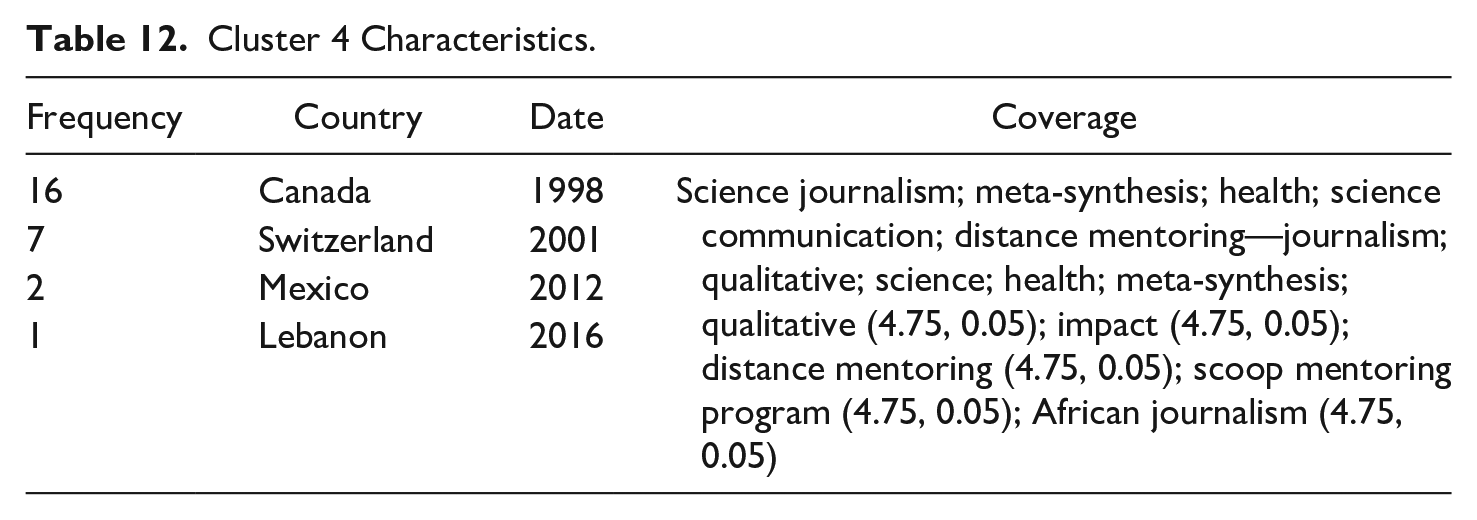
These results will guide researchers in CCG countries to collaborate with countries that form the cluster suitable for their future work and encourage their institutions to link with those in countries that form the cluster.
Conceptual Structure
The conceptual structure is analyzed from the thematic map projected on a plane composed of the axis of centrality on the abscissa and the density axis on the ordinate. The analysis of this map will allow us to reveal the Motor themes (right-hand frame at the top), the primary or transversal themes right-hand bottom frame), the emerging or declining themes (left-hand bottom frame) and the niche themes (left-hand frame at the top) according to the classification of (Della Corte et al., 2019). For example, the analysis in Figure 6 shows many emerging themes in science journalism literature. These themes are cyber journalism, science communication, social media and discourse analysis.
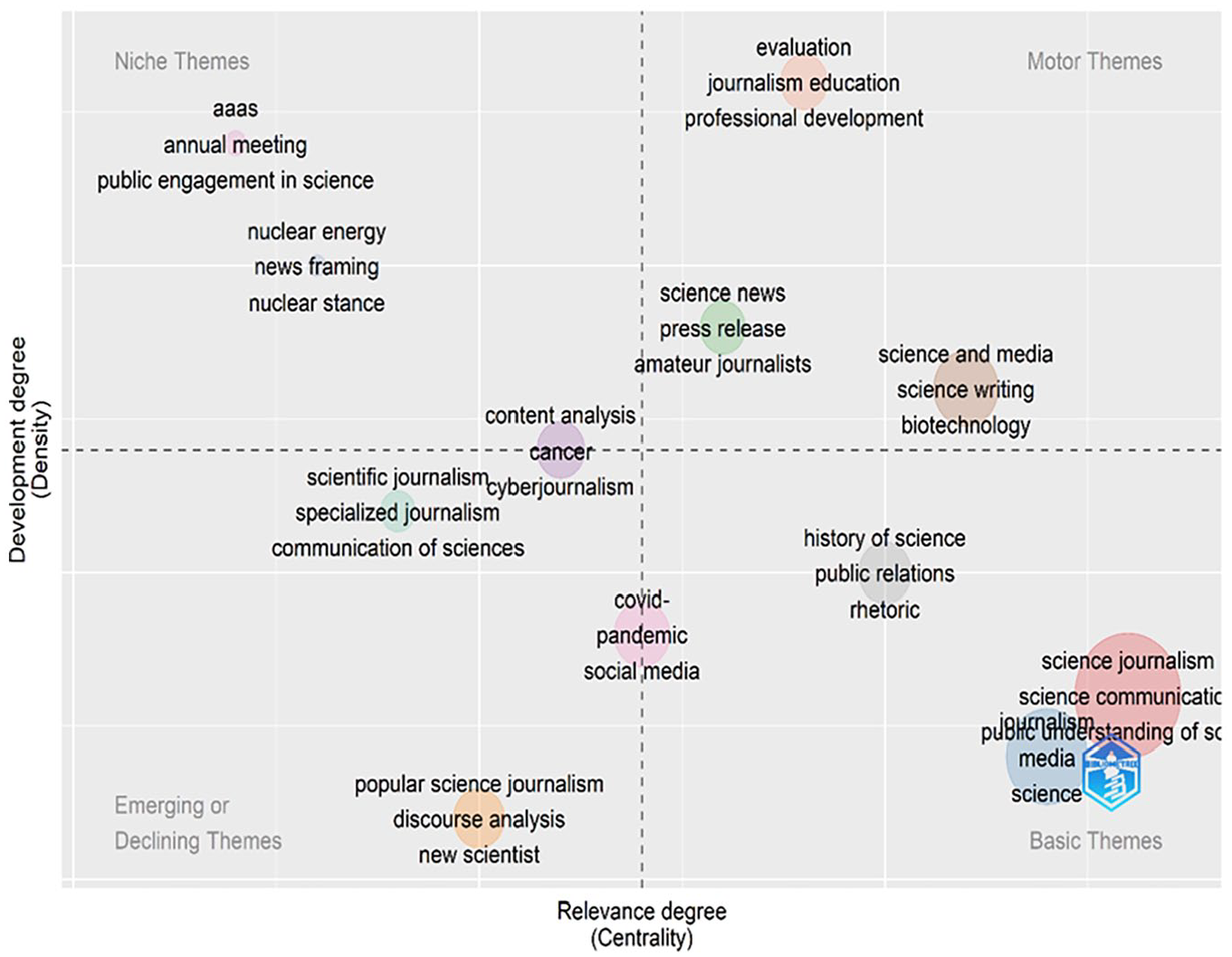
Thematic Map.
These results will help researchers in GCC countries to understand the science journalism literature better and integrate recent or emerging themes to catch up with their gaps. Cluster 4, which contains Lebanon and other countries close to the GCC, is more accessible to the GCC countries. This cluster is built around emerging themes, namely specialized journalism and communication science, which researchers from the GCC countries can develop to bridge the scientific gap.
Research Findings
The present study reveals that no research data on this theme in the GCC countries are available. This shows a substantial gap in science journalism studies. Moreover, the Web of Science and the Scopus Index have no research data addressing the keywords science journalism and science communication.
The GCC countries do not have specific science journalism courses, a core issue in science journalism research in the GCC region.
Science literacy seemed affected by the absence of science journalism studies and disparities in treating and articulating science news in media.
No study was done on science journalism in the GCC region until 2013.
However, three research studies have been found while exploring Google Scholar, which is not considered an index database.
Science Journalism studies have yet to be done in Oman, UAE, Qatar, and Bahrain, addressing the keywords science journalism and science communication. However, the GCC countries are heavily investing in developing science and technological infrastructure in their country.
The GCC countries rely more on Western countries for science journalism studies and expertise due to the need for science journalism databases.
Practical Implication
The Gulf Corporation Council countries are gearing up for the fourth industrial revolution. They have recognized science and technology as a significant force for social changes and boosting their economy. Though the GCC countries invest heavily in creating robust science and technological infrastructure and communication networks, science literacy must be included. With science literacy among ordinary people, new science and development technologies might be adopted faster. A lack of science literacy can impact the analytical thinking ability of optimal use of scientific knowledge to promote social changes in the GCC countries. In such a scenario, science journalism is strongly needed in the GCC countries. Science Journalism can enhance science literacy and competency among the nationals required for rational thinking about new scientific development. It can also solve social, political, economic, environmental, and personal issues and enables us to make the right decision. Science journalism studies will help the GCC countries in many ways. It will reduce Global North countries’ dependency on data and scientific resources. It will facilitate solutions to different challenges and provide a framework for nurturing general education and science literacy among the nationals. Furthermore, this bibliometric analysis will guide GCC countries that want to catch up in science journalism research since it will identify new recent themes to be exploited and countries that have developed collaborative networks according to these themes. This study will encourage researchers from GCC countries to collaborate with other countries for their future science journalism studies.
Limitations and Future Directions for the Research
The present study has limited data related to science journalism in the GCC region. As the GCC region needs more science journalism research, finding the data for bibliometric analysis becomes challenging. The authors have decided to compare data from Global North countries with GCC countries. Here again, the authors were dependent on Global North counties. The present study is the first bibliometric analysis in the GCC region in science journalism research. It can be considered a foundation stone for further research in the future in the Gulf region. For further study, different ranges of science journalism, level of science literacy among the nationals in the specific gulf country, and journalism students’ perception toward science journalism can be used in specific country context.
Conclusion
The present study indicates a strong need to develop a science journalism course to provide an overview of science communication principles and practices specifically tailored to journalism. It can be focused on effective science reporting techniques, fact-checking, interviewing scientists, and explaining complex scientific concepts in accessible language to create awareness among nationals. The course should include scientific report writing that aims to develop the skills necessary for writing and reporting on scientific topics, such as—covering elements of science storytelling, structuring science articles, using evidence-based sources, critically evaluating scientific studies, and incorporating visual elements like data visualization or infographics. Science journalism, ethics, and responsibility course can help journalism students understand ethical values and make them aware of ensuring accuracy by avoiding sensationalism and conflicts of interest, handling controversial scientific issues or topics and maintaining public trust in science journalism. Science communication strategies for digital platforms course can be designed for GCC journalism students to use different digital platforms such as websites, social media channels, blogs, and other virtual communication platforms to communicate compelling science news. Science journalism research needs to be promoted in the GCC region to decrease the dependency on Western countries. Science journalism research work. The policymakers and the program developers can include the past 10 years of development data and case studies from medical, environment, network, science, communication, and technology. Lectures, discussions, debates, field visits, workshops, hands-on training and experiences, field visits to science laboratories and research institutions, scientific events, national and international symposiums, and conferences can also be included as pedagogy approaches. These courses can be offered as standalone programs or integrated into existing journalism or media studies curricula; collaborating with universities, media organizations, and scientific institutions in the GCC region can facilitate access to resources, expertise and internship opportunities for aspiring science journalists. Based on interviews and particular guest addresses of scientists, science experts and science communicators can also be included to enhance science journalism students’ understanding of the real-world functioning of scientists and science experts. Medical innovation and research can also be included. It is worth noting that specific course offerings may vary based on the target audience, duration, and available recourses. Customizing courses to the needs and interests of participants in the GCC countries will enhance the effectiveness and relevance of science journalism training in the region. Along with M. Phill, PhD science journalism research needs to be promoted by the universities. This will help build good research resources in the GCC region and reduce the reliance on the Western world.
Footnotes
Declaration of Conflicting Interests
The author(s) declared no potential conflicts of interest with respect to the research, authorship, and/or publication of this article.
Funding
The author(s) received no financial support for the research, authorship, and/or publication of this article.