




Abstract
This article reflects the perspectives of journalism educators responsible for preparing journalists for careers in the Middle East and North Africa region, which has received little attention in trauma education research. A survey with quantitative and qualitative questions is used to reflect opinions of 101 journalism educators from Algeria, Sudan, and Palestine on journalism trauma-focused education and to elicit their attitudes toward incorporating trauma education into their institutions’ journalism curricula. The findings revealed that journalism educators are particularly cognizant of the role of trauma in journalism practice and the relevance of incorporating trauma education elements into journalism curricula. Journalism educators have identified a number of barriers to incorporating trauma into their institutions’ journalism curricula, as well as various perspectives on how to incorporate trauma-focused education into journalism curricula, which could call for changing how journalism is taught in their respective institutions. The study establishes a methodological foundation for other scholars to use when investigating triangulation (or the lack thereof) among educators, students, and practitioners in their own communities.
Keywords
Introduction
Although media outlets are becoming more aware of the need for trauma training (see Loyn, 2007; Ricchiardi, 2002), university-led trauma education training programs are scarce, particularly in the Middle East and North Africa (MENA) 1 region. Because the region has a long history of war, conflict, and political turmoil, this study argues that trauma-focused education should be more strongly integrated into journalism education to better prepare future journalists to become more aware of how specific assignments can impact their mental health and how to effectively report on these events, promoting trauma literacy and resilience. Notably, the inclusion of traumatic and potentially traumatic incidents in the field or in newsrooms, as well as the challenges such inclusion may pose to journalism educators and students, calls previously held assumptions about what journalism is and how it should be taught into question.
The purpose of this study, which is based on a survey of 101 journalism educators from Algeria, Sudan, and Palestine, is twofold: First, to examine the attitudes and opinions of journalism educators toward trauma education and its incorporation into their institutions’ journalism curricula. Second, to fill a knowledge gap in one of the most understudied regions in trauma education research.
The study aims to address the following research questions:
Journalism and Trauma
The American Psychiatric Association (2013) classifies potentially traumatic events as those involving direct or indirect exposure to death and serious injury. According to Ogunyemi and Akanuwe (2021), journalists are vulnerable to two types of exposure: vicarious and secondary traumatization. “The vicarious form involves adversely reacting to repeated exposures to other people’s extreme experiences or accounts of what happened to them. Secondary traumatization is the stress caused by hearing about other trauma survivors’ firsthand experiences” (p. 37). As a result, journalists must be equipped with the abilities and ethical acumen to report on a wide range of topics, as well as coping mechanisms to remain resilient (Buchanan & Keats, 2011; Simpson & Coté, 2006).
The lack of trauma-literate reporters in the newsroom has been blamed on rigid notions of journalists as detached observers (Dworznik, 2006). The term “objectivity” has come to mean that reporting on traumatic events while experiencing emotional distress is unprofessional and goes against journalistic values (Loyn, 2007). Due to the changing nature of journalism ecology and the ubiquitous use of social media by journalists and citizen journalists, emotion is becoming increasingly important in how news is produced and consumed. Local incidents of war and conflict have revealed how proximate tragedies have a significant emotional impact on journalists, blurring the lines between personal and professional lives and challenging notions of journalistic objectivity. During the Syrian civil war, for example, many journalists struggled to maintain objectivity because they were emotionally affected by the atrocities they witnessed. This emotional impact led to what Al-Ghazzi (2023) refers to as affective proximity to the political cause, which led some journalists to become advocates for the people they were covering. According to Kotišová (2023), affective proximity among journalists covering traumatic events in their communities means they are less strict to maintain objectivity and unwilling to separate their professional and personal lives, which adds another layer to the emotional toll of witnessing violence firsthand.
Repeated trauma exposure in journalists, according to research, can result in a wide range of adverse psychological reactions, including symptoms of post-traumatic stress disorder and depression (MacDonald et al., 2016). According to Dworznik and Garvey (2019), journalists must be taught to understand both their own and trauma victims’ psychological reactions to trauma and critical incident stressors.
Trauma-Focused Journalism Education
Trauma-focused journalism education, as used in this study, is a multi-layered concept. It includes training in trauma reporting, how to interact with victims to aid in victim healing (Lifton & Faust, 2009; Rodriguez, 2011), and awareness of self-trauma and the potential to traumatize victims and audiences (Seely, 2020). By equipping future journalists with the necessary skills to report on traumatic events sensitively and ethically, trauma-focused journalism education can contribute to trauma literacy and resilience. According to Seely (2020), exposure to trauma reporting strategies and lessons in higher education can foster “trauma-literate” journalists and editors.
Trauma Reporting in Journalism Education
Research indicates that there is a gap in higher education journalism curricula for teaching students about covering trauma (Gretchen & Garvey, 2019; Keats & Buchanan, 2009; Melki et al., 2013; Ogunyemi & Akanuwe, 2021; Specht & Tsilman, 2018.). In a study of Canadian journalists about assignment stress injury, Keats and Buchanan (2009) found that participants expressed a desire for professional trauma training in addition to increased school training.
Melki et al. (2013) found that half of the journalism educators surveyed believed trauma reporting received little to no attention in their study on the state of trauma journalism education at accredited journalism schools in the United States. In addition, 75% of educators felt unprepared to teach the topic due to their lack of comfort in discussing trauma and journalism ethics. Only one program among accredited U.S. journalism schools offered a course on trauma reporting (Dworznik & Garvey, 2019). According to Dworznik and Garvey’s (2019) study, while accredited schools agree that trauma training is an important topic, trauma elements appear to be sporadic or non-existent in coursework. Moreover, Amend et al. (2012), stated that only a few schools provide media ethics courses with a practical or trauma training component, which could include inviting trauma victims to speak to students about their experiences, learning stress and secondary trauma coping strategies, and mock interviews with actors posing as victims. Teaching journalists about the emotional aspects of telling traumatic stories, as stated by Young (2011), is just as important as teaching interviewing, writing, and video editing skills.
Trauma Literacy and Resilience
According to Barnes (2015), a trauma-literate journalist understands the value of self-care and victim care. Establishing that the journalist is aware of the potential adverse impacts of traumatic story assignments and knows how to conduct one’s self morally and compassionately.
Only one accredited journalism school in the United States taught students how to protect themselves from psychological trauma and how to interact with trauma victims, according to Gretchen and Garvey’s (2019) survey. In addition to the lack of emphasis on trauma literacy in journalism curricula, journalism education research indicates that courses appear to place little emphasis on developing resilience in students who may be assigned high-risk assignments (Specht & Tsilman, 2018). Ogunyemi and Akanuwe (2021) define resilience as the process of adapting well in the face of adversity, trauma, tragedy, threats, or even significant sources of risk. The absence of resilience in trauma journalism education raises concern about journalism schools’ failure to provide students with opportunities to develop skills that may reduce the risk to their personal and professional well-being.
Journalism Education in the Arab World
The American University in Cairo established the Middle East’s first academic journalism and mass communication program in 1935 (Abu Baker et al., 1985). More than 30 years later, five other journalism programs were established in Sudan, Tunisia, Algeria, Iraq, and Lebanon (Abu Baker et al., 1985; Tahat et al., 2017). In the 1980s, the number of journalism programs grew and expanded, with new programs established in Jordan, Morocco, Saudi Arabia, Qatar, Libya, and the United Arab Emirates (UAE) (Abu Baker et al., 1985). The massive expansion of the Arab media industry in the late 1990s accelerated the development of journalism as an academic discipline. In early 2006, 70 communication programs were available at various government and private Arab universities. According to Ziani et al. (2018), there have been approximately 135 university programs teaching media and journalism over the last two decades.
Language, colonial historical ties, public/private ownership, funding, and curriculum structure, among other factors, are likely to influence the academic and cultural orientations of MENA higher education institutions. According to Tahat et al. (2017), the French model has historically been the most prevalent (45% of all higher education institutions) in North African countries (Algeria, Tunisia, and Morocco), followed by the American model (43%) in the Gulf States and Jordan, with mixed cultural models used by approximately 6% of other higher education systems in Sudan and other countries such as Egypt and Lebanon. However, the MENA region’s cultural models of higher education have evolved over time, with the American model quickly outgrowing the French model. The presence of American style of higher education is most visible in the Gulf region, owing to the fact that Qatar and the UAE already host branch campuses for several American universities (Bhandari & El-Amine, 2012). Although the traditional French model of higher education journalism is still used in some institutions, it emphasizes chronicle, commentary, and opinion piece writing, as well as the journalist’s role as a commentator (Williams, 2006). American-style journalism education, however, emphasizes a more hands-on approach to learning, encouraging journalism norms such as objectivity and promoting experiential learning opportunities akin to internships or student-run publications (Williams, 2006).
Prior to the introduction of private journalism programs, the majority of journalism schools in the Middle East were controlled by governments and operated in a strict political environment with limited academic freedom to criticize national governments (Bhandari & El-Amine, 2012; Saleh, 2010). In the MENA region, public higher education institutions are caught between autonomy and governance on one hand and state control on the other. Several MENA countries have experimented with aspects of education decentralization, autonomy, and accountability through national educational reforms. These initiatives have met with varying degrees of success. Recent MENA reforms have resulted in greater self-determination and, in some cases, the implementation of a decentralized model to devolve decision-making, but they have not provided the means for implementation at the school level (El-Kogali, 2019). Other higher education institutions in the MENA region have “semi-independence,” which means they are neither clearly separated from the government nor completely controlled by it.
The changing landscape of Arab media as a result of digital advancements and media convergence suggests that media institutions develop new academic and professional training opportunities to meet newly emerging job demands. However, most academic programs in the Arab world appear to be slow to adapt, with programs still focusing on traditional mass communication rather than new digital and interactive mass communication.
The Jordan Media Institute conducted a study in 2018 to monitor and evaluate educational programs at (120) higher education institutions across nine MENA countries: Jordan, Palestine, Syria, Lebanon, Iraq, Egypt, Tunisia, Algeria, and Morocco. According to the survey, most media education programs in these countries prioritize theoretical content over practical content (also see Allam & Amin, 2017; Tweissi, 2015). Furthermore, these institutions’ journalism study plans fall short of meeting contemporary professional needs and the need to integrate technology and digital media into journalism education. Only 35% of these universities provide investigative journalism training, while 3% provide courses in journalist safety and security (Tweissi, 2018). Mutsvairo and Bebawi (2019) reported that investigative journalism courses have been recently introduced at 11 Arab universities. UNESCO incorporated its journalist safety course for the Arab region into the curricula of six Palestinian universities in the West Bank and four in Gaza in 2019 (UNESCO, 2022). It is important to note that Palestinian universities were founded primarily during Israel’s occupation of the West Bank and Gaza Strip and rely on government funding, and some rely on fundraising from charitable and non-governmental organizations (RecoNow, 2016).
Research Methodology and Sampling
With the educational culture diversity of the MENA region in mind, journalism educators from Algeria, Sudan, and Palestine were chosen as study samples. Furthermore, since the authors are mass communication and journalism educators working in the MENA region, an element of convenience in sampling and data collection also justified the selection of these countries.
The authors identified universities in Algeria, Sudan, and Palestine that were listed on the websites of the Ministries of Higher Education. Following that, they selected journalism and communication colleges and/or departments at public and private universities. Algeria has 40 public and state universities, with journalism and mass communication colleges and departments at each. Sudan’s universities and colleges offer 27 journalism programs, with nine being privately owned and the remaining 18 being government-owned. Six private and eight public universities in Palestine have journalism and mass communication colleges and departments. Journalism educators in the three countries were chosen based on their affiliation with the colleges and departments identified.
The researchers employed an online survey to reach out to journalism educators in three MENA countries. Using the snowball sampling method, the link was emailed to journalism educators from the three MENA countries, both individually and in groups. Some of the survey respondents recruited others to participate in the study. The data were collected from November 2022 to March 2023.
The survey used in this study was designed by the Journalism Education and Trauma Research Group, which is based at the University of Lincoln in the United Kingdom and has members from universities all over the world. The survey included both quantitative and qualitative questions, with 22 closed and two open-ended questions. A 5-point Likert-type scale is used to assess levels of acceptance for each item (1 = strongly disagree and 5 = strongly agree).
The survey included 101 journalism educators from private and public colleges and departments of journalism and mass communication in Algeria, Sudan, and Palestine. Algeria had 46% of the journalism educators who responded to the questionnaire, Sudan had 34%, and Palestine had 20%. 75% of the journalism educators polled had 10 or more years of teaching experience, 26% had 5 to 9 years, 12% had 2 to 4 years, and 5% had 1 year. 77% of the educators surveyed were males and 23% were females. Three questionnaires were discarded because they were returned uncompleted.
For data analysis, the researchers used the Statistical Package for the Social Sciences (SPSS), which includes descriptive statistics such as frequencies, cross-tabulation, and descriptive ratio statistics. This enabled the researchers to identify trends, compare results, and draw informed conclusions.
Results and Discussion
The survey data are examined and organized in tandem with the study’s four research questions, yielding four discussion themes: (a) journalism educators’ trauma awareness, (b) trauma-focused education: Journalism students’ levels of trauma literacy and resilience, (c) journalism educators’ attitudes toward embedding journalism trauma-focused education in journalism curricula, and (d) the obstacles to embedding journalism trauma education in journalism curricula.
Trauma Awareness Among MENA Journalism Educators
This section reports on the responses to
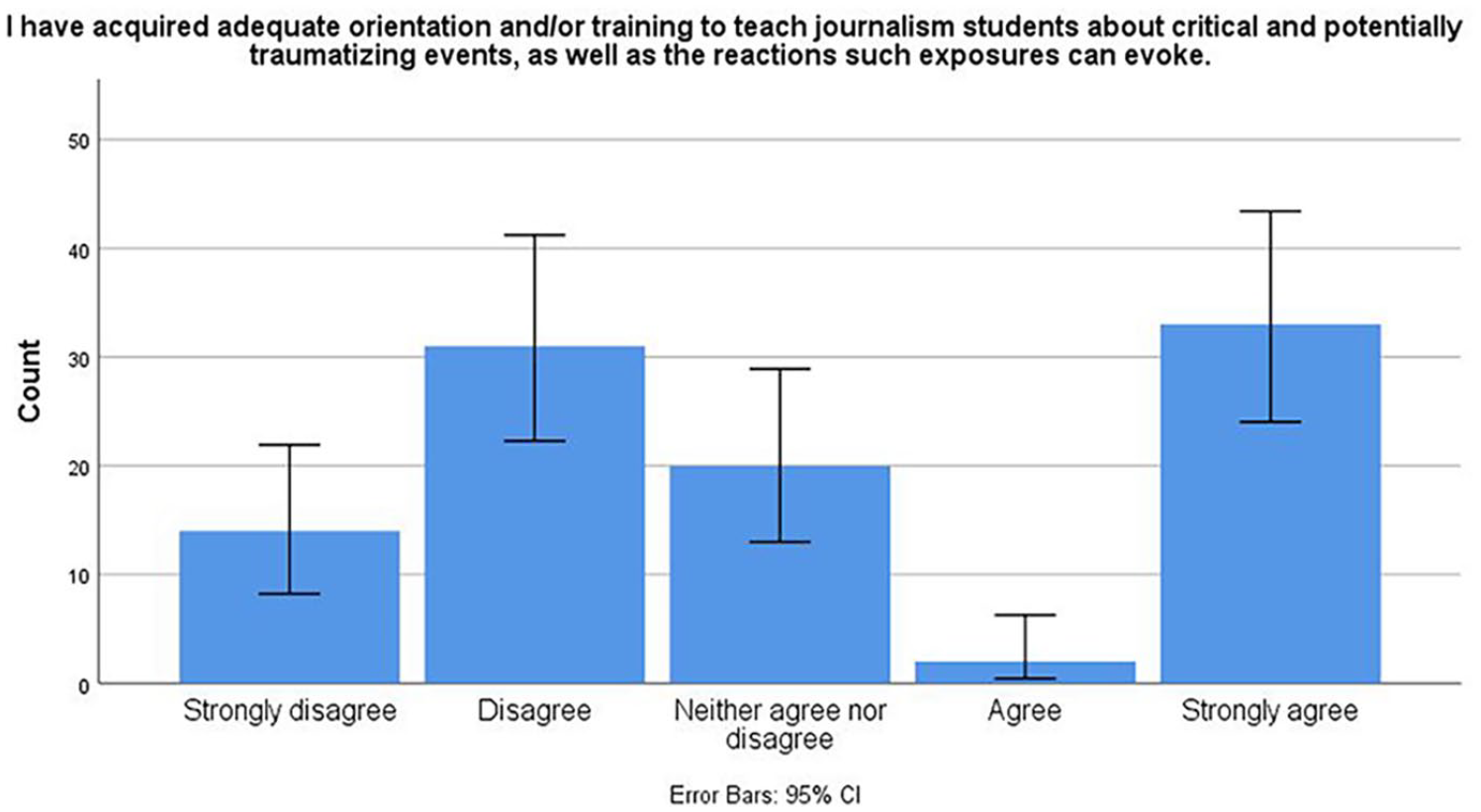
According to the findings, 35% of journalism educators agree (33% strongly agree and 2% agree) that they have received adequate orientation and/or training to teach journalism students about critical and potentially traumatizing events, 45% disagree (31% disagree, 14% strongly disagree), and 20% disagree.
Cross-tabulated responses to this question with countries revealed that 33% of Algerian journalism educators disagreed that they had received adequate orientation and/or training to teach journalism students about critical and potentially traumatizing events, 31% of Sudanese journalism educators disagreed, and 25% of Palestinian journalism educators disagreed. Palestinian journalism educators reported the highest rate of agreement (45%) that they had received adequate orientation and/or training to teach journalism students about critical and potentially traumatizing events, as well as the reactions such exposures can elicit. Furthermore, a significant number of journalism educators polled (88% strongly agree) understand the risks of being exposed to critical and potentially traumatic events.
When asked if they had received training on aspects of trauma and traumatic stress relevant to journalism education, journalism educators responded as follows:
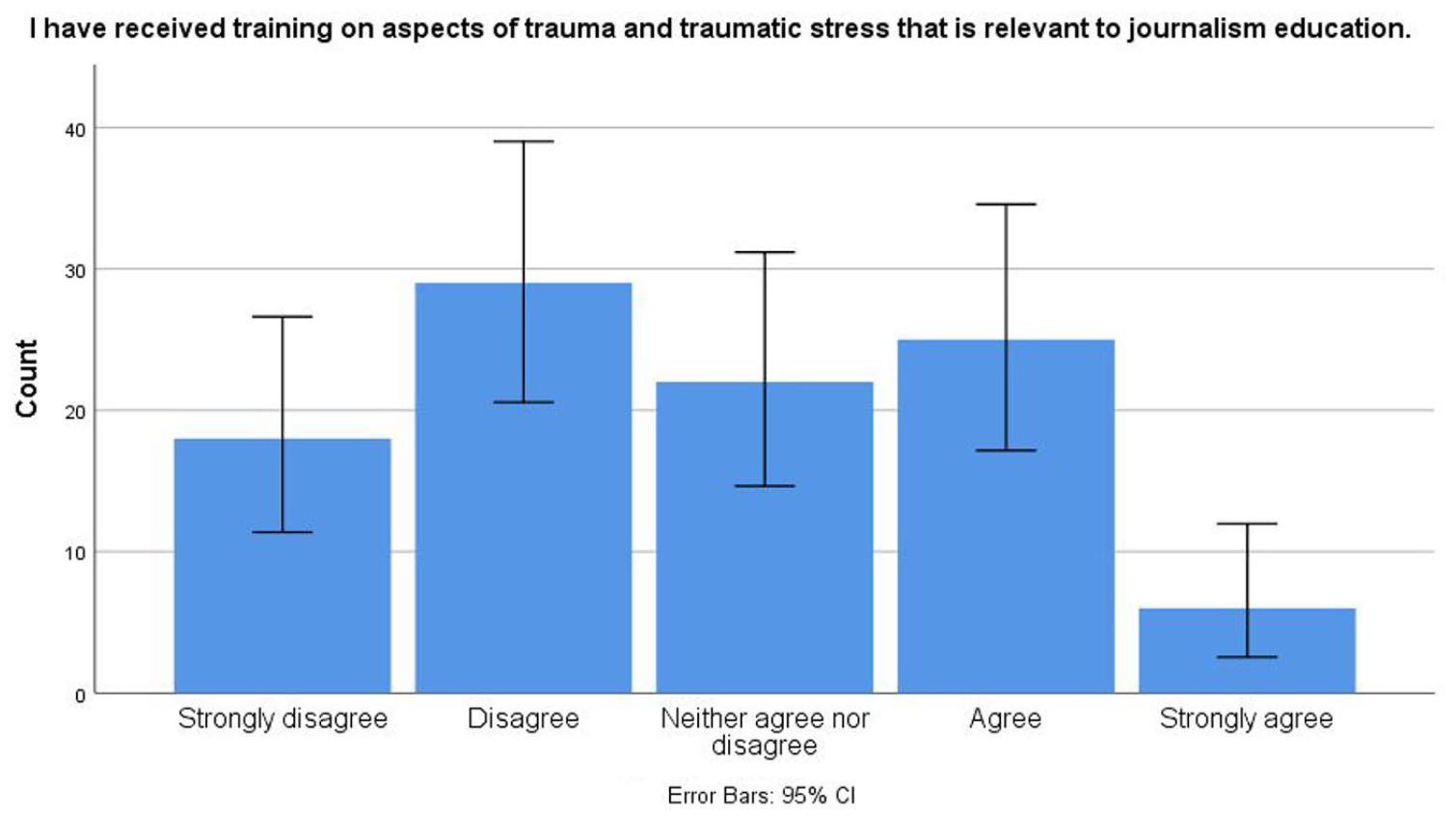
Based on the data analysis, 47% of journalism educators disagreed (18% strongly disagreed, 29% disagreed) on receiving trauma and traumatic stress training relevant to journalism education. Algerian journalism educators reported the highest percentage of not receiving training (65%), while 40% of Palestinian journalism educators disagreed (30% disagreed and 10% strongly disagreed) and 23% of Sudanese journalism educators disagreed (20% disagreed and 3% strongly disagreed) that they received training on trauma and traumatic stress issues relevant to journalism education. The high percentage of Algerian educators who did not receive adequate trauma and traumatic stress training in the survey could be explained by the cultural model of journalism training of Algerian educators. Algerian journalism educators stated in the survey’s qualitative questions that the French cultural model influences Algerian journalism education. According to Algerian journalism educators, this French academic training is reflected in journalism educators’ research epistemologies, which favor theoretical and qualitative scholarship with an interpretive philosophical orientation over applied empirical studies. This influence was also visible in journalism education and practice, with the Algerian press favoring opinion journalism over news journalism.
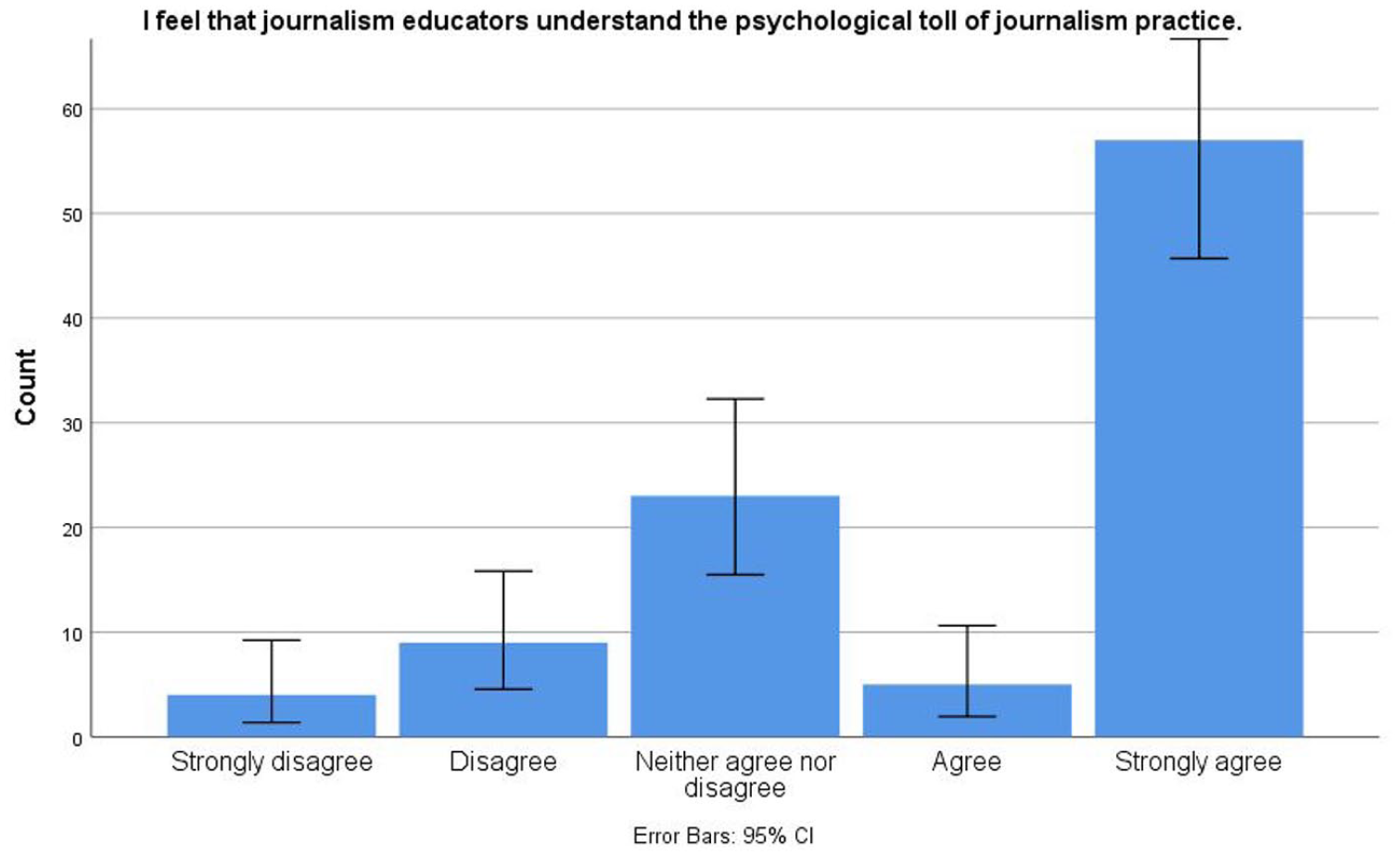
The chart above shows that the majority (62%) of journalism educators in the sample agree (5% agree and 57% strongly agree) that journalism educators are aware of the psychological toll of journalism practice. Although 13% strongly disagree (4% strongly disagree and 9% disagree), 23% are neutral.
Attitudes of Journalism Educators Toward Trauma-Focused Education Embedded Into Curriculum
This section reports on and analyzes six closed-ended questions related to
Elements of Trauma-Focused Education in My Institution’s Current Curriculum.
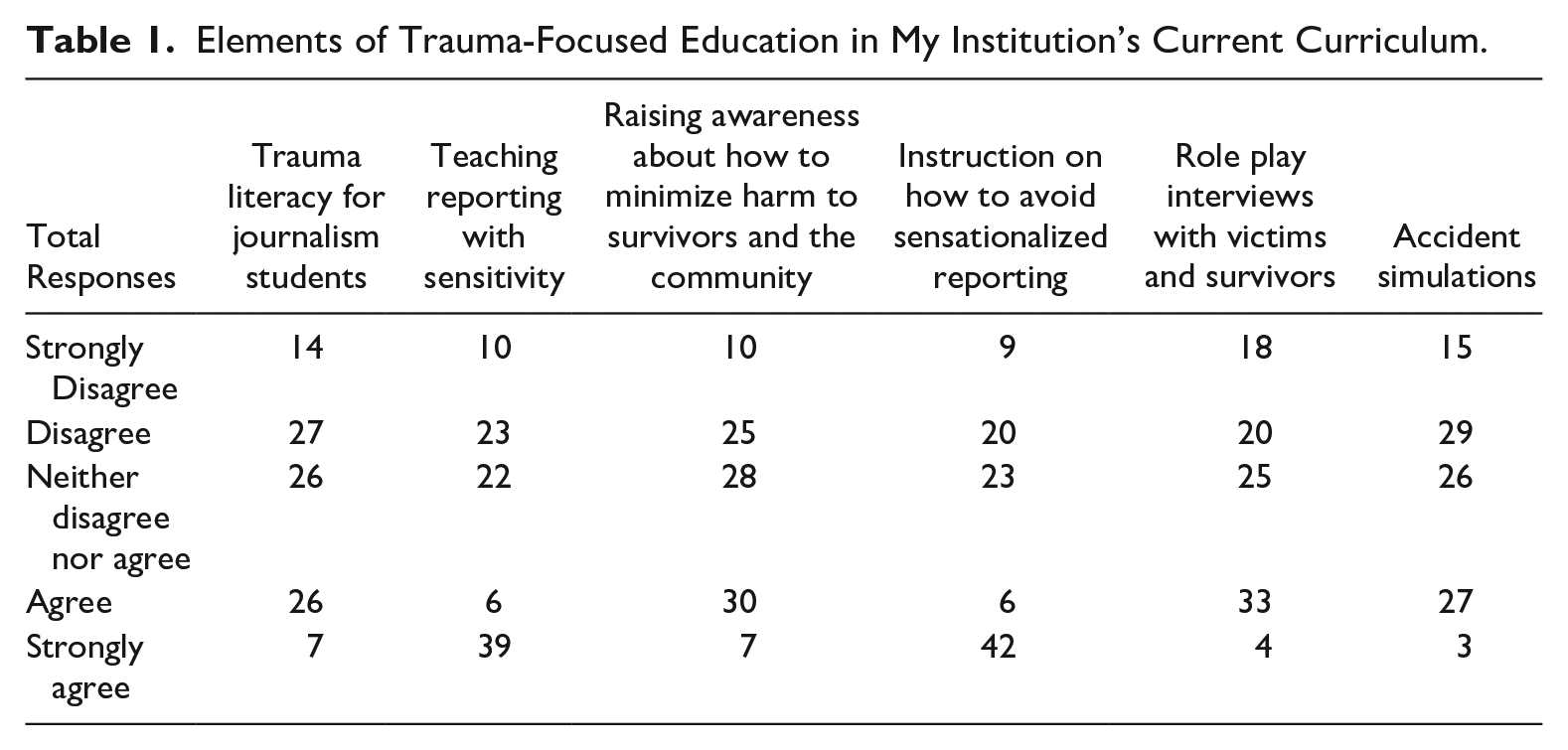
The following are responses from journalism educators to a general question about trauma literacy embedded in curricula: Trauma literacy is incorporated into their respective institutions’ journalism curricula, according to 33% (26% agree and 7% strongly agree) and 41% disagree (27% disagree and 14% strongly disagree). When asked if the content of their institutions’ journalism curriculum includes elements of trauma literacy, such as sensitive reporting, raising awareness about how to minimize harm to survivors and the community, and avoiding sensationalized reporting, there was no statistically significant difference between the responses of journalism educators from the three countries. Nonetheless, 38% of respondents disagree (18% strongly disagree and 20% disagree) that role-playing is included in journalism instruction. Furthermore, 44% disagree (15% strongly disagree and 29% disagree) that accident simulations are integrated in journalism classes. This finding is consistent with previous research illustrating that schools appear to be avoiding less traditional methods of delivering trauma content, such as role-playing exercises, simulations, and interaction with actual trauma victims, which have been touted as more robust methods of addressing trauma (Dworznik & Garvey, 2019; Kay et al., 2011).
Trauma-Focused Education: Journalism Students’ Levels of Trauma Literacy, and Resilience
This section of the analysis focuses on journalism educators’ responses to
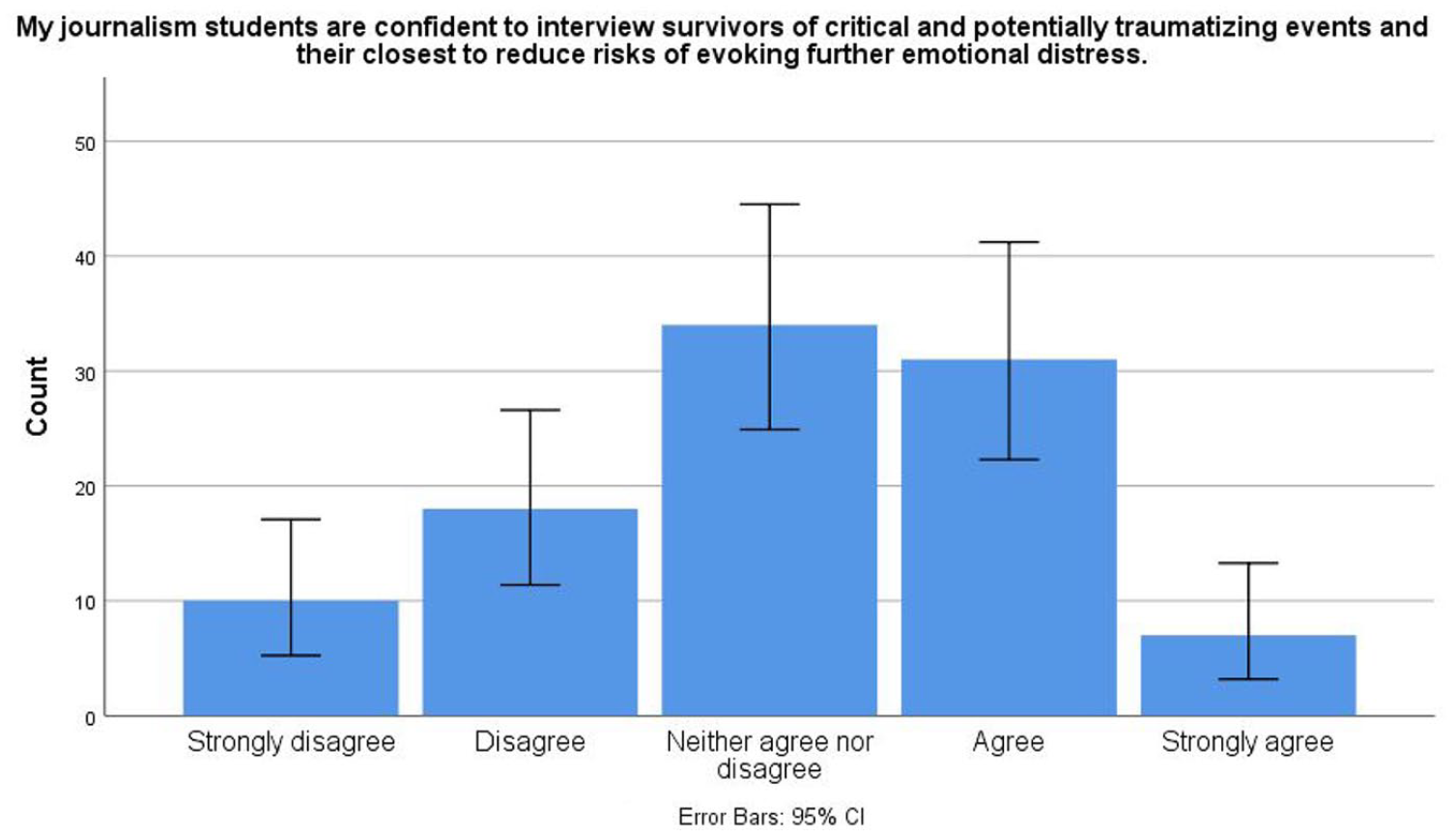
The following are journalism educators’ attitudes toward their students’ readiness to interview survivors of critical and potentially traumatizing events: 34% agree (neutral), 31% disagree, 18% disagree, and 10% strongly disagree with the statement.
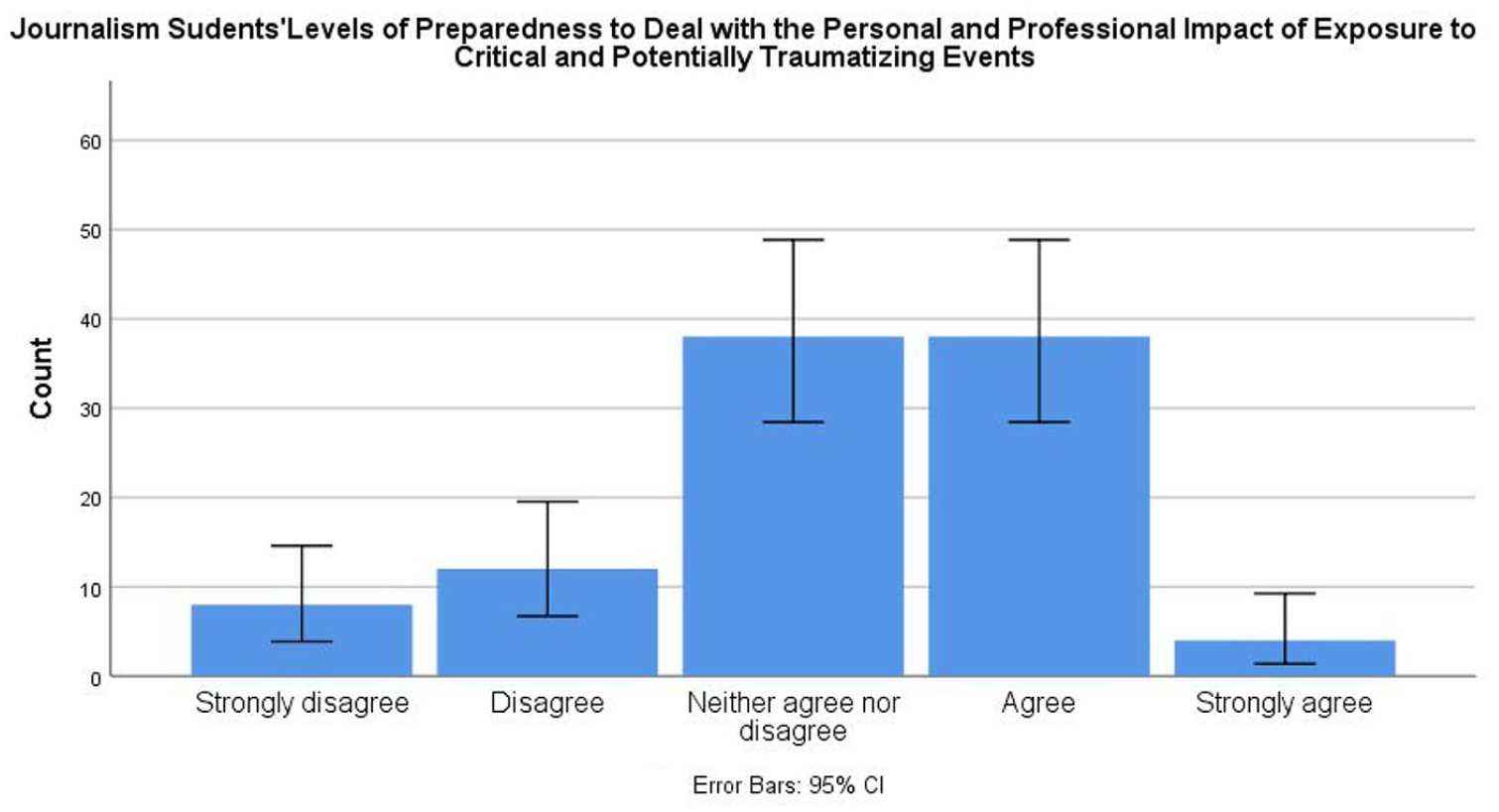
As shown in the chart below, 38% of journalism educators polled agreed that their students are well prepared to deal with the personal and professional consequences of potentially traumatizing incidents, while 38% neither agreed nor disagreed. Furthermore, 12% disagree, with 8% strongly disagreeing.
In response to the final two questions, 98% of journalism educators polled strongly agreed that more emphasis should be placed on developing personal and professional resilience in journalism students in preparation for future high-risk assignments. Furthermore, 94% of all journalism educators strongly agree that including relevant teaching materials can help students become resilient to exposures and use coping strategies that reduce their risk of experiencing adverse reactions.
The inclusion of teaching materials that help students become aware of trauma and build resilience to trauma exposure, as noted by journalism educators in their responses to the qualitative questions of this research, necessitates a swift departure from the binary theory–practice approach to journalism education in favor of a more nuanced recognition of the emotional psychological and dimensions of journalism practice. Furthermore, some argue that trauma reporting should be taught with the goal of ensuring the safety of journalists in disaster and armed conflict zones by introducing preventive and procedural content, health protocols, first aid, and so on. Students, according to journalism educators, would benefit from understanding the international legal system that protects journalists working in armed conflict and war zones.
Obstacles to Integrating Trauma Into Journalism Curriculum
This section of the research analysis contains journalism educators’ perspectives on the study’s last question,
Accreditation
Journalism educators from all three countries identified accreditation as a barrier to incorporating trauma education into journalism curricula. Previous research (Melki et al., 2013; Ogunyemi & Price, 2023; Specht & Tsilman, 2018) supports this finding. When we cross-tabulated these responses by country, we discovered that accreditation was rated as a barrier to the inclusion of trauma in journalism curricula by 46.7% of Algerian journalism educators, 40% of Palestinian journalism educators, and 37.9% of Sudanese journalism educators.
According to journalism educators for this study, accreditation is a barrier to incorporating trauma into journalism curriculum because trauma journalism is not included in the MENA region’s accreditation standards at the level of higher education national accrediting institutions in their respective countries. Similarly, Anderson and Bourke (2020) stated that the Accrediting Council on Education in Journalism and Mass Communication does not include trauma journalism as one of its accreditation standards. As a result, the majority of curricula offered by Council-accredited institutions do not cover trauma.
Lack of Specialist Knowledge on Trauma
The second major barrier to incorporating trauma into journalism curricula is the lack of trauma specialist knowledge. This was noted by 33.3% of Algerian, 24.1% of Sudanese, and 15.6% of Palestinian journalism educators. Higher education institutions in the three countries, especially in Algeria and Sudan, according to the responses of the journalism educators to the qualitative questions, lack experienced instructors with professional journalistic competence, and the majority of lecturers are unable to develop curriculum content with an emphasis on trauma reporting. Teaching such a specialist subject is dependent on individual instructors who teach infrequent trauma issues due to a paucity of trauma reporting training for instructors.
In addition, many journalism colleges in Algeria and Sudan provide insufficient training opportunities for students due to education models that are primarily based on indoctrination. By indoctrination, we refer to education as a socialization process that aims to increase congruence between the views and principles of the regime and its citizens. This is particularly true for one-party rule in Sudan and to a great extent in Algeria where higher education is under the supervision of the Ministry of Higher Education.
Journalism educators from Algeria, Sudan, and Palestine provided additional impediments to the incorporation of trauma in journalism curriculum. These impediments include lack of awareness regarding trauma-focused education, stagnation of journalism curriculum, and administrative obstacles to curriculum modification.
The Lack of Awareness About Trauma Education
In their responses to the questionnaire’s open-ended questions, journalism educators identified a lack of awareness about trauma among journalism instructors as a significant barrier to including it in journalism curriculum. They argue that trauma and crisis communication are frequently confused, and that there is a lack of clarity about how journalism should be taught in many journalism schools throughout the Arab world. This is due to rapid technological advancements in the field as well as the changing nature of mass communication and journalism. “I teach journalism in a department that focuses on communication rather than journalism,” explained an Algerian journalism professor. Another journalism educator believes that “the outdated stereotype of the bureau’s (desk) journalist continues to exist among many journalism professors.”
Other educators believe that the lack of understanding of trauma education by university administrators has slowed journalism professors’ interest in trauma education. Furthermore, many educators consider journalism trauma education to be a secondary field due to the need for specialized knowledge and resources that not all institutions have. As a result, trauma-informed journalism education is frequently overlooked in favor of traditional writing and editing curriculum priorities.
Journalism Curricula Stagnation and Administrative Barriers
According to journalism educators, updating and improving academic programs and educational content at public universities is difficult due to the bureaucracy and size of such institutions, which limits their ability to change. Furthermore, academic autonomy is lacking in some universities. Algeria’s Ministry of Education and Scientific Research is in charge of overseeing universities and approving curricula, which is seen as a significant administrative barrier to curriculum reform by research participants. According to El-Kogali (2019), the ongoing debate over the decentralization of education service delivery and the power dynamics between central ministries and schools exemplifies the MENA education system’s conflict between control and autonomy.
Another major barrier to the inclusion of trauma reporting in journalism curriculum, according to journalism educators in this study, is the isolation of some universities and a lack of contact, collaboration, and coordination between the university and other institutions and stakeholders in the country that can facilitate knowledge and skill exchange to aid in delivering trauma education through journalism training activities.
Inclusion of Trauma Education in Journalism Curricula
The survey’s second qualitative open-ended question asked how trauma can be integrated into journalism curricula for journalism students. A range of perspectives and methodologies were elicited, with one perspective suggesting that trauma reporting and education will be integrated into journalism curricula through modifying existing courses, while the opposing perspective suggests the development of stand-alone trauma education and reporting courses.
Integrating Trauma Education Into Existing Journalism Courses
Journalism educators are urging that existing course content be updated to include real-life examples of trauma reporting as well as hypothetical simulations of traumatic situations. Educational materials should include a section on crisis media coverage and trauma resilience approaches, as well as a section on the psychological effects of war and conflict coverage. Trauma reporting, according to some, should be taught as a unit in journalism ethics classes to help students understand the ethical guidelines for crisis reporting. Others believe that journalism classes should be taught through the lenses of correspondent journalists and those who cover traumatic events.
According to Palestinian educators, non-profit organizations such as the Palestinian Press House and the Palestinian Red Crescent Society have collaborated with Palestinian journalism colleges to train students in news reporting. They claimed that structured partnerships with such organizations could help journalism schools develop effective methods for teaching students how to report on trauma. Furthermore, Palestinian educators believe that global collaboration with UNESCO, as well as the implementation of occupational safety training strategies and course materials developed by UNESCO, will benefit their schools. Although global collaborations have benefited some countries’ media training, we believe they have also created training challenges for other countries in terms of Westernization/de-Westernization of course content and perspective. According to Knight (2010), because the majority of textbooks were published in Western countries, instructors in the Middle East and Asia found the textbook examples difficult to understand.
Standalone Journalism Courses on Trauma
Journalism educators believe that trauma should be integrated into journalism curricula by first offering standalone practical courses on trauma reporting and resilience; second, these courses should be delivered and administered by specialized professors; and finally, established scientific spaces such as meetings and seminars that bring journalism educators and professional journalists together should be promoted. According to Sudanese journalism educators, enabling students to engage in open dialogues with journalists who have experienced traumatic events while remaining safe is a way to help them understand what they can expect on the job. MENA journalism educators generally believe that incorporating psychology and mental health content into journalism curricula is the most effective way to promote trauma-focused education.
Conclusion
This research has significantly contributed to ongoing theoretical debates and discussions about journalism trauma education by establishing new data and pedagogical approaches that reflect the perspectives of journalism educators from the underrepresented MENA region in journalism education research.
According to the study’s main findings, only 32% of journalism educators believe they have received adequate orientation and/or training to teach critical and potentially traumatizing events to journalism students.
Although some elements of trauma-focused journalism education, such as reporting with sensitivity, and raising awareness about how to minimize harm to survivors and the community, have been identified in varying percentages in the current curricula by MENA journalism educators in this study, 94% of the journalism educators surveyed strongly agreed that integrating relevant teaching materials can help students become resilient to trauma exposures.
Two of the most significant barriers identified by journalism educators to integrating trauma into journalism curricula are a lack of experience in trauma education among journalism instructors and a lack of awareness of trauma education among higher education administrators in charge of academic planning. These challenges reflect the tension that exists in many MENA national higher education systems between government control of higher education institutions and autonomy and decentralization. This research also emphasized the subsequent layer of tension in MENA higher education, which is the binary opposition between private and public ownership and funding of the region’s higher education system. This was done to furnish context for the quantitative data gathered via the questionnaire’s analysis and discussion. Journalism programs at private Palestinian universities are more accommodating to change than those at state-run institutions in Algeria and Sudan. This is due to the international financing and partnership with international organizations such as UNESCO, which has, as previously stated, integrated specialized courses on journalist safety into the curricula of six West Bank institutions and four Gaza universities. Curriculum reform, however, is hampered in other government-owned colleges in Algeria, Sudan, and Palestine by bureaucratic impediments and resistance to change.
As stated in the introduction of this article, including traumatic or potentially traumatic incidents in academic journalism or newsrooms, as well as the challenges such inclusion may pose to journalism educators and students, calls into question previously held assumptions about what journalism is and how it should be taught. This logic is equally valid as one of the study’s conclusions. The perspectives of journalism educators from Algeria, Sudan, and Palestine on how trauma-focused education should be fostered in journalism curricula, either as a standalone course or as an addition to an existing journalism course(s), as well as their thoughts on the challenges this inclusion may face, all speak to the notion of journalism and how it should be taught.
This study summarizes, expands, and adapts the insightful suggestions made by journalism educators about incorporating trauma-focused education into journalism curriculum. First, journalism educators should promote trauma-focused education through role play and traumatic event simulations. More research is needed, however, to determine the value of role-playing in trauma-focused education in preparing journalists to effectively cover traumatic events. Incorporating case studies and real-life examples of journalists who have successfully navigated trauma reporting could also be a useful learning tool. Furthermore, both offline and online, journalists’ safety, security, and well-being should be prioritized. This implies that, in addition to war correspondent trauma, which continues to dominate MENA journalism educators’ perceptions in this study, the concept of journalism trauma should be broadened to include vicarious or mediated trauma caused by user generated content.
Second, robust, well-structured local, regional, and global collaborations between journalism schools and local and global media training organizations are required to improve the professional talents of journalism students and instructors. Partnerships with global media training organizations, however, should be tailored to the MENA region’s journalism culture. Such collaborations should assist journalism students in becoming more engaged with their communities, thereby ending the isolation of journalism colleges from their societies, which has been identified as a barrier to the integration of trauma education in journalism curricula by some journalism educators in this study. Third, to effectively teach trauma in journalism, interdisciplinarity between journalism and other disciplines of academic study such as psychology and sociology should be fostered and supported.
The data in this study do not represent all MENA journalism educators. Our goal, however, is to present a snapshot of some journalism educators’ perspectives and opinions on trauma education in their institutions. One of the study’s limitations is that we did not use samples of journalism curriculum from all three countries to provide a more thorough examination of the perspectives of journalism educators. We anticipate that our research will serve as a methodological foundation for other scholars working in the Global South to use when investigating triangulation (or lack thereof) among educators, students, and practitioners in their own communities.
Footnotes
Declaration of Conflicting Interests
The author(s) declared no potential conflicts of interest with respect to the research, authorship, and/or publication of this article.
Funding
The author(s) received no financial support for the research, authorship, and/or publication of this article.