




Abstract
The article outlines an evidence-informed approach for enhancing resilience, one of the key personal resources in labor, and explores the viability of this training for increasing journalists’ ability to manage everyday work-related stressors. The suggested pedagogy is in the form of a microintervention, informed by literature on psychological capital and primary research based on interviews with British journalists. The test of concept is based on 13 workshops carried out with journalism trainees and professionals. The postworkshop survey (n = 80) suggests that the proposed pedagogy has the potential to contribute to development of participants’ resilience as well as their wider psychological capital.
Introduction
Journalism has been found to be an immensely emotional job in which the laborers face a range of stressors in everyday work (Gascón et al., 2021; Pearson & Seglins, 2022; Thomson, 2021). These range from reporting about trauma and conflict, over anxiety about approaching sources and presenting live broadcasts, to worrying about posting content on social media due to perceived hostility of these spaces (Šimunjak & Menke, 2022). The persistent stressors in everyday work of journalists arguably contribute to a range of ill effects of work, impacting journalists’ well-being, job satisfaction and commitment, and consequently also the quality of work they produce (Monteiro et al., 2016; Thomson, 2021). It, hence, does not surprise that many studies looking at journalists’ labor and its effects find concerning levels of stress, anxiety, and burnout among this group of professionals (Gascón et al., 2021; Pantoja Lima et al., 2022; Pearson & Seglins, 2022; Posetti et al., 2021). Yet, in an industry that has long perpetuated the myth of its laborers “handling it” by having “thick skin” (Chen et al., 2020; McCaffrey, 2019; Posetti et al., 2021), the recognition of the need to develop support systems for journalists’ well-being has only recently started gaining ground.
The social and organizational behavior literature argues that a laborer’s well-being can be supported through three key systems: workers’ personal resources, social support from peers and supervisors, and organizational support based on employers implementing fair and transparent systems, offering developmental training, and so on (Aldamman et al., 2019; Roodbari et al., 2022; Shanock et al., 2019). The focus of this article is on the first pillar, that is, the personal resources that laborers can employ in managing emotional challenges and stressors in order for these not to have a negative impact on their well-being and work. Specifically, the article deals with the issue of enhancing one of the key personal resources in labor—resilience (Luthans et al., 2006).
Consequently, the article introduces and evaluates a tailored approach to enhancing resilience among practicing journalists, as well as emerging professionals, such as journalism students, which can assist them in dealing with emotional situations and stressors they are likely to experience on the job. As such, it contributes to the literature on workplace well-being as well as journalists’ labor. The proposed design and evaluation of the training for the development of resilience has practical implications for media educators, media organizations, and professionals seeking to increase their personal resources for managing work-related stress and burnout.
Resilience in Work
Resilience is considered to be the ability to cope with difficulty and bounce back from it (Rajan-Rankin, 2014; Tucker, 2021). The body of work on “psychological capital” (PsyCap) provides a useful framework for understanding its importance in labor. PsyCap is defined as
an individual’s positive psychological state of development that is characterized by the following: (a) having confidence (self-efficacy) to take on and put in the necessary effort to succeed at challenging tasks; (b) making a positive attribution (optimism) about succeeding now and in the future; (c) persevering toward goals and, when necessary, redirecting paths to goals (hope) in order to succeed; and (d) when beset by problems and adversity, sustaining and bouncing back and even beyond (resiliency) to attain success. (Luthans et al., 2007, p. 3)
Hence, resilience is understood as one of the laborers’ personal resources—alongside efficacy, optimism, and hope—that enables them to feel and perform well in work life (Youssef-Morgan & Dahms, 2017). Importantly, there is evidence to suggest that each of these characteristics are developable and measurable (Luthans et al., 2008; Youssef-Morgan & Dahms, 2017) and that increase in PsyCap can contribute to lower stress levels, increased job satisfaction and work commitment (Avey et al., 2009, 2011; Paek et al., 2015) and improved job performance (Luthans et al., 2010; Paterson et al., 2014).
There has been much scholarly attention devoted to the study of resilience in the workplace setting in the past decade (for useful literature reviews see, for example, Hartmann et al., 2020; King et al., 2016; Robertson et al., 2015). The research has been focused on the analysis of resilience among professionals in occupations characterized by high levels of stress and burnout (Vanhove et al., 2016), giving evidence about, for example, resilience among Australian nurses (Delgado et al., 2021), Chinese bankers (Cooke et al., 2019), and American police officers (McCraty & Atkinson, 2012). However, scholars warn that resilience also matters in work settings where there may not be severe and intense stressors, yet there are everyday stressors whose effects accrue (Vanhove et al., 2016).
Journalists as laborers are at risk of both types of these work experiences that require resilience. On the one hand, journalists covering trauma and conflict are regularly faced with acute stressors while performing work (Barnes, 2016; Buchanan & Keats, 2011; Feinstein et al., 2002). On the other hand, the workings of the industry, which involve, but are not limited to, long and irregular working hours, requirement of constant availability, multiplatform production in limited timeframes, social media abuse, and precarious working conditions, can be seen as everyday stressors which can over time lead to chronic stress and burnout (Miret, 2021; Pearson & Seglins, 2022). And while research into resilience in journalism is underdeveloped, existing rare studies provide some insight into this personal resource in the industry. With regard to trauma reporting, the report from Dart Center based on a survey of journalists across the world found that the majority of trauma and conflict reporters undergo safety training, with rare useful training offered in building resilience and self-care (Slaughter et al., 2017). Consequently, Murphy et al. (2020) trialed a more holistic training that heavily focused on the development of resilience alongside safety skills and found evidence of its effectiveness in preparing journalists for trauma reporting. Similarly, it has been suggested that induction into and regular practice of “mindfulness-based meditation” could help trauma and conflict journalists build resilience for coping with the demands of their beats (Pearson et al., 2021) as can regular debriefs with peers and colleagues which allow emotional release and support (Barnes, 2016). An interesting perspective on journalists’ resilience is also that from neuroscience as reported in Swart’s (2017) study which examined journalists’ lifestyle, health and behavior, as well as blood and heart rate. She found that journalists’ resilience was impacted by poor sleep which contributes to stress and impedes stress recovery, suggesting this could be partly mitigated with better hydration, and reduction in intake of alcohol and caffeine. What this short overview illustrates is that the importance of resilience as a personal resource in journalists’ work is gaining recognition, yet there is limited insight into its levels and development, particularly beyond trauma reporting.
Youssef-Morgan and Dahms (2017) outline several strategies for developing resilience that is needed for managing everyday stressors—focusing on risk management, assets, and processes. Risk-focused strategies might include activities that benefit one’s well-being, such as good diet and regular exercise, which enhance resilience through improved well-being and by implication, better preparedness for dealing with stressors. Next, resilience can be developed through asset-focused strategies, which focus on enhancing one’s awareness of potential challenges and skills in dealing with stressors in the workplace. Finally, process-focused strategies include learning and applying mechanisms that can help workers process and effectively react to challenges. For example, a process-focused strategy is development of emotional intelligence which allows individuals to recognize, understand, and manage own and others’ emotions in ways that lead to positive outcomes. Indeed,
In sum, resilience is considered one of the key personal resources that laborers need to effectively cope with difficulties they face in work, and there is increasing recognition of its importance in journalism. Yet, little attention has been paid to development of this resource among journalists who are not perceived to be regularly faced with acute stress deriving from coverage of trauma and conflict but can experience chronic stress and burnout. Hence, the aim of this article is to design an evidence-informed targeted approach for enhancing resilience through emotional intelligence in this industry and explore the viability of this training for increasing its laborers’ ability to cope with everyday work-related stressors.
The Design of Pedagogy
The developed pedagogy is in the form of a microintervention and is based on several elements. First, the content is derived from primary research, namely, qualitative semistructured interviews with 34 British journalists from 15 different organizations which were carried out in 2021. The sample is varied in terms of gender (41% female; 59% male), years of experience in the industry (42% senior; 29% mid-career; 29% early-career), primary platform (41% broadcast; 38% print; 21% digital), and reach of their media platform (71% UK-wide; 29% national, regional and local). The aim of the project was to unpack the forms and consequences of emotional labor in journalism, which has been defined as efforts to manage emotions which laborers perceive as experiencing in their work life. It is a definition that is based on that originally developed in sociology (Hochschild, 1983) but also taking into account the understanding of journalists’ labor as that which often goes “beyond journalism” (Deuze & Witschge, 2018). Journalists’ responses to questions about emotional situations they face in everyday work and the strategies they use to deal with them have been explored with thematic analysis following the procedure from Ayres (2008). The analysis of interview data revealed that emotional situations faced in daily work routines can be grouped under eight key themes: (a) finding stories and pitching; (b) working with sources and interviewing; (c) research and writing; (d) (live) broadcasting and presenting; (e) reflection and feedback; (f) working with social media; (g) editorial duties; and (h) speed of process & 24/7 journalism.
Furthermore, the analysis of interview data showed that journalists most commonly apply four key emotion management strategies to deal with these emotional situations:
(1) Verbal processing, which entails speaking about their experiences with peers, personal networks, but also counseling and therapy in some cases.
(2) Internal processing, that is, thinking about situations that trigger emotions and reframing the beliefs and expectations that are leading to upsetting emotions.
(3) Boundary setting, often applied to the use of digital technologies, which refers to setting boundaries which can help prevent emotional labor or give space to process and manage emotions.
(4) Attentional deployment, which comes in two key forms: engaging in diverting activities that make one happy, to balance negative with positive emotions; and following routines in order to break down a stress-inducing process or activity into manageable steps (“stepping”)
Some of these have been used to manage specific emotional situations more than others, of course. For example, in relation to stressors from work with social media, setting boundaries was most often mentioned; in emotional situations regarding interviewing, verbal processing and “stepping” were deemed particularly effective; while engaging in diverting activities was often used to relieve stress of the 24/7 news cycle. Yet, in line with the concept of emotional intelligence, interviews showed that emotions are subjective, meaning that different individuals may experience different emotions and choose different strategies for managing them, when faced with the same situation. For example, the prospect of being tasked with covering the story of the day may induce feelings of happiness in one person, and of fear in another. In the latter case, one journalist may wish to relieve that fear by consulting with peers or editor (verbal processing), while another may apply “stepping” to make the task appear more manageable through the process of following procedures and routines.
Second, the approach to developing emotional intelligence, and by implication resilience, is based on the “Stop, think, choose” model of emotional intelligence. As the name suggests, the model is based on a three-step process of emotion management: its recognition (stop), understanding (think), and management (manage) (Mapes, 2000). In other words, it posits that a person in an emotional situation should stop and consider what they are feeling and why they feel like this, and then think about options for going forward and choosing the one they feel most comfortable with. In this way, even if the outcome is not as positive as one would expect or hope for, there is evident agency over choices and emotions. The findings from interviews about key emotional situations that might be faced in everyday work, and common strategies for managing emotions in these, are mapped against the model. Specifically, the list of emotional situations speaks directly to the “stop” phase, as gaining awareness of them can increase journalists’ ability to recognize an emotional situation. The common emotion management strategies are related to the “choose” phase, given they represent assets from which to choose from to manage stressors.
Third, the process of creating the microintervention has been informed by the work of Luthans et al. (2008) who designed and tested an approach to developing different factors of PsyCap, including resilience, via brief and focused workshops. Their data indicates the effectiveness of an approach which combines the introduction to concept and its value, combined with targeted practical exercises designed to develop the intended characteristic. In line with this, a workshop named “Developing resilience in media work” has been designed and tested. The workshop contained an introduction into the concepts of emotional intelligence and resilience, including the induction into the “stop, think, choose” model of emotional intelligence. It also contained a briefing about the emotional challenges that journalists commonly face, and strategies they find helpful in managing different emotional challenges in their line of work, with examples from the sample of British journalists interviewed for the study. The briefing about the common stressors has the potential to impact resilience with recognition of potential risks to plan for in work but also the PsyCap factor of efficacy as it can help trainees reframe the notion of “success” in the industry, increasing their confidence in their own work, as well as optimism by encouraging participants to have more leniency for their past experiences, and develop an appreciation of the present, by considering that many colleagues experience similar hardship (Youssef-Morgan & Dahms, 2017). Furthermore, the briefing about strategies that their colleagues found useful to manage stressors can contribute to resilience if it is perceived that processes have been learned to manage risk and are considered an asset, as well as hope by contributing to the ability to plan contingencies for emotional situations, and efficacy through modeling of effective behavior of their peers (Luthans et al., 2007).
Several individual-level exercises based on critical reflection have been embedded in the workshop to allow participants to practice the “stop, think, choose” model, and in the process of it, work on recognizing situations in their own media work that might be emotion-inducing as well as strategies for their management that might be best suited to them on an individual level. The first activity, which followed the briefing on most common emotional challenges in media work, asked from participants to reflect on what they would consider emotional challenges in their own work (practicing “stop,” i.e., recognition / awareness phase). The second was focused on understanding the emotional challenges identified in the first task by unpacking the values, beliefs, and experiences they believe led their emotions in a particular emotional situation (practicing “think” phase). In the final activity, which followed the briefing on most commonly employed emotion management strategies that journalists have reported using, participants were invited to plan their own use of some of these strategies (practicing “choose” phase). Each activity has been followed by a discussion in which participants were invited to share their examples and experiences (see Figure 1 for the workshop outline).
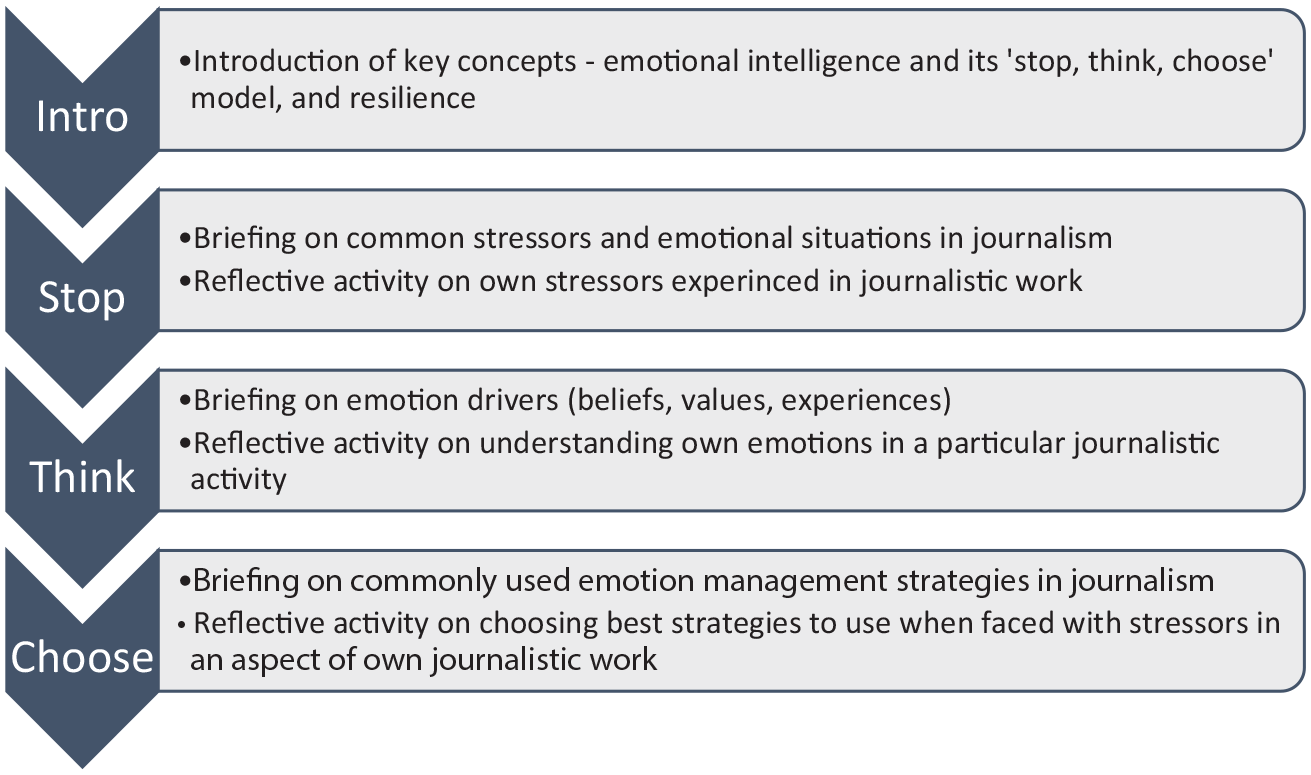
Workflow of the Workshop Indicating Content and its Relationship to the “Stop, Think, Choose” Model of Emotional Intelligence.
In total, 13 workshops have been conducted from April to July 2022 across the United Kingdom, each lasting around 1 to 2 hr. Of these, nine workshops were in-person events, while four have been held online. Also, nine workshops included emerging media professionals—journalism trainees studying at college or university level, while four workshops gathered practicing media professionals. Of the latter, three workshops included early-career professionals, while one gathered senior professionals mainly in managerial roles. The motivation to include journalism trainees in the test of concept comes from interviews with practicing journalists who argued that training in resilience should be part of journalism education in order for those coming into the industry to be better aware of its challenges and better prepared for how to manage them. Also, given the practices invoking emotional reactions that were identified in the analysis of interview data, it was clear that journalism trainees would have experienced some, if not all, of them during their training (e.g., finding stories, pitching, researching, interviewing, writing, etc.), enabling them to see the value in content and apply the knowledge from the workshop to at least some of the work processes they have already experienced. To ensure that all participants have at least some understanding of media work and so can apply the content to their own experiences, trainee participants had to be studying a practical journalism-related course and had completed practical journalistic work (e.g., produced journalism content, worked in Newsdays etc.) prior to joining the workshop.
All participants have been invited to complete a postworkshop survey. They were briefed that the data will be used for the evaluation of workshop’s effectiveness and assured that their contributions are anonymous. There have been 80 recorded responses. To gauge whether the intervention resulted in an increased perception of assets to manage stressors (i.e., asset-focused approach to resilience), the survey contained a 5-point scale questions (answers ranging from “strongly disagree” to “strongly agree”) related to awareness of emotional situations in media work and strategies that can be used to manage stressors. Specifically, participants were asked to evaluate their awareness of emotional challenges in the industry prior to the workshop, and the extent to which they felt they had a better understanding of these following the workshop. Also, they were asked to evaluate their awareness of strategies to deal with emotional challenges in everyday work prior to workshop and if they perceive to have a better grasp of these strategies following the workshop. There were also two qualitative questions: one asking participants to identify the key learning from the workshop, aiming to grasp the learned assets and processes that can assist resilience in a more qualitative manner, and the other inviting suggestions for how the workshop could be improved. The first set of questions has undergone statistical analysis in SPSS, while the qualitative answers were examined via thematic analysis.
Test of Concept
The data suggest that both emerging and established media professionals have a fair grasp of emotional challenges that can arise in their everyday work (see Figure 2). Specifically, a high 91.3% of participants reported having a good understanding (somewhat and strongly agree) of stressors and other emotional situations they (might) face in media work. Despite the high awareness to start with, 37.5% reported that the workshop increased their knowledge of these challenges substantially (strongly agree) and 47.5% to some degree (somewhat agree).
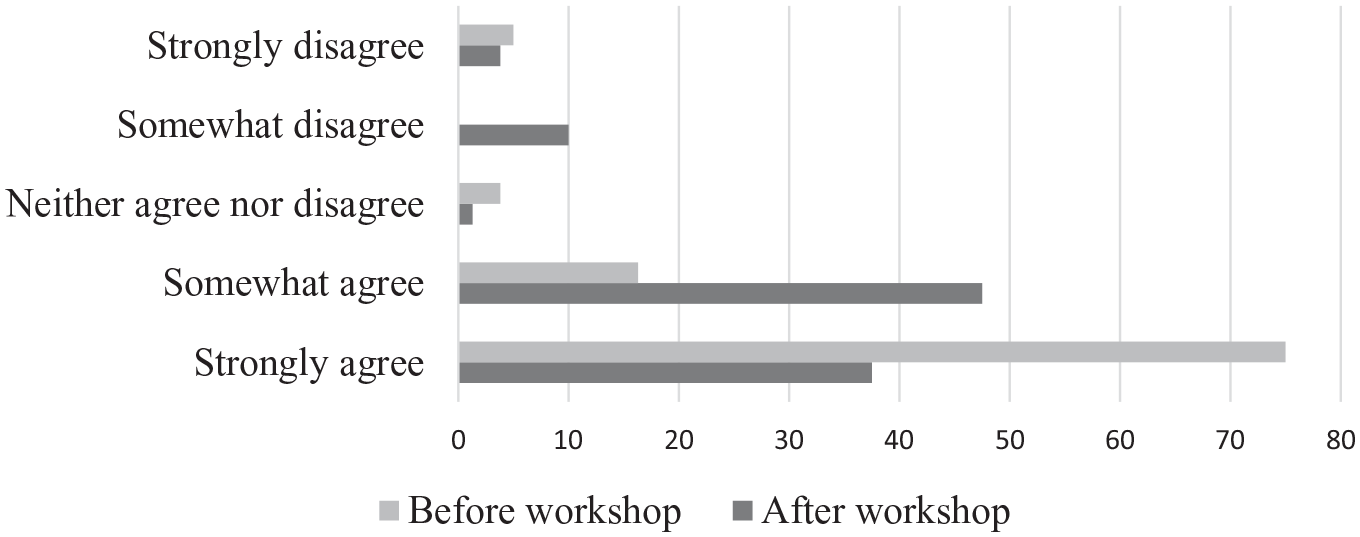
Perception of Awareness of Emotional Challenges in Media Work Before the Workshop and its Improvement Following the Workshop (n = 80, in Percentages).
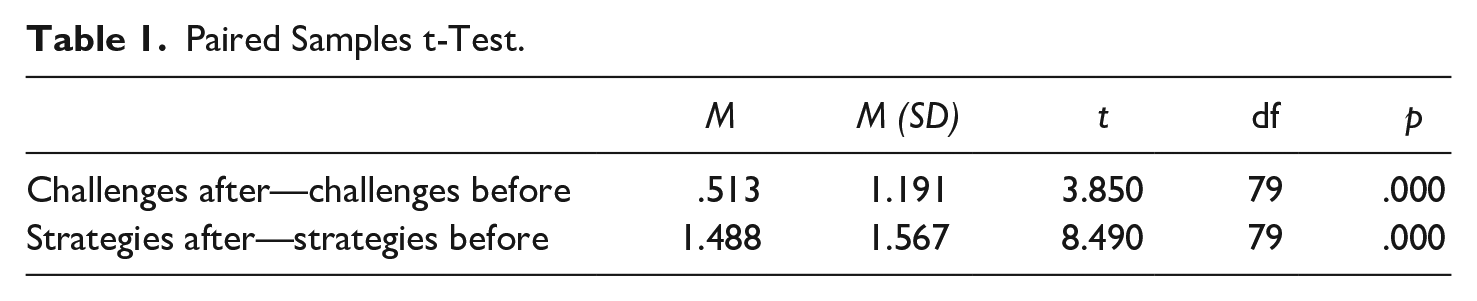
The data related to the awareness of strategies for managing emotional challenges reveals that this aspect of the workshop has more potential for developing growth in psychological capital (see Figure 3). Here, 42.6% of participants reported being aware of the strategies to manage stressors prior to the workshop (somewhat and strongly agree). This percentage rose to 90.1% following the workshop, with a high 73.8% of participants “strongly agreeing” that their understanding of these strategies has been improved by participation in the workshop. The paired samples t-tests confirm that the differences in the perceptions of awareness of both emotional challenges, and strategies for their management, prior and after the intervention are statistically significant (see Table 1). In addition, the correlation between the samples on awareness of emotional challenges is weak (r = .317, p = .004), while there is no statistically significant correlation in the case of the paired samples on awareness of strategies for managing stressors (r = .035, p = .758). This indicates that both those who felt they had a poor and those reporting good awareness of emotional challenges and strategies had the potential to feel as if the workshop significantly increased their understanding of these issues.
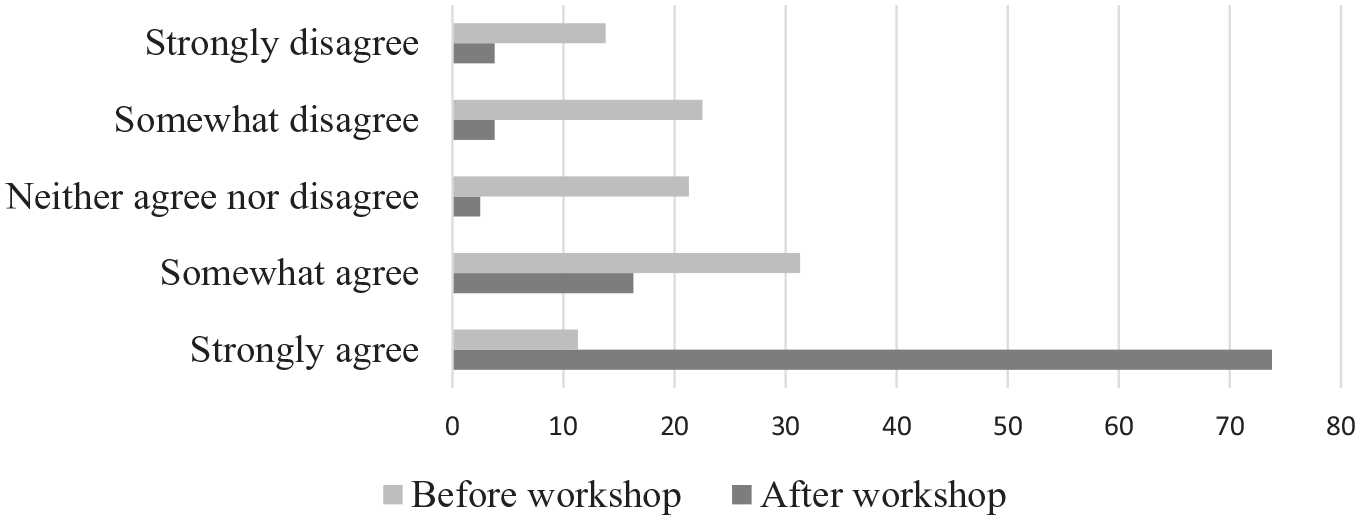
Perception of Awareness of Strategies for Managing Emotional Challenges Before the Workshop and its Improvement Following the Workshop (n = 80, in Percentages).
Paired Samples t-Test.
The answers to the open-ended question which queried about the key learning that a participant obtained during the workshop reveal the perception of the most commonly experienced effects of this intervention. The thematic analysis indicates that there are four most frequently mentioned learnings. First, the workshop seemed to have normalized the experience of emotional challenges in the industry. In other words, participants report feeling relieved and encouraged to learn that their experiences of facing emotional challenges are not unique, but rather something that is regularly experienced across the industry. The sharing of experiences during the discussion elements of the workshop might be seen as particularly valuable in development of this shared understanding. Second, participants noted they learned about the value of well-being in media work, particularly the toll that this labor can take on their and colleagues’ mental and physical health, and consequently, on the quality of their work. They reflected on the new awareness of the need to take care of themselves and to support their colleagues who may be experiencing hardship. This learning suggests the potential of the workshop to enhance resilience based on risk management. Third, many answers to this question referenced the “stop, think, choose” model of emotional intelligence that participants were inducted into, mentioning it appears valuable, easy, and practical to use, and expressing the desire to apply it more regularly in managing the emotional challenges they face in work. This can be understood as newly acquired process-based skill which can enhance resilience. Finally, participants noted the specific strategies they have learned during the workshop and outlined plans for how they see using these in managing the emotional challenges they face in everyday work. All key strategies were mentioned, but the importance of verbal processing with peers appears to have resonated most strongly with emerging media professionals. They report intending to more frequently engage in discussions with colleagues about the problems they face in their work and seek and offer support in terms of active listening which can benefit emotional release and contribute to a sense of belonging. This learning indicates the potential of the workshop in developing assets that enhance resilience, in the form of learned strategies that can be employed in the “choose” phase of emotional situation management.
Finally, the feedback on suggestions for improvements to the workshop is encouraging as most respondents here actually noted they have no suggestions as they found the workshop useful, informative, and enjoyable. There have been several valuable suggestions for improvement. Several participants expressed the desire for more time for discussion in the parts of the workshops where they were invited to share the outcomes of their critical reflection. There have also been suggestions to avoid some of the jargon, whose explanations, it was felt, interrupted the flow of the workshop and unnecessarily complicated things. In addition, it was proposed that it might be beneficial to have more multimedia elements in the trainer’s presentation. Also, several participants, mainly practicing media professionals in managerial roles, commented that they would welcome more content focused on supporting others’ development of resilience, rather than the sole focus on the development of one’s own capital.
Discussion and Conclusion
The aim of the study reported in this article was to design an empirically informed approach for developing emotional intelligence in journalism and explore the potential of the created microintervention for increasing laborers’ resilience when faced with challenges in everyday work. The initial results are encouraging. In the first place, the workshop shows scope for development of emotional intelligence, and implications for its impact on resilience, but also other characteristics of psychological capital. Specifically, while the majority of participants expressed high levels of awareness of the stressors in everyday work, the workshop shows scope for increasing this awareness even further. The increased awareness and understanding of these challenges can be seen as an asset in dealing with stressors, which previous research suggests increases resilience (Youssef-Morgan & Dahms, 2017). Next, learning about common strategies for managing emotional challenges in the industry seemed to significantly increase participants’ awareness of strategies for dealing with everyday stressors. From the key learnings they have identified from the workshop, it is evident this has enhanced their knowledge of processes to be used to mitigate ill-effects of work (process-focused approach to resilience); allowed them to engage in goal setting and contingency planning for obstacles to these, which is considered to increase the “hope” element of PsyCap (Luthans et al., 2007); and to model their actions on others who experience similar hardship, which can lead to higher “efficacy” (Youssef-Morgan & Dahms, 2017). Finally, participants who benefited from learning that many of their colleagues experience similar challenges might develop increased confidence in their work (efficacy), as well as a more optimistic view on their work life by being more lenient about their experiences and reactions to them (optimism), as is indicated in the PsyCap literature (Luthans et al., 2007).
Furthermore, while the data are limited, there is an indication that the designed workshop is most effective for emerging professionals who are in the early stages of their careers or in training as they are learning to cope with the challenges of the profession. Those in managerial and editorial positions benefited to an extent, yet it was clear that their motivation for attending the workshop was primarily to develop skills in supporting others—their staff. Hence, in future efforts it is worth examining in more detail the data related to the experiences of this section of laborers and offering a more targeted intervention that would meet the needs they have outlined.
It is important to note that beyond those mentioned previously, participants emphasized their learnings about the importance of well-being in the industry, and the desire to practice verbal processing with peers in order to care for themselves and others. This shows potential of the workshop to not only foster growth in participants’ psychological capital but perhaps also a wider change of culture in journalism. Indeed, journalistic culture has long been grounded in the discourses of having “thick skin” and being able to “handle it” (Chen et al., 2020; McCaffrey, 2019), which has arguably contributed to a lack of acknowledgment of the support that journalists should receive in order to safeguard their well-being. The high levels of journalists reporting mental health issues and burnout (Monteiro et al., 2016; Pantoja Lima et al., 2022; Pearson & Seglins, 2022) show that this culture is untenable. Hence, enabling journalists to recognize and acknowledge the strain of the profession and to offer social support to peers experiencing it has the potential to contribute to creation of a more healthy and collegiate profession in which media workers feel and perform better.
The final observation concerns the modes of delivery of the microintervention. The workshop seemed to have worked well in both in-person and online formats, with participants actively engaging in both modes and reporting similar learning outcomes. This means that it can be easily delivered to digital newsrooms and journalists working remotely, which is increasingly the practice in many media organizations, as well as education programs. Yet, the in-person delivery allowed the trainer to engage in one-to-one conversations with those who did not publicly engage in group discussions. Hence, the in-person delivery seems to have more opportunities for engagement of learners with different learning needs. In addition, while all workshops were done in a synchronous mode, it is possible to imagine some of the briefing elements to be presented in asynchronous modes, via, for example, shared slides and/or mini video lectures. However, the interactive discussion element of the workshop has been mentioned by many participants as one of the key benefits of the workshop. It allowed them to share their experiences—and with this get emotional release and support from peers, which is said to contribute to resilience development (Barnes, 2016)—but also gain valuable insights into experiences of others, potentially impacting on their wider psychological capital. Therefore, even if some parts of the workshop could in the future be delivered asynchronously, it appears important to retain some interactive element which would allow participants to share their experiences and learn from others.
The study has clear limitations that should be considered when evaluating the data and its implications. Most important limitations are those methodological—the study does not have a control group, nor has it collected sociodemographic data which would allow a more robust statistical analysis by inclusion of control variables. Also, it is based on self-reported data. Future research could test the viability of this or similar pedagogy with a stronger experimental approach which also includes objective evaluations of element of psychological capital that is being developed. It would also be interesting to see the pedagogy and research developed further to incorporate more directly other factors of PsyCap, that is, efficacy, hope, and optimism. Despite these limitations, the study offers valuable initial insights into the perceived effectiveness of an evidence-based and industry-specific training that has the potential to increase journalists’ personal resources to cope with everyday stressors in a form of a brief and focused intervention that can be replicated and applied in various educational settings.
Footnotes
Declaration of Conflicting Interests
The author(s) declared no potential conflicts of interest with respect to the research, authorship, and/or publication of this article.
Funding
The author(s) disclosed receipt of the following financial support for the research, authorship, and/or publication of this article: Part of this work was supported by the Arts and Humanities Research Council (grant no. AH/V00543X/1).
