




Abstract
Literature notes that most journalists will witness trauma and human suffering during the course of their careers, yet journalism education is lagging behind in preparing students to cope with the effects of exposure to traumatic events. This paper examines the attitudes of journalism educators/trainers toward trauma literacy through a questionnaire survey of 119 journalism educators globally. The findings show that a high percentage of educators have a good understanding of the risks that arise from exposure to critical and potentially traumatizing events but there are some barriers to teaching trauma including lack of knowledge/confidence, resources, time, and teaching materials.
Introduction
This paper focuses on the pedagogical response to the impact of witnessing traumatic events on journalists and the challenges to embedding trauma-informed literacy in journalism curricula globally. This is a pertinent research enquiry because two decades of research on journalists by social psychologists supply overwhelming evidence that journalists who witness trauma and disaster events are at risk for physical, emotional, and psychological injury (Buchanan & Keats, 2011). Some scholars argue that the prevalence of post-traumatic stress disorder (PTSD) is higher among journalists than the general population, with up to 33% of journalists reportedly suffering from probable PTSD (Aoki et al., 2012; Backholm & Björkqvist, 2012; Dworznik, 2011).
Our understanding of the types of traumatic events that cause journalists to perceive their well-being or professional practice as vulnerable to imminent harm (Hughes et al., 2021) is increasing thanks to the wealth of studies in the past two decades. These studies have identified four main sources of risk to journalists including developments in the political economy of the news; a weak or uneven rule of law; culturally motivated violence; and acute hazards (Hughes et al., 2021; Waisbord, 2020). Journalists experience some of these risks through arbitrary arrest, destruction and confiscation of equipment and premises, and self-censorship (Isiguzo, 2021). They also experience risk in daily practice when interviewing victims of crime or, in the case of court reporters, listening to the testimony of distressed survivors of violence (Barnes, 2016); viewing unedited videos or photo files through the news desk (Feinstein et al., 2014; Weidmann & Papsdorf, 2010) or writing stories on dangerous working conditions, sexual harassment, and online harassment, threats, physical attacks, and losing a colleague to violence (Backholm & Björkqvist, 2012; Feinstein et al., 2014).
Journalists’ safety has garnered significant global interest since it became a policy priority of the UN Plan of Action in 2012. The plan addresses the problem of physical, digital, and psychological attacks on journalists who are particularly vulnerable to attack for exercising their right to freedom of expression, and whose work is of vital public interest and essential for democracy and sustainable development (UN Plan of Action Report, 2017). According to UNESCO, “between 2006 and 2020, over 1,200 journalists have been killed around the world, with close to 9 out of 10 cases of these killings remaining judicially unresolved” (UNESCO, 2021). UNESCO raises other concerns about the wide-ranging threats faced by journalists in the exercise of their profession, both online and offline, such as increasing online harassment of journalists and especially the targeting of women journalists (International Programme for the Development of Communication [IPDC], 2020).
The devastating emotional and psychological impacts of witnessing traumatic events on journalists can no longer be ignored by editors and newsroom managers. However, most newsrooms do not offer a supportive environment for young reporters who are either dealing with their own psychological reactions to trauma or need guidance on how to approach victims (Dworznik & Garvey, 2019). This lack of duty of care has consequences. For instance, journalists have begun bringing claims against their employers for occupational PTSD (Wake & Ricketson, 2022). In Australia, in 2019, a Victorian County Court was the first to recognize the risk of psychological damage to those who report on traumatic events. The court ruled against one of Australia’s oldest metropolitan daily newspapers, the Age, and awarded A$180,000 to journalist YZ for psychological injury suffered while working between 2003 and 2013. (Wake & Ricketson, 2022). Similarly, in 2020, Facebook agreed to a US$52 million settlement for thousands of its content moderators because their job exposed them to countless hours of viewing disturbing material (Marantz, 2020; Newton, 2020; Wake & Ricketson, 2022).
Journalism schools also have a role to play in preparing students to cope with the potential impacts of witnessing trauma on journalists. Yet, there is a gap in the literature on the attitudes of journalism educators toward equipping journalists with the skills to cope with traumatic events. Therefore, we aim to raise some pertinent enquiries in this paper, which contribute to the field of trauma literacy in journalism education and training by addressing the following questions:
To what extent are journalism educators aware of work-related trauma?
What are the attitudes of journalism educators to teaching trauma?
What are the barriers to teaching trauma, and how can these be addressed?
To answer these questions, we conducted a global online survey with 119 educators and trainers in seven world regions. After a review of existing literature, this paper presents the findings from the survey and their implications for journalism education while concluding with some specific recommendations on trauma literacy for higher education institutions and journalism training bodies/councils.
Impact of Witnessing Traumatic Events on Journalists
The term trauma comes originally from the Greek word for wound that implies “a physical injury and parallels the psychic wounding that can potentially follow a traumatic episode” (Dass-Brailsford, 2007, pp. 2-3). Physiological trauma refers to “experiences that place a person’s life or bodily integrity in jeopardy” (Ford, 2009, p. 24). Removing trauma from its medical connotations, Tumarkin (2005) observes that trauma can be defined as an individual and collective response to loss and suffering which is ongoing and affects people to their very core’ rather than as a medical condition.
According to the American Psychiatric Association (APA, 2013), a traumatic event involves exposure to actual or threatened death, serious injury, or sexual violence in one (or more) of the following ways: directly experiencing the traumatic events; witnessing, in person, the events as they occur to others; learning that the traumatic events occurred to a close family member or close friend; and experiencing repeated or extreme exposure to aversive details of the traumatic events. For example, one study conducted in Finland shows that 86-100% of journalists have covered events that can be regarded as possibly traumatic, with 55 percent of those having been covered in the previous 12 months of their careers (Backholm & Björkqvist, 2012). Some examples of traumatizing events in news coverage include war, terrorism, natural disasters, epidemics, financial crises, online trolling and abuse, domestic abuse, family violence, and accidents.
However, people react to similar traumatic events in multitude of ways and with a variety of symptoms (Storr et al., 2007). According to Tumarkin (2005, p. 12), a traumatized person is someone who has been overwhelmed by an event in such a way that their sense of the world and themselves is shattered. Most significantly, the remembering of an event can be more traumatic than surviving the event itself as the “act of memory calls for a partial reliving of an unassimilated past.”
There is substantial evidence of prevalence of PTSD among journalists exposed to traumatizing events. For example, the overall prevalence of PTSD among journalists is about 7.2%, which tends to be higher than the general population (Aoki et al., 2012). A study that investigated how exposure to journalistic ethical dilemmas during the Oslo/Utøya terror attack in 2011 affected journalists found that work-related guilt had a significant indirect effect on the relationship between exposure to ethical dilemmas and severity of PTS reactions (Backholm & Idås, 2015). Vaishnavi and Thompson (2021) identified four clusters of PTSD symptoms, namely reexperiencing trauma in the form of intrusive memories, flashbacks, or nightmares; avoidance of anything that reminds an individual of the event; arousal and hyperreactivity, such as being easily startled or feeling tense; and effects on cognition and mood that include negative thoughts, feelings of guilt or blame, or a loss of interest.
Journalists most likely to be at risk of experiencing depressive symptoms were those who had greater exposure to work-related and personal potentially traumatic events (PTEs); experienced threats to themselves or their family; and had reduced levels of family and peer support, social acknowledgment, and education (MacDonald et al., 2021). Some of the symptoms of exposure to traumatizing events are guilt, compassion fatigue, burnout, avoidance, helplessness, mental health breakdowns, depression, flashbacks, intrusive experiencing, increased arousal, desensitization or numbing (or sensitization), and anger outbursts (Buchanan & Keats, 2011; Seely, 2020).
Coping mechanisms are categorized into maladaptive or adaptive strategies. The former includes alcohol abuse and even suicidal thoughts; drugs, smoking, and self-criticism or self-blame (Lee et al., 2018). These strategies increase risky behaviors and reduce self-care, which may increase stress levels (Hughes et al., 2021). Adaptive coping strategies include taking time for exercise, maintaining healthy sleep patterns, ensuring a balanced diet, taking time for relaxation and socialization, remembering the higher purpose of your job (Seely, 2020) including social, peer and management support. These strategies tackle stress in constructive ways that improve personal and professional functioning (Hughes et al., 2021).
However, not all journalistic experience counts as trauma because some journalists adapt well in the face of adversity, trauma, tragedy, threats, or even significant sources of risk, while others don’t (Thompson et al., 2011). This variation in resilience is attributed to the fact that people who have resources, who have stability, and who have space to process their trauma are more resilient (Hamzelou, 2022). Significantly, there is ample evidence to support the claim that journalists are exposed to traumatizing events during their careers and are not well prepared to cope with their emotional and psychological effects. To address this problem, scholars recommend collaborative efforts between editors and supervisors to foster a more supportive work environment, to produce more training materials and professional development about crisis reporting, offering debriefings and group meetings during and after traumatic events, and to encourage reporters to take advantage of counseling sessions (Seely, 2019).
The potential consequences of witnessing or experiencing trauma in journalism practice have garnered an increasing scholarly interest since it became a policy priority for Dart Center USA in 1990s. The Dart Center for Journalism and Trauma advocates ethical and accurate reporting of trauma; compassionate, professional treatment of victims and survivors by journalists; and greater awareness by media organizations of the impact of trauma coverage on both news professionals and news consumers (Dart Centre for Journalism and Trauma, 2022). Its pioneering approach and research recognizes the news media’s responsibility toward journalists’ experience of trauma by stating that the best way to deal with trauma is mutually caring teamwork and good management within a wider journalism culture that acknowledges the part trauma plays in news work (Dart Centre for Journalism and Trauma, 2013). Journalism education also has a role to play in building and fostering such culture.
Pedagogical Response to the Impact of Trauma on Journalists
Although the potential impact of witnessing traumatic events on journalists and photographers, and moderating online content for news outlets has become an important topic of research in the past two decades, preparation of journalists for reporting traumatic events is patchy and underdeveloped (Wake & Ricketson, 2022). An ongoing lack of trauma-aware training for journalists can lead to inept or ill-informed handling of survivors and direct or secondary trauma may be induced by reporting on the people affected (Healey, 2022).
These challenges are hardly addressed because journalism education is mostly focused on the practice of journalism, namely fostering an understanding of professional values such as objectivity, public service, gatekeeping and ethics, and on those skills considered essential to journalism practice—for example, newsgathering, news writing and editing—skills which do not require critical thought or analysis (Barnes, 2021; Hannis, 2012). Journalism schools spend time teaching the basics of journalism rather than dedicating time to the emotional effects that come with being a journalist (Young, 2011).
The evidence suggests that journalism education fails to regard journalists as “first responders” who should be equipped with the skills to cope with the emotional and psychological impact of exposure to traumatizing events unlike their counterparts in the ambulance services, police, fire-brigade, and nursing. However, media workers from reporters to field producers are often found working alongside emergency workers. Their symptoms of traumatic stress mirror those of police officers and firefighters who are involved in the immediate aftermath of tragedy, yet journalists by and large receive minimal support after they write their stories. Although it’s common for public-safety workers to receive debriefings and counseling after a trauma, journalists are often assigned another story (Dart Center, 2009). The profession has fostered a silence about the emotional consequences of traumatic events and the life-threatening hazards journalists face (Feinstein, 2016). The lack of skills that require critical thought is concerning because not only are graduates more likely to face traumatic situations, but they are also very susceptible to strong emotional and psychological reactions (Dworznik & Grubb, 2007).
Journalism schools worldwide are grappling with the challenges of embedding trauma-informed literacy in journalism curricula. One of these challenges revolves around the central role played by the concept of objectivity in journalism education which scholars claim undermines journalists’ ability to recognize stressors and seek help. Objectivity has been misinterpreted by journalists to mean that being objective and detached is tantamount to emotional detachment (Seely, 2020). To address this problem, journalism educators need to rethink the objectivity norm because when journalists are assigned to report a disaster scene and interview victims, they are supposed to objectively describe the scene and make reports about the victims rather than empathize with them (Lee et al., 2018). This occupational norm has been suggested as one of the key factors influencing development of PTSD symptoms among journalists (see Backholm & Björkqvist, 2012).
Another challenge is centered around evidence that journalism courses are not sufficiently preparing students for the risks associated with exposure to traumatic stressors as part of their work (Specht & Tsilman, 2018). For example, in the United Kingdom, a content analysis of course descriptions of the 63 courses failed to find a single trauma-focused program or module or concrete mentions of trauma, vicarious trauma, PTSD or eyewitness media (Specht & Tsilman, 2018). Previous research indicates that 50% of journalism educators note trauma reporting receives hardly any attention in the curriculum (Melki et al., 2013; Seely, 2020). In addition, the textbooks for introductory news writing courses contain little, if any, acknowledgment of the emotional toll of the journalism profession (Hopper & Huxford, 2017). Journalism educators in Australia and New Zealand are confused about what and how to teach students when it comes to grief and trauma including inconsistencies in content and methodology (Barnes, 2021).
Although there are widely accepted and taught guidelines on media and journalism ethics, there are very few guidelines on trauma-informed literacy that educators and trainers can refer to. The nearest to it is a 40-page guide produced by Dart Center (2009) to help journalists, photojournalists, and editors report on violence while protecting both victims and themselves. The guide notes that journalists must consider three important areas to cover any large tragedy effectively, that is, the victims, the community, and the journalists. Dart Center also suggests trauma training should begin by encouraging journalism students to treat victims with respect and empathy. This includes some explanation of how people react to trauma and what happens to the brain at the time (Barnes, 2021; Dart Center, 2009). Healey (2022) recommends that trauma reporting training should be widely available and accessible to working journalists internationally, focusing on trauma-aware interactions with contributors as well as tools for journalists to protect their psychological well-being.
These examples reinforce the need to examine further educators’ and trainers’ attitudes toward trauma literacy and the barriers that prevent its inclusion in the journalism curricula. There is a significant gap in the literature relating to effective pedagogies for practical training in safety for journalists (Murphy et al., 2020). This type of pedagogy should focus on how to recognize traumatic reactions in themselves and others, how to deal with potentially traumatizing situations, and appropriate interviewing behavior to avoid revictimizing those they encounter while getting the story (Barnes, 2013; Dworznik & Garvey, 2019).
Notably, most journalism educators have come to realize that trauma education and training is relevant for all journalism students, not only for those who engage in hard news reporting. This is not only because of the regular occurrence of disasters but also because news agendas have narrowed and sensational content has increased (Barnes, 2021; Machin & Niblock, 2006). Training is also relevant because trauma literacy can help student reporters develop positive coping mechanisms early on (Melki et al., 2013; Seely, 2020). It is important to address how trauma training should be delivered in the classroom environment. Rather than employing passive learning methods, such as lectures where students tend to sit and take notes, journalism educators are adopting innovative teaching strategies such as “reflective practice techniques” and “practice first” approach. The former requires a shift in attitude from some well-established beliefs focusing on professionalism (Thomas, 2008, p. 331) to focusing on trauma-aware interactions, and interacting sensitively with victims, survivors and vulnerable interviewees (Healey, 2022). The latter favors reflective learning for trauma training as it requires students to be active, critical thinkers, and to question what they do and how they do it (Burns, 2003). Other relevant teaching strategies include experiential simulations, role-play, reflections, pre-briefings, and debriefings. Moreover, the training should also stress the safety, security, and well-being of journalists, in both digital and physical worlds. In addition, mental health professionals could visit classrooms to help students understand the mental health consequences of covering traumatic stories (Hill et al., 2020, p. 66).
One example of an effective pedagogical response is role-play exercise for journalism students as a form of problem-based learning that would require them to make decisions on the run as they would in the real world of news gathering (Burns, 1997; Jukes, 2016). In this instance using Hurricane Katrina as a scenario, the students reported on the scenario, interviewing the actors involved and covering an impromptu press conference by the Federal Emergency Management Agency. The students reflected that upholding the principles of objectivity and maintaining a detached stance in their interviews is not the best approach in interviewing survivors or victims of trauma. Rather, building a rapport and trust with their interview subject could elicit a response. At the end of the exercise, students agreed that they had a better understanding of trauma and had gained at least a basic insight into how to interview vulnerable people (Jukes, 2016).
Another example of positive pedagogical response is adopting a holistic humanitarian approach to resilience training at Ulster University, UK. A newly developed program for international cohorts in 2018 and 2019 concentrated on group and individual physical and mental resilience building, risk mitigation, psychology, communication, self-defense, and digital security skill acquisition to prepare students to report in dangerous environments. The students noted that this type of training “very significantly” enhanced their resilience and safety skills (Murphy et al., 2020, p. 1).
However, while the results of these innovative pedagogies are encouraging, it is often the case that students respond and react to their first traumatic assignments with shock, fear and even apprehension, and that they are emotionally unprepared for trauma’s reality. Trauma training is not only needed, but the students themselves want it (Dworznik & Grubb, 2007). The literature supports our claim that the pedagogical response to the impact of witnessing traumatic events on journalists is patchy or non-existent. This study focuses on exploring the current attitudes of journalism educators to teaching trauma and the barriers they encounter.
Method
The questionnaire was designed around the themes identified in the literature which showed that journalism courses are not sufficiently preparing students to cope with exposure to traumatic events and that there are challenges to teaching trauma literacy. The survey contained a mix of quantitative and qualitative questions, namely 17 closed questions and two open-ended questions. 1 Most of the quantitative questions were answered on a five-point scale, ranging from “strongly disagree” to ‘strongly agree’; while some gave multiple options such as trauma literacy for journalism; teaching reporting with sensitivity; raising awareness about how to minimize harm to survivors and community; teaching on avoiding sensationalized reporting; accident simulations; and role-play interviews with victims and survivors. Supplementing quantitative data with qualitative data in this study allows for a more comprehensive exploration of the research questions. The study’s mixed methods approach ensured all findings were contextualized in a broad range of objectively verifiable data to enhance credibility (Kromrey, 2006).
The questionnaire was administered electronically through the JiSC system, an online survey platform, and emailed to journalism educators through their associations (e.g., The Association for Journalism Education, UK; Media, Communication and Cultural Studies Association (MeCCSA); European Communication Research and Education Association (ECREA); International Association for Media and Communication Research (IAMCR); Journalism Education and Trauma Research Group (JETREG); between April and June 2021. The survey was completed by 122 journalism educators from the following world regions: Australia/Oceania, Eastern and Western Europe, Latin America, North Africa/Middle East, North America, Asia, Sub-Saharan Africa. However, three of the respondents did not complete the survey in full, so their answers were excluded from the analysis.
The authors used SPSS to analyze the quantitative part of the survey and adopted thematic analysis to identify patterns and to ascertain common threads among the responses of the participants (Dworznik & Garvey, 2019). The analysis of personal information reveals that 59% of the respondents were females and 41% male; 72% of our respondents were in full-time employment in higher education, 24% in part-time employment and 6% did not disclose their employment status. 17% of participants were professors; 19% associate professors; 18% assistant professors, and 46% stated “other..” 63% of our respondents completed a PhD; 20% completed a MA; 3% a BSC; 8% a Higher National Diploma (HND); and 6% had other qualifications. The majority of the participants (63%) have worked in journalism education for at least 10 years, 20% for 5 to 9 years, 13% for 2 to 4 years, and 4% for up to a year. When it comes to geographical distribution, most of the participants’ institutions (31%) are in Western Europe, followed by 26% in Sub-Saharan Africa, 11% in North America, 10% in Asia, 6% in Eastern Europe and MENA, respectively, 5% in Australia/Oceania, 2% in Latin America, and 3% did not disclose which region they were based in. This spread of distribution indicates the survey had a global reach. However, the response cannot be generalized because the number of respondents is not representative of the number of journalism educators globally. Nevertheless, the results give us a snapshot of their attitudes to teaching trauma and the challenges of embedding trauma literacy in journalism curricula.
Quantitative Data Analysis
The analysis of the quantitative data yielded five broad themes, that is, understanding the risks that arise from exposure to traumatizing events; training of journalism educators to teach trauma; support to enhance resilience to trauma among journalism students; attitudes to teaching trauma and challenges to teaching trauma literacy.
Understanding the Risk that Arise From Exposure to Traumatizing Events
We asked respondents five questions to explore this theme. The data shows that 86.2% of respondents have a good understanding of the risks that arise from exposure to critical and PTEs. This high level of awareness of work-related trauma in journalism practice implies that journalism educators maintain contact with the profession and are not oblivious to the contemporary challenges of reporting. We asked them if they understand the potential psychological toll of journalism practice and 48% of respondents claim they are fully aware of the problem. We asked them if they know at least one practicing journalist who has suffered adverse personal and/or professional reactions attributable to exposure to critical and PTEs, which has had a significant impact on their well-being and 69.4% of respondents said Yes. We asked respondents about their awareness that journalists experience emotional distress and 88.4% of respondents reported that it is common for journalists to experience emotional distress on the job as seen in Figure 1.
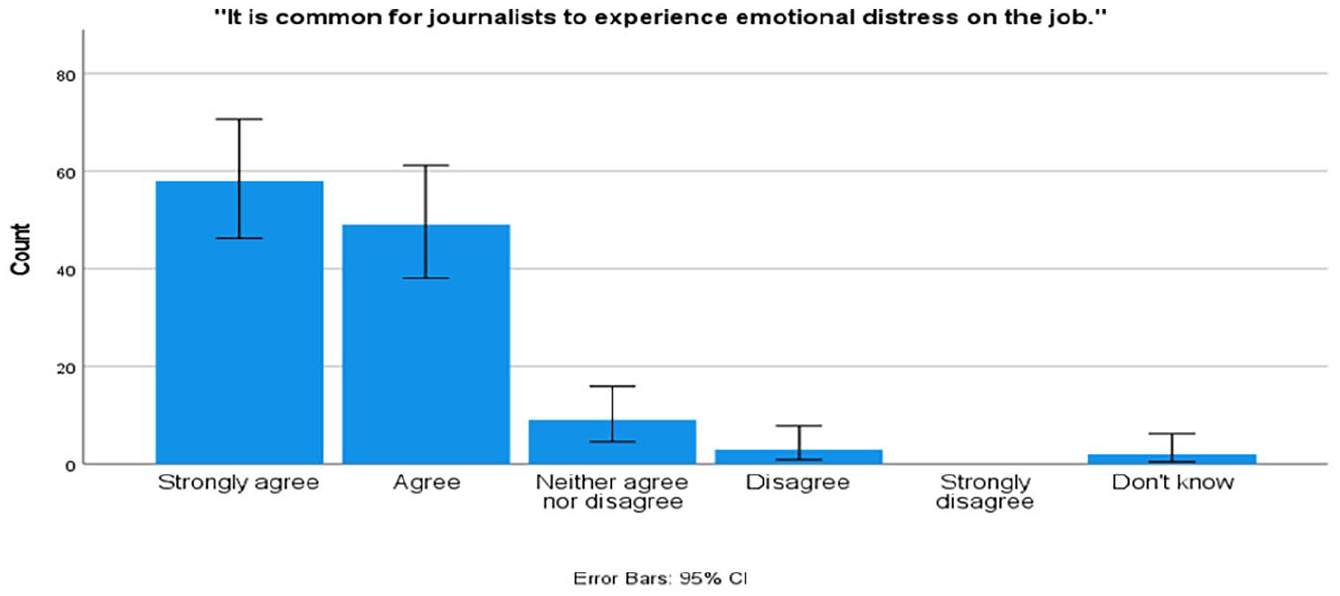
Journalist Experience Emotional Distress on the Job.
The last question on this theme was about whether journalists are exposed to traumatic events via social media. The data reveals that 64.2% of respondents believe that most journalists are exposed to traumatic events via social media. This claim confirms evidence in previous studies that newsroom journalists who work with User Generated Content and are frequently exposed to images of graphic violence tend to show higher depression scores (Feinstein et al., 2014).
Training for Journalism Educators to Teach Trauma
We asked respondents two questions to explore this theme. The data demonstrates that only 26% of respondents have received training on trauma and traumatic stress that is relevant to journalism educators. This is consistent with the claim in literature that journalism educators are confused about what and how to teach grief and trauma including inconsistencies in content and methodology (Barnes, 2021). In response to the question on whether they have received training to teach journalism students about critical and PTEs, only 38% of respondents claimed to have acquired adequate training to teach journalism students about these. Previous studies indicate that it’s rare for journalists and educators to receive any trauma training (Barnes, 2021; Seely, 2020).
Support to Enhance Resilience to Trauma Among Journalism Students
We posed three questions to explore this theme and found that only 24.4% of respondents are aware that their institutions have guidelines on how to identify students who experience difficulties attributable exposure to critical or potential traumatic events. On the question of how prepared they think journalism students are to cope with the impact of exposure to traumatic events, just 14.6% of respondents think that journalism students are well prepared to cope with the personal and professional impacts of exposure. In response to the question of how to enhance personal and professional resilience among journalism students, 91.1% of participants feel more attention should be given to this for possible future high-risk assignments as seen in Figure 2.
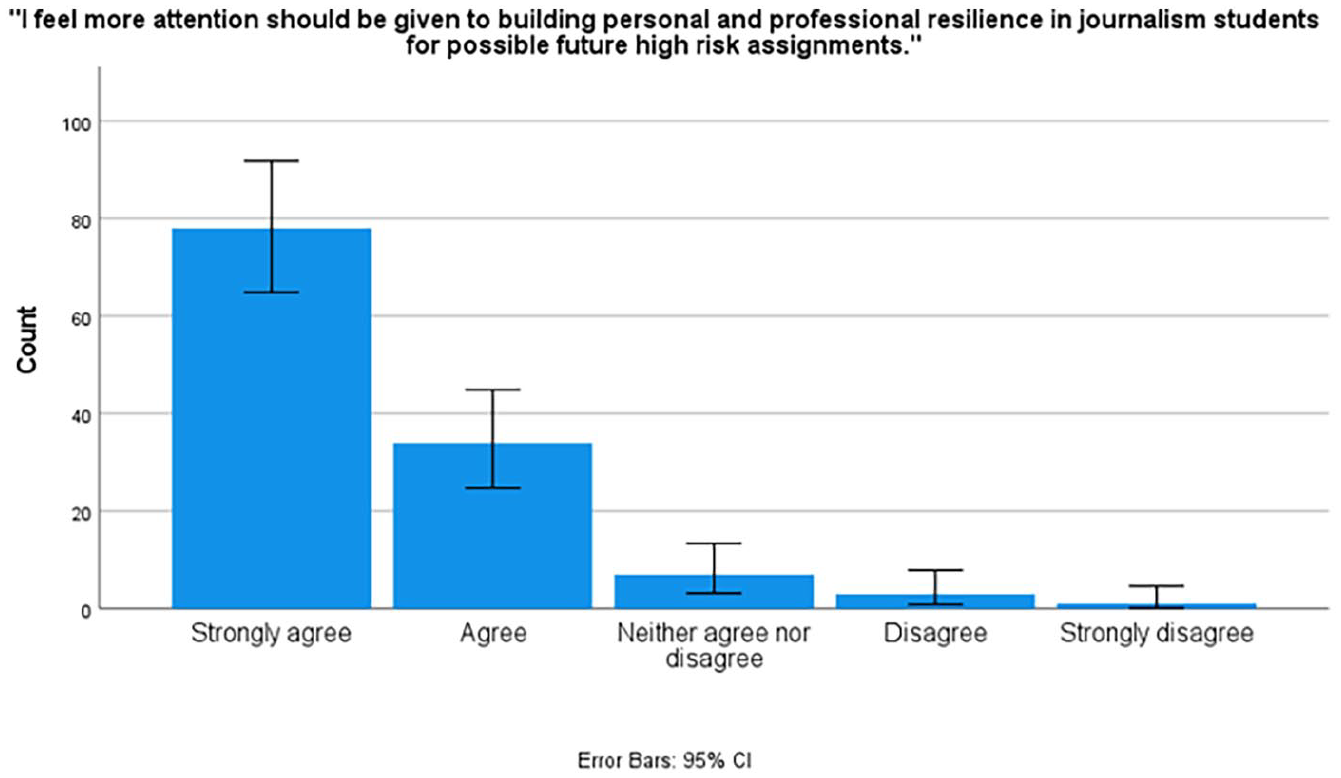
Build Personal and Professional Resilience Among Journalism Students.
Attitudes to Teaching Trauma
We asked respondents four questions to explore this theme. Regarding awareness that some teaching materials contain traumatic content, 81.3% of participants are aware that some teaching materials contain traumatic content. When it comes to their attitudes to inclusion of relevant teaching materials for reducing risks of enduring adverse reactions in journalism curricula, 87.7% of respondents report that such an inclusion can help students become resilient to exposures. The question about the inclusion of content relevant to trauma education in journalism curriculum at participant’s institution, includes six elements as seen in Table 1. First, only 28.7% of respondents confirm that their university provides trauma literacy. Second, a good 67.2% of respondents confirm their curriculum includes teaching reporting with sensitivity. Third, an above average 58.2% of respondents confirm their course content includes raising awareness about minimizing harm to survivors/community. Fourth, a high 78.9% of respondents confirm their course content includes teaching on avoiding sensationalized reporting. Fifth, only 19.5% of respondents confirm their course content includes accident simulations. And finally, just 33.3% of respondents confirm their course content includes role-play interviews.
The Content of Journalism Curriculum at my Institution.
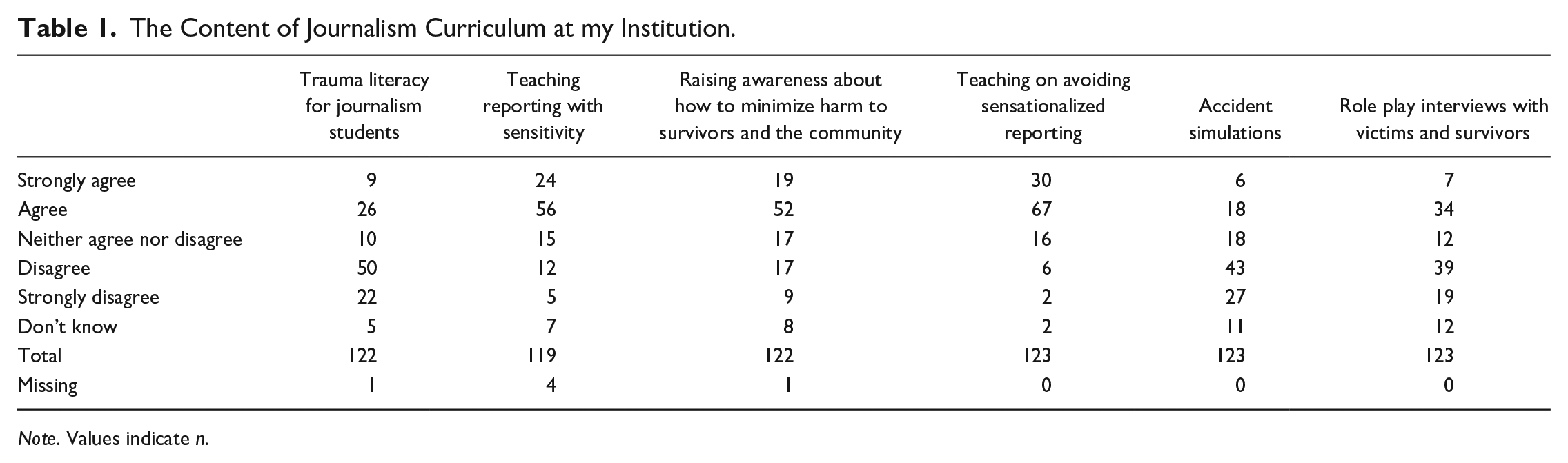
Note. Values indicate n.
We also posed a question about journalism students’ confidence to interview survivors and only 27.6% of respondents think that their journalism students are confident to interview survivors of critical and PTEs.
Barriers to Teaching Trauma
In our final survey section, we asked respondents three questions to explore the challenges to embedding content about potentially traumatizing incidents in the curricula. Respondents were given six options about the likely barriers to inclusion of trauma literacy at their institution and the three most prominent barriers were lack of specialist knowledge, resources, and reading materials. Although the least prominent barriers were lack of time, accreditation issues and Other as seen in Figure 3.
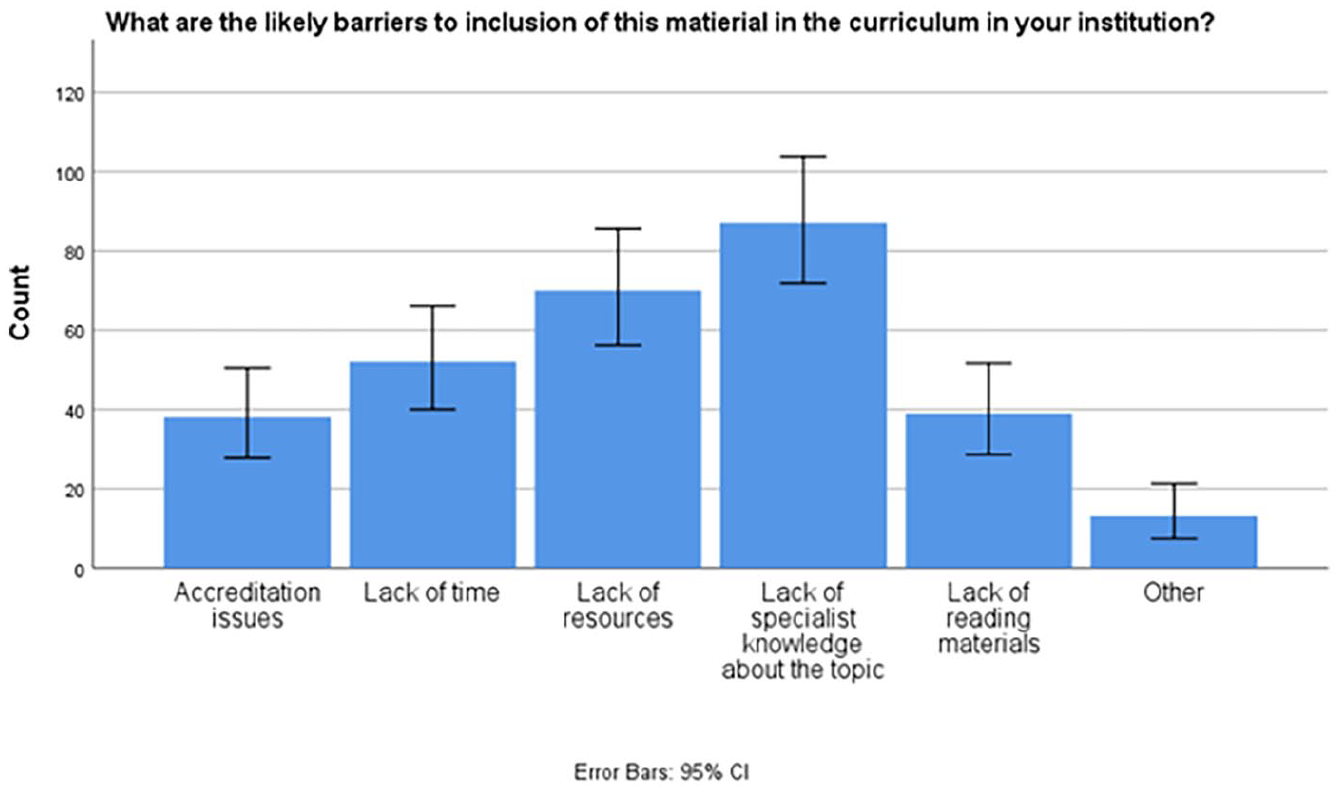
Barriers to Inclusion of Trauma Literacy in Journalism Curricula.
On the question on whether the inclusion of trauma literacy content into journalism curricula will pose challenges in their institution, only 32.8% of respondents noted it would. And on the question about the responsibility of news organization to build resilience among journalists, just 32% of respondents noted that they should. This implies that journalism educators recognized their role to build resilience among journalism students.
Qualitative Analysis of Comments
The respondents were given an opportunity to expand on their quantitative response by providing answers to two questions. The first question relates to how journalism curriculum can incorporate the topic of covering trauma literacy in a meaningful way for journalism students. Some respondents suggested adopting a range of teaching strategies including case studies/examples of personal experiences; role-play scenarios, simulations; inviting experts/guest speakers; and workshops. A cross-reference with their location showed some regional variations as respondents from Asia, Australia/Oceania, North Africa/Middle East/Arab World (MENA), Eastern Europe, Western Europe, and North America were most likely to prefer these options.
However, some respondents suggested incorporating trauma-informed literacy into existing courses such ethics/conflict/specialized reporting/media laws and collaboration with psychology to provide additional resilience training for journalism student. A cross-reference with the location showed that respondents from Sub-Saharan Africa and Eastern Europe were most likely to prefer these options. Their response to this question showed some consensus in terms of teaching strategies, but some variations in terms of whether it should be a standalone content.
The second question relates to the barriers to implementing trauma literacy into the curriculum. Their response to this question suggests there are some common and unique barriers to inclusion. The former includes: “not deemed a priority,” “lack of knowledge,” “lack of time,” “lack of resources,” “crowded curriculum,” “accreditation,” and “lack of training for educators.” Respondents from Australia/Oceania, Eastern Europe, Western Europe, and North America were most likely to mention these barriers. The latter includes lack of awareness, lack of guidelines, cultural barriers, limited staff, inertia and conservatism, funding, concern of triggering students, and authorization from regulatory bodies. Respondents from Asia, North Africa/Middle East/Arab World (MENA), and Sub-Saharan Africa were most likely to mention these barriers.
Discussion and Conclusion
This global survey of journalism educators, which is the first of its kind to explore their attitudes to teaching trauma and inclusion of trauma literacy in journalism curricula, demonstrates that educators not only have a good understanding of the risks that arise from exposure to critical and PTEs but also that they are strongly in favor of equipping journalism students with the right skills to cope with reporting trauma.
As a result, the real problem to teaching trauma is not journalism educators’ attitudes as they are positively predisposed to teaching trauma, but the barriers to inclusion which are systemic and institutional such as accreditation issues, lack of training, guidelines, and resources. Our findings confirm claims in literature (see Barnes, 2021; Seely, 2020; Specht & Tsilman, 2018) and found a new concern about the need for guidelines across higher education on how to teach trauma.
To address some of these problems, we suggest developing institutional guidelines on how to identify students who experience difficulties attributable to exposure to critical or potential traumatic events to give journalism educators more confidence to teach trauma. We also suggest a broad consensus on what and how trauma literacy should be taught in journalism schools to enhance students’ ability to interview survivors of critical and PTEs sensitively and to reduce the risks of evoking further emotional distress to sources and themselves.
The data identify some content that has been prioritized in journalism education including sensitive reporting, simulations, minimizing harm to survivors and role-play interviews, which have been embedded in media ethics classes. However, we suggest a need for deliberations between journalism educators and other relevant stakeholders to make trauma-informed literacy an essential part of journalism education.
The qualitative comments show that journalism educators are aware of the most effective teaching strategies for teaching trauma and often adopt them. The diversity in teaching and learning approaches shows that journalism educators understand that classroom simulations prepare students for real-life situations in the field and that they can also make lessons relevant and interesting, sparking important discussion along the way (Veil, 2010). This depicts an awareness of the relevance of “reflective practice techniques” and “practice first” approach that were suggested by Thomas (2008) as necessary requirements for shifting attitudes from some well-established beliefs focusing on professionalism to trauma-aware interactions.
The data reveal that most journalism educators do not think that building resilience to trauma among journalists is a prerogative of news media organizations. Therefore, there is a need for journalism schools and the journalism industry to work closely and communicate about their roles and responsibilities in preparing journalists to report trauma. News organizations and educational institutions can work together in reducing the occupational risk of PTSD through effective prevention and intervention strategies (Smith et al., 2018).
This study contributes to scholarship in journalism education by extending our understanding of the attitudes of journalism educators to trauma training. It also adds to the call, for over 20 years by scholars in Australia and, more recently in New Zealand, to include trauma training as a part of journalism programs globally (see Barnes, 2021). This study also has implications for journalism practice in presenting evidence for urgent and collaborative action between journalism schools and media organizations to protect the well-being of journalists and support them to discharge their democratic duties.
Based on the results of the survey, we recommend that journalism educators should undertake professional development courses to enhance their knowledge and confidence to teach trauma. We recommend that trauma courses should be taught by an interdisciplinary team including colleagues from psychology and nursing. To aid that, more empirical studies should be conducted to produce teaching materials for trauma-informed literacy that can be adapted and developed by educators in different regions to suit their unique needs and cultural, and social context. The availability of teaching materials will address Richards and Rees’ (2011) claim of a striking inattention to questions about the emotional impact of journalists’ work in journalism education. However, the excuses for such inattention are no longer tenable because scholarly studies have given evidence of the emotional and psychological effects of journalism practice, and our study has shown that journalism educators are aware of the problem and are strongly in favor of preparing journalism students to cope with these effects.
Footnotes
Declaration of Conflicting Interests
The author(s) declared no potential conflicts of interest with respect to the research, authorship, and/or publication of this article.
Funding
The author(s) disclosed receipt of the following financial support for the research, authorship, and/or publication of this article: The study on which this paper is based is funded by British Academy/Leverhulme Small Research Grant (SRG2021\210560).
