




Abstract
A robust finding in cognitive psychology is that training children’s spatial abilities is an effective route to improving mathematics performance. Despite this finding, there is limited representation of spatial reasoning in school curricula. To bridge this gap between research and practice, we created the Spatial Reasoning Toolkit (SRT; Gifford et al., 2022). In Study 1, we provide quantitative data of practitioner knowledge of spatial reasoning (N = 94) and their intended use of the SRT (N = 74). One year after the toolkit was launched, we compare these samples to a sample of SRT users (N = 59). In Study 2, we present case studies from three different school settings of users of the SRT. Results demonstrate that practitioners judged the SRT to be very useful. As intended, practitioners used it mainly for professional learning and for planning, but confidence in their ability to define spatial reasoning was mixed. Three diverse case studies demonstrate flexibility in application of the SRT resources, exemplifying that every child is unique and might not conform to the ‘typical’ trajectory. Practitioner time was presented as a barrier; this limitation was somewhat overcome by presenting multiple resource types, but nevertheless highlighted the need to maximize accessibility when translating research to practice.
Keywords
The aim of the Spatial Reasoning Toolkit (SRT) was to translate the robust research literature on the importance of spatial reasoning for mathematics into practice.”
Introduction
Spatial abilities include the ability to perceive the spatial properties of objects such as their location and dimensions and their relationships to one another, and the ability to visualize, i.e., to see and move objects in one’s mind. Spatial abilities are core to everyday living, for example, reading maps, packing a suitcase and putting clothes and shoes on in the correct way. In the classroom, spatial abilities are used in many activities including block building and completing jigsaw puzzles, creating and using maps, thinking about scale during small world play and exploring environments from different viewpoints.
Spatial Abilities and STEM
Spatial abilities in childhood predict adult expertise in Science, Technology, Engineering and Mathematics (STEM) (Wai et al., 2009). This is unsurprising, given the many examples of spatial skills that are integral to STEM professions, for example, reading graphs and understanding electronic configurations. Focussing on the relationship between spatial abilities and mathematics, lead researchers in this field have stated that ‘the connection between space and math may be one of the most robust and well-established findings in cognitive psychology’ (Mix & Cheng, 2012, p. 198). This is further supported by a recent meta-analysis which demonstrated a strong association between spatial abilities and mathematics in 45 studies, which was consistent across age and gender (Atit et al., 2022). Importantly, spatial abilities respond particularly well to training (Uttal et al., 2013; Yang et al., 2020). Another meta-analysis of 29 spatial training studies has shown that spatial training consistently increases children’s achievement in mathematics by the equivalent of half the annual gain in mathematics (Hawes et al., 2022). Training spatial skills is, therefore, an effective approach for improving mathematics performance.
Given the effectiveness of spatial training, it is surprising that educational standards and curriculum guidance documents do not always include a focus on spatial skills (Gilligan-Lee et al., 2022). This can both restrict practitioners’ freedom to implement spatial activities and can limit their opportunities for professional learning in the importance of spatial abilities. In turn, a lack of professional learning can limit practitioner confidence in the area. To illustrate this, recent changes to national curricula in England have deprioritized spatial skills (e.g. Department for Education, 2020; 2024). Relatedly, we observed that practitioners in England received no training on spatial abilities (Bates et al., 2023). In contrast, there are jurisdictions where spatial abilities are taking an increased focus, such as initiatives in the U.S. where there is an appreciation that ‘without explicit attention to [spatial abilities], we cannot meet our responsibility for equipping the next generation of students for life and work in the 21st century’ (National Research Council, 2006). Furthermore, to ensure that ‘spatial sense’ is included as a curriculum sub-domain, Ontario (Canada) has taken steps to emphasise the importance of spatial abilities for STEM success in their 2020 mathematics curricula (https://www.dcp.edu.gov.on.ca/en/curriculum/elementary-mathematics; see Gilligan-Lee et al., 2022). Other examples, highlighted by Ramful et al. (2017), include the Australian Curriculum, Assessment and Reporting Authority [ACARA] (2015), the Finnish National Board of Education (2004) and the Ministry of Education in Singapore (2006). While these examples are positive steps forward, a greater and more sustained emphasis on spatial abilities is needed in education. Alongside professional learning support for practitioners, greater attention in curricula could help realise the potential benefits of spatial ability development for mathematics learning that research suggests are possible.
The Negative Impact of a Low Emphasis on Spatial Abilities
A low emphasis on spatial abilities in education could negatively impact all children, with substantial downstream negative impact on future degree choices, career choices and STEM attainment and ultimately on the economy (Farran, 2019). Moreover, there are two groups of children who would particularly benefit from a focus on spatial abilities. First, children from economically disadvantaged backgrounds. These children tend to have lower spatial abilities (Verdine et al., 2014) and thus a focus on spatial abilities presents opportunity to reduce attainment gaps in both spatial and mathematics performance. Second, children who have spatial talents. These children readily solve problems using spatial visualization and spatial representations but are typically not identified due to a lack of awareness or appreciation of this as an important area of talent (Lubinski, 2010). This poses significant risks in underserving the minds that could solve many of the world’s problems in the future (Wai & Worrell, 2016). These young people could be missing out on opportunities to develop key data science skills, which often have a foundation in spatial abilities and are becoming increasingly important because of the current employment revolution where data are a growing component to many occupations. It is therefore crucial to embed spatial abilities into educational practice.
Embedding Spatial Learning into Educational Practice
It is widely recognized that the translation of research to practice is challenging in education. While there are now increasing connections made between researchers and practitioners (e.g. Lowrie et al., 2017), most research papers are written for researchers and are not accessible to practitioners (Vanderlinde & Braak, 2010). Practitioners do not always have time to read papers or to determine how to reflect research findings in their lesson planning (Moss et al., 2015). Researchers face a related problem about how to make effective lab-based interventions suitable for the classroom without reducing effectiveness (Green & Newcombe, 2020). Effort is therefore needed to increase bi-directional communication between researchers and practitioners if research findings are to be of practical use in a practice setting, such as a kindergarten or school. The Spatial Reasoning Toolkit (SRT; Gifford et al., 2022), and the work reported here contributes to this dialogue; by asking practitioners for feedback along the journey from research to practice (Gripton et al., submitted), we aimed to maximize the usefulness of the SRT.
The Spatial Reasoning Toolkit
Because of the robust evidence of a causal effect of spatial training on mathematics, the growing importance of spatial abilities for STEM, but the limited attempts to translate this research into practice, we developed the spatial reasoning toolkit (SRT; Gifford et al., 2022; https://earlymaths.org/spatial-reasoning/). The term “spatial reasoning” was chosen for the toolkit because this is the term currently used in the statutory educational programme for mathematics in England (Department for Education, 2020). We use the term in a synonymous way to the meaning of “spatial abilities”. The SRT was created by a team of education consultants, education practitioners and cognitive development researchers to translate research into practice. The SRT is a self-paced set of resources and does not involve training sessions. While there are other research-informed spatial resources for practitioners who work with young children from the Development and Research in Early Math Education (DREME) group (https://prek-math-te.stanford.edu/spatial-relations), the Erikson Institute Early Math Collaborative (e.g. https://earlymath.erikson.edu/build-tangram-shapes-with-do-it-yourself-puzzles/) and University of Cambridge NRICH (https://nrich.maths.org/9123), the SRT is unique in the breadth of resources that it provides and is the only resource to consider the full range of spatial abilities, from map use, to shape properties, to perspective taking. It is also the only resource to include a learning trajectory (Clements & Sarama, 2021) for the development of spatial abilities. Our goal is to ensure that practitioners are equipped to spatialise their curricula, to teach children how to work and think spatially, and to develop the spatial abilities they need not only for independent living but also as a route to improving their mathematical skills.
The SRT was designed to assist practitioners working with children from birth to seven years. Informed by international research evidence, the SRT offers practical support focused on enhancing young children’s spatial abilities. Resources available in the SRT include a research summary, a trajectory of spatial reasoning development, posters, videos and children’s book lists. These can be viewed in Figure 1 and are described in turn below. Spatial Reasoning Toolkit resources (https://earlymaths.org/spatial-reasoning/).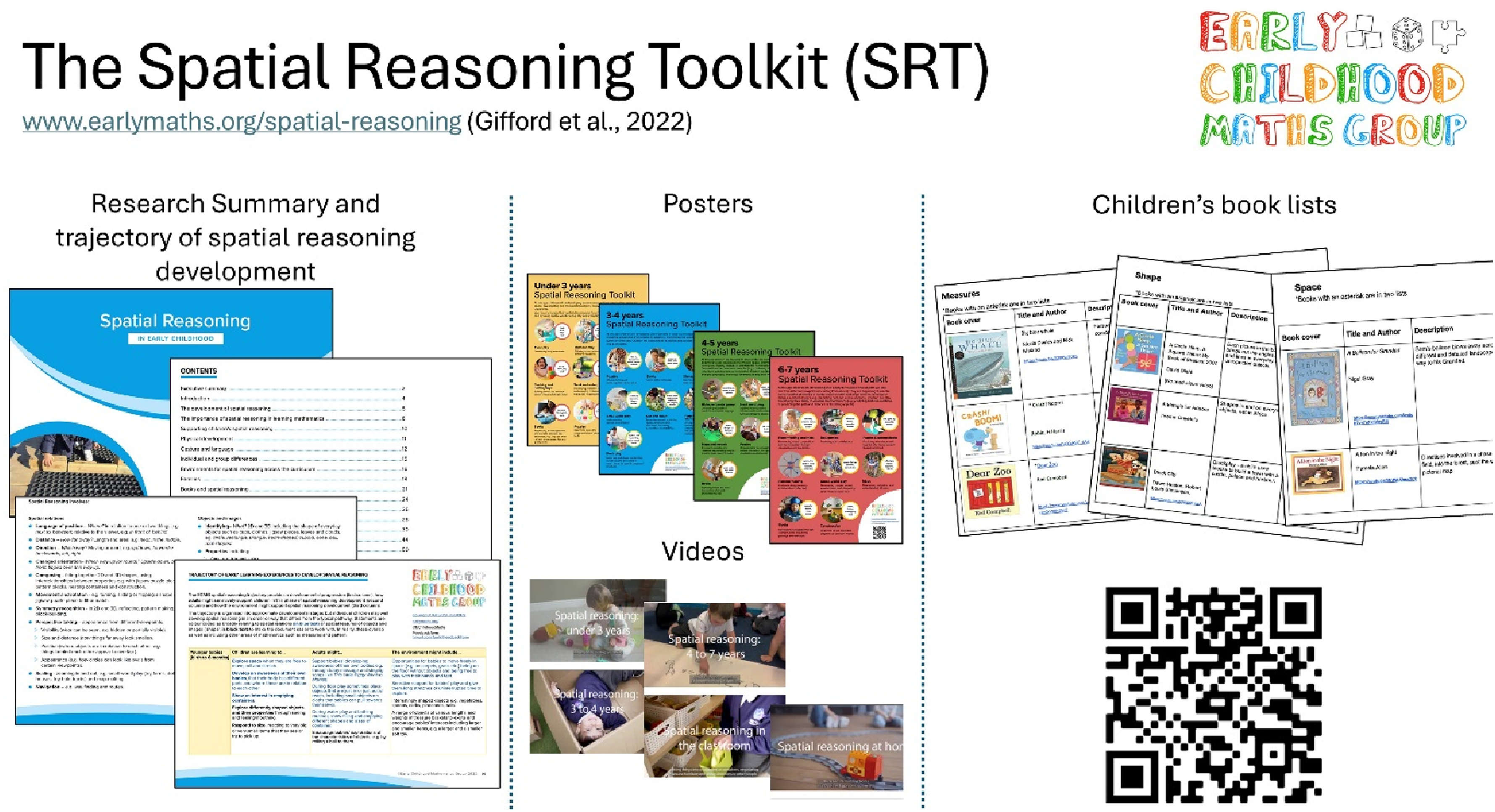
Research Summary
The research summary defines what spatial abilities are, their importance, and how they develop, before outlining key aspects of spatial abilities, under the headings of ‘objects and images’ (akin to intrinsic spatial abilities; Uttal et al., 2013) and ‘spatial relations’ (akin to extrinsic spatial abilities; Uttal et al., 2013). ‘Objects and images’ includes identifying shapes, shape properties and cutting and decomposing shapes. ‘Spatial relations’ includes understanding direction and position, transformations (e.g. rotation), perspective taking and navigation. Some of the aspects that practitioners may be less familiar with (e.g. perspective taking and navigation) are further explained in specific sections later in the document. Other sections include, for example, information about how to support children’s spatial development with reference to what both the adult and the environment can provide and the importance of physical development for spatial development. Throughout the document, boxes of ‘key information’ are provided.
Trajectory of Spatial Reasoning Development
This resource provides a learning trajectory which maps out the development of aspects of spatial ability at different stages of development from birth. Learning trajectories are based on natural child development of the individual child as well as being mindful of long-term learning goals (they are not a list of teaching steps) (Clements & Sarama, 2021). Alongside each stage of progression, suggestions are provided of what the adult might provide or encourage and what the environment might include. An example from the age 4–5 years section details that children are learning to understand relative position, such as between, in front of, behind, before and after, and where position is in relation to other things. As support, adults might encourage children to describe position and give directions. For example, when children are creating their own obstacle courses. In turn, the environment might include crates, tyres, planks, canes/sticks, string and logs.
Spatial Reasoning Posters
The posters present spatial activities for under 3 years, 3–4 years, 4–5 years and 6–7 years. Each activity has an image, some explanatory text, and suggested spatial language words that the adult could model. For example, at 3–4 years, there is an image of block play, with the associated text ‘Using size and shape relationships as well as parts and whole to select blocks for specific purposes/structures’ and the following spatial language words: together, next to, slanting, pointy, curved, corner.
Spatial Reasoning Videos
There are five spatial reasoning videos for practitioners, each with a different expert in early spatial development and practice explaining how children develop spatial abilities, according to our synthesis of research evidence, and what practices can support these abilities. There are videos about working with birth to three-year-old children, 3- and 4-year-old children and 4- to 7-year-olds; as well as one video on spatial reasoning in the classroom and one on spatial reasoning in the home. The videos include captions for spatial language to emphasise in practice, as well as demonstrating some of the activities and ideas alongside the explanations from the experts.
Spatial Book Lists
These three lists provide suggestions of children’s literature which include spatial themes and learning opportunities. There is a list of children’s books for ‘shape’, ‘space’ and ‘measures’ which briefly describe the text and list the spatial abilities which the texts are particularly useful for exploring with children.
Studies of the Impact and Use of the Spatial Reasoning Toolkit
Two studies were conducted to evaluate the impact of the Spatial Reasoning Toolkit on practitioners. The first study used a pre-post design to examine the impact and use of the SRT. The second study used case studies to provide an in-depth analysis of the effect of the SRT in different settings.
Study 1. Quantitative Evidence of the Impact and Use of the Spatial Reasoning Toolkit
The purpose of Study 1 was to document quantitative evidence of the impact and use of the SRT. A questionnaire approach was used to obtain a representative sample of data from a range of practitioners. We compared equivalent quantitative questions used in Questionnaires 1 and 2 to Questionnaire 3, akin to a cross-sectional pre-post design, to address the following research questions: (1) Does practitioner confidence in their understanding of what spatial reasoning is differ at launch (practitioners who had not yet used the SRT) compared to one year post launch (practitioner who had used the SRT) (cross-sectional). (2) Does practitioner perceived usefulness of the SRT at launch reflect perceived usefulness one year post launch (cross-sectional). (3) Does practitioner intended use of the SRT at launch map onto practitioner use of the toolkit one year post launch (cross-sectional)?
Method
Participants
For all three questionnaires, all participants were practitioners who worked in educational settings with children from birth to 7 years in England. Participants were recruited through social media and word of mouth. Since this is cross-sectional data, however, we cannot rule out that practitioners may have taken part in more than one questionnaire. An incentive was not provided for Questionnaire 1, but for Questionnaire 2 respondents could opt to receive a printed copy of the SRT posters and for Questionnaire 3, respondents could opt to receive a printed set of SRT keyrings. Ethical approval was obtained from the University ethics committee and participants completed an online consent form before completing the questionnaires online.
Questionnaire 1 (release date: 7th July 2021) pre-launch data included 94 participants 92 of whom were female. 90% of this sample were White British while other ethnicities included White Irish, White Other, Mixed Other, Indian, Pakistani, Chinese and Prefer not to say. The highest proportion of participants worked with a class of four- to five-year-olds in a primary school (33%) or a class with children between five and seven years in a primary school (22%).
Questionnaire 2 (release date: 5th February 2022) at-launch data included 74 individuals. Gender and ethnicity were not measured. As with the previous questionnaire, a large proportion reported working with a class of four- to five-year-olds in a primary school (30%) or with a class of children between five and seven years in a primary school (15%).
In Questionnaire 3 (release date: 15th December 2022), practitioners rated themselves as non-users, novice (considering how to use it), apprentice (using the SRT for lesson ideas) and expert (using the Spatial Reasoning Toolkit regularly to integrate spatial reasoning into practice) users. Non-users (n = 9) were excluded from this dataset for the current analyses, leaving a sample size of N = 59 (all users, novice, apprentice and expert, were treated as one group for the current analyses). Gender and ethnicity were not measured. Similar to participants in the above questionnaires, the highest reported role was working in a reception class (51%). This was followed by 14% working with a class of three- to four-year-olds in a primary school.
Instruments
As part of the development and evaluation of the SRT, three questionnaires were designed. The first (Questionnaire 1: pre-launch) asked practitioners about their perspectives on spatial reasoning (Bates et al., 2023) and their training and resource needs (Gripton et al., submitted), the second (Questionnaire 2: at-launch) was released at the launch of the SRT to gather first impressions of the toolkit (Gripton et al., submitted) and the final questionnaire (Questionnaire 3: post-launch) was used to gather data one year after launch of the SRT to determine the awareness, use and impact of the SRT (McCarthy et al., 2024).
Procedure
Each participant group completed questionnaires online. Each questionnaire took approximately 10 minutes to complete. The findings of the three questions that were common to Questionnaire 3 and an earlier questionnaire (Questionnaire 1 or 2) are reported here. These relate to practitioner confidence in their understanding of what spatial reasoning is (RQ1); practitioners’ perspectives on the usefulness of the SRT (RQ2); and their intended versus actual use of the SRT (RQ3).
Results
Practitioner confidence
Practitioners were asked the question: If you were asked to explain what spatial reasoning is to someone else, how confident would you be in your definition? Responses choices were: ‘Very confident’, ‘Confident’, ‘A little confident’ and ‘Not confident at all’. Questionnaire 1 pre-launch and Questionnaire 3 post-launch data are shown in Figure 2. Pre-launch of the SRT, the majority of participants (54%) were ‘A little confident’, with ‘confident’ as the next biggest group (33%). Post-launch, these categories were slightly more even, with 42% ‘a little confident’ and 47.5% ‘confident’. Chi-squared analyses, however, demonstrated that the percentages of practitioners responding to each category did not change statistically for the post-launch sample, compared to the pre-launch sample, χ
2
= 0.246, N = 153, p = .482 Practitioner confidence in their definition of spatial reasoning.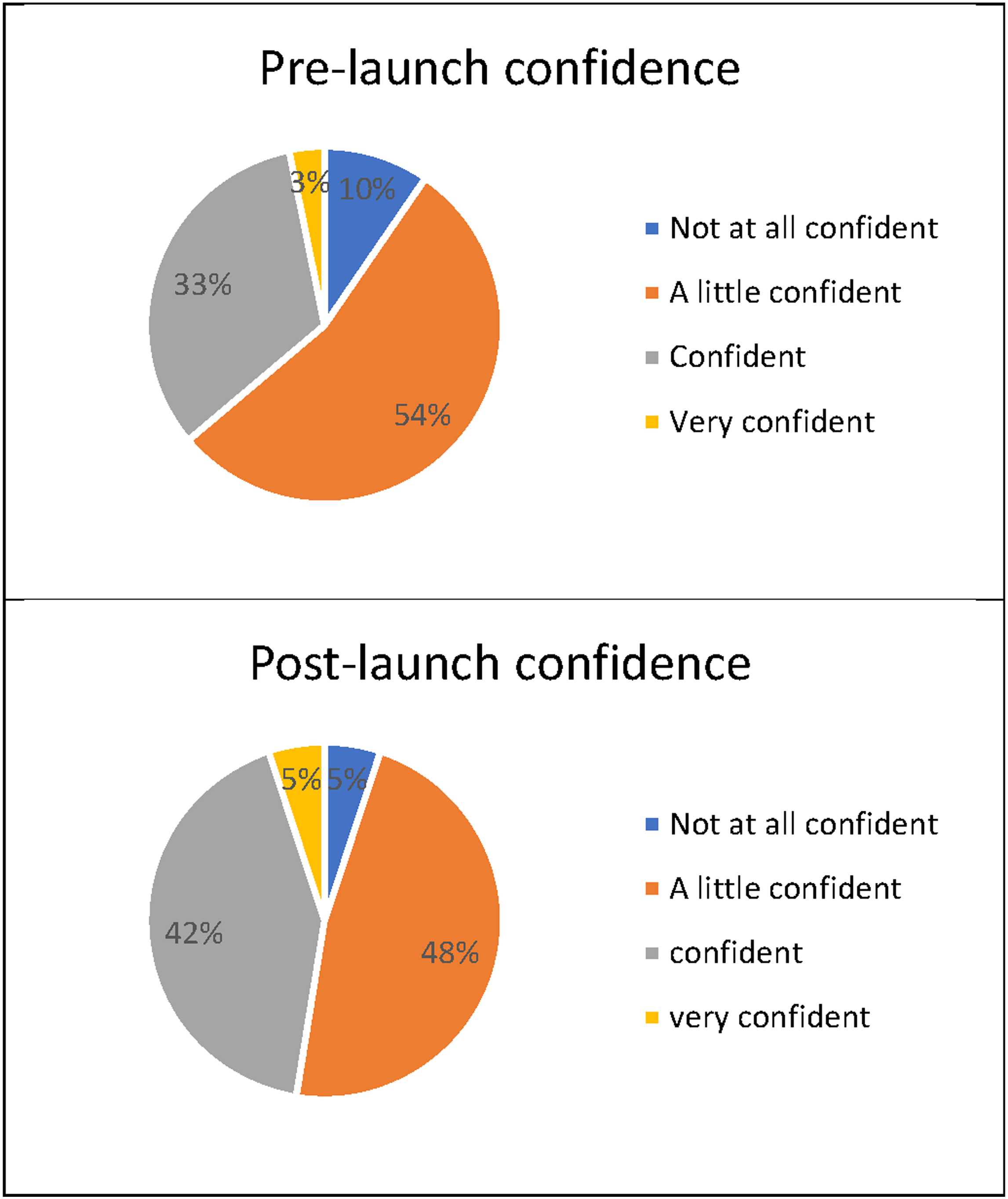
Usefulness of the SRT
At launch (Questionnaire 2), we asked practitioners their first impressions of the usefulness of each aspect of the toolkit (having not used it) on a scale of 1 (not at all useful) to 5 (extremely useful), or they could indicate ‘not viewed’. The five aspects were: research summary, trajectory of spatial reasoning development, videos, posters and children’s book lists. One year post launch, users of the toolkit were asked the same question (Questionnaire 3), having had opportunity to use it (the same scale was used and an option of ‘not used’ was also provided). Note that the middle item in the Likert scale was ‘neutral’ at launch and ‘moderately useful’ post-launch. This is a design limitation which limits direct comparison of this part of the scale. All other four usefulness items on the Likert scale were identical at launch compared to post launch. ‘Not viewed/not used’ responses were excluded from the dataset for analysis. Internal consistency across the five usefulness aspects was considered good, with a value of α = .97 at launch and α = .81 one year post launch. Findings are presented in Figure 3. The data were treated categorically; for each aspect, chi-squared analysis was used to determine whether the percentage of practitioners responding to each scale (from ‘not at all useful’ to ‘extremely useful’) differed from launch to one year post launch. This showed that, on using the toolkit, enthusiasm remained high, but the balance of responses changed significantly for all components, with the exception of the posters (research summary: χ
2
= 16.06, N = 99, p < .001; trajectory of spatial reasoning development: χ
2
= 21.80, N = 104, p < .001; videos: χ
2
= 11.29, N = 93, p = .01; posters: χ
2
= 6.68, N = 80, p = .15; children’s book lists: χ
2
= 11.49, N = 89, p = .01). Adjusted standardized residuals demonstrated significant findings were due to a lower frequency of ‘extremely useful’ responses and a higher frequency of ‘moderately useful’ responses in the post-launch sample, compared to the at-launch sample for all components that showed a significant change (adjusted standardized residuals >1.96). In addition, while responses to ‘very useful’ did not change for most components, for the trajectory of spatial reasoning development there were more ‘very useful’ response post-launch than at-launch (adjusted standardised residual = 2.30). To summarize, post-launch the percentage choosing ‘extremely useful’ and ‘very useful’ became almost equivalent and respondents were using the ‘moderately useful’ option more post-launch (note that this was labelled ‘neutral’ at launch and so direct comparison is with caution). Participant perceived usefulness of the components of the SRT.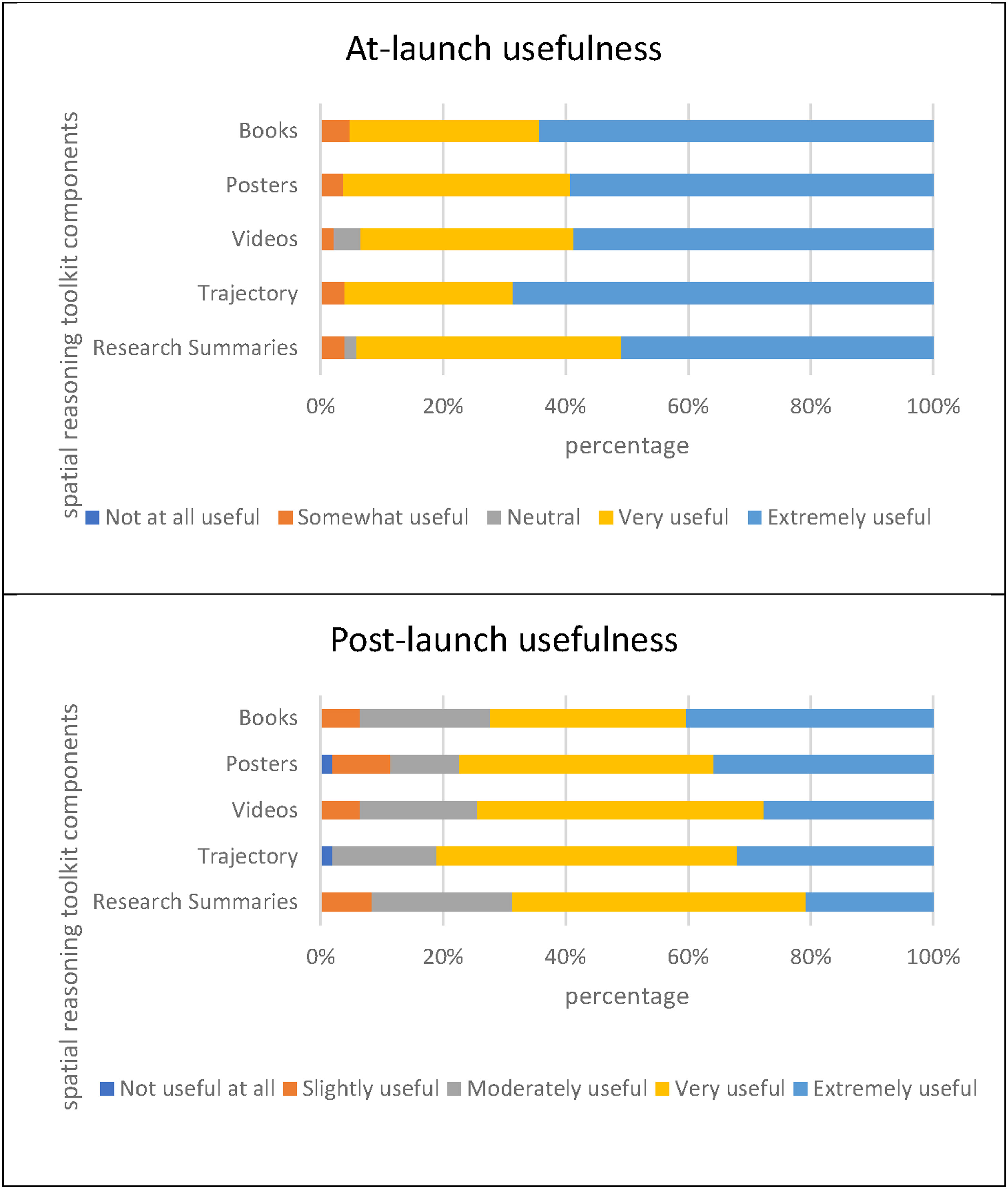
How the SRT is Used
At launch (Questionnaire 2), practitioners were asked ‘How do you intend to use the toolkit in the future?’ and one year post-launch, practitioners were asked ‘How do you use the Spatial Reasoning Toolkit in your practice?’ The questions were presented slightly differently between questionnaires. At launch (Questionnaire 2) practitioners were only able to select one option, while for Questionnaire 3 (one year post-launch), practitioners could select all responses that applied to them. Due to this difference, practitioners often selected more than one option and percentage of respondents for each option are, as a result, generally higher in the post-launch data. This does not obscure the ability to observe and analyse the profiles of the patterns of data. We also created an ‘all of the above’ category. For Questionnaire 2, this comprised of practitioners who selected ‘other’ and had specified ‘all of the above’ in the open text box. In Questionnaire 3, this comprised of practitioners who selected all options. In Questionnaire 3, we also added an additional option: ‘to build confidence in teaching spatial reasoning’. The addition of this item would not impact the balance of choices because practitioners were able to select all options that applied to them for this questionnaire, but this item cannot be included in analysis. Findings are presented in Figure 4. At-launch, the dominant response was ‘for professional development with colleagues’ followed by ‘to support with planning or making choices about provision’. One year post-launch, the balance shifted slightly. The highest percentage was now ‘to support with planning or making choices about provision’, followed by ‘for own professional development’, ‘to build confidence in teaching spatial reasoning’ and ‘for professional development with colleagues’. Chi-squared analysis of response choice at launch and one year post launch demonstrated that this difference was significant, χ
2
= 32.49, N = 189, p < .001. The significance was driven by higher responses to ‘for own professional development’ in the post-launch sample compared to the at-launch sample (standardized adjusted residual = 3.9) and lower responses to ‘for professional development with colleagues’ in the post-launch sample compared to the at-launch sample (standardized adjusted residual = 4.8) only. Changes to ‘to support with planning or making choices about provision’ did not differ significantly from at-launch to post-launch (all other standardised adjusted residuals <1.96). Participant Use of the SRT.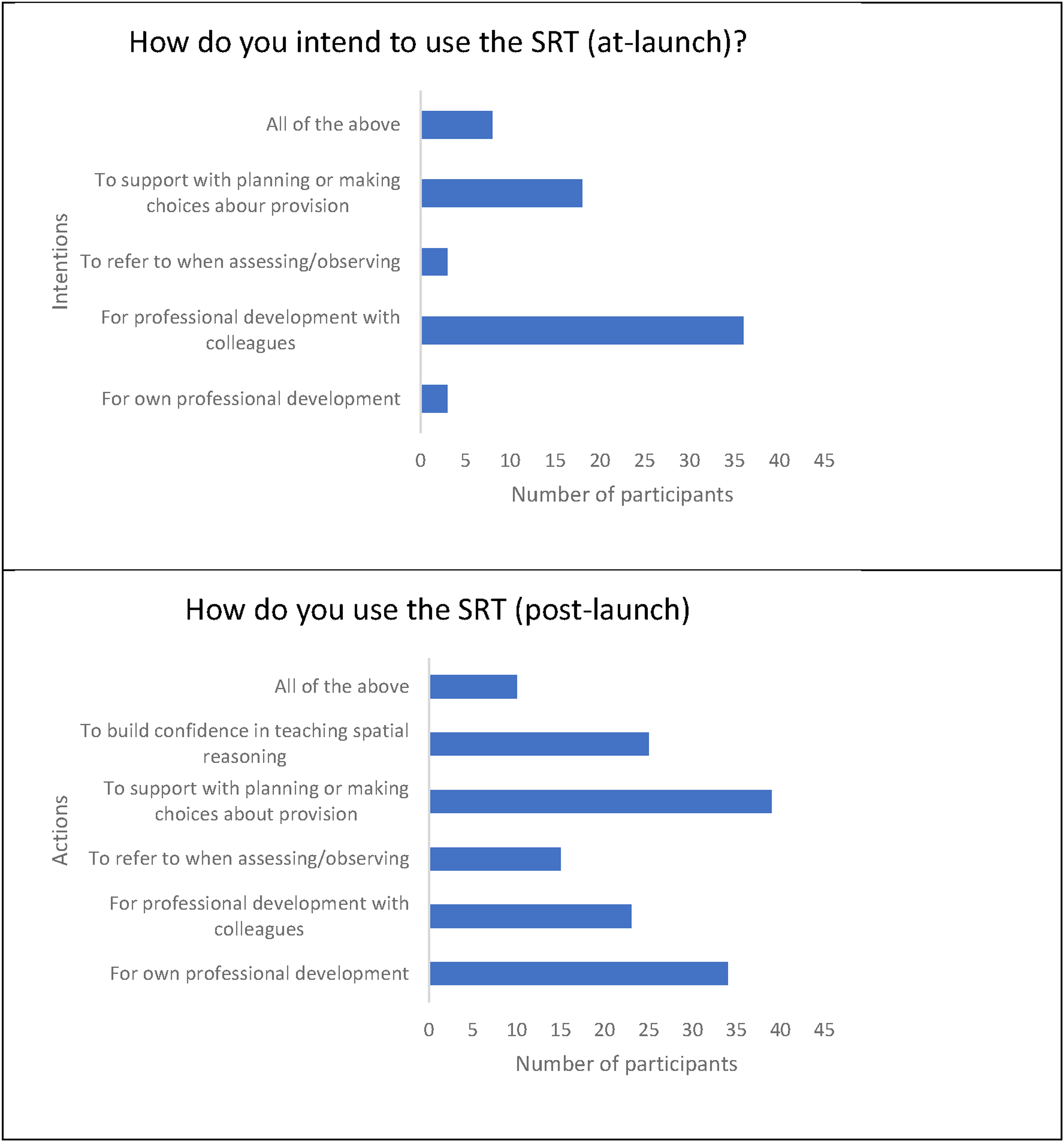
Discussion
Results demonstrate some differences between pre-launch data, at-launch data and one year post-launch data. Confidence in defining spatial reasoning did not differ statistically between pre-launch and post-launch. While these data are cross-sectional, this finding suggests that engaging with the SRT resources has not yet provided practitioners with higher confidence in their knowledge of spatial reasoning. It is possible that confidence would grow over time, noting that many post-launch users still considered themselves as ‘novice users’. Note also that due to recruitment via social media and word of mouth, samples might have been skewed towards those with an existing interest in furthering their professional development and/or an interest in spatial abilities. This could have inflated our baseline data in how confident participants were in their definition of spatial reasoning, and in turn deflated the differences in confidence observed.
Perceived usefulness of the SRT was optimistic in the at-launch data. Practitioners who used the SRT made a more realistic judgement of how useful the components were. Despite this difference, the data remained predominantly positive, from a dominance of ‘extremely useful’ at launch, to a dominance of ‘very useful’ responses one year later. This was accompanied by a reduction in ‘extremely useful’ and an increase in ‘moderately useful’ post-launch, relative to at-launch data. This difference could reflect that workloads are high (Brady & Wilson, 2022) and practitioner time is limited (McCarthy et al., 2024.) and that this impacts the ability to engage broadly with the SRT.
Both at-launch and one year post-launch, participants intended to use (at-launch) or used (post-launch) the SRT for ‘professional development with colleagues’ and ‘to support with planning or making choices about provision’. The balance of the professional development use cases changed from at-launch to post-launch, with ‘professional development with colleagues’ being higher at-launch and ‘own professional development’ being higher post-launch. This might reflect the reality that practitioners are given limited time for professional development with colleagues on areas that are not necessarily deemed high priority (Bates et al., 2023), and due to this limitation, working through the SRT on their own was more viable. The option ‘to support with planning or making choices about provision’ was selected by both samples. The strong use for professional development (own or with colleagues) and for planning is in line with the intended use of the SRT. While all tools in the SRT can be used for professional development, it is possible that use for planning reflects the practical nature of the resources and that practitioners recognised the usefulness of the SRT for this purpose. Akin to our suggestion above, it might also be that limitations in practitioner time meant that practitioners were less likely to engage fully with the tools that require more investment of time (such as the research summary), preferring to go straight to the more practical tools (such as the trajectory of spatial reasoning development) to use them in their planning.
Study 2: Qualitative Evidence of the Use and Impact of the SRT
The purpose of Study 2 was to provide qualitative examples of the impact and use of the SRT, from a range of settings. A case study approach was adopted to provide in-depth analysis of how different types of education settings, working with children from birth to seven years, were using the SRT resources and what impact they were having. One year after launch, three case studies were undertaken to address the following two major questions: (1) How is the SRT used in educational settings? (2) What is the perceived impact of the SRT in educational settings?
Method
Given the focus of the study was on examining a distinct initiative within a series of settings, an instrumental (Stake, 1995), collective (Hamilton & Corbett-Whittier, 2013) approach to case study research was used.
Settings
We worked with three educational settings. The aim was to capture how each setting had used the SRT and the impact it had on practice and on children’s learning and development in their early childhood education settings. The three settings were all primary schools educating children from four to eleven years. Two of the settings also had nursery provisions for children from three to four years. The case studies were conducted in a special school in an urban area of deprivation; a small primary school located near the coast in an area of high deprivation; and a large community school on the outskirts of a city in an area of relative affluence (English Indices of Deprivation, 2019; a measure of relative deprivation in small areas in England). Each setting had used the SRT in different ways to support children’s spatial reasoning and develop their mathematics understanding.
Instruments
To ensure the data gathered in the case study research process addressed the research questions a content guide was used. The guide was divided into four content areas: the setting, the use of the SRT, the impact of the SRT and how the SRT might be used in the future. Each section included questions to prompt discussion and guide observations and data gathering. For example, in the use of the SRT section questions included: ‘How and when did the setting become aware of the SRT?’; ‘Why did the setting decide to use the SRT?’; and ‘What approach did the setting take in integrating the SRT into practice?’
Procedure
The case studies included gathering evidence from multiple sources including interviews with the lead practitioners in each setting, visits to the settings, supplementary information from their websites, government databases and inspection reports, and observation notes made by the researcher during site visits.
Results
Case Study 1: A special school for primary aged children
This special school supports children with Learning and Additional Needs (including speech and language difficulties, autism, physical difficulties and medical needs). The school is in an urban area of deprivation and is rated Outstanding (1) by the national independent inspection and regulatory body, Ofsted. This is the highest rating a school can receive under the Education Inspection Framework in England (Ofsted rating scale: Inadequate (4) to Outstanding (1)). The school curriculum encompasses the EYFS curriculum requirements and is based on a spiral model (Harden, 1999), which allows children to revisit and build on their learning
The subject leader for mathematics has driven the school’s adoption of the SRT. The content in the SRT fit well into the curriculum approach used by the school where each child is supported at their own level. The developmental steps in the trajectory document and related activity and equipment suggestions offered an accessible way of incorporating spatial activities into the curriculum. Critically, the SRT resources provided a way to empower practitioners to offer support and to challenge pupils ‘in the moment’ to aid children’s development.
The SRT posters provided an easy way of introducing the topic of spatial reasoning to other practitioners. Staff were provided with A4 copies of the age-related posters to support them in planning activities. The posters were also circulated through staff newsletters, staff meetings, sent to parents and displayed in communal spaces (staff rooms, family rooms) to build further awareness of spatial abilities.
Staff also participated in spatial reasoning training and discussed how they could incorporate spatial activities into practice. The staffing model for the school, which often requires practitioners to move between classes meant that establishing a consistent understanding and approach to the development of spatial abilities was critical to successfully integrating spatial activities into the curriculum. The SRT resources in different formats facilitated this consistent approach.
To support the work in school, ideas for how spatial activities can be supported at home were shared with parents and caregivers. The school invested in several resources to support daily play-based mathematics learning including wooden blocks, magnetic shapes, interlocking shapes, large-scale 2D and 3D shapes. Practitioners also developed their own materials such as paper shapes. The spatial reasoning children’s book list in the SRT provided new titles that the school added to their library.
In classes, children enjoyed activities such as construction. Pupils were observed building ambitious 3D models, like cars, and demonstrating that they used spatial skills to select which pieces represented car doors and boots. The resources allowed pupils to build their confidence in these mathematics-related activities. Furthermore, the resources allowed children to work together, which is often challenging to achieve in this setting where children can be relatively isolated in their play. The adoption of the SRT allowed practitioners to develop their own confidence in understanding spatial reasoning and mathematics. The SRT has also supported the inclusion of progressive development steps for spatial reasoning in the curriculum. The lead practitioner used the format of the SRT trajectory of spatial reasoning development to apply to other areas of mathematics such as a one-page guide of how patterning develops.
Case Study 2: One-form entry mainstream coastal school
This small primary school is situated in a coastal town, drawing in children from the surrounding villages as well as from the town itself. The school has a larger than average population of children with special educational needs. The school is rated Good (2) by Ofsted. The school works closely with local organisations to offer an enriched curriculum of activities. For example, there is a thriving local heritage centre that children access to complete arts and humanities projects. A senior leader from the school participated in the consultative research process to develop the SRT (Gripton et al., 2024). The lead practitioner had therefore already identified the value of the SRT and was enthused about the change it could bring about in practice. More broadly, their introduction to spatial reasoning via the SRT, clarified the importance and breadth of spatial skills. The school made the strategic decision to embed spatial abilities into the mathematics curriculum while working within the nationally defined curriculum. The senior leader shared the knowledge and guidance in the SRT with staff in Early Years and Key Stage 1 (children aged from three to seven years) so they could begin to explore implications for their curriculum and discuss how to integrate spatial abilities into their provision. In staff meetings, practitioners watched the SRT videos to understand what spatial abilities encompassed and explored the SRT resources. Content such as ‘what adults could do’ and ‘what the environment might include’ in the SRT trajectory of spatial reasoning development allowed staff to consider how to build spatial activities into their teaching. The SRT research summary and trajectory of spatial reasoning development were distributed to the relevant classes. This allowed staff to become familiar with spatial abilities and how to support children within their provision. Spatial ability objectives were embedded in the medium-term mathematics planning. This planning was facilitated by the age-related development steps laid out in the SRT trajectory of spatial reasoning development. In Nursery (three to four years), the continuous provision element was extended to include activities such as jigsaw puzzles to support mental rotation, large-scale block play to assist a range of spatial abilities and additions to the role play area the included spatial-related props such as telescopes. In Reception (four to five years), spatial abilities were introduced via books from the SRT children’s book list, such as ‘Rosie’s Walk’. Making obstacle courses allowed children to use spatial language and to physically embody the movements of ‘up’, ‘over’ and ‘under’. Map making and mapping out sequences of locations on maps facilitated perspective taking and spatial thinking. Classroom teachers reported that they observed development in children’s spatial language as a result. Pupils often join the school with lower-than-expected speech and language development, so this has been a much-valued perceived outcome of the adoption of the SRT.
The SRT allowed practitioners to develop their understanding of spatial reasoning and ensure that their provision incorporates elements relevant for each age group. An increase in practitioners’ understanding of spatial vocabulary has allowed them to recognise and help develop spatial language in the children they work with. Understanding spatial language is a critical step in supporting children’s spatial abilities (Gilligan-Lee et al., 2021).
Case Study 3: A four-form entry urban primary school
Situated in an affluent area, this large primary school serves a densely populated urban area. The school has lower than average number of pupils receiving free school meals (the national indicator of low SES in education, Department for Education, 2023). The school has a nursery (3–4 years) and dedicated provision for children with special educational needs. The school is rated Good (2) by Ofsted. The school’s curriculum is described as a ‘rich and varied creative curriculum’ and pupils are offered additional subjects to the core requirements of the National Curriculum including dance and swimming.
Practitioners worked alongside researchers to co-produce whole-class spatial training for children aged 6–7 years. Researchers provided professional development sessions for the practitioners in spatial abilities to ensure there was a consistent understanding of the topic. Using the SRT trajectory of spatial reasoning development, the spatial reasoning videos, posters and children’s book lists, practitioners and researchers developed a one-week program of for the summer Term. Planning was completed at a class level, with practitioners selecting activities from the SRT relevant for their class. The activities were promoted to pupils and their families as ‘Spatial Week’ – a chance for pupils to develop their spatial abilities. The aim was to understand if spatial training designed and developed in an ecologically valid way could improve children’s spatial reasoning (Holleman et al., 2020).
Practitioners chose to incorporate spatial activities into several different curriculum subjects as well as into daily practices such as reading time and the start of the school day. Using activity suggestions in the SRT, timetables were created for two classes. Mathematics lessons focused on shape properties and composition with children making 3D shapes from 2D nets. In physical education, outdoor obstacle courses were used to explore physically moving the body according to the route and following spatial language instructions such as ‘in between’, ‘through’, ‘over’ and ‘under’. In geography, children practiced their map making and navigation skills to explore the school grounds. In reading, children were exposed to spatial reasoning via books drawn from the SRT children’s book lists.
Classes used spatial starter tasks at the beginning of the day. These game-like activities allowed children to listen to spatial language instructions and interpret them through drawing or physical actions. Spatial training incorporating active movement (hands-on exploration, play, physical activity) and studies involving language, gesture and visual supports have been identified as creating more impact for young children (Yang et al., 2020). Spatial activities were also included in continuous provision where children could select to play with jigsaws or blocks. In total, children were exposed to approximately 6 hours of spatial content over the duration of the week.
Practitioners reported that using the SRT had increased their understanding of spatial reasoning and how it could be integrated into the curriculum. Formal assessment of children’s spatial language understanding showed an improvement following Spatial Week compared to a control group who experienced their normal curriculum. Additionally, practitioners reported perceived development in children’s social and communication skills which they attributed to the team-based nature of many of the activities.
General Discussion
The aim of the Spatial Reasoning Toolkit (SRT) was to translate the robust research literature on the importance of spatial abilities for mathematics into practice. This included a research summary accompanied by trajectory of spatial reasoning development from birth to seven years. Other resources were posters, videos and children’s book lists. Practitioners contributed to the development of SRT resources by providing feedback during the development of the SRT (Gripton et al., submitted) with the goal of maximising its usefulness. Here, we reported quantitative (Study 1) and qualitative (Study 2) data on the use and impact of the SRT. Although practitioner confidence in their knowledge about spatial reasoning did not change statistically from pre-launch to post-launch, this might have reflected a slightly skewed baseline sample because of our recruitment methods. Nevertheless, both studies demonstrated that practitioners predominantly perceived the SRT to be useful. In Study 1, practitioners reported using the SRT mainly for professional development and for planning. These findings are echoed in the case studies in Study 2. Each early childhood education setting reported a positive impact of the SRT on both practitioners and children. As with Study 1, they reported using the SRT resources for professional development and in their weekly planning. The case studies further highlighted unexpected benefits, for example, in children’s communication and teamwork. The three case study settings were very different, highlighting the flexibility in application of the SRT resources. In particular, Case Study 1 was a special school where the SRT was used with children beyond the age range of birth to seven years. This exemplifies the intention of the SRT that the trajectory of spatial reasoning development is organized into stages, and that every child is unique and might not conform to the ‘typical’ trajectory, particularly with reference to age.
Research evidence that spatial training is particularly beneficial for children from low income households (Bower et al., 2020, 2022; Schmitt et al., 2018) is important in our studies because our findings suggest that the SRT can be used to support a wide range of groups of children. Practitioners across each setting appreciated the range of resources within the SRT. In both Study 1 and Study 2, all resources were deemed to be useful, and their flexibility of use is demonstrated in the case studies. One barrier, however, was practitioner time. Future work on the SRT might provide a summary document to enable practitioners to easily see how they can best use the SRT, balancing their individual needs and time available. This suggestion is in line with research highlighting the need to curate content and to use appropriate formats to maximize accessibility (Rycroft-Smith, 2022).
There are several avenues for future research. First, our samples were opportunity samples and were mainly practitioners working with three- to seven-year-olds in school settings. Including more practitioners who work with children from birth to four in non-school settings would be useful to determine the broader generalizability of our findings. Second, we used a cross-sectional design. Future research could measure use and impact from the same group on introducing the SRT to them, and one year later. Finally, a large-scale Randomized Controlled Trial which directly measures the impact of the SRT on children’s spatial abilities and mathematics abilities would enable us to determine the cognitive impact on children.
To conclude, the SRT offers a range of resources to effectively support practitioners to introduce spatial activities into their settings. To remove barriers related to practitioner workload, further development of the SRT might include more content that can be easily accessed and digested for immediate use. The SRT has been received positively by practitioners from a variety of settings. Practitioners use the SRT for professional development and for planning and report a positive impact of the SRT on the children in their classrooms.
Footnotes
Acknowledgements
Thank you to the practitioners who participated in this study and the Early Childhood Maths Group for collaborating with our team to develop the SRT and supporting this project. Thank you to Felicity Smith for help with merging the data sets and formatting the visualizations.
Author Contributions
EF: Writing-original draft (lead), Conceptualisation, Formal Analysis; Supervision, Funding Acquisition, visualization, Methodology; SMcC: Writing-original draft, conceptualization, Formal Analysis, Methodology; KGL Writing – review and editing; KB: Writing – review and editing; CG: Writing – review and editing.
Declaration of Conflicting Interests
The author(s) declared no potential conflicts of interest with respect to the research, authorship, and/or publication of this article.
Funding
The author(s) disclosed receipt of the following financial support for the research, authorship, and/or publication of this article: This work was funded by and ESRC Impact Acceleration Grant: ES/T502030/1

Data Availability Statement
The datasets generated during and/or analyzed during the current study are not publicly available as we do not have ethical approval to share the research data
Bios
Emily K. Farran, PhD, is Professor of Cognitive Development, at the University of Surrey, UK, where she directs the Cognition, Genes & Developmental Variability Lab. The broad aim of her research is to characterize typical and atypical development of cognitive functions within the context of the developing brain. This includes a focus on the relationship between spatial thinking and Science and Mathematics achievement.
Sarah McCarthy, MSc, is a Postgraduate Researcher at the University of Surrey. Sarah is currently researching how spatial reasoning training can be used with children from low-income backgrounds to support their mathematics understanding. Sarah also works for the University of Roehampton, as the Co-Investigator for Applied Musicology projects.
Katie A. Gilligan-Lee, PhD, is an Assistant Professor (and Ad Astra Fellow) at University College Dublin, Ireland. Katie's research focuses on how an understanding of cognitive development can be used to inform and improve education and she has a particular interest in improving children's Science, Technology, Engineering and Mathematics (STEM) outcomes.
Kathryn E. Bates, PhD, is a Postdoctoral Research Fellow at the LIFE-MAP lab, Kings College London. Kathryn is interested in how individual differences in the brain, social experiences, and mental health interact to shape how young people develop. She works with stakeholders - from young people to charities to support practitioners - in her research and science communication.
Catherine Gripton, PhD, is Associate Professor in the Observatory for Mathematics Education at the University of Nottingham. Her research focuses on policy and practice in mathematics education with a particular focus on early childhood mathematics. This includes educational design of interventions, resources and programmes of professional learning.