




Abstract
Acceleration is an effective approach for many high ability students, and it can be especially beneficial for Black students. Upstander teachers are those who recognize educational crises and the problem of overlooked and underdeveloped gifts and talents of Black students in regular and gifted education programs. They proactively identify Black students’ intellectual and academic strengths and plan not only enrichment services, but accelerated pathways for Black students to be appropriately challenged. Too many Black students with gifts and talents succumb to boredom, underachievement, and atrophy when bystander teachers have low academic expectations of them and fail to recommend them for academically rigorous advanced and accelerated learning experiences. The purpose of this article is to present acceleration as a means of creating equitable opportunities in gifted education for gifted Black students using Frasier’s Four A’s framework: attitude, access, assessment, and accommodation. Specifically, the following questions are addressed: What are upstander attitudes toward acceleration and related policies? How can upstander teachers know if a Black student is a good candidate for acceleration and increase their access to acceleration? How can upstander teachers provide equitable assessments of Black students for acceleration? What can upstander teachers do to support acceleration programming that accommodates the needs of gifted Black students? Six tables provide an overview of acceleration types, a guide to promote equitable acceleration, and considerations for accelerating gifted Black students.
Keywords
“Several states such as Ohio have developed acceleration policies that can be adjusted to address individual state or district needs.”
The job of a teacher is not done when the bell rings, the buses leave, and the halls are quiet. There are always more lessons to plan, papers to grade, or meetings to attend. Because of this, educators can have the tendency to become bystanders in the fight for equity in gifted and talented education (GATE), waiting for others to act instead of taking initiative to make positive change. In contrast, an upstander is a person who makes conscientious, deliberate, and immediate efforts to engage proactive behaviors and roles to address injustice (Grantham, 2011; Grantham & Biddle, 2014). Upstander teachers for Black students in gifted and talented education have a compelling personal and professional desire and need to promote positive change and not settle for the status quo of underrepresentation. For Black students in gifted and advanced programs, upstander teachers have the added task of ensuring that their students receive a more challenging curriculum within the regular education classroom. An increased number of researchers, practitioners and policy makers and community advocates are encouraging teachers who act as bystanders to under-representation and inequity in gifted education to act as upstanders and take an active role in combating injustices in their schools and communities (Grantham, 2011; Grantham & Biddle, 2014; Grantham & Collins, 2013; Luckey & Grantham, 2017).
Recently, the Board of Directors of the National Association for Gifted Children (2020) issued a call for equity and social justice in gifted education, particularly for Black students with gifts and talents: All gifted students won’t matter until all Black gifted students matter, too. A society that values the development and education of each gifted student, regardless of race or class, is the only context in which every gifted child is truly valued. We acknowledge the injustices of structural and systemic racism and recognize the field of gifted education has historically been part of the problem by promoting these injustices, even if inadvertently. Some early researchers and thought leaders who influenced the field were involved with the eugenics movement, and early gifted identification and programming practices often became vehicles for de facto segregation. The field has made tremendous strides in addressing these historical injustices in recent years, but we have not made sufficient progress. (NAGC Board of Directors, 2020).
In essence, the Board of Directors has issued a clarion call for upstander educators and advocates of Black students to stand with NAGC. Gifted Black students need a greater number of upstander teachers to understand and support them and accelerate their learning experiences in schools. The purpose of this article is to present acceleration as a means of creating equitable opportunities in gifted education for gifted Black students, using Dr. Frasier’s 4 A’s (attitude, access, assessment, and accommodation) as a framework.
Academic Acceleration
PreK-Eighth Grade Acceleration Types and Advantages.
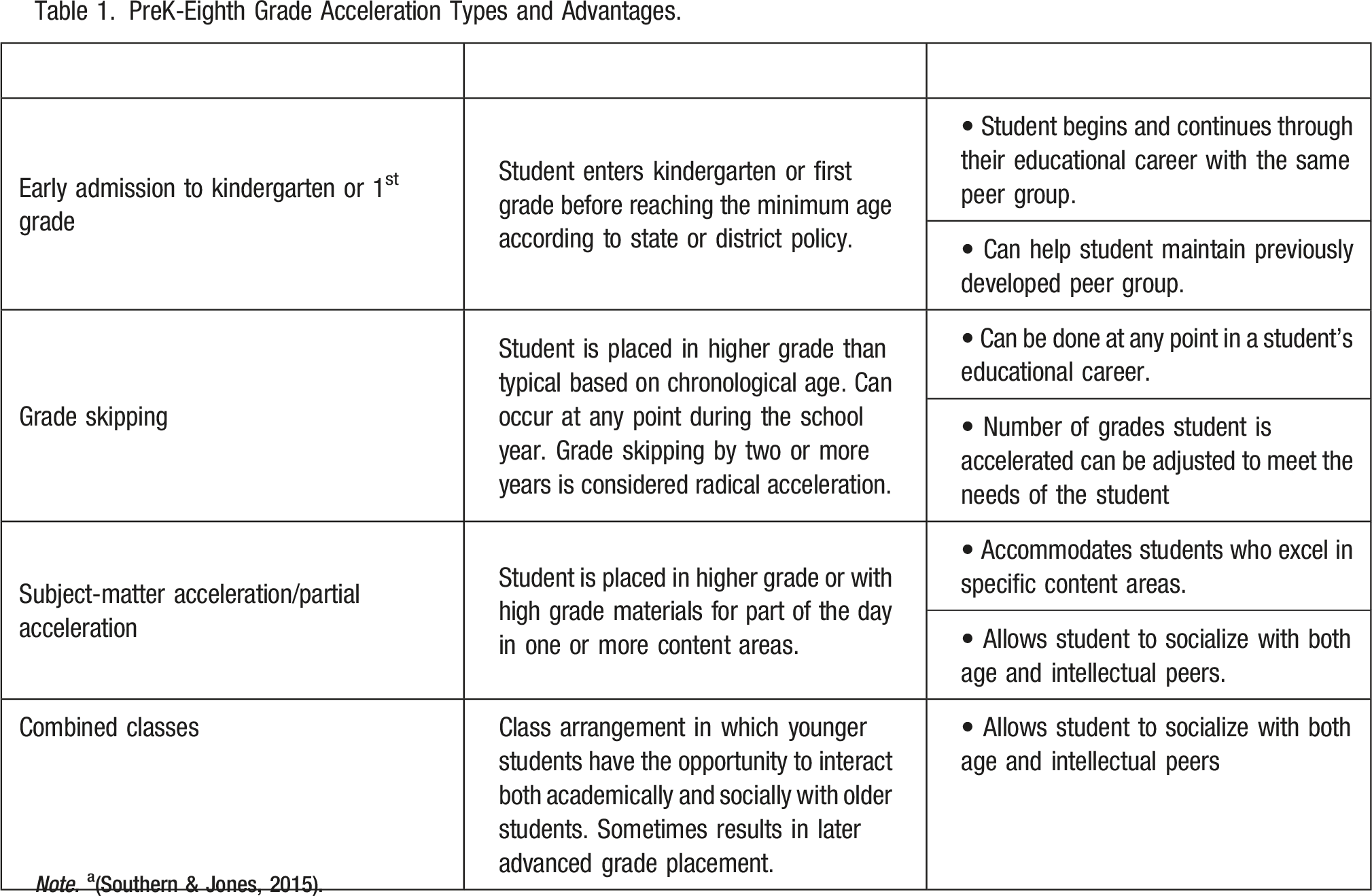
Note. a(Southern & Jones, 2015).
High School and Postsecondary Acceleration Types and Advantages.
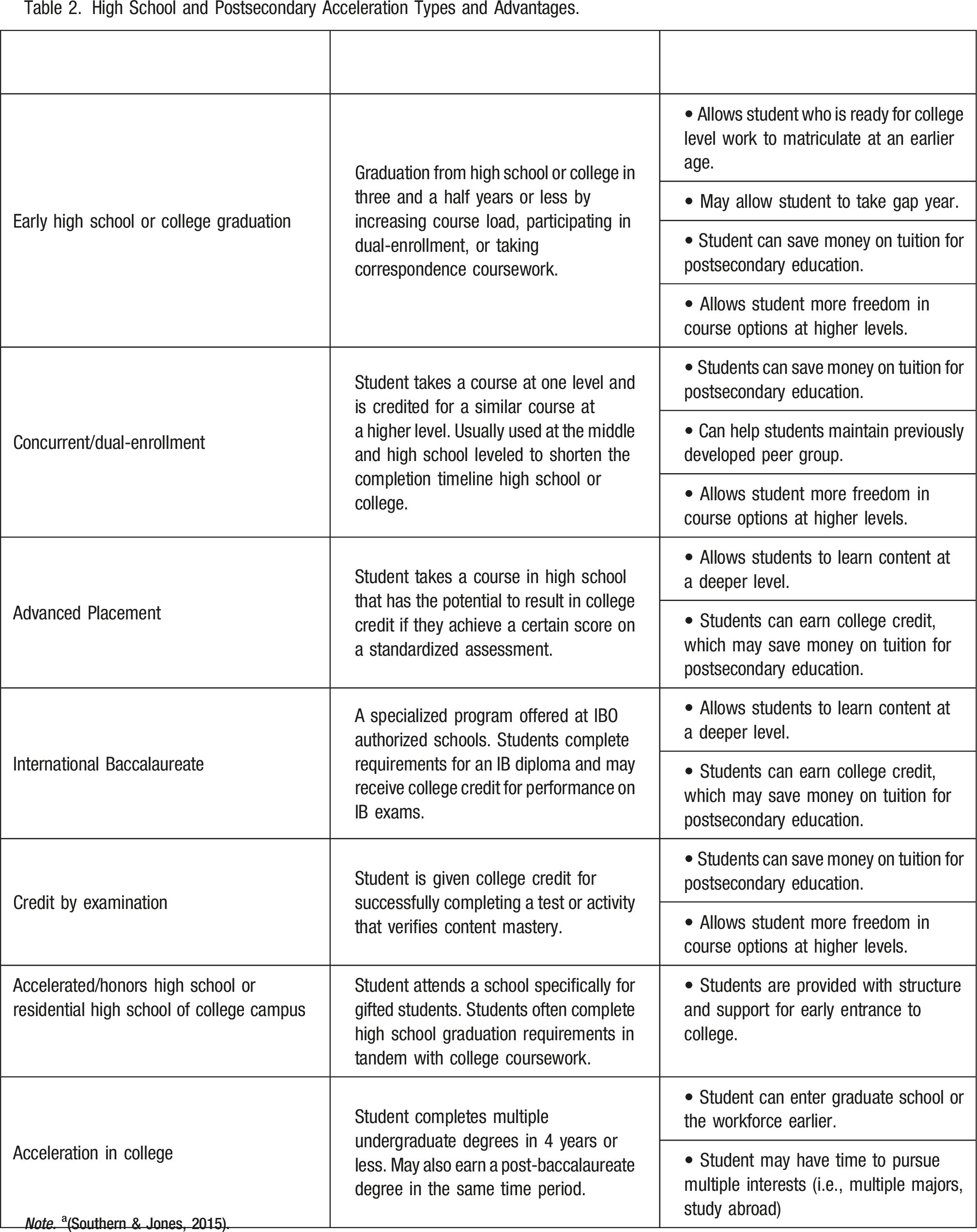
Note. a(Southern & Jones, 2015).
Acceleration Types and Advantages at Multiple Levels.
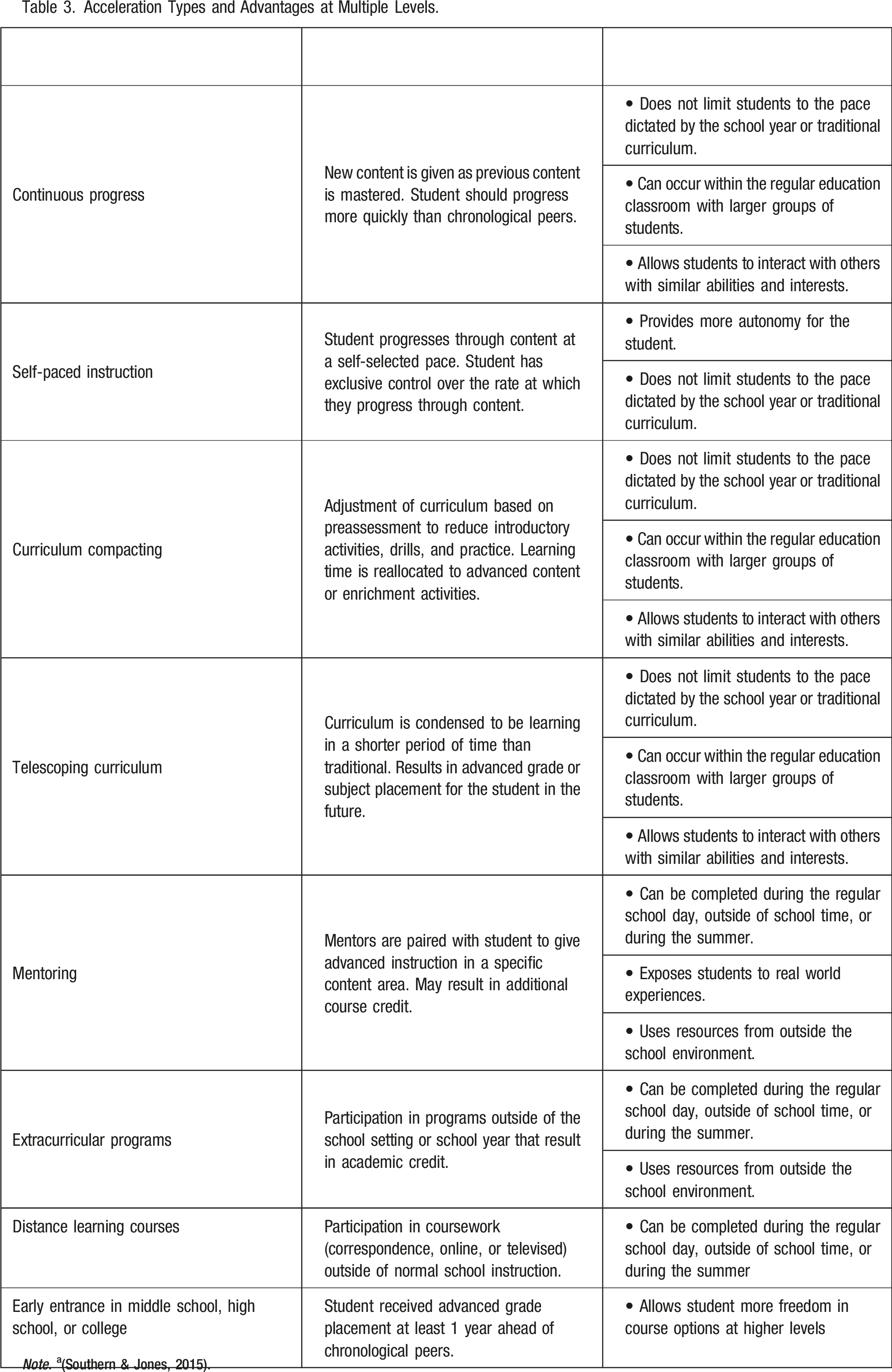
Note. a(Southern & Jones, 2015).
The form of acceleration that educators are usually most familiar with is grade skipping, when a student is placed one or more grade levels ahead of their same-aged peers. For schools and teachers that enroll majority-minority or predominantly Black students, grade skipping can be a relatively simple and low-cost way of accelerating a gifted Black student. However, this method may not work for all Black students (see e.g., Grantham & Biddle, 2014 discussion on acting White), and as evidenced in Table 2, there are many other options. Depending on a Black student’s areas of strength, academic maturity and racial identity, acceleration may be necessary for one or more subject areas, and the amount of acceleration may or may not be the same in each subject area. Our experience as GATE researchers and instructors working in schools with large populations of Black students and as parents of children identified and accelerated in GATE education, upstander energy is key to overcome barriers of traditional ways of understanding and engaging gifted Black students. The key is to ensure that Black students have the opportunity to reach their maximum potential in every area of their academic, social, and emotional experience (Ford, 2013).
As one of the oldest ways of serving gifted students, acceleration has an abundance of research emphasizing its ability to provide students with both short and long-term positive outcomes (Assouline et al., 2015; Dare & Nowicki, 2018; Luckey & Grantham, 2017; Lupkowski-Shoplik et al., 2018; McClarty, 2015). While in K-12, acceleration produces positive academic effects for students (Rogers, 2015). Research on social impacts often differs by type of acceleration, but overall researchers have seen no effect or only positive effects of acceleration on children’s social and psychological adjustment (Cross et al., 2015). Over the long-term, students who are accelerated attend more prestigious colleges, earn more advanced degrees, produce more patents, earn higher incomes, and have more publications than their nonaccelerated peers (Park et al., 2013; Wai, 2015).
Underrepresented Students in Advanced and Accelerated Programs
Although acceleration has been demonstrated to be an effective strategy for many high ability students, it can be especially beneficial for Black students. Unfortunately, high ability Black students are underrepresented in GATE, as they often suffer from the impact of cultural barriers in the identification and provision of gifted services (Ford, 2013).
Identification
Research has shown that Black students may exhibit giftedness in culturally specific ways, including heightened emotional expressiveness and sensitivity, improvisation, expressive body language, and humor (Frasier, 1997; Grantham & Collins, 2013; Torrance, 1973). Gifted Black students also experience cultural barriers when they encounter intelligence tests that have cultural bias (Ecker-Lyster & Niileksela, 2017) or teachers who are not familiar with various manifestations of giftedness and may not know what to look for (Trotman Scott & Moss-Bouldin, 2014).
Issues in the Provision of GATE Services
Even if students are identified and served in a GATE program, they may still suffer from common issues such as microaggressions (Stambaugh & Ford, 2015), being accused of “acting White” (Grantham & Biddle, 2014), deficit thinking, and stereotype threat (Ford et al., 2011). These issues can impact retention in gifted programs and influence students to miss out on advanced opportunities (Ford & Whiting, 2010). Researchers who study gifted education and practitioners who teach in gifted and advanced programming can use diverse strategies to meet the needs of Black students (Ecker-Lyster & Niileksela, 2017). However, some strategies involve more time and extra planning on the part of the teacher. For high ability Black students, teachers may also be charged with the more complex task of providing culturally responsive programming options. This is where acceleration can be especially beneficial for high ability Black students. Because of underrepresentation and other cultural barriers, acceleration can be used as a way of serving students that allows them to remain in a general education classroom while still receiving educational material that matches their needs. This is important as it can give students the ability to continue developing their racial identity and have less concern with race-related issues such as stereotype threat and “acting White” (Ford & Whiting, 2010).
Four A’s: Attitude, Access, Assessment, and Accommodation
One of the most recognized researchers in gifted education of minority students, Dr. Mary Frasier, proposed four problems impacting the identification and education of gifted minority students: attitude, access, assessment, and accommodation (Frasier, 1997). By looking at acceleration through the lens of these four issues, upstander teachers can consider the relevant factors to the academic acceleration of Black students (Grantham & Ford, 2007). Through the lens of the four A’s, the following questions can be addressed: 1. What are upstander attitudes toward acceleration and related policies? 2. How can upstander teachers know if a Black student is a good candidate for acceleration and increase their access to acceleration? 3. How can upstander teachers provide equitable assessments of Black students for acceleration? 4. What can upstander teachers do to support acceleration programming that accommodates the needs of gifted Black students?
Attitudes Toward Black Students and Acceleration Policies
Frasier (1997) stated, “the most pervasive reasons for problems in identifying gifted minority students are related to attitudes about gifted potential in these groups” (p. 501). Frasier fully realized the benefits of positive teacher attitudes toward Black students’ abilities and acceleration because of her personal experience as a young scholar who earned admission as an early entrance college student at the age of 16 to South Carolina State University. Frasier believed, based on her own accelerated experience and on her years of experience in GATE, that if a teacher did not think Black students had the abilities, talents, and potential to be successfully placed in gifted programming, then the likelihood of their considering a Black student for academic acceleration was severely diminished.
Upstander educators consider their attitudes when developing acceleration policies, particularly in majority Black and low-income schools where gifted education services are often limited or non-existent (Plucker & Peters, 2018). Although examples of acceleration policies are available, it can be a time-consuming process. Upstander educators who choose to pursue the development of an acceleration policy must consider their attitudes about the importance of continuing the process through to the end. When developing acceleration policies, the policy has to be followed for all students, and should have language that mentions explicitly students who are culturally diverse, low-income, multi-lingual, and twice-exceptional (Lupkowski-Shoplik et al., 2018; VanTassel-Baska, 2015). Having an intentional focus on equity and inclusion with an acceleration policy removes the temptation to wait on parents and other advocates of gifted Black students to bring up the possibility of acceleration. Instead, acceleration policies provide an undeniable avenue for upstander educators to consider acceleration as an option for all students.
Unfortunately, many districts do not have acceleration policies. Acceleration policies may be separate or within the gifted education policy but should specifically outline the process of pursuing acceleration for a student. Several states such as Ohio have developed acceleration policies that can be adjusted to address individual state or district needs. Also, acceleration experts have pinpointed several components that characterize an effective acceleration policy: (a) guidelines for accessibility, equity, and openness, (b) guidelines for the implementation of acceleration, (c) guidelines for administrative matters, (d) guidelines for preventing nonacademic barriers to the use of acceleration as an educational intervention, and (e) features that prevent unintended consequences (Colangelo et al., 2010; Lupkowski-Shoplik et al., 2018).
Acceleration policies should address various types of acceleration because different forms of acceleration require different levels of involvement and coordination. Three main categories that need specific policy recommendations are early entrance, whole-grade, and single subject acceleration (Lupkowski-Shoplik et al., 2018). A team should make decisions about any type of acceleration, the members of which should be spelled out in the policy (Johnsen et al., 2015; Lupkowski-Shoplik et al., 2018). Through policy, strategies for acceleration can be integrated into gifted education services or function as a separate process. They can also be framed from a response-to-intervention perspective (Johnsen et al., 2015), using above-level assessments to assess students’ readiness for various types and levels of acceleration. In addition to the accountability that acceleration policies give teachers and schools, they also provide opportunities to better track accelerated students during their K-12 educational experiences. Policies provide data that “can be used to support research into best practices and to identify needs to target support to help ensure that students of all backgrounds have equitable access to advanced learning opportunities” (Lupkowski-Shoplik et al., 2018, p. 14). This is especially important due to the lack of research specifically on the acceleration of students from underrepresented backgrounds (Lee et al., 2010).
In gifted education, there has long been discussion around underrepresentation, with Black students tending to be under-identified and underserved more than any other minority group (Ford, 2013). This reality provides an opening for discussion about acceleration policy, particularly in schools with large populations of underrepresented students. Good acceleration policies offer a way to serve high ability students outside of the full gifted identification process, meaning that a child being formally identified as gifted should not be a stipulation needed for acceleration to be considered (Lupkowski-Shoplik et al., 2018). Second, acceleration policy can keep students in a general education classroom that may represent a more diverse population of students, while still providing the student with an appropriate level of academic instruction (Toy, 2015). Since parents of Black students may not feel comfortable to begin a conversation about developing effective policies and practices around acceleration due to cultural barriers (Davis, 2010), upstander teachers need to be willing and able to start these discussions.
Black Students’ Access to Accelerated Experiences
Within gifted education, access refers to ways in which Black students become considered for gifted program placement (Frasier, 1997). Too often, educators hold low academic expectations for Black students, and teachers fail to refer Black students for accelerated experiences. Low expectations are compounded when educators lack the skills to recognize “gifted behaviors” in Black students in non-traditional ways. Frasier’s work highlights the reality that, when provided with common characteristics associated with typical and atypical gifted students, many educators still struggle to recognize these characteristics, particularly if Black students are underachievers, from low-income backgrounds, or speak non-standard English. Upstander teachers must consider the influence of culture and environment on the manifestation of gifts and talents in Black students, and the impact that these cultural differences can have on teacher referrals and students’ test performance.
Facilitating access to acceleration by making a referral is one of the most significant areas where upstander teachers have a positive impact. Because many types of acceleration can work in isolation or combination with each other, the responsibility falls in large part on the teacher to ensure that Black students who are exhibiting characteristics indicative of advanced academic abilities are referred. However, teachers who have not taken the time to become well versed about acceleration will be inadequately equipped to help Black students access acceleration. For Black students, there is limited information about access to acceleration (Lee et al., 2010). While the research indicates that Black students are equally as likely to experience whole-grade acceleration as White students, Black students may be accelerated more often to compensate for the fact that their schools often lack the resources to provide supplemental programming (Wells et al., 2009). This highlights the two-fold issues of acceleration and supplemental gifted programs. Both are necessary to serve gifted Black students adequately. Teachers need to understand the diverse manifestations of giftedness not only to identify Black students for services but also to identify them for acceleration opportunities.
To better understand and appreciate how students are referred for acceleration, educators can become aware of the core attributes of giftedness (Frasier et al., 1995). 10 core attributes of giftedness can provide the foundation to make a referral based on Traits, Aptitudes, and Behaviors (TABs) associated with giftedness. The TABs are: 1. Motivation: Evidence of desire to learn; 2. Interests: A feeling of intenseness, passion, concern, or curiosity about something; 3. Communication Skills: Highly expressive and effective use of words, numbers, symbols, etc; 4. Problem-solving ability: Effective, often inventive, strategies for recognizing and solving problems; 5. Memory: Large storehouse of information on school or non-school topics; 6. Inquiry: Questions, experiments, explores; 7. Insight: Quickly grasps new concepts and makes connections, senses deeper meanings; 8. Reasoning: Logical approaches to figuring out solutions; 9. Imagination/Creativity: Produces many ideas; highly original; and 10. Humor: Bringing two or more heretofore unrelated ideas or planes of thought together in a recognized, humorous relationship (Frasier et al., 1995)
Upstander teachers of Black students need to carefully study the TABs and look for these behaviors in the child’s performance at home and school that indicate unusual potential. Using the TABs, upstander teachers can keep records of these behaviors for referral purposes. Frasier recommended that the system not be elaborate or burdensome, but simply be used proactively. With advances in technology, digital folders, or cloud storage can be used to store Black students’ work samples. By keeping records of excerpts, photos, products, and reflections related to Black students’ activities, upstander teachers are ready to initiate and respond to acceleration referrals.
Assessment for Accelerated Experiences
Adapting Frasier and Passow’s (1994) Critique of Traditional Identification Procedures to Black Student Assessment for Acceleration.
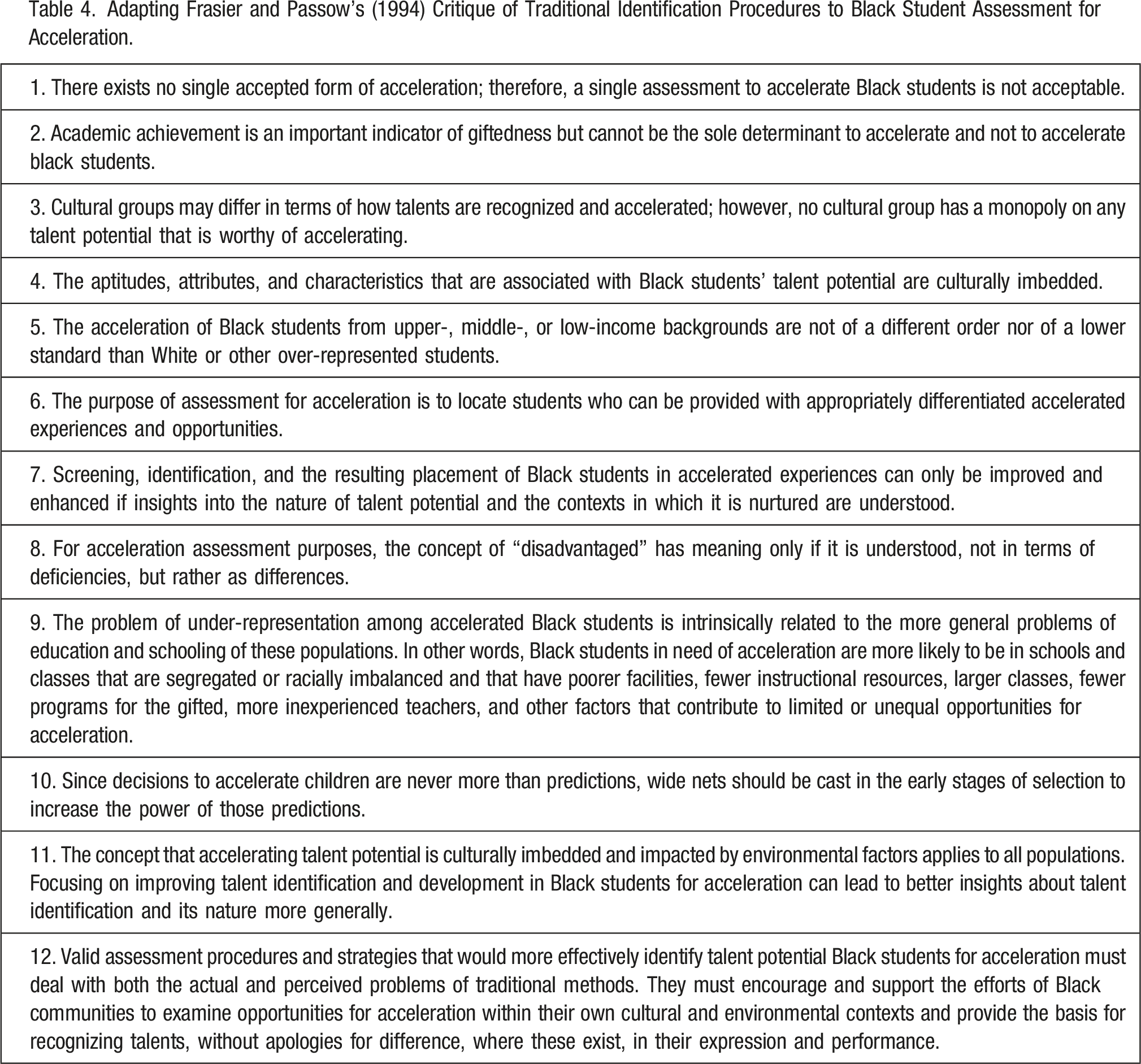
When thinking about Frasier and Passow’s guiding principles in light of acceleration, assessment becomes a critical topic. Several types of acceleration, such as Advanced Placement (AP), International Baccalaureate (IB), and credit by examination, involve some form of testing, even after the decision to accelerate has been made. These assessments can impact accelerated Black students; even if they meet the qualifications set for a specific type of acceleration, they are still left to face hurdles such as testing bias and stereotype threat in subsequent testing situations. This can prevent students from maximizing their acceleration experiences if those issues are not properly addressed (Ford et al., 2011).
Even before acceleration occurs, there are often assessments considered when determining a student’s readiness for acceleration. For example, the Iowa Acceleration Scale (IAS) is one popular tool that districts use for making decisions about whole-grade acceleration, and its framework can inform educators when making decisions about other forms of acceleration as well. The IAS lists five areas that should be considered when making decisions about acceleration: (a) academic ability, aptitude, and achievement, (b) school and academic factors, (c) developmental factors, (d) interpersonal skills, and (e) attitude and support. These five areas guide teachers, parents, and administrators to look at the child in a more holistic way (Assouline et al., 2009). However, the IAS also pinpoints specific tests to be used to score various sections of the tool. All of the allowable tests include a verbal component, which may lead to testing bias against Black and other underrepresented students whose strengths may be in nonverbal areas. In addition, there are four “critical items”—factors that can automatically render the student not to be recommended for acceleration: (a) the student’s IQ is less than one standard deviation above the mean, (b) the student would be accelerated into the same or higher grade than a sibling, (c) the student currently has a sibling in the same grade, and (d) the student does not want to be whole-grade accelerated (Assouline et al., 2009). When developing acceleration policies, these are important factors to keep in mind. If the eligibility or assessment processes yield inequitable outcomes in terms of who is found to be eligible for acceleration, then one has to question if the system is truly equitable.
Advocate’s Guide for Evaluation of Equity in Acceleration Services.
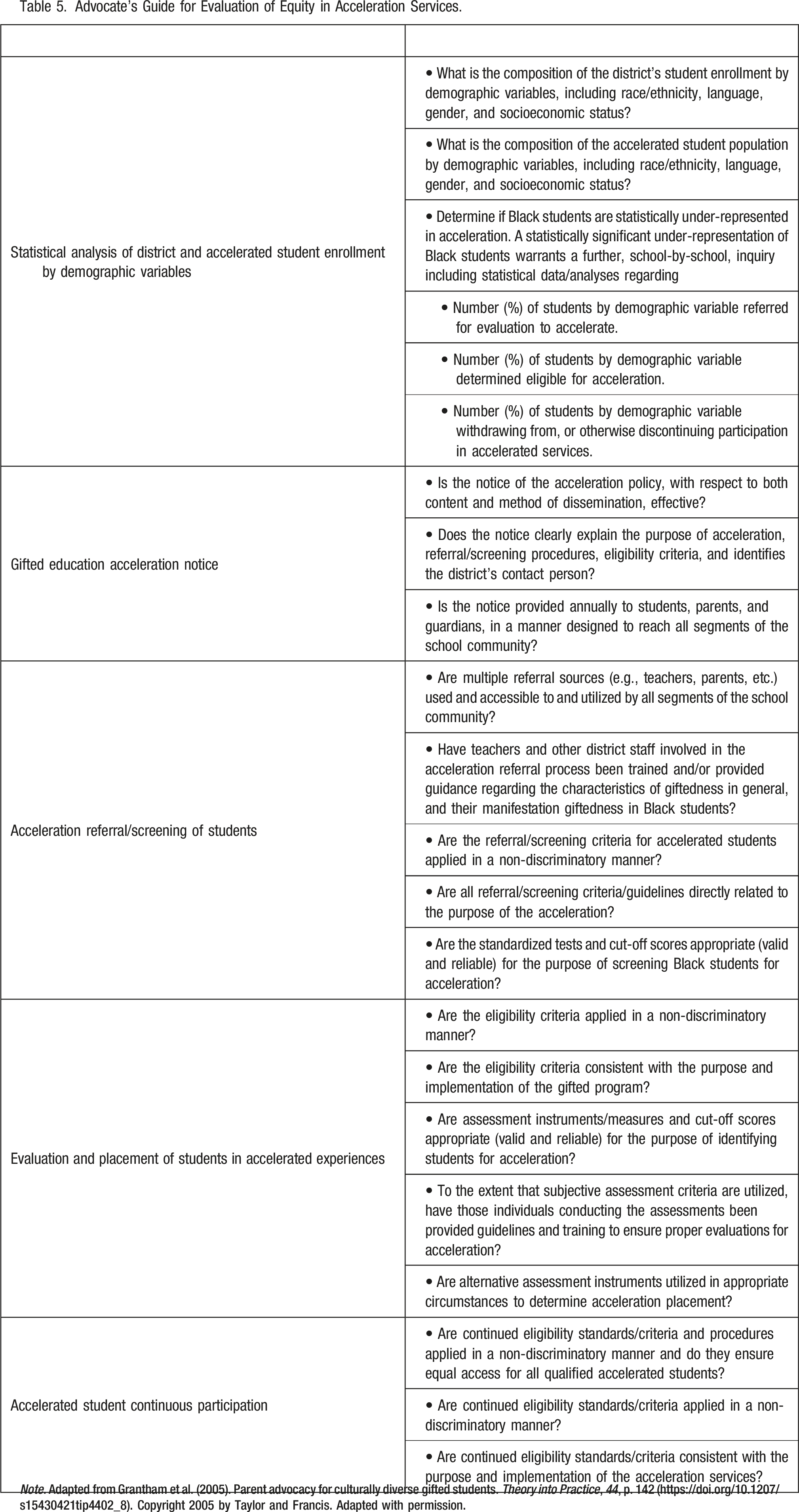
Note. Adapted from Grantham et al. (2005). Parent advocacy for culturally diverse gifted students. Theory into Practice, 44, p. 142 (https://doi.org/10.1207/s15430421tip4402_8). Copyright 2005 by Taylor and Francis. Adapted with permission.
Accommodations for Accelerated Students
Making accommodations for Black students underrepresented in GATE means adjusting the status quo in order to provide what is needed for students to be successful. Acceleration can be considered a form of accommodation for high ability Black students, since many forms of acceleration, allow students to remain in a general education classroom. For Black students in schools that suffer from underrepresentation in gifted programs, this can make a significant difference in the racial and ethnic makeup of their classes and impact their interpersonal relationships and racial identity development (Ford & Whiting, 2010). Another aspect of accommodations involves the extra planning and monitoring that some forms of acceleration require from teachers, such as curriculum compacting, continuous progress, and mentoring. In these cases, making sure the infrastructure is in place to support both teachers and students in these efforts is essential. This should be built into acceleration policies so that educators know where to go for support as they pursue the acceleration choices best fitted for their gifted Black students.
Guidelines for programming options for gifted students, in general, are often broadly determined at the state level and described in more detail at the district or school level. Upstander teachers in various districts serve gifted students in an assortment of ways, such as cluster grouping, pullout classes, special schools, and advanced content. Upstander teachers can begin to assess the best options for their students using tools such as student interest inventories, standardized test scores, and informal observations (Johnsen et al., 2019). For Black students, it is critically important to examine the educational context in which students will be accelerated and provide social, emotional, and cultural support to ensure success.
Even after acceleration occurs, accelerated students’ performance usually remains at this level (Assouline et al., 2015); the purpose of acceleration is to place the student at a level that requires more effort to achieve. For Black students, many of the culturally relevant traits that often characterize gifted Black students also make them potentially strong candidates for acceleration such as verbal proficiency, independence, breath of information, and academic strength (Ford, 2013). However, these traits may manifest in different ways. Vocabulary may not always be appropriate for school settings, topics of interests may stray from traditional academic subjects, and underachievement may mask academic abilities (Rimm et al., 2018). This is important when thinking about possible gifted program accommodations for Black students after acceleration occurs. Upstander educators may need to think creatively about programming goals and how to integrate Black students’ unique manifestations of giftedness into programming options (Baldwin, 2011). Creating gifted programming that provides academic challenge as well as cultural relevance should be the goal when making accommodations for accelerated Black students (Stambaugh & Ford, 2015).
Advocacy and Support for Accelerated Black Students
Advocating for acceleration is a time where parents and teachers must come together on behalf of Black students. For upstander teachers, the process of advocacy can be broken into 5 phases: (a) research (b), recognition (c) planning, (d) implementation, and (e) reflection.
Research
Upstander teachers begin at the research phase, during which time they learn about their state or district acceleration policy and its impact on Black students. If no acceleration policy exists, upstander teachers can contact their gifted coordinator to find out if unofficial precedents have been set and to begin working towards developing a formal policy. They should also take this time to increase their awareness of traits of giftedness through tools such as the TABs, as well as tests that minimize racial bias and can best highlight the strengths of racially diverse students. As an upstander teacher, these behaviors can occur even before a student needs acceleration. If the time is taken beforehand to become familiar with the traits of giftedness and procedures for acceleration, it can make the process more efficient when it becomes necessary.
Recognition
During the recognition phase, teachers look for students who could be candidates for acceleration, noting students’ strengths, having discussions with other teachers, and assisting others in observing indicators of readiness for acceleration. During this phase, teachers should also provide enrichment opportunities within the classroom to gauge students’ abilities and motivation for advanced work (Johnsen et al., 2019). Again, this is a time frame where tools such as the TABs can be useful. Black students who are exhibiting characteristics of giftedness in nontraditional or maladaptive ways may benefit from enrichment opportunities in the classroom that will reinforce their academic abilities while pursuing acceleration. This can prevent students, especially Black students, from falling into the trap of underachievement because they are not being challenged in the classroom (Grantham & Biddle, 2014).
Planning
In the third phase, planning, upstander teachers continue conversations with parents, teachers, administrators, and the student to formulate an initial multi-year acceleration plan (Johnsen et al., 2019). For teacher pursuing acceleration for Black students, this planning phase is where it is essential to enlist the help of parents. Black family engagement plays a positive role in students’ education (Davis, 2010; Grantham, 2005), and parents may have additional insight on students’ gifted characteristics (Zhbanova et al., 2013) This plan should include elements such as a transition period, progress monitoring, and resources for supporting the student’s academic, social, and emotional well-being (Colangelo et al., 2010; Johnsen et al., 2019).
Implementation
The fourth phase is implementation. At the beginning of a school year, or in some cases, mid-year, the plan is enacted, and gifted Black students begins whatever form of acceleration deemed most appropriate. Progress monitoring related to recruitment and retention of Black students also occurs to ensure no immediate adjustments are needed.
Reflection
The final stage is reflection. Gifted Black accelerated students, their parents, and upstander teachers must individually and collectively reflect on the experience and its effectiveness. Flexibility is crucial as the reflection process will require courageous conversations about race in accelerated GATE experiences. After reflection, the process returns to the planning phase, with adjustments being made as needed.
For parents of gifted Black students, what underscores all of these phases is parent engagement. It is essential for parents of gifted Black students to be invited and engaged in their child’s education in whatever capacity they are able. For upstander teachers, what overarches all of these phases is attitude. To effectively advocate, upstander teachers must honestly believe that acceleration is the best option for Black students and be willing to continue to work towards providing them with a culturally relevant educational environment that maximizes their abilities. Without having the right attitude, it is difficult for an upstander teacher to maintain momentum through the acceleration process. Both parents and upstander teachers of gifted Black students must work together toward this goal. While parent engagement is an important part of the equation, upstander teachers must not diminish racialized experiences and be willing to look at parent engagement through different lenses depending on the cultural context. Whether it is attending a community expo on excellence in the Black community featuring student leaders, a student led fish-fry fundraiser sponsored by a Black church organization, or a Black Greek fraternity or sorority speaker series on education, simply making sure that there is an authentic connection with gifted Black students and their community is essential. This kind of upstander teacher engagement can inspire parents and caregivers to recognize educators’ sincerity and empower them to engage a greater quantity and quality of small and large tasks to support Black students in GATE and the school. Keeping parents and caregivers of Black GATE students informed and arming them with valuable information is important to ensuring the success of accelerated Black students.
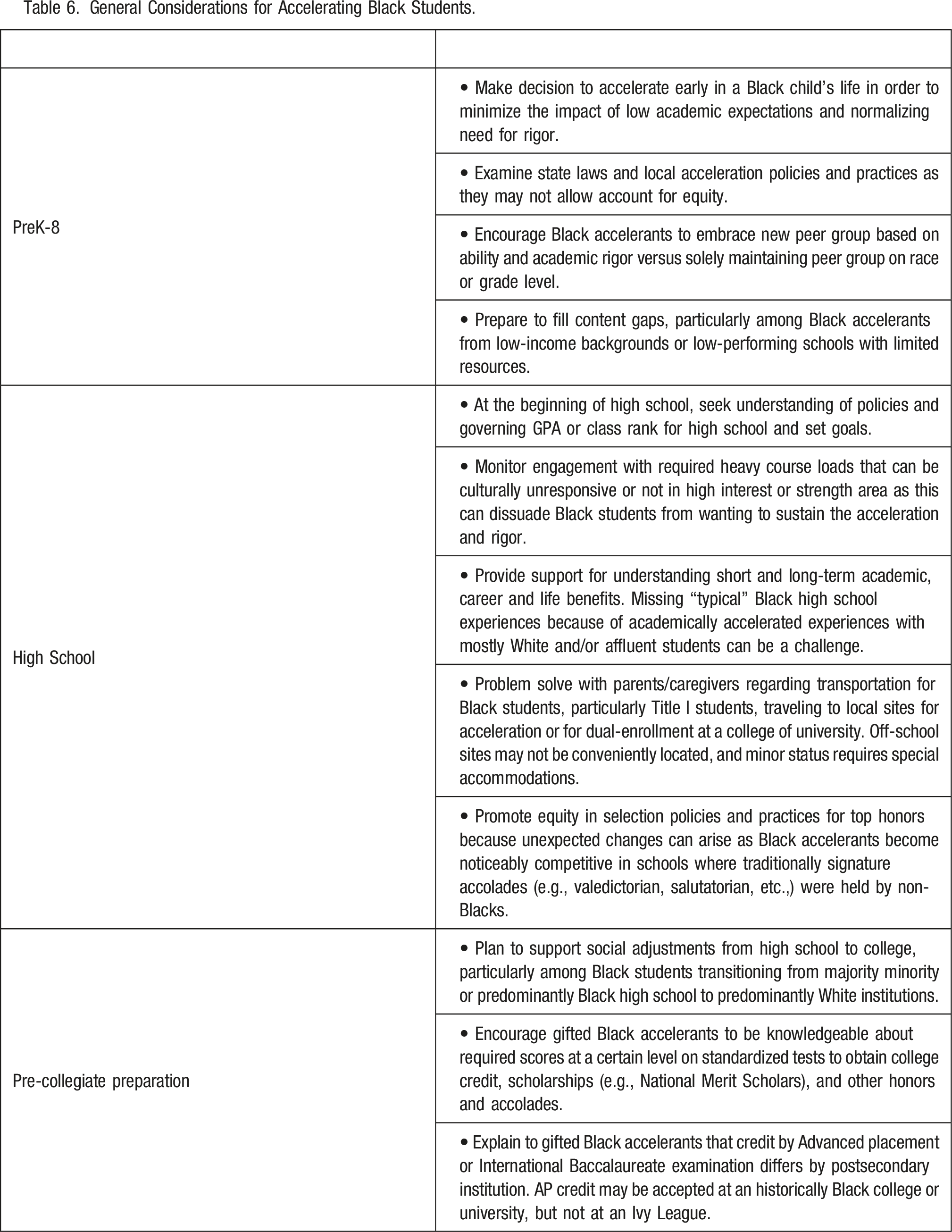
General Considerations for Accelerating Black Students.
Conclusion
When examining research, there is no debate about acceleration as an effective way of addressing the needs of many high ability students. However, research on how these experiences differ for students from various racial and ethnic backgrounds is lacking. For Black students, what we know about underrepresentation in gifted and talented programming, combined with our knowledge of acceleration would lead one to believe that acceleration would be an effective option for Black students who have exceptional academic abilities and upstander teachers should be purposeful in their advocacy for the acceleration of Black students. For upstander teachers, examining attitudes, assessment, access, and accommodations related to acceleration in their schools and districts can be the start of ensuring that acceleration is a viable option for Black students and represent an important response to NAGC’s call for equity and social justice for gifted Black students.
Footnotes
Declaration of Conflicting Interests
The author(s) declared no potential conflicts of interest with respect to the research, authorship, and/or publication of this article.
Funding
The author(s) received no financial support for the research, authorship, and/or publication of this article.
