



Abstract
This study uses a quantitative research approach to investigate public engagement regarding online science communication from the perspectives of digital scientific story audiences (n = 240). It explores their frequency of engagement, preferred aspects of scientific news and communication channels, and their community regarding scientific literacy, together with their willingness to engage online. It attempts to provide theoretical explanations of the similarities and differences among science audiences’ behaviors and explore the role of the community in influencing public engagement with online science. The data suggest the emergence of four audience types; this diversity of audience types gives a more comprehensive understanding of the public’s social needs and preferences with science.
Introduction
As early as the 1930s, the importance of science communication was acknowledged. Based on the theory developed by the sociologist of science, Bernard Barber, according to previous conceptions of science, communication is the most important bridge between scientists (European Science Foundation, 2013; Heyck, 2014). In the 21st century, with a more diverse media environment, however, it is also necessary to establish effective communication between scientists and the public. Science communication is currently undergoing a transition from a model of absence, where the focus on audience research seems insufficient, to a model of public participation, and digital media has played an important role in this change. The attitudes of audiences toward science are increasingly visible online (Klinger et al., 2022), and the paradigm of science communication has shifted from the use of traditional media to report on scientific stories, to the use of social media to engage the public (Allgaier et al., 2013; Bik & Goldstein, 2013; Iyengar & Massey, 2019; Stafford & Bell, 2012; Van Eperen & Marincola, 2011). In this environment of increased public autonomy and communication, scientists and communicators are facing more diverse and transient audience groups.
However, recent research concluded that the scientific literatures about public conceptions of science in science communication are widely based on assumptions (Klinger et al., 2022), which might lead to partiality among scholars in their critical understanding of audience behaviors. For example, their scientific studies show a decline in trust in science among audiences, together with their potential support for conspiracy theories (Blake, 2021; Nichols & Nichols, 2017; Rutjens et al., 2018). Notwithstanding, various other studies point out the growth in scientific trust among audiences (Bergman et al., 2021; National Science Board & National Science Foundation, 2020).
Presently, most science communication research is undertaken from a scientist- and communicator-based analytical framework, instead of from the perspective of audiences. There is a lack of audience-based insight into public engagement research in science communication. A theoretical framework to understand and identify the audiences being engaged online would help to improve the effectiveness of science communication and provide sufficient evidence for a discussion of public engagement. Theoretical explanations of the similarities and differences among audiences are inadequate; more research is needed to examine the audience groups involved in engagement with science, leading to improved communication between communicators and the public.
Social research defines the public as a diverse collection of individuals, and each individual has their own views, knowledge, beliefs, experiences, and so on (Fischhoff, 2013). These differences act as psychological filters, which have a crucial impact on how audiences respond to scientific information online (Scheufele, 2013). In addition, for audience research, one of the most significant and typical levels at which topics are debated, knowledge is gained, and decisions are made is the community level (Arts et al., 2002; Chandler et al., 2015; Finlay et al., 2021; Finlay & Wenitong, 2020; Junyent, 2019; Levy, 2015). The community, as an important concept that is differentiated by various characteristics, plays a significant role in representing and influencing individuals’ behaviors and opinions regarding specific topics. Also, the characteristic diversity of the community concept supports the possibility of providing sufficient contextualized understanding of its audiences (Foxwell, 2005), which seems beneficial for creating an audience-based framework in this study.
Thus, digital science audiences in this study are defined as a public group of people who use digital social media platforms to search for scientific information for professional/educational purposes or as a habit (or both); they are individuals who self-identify as having an interest in science and are presently engaging with science content online to varying extents. Also, they are members of communities that may offer differing levels of support for science communication. This study aimed to analyze the typologies of the experiences and behaviors of scientific audiences when they interact with science news online and to highlight the commonalities and differences in terms of their behaviors and the scientific literacy of the communities with which they are associated. Therefore, in addition to exploring the online science communication experience from the perspective of digital audiences, this study also contributes to the understanding of the relationship between audiences’ behaviors and the communities from which they arise.
In essence, scientists are currently attempting to mitigate public distrust of science news with more engagement with the public, yet they are doing this without knowing much about those audiences, including whether or not they actually wish to be engaged. This study seeks to address this gap by contributing to current knowledge concerning this particular audience and their preferences. First, this article presents a literature review of the previous science communication studies regarding public engagement and citizen participation. Next, the quantitative methodology of the study is introduced. Finally, the typology of science audiences’ online-engagement behaviors is introduced, and four subtypes of science audiences are defined through the presentation of typical cases. This identification of the diversity of audience types will contribute positively to the effectiveness of science communication, giving science communicators and policymakers a wider and more systematic understanding of the audiences they address and their social needs.
Literature Review
From Audience Dissemination to Audience Participation
Most of the existing studies on science public engagement focus on the dissemination of scientific information, and scholars have paid specific attention to the expansion of the diversification of communication channels. For example, a study of 390 members of the American Association for the Advancement of Science found that academics now tend to use online media to defend and promote science (Dudo & Besley, 2016). Unlike traditional media, digital media has improved from point-to-point one-way information transmission to real-time multichannel communication. As professors Davies and Hara (2017) put it, social media platforms such as Twitter and Facebook seem to be synonymous with public engagement since they provide a digital public sphere in which people can participate at will (Davies & Hara, 2017). Scientists can now communicate fully and immediately with the public through online media around their fields of expertise; in turn, the public is more likely to engage with science due to the increased and diversified range of media exposure (Wonneberger et al., 2019). In addition, surveys found that the public has largely turned to online sources for scientific information, particularly digital media (National Science Board, 2012). Compared with traditional one-way communication methods, such as print media and theater, due to personal digital accessibility, people are now more motivated to express their thoughts and interact with news related to themselves and/or their communities on social media platforms, moving from being passive receivers of information to active participants. Most of the ways in which the public participates in information dissemination involve various social software, or “we-media” platforms, as Bowman and Willis (2003) have called them, which offer a user-sharing feature as their main function, such as Twitter and Weibo. Private individual accounts are highly customizable; people can decide in advance from which areas they wish to receive notifications when they open a personal account. These platforms also allow people to choose with which science news information they wish to engage, freely and in real time. Thus, the engagement of the public has become more flexible and changeable. Instead of passively receiving science news, people can actively search for, disseminate, and engage with information on topics of interest.
The vast majority of scientists, however, report believing that the public misunderstands or does not understand a significant amount of science and that they, therefore, make scientific information available online in order to educate the public and fulfill their responsibility (Besley & Nisbet, 2013; Davies, 2008; Jensen et al., 2008; The Royal Society, 2006). Misinformation is a potential risk to public participation in science communication; however, scholars have also pointed out that this belief seemingly embodies deficit-model thinking in science communication (Bain et al., 2012; Groffman et al., 2010; Heimlich & Ardoin, 2008; Ho et al., 2008; Kahan et al., 2012; Lehr et al., 2007; Nisbet & Scheufele, 2009). The basic assumption of the latter argument is that audiences’ lack of scientific education compared with scientists prevents them from effectively engaging with science. However, this argument disregards the benefits of public engagement in assisting the spread of scientific knowledge, which could reverse the current situation and even lead to beneficial social actions. Some research suggests that public engagement leads to more effective scientific communication. Melissa Kenney et al. (2020) found that citizens’ participation in the dissemination of information related to ecological science topics, mainly through likes and retweets online, plays a significant role in focusing social attention on relevant scientific issues (Kenney et al., 2020). Additionally, David Phillips et al. (1991) found that medical research that is widely discussed and covered on media platforms amplifies the level at which medical information is communicated from the scientific literature to the research community (Phillips et al., 1991). This shows that public participation exerts a positive impact on the dissemination of scientific information. Furthermore, an increasing number of members of the public are actively involved in the dissemination of scientific events. The participatory nature and low cost of social media play an important role in this, reflecting its powerful democratic potential. Audiences enjoy greater autonomy in the selection of scientific content, and the passive public-absence model of science communication is no longer applicable. Social media therefore has the potential to promote public participation in science in a more effective way.
The concept that increased public engagement will lead to additional trust in science is identical to the rationale used by established journalists, who are similarly advocating for enhanced public engagement to increase trust in news. For instance, Andrea Wenzel postulated the concept of community-driven journalism, whereby news stories could be communicated from—and across—multiple community-based networks (Wenzel, 2020). Consequently, such community-based newsgathering platforms can transcend across all population demographics, ultimately leading to the encouragement of civic inclusion and enhancing trust levels between the media and the general public (Wenzel, 2020). Sue Robinson also reinforced the concept that “citizen journalists” have unique access to the news stories happening within their community and can gather news nuances that cannot be fully identified through conventional media investigations—albeit both strategies have common goals that include the reinforcement of the principle that “anyone can know” regarding such news stories (Robinson & DeShano, 2011). Another interesting approach can be the employment of offline-based public engagements to enhance public trust in the media—such as through interviews/listening sessions and cooperating on news gathering efforts with local organizations (Belair-Gagnon et al., 2019). Interestingly, one recent study focused on the comparative analysis of multiple believers in engaged journalism and their individual conceptions regarding how the general public becomes interested in joining journalism, through the investigation of such participatory events by the public (Schmidt et al., 2022). The findings of this particular study concluded that a clear gap is present between theoretical- and practical-based engaged journalism, based upon variations across beliefs by engaged journalists over audiences’ news preferences/requests, and the actual behavior of such audiences (Schmidt et al., 2022). The study also recognized that established newsrooms are still hesitant to increase collaborative efforts in news productions, thus hampering the attainment of such audience-aided newsgathering systems (Schmidt et al., 2022).
Moreover, public engagement with science also has a significant impact on the development of modern society since it is widely believed that the engagement of the public in scientific news communication improves citizens’ democratic literacy and stimulates social awareness. Science communication can be viewed as a social act of scientific and cultural construction (Brownell et al., 2013), which effectively assists in the development and expansion of scientific literacy in a social setting. The expression of public opinion regarding scientific information on the internet improves the democratic literacy of citizens and stimulates the public’s social consciousness. Despite their position outside the scientific community, people widely participate in the expression of online public discussions, which governments often monitor. This enhances the public’s awareness of their identity and responsibility as citizens and cultivates democratic literacy. For example, firsthand news and information about many natural disasters or emergencies are not in the hands of professional journalists but are recorded by the public and disseminated through new media (Haro-de-Rosario et al., 2018). The public has, therefore, become important participants in the dissemination of closed-loop processes. This not only transmits information in a short period but is also highly significant since it helps governments devise timely measures to deal with disasters and accidents.
Audience Study Literature Focusing on Media Producer and Media Audience Relationships
This level of public participation is reflected in scientific discourses in the form of the likes and retweets of scientific explanations posted by scientists. In this way, public concern over scientific issues stimulates the transmission of scientific news and information. Sarah Nelms et al. (2022) used civic engagement to collect data on the scientific impact of plastic pollution, and they found that citizen engagement provides significant value for evidence-based policies aimed at reducing plastic pollution (Nelms et al., 2022). In the process of participating in this activity, the public became both sources of data and disseminators or communicators of scientific information. The data also show that public participation increases individuals’ awareness of the dangers of pollution (Nelms et al., 2022). In addition, in the process of scientific communication, the media not only spread scientific culture and knowledge to the public but also encourage the public to participate (Feinstein, 2015). This enables scientific policies and institutions to be established.
However, it must also be recognized that, even as scientists attempt to improve their relationship with the public, they are competing with other structures that play hugely influential roles in shaping the ways that people interact with—and think about—media more broadly, including the news media. Case in point, the seminal study conducted by Harsh Taneja comparatively analyzed a hyperlink-based and an audience-centric network map for 1,000 highly trafficked web domains (Taneja, 2017). The findings of this study concluded that the audience-centric network had increased decentralization in comparison to the hyperlink-based network map, with bespoke clustering according to geo-linguistic traits (Taneja, 2017). These findings provide corroborative evidence to state that cultural traits are predominant in driving web usage, rather than technical infrastructural influences (Taneja, 2017; Taneja & Webster, 2016). Other factors that can come into play in affecting media producer/audience relationships include electronic negative word-of-mouth (e-NWOM), as previous marketing studies analyzing purchase behavior demonstrated e-NWOM to be a highly influential factor in online consumer audience decisions (Araujo et al., 2020; Kim et al., 2016).
The Diversified Public and Its Challenges
However, public participation in science communication research is still at an early stage. Although individuals’ autonomy has increased, scientists, science communicators, and science policymakers are still unable to engage in effective dialogue to promote behavioral change (Lee & Choi, 2020). For instance, scholars in the United States conducted a unique survey of tenured scientists at 46 land-grant universities across the country about engaging people in scientific communication. The results showed that although there is support among scientists for civic engagement in science communication, underlying tensions due to a lack of institutional support and confidence in communication skills limit these efforts (Rose et al., 2020). The reason behind this is that the people in the overall science audience group do not all share the same background and experience. This highlights the complexity of audience research and suggests that the same dissemination of information will be received very differently by recipients from different communities. However, the findings of David Johnson et al. (2014) show that no matter how accurately information is received, communities feel valued by having the opportunity to hear and comment on this information (Johnson et al., 2014). Individuals prefer to receive firsthand information and enjoy discussing it on an open and democratic platform. In this sense, citizens are no longer passive consumers of information, but instead actively explore scientific achievements (Benham & Shimp, 2007). There is strong willingness from the public to engage with the science. Furthermore, the science audience community is also diverse in itself. Researchers analyzed the followers of a series of different personal scientists’ accounts on Twitter and found that scientist users with more than 1,000 followers generally had diverse audience groups from different industries and fields (Côté & Darling, 2018). Even if the number of science-related professionals in the community is large, some science followers are general citizens, which could be considered a challenge created by engagement with the public. In order to shed further light on the manner in which science news is consumed by the American public, the Pew Research Center conducted a Science and News survey, where—among other conclusions—it was found that “one-in-six Americans both actively seek out and frequently consume science news” (Funk et al., 2017).
Furthermore, issues concerning misinformation and “fake news” consumption pose major threats to the dissemination and trustworthiness of genuine science news communications across social media platforms nowadays. Typically, the segment of the online news-consuming population remains minimal, though it also consists of intense internet users that resort to such misinformation news sources (Nelson & Taneja, 2018). Such misinformation can provide ample ambiguity within audiences, whereby the ideal scenario to deal with such misinformation is either to verify the suspect misinformation news article or to disengage from the news source altogether (Wenzel, 2019). Claire Wardle, an outright believer in overcoming the “infodemic” brought about by misinformation of health facts, states that one effective method for mitigating misinformation is to encourage newsrooms to vet all user/audience-derived content that is meant to be disseminated (Soares, 2021).
An additional challenge facing the public communication of science is that many scientists and communicators seem reluctant to engage in it (Liang et al., 2014). This has been evident during the COVID-19 pandemic, a situation in which science communication is particularly necessary. In response to the online spread of misinformation and misconceptions about how to respond to the COVID-19 pandemic, scientists are under pressure to improve their explanations of the dilemmas facing humanity to the general population and to delineate their current work. This situation not only shows the difficulties faced by scientists and communicators regarding public engagement but also suggests the complexity of understanding and responding effectively to their audiences. In communicating with diverse audiences is important to make the public aware that science is a work in progress, characterized by a respectful, constantly honest effort to correct itself. Sociologist Peter Weingart et al. (2021) have shown the importance of communicating and engaging with clearly defined stakeholder groups on specific issues and relevant scientific knowledge. Therefore, scientists and science communicators may also need to acknowledge their audience to improve the chances of an effective conversation and prepare different communication styles for different audiences. From this perspective, if the dissemination of science news information is more targeted to different communities, the effect of science communication will become stronger.
Concerning methodologies for analyzing audience behaviors, the theory of planned behavior (TPB) is a framework that allows for the accurate prediction of human intentions to perform specific behaviors, depending upon the specific situation with which the individual is confronted (Ajzen, 1991). The TPB framework was previously found to be effective for predicting intended behaviors within the realm of individual health care, particularly concerning intention of behavior, together with estimated behavioral control within analyzed cohorts (Godin & Kok, 1996). As a psychological theory, it is widely applied in various research fields to explore the rationality behind individuals’ behaviors, such as the determinants of exercise intention among cancer/tumor survivors (Courneya et al., 2005; Jones et al., 2007) and the correlates of social media platform usage in facilitating effective health behavior change (Laranjo, 2016). Similarly, in social research, TPB offers theoretical insights into phenomena like the voting behavior of legislators regarding public policies (Tung et al., 2012). Furthermore, TPB has also been employed to understand consumer behavior, including exploring the purchasing intention of the young generation regarding recycled clothing (Chaturvedi et al., 2020). By adapting the TPB framework to various contexts, researchers can gain insights into the underlying motivations driving behaviors, leading to more effective communication and solutions.
Aims
This study aims at answering the following research questions:
Research Question 1: In terms of the online public engagement behaviors in science communication, what could be the theoretical explanations for the similarities and differences among the audiences?
Research Question 2: In what ways does the scientific environment of a community define the individuals’ engagement with science online?
Methodology
This study uses a quantitative research approach that is often used in the field of sociology of science, an online questionnaire with multiple-choice questions, open questions, and a Likert-type scale. After comprehensively reading the literature about public engagement theories in science and health communication, the design of this online questionnaire was strongly influenced by the TPB, which is a theoretical approach that focuses on the influential factors between personal intentions and actual behaviors when individuals are exposed to information (Ajzen, 1985). Further research on TPB emphasizes that the intention of an individual to engage in a particular behavior serves as the primary determinant of whether that behavior will occur (Michie et al., 2014). This intention, in turn, is influenced by motivation (Laranjo, 2016), which is shaped by three identified major components in this movement from thoughts to actions: personal attitudes, subjective norms, and perceived behavioral controls. Specifically, for this study, the author developed the questionnaire (see Supplemental Appendix 1) with a major focus on the first two components in an attempt to understand the audience’s engagement level from personal and community perspectives. In addition to demographic questions to obtain basic information from the participants, such as gender and profession, the questionnaire also featured multiple-choice questions, such as how often participants were exposed to science stories and what they valued in science stories, as well as open questions, such as whether there were any aspects of science news they did not like. A Likert-type scale was used for the participants to evaluate the statements about the communities’ scientific characteristics.
From this point, the author analyzed the data collected from the digital questionnaire with the purpose of identifying the behavioral characteristics of individual science audiences for typology studies, as well as exploring the link between individuals’ and their communities’ experiences of scientific communication.
Recruitment
In this study, science audiences are defined as a public group of people who use digital social media platforms to search for scientific information, for professional/educational purposes or as a habit (or both), and are from a community either with or without a relatively supportive environment for science communication. In this case, a supportive environment is defined as a set of conditions including a relatively high level of scientific literacy, a significant number of scientific professionals, a general interest in science topics, and/or a relatively high level of engagement with science online.
By searching on open digital social media platforms or bulletin board services (BBS) with target tags, such as #Science and #Science Student, the author posted the volunteer requests on various websites, such as Twitter, WeChat Moments, MTurk, and Douban.com, in July 2022. Overall, 317 anonymous responses were collected during the recruiting period, mainly comprising online volunteers from the United Kingdom, China, and the United States. After primarily scanning and eliminating incomplete questionnaires and unqualified answers with different issues, such as unusually short answers or irrelevant texts shown in the open-question answer box, 240 responses were successfully recorded and entered into the database for further analysis. From these, 112 of the participants agreed to be interviewed at the end of the questionnaire and gave their consent to be contacted through the email address they provided. The author started by contacting all of them and eventually organized nine interviews between August 22 and September 5, 2022. These interviews ranged between 10 and 20 minutes and averaged about 15 minutes. The author adopted semi-structured interview principles to ask participants about their experiences as a part of an audience for online science communication. For example, the author asked how the participants became interested in science, the topics to which they paid attention, how they evaluated the quality of a science story, to relate instances in which they commented on a scientific topic or shared it with others, how they described their community’s level of scientific engagement to others, and so on.
The Sample
The main gender of the sample participants was female (n = 148, 61.7%; see Figure 1), compared with men (n = 90, 37.5%) and other gender groups (n = 1). One person declined to indicate their gender. The age distribution fell significantly within the age range between 19 and 25 (n = 102, 42.5%), followed by age above 26 (n = 134, 55.8%); only four contributors were from the under-18 age group. The majority of the participants had a higher-education level, with 140 undergraduates (58.3%) and 57 postgraduates (23.8%). In total, 71 participants identified themselves as students with science-related backgrounds (29.6%), and 38 were science professionals (15.8%). Furthermore, all the science professionals in the sample described themselves as habitually accessing scientific stories, which suggests the commitment and dedication within the scientific community.
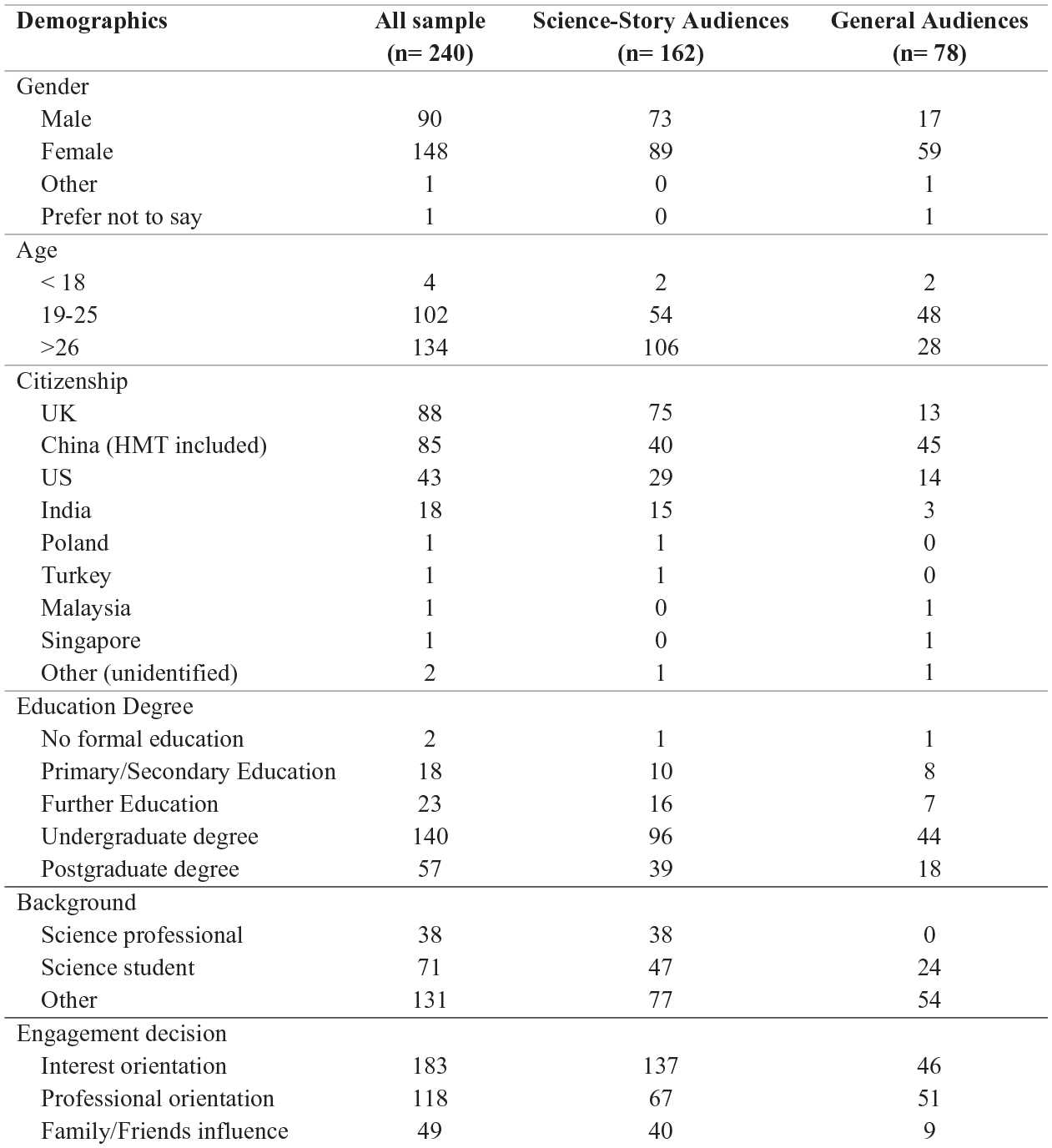
Demographics of Science Audiences and Others.
The vast majority of the sample participants pointed out that personal interest was the major influence on whether they engaged with science news (n = 183, 76.3%); in total, 89 solely selected interest as their reason, which suggests that interest is a significant motivation for science story audience behavior. This finding is discussed later. In addition, more than half of the participants indicated the important role of community influence on their science engagement, followed by professional purposes (n = 118, 49.2%) and whether their friends or family had an interest or were involved in relevant engagements with science (n = 49, 20.4%). Other reasons, regarding negative attitudes toward engagement, generally suggested that some of the participants only viewed science-related news when they come across them by chance and did not normally engage with them deliberately; other participants stated that they were exposed to a media environment that did not promote science-related sections, suggesting that science news is less likely to be a popular news section than other news stories.
Among all the answers recorded from the questionnaire, over half of the participants considered themselves as science audiences, with a regular habit of accessing scientific stories (n = 162, 67.5%; see Figure 2); they were the target science audiences in this study. The channels these participants frequently used to access scientific stories were digital media, traditional media, or their communities. In terms of digital media, the majority of the participants used social media platforms to reach scientific stories (n = 102, 63.0%), more than half of them used various news websites (n = 97, 56.2%), and a certain proportion used online community forums (n = 72, 44.4%) and public outreach discussions (TED, etc., n = 53, 32.7%) as regular science sources. Other digital channels, such as online journals (n = 2) and RSS feeds (n = 1), were also mentioned by a few participants. In terms of traditional media, 68 participants (38.3%) stated that they used broadcasts and/or television to access scientific stories, and 31 (19.1%) used printed media. Although the participants often fell into more than one category in terms of access channels, which indicates a multiplatform information ecosystem of online science communication, four participants declared that they only used social media platforms to access scientific news, and one insisted on using only printed media to access scientific stories. In addition, the WOM was also revealed as a form of science communication in the community since 35 (21.6%) participants accessed science through other people in their workplace or school, while 38 (23.5%) highlighted the communication of information among family members and friends, which suggested the relatively significant role of community in science communication. The science audiences in this study also varied regarding the frequency with which they accessed scientific stories.
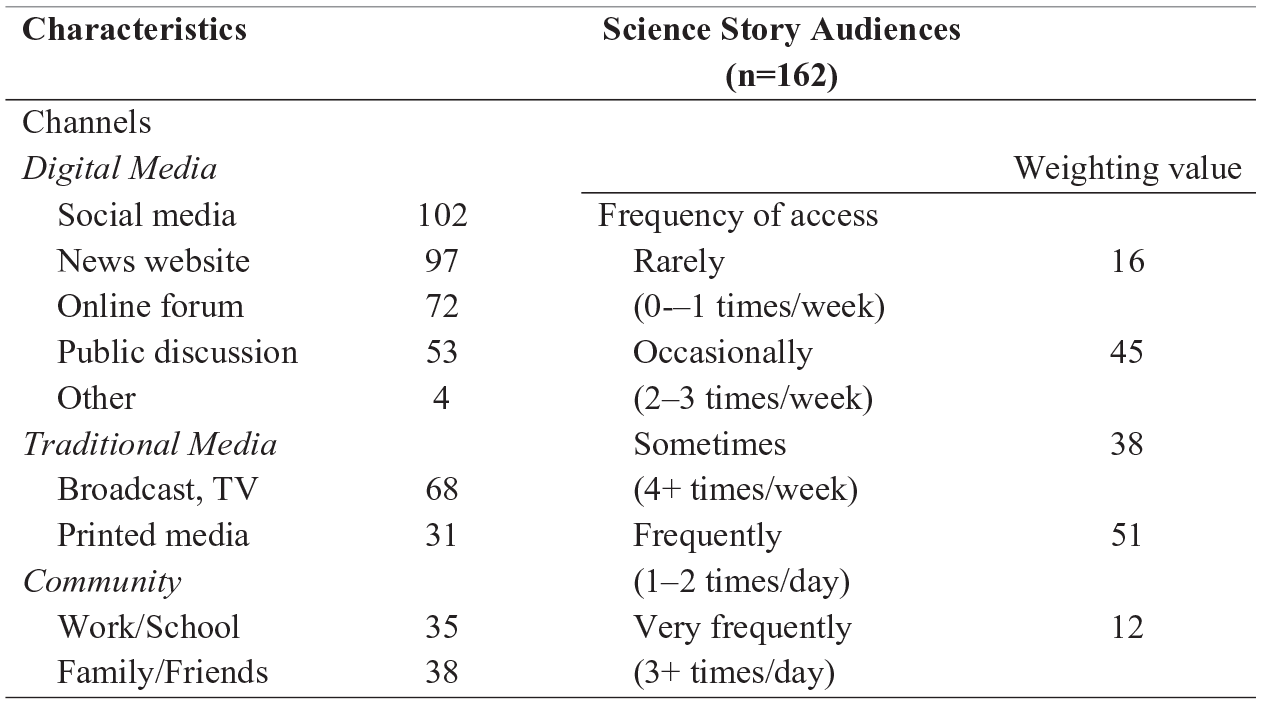
Characteristics of Science Audiences.
In terms of the valuable aspects of online science stories, a significant number of the participants suggested the importance of information accuracy (n = 123, 75.9%; see Figure 3). The next most widely valued aspect was whether the story was of interest (n = 119, 73.5%). Other participants highlighted the timeliness (n = 91, 56.2%) and credibility (credible scientists, etc., n = 84, 51.9%) of science news, with 65 (40.1%) showing concern about stories’ relatedness with their community. Although nine participants claimed to only care about the content of the story, visual factors (n = 119, 73.5%) and traceable sources (n = 102, 63.0%) were the most important formatting-oriented features for the sample participants, with 55 (34.0%) suggesting the importance of interactive functions, such as likes or the ability to comment on the webpage, when engaging with science stories. The aspects that met with the most disapproval included excessive length of news stories, political associations, and institutions with relatively poor credibility.
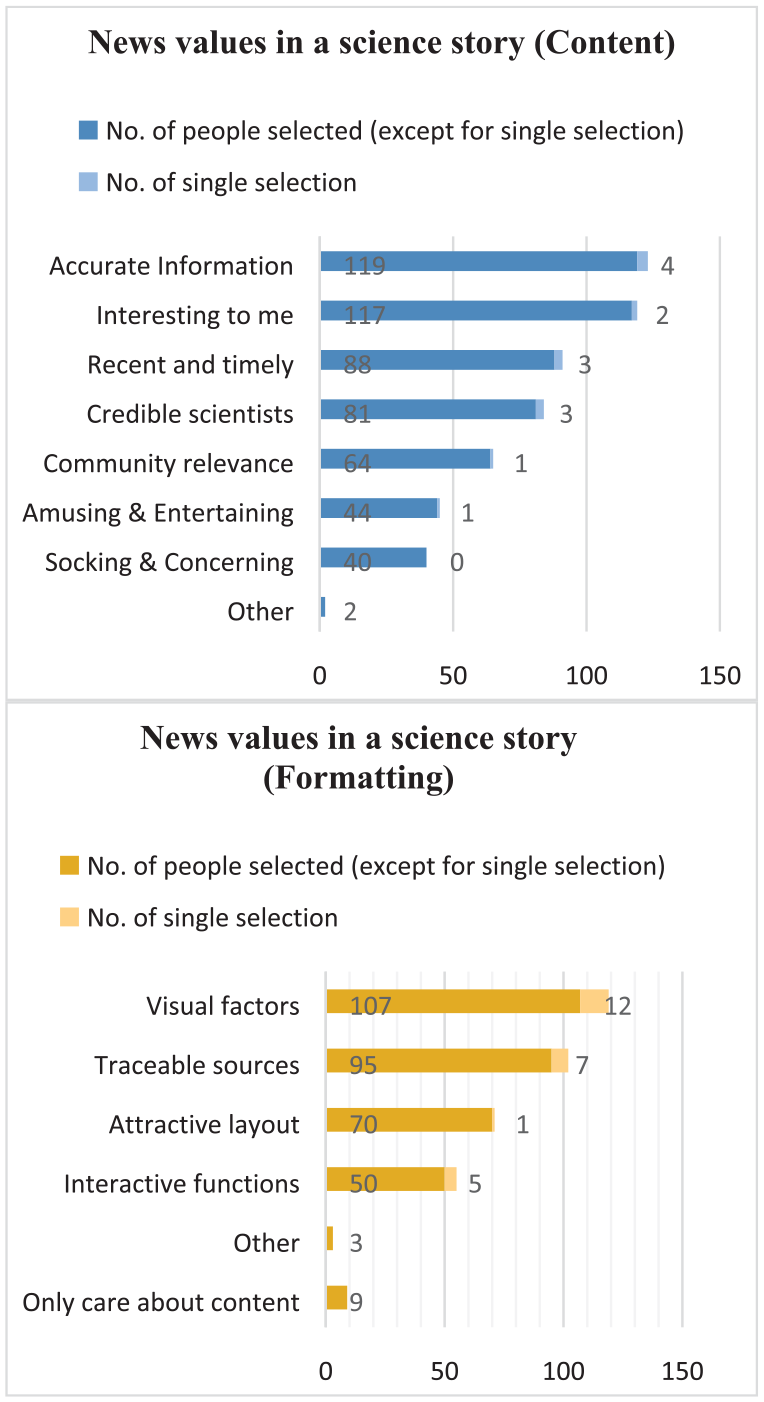
News Values Research: Content and Formatting Perspectives.
Few respondents indicated that they never responded to or interacted with science stories online (n = 26, 16.0%), and the majority of the respondents (n = 136, 84%; see Figures 4 and 5) engaged with online science stories through likes (n = 108, 66.7%), shares (n = 76, 47.5%), and comments (n = 64, 39.5%). The participants also varied regarding how many methods they normally used when engaging with science online (see Figure 5). In total, 117 (72.2%) participants indicated that they would respond to a science story out of interest, compared with 54 (33.3%) whose engagement was community-oriented, engaging with science when it was relevant to their surroundings or social context.
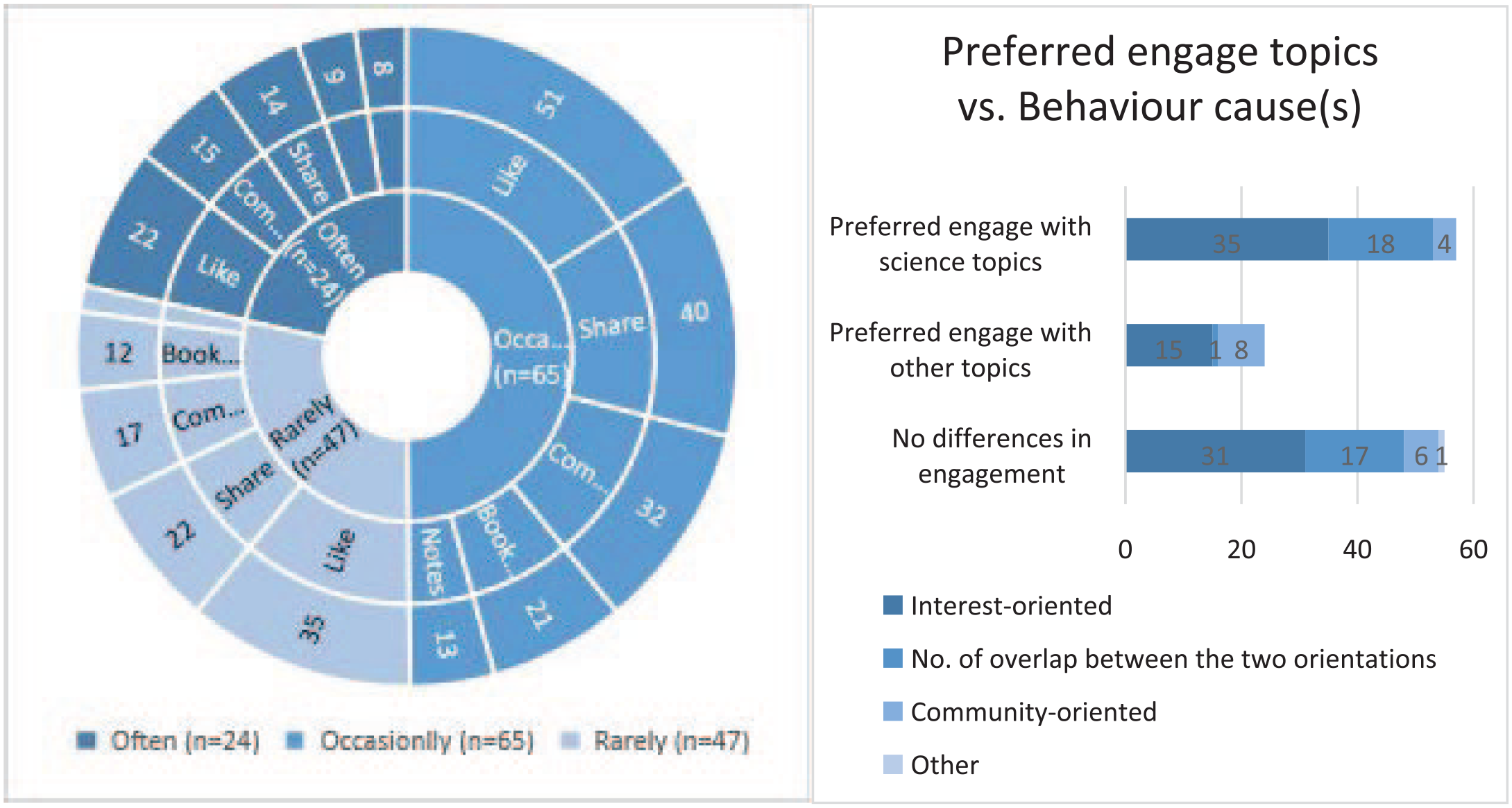
Engagement Research: Frequency and Causes.
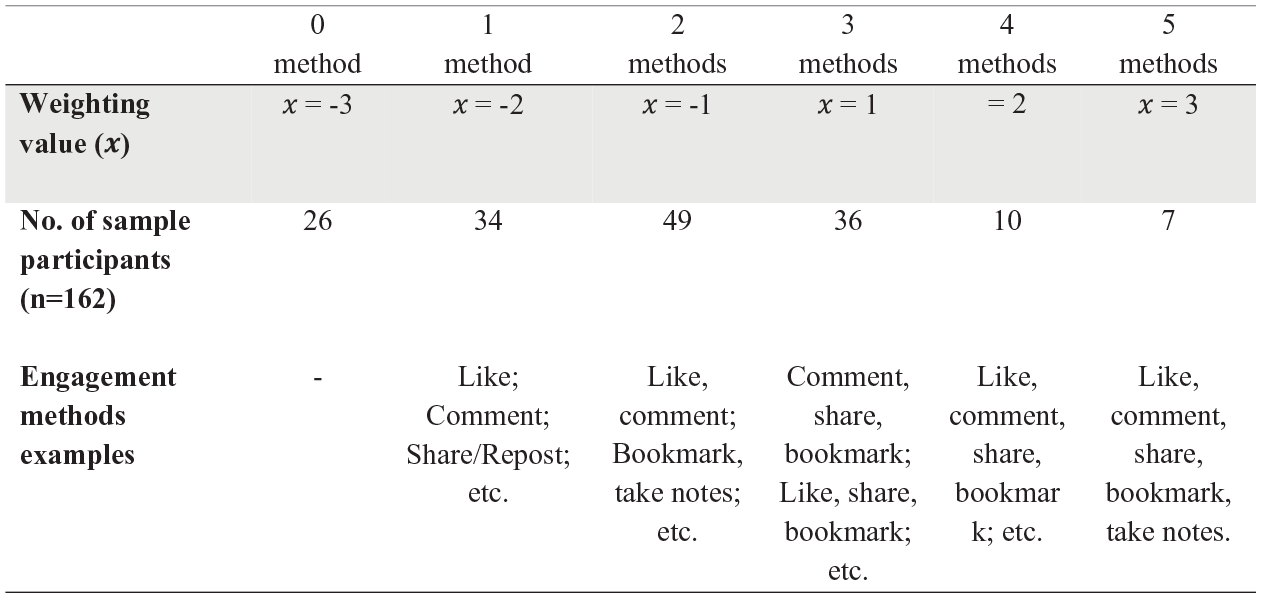
Breadth of Online Engagement Methods for Science Audiences.
When exploring the relationship between the communities’ science characteristics and individual behaviors regarding engagement with science stories, a 5-point Likert-type scale was introduced to conduct the statement evaluation (see Figure 6). The answers recorded were varied.
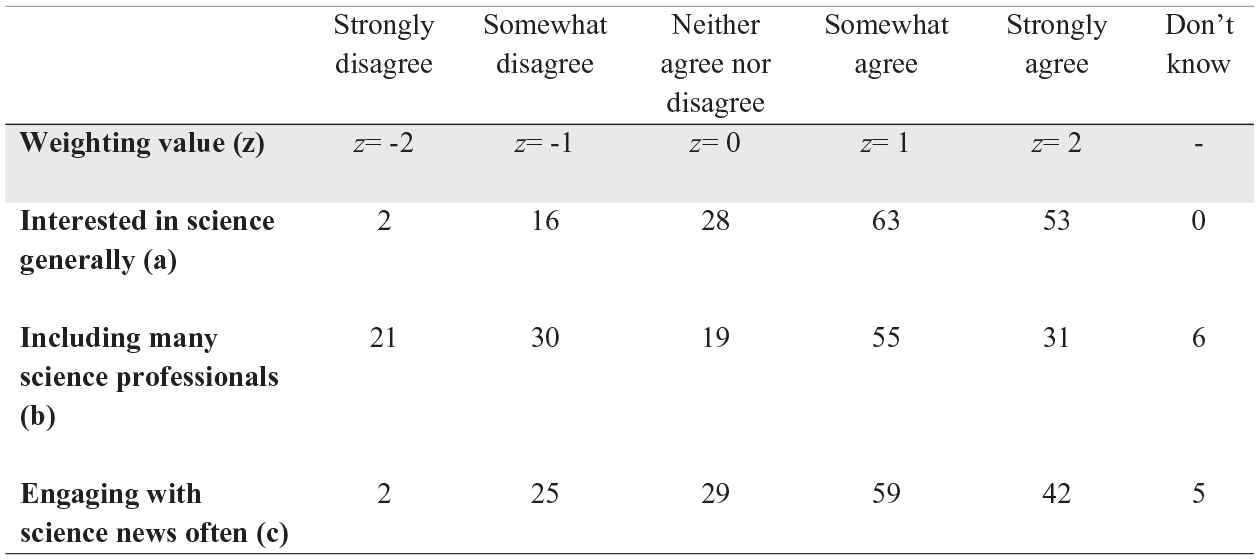
Community Characteristics With Regard to Science.
Data Analysis
Typology Study
In order to conduct the typology research, the author identified two issues as the variables for the study, which were both found in previous studies to be worthy of academic attention: the scientific characteristics of communities and the willingness to engage with science.
The horizontal axis (x-axis) explores the engagement level of individuals from low to high, which has been represented by the questions related to the number of methods each participant used to engage with scientific news. The weighting values for each answer were assigned equally (see Figure 5).
The vertical axis (y-axis) represents the community’s characteristics regarding science, as evaluated through the 5-point Likert-type scale from the questionnaire, including three statements: (a) the level of overall interest in science, (b) the number of science professionals, and (c) individuals’ engagement level within their communities. Equally, the three statements contributed to the value of y; thus, the calculating formula was designed as follows:

The “Don’t know” responses, which suggested the participants were not efficiently aware of their community’s situation, were removed from the typology study database (n = 11). The dataset for the typology study consequently included 151 individual records regarding the engagement level (x) and the communities’ science environment (y), which was represented through the x and y coordinates (x, y) (see Supplemental Appendix 2).
At this point, in order to conduct more comprehensive and systematic research on the typology of the science audiences, the author coded a bubble chart by using Python, a programming language (for codes see Supplemental Appendix 3). Based on the calculation and weighting design, every datapoint was represented by an individual coordinate. However, due to the nature of the calculation used in this study, the numeric format of all the coordinates might have been limited and similar across the different sample participants. The number of participants that fell in the same coordinates was conspicuous. Accordingly, the author designed a bubble chart that used the coordinates to locate each bubble group of participants and a size (Size = n, unit as 1) that represented the amount that fell into each category.
The results from this part of the analysis contributed to the answers to Research Questions 1 and 2.
Open Questions and Interviews
The author transcribed the interview recordings through Otter and read each of them closely, summarizing the major points of view and highlighting important quotes. Next, the author combined these with the recorded responses to the open questions in the questionnaire to conduct a thematic analysis (Clarke & Braun, 2013) of the recorded data for each open question and interview question. After reading and analyzing the data many times, the author successfully established connections and drew conclusions as to the problems caused by the differences between the participants’ responses. The results from this part of the analysis mainly focused on answering the Research Question 2.
Results and Discussion
The bubble chart shows the distribution of sample participants across the different quadrants, which in turn represent the similarities and differences between the diversified group of scientific audiences for the typology study. The interview revealed some relevant differences and homogeneous experiences among the respondents. To comprehensively dissect the scientific nature of this population, the author first interpreted their engagement behaviors as science audiences and then presented the findings when evaluating the link between their participation in science as a member of their communities and the characteristics of their communities themselves. In order to conceal the identity of the volunteers who participated in the interview, the author used pseudonyms when reporting the results.
Science Audiences Online: A Typology Study of Engagement
Two major issues were evaluated through the scientific characteristics of the communities and the public’s willingness to engage with science. In terms of scientific characteristics of the community, the communities of the participants were evenly split between social groups that are less likely to become involved with scientific topics and have few science-related professionals, and more science-oriented social groups that are more likely to engage with science together with a significant amount of science professionals. In terms of the willingness to engage, the level from low to high was directly associated with individual decision-making processes.
The type of community was consistently associated with geography in many science communication studies, and other features, such as common demographics and identities, have also been widely used to define communities, even in other research fields (Orthia et al., 2021; Ragin et al., 2008; Simon, 2016). A study of social relations among community members showed that members in a community form bonds through social relations and sharing the same views (De Weger et al., 2018). This motivates them to form common goals of action in certain places and circumstances. Scholars have also pointed out that face-to-face and online interactions are embedded in the conception of community (Duchsherer et al., 2020; Mills, 2004), which suggests that constructing and maintaining social relationships with others over time is essential to the sustained existence of communities. For these reasons, communities can be seen as dynamic and continuously changing environments that reflect individuals’ personal circumstances and their relationship to the whole.
In this study, in order to describe a community suited to the communication of science, the definition focused on the experiences of, interest in, and engagement with science among community members. In addition, the definition includes a general evaluation of the amount of scientific expertise, who is the public member of science professionals, and who plays an important role in enhancing popular interest in the public discussion of science, which contributes significantly to public engagement (Dietz, 2013). The individuals were treated as independent decision-makers, based on the relevant judgments they made about their community; together they represented their respective communities through their levels of engagement with science. The data in this study revealed a positive correlation between the two variables (y = 0.1609x + 0.7322, r = 0.1609 > 0), which suggests the positive impact of community on engagement, indicating that community settings better suited to scientific communication actively encourage individuals’ engagement with science, making this communication more effective.
Through quantitative research methods, the author analyzed each kind of network participation behavior, including community, and created four subtypes of scientific audience (Figure 7). This is a common method of clustering quantitative data in order to visualize and explain overall trends and patterns (AbiGhannam, 2016). For the samples whose coordinate points fell on the axis, the author identified their subtypes following the typology revealed by the data and their responses to the evaluation questionnaire. The science audiences whose engagement levels are relatively high and came from a science-oriented community, with an overall strong interest in science and/or a significant amount of science professionals being Advocates/Normalizers, who advocate science with the intention of persuading others to realize its importance and encouraging or inspiring them to take relevant action, or to normalize engagement with science. Next, audiences with low levels of engagement with science, but whose community has a strong preference for science topics, are Thinkers, who focus on their own scientific concerns without the need to express themselves. Audiences with low engagement from a general community not relevant to science are Self-educators/Enthusiasts; they become science audiences out of personal need or an interest in science and focus more on self-development. Finally, audiences who have a high level of engagement and who identify themselves as belonging to a general community that is less relevant to or less concerned about science are Followers/Performers, who engage with science because of personal needs or their tendency to share information with others.
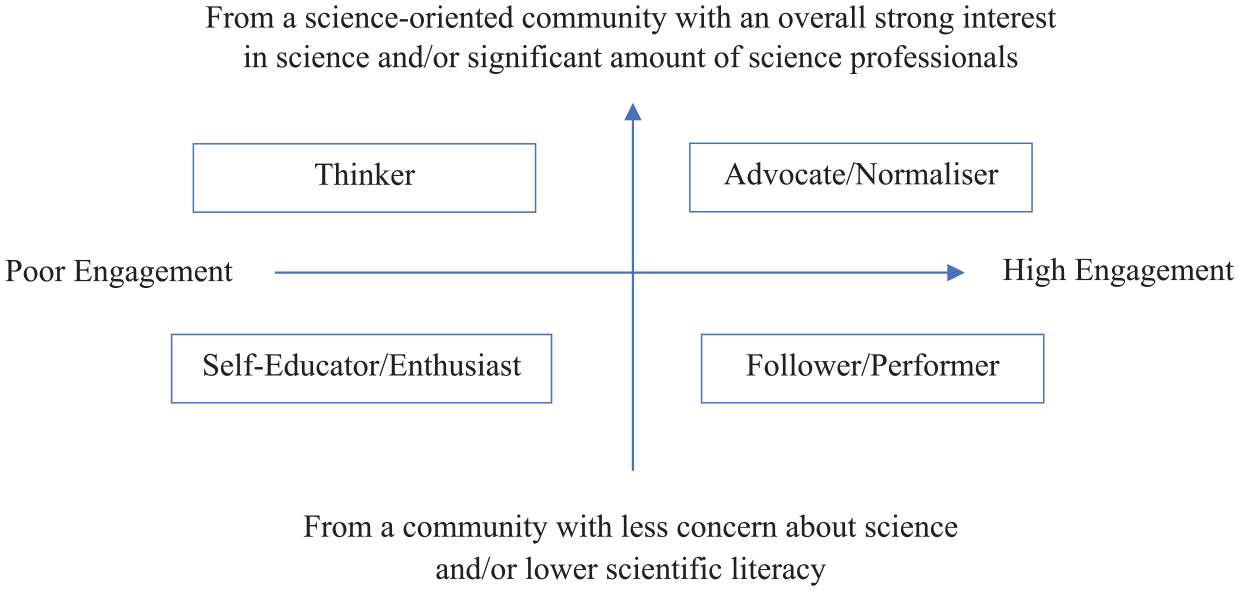
Four Typologies of Online Science Audiences.
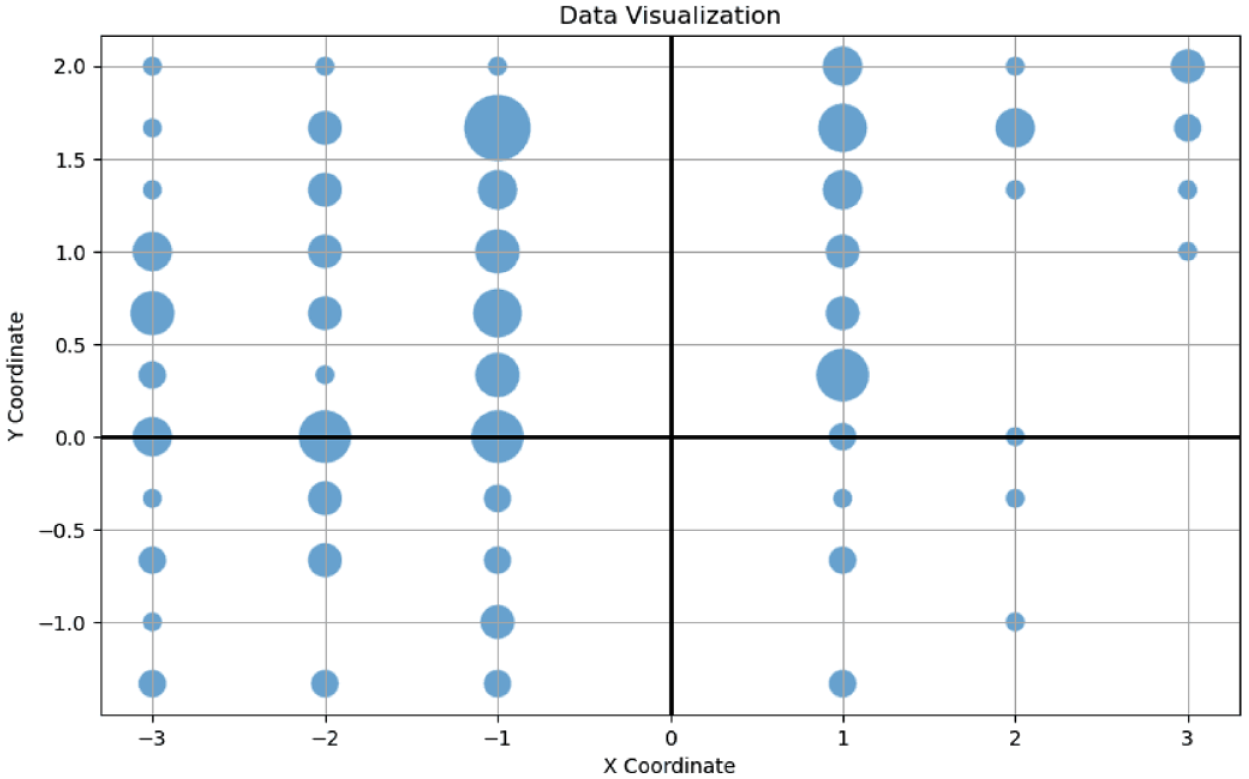
The Bubble Chart Generated by Coding on Python.
In addition to summarizing this typology, the level of engagement within the subtypes and the scientific characteristics of the community, as well as the associated personas, is also critical. The author summarized these data to assess the status of each group and confirm the inclusiveness of its typology. Next, the author critically discusses the audience behavior in each of the subtypes through the examples of interview cases, where the names of the interviewees are pseudonyms.
The Community and Its Scientific Expertise: The Advocate/Normalizer and the Thinker
From the data in this study, the sample included 40 Advocates/Normalizers, 92.5% of whom had an undergraduate or postgraduate degree (n = 37), and 67.5% of whom came from a science-related background as professionals or students (n = 27). Their ages were mainly above 26 (n = 29), implying that they had a senior status and might have been further in their careers than the other participants. Generally, they frequently and intentionally searched for science news online (one to two times/day or above, n = 21); the channels they most frequently used were social media platforms (n = 32). Accuracy was the most valuable aspect of science stories for this group (n = 38). Regarding formatting, they cared more about the visualization of the story (n = 36) and whether the story had traceable sources (n = 33). In terms of engagement, they enjoyed liking (n = 39), commenting (n = 30), and sharing (n = 36) science stories with others, and about half of them (n = 21) suggested they were more likely to engage with science stories online than other topics.
The Thinker subtype included 64 participants, 84.4% of whom possessed a higher-education degree (n = 54), and slightly more than half of whom were scientific professionals or students (n = 36). They frequently accessed science stories online (n = 25), and their most widely used channels were social media platforms (n = 39). Accuracy (n = 44) and visualization (n = 47) were the most valuable news aspects for this group, and liking was their most common form of engagement (n = 34).
These two audience subtypes were well educated overall, and most of them had a science-related background. The majority of the respondents in these two subtypes can be seen as community experts, who contribute significantly to the development of scientific literacy in the community. The public mainly associates the social role of scientific expertise with the policy- and decision-making process; however, in addition to their scientific competence (Nisbet & Scheufele, 2009), community experts are still also members of the public. Recent research conducted by the Australian National University (Orthia et al., 2021) suggested that among those engaging in science communication outreach activities, many science communicators and scientist groups participate in interpersonal conversation with the public online or offline only during short periods, and they do not seek to establish and maintain long-term connections with the public (Tan & Perucho, 2018; Ward et al., 2008). Furthermore, an essential factor in the transition from short-term science activities to long-term sustainable public engagement with science for the community is the presence of community members, with the ability to join in the design of science communication activities online or offline based on their professional or personal experiences. The difference between community experts and other members of the public lies in their training, either in education or work, which allows experts to explain the natural world and provide credible solutions to scientific problems (Lewenstein, 2016). The presence of these expert groups can have a significant impact on their communities. In addition, according to the data, all the professionals in this study habitually accessed scientific stories, their enthusiasm for science and active interaction could have a positive influence on the engagement behavior of those around them, such as initiating public dialogue and encouraging further or in-depth engagement with science. Therefore, community experts help to ensure the sustainable development of scientific literacy within the community and to inspire greater engagement among the public, while creating environments that are more conducive to scientific communication.
In terms of digital science communication, a typical Advocate/Normalizer will engage with science online more dynamically, at a higher frequency, and through a wider range of interactive methods than others. The social media platforms they commonly use to access scientific stories also exert an impact on the engagement of their community with science. These platforms use algorithms to continually show the shared posts from users’ friends or posts that people in users’ communities like/comment on, such as the “News Feed” function on Facebook, or the “Community” page on Weibo and Xiaohongshu. According to the data, most of the Advocates/Normalizers identified themselves as often (n = 14) or occasionally (n = 19) engaging with science online; through digital media, their communities will observe their passion for science. The members of this subtype choose to advocate for science online in an attempt to normalize engagement with science or simply normalize the dissemination of scientific information. A typical example of an interviewee who fits this typology is Oliva, a postgraduate student majoring in primary care at a university in Sweden. Oliva feels that by engaging with science online herself, she can help science reach a wider public:
Sometimes, I treat sharing the latest [health-related] news that my friends might care about as a “job . . .” I voluntarily am their information centre. . .it’s not like I’m instructing them or so, more like a responsible choice I made based on my experiences, to share the science or celebrate the “nerd thing” I like with them.
Therefore, it can be argued that a salient characteristic of audiences in this subtype is their active communication of science. They join conversations as both a listener and communicators of stories, in an attempt to help the public to access or understand issues in a scientific context. From this perspective, the Advocates/Normalizers echo Amanda Diekman et al.’s observation that one of the reasons why people join in the science communication process is to help others around them (Diekman et al., 2010). From a behavioral perspective, science communication related to this subtype could be seen as a performative act, in which scientific information emerges as a vehicle to release the desire to share information and the strong need to find like-minded individuals.
By contrast, although they also form communities with high levels of scientific literacy, Thinkers usually engage with science online occasionally (n = 21) or rarely (n = 23). According to the data, 14 of them never respond to science stories online, yet still consider themselves regular consumers of scientific information. An example is Parker, a Computer Science student living in Australia. As an international student originally from China, Parker reveals the reasons why he is a less active member regarding engagement of his scientific community:
[The] reason for not comment online is I don’t wanna influence others’ ideas, because of fragmented information on social media, I feel like these days, most of people don’t have [the ability of] critical thinking. That’s why I think the less information they get, the more they will think for themselves. . .I don’t choose this major to educate others, I choose this major only for my interest in coding, and AI. However, if there is any chance could let others interested in IT, I would like to embrace it.
The Thinker, as the biggest subgroup in the sample, seems more focused on self-development than on influencing opinions within their communities, and they are less likely to value the influence of individuals’ behaviors. They behave in a self-focused way and value the impact of their actions and voices; in addition, they are likely to speak out to support the development of others around them. However, according to a recent study, low levels of engagement might be caused by pressure from peers or the public (Ruth et al., 2021). To some extent, the behaviors of this subtype could be explained through the finding of scholar Barbara Kieslinger’s research of academic peer pressure on digital media, which found when public members with professional backgrounds are more aware of the presence of audiences that may reach their views, they tend to ensure that their privacy is guaranteed and respect the choices of others while adapting their identities online (Kieslinger, 2015).
In addition, although they are unresponsive to the media dissemination of science, with less noticeable engagement behaviors, they are generally interested in science, that one reason why Thinkers engage less publicly with science could be that their self-interest prevents them from taking clear public stances. For Thinkers, self-development and self-interest are important. The digital footprints of their participation in scientific communication might be difficult to track, and they might be unresponsive to or silent on scientific news, according to the data in this study and the interview testimony, but they are still willing to engage with the science when the topics appear familiar to them and allow them to express themselves comfortably within the changing personal boundaries in social media.
Interest as the Biggest Motivation: The Self-educator/Enthusiast
The sample included 37 Self-educators/Enthusiasts, all of whom were in early adulthood or of a senior age. Some of them accessed science stories occasionally (two to three times/week, n = 16), while others did so more often (more than four times/week, n = 12). Most of them engaged with science out of personal interest (n = 32, 86.5%), and the most widely used channel for them was news websites (n = 24, 64.9%) rather than social media platforms (n = 18). When discussing the news values that they cared for, whether the story was of interest to them ranked the highest (n = 30). The second most important value for this group was accuracy (n = 29). Furthermore, more than half of the Self-educators/Enthusiasts valued the visualization of stories (n = 25) and whether stories provide traceable sources (n = 22). In terms of engagement, liking was the most common method of engagement for this group (n = 20); they were more likely to respond to a story in which they were interested (n = 24), although 10 (27.0%) of them never responded to science stories online.
Since interest was frequently mentioned as a motivation for engagement with science by the overall data, including the Self-educators/Enthusiasts, the topic was studied in further detail in order to determine the motivating factors behind the public’s engagement with science. In the open-question section of the questionnaire, the participants were asked why they thought the people they knew engaged with scientific news as much or as little as they did. In total, 53 out of the 122 answers directly referred to interest: “A lifelong interest in science and desire for intellectual challenge,” “[t]hey are interested in what is happening in the world around them,” “[b]ecause they continue interesting facts and evidence,” “science I think is something people with some sort of intelligence level are interested in,” “they aren’t as interested in science as me and improving their life,” “[s]ome just aren’t interested or haven’t grown up in an environment that would make them such.”
After evaluating all the answers referring to interest, two major strands were determined to explain the motivation behind scientific engagement. The first is the long-term interest that develops habitual access to or engagement with science stories. This echoes previous research on interest, which suggested that constant interest leads to goal-oriented automaticity and simulates habitual behaviors (Verplanken & Aarts, 2011). In addition, according to recent research, another advantage brought by the public interest in science is that it creates a climate that is more receptive to science which, in turn, encourages the belief that public engagement with science news and media narratives about science can stimulate scientific progress (Liskauskas et al., 2019). The second strand is the influences from the environment that generate an interest in science, which mainly include individuals’ professional or educational needs and personal desire for self-improvement. According to previous research, science is a concern in people’s professional and personal lives (Bybee, 1997; Fensham, 1985; Osborne & Millar, 1998). Researcher Dietram Scheufele, in a study on communication science in social settings, noted that scientific news is a topic of conversation in social situations (Scheufele, 2013). Audiences engage with science out of natural interest, which is sometimes motivated by personal or professional needs. From this perspective, public engagement with online science can be associated with spontaneous behaviors, which are linked to individuals’ desire for self-improvement.
The subtype of the Self-educator/Enthusiast embraces both strands discussed earlier since Self-educators/Enthusiasts exhibit both a natural interest in science and a tendency to associate scientific knowledge with self-development. Compared with Thinkers, who also focus on self-development through science, Self-educators/Enthusiasts belong to general communities with fewer science professionals. In a community environment that does not reflect their interest in science, their engagement behavior and the expression of their scientific passion are more self-driven and introverted. The lower levels of scientific literacy in their communities also contribute to their tendency to access scientific news through traditional media platforms such as CNN, the Daily Mail, and the mainstream and relatively credible journalism news websites, instead of more instant-feed and diversified content platforms, such as social media. A typical example is a retired food-factory worker, Quincy, who regularly reads science news online and believes that curiosity is important for mankind:
Most of the people in my immediate surroundings are republicans or conservatives who aren’t as interested in learning about new scientific discoveries. . .They would consume it more if stories were created in layman’s terms. . . Having a creative and questioning curiosity is important to me, but just me. . .Reading recent discoveries [from science stories] can bring the joy of finding new hope to my life.
For Self-educators/Enthusiasts such as Quincy, stories on scientific topics offer an escape from everyday life. As self-motivated consumers of science news, Self-educators/Enthusiasts enjoy the feeling of being transported away from their current situation by accessing new literature (Begum, 2011). They use science stories as an escape and maintain this passion throughout their lives.
Passion Gone “Wrong”? The Follower/Performer
Only 10 Followers/Performers were included in the sample, and most of them were of a senior age (n = 7). Most of their professional backgrounds were not related to science (n = 8). All of them engaged with science out of personal interest (n = 10), and more than half of them accessed science news frequently (n = six, one to two times, or more than three times per week). The most valuable news aspect for them was whether the content was interesting to them (n = 9). In addition, they equally valued timeliness (n = 7), accuracy (n = 7), and whether credible scientific figures featured in the science news stories (n = 7). Most of the Followers/Performers occasionally responded to science stories online in everyday life (n = 8), and they enjoyed using likes (n = 10) and shares (n = 8) to express their attitudes online. Furthermore, more than half of them expressed a preference for responding to scientific stories that were relevant to them and/or their communities (n = 6).
Typically, the Followers/Performers belonged to communities with lower levels of interest in science and/or numbers of science professionals, and they usually did not have a science-related background themselves; however, they actively engaged with science online. Their high engagement with science and lack of scientific background or contacts exposed them to misinformation and false scientific news. The communication of science is essential for translating research results to the public; this research mainly attributes the spread of misinformation to insufficient, inadequate, or poorly conducted engagement by science communicators (Abernethy & Wheeler, 2011; Burns et al., 2003; Goldstein et al., 2021). However, in the digital media sphere, in which anyone can become an opinion leader, some misinformed audiences also play a role in the dissemination of false information. The likelihood of believing scientific misinformation is associated with individuals’ comprehension of fundamental scientific principles and the scientific method in general (Scheufele & Krause, 2019). Scholars have argued that audiences who are misinformed and actively engaged with scientific topics at the same time are more likely to understand the misinformation based on their knowledge level while also not discarding these ideas, since they have little motivation to do so (Hochschild & Einstein, 2015). In addition, individuals’ scientific knowledge is highly connected to their formal education background and the amount of scientific and mathematics courses completed (National Science Board, 2018). As relative outsiders with no systematic scientific background, Followers/Performers are at a high risk of being misled and misinformed and could contribute to the spread of false information in their communities, leading to the scenario described by Stephan Lewandowsky et al. (2017), in which facts and objective evidence are overwhelmed by existing opinions and prejudices (Lewandowsky et al., 2017).
Apart from their potential to be misinformed, which might limit their ability to engage effectively with science, according to the interview data, Followers/Performers’ preference for content presented in simple language might also pose challenges to scientific communication. A typical example is Ryan, a Christian community volunteer from the United States. He notes the importance of avoiding “jargon” in science news reports for audiences from a general background who are interested in engaging with science news:
I do not like when it [the science news] is so filled with jargon it is hard for a lay person to understand. . .[or] when it’s formatted like click bait, purposelessly avoiding handing you the basic information upfront, forcing you to either read every word or leave before finding out the kernel of information it teased you in with. Sometimes you want to read every word anyway, but sometimes you want the basic facts in the opening paragraph so you can just read that and back out.
Research has found that the presence of jargon hinders the public’s ability to process scientific knowledge, which leads to greater resistance to engagement (Bullock et al., 2019). In response, a more respectful form of dialogue between the public and scientists and science communicators has been encouraged (Nisbet & Scheufele, 2009; Sharon & Baram-Tsabari, 2014). This uncertainty as to how to engage in effective scientific dialogue also arises among audiences, who question whether they have the ability or scientific literacy to process certain scientific information and engage with science news selectively as a result. Moreover, Ryan exemplifies how Followers/Performers engage with science in a self-focused manner. While the members of this subgroup regularly engage with their community and seemingly exert an influence, they are less not significantly concerned as to the nature of extent of this influence on the community members around them, including the individuals who passively consume the information disseminated by Followers/Performers, such as their friends or family.
Conclusions
This study identified four types of science audiences in terms of their engagement with science stories online. Advocates/Normalizers, who normally possess a science-related background and are often surrounded by similar science adherents in their communities, actively engage with science online. Thinkers are more focused on self-development; although they might be science professionals themselves, they prefer not to influence scientific opinions through engagement behaviors in their community. Self-educators/Enthusiasts are also quiet consumers of science, although to tend to belong to communities with lower levels of scientific literacy. By contrast, Followers/Performers are loud consumers of science from the general public with less systematic science background, who possibly would create various challenges for the effective communication of science.
From the perspective of basic social interaction, the differentiated digital scientific audience classification established in this study is of major significance for the elimination of entrenched stereotypes from scientific communication and provides a reference for related research. Since the transmission of information on the internet is low cost and open to anyone, the reliability of this information cannot be guaranteed. Consequently, entertainment media is often used to obtain information, such as TV programs, online forums, online videos, or pseudo-documentaries. Similarly, individuals often rely on stereotypical images to judge the reliability of sources, which leads to the need to follow existing logic to supplement and support these traditional concepts in the dissemination of scientific information (Schultz & Zelezny, 2003). Furthermore, stereotypes are applied not only to the transmission of science but also to its audience. The term “nerdy,” which is used to denote individuals with a passion for particular activities, is often applied to science audiences in the median (Hill, 2013), which leads to a degree of stereotyping and discrimination. However, as scholars Brauer and Er-rafiy (2011) argued, stereotyping and prejudice can be reduced if people begin to consider the differences among members of a certain group (Brauer & Er-rafiy, 2011). Therefore, the finding that science audiences engage with science news online differently, and that they can be Advocates/Normalizers, Thinkers, Self-educators/Enthusiasts, or Followers/Performers, can potentially reduce the stereotypical presumptions among the public about individuals who engage with science.
For science communication, this study also offers theoretical explanations from an audience studies approach, which can contribute to the expansion of the science communication field. Furthermore, this study offers a framework that explains how science audiences adhere to different engagement behaviors based on their characteristics and the influences the receive from their communities, the utility of this typology study also lies in its capability to support the segmentation analysis conducted by science content creators with regard to their audience. However, although the findings in this research are significant for the construction of scientific audiences, they feature certain limitations. First, the author based the data on self-reported samples. These were insufficiently large, and the subjective judgment was part of the selection criteria when the author searched for willing interviewees, which could have led to a biased selection of the interviewed sample. Another limitation is that the study focused only on online engagement and excluded offline engagement with science, which provides further complexed social causes for the engagement behaviors. Although the current focus on online experiences can support this study, it has to be admitted that it cannot fully reflect the experience of each audience, especially the individual situation.
Further research should therefore examine science audiences’ engagement both online and offline and compare their experiences to those of general audiences who pay less attention to science news. In addition, the audiences’ engagement experiences in this study highlight the intricate reality of science communication. Ecological research methods could help researchers to better study the differences between different types of scientific audiences. At the same time, they could also help researchers understand the ways in which online science audiences engage with science.
Research Data
sj-docx-1-scx-10.1177_10755470241252160 – for Who Are the Science Audiences? A Typology Study on Digital Scientific Audiences: Persona, Performance, and Public
sj-docx-1-scx-10.1177_10755470241252160 for Who Are the Science Audiences? A Typology Study on Digital Scientific Audiences: Persona, Performance, and Public by Quan Deng in Science Communication
Footnotes
Declaration of Conflicting Interests
The author(s) declared no potential conflicts of interest with respect to the research, authorship, and/or publication of this article.
Funding
The author(s) received no financial support for the research, authorship, and/or publication of this article.

Author Biography
References
Supplementary Material
Please find the following supplemental material available below.
For Open Access articles published under a Creative Commons License, all supplemental material carries the same license as the article it is associated with.
For non-Open Access articles published, all supplemental material carries a non-exclusive license, and permission requests for re-use of supplemental material or any part of supplemental material shall be sent directly to the copyright owner as specified in the copyright notice associated with the article.
