



Abstract
An urban natural history museum and university partnered with rural conservation organizations to support a climate learning network in southwestern Pennsylvania, a region with a fossil fuels heritage. Network members recognized the urgent need to address climate change at the system scale and wanted to talk about climate action, but they had doubts about what climate actions to take, how much their actions matter (efficacy), and whether it was necessary to talk about climate change directly. Future visioning showed promise as a tool for identifying compelling actions and expanding participants’ climate narratives to embrace systemic climate action.
Introduction
“If it cannot be imagined then people will surely not work for it to happen.”
The U.S. is the global leader in cumulative carbon dioxide (CO2) emissions (Ritchie, 2019) yet has stalled on taking rapid, transformative action to prevent 1.5°C warming (United Nations Environmental Program [UNEP], 2021). People face many cognitive and social challenges in talking about climate change, particularly in ways that motivate agency for action (Allen & Crowley, 2017; Center for Research on Environmental Decisions [CRED], 2009; D. Kahan, 2010; D. M. Kahan et al., 2012). The politicization of climate change has impeded action (McCright & Dunlap, 2010), and fossil fuel interests sow seeds of doubt in climate science and solutions (Farrell et al., 2019; Oreskes & Conway, 2011). These political-economic factors contribute to a spiral of silence (people self-silence when they perceive their view is in the minority) and pluralistic ignorance (inaccurate perceptions of others’ views) about climate change in U.S. communities (Geiger & Swim, 2016). The dominance of fear- and threat-based climate communications might also be impeding climate action. For example, climate fatigue or climate grief from repeatedly hearing about apocalypse may be overwhelming people’s psychological capacity to pat attention or act (Cunsolo & Ellis, 2018; Kerr, 2009). Such communication may also erode individuals’ senses of self- and community-efficacy.
Climate communication advocacy groups and researchers are suggesting that a new kind of climate communication is needed that shifts from issues to actions, from individual to systemic action, and from grieving pasts to desiring sustainable futures that keep global warming below 1.5°C (De Meyer et al., 2021; Moser, 2016; Stoknes, 2014; Veland et al., 2018). How people communicate about climate change matters, and many working in this space are advocating for relational systems change, for example, Climate Advocacy Lab (2022), as an approach. Relational systems change focuses on how systems are made up of people, so systems change starts with building relationships (Milligan et al., 2022). In relational interactions, participants can be vulnerable, make personal connections, and see their common humanity (Milligan et al., 2022). Relational learning networks that support relational climate conversations may help break the cycle of silence and shift talk from issue to action and from individual toward collective.
A relational learning network is a promising approach for talking about climate change in rural U.S. Rural populations, compared with urban populations, tend to be less worried about climate change and have fewer conversations about it (Bonnie et al., 2020; Olson-Hazboun & Howe, 2019). In rural areas, the predominance of conservative political views makes the spiral of silence and pluralistic ignorance, especially strong and resistant to climate science (Geiger & Swim, 2016; Matthes, 2015; McCright & Dunlap, 2010; Noelle-Neumann, 1974). In rural U.S. communities, including many in Appalachia (a mountainous region of the eastern U.S. stretching from northern Alabama to southern New York), many local economies are, or are perceived to be, dependent on fossil fuel extraction and energy generation. So a transition to renewable energy is perceived as a threat to livelihoods and inconsistent with the region’s fossil fuels heritage (Lewin, 2019; Scott, 2010).
The science communication literature contains few deep, rich case studies of a group taking climate opinion data and communication theory and applying them on the ground, especially in rural areas. Here we describe results from a climate communication study conducted within a rural learning network. The network connects rural environmental educators, conservation professionals, and community organizers in southwestern Pennsylvania with scientists and educators from an urban natural history museum and university in dialogues about climate change communication, science, impacts, and actions. The network project takes a long-term, in-depth approach with a small group of people, so a clear limitation of our study is the challenge of extrapolating findings to large populations. However, our work is informed by and complementary to large-scale and statistically powerful studies like the Yale Climate Opinion Surveys (Marlon et al., 2022).
In network dialogues, we observed a gap between the issue-based, doom-and-gloom way network members (including co-authors) were talking about climate change (e.g., impacts of heavy rains) and the action-based climate communication (e.g., solutions and positive futures) that current theory recommends. So in Year 2 of the network, we hosted a pair of workshops to explore facilitation techniques to apply theoretical framings in the network, that is, shift climate talk toward actions. We focused on catalyzing collective thinking that would identify system-scale climate actions. The results from these workshops illuminate specific opportunities and challenges for communicators aiming to increase capacity for climate action in rural communities.
Background
Theory
Deficit- and fear-based approaches to climate communication assume people need more information about risks to act (Suldovsky, 2017). Decades of this approach have proven ineffective at motivating enough people to act for climate. The doom and gloom approach can be counterproductive: instilling feelings of anxiety, powerlessness, and inefficacy (Cunsolo & Ellis, 2018; De Meyer et al., 2021; Kerr, 2009). But Hornsey and Fielding (2016) found that optimistic messaging reduced mitigation motivation compared with pessimistic messaging, which created a greater sense of risk in survey participants. Work is needed to understand which of these different outcomes are more likely in what context and for whom.
Recent psychological and communication theory suggests abandoning conventional models of educator practice where understanding climate risks, and thus fear, drives action, because inciting fear without providing actions to address it can trigger cognitive dissonance and denial (De Meyer et al., 2021; McLoughlin, 2021). Instead, actions can change beliefs: by knowing how to act and developing agency and self-efficacy a person can begin a process of self-justification and self-persuasion through action (De Meyer et al., 2021).
The theory also suggests that communicators need attractive stories of a future with prosperity, well-being, lower emissions, and greater CO2 drawdown (De Meyer et al., 2021; Flothmann, 2019; Stoknes, 2014). Stories of climate action to attain that future must effectively bridge the global scale of climate change with the personal scale of human comprehension and locus of control (Dahlstrom, 2014). Thus, stories of climate action should support a person’s self- and collective- efficacy, the latter being the sense that a person’s actions together with their community’s actions will have an impact corresponding to the scale of the problem (Allen & Crowley, 2017). These stories may broaden individual and collective senses of how the world can be changed and what is imaginable about the future, making space for rapid, transformative climate action to “make sense” for more people (Barish, 2019; Swenson-Lengyel, 2019; Veland et al., 2018). We refer to these theories together as an efficacy framework, where actions and stories supporting agency, a sense of collective efficacy, and collective action bolster individuals’ and communities’ capacity to envision and work toward a 1.5°C world.
The workshops described here capitalized on a learning network of professionals, the Climate and Rural Systems Partnership (CRSP). We define a learning network using a learning ecosystem framework, which proposes a network of people supporting and connecting learning with a focus on relational processes and systemic causes of inequity and injustice (Hecht & Crowley, 2020). The network learning model for CRSP was built on a previous project called the Climate and Urban Systems Partnership (CUSP) (Allen & Crowley, 2017; Knutson, 2019; Snyder et al., 2014; Steiner et al., 2020). The CUSP and CRSP theory of action aims to support social engagement with climate change using relevance, participation, and systems thinking (Allen & Crowley, 2017).
Climate conversations that reduce ostracism and increase positive emotions can generate a pro-climate social feedback loop where people who talk about climate are more likely to internalize facts, for example, the scientific consensus (Goldberg et al., 2019; Moser, 2010; van Swol et al., 2022). CRSP aims to cultivate climate conversations in rural communities by emboldening trusted messengers (Leiserowitz, 2010, p. 57) who may otherwise feel restrained by a predominance of conservative politics and the spiral of silence. Such communicators, compared with urban researchers, provide credibility for information an audience might otherwise distrust (Moser, 2010) and understand how the issues are relevant and salient in the local context. CRSP is rooted in a communication model that recognizes that communicators cannot prevent listeners from hearing science-based statements about climate impacts and solutions as statements about values and politics (Jones & Peterson, 2017; D. Kahan, 2010; D. M. Kahan et al., 2012; McCright & Dunlap, 2010; Walsh, 2017). The tenets of relational climate conversations help communicators steer conversations away from threatening an individual’s worldview and toward affirming personal, lived experiences and values (Climate Advocacy Lab, 2022; Milligan et al., 2022).
Putting it all together, we coupled the efficacy and learning ecosystem frameworks with our CRSP theory of action to facilitate workshops to build network members’ abilities to frame climate conversations effectively. We put a focus on both what we talk about (actions not issues) and how we talk it (relational not deficit).
Local Context
The Laurel Highlands, where the learning network is based, is a region of central Appalachia in southwestern Pennsylvania (Figure 1) and the site of the nation’s first bituminous coal mine in 1760 and the world’s first oil well in 1859 (Black & Ladson, 2010; DiCiccio, 1996). This “resource curse” of coal, oil, and natural gas in Appalachia means that the extraction of resource wealth has benefited executives and shareholders elsewhere yet brought surprisingly slow local economic development and low overall long-term income growth (Douglas & Walker, 2017).
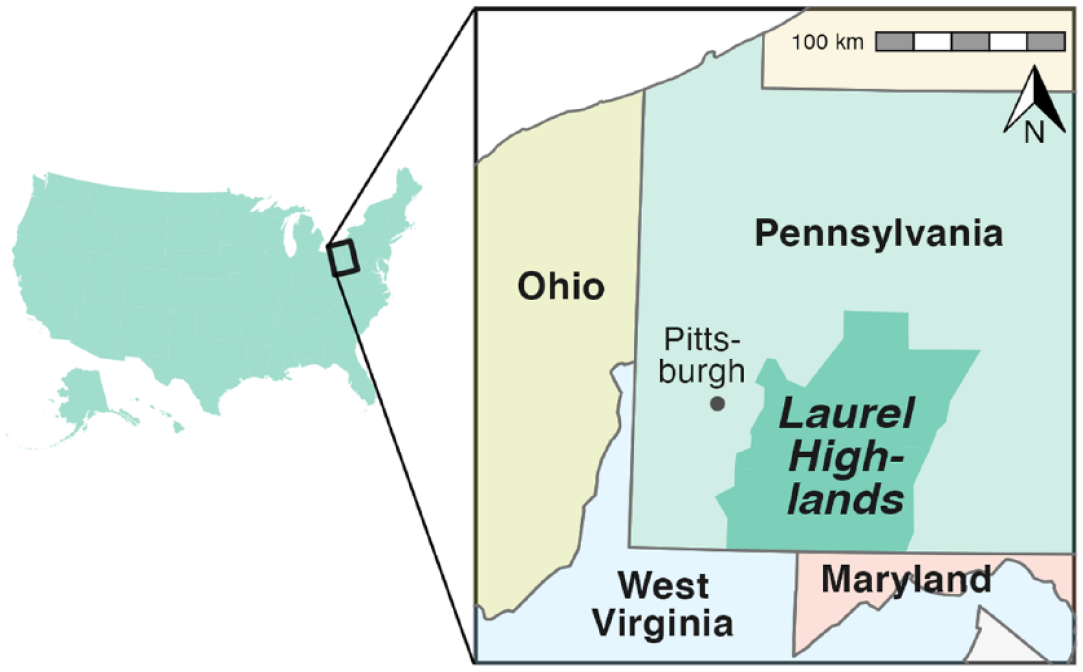
The Laurel Highlands is a Five-County Area (Darker Green Area) in Southwestern Pennsylvania in the U.S.
More recently, southwestern Pennsylvania was an epicenter of a natural gas boom (Hill, 2018; Jerolmack, 2021). Shale gas development in Pennsylvania and elsewhere is associated with drinking water pollution and adverse health outcomes (Cunningham et al., 2020; Hill & Ma, 2022). The five-county Laurel Highlands area has nearly 1,400 unconventional gas wells (Whitacre & Slyder, 2022). During the gas boom, despite skyrocketing local GDP, job growth and personal income growth were well below the national average, and tens of thousands of people continued to emigrate from the region (O’Leary et al., 2021). Today fossil fuel workers make up only about 1% of Pennsylvania’s workforce and are outnumbered by clean energy workers 3:2 (BW Research Partnership for PA DEP, 2022; Pollin et al., 2021; U.S. Bureau of Labor Statistics, 2022). Laurel Highlanders are also living with climate change risks, specifically a greater frequency and intensity of flash floods, less snow, and more Lyme disease, among other impacts (U.S. Environmental Protection Agency [USEPA], 2021; U.S. Global Change Research Program [USGCRP], 2018).
Despite minimal economic benefits and substantial health and environmental costs from fossil fuel extraction to local communities, the fossil fuel industry continues to receive widespread support in Appalachia (Lewin, 2019). Here, fossil fuels are more than a livelihood; they are a culture developed over generations (Carley et al., 2018), a fossil fuels heritage (Scott, 2010, p. 142). An end to fossil fuel use in “coal country” is seen not only as a threat to rural livelihoods but as the end of a culture and identity (Bell & York, 2010; Carley et al., 2018; Lewin, 2019).
Many fossil fuel communities blame federal environmental regulations for slowing down the local economy and job losses (Lewin, 2019). Indeed, in the 2016 U.S. Presidential election the Republican candidate’s political platform included ending the “war on coal” (Bruggers, 2016). Laurel Highlands counties chose that candidate by a 30% to 56% margin, with similar results in 2020 (PA Department of State, 2022). These narratives are heavily shaped by fossil fuel industry propaganda and exploited by the industry to maintain political influence and avoid regulation (Bell & York, 2010). This heritage might help explain why Laurel Highlanders’ climate opinions track somewhat lower than the rest of the rural northeastern U.S. and the U.S. altogether (Figure 2; Howe et al., 2015; Marlon et al., 2022; Olson-Hazboun & Howe, 2019).
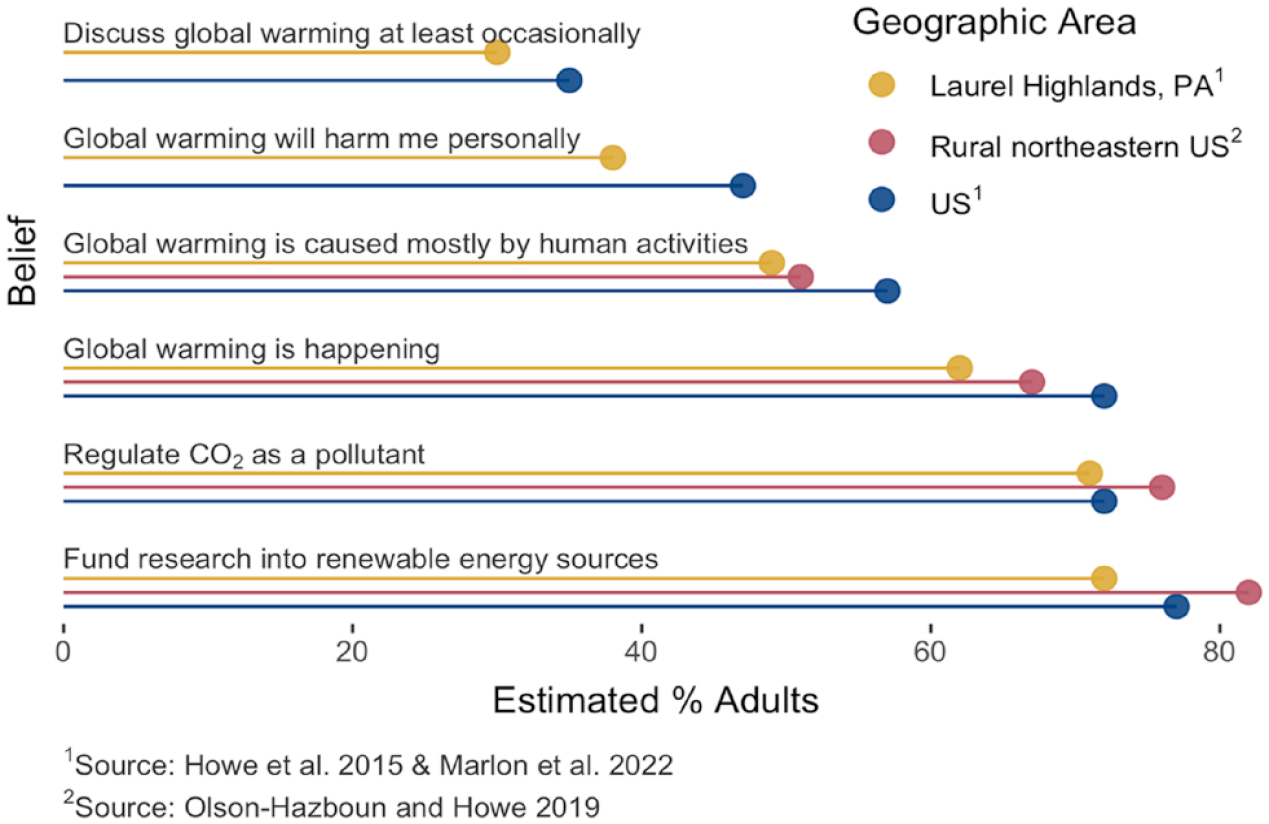
Estimated Percentage of Adults Who Agree With Pro-Climate Statements and Policies.
The Climate and Rural Systems Partnership
Following CUSP, University of Pittsburgh researchers and Carnegie Museum of Natural History educators wondered how they would need to adapt the theory of action developed in CUSP to serve rural communities. Museum educators already had some connections with rural Laurel Highlands organizations and individuals through the museum’s field station, Powdermill Nature Reserve, in rural Westmoreland County (part of the shaded area of Figure 1). The field station is a hub for scientific field research and natural history programs for the public. Also, educators across the Laurel Highlands interact with the museum through loaned natural history-themed kits containing real natural history objects and educational materials. These relationships are the seeds out of which the CRSP network was initially grown (Figure 3). The first members tended to have at least one connection to another member through previous and ongoing collaborations such as community development or environmental advocacy (Figure 3A).
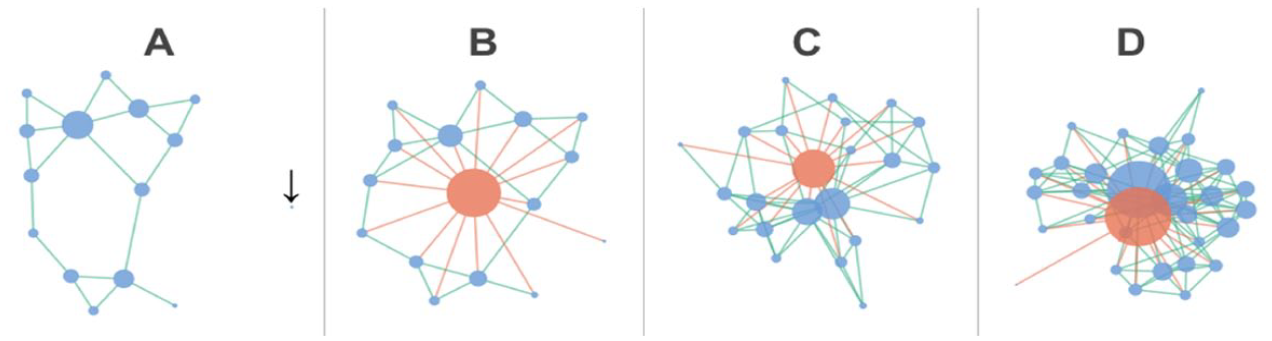
Laurel Highlands CRSP Network Growth 2020–2022. One Blue Circle/Node is One Network Member, and Node Size Indicates Number of Collaborations (Lines) but is Not Relative Across Plots. (A) 2020 Network Collaborations (n=15) Shown Without CRSP Staff (Starting Conditions). the Arrow Points to an Unconnected Member. (B) 2020 Network Collaborations (n=29) Including CRSP Staff Collapsed Into One Red Node. Red Lines Show Collaborations With CRSP Staff, Green Lines Are for Collaborations Between Non-Staff Network Members. (C) 2021 Network Collaborations (n=35). (D) 2022 Network Collaborations (n=45). We Surveyed Network Members’ Relationships to Each Other in 2020, 2021, and 2022 (Supplemental Appendix A) Following Methods from Converge (2023) and Using the R Package Igraph (Csardi & Nepusz, 2006).
The network formally launched in March 2020, the same month COVID-19 lockdowns began in the U.S. Therefore, the first 1.5 years of network meetings were virtual, and recruiting new members through public events was limited. The lockdown was also an opportunity, where, for those with high-speed internet, CRSP meetings provided a virtual space to build connections with people at a time when many felt isolated. CRSP virtual meetings also provided a place to safely and openly talk about climate change—something many network members remarked that they did not have otherwise. The network grew over time mainly through word of mouth: members shared CRSP meeting invitations with others. Despite COVID, the network has successfully grown in numbers and connectivity since 2020 (Figure 3).
Most network members participated in their professional capacity as staff of an organization. A few retired individuals participated independently. In the network survey (Supplemental Appendix A), we asked network members to name the sector they primarily identified with. In 2022, 38% selected informal education, 20% selected conservation, 8% selected community organizer, and the remainder were arts, communication, government, and research professionals.
The role of the museum in the network is intentionally emergent and an iterative work-in-progress. The museum seeks to understand how to better serve rural communities including how to provide and co-design educational climate change resources. Regarding climate conversations specifically, the museum’s goals are: to support network members’ knowledge and confidence about climate science and relevant climate actions at a community scale, practice talking together about systemic actions and positive futures, and learn from one another. On the ground this meant hiring two full-time staff devoted to CRSP (two co-authors), committing significant time of existing staff to CRSP (another co-author), and designing and facilitating virtual and in-person network meetings.
The first few CRSP meetings were focused on building relationships, listening to one another’s experiences with and questions and concerns about climate change, and brainstorming what we wanted to accomplish together as a network. Two of the co-authors were the primary facilitators for the meetings, but the agendas and activities were designed to be participatory. For example, in every virtual meeting, we used some combination of breakout rooms, chats, polls, Google Jamboards, Slides, Forms, and Docs to keep the conversation and information flowing in many directions. Subsequent meetings every three months were designed by the co-authors based on what needs and interests were expressed by members in the previous meeting. After several meetings, the network decided to work together to co-design activities and co-produce resources they could use with their rural publics to start conversations about climate change. Examples of co-produced resources are an infographic called “Signs of climate change in migratory songbirds of Pennsylvania” (https://tinyurl.com/3hspkjye) and a “Climate conversation starter guide” (https://tinyurl.com/4rr9uuh9). Despite these successes with co-production, the network’s climate narrative still trended toward doom and gloom.
Research Questions
The main goal of CRSP is to facilitate a network of trusted messengers in rural communities to engage their publics in science-based conversations about climate change. This paper is intended to gather evidence around strategies to help educators and scientists to facilitate narrative shifts toward talking about system-scale climate action. We focus here on improving the understanding of the challenges educators and scientists face with rural climate change communication to inform theory and application. In this article, we ask:
Reflexivity Statement
We provide information about our positionalities to be transparent and to recognize that we all bring different backgrounds and worldviews that influence our interpretation. The coauthors consist of two global change scientists and one environmental educator from the Carnegie Museum of Natural History as well as one University of Pittsburgh learning scientist. We all live in Pittsburgh, Pennsylvania, a mid-size city in western Pennsylvania. Two of us grew up in rural western Pennsylvania, one (lead author) in the Laurel Highlands specifically. A third coauthor visited the Laurel Highlands frequently while growing up in Pittsburgh. One of us grew up on the U.S. West Coast and moved to Pittsburgh in 2017.
Materials and Method
This research was conducted with adults who voluntarily participate in usual educational/professional development settings, so this study has been exempt from IRB review (University of Pittsburgh exempt approval MOD18100091-001).
The Workshops
In the first year and a half of the project, we noticed that most of the climate narratives—the socially constructed stories shaping worldviews about how people are connected to climate change and how people should act on it (van der Leeuw, 2020)—in the network were about issues and doom and gloom: climate impacts, concerns for plants and animals, and fear of lost jobs. These narratives were often shared verbally in meeting conversations but also in Jamboards and other written materials. When solutions were mentioned, they were often references to individual-scale, broadly pro-environmental actions (e.g., installing pollinator gardens or rain barrels, recycling plastic bags), with few system-scale actions that were directly mitigating climate change or implementing systemic policy solutions. This bias toward the individual scale in what groups talk about when they talk about climate change has been observed elsewhere, for example, Whitmarsh et al. (2011), and in our experience is common in local climate communication.
In Year 2 of CRSP activities, following the observation that most climate talk in CRSP was issue- rather than action-based, we hosted a pair of in-person workshops for network members to explore facilitation techniques to embolden more climate talk about systemic climate actions that would relate to a desirable future. Each workshop was 6 hr, and they happened in September 2021 (“Workshop 1”) and December 2021 (“Workshop 2”). Workshop 1 was the first in-person event for the network. The workshops were co-facilitated by two of the coauthors, the other two co-authors were researcher-participants.
Key activities in Workshop 1 included a 30-min presentation by a scientist coauthor to introduce new content, framings, and theories from current climate communication literature to explain why talking about actions and positive futures may help. This was followed by a participatory activity, in which the group collaborated in a future visioning activity to make the “Laurel Highlands 2030” banner (hereafter “Futures Banner”) using open-ended prompts to identify and broaden their sense of collective climate actions in their community (prompts shared in Results). The design was informed by participatory scenario work, for example, Schmitt Olabisi et al.(2020), Candy and Kornet (2019), and Schultz (2015). We intended for the prompts to provide just enough focus, structure, and choice to support participants to envision a believable future with detail and texture, and to not lose themselves in the overwhelming scope and complexity of social and ecological systems related to climate action (sensu Dahlstrom, 2014).
The banner prompts intentionally targeted three anthropocentric topics (economy, energy, and infrastructure). Often network meeting conversations focused on climate change as it relates to conservation and beyond-human nature, which made sense given that these are the focus of many network members’ careers, interests, and identities. However, so-called natural areas are places where it can be difficult to identify community actions to address the causes of climate change. We, the co-authors, introduced the prompts on economy, energy, and infrastructure to see if this would spur network members to identify more tangible climate actions and see the connections between human systems and beyond-human nature. A coauthor facilitator gave detailed instructions at the workshop (Supplemental Appendix E, pages 3-4). Participants responded to the prompts using sticky notes that they put on a piece of banner paper (Figure 4). A coauthor facilitator then read aloud the sticky notes.
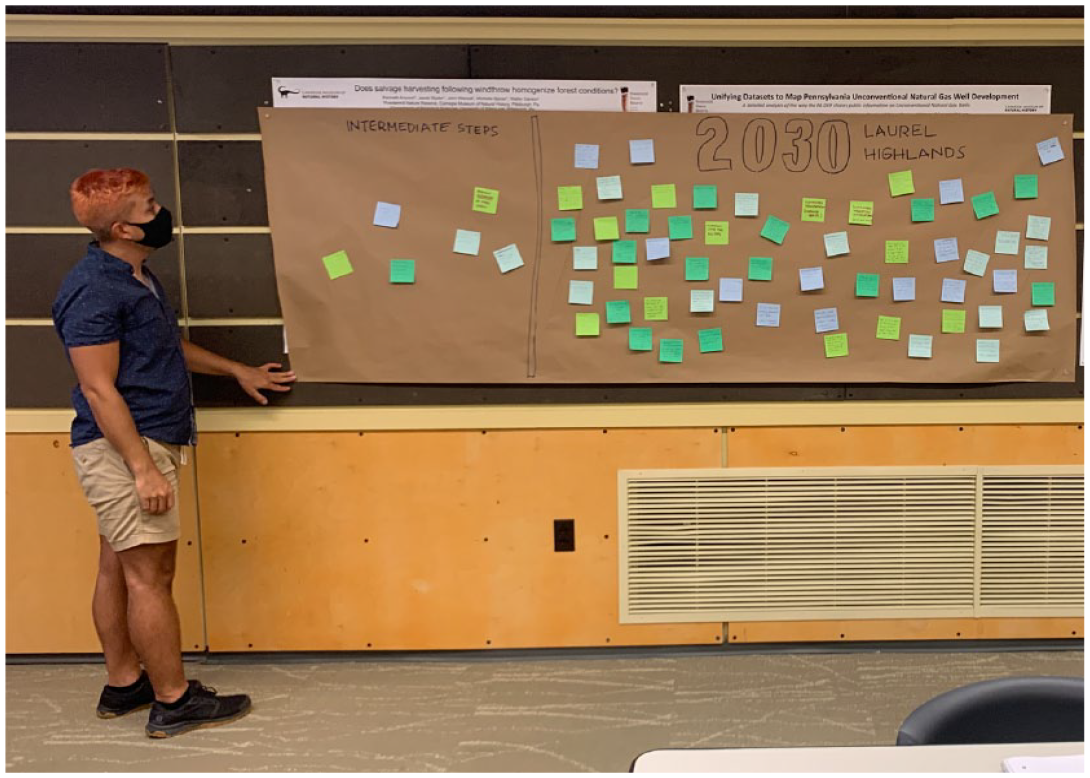
The Completed Futures Banner.
After lunch, we used a storytelling exercise and asked participants to craft a personal climate story about climate action, and we were interested in what stories people told and what kinds of actions showed up in stories. At the end of Workshop 1, we invited participants to practice their climate stories in their community before Workshop 2. The expectation for sharing their climate stories in the community was if they were talking with someone, and their story felt appropriate or useful, to share their story. We also asked them to jot down a few notes in their Workshop 1 workbook (Supplemental Appendix D) about who they talked with, how was climate change brought up, what story they told, the other person’s reaction verbally and physically, and how the storyteller felt afterward.
Key activities in Workshop 2 included a morning session of facilitated small- and full-group discussions to learn from each other about how climate actions were showing up in their climate conversations and explore how the focus on actions influenced their climate narratives. After lunch, participants cycled between two concurrent sessions: one exploring how they see themselves taking climate action and the other co-developing strategies for having conversations about climate action with community members who identify with a fossil fuels heritage (detailed agendas for Workshops 1 and 2 are available in Supplemental Appendices E and F, respectively). We designed Workshop 2 to build on Workshop 1 for returning participants but also welcome new participants.
Participants
We sent workshop email invitations (Figure 5) to active CRSP members (n=39) welcoming them and their Laurel Highlands colleagues/friends to attend.
Graphic Used in Workshop-Related Emails and Workbooks (Supplemental Appendices D and G).
Workshop participants were network members and a few new folks invited by members. Most lived in the Laurel Highlands; a few worked in the Laurel Highlands but lived elsewhere. Workshop 1 included 21 people, and Workshop 2 had 26 people (Table 1 and Figures 6 and 7).
Participant Counts at Workshops 1 and 2.
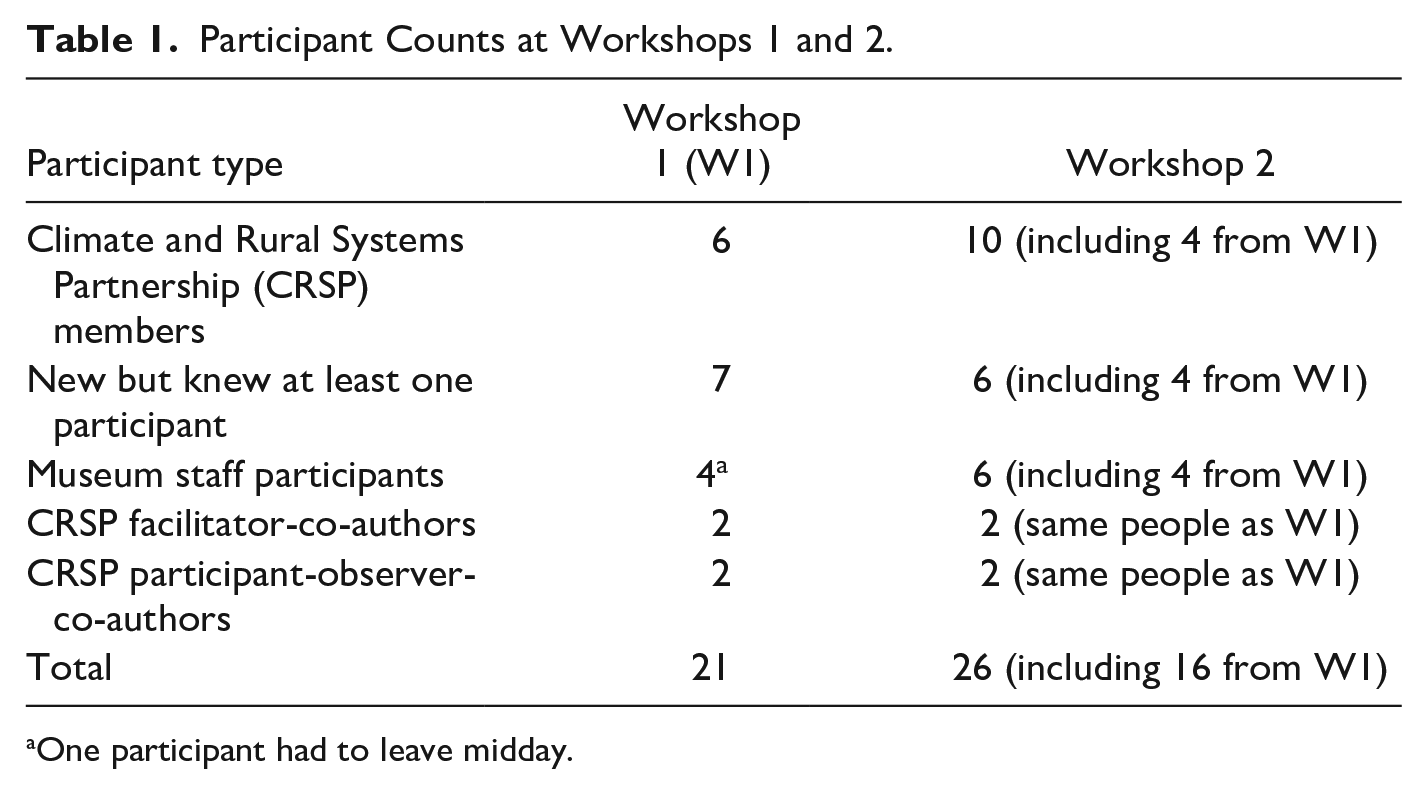
One participant had to leave midday.
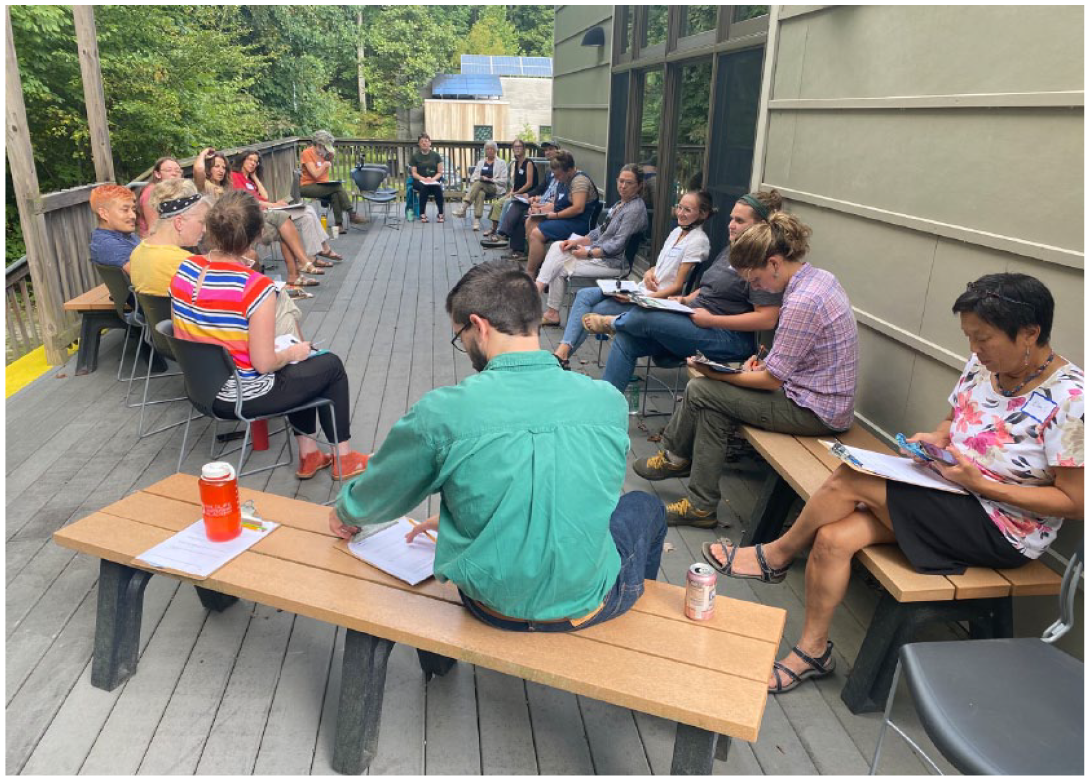
Participants and Facilitators at Workshop 1.
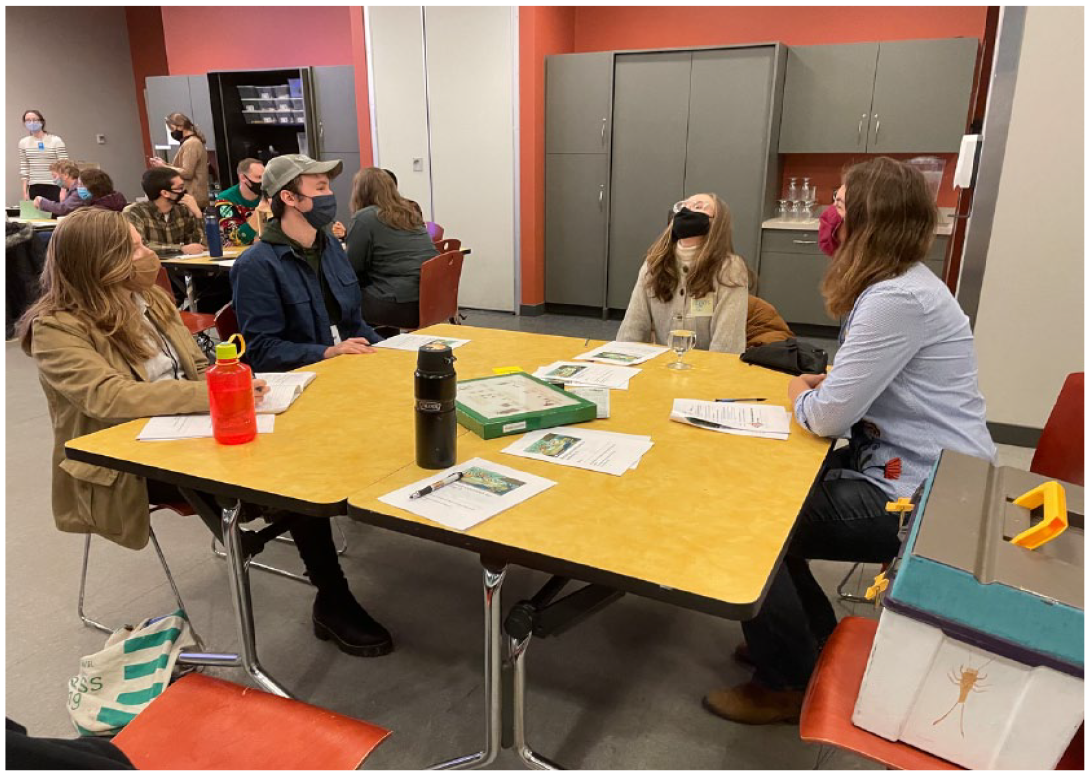
Participants at Workshop 2.
In both workshops, we included non-co-author museum staff as participants because CRSP is rooted in the idea that museum scientists and educators are learning along with the other network members, and for many of the museum staff climate communication is a relatively new skill set. The 27 individuals who participated in one or both workshops (plus four co-author facilitators and participant-observers) is a small number with limited diversity (see Figure 8 below). However, we found 20-30 participants for any one workshop to be near the limit of how many people we had the capacity to facilitate while allowing for both intimate interactions and space for everyone to share in full group discussions.
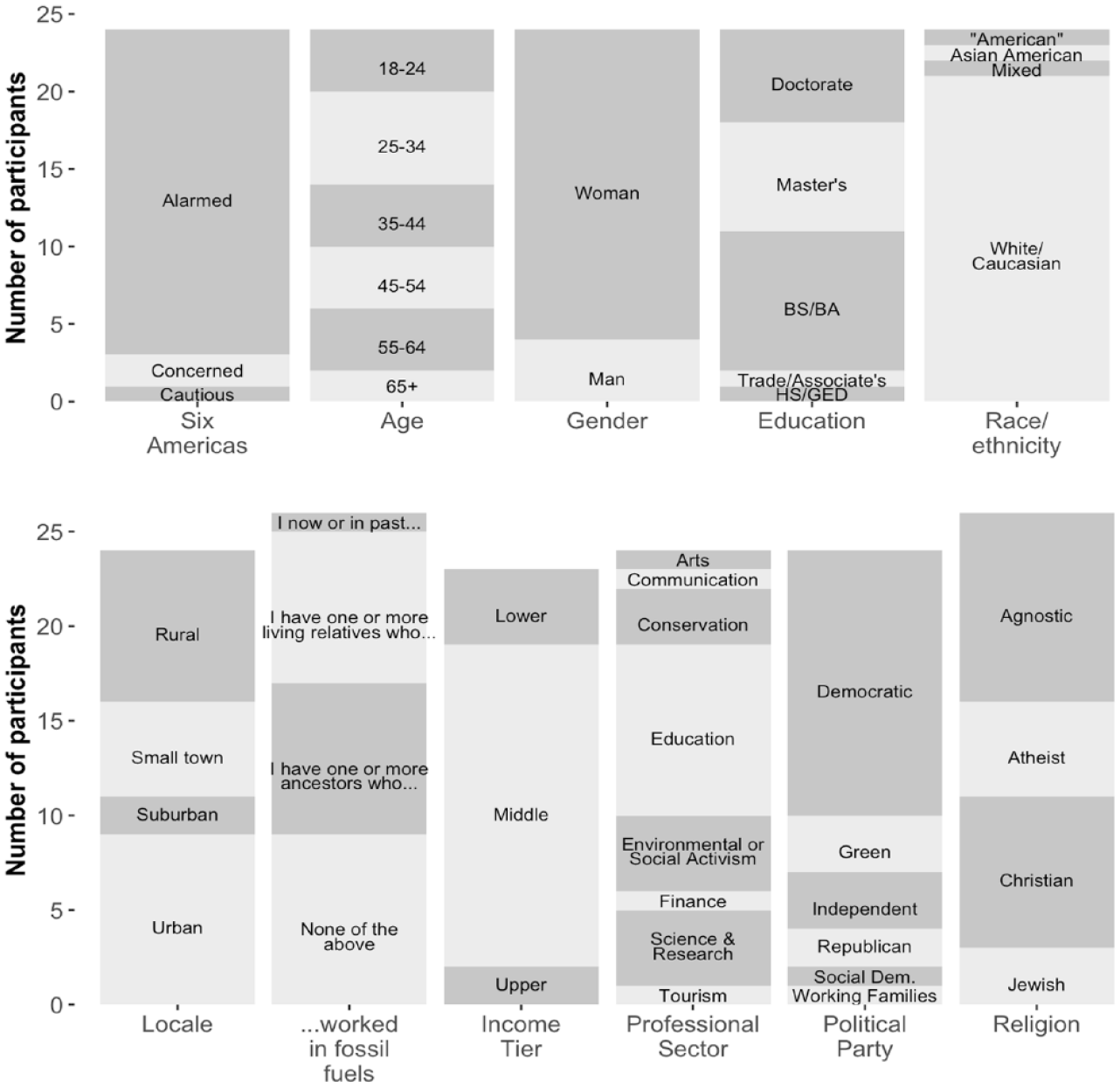
Workshop Participants’ (Including CRSP Staff) Responses to the Survey (n=24).
We used an online survey instrument (Supplemental Appendix C) to understand the demographics and climate attitudes of the workshop participants. The survey included the Six Americas Super Short Survey (SASSY!; Chryst et al., 2018), 12 demography questions, and four questions about Laurel Highlands and fossil fuels connections. We tested the survey with three network members, adjusted the survey for clarity and inclusion, and sent it via email to workshop participants, including CRSP staff, several weeks after the workshops. Survey respondents received two free passes to the museum. The response rate was 89% (24 of 27). We determined SASSY! segments using the online SASSY Group Scoring Tool (Chryst et al., 2018) and income tiers using the Pew Income Calculator (Bennett et al., 2020). We used R for making plots and maps (R Core Team, 2021) and the packages ggplot2 (Wickham, 2016) and albersusa (Rudis, 2020).
Most participants qualified on the SASSY! Tool as “Alarmed” about global warming (Figure 8). They have lived in the Laurel Highlands on average for 17 years. More than half of the respondents, including some museum staff, are directly connected to fossil fuel workers. Participant community roles are listed in Supplemental Appendix B. The participants are majority women, White, middle-income, college or higher graduates, and Democrats. The gender imbalance may be a result of education being gendered work traditionally held by women and network growth primarily resulting from women members recruiting other women members. The political imbalance may be the result of network members inviting like-minded individuals to join CRSP (and the workshops) and COVID restrictions limiting staff and network members from attending public events and recruiting a wider variety of members.
Data Collection and Analysis
We collected qualitative data in the form of audio recordings, field notes, workbooks (Supplemental Appendices D and G), sticky notes, and pre- and post-surveys (Supplemental Appendices H and I). Participants filled out paper pre- and post-surveys of open-ended questions, which we collected at the beginning and end, respectively, of the workshops. We transcribed audio recordings using an online tool (Otter.ai) and checked the transcripts for accuracy. We entered all written artifacts listed above into electronic documents for coding. We uploaded transcripts and written artifacts into the free, open-source qualitative research tool Taguette (Rampin & Rampin, 2021) for coding analysis. Because we did not expect to see a Workshop 1 effect on results from Workshop 2, we treated all qualitative data from both workshops as one dataset.
We used an essentialist method of thematic analysis to identify and analyze patterns across our dataset, reporting the reality of participants as they expressed it (Braun & Clarke, 2006). The analysis was guided by our research questions, which were used to develop a priori codes. We also identified emergent codes as we analyzed the data (full codebook in Supplemental Appendix J). Some of the key codes included: barriers to climate conversations, barriers to climate action, ways to overcome barriers, explicit climate actions, individual versus systemic climate actions, efficacy, and time (past, present, or future). We iteratively built consensus among the co-authors on code meanings in a 3-day coding retreat where all coauthors individually coded identical samples of each source of qualitative data (field notes, transcripts, pre-surveys, etc.). We used memos and group discussions to co-develop themes across the data and codes relevant to the research questions. After the retreat, the lead author finished coding the remaining data. Afterward, we verified consistency across coders and compared code usage among the coders for a subset of 12 key codes that were directly related to the research questions and/or used frequently, i.e., appeared multiple times during a workshop activity and across multiple activities and data sources. Codes and themes were the basis for interpreting what the data revealed about the research questions and were used to identify representative quotes. The quotes of participants are differentiated in the results as “P” for participants and “R” for researcher/authors.
Results
What Specific Climate Action Contents (What Is Discussed) and Framings (How It Is Discussed) Are Expressed by Rural Network Members?
We found in both workshops, participants were attracted to the ideas recommended by the literature, namely that talking about climate actions is important for effective climate communication. We mainly draw from Workshop 1 data to explore this question. Through the pre-survey and Futures Banner participants revealed a theme of yes to futures, and storytelling revealed themes of authenticity, self-sufficiency, and implicit climate talk, each described below.
Yes to Futures
Some participants came in the door already thinking about actions and the future. In the first workshop pre-survey, we asked, “What do you hope your climate conversation partner feels like or thinks about after an effective conversation?” Some said something like “
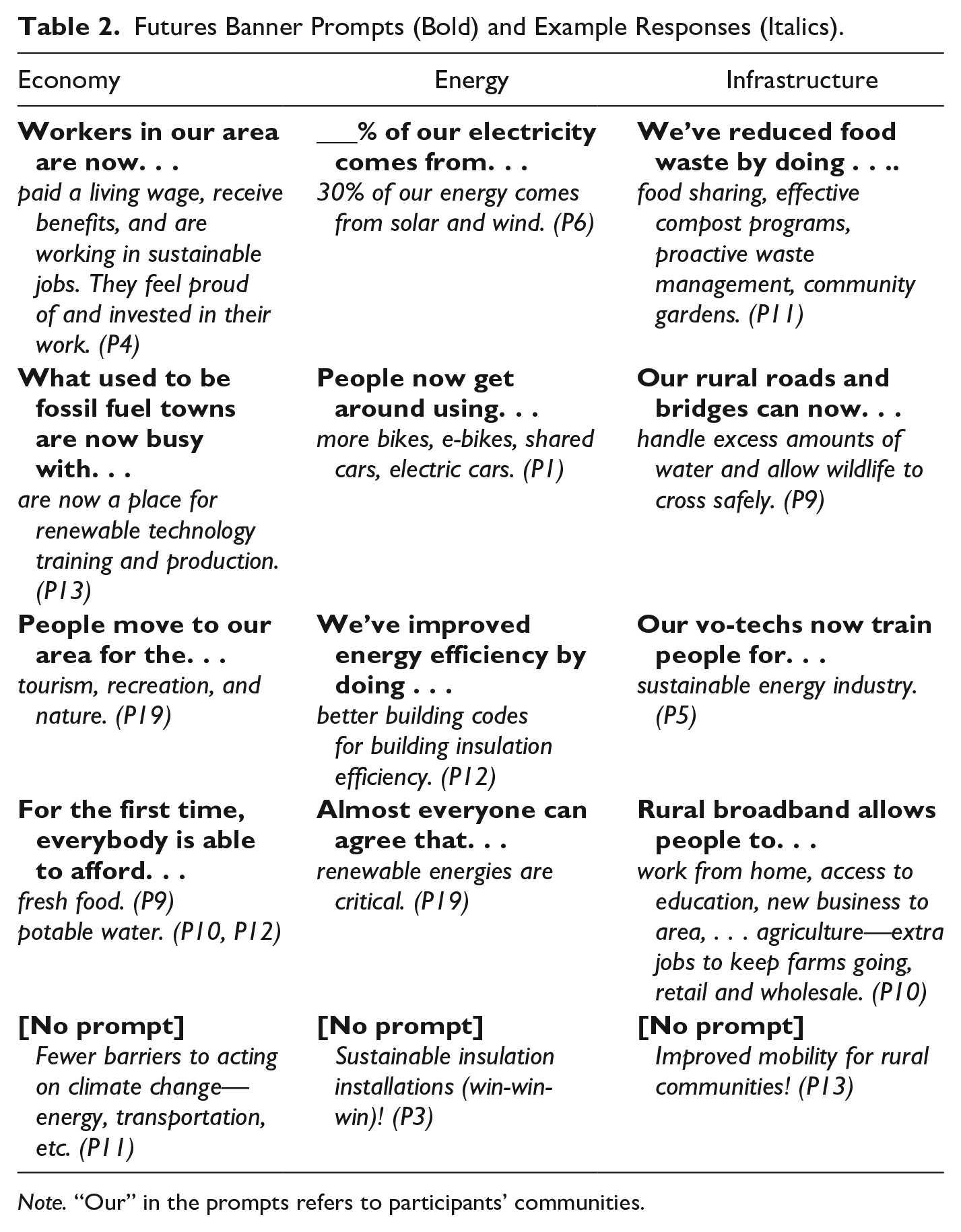
While writing sticky notes for the Futures Banner (Table 2) the small group conversations were
Futures Banner Prompts (Bold) and Example Responses (Italics).
Note. “Our” in the prompts refers to participants’ communities.
The open-ended prompts about economy, energy, and infrastructure drew on participants’ knowledge and experience and enabled them to make their own meaning of these systemic actions and tailor them to their communities (Table 2). The rural broadband prompt (Table 2) spurred excited visions of how the region could change to become a teleworkers’ paradise. Many prior CRSP conversations have been vague, but “the. . . prompts helped people be specific” (R18 field notes). A coauthor reported, “the entire mood of the room shifted and it was the first time in the network people were easily making social-economic-ecological connections” (R16 field notes). The activity seemed to effectively bridge the personal scale of human comprehension with global social–ecological connections (Dahlstrom, 2014), making space for both local details and imagination at larger scales. Constructing the banner as a group and hearing the collective vision read back to us was poignant and itself a kind of collective action, supporting participants’ sense of collective efficacy. In reflection after the workshop, a coauthor shared, “I was blown away by how much people took to that activity. . . How realistic the solutions were–it was really like
Overall, participants did not appear to draw from the Futures Banner in later activities, despite prompting and its presence throughout both workshops. However one of the participants who returned for Workshop 2 explained in their workbook how their experience with the Futures Banner led them to facilitate a conversation with a rural community facing the proposed construction of a new natural gas power plant. The conversation was about “solutions and what success in the town would look like. It felt different because it engaged an excited, energetic response rather than despair, antipathy, gloom. Also focused away from local health impacts / NIMBY [not in my backyard]” (P3).
Authenticity
After the banner, Workshop 1 participants developed and shared a climate action story. Participants’ stories emphasized the importance of authentically serving as an example for others, which is a likely reason why stories were situated in the past. For example, one participant said while talking about growing food as a climate action, “. . . if I didn’t feel self-sufficiency, or like a provider, I didn’t feel as if I could convince or persuade other people that they could do it too” (P19). Indeed, using resources more efficiently, or self-sufficiency, was a recurring topic.
To summarize other stories, participants provided stories about climate-related actions (like more kids taking the school bus rather than parents driving each kid to school), climate-related issues or impacts (such as its impact on local tourism), and non-climate actions (like Rachel Carson as a local hero who can inspire kids). Individual-scale actions outnumbered systemic actions. Two storytellers discussed systemic actions in the recent past: a person who improved the energy efficiency of their college dormitories and changed college policy (P3) and another who bought solar panels with a co-op of homeowners (P12). Other stories included, for example, choosing an environmental career (P13, P9) and buying thrift clothes and convincing others to thrift (P2). Despite the prompt encouraging, but not requiring, stories take place in the future, all stories took place in the present or recent past, except one about climate impacts on local tourism now and in the future.
Implicit Climate Talk
While participants easily identified content and framings about individual pro-environmental actions, talking directly about mitigating climate change, systemic climate actions, and positive futures were less accessible, with the exception of the Futures Banner. For example, reusing clothes rather than buying new ones is a kind of climate action, but the storyteller did not connect the dots or use the words “climate change” in their story. Indeed, few storytellers in Workshop 1 used the words “climate” or “climate change” in their stories.
Participants indicated the need to give people climate actions (in some pre-survey and post-survey responses), but they did not specify what climate actions they would offer. Similarly, in the Workshop 2 post-survey, in response to the question “What is the next step—how can CRSP further support you in having more climate conversations?” responses included things like, “More actionable items—not sure what this looks like” (P24) and, “Specific, relevant climate actions” (P31). Or in response to the question “Did today’s workshop help you develop new, or strengthen existing, personal connections to climate actions? If so, how?” respondents said things like, “Not sure about this” (P1); “No, but I’m very motivated to go home and learn everything that I can” (P28).
What Challenges Arise in Shifting Climate Narratives From Issues to Actions in This Rural Context?
Mainly in Workshop 2, three key themes emerged explaining why climate action conversations can be challenging: a low sense of collective efficacy, fear, and a need to repair damaged relationships, each discussed below.
Low Sense of Collective Efficacy
In the first session of Workshop 2 the group wrestled with individual actions that react to climate change versus addressing its root causes as a community. This arose in response to the workbook prompt “What comes to mind when you think about the future (say, 2030) and climate change in the Laurel Highlands?” (Supplemental Appendix G). One of the small groups shared with the full group a parable involving a community finding babies floating down the river, they rescue the babies, but more keep coming. Some people want to go upstream to stop them from being put in the river, but others want to stay and care for the babies already in the river. A lively, full group discussion ensued in which many but not all participants identified as baby catchers, for example,
We’re a lot of baby catchers here. And we’re kind of dumbfounded on how we get the culprit and how is that going to happen? . . .We’re kind of taking these baby steps right now and how can that lead to . . . solving these bigger issues? (P24).
The latter half of the quote expresses low collective efficacy.
During the fossil fuels heritage sessions, participants dwelled in their own and their community’s doubts in the efficacy of climate actions, for example,
One of the biggest things that we get is, ‘yeah it’s terrible, I get it, but what can I do? Like what I do doesn’t actually matter’” (P2). Another said, “I think for a lot of people, and I have friends who are, like. . . ‘We’re just doomed. I can’t do enough.’ I. . . get discouraged, because. . . it’s not enough (P24).
Fear
Participants also identified their own fear of talking about climate change directly saying, “That’s always my fear. It’s gonna be an argument” (P1). Others expressed fears that we live in different realities with different facts and that the urgency to act on climate change will get in the way of the patient process of building trust and relationships. Participants discussed the post-truth era as a barrier to climate conversations: “They throw out such fake news that it’s, like, so outrageous that I don’t even know how to combat it” (P12). And we’ve heard people unknowingly repeat misinformation in network meetings saying things like, [paraphrasing] “Solar panels aren’t that much better [than fossil fuels] because of the energy it takes to make them.”
Throughout the CRSP project, we’ve heard many network members describe how they avoid talking about climate change directly (including avoiding saying the specific words “climate change”) for fear of its political associations and ensuing conflict. For example, in Workshop 2 a participant said,
I have friends that get a political direction and I defer from that anyway I can, because I don’t want to get sucked into that spiral. . . Not that politics don’t play a role but [I] try to stay away from those things, keep it relevant and local (P29).
And some expressed low confidence in their ability to engage, “I mean climate change is science-based. There’s facts out there that support it. I just, I get afraid that I’m not equipped enough. . .” (P30)
Repairing Relationships
The fossil fuels heritage sessions at Workshop 2 yielded rich, empathy-laden descriptions of the challenge of having climate conversations with people with a fossil fuels heritage. When it comes to their communities’ fossil fuel workers facing a transition to renewable energy, workshop participants’ empathy is very personal: 70% of participants, including some CRSP staff, have family ties to fossil fuel workers (Figure 8). Some participants agreed with a statement about the blame that has been placed on fossil fuels and the workers associated with it. “Blame is damaging like this. Relationships have been damaged, and that needs to be addressed and repaired to some extent to move forward together” (P15).
The strategies participants suggested for overcoming blame drew on humility. For example, many people were moved by the idea of acknowledging their own responsibility for climate change and reliance on fossil fuels and fossil fuel workers by saying, “I use fossil fuels too” (many Ps). Participants named other core relational conversation principles like meeting people where they’re at, for example, “Instead of bringing them to our table, like maybe ‘Hey, may I please bring my chair to yours?’” (P25).
Discussion
These data suggest that these rural participants, adults who want to talk about climate change, welcomed future- and action-framings. Participants seem primed for relational climate conversations in Appalachia. However, they are not talking about systemic climate actions because they are uncertain about relevant levers and actions to change the system; those solutions feel too socially risky or politically infeasible; or perhaps they do not feel comfortable promoting actions that they have not yet done themselves and so cannot speak to authentically. This is a major challenge for collective efficacy (Allen & Crowley, 2017). Network members understand that individual-level actions are not at a scale that addresses the urgency of the climate crisis, but they also resist advocating for solutions that are at the right scale. Our banner results suggest that greater exploration of futures and levers of system change with learning networks may be a fruitful start for transitioning from individual- to system-scale climate conversations and actions. Although participants seemed to like the futures banner activity, they did not refer back to it, so repeated engagement with futures may be necessary to build greater familiarity with futures thinking.
The implicit climate talk theme suggests our network engagement and these workshops may have focused too much on framing and not enough on content. In the workshops and network activities broadly, less attention has been paid to how climate change works and what community-scale climate action looks like. For people like those in the CRSP network (many of whom are educators, are already concerned, and want to become community leaders on climate) building climate literacy may be key for building action competence, i.e., discerning the root causes of issues and arriving at effective social-ecological solutions and confidence (Dittmer et al., 2018; Whitmarsh et al., 2011). This also reflects the importance of learning networks like CRSP to prioritize heterogeneous networks, including scientists with educators to explore climate science content and knowledge co-production (Lemos & Morehouse, 2005; Meadow et al., 2015; Norström et al., 2020).
Participants mentioned hearing, and we observed them occasionally unknowingly repeating misinformation. Misinformation that goes undetected and unaddressed sows seeds of doubt in solutions and collective efficacy. Climate communicators need to inoculate the public against misinformation and explain the motivations behind the messages (Cook, 2019; Farrell et al., 2019; Levy et al., 2021; Lewandowsky et al., 2022). Museums and learning networks are well positioned to engage in this work (Hamilton & Ronning, 2020) and can draw from resources such as “The Debunking Handbook 2020” (Lewandowsky et al., 2020). In this vein, the CRSP network co-produced “Break up with climate myths using these climate change facts” (https://tinyurl.com/ye23hm4x).
The themes of authenticity (Research Question 1) and low self-efficacy (Research Question 2) suggest a potential for the network to work together to identify and accomplish a systemic climate action, possibly one identified in the Futures Banner. This local collective action may bolster network members’ senses of community efficacy, provide an authentic story for climate communicators to tap into, and inspire neighboring communities. Such work could help bridge what is comfortable for network members to talk about (personal action) and what is needed for systemic change (community action). Here arises a conundrum for network members: to speak effectively about climate action in their communities they need to avoid making it political, but much systemic climate action involves local policy.
To overcome this, the next step for learning networks like CRSP could be to review climate-centered rural development models such as ReImagine Appalachia’s Blueprint (2021), Saha et al. (2021), and Heartland Fund’s Rural Climate Partnership (2022) and reflect on the differences between policy and politics. Although not climate-focused, Romano and DeVore (2023) could help the network link climate actions with economic and racial justice and build a larger coalition. Scientists, museum educators, and community members can put these models into action by facilitating relational conversations with local leaders, community dialogues (Milligan et al., 2022; The Climate Advocacy Lab, 2022) including making a Futures Banner, and identifying policy leverage points.
One of the greatest assets of our study was our network-based approach for 1.5 years before the workshops discussed here. We suspect that the network relationships (Figure 3) enabled participants to trust the facilitators, be vulnerable in what they shared, and take greater risks than what would happen otherwise. Thus, transferring these approaches to another community should likewise first focus on relationship-building and understanding the local context.
Conclusion
Workshop participants recognized the urgent need to address climate change at the system scale and wanted to talk about climate action, but they had doubts about what climate actions to take, how much their actions matter, and whether it was necessary to talk about climate change directly. Participants wanted to talk from a place of authenticity with their communities, yet this oriented them toward individual-scale pro-environmental actions with which they had prior experience. When climate communicators talk about ending fossil fuel use in communities with a fossil fuel heritage, they need a compelling, detailed, and authentic story explaining how the transition will bring acceptance, dignity, and prosperity to a specific community (Carley et al., 2018; Lewin, 2019). Future visioning showed promise as a tool for identifying those compelling actions and expanding participants’ climate narratives to embrace systemic climate action and envision a future for the region beyond fossil fuels. Although the size of our workshops was small, this research may be useful to any U.S. group, but especially rural ones, exploring climate opinion data and communication theory and wondering how to apply them in their own communities.
Supplemental Material
sj-docx-1-scx-10.1177_10755470241227443 – Supplemental material for Shifting Climate Communication Narratives Toward Actions and Futures in a Rural Area of Appalachia
Supplemental material, sj-docx-1-scx-10.1177_10755470241227443 for Shifting Climate Communication Narratives Toward Actions and Futures in a Rural Area of Appalachia by Bonnie M. McGill, Taiji Nelson, Mary Ann Steiner and Nicole E. Heller in Science Communication
Supplemental Material
sj-docx-3-scx-10.1177_10755470241227443 – Supplemental material for Shifting Climate Communication Narratives Toward Actions and Futures in a Rural Area of Appalachia
Supplemental material, sj-docx-3-scx-10.1177_10755470241227443 for Shifting Climate Communication Narratives Toward Actions and Futures in a Rural Area of Appalachia by Bonnie M. McGill, Taiji Nelson, Mary Ann Steiner and Nicole E. Heller in Science Communication
Supplemental Material
sj-docx-4-scx-10.1177_10755470241227443 – Supplemental material for Shifting Climate Communication Narratives Toward Actions and Futures in a Rural Area of Appalachia
Supplemental material, sj-docx-4-scx-10.1177_10755470241227443 for Shifting Climate Communication Narratives Toward Actions and Futures in a Rural Area of Appalachia by Bonnie M. McGill, Taiji Nelson, Mary Ann Steiner and Nicole E. Heller in Science Communication
Supplemental Material
sj-docx-5-scx-10.1177_10755470241227443 – Supplemental material for Shifting Climate Communication Narratives Toward Actions and Futures in a Rural Area of Appalachia
Supplemental material, sj-docx-5-scx-10.1177_10755470241227443 for Shifting Climate Communication Narratives Toward Actions and Futures in a Rural Area of Appalachia by Bonnie M. McGill, Taiji Nelson, Mary Ann Steiner and Nicole E. Heller in Science Communication
Supplemental Material
sj-docx-6-scx-10.1177_10755470241227443 – Supplemental material for Shifting Climate Communication Narratives Toward Actions and Futures in a Rural Area of Appalachia
Supplemental material, sj-docx-6-scx-10.1177_10755470241227443 for Shifting Climate Communication Narratives Toward Actions and Futures in a Rural Area of Appalachia by Bonnie M. McGill, Taiji Nelson, Mary Ann Steiner and Nicole E. Heller in Science Communication
Supplemental Material
sj-docx-7-scx-10.1177_10755470241227443 – Supplemental material for Shifting Climate Communication Narratives Toward Actions and Futures in a Rural Area of Appalachia
Supplemental material, sj-docx-7-scx-10.1177_10755470241227443 for Shifting Climate Communication Narratives Toward Actions and Futures in a Rural Area of Appalachia by Bonnie M. McGill, Taiji Nelson, Mary Ann Steiner and Nicole E. Heller in Science Communication
Supplemental Material
sj-docx-8-scx-10.1177_10755470241227443 – Supplemental material for Shifting Climate Communication Narratives Toward Actions and Futures in a Rural Area of Appalachia
Supplemental material, sj-docx-8-scx-10.1177_10755470241227443 for Shifting Climate Communication Narratives Toward Actions and Futures in a Rural Area of Appalachia by Bonnie M. McGill, Taiji Nelson, Mary Ann Steiner and Nicole E. Heller in Science Communication
Supplemental Material
sj-docx-9-scx-10.1177_10755470241227443 – Supplemental material for Shifting Climate Communication Narratives Toward Actions and Futures in a Rural Area of Appalachia
Supplemental material, sj-docx-9-scx-10.1177_10755470241227443 for Shifting Climate Communication Narratives Toward Actions and Futures in a Rural Area of Appalachia by Bonnie M. McGill, Taiji Nelson, Mary Ann Steiner and Nicole E. Heller in Science Communication
Supplemental Material
sj-xlsx-10-scx-10.1177_10755470241227443 – Supplemental material for Shifting Climate Communication Narratives Toward Actions and Futures in a Rural Area of Appalachia
Supplemental material, sj-xlsx-10-scx-10.1177_10755470241227443 for Shifting Climate Communication Narratives Toward Actions and Futures in a Rural Area of Appalachia by Bonnie M. McGill, Taiji Nelson, Mary Ann Steiner and Nicole E. Heller in Science Communication
Supplemental Material
sj-xlsx-2-scx-10.1177_10755470241227443 – Supplemental material for Shifting Climate Communication Narratives Toward Actions and Futures in a Rural Area of Appalachia
Supplemental material, sj-xlsx-2-scx-10.1177_10755470241227443 for Shifting Climate Communication Narratives Toward Actions and Futures in a Rural Area of Appalachia by Bonnie M. McGill, Taiji Nelson, Mary Ann Steiner and Nicole E. Heller in Science Communication
Footnotes
Acknowledgements
The authors would like to extend their gratitude to the Laurel Highlands CRSP network members for their willingness to try new things, share their expertise, and contribute to network activities. This work also benefited from the support of Laurie Giarratani, Lauren Horner, Alexis Boytim, Bryce Stouffer, Karen Knutson, Kevin Crowley, Pat McShea, Asia Ward, Mandi Lyon, Ciara Cryst, Sarah Crawford, Tomas Matza, and Stuart Candy. We also thank two anonymous reviewers for their constructive feedback.
Author Contributions
Declaration of Conflicting Interests
The author(s) declared no potential conflicts of interest with respect to the research, authorship, and/or publication of this article.
Funding
The author(s) disclosed receipt of the following financial support for the research, authorship, and/or publication of this article: This work was supported by the National Science Foundation (awards #1906774 and #1906368).

Author Biographies
References
Supplementary Material
Please find the following supplemental material available below.
For Open Access articles published under a Creative Commons License, all supplemental material carries the same license as the article it is associated with.
For non-Open Access articles published, all supplemental material carries a non-exclusive license, and permission requests for re-use of supplemental material or any part of supplemental material shall be sent directly to the copyright owner as specified in the copyright notice associated with the article.
