



Abstract
TikTok is a social media channel for light entertainment and humor. Then what happens when TikTok tries to persuade users with serious health messages? A between-subject study (N = 189) induced expectancy violation by using six COVID-19 vaccination videos with a varied level of seriousness. Among those who held stronger perceptions of TikTok as an entertainment channel, the seriousness of videos was associated with increased expectancy violation and message effectiveness. Those who held more negative vaccine attitudes experienced greater expectancy violation as video seriousness increased, and expectancy violation was a positive predictor for message effectiveness and vaccine-related intentions among this group.
Introduction
TikTok, the micro-video sharing platform now with over 1 billion users, has rapidly gained popularity among younger generations with its entertaining and creative content. Its main content includes acting, singing, dancing, documentaries, animated cartoons, and situational comedies (Li et al., 2021; Zhu et al., 2020). Typically, dance videos enjoy the most “shares” with its “rhythmic and earworm music and easy-to-mimic lip-sync and body movement” (Li et al., 2021, p. 8). The virality of TikTok dance has been manifested in science communication as well; for instance, a handwashing dance challenge in Vietnam at the beginning of the COVID-19 pandemic went viral by leveraging the synergy of dance, music, and simple health messaging that engaged youth around the globe (Mamo, 2020). Thus, it is not surprising that health authorities such as the World Health Organization (WHO) have joined TikTok to encourage vaccination during the COVID-19 pandemic, using its extensive reach of over 800 million users across the world (Brown, 2020; Comp et al., 2021). Scientists and health care practitioners also have offered their domain knowledge and perspectives of working at the forefront of battling COVID-19 via TikTok. Regular users have documented and shared their vaccination experiences, addressing public concerns for vaccines’ adverse effects.
Some of these vaccination messages are inevitably serious and fear-arousing. One notable example is the recent viral content by Megan Alexandra Blankenbiller, who pleaded her followers to get vaccinated timely in her final TikTok post before death. Her regret for non-vaccination, expressed blatantly through the first-person camera view, has served as a wake-up call for vaccine-hesitant populations. Given that TikTok is generally perceived as the gateway to fun and cheerful content, these vaccination messages on TikTok cast an interesting theoretical question to understand user perceptions of such atypical, serious health content presented on TikTok; in other words, when TikTok messages take more serious formats, would they persuade users better?
The current study investigates how serious health messaging on TikTok can violate people’s expectation of TikTok as a channel that has fun personality, and how this violation can be associated with their attitudes toward the health issues described in TikTok videos. Studies on expectancy violation have focused on human message sources and interpersonal communication, such as expectancy violation by political candidates, media figures, or other social media users (Bullock & Hubner, 2020; Rui & Stefanone, 2018; Tomasi et al., 2022; Walther-Martin, 2015); another stream of research has tapped into the anthropomorphic qualities of brands and artificial intelligence (AI) in violating people’s expectation (Burgoon et al., 2016; Hong et al., 2021). Meanwhile, little research has examined how the incongruity between expectations toward social media channel and its message tone can act as a source of violation. Filling this gap, we investigate the interplay between social media audience’s expectation on TikTok as a fun, lighthearted channel and its unlikely persuasive impact when serious health messages are presented. Expectancy violation will be induced by randomizing participants into six different videos all of which feature pro-COVID-19-vaccination messages. By associating the induced level of expectancy violation with attitudinal outcomes, the current study aims to extend the expectancy violation theory (EVT) to understanding its persuasive impact in science communication.
Literature Review
Characteristics of TikTok and Vaccination Messages
As contemporary media users are surrounded by multiple social media platforms, users tend to ascribe varied attributions to different social media channels. For instance, LinkedIn has a legitimate and credible image as a professional networking channel (Barnes, 2019); Instagram is supposed to be a positive, aesthetic, and self-promoting channel whereas Twitter is considered as a bold, straightforward, and political channel (Barnes, 2019; Waterloo et al., 2018).
Compared with other existing social media platforms, TikTok takes on a more casual, playful, and experimental tone with its high configurability and copycat culture (Su et al., 2020). The lighthearted, carefree tone of TikTok has been established through creative executions such as dancing, singing, or acting with hints of drama and memetics, which are often humorous. The dynamic and yet digestible short videos as well as fun challenges cultivate the contagious upbeat feelings across the platform. With its motto being “Real People, Real Videos,” TikTok encourages authentic self-expression through raw imagery and a more spontaneous, less serious take on slices of life (Su et al., 2020). These casual, playful, and performative channel characteristics strongly attract and retain young audiences on TikTok as they explore alternative worldviews and seek information.
During the COVID-19 pandemic, a considerable number of health professionals joined TikTok to disseminate health information, dancing to popular songs while pointing to scientific facts on the screen. Other signature TikTok styles adopted by scientists and health care workers include lip-syncing, replication of audio memes, and duets that address scientific health information (Southerton, 2021). This memetic culture fostered by imitation and replication across the platform (Zulli & Zulli, 2020) has contributed to the common themes of “memes, play, and humor” of health messaging on TikTok (Southerton, 2021, p. 3260). Overall, even with educational or science content, TikTok users often expect a light style that balances facts with creative executions (Vázquez-Herrero et al., 2020; Zhu et al., 2020).
Whereas TikTok could be an effective way to reach young media users in their natural media usage habitat and promote science literacy with its playful videos, humor and satire in persuasive messages can also lead to message discounting by trivializing their significance (LaMarre et al., 2014). Especially, urgent topics like COVID-19 vaccination require individuals to pay attention to the relevant scientific information. Thus, some pro-vaccination messages on TikTok chose to be deviated from the typical formula of the social media channel and instead directly highlighted the effectiveness of COVID-19 vaccines or the risk of not getting vaccinated. These videos are characterized by the absence of the usual creative executions such as singing, acting, or dancing and often adopt the explicit persuasive appeal of PSAs (public service announcements). Given that TikTok is known for its whimsical content, these pro-vaccination videos with a more serious, informative tone are likely to be perceived as surprising. The next section introduces EVT to explain the psychological effects of these serious vaccination videos on TikTok.
EVT and TikTok Channel Perceptions
In EVT, expectancies refer to “enduring cognitions about the behavior anticipated of others” (Burgoon, 2015, p. 2), especially the understanding of how others should communicate with us. The theory posits that people form expectancies of others based on social norms and personal experience, and such expectancies affect how they process information during social encounters as well as subsequent communication outcomes (Burgoon, 1993, 2015) Developed from the communicator’s characteristics, relationships, and contextual factors, expectancies serve as perceptual filters and judgment criteria when people process social information and assess others’ behaviors (Burgoon, 1993; Park et al., 2021).
Thus, expectancy violation occurs when communication behaviors of others deviate from what we expect from them in social situations. For instance, unfriending behaviors and face-threatening information typically violate users’ expectancies of supportive communication on Facebook (Bevan et al., 2014; Rui & Stefanone, 2018). These violations are known to trigger cognitive and emotional arousal and orienting response, compelling people’s attention to the situations. The discrepancy with people’s existing interaction schemata prompts them to assign a meaning to the violation and evaluate the desirability of such unexpected incident (Burgoon, 1993, 2015); When the violation is evaluated, the interplay between expectancy and evaluation affects the perceived valence of the violation (Burgoon et al., 2016). For instance, a positive violation occurs when the communication experience exceeds what is expected, whereas a negative violation is induced when the other’s communication behavior did not meet the expectation (Burgoon & Hale, 1988). Especially, empirical evidence shows that compared with the mere confirmation of already-positive perceptions, positive violation leads to better outcomes in attitude changes and behaviors (Burgoon, 1993; Burgoon et al., 1995; Campo et al., 2004; Cho et al., 2021). These desirable outcomes include adopting the stance advocated by the source and displaying increased satisfaction (Burgoon et al., 1995; Campo et al., 2004). In contrast, when negative violation occurs, people compensate the unpleasant encounter by withdrawing from the advocated position, and such violation leads to even worse attitudes than when negative expectations are merely confirmed (Burgoon & Hale, 1988).
The original EVT was developed in the context of interpersonal communication to understand and predict individuals’ reactions and responses when their expectancies of others are confirmed or violated (Burgoon, 1993; Burgoon & Jones, 1976). However, EVT has also shown utility in understanding how human beings expect media channels, media devices, and new media technologies to function (Burgoon, 2015; Burgoon et al., 2016). Metzger and colleagues (2010) employed expectancy violation as a heuristic for credibility evaluation of websites. They pointed out that when the website’s appearance and functionality do not meet users’ expectation for a specific type of site, or when its content disconfirms their existing beliefs through negative expectancy violation, users tend to judge the website as an uncredible source. In contrast, positive expectancy violation by media technologies was shown to have positive impact on attitudes, such as when users were pleasantly surprised by a virtual agent’s ability in a collaborative decision-making task (Burgoon et al., 2016). Similarly, a recent study on AI (artificial intelligence)–composed music showed that participants’ evaluation of music was more enhanced when the AI excelled in composing classical music than when it produced great electronic dance music, probably because listeners associate classical music with more human qualities, and AI composing classical music positively violated their expectations (Hong et al., 2021).
These findings imply that users attribute a certain personality, strength, or quality to not just another human being but also media platforms, channels, or media agents. Especially, different social media channels carry various levels of credibility and associated beliefs, and prior research has shown that these channel perceptions can significantly influence individuals’ message processing and attitudes (Lee & Shin, 2014). For instance, Instagram is perceived to be real-time, authentic, and emotional, and Zulli and Towner (2021) found that the political candidates whose Instagram photos were aligned with these perceptions increased vote likelihood. Twitter is considered as a highly conversational, interpersonal channel, and Lee and Shin (2014) found that the same interview of a political candidate evoked greater sense of social presence when presented on Twitter vs. a traditional newspaper website due to this channel perception.
Furthermore, such expectations toward social media platforms can influence user attitudes in a significant way when they are violated. Facebook is considered to be a personal space to many users, and users expect their comments to be answered by others; Sung and Kim (2014) found that companies on Facebook who violate such expectations with non-responsive, promotional messages are negatively rated by those who believe Facebook to be more personal. Similarly, TikTok carries expectations as a media channel in users’ minds as fun, but also authentic and artistic. When TikTok users find inauthentic content, or “awkward” moments (p. 18), they try to enforce the expected authenticity by leaving comments on such postings (Barta & Andalibi, 2021). In contrast, journalists or scientists who are expected to be formal and factual can be perceived less professional by conforming the interactive, conversational expectations of Facebook or Twitter platforms (Lee, 2015; Zhang & Lu, 2022).
Thus, we posit that TikTok can carry a certain set of expectations as a media channel in users’ minds as fun, silly, and creative. Therefore, when TikTok presents a video with serious tones and facts regarding a science issue, it would be comparable to a situation where an entertaining TV channel suddenly features a scientific documentary with grave themes, violating users’ expectations. Especially, this expectancy violation would be observed at a greater level among those who hold stronger channel perceptions of TikTok as entertaining and fun, as the relative distance between the enacted communication behavior (i.e., TikTok carrying serious content) and the expected behavior (i.e., TikTok focusing on entertainment) is greater (Burgoon, 1993, 2015);
Thus, we first hypothesize:
Hypothesis 1 (H1): Perceived seriousness of TikTok videos will be positively correlated with expectancy violation.
Hypothesis 2 (H2): Those who hold higher perceptions of TikTok as an entertaining channel will experience greater expectancy violation as perceived seriousness of TikTok videos increases.
The Role of Existing Attitudes in Expectancy Violation
EVT suggests that there are two types of expectancies that can be violated in social interactions (Burgoon & Hubbard, 2005). Predictive expectancies are the expected behaviors of the message source formed by past behaviors (i.e., what is typical); prescriptive expectancies are the range of acceptable behaviors based on the existing preferences or belief system of the recipient (i.e., what is appropriate). Thus, whereas a serious health message on TikTok can violate the predictive expectancies about TikTok’s fun nature, the message’s argument itself could also violate prescriptive expectancies if it suggests an idea that is against the recipient’s existing attitudes. For instance, those who have less favorable attitudes toward vaccination would be surprised to hear how dire the pandemic situation could be without vaccination, since such a message violates their prescriptive expectancy about the necessity of vaccination. In fact, prior EVT studies found that individuals can experience greater expectancy violation when the message advocates a position that they are opposed to than the position they are in favor of (Campo et al., 2004; Walther-Martin, 2015). Thus, we speculate that pro-vaccination content on TikTok can be surprising and unexpected to those who hold negative vaccination attitudes given that the message’s argument violates their existing schema of how things should be:
Hypothesis 3 (H3): There will be a main, positive effect of existing vaccination attitude on expectancy violation such that those who hold negative vaccination attitudes experience greater expectancy violation as watching pro-vaccination TikTok videos.
Serious pro-vaccination messages tend to focus on delivering factual information regarding COVID-19 virus and vaccines, and persuasion literature has found that serious health messages are perceived as more effective and professional than humorous messages in general (Biener et al., 2004; Schar et al., 2006). In the current study, the risk of not getting vaccinated would be delivered in a more impactful way as the seriousness of pro-vaccine messages increases. Especially, those who have less favorable attitudes toward vaccination would experience greater expectancy violation because not only the serious TikTok videos violate their predictive expectancy about TikTok as a fun channel but also the pro-vaccination argument in the videos violates their prescriptive expectancy about how much vaccination is actually needed and effective. In short, for those who hold message-inconsistent attitudes, more serious messages bring out greater incongruity between their existing schemas and the videos. Thus, we hypothesize:
Hypothesis 4 (H4): Those who hold more negative attitudes toward vaccination will experience greater expectancy violation as the perceived seriousness of TikTok videos increases.
The Persuasive Effects of Expectancy Violation
EVT literature states that individuals’ attention tends to be shifted to the source of violation when expectancy violation occurs (Burgoon, 1993) by paying closer attention to the messages that violated their expectations (Campo et al., 2004; Siegel & Burgoon, 2001; Yuan et al., 2019). The attentional shift toward the unexpected stimulus is known to be accompanied with orienting or arousal response. In other words, expectancy violation can trigger physiological and/or psychological arousal, prompting reallocation of attention to the unexpected situation (Burgoon, 1993, 2015) Literature in cognitive psychology also supports that unexpected stimuli attract attention and increase arousal. Individuals store past experiences as mental models; unexpected events violate such existing mental models and motivate them to re-evaluate the events so that they can classify the violation as a threat or reward (Proulx et al., 2012). EVT states that the attentional shift instigates the interpretation-evaluation process (Burgoon, 2015), where users appraise the violating act more closely than usual to comprehend it (Metzger et al., 2010). Experimental psychology also provides supporting evidence; for instance, Proulx et al. (2017) found that unexpected human faces such as upside-down (called Thatcherized) heightened pupillary dilation in a very early stage of processing.
In order to understand the persuasive effects of expectancy violation, it is important to note that the interpretation-evaluation process can yield either positive or negative outcomes. EVT argues that the outcome depends on violation valence; the same violation (e.g., sudden involvement in conversation or intense expression of interests) can be perceived either positive or negative depending on the prospect of rewards that individuals perceive to gain from the violation. Especially, communicator reward valence such as attractiveness or competence is known to play a pivotal role to determine violation valence (Afifi & Burgoon, 2000; Burgoon, 1993). For instance, unexpected attention by an attractive communicator, even if it violates social norms, can have a rewarding prospect and be evaluated positive. In contrast, gaze aversion by an attractive communicator can be perceived as a more negative violation than the same behavior by an unattractive source since it implies greater loss in the expected reciprocity.
In the current study, we posit that the violation valence of serious TikTok pro-vaccination videos would be mainly positive even for those who hold negative vaccine attitudes because there are at least two rewards associated with the serious TikTok videos. First, TikTok is considered to be a highly unique, authentic channel especially among the young audience (Barta & Andalibi, 2021); thus, serious vaccination messages on TikTok can still benefit from the channel’s authenticity, which would provide a “pleasant” surprise rather than a didactic, patronizing message. EVT literature also emphasizes the role of communicator attractiveness and credibility in shaping the positive valence of violation (Burgoon & Hale, 1988). Second, those who hold negative vaccine attitudes may be genuinely surprised by the dire need for vaccination that is effectively demonstrated in the serious pro-vaccination videos. Serious health messages on TikTok use impactful fear appeals to attract viewers’ attention; this strategy may provide unexpected learning opportunities to those who haven’t deeply thought about the issue.
In sum, the expectancy violation from serious pro-vaccination videos on TikTok would evoke attentional shifts to the vaccination messages, and the violation is likely to be interpreted as something rewarding. A body of research has demonstrated that the persuasive effects of positive expectancy violation can be more pronounced than expectancy conformity (Brown et al., 2008; Burgoon et al., 2016; Burgoon & Hale, 1988). Siegel and Burgoon (2001) suggest that when positive expectancy violation prompts the audience to orient toward the message content and further process it, the effectiveness of health campaigns can be enhanced. Thus, we propose:
Hypothesis 5 (H5): Those who hold higher perceptions of TikTok as an entertaining channel will perceive the pro-vaccination messages to be more effective (H5a) and show greater vaccine-related intentions (H5b) as the perceived seriousness of TikTok videos increases.
Hypothesis 6 (H6): Those who hold more negative attitudes toward vaccination will perceive the pro-vaccination messages to be more effective (H6a) and show greater vaccine-related intentions (H6b) as the perceived seriousness of TikTok videos increases.
In the current study’s context, serious health messaging on TikTok would come across as unexpected content to the audience and draw closer attention to the health messages that the serious videos try to deliver; the audience would try to interpret and find a meaning or implication of such counterintuitive behavior of delivering serious content through the supposedly lighthearted medium. For those who already hold positive vaccine attitudes, such attempts to interpret the meaning of the unexpectedly serious, pro-vaccination messages from TikTok merely confirm what they currently believe. In this case, the outcome of the extra effort to understand the video’s message may not persuade them any further than adding some consonant elements to their existing schemas of the situation.
However, for those who hold negative vaccine attitudes, the additional cognitive efforts to understand the unexpectedly serious pro-vaccination videos would challenge their existing belief system in a more significant way, thereby yielding greater persuasive outcomes. In other words, the impact of expectancy violation should be larger for those who hold negative vaccine attitudes than for those who hold positive vaccine attitudes. EVT literature also highlights that as the magnitude of expectancy violation increases, the persuasive effects should be larger (Burgoon & Hale, 1988). Thus, we also propose:
Hypothesis 7 (H7): Among those who hold negative vaccine attitudes, expectancy violation will be more strongly associated with perceived message effectiveness (H7a) and behavioral intention (H7b) to follow the message’s recommendation than among those who hold positive vaccine attitudes.
Figure 1 summarizes our hypotheses.
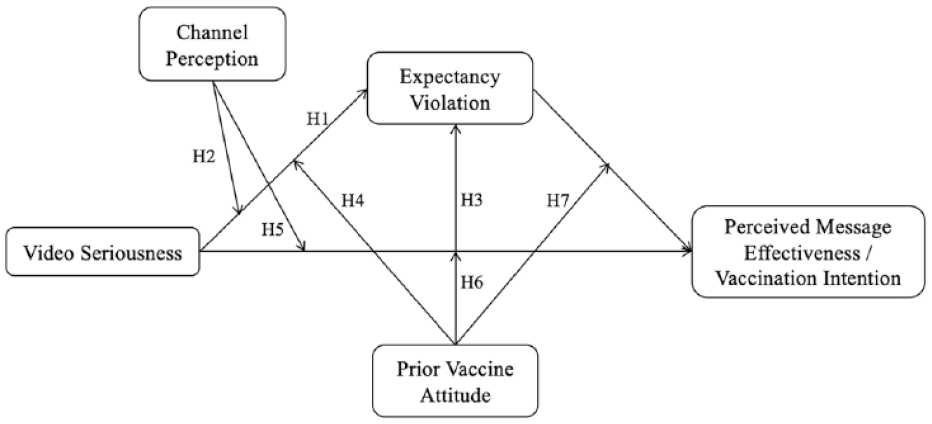
Summary of Hypotheses.
Method
Study Design and Procedure
A between-subject study was conducted online to induce a variance in the seriousness of TikTok videos and examine its effects on expectancy violation and persuasive outcomes. A total of six videos featuring more or less serious COVID-19 vaccination messages were selected. Three videos contained informative, explicit vaccine messages without any creative executions whereas the other three videos featured vaccine messages with more entertaining, TikTok-style executions including singing, dancing, and animation. Participants first answered questions about their perceptions of the COVID-19 pandemic, prior attitudes toward COVID-19 vaccination, general TikTok usage, as well as their prior channel perceptions of TikTok. Afterwards, participants were randomly assigned to watch one of the six videos. They were not allowed to move on to the next page until the video finished playing. They spent on average 108.62 seconds to watch the video (SD = 79.29). The stimuli exposure was followed by a post-questionnaire including the perceived seriousness of the TikTok video they watched, expectancy violation participants experienced while watching the video, message effectiveness of the video, and future vaccine-related intentions. Finally, participants answered demographic and vaccine-status questions.
Stimulus
Six videos with pro-vaccination themes were gathered from TikTok and used as stimuli in the study; three videos highlighted informative, explicit vaccine messages without any whimsical executions while the other three featured fun and lively audiovisuals including dancing, singing, and animation. Specifically, the three more serious videos include (a) a nurse recording the beeping sounds in ICU (Intensive Care Units), which represents the red alarms activated by unvaccinated patients starving for oxygen, (b) a medical doctor informing the audience of vaccines’ safety and effectiveness with “real-world data,” and (c) Megan Alexandra Blankenbiller warning her followers about the detrimental consequence of vaccine-hesitancy while being hospitalized in her final days. The three less serious videos include (d) a nurse dancing to a popular song with statistics showing vaccines’ efficacy on the screen, (e) a medical doctor reacting to an animated cartoon that personifies body cells to illustrate how and why vaccine works, and (f) a Washington Post employee doing a funny dance at home to relay CDC’s message about the safety and benefits of vaccines. Shorter videos (b, d, and f in the above list) were edited into 1 min with a few rounds of repetition to ensure that all participants have at least 1 min to watch and process the content.
Participants
A total of 211 participants completed the survey. Participants were recruited from a participation pool at a large public university in the United States. They received course credit as an incentive. Right after participants finished watching a TikTok video, they answered an attention check question asking them to specify the message source of the TikTok video that they just watched (e.g., a medical doctor, patient, nurse, etc.). Participants who failed to provide a correct answer were excluded from analyses. As a result, our final sample included 189 participants. Among participants, 134 (70.9%) self-identified as female, 52 (27.5%) as male, and 3 (1.6%) as nonbinary or preferred not to answer. Participants’ age ranged from 17 to 29 years (M = 19.82, SD = 1.41). Most participants were Caucasian (41.3%), followed by Hispanic (29.1%), Asian (17.5%), and African American (4.2%). Most participants (89.9%; N = 169) were fully vaccinated, two participants received their first dose (1.1%), and 17 participants (9%) answered they had not been vaccinated at the point of data collection.
Measurement
Perceived Seriousness
Perceived seriousness was measured by how well the following words describe the video content they just watched on a 5-point scale of describes very poorly = 1; describes very well = 5 (Nabi et al., 2007): “Important,” “Serious,” and “Informative” (M = 3.90, SD = 1.06, skewness = -.90, kurtosis = .07; Cronbach’s α = .87).
Expectancy Violation
Expectancy violation was measured by three items (Averbeck, 2010). Participants indicated the degree of agreement with the following: “This message from TikTok was completely unexpected,” “This message from TikTok was not expected at all,” and “This message from TikTok surprised me a great deal” (M = 2.46, SD = 1.08, α = .93; skewness = .37, kurtosis = −.59; Strongly disagree = 1; Strongly agree = 5).
Moderating Variables
TikTok perceptions as a fun channel were measured by four items. Participants responded with their expectations of TikTok with the following prompt in the pre-questionnaire: “In general, TikTok is a _____ medium”; “Interesting” “Entertaining,” “Fun,” and “Enjoyable” (Strongly disagree=1; Strongly agree=5) (M = 4.44, SD = .62, α = .91; skewness = −1.03, kurtosis = .78).
Prior attitudes toward vaccination in the pre-questionnaire were measured by four items adapted from Sherman et al. (2021): “I would be worried about experiencing side effects from a coronavirus vaccination,” “A coronavirus vaccination will be too new for me to be confident about getting vaccinated,” “I might regret getting a coronavirus vaccination if I later experienced side effects from the vaccination,” and “A coronavirus vaccination could give me coronavirus” (M = 2.88, SD = 1.42, α = .80) (Strongly disagree = 1; Strongly agree = 7). The scores were later reverse-coded so that a higher score in this scale refers to more positive attitudes toward vaccination (M = 5.12, SD = 1.42, α = .80, skewness = −.76, kurtosis = .29).
Dependent Variables
Four items measured the perceived message effectiveness of the TikTok videos (Rhodes et al., 2008): “I thought the message was persuasive,” “I thought the message was convincing,” “I think users would be persuaded by these messages,” and “I think users would find these messages to be convincing” (M = 3.67, SD = 1.09, α = .94; skewness = −.65, kurtosis = −.21; Strongly disagree = 1; Strongly agree = 5). Vaccination-related intentions were measured by three questions: 1 How likely is it that you will take or keep taking a COVID-19 vaccine in the future? How likely is it that you will recommend COVID-19 vaccines to others in the future? How likely is it that you will look for more information about COVID-19 vaccines in the future? (M = 5.83, SD = 1.40, α = .86; skewness = −1.39, kurtosis = 1.48; Not likely at all = 1; Very likely = 7).
Control Variables
Four variables that could influence message perceptions were controlled for: whether participants watched the same TikTok video before (=1) or not (=0); whether the stimulus video repeated itself or not due to its short length (repeated = 1, not repeated = 0); participants’ gender (coded as female = 1 vs. nonfemale = 0 in the data; 134 females); whether they are fully vaccinated against COVID-19 (coded as 1; n = 169) or not (coded as 0; n = 19). Table 1 reports zero-order correlations among the variables in the study.
Correlation Among Key Variables.
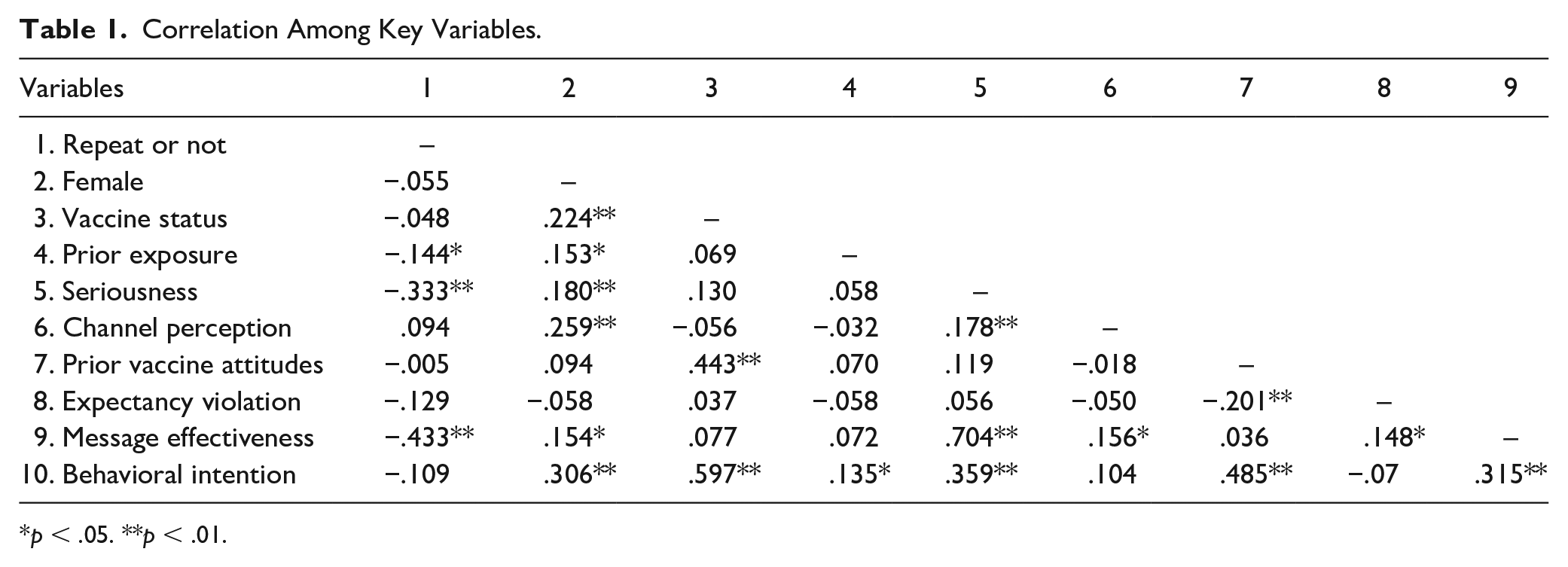
p < .05. **p < .01.
Results
Data Analysis
A series of multiple linear regression analysis was conducted to examine the hypotheses. All predictors were mean-centered before entering the analysis. Two-way interaction terms were created by multiplying the mean-centered variables. One-way analysis of variance (ANOVA) was employed to examine mean difference in seriousness of the six videos.
Variation in Perceived Seriousness
One-way ANOVA was conducted to analyze mean difference in seriousness among the six videos. As intended, the six videos led to a significant variation in seriousness: F (5, 183) = 15.33, p < .001. The three more serious videos—a nurse recording the beeping sounds in ICU (M = 4.61, SD = .85; n = 35), an influencer warning her followers while being hospitalized (M = 4.37, SD = .64; n = 34), and a medical doctor informing the audience of vaccines’ safety and effectiveness (M = 4.12, SD = .95; n = 34)—scored top three as intended. The three less serious videos—a medical doctor reacting to an animated cartoon (M = 3.74, SD = .79; n = 27), a nurse dancing with statistics in the background (M = 3.44, SD = 1.26; n = 30), and a Washington Post employee doing a funny dance at home to relay the CDC’s vaccine message (M = 2.91, SD = .82; n = 29)—were rated as less serious. A Tukey post hoc test confirmed that the first two videos (a nurse in ICU and an influencer) were significantly more serious than the last two videos (a nurse and a WP employee dancing), with the remaining two videos scored in-between.
Expectancy Violation
A multiple linear regression analysis was conducted with the four control variables mentioned above, perceived seriousness of video, prior TikTok perception as a fun channel, prior vaccine attitudes, and all two-way interaction terms among the three predictors (Table 2). Expectancy violation was tested as the dependent variable. The result showed that perceived seriousness of video itself was not significantly associated with expectancy violation, β = .09, t = 1.08, p = .28. Thus, H1 was not supported.
Multiple Linear Regression Result of Expectancy Violation.
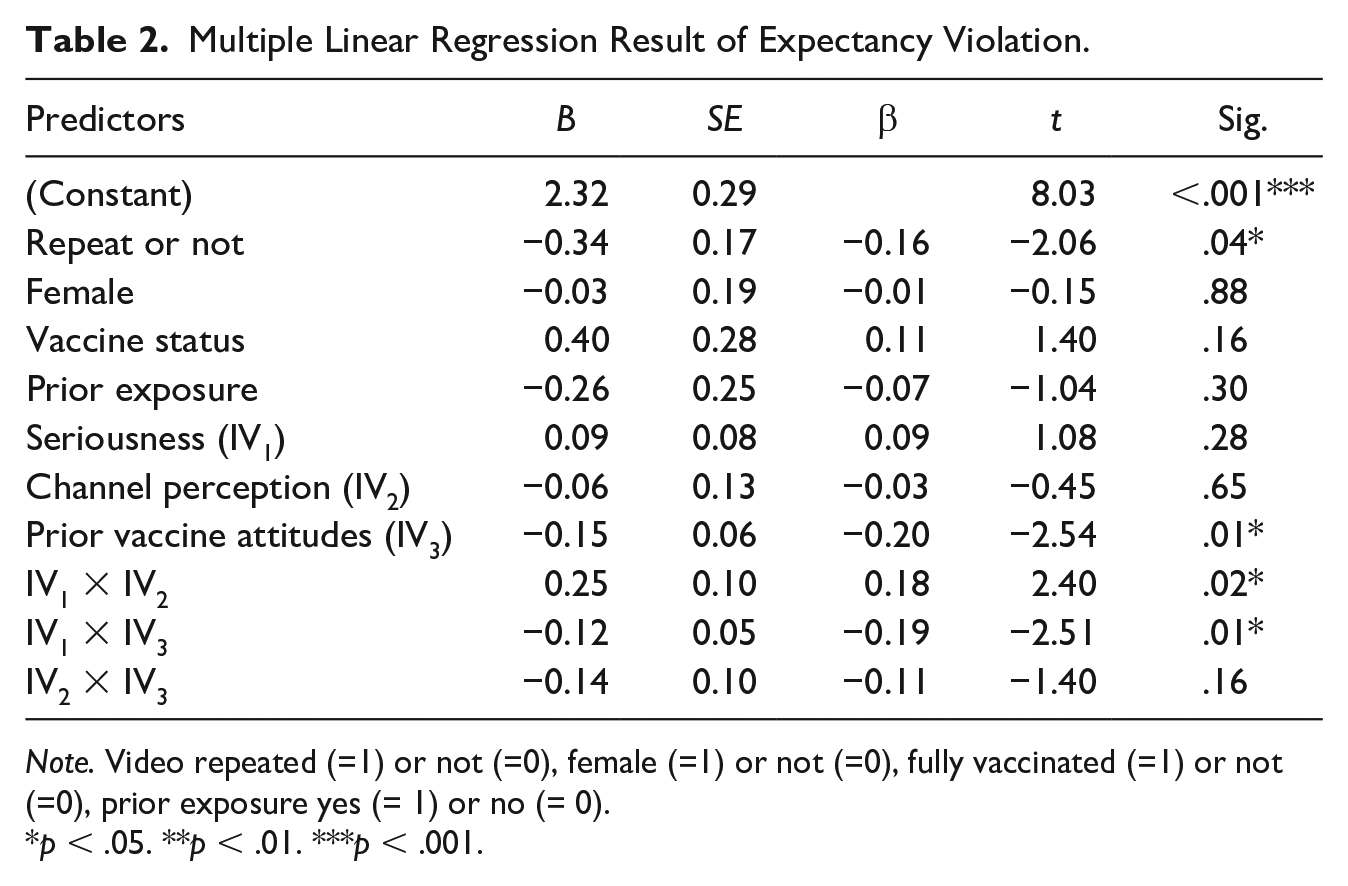
Note. Video repeated (=1) or not (=0), female (=1) or not (=0), fully vaccinated (=1) or not (=0), prior exposure yes (= 1) or no (= 0).
p < .05. **p < .01. ***p < .001.
However, there was a significant interaction between the perceived seriousness of video and prior perception of TikTok as a fun channel, β = .18, t = 2.40, p = .02. Among those who had lower perception of TikTok as an entertaining channel (less than the median value), seriousness of video was not associated with expectancy violation. Only among those who had higher perception of TikTok as an entertaining channel (more than the median value), expectancy violation was enhanced as the seriousness of video increased. Thus, H2 was supported (Figure 2).
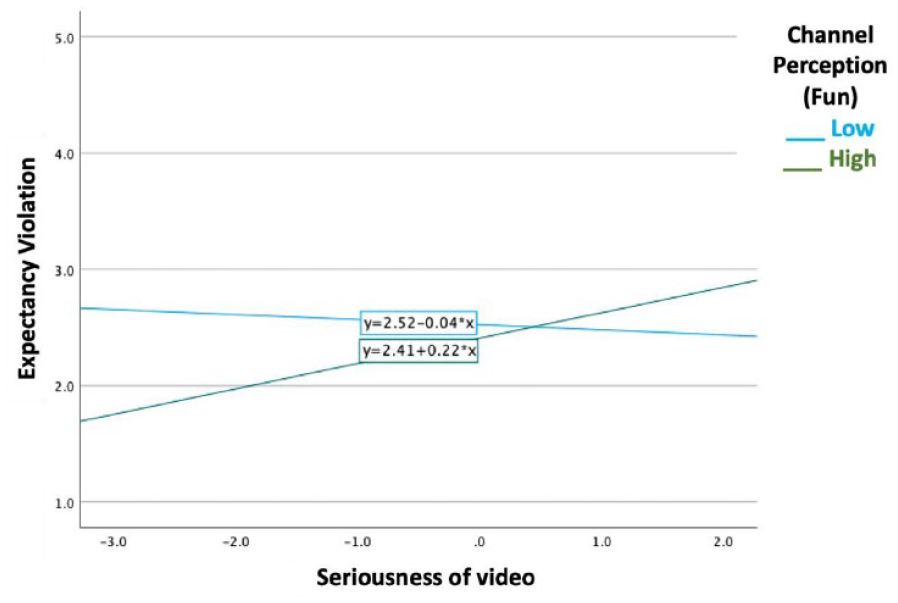
An Interaction Between TikTok Channel Perceptions and Video Seriousness on Expectancy Violation.
The same regression analysis also revealed the significant main effect of prior vaccine attitudes on expectancy violation, β = −.20, t = −2.54, p = .01. Those who held more negative attitudes toward vaccination experienced greater expectancy violation in general as hypothesized in H3. Thus, H3 was supported.
A significant interaction emerged between the seriousness of video and prior vaccine attitudes as well, β = −.19, t = −2.51, p = .013. Those who initially held more negative vaccine beliefs (e.g., beliefs on potential side effects of COVID-19 vaccines) reported being more unexpectedly surprised by the pro-vaccination videos as the seriousness of video increased. The interaction was further probed by dividing respondents into three groups: high vaccine attitudes (higher than M+1SD), medium vaccine attitudes (between M+1SD and M−1SD), and low vaccine attitudes (lower than M−1SD). Only for those who held lower (negative) vaccine attitudes, expectancy violation was enhanced as the seriousness of TikTok video increased. For the medium-attitude group, the impact of the seriousness of video was negligible. For the high (positive) vaccine attitude group, expectancy violation actually decreased as the seriousness of TikTok increased. Thus, H4 was supported (Figure 3).
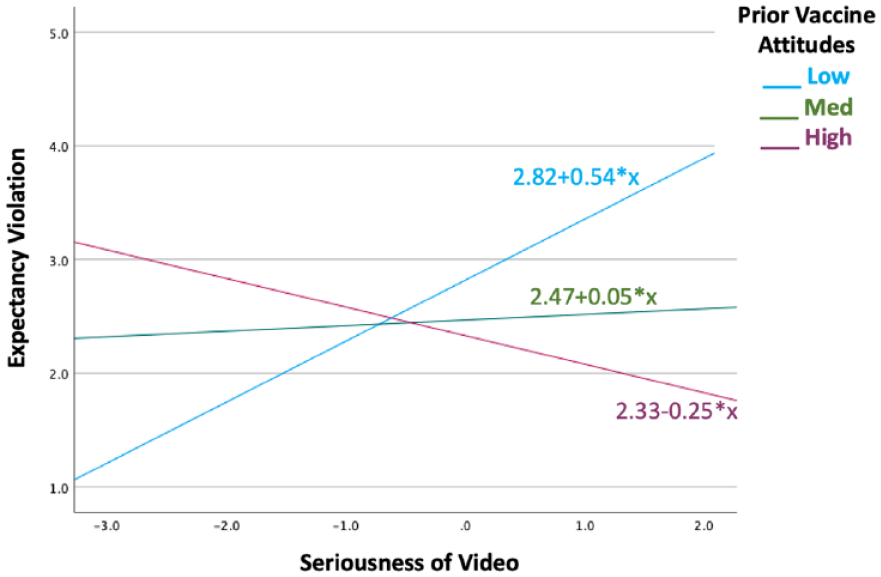
An Interaction Between Prior Vaccine Attitudes and Video Seriousness on Expectancy Violation (Higher Vaccine Attitude Scores Mean More Positive Attitudes Toward Vaccination).
Perceived Message Effectiveness and Vaccine-Related Intentions
H5 and H6 were examined by the same multiple linear regression model except message effectiveness and vaccine-related intentions entered as the dependent variables. In both analyses, the perceived seriousness of video, prior TikTok perception as a fun channel, prior vaccine attitudes (all mean-centered), and their interaction terms entered the model as exogenous variables. The four control variables also entered the model (Table 3).
Multiple Linear Regression Result of Message Effectiveness.
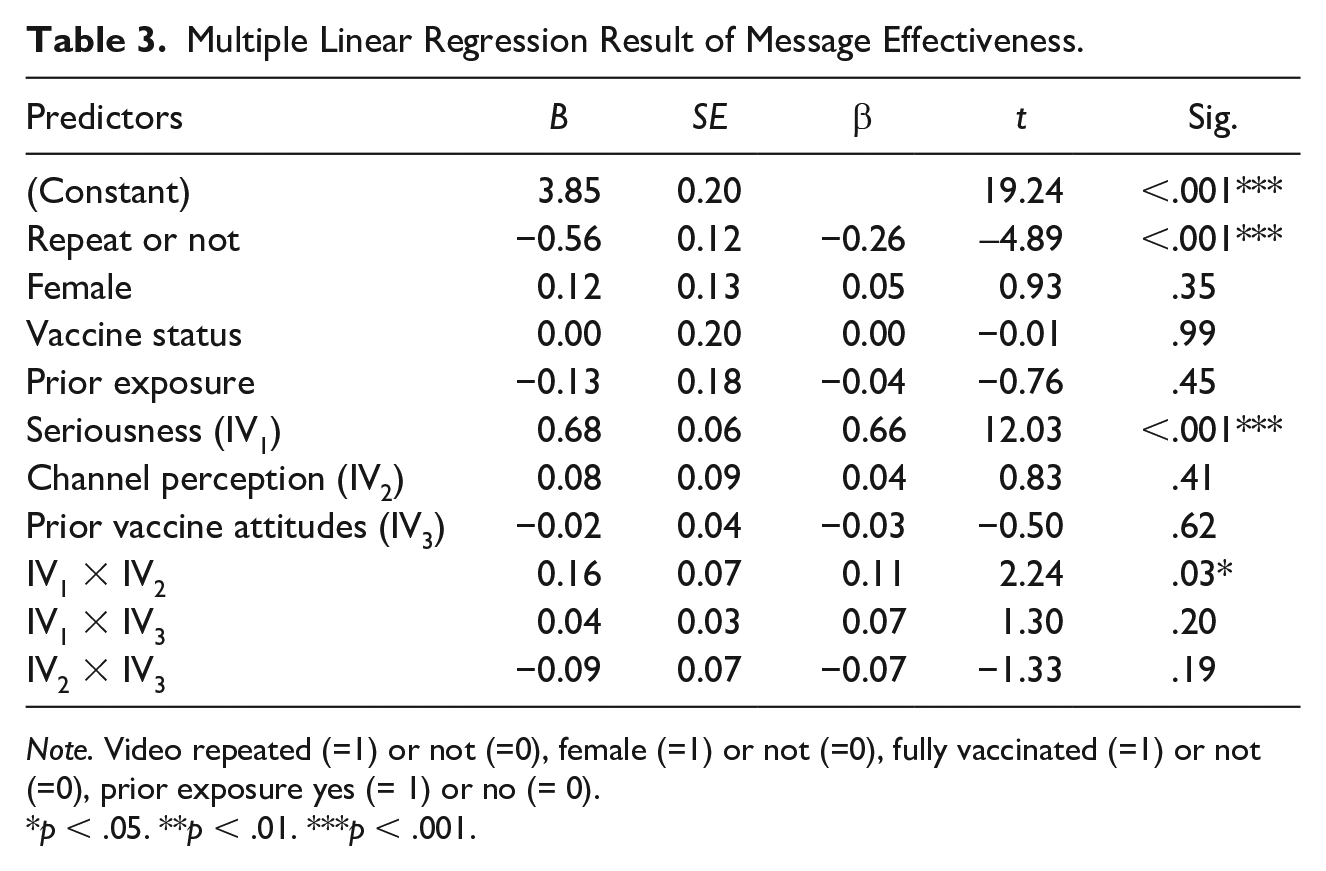
Note. Video repeated (=1) or not (=0), female (=1) or not (=0), fully vaccinated (=1) or not (=0), prior exposure yes (= 1) or no (= 0).
p < .05. **p < .01. ***p < .001.
Result showed that the perceived seriousness of video positively influenced message effectiveness; β = .66, t = 12.03, p < .001. The effect of seriousness was also significantly moderated by prior TikTok channel perception; among those who had higher perception of TikTok as an entertaining channel (more than the median value), seriousness of video was more strongly associated with message effectiveness, β = .11, t = 2.24, p = .03 (Figure 4). Thus, H5a was supported.
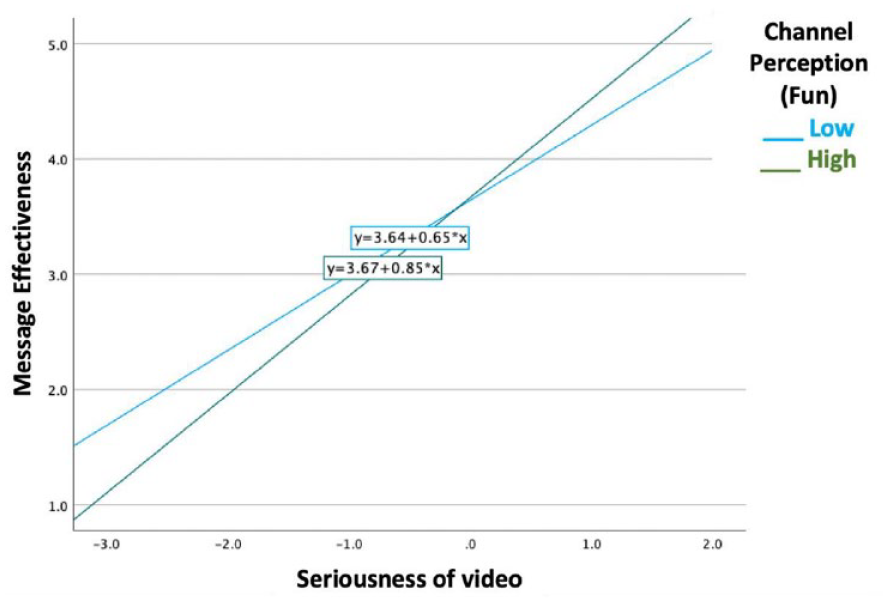
An Interaction Between TikTok Channel Perceptions and Video Seriousness on Message Effectiveness.
However, there was no significant interaction between prior vaccine attitudes and the perceived seriousness of video on message effectiveness, β = .07, t = 1.30, p = .20. Thus, H5b was not supported.
Vaccine-related intentions were regressed on the same set of exogenous variables and control variables. Again, perceived seriousness of video was positively associated with vaccine-related intentions; β = .21, t = 3.53, p < .001. This time, the two-way interaction between prior TikTok channel perception and seriousness of video was not significant, β = −.10, t = −1.74, p = .08. Thus, H6a was not supported.
However, the positive effect of seriousness was more pronounced for those who have lower (more negative) prior vaccine attitudes, as indicated by the significant two-way interaction between the perceived seriousness of video and prior vaccine attitudes, β = −.12, t = −2.20, p = .03 (Figure 5). As prior vaccine attitudes become more negative, the positive effect of seriousness on vaccine-related intentions tends to become stronger. Thus, H6b was supported (Table 4).
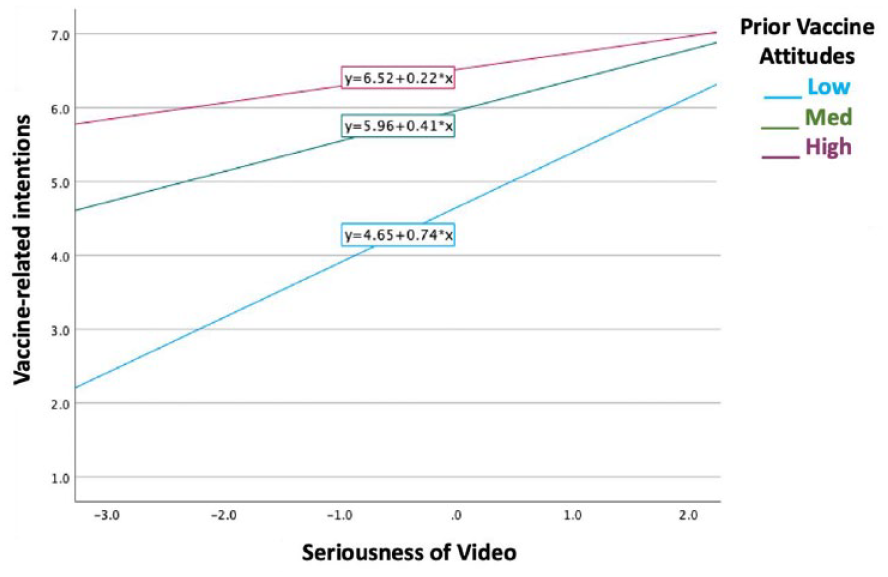
An Interaction Between Prior Vaccine Attitudes and Video Seriousness on Vaccine-Related Intentions (Higher Vaccine Attitude Scores Mean More Positive Attitudes Toward Vaccination).
Multiple Linear Regression Result of Vaccine-Related Intention.
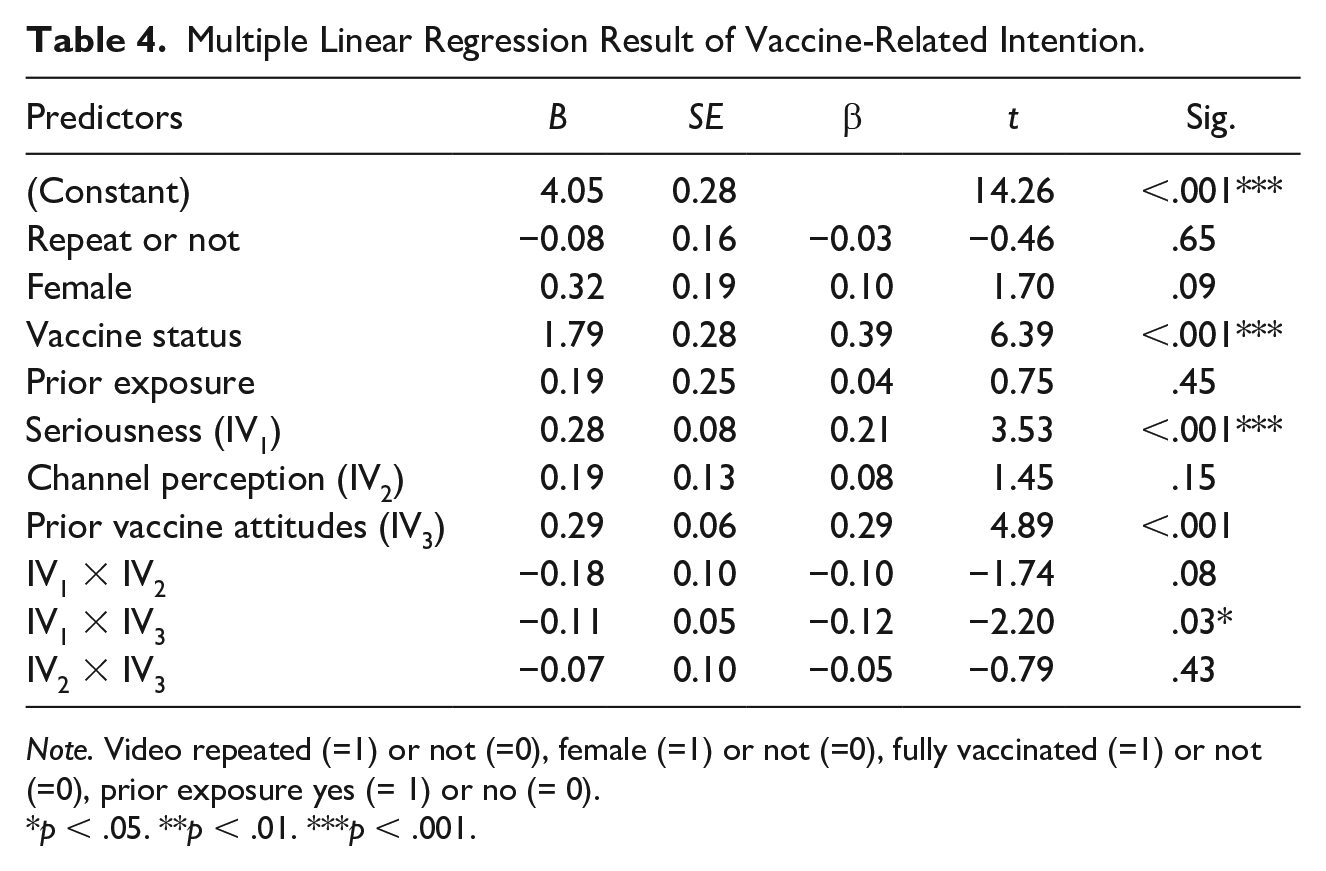
Note. Video repeated (=1) or not (=0), female (=1) or not (=0), fully vaccinated (=1) or not (=0), prior exposure yes (= 1) or no (= 0).
p < .05. **p < .01. ***p < .001.
H7 was examined by a multiple linear regression analysis with expectancy violation and prior vaccine attitudes (all mean-centered) as well as their interaction term as exogenous variables. The four control variables also entered the model. Prior TikTok perceptions were controlled for. First, message effectiveness was examined as the dependent variable. The result showed that expectancy violation itself was not significantly associated with perceived effectiveness of the vaccination messages, β = .08, t = 1.18, p = .24 (Table 3). However, the interaction between expectancy violation and prior vaccine attitudes was highly significant, β = −.19, t = −2.90, p = .004. The interaction was probed by dividing respondents into three groups: high vaccine attitudes (higher than M+1SD), medium vaccine attitudes (between M+1SD and M−1SD), and low vaccine attitudes (lower than M−1SD). Only for those who held low (i.e., negative) vaccine attitudes, expectancy violation increased message effectiveness (Figure 6). Thus, H7a was supported.
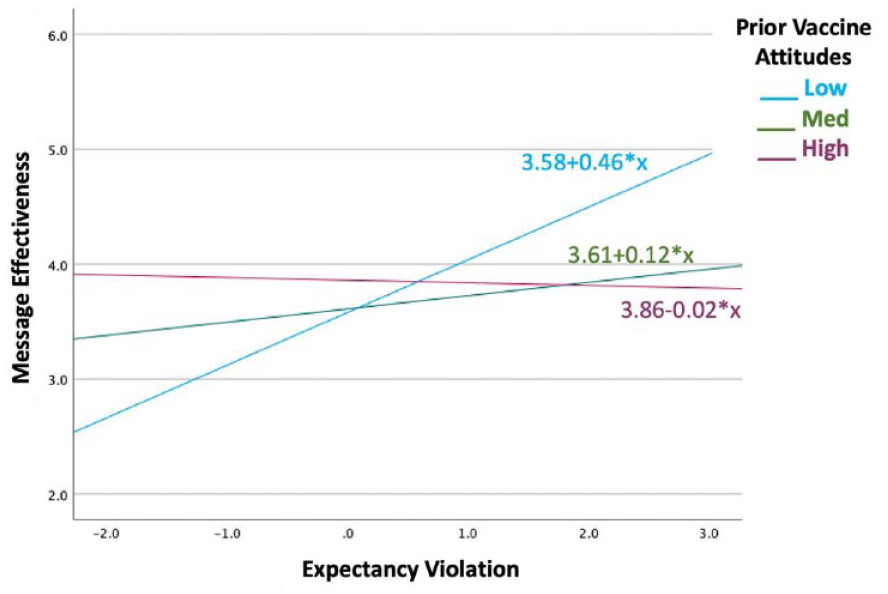
An Interaction Between Expectancy Violation and Prior Vaccine Attitudes on Message Effectiveness (Higher Vaccine Attitude Scores Mean More Positive Attitudes Toward Vaccination).
H7b was examined by the same multiple linear model as H7a except that vaccine-related intentions entered as the dependent variable. Again, the interaction between expectancy violation and prior vaccine attitudes was significant, β = −.16, t = −2.74, p = .007. Only among those who held negative (lower than 1 SD from mean) vaccine attitudes, expectancy violation positively predicted vaccine-related intentions (Figure 7). Among those who held positive vaccine attitudes, expectancy violation decreased vaccine-related intentions. Thus, H7b was also supported.
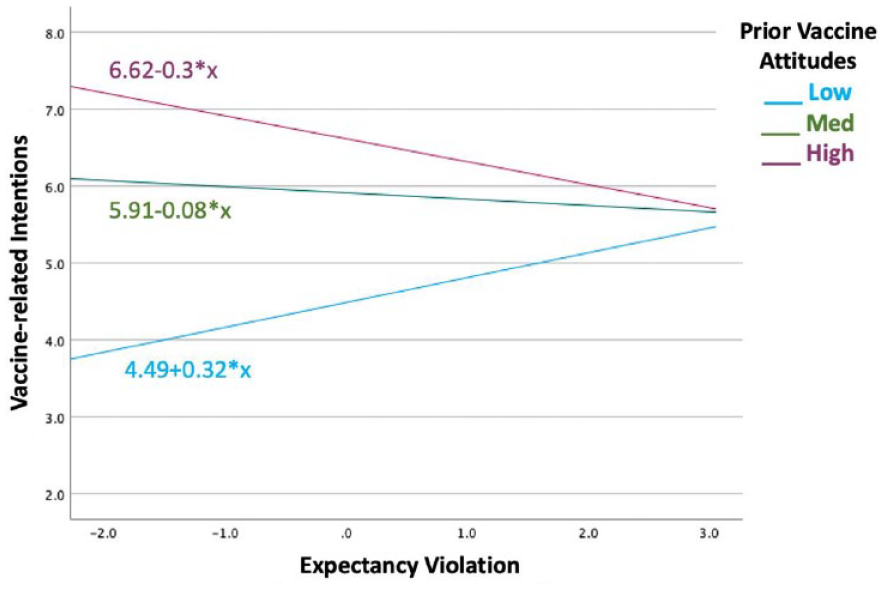
An Interaction Between Expectancy Violation and Prior Vaccine Attitudes on Vaccine-Related Intentions (Higher Vaccine Attitude Scores Mean More Positive Attitudes Toward Vaccination).
Discussion
The current study examined how users respond to unusually serious COVID-19 vaccination messages on TikTok, and how the messages’ effectiveness is influenced by their prior expectations of TikTok as a channel for entertainment as well as prior vaccine attitudes based on the EVT. In our study, expectancy violation was prominently observed in two groups of participants: those who held more negative vaccine attitudes and those who had a higher perception of TikTok as a channel for entertainment. These two groups reported being more unexpectedly surprised as the seriousness of TikTok videos increased. As a result, those who had a higher perception of TikTok as a fun channel perceived the serious videos to be more effective. In addition, those who held more negative vaccine attitudes showed greater vaccine-related intentions after watching more serious videos. Especially, expectancy violation was a positive, significant predictor of message effectiveness and vaccine-related intentions among those who initially held more negative vaccine attitudes.
We initially hypothesized that users carry expectations of TikTok as a communication channel mainly for entertainment and lighthearted humor, and these expectations would be violated when they encounter solemn health information that highlights the importance of vaccination. However, the result showed that this hypothesis was supported only if the audience initially held “fun” channel perceptions for TikTok. This finding provides a significant insight for understanding what users expect from TikTok and how that expectation can be leveraged as a tool for science communication. Serious, straightforward vaccine messages without creative executions do not always lead to expectancy violation on TikTok; these videos can work as an impactful strategy to draw attention only for the target audience who have stronger expectation for its entertaining functions. In other words, the perceived qualities of TikTok turned out to be more diverse than we initially thought—not all users expect TikTok to be a just-for-fun channel, and the degree to which they expect TikTok to be for fun can significantly moderate their response to serious vaccine messages on TikTok.
This finding also adds the unique context of HMI (human–machine interaction) to the predictive validity of EVT by showing that social media platforms like TikTok can also be perceived as if it had certain voices. Recent human–machine communication literature suggests that individuals find social cues and signals while interacting with media technologies and assign them human characteristics such as personalities (e.g., Alexa is humorous) or social identities (e.g., Alexa is a companion) (Cho & Sundar, 2022). When the expectations about TikTok’s whimsical voice are violated, the expectancy violation can serve a similar attention-grabbing role as a humorous communicator suddenly surprising audiences with serious social messages.
Such attribution of the violation broadens the scope of what constitutes a source capable of enacting expectancies in EVT as well as the behaviors that violate these expectancies. On one hand, many EVT studies focused on interactive virtual agents with explicit anthropomorphic qualities (Gnewuch et al., 2022; Lew & Walther, 2023). In contrast, our study internalized the interactive affordance of TikTok as a social media platform and demonstrated that even with passive consumption of videos, participants’ expectations of TikTok having a fun personality are robust enough to set the “stage” for the violation to unfold. On the other hand, prior research that applies EVT in the social media context mainly looked at expectations of other social media users or the posted content rather than the medium/channel itself (Rui & Stefanone, 2018; Tomasi et al., 2022). The current study is among the first to empirically measure and test perceptions of a social media channel (i.e., TikTok) with more implicit human attributes as a source of expectancy violation as if it were a human interactant in social encounters. Future research should investigate the underused function of TikTok as a content provider and explore what can enhance the potential of the platform in disseminating informative science messages.
The current study also adds more supporting evidence to the role of pre-existing attitudes in expectancy violation. Prior literature in EVT pointed out that individuals experience greater expectancy violation when the persuasive messages are inconsistent with their perspectives (Campo et al., 2004; Yuan et al., 2019), supporting the role of prescriptive expectations. In the current study, those who initially had negative vaccination attitudes were typically concerned about the vaccine’s side effects. For these users, more serious TikTok videos explicitly promoting vaccination came as a greater surprise. The source of expectancy violation in this case was probably the fact that the message’s stance on this topic was opposed to their prior beliefs, and the message was actually impactful to demonstrate how dire the pandemic situation was. Given that there was no interaction effect found between prior vaccine attitudes and prior TikTok channel perceptions, this impact of prior attitudes successfully delineates another source of expectancy violation apart from the inconsistency between the channel perceptions and its serious messages.
More importantly, our result showed that this type of expectancy violation that is originated from different points of view could yield greater message effects. Supporting the EVT literature (Burgoon, 1993, 2016), our findings demonstrated that expectancy violation among those initially held more negative vaccine attitudes was positively associated with two persuasive outcomes: They perceived that the pro-vaccination messages were more convincing for themselves and others and displayed higher vaccine-related intentions. The sudden cognitive dissonance caused by expectancy violation encourages more attention to the cause of violation, distracting the audience from other factors in the persuasive context. Once expectation violation occurs, individuals assign greater cognitive resources to understand what kind of messages deserve such an unusual level of seriousness on TikTok.
Especially, the fact that expectancy violation was a positive predictor of persuasive outcomes among those who had negative attitudes toward vaccination implies that the valence of violation remained largely positive in our study. As we expected, the authentic, serious vaccination messages on TikTok provided a positively valenced surprise to those who haven’t thought of the vaccination issues deeply. However, this finding may also be attributed to the specific sample characteristics the current study had; younger audience who are already familiar with TikTok as an authentic, fun platform. Even though younger audience who are already familiar with the platform would be a reasonable choice to test expectations of the platform and their violation, it should be also noted that the findings of the current study can be applied only to the limited target audience characteristics.
It is also noteworthy that message effectiveness and vaccine-related intentions are moderated by different individual characteristics. Whereas the effect of video seriousness on message effectiveness was enhanced for those who had higher fun perception for TikTok, their vaccination intentions were not significantly influenced by video seriousness. In contrast, the effect of video seriousness on vaccine intentions was prominent for those who initially held negative attitudes toward vaccines, but their message effectiveness was not adjusted by video seriousness. For those who expected to see entertaining content on TikTok, serious vaccine videos were probably novel enough to feel persuasive, but not novel enough to change their vaccine intentions. In addition, vaccine intentions may rely on individuals’ beliefs on the vaccine’s effectiveness instead of their perceptions of pro-vaccination messages. For those who initially held negative vaccine attitudes, unexpectedly serious and explicit vaccine messages were likely to shake their prior beliefs regarding the vaccine’s effectiveness or the risks of not getting vaccinated. Even though they may not admit that the serious pro-vaccine message felt persuasive, the explicit vaccine messages offered significantly contrasting views that led to expectancy violation—and it was the expectancy violation that positively predicted their vaccine intentions.
This finding also highlights the different roles of two types of expectancies in their persuasive potential, further solidifying the bridge between EVT and persuasion. Prior vaccine attitudes and TikTok channel perceptions were found to be two distinct sources of expectancy violation. There has been debate around what kind of expectancy connotes across application of EVT in various fields (Burgoon, 2015). To this end, our study complements prior scholarly efforts in distinguishing between predictive and prescriptive expectations (Floyd & Burgoon, 1999; Masullo et al., 2023; Song et al., 2022), with the former pertaining to what is “typical” of TikTok as a fun social media platform versus the latter (i.e., prior vaccine attitudes) reflecting what is “preferred” based on individuals’ existing schemas. Our finding implies that it is the prescriptive expectations that can exert a greater impact on intentions when violated.
Practical Implications
Our findings imply that straightforward science messages—videos with facts, evidence, and statistics—can be an effective strategy to draw attention to the controversial issues on creative video platforms like TikTok. Especially, the positive impact of expectancy violation on persuasive outcomes among those who held negative vaccine attitudes is encouraging news since prior studies have shown that individuals are not motivated to pay attention to the views that are different from their existing perspectives (Mills, 1965; Tagliacozzo, 1981). Our study suggests that unexpectedly serious messages on TikTok can provide an innovative way to approach the audience who otherwise would not consider listening to science behind vaccination.
In addition, the different patterns of persuasive effects between two groups of target audience (those who expect TikTok to be fun and those who have negative vaccine attitudes) call for more nuanced consideration of what type of violation to enact depending on the outcomes that science communicators seek to achieve. For instance, availing the incongruity between medium perceptions and the message tone could foster perceived message persuasiveness for oneself and others, which might be more fruitful for the campaigns geared toward social sharing of science messages. In contrast, if the campaign’s goal is to directly prompt individuals to opt for specific actions, focusing on surprising the audience segment who hold message-inconsistent attitudes might be more efficient to manifest the behavioral merits of positive violation.
We also observed a subtle negative effect of expectancy violation on vaccine-related intentions among those with already positive vaccine attitudes (Figure 7). Perhaps for those who do not need to be convinced further for vaccination, the extra cognitive efforts demanded by processing serious messages on a fun platform were merely perceived as bothersome, whereas those who perceive a discernable gap between what is believed and what is challenged could benefit from their need for closure activated by expectancy violation. Although future research is warranted to explicate the mechanism, our findings identified prior attitudes as a significant boundary condition for expectancy violation to work in favor for persuasion, cautioning science communicators to strategically implement such violation to avoid unintended consequences.
While TikTok was employed as a particular context to examine expectancy violation on social media, our findings suggest how such violation persuades beyond TikTok. We speculate that upon successful enactment of the violating act based on the right amount of deviation from expectancies, the persuasive potential of positive violation is likely to manifest across different social media channels. Since each channel carries a unique set of medium expectations, future research can explore expectancy violation induced by the interplay between perceived “voices” of other channels and their message tones. For instance, serious science communication on Instagram may have similar violation effects for those who perceive the channel as mainly for boosting self-images.
Limitations
Watching TikTok videos would be largely a rewarding experience to our college-student sample who may already have positive attitudes toward TikTok. Thus, relying on a college-student sample can limit the generalizability of our findings. For instance, we do not know how older individuals who are strongly opposed to vaccines would react to the serious TikTok messages that directly threaten their attitudes. The strength of their existing beliefs could potentially precipitate violation that crosses the threshold of discomfort and threat (Burgoon, 2015), negatively impacting their attitudes and behavioral intentions. Burgoon (2015) also points out that the valence of violation depends on the social value of the violator as well as the magnitude of deviation. In other words, for the older generation who does not necessarily appraise TikTok as a rewarding communicator to interact with, such strong violation induced by serious TikTok is likely to intensify their reactance. Future research can further probe where the boundary lies between benign and extreme violation to ensure positive communication outcomes.
Even though the current study used six different videos to cover several types of vaccine messages on TikTok, it cannot provide an exhaustive list of creative executions of vaccine messages on TikTok. Different types of videos may also introduce other types of emotions, such as disgust or sadness. Future research can investigate whether these emotional appeals would violate the medium expectations of TikTok in the same way or not. The current design maximizes the study’s ecological validity by using the existing TikTok videos to vary the seriousness of videos; as a result, however, video seriousness was measured instead of being manipulated, and our results are correlational. Future research is encouraged to devise a way to manipulate video seriousness of TikTok content and replicate our findings.
The cognitive mechanism of expectancy violation relies on the feelings of surprise and novelty, which brings out an inherent limitation when it is applied to sustainable persuasive outcomes for a long run campaign. In our study, even though young TikTok audience were surprised by serious science messages on TikTok at the beginning, as the campaign unfolds, repetitive exposure to similar messages would reduce the attention-grabbing effects of the serious messages. Future research should examine repeating exposure as another factor to moderate the persuasive effect of expectancy violation in order to extend the theory’s reliability.
Conclusion
TikTok has been considered as a channel for acting out, singing, dancing, and other buoyant topics, yet recent examples of its viral videos suggest that its popularity and wide reach can be leveraged for distributing science messages. The current study applied EVT to the context of TikTok use and found that expectancy violation can be induced in multiple ways: those who expected entertaining content from TikTok or those who were initially negative toward vaccination were particularly surprised by serious vaccination videos on TikTok. Those who perceived TikTok as a fun channel felt that the serious videos were more persuasive; those who had negative vaccine attitudes showed greater vaccine intentions after watching more serious videos. Especially, expectancy violation positively predicted message effectiveness and vaccine intentions among those who held negative vaccine attitudes, implying that expectancy violation encouraged these participants to process the underlying persuasive messages. As a unique, creative outlet for young audiences, TikTok will have a great potential for promoting science messages when its personality and user perceptions are better understood by future research.
Footnotes
Declaration of Conflicting Interests
The author(s) declared no potential conflicts of interest with respect to the research, authorship, and/or publication of this article.
Funding
The author(s) received no financial support for the research, authorship, and/or publication of this article.
