




Abstract
The objective of this scoping review was to map the impact of the COVID-19 pandemic on the paternal parenting experience. Studies published between January 2020 and October 2021 reporting on paternal mental health, interparental relations, and child interactions were eligible. Forty studies from 17 different countries were included. Most studies included data from both mothers and fathers (83%); five studies reported data from fathers only, and three examined same-sex partners. Most commonly reported outcomes included division of childcare activities (n = 14), delegation of household tasks (n = 10), depression (n = 12), and stress (n = 9). The impact of the COVID-19 pandemic on fathers varied globally with no clear trends except for the division of childcare and household tasks, in which fathers increased their contribution to childcare and household tasks yet mothers continued to experience a higher domestic burden. Further research is recommended to advance our understanding of how fathers coped during the COVID-19 pandemic and document the long-term impact of the pandemic on families.
The COVID-19 pandemic indisputably created a novel and unique challenge for families globally. Studies examining parental outcomes during the pandemic have reported increased depression and anxiety (Davenport et al., 2020), caregiving responsibilities (Calear et al., 2022), parenting stress (Taubman-Ben-Ari et al., 2021), and interparental relationship dissatisfaction (Pietromonaco & Overall, 2021). While families typically spent more time together during the pandemic due to public health recommendations to physically isolate and work-from-home, parental childcare activities also significantly increased (Calear et al., 2022). Daily routines for many children were disrupted as schools and childcare facilities closed, placing more responsibility on parents who may have already been struggling to balance the demands of work with parenting. With the addition of employment instability and decreased access to health care, poor parental mental health has also been reported (Gadermann et al., 2021).
Most research to date examining the impact of the COVID-19 pandemic on parents has focused primarily on mothers with limited attention synthesizing data on fathers and partners. The underrepresentation of this group in parenting research and clinical programming is not new (Tully et al., 2017) despite strong evidence suggesting the inclusion of fathers in programs not only has a direct beneficial effect but also has a positive impact on mothers, children, and the overall family unit (Frank et al., 2015; Plantin et al., 2011; Sarkadi et al., 2008; Wilson & Prior, 2011). To address this gap, a scoping review was undertaken to map the impact of the COVID-19 pandemic on fathers and partners in relation to their mental health, interparent relations, and father–child interactions.
Research Question
What was the impact of the COVID-19 pandemic among fathers/partners on the following outcomes:
a. Mental health (i.e., depression, stress, paternal burnout, anxiety, and social support)
b. Interparental relations (i.e., division of childcare responsibilities, division of household responsibilities, work–family conflict, co-parenting, relationship satisfaction, and family functioning)
c. Father–child interactions.
Method
This review was conducted following the PRISMA extension for Scoping Reviews (Tricco et al., 2018) and standard Joanna Briggs Institute scoping review methodology including the population, concept, and context framework (Arksey & O’Malley, 2005; Levac et al., 2010; Peters et al., 2015). A search of PROSPERO, MEDLINE, medRxiv, and Google Scholar was conducted and no current or underway systematic or scoping reviews on the topic were identified.
Population
This review considered studies that included participants who identified as a father or non-birthing partner at any stage of parenting, ranging from pregnancy (any gestation) to parent of a child up to 18 years old. While recognizing that not all families consist of a traditional mother–father dyad, this review used the term “father” to refer to all individuals who identified as the primary caregiver of a child to whom they did not give birth, thereby including heterosexual fathers and same-sex male couples. No geographical limitations were included. Studies that solely reported on maternal outcomes or parental outcomes without separating maternal/paternal data were excluded. Studies that used only maternal data reporting on paternal outcomes were also excluded (e.g., no proxy reporting was eligible).
Concept
This review sought to map the existing literature on parenting outcomes relevant to fathers in their role as a parent. Studies that reported on parents of children with specific health conditions (e.g., cancer, arthritis, learning disabilities) were excluded due to the unique challenges that may confound the pandemic’s impact on these parents.
Context
Due to the COVID-19 pandemic, there has been significant disruptions to parenting activities such as reduced access to childcare and increased social isolation. Little is known about the impact of the COVID-19 pandemic on the experience of fathers in relation to their mental health, interparental relationships, and father–child interactions. Studies that had a pre-COVID cohort and during-COVID cohort were included. Studies were excluded if they only reported on maternal outcomes, combined parental outcomes, were not published in English, or were conducted solely before January 2020.
Type of Sources
All research studies independent of design were included. Review articles identified through the search were checked for relevant primary articles but were not included in the final review.
Search Strategy
The following databases were searched on October 8, 2021: MEDLINE, Embase, CINAHL, Web of Science, and PsycINFO. The search strategy was developed in consultation with a health science librarian and was adapted for each information source using search terms for COVID-19 and fathers and partners. The search was limited to articles published after January 1, 2020, shortly after the COVID-19 pandemic emerged. The full search strategy is available in Appendix 1.
Study Selection
All identified search citations were uploaded to Covidence where titles, abstracts, and full texts were screened by two reviewers with disagreements solved through consensus or with a third reviewer. Reasons for exclusion at the full-text stage are reported in a PRISMA-ScR flow diagram (Tricco et al., 2018).
Data Extraction and Synthesis
Data were extracted by one reviewer and verified by another and included population, study methods, and outcome details. The findings are presented in narrative form and include tables and figures as appropriate.
Results
The search identified 4,808 articles after duplicates were removed through the automation process in Covidence. During the full-text screening stage, 307 articles were reviewed and 266 were excluded for reasons outlined in the PRISMA-ScR diagram, resulting in 40 studies meeting the inclusion criteria (see Figure 1).
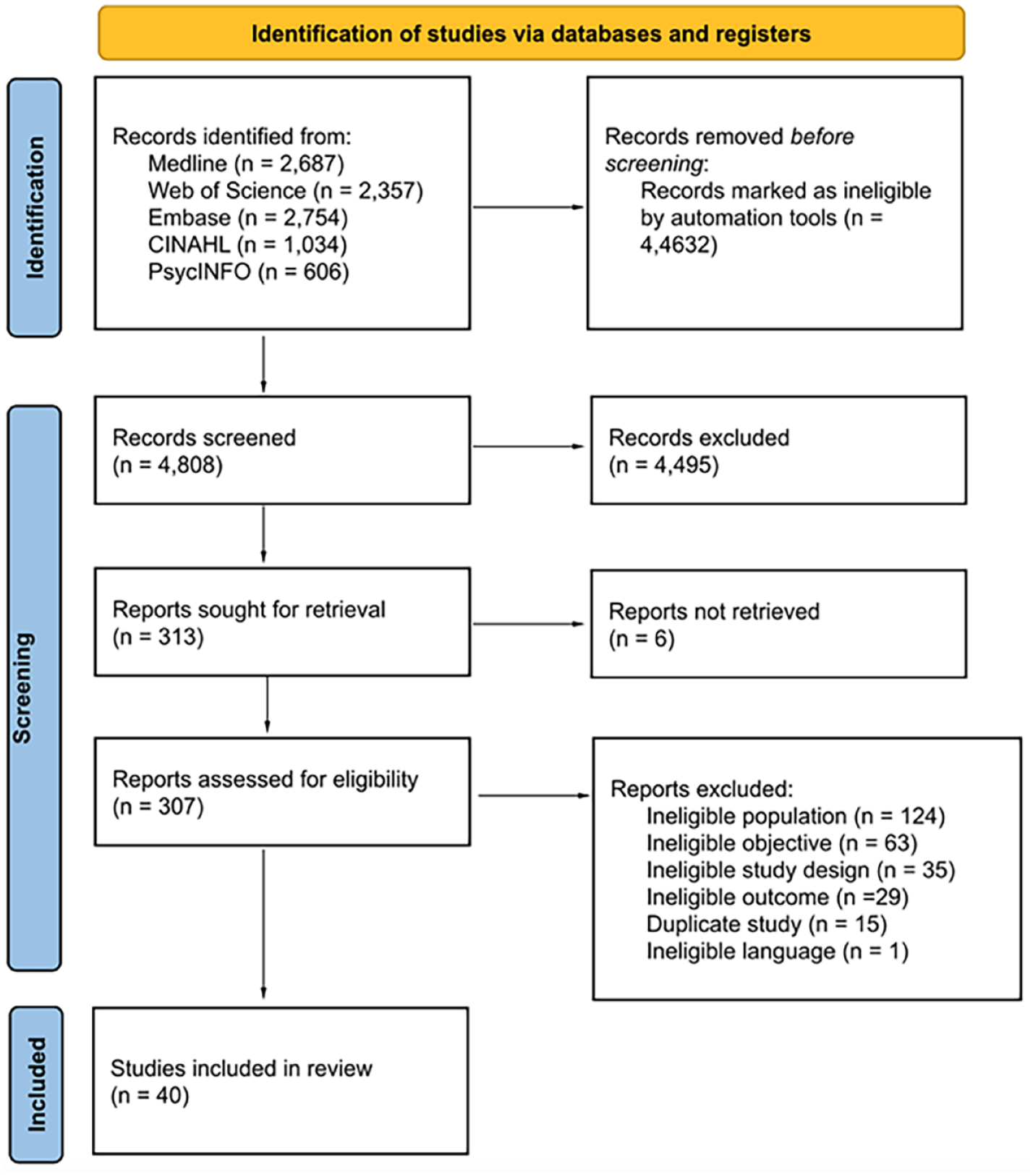
PRISMA Flow Diagram
Characteristics of Included Studies
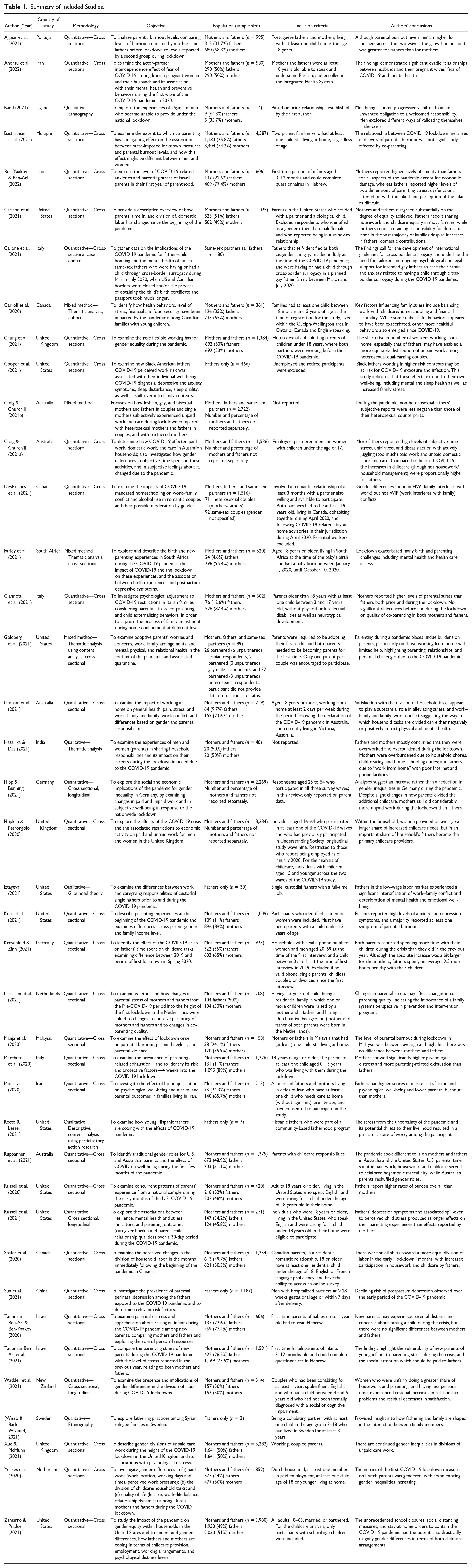
Among the 40 included studies, 11 (28%) were published in 2020 with the rest in 2021. As per Table 1, most of the study designs were quantitative (n = 31, 78%), with four studies utilizing mixed methods and five using a qualitative design. The majority of the quantitative studies used a cross-sectional design while the qualitative studies used a variety of approaches, including grounded theory and ethnography. Countries most represented were the United States (n = 10), Australia (n = 4), and Canada (n = 4) with a total of 17 different countries represented. Only one study included a global perspective. Most studies included data from both mothers and fathers (n = 34, 85%), while five studies reported on data from fathers only. Three studies reported on same-sex partners-two along with heterosexual couples (Craig & Churchill, 2021; Goldberg et al., 2021) and one solely on gay fathers (Carone et at., 2021). Sample sizes ranged from 3 to 4,587. Of the studies with mixed samples that provided the split between paternal and maternal respondents, the percentage of fathers ranged from 4.6% to 100% while four studies did not report the number of parental respondents separately.
Summary of Included Studies.
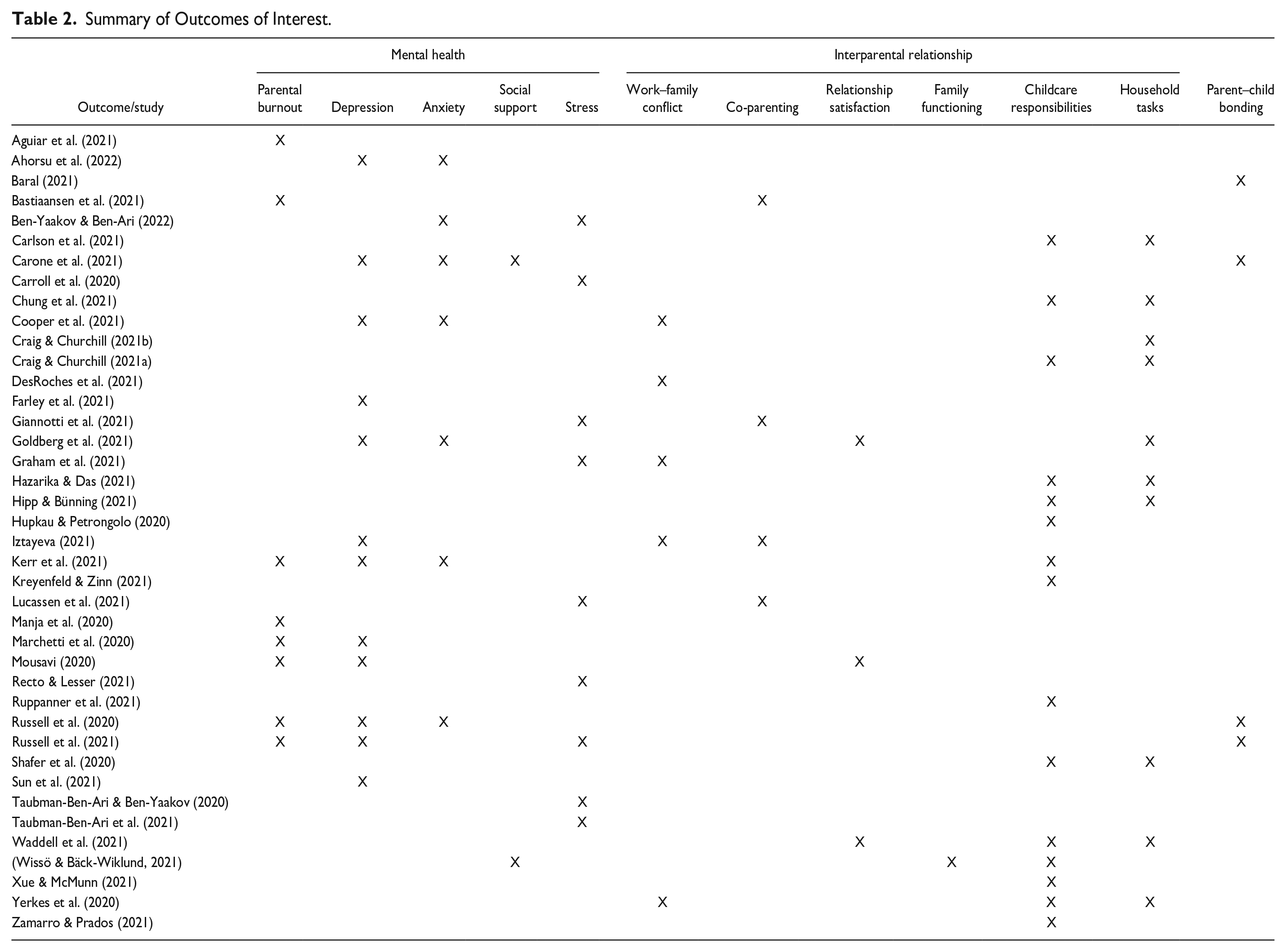
Studies reported on a variety of outcomes. Within the mental health category, depression was the most widely reported outcome in 12 studies, followed by stress (n = 9), parental burnout (n = 8), anxiety (n = 7), and a lack of social support (n = 2). For interparental relationships, the most frequently reported outcome included division of childcare responsibilities (n = 15) and delegation of household tasks (n = 10), followed by work–family conflict (n = 5), co-parenting activities (n = 4), relationship satisfaction (n = 3), and family functioning (n = 1). Four studies reported on father–child interactions. Table 2 provides a summary of study outcomes. A summary of measures used to assess mental health outcomes are available in Appendix 2 and those used to assess interparental relationships are available in Appendix 3.
Summary of Outcomes of Interest.
Mental Health
Depression
Twelve studies reported on depression, of which, seven were conducted in the United States or Canada, two in Iran, and one each in South Africa, Italy, and China. Two studies conducted in Italy and Iran found maternal depression symptoms were higher than those reported by fathers (Marchetti et al., 2020; Mousavi, 2020), while two studies in the U.S. reported fathers had greater symptomatology than mothers (Russell et al., 2020, 2021) and one U.S. study found no difference (Kerr et al., 2021). In terms of prevalence, Sun et al. (2021) found rates of postpartum depression to be 13.8% among Chinese fathers while Farley et al. (2021) reported 29% of South African fathers had minor depressive symptoms and 25% had probable depression. Thirty-nine percent of same-sex male couples with children in a U.S. study indicated their mental health worsen during the COVID-19 pandemic and that they currently were still experiencing heightened levels of depression, anxiety, and stress than before the pandemic (Goldberg et al., 2021).
Fathers working in high-risk settings (e.g., essential, frontline) had more depression symptoms than those working in low-risk settings (Cooper et al., 2021), and COVID-19-related fear was also associated with higher rates of depression among men with pregnant partners (Ahorsu et al., 2022). Same-sex fathers who were having or had a child during the COVID-19 pandemic reported more severe depression compared with same-sex fathers who had a child prior to the pandemic, although both groups scored below the clinical cut-off (Carone et al., 2021). In the only qualitative study with custodial single fathers, blurred boundaries between work and family life, social isolation, economic strain, fear of contracting COVID-19, and overall future uncertainty together negatively affected paternal mental health (Iztayeva, 2021).
Parenting Stress
Nine studies reported on parenting stress. While one Israeli study found no significant difference in perceived parenting stress between mothers and fathers (Taubman-Ben-Ari & Ben-Yaakov, 2020), another Israeli study reported fathers had significantly higher levels of parenting stress than mothers (Taubman-Ben-Ari et al., 2021), and a third Israeli study found fathers of older infants (7–12 months) had higher levels of parenting stress than mothers, but no differences were found among those with younger infants (0–6 months; Ben-Yaakov & Ben-Ari, 2022). Looking more globally, a Canadian study reported moderately high levels of parenting stress among both parents (Carroll et al., 2020), three studies from Italy, Australia, and the U.S. reported fathers had lower parenting stress than mothers (Giannotti et al., 2021; Graham et al., 2021; Russell et al., 2021), and one study from the Netherlands reported that both mothers and fathers experienced an increase in parenting stress from before the pandemic to during the pandemic (Lucassen et al., 2021). In two qualitative studies, Canadian and American fathers noted an increase in stress and isolation related to the pandemic (Carroll et al., 2020; Recto & Lesser, 2021).
Parental Burnout
Eight studies reported on parental burnout, of which five reported fathers had lower parenting-related burnout than mothers, with similar findings from Portugal, the U.S., Italy, Iran, and a global survey (Aguiar et al., 2021; Bastiaansen et al., 2021; Kerr et al., 2021; Marchetti et al., 2020; Mousavi, 2020). Conversely, one U.S. study found fathers had higher parenting-related burnout scores than mothers (Russell et al., 2020) and two studies from the U.S. and Malaysia found no significant differences between parents (Manja et al., 2020; Russell et al., 2021).
Anxiety
Seven studies reported on anxiety, five of which were conducted in North America. When comparing differences between parents, two studies found Israeli and American fathers had lower anxiety than mothers (Ben-Yaakov & Ben-Ari, 2022; Kerr et al., 2021) and one U.S. study found no differences (Russell et al., 2020). American fathers working in high-risk settings (e.g., essential, frontlines) had greater anxiety than those employed in low-risk settings (Cooper et al., 2021), and one Iranian study found COVID-19-related fear was associated with higher anxiety among men with pregnant partners (Ahorsu et al., 2022). Fathers in same-sex relationships who were having or had a child during the COVID-19 pandemic reported more severe anxiety compared with gay fathers who had a child prior to the pandemic (Carone et al., 2021). Furthermore, same-sex parents interviewed in a qualitative study indicated that they were worried about their mental health and reported high generalized anxiety about the uncertainty of their future due to the pandemic (Goldberg et al., 2021).
Social Support
Two studies reported on social support. One study found no differences in perceived social support among gay fathers in the U.S. and Canada before and during the pandemic (Carone et al., 2021). A qualitative study with Syrian refugee fathers found the supportive networks they were used to in Syria no longer existed for them in Sweden, which had an overall negative effect on them (Wissö & Bäck-Wiklund, 2021).
Interparental Relations
Division of Childcare Responsibilities
Fifteen studies reported on division of childcare responsibilities, with all except one (India) conducted in high-income countries (e.g., the U.S., the Netherlands, Australia, the United Kingdom). While three studies found parental sharing of childcare responsibilities increased toward equality during the pandemic (Carlson et al., 2021; Craig & Churchill, 2021a; Shafer et al., 2020), eight studies reported mothers continued to spend more time on childcare than fathers (Kerr et al., 2021; Waddell et al., 2021; Xue & McMunn, 2021; Zamarro & Prados, 2021), even if paternal time spent on childcare increased (Hupkau & Petrongolo, 2020; Kreyenfeld & Zinn, 2021; Yerkes et al., 2020). Two German studies found equal sharing of childcare was more likely early in the pandemic and decreased with time (Hipp & Bünning, 2021; Ruppanner et al., 2021). When fathers worked from home, they tended to spend more time on childcare than pre-pandemic, but if they worked out of the home, mothers were more likely to do most of the childcare activities (Chung et al., 2021). Fathers were also less likely to reduce their working hours or patterns due to childcare activities than mothers (Xue & McMunn, 2021).
In a qualitative study conducted in India, mothers felt overworked and overburdened with childcare due to the pandemic while fathers felt the pandemic positively affected them as it allowed additional time with their children (Hazarika & Das, 2021). However, this additional time did not alleviate maternal perceptions of burden. In another qualitative study with Syrian refugee fathers in Sweden, the findings were more mixed where some fathers took on more childcare responsibilities and enjoyed it, while others experienced no change due to continuing to work outside the home (Wissö & Bäck-Wiklund, 2021).
Division of Household Responsibilities
Ten studies reported on the division of household responsibilities, all of which were conducted in high-income countries with the exception of one study from India. Similar to the division of childcare responsibilities, studies primarily found that while fathers increased their contribution to household tasks during the pandemic, mothers still had significantly more domestic burden than fathers (Carlson et al., 2021; Chung et al., 2021; Craig & Churchill, 2021a; Waddell et al., 2021; Yerkes et al., 2020). One German study found no change in the unequal pre-pandemic distribution of household tasks (Hipp & Bünning, 2021) while a Canadian study found that the sharing of household responsibilities increased toward equality during the pandemic between mothers and fathers (Shafer et al., 2020). There were also differences in the amount of time spent completing tasks recognized by the partner and what was self-reported as well as disagreements on the amount of equality achieved when comparing maternal and paternal responses (Carlson et al., 2021; Shafer et al., 2020; Waddell et al., 2021) as well as same-sex couple responses (Craig & Churchill, 2021).
In a qualitative study, mothers in India indicated no change in paternal contributions to household tasks, which further burdened them and negatively affected their career, which was not reported by the fathers (Hazarika & Das, 2021). In a qualitative study with same-sex couples, many discussed household task division in neutral terms, although often one partner felt overburdened (Goldberg et al., 2021).
Work–Family Conflict
Five studies reported on work–family conflict, all using different measures (Appendix 2). Graham et al. (2021) found that Australian fathers reported less family–work conflict than mothers, which was alleviated after controlling for workplace location and satisfaction with the division of household tasks. DesRoches et al. (2021) found Canadian fathers experienced less family-interfering-with-work conflict than mothers, but no differences were found in terms of work-interfering-with-family conflict. Yerkes et al. (2020) found no differences in partner disagreements due to workload division between parents living in the Netherlands. Cooper et al. (2021) found Black American fathers who worked in high-risk settings at greater risk for contracting COVID-19 reported more family conflict than those working in low-risk settings. Finally, in a qualitative study with custodial single fathers living in the United States, Iztayeva (2021) found that fathers often experienced work–family conflict due to employers expecting uninterrupted work commitment, particularly among those working essential jobs outside the household, which created childcare challenges.
Co-parenting
Four studies reported on co-parenting outcomes. While one Italian study found no significant differences in co-parenting quality before and during the lockdown (Giannotti et al., 2021), a study with parents in the Netherlands found co-parenting decreased during the COVID-19 pandemic (Lucassen et al., 2021). Bastiaansen et al. (2021) found co-parenting mitigated the effect of COVID-19 lockdown measures on parental burnout for fathers but not for mothers. In a qualitative study with single custodial fathers from the U.S., the pandemic added stress to the co-parenting relationship due to the need to negotiate and communicate more with former spouses (Iztayeva, 2021).
Relationship Satisfaction
Three studies reported on relationship satisfaction. In an Iranian study, fathers reported more marital satisfaction than mothers during the pandemic (Mousavi, 2020). In a New Zealand study, both parents had high relationship satisfaction prior to and during the lockdown (Waddell et al., 2021). Finally, in a qualitative study with adoptive parents in the U.S., most parents (61%) said there were no major changes in their relationship quality during the pandemic, with only 10% reporting a decline and 18% indicating an improvement (Goldberg et al., 2021).
Family Functioning
Only one qualitative study reported on family functioning among Syrian refugee fathers in Sweden. Results suggest the pandemic intensified family life, with increased paternal participation in parenting experience (Wissö & Bäck-Wiklund, 2021). The three fathers interviewed reported spending more time at home with their children and greater participation in fathering, influencing the family functioning dynamic (Wissö & Bäck-Wiklund, 2021).
Father–Child Interactions
Four studies reported on father–child interactions, of which two studies found that fathers had significantly more positive changes in their perspective of their child–parent relationship than mothers (Russell et al., 2020, 2021). One study found that gay fathers who were having or had a child during the COVID-19 pandemic using cross-border surrogacy had a lower quality of father–child bonding compared with gay fathers who had a child prior to the pandemic (Carone et al., 2021). In an ethnographic qualitative study with Ugandan fathers, the shift toward being home more initially caused discomfort and feeling overwhelmed, which transformed with time to caring and affective connections with their children (Baral, 2021).
Discussion
This scoping review sought to map the existing literature regarding the impact of the COVID-19 pandemic on paternal mental health, interparental relations, and father–child interactions. Findings regarding the impact of the COVID-19 pandemic on paternal mental health outcomes were mixed, with slightly more studies suggesting fathers had lower parenting-related burnout and anxiety compared with mothers. All other mental health outcomes, including depression, social support, and stress, were mixed in terms of trends. The strongest trends that emerged with this review were related to the interparental relationship. Interestingly, despite fathers’ increased contribution to childcare and household tasks during the pandemic, mothers still maintained a significantly higher domestic burden than fathers. Findings related to work–family conflict, co-parenting, and relationship satisfaction were mixed, and there was no clear trend in the impact of the COVID-19 pandemic on father–child interactions.
Findings of the studies that examined the impact of COVID-19 pandemic on paternal mental health were diverse. These findings are in direct contrast to those among mothers, which noted increased depression and anxiety associated with the COVID-19 pandemic, particularly during the perinatal period (Hessami et al., 2020; Iyengar et al., 2021; Kotlar et al., 2021). In a systematic review of mothers with infants under 5 years of age, higher clinically elevated depression and anxiety symptoms were noted during the COVID-19 pandemic compared with pre-pandemic rates (Racine et al., 2022). While Racine et al. (2022) focused on mothers, findings suggest the impact on parental mental health was not limited to the perinatal period and may extend throughout the parenting experience. Similarly, mental health distress among adults living in the United Kingdom increased during the first lockdown when compared with pre-pandemic rates (Pierce et al., 2020). Early evidence strongly suggests that the mental health impact on individuals during the pandemic is an important issue, which may in part be due to the increase in social isolation due to physical distancing recommendations and repeated lockdowns (Galea et al., 2020). Further research is needed to better understand the role that the pandemic has had on fathers in relation to their mental health and how it affected their parenting cognitions and behaviors to assist in the development of partner-included interventions to prevent mental health deterioration.
Given the significant impact the COVID-19 pandemic has had on childcare responsibilities and household work, the outcome that has the best evidence available is interparental relations. Despite fathers increasing their actual amount of time spent on household and caregiving activities during the pandemic, trends suggest that mothers were still experiencing a higher burden of care. In general, the family unit was highly affected during the COVID-19 pandemic, not only by shifting childcare and household responsibilities but also by external stressors such as financial hardships and uncertainty around health and safety (Pietromonaco & Overall, 2021). It is not surprising that there has been a varied impact of the pandemic on work–-family conflict, co-parenting, and relationship satisfaction, given the experience is unique to each family and their circumstances. It is important to consider both internal and external factors when identifying strategies to improve and/or maintain positive interparental relations during stressful times (Pietromonaco & Overall, 2021).
While only four studies examined father–child interactions, overall, it appears the pandemic had a negative effect initially. Becoming a parent to a child during the pandemic brought unique stressors. For example, fathers in same-sex relationships who were having or who had a child during the pandemic reported a lower quality of father–child interactions in comparison to same-sex fathers who already had a child and a relationship established (Carone et al., 2021). In another study, higher rates of child–parent relationship conflict were reported by fathers and lower rates of child–parent closeness were reported by mothers (Russell et al., 2020). Some families adjusted to the increased time that fathers were spending at home due to the pandemic. After fathers performed more practical acts of care and connected with their children, more positive father–child interactions were reported (Baral, 2021). Despite this increase in paternal time, mothers still shouldered much of the caregiver burden.
Most of the current literature focused on differences between mothers and fathers, with only three studies reporting on gay or same-sex couples. In this limited literature, evidence suggests that gay fathers had more anxiety and depression during the pandemic, experiencing stress due to the uncertainty of their future (Carone, et al., 2021; Goldberg et al., 2021) with non-heterosexual fathers experiencing less negative perceptions of the division of household responsibilities than their heterosexual counterparts (Craig & Churchill, 2021). In a non-parenting context, a study found that having a pre-existing mental health condition was associated with poorer mental health in LGBTQ+ individuals during the COVID-19 pandemic (Slemon et al., 2022). However, there is limited literature exploring parenting outcomes in the context of the COVID-19 pandemic that specifically target LGBTQ+ parents. Further work is needed to explore the impact of the COVID-19 pandemic on LGBTQ+ families.
Overall, the findings have important implications for family nursing and nursing practice. Given the mixed findings, it is important to take a personalized approach to identifying parenting challenges that fathers may be experiencing due to the COVID-19 pandemic. In a family practice setting, nurses and other health care providers who have been delivering care to families before the pandemic may be the first to identify mental health issues. With the increase in virtual health care during the pandemic, knowledge that fathers’ mental health, interparental relations, and father–child interactions may be negatively affected suggests the important role that health care providers can play in assessing issues early on. However, it is important to note that not all fathers experience parenting challenges and further research is needed to understand risk and protective factors. In addition, given the mixed findings on most outcomes, further research on fathers from all family types is warranted to better understand the impact of the COVID-19 pandemic to identify preventive strategies that could be provided to all families moving forward.
To our knowledge, this is the first scoping review to synthesize evidence on the impact of the COVID-19 pandemic on fathers in terms of their mental health, interparental relations, and father–child interactions. Nevertheless, there are some limitations. First, studies were limited to those in English, which may have biased the findings given the pandemic is global. However, this review does have representation from 17 different countries, reflecting a wide variety of experiences. Second, we did not search preprint databases, which may have missed some emergent literature that had not yet been published due to the time delay with the peer review process. However, since this is a scoping review and no critical appraisal was undertaken, to ensure a baseline level of quality, the inclusion of preprint literature was not feasible.
Conclusion
The impact of the COVID-19 pandemic on fathers varied considerably, with limited trends except for the division of childcare and household tasks. Further work is warranted to understand how fathers and LGBTQ+ parents are adjusting during the COVID-19 pandemic, in order to identify protective and preventive factors that could be implemented with all families during stressful times.
Footnotes
Appendix 1: Search Strategy
Declaration of Conflicting Interests
The author(s) declared no potential conflicts of interest with respect to the research, authorship, and/or publication of this article.
Funding
The author(s) received no financial support for the research, authorship, and/or publication of this article.
