




Abstract
Students with disabilities often experience exclusionary and punitive responses to their classroom behaviors. In this article, we highlight the important role of teachers’ own emotions in shaping their responses to challenging student behavior. We explore how teachers’ beliefs, emotions, and behaviors intersect. We assert that educators’ own emotional regulation strategies play a crucial role in both educator and student success and provide ideas for how we as educators can foster emotional regulation within ourselves.
When students with disabilities engage in challenging behaviors, there are many research- or evidence-based practices and interventions that teachers can use to respond effectively. These include establishing predictability and structure, recognizing and praising appropriate behavior, and engaging students through clear instruction (Farley et al., 2012; Oliver et al., 2011). But educators do not consistently use these practices. Instead, many educators continue to use exclusionary practices like isolation, suspension, or restraint (French & Wojcicki, 2018; Katsiyannis et al., 2020). Such practices are used more frequently when teachers respond to students with disabilities than their nondisabled peers (Sullivan et al., 2014). These practices can be harmful to students when they reduce students’ time in class and opportunities to engage in instruction. They are associated with decreased academic achievement (Lacoe & Steinberg, 2019).
But these practices can also be harmful to the educators who implement them (Armour, 2016). Because exclusionary and punitive behavior management practices do not restore relationships, the frustration and grief associated with unresolved interpersonal strain can also carry emotional weight for teachers, which may contribute to teacher burnout. Witnessing or participating in the restraint, seclusion, or suspension of children is not emotionally neutral for teachers. Lombardo and Abamu (2019) suggest that it is stressful and may even be traumatic.
Given the high rates of burnout among special education teachers in today’s workforce (Park & Shin, 2020), it is crucial that teachers have opportunities to learn how to navigate the emotional demands of their work effectively to support teacher well-being. While emotional regulation is an important professional competency for all educators, having strong emotional-regulation competencies is particularly critical for special educators because of the nature of their roles. Special educators’ roles include unique emotional demands, such as collaborating with a wide range of adults in professional roles, designing and implementing individualized academic and behavioral plans, responding to family members’ affective responses during meetings, and advocating for students who have a wide array of social-emotional strengths and needs. In addition, many special educators’ roles require them to move through multiple classroom settings each day and adjust their own emotions to meet the climate of the classrooms they enter. Therefore, special educators having strategies to regulate their emotions is key.
Sometimes, emotional regulation is seen as an innate competency that teachers simply have or do not have. However, prior research on emotional regulation among both students and adults demonstrates that emotional-regulation knowledge and competencies are indeed malleable (Cameron & Jago, 2008; Gratz et al., 2018). These studies show that the ability to regulate one’s emotions can be learned and improved. When teachers have opportunities to develop their own emotional regulation, they are more likely to have the skills to interrupt biased interpretations of student behavior and respond to students with disabilities in more equitable ways.
In this article, we highlight the crucial role of emotional regulation during challenging behavioral interactions, describing how teachers’ own emotions are connected to their cognitive and behavioral responses. We offer this article as a resource for teachers as they process complex emotions surrounding challenging behavioral interactions (as situated within the broader socio-political contexts that shape their work). We hope that this resource helps teachers make sense of their behavior management experiences and opens space for small, feasible innovations in practice.
Using the Cognitive Triangle to Relate Teacher Emotions and Behavior
To illustrate the role of teachers’ emotions in their responses to challenging student behavior, we draw on a visual often used in cognitive behavior therapy (CBT): a triangle demonstrating the important connections between one’s thoughts (cognitions), feelings (emotions), and behaviors (Early & Grady, 2017; Wright, 2006). As illustrated in Figure 1, teachers’ responses to students during challenging interactions are shaped both by how they make sense of the student behavior cognitively and their affective responses to the behavioral interaction. Although this framework is applicable for teachers serving all students, it may be particularly salient for teachers serving students with emotional and behavioral disorders (EBD) who may frequently struggle to regulate their own emotions.
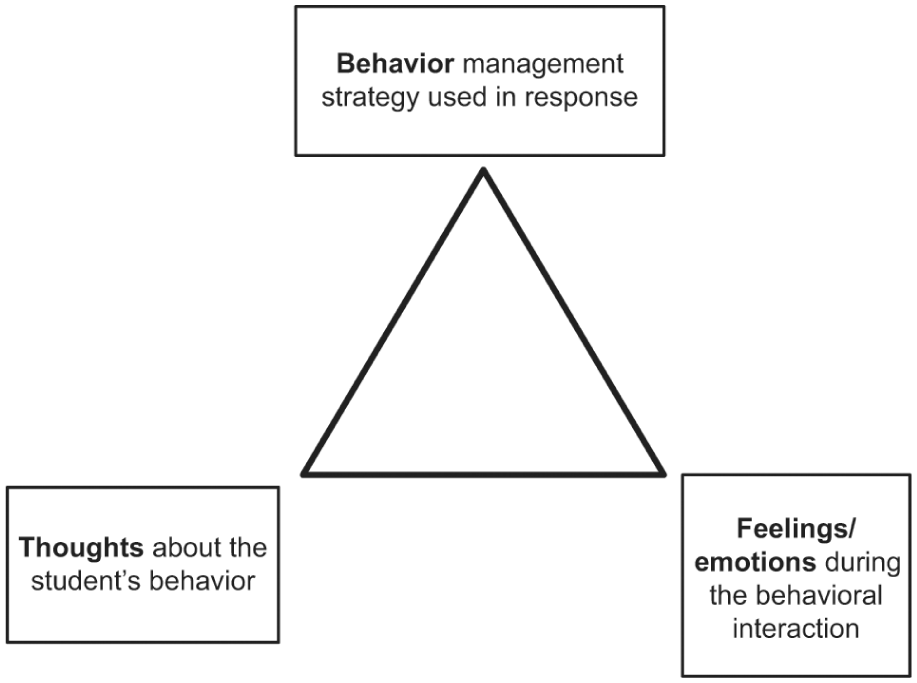
The cognitive-behavior therapy triangle: Thoughts-feelings-behavior.
Thoughts ←→ Behaviors
Let’s start with the left side of the triangle, which are the connections between teachers’ thoughts and behaviors. Research demonstrates that teachers’ thoughts about a behavior have significant consequences for their behavior management practices. The basis of many student suspensions is nonviolent behavior (e.g., perceived defiance and disrespect) and subjectively defined offenses (Girvan et al., 2017). In other words, how teachers perceive, make sense of, and think about a behavior have crucial impacts on how they respond to it.
Teachers make meaning of their students’ behavior by generating thoughts and beliefs regarding the nature of the behavior (Nemer et al., 2019) which inform their responses to it (Wang & Hall, 2018). Just like any other group of adults, teachers experience implicit biases (Starck et al., 2020). That is, biases for and against students shape teachers’ appraisals of behavior. For example, research shows that students of color experience punitive disciplinary responses at higher rates than White students exhibiting the same behaviors (Milner, 2013). Teachers’ beliefs and biases regarding the nature of disability also impact their appraisals of student agency during challenging behavioral interactions (Arcia et al., 2000).
So, to use research- or evidence-based practices to respond to challenging behaviors, teachers of students with disabilities need to be able to quickly acknowledge, filter, and counteract biased thoughts toward or against certain students. To use research- or evidence-based practices rather than engaging in biased, gut reactions to challenging behaviors of students with disabilities, teachers must be able to recognize how they are thinking about the behavior, including how implicit biases may be influencing their thoughts and perceptions.
Emotions ←→ Thoughts
Now we consider the bottom side of the triangle connecting teacher thoughts with their emotions during challenging behavioral interactions. The behaviors that teachers find difficult to manage often involve intense emotional expressions from students. Teachers themselves naturally experience a wide range of emotions when responding (Chang, 2013). Student behavior may trigger a variety of intense emotions in teachers, including frustration, anger, shame, and guilt. For example, in interviews with teachers about their emotions during behavior management, Chang and Taxer (2021) found that teachers often described experiencing anger due to students being “non-cooperative or defiant” (p. 8).
Intense emotions can negatively impact decision-making, particularly during conflict (Lerner et al., 2023). Some researchers describe these emotions as increasing the “cognitive load,” or the number of things the teacher must process in the moment. In other words, when teachers experience intense emotions, the cognitive load of these intense emotions can make it difficult to engage in the effortful and strategic thinking necessary to make decisions about how to respond to the behavior effectively (Plass & Kalyuga, 2019). Students with disabilities often communicate differently from their nondisabled peers. When teachers are experiencing intense emotions, it may be particularly difficult to think clearly about what the student is trying to communicate with their behavior, and difficult to remember how to implement the strategies that are going to be increase the likelihood of success for both teachers and students.
Emotions ←→ Behaviors
If we consider the third side of the triangle, we see how emotions, without regulation, can negatively impact behavior management practices. To engage in effective, research- or evidence-based behavioral responses, teachers of students with disabilities first need to be able to regulate the emotions they experience during the behavior (Stark & Cummings, 2023). Otherwise, these emotions lead to behaviors that teachers would not want to use, if they were able to think through the experience without emotions distracting their decision-making. Without intervention, a vicious cycle occurs. Experiences of stress negatively impact teachers’ implementation of research- or evidence-based behavioral interventions for students with disabilities (Garwood, 2023; Wong et al., 2017), which increases the likelihood that more challenging behaviors will occur.
Developing Educator Emotional Regulation
Thoughts, feelings, and behaviors are all connected. If the behaviors of students with EBD and other types of disabilities trigger intense emotions, and intense emotions interrupt the processing needed for implementing research- or evidence-based practices, then what can educators do? One way to help increase the use of research- or evidence-based behavioral practices is to increase educators’ emotional regulation skills. When educators can regulate their emotions, that increases the likelihood that they can think about and respond to behavior differently. In fact, research suggests that teachers’ use of reappraisal emotional regulation strategies can mediate the relationship between job demands and teacher burnout (Tsouloupas et al., 2010; Yin et al., 2016). In a survey of 610 teachers, Tsouloupas and colleagues (2010) found that teachers who reported using cognitive reappraisal strategies also reported less emotional exhaustion. Similarly, in a survey of 1,115 teachers, Yin and colleagues (2016) found that cognitive reappraisal was positively associated with teaching satisfaction and negatively related to emotional exhaustion.
Emotional regulation can broadly be defined as “the process by which individuals influence which emotions they have, when they have them, and how they experience and express these emotions” (Gross, 1999, p. 275). Typically, emotional regulation is most salient when the emotions experienced are not considered appropriate within one’s social or professional setting (Hochschild, 1983). As Koole (2009) explains, “emotion-regulation strategies specify how people go about managing a particular unwanted emotion” (p. 16). Although emotional-regulation strategies do not erase bias, they can be important tools for interrupting the impact of bias on teachers’ behavioral responses. In addition, because students with EBD may struggle with emotional regulation (Barnes et al., 2008), it is particularly important for teachers of students with disabilities to be able to effectively model emotional-regulation strategies themselves. In the following sections, we describe three steps that educators can take to develop their own emotional-regulation competencies. We also provide an overview of these steps in Figure 2.
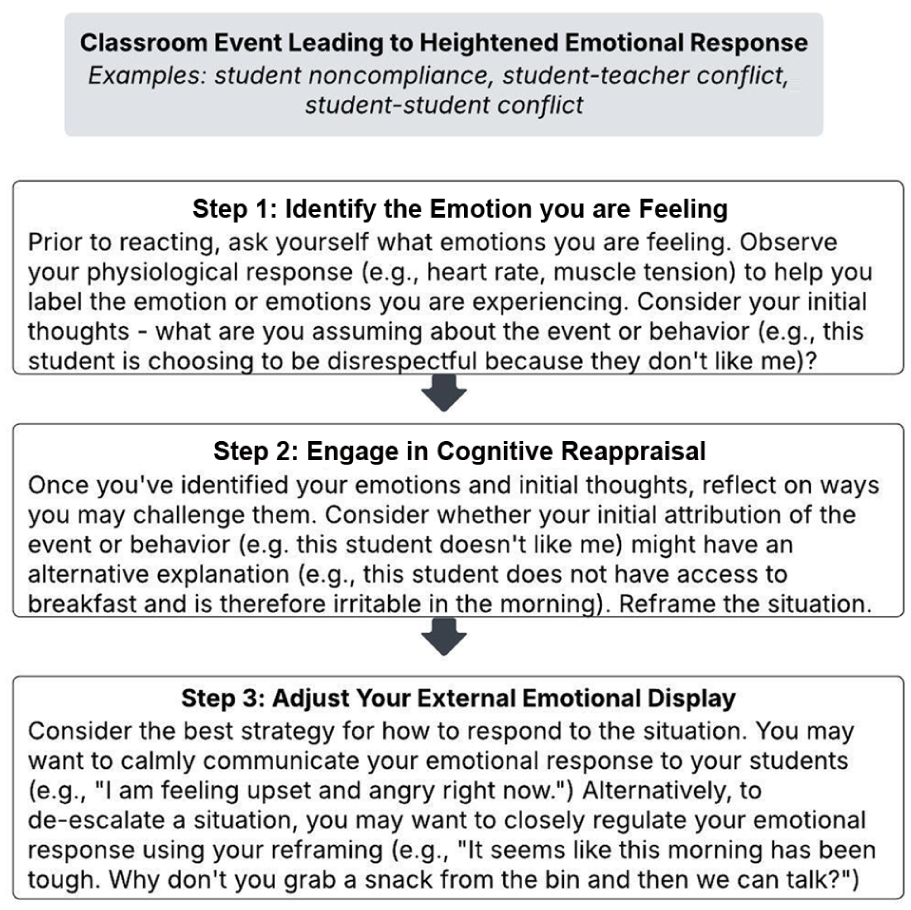
Suggested steps for managing stressful situations in the classroom.
Step 1: Practice Identifying Emotions During Challenging Behavior
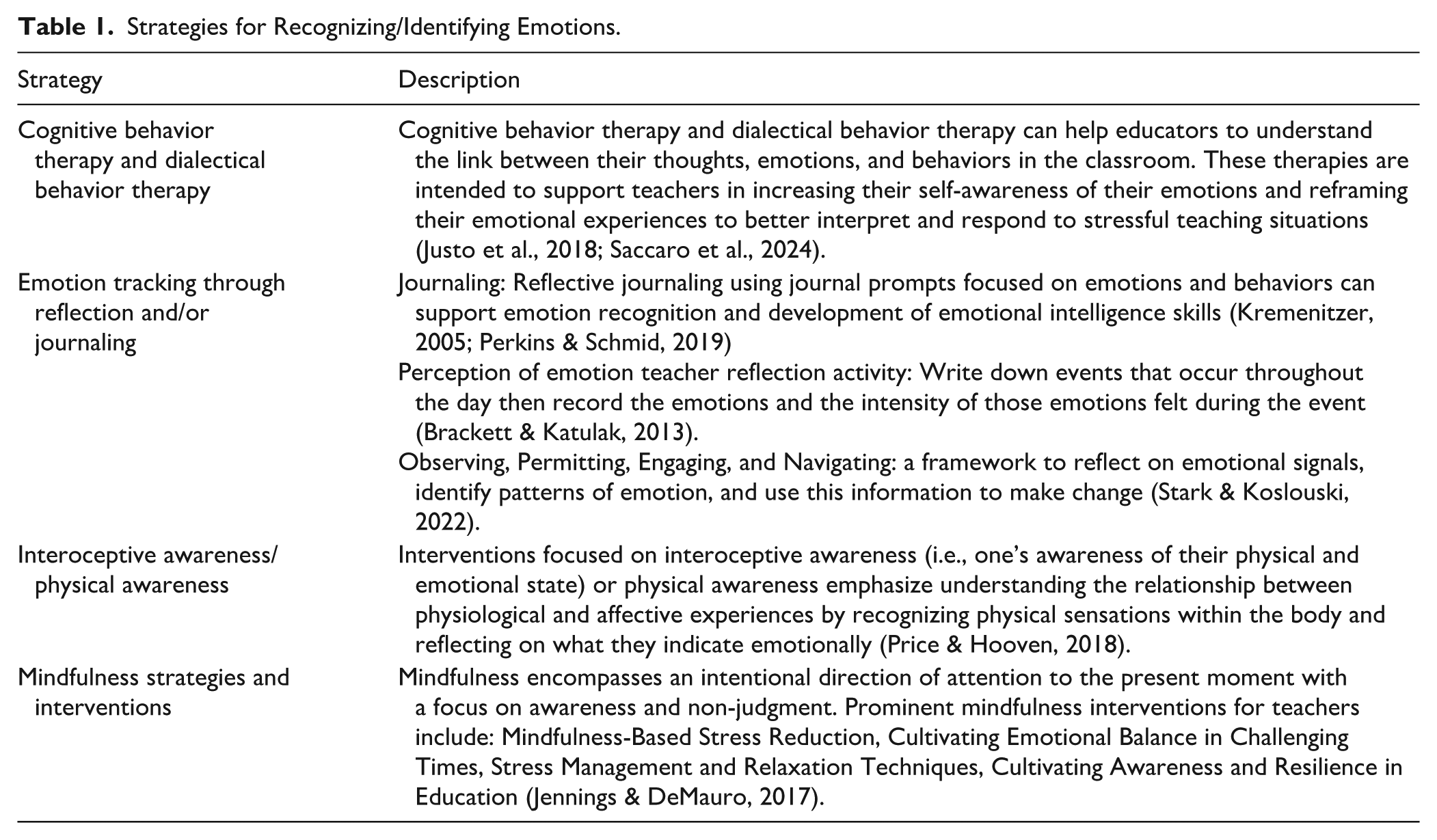
The first step toward emotional regulation is being able to recognize and identify the emotions that we are feeling. Challenging behaviors can trigger such a wide range of emotions. These emotions shape our behaviors differently. Without being able to recognize those emotions, we cannot understand their role. In Table 1, we provide strategies that may help educators increase their ability to quickly recognize and identify the emotions they are experiencing.
Strategies for Recognizing/Identifying Emotions.
Step 2: Practice Reappraising Emotions During Challenging Behavior
Once we can recognize the emotions that we are experiencing, we can begin to experiment with cognitive reappraisal of those emotions. Reappraisal refers to the line in Figure 1 that connects thoughts and emotions. During challenging behavioral interactions, the emotions we experience are triggered by the thoughts we are having about the student and about ourselves. An important competency is being able to quickly shift our thoughts, which can help us switch our emotions. For example, consider the following vignette content.
The day was just beginning in Ms. Rodriguez’s third grade classroom, but it was already clear that Olivia was having a difficult morning. Contrary to the classroom expectations, Olivia did not hang up her backpack and jacket as she entered the classroom. Rather than complete the journal prompt, Olivia put her head down on her desk. When Ms. Rodriguez approached Olivia, she was met with silence and an angry glare. But Olivia did pull out her journal and begin writing, so Ms. Rodriguez decided to give her space. Although Olivia’s unhappy demeanor did not change throughout the morning lessons, she participated and completed her work.
As Ms. Rodriguez was wrapping up her math instruction, she checked the time and saw the lesson had run over. She had only two min to get her students to art class. “Please clean up your fraction tiles and place them in this bin,” Ms. Rodriguez announced to the class, setting a plastic bin down on a desk near the front of the room. “Then line up for art class.” Students began scrambling to clean up and a crowd formed around the plastic bin. In the commotion, Noah tripped, bumping into Olivia. “Damn it, Noah!” Olivia shouted, “Watch where you’re going!” Before Ms. Rodriguez could make her way over, Olivia shoved the now nearly full bin of tiles off the desk. As the bin crashed to the ground, fraction tiles scattered across the floor.
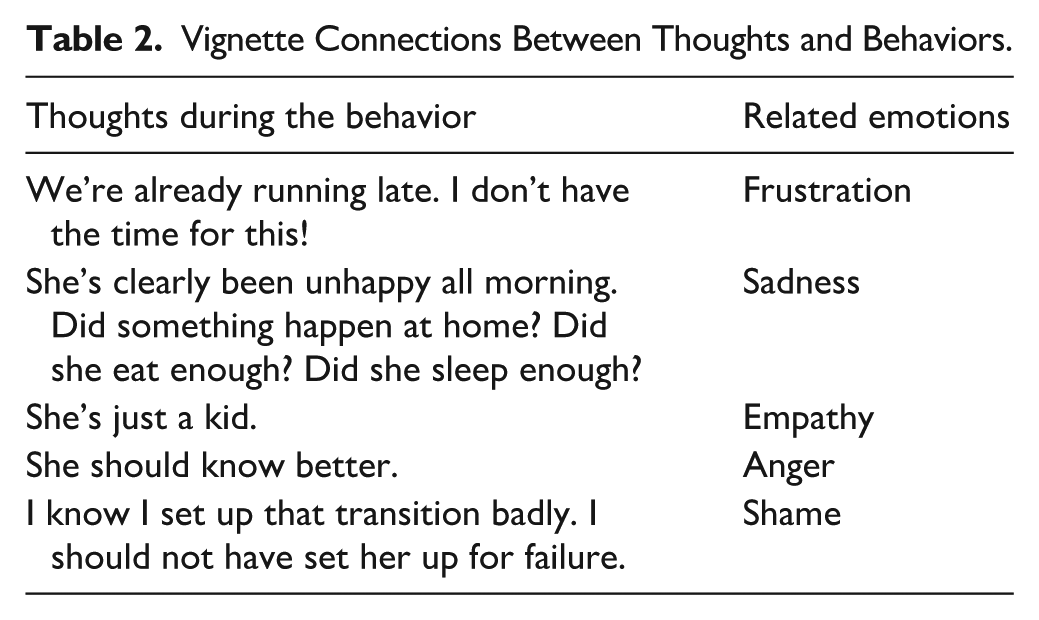
As the bin of fraction tiles crashed to the floor, Ms. Rodriguez froze. “Why now?” she thought to herself in annoyance. “We’re already late. Olivia knows better! She did that to spite me for making her write in her journal this morning.” The classroom had gone quiet, students were staring at Ms. Rodriguez, waiting to see her reaction. Ms. Rodriguez took a moment to assess her emotions and consider her reaction. “This is not how I pictured my morning going. I’m feeling tense and I’m annoyed at Olivia. Olivia has been on edge all morning. Something is clearly going on with her. I know things at home have been difficult for Olivia since her mom lost her job. This isn’t about me. She’s having a hard time.”
Now that you have read the vignette, review Table 2. Consider the ways that the different thoughts and emotions that Ms. Rodriquez may have experienced over the course of this incident may have impacted her response to Olivia, and her own sense of self-efficacy as a teacher.
Vignette Connections Between Thoughts and Behaviors.
Reappraisal in Teacher Decision-Making
In the vignette, Ms. Rodriguez was able to identify her emotions, recognize her thoughts, and consider how to reframe the incident with Olivia. Rather than place blame on Olivia or herself, Ms. Rodriguez compassionately contextualized the behavior, considering Olivia’s lived experiences. Cognitive reappraisal can serve as an incredible support for teachers whose jobs are often contextualized by circumstances outside their control (e.g., legislative decisions, children’s social and familial situations).
Note that we did not ascribe a particular disability identity to Olivia. As you consider how you might respond to this scenario yourself, we invite you consider how your own emotions, thoughts, and behaviors during the interaction might vary if, for example, Olivia was a student with autism, intellectual disability, emotional disturbance, or no identified disability. You may notice that your emotions and beliefs about these different identities shape the cognitive reappraisal needed in this scenario.
Sutton (2004) identifies other strategies teachers use to regulate their emotions. Preventive strategies, such as modifying classroom management strategies and lesson activities or selectively deploying attention to ignore minor behavioral issues, can help educators reduce the likelihood of finding themselves in conflict. Responsive strategies, including modifying expressive and physiological responses in the context of heightened emotions and talking to others to help put the situation into perspective, can help educators prevent escalation of a situation and reduce frustration and negative thoughts around challenging situations (Sutton, 2004). These reappraisal strategies may not always happen right away. Sometimes it can be helpful to consider them after the behavior.
Step 3: Adjust External Emotional Displays During Challenging Behavior
Finally, we need to consider how we can adjust our external emotional displays during challenging behavior. Sometimes, we cannot reappraise the situation in the moment due to a lack of personal bandwidth to consider the child’s home life, bullies, or other circumstances when in a heightened emotional situation. It can feel impossible to change the lividness we feel inside. But we can practice the extent to which we display that anger externally. Sometimes, displaying our authentic emotions is beneficial for students and for ourselves. Emotional authenticity can build trust in relationships (Gutierrez & Buckley, 2019). This relational trust is particularly important for students with disabilities who have trauma histories and/or negative prior school-based experiences. But sometimes displaying our natural emotions can also do harm and escalate already intense situations.
Some scholars refer to these efforts to control the external display of emotions for professional purposes as emotional labor (Lee et al., 2016). Emotional labor strategies include choosing to go ahead and express one’s authentic emotions, or, choosing to either deep act (reappraise the emotion internally to experience and display a different emotion) or surface act (suppress the internal emotion so it does not present externally) (Grandey & Gabriel, 2015). In Table 3, we provide an example of how regulating external emotional displays can shape teacher and student outcomes.
Regulating External Emotional Displays.
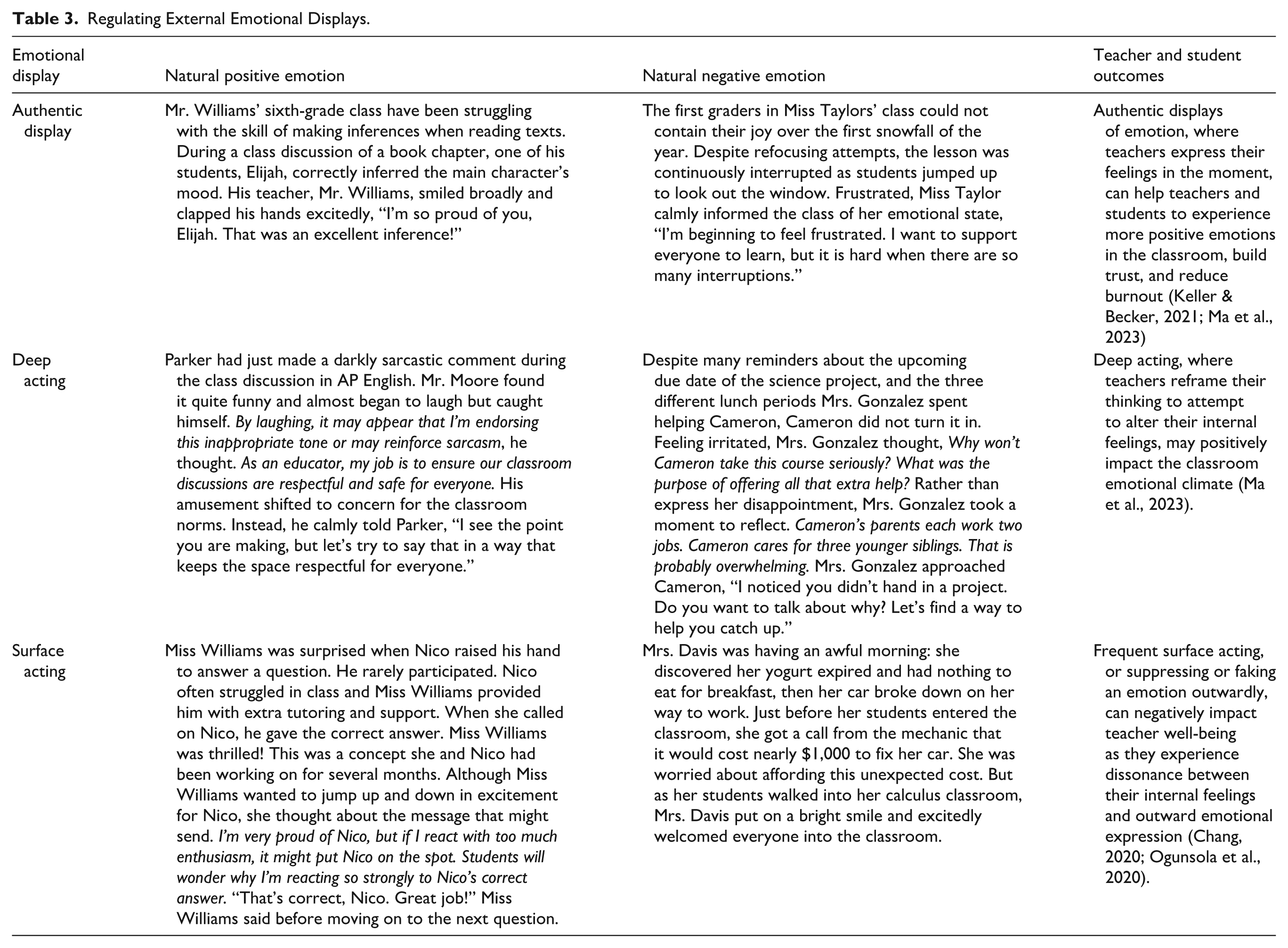
Now, let’s return to Ms. Rodriguez’s classroom to see how she might adjust her external emotional display.
“If I respond with anger, things will just escalate,” Ms. Rodriguez thought to herself. She considered how to best respond to the situation. After a moment, Ms. Rodriguez said, “It looks like something went wrong here. Let’s all take a step back and breathe for a moment.” Collectively, the class took a breath while some students began to pick up the tiles scattered across the floor. “Thank you for helping to clean up,” Ms. Rodriguez told the students. “Please go ahead and line up for art class.” As students began to get in line, Ms. Rodriguez calmly turned to Olivia, whose arms were crossed and jawline set. “I can see something has frustrated you. You don’t have to talk about it if you don’t want to, but I want you to know that I am here to help. Let’s walk down to art class. You can either join your classmates in art, or you can come back here and we can talk.” Olivia uncrossed her arms. She looked down and gave a small nod.
Although Ms. Rodriguez was feeling angry, she did not lash out at Olivia. Instead, she took a moment to calm the class and then used her cognitive reappraisal of the situation to respond to Olivia with compassion. This use of emotional regulation bodes well for Ms. Rodriguez’s well-being as research evidence suggests that teachers who frequently fake their feelings at work are more likely to experience burnout and stress than teachers who can reappraise the thoughts behind their emotions or display their authentic emotions (Yin et al., 2019).
Key Takeaways for Educators, Leaders, and Policy Makers
Although teachers play a crucial role in students’ behavioral outcomes, most teachers receive few opportunities to learn about and reflect on their own social and emotional learning and emotional experiences at work. Teacher training frameworks and standards (e.g., Council for Exceptional Children’s Professional Preparation Standards) provide little guidance for teacher educators seeking to support preservice special educators’ development of their own emotional competencies. For example, when Kerr and Brown (2016) interviewed special educators about their emotional-regulation strategies, one veteran special educator explained,
There are not any courses on this. They could have different role-plays of how to handle situations: when you can and cannot vent, how to get your feelings out in a professional way. If you cannot get your feelings out, then you just burn out. (p. 148)
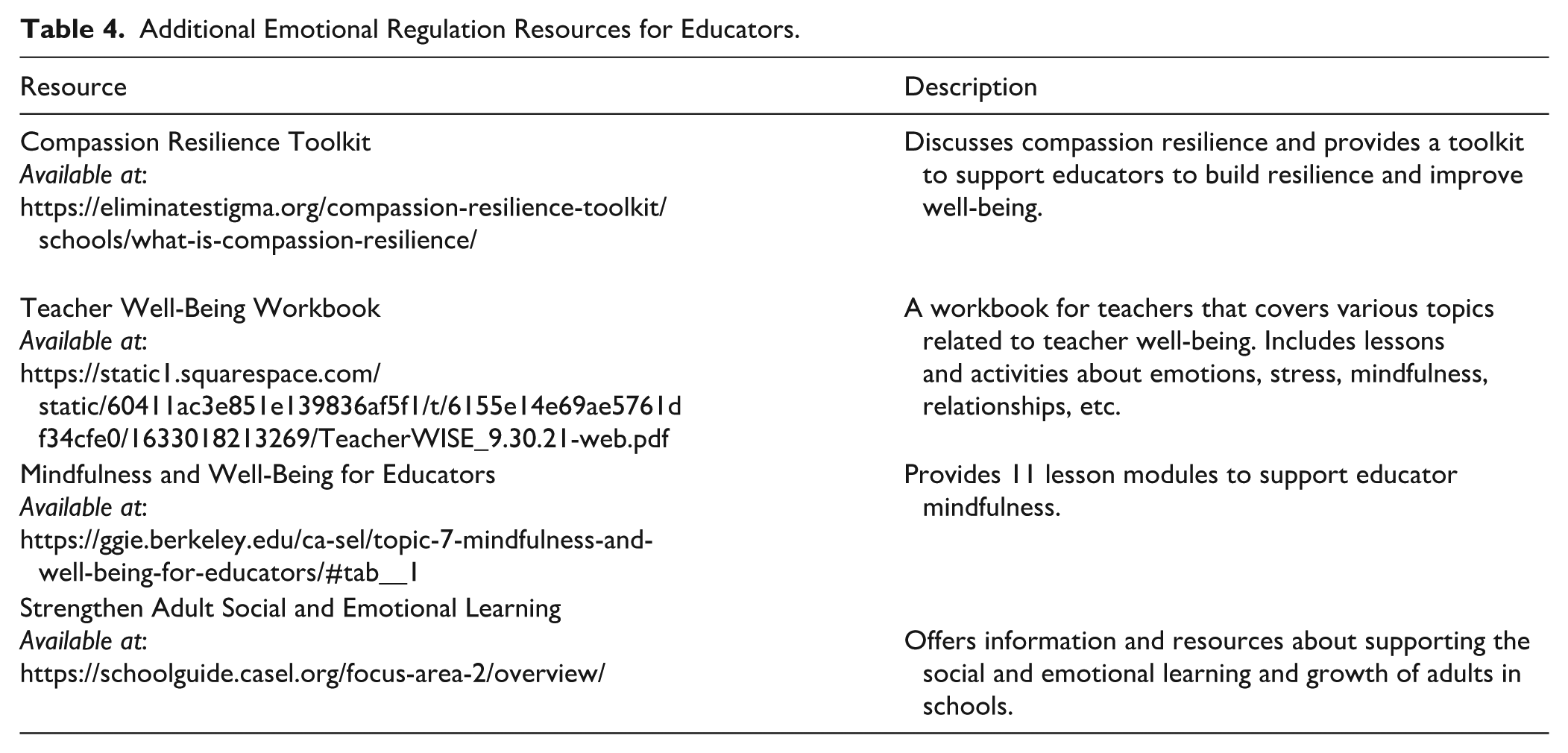
Current research demonstrates that teachers rarely have the chance to learn about their emotions or emotional regulation during teacher training or in-service professional development (Newberry, 2013; Schonert-Reichl, 2017). We encourage educators to explore the resources highlighted in Table 1, to reflect on scenarios in their own teaching that align with the vignettes provided in Table 3, and to explore the additional resources provided in Table 4. Engaging in ongoing reflection regarding the connections among their thoughts, emotions, and behaviors will help educators to develop the emotional regulation competencies that are necessary to sustain their work and their relationships within their school community.
Additional Emotional Regulation Resources for Educators.
Given existing research indicates teachers’ emotional regulation knowledge and competencies can be developed, school leaders could consider making professional development opportunities available for teachers to reflect on their emotions, learn and practice emotional regulation strategies, and debrief their emotions with other educators. This could include informal professional learning community discussions. For example, in small groups, educators could present real scenarios from their classrooms in which they experienced a challenging behavior. As a group, educators could discuss the emotions that this scenario could (or did) trigger, the thoughts associated with those emotions, ways to reappraise these responses, and possible behavioral outcomes (as shown in Figure 2). To facilitate such discussions, we provide Table 5 as a reproducible worksheet that school leaders could use and embed within existing professional learning on other topics.
Small Group Facilitation Guide for Educator Emotional Regulation Practice.
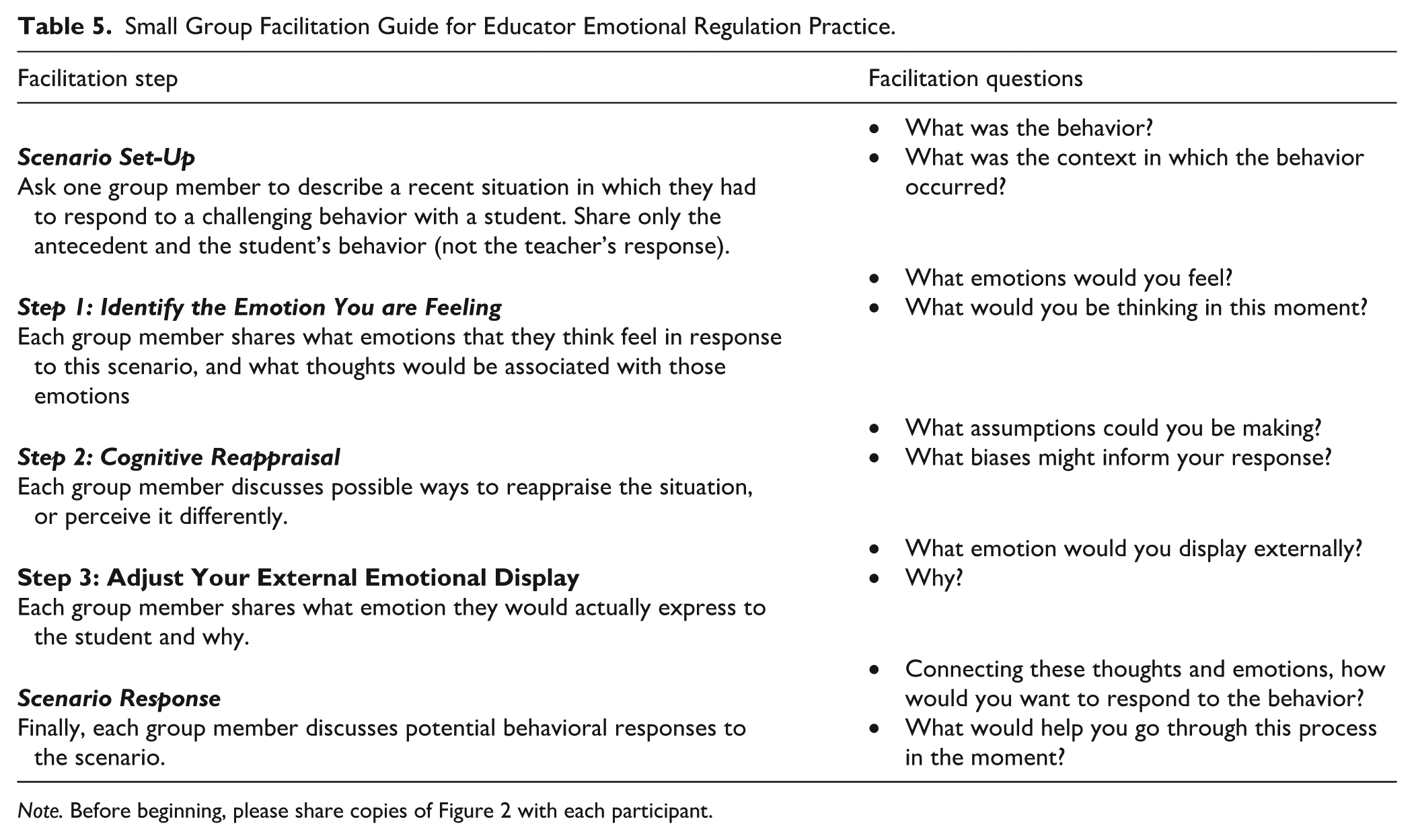
Note. Before beginning, please share copies of Figure 2 with each participant.
In addition to increasing professional learning opportunities pertaining to educators’ own emotions, leaders should planfully consider the role of teachers’ emotions in policy implementation. Leaders across many states and districts have engaged in policy reform regarding practices like suspension and restraint (McIntyre et al., 2019). But because educators’ subjective interpretations of their experiences inform how they implement policies (Spillane et al., 2002), implementing policy changes is insufficient to reduce disproportionate discipline (McIntosh et al., 2018, 2020). Even when policies are in place to reduce punitive discipline and increase the use of research- or evidence-based practices, educators’ subjective interpretations of behavior will inform their teaching practices (Russell & Crocker, 2016). Therefore, school, district, and state leaders should consider how educators’ emotions impact their policy implementation. There is an urgent need for interdisciplinary, exploratory research that can inform the development of emotional regulation training for special educators that will enable them to positively impact student outcomes. The field requires more research that triangulates teachers’ emotions and behavior to understand teachers’ impact on student outcomes and how we might develop teacher-focused interventions to shape this impact.
Conclusion
As a society, we depend on teachers to support students’ development of social-emotional skills, such as emotional regulation (Ibarra, 2022; Nuske et al., 2024). Considering the high level of social-emotional-behavioral needs among students and teachers, and the challenges schools face in providing mental health supports (National Center for Education Statistics, 2024), teacher emotional regulation has important implications for the sustainability of the teacher workforce. If we want our investments in student-facing behavioral interventions to pay off, we must also invest efforts to understand and improve the psychological experiences of our special education teacher workforce as they implement these interventions. When teachers can engage in emotional regulation strategies, they are more likely to implement beneficial behavioral responses that are less emotionally taxing on themselves and their students. There are many factors that shape how teachers respond to the behaviors of students with EBD, including socio-political factors and policies beyond an individual teacher’s control. While teachers’ individual emotional regulation strategies are not a solution to systemic inequalities in our schools, they can serve as an important resource to help teachers navigate their work—alongside of collective, ongoing advocacy for systems-level change.
Footnotes

Funding
The authors received no financial support for the research, authorship, and/or publication of this article.
Declaration of Conflicting Interests
The authors declared no potential conflicts of interest with respect to the research, authorship, and/or publication of this article.