



Abstract
Primary-secondary school transitions are a critical period for children, which pose a heightened risk for the development of poor emotional wellbeing and mental health. Our ability to identify and support children during this critical juncture is limited, however, by the lack of a robust, sensitive, and standardized scale to measure children’s emotional wellbeing in the context of primary-secondary school transitions, comprehensively and longitudinally. The Primary-Secondary School Transitions Emotional Wellbeing Scale (P-S WELLS) has been developed following a multi-informant, mixed-methods model to overcome this gap. It is qualitatively different and novel in its approach (i.e., asking children about their feelings toward the changes they are negotiating in context), and in its longitudinal design and operationalization. This registered report describes how P-S WELLS will be validated through longitudinal psychometric assessment (Study 1) and longitudinal validation (Study 2) on two discrete samples, across two transition periods.
Keywords
Background
There is a clear increase in the prevalence of mental health difficulties as young people move from childhood to adolescence. This is unsurprising given the simultaneous occurrence of major physical, psychological, social, and educational changes negotiated during this period (O’Brien et al., 2023; Vizard et al., 2020). In line with the latter, primary-secondary school transitions are critical developmental changes that can be emotionally demanding for a long time. For example, during this time, children negotiate multiple, simultaneous changes, or as recognized in Jindal-Snape’s (2016, 2023) Multiple and Multi-Dimensional Transitions Theory (MMT), “transitions,” in their school environment (including systemic structural, physical, and human aspects of change), identity (primary/secondary school child, child/young person), friendship groups, teaching styles, and academic expectations. Primary-secondary school transitions are also nested among other developmental transitions, such as hormonal changes associated with puberty (Ng-Knight et al., 2016), in addition to school-based pressures, such as academic national Standard Assessment Tests in England, which can further disrupt children’s cognitive processing and perpetuate feelings of instability (Bharara, 2020).
Unsurprisingly, the negotiation of multiple transitions, across multiple domains and contexts, can present a heightened risk of developing poor emotional wellbeing and subsequent mental health (White, 2020). For example, it is common for children to report feelings of stress and anxiety about primary-secondary school transitions from as early as Year 5 (the penultimate year of primary school in England; Bagnall, Cookson, et al., 2024), which can continue 2 years into secondary school (Jindal-Snape & Cantali, 2019). This has been recognized by key stakeholders involved in supporting children during this time (e.g., parents/guardians and teachers; Bagnall et al., 2020), in addition to within research (Beatson et al., 2023) and policy, which has highlighted “the need for greater focus on transition periods in children and young people’s lives” (DfH & DfE, 2018, p. 13).
There is a clear need for a preventative approach in supporting children’s emotional wellbeing over primary-secondary school transitions, especially given the stretched time and financial resources schools face to address preventative mental health concerns (DfE, 2023). These constraints have been further intensified (and in the context of primary-secondary school transitions) by the COVID-19 pandemic (Bagnall et al., 2022; Lockyer et al., 2020). Furthermore, findings from transition research are concordant with the broader mental health literature, including longitudinal developmental cascade studies that have shown significant and prolonged changes to emotional wellbeing as a key signifier of the emergence of early onset mental health difficulties within adolescent populations (Demkowicz et al., 2023). To better understand the impacts of primary-secondary school transitions on children’s mental health, it is therefore important to look at longitudinal changes in emotional wellbeing during this time, as recommended in previous research (Petersen et al., 2022). Identifying the trajectory of variability in emotional wellbeing could then inform early identification of children who may later develop symptoms of poor mental health and/or need additional targeted support (Donaldson et al., 2023).
While it is clear from the above that primary-secondary school transitions are a longitudinal experience, a criticism of the current field is that there is limited understanding of (a) how primary-secondary school transitions affect children’s emotional wellbeing, and specifically which aspects of these transitions children are excited or concerned about; (b) Who might be particularly vulnerable during primary-secondary school transitions and how can these children be identified; and (c) What universal and targeted support could be useful. These limitations are further compounded by the fact that to date (a) the corpus of scales used to assess primary-secondary school transitions and emotional wellbeing during this time have considerable limitations (Bagnall & Jindal-Snape, 2023), and (b) critically, there is no existing scale which comprehensively measures children’s emotional wellbeing in the context of primary-secondary school transitions (Bagnall, Jindal-Snape, et al., 2024). These issues were identified in Bagnall and Jindal-Snape’s (2023) systematic literature review of the child self-report measures used to assess children’s appraisals toward primary-secondary school transitions and/or emotional wellbeing, within the field between 2008 and 2021, which found:
Key constructs (primary-secondary school transitions and/or emotional wellbeing) are not conceptualized nor theoretically defined, especially by children (see Jindal-Snape et al., 2021 for discussion pertaining to conceptualizations of primary-secondary school transitions and Park et al., 2022 for conceptualizations of emotional wellbeing). Lack of conceptual clarity has resulted in uncertainty regarding (a) how to select measures, and (b) which aspects of emotional wellbeing and domains of primary-secondary school transitions to target in research studies, interventions, and/or policy work. Thus, as outlined by Park et al. (2022), there is a clear need for the development of a more unified definition of these key concepts and approaches to measurement.
Existing scales commonly used within the field have inconsistent reliability and validity, specifically papers that adapted or created primary-secondary school transition scales, such as The Perceptions of Transition Survey, which was created by Smith et al. (2008) and Akos’ (2002) Transition Questionnaire which has been adapted by several authors, without reporting validity and inconsistently reporting reliability (Bagnall & Jindal-Snape, 2023).
There is a lack of longitudinal focus in the (a) design and (b) operationalization of scales in that there are no baseline measurements, and measures do not follow-up on constructs over sufficient time (e.g., reliance on one time point pre and post the “move” to secondary school, as opposed to taking a longitudinal follow-up design approach with at least three time points). This is subject to primary-secondary school transitions, often viewed as an event by researchers, for example, pre/post as opposed to a process that occurs over 2 years, in addition to current tools not being designed so that they are sensitive and stable enough to capture the complex changes adolescents negotiate during primary-secondary school transitions. For example, in Rice et al.’s (2011) assessment of the validity of the School Concerns Questionnaire (SCQ) the psychometric properties of all measures were examined cross-sectionally, using two separate primary school and secondary school samples, and only following piloting and psychometric assessment authors assessed the continuity of the measure longitudinally using repeated measures pre- and post- transition with a small sample (Rice et al., 2011).
Scales follow a negative discourse using unbalanced items and negative terminology by operationalizing emotional wellbeing as something that should deteriorate due to primary-secondary school transitions (e.g., presence/absence of low mood/loneliness and coping abilities), and/or that primary-secondary school transitions experiences should be negative (e.g., by assessing transitions worries, and/or rating concerns, such as The SCQ, which is commonly used within the field; Thomasson et al., 2006). This discourse is leading, can provide negative messages to participants, and the measure lacks face validity (Zhou, 2019).
To date there is no single scale that assesses emotional wellbeing in the context of primary-secondary school transitions, and instead, research to date is inadequate using measures that assess (a) solely primary-secondary school transition experiences, (b) solely emotional wellbeing using one or more measure or (c) primary-secondary school transitions and emotional wellbeing. All three designs are problematic and unable to holistically assess emotional wellbeing in the context of primary-secondary school transitions, thus inhibiting progress within the field. Most common was for authors to use more than one measure to assess emotional wellbeing, given that no measure fully captures the emotional experiences children navigate over primary-secondary school transitions. In these studies, primary-secondary school transition experiences were not measured, and instead, primary-secondary school transitions were operationalized in terms of a change in emotional wellbeing between two time points: pre, and post, the “move” to secondary school (Bagnall & Jindal-Snape, 2023). This is not only inconsistent with common metrics agenda concerns (sustainability, consistency, greater value for money in the usability of a single scale), (Krause et al., 2021), but it is also problematic for the field (Morgado et al., 2017), as items included are not specific to the primary-secondary school transitions context and limits clear benchmarking of outcomes and read-across of measurements between studies. Furthermore, this limitation was not overcome for studies that used a measure to assess emotional wellbeing and a separate measure to assess primary-secondary school transition experiences, as by not specifically measuring emotional wellbeing in the context of primary-secondary school transitions, it is unclear whether changes in emotional wellbeing are reflective of primary-secondary school transitions, and thus context driven, or reflective of other environmental or personal factors.
These limitations demonstrate the abject nature of the current field with respect to key assumptions (i.e., transitions as a static timepoint), with significant consequences for identifying and addressing emotional wellbeing and mental health at a critical juncture. In particular, the lack of robust analysis of emotional wellbeing, and its factors in the context of primary-secondary school transitions, has resulted in researchers to date relying on inappropriate measures, to assess either emotional wellbeing and/or associated factors, and/or primary-secondary school transition appraisals on an ad-hoc basis, or with no deliberate reasoning provided (Bagnall & Jindal-Snape, 2023). This has led to further measurement and analytical challenges and likely lead to misleading data resulting in transition policies and practices that might not be optimal.
Recognizing that approximately 750,000 pupils start secondary school annually in the United Kingdom, usually in September that follows their 11th birthday, the scale and importance of clear, empirically derived findings on how to support children during this time cannot be overstated and has significant real-world practical implications. A sensitive scale, with accessible scoring, could build the capacity for educational practitioners to obtain immediate insight into the emotional wellbeing of their class in the context of primary-secondary school transitions, which has been recognized as important to support transition provision in both primary school and secondary school (Bagnall, Cookson, et al., 2024; Beatson et al., 2023). Through calculating scores, teachers could identify specific children who are doing well over primary-secondary school transitions (indicated through high scores) and children who may need additional support. Through close examination of scores across domains identified as important over primary-secondary school transitions (e.g., environmental, social, and academic changes), educational practitioners would be able to identify what universal and targeted support may be useful.
Moreover, the lack of a standardized and sensitive quantitative measure to assess children’s emotional wellbeing and primary-secondary school transition experiences, longitudinally, is also inhibiting empirical progress within the field (Bagnall, Jindal-Snape, et al., 2024; Beatson et al., 2023; Bharara, 2020). For example, a sensitive (aligning with a balanced discourse), and standardized (in terms of reliability and validity) scale, which is underpinned by contemporary theoretical understanding, and has a longitudinal focus (overcoming limitations 1–4) could accelerate progress within the field by enabling synthesis, comparison, and integration of evidence across studies and settings to avoid data fragmentation (Petersen et al., 2022). Furthermore, a singular measure to assess emotional wellbeing in the context of primary-secondary school transitions is also needed within intervention science literature to (a) evaluate the efficacy of preexisting primary-secondary school transition interventions through robust randomized control trials; (b) refine the content and delivery of preexisting universal and targeted programs, by strengthening the methodological and conceptual foundations that underpin primary-secondary school transitions research, and (c) provide the means for sensitive identification of “at risk” children to participate in targeted interventions.
The Primary-Secondary School Transitions Emotional Wellbeing Scale (P-S WELLS)
To overcome these limitations, we have developed the first robust, sensitive, and standardized scale to longitudinally assess children’s emotional wellbeing in the context of primary-secondary school transitions. This scale is named the Primary-Secondary School Transitions Emotional Wellbeing Scale (P-S WELLS) and is qualitatively different and novel in its approach (i.e., asking children about their feelings toward the changes they are negotiating in context), and in its design and operationalization, as outlined below.
In line with the former, P-S WELLS offers theoretical and conceptual novelty by demonstrating a vital paradigm shift in conceptualizing and operationalizing emotional wellbeing in a specific context (primary-secondary school transitions), which is outlined in our concept analysis paper (Bagnall et al., 2025), and below under “Conceptual framework underpinning P-S WELLS.” This contextual element is important to holistically understand how children emotionally respond to the context of primary-secondary school transitions and the specific emotional reactions evoked, which has been raised by researchers (Beatson et al., 2023), practitioners (Bagnall et al., 2020), and children (Bagnall, Jindal-Snape, et al., 2024; Demkowicz et al., 2023). For example, in our pilot work, children in the first year of secondary school described their emotional wellbeing in the context of primary-secondary school transitions as “feelings which we’ve not had to understand before” and this concept had an experiential and personal meaning to the children (Bagnall et al., 2025).
Our conceptual model has been operationalized through the design of P-S WELLS. For example, to date primary-secondary school transitions research has relied on qualitative descriptors of school concerns about transition (Zeedyk et al., 2003), or quantitative ratings of concern toward a list of changes navigated over primary-secondary school transitions (Rice et al., 2011). While these measures are useful for the initial identification of children’s transition-related school concerns, P-S WELLS holistically measures children’s perceptions or evaluations of their emotional wellbeing in the context of primary-secondary school transitions globally and across specific primary-secondary school transition domains (e.g., environmental, social, academic, and personal), over time.
P-S WELLS aims to innovate the field, methodologically, in demonstrating the importance and viability of considering longitudinal contexts within the design and validation of scales, to ensure they are stable and sensitive to capture change over time. For example, most scales used within primary-secondary school transitions research have not been designed in a way that items are relevant for both primary school and secondary school pupils, to capture the multiple complex changes negotiated during primary-secondary school transitions (e.g., several researchers, including Bailey & Baines, 2012; Foley et al., 2016; Mackenzie et al., 2012, all use a “pre” and “post” transition questionnaire in their studies). This is because primary-secondary school transitions are often viewed as a singular “event” by researchers, for example, pre/post as opposed to a process that occurs over two or more years, and is reflected by the broad range and number of items used within studies, without reporting how this can influence the scale’s psychometric properties, accessibility and can lead to imprecise estimates (Bagnall & Jindal-Snape, 2023; Rice et al., 2011). P-S WELLS overcomes this limitation by examining children’s emotions in the here-and-now, in other words, their feelings in the present moment, navigating primary-secondary school transitions, through the meticulous co-design of items, worded so that they are contextually relevant in both primary school and secondary school (as outlined below).
Furthermore, primary-secondary school transition research studies are also limited in how measures are operationalized. Commonly, authors do not use baseline measurements, nor follow-up on constructs over a sufficient period (e.g., over-reliance on one time point pre- and post- the “move” to secondary school, as opposed to taking a longitudinal follow-up design approach with at least three time points; Beatson et al., 2023). This also extends to the validation of scales. To date, researchers have examined the psychometric properties of measures cross-sectionally, using two separate samples of pupils assessed at primary school and secondary school. Only following piloting and psychometric assessment have authors assessed the continuity of the measure longitudinally using repeated measures pre and post-transition with a small sample of children (Rice et al., 2011; Thomasson et al., 2006).
However, examining the psychometric properties of measures cross-sectionally is a significant limitation, especially when used to estimate models where parameters are expected to vary over time (often detected by very small changes), such as emotional wellbeing in the context of primary-secondary school transitions. For example, emotional wellbeing is a dynamic construct, subject to fluctuations over time in response to changing external and internal conditions, and primary-secondary school transitions are an ongoing process. For example, relying on cross-sectional samples for assessing the psychometric properties of the School Concern Questionnaire, Rice et al.’s (2011) study found that factor loadings for some items were different at primary and secondary schools. This was said to be reflective of the varying changes children negotiate and adapt to throughout their first year in secondary school. This means that some items may have different meanings for children post-transition, reflecting changes in school expectations, environments, and social networks. Thus, as a result, cross-sectional methods can produce invalid results and inefficient estimates, and in the present study, all analyses will be conducted longitudinally to assess the predictive validity of P-S WELLS and ensure it is stable and sensitive to capture change in emotional wellbeing over primary-secondary school transitions.
Development of P-S WELLS
To inform the development of P-S WELLS, we conducted extensive research with children and significant others within their ecosystem (e.g., parents/guardians and teachers). We used both qualitative and quantitative approaches (Bagnall et al., 2020, 2021a, 2021b; Garner & Bagnall, 2024; Jindal-Snape & Cantali, 2019; Jindal-Snape et al., 2020, 2021; Symonds et al., 2024) to obtain first-hand insights into their perceptions and experiences of primary-secondary school transitions and how this period can be improved. In addition, we have obtained insights into the design and implementation needs of the scale through intervention research (Bagnall, Cookson, et al., 2024; Bagnall et al., 2021; Beatson et al., 2023), and it is worth noting that following validation our scale will be publicly available to support both researchers and practitioners.
Conceptual Framework Underpinning P-S WELLS
We developed a clear conceptual and theoretical definition of emotional wellbeing in the context of primary-secondary school transitions, by synthesizing inductive and deductive methodological approaches, within a conceptual analysis framework. This is presented in a separate concept analysis paper (Bagnall et al., 2025). Our conceptualization demonstrates a vital paradigm shift in conceptualizing emotional wellbeing in a specific context (primary-secondary school transitions) to holistically capture how children emotionally respond in negotiating the complex, multidimensional changes leading to primary-secondary school transitions, and the specific emotional experiences, states, and reactions evoked, overcoming limitations 1 and 5.
First, foregrounded in the perspectives of hedonia, the defining attributes of emotional wellbeing in the context of primary-secondary school transitions include children’s affective experience (e.g., presence of both positive and negative emotions) of navigating primary-secondary school transitions, in the here-and-now. Second, representing perspectives of eudaimonia, a second defining attribute of our conceptualization of emotional wellbeing in the context of primary-secondary school transitions pertains to children’s perceptions, or evaluations of their emotional functioning globally and in the context of specific social, academic, environmental, and personal primary-secondary school transitions domains outlined within Jindal-Snape’s (2016, 2023) MMT. Finally, integral to these defining attributes are children’s perceptions of their internal and external resources to manage the demands of primary-secondary school transitions to maintain a stable affective state.
Our conceptualization has been operationalized through the design of P-S WELLS and will be tested through our P-S WELLS validation plans.
Design of P-S WELLS
P-S WELLS was designed following a multi-informant, mixed-methods model of scale development (Zhou, 2019), in line with best practice recommendations for designing and validating robust and rigorous scales (Boateng et al., 2018; Morgado et al., 2017). Items were developed combining deductive and inductive methods from (a) our international systematic literature review (Bagnall & Jindal-Snape, 2023), (b) a UK-wide survey, aggregating expert opinion from educational practice, policy, and research, and (c) focus groups with children. The measure’s items were developed and finalized using the Delphi method, cognitive interviews (with children and teachers), and readability tests. Details of this method of design will be presented in a separate publication.
The scale consists of 31 items covering both hedonic and eudaimonic aspects of emotional wellbeing (as outlined in our conceptual framework detailed above), contextualized in relation to the social, academic, environmental, and social aspects of primary-secondary school transitions. This is operationalized through the wording of the items across domains, especially the item stems (e.g., the first part of the scale item, which poses the item statement). For example, the affective emotive state of the individual (reflecting hedonia), is operationalized through the affective state stems, which include an emotive word children used in our focus groups and cognitive interviews to describe how they feel over primary-secondary school transitions when discussing the different changes negotiated (e.g., “I feel satisfied/I feel good”). Second, the children’s evaluation/judgments of their emotional wellbeing in the context of primary-secondary school transitions (reflecting eudemonia) are reflected through the confidence stems (e.g., “I feel confident about asking for help if I have a problem at secondary school”) and autonomy items (e.g., “I am comfortable with becoming more independent at secondary school”). Third, children’s mechanisms to maintain a stable affective state, are operationalized through the managing item stems (e.g., “I can manage the amount of homework at secondary school”), social support items (e.g., “I feel confident about asking for help if I have a problem at secondary school”) and relatedness items included in P-S WELLS (e.g., “I can get along well with children in my year group at secondary school”).
As discussed above, all items are worded as far as possible in the words that children advised us to use within the cognitive interviews, to ensure that the experiences captured were relevant and valid, overcoming limitation 1. Determining whether survey items are readable, understandable, and appropriate for their target population is vital, and collaboratively involving children in the design process allows those developing measures to ascertain whether items are interpreted as intended, to subsequently produce data that is truly reflective of lived experiences (Beatty & Willis, 2007; Boateng et al., 2018). In addition, given that children have, in a range of studies, demonstrated themselves to be reliable and reflective informants of their own mental health and wellbeing (Macleod et al., 2017), it follows that they should be considered the “experts” when determining which survey items are the most important, and how they should be asked. In addition to these methodological considerations, this process is also important to ensure that not only are children provided space to share their voice, but we additionally wanted to explicitly indicate that their contribution was listened to and acted upon. This is in line with Lundy’s (2007) model of space, voice, audience, and influence. An example of this is the way in which the items are worded in full sentences, which was suggested by the children in the cognitive interviews, to make the P-S WELLS items easier to read; the children also wanted us to include a specific emotive word, for example, “I feel confident” or “I feel comfortable” as an item stem, to orient them in knowing what emotion to base their answer to items on.
The aim of P-S WELLS is to examine children’s emotions in the here-and-now, in other words, their feelings in the present moment, navigating primary-secondary school transitions, which overcomes limitation 3. P-S WELLS is not meant to be a reflection scale (e.g., looking back once at secondary school) or an identification scale for children who might struggle when they move to secondary school; the aim is for P-S WELLS to assess children’s present concerns, to identify who is currently struggling, their specific concerns, and what transition support provision could be useful on a universal or a targeted basis. For this reason, all items are worded so that they are relevant for children whether the measure is completed in primary or secondary school. Children completing P-S WELLS are given clear instructions on how to complete the measure by focusing on their present feelings only, for example, “Now that you are in the summer/spring/autumn/winter term of Year 5/6/7, answer the questions while thinking about how you have felt recently.” Teachers of Year 6 and 7 pupils revealed within our cognitive interview work that including a timeframe (e.g., “…how you have felt in the last two weeks”), although adding specificity to the “here-and-now” sentiment of P-S WELLS, may be problematic. They suggested that some children, particularly those who are neurodivergent, may focus unduly on the stated timeframe to the detriment of their perceived ability to answer the question. Use of the term “recently” is still likely to bring salient events, memories, and emotions from the preceding weeks to mind, but without the potential for confusion that could be caused by quantifying this recency.
P-S WELLS items are rated using a 5-point Likert scale (strongly agree [5], agree [4], I don’t agree or disagree [3], disagree [2], strongly disagree [1]). The Likert scale represents a score for each item from 1 to 5, as outlined in brackets, with a higher score indicating greater emotional wellbeing in the context of primary-secondary school transitions. The discourse of the current scales that are used to measure wellbeing or primary-secondary transitions is, in the main, negative (Bagnall & Jindal-Snape, 2023; Beatson et al., 2023; Jindal-Snape & Cantali, 2019). Therefore, innovating negative discourse concerns, P-S WELLS aligns with a balanced discourse with options of agree/disagree, which overcomes limitation 4. All items were co-produced with children, as well as adult stakeholders, to draw on their valuable lived-experience, and to ensure that P-S WELLS is contextually relevant to children’s experience, environments, conceptualizations, and needs (overcoming limitation 1), to ensure that P-S WELLS is motivating for children to complete. At the validation stage of measure development, we have also included the response option “I don’t understand this question” for children to indicate any items which they do not understand. These items will then be discussed further by our team, to either be reworded or eliminated, to enhance the readability and accessibility of our scale, overcoming limitation 2.
Validation of P-S WELLS
The overarching aim of the research described in this report is to pilot P-S WELLS and conduct longitudinal psychometric assessment (Study 1) and longitudinal validation (Study 2) on two discrete samples, across two primary-secondary school transition periods (2024 academic year for Study 1 and 2025–2026 academic for Study 2). The paper also aims to examine the stability of P-S WELLS in detecting change in emotional wellbeing across primary-secondary school transitions: (a) longitudinally (from Year 5 [P6 in Scotland] to Year 7 [S1 in Scotland]); and (b) across specific subgroups of pupils (specifically children with special educational needs and disabilities [SEND], adverse childhood experiences [ACEs] and in receipt of pupil premium funding [PPF]).
Specific research questions and corresponding hypothesizes and analysis plans are outlined below in Table 1. More details on the analytical plan can be found in the “Statistical Plan” section outlined below.
Research Questions and Corresponding Hypothesis.
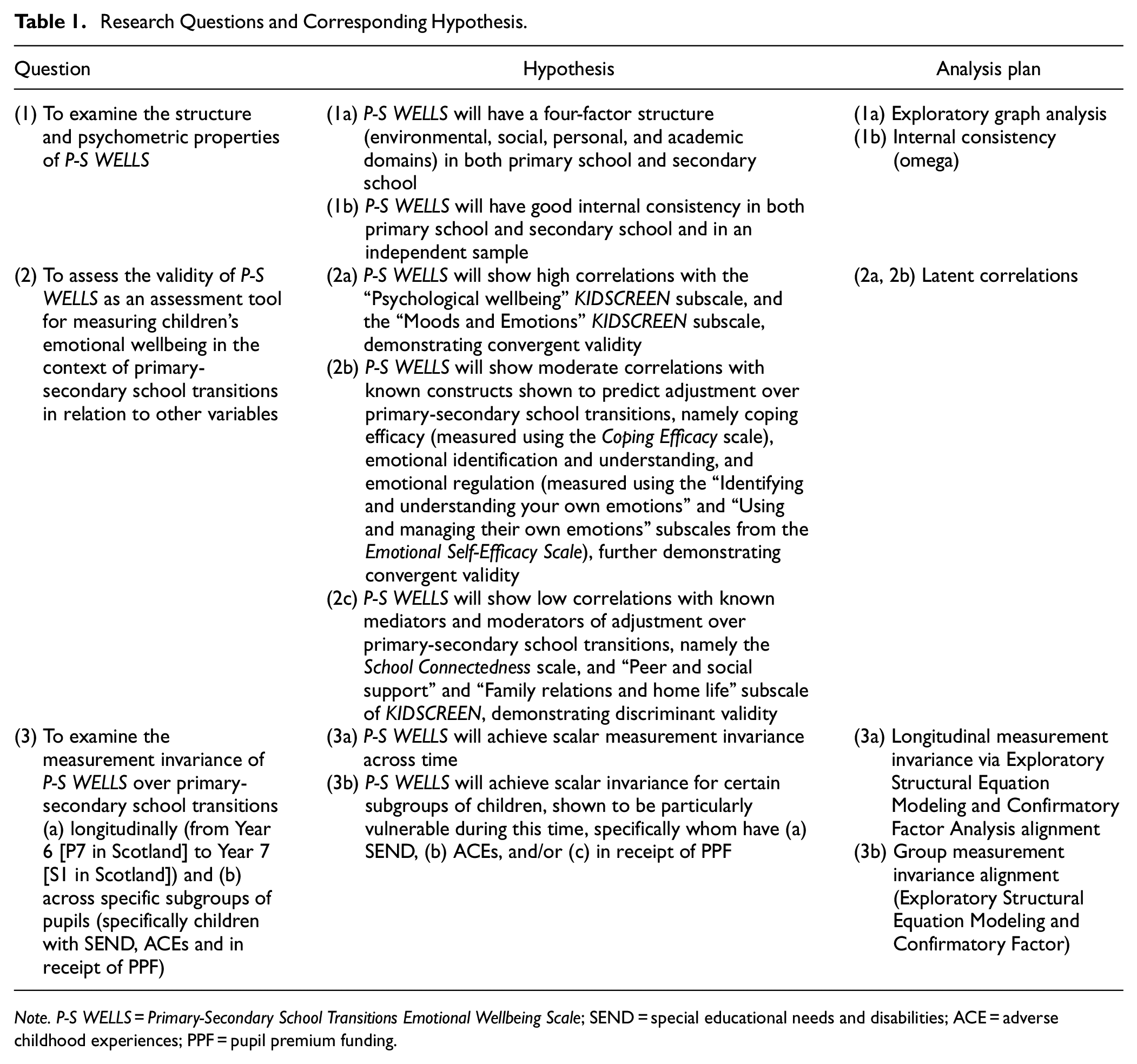
Note. P-S WELLS = Primary-Secondary School Transitions Emotional Wellbeing Scale; SEND = special educational needs and disabilities; ACE = adverse childhood experiences; PPF = pupil premium funding.
Methods
Participants
Study Setting
The studies will be conducted in mainstream primary and secondary schools across six Local Authorities. The recruitment areas provide diversity in terms of socioeconomic status, ethnicity, and urbanicity to ensure that our research setting reflects the heterogeneity of the United Kingdom.
Eligibility Criteria
Schools are eligible to participate if they meet the following criteria:
A mainstream primary or secondary school
A nonindependent school
Located in one of the six participating Local Authorities
Children will be eligible to participate if the following are in place:
They attend a participating school
They are in Year 6 in 2024 (for Study 1) or 2025 (for Study 2)
Their parents/carers do not opt them out of the study
They assent to participate
Informed Consent
The Principal Investigator is responsible for obtaining a signed Memorandum of Agreement and a Data Sharing agreement from participating schools before participant recruitment begins. All participating schools will then send information sheets and opt-out consent forms to parents/carers of Year 6 children a week prior to baseline data collection (T0), using the schools’ electronic parent/carer engagement systems (e.g., ParentMail or equivalent). This provides them with an opportunity to opt their child out of the study. This information provision and opportunity for withdrawal will be repeated prior to each annual data point.
Participating schools will also be instructed to brief children in advance so that they have at least 24 hr to decide whether to take part in the research. Briefing information will be included in the standardized instructions sent to schools and will include a brief PowerPoint presentation. Children will provide assent to participate in the study before each survey completion. Children whose parents/carers opt them out of the study, or who do not assent, will not take part in the study. We will suggest to schools that they provide these children with an alternative computer-based activity so that they do not feel or appear “different” from the other children in their class.
Sample Size
Our sample size estimations were based on an exploratory factor analysis model. We conducted Monte Carlo simulations in Mplus 8.5 with 2000 replications for 40 4-point Likert-type items and WLSMV estimation. Based on the literature, we explored a 4-factor model accounting for the social, environmental, academic, and personal wellbeing domains of primary-secondary school transitions. To be cautious, we accounted for 15% of missing data due to the longitudinal nature of the study, for ceiling effects (30%) which are typical in wellbeing research, and for average factor loadings (0.50). We varied the sample sizes (500, 750) and found acceptable coverage, good power (0.90–1), and low bias for the parameters of interest. The model fit was good for both N = 750, root mean square error of approximation (RMSEA) = 0.004, comparative fit index (CFI) = 0.996, Tucker-Lewis Index (TLI) = 0.995, and standardized root mean squared residual (SRMR) = 0.033, and N = 500, RMSEA = 0.005, CFI = 0.993, TLI = 0.992, and SRMR = 0.040. To account for further attrition, we will recruit at least 750 young people for each stage of analysis.
Recruitment
Recruitment of schools began in February 2024 and will be completed by the end of July 2025. The recruitment strategy follows successful practices and positive working relationships established in our previous large-scale school-based projects. This strategy includes each Local Authority transition lead nominating interested primary and their feeder secondary schools to participate in the study. This is followed by a formal invitation by the Principal Investigator (via email) providing transparent and accessible information regarding what participation entails, the time commitment required, and the potential benefits of involvement. In parallel, we also leveraged recruitment efforts by attending, presenting, and promoting our project at partnership school network meetings, tri-annual school cluster meetings, and by directly contacting schools as necessary.
Plans to Promote Participant Retention and Complete Follow-Up
To complete follow-up, the Principal Investigator will send reminder emails and telephone calls (as needed) to teachers of classes with missing child data to maximize the volume of follow-up data collected. To promote retention, all participating schools will receive feedback on outcomes across the study generally, and their school specifically, about their pupils’ wellbeing and adjustment over primary-secondary school transitions.
Attrition is a common occurrence in research undertaken over the primary-secondary school transition period, with the majority of studies losing up to 50% of their sample by the time children transition to secondary school. To mitigate this potential issue, we purposively worked with feeder primary schools and their respective secondary schools to ensure that the children could easily take part in the study across their transition and that teachers from both sides of the transition were invested in facilitating this, to obtain a holistic insight into their pupils’ wellbeing and adjustment. We also aim to obtain a signed Memorandum of Agreement from feeder secondary school Head Teachers as early as possible.
Measures
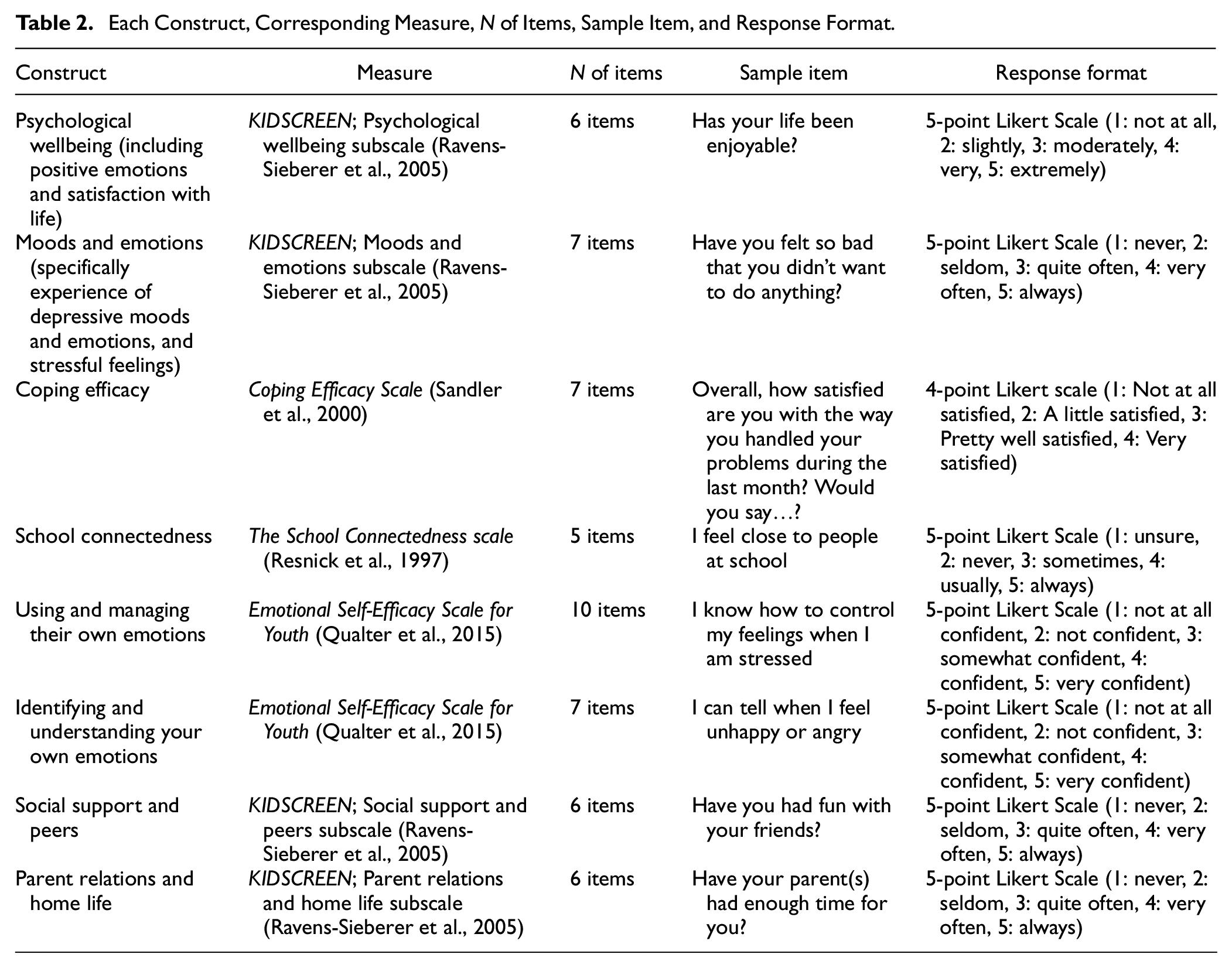
In addition to P-S WELLS, eight additional scales will be included in the child questionnaire to validate P-S WELLS. These standardized scales have been selected based on their brevity, age appropriateness/reading age, psychometric properties (e.g., all have established reliability and validity), use in similar or related research (Bagnall & Jindal-Snape, 2023; Nowland & Qualter, 2020), and measure either the same or similar constructs to P-S WELLS or constructs that are expected to be associated with adjustment during this time (Table 2).
Each Construct, Corresponding Measure, N of Items, Sample Item, and Response Format.
Data Collection and Management
The study has received full ethical approval from the [University of Manchester], and the research will be conducted in accordance with the local legislation and institutional requirements.
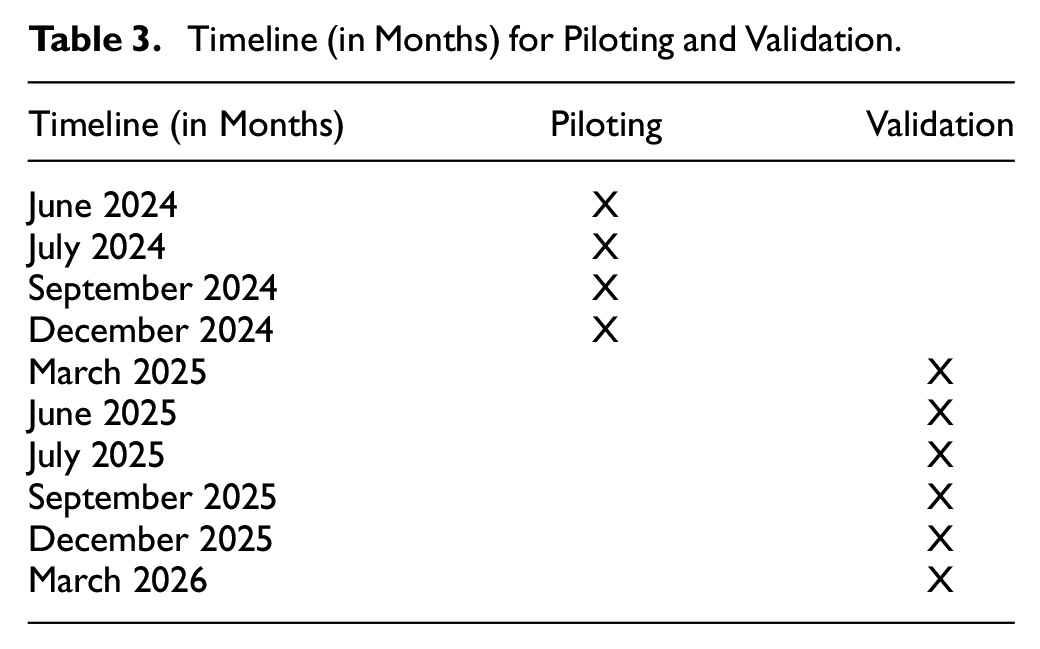
P-S WELLS is a scale that we are developing to assess children’s emotional wellbeing in the context of primary-secondary school transitions. To validate our measure, for Study 1, children will complete an online survey at four time points, for example, June 2024 (Year 6 [P7]), July 2024 (Year 6 [P7]), September 2024 (Year 7 [S1]) and December 2024 (Year 7 [S1]) and for Study 2 six time points, for example, March 2025 (Year 6 [P7]), June 2025 (Year 6 [P7]), July 2025 (Year 6 [P7]), September 2025 (Year 7[S1]), December 2025 (Year 7 [S1]) and March 2026 (Year 7 [S1]), as detailed in Table 3. Within each study, the participants will be the same pupils. These data collection time points will ensure that two transition periods (2024 academic year for Study 1, and 2025–2026 academic year for Study 2), will be examined. Our survey will consist of our pool of P-S WELLS items, and some additional brief standardized scales (outlined above) that have been shown in previous research (Bagnall et al., 2021; Donaldson et al., 2024) to be associated with adjustment over primary-secondary school transitions.
Timeline (in Months) for Piloting and Validation.
Quantitative data gathered from the child surveys will be collected via the secure, online survey platform Qualtrics: a platform that we have used successfully in several of our previous studies. Each child will be given a unique, randomly generated password that they will use to log into the survey at each time point. This will allow us to match pupils’ responses across each study. This process will be facilitated by a Data Sharing Agreement between each school and the researchers. This means that each school provides us with a class list that contains pupil information (specifically the child’s first and last name, school, and class teacher for matching purposes and to set up survey password lists); and sociodemographic factors such as sex, ethnicity, free school meal eligibility, special educational needs and ACE provision status (to be included in our statistical analyses and also used to describe the sample composition). Repeated completions of the scale will create a dataset for each pupil, that we can cross-reference with their demographic information.
There are 83 items across all of the included measures. Time stamp data from our other projects using online surveys with children of a similar age provides a useful estimate for the average completion duration. Based on these data, we expect the median completion time to be around 12 min, with the upper quartile around 24 min. However, to provide a conservative estimate (that can help schools with their planning and also ensure that our estimate covers almost all children as opposed to the likely average), we have stated in our project documentation that we expect it to take no more than 30 min for most children.
Standard processes to promote data quality will be undertaken, including valid value and range checks. In addition, data cleaning processes will be mirrored for a minimum of 5% of the data set by the project research assistant to ensure replicability.
Statistical Analysis
As mentioned in earlier sections, P-S WELLS employs a 5-scale Likert scale, thus making the data collected from this measure of an ordinal nature. However, we will treat the data as continuous assuming (a) a large sample size, (b) the data is based on a 5+ Likert scale, and (c) the data is moderately normally distributed (Flora & Curran, 2004; Rhemtulla et al., 2012). Conditions 1 and 2 are met in our data, and assuming an acceptable distribution of the items, we will treat the data as continuous.
The frequency and distribution of complete responses to P-S WELLS (and the demographics of complete responders), in addition to the incidence of missing item responses, will also be examined to explore the appropriateness of items for the target population.
Exploratory Graph Analysis
Exploratory graph analysis (EGA) will be used to explore the structure of P-S WELLS. This was chosen over other traditional factor analytic methods (e.g., parallel analysis and exploratory factor analysis) because it follows a single-step approach, whereby the number of dimensions and associations between items are estimated in a single step. This reduces researcher degrees of freedom and consequently the potential for bias and error (Golino et al., 2020). EGA is based on network psychometrics, which focuses on the relationships between observed variables, as systems, rather than treating them as functions of latent variables (Epskamp et al., 2016). It does so visually by producing a network that indicates the number of dimensions within the data, which items cluster together, and their level of association (Golino et al., 2020). EGA was found to perform equally well or outperform other methods (e.g., parallel analysis, Golino & Epskamp, 2017; Golino et al., 2020). This is possible because the network psychometrics approach focuses on the unique variance between pairs of variables rather than the variance shared across all variables, as in traditional factor analytic methods (see Golino et al., 2020 for more information on the method and performance). Analysis will be performed in R using EGAnet (Golino & Christensen, 2024).
Confirmatory Factor Analysis
Confirmatory factor analysis will be carried out in the validation sample only to explore the P-S WELLS structure identified by EGA in the pilot sample, using robust maximum likelihood. Model fit will be judged using standard criteria of model fit, where acceptable fit is considered with a CFI of ≥0.95, SRMR ≤0.08, and RMSEA values below 0.05 being considered good (Fabrigar et al., 1999; Hu & Bentler, 1999), values between 0.05 and 0.08 acceptable, between 0.08 and 0.10 marginal, and values greater than 0.10 are considered poor (Fabrigar et al., 1999). Analyses will be carried out in R using the Lavaan package (Rosseel, 2012).
Internal Consistency
Assuming a multidimensional P-S WELLS measure, internal consistency will be assessed using the hierarchical omega coefficient (ωh) in R, with estimates equal to or larger than 0.80 considered acceptable (Kalkbrenner, 2023; McNeish, 2018).
Correlations With Other Measures
The association between P-S WELLS and all measures described above will be explored via structural equation modeling using Lavaan, to explore their level of association, with values greater than .80 indicating issues with discriminant validity (Brown, 2015).
Measurement Invariance
Longitudinal and group measurement invariance will be assessed in both the piloting and validation samples, using exploratory structural equation modeling (ESEM) and confirmatory factor analysis (CFA), using the structure identified by EGA. Longitudinal invariance will be assessed across Y6 and Y7, whereas group invariance will be considered for PPF (Garner & Bagnall, 2024), special educational needs (Symonds et al., 2024), and ACEs (Dunnett et al., 2025) based on their role in both wellbeing and transitions. Measurement invariance will be explored via the alignment method in Mplus, where available, as this does not assume exact invariance between groups or time (Leitgöb et al., 2023).
Where the alignment method is available (see Table 4), we will follow a 2-step process. First, we will explore the fit of the baseline configural model, which holds the same structure across time points and groups but allows the factor loadings and intercepts to vary. The fit will be judged using the criteria mentioned above (see “Confirmatory factor analysis” section). Second, we will explore the level of non-invariance in loadings and intercepts, using the alignment method in Mplus. Following the guidance for preregistering alignment decisions (Luong & Flake, 2023), we will use the FIXED (assumes that the intercept of the first group is zero) and FREE (factor means estimated freely) alignment optimization for two-group and multiple-group comparisons, respectively. The percentage of intercept and loading non-invariance will then be calculated as the ratio of non-invariant parameters to the total parameters, with a threshold of 25% indicating acceptable levels of non-invariance (Luong & Flake, 2023; Muthén & Asparouhov, 2014). Monte Carlo simulations using the starting values of the aligned models with 1,000 repetitions will also be carried out to explore the performance of the alignment. Latent means will be considered to be accurately estimated if near-perfect correlations between the real data and generated factor means are observed (Muthén & Asparouhov, 2014). R2 values close to 0 will indicate high non-invariance, and a value of 1 indicates full invariance for loadings and intercepts (Asparouhov & Muthén, 2014).
Planned Analyses Per Study.
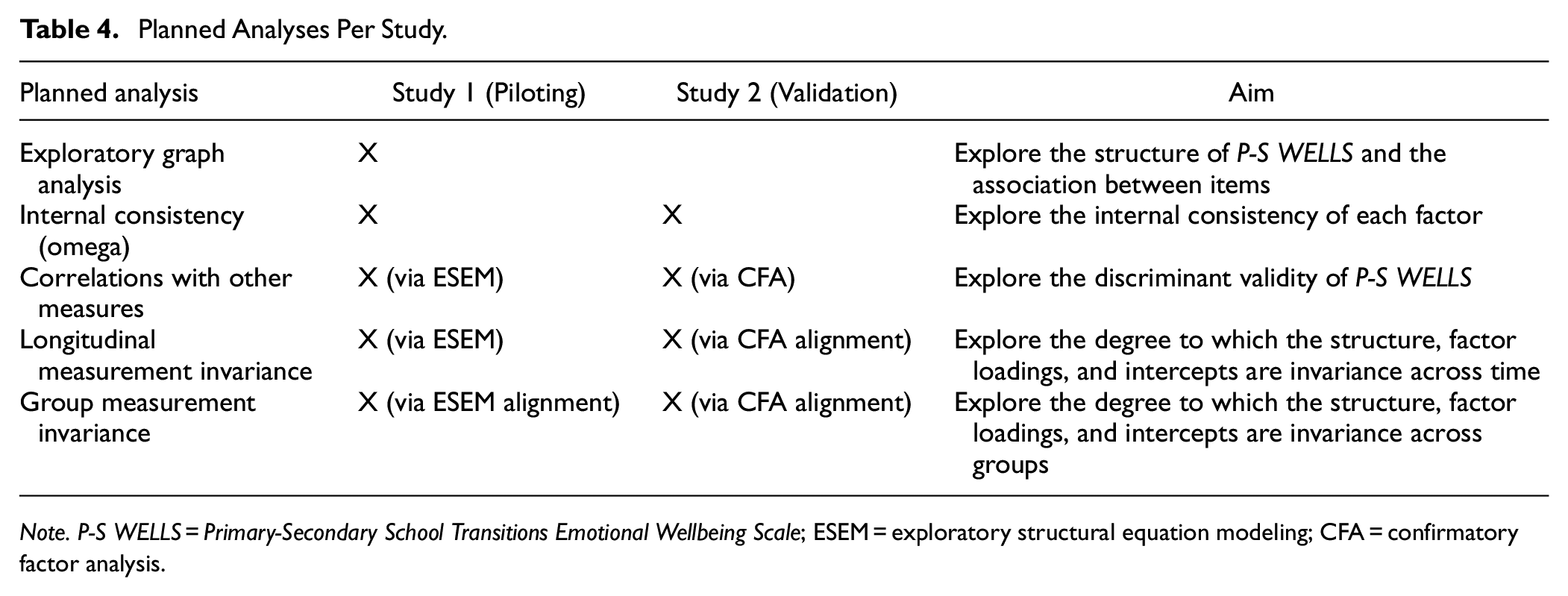
Note. P-S WELLS = Primary-Secondary School Transitions Emotional Wellbeing Scale; ESEM = exploratory structural equation modeling; CFA = confirmatory factor analysis.
Currently, alignment is not possible for longitudinal ESEM. If this remains the case by the time the longitudinal data is collected, traditional longitudinal measurement invariance will be explored, following a three-step procedure (baselines, configural, and scalar). First, using the aforementioned criteria for model fit we will consider the fit of the baseline models across time points. Following acceptable fit, the configural model (free loadings and intercepts) will then be compared with the scalar model (equal loadings and intercepts). These models will be compared using the CFI difference, where a CFI increase lower than 0.01 in the scalar model will be considered as indicating approximate measurement invariance (Cheung & Rensvold, 2002).
Footnotes
Appendix A
P-S WELLS draft scale items
Stem: Now that you are in the summer/spring/autumn/winter term of Year 5/6/7, answer the questions while thinking about how you have felt recently:
Scale: 1: Strongly disagree; 2: Disagree; 3: I’m not sure how I feel; 4: Agree; 5: Strongly agree; 0: I don’t understand this question
Acknowledgements
We would like to thank our advisory groups and schools participating in our research for their ongoing support.
Author Contributions
Study conceptualization: C.L.B., D.J.-S., M.P., P.Q.; Methodology and study design: C.L.B., M.P.; Power analysis: M.P.; Writing of original manuscript: C.L.B., M.P., E.B.; Funding acquisition: C.L.B., D.J.-S., P.Q., M.P.; Data management and curation: C.L.B., E.B., C.M.; Review and editing of final manuscript: All authors.
Declaration of Conflicting Interests
The author(s) declared no potential conflicts of interest with respect to the research, authorship, and/or publication of this article.
Funding
The author(s) disclosed receipt of the following financial support for the research, authorship, and/or publication of this article: This project is funded by The University of Manchester Faculty Research Investment Fund.
Ethical Considerations
The study has received full ethical approval from the [anonymized university name], and the research will be conducted in accordance with local legislation and institutional requirements.
Consent to Participate
Written informed consent for participation in this study will be provided by the schools’ Head Teachers, opt-out consent will be obtained from the children’s parents/carers and children will provide assent to participate in the study before each survey completion.
Consent for Publication
Written informed consent for publication in this study will be provided by the schools’ Head Teachers, and assent by the children.
