



Abstract
Visual depictions of designed/proposed spaces communicate their intended qualities, use, and users, but visualizations that fail to include a fair representation of the people for whom the spaces are designed can create barriers, both real and imagined. A lack of diversity and inclusivity within visuals reflects a disregard for marginalized individuals and a lack of understanding of their needs. Here, we investigated whether an initial focus on the representation of people within design visualizations could be an effective pedagogical tool to introduce and aid further development in student understanding of Diversity and Inclusion more broadly, and how these can impact the practice of Interior Architecture and Design to create more truly inclusive spaces. Our workshops focused on the effects of visual representation, unconscious bias, and inclusion/exclusion; the range of individual characteristics to consider when developing designs; and how to engage with potential users via co-creation. We also used writing activities to enhance reflection and empathy, providing guidance on developing diverse and inclusive human representations. Collection of quantitative and qualitative data from two cohorts of undergraduate Interior Architecture & Design students who took part in our interactive workshops via a hybrid setup allowed us to observe three main outcomes from workshop participation: improved understanding of the importance of visuals in communicating social and political aspects of designed spaces; increased consideration of the characteristics of inhabitants for whom spaces are designed; and improved confidence in engaging with marginalized communities. Our workshops also led to a deeper understanding of ways in which different group characteristics and identities intersect to influence how people experience and use designed spaces, and to the successful application of this knowledge to subsequent student projects. We conclude that an initial focus on diverse and inclusive visual representations of people appears to be an effective approach to facilitating the use of more inclusive practices throughout the entire design process.
Keywords
Introduction
Within the disciplines of Interior Architecture and Design (IAD), the visual depiction of spaces is one of the most important tools to communicate the use, users, and qualities of designed or proposed spaces to clients, collaborators, and interested parties. Such depictions provide a means to clearly convey design concepts, spatial layouts, material selections, and the functionality of a space. These visualizations are also, however, a demonstration of those aspects deemed most important, and as such are a tacit social and political statement as to how a space can and should be used, and more importantly—by whom. Choosing how to visually represent individuals within these environments, therefore, influences how people perceive and comprehend these spaces and shapes their understanding of who they are intended for, since “seeing” is often conflated with “knowing” (Rose, 2001).
Both in academia and industry, there is a heavy reliance upon stock images of people to populate visualizations, but such images are often just stereotypes produced to simplify information and serve specific economic and political interests, rather than to provide realism or accuracy (Roxburgh & Caratti, 2018). This widespread use of stock images then perpetuates a homogenized vision of society that reinforces existing power structures and socio-economic hierarchies. So, when students visualize their ideas with such images, the representation of inhabitants for their spaces tends to fall short of reflecting the real world; instead, portraying a narrow, limited, and conformist perspective.
While the concept of design visualization necessarily involves ap-presentation (rather than re-presentation; Schutz & Luckmann, 1989), throughout our careers as educators in IAD, as well as in various roles such as external examiners, members of Interior Educators (UK & Ireland), and global workshop facilitators, we have consistently observed that the individuals depicted in visualizations often reflect the socially dominant characteristics of the designers themselves. Despite the broad spectrum of student projects, end-of-year shows, competitions, and dissertations that we have assessed over the years, we have consistently noted that the figures depicted in these visuals have been overwhelmingly young, white, and able-bodied (please see Figure 1 for an indicative example of how people are generally represented within an interior visual produced by undergraduates). These characteristics are also indicative of the predominant student demographics within Architecture and IAD courses (Albert et al., 2023; Benton et al., 2018; Pilat et al., 2022). While previous investigations have shown that students tend to design with themselves in mind (e.g., Dong, 2010; Rieger & Rolfe, 2021), in our extensive classroom experience, we have noticed that even when students themselves do not fit the stereotypical mold of “young, white, and able-bodied,” their visual representations often do—an observation that has been confirmed by several other studies (e.g., Acuff & Kraehe, 2020; Degand, 2019; Innes, 2021; Roxburgh & Caratti, 2018). Such a lack of diversity in visuals is also demonstrative of a limited understanding of the many and varied ways in which inhabitants will perceive, experience, and use designed spaces, which suggests a deep-seated influence of prevailing norms. This underscores the need for intentional efforts within IAD education to broaden students’ perspectives on the specific needs and lived experiences of the people that will ultimately use their designs.
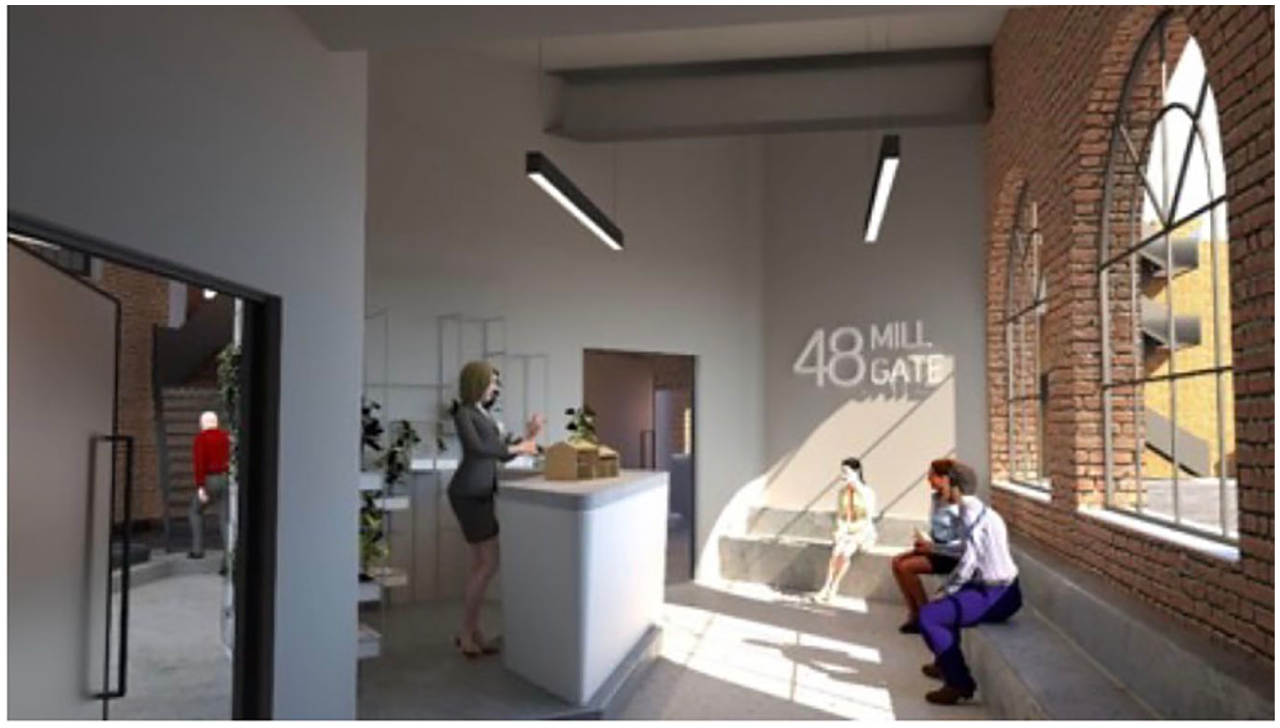
This image shows an example of a typical visual from a student project, which often shows a lack of diversity and reflects a narrow perspective of the inhabitants of designed spaces.
Every choice a designer makes regarding the inclusion of inhabitants in a space is inherently political because these decisions dictate who can access, use, and benefit from the space, and who is not. The resources and amenities provided, and how they are allocated also reflect the relative importance of the people they are provided for and their perceived value within the community. So, when it comes to conveying the concept of a future space, this becomes a “communicative construction” (Christmann et al., 2020) of a future world in which specific people or groups are either implicitly welcomed or rejected. “This careful process of inclusion and exclusion defines who is and is not part of this future reality, manifesting the political agendas that lie behind the image” (Innes, 2021, para. 5). We, therefore, assert that the absence of attention to diversity and inclusion (D&I) within the development of visuals reveals a cultural approach marked by designers who may be unaware of, unable to—or disinclined to—critically question the socio-political environment in which they operate. In fact, we further suggest that a distinct lack of diversity and inclusivity within visuals is reflective of both a lack of consideration of the existence of people who are not the same as the designers themselves, and a lack of understanding of the needs of more diverse populations overall (Imrie, 2003).
Informal discussions with our students during seminars, studios, tutorials, and workshops have revealed that such limited representations and inadequate considerations may be due, in part, to a lack of explicit instruction in how to avoid bias and stereotypes within visuals, and more concerning—a lack of guidance (or at least a perceived lack of thereof) about how to go about considering and including input from a wider range of users across the whole design process (Ostroff, 2011; Zallio & Clarkson, 2021). Our students have also suggested that they are nervous about representing people incorrectly, and so select images which they are familiar with, resorting to representations of the world as dictated by mainstream media, or the selective algorithms within social media, which are then reproduced without much critical reflection (Acuff & Kraehe, 2020; Dixon et al., 2019; Innes, 2020; Roxburgh & Caratti, 2018).
We suggest, therefore, that the conventional lens through which inhabitants are currently represented and understood clearly needs to be redressed to include non-Western ways of living, non-binary ways of being, and to reflect on issues of gender, race, culture, social class, and economic status, able-ism, and other diverse individual and/or group characteristics. We sought to address this among our students by increasing their awareness and understanding of the need for D&I within IAD. Our work was underpinned by the principle that education and awareness are essential factors in the development of an inclusive mindset (Zallio & Clarkson, 2021) and was motivated by the gap we observed in our students’ understanding of how their design choices, and the ways these are then expressed or depicted, might impact potential end-users—despite the fact that inclusive design and intersectional D&I considerations were already embedded throughout the courses at both our institutions.
Indeed, previous research has demonstrated that when D&I material is integrated within other modules, the delivery of this approach is not necessarily fully recognized by students (Wilson et al., 2019), and best practice recommendations for inclusive design education within UK HEIs has suggested that this should also be taught by a multidisciplinary team as a stand-alone element to increase student awareness and understanding (e.g., Dong, 2010; Morrow, 2022; Wilson et al., 2019). Therefore, we aimed to develop an interdisciplinary workshop to explicitly introduce students to the key concepts of D&I, both in terms of how these concepts relate to IAD practice, and how they are constructed from the broader societal context in which these disciplines operate. As stated by Morrow (2022) “. . .any course with an inclusive design approach needs to examine the stereotypes and prejudices that exist in all of us as individuals and in society as a whole” (p. 21).
We determined that our workshop needed to challenge un-/subconscious social norms by educating our students about three interrelated elements: (1) the psychology underlying the social construction of individual differences and group characteristics; (2) unconscious biases and stereotypes, and how these operate to reinforce narrow and conformist perspectives from the dominant social hierarchy; and (3) intersectionality—understanding how the various aspects of a person’s social and political identities combine to create different modes of discrimination and privilege (Cho et al., 2013; Crenshaw, 1989). Our workshops then explored how these elements combine to impact how people view and experience the world while encouraging our students to reflect on how their perspectives were impacted by them (Franck & Lepori, 2000; Morrow, 2022). Furthermore, we wanted our workshops to help students recognize how changes of perspective could enhance their ability to investigate design problems; foster meaningful and impactful end-user engagement via community consultation, co-design, and co-production; and lead to more thoughtful, inclusive design outcomes.
Since expressing inhabitation necessarily involves considering how spaces are occupied and utilized, and by whom, we hypothesized that focusing on representation within visualizations as a lens through which to examine D&I within IAD could provide a tangible, quantifiable, and easily accessible way to demonstrate how unconscious bias can (even unintentionally) result in marginalization or exclusion. Furthermore, this lens could be expanded to examine each stage of the design process to enable students to critically reflect upon who they may have had in mind, and who they may have failed to consider, when developing their projects in the first place. Therefore, we investigated the efficacy and impact of such an approach, using the depiction of people within IAD visuals as a pedagogical tool with which to both introduce D&I and then expand upon the outcomes of inclusion/exclusion of specific groups and individuals from the design process as a whole. The benefit of this specific “empathic model of engagement” approach is that it can also help to bridge the gap between theory and practice by providing students with the opportunity to critically reflect upon their contextual application of D&I principles. This should then serve to enhance the effectiveness of conveying design concepts while also promoting a deeper understanding of the lived experiences within these spaces because, as suggested by Hadjiyanni (2020), interior design has a role to play in “identifying systems of exclusion as well as working to change them” (p. 5) since social inequalities are often at least partly spatially constructed (Hadjiyanni, 2019).
Literature Review
The Importance of Inclusive Design
Since the introduction of limited technical standards for accessibility in the 1960s, accessibility has been a part of the UK IAD teaching curriculum, but with a specific focus on designing ways to mitigate challenges to physical accessibility, and the degree to which this is then incorporated into professional practice still varies widely; ranging from a strict adherence to legislative requirements, through to broader consideration of diverse requirements throughout the design process (Wauters et al., 2014). Within industry, such standards are often perceived merely as mandatory requirements rather than as a catalyst for the development of innovative design solutions that cater to those who have differing accessibility or inclusion needs (Lee et al., 2023), which has often led to a narrowing of focus toward solving functional mobility issues for wheelchair users (Perez Liebergesell et al., 2021; Tauke & Smith, 2020). Further accessibility or inclusivity considerations are frequently neglected in commercial design projects due to concerns over cost, as these may be perceived as adding complexity or lengthening the design and build processes, while catering for a “minority” of users (Heylighen et al., 2006; Imrie, 2001; Imrie & Hall, 2001) and inclusive features have often been regarded as too challenging to be made an integral part of a design, because these aspects were perceived as interfering with design aesthetics (Mulligan et al., 2018). This has meant that a sizeable proportion of potential end-users may be prevented from participating on an equal basis due to barriers imposed by society through environments, and services that do not consider the full range of users and their needs (Coleman et al., 2003; Hamraie, 2016).
Individuals facing challenges in accessing or utilizing spaces, products, and services (often referred to as “edge users”) are also frequently excluded from participating in, or even being considered during, the design process (Jagtap, 2022; Price Waterhouse Cooper, 2019), and while some within this spectrum face outright exclusion, a larger proportion will experience inconvenience. Successful accessible and inclusive design allows individuals with disabilities or varying needs to increase their performance, independence, and autonomy in their daily activities (Gefenaite et al., 2020). However, despite the more positive framing (e.g., “priority” or “special” treatment) design frequently provides a thin veneer of inclusivity, while resulting in exclusionary outcomes, so even when physical barriers are removed, the functionalist approach (Gissen, 2022) of providing adaptations that are separate, cumbersome, and/or time-consuming to use, also contribute to the marginalization and “othering” of many individuals (Hamraie, 2016, 2017; Pérez Liebergesell et al., 2021). Importantly, the challenges faced by people who have disabilities, or “atypical” access or utilization needs, are seldom straightforward; instead, they are often intersectional and multi-dimensional. As explained succinctly by Tingley (2020, para. 34), “When we don’t notice the built environment, it’s silently affirming our right to be there, our value to society. When we do, too often it is because it’s telling us we don’t belong.”
Since the 1980s, the “Universal Design” movement (a term coined by US architect Ronald Mace, which later evolved into “Design for All” or “Inclusive Design” 1 ) has advocated the move away from “specialized” solutions and toward inclusive mainstream design that considers the widest possible range of user needs from the outset. Indeed, when accessibility and diverse abilities are central considerations of a design, this approach often provides better solutions than when a design focuses on the “norm” (Heylighen et al., 2017; Roy, 2015). However, understanding of the importance of Universal or Inclusive Design also varies widely within professional practice (Heylighen et al., 2017; Rossi, 2019). This may be due, at least in part, to the fact that traditional teaching approaches within IAD have tended to focus predominantly on regulatory compliance, minimum standard provision and physical access (Scott et al., 2018), and even when Inclusive Design is explicitly addressed, this still tends to emphasize group characteristics such as physical disability and aging (O’Shea et al., 2018; Rieger & Rolfe, 2021; Steinfeld & Maisel, 2012), with much less attention paid to other forms of disability, and equally importantly—other individual and group characteristics that may also affect the perception, experience, and effective use of interior spaces are often overlooked completely (Hadjiyanni, 2018; Zallio & Clarkson, 2021).
“Inclusive Design” is not Always Inclusive
While the goal of Inclusive Design is to create products, environments, and systems that are accessible and usable by as many people as possible, in practice, unconscious biases held by designers or interested parties can influence design decisions, leading to solutions that still primarily cater to certain demographics, while neglecting others. If the full range of intended users is not adequately engaged or represented during development, their perspectives may be overlooked, and limited awareness of the full spectrum of human diversity can lead to unintentional exclusion of those with differing age-based, gender-based, sexuality-based, health & ability-based, or neuro-cognitive needs (e.g., de Vries, 2021; Greed, 2016; Morgan, 2019; Slater & Jones, 2018).
Social class and economic background, particularly in relation to wealth and poverty, are strong determinants of access to, and engagement with, designed environments. Built environments that are socially sustainable and responsible can enhance the quality of life for individuals and communities (Smith et al., 2012), but when this is not the case, designed spaces can serve to exacerbate existing inequalities by undermining social integration, limiting economic opportunities, and negatively impacting physical and mental health. Spaces should also reflect and respect diverse cultural backgrounds, traditions, and practices (Hadjiyanni, 2018). Indeed, diversity relating to factors such as these requires both particular attention and targeted design interventions (Hadjiyanni, 2022). As stated by Hamdy Mahmoud (2017), “. . .places remind us of the main features of our identity. . .” (p. 3), so engaging with local communities and incorporating their socio-cultural insights into design decisions and architectural outcomes is crucial for the creation of spaces that resonate with diverse populations (Pinos Sarmiento, 2025). Such consideration fosters a sense of belonging and respect (Smith et al., 2014), particularly since individuals with marginalized or stigmatized identities are especially attentive to cues that signal whether they are welcomed and valued (Chaney et al., 2019).
Such examples illustrate the importance of developing an in-depth understanding of the target context for design projects, yet often within large-scale projects, the intended user remains abstract or hypothetical (Verhulst et al., 2016). Imrie’s (2001, 2003) investigations show that the bodies designers have in mind when designing tend to be either a self-referential image or an abstraction of what the designer considers to be “normal” or “neutral”: typically either male or genderless; white or raceless; adult or ageless; and without any form of physical difference such as disability, injury or ill-health (c.f. Perez Liebergesell et al., 2021).
Within Western architectural design, this notion of a “standard” human form—from which anything else is judged to be a deviation, was formalized as early as the 1st century BCE by Vitruvius, whose treatises The Ten Books on Architecture (c. 15 BCE) firmly established the link between architectural proportions and human (specifically male) physiology. Leonardo da Vinci’s Vitruvian Man (c. 1490) was in essence a visual representation of this theory and proved foundational to the development of Le Corbusier’s “Modulor Man” (1948, 1955) which used mathematical justifications to further entrench the young (now 6 foot), tall, able-bodied white male as the default design subject.
These specifically anthropometric models of design have profoundly influenced subsequent ergonomic standards and spatial planning tools, such as those found in the Architects’ Journal Metric Handbook (1978; Buxton, 2021), Human Dimension & Interior Space (Panero & Zelnik, 1979), or Neufert’s Architect’s Data (1936, 2023), which continued to offer spatial “standards” for dimensional guidance. As Tell (2019) highlights, however, despite appeals to the “impartial authority of numbers” (p. 24) such anthropometric measurements are far from neutral; they are embedded with socio-politico-cultural biases which, in constructing a norm—also suggest that any and all bodies that fall outside of these ideals are, by definition, “abnormal” (please see Daniel, 2023 for a much more comprehensive discussion).
It is then, no wonder that a lack of practical experience or exposure to diverse user experiences among our students can hinder their ability to empathize with individuals whose needs differ from their own, and in terms of their ability to design with these needs in mind (e.g., Altay, et al., 2016; Perez Liebergesell et al., 2021). Even when students attempt to design for users with characteristics that differ from their own or a hypothetical “standard,” a lack of experience or understanding can lead to a reliance upon stereotypes and assumptions (Rieger & Rolfe, 2018, 2021), leading to interior architectural spaces that do not effectively meet the needs, preferences, and requirements of the actual occupants. Indeed, spaces that reflect the assumptions of their creators tend to be no more inclusive than those designed for the “standard” user, with mismatched functionality, poor space utilization, wasted resources, low user satisfaction, and negative impacts on wellbeing (Steinfeld & Maisel, 2012). Truly inclusive design needs to place the “real” intended users at the center of the design process, with users driving the major design decisions via communication of their real needs, capabilities, and socio-cultural desires (Rossi, 2019) so it is essential to prioritize user research and engagement throughout the design process, designing with rather than for diverse communities (Martin & Casault, 2005).
The Effects of Visual Representation and Exclusion
The lack of diversity or inclusivity we have observed within our student visual representations is not surprising, as groups that are valued within the dominant culture of society (the “in group”) tend to be over-represented within art, media, and other forms of visual depiction; they are shown significantly more frequently, and viewers learn about both the purported characteristics of, and the implied value or importance of, this group via exposure to these mediums (Dixon et al., 2019). By contrast, groups that are not valued within the dominant culture of society (the “out” group) are underrepresented; they are shown less, are heard less, and are excluded from the prevailing narrative. Omission, trivialization, or condemnation within the media sends a strong message about the societal value of these groups, the implication of which is that these people are not “us,” these people are “other” and therefore less important and less deserving of consideration (Caswell et al., 2017; Mastro, 2009).
These messages are impactful, as even though we may understand that what we see within the media is not a true reflection of the real world, our brains are less discerning, and so visual media exposure often serves as a proxy for experience (Bandura, 2009; Busselle & Shrum, 2003). Media messages act as “agents of socialization” (Klein & Shiffman, 2009, p. 58) that both reflect dominant cultural schemas and serve as a source from which individuals develop knowledge and understanding of how things typically work (Baumann & de Laat, 2012; Tortajada-Giménez et al., 2013). This means that beliefs, attitudes, and expectations that are based on media representations are often used for real-world decision-making (Tukachinsky et al., 2017). Thus, visual representations play a crucial role in shaping our collective memory, cultural identity, and sense of belonging by influencing our perceptions and understanding of environments, but often they present a skewed or distorted view. When specific individuals or groups are absent or misrepresented, it contributes to the erasure of their cultural perspectives and experiences, making them feel like outsiders in places and spaces where they are un- or under-represented. This “symbolic annihilation” (Gerbner & Gross, 1976, p.182) contributes to both categorical and intersectional forms of marginalization (Gopaldas & Siebert, 2018) from and within society. In addition, such absence also has broader societal implications; since representations inform the realities that people experience (Howarth, 2011), the conversion of these social representations into social reality happens via their impact on social attitudes and cultural norms, which serve to perpetuate systemic inequalities. Exclusion from representation tends to reinforce dominant cultural narratives that marginalize or silence specific groups, perpetuating power dynamics and systemic barriers. By contrast, “representational belonging” enables a sense of inclusion and social belonging, empowering people to envision their place in both local communities and larger global social movements, as well as possibilities for the future (Caswell et al., 2017).
The Representation of People as a Way of Introducing D&I into IAD
When constructing visualizations, the designer conveys detailed information about the designed spaces, such as materiality and atmosphere, and also communicates ideas and values of an envisioned future world, shaping societal beliefs and values. Choosing how to visually represent individuals within these environments, therefore, influences how people perceive and comprehend these spaces and shapes their understanding of whom they are intended for. So, while visualizations may be merely one criterion through which the success of a design is evaluated, they are the way that future spaces are most often accessed and understood by the wider public; visual depictions of people serve to both reflect and reinforce social norms and values, while teaching viewers/potential users how the world works and their place within it via symbolic socialization (Weaver, 2007). Design visuals, therefore, also have the potential to disrupt prevailing social narratives by normalizing a range of identities, lifestyles, and abilities as integral to envisioned spaces.
With this in mind, we decided to use the visual depiction of people as a focus to help students understand the impact that communication has on recipients/users and the wider community, since expressing inhabitation also intrinsically involves considering how spaces are utilized and occupied, and by whom. By examining designs from the perspective of those who will inhabit them, we aimed to reflect a more comprehensive and empathetic approach to design, both enhancing the effectiveness of conveying design concepts and promoting a deeper understanding of the lived experiences of people within these spaces. This empathic approach to design transcends textbook knowledge and quantitative data; it aims to cultivate designers’ capacity to empathize with others’ thoughts, emotions, understandings, expectations, and aspirations (McDonagh & Thomas, 2010; Postma et al., 2012). Such an approach also fosters innovative design solutions that take into account the diverse and varied experiences and needs or requirements of individuals (Dankl, 2013; McGinley & Dong, 2011), while helping to promote the understanding that individuals belong to many multiple identity groups at once, and that these groups’ boundaries are fluid; any identity may be more or less salient at any given time, depending upon the context of the situation (Fincher & Iveson, 2008).
Educational institutions play a pivotal role within the IAD profession, exerting substantial influence on professional practice (Manley & De Graft-Johnson, 2013). Recognizing the importance of education and awareness in developing an inclusive mindset within the field, efforts have been made to begin the process of decolonizing IAD (see Hadjiyanni, 2019, 2020 for further detail) and to integrate relevant theories and principles of inclusive design into IAD pedagogy and curricula (Zallio & Clarkson, 2021). For instance, positioning inclusive design as a central theme in lectures allows for the introduction of key concepts and frameworks (Dong, 2010). However, while service-learning and community-engaged work are increasingly common practices that benefit both students and end-users, these partnerships may inadvertently perpetuate power imbalances between planners and users (Porter, 2015), with feedback from other designers often seen as more valuable than feedback from clients (Lukman et al., 2014). Efforts to address such power dynamics are essential in ensuring equitable and inclusive outcomes in professional practice while emphasizing the importance of authentic and informed representation and avoiding tokenism in visual depictions also ensures that how designs are communicated resonates with a wider range of audiences.
Therefore, to situate D&I as intrinsic to all parts of the design process, we created a series of exercises that encouraged the careful consideration of specific key personal and “group” characteristics—both those that are visible (such as some aspects of gender, ethnicity, age, and physical ability) and invisible (such as such culture, sexuality, social class and economic status, physical and mental health, cognitive ability, and neurodiversity). Our students were tasked with engaging with the perspectives and experiences of individuals who differ from themselves, which necessitated placing the user at the center of the design activity, while carefully considering who these spaces were intended for and who the inhabitants of a designed space really are (Hadjiyanni, 2013).
Humans of Interiors/Diversity by Design Workshops: Addressing Unconscious Bias and Exclusion in IAD Education
While the IAD discipline places significant emphasis on human-centeredness, inclusivity, and empathy, there has tended to be a lack of explicit guidance on integrating D&I principles throughout the design process (Dong, 2010; Hadjiyanni, 2013; Manley & De Graft-Johnson, 2013; Rossi, 2019; although see Hadjiyanni, 2020). This deficiency is indicative of a broader cultural approach entrenched within design education and professional practice, highlighting the need for a fundamental re-evaluation and transformation to fully embrace diverse perspectives and experiences. To do so involves not only decolonization of, and integrating D&I principles into, the IAD curriculum but also fostering critical discussions and experiential learning opportunities that encourage students to confront their own biases and expand their understanding of diverse perspectives.
Recognizing the reliance of both design education and the design industry on conventional modes of communicating the imagined inhabitants of projects, Humans of Interiors/Diversity by Design was born as a collaboration between academics from the University of Lincoln’s School of Psychology, the Interiors programs at Lincoln and Middlesex Universities, and the Academic Writing and Language team at Middlesex University. Its primary aim was to equip IAD designers and educators with the knowledge and tools necessary to address unconscious bias, inclusivity, and diversity in their practice. Using the visual depiction of people as a method of both introducing and further developing the concepts of diversity and inclusion/exclusion, our interdisciplinary sessions combined theoretical content that delved into the political and social implications of representation choices to address unconscious bias and introduce inclusive concepts with practical exercises designed to foster empathy, alongside techniques tailored for creating inclusive figures in interior visuals. By emphasizing the importance of D&I considerations within IAD at each stage of the design process, these workshops provided a comprehensive overview of ongoing dialogues within the field, challenging participants to critically examine prevailing norms and cultivate a more empathetic approach to design.
Initial Workshop Development
In January 2020, the the University of Lincoln’s Teaching and Learning Innovation Fund supported the creation of a Diversity and Inclusion Workshop within the School of Design. The development of this initial pilot workshop was guided by social constructionist (Berger & Luckmann, 1967), and constructivist (Vygotsky, 1978) frameworks to ensure that our students were able to understand and explore the contexts underpinning such socio-culturally defined concepts as individual and group traits while acquiring new knowledge through active engagement, social interaction, reflection, and inquiry-based activities.
This optional workshop was comprised of three interactive seminars discussing the effects of unconscious bias, the importance of representation for under-represented and/or marginalized communities, and cross-cultural communication. Students were then randomly assigned a specific “protected characteristic”
2
and encouraged to research and develop a series of figures in their artistic style, which would accurately reflect the inherent variability and diversity within that specific group trait. Preliminary images were critiqued by both instructors and peers in terms of diversity, inclusivity, and authenticity/contextual realism, with this feedback forming part of the iterative figure development process (please see Figure 2 for examples of the inclusive figures developed during the initial Pilot workshop at the University of Lincoln). Student feedback from this inaugural workshop was overwhelmingly positive and highlighted the need for both the continuation of such an initiative and further integration of D&I principles within the IAD curriculum:
I was shocked to reflect upon my own work thus far and that of my peers only to recognise such blatant exclusion. . . I felt instantly compelled to engage with the [workshop] and it is my hope that through my participation and contribution to it that I will be able to educate those around me now and a wider circle as I progress through my career. University of Lincoln Pilot Workshop Participant, 2020
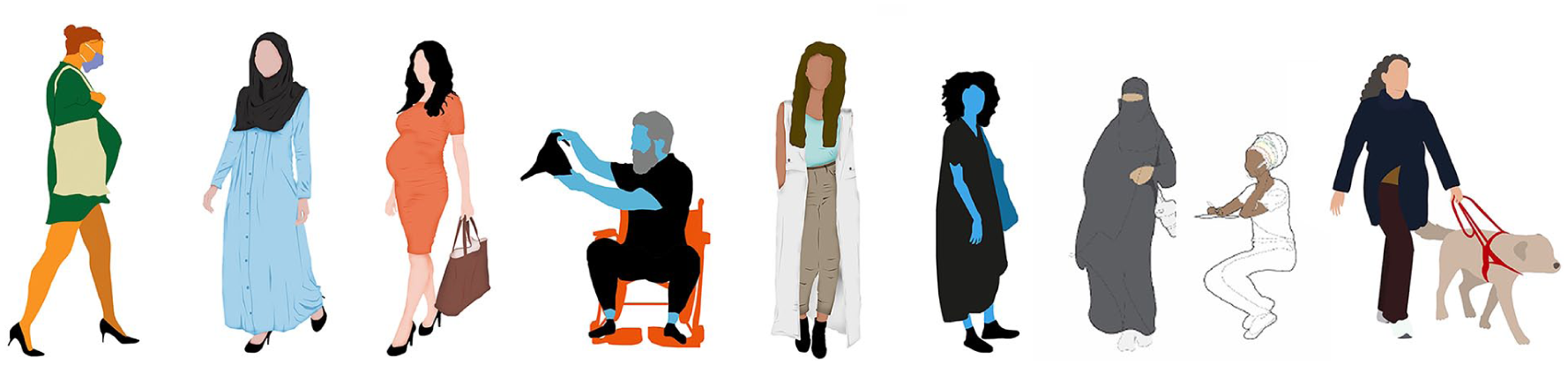
Examples of the inclusive human figures produced by students via the iterative co-design process used during our pilot Diversity and Inclusion Workshop at the University of Lincoln.
At Middlesex University, D&I is a fundamental principle that shapes our approach to IAD education, emphasizing a transformative teaching methodology rooted in social responsibility. This common interest in representation across Institutions drove our collaborative efforts to further develop and refine the initial pilot into a one-day workshop, suitable for educational institutions, subject-relevant conferences, and industry settings.
Culturally Responsive Teaching, which incorporates student’s characteristics, experience, and perspectives as tools for better classroom instruction (Hutchison & McAlister-Shields, 2020), and Social Justice Education, which uses an amalgam of critically reflexive and analytical experiential methodologies to encourage students to both learn about and act upon oppression and injustice (Quin, 2009), were the obvious pedagogical approaches to adopt in the construction of our integrated Workshop. The collaborative and iterative process of this co-production also allowed us to increase the reach of the project, and draw upon expertise not necessarily available within a single Academic Institution while also serving to increase our interdisciplinary knowledge and understanding of D&I.
Finalized Workshop Structure
The final workshops from which we have collected the data presented within this article comprised four different activities: interactive talks; guided discussions of examples and case studies; speculative, exploratory writing activities; and guided iterative image development. Each activity aimed to provide participants with a foundational understanding of inclusivity in design while fostering active participation, collaborative learning, and practical application of learned concepts. The workshop sessions took place during regular teaching hours at both institutions, as part of the curriculum activities. At the start of Session 1, students received an oral briefing and a printed brief. Employing a hybrid approach, Session 2 occurred at the University of Lincoln, while students from Middlesex University took part online from their studio. Session 3 was then run at Middlesex while Lincoln students participated online. Session 4, in which the iterative methods for co-producing the figure drawings were demonstrated, and discussions regarding inclusive figures took place, was conducted in-house separately at both Institutions.
Assessing Workshop Impact—Research Methods
Participants
To evaluate the effectiveness of our Workshop, we invited two cohorts of workshop participants to provide anonymous feedback via an email containing a link to an online survey. From a potential pool of 78 second and third-year undergraduate IAD students from the University of Lincoln and Middlesex University who took part in our third iteration of these workshops, 30 participants provided data voluntarily and anonymously (38%). 5 We deliberately chose not to collect any demographic data, as we wanted to ensure our student-participants felt comfortable providing honest and uninfluenced responses without concerns about potential bias or the possible disclosure of identifying information. Ethical approval for this research was gained from the University of Lincoln Research Ethics Committee (ethics reference 2021_6629), in line with the Declaration of Helsinki.
Data Collection & Analysis
We used a convergent parallel mixed methods approach (Creswell, 2014; Hafsa, 2019). Quantitative and qualitative data were collected online via Qualtrics after participants had attended our workshops (please see Table 1 for the list of questions). Data collection point A (18 participants) occurred 6 weeks after workshop completion, whereas data collection point B (12 participants) occurred 4 weeks after workshop completion. Data were collected retrospectively to minimize positive response bias, allow participants time to reflect on their experiences, and enable us to evaluate the potential longer-term impact of the workshop on participants’ attitudes, behaviors, and subsequent design practice.
Questions presented to research participants.
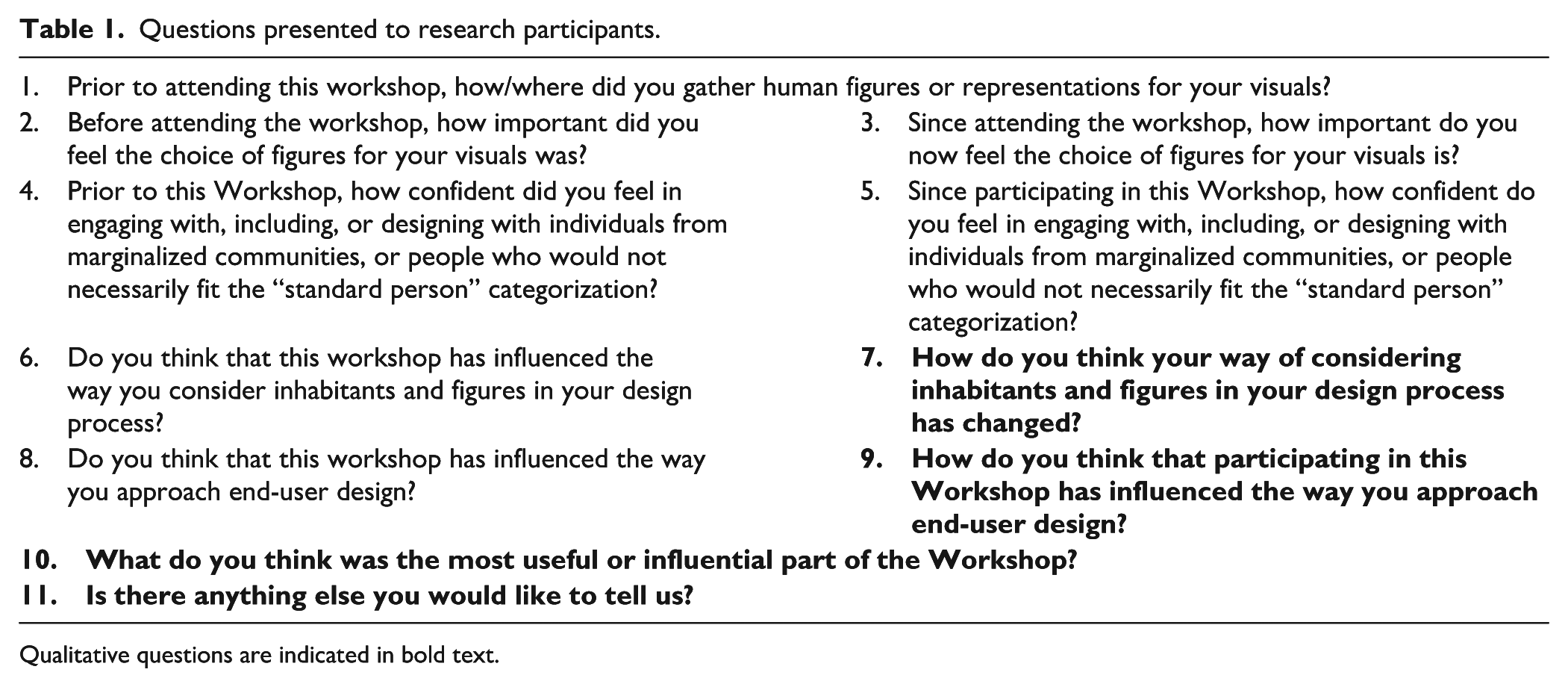
Qualitative questions are indicated in bold text.
Questionnaire data were exported from Qualtrics to a .csv file, then loaded into SPSS and NVivo for quantitative and qualitative analyses, respectively. Qualitative data were subjected to inductive thematic analysis, conducted independently by two researchers (McKenzie & Elvin) through the familiarization, initial code generation, and theme identification stages (Braun & Clarke, 2006; Kiger & Varpio, 2020) after which theme review and definition were conducted collaboratively, and for which percentage agreement was 87% (McDermott, 1988), and Cohen’s Kappa: 0.83 (strong agreement; McHugh, 2012). Summative content analysis was then conducted to quantify theme frequency within the qualitative data. For quantitative questions, the degree of change was calculated by comparing within-participant responses to “before” and “after” questions.
Workshop Impact: Results
Main Source of Human Figures for Design Visuals
When we asked participants where they would usually source the human figures for their visuals prior to attending our workshops; 75% of participants reported predominantly relying on stock images or those found during internet searches, 19% reported that they would usually customize stock images or develop their own, and 2 individuals reported preferring alternative stock image sites to provide more diverse and inclusive depictions.
Importance of the Choice of Figures for Visuals
Before our workshops, 70% of student respondents felt that the choice of people within their visuals was “Somewhat important” (24% rated these as “Very important” and 6% “Not at all important”), whereas after attending our workshops 82% rated the choice of human figures in their visuals as “Very important” (18% “Somewhat important”, 0% “Not at all important”). In terms of the degree of change, 60% of our participants reported an increase in their perceived importance of the selection of human figures after attending our workshop (24% were already at ceiling, and 16% reported no change).
Changes in Consideration of Inhabitants and Approaches to Designing for End-Users
82% of respondents agreed that attending our workshop had influenced the way they approached designing for end-users (12% disagreed, and 6% were unsure).
Confidence in Engaging With, Including, or Designing With Individuals From Marginalized Communities, or People Who Would Not Necessarily Fit the “Standard Person” Categorization
Prior to workshop attendance, 29% of respondents were “A little bit confident” and 29% were “Somewhat confident” in engaging with, including, or designing with marginalized communities (29% were “Very confident” and 11% reported that “This was not something I had thought about”). Afterward, 35% were “Somewhat confident” and 65% were “Very confident.” This represents an increase in confidence for 65% of our participants (29% were already at ceiling, and 6% reported no change).
We also asked participants to explain how workshop attendance might have influenced the way they approach designing for end-users, or how they consider/include inhabitants within the design process. Inductive thematic analysis of this qualitative data (Braun & Clarke, 2013; Kiger & Varpio, 2020) revealed three main themes. These are listed below in order of frequency, with a summary of responses and typical examples of each:
Theme 1: Greater awareness and consideration of the diverse needs of end-users (14 comments).
Respondents felt that workshop attendance resulted in them becoming
It helped me to understand that mostly we are designing for people and people are the ones using the space, thus it is extremely important to understand the key needs of all users. We are all different and we all need different things.
It’s not about my needs and wants for the space, more so about the users of the space and it working best for them. This really has allowed me to look deeply into how individuals could experience and navigate a space differently.
Theme 2: Understanding the importance of representation (10 comments).
Respondents explicitly stated that they were
Although we see the need to be inclusive in media, I never really thought about it in my designs however now I will be including a wide range of different people from different communities.
I have a heightened awareness of the need for representation within my design work now and I find I seek out representation of the protected characteristics within the work of others more broadly.
Theme 3: More awareness of the need for D&I in IAD generally (8 comments)
Participants felt that they had a greater understanding of potential unconscious biases and how these might interact with individual characteristics, and were more aware of the need for D&I within design:
The workshop was really interesting and definitely has influenced me to be more aware with the context of where my design will sit and what kind of people specifically will be using it/ the space/ the area. My design has more multicultural figures and [is] definitely more “alive” since I brought diversity into my projects.
That we are all different and our differences makes us so unique and interesting. Design needs to reflect all the inhabitants needs.
A clear fourth theme (only tangentially related to the question) also emerged from participant responses:
Theme 4: Improved designs/better designer (6 comments)
Participants felt that workshop attendance pushed them to consider a wider range of design possibilities, which enhanced their creativity:
I’m more likely to [. . .] challenge my thought process when designing a space, this allows me to become a better all-round designer, as well as be more aware of how spaces around us may not be designed adequately enough for all users.
It helps me design quicker and come up with more ideas - more outside of the box and being more creative.
Images Produced in our Workshops
A content review of the images generated by students during the workshop sessions dedicated to figure development also found that images developed during these sessions exhibited a high level of inclusivity, considering various dimensions such as age, gender, ethnicity, sexual orientation, disability, and other protected characteristics respectfully and sensitively. Specific examples of more diverse and inclusive figures developed during our workshops are seen in Figure 3, whereas an example of such figures used in context, after students had attended our workshops, is shown in Figure 4.
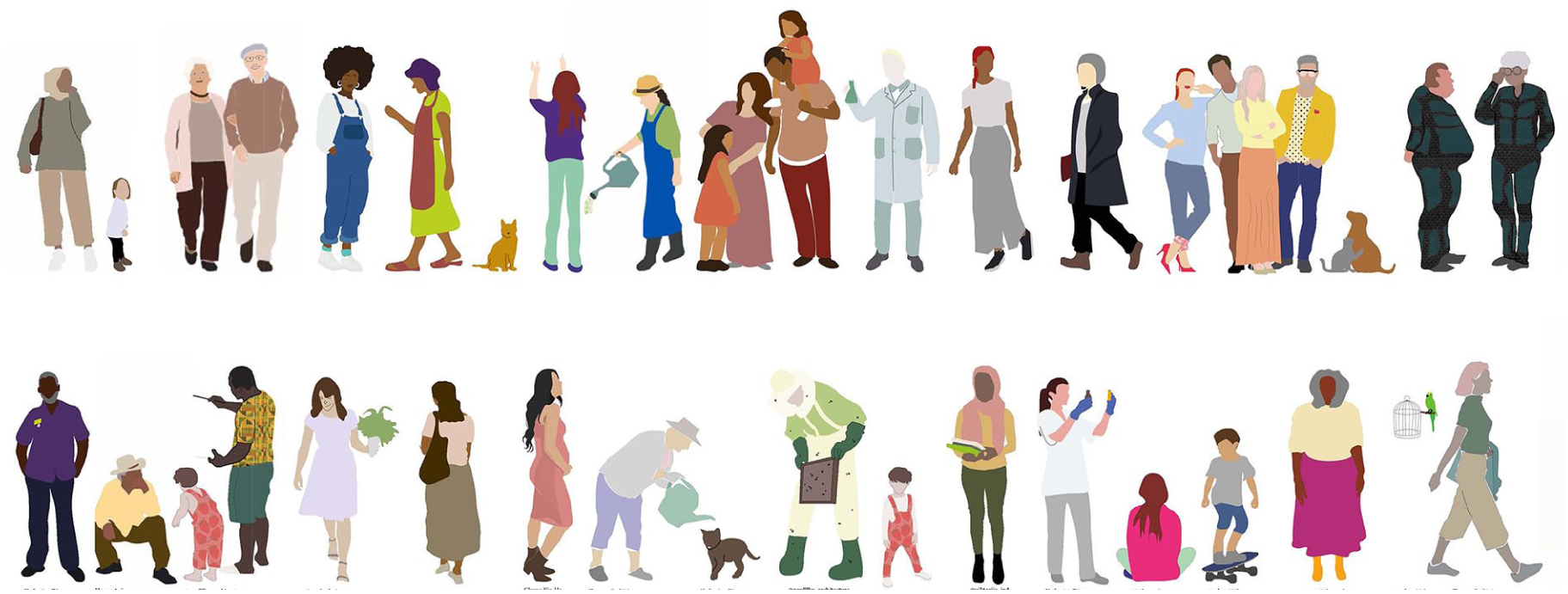
Further examples of human figures produced by students via the iterative co-design process used within our Workshops, showing a greater consideration of diverse individual characteristics.
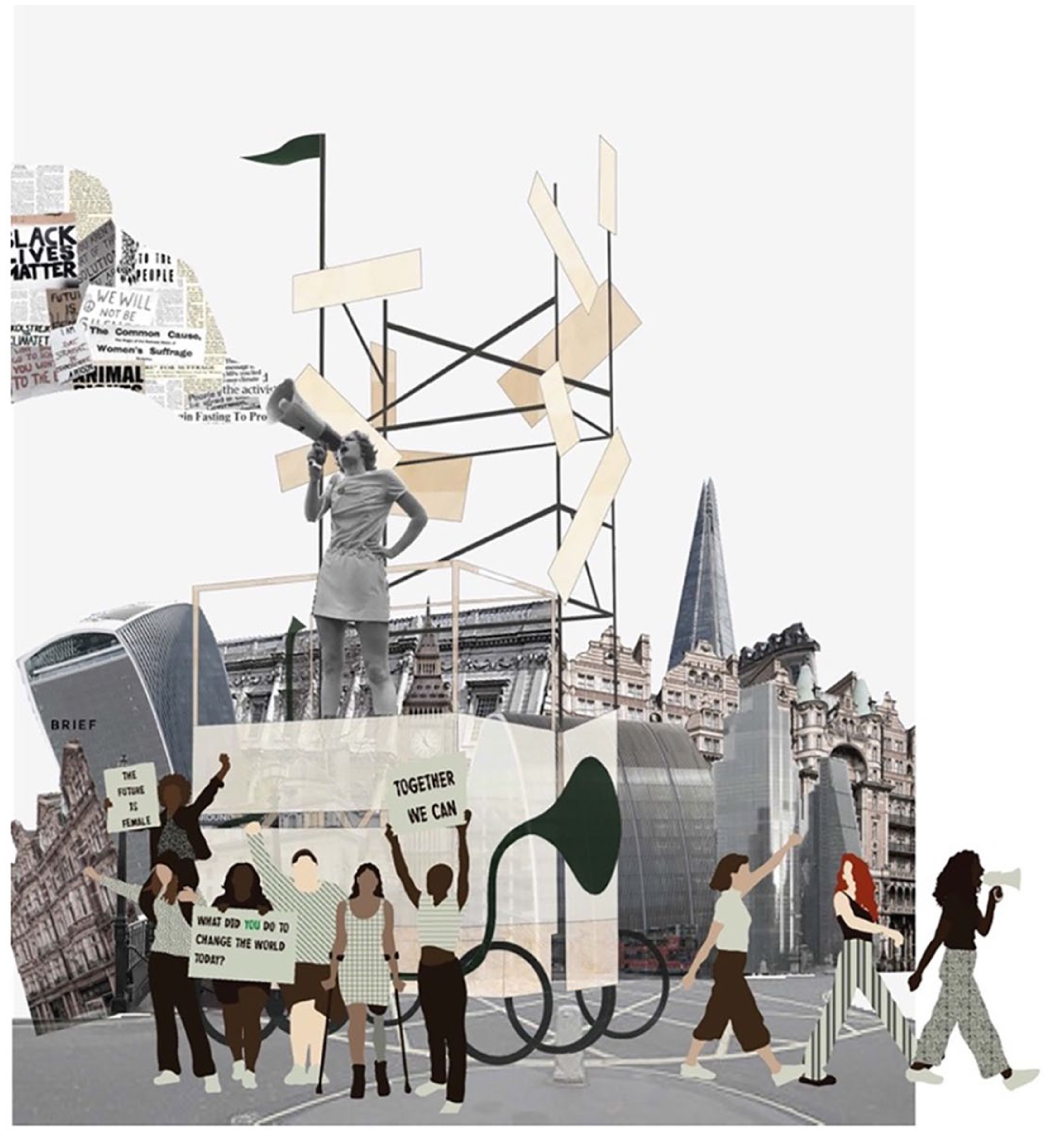
Image produced by BA Interior Architecture student Irma Signe Linnea Vesterlund, Middlesex University, which captures a dynamic scene of female demonstrators, notably portraying a woman with a disability in an active role; breaking from conventional passive representation of figures with disabilities. This project was also shortlisted for progressing students in the 2021 Interior Educators Awards, within the Diversity, Equality, and Inclusion category.
Discussion
Our overarching aim was to increase student awareness and understanding of the importance of D&I within the practice of IAD. To achieve this, we developed a dedicated day-long workshop that encouraged critical reflection and examination of the visual depiction of people within design visuals as an easily understandable and relatable medium to introduce the concepts of exclusion and inclusion, before widening this lens to encompass further consideration of individual and group characteristics, and the effects of exclusion versus inclusion within designed spaces throughout the entire development process. The anonymous quantitative and qualitative data we collected from two of our workshops to examine the efficacy and impact of this approach suggests we were broadly successful in achieving this aim. The majority of student-respondents who participated in our workshops demonstrated an increase in their understanding of the importance of diverse representation when selecting human figures. An even larger proportion agreed that our workshop had influenced their subsequent approach to designing for end-users, and we were successfully able to increase both understanding of the importance of engaging with individuals from marginalized communities, or people who would not necessarily fit the “standard person” categorization, and the confidence with which students felt they were able to do so.
Our workshop participants were able to embrace the concept of reflecting a wide range of protected characteristics within their figures, showcasing a commitment to creating representations that respect and celebrate diversity. This also served to increase awareness of diverse needs more broadly, and better understanding of the importance of engagement with end-users to determine these needs should also result in a reduced reliance upon assumptions and stereotypes (Rieger & Rolfe, 2018, 2021) and a shift away from designing for the “standard” person (Imrie, 2003; Perez Liebergesell et al., 2021) toward a more truly inclusive consideration of how spaces affect users, and how users experience spaces. In addition, our decision to combine Institutions via blended workshop delivery provided our students with the opportunity to interact with a wider range of peers from within their field and experience a broader range of unique perspectives, which we believe led to greater engagement and more meaningful discussions during the interactive components of the workshops.
Limitations of the Current Study
While the response rate to our questionnaire achieved the minimum required to ensure confidence in representation (Bryman, 2012), we did not collect any data relating to the individual and/or group characteristics of the students who responded to our questionnaire, and so were are unable to explore whether these factors may have affected the degree to which students found our workshops useful. We also have no way of knowing the opinions of those who did not choose to take part in our study, nor how attendance may have affected their subsequent design practice. The use of a retrospective self-report data collection method may also have introduced potential confounds. However, in line with other pedagogical research, we have previously found that students are often unaware of how much they do not know prior to completing workshops or training such as this, and so their pretest self-reports can significantly overestimate their own knowledge and understanding (Geldhof et al., 2018), while increases in subject-relevant knowledge then change the perception of questionnaire items and cause a response-shift bias in post-test reports, leading to a significant underestimation of learning impact (Howard, 1980). In fact, retrospective pretests have been found to correlate more strongly with more objective measures of pre-program skills than actual pretest self-assessments (e.g., Pratt et al., 2000), and retrospective pretests have been recommended specifically for attempting to gauge perceptions of change as a result of program participation (Hill & Betz, 2005); particularly when there may be a delay between pre- and post-test data collection (Ary et al., 2010; Gouldthorpe & Israel, 2013). Furthermore, while our use of retrospective self-reported pretest scores may be providing us with an upper-bound estimate of the effectiveness of our workshop (Geldhof et al., 2018), the collection of qualitative data at the same time goes some way toward mitigating this (Hafsa, 2019). Many of the students who took part in our workshops subsequently volunteered to be involved in further D&I projects, and evidence of the longer-term impact of our workshops comes from the number of post-workshop student projects from both Institutions that were shortlisted for Interior Educators Awards within the “Social Justice (Diversity, Equity & Inclusion)” category, including the overall category winner in 2023. We were also able to see tangible differences in the visuals produced by our students after workshop attendance, and future evaluations will also include a content analysis of student visuals.
Future Directions
While our workshops were developed as a way to introduce the concepts of D&I and how these relate to the practice of IAD, future work in this area is also needed to determine how best to further integrate these principles within the IAD Curriculum. Indeed, this workshop has been the catalyst for the initiation of a comprehensive revision of the design process and methodologies implemented across the IAD programs at both the University of Lincoln and Middlesex University to further embed the principles of D&I seamlessly throughout the entire curricula.
Future investigations will involve objective comparisons of student projects and project visualizations before and after workshop attendance, and follow-up discussions with former workshop participants who are now in the workplace could also take place to determine whether our workshops, and subsequent D&I-based curriculum changes, have had any longer-term impacts on the approach taken to design projects and the choices of figures used. This could also extend to research into possible effects on decision-making with regard to employment (such as determining whether or not a company has an inclusivity statement and/or is actively seeking to employ people from diverse backgrounds).
Investigations into the applicability of our findings with regard to specific individual and/or group characteristics may also be beneficial, since—as was indicated by a reviewer—we do not currently know whether the phenomenon of discriminatory occupant representation also occurs within IAD schools where young, white, and/or able-bodied occupants are the minority. While we did not collect demographic information for ethical reasons, this absence of data relating to participants’ socio-economic backgrounds also limits our ability to fully understand how economic inequality intersects with other identity markers to influence design decisions and perceptions of inclusion. We would further suggest that this gap is reflective of a broader tendency within design education, and indeed higher education more broadly, to overlook class as a meaningful axis of diversity. Future research should seek to address this by incorporating socio-economic diversity more explicitly into both pedagogical frameworks and participatory design activities, thereby enabling a more holistic understanding of inclusion within IAD.
Finally, we would also suggest that within the rapidly evolving landscape of design, the role of artificial intelligence (AI) and machine-generated visuals is also becoming increasingly significant, and as these AI tools become more integral to the future of visualization, it will be imperative to critically assess their impact on perpetuating or challenging societal norms and stereotypes (Bianchi et al., 2023; Spennemann, 2025). Future research endeavors in this area should, therefore, explore AI-generated images to understand the potential biases or stereotypes that are embedded within AI-generated depictions of inhabitants within designed spaces.
Conclusion
While diversifying and expanding the inclusivity of visual representations of people within design projects creates a more welcoming space, acting as a “mirror” for marginalized or minoritized groups to perceive themselves as integral parts of the envisioned environment, we would suggest that the production of diverse and inclusive visuals also functions as a “window” through which emerging designers can gain insights into the varied needs of end-users, stemming from their intersecting group- and individual characteristics. Our findings demonstrate the efficacy of introducing D&I and human-centered design principles into the IAD curriculum via the visual representation of people. By using this approach, our inclusive design workshops have successfully equipped emerging designers with improved knowledge and skills to begin applying these principles themselves within their design practice.
Footnotes
Declaration of Conflicting Interests
The authors declared no potential conflicts of interest with respect to the research, authorship, and/or publication of this article.
Funding
The authors received no financial support for the research, authorship, and/or publication of this article.
