



Abstract
In today’s rapidly evolving healthcare landscape, the integration of innovative technologies is becoming increasingly essential to enhance patient care, medication and overall healthcare outcomes. Quick Response (QR) codes have emerged as a versatile tool with significant potential to revolutionize such aspects of the healthcare industry. Through a review of 30 studies, we uncover the significant impact of integrating QR codes into healthcare systems. Across various domains, QR codes prove instrumental in enhancing patient care, streamlining workflows, and improving communication between healthcare professionals and patients. Notable findings include the role of QR in ensuring medication safety and advancing education as well as training within healthcare settings. Despite some challenges, user satisfaction remains high, underscoring QR codes’ effectiveness in optimizing healthcare delivery and outcomes from a human-centred perspective. This includes considering usability, cognitive load, and ergonomic design, all of which are crucial for maximizing the benefits of QR code technology in healthcare.
Introduction
In the continuously evolving landscape of healthcare, technology continues to play an important role in enhancing patient experiences and operational efficiency. Innovations such as electronic health records (EHRs), telemedicine, and wearable health devices have transformed how patients are provided healthcare services, making it more personalized and accessible. Among these many technological advancements, Quick Response (QR) codes have emerged as a transformative tool, significantly impacting various facets of healthcare delivery (Umair et al., 2021). Integrating QR codes in healthcare settings is revolutionizing patient care, streamlining administrative processes, and improving communication between healthcare providers and patients. QR codes, as a form of two-dimensional barcode, offer a versatile and efficient means of storing and accessing information. In the context of healthcare, their applications are diverse, ranging from digital appointment scheduling to secure access to electronic medical records (EMRs). According to the Healthcare Information and Management Systems Society (HIMSS), approximately 72% of healthcare organizations are either utilizing or planning to utilize QR codes within their operations. This widespread adoption is indicative of the growing recognition of the benefits that QR codes bring to the healthcare sector.
One of the primary advantages of QR codes in healthcare is their potential to enhance patient care. QR codes can be embedded in patient wristbands, providing immediate access to critical patient information such as medical history, current medications, and allergy information (Abdulgader, 2020). This facilitates accurate and timely decision-making by healthcare providers, reducing the likelihood of medical errors. Additionally, QR codes can be used to share educational resources with patients, offering information about their conditions, treatment plans, and with patient’s post-discharge care instructions (Sharara et al., 2022). This empowers patients to actively participate in their healthcare journey, promoting better health outcomes. The integration of QR codes into healthcare operations significantly enhances efficiency by reducing the reliance on paper-based processes and enabling digital workflows. For instance, QR codes can streamline the appointment scheduling process, allowing patients to book, reschedule, or cancel appointments with ease. In hospital settings, QR codes can be used to manage inventory, track medical equipment, and monitor medication administration, ensuring that resources are utilized effectively and reducing the risk of errors (Upton et al., 2017). Furthermore, QR codes facilitate the secure sharing of patient information among healthcare providers, ensuring continuity of care and reducing administrative burdens.
Effective communication between healthcare providers and patients is crucial for delivering high-quality care. QR codes can play a significant role in enhancing communication by providing a quick and easy way to access information (Durak et al., 2016). For example, patients can scan a QR code on a medication bottle to access detailed instructions on dosage and potential side effects. Similarly, healthcare providers can use QR codes to quickly share test results, appointment reminders, and other important updates with patients. This not only improves the patient experience but also helps to build trust and foster stronger patient-provider relationships. The use of QR codes in healthcare is already well-established in several areas, demonstrating their versatility and effectiveness. Hospitals and clinics are leveraging QR codes for patient tracking, ensuring that patient information is always accessible. Pharmaceutical companies are using QR codes to enhance drug safety by providing detailed information about medications, including manufacturing processes, expiry dates, and contents, which helps to combat the issue of counterfeit drugs (Evans, 2018). QR codes are also being utilized for healthcare marketing, enabling healthcare providers to promote their services and engage with patients more effectively. Moreover, QR codes are proving to be valuable tools in clinical trials and research. By embedding QR codes in study materials and consent forms, researchers can streamline data collection and enhance participant engagement (Withall et al., 2024).
However, the integration of QR codes in healthcare is not without its challenges. One significant concern is the security and privacy of patient information. While QR codes can facilitate quick access to medical records, they can also be a potential vulnerability if not properly encrypted and managed. Unauthorized access to QR code data could lead to breaches of sensitive health information, raising concerns about patient confidentiality and data protection (Azad et al., 2022). Additionally, the effectiveness of QR codes is contingent upon the widespread availability and use of compatible technology. Patients and healthcare providers must have access to smartphones or other devices capable of scanning QR codes. This reliance on technology can be a barrier for populations with limited access to digital devices or those who are not technologically savvy, potentially exacerbating healthcare disparities. Another limitation is the potential for technical issues, such as QR codes that are damaged, improperly printed, or difficult to scan due to poor lighting conditions. These issues can hinder the seamless access to information and reduce the overall efficiency of QR code implementation. Furthermore, there is a need for standardization in the use of QR codes within the healthcare industry. Without consistent standards and protocols, the interoperability of QR code systems across different healthcare providers and platforms may be limited, posing challenges for integrated care and data sharing (Reegu et al., 2023)
Objectives and Scope of the Review
This comprehensive review aims to explore the full spectrum of QR code applications in healthcare, examining their impact on patient care, operational efficiency, and communication. The objectives of this review are threefold:
To assess the current usage of QR codes in various healthcare settings and identify best practices for their implementation.
To evaluate the benefits and challenges associated with the use of QR codes in healthcare, with a focus on improving patient outcomes and operational workflows.
To explore future directions for the integration of QR codes in healthcare, considering technological advancements and evolving healthcare needs
Search Strategy
To conduct the review. One hundred sixty-four articles were screened based on their abstracts, out of which 57 articles were chosen for full content assessment. Finally, 30 articles were included in the review. The articles were chosen from Google scholars (N = 62), NIH (N = 54), JMIR Human Factors (N = 25), IEEE (N = 23). Additionally, 19 articles were included based on references. Articles were researched using keywords like QR codes, Healthcare, Usability, medication management, Impact and education. The searches were carried out between Dec 23, 2023 and Feb 13, 2024. Articles were selected by screening abstracts and then sorting based on inclusive and exclusive criteria.
For inclusive criteria:
• All articles were limited to English Language.
• Articles focused on QR code in healthcare.
• Articles published in peer reviewed journals.
• Articles published from 2013 to 2023.
For exclusive criteria:
• Articles with insufficient information (Role of QR code in healthcare).
• Duplicate Articles.
• Articles not written in English Language.
• Articles not published in peer reviewed journals.
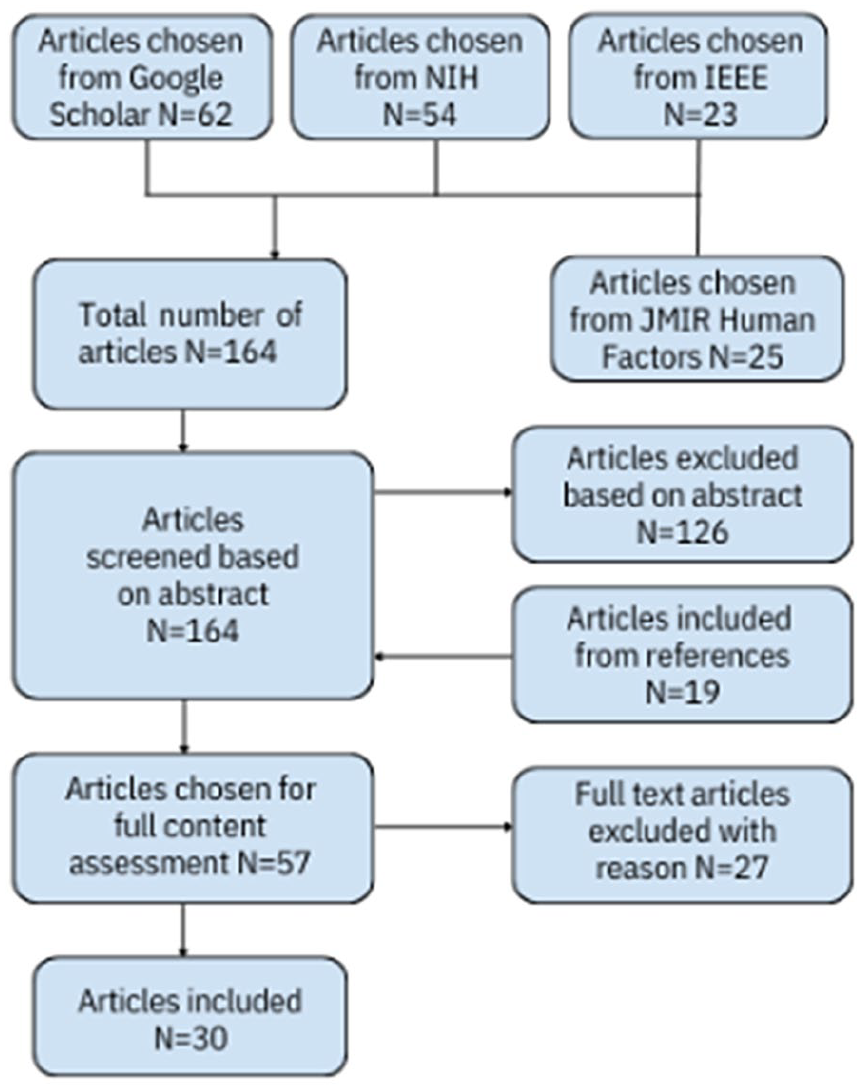
Study selection process.
Results
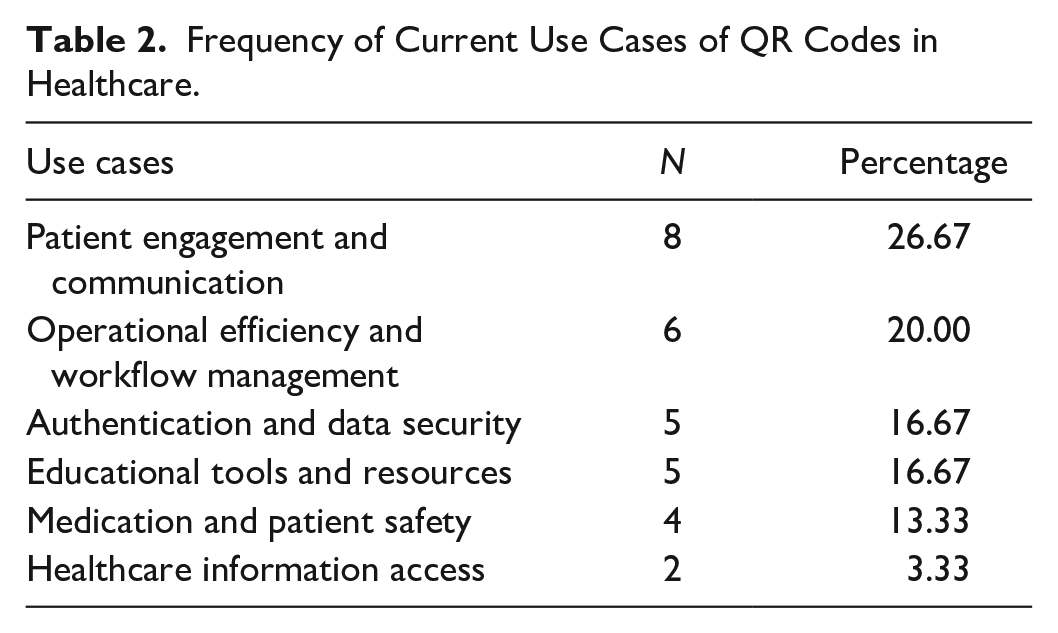
The most frequent use case was Patient Engagement and Communication, accounting for 26.67% of the studies, highlighting QR codes’ role in enhancing patient-provider interactions and accessibility of health information. Operational Efficiency and Workflow Management was the second most common category at 20%, demonstrating the impact of QR codes on streamlining healthcare processes.
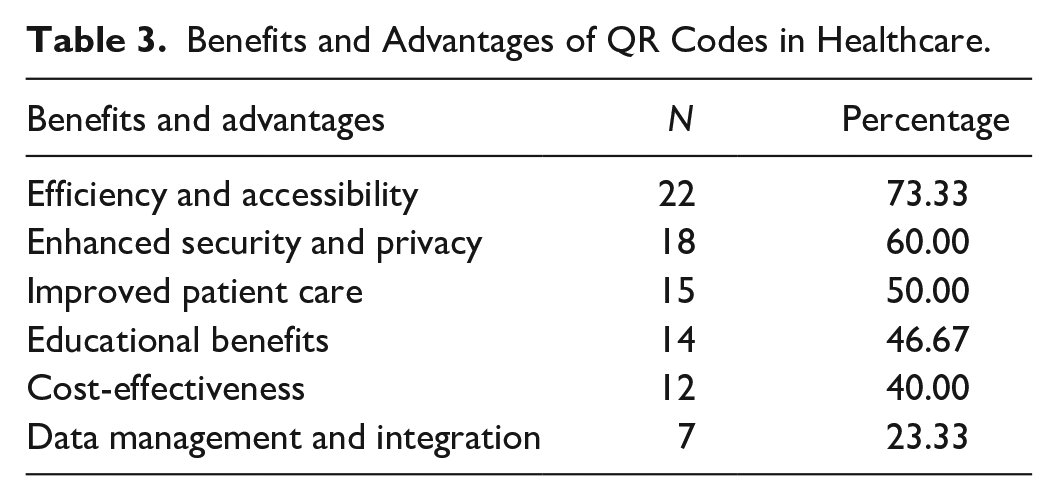
Efficiency and Accessibility emerged as the most frequently mentioned advantage, appearing in 73.33% of the studies. This underscores the significant role QR codes play in streamlining access to information and services within healthcare settings. Enhanced Security and Privacy was noted in 60% of the studies, highlighting QR codes’ ability to secure patient data and control access to medical records.
Limitations and Challenges
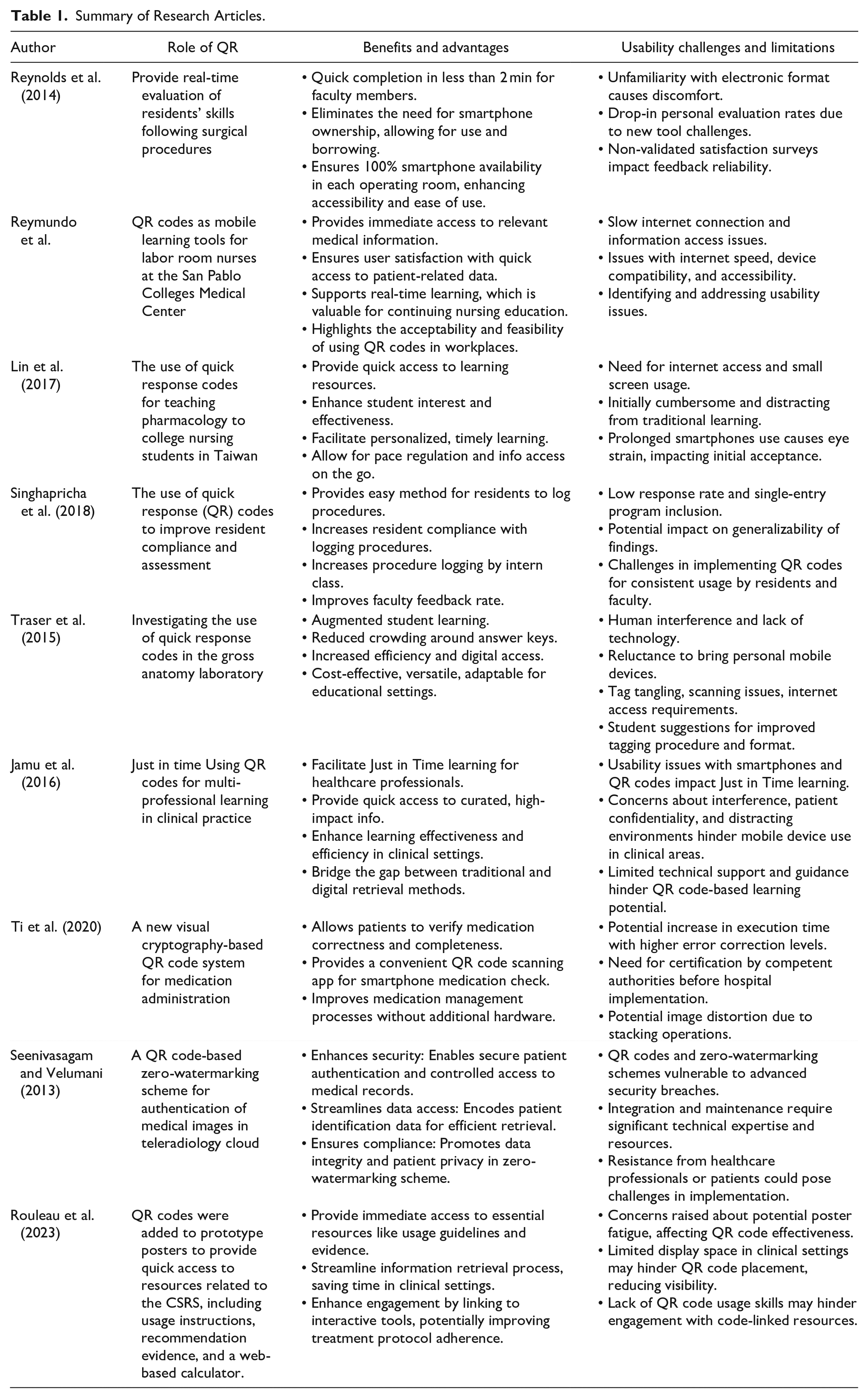
The implementation of QR codes in healthcare settings presents several usability challenges and limitations. One significant issue is the potential increase in execution time with higher error correction levels for QR code transparencies, which could hinder efficiency. Additionally, the necessity for certification by competent authorities before deploying QR codes in hospitals can delay implementation. Image distortion due to stacking operations in visual cryptography solutions also poses a technical challenge. Despite demonstrating robustness against various image-processing attacks, QR codes and zero-watermarking schemes remain vulnerable to advanced security breaches. Integrating and maintaining QR code-based patient authentication systems, particularly in teleradiology environments, requires substantial technical expertise and resources. User adoption can also be problematic, as healthcare professionals and patients might resist or be reluctant to adopt new technologies like QR codes for data access and authentication.
Usability issues include the need for accurate scanning of QR codes for data import and ensuring proper encryption and decryption of medical data. Technical challenges, such as compatibility constraints with certain devices, weak internet coverage in clinical areas, and ensuring system updates and maintenance, can also impact the effectiveness of QR code systems. Additionally, some users may find the system cumbersome or experience discomfort, and there may be limited frequency of use due to a lack of familiarity or reluctance to use new technology.
Future Scope
The future scope of QR code technology in healthcare is vast, with numerous opportunities for enhancement and innovation. Future research can focus on improving the efficiency and accuracy of medication administration technologies and exploring advanced technologies like RFID and barcode systems for enhanced patient safety. Integrating smartphone applications for medication management presents a promising avenue, providing patients and healthcare professionals with efficient, user-friendly tools. Additionally, fine-grained access control systems and the integration of QR codes with blockchain technology can enhance data security, privacy, and authentication.
Expanding QR code applications to telemedicine services can facilitate remote consultations and follow-ups, making healthcare more accessible. Integration with Electronic Health Records (EHR) can streamline data access and improve patient care coordination. Further research on the reliability and effectiveness of QR codes in various clinical applications and the development of guidelines to protect staff, patients, and trainees is essential. In educational settings, QR codes can be used for just-in-time learning, enhancing the educational experience for healthcare professionals. Future developments may focus on enhancing user experience, addressing technical challenges, and integrating QR systems into broader healthcare training programs, ultimately increasing efficiency and quality of care delivery.
Conclusion
The integration of QR codes in healthcare has shown remarkable potential to transform patient care, streamline workflows, and enhance communication between healthcare providers and patients. The versatility of QR codes in facilitating quick access to medical information, ensuring medication safety, and supporting educational initiatives underscores their value in modern healthcare settings. Despite challenges related to security, privacy, and technology adoption, the benefits of QR codes in improving operational efficiency and patient engagement are significant. Future advancements and standardization in QR code technology are essential to maximize their impact and address existing limitations. As healthcare continues to evolve, QR codes will likely play an increasingly vital role in enhancing healthcare delivery and outcomes.
Summary of Research Articles.
Frequency of Current Use Cases of QR Codes in Healthcare.
Benefits and Advantages of QR Codes in Healthcare.
Footnotes
Declaration of Conflicting Interests
The author(s) declared no potential conflicts of interest with respect to the research, authorship, and/or publication of this article.
Funding
The author(s) received no financial support for the research, authorship, and/or publication of this article.