



Abstract
Micromobility devices—encompassing a range of lightweight devices such as bicycles, pedal-assist bicycles, e-bikes, e-scooters, mopeds, and electronic skateboards—are promising as a complement to existing modes of travel. Human factors and ergonomics professionals can leverage available technology, education, and experience to assess aspects of human behavior, perception, expectations, performance, and kinematics when interacting with micromobility devices. This study discusses the application of Human Factors and 3D modeling when assessing micromobility devices during real-world incident investigations and showcases various tools that can be used for these types of assessments. This article outlines an incident case study involving an operator-owned e-scooter purchased from the manufacturer.
Introduction
Mobility in urban areas has evolved over the past years, especially due to the public availability of short-term rentals of micromobility transport devices. The Federal Highway Administration (FHWA) defines micromobility as “any small, low-speed, human- or electric-powered transportation device, including bicycles, scooters, electric-assist bicycles, electric scooters (e-scooters), and other small, lightweight, wheeled conveyances” (Price et al., 2021).
These micromobility devices are often characterized by their low barrier to access. Requirements for access may not extend far beyond what members of the public already have with them (e.g., smartphone, credit card, identification). With respect to locating these devices, some may be purchased straight from the manufacturer, thus already available in each household. Others may be limited to rental hubs or stalls (commonly in close proximity to other public transportation access points) or dockless and found wherever the previous user left them. Costs to users can be lower when compared to some other means (e.g., automotive, rideshare).
According to the FHWA, many communities are engaging with the public to respond to the increased prevalence of micromobility devices such as bicycles, pedal-assist bicycles, e-bikes, e-scooters, mopeds, hoverboards, and electronic skateboards. Though micromobility devices have been adopted and are available in many cities, rules and ordinances vary per city (e.g., some cities allow them on the sidewalks, while others limit them to the street).
Communities have been seeking to build a safety culture around micromobility by, for example, hosting programs that provide rider training, supporting safe tourism behaviors while using such products, investigating micromobility parking needs in relation to concerns about sidewalk accessibility for pedestrians with disabilities, and promoting micromobility use in certain areas or during special events and festivals. Still, a large number of users do not wear helmets (Haworth et al., 2021; Todd et al., 2019) and decide to ride on sidewalks and/or where pedestrians are also present, which may put pedestrians at risk of being contacted by micromobility users (Haworth et al., 2021; Ma et al., 2021; Todd et al., 2019).
Human Factors and Ergonomics (HF/E) and Safety professionals are uniquely equipped to evaluate programs/initiatives and assist in developing protocols, safety information, and training. HF/E professionals are also uniquely equipped to use a systems approach to assessing incidents involving these micromobility devices. This paper presents technology used to evaluate the system of information, the creation of 3D models, and the assessment of different drive modes to evaluate an e-scooter incident.
E-Scooter Modeling, Testing, and Human Factors Accident Investigation
An individual sustained injuries after jumping off a motorized electric-powered scooter (e-scooter) while it was still in motion. This occurred after the cruise control capability was engaged during the operation of the e-scooter.
Summary of Facts
The subject e-scooter was fitted with two brake systems, and both were in operation.
The subject e-scooter—purchased by a household member—was fitted with cruise control that could be engaged via the app before operation. The control is triggered after the rider remains at a constant throttle speed for a specific time.
The users were provided with details on how the cruise control worked—what it does and how it is triggered while operating the device anytime they turned on this feature via the app.
The owner enabled cruise control by operating the e-scooter right before the new rider rode it.
The incident date was the first time the individual operated the subject e-scooter.
Per sworn testimony, the individual owned bicycles, was a moped rider, and operated ride-share e-scooters while traveling.
The individual did not request/receive information from the owner on how to operate or stop the e-scooter once it was moving and did not request to read any written instructions prior to usage.
The individual was familiar with his device’s cruise control feature and testified that drivers could disengage the cruise control on devices traveling at a constant speed by engaging the brakes.
While operating the e-scooter, the individual did not engage any of the brakes. He claimed that although he had ridden e-scooters and motorcycles and frequently rode bicycles, he was unaware that the e-scooter had a hand brake.
The individual was not wearing protective gear, such as a helmet or pads, on the incident date.
Methodology
Given the case specifics, a custom-detailed analysis was performed, including:
Review of factual information to determine the issues relevant to this incident.
Assessment of the system of information and instructions (labels, manuals, online materials and videos, instructions provided via the app, etc.) available to users to determine the sufficiency of information provided regarding the relevant issues.
Evaluation of the informational context surrounding the use of the product to contextualize the assessment of the product information and relevant e-device features while taking into account case-specific information such as the operator’s prior knowledge/experiences.
Usability and kinematics assessment to determine if this incident could have been prevented.
Development of relevant 3D demonstratives (e.g., to illustrate available travel paths and visibility of relevant device features from the operator’s perspective).
The subject e-scooter, an exemplar e-scooter, and the incident location were documented; 3D scans were taken using a FARO scanner; and 3D models of the subject and exemplar e-scooters were created (Figures 1 and 2) to visually illustrate the findings and to be able to collect any measurements that might be needed while performing the analyses.
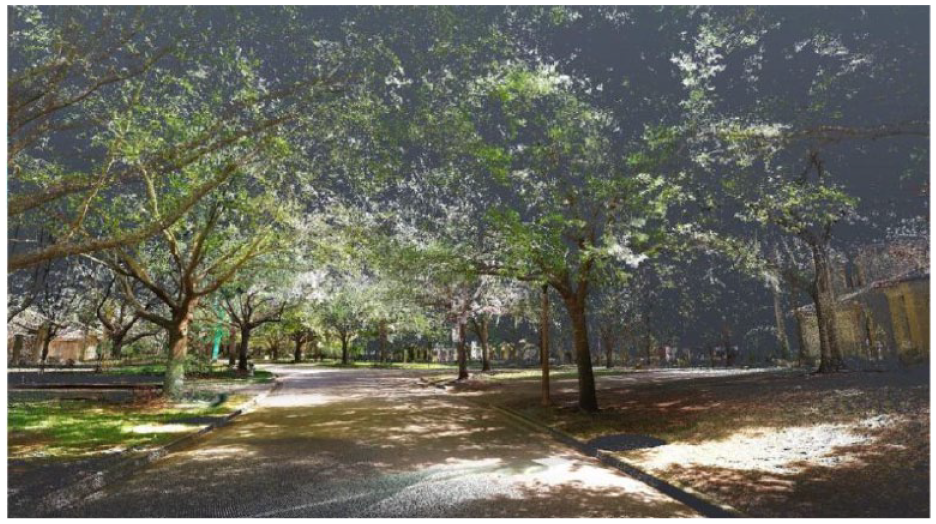
3D Scan of the subject scene.
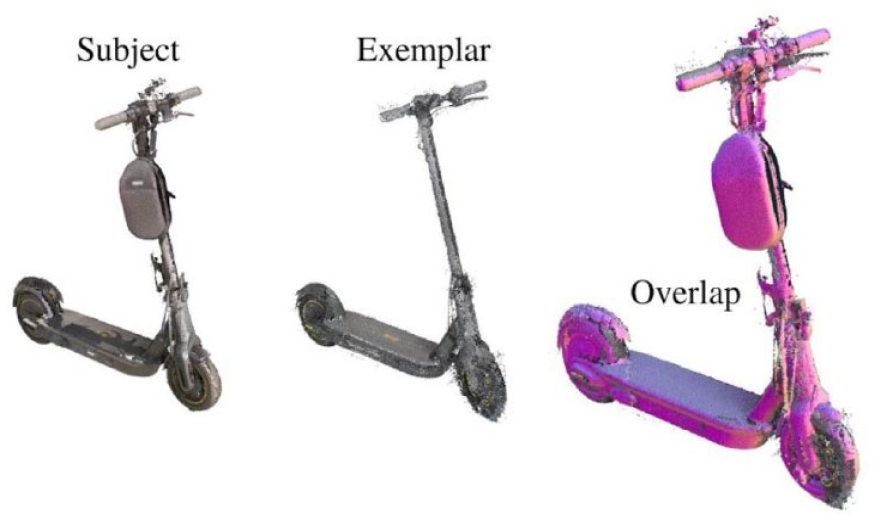
3D point clouds of the subject (left) and exemplar (middle) e-scooters.
Given that the subject e-scooter was not operational and damaged, an exemplar e-scooter was used for testing, including at the subject scene. A GoPro was mounted on the exemplar e-scooter, and speeds, accelerations, decelerations, and braking performance were recorded in all driving modes (Figure 3). A decibel meter application was also used to assess the general environmental noise level around the testing and subject sites.
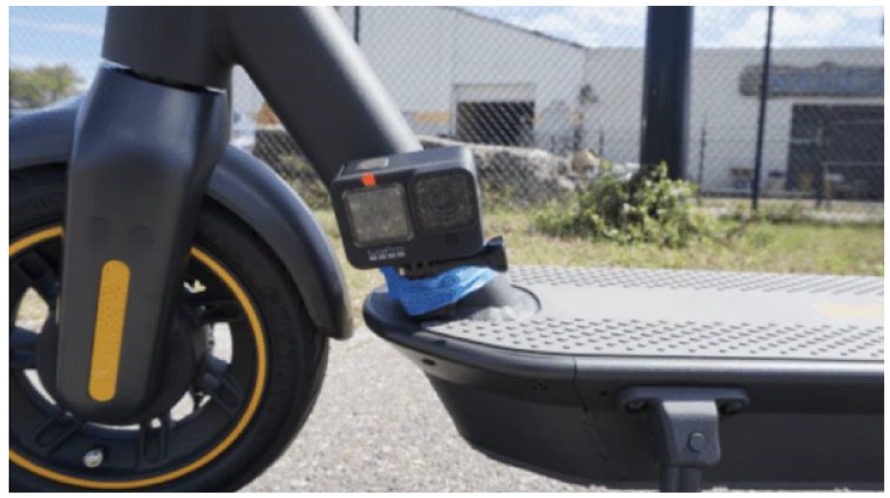
GoPro mounted on the exemplar e-scooter.
Anthropometric data was gathered from the injured individual to estimate their eye height and head position during travel. These data, measurements, and observations of the riding environment were used to determine if the subject incident could have been prevented.
Conclusions and Discussion
The case study presented above illustrates a real scenario in which certain HF/E approaches and tools were used to assess various HF/E factors based on the specifics of this incident.
Human Factors, a Systems Approach
Like many other products, micromobility devices include safety information through a system of information. A product’s system of information comprises various means of communication between a manufacturer and user (e.g., user manual, on-product labeling, bulletins, training materials, and websites). This information exists within a broader context of other sources of information that may be available to users (e.g., other manufacturers’ information, dealers, retailers, training courses, web searches, regulators, and public safety/health agencies). Consideration of the context surrounding a particular product or activity, including other available sources of information, can be useful in evaluating product safety information (Sha et al., 2016). After a thorough analysis of the e-scooter’s available system of information, consideration of contextual factors such as people’s capabilities and/or prior relevant knowledge, and testing of the exemplar, including at the subject scene, it was determined that sufficient information was included through various information modalities (textual and pictorial warnings, instructions, and recommendations); was available to owners/riders, and would have prevented the subject incident if read and followed. A review of case materials indicated that the injured individual did not follow many of the warnings/instructions that were available to users.
Human Movement and Kinematics
Based on factual information and the testing performed, from which telemetry data was obtained, it was determined that the subject operator had various options for alternative maneuvers to turn around safely, come to a stop, or reduce speed without incident. Speeds and various alternatives for successful deceleration and stop maneuvers without incident were video-recorded, and data was collected at the testing site and the subject location.
Scene Documentation, 3D Modeling, and Visualizations
The above case used 3D data to depict the unobstructed linear view from the operator’s eyes to the handbrake and dashboard. Modeling a 3D surrogate, based on available anthropometric data and photographs, was also useful in assessing the head’s relative position and depicting the unobstructed linear view from the person’s eyes to the handbrake and dashboard.
With a strong foundation of collected data, analysis can be enhanced, reinforced, and, in some cases, better communicated using visual aids. When used properly, visualizations in the form of 3D animations or simulations can fill in the gaps of potentially overlooked or otherwise unobtainable data.
For example, regarding 3D scans, due to limitations of how 3D scanners interact with an object’s specularity (reflectivity), details can often appear “noisy” and visually unrecognizable. Recreating a 3D scan into clean geometry (creating a 3D model) provides a method not only for those involved directly in the analysis phase to be able to interact with and access data but also for building compelling demonstratives to be used to present results and conclusions as well as a walkthrough of the analysis during subsequent phases of the case.
In the sample case above, a 3D model was recreated based on 3D scans and photographs of an exemplar e-scooter to depict the dimensions, features, parts, and components of the subject e-scooter. After the 3D scan of the exemplar e-scooter was processed, it was imported into software such as Autodesk 3ds Max to act as a foundational template in accurately modeling the various components of the e-scooter individually. Accurate representation of the 3D model also included studying the physical materials used to manufacture each part of the e-scooter. These materials’ specularity and texture were recreated and applied to the 3D model. In addition to the 3D e-scooter, a 3D surrogate (or a virtual human), informed by anthropomorphic data and images of the injured individual, was generated to interact with the model of the e-scooter to be later used to demonstrate how the two moved within the scene. Once the 3D modeled e-scooter and surrogate were imported into an accurately modeled 3D environment and animated moving throughout the scene using known location data and speed, a virtual camera was attached to the head of the 3D biped aligned at the same horizontal level as the operator’s eyes. From here, a line-of-sight analysis was conducted to assess the rider’s view. This 3D model can then be shown from any vantage point, including an orthographical view from above, a third-person point of view following the rider, or a witness’ viewpoint. It is important to note that while these models cannot offer simulated data regarding forces that cause deformations or bodily injuries, they prove to be a powerful visual aid for those performing the analysis and can later be utilized to effectively communicate that data through visual means.
These components combined may allow for analysis that goes beyond assessing visual line-of-sight. For example, if video footage is available (e.g., CCTV or drive cam footage), 3D data can be used to develop 3D models to identify frame-by-frame positions in 3D space and estimate speeds, and locations of relevant evidence or data (i.e., debris fields, bodily or device fluids, point of impact, and resting positions) can be accurately identified and depicted. Methodologies used to describe and solve for these pieces of information include inverse photogrammetry or camera-matching photogrammetry (Beauchamp et al., 2021). These techniques are widely used and generally accepted and have been previously published in the peer-reviewed scientific literature. These forensic methodologies are also taught by the Society for Automotive Engineers (Terpstra & Hashemian, 2021). If video footage is not available, the same methodologies can be implemented, when appropriate, using photographic evidence (Terpstra et al., 2021).
In the sample case, 3D modeling of the scene also provided insight into road contour, distances, and critical roadway and environmental features. 3D scan data can supplement measurements taken to determine and provide a visual illustration of potential alternative routes or actions by which the incident could have been avoided.
In summary, methodologies such as 3D scanning when inspecting a site, product, tool, etc., when possible, as in the subject case, can be a useful tool that allows the investigator to “go back” to the scene or to the device(s), especially if the scene or device changes or if they become unavailable during a physical investigation. The case and methodologies discussed depicted a case-specific sample approach. Some of the approaches outlined in this case study, such as relevant contextual considerations, may be useful to other micromobility cases such as including the assessment of feedback and information from the device and device operation, considering the operator’s previous experiences and knowledge gained from the prior operation of similar devices, level of feedback from the operating environment, as well as considerations of location-specific rules/regulations/ordinances, etc.
Though some of the same approaches may be suited for other types of accident investigations involving micromobility devices, each case must be evaluated individually.
Footnotes
Acknowledgements
The Authors would like to thank Jacob Palmer, who also assisted during the incident investigation used as a sample case study in this paper.
Declaration of Conflicting Interests
The author(s) declared no potential conflicts of interest with respect to the research, authorship, and/or publication of this article.
Funding
The author(s) received no financial support for the research, authorship, and/or publication of this article.