



Abstract
As the virtual reality (VR) industry continues to grow, it becomes important to understand how individuals interact with VR in their everyday settings. The physical effects of VR such as fatigue are well-known, but research on emotional effects is not as common. This study aimed to explore VR head-mounted display users’ negative emotions regarding at-home VR usage. Examining 140 forum posts (with 118 from Reddit), the emotions, activities, and suggestions were extracted from the posts. The emotions were classified based on Plutchik’s wheel of emotions. Thematic analysis was used in coding posters’ activities and suggestions. The results suggest fear is the most common category of negative emotion experienced by posters. This work could help generate research questions to further examine VR use in naturalistic settings. Future work can include studies with a larger scope, extracting posts from a longer timeline and with fewer inclusion criteria.
Introduction
As virtual reality (VR) technology becomes more commonplace, with a current market revenue worldwide of 15.8 billion U.S. dollars and a projected revenue of 28.84 billion U.S. dollars by 2026, there is a growing VR user base including those who use it at home (Alsop, 2023). While both positive outcomes (e.g., improved learning outcomes) and negative effects (e.g., motion sickness, physical discomfort upon using VR technology) have been studied (Soliman et al., 2021), many were limited to studies in a controlled setting in a short duration (e.g., cross-sectional studies). Shorter durations of VR usage might be feasible for studying its effects on the physical or physiological aspects of users, such as neck muscle fatigue or eye strain (Saredakis et al., 2020). Yet studies on the emotional responses during and after the usage of VR technology over longer periods of time, or regular use, are less common (Bender & Sung, 2021). Emotions can be multidimensional and complex (Plutchik, 1982), which may show up differently in naturalistic settings. Due to the time limitation of controlled laboratory studies, people may have less time to process and understand their emotions, and may not produce the emotions that could be present beyond a short period of time (e.g., a lab experiment).
To help categorize the multidimensional complexity of emotions, this work utilized Plutchik’s wheel of emotions, a classification of eight basic emotions: joy, trust, fear, surprise, sadness, anticipation, anger, and disgust (Plutchik & Kellerman, 1980). The wheel (see Figure 1) organizes the various emotions based on the intensity of each emotion, where it is strongest at the center of the wheel and weakest at the outer edge. For example, the more intense emotion relating to the basic emotion of fear would be terror, and the less intense emotion would be apprehension (Plutchik & Kellerman, 1980).
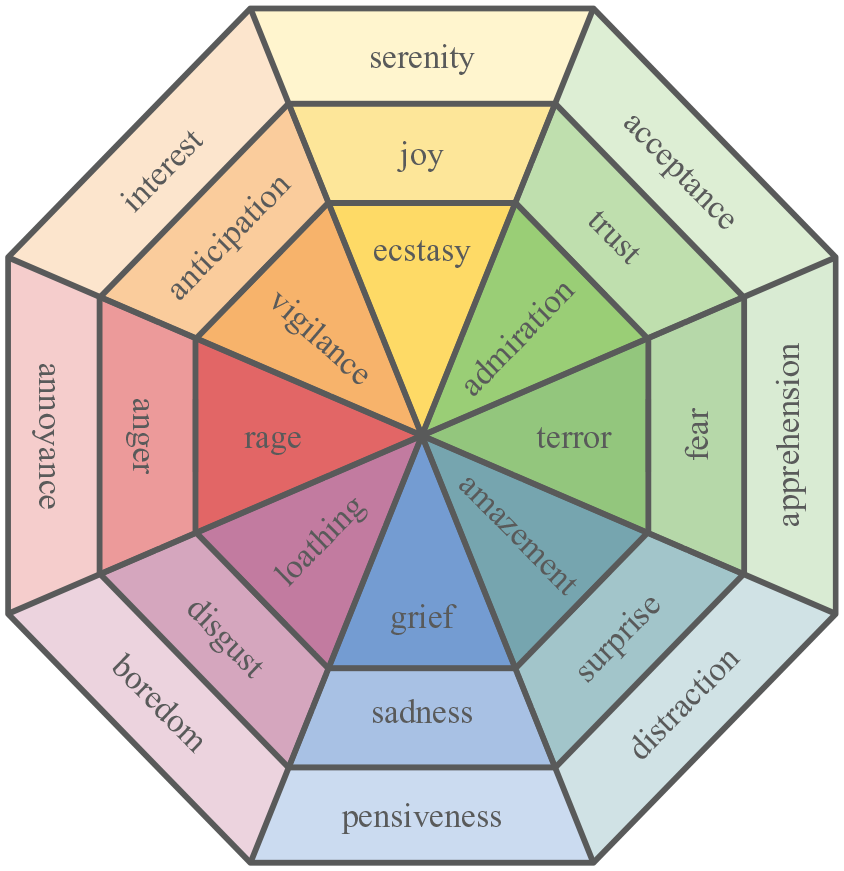
Plutchik’s wheel of emotions generalized into eight emotion categories. Three different intensities are included per emotion category.
Some existing works examined the negative emotions due to the use of VR in a controlled setting. Lin et al. (2018) investigated gamers’ emotional responses after playing VR horror games. The findings suggest individuals’ self-efficacy in a VR horror game would dictate their enjoyment. However, the Lin et al. (2018) study was limited to examining emotion after specific gaming activities in VR, which would not have captured emotions after other activities in VR. It would be difficult to measure the extent to which time-limited laboratory studies impacted the users’ emotional experience (Bender & Sung, 2021). It is possible that short durations of VR usage might not be able to elicit emotions that may arise after regular VR usage, such as regular at-home use. Studying users’ VR usage in their natural environment may yield findings that are not visible in controlled settings.
Internet forums have been leveraged as a source of individuals’ personal opinions and experiences. One study examined individuals’ personal experiences of psychosis during the COVID-19 pandemic using Reddit, a popular online forum (Lyons et al., 2023). Another study examined the barriers to young people seeking help for trauma through thematic analysis of forum posts (Truss et al., 2023). The utilization of forum data may be a plausible starting point for exploring the emotions of users through using VR.
The purpose of this work is to preliminarily explore potential negative emotions present in users’ VR usage in everyday settings using internet forum posts. In examining these negative emotions, they can assist in dissecting the sentiments of VR consumers. This can inform future VR design improvements and opens up possibilities for future work. Specifically, this work collected posts from VR-related technology forums and extracted specific negative emotions from VR usage. Any emotions mentioned in the posts were coded into eight emotional themes based on Plutchik’s wheel of emotions. Activities during which the users experienced negative emotions were identified if mentioned. Any suggested improvements to VR experiences as desired by the VR users were included as well. Findings from this work will guide the design of a future longitudinal naturalistic study of regular VR users at their home dwellings.
Methods
Two selection processes were utilized in this study: (a) forum selection and (b) filtering of posts were selected. The filtering process and inclusion criteria are discussed below.
Forum Selection
An initial set of forums was first selected. The inclusion criteria for forums consisted of a reported user base of more than 1,000 members, more than five posts per month, and discussion of VR in an insightful manner.
Using Reddit as the starting point, additional forums were considered based on the following criteria: forums dedicated to VR technologies and head-mounted display (HMDs), and VR forums that featured prominently within the first two pages of Google search results. The final forums included in the analysis were: Reddit, Meta, Steam, Unity, and AVForums as shown in Figure 2.
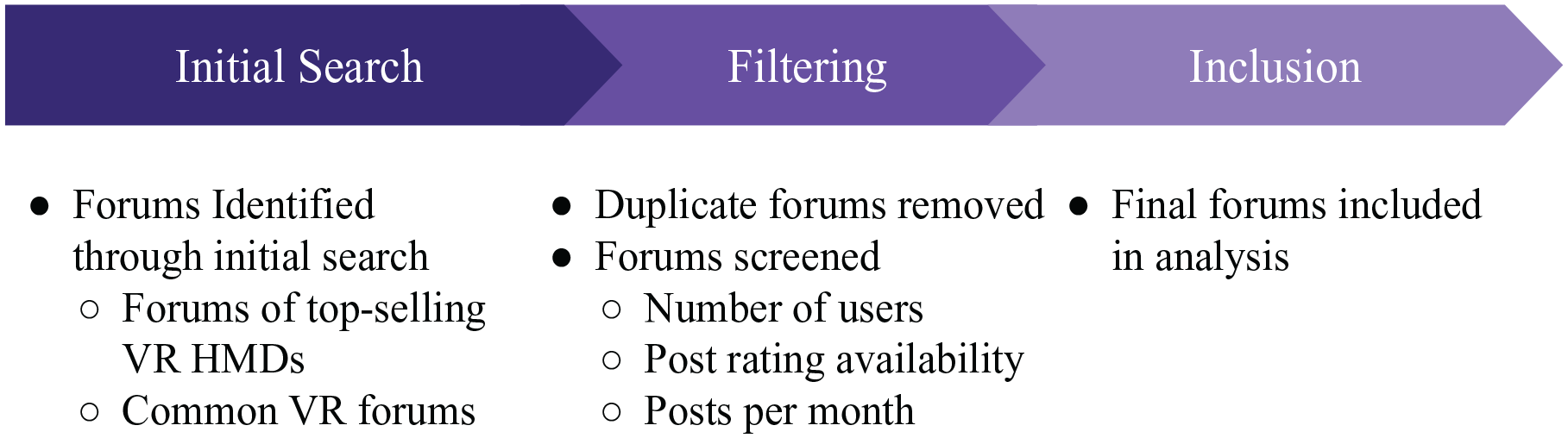
Forum search and filtering process with inclusion criteria.
Post Filtering
In terms of post filtering, forum posts from Reddit, Meta, Steam, Unity, and AVForums between the dates of January 2019 and April 2023 were screened. The release of the Oculus Quest in May 2019 propelled the popularity of consumer-use VR (Rainie, 2022). Therefore, 2019 was selected as the cutoff since it enabled consumers to purchase a more affordable, standalone HMD.
Within each forum, a structured search was performed to identify posts related to negative emotions and the use of VR. Search keywords stemmed from Plutchik’s wheel of emotions, including “fear,” “scared,” “loneliness,” “fatigue,” “confusion,” “frustration,” “anxiety,” and “depression.” On Reddit, posts with high engagement that show up under the “top” or “hot” categories were selected. Researchers used Reddit as a guideline to include posts with similar levels of engagement from other forums. These researchers use forums on a daily basis and are familiar with the signs of engagement (e.g., replies to a post, upvotes, likes, etc.). The filtration of forum posts was determined by the researchers if the particular post discussed VR in an insightful manner and had adequate engagement.
The initial post search concluded with 1,400 posts. Figure 3 illustrates the screening process: 400 duplicate posts were removed, and then 860 disruptive and irrelevant posts were removed, which yielded the final set of 140 posts. Disruptive posts are defined as those interpreted to be “troll”—according to Merriam-Webster’s dictionary, to antagonize (others) online by deliberately posting inflammatory, irrelevant, or offensive comments or other disruptive content (Merriam-Webster’s dictionary, n.d.). Irrelevant posts are defined as those that simply do not relate to the subject matter of the researchers’ interests.
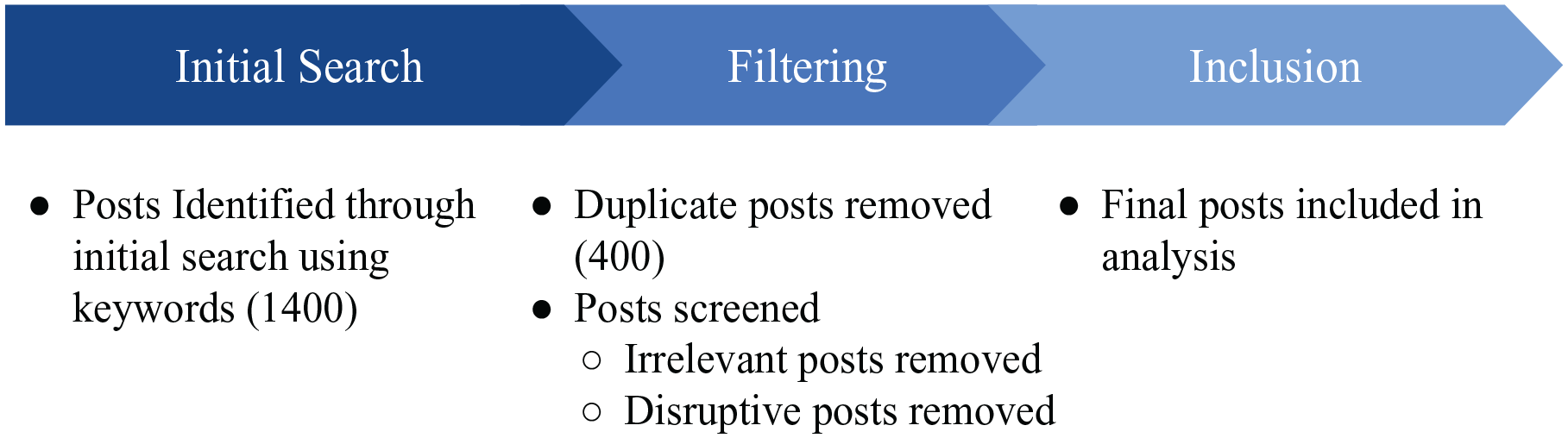
Forum post selection and filtering process with inclusion criteria.
Post Analysis
To analyze posters’ emotions, activities, and suggestions, thematic analysis (Braun & Clarke, 2006) was used on the final set of forum posts. This process involved two student researchers working individually to code each forum post. The number of emotions mentioned in a single post may vary depending on the posters’ verbosity. Once each post was coded, these emotions were organized into each of the eight sections of Plutchik’s wheel of emotions. This method was used to assist in categorizing posters’ emotions, as different individuals could use different vocabulary to convey the same or similar emotions alongside differing degrees of intensity. Classifying emotions this way allows for a better understanding of posters’ general sentiment towards their experience in VR. In addition to taking note of the amount of times each emotion showed up across all posts, the number of unique emotions that fell under each category of Plutchik’s wheel of emotions was also examined.
Researchers noted the main idea of the post based on their understanding, the engaged activity, user recommendations, and the platform used. Researchers individually identified themes in the emotion and activity categories separately and discussed them with the research team to finalize themes. Additional particulars were also observed throughout this process, as a few posters mentioned experiencing panic attacks, derealization, and VR impacting their dreams.
Results
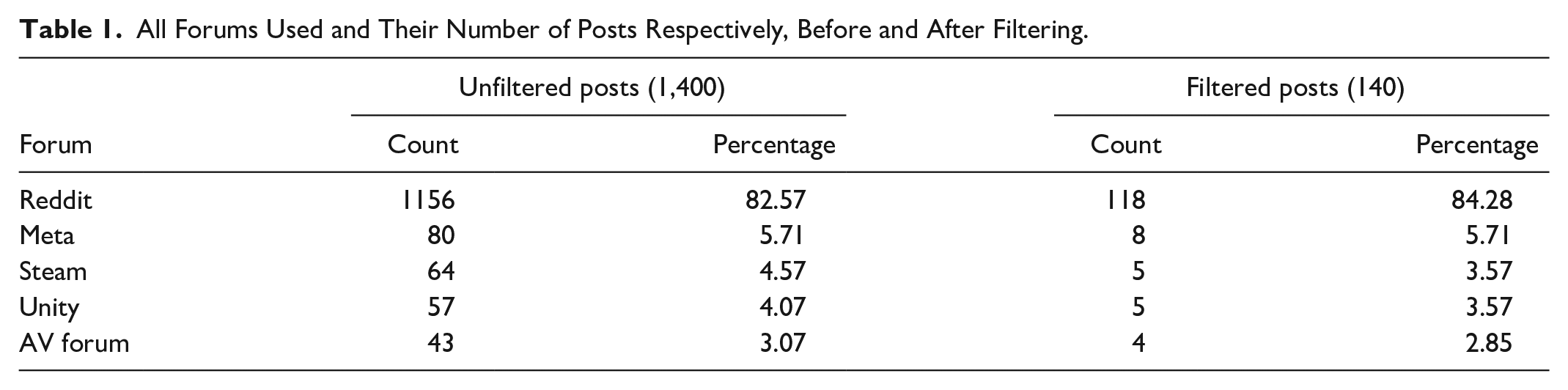
Of the 140 posts analyzed, the majority (84.28%) were from Reddit (see Table 1).
All Forums Used and Their Number of Posts Respectively, Before and After Filtering.
Emotions
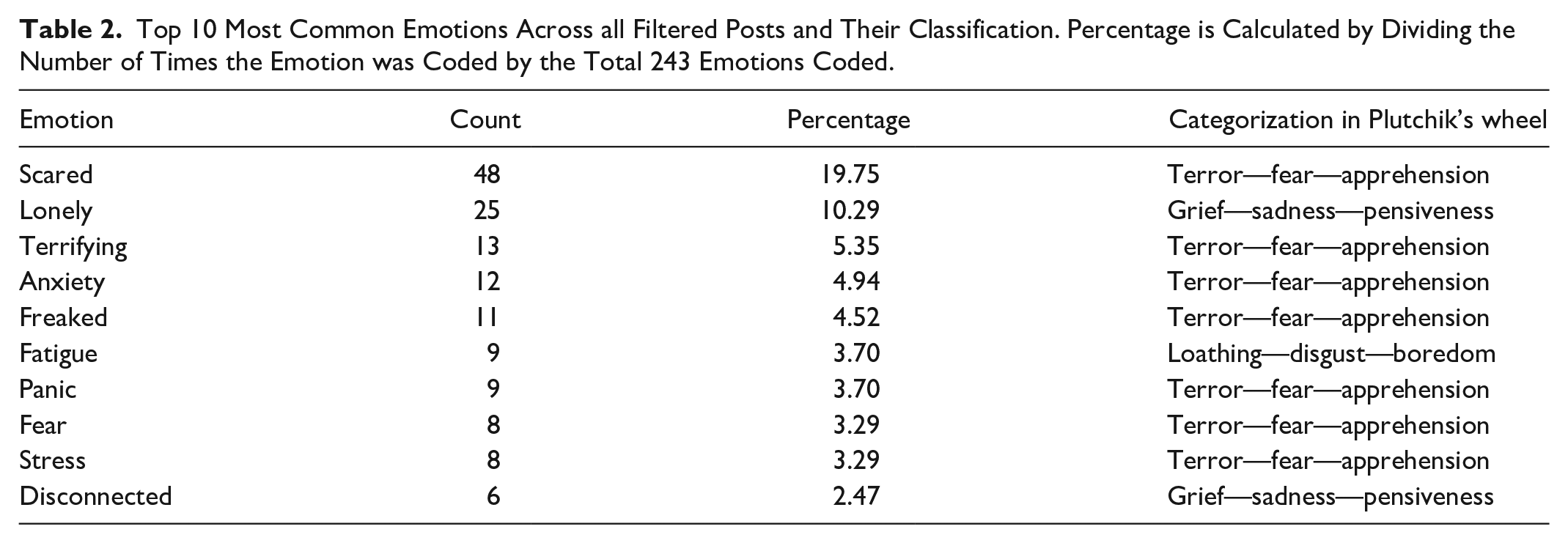
Across all forum posts, 67 unique emotions were mentioned, with anywhere from one to seven emotions coded per post, that is, one post can contain multiple emotions. The 10 most commonly mentioned emotions were scared, lonely, terrifying, anxiety, freaked, fatigue, panic, fear, stress, and disconnected as presented in Table 2.
Top 10 Most Common Emotions Across all Filtered Posts and Their Classification. Percentage is Calculated by Dividing the Number of Times the Emotion was Coded by the Total 243 Emotions Coded.
Activities and Suggestions
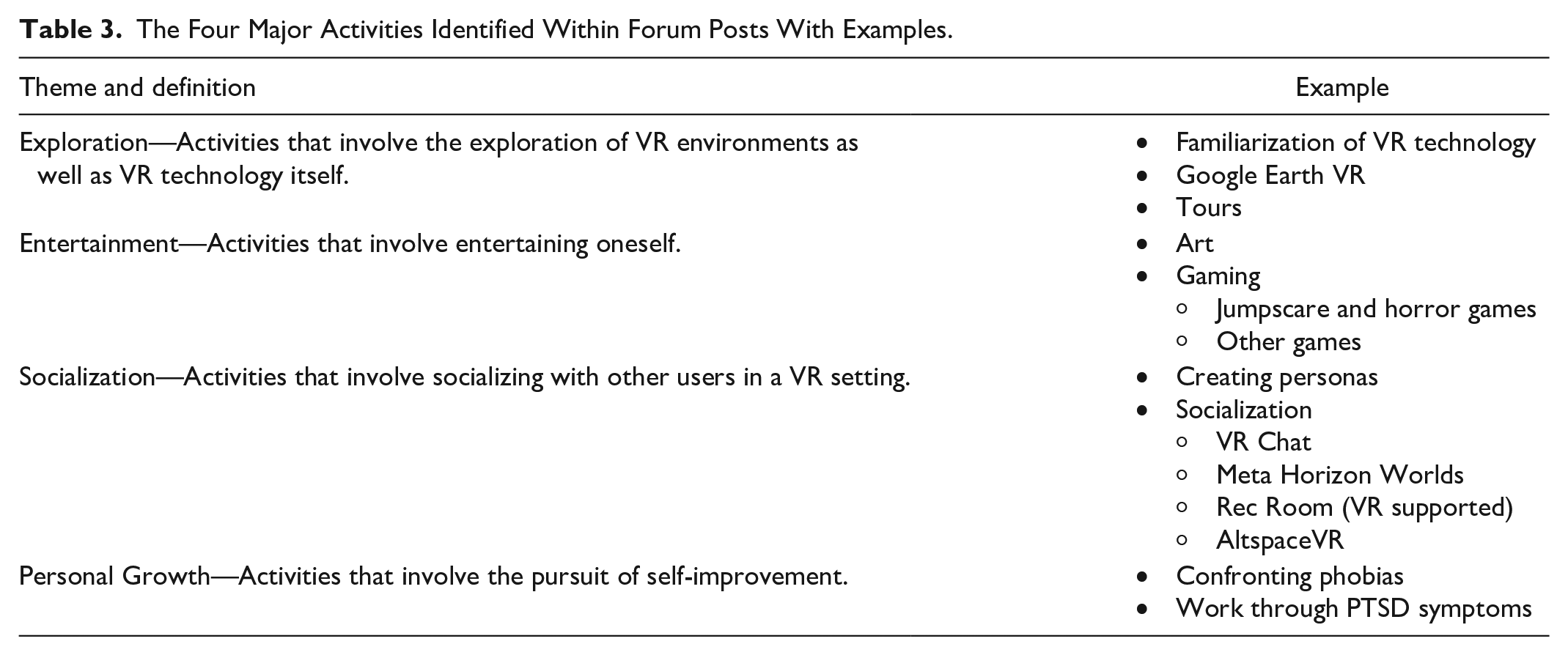
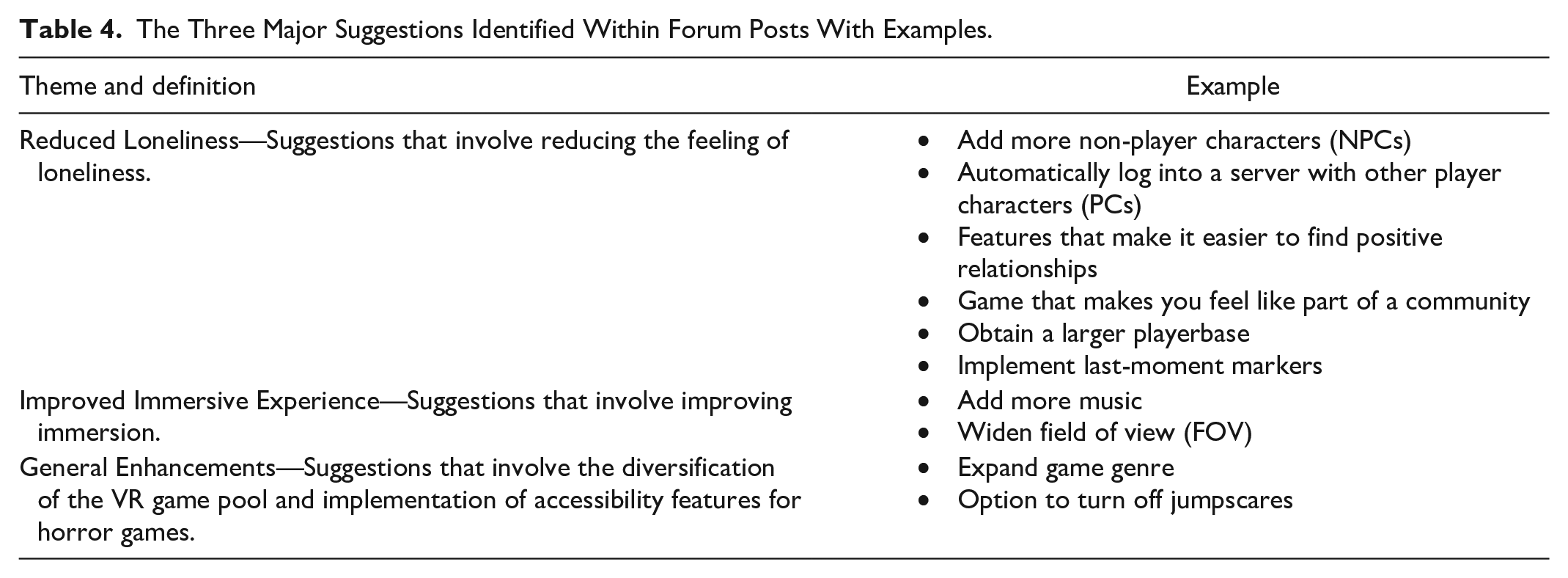
Out of 140 posts, 105 named the activities in which the users engaged, while 17 posts named suggestions to improve their VR experience. The majority (88 out of 105 posts, 83.81%) of the posts named gaming as their activity of choice. The most prevalent category of emotion, fear, is in part due to 50 out of the 88 posts discussing horror VR games. Activity themes include immersive entertainment (79, 75.24%), virtual socialization (14, 13.33%), virtual reality exploration (3, 2.86%), and personal growth (3, 2.86%). Themes found in suggestions include a reduction in feelings of loneliness (9, 52.94%), improved immersive experience (5, 29.41%), and accessibility enhancements (2, 11.76%). Tables 3 and 4 illustrate the major activity themes identified and the major suggestion themes identified, respectively. These findings help us better understand the possible negative effects of VR in a more naturalistic, at-home setting.
The Four Major Activities Identified Within Forum Posts With Examples.
The Three Major Suggestions Identified Within Forum Posts With Examples.
Discussion
Discussion
Those who use HMDs at home for different purposes may have different experiences. This work aims to better explore the negative emotions of users outside of a lab setting through filtered internet forum posts. The most prevalent emotion was “scared,” which was categorized under the “terror—fear—apprehension” category in Plutchik’s wheel of emotions. Many of the commonly mentioned emotions were categorized within the same category, including terrifying, anxiety, freaked, panic, fear, and stress. The activities in which the users engaged affected the reported emotions. Two most commonly reported emotion-activity pairs were feeling scared while playing VR games, and feeling sad while playing individual single-player games or activities.
Unsurprisingly, the majority of activities described in posts were related to gaming, as the main consumer use of VR (Rainie, 2022). Being scared was commonly noted to be associated with horror games or gaming activities. Multiple posters (8) made statements tantamount to “I have a hard time getting through/playing [horror game] for long because it’s too scary, but it’s a really good game,” seemingly with the desire to play [the horror game] but did not have the courage to do so. With this context, stating scared in a post might not imply negative VR experiences, as gamers might have sought these experiences. Individuals’ enjoyment of horror VR games may differ vastly from others depending on their self-efficacy, sensation seeking, and neuroticism (Lin, 2017; Lin et al., 2018). Exposure therapy has used VR (Lindner, 2021) in the past, and therefore individuals may seek to experience fear in an attempt to perform self-directed exposure. The activity theme of personal growth arose from users facing their fears in VR and performing self-directed exposure therapy. For instance, one poster stated, “I have serious arachnophobia. . .it can sometimes feel real and you have an opportunity to face your fears without consequences. . .” However, one poster noted using “VR games to de-stress as someone working through PTSD-like symptoms,” in an attempt to relax their symptoms of stress rather than inducing them. Additionally, another poster stated, “I wish [jumpscares] would shut off in VR,” indicating a desire to disable abrupt and surprising visual changes.
The second most prevalent category of emotions was “grief—sadness—pensiveness.” Many instances of these emotions stemmed from feelings of loneliness and disconnection. This emotion category was mostly associated with the activity of virtual socialization, which are often enabled by applications that could be considered as games (i.e., Rec Room, Meta Horizon Worlds). Posters reported hanging out with friends through these avenues, with one stating the contrast is “stark” when going from VR chat (a multiplayer experience) to a single-player experience. A post detailed the process of creating a VR “persona” to talk to, displaying their desire for social interaction. Many posters (12) mentioned experiencing loneliness due to single-player VR experiences, while five felt lonely because of the lack of socialization features in VR. However, there were a couple posters (2) who felt lonely even on VR servers populated with other people. In addition, one poster felt sadness after exploring the world through Google Earth VR. They state, “I used to play Google Earth VR a lot and I made hours-long sessions, basically visiting the world like Superman would, which was. . . liberating. And then you take the headset off and you’re back in your own skin, in your own room, probably late at night. I call this effect the ‘VR Blues’. . .”
As for suggested VR improvements based on users’ opinions, posters suggested that users of VR who are more susceptible to mental health issues or motion sickness may benefit from additional rest breaks to mitigate the negative side effects they experience, such as feeling scared, sick, panicked, lonely, or disconnected. There were seven total cases of panic attacks mentioned, with perceived causes stemming from scares, feelings of derealization and depersonalization, claustrophobia, the inability to separate VR from reality, and feelings of heightened anxiety post-VR use. Because of VR’s immersion, it may be valuable to implement additional accessibility settings for individuals with phobias or sensitivities. In addition to turning off jumpscares, further customization of the intensity of horror elements may benefit players who enjoy these types of games but find them overwhelming. This customization could also be further developed for those who want to perform self-directed exposure therapy to overcome their fears.
Limitations
Due to the nature of this exploratory study, these findings can only be generalized to a certain extent. In examining self-reported forum data, it proves difficult to retrieve additional information from the subject other than what is available publicly in the form of a forum post. The findings of this study demonstrate that the users of VR were not only gamers but individuals with different uses for VR, showing opportunities for further research into this area to study those who engage in activities besides gaming. Since this data is self-reported, the claims that VR is the cause of certain mental health episodes cannot be corroborated.
Notably, this preliminary work does not confirm the presence of long-lasting emotions in VR users, primarily due to a lack of organized, longitudinal data. Consequently, this work is limited to categorizing different emotions, and user posts were interpreted with minimal inference.
Conclusion
The purpose of this work was to perform a preliminary study to investigate negative emotions associated with VR use in an uncontrolled non-laboratory setting. This goal was achieved by examining forum posts relating to VR on the internet using thematic analysis, with the broad category of fear being the most prevalent emotion across all forum posts.
The findings and conclusion of this study also pave the way for future work. First, this work demonstrated that VR users are not exclusively gamers, and future research should investigate VR experiences for individuals engaging in activities besides gaming. Additionally, future research should examine typical, at-home VR usage because there is a dearth of research on VR in naturalistic settings.
This work may be used to generate plausible survey questions for a systematic, naturalistic, longitudinal study investigating experiences and emotions associated with at-home VR usage. The scope of this study can be expanded to include posts across a longer time period, examining additional emotions and their valences.
Footnotes
Declaration of Conflicting Interests
The author(s) declared no potential conflicts of interest with respect to the research, authorship, and/or publication of this article.
Funding
The author(s) received no financial support for the research, authorship, and/or publication of this article.
