



Abstract
The demand for dialysis treatments and the care team is growing. In a hemodialysis center, registered nurses (RNs) and patient care technicians (PCTs) work closely to monitor treatments and ensure patient safety. Due to the nature of dialysis treatments, these professionals often work long hours with extensive physical movements, which can lead to muscle fatigue. Work-related muscle fatigue can put the individual healthcare worker, the patient, and the organization at risk. As a leading medical device manufacturer for dialysis, Fresenius Medical Care is committed to offering our users the best possible products by applying human factors principles in the design process. The objectives of this study are to investigate the existence and extent of muscle fatigue experienced by healthcare workers in dialysis centers, and to explore factors contributing to muscle fatigue for these professionals. The ultimate goal is to mitigate muscle fatigue by optimizing our dialysis product designs.
Introduction
The demand for dialysis treatments and the care team is growing. According to the United States Renal Data System 2022 Annual Data Report, nearly 808,000 people in the United States, approximately 2 in 1,000 Americans, are living with end-stage kidney disease (ESKD), also known as end-stage renal disease (ESRD), with 69% on dialysis and 31% with a kidney transplant (Johansen et al., 2023). In a hemodialysis center, the care team consists of the nephrologist, the clinical manager, dialysis nurses, patient care technicians, social workers, dietitians, etc. The registered nurses (RNs) and patient care technicians (PCTs) work closely to administer dialysis treatments for patients. Their health and safety impact the care team, patient safety, quality of care, and organizational outcomes. The nature of dialysis treatments means that RNs and PCTs are prone to working long hours with extensive physical movements, which might result in muscle fatigue (Hayes et al., 2015; Kapucu et al., 2009; Ulrich & Kear, 2018).
Dialysis health care professionals (RNs and PCTs) closely monitor treatments and ensure patient safety by using medical devices during their entire working shifts. Medical devices for hemodialysis are essential tools in maintaining the health and well-being of ESKD patients by effectively removing waste products, regulating fluid balance, and controlling electrolyte levels within safe ranges. In dialysis centers, work-related muscle fatigue can put the individual healthcare worker (RN or PCT), the patient, and the organization at risk (Roja et al., 2015; Yuan et al., 2011). Muscle fatigue is a symptom that decreases muscles’ ability to perform over time. It can be associated with a state of exhaustion, often following strenuous activity. When muscles are fatigued, the force behind muscle movements decreases, causing users to feel weaker.
As a leading medical device manufacturer for dialysis, Fresenius Medical Care is responsible to ensure our products are safe and effective, meanwhile, we are aiming to offer our users the best possible products by applying human factors principles in the design process. It is crucial to understand our user profiles and the unmet user needs. International and national regulations and guidance (e.g., ISO, IEC, FDA, and AAMI/ANSI) provide a collection of human factors design guidelines for medical devices. However, sometimes it is difficult to find appropriate databases or guidance that fit our specific user profiles. For instance, the design recommendation and anthropometry data referenced in most guidance are based on healthy adults from general population, however, the majority of our end users are females in older age groups, and their health status may vary. To overcome these limitations and unmet user needs, it is necessary to establish a database that can represent the intended user groups by collecting multidimensional data from our end users. For dialysis healthcare workers, work-related muscle fatigue plays an important role in user experience and satisfaction.
The objective of this study is to investigate the existence and extent of muscle fatigue experienced by healthcare workers working in dialysis centers. In addition, this study aimed to explore factors causing muscle fatigue for dialysis healthcare workers. The ultimate goal is to reduce muscle fatigue by optimizing designs in dialysis product development.
Method
A questionnaire was developed to gather information from the dialysis healthcare workers regarding muscle fatigue they experienced at work, which consists of two sessions. The first session is a demographic survey, including questions regarding users’ role (RN or PCT), gender, age, dialysis experience, working schedule, etc. The second session is a muscle fatigue screening, including questions regarding users’ muscle fatigue at work in general, while administering dialysis treatment, performing post treatment tasks, performing tasks outside of patient treatment (e.g., tasks at the backroom), affected body parts, non-work-related muscle fatigue, impacts on work and treatment, etc. These questions include both close-ended and open-ended questions. See Figure 1 for a sample question of muscle fatigue screening.
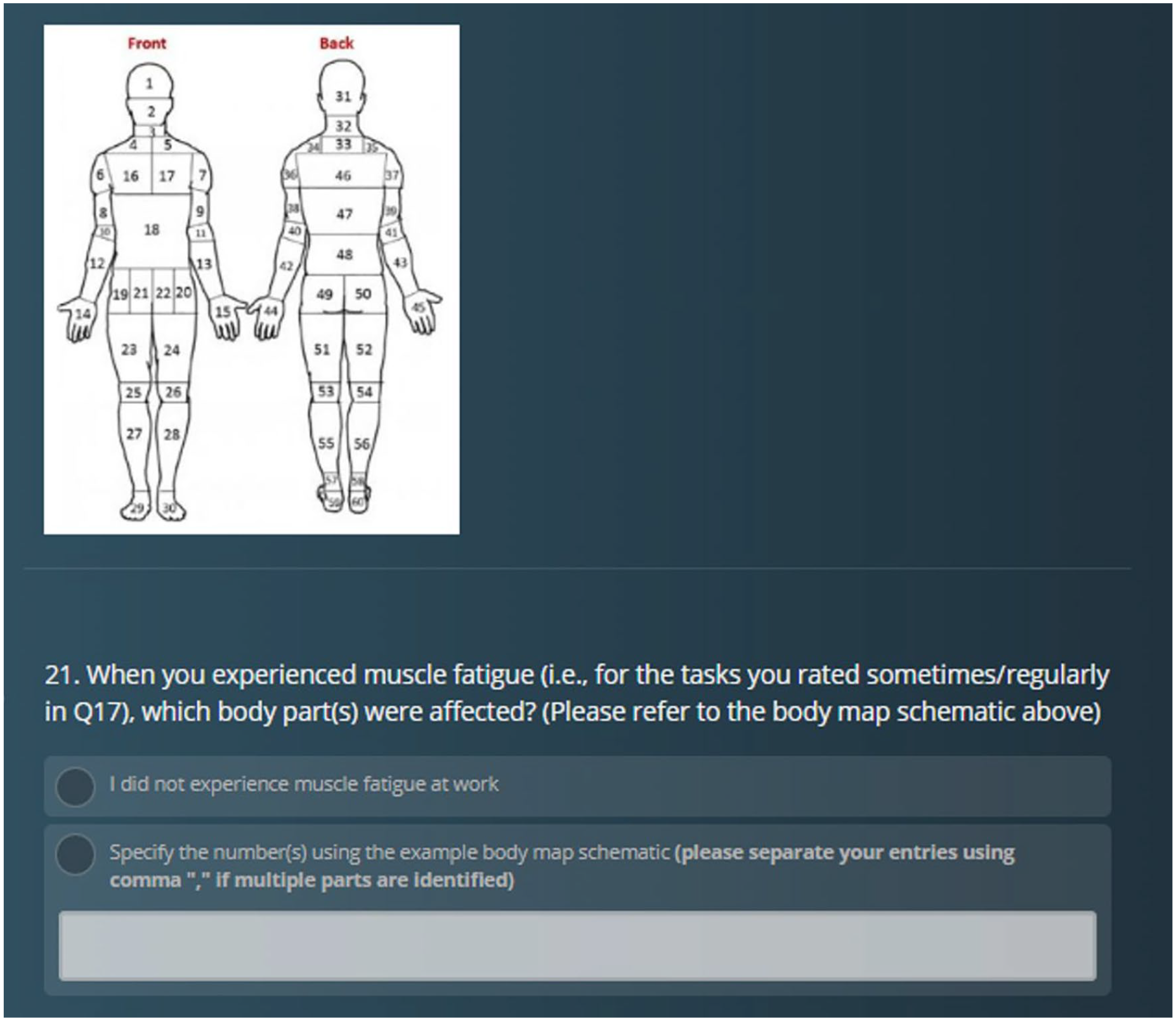
Sample question of muscle fatigue screening.
Twenty-four dialysis healthcare workers participated in this study, including 13 RNs and 11 PCTs. There were 18 female and 6 male participants, age ranged from 18 to 60. Most participants (11 out of 24) were in the age group of 40 to 49 (see Figure 2).
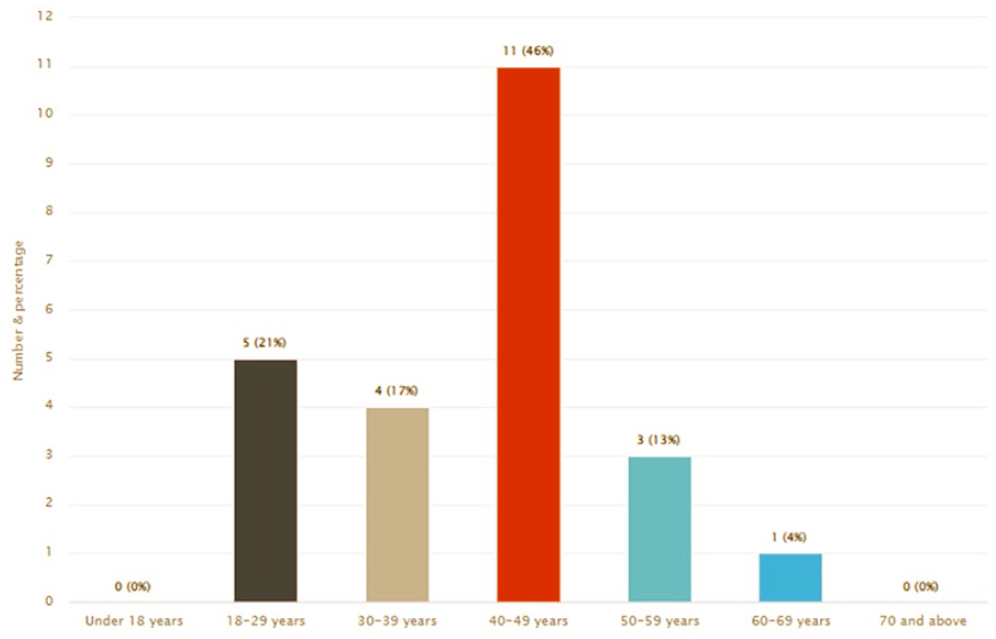
Participants age distribution.
The surveys were conducted in a usability lab (4 participants) and a couple of dialysis clinics (20 participants). At the beginning the participants were given a brief introduction to this study, and an informed consent to read and sign. Then, they were required to complete the questionnaire via Netigate (a survey tool to collect feedback from users). Once participants completed the questionnaire, they were compensated at a company-recommended rate for their time.
Results
Most participants (94%) reported that they experienced muscle fatigue at work. Most of the affected participants are PCTs, female, or users in older age group (see Figure 3). During their shift, more than half of the participants (54%) did not experience muscle fatigue during the first half of their shift, but most of them (92%) experienced muscle fatigue during the second half.
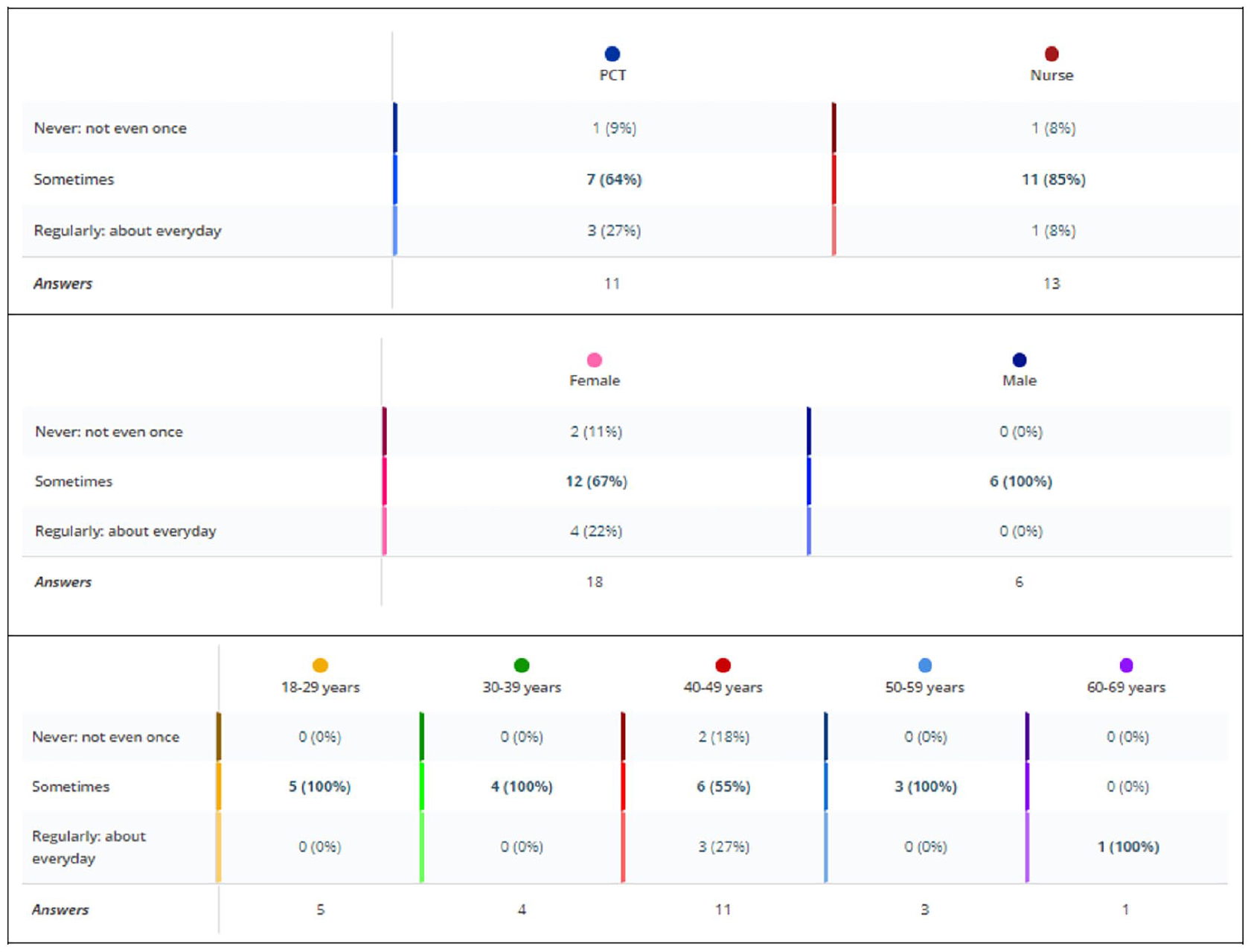
Results for muscle fatigue experienced at work.
Overall, more participants (50%) agreed that muscle fatigue interfered with daily activities compared to carrying out duties (21%) or social life (29%). See Figure 4.
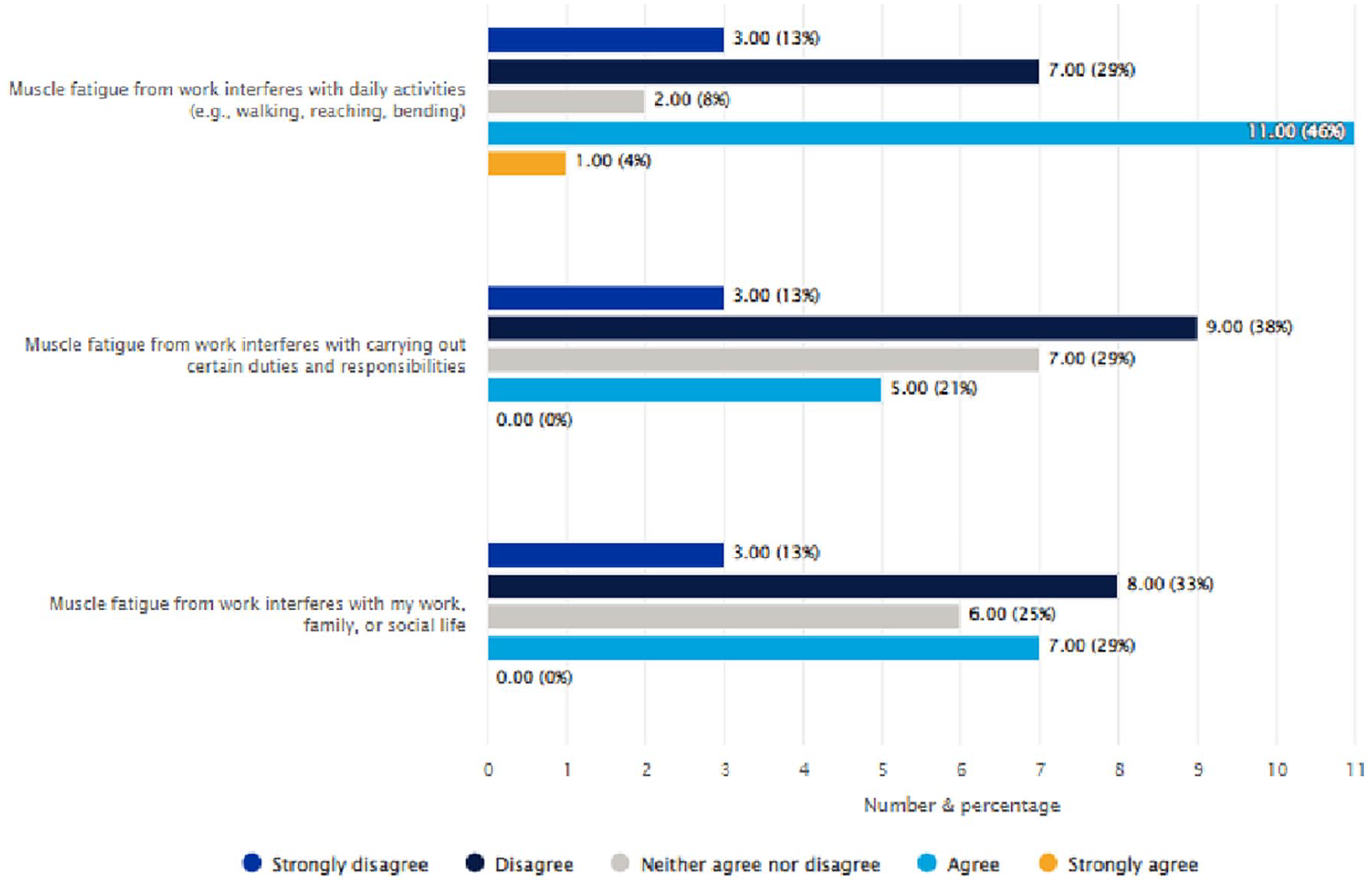
Effect of muscle fatigue.
In terms of user tasks, six tasks were highlighted as they were the most rated (>25%) “REGULARLY” tasks or the most rated (>60%) “SOMETIMES” task. Among these tasks, there are two major task types: (1) heavy lifting task; (2) combination task, which involves both bending and fine motor skills. For treatment preparation and execution, the highlighted tasks were “placing needles and connecting patient” and “CVC (central venous catheter) dressing” (see Figure 5). For post treatment tasks, the highlighted task was “disconnecting the patient and removing needles” (see Figure 6). For tasks outside of patient treatment, the highlighted tasks were “lifting and carrying dry acid cases,” “mixing dry acid” and “lifting and carrying acid jugs to the machine” (see Figure 7).
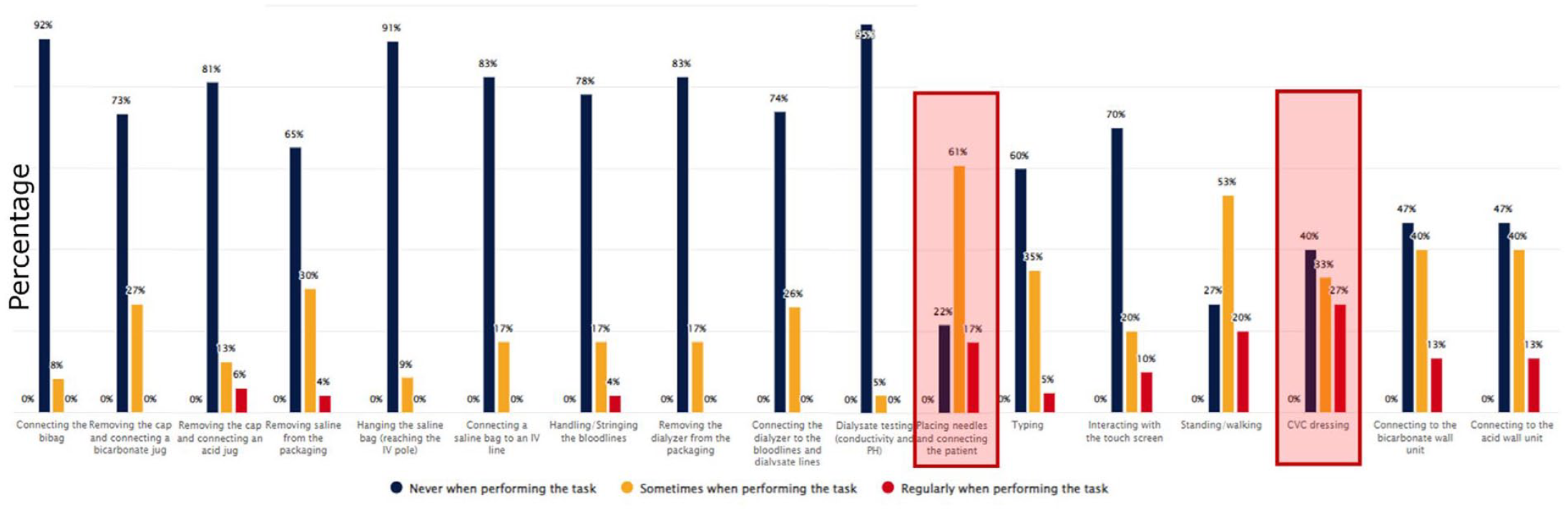
Results for tasks for dialysis treatment preparation and execution.
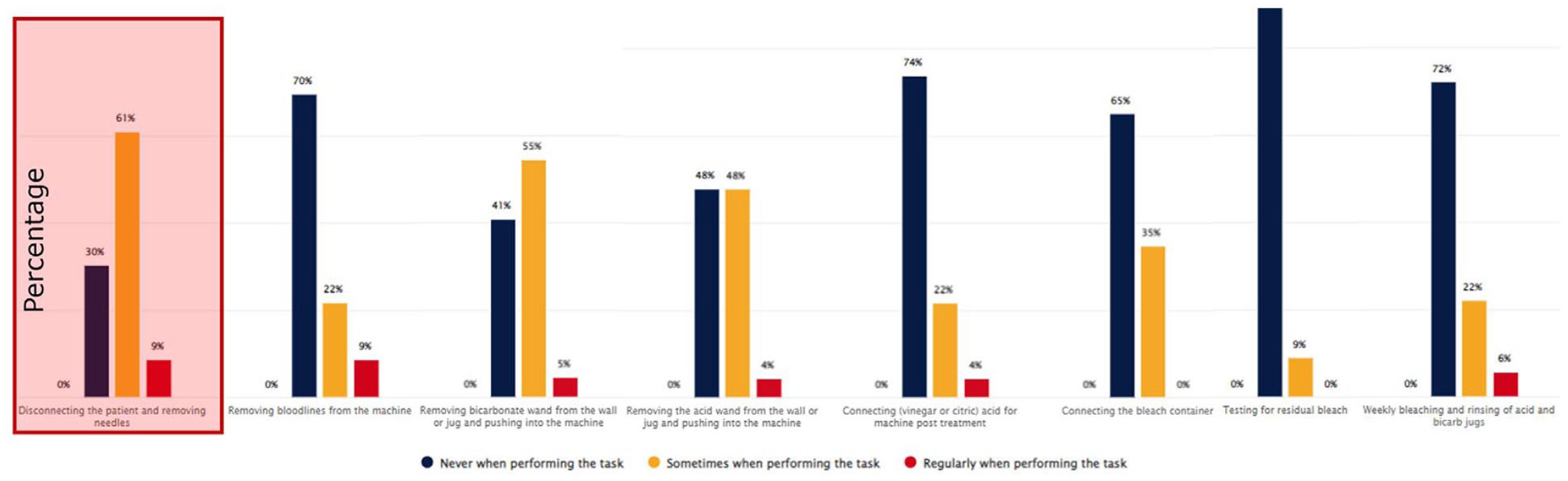
Results for post dialysis treatment tasks.
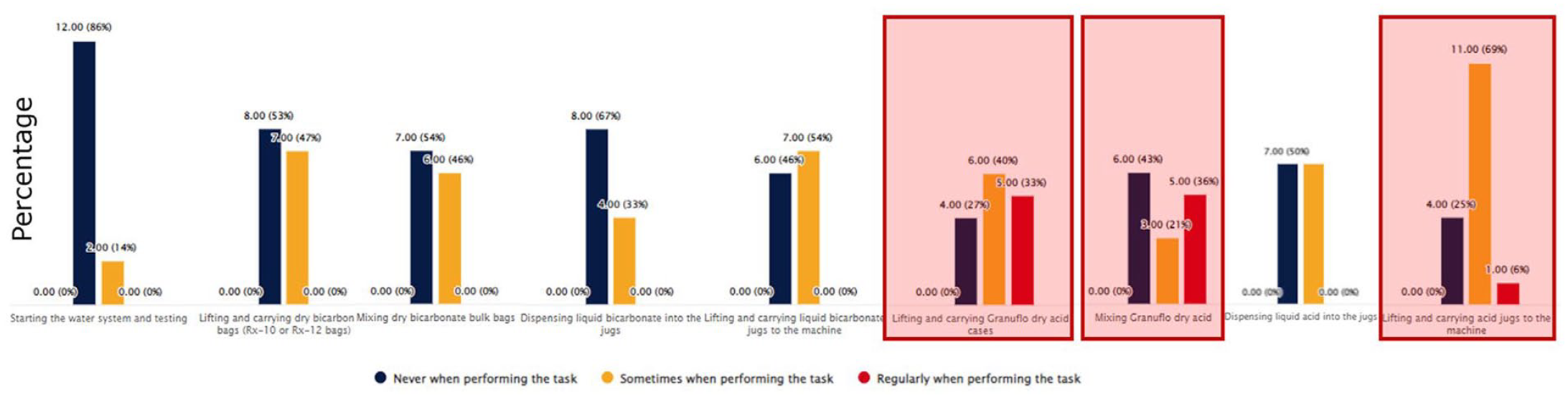
Results for tasks outside of patient treatment.
Regarding the affected body parts (see Figure 1), the lower back (48) was reported to be the most affected body part by all subgroups. In addition, other back muscle groups (46 and 47) were reported to be affected by most subgroups.
Conclusions
The results of this study indicated that muscle fatigue is a common and concerning issue among dialysis healthcare workers. The survey ratings were quite consistent across the examined subgroups (i.e., role, gender, age), and some differences were observed among subgroups. Dialysis RNs and PCTs usually work long hours, and, regardless of their work schedules, muscle fatigue was experienced during the second half of their shift for most users. More PCTs experienced muscle fatigue regularly than RNs as they perform most steps of the dialysis treatments under the direction of a RN, and they need to make sure the patient can stay as comfortable as possible.
Additionally, more female users indicated that they experienced muscle fatigue on a regular basis than male users. This finding is consistent across different types of tasks at work, affected daily activities and social life, etc. Moreover, more participants in older age groups (e.g., 40–69) reported frequent muscle fatigue experienced at work. These are the main age groups for healthcare workers in dialysis clinics. These differences must be taken into consideration when designing medical devices for dialysis that will increase the safety and effectiveness of the products and provide better quality of care for patients.
The questionnaire is being updated by adding users’ demographic information (e.g., different facilities they work) and tailoring the questions for specific user groups (i.e., RN, PCT). In future studies, more data will be collected with the updated questionnaire to help optimize the design in dialysis product development.
Footnotes
Acknowledgements
The authors would like to thank their colleagues, Ernesto De La Fuente and Sydney Wong, and their intern, Sean Mori, for their contributions and support with data collection.
Declaration of Conflicting Interests
The author(s) declared no potential conflicts of interest with respect to the research, authorship, and/or publication of this article.
Funding
The author(s) received no financial support for the research, authorship, and/or publication of this article.
