



Abstract
Background:
The sensitivity of diagnosing tarsal tunnel syndrome with an electrodiagnostic study is just over 50%. Given this low reliability, many surgeons prefer to make a diagnosis solely from a physical examination, despite reported electrodiagnostic findings. Thus, to understand the clinical ramifications between these 2 methods of diagnosis, this investigation compared the postoperative outcomes following a tarsal tunnel release between patients with positive and negative preoperative electrodiagnosis (EDx).
Methods:
This study retrospectively reviewed 53 consecutive patients who underwent tarsal tunnel release by a single surgeon between 2015 and 2022. The primary outcome was pain level using visual analog scale (VAS) whereas the secondary outcomes were 36-Item Short Form Health Survey questionnaire, Foot and Ankle Ability Measure, recovery times (time to return to activities of daily living, work, and sports), and complications. Pre- and postoperative functional outcomes were compared within each EDx group using a paired sample t test. Postoperative outcomes between groups were compared using a generalized linear model adjusted for potential confounders.
Results:
Both EDx groups (positive studies = 31 patients and negative studies = 22 patients) demonstrated significant improvement of all functional outcomes (P < .001). We found no significant difference in recovery time or postoperative outcomes between the 2 groups (P > .05). Multivariable analysis showed diabetes (risk ratio [RR] = 1.79, 95% CI 1.11-2.90) and longer duration of symptoms before surgery (RR = 1.02, 95% CI 1.00-1.04) as prognostic factors for residual pain following tarsal tunnel release.
Conclusion:
In our series, we found that preoperative electrodiagnostic results did not prognosticate postoperative functional outcomes or recovery times after tarsal tunnel release.
This is a visual representation of the abstract.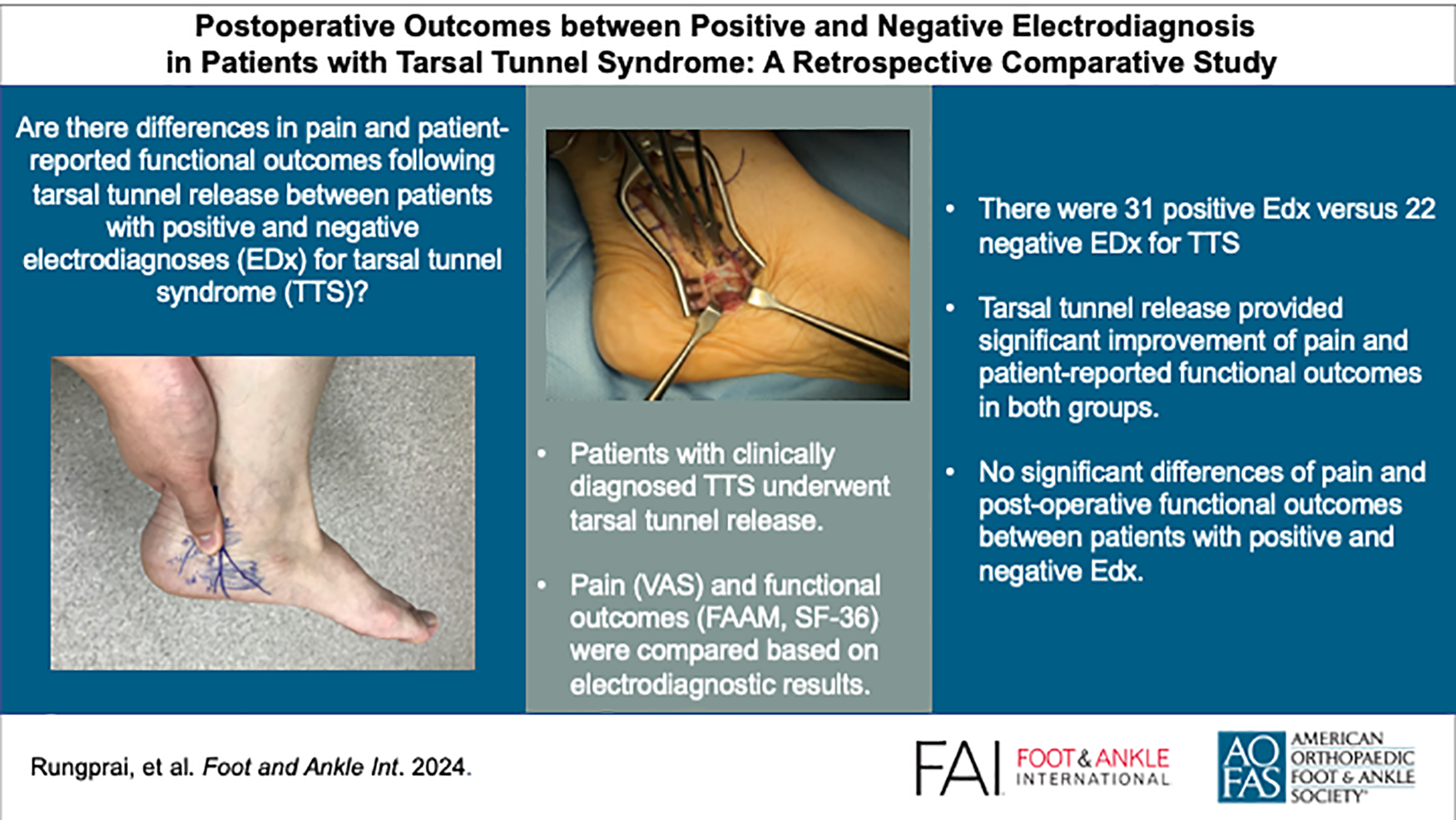
Get full access to this article
View all access options for this article.
References
Supplementary Material
Please find the following supplemental material available below.
For Open Access articles published under a Creative Commons License, all supplemental material carries the same license as the article it is associated with.
For non-Open Access articles published, all supplemental material carries a non-exclusive license, and permission requests for re-use of supplemental material or any part of supplemental material shall be sent directly to the copyright owner as specified in the copyright notice associated with the article.
