



Abstract
This study uses technological infrastructures to inform evidence-based policy design, addressing the conundrum of agricultural productivity and agro-environmental sustainability in Africa. The investigations are done using the Instrumental Variable Two-Stage Least Squares (IV-2SLS) strategy to control for potential endogeneity, covering the period 2000–2020. The findings show that farmers, in their pursuit of greater productivity, often adopt unsustainable agricultural practices, which degrade agro-environmental quality through emissions of nitrous oxide and methane gases. The findings remain consistent after considering the specific cases of crop production and animal agriculture. Similarly, results indicate that technology-infrastructure reduces nitrous oxide and methane gas emissions. Moreover, the negative marginal effect indicates that the indirect benefits for sustainable agriculture provided by integrating technological infrastructure outweigh the adverse impacts on agricultural sustainability. These findings suggest that policymakers should promote the integration of technology infrastructures into the agricultural sector, as they serve as effective tools for enhancing agro-environmental sustainability.
Introduction
Sustainable development is a widely discussed topic in the scientific community, with a particular focus on the environment and the need to ensure the long-term sustainability of our natural resources. In terms of the environment, much of our discussion centers around the agricultural sector, which is a crucial part of Africa’s economy and makes a significant contribution to the continent’s GDP (Mugambiwa & Tirivangasi, 2017; Wirajing et al., 2023). While discussions often emphasize the industrial and manufacturing sectors regarding their greenhouse gas emissions, the agricultural sector’s environmental impacts are frequently ignored in macroeconomic policy debates, even though it significantly contributes to methane and nitrous oxide emissions. These gases can adversely affect soil fertility and future agricultural productivity. The United Nations design several Sustainable Development Goals (SDGs) aimed at sustaining livelihood while mitigating the hazardous man-made effects on the environment, with a particular focus on those related to global warming (Mapanje et al., 2023; Mugambiwa & Tirivangasi, 2017). These goals are SDGs 13, 14, and 15, designed to protect life and ensure its sustainability. SDG 13 focuses on climate action, SDG 14 addresses life below water, and SDG 15 aims to protect life on land while promoting sustainable practices (United Nations, 2022a; 2022b). This study raises the conflicting sustainable development objectives of ensuring a sustainable agricultural environment in the quest for increased agricultural value added. The trade-offs of reconciling between poverty, hunger, and environmental sustainability require policy tools such as technology infrastructure development that could help in striking a balance (Blanchard et al., 2017; Kouladoum et al., 2022).
Agriculture remains a cornerstone of African economies, employing a large share of the labor force and contributing substantially to GDP. According to FAO data, agrifood systems account for about 64.5 % of employment in Africa, reflecting the sector’s dominant role in livelihoods (FAO, 2024; ILO, 2025). In many countries, the share of workers in agriculture exceeds 60 % of the workforce, particularly in rural areas (FAO, 2024). The sector also contributes a significant share of economic output, with AfDB reporting that agriculture accounts for roughly one-third of the continent’s GDP (World Bank, 2025). Despite its central role in employment and economic output, agricultural expansion in Africa has increasingly been associated with environmental pressures. In particular, efforts to raise productivity, often through intensified land use, fertilizer application, and livestock expansion, have led to rising emissions of methane and nitrous oxide, linking agricultural growth directly to climate change dynamics. As a result, agriculture in Africa occupies a dual position: it is both highly vulnerable to climate change and a growing contributor to greenhouse gas emissions (Ketchoua et al., 2025; Prasad et al., 2015). The top 10 countries responsible for 60% of the global greenhouse gas are mostly European countries while the 100 lowest-emitting nations jointly contribute less than 3%. Nearly all African countries fall into the category of the 100 least-producing countries, but their volumes of nitrous oxide and methane gas emissions from the agricultural sector have kept on increasing since the turn of the 21st century (Mulusew & Hong, 2024).
The emissions from the agriculture sector are registered by the FAO statistics, in the form of methane emissions and nitrous oxide from both crop production and animal agriculture (Meinzen-Dick et al., 2011). In the content of these gases, animal agriculture produces 65% of the world’s nitrous oxide emissions (Etim et al., 2013; Prasad et al., 2015). Although the contexts in which the term agro-environmental sustainability is used vary, academics have reached a consensus that agro-environmental or sustainable agriculture is the practice that meets the current and long-term needs (such as food, fiber, and income for livelihood sustainability) of the society while conserving natural resources (biotic and abiotic) to ensure the proper functioning of the ecosystem for long-term human development and sustenance (Hayati et al., 2010; Pham & Smith, 2014). The world’s population is increasing, which in turn drives up the demand for natural resources. Unfortunately, this growing demand leads to the overexploitation of soil, deforestation, and increased pressure on the land. This issue is particularly severe in African countries, where there is a shortage of human capital and limited access to training on environmental protection (Ko & Leung, 2025; Omore et al., 2019; Thornton et al., 2017). While the agriculture, climate change nexus has been widely acknowledged, far less attention has been paid to the mechanisms through which this trade-off can be mitigated. One critical but underexplored pathway is the role of technology infrastructure. Digital and knowledge-based technologies have the potential to enhance productivity while reducing environmental damage by improving efficiency, disseminating sustainable practices, and optimizing input use. However, the extent to which technology infrastructure can resolve the productivity, sustainability conundrum in African agriculture remains empirically unclear.
Due to the limited rigorous empirical evidence, the present study contributes to the existing literature by investigating the technology infrastructure development thresholds necessary for achieving agro-environmental sustainability and improved agricultural productivity. This is especially important considering that the agricultural sector provides for the majority of Africans. Existing studies largely examine productivity and environmental outcomes in isolation, offering limited insights into their joint dynamics in Africa. The closest study to this work in environmental and agricultural economics literature is that of Nthane et al. (2020) and Adeleye et al. (2021). The first study explored how information and communication technology (ICT) has enabled small-scale fisheries in Cape Town, South Africa, to improve their supply chains, collaborate, and achieve sustainability. The second study examined the relationship between carbon emissions and agricultural productivity. However, neither study considered the direct impact on agricultural emissions, such as nitrous oxide and methane gases. In addition, they did not discuss how technology infrastructure could help mitigate these emissions while promoting agricultural productivity. To address these gaps, this study also examines the moderating role of technology infrastructure and identifies critical policy thresholds for sustainable outcomes. Empirically, the study employs an Instrumental Variable Two-Stage Least Squares (IV-2SLS) approach using panel data for 52 African countries over the period 2000–2020.
The findings reveal that agricultural productivity in Africa significantly increases methane and nitrous oxide emissions, confirming the existence of a productivity–sustainability trade-off. However, technology infrastructure plays a mitigating role, reducing agricultural emissions and enhancing agro-environmental sustainability when certain thresholds are attained. These results are significant for policy, as they demonstrate that productivity growth need not come at the expense of environmental sustainability if supported by adequate technology infrastructure. The study therefore provides evidence-based guidance for aligning agricultural development, climate policy, and digital transformation in Africa. The next section of the study presents the underpinning theoretical foundations.
Literature Review
Theoretical Literature
Numerous theories have been developed in environmental studies to highlight the importance of preserving natural resources, conserving biodiversity, and using energy resources. Despite the pursuit of sustainable growth, human self-interest often undermines the sustainability of the environment and its natural resource base. Environmental degradation is a global issue discussed extensively in both contemporary and non-contemporary environmental literature. There have been debates on how agricultural practices can be conducted sustainably to ensure environmental and natural resource sustainability. The previous literature has different views on how economic activities and technological growth have impacted the environment. Among significant theories that underpin man’s activities and the environment in the literature is the Environmental Kuznets Curve (EKC) and the pollution haven hypothesis (Karimi et al., 2022).
Environmental Kuznets Curve (EKC)
This theory stems from the Kuznets curve inequality theory published by Simon Kuznets in 1955 and adapted with the name “Environmental Kuznets Curve (EKC)” by Panayotou in 1993 (Mahmoodi & Dahmardeh, 2022). The EKC theory was later popularized in the works of Grossman & Krueger (1991), during which they introduced the inverted U-shape relationship between environmental degradation and income growth. The EKC is an environmental theory that hypothesized the relationship between environmental degradation and the growth in per capita income in various sectors of the economy (Ketchoua et al., 2025; Lanoie et al., 2011; Stern, 2018). This theory is based on the idea that the environment degrades more in the early stages of economic growth given the low environmental awareness than in the later stages during which more funds are allocated for environmental protection (Lipford & Yandle, 2011). This theory is employed in environmental economics to understand how farmers’ activities in the quest for more income affect the environment. In addition, the ecological footprint theory has been well documented to underpin the relationship between man’s influence and environmental sustainability. The ecological footprint is widely employed in environmental economics to establish the relationship between man’s demand and nature’s capacity to satisfy the needs. In addition, it is an environmental resource management tool that measures the volume of the land area that is required to produce what to sustain man’s livelihood without deteriorating environmental quality (Béné, 2009; Global Footprint Network, 2008; Matei, 2010). Moreover, this theory acknowledges the challenges of sustaining both renewable and non-renewable resources in the advent of the fourth industrial revolution and digitalization. Crop footprints in the agricultural sector reveal that poor management practices and unsustainable strategies lead to the depletion of ecological assets, thereby systematically undermining agro-environmental sustainability.
Pollution Haven Hypothesis (PHH)
The notion of the pollution haven hypothesis was conceived by Copeland and Taylor (1994) in attempts to understand the North-South trade under North American Free Trade Agreement (NAFTA) program (Taylor, 2005). The pollution haven posits that industries will try to avoid the costs of stringent environmental regulations in developed economies where the cost is very high, making large industrialized nations to seek to establish factories in laxly regulated environments that offers cheap factors of production such as low cost labor (Ambec et al., 2013; Lanoie et al., 2011). This pollution heaven hypothesis theory is well observed in Africa, since many industries in the continent belong to foreigners who are believed to have escaped the stringent environmental regulations. The problems identified in these theories were raised by Porter in what is known in environmental literature as Porter’s hypothesis. This hypothesis considers strict environmental regulations as a strategy to address the growing concern of environmental degradation resulting from man’s activities. These stringent regulations increase the cost of production and thus discourage firms from producing, but Porter’s hypothesis considers these regulations to trigger productivity through innovative production processes that are environmentally friendly (Ambec et al., 2013; Porter, 1991). According to Porter (1991), the innovative capacity of enterprises will continue to be stagnant with relaxed environmental norms, but doing what is right for the environment by setting stringent norms will force firms to innovate while considering environmental cost as a burden and consequently, develop strategies that preserve environmental quality (Porter, 1991; Xepapadeas & de Zeeuw, 1999). In addition, demonstrating the role of technology in the environment, Ehrlich and Holdren (1971) in their IPAT model present the outcome impact of natural resources used (pollution) by the population, affluence, and the advancement in technology. The IPAT theoretical model considers population growth coupled with growing affluence as the main factors that leads to adverse environmental effects and considers technological progress and human capital development as neutral or beneficial factors that could be crucial in regulating environmental outcomes (Carson, 2010; Wei, 2011).
Empirical Literature
Agricultural Productivity and Agro-Environmental Sustainability
Existing empirical studies largely agree that agricultural productivity improvements are associated with increased greenhouse gas emissions, particularly methane and nitrous oxide, due to intensified land use, fertilizer application, and livestock expansion. While evidence from both developed and developing economies confirms this positive relationship, findings differ in magnitude depending on production systems and technological adoption (Franco-Fuentes et al., 2021; Hasselberg et al., 2020). Both the contemporary and the non-contemporary literature has raised the concerns about the use of unsustainable agricultural practices in the quest for increased productivity (Blanchard et al., 2017; Kesavan & Swaminathan, 2008). This strand of the literature indicates that agricultural activities result in the degradation of environmental quality, caused by unsustainable technics and greenhouse gas emissions. Among these studies is that of Mulusew and Hong (2024) whose findings indicate that a 1% increase in fertilizer consumption, nitrous oxide (N2O) emissions, and an area devoted to grain production results in a 0.28, 5.33, and 1.31% increase in Ethiopia’s agricultural yield in the long run, respectively. This supports the literature indicating that greenhouse gases increase with farmers’ efforts to enhance agricultural productivity in both the crop and livestock sectors. In a similar study in Africa, Blanchard et al. (2017) found that agricultural activities result in climate variability which degrades the environment, especially in coastal lands. The degrading effect on the environment affects agricultural productivity due to rising temperatures and poor technologies. In China, Zhai et al. (2009) research on agricultural productivity indicates that climate change will have long-term consequences for the agro-environment that persist until 2080 due to greenhouse gases. According to Edoja et al. (2016), who look at how climate change affects agricultural productivity globally, greenhouse gases increase in the quest for productivity and reduce environmental quality, which can influence long-term food security. This is in line with the findings of Pauly et al. (2002), who previously documented that global fish catches in the late 1980s exacerbate environmental quality and the sustainability of aquatic organisms. In Africa, where many economies remain below the EKC turning point, agricultural productivity gains are therefore expected to exacerbate agro-environmental degradation. Limited access to clean technologies and weak regulatory enforcement further reinforce this relationship, suggesting that productivity-led growth alone may be insufficient to ensure environmental sustainability.
Agricultural productivity increases agro-environmental degradation in Africa.
Does Technology Infrastructure Matter in the Relationship Between Agricultural Productivity and Agro-Environmental Sustainability?
In the theory of change, there is a dynamic interaction between technology and the conditions under which it is applied. For example, changing conditions and circumstances such as increasing land pressure and changing climatic conditions can make existing technologies more or less relevant (Thornton et al., 2017). The use of new technology can, in turn, change some of these conditions and circumstances. These factors influence agricultural productivity and the environment in which it is pursued. The theory of change helps us understand that the conditions and circumstances of interest to farmers include environmental factors such as soils, water availability, and climate variability; institutional factors such as markets and tenure regimes; and individual factors such as food security, age, gender, and education level. All of these factors are influenced by technological innovation. It is also important to consider the circumstances in which farmers are exposed to and learn about a technology: how to access, employ, and draw profit from it to increase their productivity and ensure the sustainability of the environment in which they operate. As the world is dynamic and changes rapidly, technology will tend to influence the outcome of what farmers pursue and how their quest to sustain their livelihood affects the agricultural environment. Gaining eco-friendly technologies is surplus to enhancing agro-environmental sustainability, while other technologies exacerbate and degrade the natural resource base and the environment in which agricultural activities take place (Maru et al., 2018; Thornton et al., 2017). The theory of change makes it clear that the effects of integrating technology in the agricultural sector for the quest of productivity on agro-environmental sustainability depend on how the technology is adopted, particularly the level of development and living standards of the population. Negative effects can occur from technologies that undermine ecological services, for example, where chemicals promote crop pests. Such situations can create “treadmills” where the environmental or economic changes produced by the technology induce farmers to use increasing levels of it and make disadoption difficult.
ICT is documented in environmental economics as an important tool that controls man’s influence in an environment through the reduction of CO2 emissions from solid fuel consumption, particulate emissions damage, and non-renewable energy consumption (Asongu et al., 2018). This strand is found in the works of Kimbahune et al. (2013) whose findings reveal that the agricultural environment is vulnerable to the impact of climate change in Japan, especially in rural fishery communities. Kimbahune et al. (2013) found out that technologies reduce the environmental impact of poor agricultural management through the development of environmental research organizations in the agricultural domain. Similarly, Huh (2017) found that technology infrastructure is instrumental in disseminating information on sustainable management among farmers while indicating that wind advisories are available to only a few farmers and do not reach most of them because of a lack of digital tools for information distribution, especially in the rural areas. Similarly, Dash et al. (2022) employed a bibliometric visualization tool by reviewing yearly publications, to conclude that the application of ICT tools in agriculture enhances profitability and minimizes resource wastages for environmental sustainability. This strand of the literature therefore supports that ICT enhances management efficiency and environmental sustainability by limiting greenhouse gas emissions, soil erosion, and increasing the dissemination of information on sustainable agricultural practices. Considering the importance of technology transfers in promoting environmentally friendly agricultural techniques for agri-industry sustainability as documented by PHH, we pose the following hypothesis (H2).
Technology infrastructures enhance agro-environmental sectors when integrated into the agricultural sectors in Africa.
A comprehensive understanding of the potential implications of the pursuit of productivity on agricultural sustainability, mitigated by an extension in technology infrastructures, has been made possible by the examined literature on agricultural productivity, agro-environmental sustainability, and technology infrastructures. The studied literature reveals in all its strands that agricultural operations erode environmental sustainability, though their degree reduces with the incorporation of technologically advanced infrastructures into the agricultural sector. Overall, the literature reveals three critical gaps. First, most studies examine agricultural productivity and environmental degradation separately, with limited attention to their joint dynamics in Africa. Second, although technology infrastructure is often discussed as a solution, its moderating role in mitigating agricultural emissions remains underexplored at the continental level. Third, existing studies rarely identify policy-relevant thresholds at which technology infrastructure can effectively offset environmental degradation. This study addresses these gaps by integrating productivity, emissions, and technology within a unified empirical framework, thereby providing policy-relevant evidence for sustainable agricultural transformation in Africa.
Methodology
Data
This study’s analysis draws on a dataset covering 52 African countries from 2000 to 2020, selected based on consistent data availability across the study period. The primary data source is the 1 World Bank’s World Development Indicators (WDI) and the Food and Agricultural Organizations of the United Nations 2 (FAO). The study covers the period 2000–2020 due to data availability and consistency across key variables, particularly agricultural emissions and technology indicators. This period is also significant as it captures major structural transformations in African agriculture, including increased commercialization, digitalization, and the introduction of climate-related policy frameworks. Africa is selected as the study context because of its high dependence on agriculture for livelihoods, its vulnerability to climate change, and its relatively low but rapidly growing emissions profile, making it a critical region for sustainable development policy.
Variables Justification
Dependent Variable
The dependent variable of the study is agro-environmental sustainability. It is proxied by two indicators which are the nitrate oxide emissions and the methane gas emission. Methane and nitrous oxide emissions are used as dependent variables. Main organizations that supply macro-level agricultural panel data, such as the FAO and the World Bank, use these indicators to explain and measure the primary greenhouse gases linked to agricultural activities. These indicators effectively connect the concept of agro-environmental sustainability with its practical implementation, as they directly reflect the environmental externalities in the agricultural sector.
Agricultural Nitrate Oxide Emissions
Agricultural nitrate oxide emission is an indicator of environmental degradation resulting from the agricultural sector. It is proxied in metric tonnes of CO2 equivalent. These emissions are from animal waste including both the liquid and the solid fisheries waste, rice production, and agricultural waste burning. Nitrous oxide emission is employed as an indicator of agro-environmental sustainability inspired by the works of Shah et al. (2022) and Swaminathan & Kesavan (2012), who considered also the fisheries sector to be contributing significantly to the total nitrous oxide emissions. The trends in nitrous oxide emissions in Africa are presented in Figure 1. Agricultural nitrate oxide emissions in Africa (source: Author’s computation from World Development Indicators)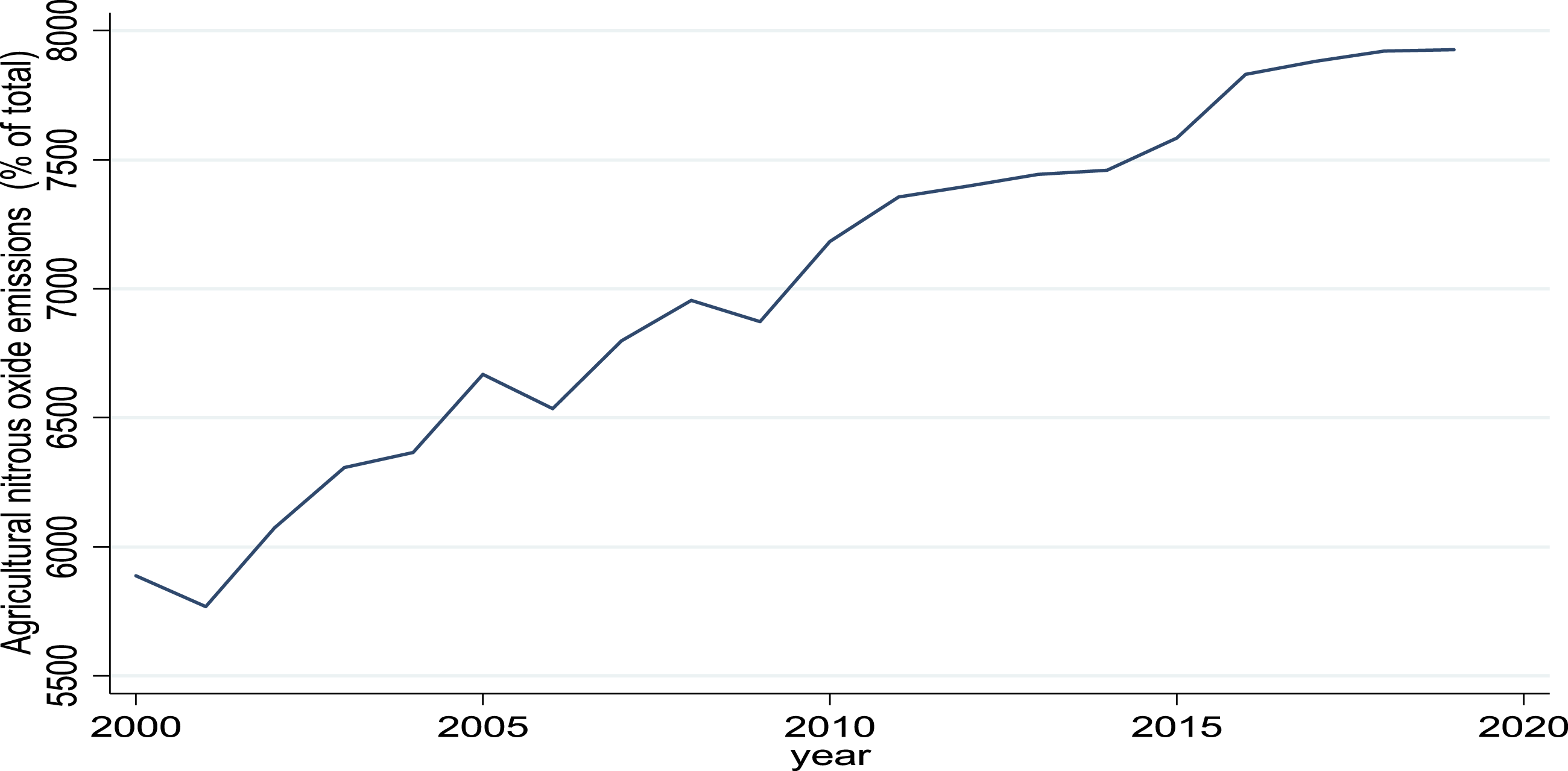
Figure 1 depicts the trends of nitrous oxide emissions in Africa between 2000 and 2020. It indicates an increasing trend of nitrous oxide emissions from 5887.692 metric tonnes in 2000 to 7926.731 metric tonnes of CO2 in 2020, depicting an increase of 1962.907 since the turn of the 21st century. The fishery sector produces nitrous oxide emissions through the nitrogenous waste generated with the associated human waste in the processes of denitrification and nitrification during which oxidized ammonium microbes transform to nitrate to generate nitrous oxide emitted into the environment.
Agricultural Methane Gas Emissions
The methane gas emissions are adopted as an indicator that measures environmental sustainability through its emissions in the agricultural sector. It is the emissions from animals, animal waste, aquatic sector, rice production, agricultural waste burning, and energy-saving burnings proxied as an equivalence of CO2 in metric tonnes. It indicates the degree of environmental degradation resulting from the agricultural sector, which does not only affect agricultural productivity but also human lives through global warming. The fishery sector contributes a significant amount of methane gas emissions, signifying that more fishery exploitation will continue to deteriorate the environment and erode air quality (Bhattacharyya et al., 2020; Swaminathan & Kesavan, 2012; Zougmoré et al., 2016).
Figure 2 presents the evolution of methane gas emissions in Africa between 2000 and 2020 as an equivalence of CO2 emissions. The figure indicates an increasing trend of methane gas emissions from 7938.846 in 2000 to 11520.38 metric tonnes in 2020. This increase in methane gas emissions is due to an increase in economic activities, especially in the industrial and the agricultural sectors in which labor is slowly transforming from man labor to machines due to increased digitalization and human capital development. Agricultural methane gas emissions in Africa (source: Author’s computation from World Development Indicators)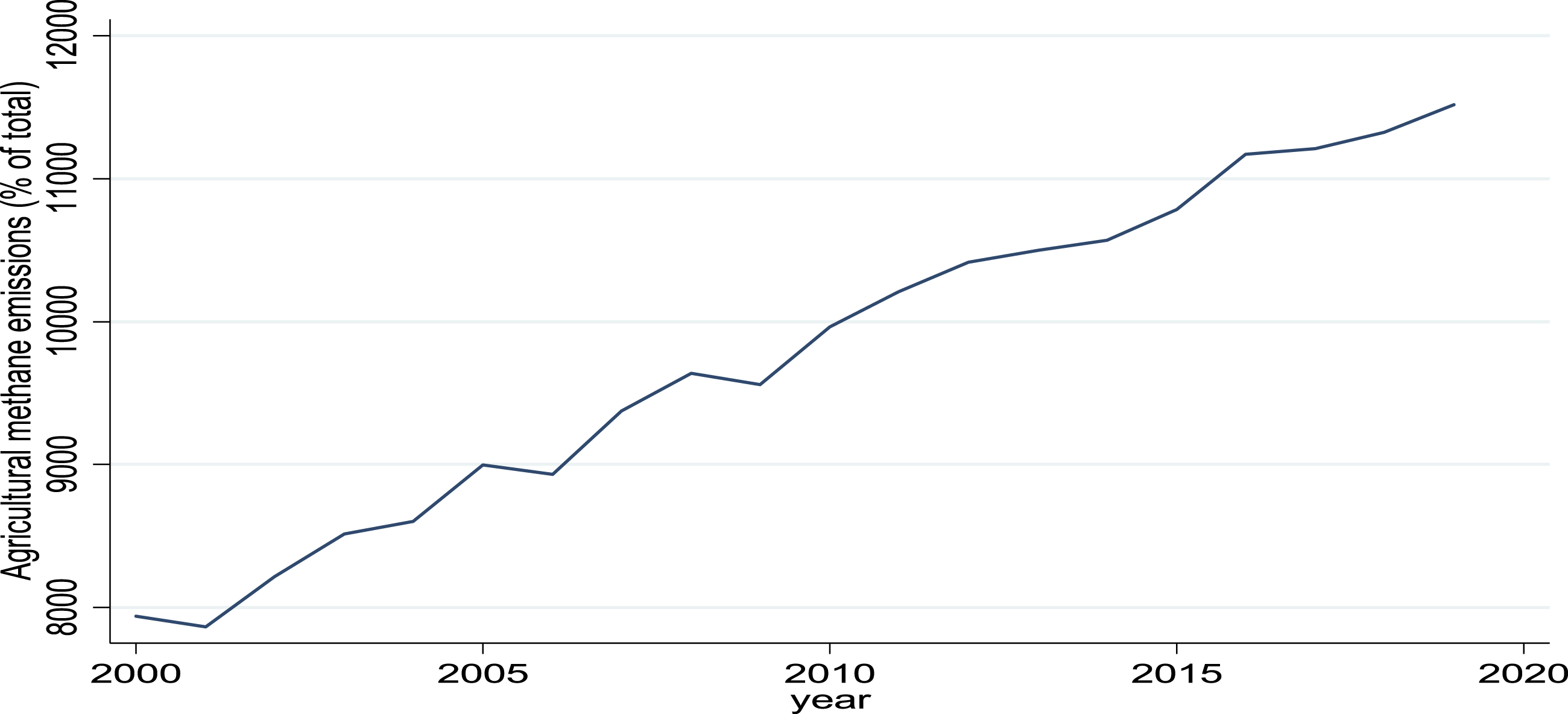
Independent Variable
The independent variable of interest is agricultural productivity, proxied by agricultural value added. It includes value added from crop production and animal agriculture, and it is proxied as a percentage of GDP. After deducting intermediate inputs and adding up all outputs, a sector’s net output is its value added. It is computed without accounting for the depletion and deterioration of natural resources or the depreciation of artificial assets. As a determinant of agro-environmental sustainability, agricultural value added is also employed as an indicator of productivity and is considered to have long run degrading impact on environmental quality (Adeleye et al., 2021). Humans engage in various activities to boost productivity such as agriculture, fuel combustion, wastewater management, and industrial processes. However, these activities also result in the release of nitrous oxide into the atmosphere. Nitrous oxide is also present naturally in the atmosphere due to the Earth’s nitrogen cycle and has various natural sources. By doing this, we anticipate that the two will have a positive connection and that they may be altered when technological infrastructure steps in to lower greenhouse gas emissions from the agriculture industry, which will raise the sustainability of the agro-environment. Figure 3 depicts trends in agricultural value added, proxied as a percentage of GDP. Agricultural productivity in Africa (source: Author’s computation from World Development Indicators)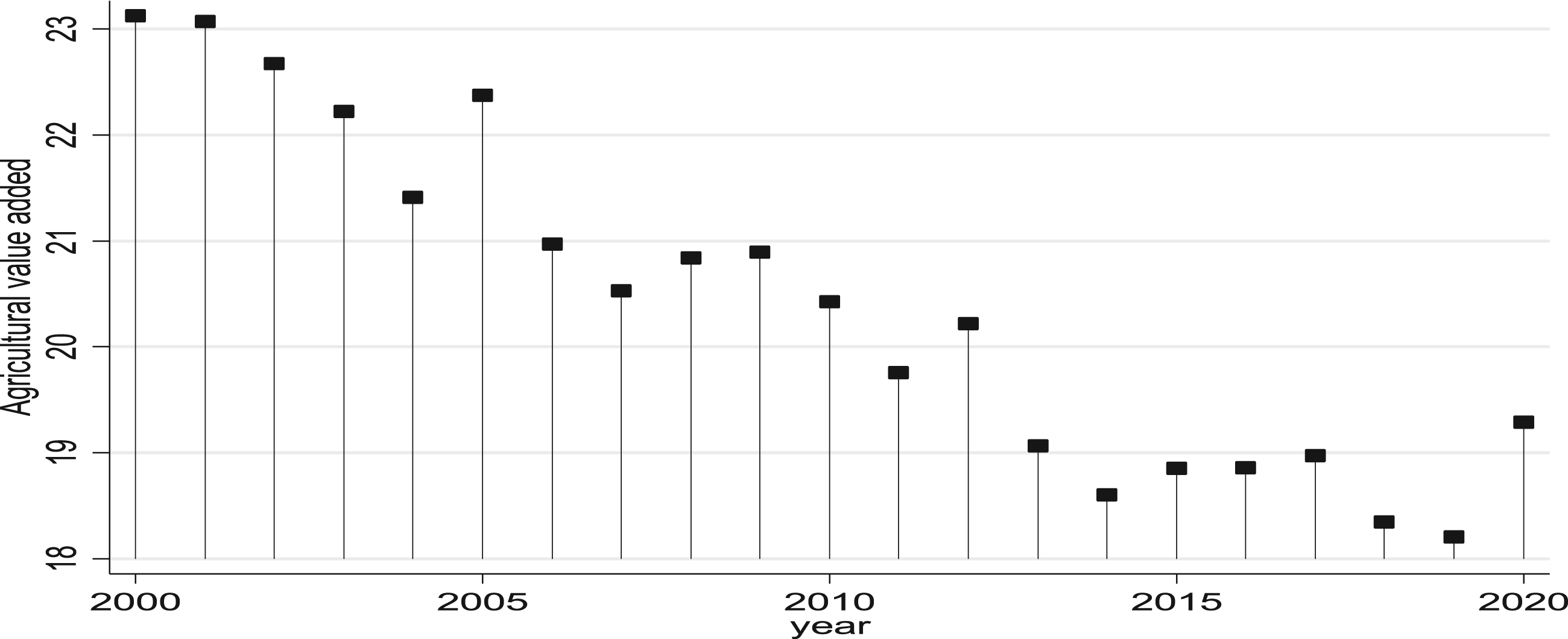
Between 2000 and 2020, Figure 3 shows a declining trend in agricultural productivity. It is estimated as a percentage of GDP and calculated as the average evolution for each of the 52 African nations included in the study. This decreasing trend is justified be an increasing shift to the industrial sector which has also contributed drastically to the continent’s growth in GDP.
Figure 4 indicates a positive correlation between agricultural productivity and nitrous oxide and methane gas emissions from the agricultural sector. The correlation analysis established using a scatter plot with estimated parameters indicates that an increase in a unit tonne of agricultural output is likely to result in 0.2284 and 0.2454 metric tons of nitrous oxide and methane gas emissions, respectively, when other variables have not intervened. The scatter plot analysis presents some limitations as it does not address estimation issues such as potential endogeneity that can render the results biased. In this regard, the findings on the nature of this relationship will be further experimented with using the IV-2SLS strategy, which addresses the problem of endogeneity. Correlation between agricultural value added and the agricultural greenhouse gas emissions (source: Author’s computation)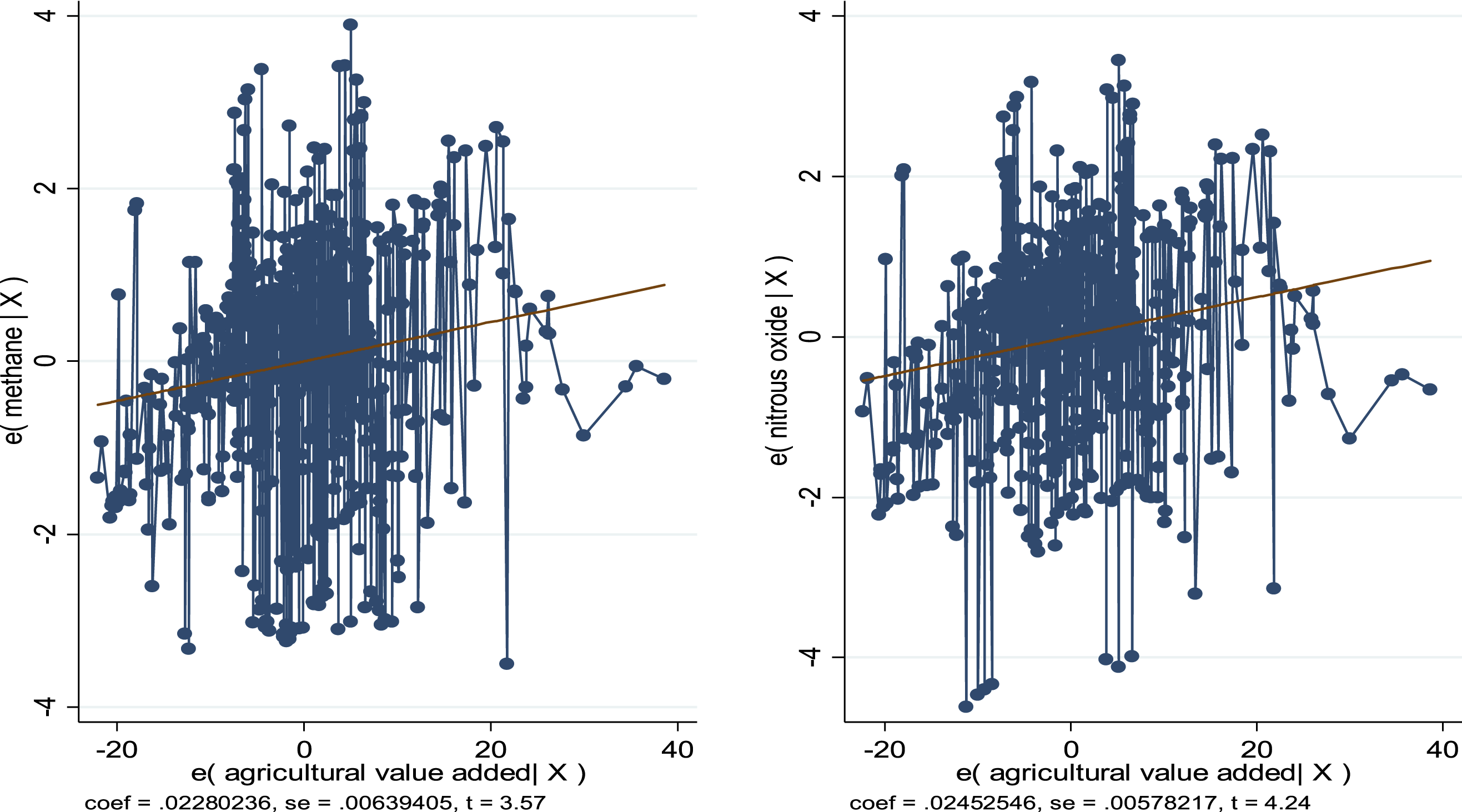
Moderating Variables
The moderating variable employed in this study is technology infrastructure. It is used in the present study to refer to digital connectivity, information and communication technologies, and knowledge diffusion systems that support agricultural efficiency. It is proxied by internet penetration, mobile cellular subscriptions, and broadband subscriptions. Internet users are determined by the total number of individuals using the Internet per 100 people. A mobile cellular subscription is also considered a digital technology and refers to subscriptions to a public mobile telephone service that provides access to the PSTN using cellular technology. This includes the number of post-paid subscriptions as well as the number of active prepaid accounts. Broadband cellular subscriptions, on the other hand, refer to fixed subscriptions that offer high-speed access to the public Internet at downstream speeds of 256 kbit/s or greater (Wirajing & Nchofoung, 2023). These indicators of technology infrastructure are documented in environmental literature as an important determinant of environmental sustainability (Shobande & Asongu, 2022). Both indicators are expected to enhance both agricultural productivity and agro-environmental sustainability. Though, some studies indicate the negative effects of technology infrastructure on environmental sustainability in the fourth industrial era. The digital technology indicators are inspired by the works of Asongu et al. (2018) and Shobande and Asongu (2022), as determinants of environmental sustainability. Agro-environmental sustainability can be improved by the agriculture sector’s incorporation of technological infrastructures in their pursuit of production. Through the use of clean technologies and ecologically friendly behaviors spread through eco-friendly training programs, technologies are intended to lessen the damaging impacts of poor agricultural management (Shah et al., 2022; Zougmoré et al., 2016).
Control Variables
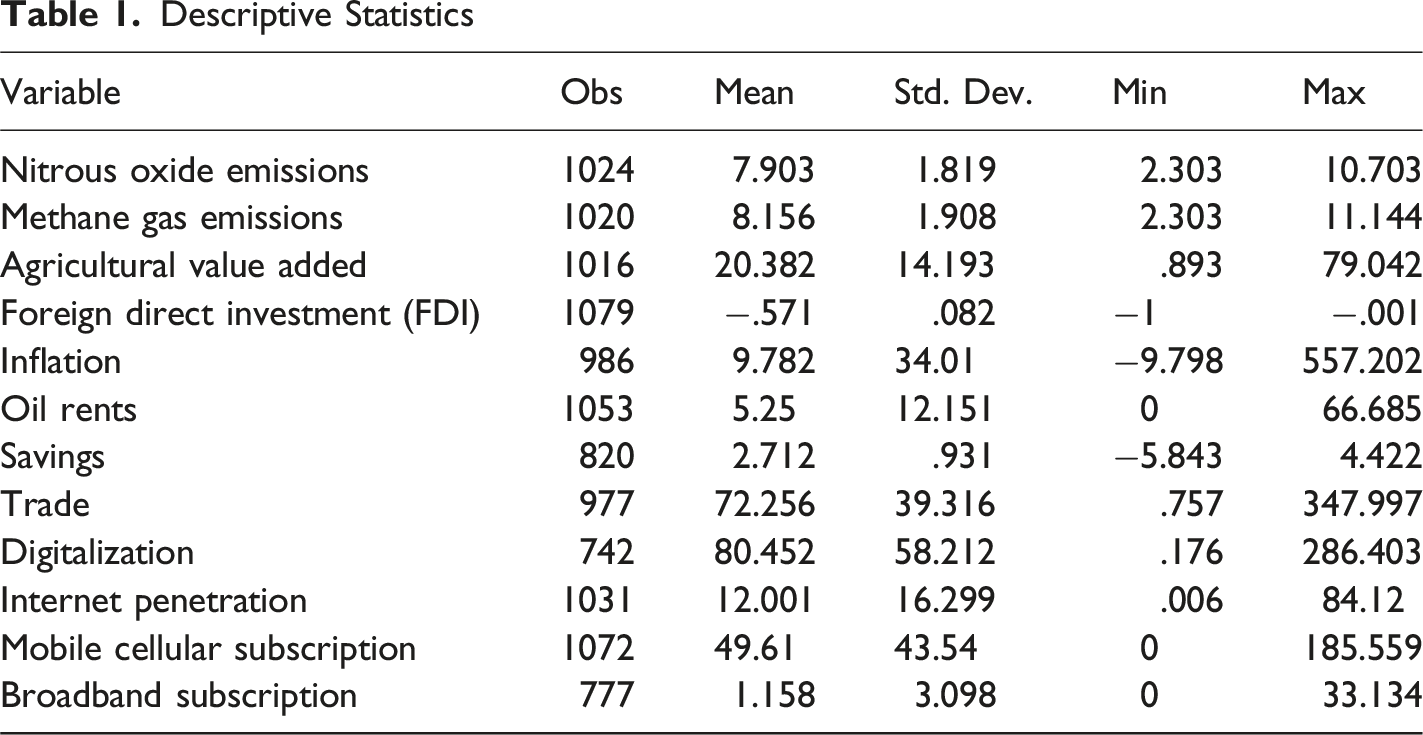
Descriptive Statistics
Estimation Approach
The Baseline Model



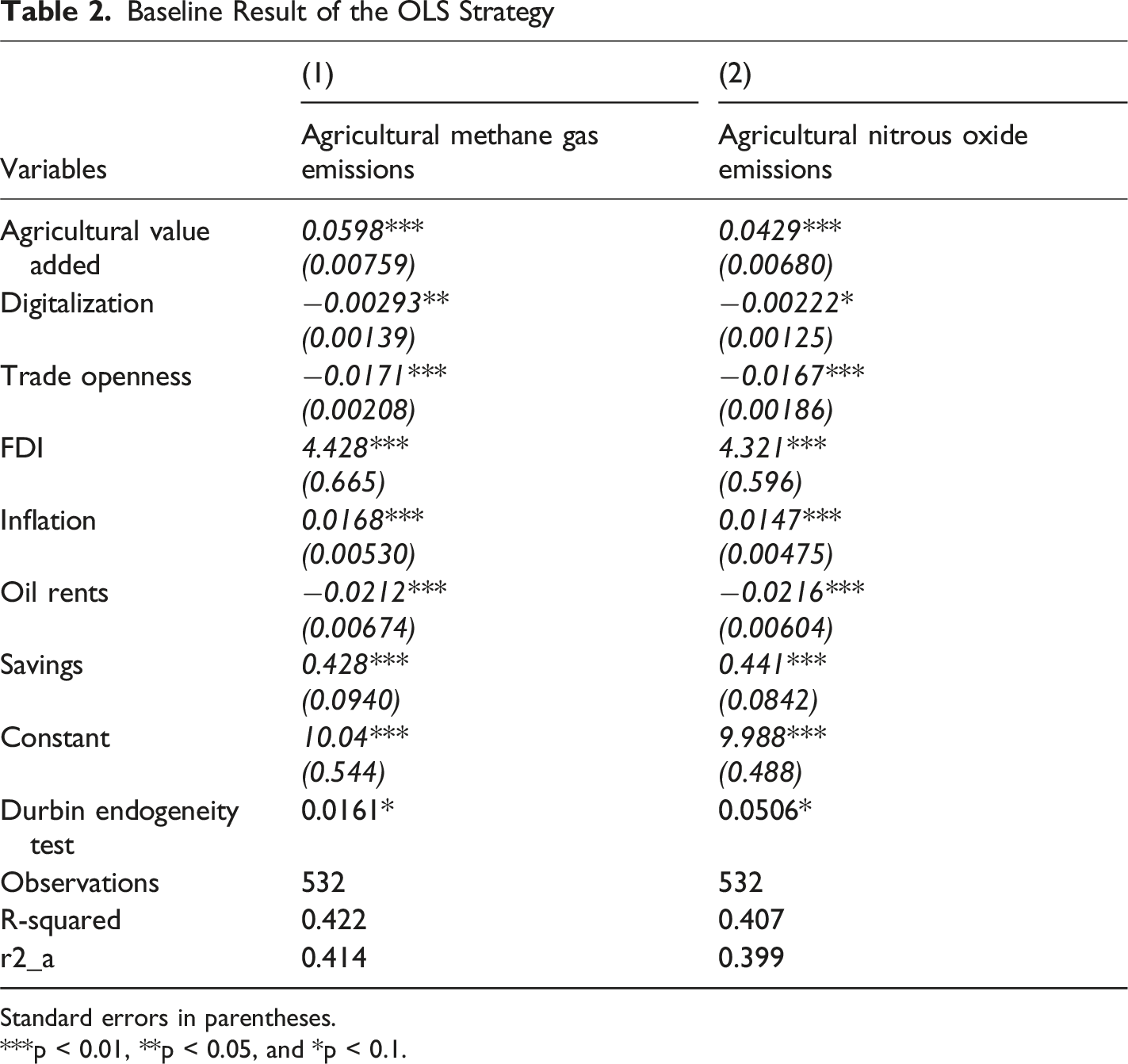
Baseline Result of the OLS Strategy
Standard errors in parentheses.
***p < 0.01, **p < 0.05, and *p < 0.1.
The baseline model is considered endogenous if the estimated Durbin–Wu–Hausman probability (
The Instrumental Variable Two-Stage Least Square (IV-2SLS)
The IV-2SLS strategy is adopted as a robust estimation technique to determine the policy thresholds of digital inclusion and human capital development that permit combating the degrading effects of the fishery sector on the environment. The adoption of the IV-2SLS model is guided by the endogeneity test presented in Table 2 of the baseline results for both equations of nitrous oxide and methane gas emissions. The results of the Durbin tests indicate significant probabilities at 10%, prompting the rejection of the null hypothesis, which assumes that all variables are exogenous (Ludwig & Flückiger, 2014; Schaffer, 2020; Wirajing et al., 2025). The estimated IV-2SLS strategy is presented in equation (4), indicating the instrumentation procedure where the lags (2nd order) of all the independent variables are employed as instruments.
The moderators of digital inclusion and education are adopted as endogenous variables given their possible modulation with the fish production for limiting degrading environmental effects. The transmission mechanism is specified in equation (5) with the moderators of technological infrastructures (TI).

The coefficient 
The specified equation (7) is realizable if the direct (
The thresholds are employed for policy recommendations if they fall within the range of their maximum and minimum values presented in the descriptive statics table (1). The IV-2SLS instrumentation process adopts the Kleibergen–Paap test of identification and exclusion restrictions to determine the validity of the instrumentation process for robust specification. Their joint null hypothesis is that the estimated model has valid instruments, following Mamadou Asngar et al. (2022) and Schaffer (2020). The instrumental variables affect agricultural productivity through exogenous variation in influencing input efficiency and production capacity. However, it does not directly affect agricultural emissions except through productivity, satisfying the exclusion restriction. This theoretical channel aligns with existing empirical studies that employ similar instruments (Schaffer, 2020). The estimated relationships represent conditional associations, and causality is addressed through an instrumental variable strategy, like IV-2SLS.
Results and Discussions
This findings of the study are presented and discussed in two sub-sections. The first sub-section presents the direct effect results with their robustness checks while the second subsection presents the indirect effect findings with the policy thresholds of technology infrastructure.
Direct Effect Results
Section 4.1 presents and discusses the direct effect findings by commencing with the baseline results estimated by the ordinary least square (OLS) technique. The OLS estimates are presented in Table 2 and indicate deteriorating impact on agro-environmental sustainability indicators. The OLS model does not control for certain estimation biases such as the problem of endogeneity and unobserved heterogeneity which are controlled in this study by adopting an Instrumental Variable 2SLS.
Main Result of the Instrumental Variable Two-Stage Least Square (IV-2SLS)
Robust standard errors in parentheses.
***p < 0.01, **p < 0.05, and *p < 0.1.
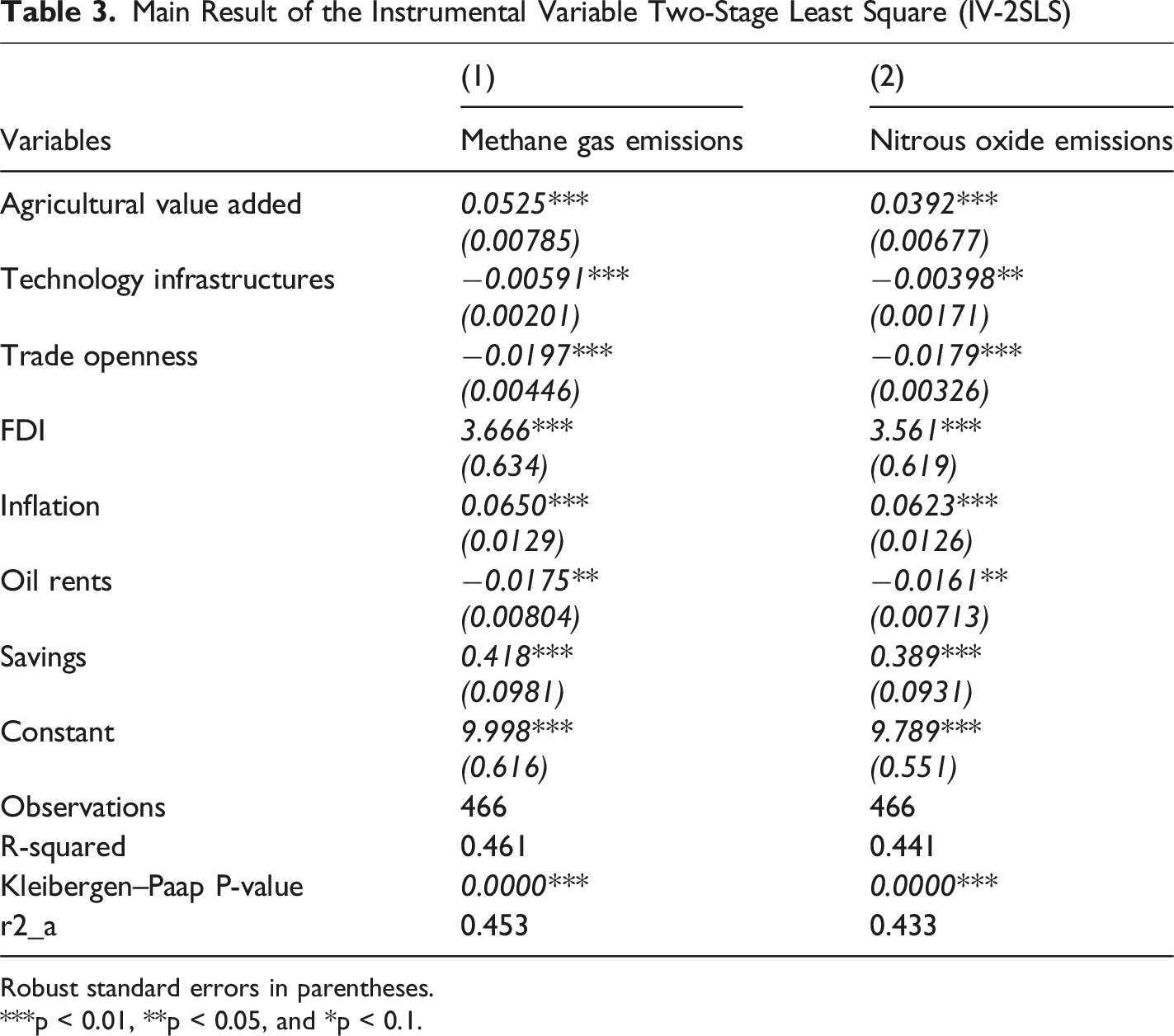
Table 3 uncovers robust direct effect findings indicating the nature of the relationship between fish production, ICT and education, and the sustainability of the agricultural environment. The validity of the IV-2SLS model is examined by the Kleibergen–Paap test statistics. This test reveals valid instruments with uncorrelated residuals when their probabilities are significant. In the estimated model, we conclude that the 2SLS estimates are efficient with valid instruments considering that all the Kleibergen–Paap P-values are statistically significant, as depicted throughout the results section. The results of the various tests indicate that the 2SLS is efficiently estimated and can be used to provide important policy recommendations.
The findings displayed in Table 3 indicate that the growth in the value added to agricultural productivity increases both nitrous oxide and methane gas emissions. Adopted as an indicator of agricultural productivity, the value added of agricultural outputs appeared to augment increasingly with nitrous and methane gas emissions in Africa. In addition, this depicts itself when chemicals are applied to balance the gap between the permanent export of nutrients from the field with the harvested crops and the nutrients supplied by the soil. With the objectives of meeting the demand for food and ensuring livelihood sustainability, farmers tend to employ poor environmental strategies to increase their output and undermine the sustainability of the environment. However, not all of the applied fertilizer intended to boost soil fertility ends up fulfilling the objective and at times ends up killing the crop or worsening the environment. Part of the chemical nutrients is lost to the wider environment and contributes to environmental problems such as loss of biodiversity or climate change. In the quest for more agricultural productivity to satisfy excess demand in the food market, agricultural value added hurts environmental sustainability since the demand for non-renewable energy consumption increases with agricultural production which also increases greenhouse gas emissions, depletes the environment, and poses a threat to sustainable agriculture (Nchofoung & Asongu, 2022). This findings align to that of Adeleye et al. (2021) indicating that productivity and greenhouse gases have a positive correlation. However, Adeleye et al. (2021) considered this relationship to be unsustainable for the environment due to the chemicals farmers use to enhance productivity. These chemicals contain gases that are harmful to the environment. While they increase productivity, some of them are environmentally unsustainable and can have a negative impact on future agricultural productivity. Depending on the type of technology employed and the volume of gas generated, the direction of the relationship may change. The quantile plot shown in Figure 5 is used to further instrument the results. This figure shows varying degrees of positive correlations between agricultural value added and agricultural gases. This calls for the calculation of policy channels and thresholds, which is done in the Section 4.3 findings on indirect effects. Quantile post-estimates plots of agricultural productivity and the agricultural greenhouse gas emission relationship (source: Author’s computation)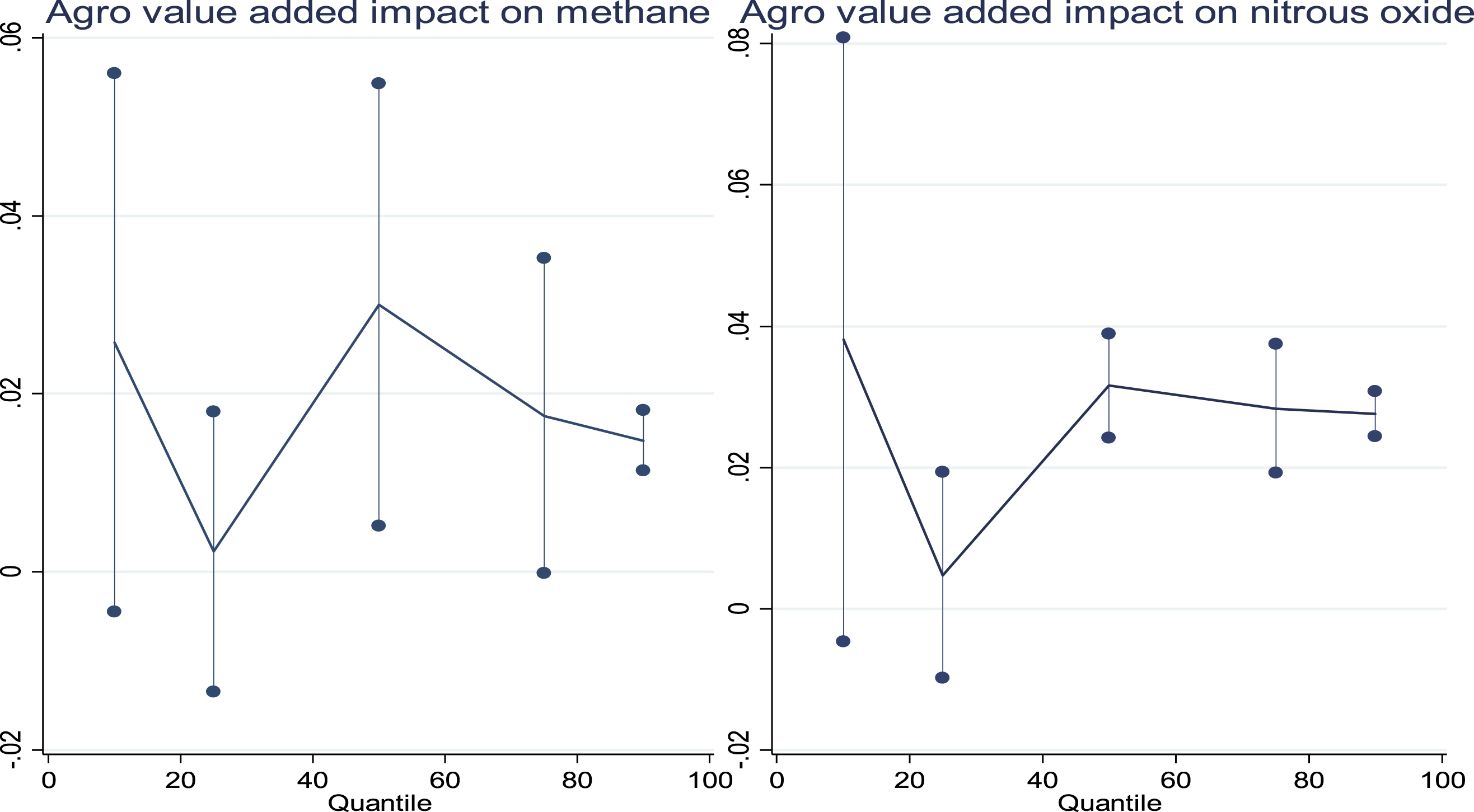
Also as an important determinant of agro-environmental sustainability, technology infrastructure appeared to be limiting the environmental degrading effects resulting from the agricultural sector for environmental sustainability. There exists a negative relationship between technology, nitrous oxide, and methane gas emissions in Africa, confirming that technology infrastructure can be a tool which could be used to promote sustainable agricultural and natural resource conservation, also in conformity with the findings of Tarazkar et al. (2021). Technology infrastructure has revolutionized the world economy by transforming high polluting to energy savings and electrified machines that emit less gas, solely for environmental sustainability. Though in Africa, the rate of technology infrastructure is relatively low to other regions of the world, but some progress has been recorded especially in the agricultural domain (Shobande & Asongu, 2022; Wirajing & Nchofoung, 2023). Similarly, FDI positively affects nitrous oxide and methane gas emissions. FDI inflows are associated with global climate change especially in developing economies where environmental tax is very low. The pollution heaven hypothesis confirms that African countries receive dirty technologies at cheaper prices just for infrastructural development while undermining environmental sustainability (Mesagan et al., 2021). In addition, there is a significant negative relationship between oil rents, nitrous oxide, and methane gas emissions in Africa. The African environment is blessed with rich natural resources whose sustainability is highly affected by their prices. These resources wealth is adopted as a strategy to limit demand and control the quantity harvested of resources and to this effect, is an important tool for agro-environmental sustainability schemes, supported by Mahmood and Furqan (2021). Increasing CO2 emissions from the agricultural sector and ecological footprints are indicators of environmental degradation which affects agricultural sustainability in terms of the future yields and the fertility of the agricultural land. The results show that trade openness significantly reduces emissions of methane and nitrous oxide. This indicates that trade liberalization and openness help lower greenhouse gas emissions from the agriculture industry. This is the case when commerce encourages the entry of environmentally beneficial technology that supports resource conservation and sustainable agriculture. If commerce is not safeguarded against harmful goods and the importation of poor ecologically unfavorable technologies, the argument may be inaccurate (Khan et al., 2022). Also, inflation has a positive but an insignificant relationship with both sustainability indicators. The positive relationship signifies that an increase in the prices of goods will always push more production to compete for excess money in the economy since producers supply more at higher prices than at lower prices, which in their production process, energy is been required. Savings have a positive statistically significant impact on the emissions of methane and nitrous oxide. As a measure of financial development, savings exacerbate the state of the agricultural environment, particularly in areas where the majority of people work in agriculture and degrade the environment in the process of maximizing productivity given their limited resources. If these savings are linked to sustainable initiatives and agro-environmental programs, they may help lower greenhouse gas emissions (Jeswani et al., 2020; Sarıkaya et al., 2022).
Robustness Checks
This section presents a sensitivity analysis which is divided into sub-sections. Section 1 measures how crop and livestock productivity affects agro-environmental sustainability in Africa. In sub-section 2, the study accounts for differences in income-level groupings. Section 3 conducts robustness checks by segmenting countries based on the differences in their colonial heritage and legal systems, and Section 4 displays countries with relief-specific characteristics by segmenting countries bordered by the coast from landlocked nations.
Specific Cases for Crop Production and Animal Agricultural Productivity
Case of Crop Production and Livestock
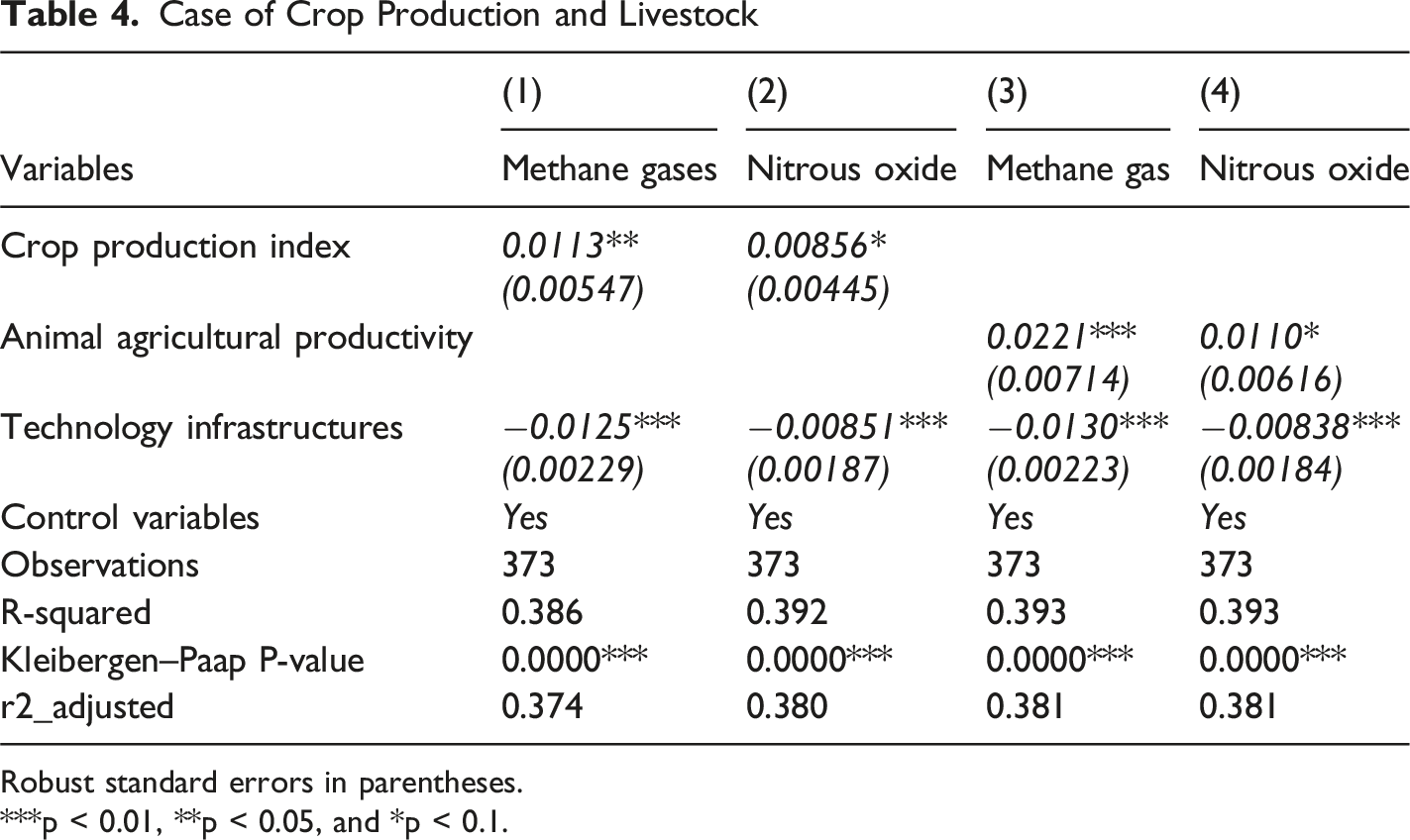
Robust standard errors in parentheses.
***p < 0.01, **p < 0.05, and *p < 0.1.
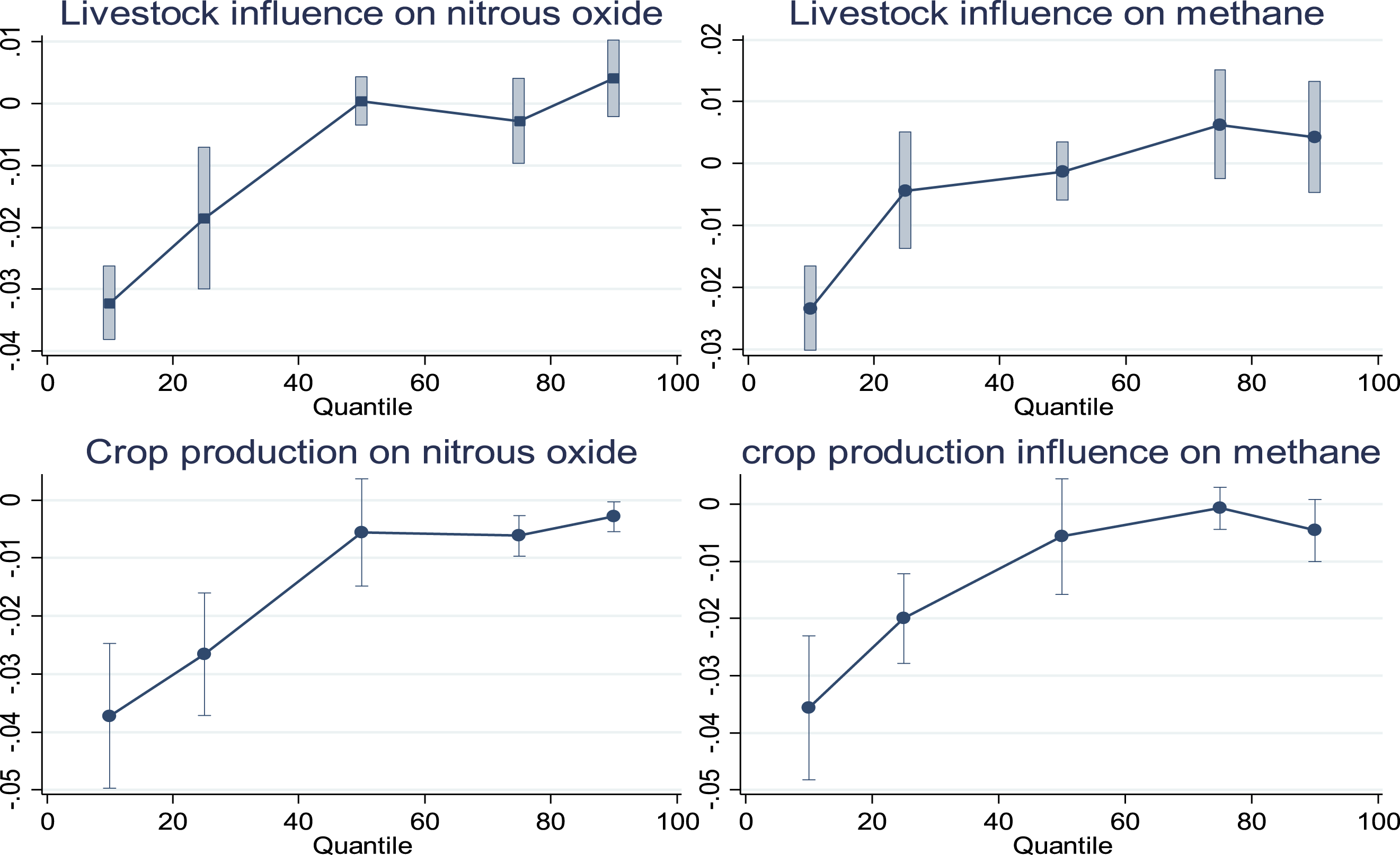
Quantile post-estimates plots of Table 4 with crop production and animal agriculture
Sensitivity Analysis Accounting for Differences in Income Levels
Findings With Income Groupings
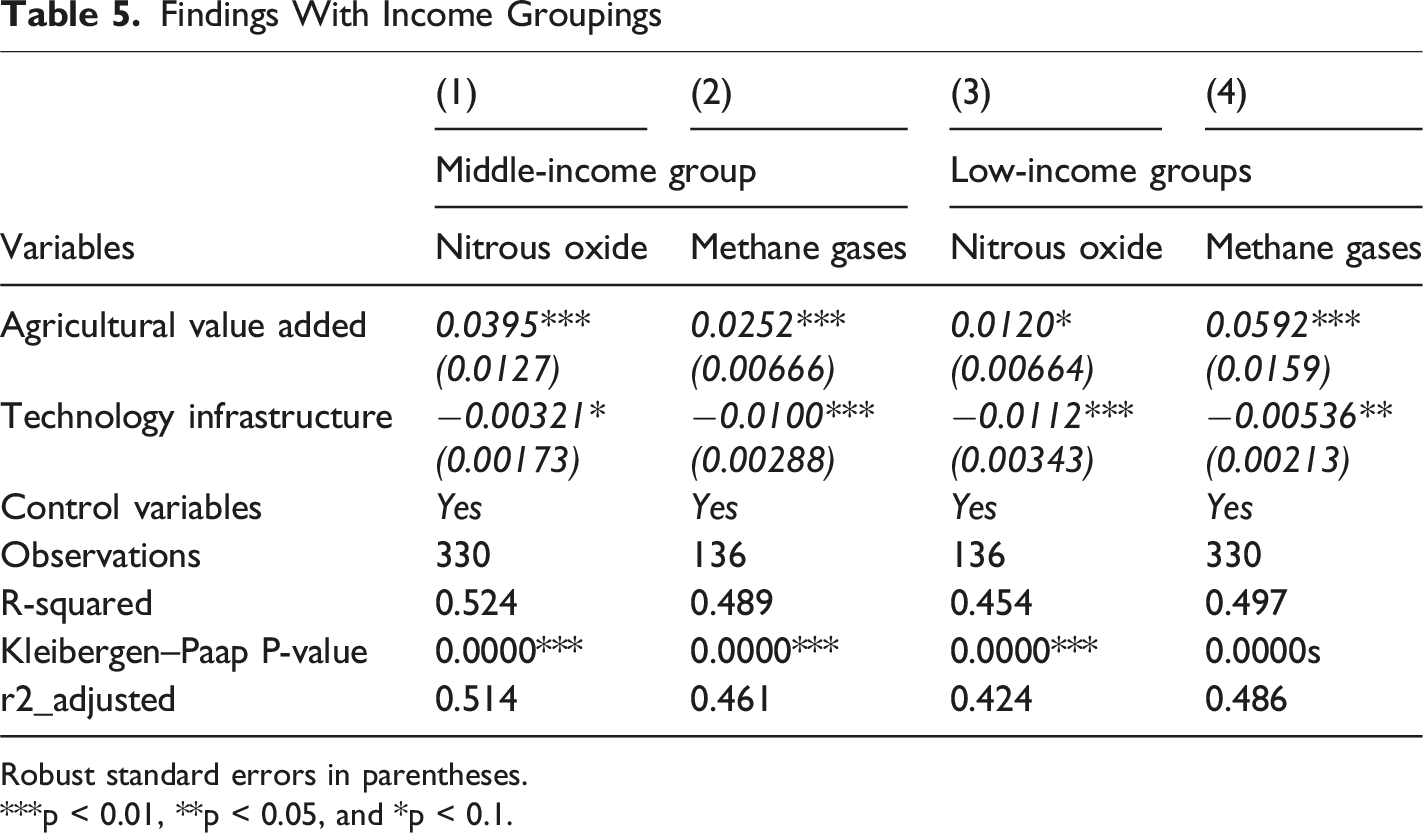
Robust standard errors in parentheses.
***p < 0.01, **p < 0.05, and *p < 0.1.
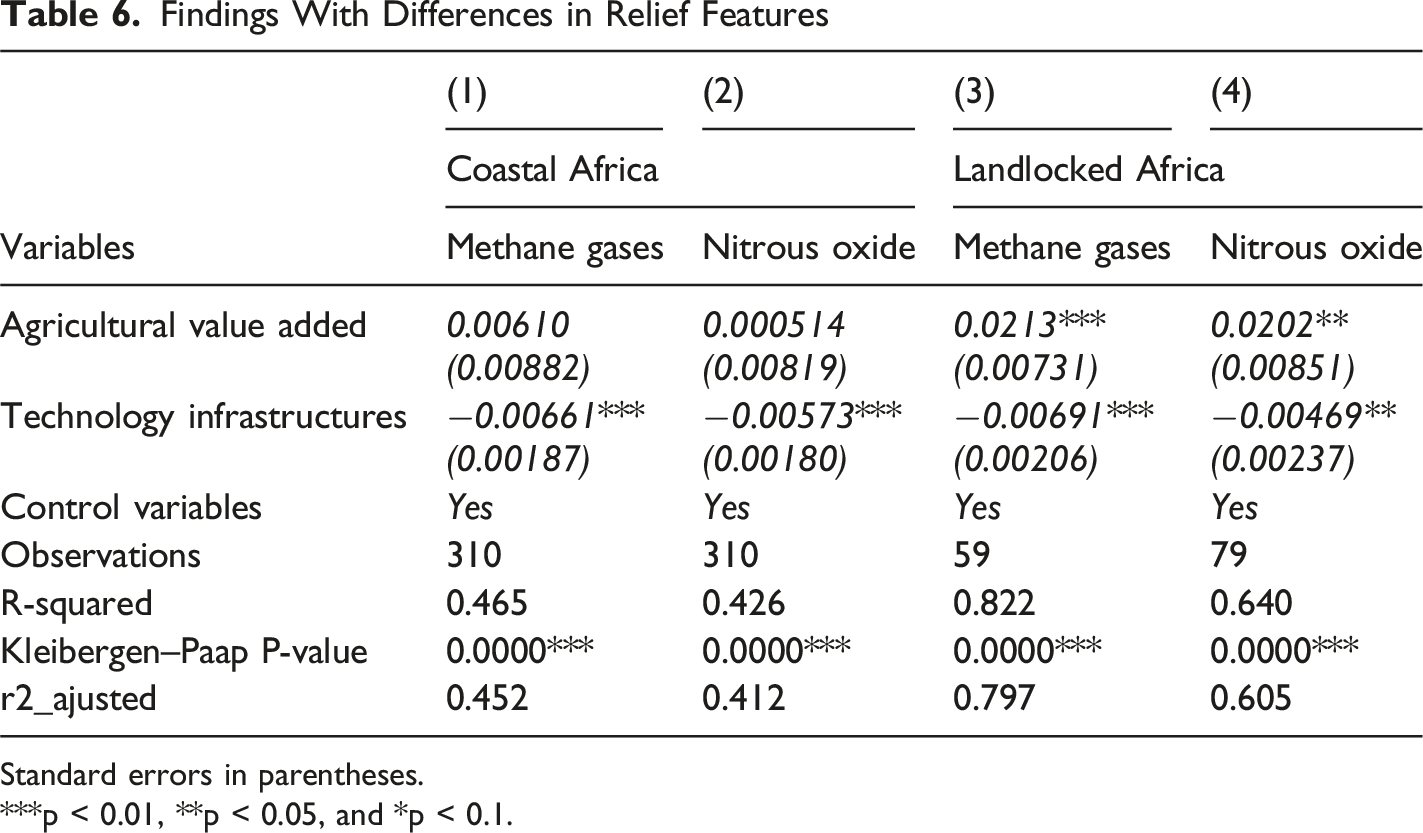
Findings With Differences in Relief Features
Standard errors in parentheses.
***p < 0.01, **p < 0.05, and *p < 0.1.
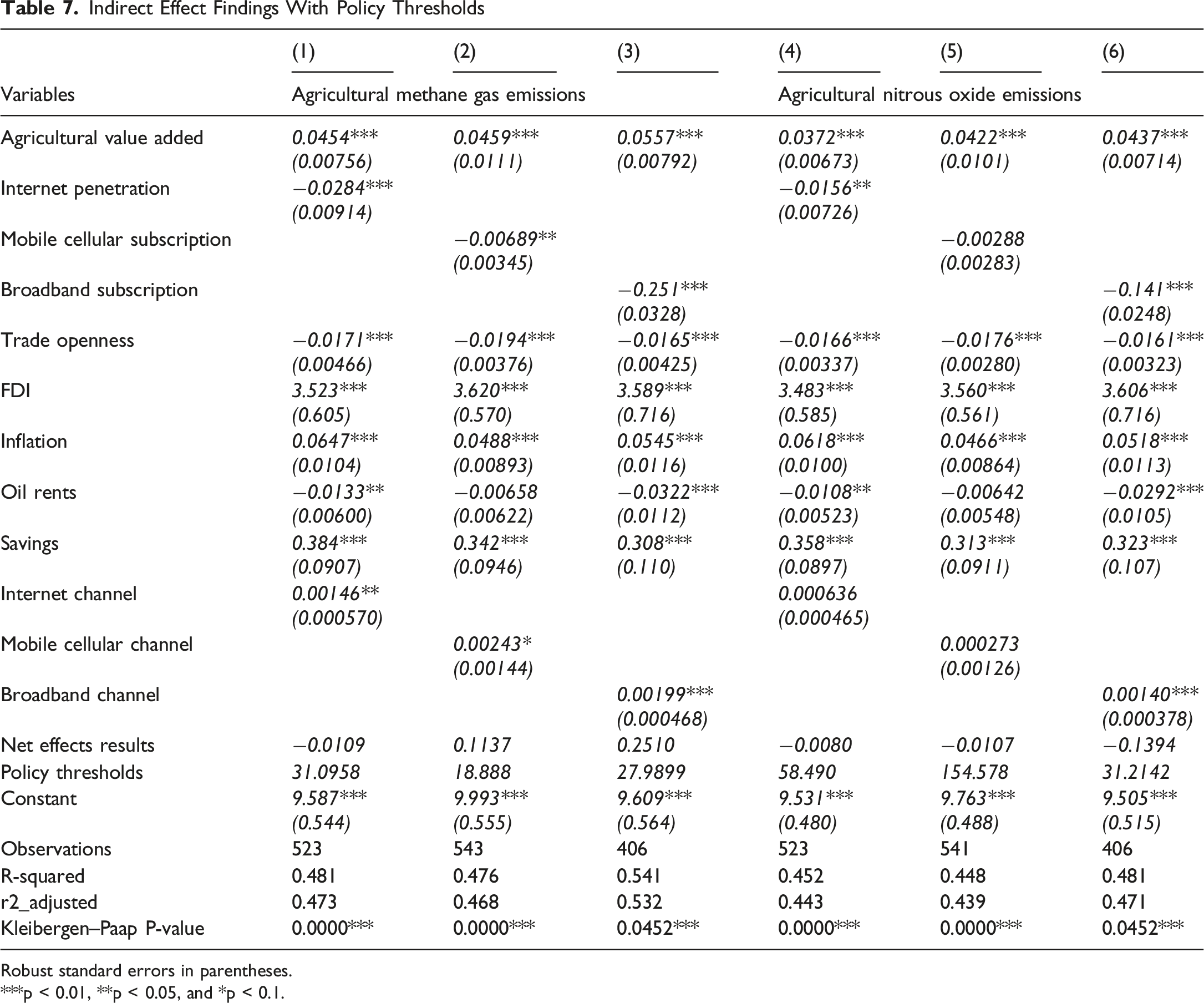
Indirect Effect Findings With Policy Thresholds
Robust standard errors in parentheses.
***p < 0.01, **p < 0.05, and *p < 0.1.
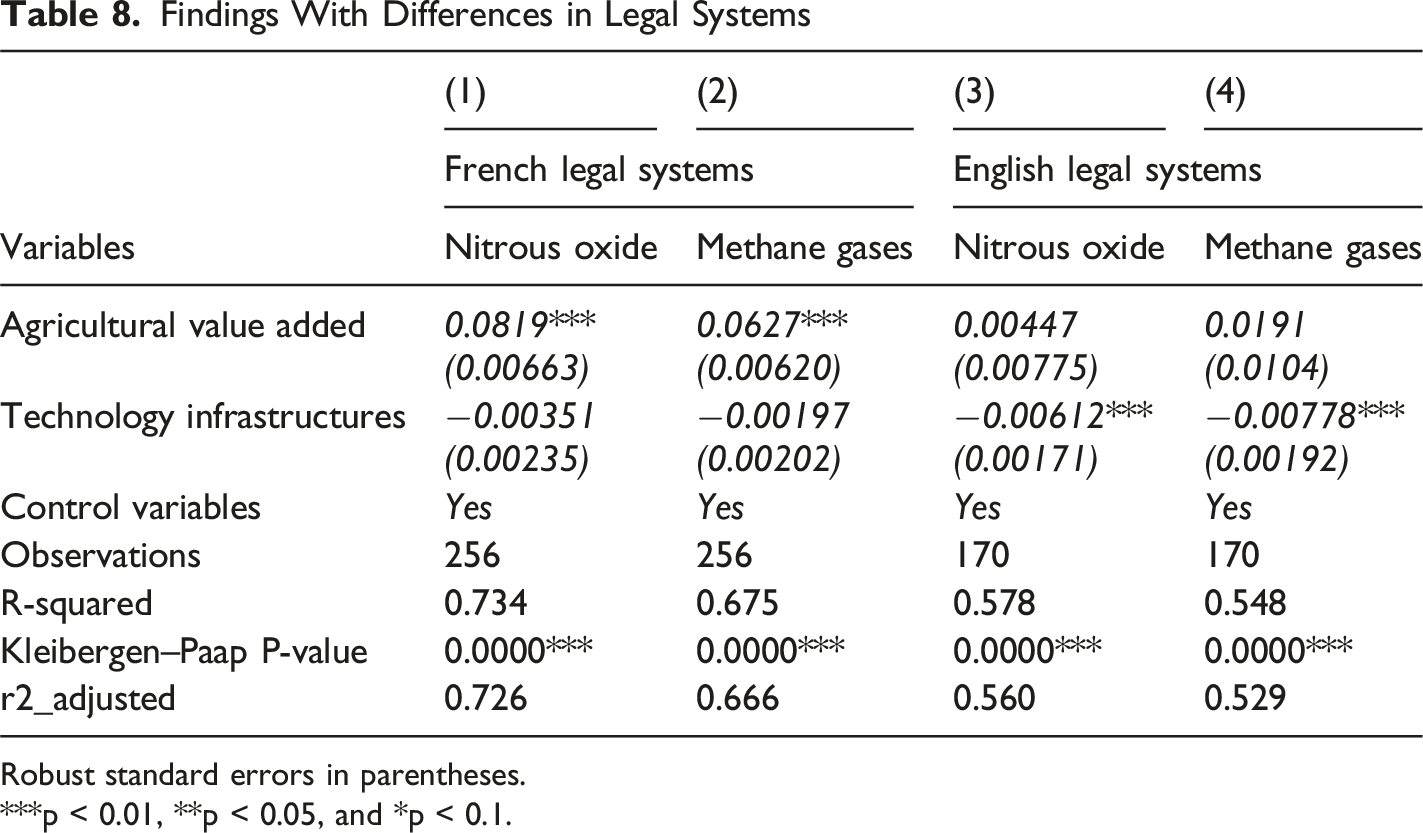
Sensitivity Analysis Accounting for Differences in Legal Systems Levels
Findings With Differences in Legal Systems
Robust standard errors in parentheses.
***p < 0.01, **p < 0.05, and *p < 0.1.
According to the findings presented in Table 8, the agricultural environment in Africa is deteriorating as the focus is on increasing agricultural productivity. This is evident from the positive correlation between nitrous oxide emissions and agricultural value added, regardless of whether the country has a civil or common legal system. Both legal systems are expected to promote environmental sustainability. However, the strictness of environmental regulations varies from country to country, but those who cause pollution are responsible for managing it to prevent harm to human health or the environment.
Sensitivity Analysis Accounting for Geographical Differences
Geography plays a significant role in determining agricultural productivity and infrastructure development. In Africa, some countries are landlocked while others are surrounded by water bodies. Factors such as access to water, climate, soil types, and landforms influence farming practices and productivity. The sustainability of agricultural environment is influenced by practices such as irrigation, terrace farming, drainage, deforestation, and desertification and also depends on the nature of the land. Landlocked countries are expected to have fewer natural hazards such as flooding, tsunamis, and hurricanes due to their lack of access to open waters. However, they often have lower productivity due to fewer transport infrastructures and lag behind coastal nations in terms of external trade, growth, and development (Wirajing et al., 2023). This often leads them to adopt unsustainable practices to boost productivity and extract resources unsustainably. This contrasts with the coastal African nations, which share diverse infrastructure and water bodies that facilitate trade and connect them to the world market. In contrast, we anticipate that technological infrastructures will enhance the sustainability of the agro-environment in coastal African nations more than in landlocked nations where the pursuit of production may reduce the agro-environmental quality. Considering these differences, technology infrastructure and agricultural productivity may have a varying impact on agro-environmental sustainability in Africa. The analysis of the coastal and landlocked countries is displayed in Table 6.
The findings in Table 6 show that in landlocked countries, agricultural productivity comes at the cost of agro-environmental sustainability, as there is a significant positive effect of agricultural value added on nitrous oxide and methane gas emissions. While in coastal African countries, the relationship between agricultural value added and nitrous oxide and methane gas emissions remains insignificant. Coastal African countries have better infrastructure and are more engaged in international trade than landlocked countries which rely heavily on agriculture. Coastal African countries are better positioned for livelihood sustainability as they have access to marine environments that provide abundant aquatic organisms for consumption, unlike landlocked countries that mainly rely on crop production. Furthermore, the bodies of water surrounding Africa’s coastline facilitate trade and connect coastal countries to the global food market. The correlation between infrastructure development and emissions of nitrous oxide and methane gas is significant in both regions. This suggests that technology infrastructure can play a vital role in reducing the amount of gases emitted in the agricultural sector, aligning to Mapanje et al. (2023).
The Indirect Effect Results
In this section, the study presents the indirect effect findings with policy thresholds of technology infrastructures. This established transmission channels, net effects, and policy thresholds were computed to determine if digital infrastructure development play a role in enhancing agro-environmental sustainability. The conundrum of poor environmental quality in African regions resulting from poor agricultural practices raises a concern which inspired us to compute the indirect effect results. This section considered technology infrastructure as an important channel through which policies could be designed to reduce deteriorating environmental effects resulting from poor agricultural technologies. ICT helps to reduce the average quantity of energy consumption and produce less waste with sophisticated tools that permit surveillance of agricultural activities. It is important to consider the thresholds with established policies regarding technology infrastructures. This is especially significant in the agriculture industry where technology is utilized to provide real-time data and insights to farmers, which can help them optimize farming operations, reduce waste, and improve yields. The adoption of such technologies for policy design ensures sustainable allocation of resources and profitable production of food, which are crucial for both food security and economic development. Technical change is at the core of most agricultural policies and projects, whether they are focused on productivity enhancement, poverty reduction, social protection, environmental protection, or adaptation to climate change. The indirect effect results are presented, considering the different indicators of digital technologies adopted in the development economics literature.
Table 6 displays the indirect effect results indicating the synergistic impact and the policy thresholds with different digital tool indicators. As a policy tool for improving infrastructure development and contributing to attaining sustainable development goals, digitalization is considered of importance also in managing natural resources and its environment. The transmission channel findings indicate that technology infrastructures interact with the value added from the agricultural sector to increase the volume of nitrous oxide and the methane gas emissions. The negative channels contradict the findings of the direct effects that provide string arguments in justifying how technology can contribute to enhancing agro-environmental sustainability when integrated into the agricultural sector. This is understood to display the present situation in Africa and that is why policies are required with the policy thresholds to improve the future considering that agricultural methane gases have improved considerably over the years. The resulting interactive effects permit the computation of the marginal or the net effects which permits to compare the weight of the direct and the indirect effect results. This computation indicates a negative net effect of technology infrastructures interacting with agricultural productivity on nitrous oxide emissions for the internet penetration, mobile cellular, and the fixed broadband subscription. For the methane gas, the net effects findings suggest that, agricultural value added interacts with technology infrastructures indicators of mobile cellular subscription and the broadband subscription to produce positive synergy effects. The resulting positive synergy effects on methane gas indicate that the positive indirect findings outweigh the negative interactive effects.
Though the deleterious interactive impacts are nullified at higher thresholds of internet penetration and cellular subscription in Africa, the positive interactive effects on nitrous oxide and methane gas display the present situation of Africa, and as indicated by the different thresholds, technology infrastructures have to be promoted and integrated into the agricultural sector to ensure the sector’s sustainability. In the quest for agricultural productivity and reducing the trends and turning the positive net impact on methane gas emissions, broadband and mobile cellular subscriptions have to surpass, respectively, the thresholds of 27.9899 (per 100 people) and 18.88 (per 100 people) to ensure the sector’s growth and sustainability. These thresholds indicate the penetration rate of mobile subscription and broadband subscription that is required to nullify the positive net effects on methane gas emission presented in equations (2) and (3) of the indirect effect findings. For the nitrous oxide emissions, the thresholds of 58.490, 154.578, and 31.2142, respectively, for internet penetration, mobile cellular subscription, and broadband subscription have to be reached and beyond that, the resources dedicated for this sector to promote technology in the agricultural sector for ensuring a sustainable environment can be shifted to other infrastructure development indicators such as roads connecting agricultural environments and the energy that is used together with technology to promote agricultural productivity. The established findings in this paper indicate that technology helps to enhance agricultural sustainability in Africa, corresponding to the findings of Kimbahune et al. (2013) and Huh (2017) who considered technology to boost diversification, productivity, and efficiency in resource management in the agricultural sector. As a result, attaining sustainable agriculture in Africa can be aided by adopting and promoting technology infrastructures. The adoption of these tools does not only contribute to increasing agricultural value added but also ensuring the sustainability of the environment where agriculture takes place. These technologies help in disseminating environmentally friendly strategies, and in the approximation of the minimum quantity of water, fertilizers, and pesticides in specific areas, or even treat individual plants differently to ensure agro-environmental sustainability and crop productivity at the same time. In addition, these technology infrastructures contribute more with higher levels of human capital that helps to master their usage and adoption in the livestock and the crop production sectors that both generates significant quantities of methane gases which are undermined in agro-technology enterprises
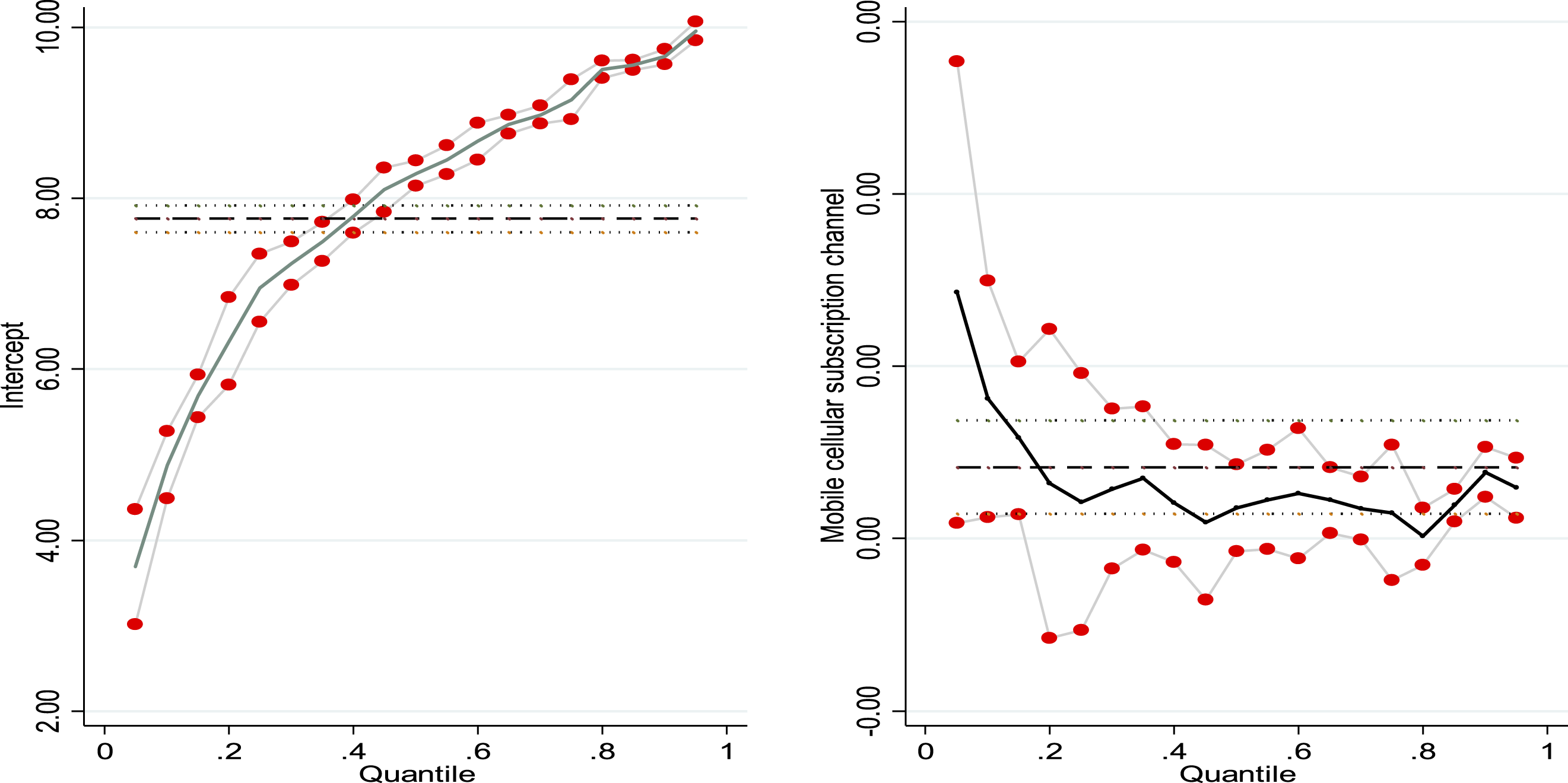
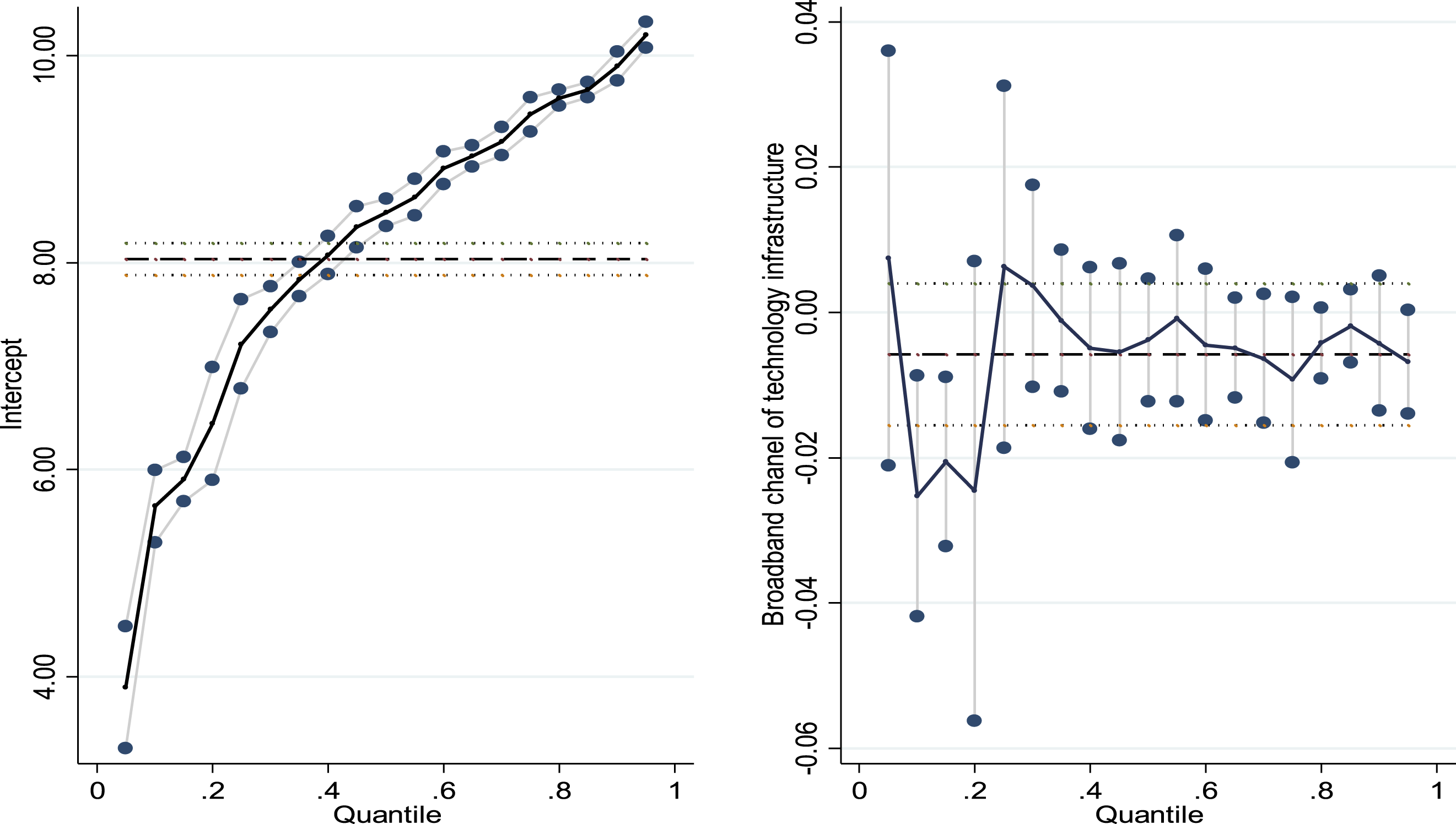
The adoption of Internet of Things (IoT) in agriculture has been facilitated by the increase in internet penetration and broadband subscription in recent years. This technology enables farmers to collect real-time data, monitor crops, and optimize their activities leading to increased efficiency, reduced waste, and improved yields. Farmers can access information on the internet to monitor agricultural risks, track weather changes, and keep up with market conditions. Internet penetration and broadband subscription also contribute to the technology infrastructure needed to organize smart irrigation systems that improve agro-environmental sustainability. Mobile cellular subscriptions and computers are used to access all these features, especially in the livestock sector where it helps to trace animals’ feeding patterns, levels, health, and vital signs. The results presented in Figures 7–9 confirm the established synergies of technology infrastructure variables. The downward slope of the graphs indicates the negative impact of technological infrastructure on agricultural greenhouse gases and their contribution to improving agro-environmental sustainability. Post-quantile plot of internet penetration channel as a technology infrastructure indicator Post-quantile plot of mobile cellular subscription marginal effect as a technology infrastructure indicator Post-quantile plot of broadband subscription marginal effect on agricultural greenhouse gases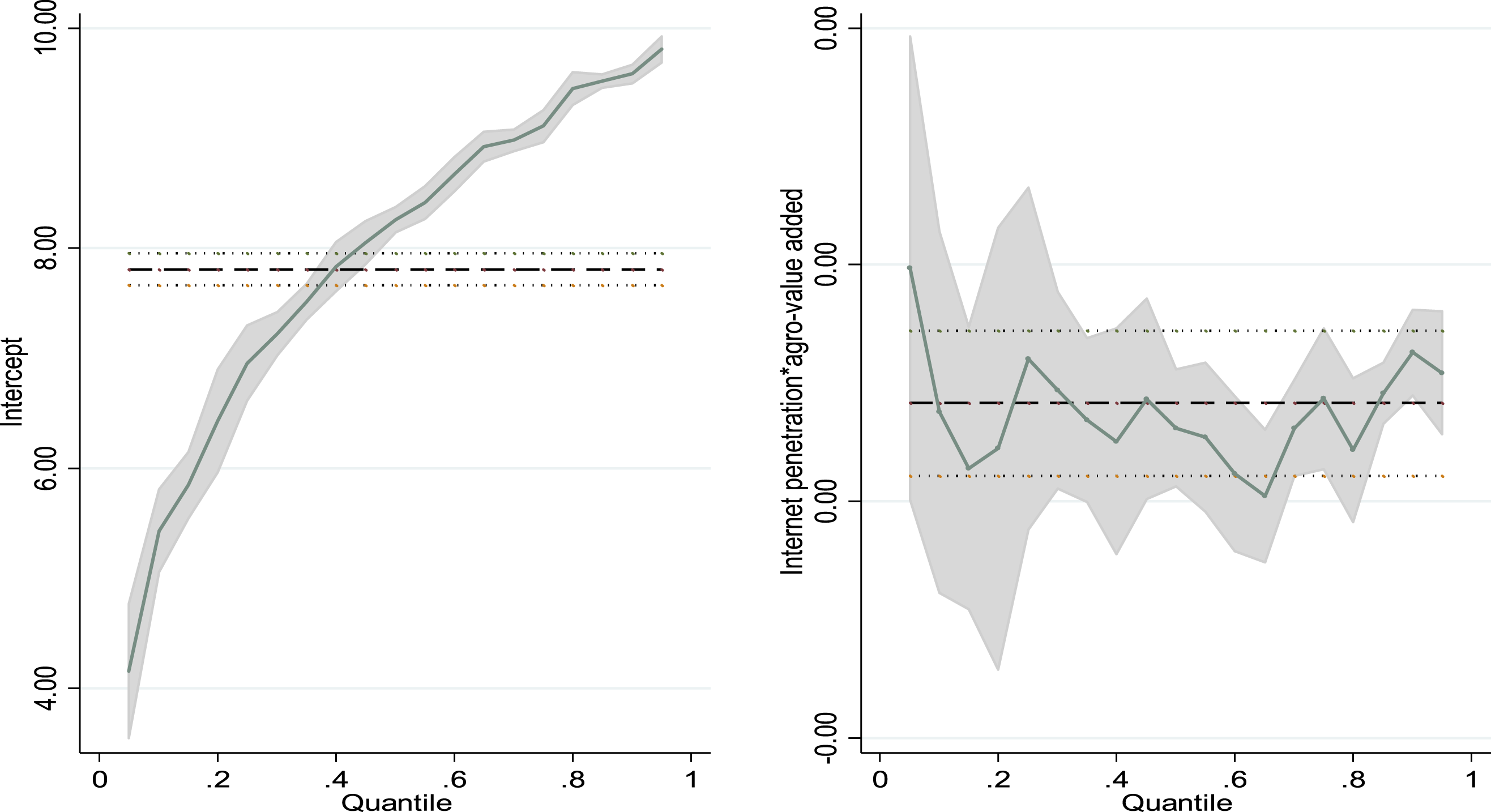
Conclusion and Policy Implications
Conclusions
The study has investigated the effects of agricultural productivity on agro-environmental sustainability with the moderating role and policy thresholds of technology infrastructures. The investigations are between the periods 2000 and 2020, covering 52 African countries. In this study, agricultural productivity is proxied by the agricultural value added from crop, production, and animal agriculture, including hunting and fishery output, while agro-environmental sustainability is proxied by the nitrous oxide and methane gas emissions measured in metric tons of CO2 equivalent. The analysis is done by adopting the Instrumental Variable Two-Stage Least Square (IV-2SLS) strategy to control for potential endogeneity. The estimated IV-2SLS strategy is efficiently modeled with valid instruments and uncorrelated residuals, as indicated by the significant Kleibergen P-values. The findings indicate that farmers, in their quest for higher productivity, adopt unsustainable agricultural practices that degrade agro-environmental quality through nitrous oxide and methane gas emissions. These findings remain consistent after considering the specific cases of crop production and animal agriculture, which both generate significant quantities of nitrous oxide and methane gases that erode air quality by increasing the concentration of tropospheric ozone. Similarly, our results indicate that technology infrastructures negatively affect nitrous oxide and methane gas emissions in Africa and remain an important policy tool for enhancing agro-environmental sustainability. The outcome indicates that African economies with more developed digital economies have created a more sustainable agricultural sector, benefiting environmental sustainability compared to those with fewer investments in technological infrastructure.
Moreover, for the indirect effects analysis, the findings further reveal that technology infrastructures have a positive interactive effect on agricultural nitrous oxide and methane gas emissions. However, the negative marginal effect indicates that the interactive sustainable agricultural effect when technology infrastructures are integrated outweighs the positive deteriorating effect on agricultural sustainability. The negative synergistic effects have led to the calculation of digital technology thresholds. If these thresholds are integrated into the agricultural sector, they could help mitigate the unfavorable net effects. This analysis shows that to achieve both agricultural productivity and a positive net impact on methane gas emissions, the rates of broadband and mobile cellular subscriptions must exceed the thresholds of 27.9899 (per 100 people) and 18.88 (per 100 people), respectively. Meeting these thresholds is essential for ensuring the growth and sustainability of the sector, as they indicate the required penetration rates for mobile and broadband subscriptions to counterbalance the positive net effects on methane emissions. For nitrous oxide emissions, the thresholds that must be reached are 58.490 for internet penetration, 154.578 for mobile cellular subscriptions, and 31.2142 for broadband subscriptions. Achieving these levels is necessary to maintain a sustainable agro-environment.
Policy Implications
The study’s findings suggest that African economies should invest in technological infrastructures to promote agro-environmental sustainability schemes as a policy channel. This should be done by raising awareness of environmental sustainability through integrating technology infrastructures into the agricultural sectors, particularly in rural communities, and encouraging their use for research to learn new eco-friendly strategies. These technology infrastructures not only contribute to enhancing agro-environmental sustainability but also boost agricultural productivity. Policies should be established for both crop production and animal agriculture as they both contribute to the total gases in the agricultural sector. Considering the importance of these technologies in disseminating environmentally friendly strategies, they contribute to approximating the minimum quantity of water, fertilizers, and pesticides in specific areas or even treat individual plants differently to ensure agro-environmental sustainability and crop productivity. It is important to acknowledge that promoting agricultural productivity requires the adoption of some chemicals that kill crop pests and increase soil fertility. However, these chemicals contain nitrous oxide and methane gases that, in the long run, reduce the fertility of the soil and thus the productivity of the sector. To resolve this issue, it is suggested that Africa should strive to reach the thresholds of 58.490, 154.578, and 31.2142 for internet penetration, mobile cellular subscription, and broadband subscription, respectively. Once these thresholds are reached, resources can be directed towards important policies such as human capital accumulation and trade openness that help in mastering the prevailing technologies and promote their adoption to bring about change. Summarily, the following recommendations are extended to the different stakeholders:
Implications for Policymakers
The findings highlight the need for integrated agricultural, digital, and climate policies in Africa. Investments in technology infrastructure can simultaneously enhance productivity and reduce agricultural emissions, suggesting that environmental sustainability and food security objectives need not be pursued in isolation.
Implications for Development Partners and Donors
International development agencies and donors can leverage these results to prioritize funding toward digital agriculture, climate-smart technologies, and knowledge diffusion systems that improve environmental outcomes while supporting rural livelihoods.
Implications for Farmers and Agribusiness Actors
For farmers and agribusiness stakeholders, the results emphasize the importance of adopting technology-enabled practices that improve input efficiency and reduce emissions, enhancing long-term productivity and resilience to climate shocks.
Limitations of the Study
This study focuses on Africa, and the findings may not be directly generalizable to non-African contexts with different institutional and technological conditions. In addition, the use of macro-level indices may obscure micro-level mechanisms, and unobserved factors could still influence the observed relationships despite the instrumental variable approach.
Footnotes

Ethical Considerations
This work is not under consideration in another outlet.
Funding
The authors received no financial support for the research, authorship, and/or publication of this article.
Declaration of conflicting interests
The authors declared no potential conflicts of interest with respect to the research, authorship, and/or publication of this article.
Data Availability Statement
The data supporting the findings of this study is available upon reasonable request addressed to the corresponding author.
Notes
Author Biographies
Appendix
Matrix of Correlations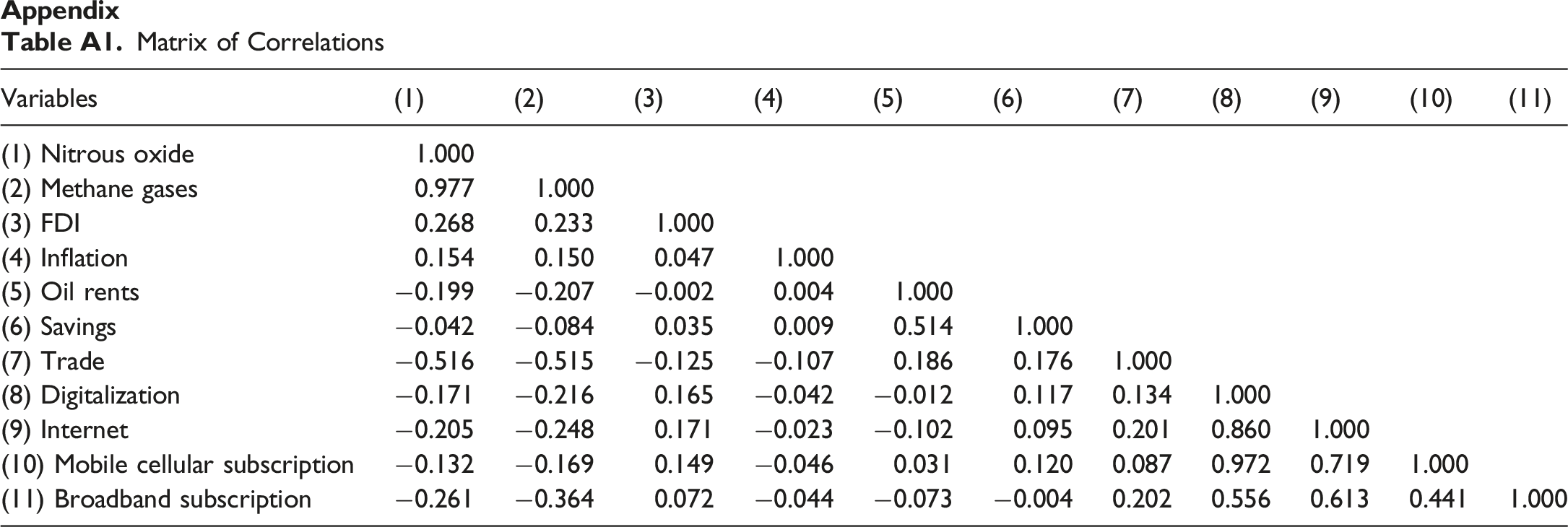
Variables
(1)
(2)
(3)
(4)
(5)
(6)
(7)
(8)
(9)
(10)
(11)
(1) Nitrous oxide
1.000
(2) Methane gases
0.977
1.000
(3) FDI
0.268
0.233
1.000
(4) Inflation
0.154
0.150
0.047
1.000
(5) Oil rents
−0.199
−0.207
−0.002
0.004
1.000
(6) Savings
−0.042
−0.084
0.035
0.009
0.514
1.000
(7) Trade
−0.516
−0.515
−0.125
−0.107
0.186
0.176
1.000
(8) Digitalization
−0.171
−0.216
0.165
−0.042
−0.012
0.117
0.134
1.000
(9) Internet
−0.205
−0.248
0.171
−0.023
−0.102
0.095
0.201
0.860
1.000
(10) Mobile cellular subscription
−0.132
−0.169
0.149
−0.046
0.031
0.120
0.087
0.972
0.719
1.000
(11) Broadband subscription
−0.261
−0.364
0.072
−0.044
−0.073
−0.004
0.202
0.556
0.613
0.441
1.000