




Abstract
Indigenous and Local Knowledge (ILK) is intrinsically connected to knowledge holders’ worldviews and relationships to their environments. Mainstream rights-based approaches do not recognize this interconnection and are hence limited at protecting the integrity of ILK. This paper presents two cases in Colombia in which, by recognizing community-environment interconnections, the biocultural diversity framework advanced the protection of communities’ ILK. The first case draws on court findings that recognized Indigenous and Afro-descendant peoples’ biocultural rights and granted legal personhood to the Atrato River—a pioneering ruling in the American hemisphere. The second case involved participatory fieldwork with the Embera peoples in designing a biocultural community protocol, reinforcing their relationship with the forest and protecting their biocultural heritage. The two cases illustrate that the biocultural diversity framework is inclusive of Indigenous and local communities’ worldviews and is hence an essential tool for the development of culturally appropriate protective mechanisms for ILK.
Keywords
Introduction
Protecting ILK and Biodiversity
The protection of Indigenous and local knowledge (ILK) requires a conceptual approach that accounts for biocultural diversity, that is, the diversity of life in its biological, cultural, and linguistic forms (Maffi & Woodley, 2010). Such an approach must also recognize ILK as interconnected with diverse peoples’ ways of life. This paper discusses two cases in Colombia where the biocultural framework was used to advance the protection of ILK through the recognition of community-land interconnections. We highlight the limitations of the two predominant rights-based streams often proposed for protecting ILK: Intellectual Property Rights (IPR) and Access and Benefit-Sharing (ABS). These two streams were not created with the goal of protecting ILK, do not acknowledge it as an integral part of peoples’ livelihoods, and therefore they fail to guarantee its preservation.
The importance of ILK for biodiversity conservation is undeniable. Indigenous territories are home to 80% of global biodiversity and store 73% more carbon than lands managed by non-Indigenous peoples (IUCN, 2019). Knowledge and practices of Indigenous Peoples and Like-Minded Local Communities (IPLMLC) are valued as critical assets for biodiversity conservation, for the sustainable management of natural resources, co-management of natural areas, water conservation, and climate change resilience (Burkett, 2013; Cameron et al., 2019; CBD, 1992; CBT-NP, 2014; Gautam, 2014; Green & Raygoredetsky, 2010; IPBES, 2019a; Schmitdt & Peterson, 2009; Whyte, 2017). Simultaneously, ILK is rapidly vanishing (Carson et al., 2018; Peschard, 2014; Reyes-García et al., 2013; UN-ESC, 2015) as biodiversity erosion continues (IPBES, 2019a). The commercial use of ILK and biological resources is growing in megadiverse countries (Afanadaor et al., 2014; Beattie et al., 2002; Mgbeoji, 2006; Velez-Torres, 2014) without fair and equitable distribution of benefits. There is mounting recognition for ILK in international environmental fora, but national biodiversity conservation policies, which are rooted in biological and economic perspectives, concede marginal recognition and participation of IPLMLC (Deranger, 2021; Nemogá, 2014a; 2014b; Xu et al., 2021). One of the main shortcomings in addressing the protection of ILK is that it is often envisioned as a body of useful data that can be extracted, stored, fragmented, and used, separate from peoples’ ways of life. ILK entails intimate and pluridiverse relations to marine or continental ecosystems that are guided and shaped by the worldviews, languages, and practices of IPLMLC (Fernández-Llamazares et al., 2021; Knudtson & Suzuki, 2006; LaDuke, 1999; Posey, 1999). Thus, the preservation of ILK requires the integral protection of IPLMLC ways of life. Similarly, if linguistic diversity was to focus only on preserving digital records while native speakers disappear, the richness of the human dimension would be lost forever (Harrison, 2007; Rawlings, 2019). In other words, without a framework to protect the providers and the integrity of ILK within the context of IPLMLC lands, there is a serious risk that communities will be exploited and that ILK will be eroded as selective elements are assimilated into dominant biological and economic paradigms.
Who is Entitled to ILK Protection and Rights?
Identifying who is entitled to rights and the protection of ILK systems is relevant for policy and legislation. The United Nations Declaration on the Rights of Indigenous Peoples (UNDRIP), recognizes the political rights of Indigenous peoples; however, it does not include a definition of Indigenous peoples. Institutions, international instruments, governments and academics propose definitions not embraced by Indigenous scholars (Corntassel, 2003; Simpson, 2011). Some of these definitions include the type of relation to the land, ancestral links to the territory prior to colonization and veritable shared characteristics like language, history and culture. The International Labour Organization (ILO) Convention introduced self-identification as part of the criteria to distinguish Indigenous peoples (ILO 169 of 1989, art. 1); self-identification is endorsed by Indigenous peoples as governments or external agencies do not have the legitimacy to define who is Indigenous.
The Convention on Biological Diversity (CBD) Article 8j refers to Indigenous peoples (IP) and local communities (LC) without a clear distinction between IP and LC. Unfortunately, homogenizing IP and LC risks diluting the distinctive rights of IP that arise from their ancestral presence in their lands. Additionally, when studying the relationships, practices, challenges, and power dynamics in specific biocultural contexts, it could be methodologically inappropriate to treat IP as homogeneous to all LC because of historical paths and value orientations embodied in their ways of life. The Intergovernmental Platform for Biodiversity and Ecosystem Services (IPBES) combines the term Indigenous peoples and local communities to include communities “that have close relationships to place and local natural resources for their daily living” (IPBES, 2019b). It has been noted that communities who display a sustainable relationship with their environment are also found in urban areas (Cocks, 2006; Elands et al., 2019). Court findings summarized in this paper showed that long-standing Afro-descendent communities in the Atrato River basin share similar worldviews, values, and relationships with the territory to those of Indigenous peoples in the region. However, groups of newcomers who arrived to the Atrato River basin pursuing forest, mining, or monoculture activities perceive the biophysical context as a given for exploitation and short-term gains. Although the recent newcomers could be practically seen as LC, they are far from establishing sustainable relationships with the environment. Therefore, this paper refers to Indigenous Peoples and Like-Minded Local Communities (IPLMLC), meaning communities, Indigenous or non-Indigenous, whose interconnection to their environment, including their relationship with plants, animals, and landforms, is guided by principles of respect, care, responsibility, communality, and a sense of identity with place. IPLMLC’s lifestyles are relevant for the conservation and sustainable use of biological diversity (CBD, 1992) because of their worldview, principles, and practices. Their knowledge systems reveal the adaptive capacity of humankind to changing environmental conditions in diverse biocultural contexts. Ancestral languages codify and preserve ancestral wisdom and traditional knowledge of IPLMLC. Thus, ILK is rooted in IPLMLC worldviews and in a distinct understanding of their relationship to nature, which is embedded in their languages. In Colombia, the term IPLMLC includes Indigenous, Black, Afro-descendants, Creole, peasants, fishing, and forest communities, who view themselves as an integral part of non-human nature rather than being separated from it (Ungar et al., 2021). When addressing protection of ILK in biocultural contexts, this paper refers to knowledge systems, understandings, and practices that IPLMLC inherited from their ancestors, which are continually renewed through their daily interactions and relations with their natural surroundings as they respond to environmental and social changes.
Two Rights-Based Streams Currently Aimed at Protecting ILK
A comparison of Mainstream Approaches Often Offered to Protect Indigenous and Local Knowledge (ILK), Intellectual Property Rights (IPR) and Access and Benefit Sharing (ABS), with the Biocultural Diversity Framework. This Table is Intended to be a Summary and is not Intended to Cover all Technical Aspects of IPR and ABS.
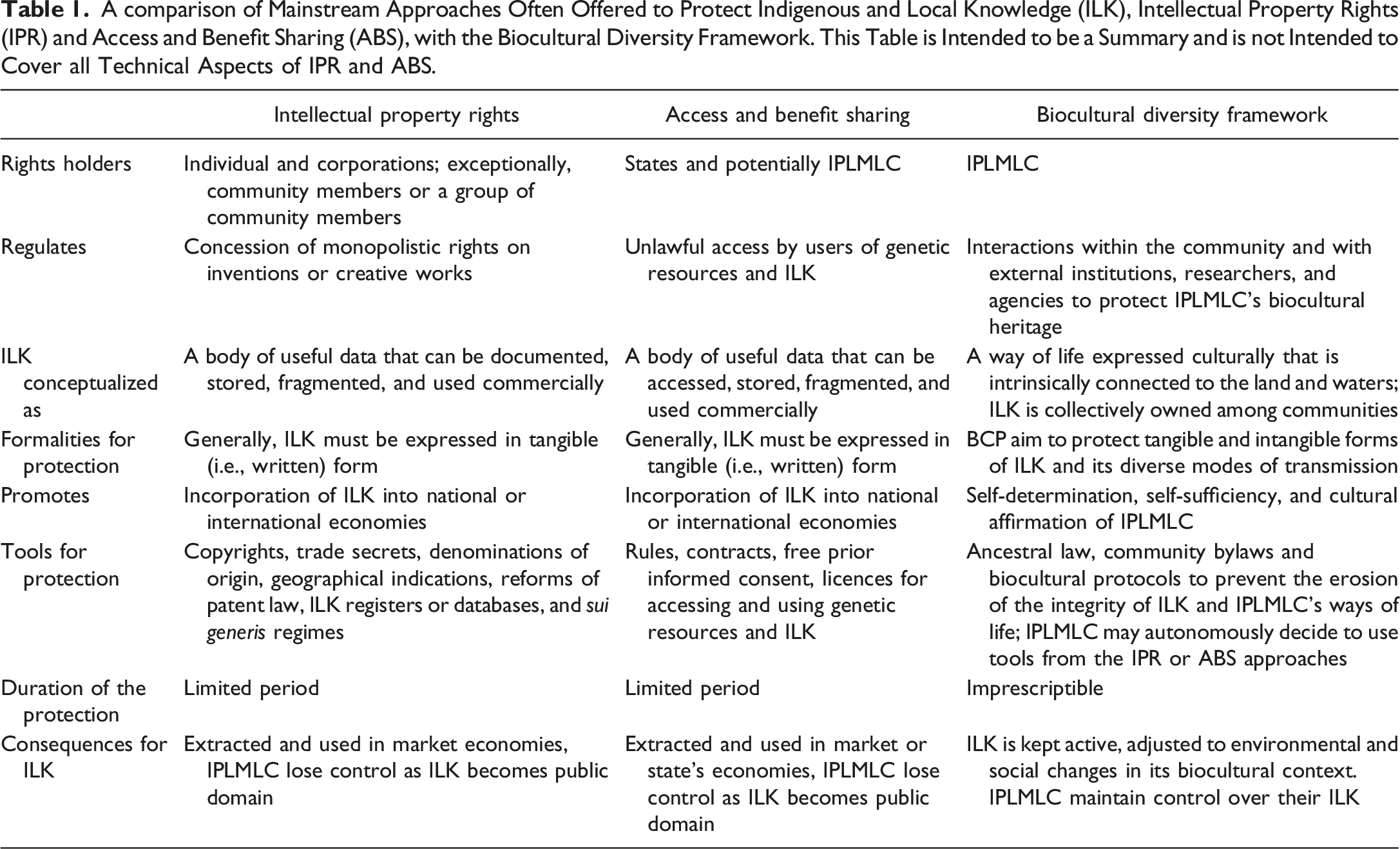
The second stream promotes the protection of ILK through access and benefit sharing (ABS) regimes within the scope of the CBD, article 15 (Cabrera et al., 2014; Caillaux et al., 1999; Ruiz & Vernooy, 2012). The ABS literature highlights the most important paradigm shift in biodiversity law, transforming biodiversity from heritage of humankind to sovereign rights of the countries of origin. Within the CBD, the Nagoya Protocol (NP) is a supplementary agreement that specifies the ABS regime for users of genetic resources and traditional knowledge (or ILK). In Colombia, where the two cases analyzed in this paper occurred, the Nagoya Protocol has not been ratified. In exercising their sovereign rights on biodiversity, the Andean Community (Bolivia, Ecuador, Colombia, and Peru) established the first transboundary ABS regime through Decision 391 of 1996 (Garforth & Cabrera, 2006). Unfortunately, ABS has not effectively contributed to the protection of ILK within the Andean community. While decision 391 of 1996 recognized the right of Indigenous peoples and local communities to decide on the access and the use of their traditional knowledge (Article 7), this recognition lacks effective development in national legislations and policies. These legal instruments have thus only served to strengthen Andean states’ sovereignty and subordinated Indigenous peoples’ rights on genetic diversity and on traditional knowledge to national legislation. As a result, Colombia and its Andean government partners still lack comprehensive regional policies and legal instruments for the protection of ILK. A framework that guarantees meaningful recognition, participation, and inclusion of IPLMLC’ concerns is thus required to overcome the limitations of the IPR and ABS streams (see Table 1). We will show that the biocultural diversity framework is an important instrument for enhancing IPLMLC’ participation and protection of ILK.
Biocultural Diversity as an Emerging Protective Framework
This study focuses on two cases in the Andean region that illustrate the application of the biocultural diversity framework, inspiring legal interpretation and the development of community self-governance for the protection of ILK. The findings resonate with worldwide contemporary development towards the recognition of the rights of nature and IPLMLC communities’ autonomy and self-governance (Espinosa, 2014; Fernández-Llamazares et al., 2021; Daes, 2005; Chen & Gilmore, 2015, Simpson, 2011). Evolving theory in biocultural diversity points to the continuous and changing interaction between humans and non-human nature as a co-evolutionary process (Ellis et al., 2021; Pretty et al., 2009). “Biocultural diversity comprises the diversity of life in all of its manifestations – biological, cultural, and linguistics – which are interrelated (and likely co-evolved) within a complex socio-ecological adaptive system” (Maffi & Woodley, 2010, p. 5). Biocultural research that is focused on the diverse manifestations of life and that recognizes cultural and linguistic diversity as interconnected realities has given rise to concepts like Traditional Ecological Knowledge, Sacred Ecology, Collective Bio-cultural Heritage, and Biocultural Rights (Bavikatte & Bennett, 2015; Berkes, 2008; Chen & Gilmore, 2015; Ford & Martinez, 2000; Ishizawa, 2010; Kabir and Jones, 2010; Maffi & Woodley 2010; Posey & Dutfield, 1996; Swiderska et al., 2009). These concepts, emerging from different biocultural contexts, conform to the basic idea that natural environments and Indigenous and local cultures are intrinsically interrelated (Knudtson & Suzuki, 2006; Marsui, 2012; Posey, 1999; Sarma & Barpujari, 2011). Rather than a complete detachment from non-human nature, these concepts uphold IPLMLC worldviews, emphasizing their mutual dependence and a sense of extended community with the non-human world. The framework highlights the complex dynamics and interconnection that exist between cultural, linguistic, and biological diversity (Bridgewater & Rotherham, 2019; Gavin et al., 2015).
Crucially, the biocultural framework is compatible with the understanding that ILK systems have their own institutions, knowledge experts, evidence indicators, and validity criteria (Tengo et al., 2014). The biocultural framework has supported Indigenous peoples’ well-being and self-determination in Panama, New Zealand, and Canada (Apgar et al., 2011; Droz, 2014), assisted in the processes of Indigenous self-governance in Oaxaca communities (Marchi, 2018), inspired biocultural resource management models for forest habitats in rural Mexico (Amo-Rodríguez et al., 2010), and demonstrated the relationship between biocultural and natural conservation in South America (Rozzi et al., 2006). The two cases bellow illustrate how innovative biocultural legal doctrine and the exercise of community self-governance can assist in the protection of ILK.
Methodology
Data regarding the Atrato River case draws mainly from secondary sources. This data is included in the Judgment T-622 of 2016 (thereafter T-612/16) of the Colombian Constitutional Court (CC 2016). Information includes evidence submitted by the plaintiffs and national, provincial and municipal entities. It also contains specialized assessments from universities, NGOs, and international organizations. Additionally, information from a judicial inspection made by Court’s officials in the Atrato basin and its tributaries is included which assesses the socio-environmental, ecological, and humanitarian situation in situ (T-612/16). Data covers testimonies from four representatives and community organizations, NGOs, and the Diocese of de Quibdó. The data and analysis presented in this article are also the result of the direct participation of the first author as member of the Panel of Experts appointed by the Constitutional Court in this case.
Data for the Embera people’s case was gathered through field work between January 2017 and April 2019, in Chigorodocito and Polines communities. The research strategy included the training of a community research team with participants of different ages and gender from each of the five communities. This research team contributed to the design, testing, and application of research instruments as well as data collection and analysis. Research methods included survey, semi-interviews, workshops, and community gatherings and preceded with the free, prior, and informed consent (FPIC) of the CMC (Research Agreement, 2016). In view of respecting the Embera’s oral tradition, the Embera language was used in community workshops to facilitate the active participation of community members. The team adjusted a methodological guideline to encourage dialogue and to elicit specific views from elders, knowledge keepers, and young community members (Natural Justice, 2010). The Biocultural Community Protocol (BCP) draft was subjected to several evaluations and adjustments by members of the Embera research team before its final approval by the CMC in 2018.
Both cases took place in Colombia where the constitutional regimen of 1991 have triggered more than two decades of progressive judicial activism (Cepeda & Landau, 2017; Nemogá, 2015). A brief presentation follows to introduce the common constitutional legal setting relevant for the two cases.
The 1991 Colombian Constitution
Colombia was among the Latin American countries that undertook substantial constitutional reforms at the end of the 20th century to acknowledge the country’s ethnic and cultural diversity (Van Cott, 2002). The elected members of the Constitutional Assembly represented a wide range of conservative and progressive political forces which included three Indigenous representatives. Two were appointed through national election and one represented the demobilized Indigenous guerrilla organization Quintin Lame (González, 2014; Rappaport, 2005).
With the support of progressive forces, Indigenous constituents were able to overcome governmental maneuvers to exclude substantive provisions that recognize Indigenous peoples’ rights (Muelas, 2011). Detailed descriptions of Indigenous rights that won constitutional recognition such as collective land property rights and education are documented in existing literature (Cepeda & Landau, 2017; Macpherson, 2019). The following provisions are relevant for the cases presented here. First, the notion of a single and homogenous culture changed towards one of cultural and ethnic diversity (Arts. 7 and 70 CP). Secondly, participation of Indigenous peoples in decision making was constitutionally endorsed (Art. 329). Thirdly, Indigenous jurisdiction and autonomous self-governance were finally recognized (Arts. 246 and 330, C.P.) Lastly, the 1991 Constitution also included a transitory provision regarding the collective rights of Afro-Colombian population over ancestral territories (Art. Trans. 55, C.P.) that was developed through Law 70 of 1993.
In addition to explicit human rights constitutional provisions, the 1991 Constitution included an interpretative mechanism (constitutional block) that paved the way for enforcing fundamental rights embraced through international treaties, ratified by Colombia. This interpretative mechanism contributed to developing the legal framework for the protection of Indigenous and community rights. For example, it was instrumental to incorporate the ILO Convention 169 of 1989 provisions as constitutional mandates. In applying this Convention, the Constitutional Court has: (i) nullified key laws due to their potential impacts on Indigenous rights and interests when the government fails to observe the duty to consult (i.e., CC, 2012), and (ii) extended Indigenous rights to local communities, in particular, to the Afro-Colombian population (CC, 2003).
The Constitution also introduced the tutela action as a judicial remedy to prevent threats or violations of fundamental human rights recognized in the constitutional text. The tutela expedited access to the judicial system (like the writ of amparo) and has shaped the functioning of the Colombian judicial system since its insertion. Tutela regulations provided the Constitutional Court a prerogative towards the unification of judges’ interpretation. Thus, this Court autonomously selects cases where exceptional circumstances require its intervention to unify judicial interpretation related to constitutional guarantees. As the Atrato River case shows, this mechanism plays a crucial role in advancing legal interpretations such as biocultural rights in constitutional doctrine.
Findings
The Atrato River is located in the high biodiverse region of the Colombian province, Chocó (Figure 1(a)). The Atrato River is considered the most profuse of Colombia and it has become one of the most polluted rivers in the country (Bram, 2017; T-622/16). It is the main communication route connecting more than 15 municipalities composed of Afro-Colombians, Indigenous (Embera and Wounan nations), and mestizo populations. The river connects these communities to their past, present, and future and links them to their worldviews, ways of life, and cultural identities. For centuries, IPLMLC’ self-sustaining activities involved agriculture, hunting, fishing, gathering fruits, forest use, traditional medicine, and artisanal mining in close interrelationship with the river waters, plants, and animals (Figure 1(b)). These subsistence practices and artisanal mining methods contributed for generations to the sustainable interaction with the river cycles, plants, and animals (T-622/16).
Historically, the Colombian government identified the Chocó province as a mining and forestry district. The government granted non-Indigenous organizations mining concessions in the Atrato River region without fulfilling the duty to consult (Richard Moreno Rodriguez, 2016 Intervention, T-622/16) and overlooking traditional mining practices of local communities. Basic infrastructure and public services for local population were not a priority. Simultaneously, the immense forest resources and gold deposits of the Atrato River basin and its tributaries (Mount, 2017) attracted outsiders who introduced heavy machinery and pollutants through illegal mining and logging, disrupting the sustainable relationships of the IPLMLC with their river (Bram, 2017; Pecharroman, 2018). Since the 1990s the expansion of legal and illegal mining operations has intensified deforestation, eroded the Atrato watersheds, and contaminated the waters. In addition, researchers documented diseases and deaths associated with the use of mercury and cyanide in mining operations impacting IPLMLC’s food sources, health, and general sustenance (Ximena González and González, 2016 Intervention, T-622/16). Agricultural production, fishing, and hunting were also substantially impaired or eliminated in several sections of the river (Bram, 2017). Moreover, domestic armed conflict impacted peoples’ livelihoods. Guerillas and paramilitary forces disputed territorial control of riverine routes and either forced the displacement of local populations or their enrolment into illegal drug activities. With the absence of state authorities’ intervention, violence and death threats on the local population weakened community processes and organizations (Gloria Luna, 2016 Intervention & Sterling Londoño, 2016 Intervention, T-622/16). River-based disruptions dramatically changed communities’ lives around the river (Defensoría del Pueblo, 2016 quoted in T-612/16). Expert assessment documented the loss of 15 fish species, but also significant reduction of traditional cultivation practices (Maldonado, 2012). The loss of traditional food and medicines jeopardized IPLMLC’s capacities to transmit associated practices and traditional knowledge on biodiversity (Defensoría del Pueblo, 2014).
This environmental and humanitarian crisis propelled “Tierra Digna” of the Center of Studies for Social Justice on behalf of Indigenous and Afro-Colombian organizations to submit a tutela action to demand a halt to these activities and the protection of their fundamental rights, including life, heath, access to potable water, food security, environment, culture, and territory (Bram, 2017; Pecharroman, 2018). The plaintiffs demanded the implementation of structural and inter-institutional measures to address the integral protection of the Atrato biocultural context. For the IPLMLC, the Atrato watershed and tributaries is the axis for their ways of life and cultural identities (T-612/16). In 2016, the Colombian Constitutional Court ruled that there were undeniable violations of the rights of the peoples that inhabit the river basin and its tributaries thereby granting the Atrato River the right to be protected, conserved, maintained, and restored by the state and the communities (Pecharroman, 2018; T622/16). The Court declared that the Atrato River was entitled to legal rights and advanced the notion of biocultural rights: “rights that ethnic communities have to stewardship and exercise guardianship autonomously over their territories – in accordance with their own laws, customs – and natural resources that make up their habitat, where their culture, traditions, and life habits are developed, based on the special relationship they have with the environment and biodiversity…” (T-622/16-16, section 5.11). Biocultural rights grounded the rights of Indigenous peoples over their territories and natural resources on their own laws and customs. The Court definition also highlights the distinctive and intrinsic relationship between Indigenous peoples and their environments, between culture and biodiversity.
By incorporating biocultural rights, the Court affirmed that the social, biological, and territorial protection of Indigenous and Afro-Colombian peoples cannot be treated separately, but rather their relations, practices, and knowledge must be protected simultaneously (Nemogá, 2015; T622/16, section 5.11). The Court added that “these rights result from the recognition of the deep and intrinsic connection that exists between nature, its resources, and the culture of the ethnic and indigenous communities that inhabit them, which are interdependent with each other and cannot be understood in isolation…” (T-622/16, section 5.11). In applying this principle, the Court granted legal personhood to the Atrato River, ordered its restoration to guarantee communities’ fundamental rights to life, dignity, health, water, food sovereignty, a healthy environment, culture, and territory (T622/16, section 10.2).
The ruling also confirmed a basic policy orientation for environmental management with respect to biodiversity conservation: “The conservation of biodiversity necessarily leads to the preservation and protection of the ways of life and cultures that interact with it…” (Nemogá, 2015; T-622/16, section 5.11). Affirming IPLMLC as part of the Atrato biocultural complex, the Court ordered the government to develop plans to repair the damage. The plans should be designed with the active participation of communities to resolve the humanitarian, social, and environmental crisis in the Atrato River. The Court ordered the Colombian Government to name two legal representatives of the river, one from the government and one from the Atrato River communities. By decree 1148 of 2017, the Ministry of Environment and Sustainable Development (MESD) became the legal representative on the government side (MEDS, 2021). Through an autonomous process, the communities established the Communitarian Guardian Collegiate Body (CGCB) including two representatives from each of seven communities to represent the river (Figure 1(c)). Thus, the CGCB and the MESD represent the legal rights of the river.
Whilst the incorporation of biocultural rights is a major step in the right direction, it cannot be maximally effective without proper enforcement. The participation of IPLMLC in the designing and monitoring of the governmental action plans have proven to be problematic. Four years after the decision, communities reported that the Ministries of Defense and of Agriculture, as well as several municipal authorities, had not developed the specific plans ordered by the Court (Romaña-Mena, 2020). The CGCB also pointed to situations where the Ministry of Defence repressive actions targeted community mining enterprises, lacked coherence with the action plans of other governmental entities, and was thus unable to stop illegal mining.
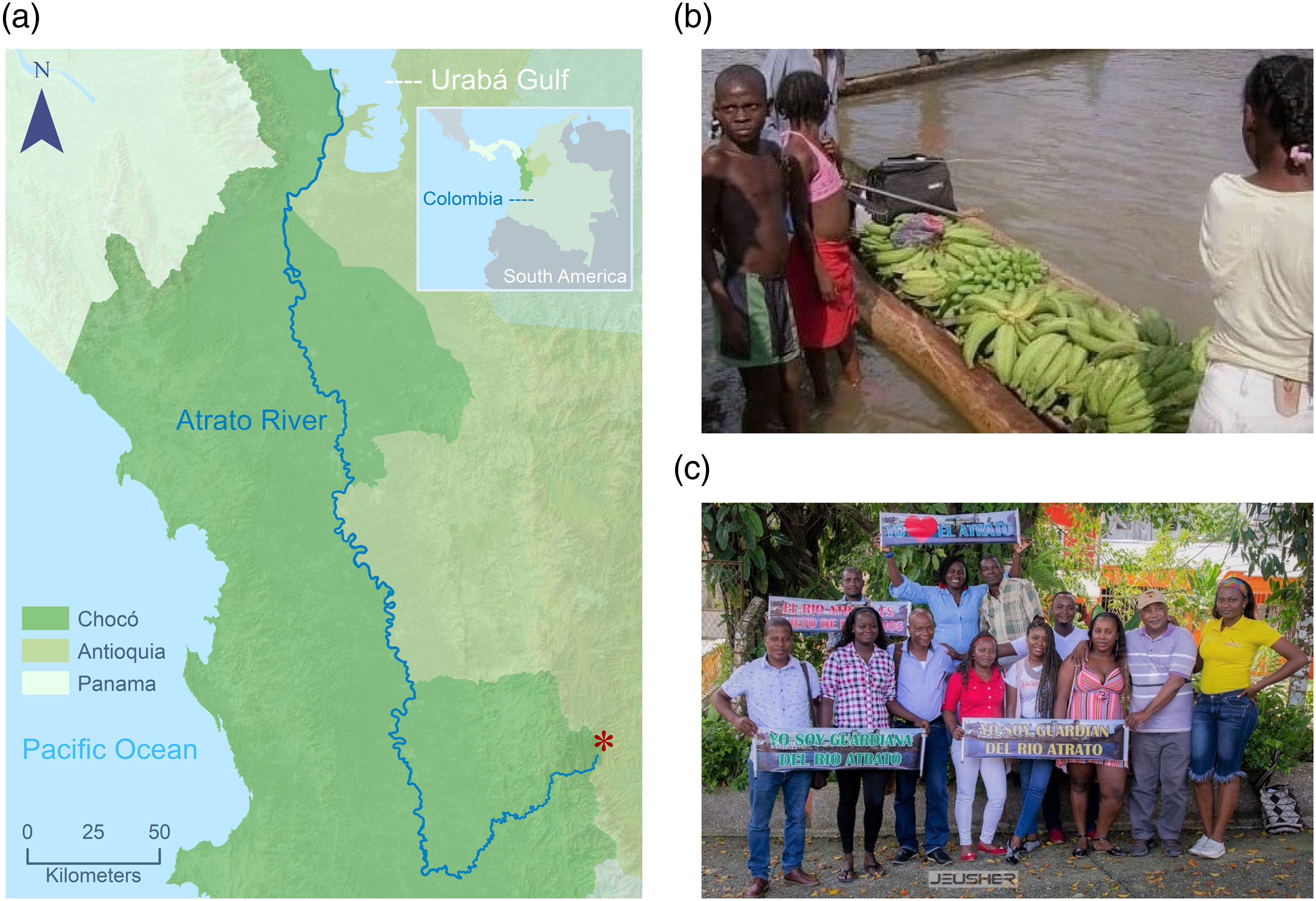
The Atrato River is located within the Chocó province of Colombia and shares a portion of its high basin with the Antioquia province. The source (*) of the river is in the slopes of the Western Cordillera, from there it flows generally northward through rich lowland, finally draining through a delta into the Urabá Gulf (a). Afro-Colombians and Indigenous peoples have long engaged in harmonious practices along the river, including harvesting staple crops such as plantain (b). The Atrato River has legal personhood, and its legal representatives include members of the Communitarian Guardian Collegiate Body, who are also known as the Atrato River Guardians (c). Photo (b) is Copyright Jhoannes Rivas Mosquera. Photo (c) is Copyright Viviana González. Map design by Cora Anne Romanow.
The Indigenous Embera peoples inhabit an extensive geographical area from Panama to Ecuador. The participants’ Embera communities live in the Serrania of Abibe, Urabá area in the Antioquia province, municipalities of Chigorodó and Mutatá, and partially in Tierralta, in the Córdoba province (CMC, 2018). The Serrania of Abibe is a mountain range located northwest of the westernmost mountain ranges, north of the Paramillo node. Its Eastern border partially overlaps with the Paramillo National Park and highlights its function as a transitional zone with non-protected areas (CMC, 2014). Embera people in this region are distributed into five communities located in the Polines and Yaberaradó reservations and are represented by a general assembly of Indigenous councils (Figure 2(a)). Councils are appointed by general election in each community and collectively integrate the Chigorodó Major Indigenous Council (CMC), the highest governing body. The Embera peoples inhabit a large region from Panama through to Ecuador. The present study worked with Embera participants who live in the Serrania de Abibe mountain range, which is north of the high biodiversity region of the Paramillo node. The Serrania de Abibe form a natural border between the Antioquia and Córdoba provinces, and the Embera participants span the municipalities of Chigorodó and Mutatá in Antioquia, and partially into the municipality of Tierralta in Córdoba. The Serrania de Abibe’s eastern border overlaps with the Paramillo National Park (PNP), and the Embera communities in this region are distributed through five communities located within the Polines and Yaberaradó reservations (a). Commercially targeted jagua fruits (Genipa americana) grow within the forests in this region (b). The jagua fruits produce a blue dye that Embera peoples extract and use for face and body painting during ceremonial practices (c). Photos (b) and (c) are Copyright Gabriel R. Nemogá. Map design by Cora Anne Romanow.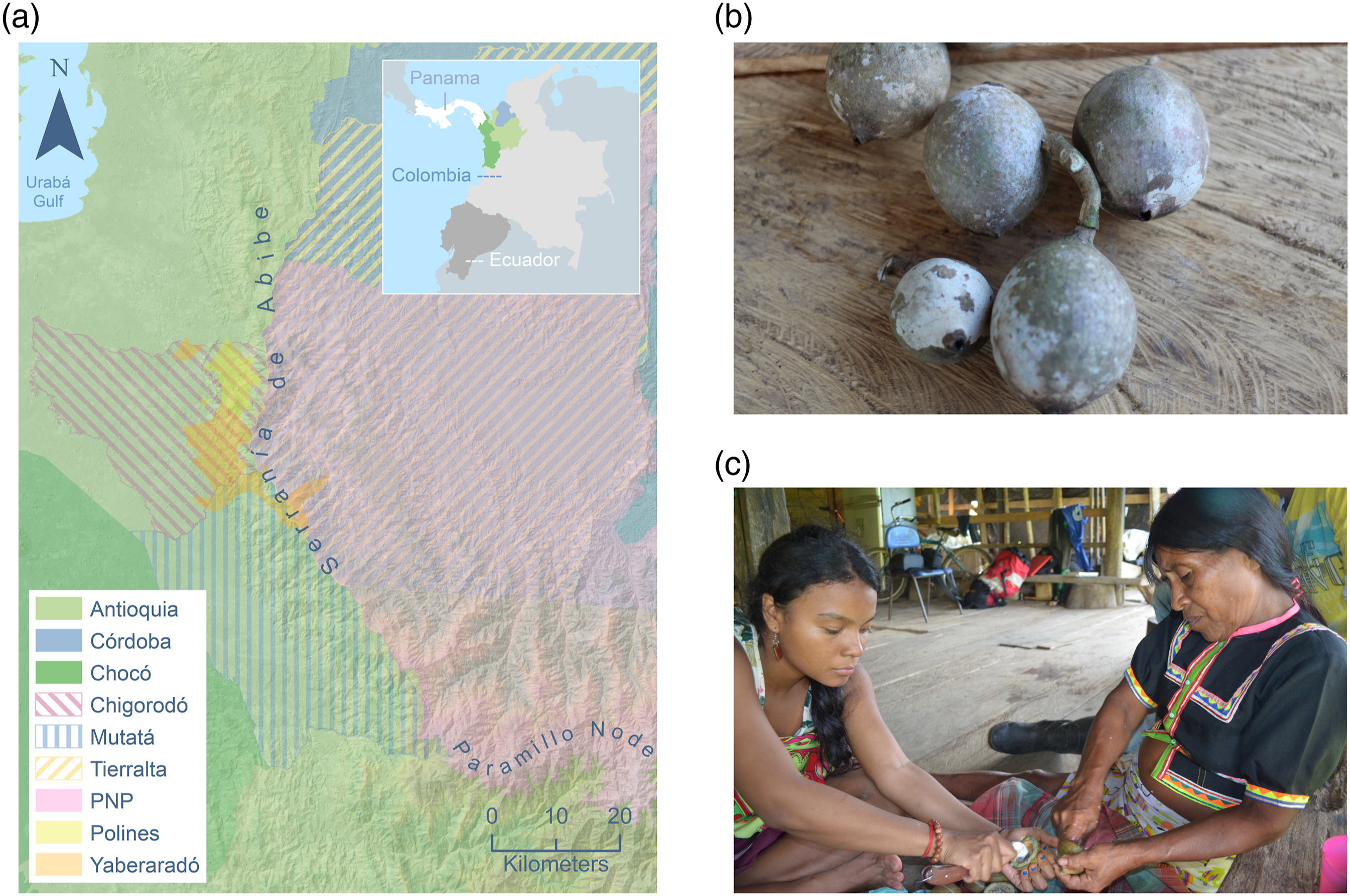
The CMC fosters the protection and respect of Embera’s culture and the integrity of their identity through the organization of annual festivals and by establishing women and youth councils. The CMC promoted alternative ways to preserve their ceremonies, language, knowledge, food, songs, dress, and beliefs. For example, Embera women became guardians and caretakers of their biocultural heritage by actively participating in the annual festivals and in the restoration of the Embera language, customs and cultural expressions, and identity (CMC, 2018).
The communities’ main economic activities are: plantain, corn and cassava cultivation, hunting, fishing, gathering, small scale husbandry, forestry, and sale of artisanal products. Commutes to the nearest urban centers are through a bridle path and during rainy season provisions are transported by horses or on Embera peoples’ backs. In the last decades, there has been increased demand on forest resources from the non-Indigenous population. Deforestation has become a central concern for Embera leaders and traditional authorities (CMC, 2014). Increasingly, Embera people look for external sources of income through wage labor in urban centers and nearby private farms. Concurrently, their consumption patterns shift from traditional food to commercial, nutritionally deficient diets, and alcoholic beverages. During the last decade, non-forest products brought new options to the Embera people, but also new threats to their Indigenous knowledge. In 2012, a Colombian bioprospecting company, Ecoflora, targeted the CMC as a potential partner for cultivating jagua (Genipa americana) fruits (Figure 2(b)). In the Embera biocultural context, jagua is a non-cultivated tree. The juice extracted from the fruits has been used ancestrally by Embera people for face and corporal painting (Figure 2(c)). The paintings are used in ceremonies representing spiritual protection which honors and renews Embera’s sacred relationship with their forest and territory (CMC, 2014). For example, newborns are bathed in jagua juice for strength, girls are adorned with jagua paintings at their menarche, and hunters paint their body with jagua as a sign of strength and success prior to their hunting trips (Interview Ma. Libia Bailarín, February 18).
Consultation by Ecoflora took place only after the initiation of the project in November 2014 with CMC authorities and the participation of representatives of the Minister of the Interior. Ecoflora claimed that it only fulfilled the duty to consult after the project’s commencement because the company did not foresee the success of the project in Chigorodó (MinInterior, 2014). The company proceeded with the development of a commercial application for a colorant compound derived from the fruits of the jagua tree. The sub-product is a natural food color used in cosmetic and in food industries (Patent US 9376569 B2). It is important to note that even though this bioprospecting project formally fulfilled the duty to consult, it failed to secure Embera communities’ fair and equitable participation in the benefits for commercial exploitation of jagua derivatives.
Elders voiced their concerns when the jagua fruit trade began. They feared that commercial exploitation of the trees could intensify the erosion of its traditional use and compromise the Embera’s cultural practices and expressions. “I don’t agree with the enforcement of the prohibition of jagua fruits harvesting for ceremonial purposes, it should be the other way around… the jagua must be free, its commercial use should not impair such freedom because the jagua is part of our culture as Indigenous peoples” (Midwife and traditional healer Teresa Bailarin as quoted in CMC, 2014, p. 11).
Subsequently, the community established through deliberation, that only 90% of the fruits should be harvested for commercialization. Embera jagua trees’ owners participated in a tree census and authorized jagua harvesting on their property periodically for which they received compensation to cover basic food supplies. Jagua trees located in households and communal land plots were targeted for harvesting and commercialization. However, disagreement arose in relation to the boundaries between collective and family rights on trees. Moreover, the company’s demand exceeded the communities’ production capacity leading to overharvesting of the fruits prematurely in addition to transportation and storage challenges (CMC, 2014). As a result, economic interest jeopardized the community harmony and their relationship with the jagua tree despite the establishment of a harvest limit of 90%. Three years later, Embera communities no longer participated as providers of jagua fruit.
In 2017, the CMC identified the need for Indigenous communities to understand the scope and importance of the duty to consult and FPIC as means to protect their traditional knowledge when working in alliances with researchers and companies. Working from a biocultural diversity framework, together with the CMC, the research team envisioned a Biocultural Community Protocol (BCP) as a complementary instrument to the ongoing CMC’s Plan of Life. A Plan of Life is an Indigenous response to the governmental requirement to design and formalize a community plan with respect to development projects and the allocation of resources. A BCP could be defined as the set of rules and responsibilities that communities design to strengthen and preserve their values, knowledge, views, and spiritual relations with biodiversity in their biocultural context (López & Mosquera, 2012). The BCP’s goal in the Embera context was to protect both the ancestral knowledge and encourage revitalization of the Embera biocultural heritage as defined in their protocol: “Our cultural heritage is what distinguishes us as Embera in connection with our territory, our language, our way of life, our ceremonies, beliefs, thoughts, practices, knowledge, innovations and cultural expressions. It is the cultural legacy of our ancestors. Our forest is sacred and is an integral part of our way of life; it provides us with food, medicine, air, water, minerals and joy. We are committed to care, respect, protect and recreate the richness of forest life with its rivers, animals, plants and spiritual beings” (CMC, 2018).
The Embera people reached consensus on the notion of biocultural heritage by focusing on their ancestral knowledge, cultural practices, traditional uses, and innovations that contribute to the conservation of life’s diversity and the health of ecosystems and forests. The Embera’s existence and purpose are intrinsically linked with their intimate relationship with non-human nature whereby three elements guide their cultural landscape: territory, spirituality, and the Embera language (CMC, 2018). Preserving their language has become a growing challenge because even if the teacher is an Embera speaker, most classes are taught in Spanish due to dialectic differences with the school community (Chigorodocito school, Interview Jorge Domicó, Feb 18, 2017). Some women expressed their concerns because the Embera language is being transformed into emberañol (a combination of Spanish and Embera), signaling the trend of their native language replacement with the Spanish language (Interview Maruja Molina, April 14, 2019).
By enacting the BCP, the CMC highlights that their ILK and their way of life are connected to their territories and resources. The BCP also outlines the Embera’s vision of collective reaffirmation of their role as guardians of their territories threatened by the commodification of natural resources and biodiversity (CMC, 2018). Lastly, the BCP provides guidelines to external actors, governments and companies interested in accessing Embera knowledge and resources. The BCP empowers the communities to collectively enforce FPIC, and the duty to consult in their territory (CMC, 2018). The CMC has successfully applied the protocol in subsequent relations with external researchers and foreign aid agencies (Alejandro Molina, personal communication April 12, 2021). The communities’ interest in strengthening their biocultural heritage and the frustration associated with the jagua case propelled the need to adopt protective instruments like the BCP.
Discussion
The IPR and the ABS rights streams are limited in their ability to effectively protect ILK and associated practices. The two cases discussed highlighted the critical need for the adoption of policies and legislations that are inclusive of Indigenous worldviews in the development of culturally appropriate protective mechanisms for biodiversity and ILK. The biocultural framework can influence policy and legislation by revealing community initiatives on sustainable self-governance, autonomy, and protection of their ILK (see Table 1). These case studies illustrate two different developments addressing IPLMLC’s concerns in an Andean country related to the protection of their ways of life and embedded knowledge systems.
Limited advancements have been made with IPR in Andean countries. For example, the Ecuadorian legislation has advanced the protection of Indigenous knowledge and innovation within the IPR stream. The adoption of the Código de Ingenios (CI) (Asamblea Nacional, República of Ecuador, 2016) introduced the protection of traditional knowledge holders and their right to participate in benefits in proportion with their contributions to innovative processes or products related to genetic resources and biodiversity (CI, Arts. 93, 94). The code also prohibits the use of Indigenous signs, symbols, figures, or characters in industrial designs (CI. Art. 347, 4). It regulates all diverse matters on ILK and cultural expressions under chapter VI on Traditional Knowledge. It acknowledges the ownership, the right to self-determination and the application of customary law in decision-making processes for Indigenous, Afro-Ecuadorian, and local communities in relation to ILK (CI. Arts. 512, 520). The Ecuadorian legislation also followed the example of the Peruvian Law 27811 of 2001 which established a voluntary registration system of collective knowledge (CI. Art. 523 to 526). The Peruvian registration within the IPR stream was intended to prevent unlawful granting of patents that involve Indigenous knowledge of medicinal plants but has been limited for effective sharing of benefits with communities (Nemogá, 2013). However, neither the Ecuadorian nor the Peruvian IPR defensive mechanisms are designed to provide protection from a biocultural diversity framework, which recognizes and seeks to protect ILK as an embedded and emergent dimension of communities’ ways of life.
At the international level, the Intergovernmental Committee on Intellectual Property, Genetic Resources, and Traditional Knowledge (IGC) of the World Intellectual Property Organization has been discussing the nature and scope of an international instrument to protect ILK since 2001 (WIPO 2012a, 2012b). The IGC has not yet reached a consensus to advance an adequate protective mechanism (WIPO, 2021). Early operational definitions adopted by the IGC separate Indigenous knowledge from cultural expressions. IPLMLC, NGOs, and scholars have emphasized that segmentation of knowledge and expressions do not fit Indigenous holistic approaches (Battiste & Henderson 2000; De la Cruz 2006; LaDuke, 1999; WIPO 2001).
As indicated in Table 1, there are two reasons why the IPR stream is inadequate to address IPLMLC’s concerns. First, intellectual property focuses on individual or corporate rights and grants protection for fragments of ILK for a limited number of years under patent or copyrights. Conversely, ILK is embedded in a collective understanding of the world that is transmitted intergenerationally through ceremonies and everyday practices like fishing, hunting, and cultivating. Additionally, Indigenous peoples transmit their collective environmental knowledge and wisdom through songs, stories, metaphors, and practices for future generations (Battiste & Henderson, 2000; LaDuke, 1999; Simpson, 2011). Secondly, IPR includes legal tools for enforcing monopolistic rights, private appropriation, and exploitation of inventions or creative works for commercial purposes. IPLMLC’s primary concern on the other hand, is to preserve their distinct way of life which includes their worldview, their spirituality, and their relations with the land or sea. Their knowledge covers sustainable use of biodiversity including care for minerals, soils, waters, spiritual beings, and all their interrelations with the biophysical landscape. Thus, preservation of ILK requires a framework that can protect the community’s knowledge system and its unceasingly dynamic capacity to adapt to a changing environment.
As the Embera case shows, neither the ABS legislation nor the IPR stream addressed the Embera peoples’ concerns regarding their ancestral relation with the jagua tree, the forest, or their participation in potential economic benefits from the commercialization of jagua derivatives in industrial applications. Additionally, the Colombian Ministry of Environment issued legal reforms that eliminated the obligation to observe ABS procedures for scientific research in the areas of molecular systematics, molecular ecology, evolution, and biogeography (Decree 1376 of 2013) in spite of biological samples being collected from IPLMLC’s territories. With these reforms to the ABS regimen, only users that declare commercial purposes are required to obtain a contract. For example, from 1997 to 2018, Colombia signed 254 access contracts, ten with declared commercial purposes to genetic resources, but none of them included compensation to Indigenous communities (Lizarazo-Cortés et al., 2019). Amendments proposed to IPR and ABS thus far, do not address IPLMLC´s concerns, such as their knowledge and practices associated with sacred plants and their spiritual relationship with their natural environment. Strengthening states’ sovereignty rights through ABS or individual private interest through IPR imperils the collective rights of Indigenous and local communities over their ILK (Hossain & Ballardini 2021; Nemogá, 2014a; 2014b; Schroeder et al., 2020; Torres, 2014). Although the IPR and ABS frameworks have explored diverse options relevant to IPLMLC, they fall short of providing protection to the sacred and spiritual dimensions of ILK, its collective nature, its transmission mechanisms, its imprescriptible character, and its role for biodiversity conservation.
The adoption of the NP in 2010 and its ratification in 2014 within the Convention of Biological Diversity (CBD) forum (CBD-NP, 2014) opened the space for new developments. The NP sets the rules on ABS for users of genetic resources and traditional knowledge and mentions BCP that countries and communities must develop (Bavikatte & Jonas, 2009; Greiber et al., 2012; Nijar, 2011). To date, 128 countries have ratified the NP (CBD, 2021) but Colombia has not. Communities like the Embera people have designed BCP not mainly for securing ABS agreements, but principally to secure the preservation of their biocultural heritage (ASOCASAN et al., 2012; CMC, 2018; OPDP, 2015; Pacari, 2014). The design and implementation of BCP contributes to the cultural revival process of IPLMLC and the sustainability of their biocultural contexts (CMC, 2018). BCPs are also instruments to articulate and bridge gaps between international and ancestral law, customary norms, principles, roles, and responsibilities relating to biocultural heritage to secure their transmission to future generations. In exercising their right to self-determination, some communities could include intellectual property options like trademarks, GI, or denominations of origin for some of their marketable products. However, IPLMLC do not necessarily envision their biocultural heritage primarily as a profitable asset.
Our findings reinforce that the biocultural framework could effectively work as a multidisciplinary and intercultural platform for recognizing diverse worldviews, knowledge systems, and epistemologies (Berkes, 2008; Davidson-Hunt et al., 2012; Fernández-Llamazares et al., 2021; Nadasdy, 2011; Posey et al., 1984; Posey & Plenderleith 2004; Turner et al., 2000). The cases highlight the role of the biocultural framework in acknowledging and empowering IPLMLC’ rights. Emerging from two diverse biocultural contexts, the two cases involved Indigenous and Afro-descendant communities in Colombia, identified active community participation through innovative paths to protect their environment, ways of life, and their rights on ILK. Communities and NGOs in the Atrato River mobilized and forced an advancement in the legal regime with the development of biocultural rights and the recognition of the legal personhood of the Atrato River. In this case, the Court recognized a keystone principle of biocultural diversity, that is, that communities’ worldviews and the importance of cultural and biological diversity form part of one intrinsic unit (McGregor et al., 2018; Nemogá, 2015; Posey, 1999). Local communities’ goal to protect their traditional way of life and their connection with the Atrato River coincide with the purpose of the CMC to promote Indigenous autonomy through the creation of the Embera BCP and the protection of the forest.
The case on judicial protection of biocultural context echoes with the worldwide movement for the rights of nature and the granting of legal personhood to mountains, rivers, and lakes. Granting rights to natural components like mountains and rivers have precedents in New Zealand and India (Morris & Ruru, 2010; Pecharoman, 2018; Ruru, 2018; Te Urewera Act 2014). However, the judgment T-622-16 is a pioneering decision in the American hemisphere as the introduction of biocultural rights covers the interconnection between collectives and landscapes and its scope was not limited to guaranteeing rights of nature, cultural rights, or collective environmental rights. The Court decision advanced crucial landmarks. First, it established the Atrato River as a legal personhood entitled to protection, conservation, maintenance, and restoration compelling governmental entities to fulfill their responsibilities. It also defined specific orders for structural state intervention to respect the river and communities’ rights. Additionally, it reified Indigenous and Afro-descendant peoples as collective holders of their ancestral territories, knowledge, and customs. It also reiterates that FPIC and duty to consult are crucial to secure participation of Indigenous and local communities in regulatory frameworks and public policy definitions to achieve protection of biocultural rights and ILK. Lastly, it defined biocultural rights as a protective clause that integrates biological and cultural diversity in public policy and jurisprudence. These considerations highlighted the development of a comprehensive approach to protect both the biological and cultural diversity of the nation whilst recognizing the interrelations of IPLMLC with their territories, biodiversity, and natural resources (Nemogá, 2015; T-622/16; Ungar et al., 2021). In other words, the river was not protected because of its intrinsic value but due to its biocultural context for IPLMLC to exercise the right to self-determination, food sovereignty, environmental integrity, control and intergenerational transmission of ILK, and the strengthening of their cultural identity (Nemogá, 2016; T-622/16).
The Embera biocultural protocol case was a process agreed upon by Indigenous authorities and community participants to tackle the progressive erosion of their culture and language, the commodification of jagua fruits, and the need to revitalize their connection to the forest. The adoption of BCPs as a strategy for protecting Indigenous and local biocultural heritage introduced a transformative dynamic at the community level. The process of developing the Embera BCP engaged leaders and community members of all ages in answering questions about their community’s origin, identity, cultural expressions, ceremonies, ancestral knowledge, and sacred sites. The central pillar of the BCP is the preservation of the Embera biocultural heritage that authorities, elders, and community members would like to transmit to future generations. The protocol not only responded to the need to improve the negotiation capacity of communities in future bioprospecting scenarios, but to provide guidelines to strengthen peoples’ distinctive practices that contribute to long term cultural revival for the community.
The two cases also share some characteristics. The Atrato River Court decision and the Embera BCP substantiate the interrelations between peoples, biodiversity, and place. The biocultural rights concept advanced by the Court and the BCP emphasize the interconnection between peoples and their lands. Both instruments recognize communities’ spiritual and cultural values and both solutions are rooted in the conservation of biological and cultural diversity. The two cases outlined in this paper reinforce the importance of making the connection between ILK, IPLMLC’ worldviews and ways of life, and their relationship to the land. It is the communities’ interactions with the land that give rise to ILK, and ILK in turn reinforces these communities’ relationships to the lands, and leads to the observed high rates of biodiversity. By approaching the protection of ILK through a biocultural diversity framework, rather than a patchwork of assimilative protection mechanisms through IPR and ABS, the integrity of ILK as an essential part of IPLMLC’ worldviews and ways of life will remain strong.
The adoption of the biocultural diversity framework is timely with the scientific community’s call to support and protect IPLMLC’s knowledge systems and their lifestyles (Fernández-Llamazares et al., 2021). The framework acknowledges core tenets of Indigenous worldviews such as the spiritual interconnectedness between humans and non-human nature (Pierotti & Wildcat 2000; Watson & Huntington 2008); the community membership between animals, plants, and landforms (Knudtson & Suzuki, 2006); and the fullness of life (Berkes 2008; Huanacuni 2010; 2012; McGregor 2000; 2006; McGregor et al., 2018).
Conclusion
Protection of ILK requires inclusion of Indigenous worldviews and meaningful consideration of IPLMLC’s concerns. Neither the IPR nor the ABS stream properly acknowledge and guarantee protection of the collective nature of ILK, its function for the conservation of biodiversity, its transmission mechanisms, and the survival and adaptation of local communities in changing environments. The conceptualization of ILK as a body of useful data that can be extracted, stored, preserved, and separated from people’s ways of life neglects the spiritual foundations of ILK and IPLMLC’s intrinsic connections to the land. Concurrently, research findings underscored that IPLMLC consider the protection of ILK as an integral part of their relationships with non-human nature; hence confirming the need to shift focus from IPR and ABS approaches (i.e., protection of ILK as a segregated body of data) towards the protection of sustainable and reinvigorated livelihoods of IPLMLC.
The cases documented took place in Colombia, an Andean country that introduced recognition of cultural and ethnic diversity in the early 1990s, broadening the space for the adoption of the biocultural framework and the protection of IPLMLC livelihoods (see section The 1991 Colombian Constitution). In 2016, from progressive jurisprudence, the Constitutional Court introduced the notion of biocultural rights to protect both the rights of Indigenous peoples and Afro-descendant communities and that of the Atrato River through the decision T-622 of 2016. In turn, from an Indigenous self-governance practice, the CMC developed a BPC to protect their cultural and biological heritage linked to the tropical forest in the northwest Urabá region. Despite the lack of the ratification of the NP by Colombia, the Embera people exercised self-determination in designing and adopting a BCP. Although the scope of the final outcomes differed in each case, their developments share the application of the biocultural diversity framework for securing the sustainability of relationships between IPLMLC and their natural environment. In both cases, the biocultural diversity framework was adopted to protect ancestral communities’ intimate interrelationships with their natural landscape and their collective rights.
There are crucial methodological and ethical research challenges when working from a biocultural framework (See Rojas Díaz & Nemogá, 2021 for additional discussion). In biocultural diversity research, the application of protocols and exploration of pathways to achieve co-generation of knowledge is an open field for innovation. The co-generation of knowledge within biocultural frameworks challenges researchers to follow FPIC and community protocols for research including working in the Indigenous language as much as possible to enhance symmetrical and horizontal relations between knowledge systems. Research methodologies need to recognize Indigenous and local peoples’ knowledge systems and their knowledge holders. Enhancing opportunities for community researchers to be meaningfully involved in research activities can contribute to the documentation of several biocultural contexts’ particularities that remain overlooked. Community-based research and joint research agendas with Indigenous and local communities fit the biocultural diversity framework favoring co-production of knowledge.
Finally, incommensurability exists between knowledge systems and needs to be included in assessment and decision-making processes. Whilst the BCD Framework is a good start, environmental policies remain rooted in dominant biological and economic paradigms. There are significant barriers to the enforcement of biocultural rights that must be addressed so that practical application is possible. Some barriers include national regimes not recognizing Indigenous jurisdiction, rights, and worldviews and agreements with local communities lacking international enforcement. However, as the cases presented, in states that portray themselves as multicultural, there are opportunities for judges to enforce biocultural rights and for IPLMLC to adopt biocultural community protocols.
Footnotes
Acknowledgments
We are thankful for the partnership and opportunity to work with the Indigenous Cabildo Mayor of Chigorodó (CMC), Indigenous Governor Samuel Borja, CMC officials Nataly Domicó, Justico Domicó and Alejandro Molina, community research assistants Maria N., Luis E., Arcangel, Nazareth, Arnulfo and Justico Domicó; Dinson and Arles J. Bailarín; and Dora A. Carupia, and community authorities and families in Chigorodocito and Polines communities who participated in research activities in coordination with the CMC; Richard Moreno Rodriguez, Ex-Director of Consejo Comunitario Mayor de la Asociación Campesina Integral del Atrato (Cocomacia) and Ex-Director of Procuraduría Delegada para Asuntos Étnicos for the invitation to one of the authors to integrate the Panel of Experts in charge of overseeing Sentence T-622/16. We thank the anonymous reviewers whose comments contributed to the final version of this paper.
Declaration of Conflicting Interests
The author(s) declared no potential conflicts of interest with respect to the research, authorship, and/or publication of this article.
Funding
The author(s) disclosed receipt of the following financial support for the research, authorship, and/or publication of this article: Social Sciences and Humanities Research Council (SSHRC) Partnership Grants IDG 2016
