



Abstract
The Middle East and North Africa region experiences severe socioeconomic and political impacts during droughts and faces increasing drought risk in future climate projections. The UN Office for Disaster Risk Reduction’s Sendai Framework and the International Drought Management Programme provide a global standard (a norm) to manage droughts through natural hazard risk reduction approaches. We use participatory engagement to evaluate whether norm diffusion has taken place in four countries. Data were collected in interviews, focus groups, workshops, and policy documents. Analysis reveals incomplete norm diffusion; stakeholders subscribe to relevant values, but national policies and implementation do not fully reflect the norm. Process tracing reveals that the availability of drought early warning data is a key barrier to risk reduction. Further more, a drought early warning system would not be feasible or sufficient unless paired with policy measures and financial mechanisms to reduce the political and economic costs of a drought declaration.
Droughts have far-reaching effects on a nation’s society, environment, and economy. They are the costliest natural hazard (Cook et al., 2007; European Communities, 2007), and they affect more people than any other natural hazard (Guha-Sapir et al., 2016). The impacts to agriculture are often the most visible at the onset of a drought (Wilhite, 2000), though impacts ripple into ecological (Crausbay et al., 2017), built systems (Wilhite et al., 2005), and global agricultural supply chains (Food and Agriculture Organization [FAO], 2015; Fragaszy, 2015; World Bank & FAO, 2012). In the Middle East and North Africa (MENA) region, drought drives water and food insecurity (World Bank, 2017), human migration (Wodon et al., 2014), agricultural loss (Below et al., 2007; FAO, 2015), and armed conflict (Abel et al., 2019; Gleick, 2014).
Many nations have shifted from drought crisis management to drought risk management approaches (see in reference to Australia—Botterill & Wilhite, 2005; Stone, 2014; Brazil—Bretan & Engle, 2017; Mexico—Aguilar-Barajas et al., 2016; United States—Brusberg & Shively, 2015; Wilhite et al., 2005). This shift constitutes the emergence of an international norm because it is a collective understanding of a problem and expectations of policy response.
This norm posits that governments should proactively reduce the likelihood that droughts will cause damage before they occur, rather than respond to crises caused by droughts (World Meteorological Organization [WMO] & Global Water Partnership [GWP], 2014). Currently, the Integrated Drought Management Programme 1 (IDMP) co-led by the WMO and the GWP aims to diffuse and embed this norm internationally by supporting both adaptation and learning mechanisms (Simmons & Elkins, 2005).
The incentives to mitigate drought risks are increasing, and many nations are developing information systems (Steinemann, 2014), adopting national drought policies and action plans for mitigation and response (Wilhite et al., 2014). Drought monitoring technology now has global reach with high-capacity satellite instrumentation capable of enabling early warning detection (Hayes et al., 2012). These new technologies and institutional models for their use facilitate the uptake of the drought mitigation norm.
This study employs norm diffusion theory—which theorizes when and how collective knowledge and values transfer between international and national policy levels (Hollis, 2015; Winston, 2018)—to evaluate whether this norm of drought risk management is incorporated in national policies, and their programs of implementation, in MENA countries. The study uses data gathered through the needs assessment phase of a multiyear program to improve drought monitoring and management systems in the MENA countries of Lebanon, Jordan, Morocco, and Tunisia. This program was initiated at the request of ministers from project country governments who desired support in integrating drought data into “science-based actions” and national drought policies at the 2013 High Level Meeting on National Drought Policy held in Geneva, Switzerland (Sivakumar et al., 2014).
We focus on the IDMP (Wilhite et al., 2014) as a drought-specific policy venue for risk reduction, in addition to the broader natural hazard principles of the Sendai Framework of the United Nations Office of Disaster Risk Reduction (UNISDR, 2015; United Nations Office for Disaster Risk Reduction, 2009). 2 The IDMP stems from global recognition of the need for coordinated, structured approaches to drought risk management. It provides drought-specific guidance on the development of monitoring and early warning systems assessment of impacts and vulnerability and design of management plans, policies, coordination mechanisms, and intervention programs (WMO & GWP, 2014). The Sendai Framework provides guiding policy principles to support national shifts to proactive natural hazard risk management more generally.
This research provides a regional case study of norm diffusion (and limitations in that diffusion) in relation to natural hazards policy. It also addresses a gap in the literature on drought mitigation in the MENA region and contributes more widely to discussions on drought policy.
To date, MENA drought research has primarily focused on hazard characterization and damaging impacts on food and water security (e.g., DePauw, 2005; World Bank, 2017; World Bank & FAO, 2012), linking droughts to negative consequences such as the outbreak of conflict and civil war (Abel et al., 2019) or depicting the occurrence of drought with regional geospatial tools (Bijaber et al., 2018; Mediterranean Drought Preparedness and Mitigation Planning, 2003). Hazard management research has also considered, though largely within gray literature from national agencies and international institutions, existing drought management policy settings (e.g., Imani, 2014; Louati et al., 2005; Ouassou et al., 2005; Sustainable Water Integrated Management [SWIM], 2014) or assessments of their challenges and avenues to improve them (e.g., Al-Karablieh, 2016a; Centre National des Etudes Agricoles, 2003; Hayes & Svoboda, 2008; Hazell et al., 2001).
This study links these research dimensions through analysis of current drought management systems as well as stakeholder-described needs. In other words, we sought to understand how decision-makers perceive the problem of drought, what values inform management responses, and whether there are national policies in place to manage risks as well as impacts. In the discussion, we connect global drought norms to MENA-region practices and suggest several specific areas for improvement that would enable further embedding of the norm.
Drought Management and Disaster Risk Reduction Norms
Drought is an especially challenging natural hazard to manage precisely because of its geographic and temporal variability and reach, which lead to a range of drought typologies and definitions dependent on the sectors or impacts of interest (Mishra & Singh, 2010; Wilhite, 2000). Stemming from the difficulty of classifying such a nonstructural natural hazard, drought management does not fall under explicit legislation in many countries (WMO & GWP, 2014). As such, many countries endure droughts with reactive crisis management rather than proactive risk reduction approaches (Sivakumar & Wilhite, 2002; UNISDR, 2011; Wilhite et al., 2014; WMO, 2006).
Drought Crisis Management Versus Risk Reduction
Crisis management focuses solely on the response and interventions following disaster onset, whereas holistic drought management emphasizes the importance of risk management and resilience, 3 planning and preparedness, and early warning systems to permit timely and tailored interventions (WMO & GWP, 2014). These objectives align directly with the Sendai Framework’s priorities of improving understanding of hazard risk, enhancing disaster preparedness to facilitate effective responses, strengthening crisis management governance to improve the efficacy of interventions, and to “building back better” during the recovery phase to reduce long-term vulnerability (UNISDR, 2015). Crisis management reflects the themes in the bottom half of Figure 1 whereas risk management refers to themes in the top half.
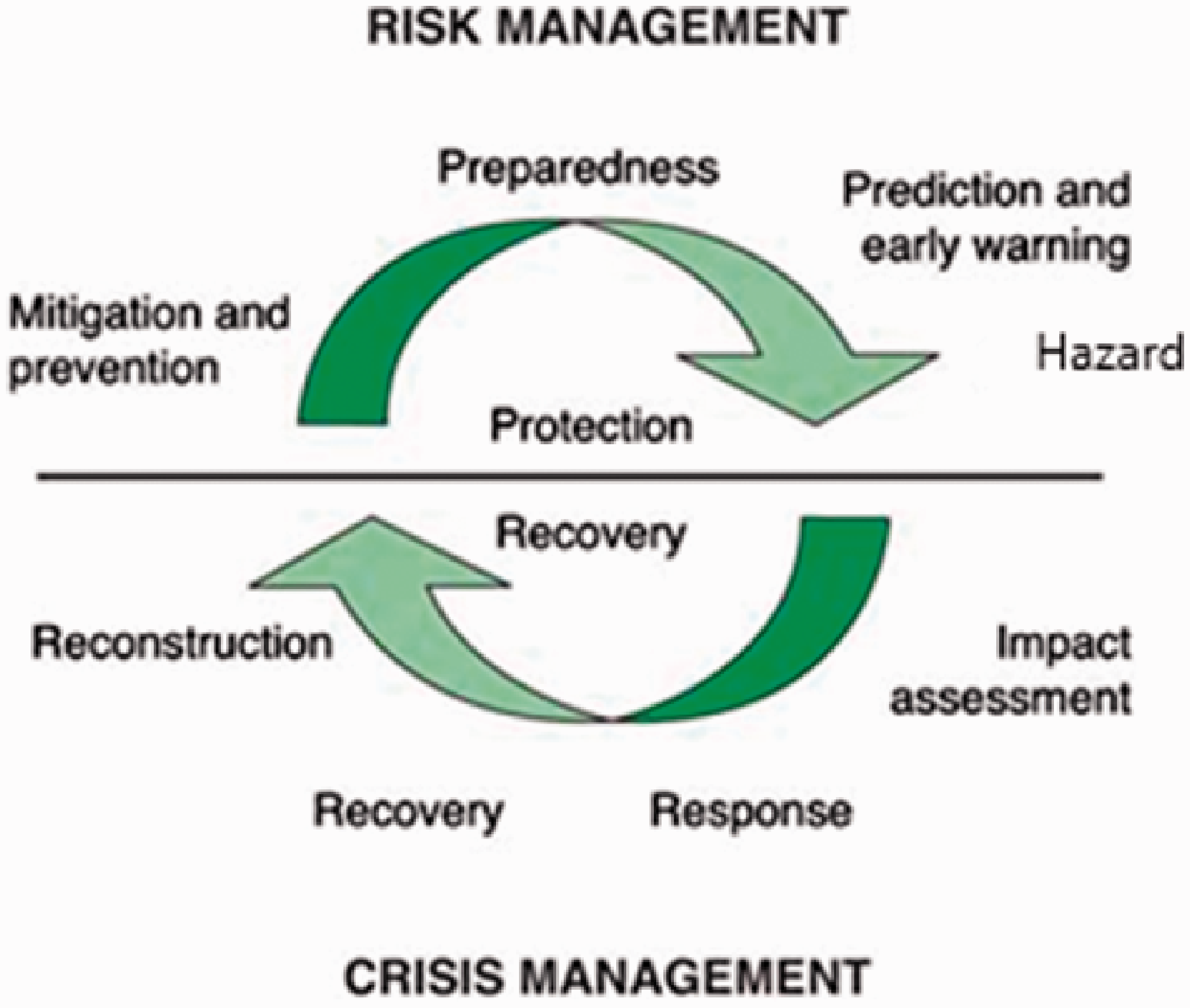
Drought Management Cycle. Source. Reprinted and adapted from Wilhite (2000).
Just as there are different types of drought—meteorological, agricultural, hydrological, socioeconomic, and ecological 4 —there are differences in managing associated risks. Drought risk management encompasses a diverse and complex range of systems: policy, planning, and institutional settings; environmental monitoring and forecasting; agricultural production systems; financial markets; energy production and consumption; and water management and delivery regimes. This complexity means that both the macroscale (large river basin, nation) and microscale (individual household or property to community/locality or catchment) plans, processes, and mitigation actions are likely to differ significantly from one setting to another (WMO & GWP, 2014).
Ultimately, the objective of drought risk management efforts is to raise the climatological and hydrological thresholds that require crisis interventions (increase resilience) and minimize the social, economic, and environmental costs of drought impacts and the interventions to mitigate them (decrease vulnerability). Therefore, our assessment of the extent to which the drought risk management norm is embedded within policies and implementation programs focuses on the evaluation of these core components.
Global Drought Risk Management Frameworks
The IDMP uses a 10-step process to guide the state-centered policy, planning, and institutional process through which key actors from the public and private sector, academia, and civil society develop relationships and incorporate their needs into the eventual risk management framework. Responsibility for carrying out drought preparedness actions typically falls on a multitude of actors, and this distributed responsibility speaks to a long-standing need for strong drought coalitions to ensure adequate information and effective action (Browne, 1988).
The Sendai Framework advocates a multiple-hazard planning approach for “frequent and infrequent, sudden and slow-onset disasters,” including climate-related, natural, and manmade events (UNISDR, 2015). This entails mapping exposure to multiple hazards that may occur simultaneously as well as their impacts under current and future projected conditions (Gallina et al., 2016). The UNISDR has a target goal of increasing the number of countries with national disaster management strategies by 2020 and to increase overall regional and international cooperation on risk reduction by 2030 (UNISDR, 2015). An associated target goal is to increase the capacity of disaster early warning systems before 2030.
Past MENA assessments highlight potential benefits and avoided damages by shifting to drought risk management frameworks (Alfano et al., 2015; Erian, 2011; Hazell et al., 2001; SWIM, 2014; United Nations Economic Commission for Western Asia, 2013; WMO, 2006). Regional leaders view water crises as their greatest existential threat and the one for which they are the least prepared (World Economic Forum, 2015). Although risk reduction is touted as an ideal, the question remains of how best to incorporate it in national policy.
Norm Diffusion Theory
To account for global political trends, scholars turn to international relations theory to explain the emergence and persistence of regimes, which are “principles, norms, rules, and decision-making procedures around which actor expectations converge in a given issue area” (Krasner, 1982, p. 185). Regimes shape the actions of national governments because they set the limits and responsibilities of expected behavior (Krasner, 1982).
As a subset of regimes, norms are “collective expectations about proper behavior” (Hollis, 2015, p. 92). These shared expectations are an avenue for international organizations and networks, such as the UNDRR and the IDMP, to influence national policy (Keck & Sikkink, 1999). Norms are composed of both a value and a behavior component such that given a specific policy problem, the value underlying the norm structures acceptable policy responses (Winston, 2018).
Within the drought management regime, the active principle relates to the role of government in preserving social stability in response to natural hazard shocks. This study evaluates whether the active norm in the countries is a crisis management norm or a risk management norm. The crisis management norm is comprised of a value emphasizing impact mitigation whereas the risk management norm is composed of a value emphasizing risk reduction. The rules and decision-making processes associated with each norm differ.
Individual regimes are components of larger policy systems. Puchala and Hopkins (1982) describe superstructure principles and norms that set conditions for the regimes operative in a specific issue area. Although this theme is beyond the scope of this study, it suffices to characterize the relevant superstructure principles and norms as those that relate to the role of the state overall, good governance, and evidence-based policy making in that function.
An area of great interest in international research is how internationally accepted norms become embedded within national policies, how the effects of norms can vary between countries (Checkel, 1998), and the mechanisms for norm diffusion (Simmons & Elkins, 2005). Park (2006) suggests that international organizations promote norms to national governments and nonstate actors. Within the realm of natural hazards policy, international organizations like the Red Cross and the United Nations have coalesced around a model of disaster risk reduction (Hollis, 2015), which is an ongoing process of understanding and managing the causes of disasters (Wisner et al., 2012).
Norm diffusion from the international to national level can happen in three ways: through technical assistance, relief, facilitating meetings, and financial and administrative support; forming a simplified agenda with “prepackaged ideas”; or proactively creating manuals and standardized guides for national policy (Hollis, 2015, p. 118). These are specific ways that international organizations and government agencies enable and facilitate norm diffusion through both primary mechanisms identified by Simmons and Elkins (2005): adaptation to altered conditions and through learning.
The Sendai Framework attempts to diffuse norms in this manner for general natural hazard risk reduction, and the IDMP covers this specifically for drought through those three channels: agenda setting, support for assistance programs including regional planning and technical workshops, and guidance documents like the 10-step planning process.
Given the global prevalence of disaster risk management approaches to drought, we hypothesized that we would see diffusion of this norm into national drought-related policies and practices in the MENA region. Our primary research questions sought to evaluate current practice and perceived needs for improving that practice: How do national governments recognize and declare that a drought is occurring, and how do they intervene in response to droughts? How do government officials want to improve national drought management, and what mechanisms have they identified to accomplish this? The responses to these questions allowed us to evaluate whether current national policies and interventions, and expressed needs to improve them, reflect the presence and embeddedness of a drought risk management norm. In essence, we sought to understand whether MENA region governments currently manage droughts as risk or crises. The results show that droughts are managed primarily as crises, indicating incomplete norm diffusion. In the discussion, we elaborate on the particular causes of incomplete norm diffusion, with the aim of providing recommendations for policy reform. Therefore, a major intended outcome of this research is to improve the design of international programs to alleviate suffering from climate-related disasters.
Methods
We investigate the research questions through process tracing (Beach & Pedersen, 2019) of whether and how the international frameworks designed to address drought management have diffused to the MENA region. Because norm diffusion is a process leading to a pattern of uptake, and not a singular outcome in which all countries uniformly enact an exact policy framework (Gilardi, 2012), process tracing is appropriate to use for analyzing a combination of evidence collected at multiple sites during 2016 and 2017 (O’Neill et al., 2013): written policy documents, presentations given by ministry officials at national workshops, and interview data collected in country. Summary data on the 137 multilingual engagements (primarily individual and small-group interviews 5 ), participatory workshops, and collaborative meetings are presented by participant types in Table 1. Engagement locations are shown in Figure 2 and were primarily determined by national agency priorities for the project as well as travel constraints. Overall, there were fewer engagements in Morocco due to a plethora of data available from past work in the country (Bijaber et al., 2018; Hayes & Svoboda, 2008).
Research and Engagement Participants for Interview Data Set.
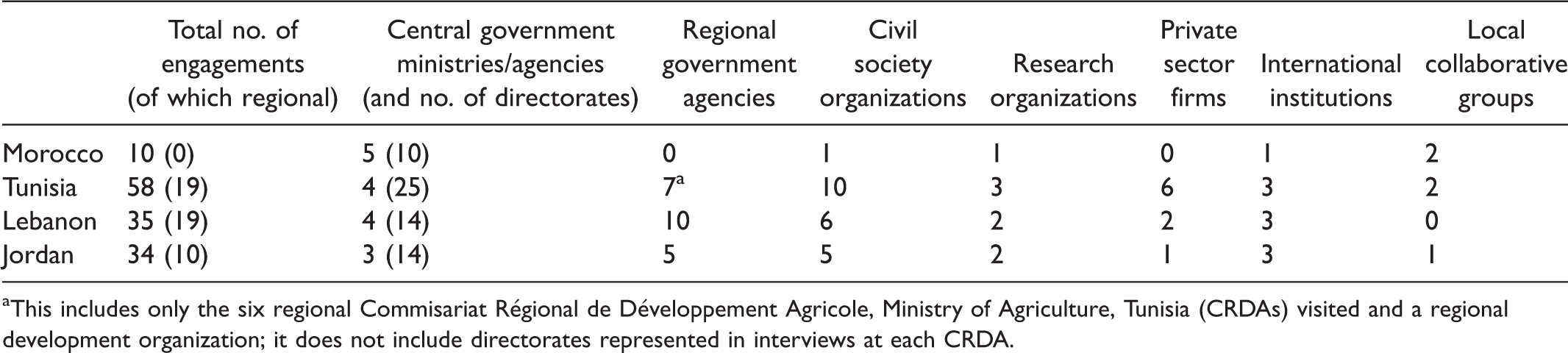
This includes only the six regional Commisariat Régional de Développement Agricole, Ministry of Agriculture, Tunisia (CRDAs) visited and a regional development organization; it does not include directorates represented in interviews at each CRDA.
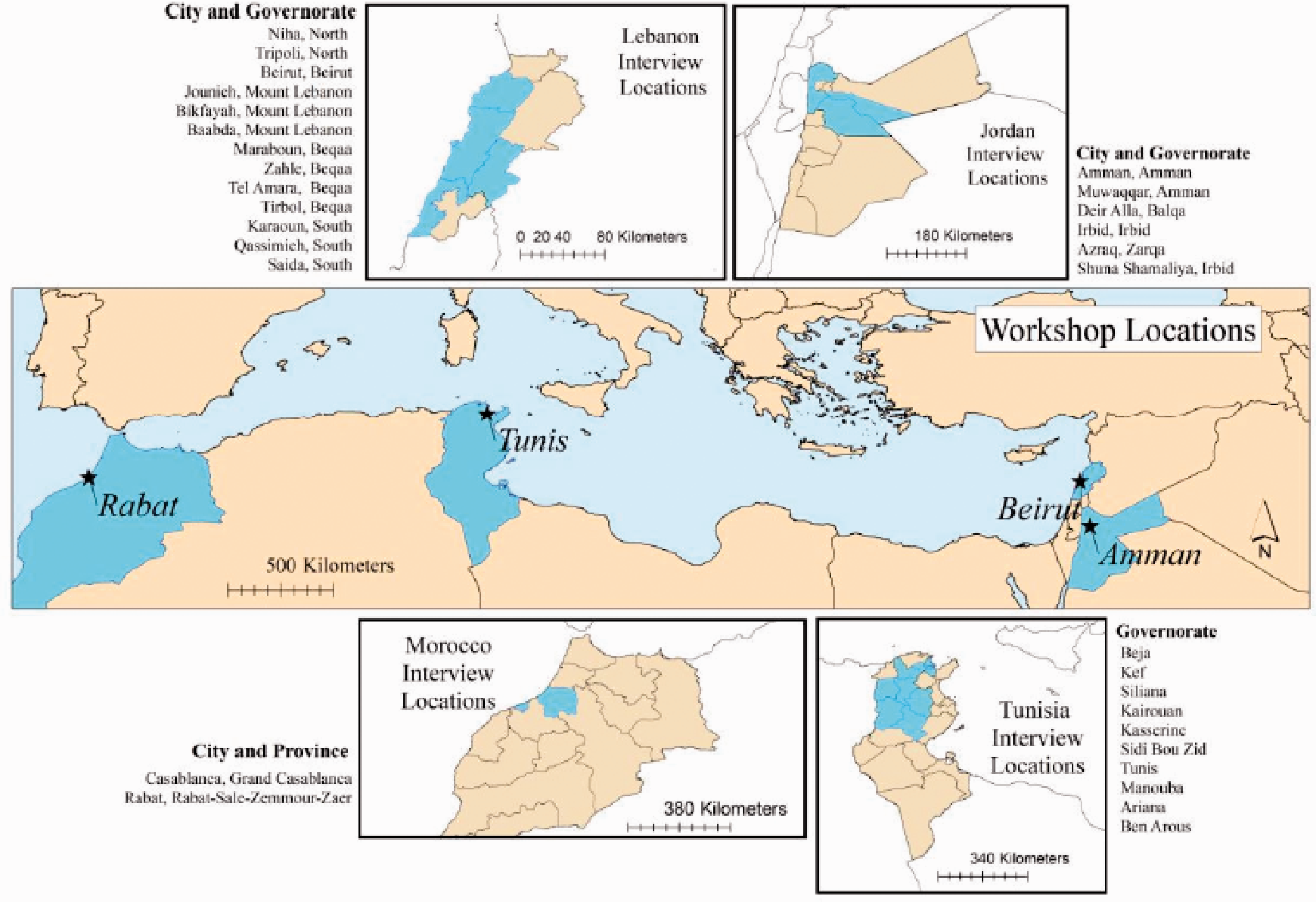
Interview, Focus Group, and Participatory Workshop Locations by Country. Focal countries and provinces are depicted in blue. Workshop locations are starred and displayed in italics. Source. authors; GIS data layers from North American Cartographic Information Society’s Natural Earth database (http://www.naturalearthdata.com/); and the GADM database of Global Administrative Areas (http://www.gadm.org/). These maps provide a general overview of the location of interviews and workshops, and they are neither a political statement nor a reflection of the authors’ position regarding the delineation of each country’s borders. Note. Focal countries and provinces are depicted in blue. Workshop locations are starred and displayed in italics.
Discussions included questions on drought monitoring and management, information sharing, drought impacts, interventions taken during drought events, policy processes related to drought management, and stakeholder needs connected to all these themes. Interviews were conducted in Arabic and French with simultaneous note-taking in English. During all engagements, the interviewer periodically repeated back primary points to interviewees to ensure they accurately captured the content and tone and as necessary clarified sociolinguistic points of confusion. See Fragaszy et al. (2020) for more detail and context on engagements.
Written records from engagements were coded using QSR NVivo 10 software to identify thematic patterns and develop hierarchies of stated needs according to the most frequently mentioned themes. This process grouped themes in accordance with the IDMP framework (see Figure 3).
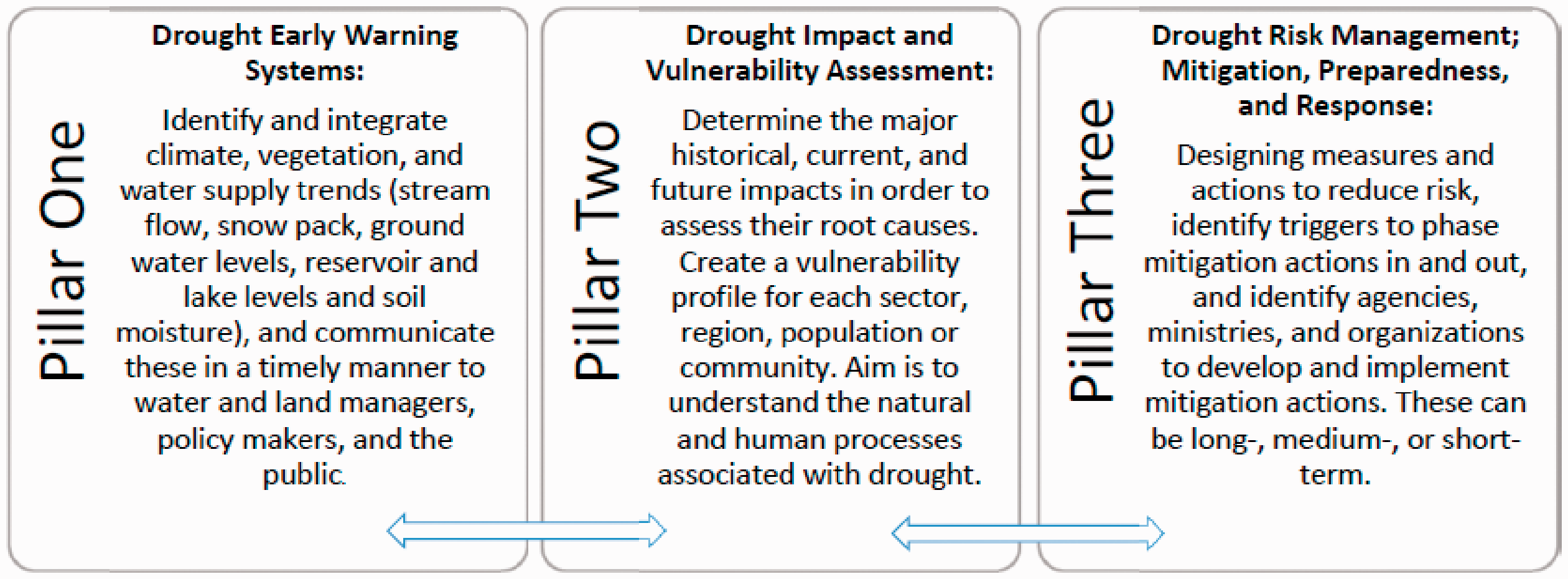
The Pillars of Drought Risk Management. Source. Adapted From the Integrated Drought Management Programme (WMO & GWP, 2014).
The focus of the analysis reported here is on the third IDMP pillar, Drought Risk Management. Several subcategories of this pillar were designed to address various dimensions of this theme: (a) mitigation and preparedness, (b) response during drought, (c) mitigation and response needs, and (d) general concerns and problem statements. These specific groupings were derived from textual analysis, an iterative reflection on the categories (Saldana, 2015), and intercoder reliability checks to ensure consistency and accuracy in coding determination (Campbell et al., 2013). Queries on the data set returned portions of thematically grouped text. We weighted these results based on how often they appeared in each country’s interview notes, with equal ranking given to all participants, regardless of their position in the public sector or civil society. These formed the basis of the weighted needs list referred to later. Process tracing was used to support or refute our hypothesis that diffusion has taken place and to reveal the causal mechanisms behind it (Gilardi, 2012).
Results on overall drought management needs (shown in Table 4 later) were presented in a weighted needs list to participants who provided feedback on the results at the participatory workshops in each country in late 2016 and 2017. This was done with the aim of having workshop audiences assess their accuracy and triangulating the content in multiple settings and by various means (Flick, 2004). Written questionnaires and surveys of workshop participants confirmed the results’ reliability.
In all countries except Morocco, interviewees in the capital cities and regions included central and local government officials, civil society organizations including farmer unions, academic, state and international research institutions, sector interest groups, utilities, professional societies, water user groups, financial-sector representatives, and private-sector firms. Engagements in all locations outside the capitals included both government officials and representatives of civil society organizations—including at least the regional farmers’ union (URAP) in Tunisia; the Chamber of Commerce, Agriculture, and Industry in Lebanon; and the Agricultural Engineers’ Association in Jordan. These meetings included discussions of relationships between central and local government, local-level drought governance, and institutional management issues.
This broad participation, critical to obtain a wide range of viewpoints, was possible due to support from central government agencies, the UN FAO, and relevant civil society organizations. In addition, the engagements took place during the regional multiyear drought of 2015–2016 (Verner et al., 2018), which made it a highly salient issue.
Because the results shown are a synthesis of the total engagement findings, we do not disaggregate interviewee comments, although general contextualization is given where relevant. To protect participants’ identities, we do not identify the source of quotes or paraphrased statements. Previously in the region, anonymity has been established as a key requirement for research on water-related themes (Lowi, 1993). Quotes chosen primarily reflect the relevance of the given theme to project country representatives. The quotes’ technical and emotive content, tone, and specific word choice reflect the interviewer’s best translation efforts.
Results: Existing Drought Policies and Interventions
The IDMP framework specifies that drought risk management requires identification of drought onset before impacts become disastrous (WMO & GWP, 2014). We found significant variation in official drought definitions and declaration processes between countries. These constitute the decision-making processes, and a subset of the rules, associated with the norm under study in this article. Likewise, governmental interventions, another subset of rules associated with the norm, vary significantly. However, in all countries, participants mentioned the importance of international and regional meetings, processes, and workshops on drought risk management; the norm of proactive drought risk management is shared in these venues (e.g., the 2013 High-Level Meeting on National Drought Policy in Geneva, Switzerland convened by the WMO, and UN Convention to Combat Desertification and FAO).
Drought Policies and Drought Declaration Processes
Morocco and Tunisia have relatively longstanding policies that outline official drought declaration processes. 6 They also have multistakeholder coordination mechanisms for drought management that consist of consultative bodies at the national level that are replicated at the local level (Louati et al., 2005; Ouassou et al., 2005). In Tunisia, a national committee requests drought declaration (Centre National des Etudes Agricoles, 2003), and local cells implement management interventions (Louati et al., 2005). Morocco’s recent legislative changes, for example, Water Law No. 36-15 from 2016, require drought planning through river basin organizations/watershed agencies (ABH in the French acronym) and requests for declaration of a water shortage to come through them (Section 2, Articles 80, 124, 126). In the case of drought effects on grazing lands, the request must come from the minister of agriculture, which leads to a specification of allowable herd mobility and access to pastures and forests (Rangelands Law 113-13, 2016; see Table 2).
Drought Definition and Declaration Policies.

In Jordan, the Water Authority of Jordan and the Jordan Valley Authority were created in 1988 to provide the minister of water and irrigation with technical, economic, legal, financial, and administrative advice on policy, water planning, and strategies (Morill & Simas, 2009).
One of the senior authors of this study is facilitating this plan. It is being designed to address the priority sets of impacts, including declining surface water, declining ground water, quality of water service, yields and productivity from surface water irrigated agriculture, water and food borne disease, yields and productivity from rainfed agriculture, high food prices, yields and productivity from livestock, intensification of poverty, forest fires and damages, rangeland degradation, and declining water for sanitation and public health.
Lebanon does not have explicit drought policies beyond municipal water supply and reservoir management regimes. Lebanon’s complex governance arrangements and water laws (Farajalla et al., 2015) lead primarily to caza (district) subgovernorate-level management responses (e.g., Municipality of Qab Elias, 2014) where there is any formal governmental response. Numerous stakeholders in government and civil society stated explicitly that “Lebanon does not have droughts,” and others described Lebanon’s relatively abundant water endowment—and more immediate political difficulties—as factors contributing to the lack of awareness or concern with drought, though they perceive that this is changing following recent multiyear droughts.
Technically, Jordan has official drought declaration legal procedures, but interviewees in this project and others (e.g., Al-Karablieh, 2016b) stated that they are not used in practice. A declaration in 1999 led to numerous farmer compensation claims that were difficult to manage. However, many interventions can be taken without declaration (e.g., surface water allocation in the Jordan Valley), and some permanent practices such as fodder subsidies.
Stakeholders in all countries emphasized that official recognition of drought, whether through declaration or other formal measures, is politically difficult and a highly contentious process for three main reasons, the first being that interventions are costly. Second, there is potential backlash from communities affected by drought that are not within areas zoned to receive specific aid or interventions. Third, drought declaration can create high public expectations of government that are challenging to meet given budgetary, logistical, and other constraints.
In summary, drought risk management decision-making processes exist to varying degrees in each country and at varying scales; in Lebanon, it is highly locality-specific, whereas in Tunisia and Morocco, it is nationwide, 7 and in Jordan, it is primarily specific to the Jordan Valley and certain economic subsectors.
Current Drought Management Interventions
The four governments undertake a range of drought management responses. Specific modes of implementation, their extent, and recipients vary within and between countries, and the following lists are representative rather than exhaustive. All countries intervene in various forms, including the following actions: Livestock sector: expanded and accelerated vaccination programs Irrigated agriculture: subsidies for agricultural inputs (as given later) as well as irrigation equipment; state-funded irrigation infrastructure improvements; adjust sectoral water allocation Rainfed agriculture: subsidies for inputs (grains, cereals, and fodder seeds, fertilizer, pesticide, fungicide treatments) Municipal water supply: increase groundwater pumping; deepen/expand public supply well network; utility focus on nonrevenue water and demand management; water allocation preference for utilities Financial relief: credit programs for farmers engaged in the formal and state-controlled agricultural finance sector, and MAMDA insurance in Morocco
In addition to these, government agencies in each country undertake a range of interventions.
Notably, significant aspects of risk reduction fall under the aegis of the governments’ long-term programs for water security (e.g., managed aquifer recharge and treated wastewater reuse), food security (e.g., crop adaptation), and anti-desertification (e.g., soil conservation). These were not specifically investigated in our project, due to the focus on drought monitoring and management planning, but they were mentioned by participants in all countries.
Although the data presented in Table 3 focus on governmental interventions during droughts, participants emphasized that individuals and farmers also undertake a range of drought response activities. Of particular note for this study, they emphasized that in the livestock sector, there is a major increase in transhumance/nomadism and migration to cities, and farmers overall described an increasing reliance on groundwater, legal and illegal (unlicensed) water purchase, and illegal water pipe access. These observations match with previous reports that show individual livestock holders enact their own forms of drought relief measures including relocation, forming grazing arrangements with other communities, selling animals for food or cash, diversifying crops and livestock (including animal species), and diversifying into nonagricultural occupations (Hazell et al., 2001; SWIM, 2014). In summary, in each country, the governmental and private interventions undertaken constitute a mix of crisis management and limited risk mitigation responses.
Current Reported Governmental Drought Interventions.

Stakeholder Needs to Improve Drought Risk Reduction
This section highlights the results of what would be required to move toward risk management strategies. Stakeholder suggestions to improve drought management varied widely in engagements in each country and between project countries. This is due, in part, to the complex interplay of the naturally wide range of drought impacts that interact with local and national social, environmental, and political contexts. Table 4 shows the rank order of the 10 most prominent drought management needs for three of the countries as determined by thematic coding. 8
Ranked Drought Management Needs Identified by Interviewees.

Several crosscutting themes stand out. These commonalities, when considered broadly, reflect factors that are logical starting points to assess and analyze drought management systems generally: policy settings, financial systems, institutional coordination mechanisms, drought management plans and institutional capacity to deliver them, extension services and crop planning, and water management regimes. Although each country has unique characteristics and agriculture sectors, these elements were consistently present across discussions of drought management needs. Drought definition and declaration was a top need across government agencies, which indicates that those aspects of existing rules and decision-making processes are insufficient to provide for the risk reduction value associated with the norm.
Financial Programs and Drought Insurance
The need for improved financial relief mechanisms was highly relevant in all countries except Morocco. We surmise there are likely three major reasons for its conspicuous absence there. First, in Morocco, we spoke primarily with central government and research stakeholders rather than businesses and individuals affected financially by drought. Second, Morocco undertakes expansive rural job creation programs during declared droughts. Third, MAMDA, an agricultural insurance firm, offers a multihazard climate risk insurance product subsidized by the state at a variable rate that covers drought for rainfed cereals and other crops in major growing areas; farmers, with state subsidies, purchase policies that cover over 1 million ha of farmland (Mutuelle Agricole Marocaine D'Assurances [MAMDA], 2018; Sadiki, 2016; Yata, 2017). Elsewhere, drought insurance schemes are being considered but are not available yet; Tunisian agencies and institutes have begun research on potential drought insurance products and stakeholders in Lebanon and Jordan expressed strong interest in such products.
Participants were concerned that without adequate financial relief mechanisms from the public and private sectors, early warning and official drought declarations would only go so far to improve drought management. As a Jordanian official in the Ministry of Agriculture noted, the Risk and Crisis Funds do not currently deal with drought, and other interventions must be paid for by a special parliamentary budget allocation, which greatly delays interventions. A Jordanian academic stated that, when reformed, “Financial measures must be pre-prepared so that it’s not a scramble for money if drought is declared,” which stakeholders in all other countries echoed. Figure 4 illustrates stakeholder-identified gaps related to financial risks, the reasons for those gaps, possible steps to address them, and how drought monitoring can facilitate those efforts in Tunisia, Lebanon, and Jordan. Overall, these issues relate to improving both crisis and risk management.
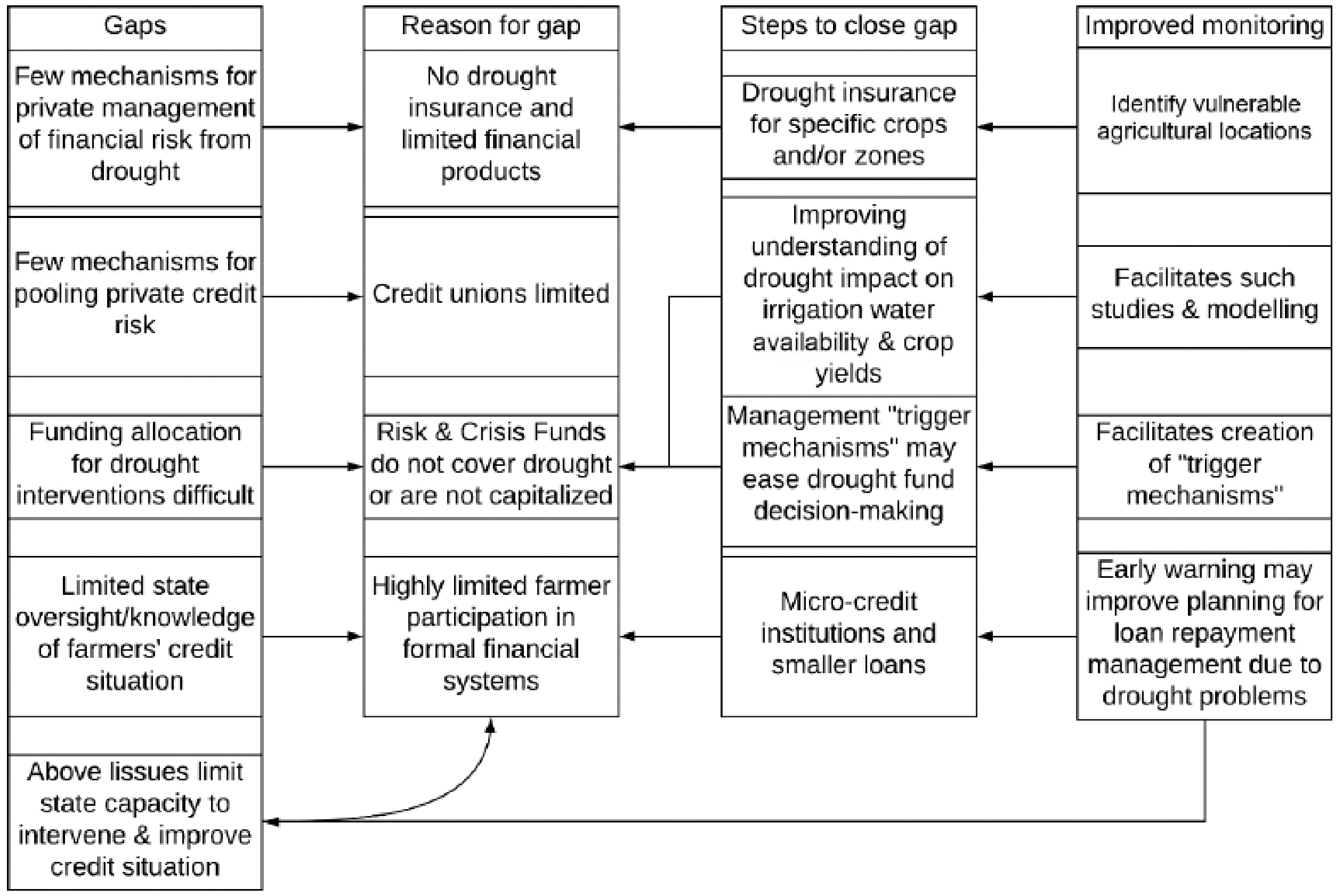
Gaps in Financial Risk Management and Potential Role of Improved Drought Monitoring in Tunisia, Lebanon, and Jordan.
Multilevel Governance Coordination
Improved institutional coordination mechanisms within and between government agencies—as well as between government, private sector, and civil society—are needed. In Tunisia, Morocco, and Jordan, stakeholders used remarkably similar language to discuss the fact that such mechanisms exist but are inadequate until crisis declaration forces action, at which time significant delays result from weak precrisis preparedness. A Moroccan official in the Ministry of Agriculture made this point clearly, saying, “We need better coordination at the initiation of the crisis point—pre-determined roles and objectives for each agency and automatic triggers for when they should gather at the onset of the crisis.”
A Jordanian official in the Ministry of Agriculture described the problematic lack of coordinated effort (and at times competition) between state organizations that have overlapping remits. In short, institutional mechanisms do not permit effective proactive, near-term drought management planning. This theme also relates to vertical information flows within government and the desire for nongovernmental stakeholders to be more directly involved in drought monitoring and management. In general, central government agencies reported receiving timely information from local government agencies, but local government representatives do not receive timely information and instructions in a reciprocal fashion. Discussions on drought management decentralization efforts in Morocco via basin planning (e.g., Water Law No. 36-15 mentioned earlier) and in Tunisia via broader governance shifts toward decentralization and liberal democratization focused on this issue. As such, drought risk reduction relates to wider governance themes.
Drought Monitoring and IDMP and Sendai Framework Norms
This section describes how the latest developments in drought monitoring technologies relate to the drought risk management norm. It also summarizes our findings on the barriers to and opportunities for shifting to improved drought risk management frameworks in the project countries. To structure this material, we cover the first two Sendai Framework priority areas and link them to the IDMP’s three pillars (UNISDR, 2015; WMO & GWP, 2014).
Sendai Framework Priority 1: Understanding Disaster Risk
Sendai Priority 1 encompasses two of the three IDMP pillars: knowledge of drought impacts and vulnerability, and the development of drought monitoring and early warning systems. The recent development of a MENA regional drought monitoring tool (the Composite Drought Indicator, or CDI) based primarily on open-source satellite and modeled data using a convergence of evidence approach to drought monitoring that incorporates information on soil moisture, vegetation stress, precipitation, temperature, and evapotranspiration components (Bijaber et al., 2018) links directly with the objectives of the Sendai Framework. National agencies in the project countries are now producing their own drought maps to inform early warning systems (Fragaszy et al., 2020).
Drought monitoring and early warning systems
Official drought declarations are important because they signal the need for relief and management efforts; however, sometimes they may be delayed due to lack of adequate forecasting and monitoring information (Betsill et al., 1997) or even for political/financial reasons. Recent analyses highlight the favorable benefit–cost ratio of investment in early warning systems for heat and water stress (Global Commission on Adaptation, 2019). Although MENA countries’ drought monitoring systems capture a wide range of climatic, hydrological, and agricultural drought indicators, they do not act as effective society-wide early warning systems that trigger actions primarily because of data sharing and institutional constraints as well as difficulties in officially defining and declaring a drought (Fragaszy et al., 2020).
If implemented in the countries within an effective institutional architecture, new monitoring technologies, especially those that use remotely sensed and modeled data, will improve early warning capacity. It will provide timely and consistent information that integrates a range of drought characteristics (indicators and impacts) and bypass some of the data sharing and institutional challenges identified here and by Fragaszy et al. (2020). Also, it will facilitate the pairing of monitoring information with staged drought management interventions.
Reliance on modeled and remote sensing data can be difficult in the MENA region where verification against field data is limited and security issues exits, but they are in common use in drought early warning systems globally (Pulwarty & Sivakumar, 2014). Other countries’ experiences suggest that collaborative processes to develop the warning systems help overcome this barrier, and that through such interactions, a coalition of stakeholders develops to sustain and improve early warning systems over time and cement them within wider drought management processes (Pulwarty & Sivakumar, 2014).
Impacts and vulnerability
Drought hazard characterization in the MENA region has focused heavily on water supply and agricultural production impacts (e.g., Baubion et al., 2017; DePauw, 2005; World Bank, 2017; World Bank & FAO, 2012). However, stakeholders state they do not fully understand additional key drought impacts because formal drought impact assessments have not been undertaken regularly, and it is difficult to determine the underlying causes or the reasons why certain geographic areas or economic sectors are vulnerable.
Several of the most important of these are drought effects on groundwater systems and linked agro-ecosystems such as oases and spring-fed areas, soil and rangeland degradation and linked desertification processes, and the social impacts of drought, especially in relation to rural outmigration and rural stability. These stakeholder-identified knowledge gaps indicate that improved risk reduction programs will require more information on what specific risks are most relevant for specific sectors, locations, and/or social groups.
Priority 2: Strengthening Disaster Risk Governance to Manage Disaster Risk
Drought early warning systems link to wider drought risk management components and constitute much of the IDMP’s 10-step template of national drought planning. We focus here on governmental policy and institutional settings as well as wider public–private coordination and collaboration mechanisms.
Policy and institutional settings
The results highlight a need for shifts in high-level policy and institutional settings to enable more holistic drought risk management. Although each country has different starting points, and entirely different political contexts, stakeholders in all cases cited improved drought monitoring and use of monitoring information as a prerequisite. Figure 5 presents a synthesis of these technical prerequisites, institutional and policy needs, and potential outcomes.
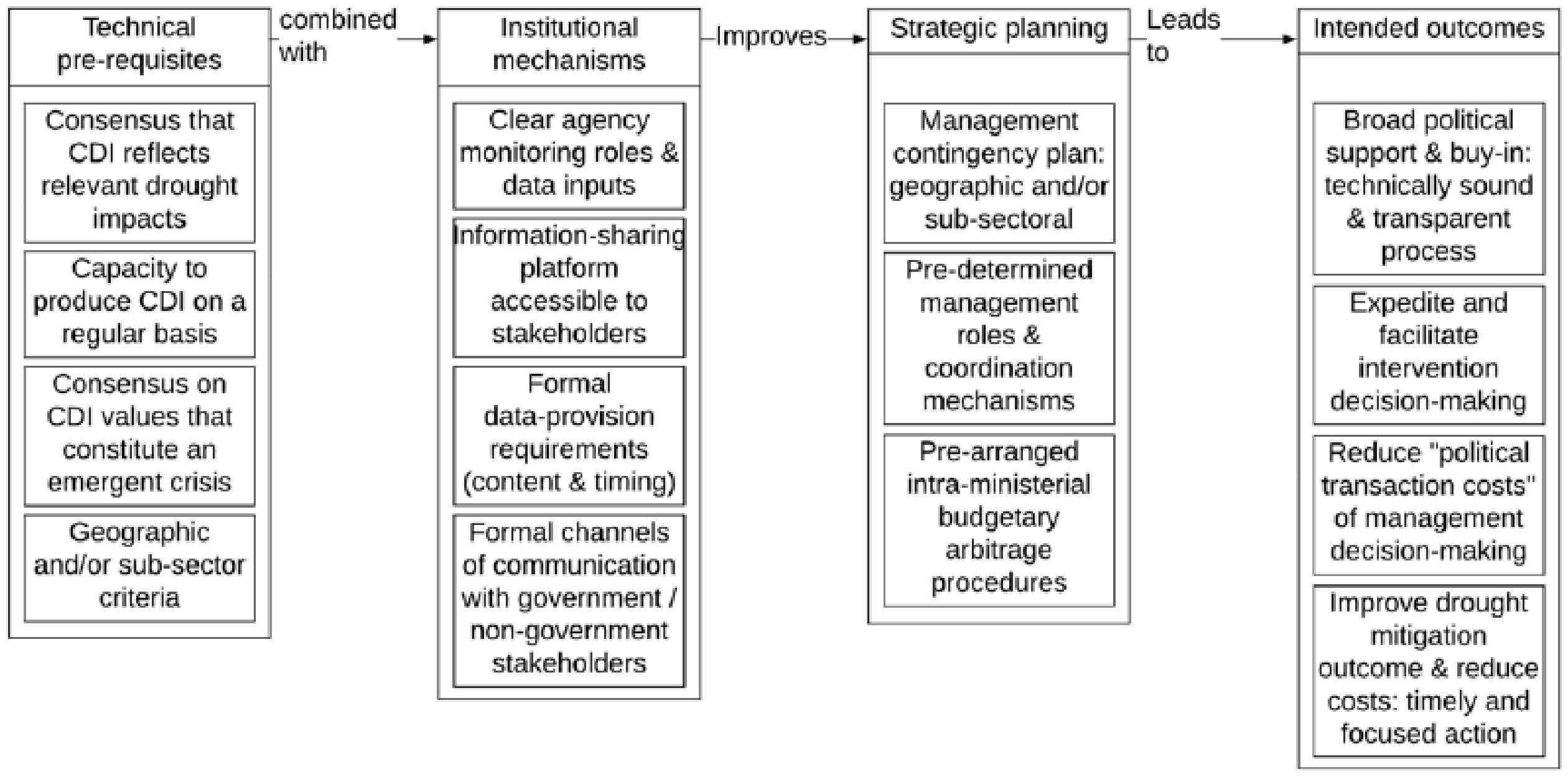
Ideal Type Model of Drought Monitoring to Management Components.
Recognition of thresholds for which early warning systems can provide timely and accurate information is a core need for management efforts in the project countries, and international experience suggests that to be effective, these will have to be sector- and/or region-specific thresholds and developed through broad participatory approaches. However, drought definitions are inadequate by themselves as early warning systems cannot supply actionable information in a vacuum; they work within existing policy and institutional settings. We identify these key constraints from the review and interview data: Monitoring networks’ data gathering and reporting capacity is limited by poor information sharing, which limits officials’ abilities to integrate drought monitoring data to inform political decision-making. Agency roles in drought monitoring and management are not always set clearly in legal texts and as a result are inconsistently applied or difficult to coordinate. The historical absence of effective early warning systems has precluded development of early intervention options and associated funding mechanisms. Challenges exist in fostering intragovernmental and public–private coordination mechanisms for drought planning and response. The focus on agricultural, climatic, and hydrological indicators means that critical environmental (such as the effect of frost, salinity, or desertification on vegetation, forest fires, and pollution) and socioeconomic indicators of drought (such as crop or livestock feed prices) are inadequately incorporated in decision-making.
Participants provided numerous recommendations to improve existing drought measures. Suggestions focused on the how of drought management more than the what; stakeholders overall were concerned with the structures of drought management more than the interventions themselves. They described the need to formalize management plans and define explicit coordination and implementation roles. In terms of substantive actions on the ground, they focused on the need for financial relief mechanisms for smallholders, crop planning guidance and cropping support, and locally tailored interventions. Overall, these needs reflect a desire to improve both crisis management and risk reduction efforts.
To a large extent, the concerns expressed by participants centered on being able to detect drought with scientifically robust measures and declare drought through political processes at its onset while having appropriate relief measures prepared in advance. Recent and forthcoming policies identify evidence-based triggers and outline assistance and recovery programs (see Table 2). These policies fit squarely with the IDMP and Sendai Framework norms about drought risk management.
Discussion
Overall, we observed a high level of familiarity with the norm of drought risk management among governmental, private-sector, and civil society stakeholders. Interviewees differentiated between responding to droughts as crises and planning ahead in order to avoid devastating impacts. Government officials, in survey responses and workshop presentations, frequently described existing programs that incorporate IDMP drought risk management themes.
However, we found incomplete incorporation of the norm in policies, policy implementation, and drought management practices, with the level of incorporation varying significantly between countries. Thus, while the relevant value is certainly present, it currently exists as a partially realized aspiration due to the inadequacy of existing rules and decision-making procedures to provide for the value in a complete manner. Therefore, we look to our results for recommendations to embed the norm further in practice.
One relatively distinct issue illustrates this lack of norm incorporation as it affects each of the three pillars: Drought monitoring information is not openly shared outside of the agencies that produce it, and in most cases, it is not clear how that information influences drought decision-making. Our results suggest that improved production and dissemination of drought monitoring data could facilitate incorporation of drought risk management norms in the countries’ policies, their implementation, and practices.
Several possible avenues exist to link this aspect of the drought risk management norm (sharing of early warning data) to practices and procedures. First, agencies and/or ministers could choose, or be required through emerging freedom of information laws (see Fragaszy et al., 2020 for discussion of this topic in the project countries), to release such monitoring information regularly. Another avenue would be to participate in the UN-Water Program, which has been shown to play a role in connecting background data and norms with legal procedures and ministerial declarations (Baumgartner & Pahl-Wostl, 2013). The Initiative on Capacity Development to Support National Drought Management Policies, for example, offers training and guidance on developing national drought management policies (UN-Water, 2015); this guide identifies data availability as a key challenge.
This issue of data sharing is strongly linked to a separate norm of transparency in government. In many cases, transparency improves decision-making in terms of social welfare outcomes (Stiglitz, 2002). International organizations like the Organisation for Economic Co-operation and Development (2001) claim transparency leads to improved risk monitoring and contributes to good governance. However, in some contexts, transparency can also politicize the role of bureaucrats and increase the “transaction costs” of governmental decision-making (Fenster, 2006). Indeed, “freedom of information” laws in Organisation for Economic Co-operation and Development countries typically permit withholding of information related to national security—and across the MENA region, water issues are increasingly “securitized” (Weinthal et al., 2015)—or that would preclude open discussions between bureaucrats and politicians or prejudice ministers’ decision-making (e.g., New Zealand’s Official Information Act, 1982, s9(2)(g)(i)).
Drought monitoring data were often treated as proprietary information by the producing agencies; interagency sharing, let alone wider publication, was rare. Government officials described the following reasons for this approach. First, it could create pressure on decision-makers to take action (politicizes the issue). Second, intervention measures are costly, and so, taking measures creates strong and competing demands for financial resources from agencies and/or ministers (increase political transaction costs). Therefore, given existing policies and institutions in the countries, it is unclear to what extent drought decision-making processes would be improved or expedited with increased transparency of monitoring information.
Governmental agencies must convey information in a simple way in order to convince their publics that the government has made the proper choices about protecting its resources and populations (Scott, 1998). Because drought status as conveyed in monitoring products is often linked to aid provision, it is inherently highly political (Botterill & Hayes, 2012). This is a recurring feature in science communication for other natural disasters and their thresholds; for example, setting tornado warning levels is wrought with value judgments about when it is advised to seek or leave a shelter (Fischhoff & Davis, 2014).
In an era of “big data,” the speed with which new technologies are generated to analyze weather and climate trends can easily outpace the rate of governmental policy making (Giest, 2017). On top of this, the difficulty of political decision-making to delineate drought-stricken areas from those that will not receive subsidies or disaster payouts is highly contentious (Botterill & Hayes, 2012). Therefore, government officials in the region want improved monitoring information to improve and potentially ease these processes. Predetermined thresholds for action lower the barriers and opposition to data sharing. This connects with the Sendai Framework’s Target G, which focuses on improving “availability and access to multi-hazard early warning systems and disaster risk information” (p. 217) by 2030 (UNDRR, 2019).
However, in order to improve drought risk management in practice, they also require improved financial management mechanisms since at present this budgetary allocation is slow to occur (see Table 4). This creates a difficult puzzle: In order to mitigate future drought losses, a clear depiction of current conditions must be made publicly available. However, publishing these data may require that agencies take on the burden of allocating relief if the release of this very information coincides with a future drought crisis.
Therefore, if financial relief mechanisms were soluble in the long term—for example, by minimizing costs for the government through the use of public–private bonds (Botterill, 2019), through climate risk insurance (see Table 4), or other mechanisms such as risk pools (see Deutsche Gesellschaft für Internationale Zusammenarbeit [GIZ], 2019, for more examples)—perhaps it would be more feasible for ministers and/or officials to approve drought information disclosure because interventions would not entail excessive financial burdens. 9
Although there may be immediate political difficulties in sharing drought monitoring data, our results show that stakeholders consider improved drought monitoring data production and dissemination (IDMP Pillar One) would facilitate more rapid assessment of impacts during emergent crises and, longer term, evaluation of vulnerable sectors, regions, and populations (IDMP Pillar Two). This could aid long-term drought risk management planning by easing declaration processes and offering an early warning of dry conditions so that protective measures can be enacted before a drought becomes a disaster (IDMP Pillar Three). In turn, this outcome would reduce the political difficulties of information sharing.
Conclusion
Our analysis suggests that the international presence of a norm does not ensure its incorporation into national policies. Although some key organizations within the climate, meteorological, and water resources scientific community (e.g., WMO & GWP) and the leading international hazard governance body (UNDRR) promulgate risk management norms, governments in the MENA region are still in the early stages of building these values into official policies and/or implementing them in practices.
This study highlights that current regional drought management systems are dominated by crisis interventions, evidenced by the ambiguous bases for drought declaration and the lag in subsequent relief-based programs. However, the frequent presence of risk management language in our interview data suggests that the norm of risk management has diffused to the national level, at least as a value discussed by those working in the scope of drought, agricultural, and water planning. Furthermore, national policies and implementation programs have risk management components, though existing rules and decision-making processes preclude the full embedding of the norm. Findings about data sharing, transparency, and monitoring represent a strong desire to shift toward holistic drought risk management. Regional stakeholders anticipate that defining drought, or at least defining in self-evident terms how declaration decision-making occurs and the supporting information used, is a critical component to reach this objective. Likewise, they suggest that formalizing drought management plans and crisis management processes is vital to ensure they can be carried out early, quickly, and effectively.
We observe a set of common challenges and opportunities throughout the cases. In each national setting, there is a bias against releasing data about current drought conditions. The release of early warning data would allow for proactive decision-making about the use of water resources and agricultural practices. Furthermore, reforming drought interventions and financial relief programs would reduce the political costs of disseminating monitoring information. These changes would allow resource managers to respond at the earliest appropriate stage of a drought.
Footnotes
Acknowledgments
The authors would like to thank the in-country partner agencies and organizations that made the extensive fieldwork possible, the study participants, workshop presenters and attendees, as well as the CDI technical team.
Declaration of Conflicting Interests
The authors declared no potential conflicts of interest with respect to the research, authorship, and/or publication of this article.
Funding
The authors disclosed receipt of the following financial support for the research, authorship, and/or publication of this article: This publication was made possible through the support of the Office of Science and Technology, Bureau for the Middle East, U.S. Agency for International Development, under the terms of Award No. AID-ME-IO-15-003. The opinions expressed in this publication are those of the authors and do not necessarily reflect the views of the U.S. Agency for International Development.
