




Abstract
Adolescent mental health and life satisfaction are grounded in social and economic factors. However, studies investigating these relations across European and Asian contexts, using identical questionnaires, are scarce. The 2017/18 Health Behaviour of School-aged Children (HBSC) study conducted with 4,168 Dutch adolescents (Mage 13.0 years) and 1,948 Hong Kong adolescents (Mage 13.1 years) aged 11, 13, and 15 reported on family status and affluence, school experiences, relations with parents and friends, psychological symptoms (irritability/bad temper, feeling low or nervous, difficulty sleeping), and life satisfaction. Dutch boys had the lowest number of psychological symptoms. Dutch girls and Hong Kong girls and boys reported significantly more symptoms. Dutch boys had the highest level of life satisfaction, followed by Dutch girls and, subsequently, Hong Kong girls and boys. In the Netherlands and Hong Kong, communicative and supportive relationships with parents, low school pressure, school liking, and helpful fellow students related to less psychological symptoms and higher life satisfaction. In addition, family affluence further enhanced life satisfaction. It is concluded that cultural and gender differences may permeate the structuring of adolescent relations with parents, teachers, and peers but that an identical set of social and economic determinants affect adolescent girls’ and boys’ symptoms and satisfaction in a highly similar fashion in the Netherlands and Hong Kong.
Keywords
Adolescents need a basic level of economic security and a place in the social fabric. Their economic and social world is crucial for their health and happiness (review: Viner et al., 2012). However, the presence and strength of these economic and social factors differs for groups within societies and between societies. As a result, differences in adolescent mental and physical health, and life satisfaction emerge between specific groups and between nations (Currie & Morgan, 2020; Stavrova, 2019). As adolescent mental health problems and well-being are rooted in economic, social and cultural processes, it is important to analyze these factors in order to identify contexts in which young people can grow up mentally healthy and happy (Bolton & Bhugra, 2021). Several broad theories have proposed that individual development must be located in the contexts in which individuals grow up. In their bioecological model, Bronfenbrenner and Morris (2006) argued that individuals develop through complex, reciprocal interactions with persons, objects, and symbols in their immediate and more remote external environment. In his transactional development model, Sameroff (2009) also stressed the bidirectional, interdependent effects of factors influencing children or adolescents and their environments. Empirical studies have corroborated the importance of a number of economic and social contexts ‒affluence, family structure, parenting, school, and peers‒ in adolescents' mental health and life satisfaction. In the following paragraphs we discuss the relevance of these five factors for the outcomes in this study: life satisfaction (a general measure of one’s satisfaction with life) and psychological symptoms (irritability/bad temper, feeling low or nervous, difficulty sleeping).
Five Factors Relevant for Adolescent Life Satisfaction and Psychological Symptoms
Affluence
Psychological symptoms are more prevalent in poorer countries (Elgar et al., 2015), but it has been noted that adolescents in less wealthy countries may have resources to compensate for the negative effects of poverty (Campbell et al., 2021; Sørensen, 2021). Psychological symptoms may also be more prevalent in countries with higher income inequality (Diercksen et al., 2020). Within countries, young people from poorer families show more psychological symptoms (Holstein et al., 2009; Reiss et al., 2019), but experiences of relative deprivation account for more variation in psychological symptoms than family affluence per se (Elgar et al., 2013; Odgers, 2015; Weinberg et al., 2019). The links between wealth and life satisfaction are less straightforward. Some studies have found a link between higher national wealth and a higher level of adolescent life satisfaction (Bjarnason et al., 2012; Du et al., 2019; Levin, Torsheim, et al., 2011), while other studies reported only weak or no links between national economic indicators and satisfaction or happiness (Gross-Manos & Bradshaw, 2022; Mutumba & Schulenberg, 2020). Once basic health, shelter, and income needs are met, social rather than economic factors appear to play a larger role in determining young people’s well-being and life satisfaction (Bi et al., 2021; Chu et al., 2010; De Looze et al., 2018; Goswami, 2014; Lau & Bradshaw, 2018; Ottova et al., 2012).
Family Structure and Parenting
Children from divorced parents and those living in one-parent families report more psychological complaints and lower life satisfaction than peers growing up in intact families (Bjarnason et al., 2012; Levin & Currie, 2010). A long tradition in developmental research has focused on parents’ effects and concluded that parental warmth is one of the essential elements influencing adolescents’ adjustment (Baumrind, 1991; Maccoby & Martin, 1983). Empirical research has shown that adolescents in both western countries and Hong Kong benefit from good, communicative relations with parents, from the experience of being trusted and valued by them (Bi et al., 2021; Blume et al., 2021; Boer et al., 2023; Chu et al., 2010 Ho, 2013; Lau & Bradshaw, 2018; Levin & Currie, 2010; Levin, Dallago, & Currie, 2011; Viner et al., 2012; Yuen et al., 2019).
School and Peers
Furthermore, school is a dominant institution in adolescents’ lives. School pressure affects adolescents’ life satisfaction negatively and increases their psychological symptoms (Boer et al., 2023; Lee et al., 2006; Ottova et al., 2012). Economic growth and the accompanying expansion of the education system can increase school stress. In modern knowledge-based economies, school is an even more important gateway to the later prosperity and social position of young people (Högberg, 2021). The need to be successful in school may increases stress and, thus, negatively affects wellbeing and adds to psychological symptoms (Cosma et al., 2020). On the other side, a supportive and pleasant school climate, with teachers experienced as trustful and caring, and fellow students as helpful and friendly, enhances well-being and curbs psychological symptoms (Garcia-Moya et al., 2015; Horanicova et al., 2020; Lackova Rebicova et al., 2021; Marquez & Main, 2021; Samdal et al., 1998). Not only in school but also outside it, peers are important. Adolescents who are liked, valued, and supported by friends show lower psychological symptoms and higher levels of well-being (Bi et al., 2021; Moreno et al., 2009; Ottova et al., 2012). Thus, in addition to economic factors, social factors related to parents, school and peers affect adolescents’ psychological symptoms and life satisfaction.
While the connections between economic and social life on the one hand and psychological symptoms and life satisfaction on the other have been studied broadly in Europe and North America, studies in Asia are less common (Ho, 2013; Kwan, 2010; Lau & Bradshaw, 2018), and cross-continental comparisons between the Western world and Asia are rare (Mutumba & Schulenberg, 2020). Therefore, to systematically compare the condition of youth in a European country with that of youth in an Asian country, the current study investigated the relationships of economic and social factors, such as family structure and affluence; the quality of relations with parents and friends; and adolescents’ experience of school, teachers, and fellow students, with psychological symptoms and life satisfaction, focusing on two cultural contexts: The Netherlands (NL) and Hong Kong (HK).
Before comparing NL and HK students’ psychological symptoms and life satisfaction, we provide a detailed description of the environments in which they grow up, broadly in terms of “culture” and more specifically regarding factors important in this study: family, peers, and school.
Cultural Similarities and Differences Between the Netherlands and Hong Kong
Both the Netherlands and Hong Kong are located by the sea, and their harbors are among the largest and most sophisticated in the world. The urban centers are multi-ethnic and cosmopolitan in outlook. These societies are formed by both local traditions, and ideas and practices from neighboring countries. Hong Kong’s identity has been characterized as a push and pull of British colonial elements and Chinese culture (Chan, 2022). Dutch culture has been molded by a set of practices and values rooted in Dutch history but infused with elements from its large neighboring countries: France, Germany, and the UK (Van Zanden, 2005).
Hofstede (2001) ranked the Netherlands low and Hong Kong high on the power distance index. In the Netherlands, hierarchy is less self-evident and unquestioned. Hofstede further notes that The Netherlands is an individualistic society, while Hong Kong is more collectivistic, implying that the Dutch are, to a lower degree, integrated into groups demanding loyalty and support. The Netherlands is a less masculine society than Hong Kong, implying that achievement, assertiveness, and material rewards are leveled with values such as cooperation and caring for the weak and disadvantaged. The practical expression of power distance, collectivism/individualism, and masculinity/femininity influences family life and school climate. In line with Hofstede’s conceptualizations, inthe Netherlands, parents may treat their children more as equals. In Hong Kong, they may be inclined to demand obedience. Teaching may be student-centered in the Netherlands but curriculum-centered in Hong Kong. Dutch students tend to be more “I” conscious and defend their privacy, whereas their Hong Kong peers are “we” conscious and want to belong to salient in-groups. In the Netherlands, the family work balance may be leveled. In Hong Kong, work may prevail over family (Hofstede, 2011).
Social and Economic Differences Between the Netherlands and Hong Kong
Affluence
Both the Netherlands and Hong Kong enjoy economic prosperity. The Netherland had a high GDP of $60,461 (10th in the world), and Hong Kong ranked close at $58,165 (11th) in 2020. However, the GINI Index depicting inequality of wealth distribution is high in Hong Kong (53.9) and low in the Netherlands (28.5) (World Population, 2022b). About 7% of Dutch children grow up in (relative) poverty, as indicated by the need for government income support for their families (Fernandez Beiro & Pleijers, 2021). In Hong Kong, the poverty rate is 23.6%, as indicated by the annual Hong Kong Poverty Situation Report 2020 (News.gov.hk, 2021).
Family Life
The Netherlands has the highest share of women in part-time jobs in Europe, implying that mothers are often at home, more than their male partners (Frey, 2019). Dutch family climate is authoritative, with most parents communicating well and granting support and autonomy to their children (De Looze et al., 2018). Approximately 90% of Dutch adolescents note that their mothers are supportive and easy to talk to, and 83% conclude the same about their fathers (Stevens et al., 2018).
Dutch adults, on average, work far less than their Hong Kong counterparts. Hong Kong was ranked as the top 1 overworked city in the world in 2021, with 50.1 hours clocked in a week per working person, while the corresponding number for Amsterdam was 36.1 hours. The Netherlands ranks 12th in positive work-life balance, while Hong Kong ranks 45th in 2021 (Kisi, n.d). Working long hours, often under stressful conditions (Liu, 2018), implies that Hong Kong parents may not have enough energy and time to spend with their children. Furthermore, Confucian ideologies emphasizing respect for parents and elders, collectivism, interdependence, strict discipline, and obedience may influence educational practices among Chinese parents (Ang & Goh, 2006; Chao, 1994). An authoritarian parenting style characterized by high demandingness and expectations of obedience might seem to be controlling and dictatorial in Western eyes but may be perceived as caring in Chinese culture. Furthermore, an authoritative parenting style (35% of parents) is currently more prevalent than an authoritarian style (24%) in Hong Kong (Lo et al., 2019). Still, conservative parents may be less expressive in love and care, making communication with their children difficult (Hamid & Lok, 2000).
Education and School
Hong Kong and the Netherlands are known for their excellent educational systems. Both Hong Kong (second) and the Netherlands (10th) scored within the top ten places in the Global Education Ranking 2021 (World Population, 2022a). In the Netherlands, school pressure has increased during the last decade, and particularly female students may feel the need to compete with others to excel or live up to their own high academic standards (Stevens et al., 2018). Still, Dutch school pressure is low compared to other countries in Europe and North America. Dutch students find school important, and they generally experience teachers as fair and fellow students as pleasant and helpful (Inchley et al., 2020).
Chinese parents generally invest much in their children’s education and progress (Chao, 1994; Kim et al., 2013). However, Chinese adolescents perceive pressure from their parents to succeed academically (Quach et al., 2015; Tam, 2018). In Hong Kong, intense competition to become the best academically creates pressure to perform, especially in older secondary students just before completing the Diploma of Secondary Exam (DSE) (Chow, 2021).
Friends
Friends are important for young people. In the Netherlands, most young people report that they can share their feelings with their friends and feel supported by them (Stevens et al., 2018). Loneliness in the Netherlands is lower than in most other European countries. Still, about 18% of adolescents and emerging adults between 16 and 25 years of age sometimes feel lonely, and 2% feel lonely most of the time or always (ESS, 2014).
In Chinese culture, relational bonds are highly important, and failure to establish a peer support network results in emotional pain. Most Hong Kong adolescents experience support from friends, often to a higher extent than from their fathers and mothers (Hamid & Lok, 2000). Still, many adolescents miss care from a close same-gender friend. In 2020, about 40% of them reported that they often or always felt lonely, with 45% stating that they did not or rarely meet friends in person over the previous month (Chan, 2021).
Indicators of Psychological Symptoms and Life Satisfaction in the Netherlands and Hong Kong
Compared to their peers in other European or North American countries, Dutch adolescents, on average, report fewer psychological symptoms, such as feeling low, irritated, or nervous and having sleeping difficulties (Inchley et al., 2016). In a Dutch HBSC study it was found that girls report more symptoms than boys, and gender differences increase with age (Stevens et al., 2018). Until the current study, no direct comparison of HBSC measures was available for Hong Kong adolescents, but other studies have suggested that the general mental health situation of Hong Kong students is alarming: self-reports show that almost 50% of adolescents experience mild to severe symptoms of depression and anxiety (Mogul, 2021). According to Mind Hong Kong, the number of child and adolescent psychiatric patients increased by 50% from 2011/12 to 2015/16 (2023).
Regarding happiness, the Netherlands ranked fifth on the 2021 World Happiness Index, while Hong Kong ranked 66th, even lower than China (52nd) (Helliwell et al., 2021). In consecutive waves of the HBSC study (2001/02-2013/14), Dutch adolescents showed high levels of life satisfaction compared to adolescents from various countries in Europe and North America (Inchley et al., 2016), although girls reported lower life satisfaction than boys, and this gender gap increased rapidly in adolescence (Stevens et al., 2018). Kwan (2010) reported that Hong Kong adolescents are less happy than their American peers. HBSC studies (Inchley et al., 2016) consistently show that Dutch adolescents are more satisfied with their lives than American youth. Consequently, HK teenagers are probably less happy and satisfied with their lives than their Dutch peers. In Hong Kong, a study that included 1,428 teenagers aged 10–19 found no systematic gender differences in adolescent life satisfaction (Chui & Wong, 2016).
The Present Study
Studies in Hong Kong and the Netherlands have shown that adolescent life satisfaction is high in the Netherlands and probably lower in Hong Kong. Compared to their peers in Europe and North America, young Dutch people score lower on psychological symptoms, whereas Hong Kong youth might show more psychological symptoms. Studies that systematically compare (the antecedents of) psychological symptoms and life satisfaction among European and Asian adolescents are scarce (Mutumba & Schulenberg, 2020). For example, extensive reviews of cross-national differences in mental health or psychological symptoms included a very limited number of Asian countries, if any (Bor et al., 2014; Potrebny et al., 2017). In addition, only a small number of investigations have explored the effects of adolescents’ independent and joint connections with parents, peers, and their school on young people’s mental health and well-being (Jose et al., 2012; Moore et al., 2018). The review of the literature as presented above has conclusively shown that factors such as affluence, family structure, parenting, school climate and the quality of relationships with peers influence both life satisfaction and the experience of psychological symptoms among adolescents. But the extent to which social and economic factors translate into psychological symptoms and satisfaction in the different cultural contexts of the Netherlands and Hong Kong, is not known, highlighting the need for cross-cultural comparative research in these two contexts.
Dutch youth have been described as “the happiest kids on earth” compared to young people in 33 other countries (De Looze et al., 2018). Thus, Dutch youth provide an interesting benchmark. This same study showed that social factors considerably contributed to explaining the observed cross-national variation in life satisfaction. However, the countries included in this study were, except for Canada, all European. This is the first study comparing a nationally representative sample of Dutch adolescents with a nationally representative sample of adolescents in a relatively wealthy nation outside of Europe. Another motive for this comparison is simply of a practical nature. The Dutch and Hong Kong HBSC teams have been working well together for a number of years, and the Hong Kong team adopted HBSC measures and procedures in one of their research routines. This implementation gave us the opportunity to precisely compare the state of youth in specifically these two different cultural contexts. Even though this comparison is limited in scope, this is one of the first cross-continental investigations of economic and social factors in relation to adolescent psychological symptoms and life satisfaction.
An exact specification of how these factors in the two different cultural contexts affect satisfactions and symptoms in the same or possibly a different way is an important step to gain knowledge regarding the etiology of adolescent mental health and well-being. Understanding the patterning of factors is also important for prevention, intervention and policies that can curb problems and improve the condition of young people in these two contexts.
HBSC databases facilitate the comparison of indicators of adolescent life satisfaction and psychological symptoms, measured unequivocally among large numbers of boys and girls using an identical sampling frame. In HBSC samples, gender differences, marked as highly significant in relation to our outcomes (Campbell et al., 2021; Ottova et al., 2012; Torstein et al., 2006), can, obviously, also be analyzed. We, therefore, aimed to, first, describe the prevalence of family-, parent-, school- and peer-related indicators of adolescent psychological symptoms and life satisfaction according to region and gender; second, describe the prevalence of these psychological symptoms and life satisfaction according to region and gender; and, third, investigate whether the structure of association between these indicators and the outcomes is similar in the two different cultural contexts: the Netherlands and Hong Kong.
Methods
Sample
The HBSC study in the Netherlands (2017/18) included 8,980 children and adolescents aged 10–18 years. In Hong Kong (2018), 2,689 children and adolescents aged 10–17 years participated. Anonymous surveys were conducted in primary and secondary schools according to the HBSC research protocol. A clustered sampling design was used, where the initial sampling unit was the school. Participation was voluntary, and informed consent was sought from school administrators, parents, and children according to local human subject requirements.
The HBSC research project in the Netherlands (2017/18) included 8,980 children and adolescents aged 10–18 years. In Hong Kong (2018), 2,689 children and adolescents aged 10–17 years participated. Anonymous surveys were conducted in primary and secondary schools according to the HBSC research protocol. A clustered sampling design was used, where the initial sampling unit was the school. Participation was voluntary, and informed consent was sought from school administrators, parents, and children according to local human subject requirements. School response rates in the Netherlands was 38% and in Hong Kong 33%. In both the Netherlands and Hong Kong, in schools the student response rate was higher than 96%, with non-response mainly caused by student illness, and to a lesser extentnt, truancy, or absence for other reasons. In the Netherlands, the response profile was compared to the general profile of Dutch youth as described in data from Statistics Netherlands. This comparison revealed that the sample matched the population on core characteristics such as gender, age, education level and geographic distribution. In Hong Kong, literally all schools were approached, and the response rate was evenly distributed by type of school and geographic location. A detailed account of the history of the concepts used in HBSC, their theoretical rationale and validation, and of the design and methodology of HBSC research can be found in the work of Currie et al. (2009, 2014).
HBSC focused on ages 11, 13 and 15 years in its international reports, and in these age categories, adolescents in the HK and NL subsamples were proportionally most similar. Therefore, the analyses were limited to these age categories. The final sample included 4,168 Dutch adolescents (Mage = 13.0 years) and 1,948 Hong Kong adolescents (Mage = 13.1 years). Missing values ranged from 0.3% for life satisfaction and symptoms to 1.5% for the school variables. The full multivariate analyses predicting symptoms and satisfaction were based on the data from 5,936 and 5,922 respondents, respectively.
Measures
Gender
Gender was assessed with the item “Are you a boy or a girl?” (0 = boy, 1 = girl).
Age
Age in years was computed by relating participants’ month and year of birth to the survey administration date.
Family Status: Intact Family
Students were asked whether they lived with their biological parents (2 = yes) or had other living arrangements, for example, lived with stepparents or in foster care, (1 = no).
Family Affluence (FAS)
The HBSC family affluence scale contains six items assessing the presence of computers, cars, a dishwasher, a bathroom, and an own bedroom in adolescents’ homes and spending holidays abroad. A higher sum score indicates greater affluence (Torstein et al., 2016).
Parents’ Support
This scale consists of four HBSC items: “My family tries to help,” “I get emotional help from my family,” “I can talk about problems with my family,” and “My family helps me with my decisions.” An average score was calculated (7-point Likert scale, 1 = strongly disagree, 7 = strongly agree, Cronbach’s α = 0.93).
Friends’ Support
Four HBSC items assessed support from friends: “My friends try to help me,” “I can count on my friends when things go wrong,” “I have friends with whom I can share my joys and sorrows,” “I can talk about my problems with my friends.” An average score was calculated (7-point Likert scale, 1 = very strongly disagree, 7 = very strongly agree, Cronbach’s α = 0.92).
Parents or Friends Easy to Talk to
Participants responded to five item HBSC items assessing how easy it is for them to talk with their mother/father/stepmother/stepfather/best friend about things that bother them (recoded answering categories ranging from 1 = very difficult to 4 = very easy, 5 = do not have a parent/friend to talk to). For (step)parents, an average score was calculated. If only one parent was present, her or his score was used in the analysis. Only 0.5 and 0.2% of the respondents indicated they did not have any (step)parents or friends to talk to, respectively.
Liking School and School Pressure
Liking school was measured with a single HBSC item, “How do you feel about school at present?,” on a scale ranging from 1 = I don’t like it at all to 4 = I like it a lot. School pressure was measured with one item, “Do you feel pressured by school work?,” on a scale ranging from 1 = I do not feel pressured at all to 4 = I do feel pressured a lot.
School Climate: Teachers and Students
Three HBSC items measured school climate regarding teachers: “Teachers accept me,” “Teachers care about me,” and “I trust in my teachers.” The responses were rated on a 5-point Likert scale (1 = strongly disagree, 5 = strongly agree, Cronbach’s α = 0.87). Three HBSC items measured the school climate of students: “Students are kind and helpful,” Students accept me,” and “Students enjoy being together.” An average score was calculated based on items rated on a 5-point Likert scale (1 = strongly disagree, 5 = strongly agree, Cronbach’s α = 0.81).
Psychological Symptoms
Four HBSC items addressed psychological symptoms prevalent during the last six months: “Irritability or bad temper,” “Feeling low,” “Feeling nervous,” and “Difficulty sleeping.” An average score was calculated from items rated on a 4-point Likert scale (1 = rarely or never, 2 = about every month, 3 = about every week, 3 = more than once a week, 4 = about every day, Cronbach’s α = 0.74).
Life Satisfaction
Life satisfaction was assessed with the Cantril ladder, which ranges from zero = worst possible life to 10 = best possible life (Cantril, 1965).
Strategy of Analysis
To fully express differences according to region and gender, this study categorized the participants into Dutch girls, Hong Kong girls, Dutch boys, and Hong Kong boys. First, descriptive statistics of family affluence and status, parent-, peer- and school contexts, psychological symptoms and life satisfaction were conducted by gender by region. Second, we computed correlations between these variables. Third, we ran a set of multivariate analyses (SPSS univariate GLMs) regarding the separate family status and affluence, parent-, peer-, and school contexts. The effects of the factors in these different contexts and their interactions with gender/region on psychological symptoms and life satisfaction were analyzed separately. Thus, we systematically compared NL and HK youth in how FAS, intact family status, school, parental and peer factors were related to our outcomes. An insignificant interaction indicated that NL and HK youth did not differ in the effects of these factors on the outcomes. Since students were nested in schools, all analyses included school as a random factor. Fourth, two additional full multivariate analyses (GLMs) identified the most important, unique contributions of factors in the different contexts that explain psychological symptoms and well-being. All factors and interactions, significant in the separate context analyses, were included in the full models. Again, in the two analyses of complaints and satisfaction, the school was integrated as a random factor to account for the fact that sets of students were located in the same school.
As this research included a large group of respondents, p values were set to p < .001 (GLMs) and p < .01 (correlations) to indicate significant group differences or correlations, respectively. Furthermore, effect sizes were computed to assess the strength of significant group differences, associations, and interactions. In the findings reported underneath, correlations ≥ .10 and group differences, associations, or interactions in multivariate analyses with at least a small effect (η 2 ≥ .01) were deemed substantial (Cohen, 1988; Tabachnick & Fidell, 2001).
Results
Descriptives
Demographic Characteristics Describing Family Status, Parent-, School-, and Peer-factors, Psychological Symptoms, and Life Satisfaction.
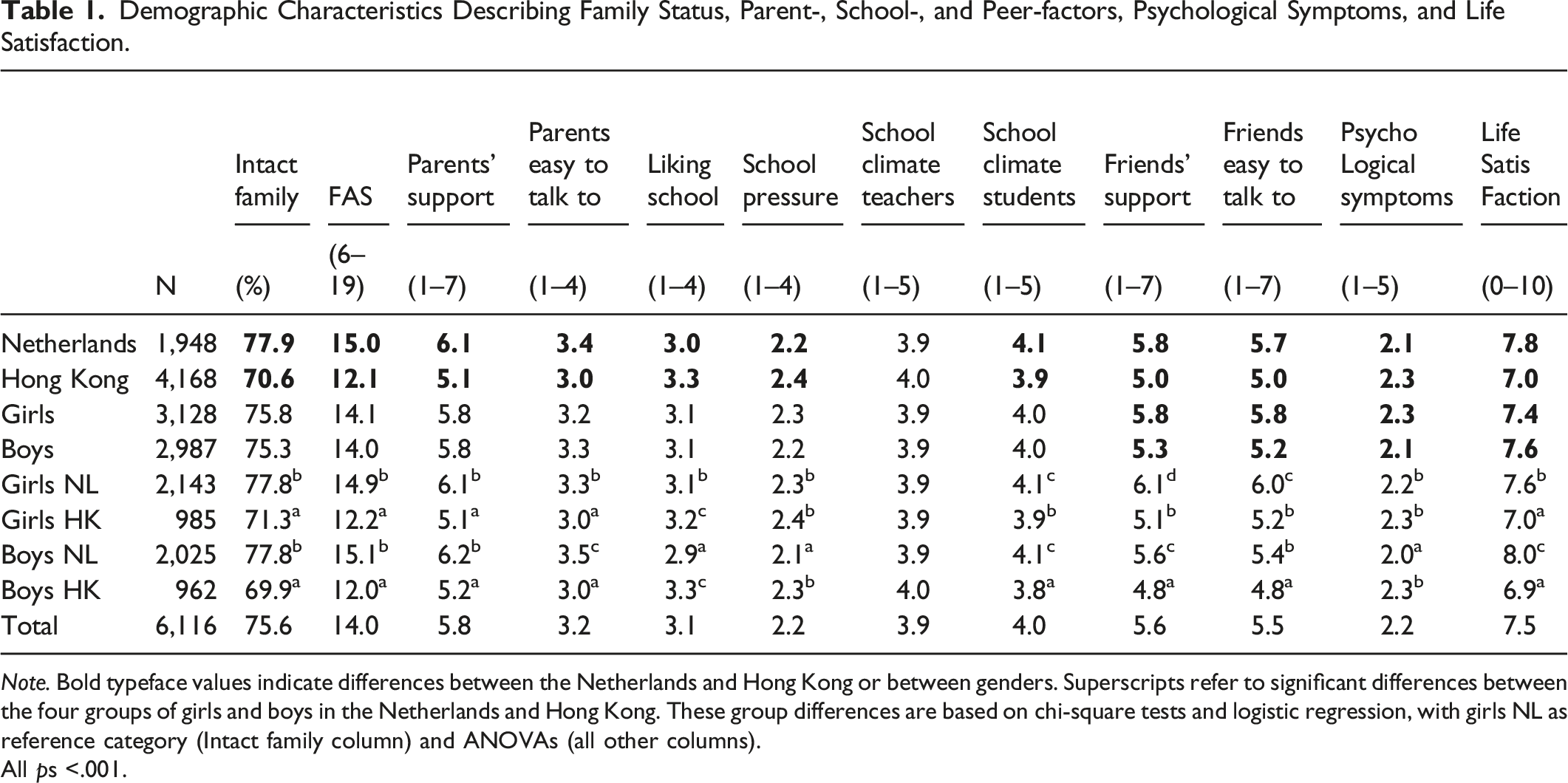
Note. Bold typeface values indicate differences between the Netherlands and Hong Kong or between genders. Superscripts refer to significant differences between the four groups of girls and boys in the Netherlands and Hong Kong. These group differences are based on chi-square tests and logistic regression, with girls NL as reference category (Intact family column) and ANOVAs (all other columns).
All ps <.001.
Table 1 further shows gender differences, particularly in the adolescents’ report of the role of friends. Girls in both nations perceive more support from their friends and find them easier to talk to than boys. Furthermore, girls experience more psychological symptoms and lower life satisfaction.
When differentiating between genders in the two regions, it is noticeable that compared to their peers, Dutch boys do not particularly like school and experience school pressure to the lowest degree. Hong Kong boys experience relatively low levels of support from friends and find them less easy to talk to than their female peers in Hong Kong and female and male adolescents in the Netherlands. Regarding the outcomes, Dutch boys show fewer psychological symptoms than all other groups. They also show the highest level of life satisfaction, followed by Dutch girls and Hong Kong adolescents (all ps < .001).
Correlations
Correlations Between Socio-Economic Factors, Psychological Symptoms, and Life Satisfaction.
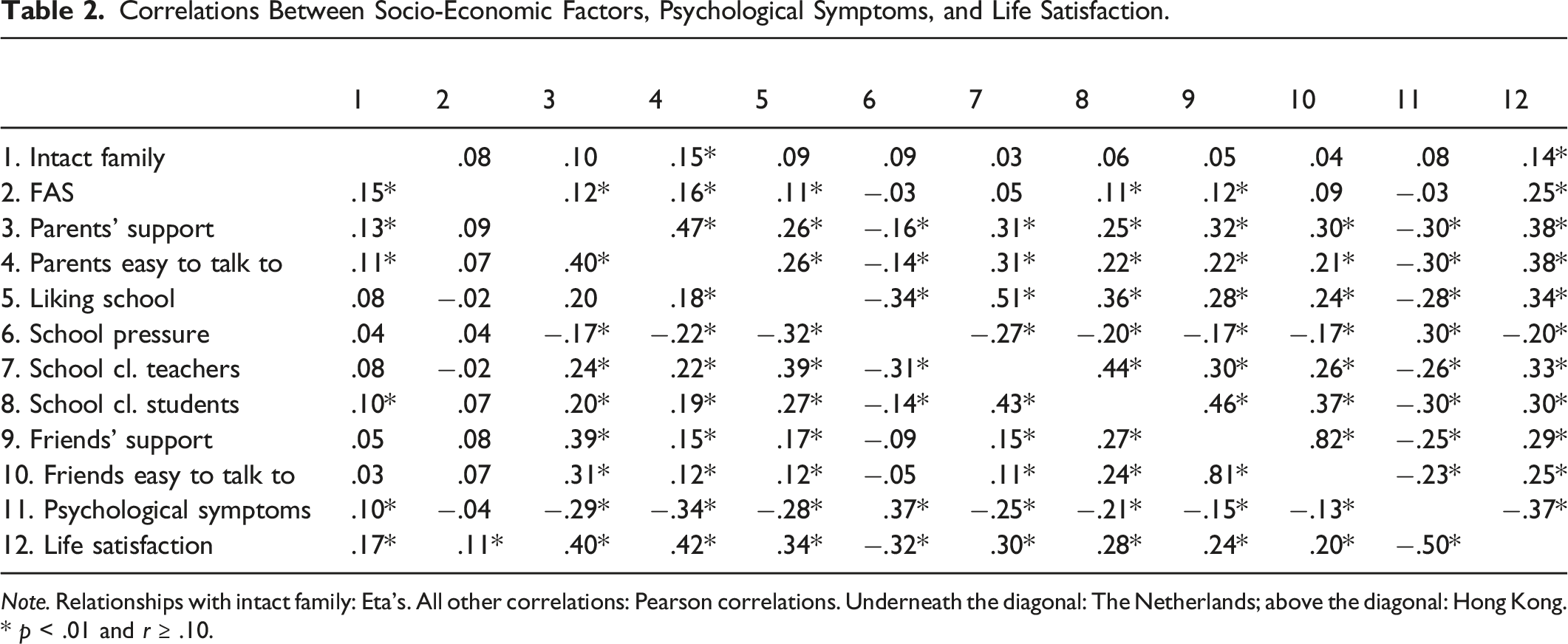
Note. Relationships with intact family: Eta’s. All other correlations: Pearson correlations. Underneath the diagonal: The Netherlands; above the diagonal: Hong Kong.* p < .01 and r ≥ .10.
Correlations further revealed that psychological symptoms in the Netherlands and Hong Kong are positively linked to school pressure but negatively linked to a positive school climate and liking school. Psychological symptoms are less prevalent when adolescents experience higher parental support and feel they can talk to their parents and their friends easily.
Life satisfaction was weakly, positively correlated with growing up in an intact family and higher family affluence. Life satisfaction was also positively related to support of and quality of communication with parents and friends. In terms of teachers and students, liking school and positive school climates were positively linked to life satisfaction and negatively to school pressure in the Netherlands and Hong Kong.
Multivariate Models per Context
Associations of Different Contexts, Family status; Parent, School, and Peer Factors, with Psychological Symptoms and Life Satisfaction.
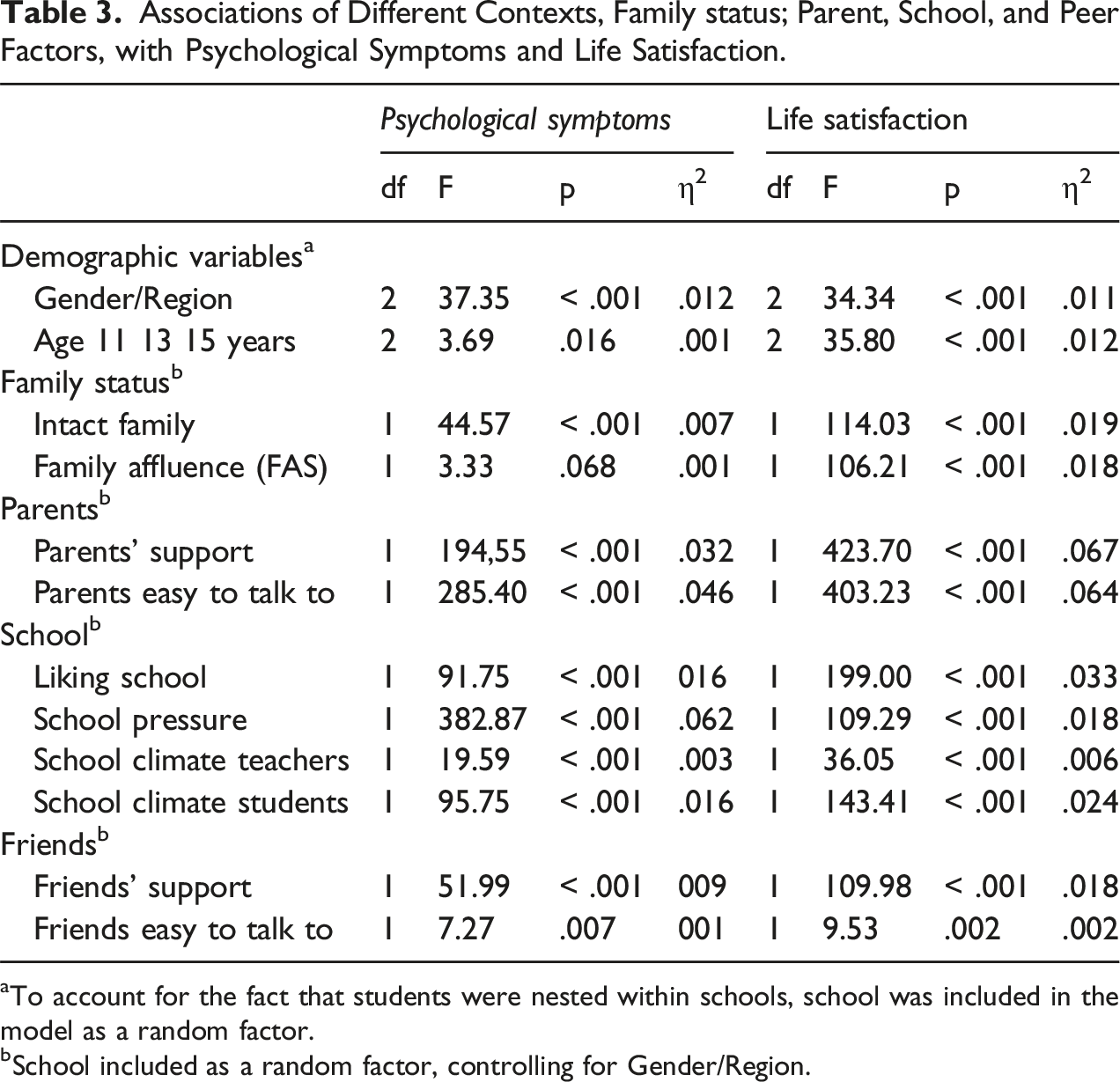
aTo account for the fact that students were nested within schools, school was included in the model as a random factor.
bSchool included as a random factor, controlling for Gender/Region.
Demographic Factors
Psychological Symptoms
Gender by region, but not age explained variance in psychological symptoms (p < .001, η 2 = .012).
Life Satisfaction
Gender by region and differences in age matter for life satisfaction (ps < .001). Effect sizes were small, ranging from η 2 = .011 for gender by region to η 2 = .012 for age.
Family Status
Psychological Symptoms
When controlling for gender by region, neither growing up in an intact family nor FAS significantly related to psychological symptoms with an effect size, η 2 , exceeding .010.
Life Satisfaction
When controlling for gender by region, both being part of an intact family and higher family affluence indicated more life satisfaction (ps < .001; 018 ≤ η 2 ≤ .019).
Parents
Psychological Symptoms
When controlling for gender by region, adolescents reported that parents’ support and the ability to talk with them decrease psychological symptoms (ps < .001; 032 ≤ η 2 ≤ .046).
Life Satisfaction
Parents’ support and being able to talk with parents were also associated with greater life satisfaction (ps < .001). Considering this association had a medium effect size, as indicated by η 2 = .067 and η 2 = 064, respectively, this set of parental factors emerged as highly relevant for children’s well-being.
School
Psychological Symptoms
When controlling for gender by region, liking school, lower school pressure, and a positive school climate in terms of fellow students indicated fewer psychological symptoms (ps < .001; 016 ≤ η 2 ≤ .062). In particular, school pressure emerged as relevant for psychological symptoms.
Life Satisfaction
Liking school, lower school pressure, and a positive school climate in terms of fellow students were associated with higher life satisfaction (ps < .001; 018 ≤ η 2 ≤ .033).
Friends
Psychological Symptoms
When controlling for gender by region, friends’ support was associated significantly with psychological symptoms (p < .001), but the effect size was very weak (η 2 < .01). In addition, no significant, substantial associations emerged for being able to talk with friends easily.
Life Satisfaction
However, the relation between friends’ support and life satisfaction was significant (p < .001) with a small effect size (η 2 = .018). Again, no relevant associations emerged for being able to talk with friends easily.
Full Multivariate Model of Social and Economic Factors and Outcomes
Full Multivariate Model: Family Status, Parent, School, and Peer Factors Predicting Psychological Symptoms and Life Satisfaction.
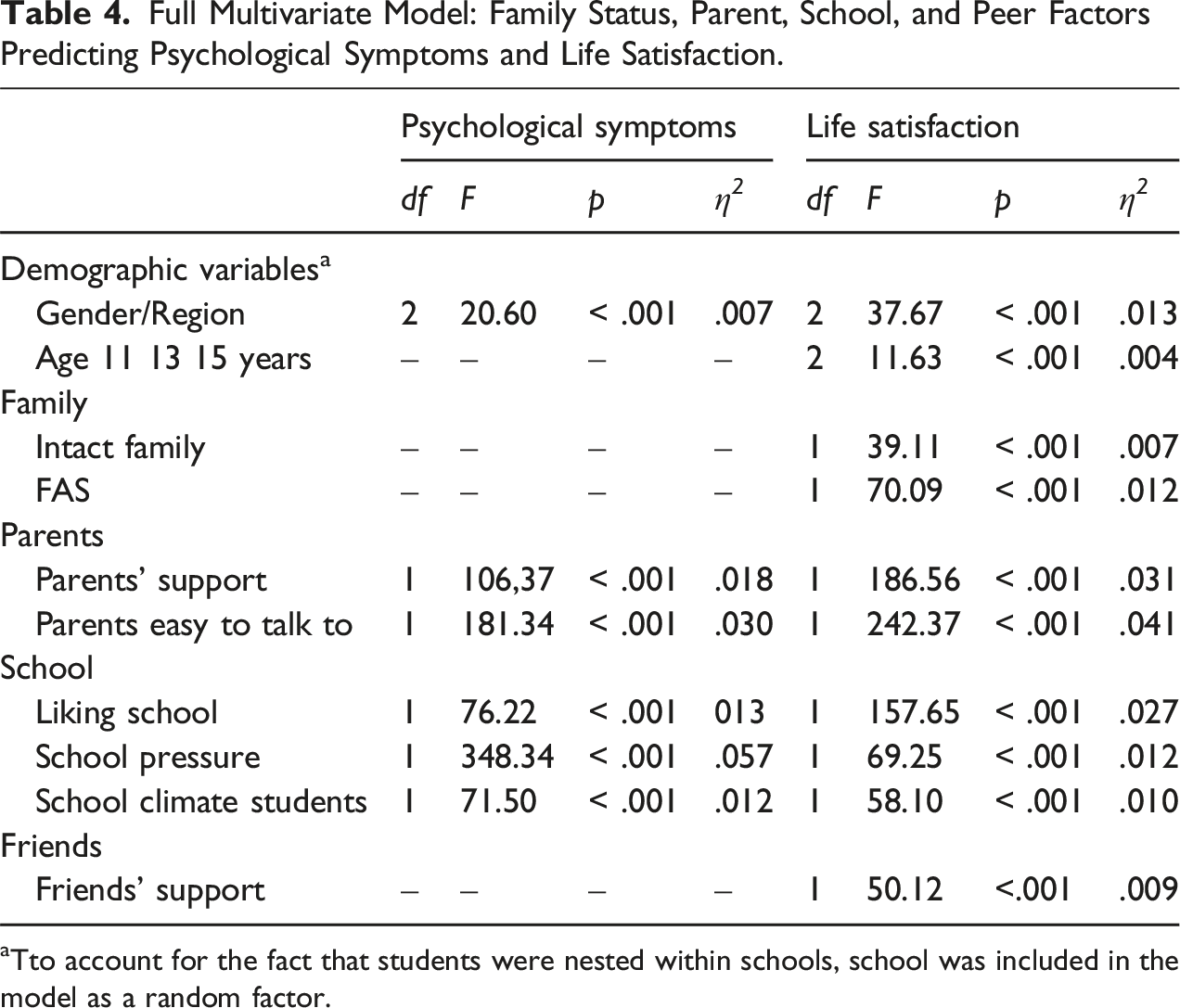
aTto account for the fact that students were nested within schools, school was included in the model as a random factor.
Psychological Symptoms
In the full model, gender by region did not surface as a relevant contributor to psychological symptoms, with p < .001 and η 2 ≥ .01. Age and family factors, such as growing up in an intact family and FAS and friends support, were not included as the separate context analyses showed they were not relevant for psychological symptoms. However, both parent- and school-related factors were meaningful. Most importantly, low school pressure indicated less psychosomatic problems (p < .001; η 2 = .057). Furthermore, parents’ support, the ability to talk with parents, liking school, and a positive school climate in terms of fellow students all decreased psychosomatic problems (p < .001; 018 ≤ η 2 ≤ .030).
Life Satisfaction
The full life satisfaction model results show that gender by region but not age related significantly to life satisfaction (p < .001; η 2 = .013). Family affluence (p < .001; η 2 = .012) as well as parents’ support, the ability to talk with parents easily, liking school, lower school pressure, and a positive school climate among students were all significantly and substantially related to life satisfaction (ps < .001; 010 ≤ η 2 ≤ .041).
Discussion
The role of social and economic factors in psychological symptoms and life satisfaction has been studied extensively, but studies comparing both these predictors and outcomes across Europe and Asia are rare. The current study aimed to narrow this gap by investigating Dutch and Hong Kong adolescents using an equal sampling frame and identical HBSC questionnaires in order to check whether and how family affluence and structure parenting, school climate and quality of relation with peers are associated with psychosomatic symptoms and satisfaction with life. As psychosomatic symptoms and life satisfaction vary considerably across gender we differentiated not only by cultural context, but also by gender, so that the four groups systematically compared in this study consisted of girls and boys from the Netherlands and Hong Kong.
Prevalence of Symptoms and Level of Life Satisfaction
Our findings reveal significant differences in both psychological symptoms and life satisfaction as well as in their social and economic correlates. Dutch adolescents are more satisfied with their lives and show fewer psychological symptoms than their Hong Kong peers, corroborating earlier studies (De Looze et al., 2018; Inchley et al., 2016; Kwan, 2010; Kwan & Ip, 2009). Gender differences across regions were also significant. Overall, girls are less satisfied with their lives and show more psychological symptoms than boys, a result that has been reported before (Mak et al., 2011; Stevens et al., 2018). When combining region and gender, Dutch boys scored the highest on life satisfaction, followed by Dutch girls and, subsequently, both Hong Kong girls and boys. Dutch boys are also less likely to develop psychological symptoms, reporting lower levels than all their Dutch and Hong Kong peers. Furthermore, gender differences in symptoms and satisfaction are more pronounced in the Netherlands than in Hong Kong.
The Presence and Strength of Economic and Social Factors
Our results further show that Dutch youth may experience more pleasant social contexts. Compared to their Hong Kong peers, they are more likely to come from an intact and more affluent family. They experience more support from their parents and find talking to their parents easier. They also experience more support from their friends, find talking to them easier, and perceive their fellow students as more supportive. However, regarding another aspect of school life, Hong Kong adolescents rank higher than their Dutch peers: they like school more, even though they also report higher pressure. These results corroborate earlier studies describing the situation of Dutch youth as favorable and the adolescents themselves as “the happiest kids on earth” (De Looze et al., 2018; Stevens et al., 2018). Hong Kong adolescents experience more stress in school, and the quality of their relationships with their parents, friends, and schoolmates is less positive compared to their peers in the Netherlands (Ang & Goh, 2006; Hamid & Lok, 2000; Kwan, 2010; Kwan & Ip, 2009; Lee et al., 2006; Lo et al., 2019; Ng et al., 2008).
Economic and Social Factors as Driving Forces of Satisfaction and Symptoms
A key finding from our analyses is that the relationships of family, parent, peer, and school factors with psychological symptoms and life satisfaction are consistent in the Netherlands and Hong Kong even though they are wide apart geographically and culturally. Correlational analysis of the relationships between predictors and outcomes in the Netherlands versus Hong Kong revealed that of 78 pairs of correlations, 53 did not exceed a difference of .10, and the largest difference was .19. Our multivariate analyses further unveil the similarity in the patterns of relationships across cultures. Both in Netherlands and Hong Kong supportive and communicative parents, liking school, and pleasant fellow students are linked to fewer psychological symptoms. School pressure is an important factor in aggravating psychological symptoms. Living in an affluent family with supportive and communicative parents, liking school and fellow students, and lack of school pressure all increase life satisfaction. Our results, thus, corroborate earlier studies highlighting the importance of these economic and social factors for adolescents’ well-being (Currie & Morgan, 2020; Stavrova, 2019; Viner et al., 2012). They furthermore show that the same set of indicators is relevant for our outcomes and work similarly in a European and Asian context. In other words, the indicators and their effects on psychological symptoms and life satisfaction are identical in these different, geographically distant cultural contexts.
Explaining Differences in Symptoms and Satisfaction according to Gender and Cultural Context
In our introduction we have introduced gender and cultural context as important markers for differences in our outcomes, but, in our full multivariate models, surprisingly, gender by region differences disappeared as a substantial indicator of psychological symptoms. Instead of the gender or cultural context, social factors such as relationships with parents and school experiences are more relevant for psychological symptoms. In other words, the social factors in our model can explain gender and place differences. For boys and girls in both the Netherlands and Hong Kong, relationships and experiences differ, and these differences account for the variability in psychological symptoms among them.
As noted, psychological symptoms are linked to, in particular, school pressure and, furthermore, decreased parental support and communication, and not liking school and fellow students. Indeed, these negative factors are more prevalent in Hong Kong than in the Netherlands, suggesting that their higher psychological symptoms could result from school stress and a less favorable social environment. Though Hong Kong students reported liking school more than their Dutch peers, it probably did not sufficiently buffer the effects of other school-related and social arrangements.
It is furthermore intriguing that gender differences in psychological symptoms were more pronounced in The Netherlands than in Hong Kong. Again, our models may shed light on this difference. In particular, school pressure seems to be related to psychological symptoms, and Dutch girls experience more pressure than Dutch boys, implying more symptoms (Stevens et al., 2018). Girls also reported more support and communication with friends, but friendship did not seem to counteract school pressure’s negative effects on psychological symptoms enough. In Hong Kong, perceived school pressure is not different according to gender and, therefore, is not a factor differentiating girls’ and boys’ psychological symptoms.
In full multivariate models, gender by region remained a substantial indicator of life satisfaction. Nevertheless, the regional and gendered patterning of other factors is instructive for explaining part of these differences in life satisfaction. As noted before, life satisfaction is high among Dutch adolescents and lower among Hong Kong adolescents. Furthermore, family affluence, support from and communication with parents, absence of school pressure, and friendly fellow students positively affect life satisfaction. Dutch young people scored higher than their Hong Kong peers on all these indicators, which may explain their higher level of life satisfaction. Again, differences between girls and boys were more marked in the Netherlands than in Hong Kong. Dutch boys find their parents more communicative than Dutch girls, and they perceive less school pressure. These factors may add to their life satisfaction. Girls report greater support from and communication with friends but not strong enough to close the gender gap in life satisfaction.
Limitations
In the present study, an identical sampling frame and questionnaires were used to recruit and collect data from large, nationally representative samples of adolescents in both regions. Nevertheless, several limitations must be mentioned. First, we used a cross-sectional design that prevented us from making causal inferences. Second, measurement equivalence may have posed a problem. The variables in this investigation have been frequently operationalized, particularly in other cross-national HBSC studies. Overall, these measures have shown acceptable or even excellent levels of validity and reliability. However, measurement invariability between a European country, such as the Netherlands, and an Asian country, such as Hong Kong, has not been tested. For example, the measure of family affluence (FAS) may not be equivalent. In Hong Kong, a densely packed city with an easily accessible and efficient public transport system, owning a car is far more expensive and, thus, rarer than in the Netherlands. As car ownership is integral to the FAS measure; therefore, using this scale may lead to a biased account of differences in wealth between these contexts. On a more general note: the literature shows that the way in which health, mental health and psychiatric problems are defined shows substantial cultural differences (Bhugra et al., 2018). For this reason, the comparison of the absolute values of well-being or psychological symptoms in the Netherlands and Hong Kong must be viewed with reservation. However, in this study, relations between economic and social factors and our outcomes are central, and these may work in a similar fashion (as we indeed found).
Third, important determinants of psychological symptoms and life satisfaction were not included. Computers and mobile phones have become important tools for entertainment and interaction among young people, but excessive social media use and gaming may affect their health and well-being negatively (e.g., Boer et al., 2020, 2023). Future studies should include media use as an additional social factor in the lives of adolescents to gauge the extent to which media use contributes uniquely to symptoms and satisfaction when accounting for other economic and social factors. Furthermore, another important potential determinant of health and happiness that was not included in our models was immigration status. Over 40% of students living in Hong Kong are “new immigrants” born in China but now living in Hong Kong. Additionally, about 27,000 primary and secondary students travel from mainland China to Hong Kong every day to attend school (The Standard (2020)). About 55% of new immigrants experience discrimination. The difficult integration of new immigrants into the social system causes problems, particularly among students not living with their parents (Ng, 2015). In the Netherlands, adolescents from minority groups show more psychological problems and less life satisfaction (Stevens et al., 2018). In future studies, immigrant status should be measured as an important contributor to health and happiness.
Finally, political stability may affect the current position and future of young people. Political stability is high in the Netherlands. Right-wing populist parties now participate prominently in the public debate, but their ideas, actions, and effects have not yet been a real threat to the democratic order, civil rights, or social life (Rijpkema, 2017). Conversely, the political situation in Hong Kong is under pressure. Many residents of Hong Kong are worried about Hong Kong’s further integration into the People’s Republic of China, and the probable decrease in democratic rights is an issue that has been addressed by an “umbrella movement” protest, fueled by students (BBC, 2015). Hong Kong adolescents’ future perspectives may not be as clear and bright as the Dutch one, and their expectancies and worries may affect their mental health and happiness. When assessing psychological symptoms and life satisfaction, this factor should be included.
Conclusion
Despite differences in the cultural contexts of The Netherlands and Hong Kong, the same relationship patterns emerged between family, parent, school, and peer contexts, on the one hand, and our outcomes, on the other hand. Thus, differences in levels of these driving factors across these contexts can explain differences in psychological complaints and life satisfaction. Our results showed that the world is more enjoyable and carefree for adolescents in affluent, communicative, and supportive family environments; for adolescents who like school, their classmates, and friends; and for those who are not bothered by school stress and pressure (Currie & Morgan, 2020). Dutch society has been characterized as wealthy, individualistic, and low in power distance and masculinity. It values equality between parents and their children, with a relaxed student-oriented school climate. Hong Kong is wealthy but differs from the Netherlands in terms of individualism, power distance, and masculinity (Hofstede, 2001; 2011). Hong Kong parents may be more authoritarian, less communicative, and less able to balance work with family life, and the Hong Kong school system, although of high quality, is competitive and generates pressure. Our results indicate that young Dutch people are more satisfied with their lives and show fewer psychological symptoms, which is consistent with the economic and social arrangements in the two studied regions.
These results, and more specifically, the identical relationships between economic and social indicators and adolescent outcomes, also suggest that HBSC measures of social context, mental health, and life satisfaction show high construct validity, implying that they can be used in highly different cultural contexts. Future studies can and should include a wider range of countries beyond Europe and North America to study adolescents' mental health and life satisfaction. These studies should list economic and social determinants as the first step in identifying manageable and modifiable factors that may help improve adolescents’ position in this world and enhance their mental health and happiness.
Footnotes
Declaration of Conflicting Interests
The author(s) declared no potential conflicts of interest with respect to the research, authorship, and/or publication of this article.
Funding
The author(s) received no financial support for the research, authorship, and/or publication of this article.
Ethical Statement
Data Availability Statement
The datasets generated and analyzed during the current study are available from the first author on reasonable request.