




Abstract
Combining work and study is challenging for most students, especially when they are in more precarious work contexts. Identifying which students struggle with this would better inform interventions and advance theory. Using a sample of working tertiary students (N = 415) and a person-centered research approach (latent profile analysis), we identified five different sub-groups of students based on indicators of precarious employment– high precariousness (7.3%), inflexible with poor conditions (25.0%), average (27.4%), flexible (14.3%), and low precariousness (26.0%). These subgroups differed on study, career development, mental health, and biographic factors. The high precariousness group reported more need for recovery from work and lower study engagement, career agency, wellbeing, subjective social status, and financial comfort compared to the low precariousness group. Implications for educators and employers, as well as theory, are discussed.
Keywords
Technological changes and globalisation of economies in recent years have led to dramatic changes in employment conditions (Perraton, 2019) and careers worldwide (Hood & Creed, 2019). Labour markets have been forced to become more flexible so that businesses can respond more rapidly to competitive demands by adjusting labour needs and changing workplace arrangements. This has led to a growth in precarious employment, which is characterised by poor working conditions, job insecurity, few workplace rights, and low wages (Vives et al., 2015). This is reflected in the growth of “irregular” jobs, such as contract, temporary, and “gig” economy work, and the decline in more “regular”, full-time, ongoing, employment (Kreshpaj et al., 2020). However, precarious employment is not identical to these irregular job types, as even regular full-time employment can be perceived as precarious if it meets those key characteristics.
Young workers especially have been affected by the growth in precarious work (Birch & Preston, 2021). They have fewer pathways than experienced workers to regular work and are confronted with ever-expanding options that are limited to insecure, poor paying jobs with non-standard work hours (Kretsos, 2010). In Australia, as elsewhere, there has been a decline in availability of decent entry-level jobs for young people (Chesters & Wyn, 2019) and, in general, employment deregulation has driven an increase in cheaper labour via non-standard work arrangements and conditions (Quinlan & Rawling, 2024). This has led some commentators to label them as the precarious generation, or the precariat, both because their workplace experiences are precarious and because they potentially generalise their insecurity to other areas of life and to their anticipated future (Bessant et al., 2017).
Working students are an important sub-group of this labour market. In Australia in 2022–2023, 86% of university students reported working while they study (Youth Insights, 2023). Australian rates of working while studying are higher than that seen in other western countries; for example, rates are 74% for part-time American college students (National Centre for Education Statistics, 2022) and 69% for all UK university students (National Union of Students, 2023). Students work to meet educational costs and living expenses, but also to gain knowledge, skills, and experiences that will benefit them in their later working lives (Richardson et al., 2014). Most fill critical employer needs for flexible, low paid, and easily replaceable employees in service industries, such as retail, hospitality, and tourism, that are characterised by precarious employment conditions (Campbell & Price, 2016). However, we know little about the precarious at-work experiences of working students and how that affects their functioning as students, career development, and mental health (but see Campbell & Price, 2016; Creed et al., 2022; Hood et al., 2025). We do not know whether working students represent a homogenous population or if there are distinct sub-groups characterized by different workplace experiences that also differ on other important variables.
Previous studies of precarious employment among working students (Campbell & Price, 2016; Creed et al., 2022; Hood et al., 2025) have used traditional variable-centred approaches that assume a homogenous population and examine how variables measured in that population are related or differ (Howard & Hoffman, 2018). However, to understand whether there are distinct sub-groups within a population that can be characterized by different sets of explanatory variables or indicators of group membership, and which differ on important outcomes, the more nuanced person-centred approach is required. We used latent profile analysis (LPA; see Spurk et al., 2020 for broader overview), which uses categorical latent variable analysis to identify population sub-groups based on a predetermined set of explanatory variables. It can generate both quantitative (profile scores) and qualitive (profile shapes) data that assist in interpretation of distinct sub-groups within the population. Score differences separate profiles while shape differences determine whether profiles differ in terms of degree (e.g., have parallel profiles) or content (non-parallel profiles).
While we did not identify any existing studies that have taken person-centred approaches to identify sub-groups based on characteristics of employment precariousness in working students, we identified several relevant studies in working adults. Bazzoli et al. (2022) found two sub-groups— “haves” and “have nots”— differentiated by job and financial security and employment history. These sub-groups differed on measures of physical and mental health and functioning, with the “have nots” reporting poorer life and job satisfaction, job commitment, regulatory protection, and health, and higher work-family conflict. Cho (2020) found four groups of “most precarious”, “low precarious with middle income”, “low precarious with high income”, and “mixed precarious”, differentiated by age, ethnicity, and education, and who reported different health outcomes. Blustein et al. (2020) found five groups based on indicators of precarious and (in)decent work that were differentiated by age, income, education, work volition, job and life satisfaction, and psychological needs satisfaction. Allan et al.’s (2024) LPA differentiated underemployment from precarious work. They found that the “precarious work” group (characterized by involuntary non-standard work contracts and poverty wage) reported significantly poorer mental health (i.e., higher distress), conditions (i.e., lower safety, less access to healthcare, mismatched values), and less time for rest or non-work activities than the “fully employed” and “stable underemployed” groups. Findings from these studies of distinct sub-groups of precarious workers are consistent with Yoon and Chung’s (2016) findings about the UK labour market generally; that is, they found three distinct latent classes differentiated by income levels, occupational skill profile, and social security benefits that align with levels of employment precariousness.
Several studies examined trajectories of precariousness sub-group membership and outcomes over time (see also Klug et al., 2020). Urbanaviciute et al. (2020) identified three sub-groups of “precarious”, “nonprecarious”, and “partially precarious” based on levels of financial difficulty and perceived employability. Over time, the stable precarious group reported greater increases in job insecurity compared to the other groups. Further, the control component of career adaptability significantly predicted the rate of growth in insecurity in that group. Similarly, Măkikangas et al. (2013) found that higher job insecurity was related to stable low or decreasing perceived employability over time, and that those sub-groups were more likely to transition over time from permanent employment contracts to more precarious temporary contracts. Kinnunen et al. (2014) found that groups characterized by increasing job insecurity over time reported increased exhaustion, a key component of burnout.
These studies with adult workers support the existence of distinct sub-groups based on the precariousness or (in) decency of employment conditions and that these groups differed on demographic, job, life, and health variables. However, to the best of our knowledge, no studies have examined whether different sub-groups based on indicators of precarious employment exist in the working student population. Determining this could contribute to theory (e.g., add a developmental context to the growth of precarity), practice (e.g., targeted interventions), and policy (e.g., education institution’s support policies for working students).
A couple of person-centred studies have identified the existence of sub-groups within the population of working students, albeit not based on the precariousness or (in)decency of their work. Creed et al. (2023) identified different sub-groups based on reported levels of work-study congruence and flexibility. The “low work congruence/flexibility” group reported higher job demands than other groups, and, along with the “low study congruence” group, reported higher study demands, work-study conflict, and burnout. The “high work congruence/flexibility” and “balanced” groups reported more positive perceptions of their future employment prospects than the low congruence groups. Thus, sub-groups of working students characterized by greater role congruence and flexibility reported fewer work and study hassles, less inter-role conflict, better wellbeing, and had a more positive future employment outlook. Headrick and Park (2024) identified latent classes of working students based on reported levels of weekly work-study conflict and facilitation. Latent classes characterized by high inter-role facilitation and low inter-role conflict were differentiated by higher perceived supervisor support for their needs to juggle of work and study roles. The “role scarcity” class, characterized by high work-study conflict and moderate facilitation, reported the lowest wellbeing, job satisfaction, and preparedness for school. While these studies did not focus on employment precariousness, they do provide some evidence that the working student population is not homogeneous and that characteristics associated with precariousness (e.g., lack of flexibility and supervisor support) differentiate sub-populations.
In the current study, we extended this research to examine whether different profiles based on indicators of precarious employment could be identified in student workers and, if so, whether those groups differed on study (i.e., study engagement), career development (i.e., career engagement, career agency), and mental health (i.e., need for recovery from work, wellbeing). We selected five job characteristics as precariousness indicators — perceived precarious conditions, remuneration, security, flexibility, and workplace support — based on precarious employment definitions and measures (Creed et al., 2020b; Vives et al., 2015). Research has shown that these separate indicators of precariousness are normally distributed in working students and relate individually to career and wellbeing variables (Creed et al., 2020a, 2020b; Hood et al., 2025; Zheng et al., 2021). However, to date, no studies have tested for sub-groups of working students based on these precariousness variables operating in concert, despite arguments that doing so would, for example, allow educational institutions to intervene better to improve the wellbeing of these students (Wong & Au-Yeung, 2019). As LPA is largely an exploratory methodology (Spurk et al., 2020), we developed a broad, non-specific hypothesis that:
Different sub-groups of working students exist based on job characteristics of precarious conditions, remuneration, security, flexibility, and support.
Theoretical Basis for Study
The study was informed by the work precarity framework (WPF; Allan et al., 2021; see also the critical framework of precarity, Blustein et al., 2025), which draws on the psychology of working theory (PWT; Blustein & Duffy, 2021; Duffy et al., 2016). The more general PWT accounts for vocational and psychological functioning by considering the background to people’s work lives (e.g., marginalization, economic constraints), individual-level factors (e.g., agency, adaptability), and capacity to obtain decent, fulfilling work given these macro- and person-related influences. More favourable backgrounds, person factors, and work connections and context lead to more positive life and occupational outcomes. The PWT defines decent work based on the International Labour Organisation (ILO, 2013) guidelines, including that work is safe (physically, emotionally, and interpersonally), suitably compensated, provides humane working conditions (e.g., suitable breaks, manageable work hours), and gives job and career security. Aspects of decent work are related directly to survival (e.g., remuneration), social connection (e.g., workplace support), and self-determination needs (e.g., security), which, in turn, are related to work and life fulfilment and wellbeing (Duffy et al., 2016).
Work can be considered to fall along a continuum from decent to precarious (Blustein et al., 2025). The WPF (Allan et al., 2021) extended on PWT to account for precarious work. Blustein et al. (2025) argued that precarious work is a key factor in chronically insecure access to resources that prevents basic survival and psychological needs to be fulfilled and undermines mental health and wellbeing (e.g., via chronic stress). They concluded that examining precarity within work-related fields of psychology, including career psychology, was important.
Definitions of both precarious and decent work include multiple indicators, meaning that different groups of individuals might experience aspects of both (e.g., being decently paid, but with low job security; Blustein et al., 2020). Similarly, McWha-Hermann et al. (2024) noted that the definition of precarious employment is complex and multidimensional, encompassing both objective (e.g., temporary contracts) and subjective (e.g., perceived insecurity) components. They argued that not all objective conditions that define precarious work need to be present for the work to be perceived as precarious. Allan et al. (2021) also emphasized the importance of psychological perceptions in understanding employment precariousness. Therefore, taking a person-centred approach to identify heterogeneous sub-groups of workers based on explanatory variables that assess individual perceptions of precariousness makes sense.
The WPF proposes several outcomes of precarious work including job attitudes and behaviours (e.g., engagement, satisfaction, performance), identity (e.g., self-efficacy, perceived control), and mental health (e.g., depression, stress, anxiety, burnout). However, this framework was developed to understand the adult workforce; thus, few studies have applied it to working students or to outcomes relevant to that developmental stage, including career development. However, Creed et al. (2022) confirmed that job and physical and mental health outcomes proposed in the WPF could be demonstrated in a sample of working students. Precarious employment predicted, in turn, higher job strain, disrupted sleep quality, and burnout. In terms of career development, Zhong and Xu (2023) found that more precarious employment experiences as interns during their final university year was associated with lower occupational self-efficacy and sense of career success and Hood et al. (2025) found that precarious employment while studying was related to less accumulation of social and professional career capital.
Thus, the WPF shows promise for advancing our understanding of employment precariousness in working students. We expanded the limited existing research with this population, taking a person-centred approach to examine whether emergent precariousness profiles differed on developmentally relevant study, career, and mental health factors.
Precarious Employment and Study, Career Development, and Mental Health
Based on the WPF, we assessed between-group differences of the emergent profiles on study and career engagement, career agency, need for recovery from work, and wellbeing. From a theoretical perspective, more precarious or less fulfilling work should be related to less engagement in other important roles, impaired agency, increased fatigue, and poorer wellbeing (cf., WPF; Allan et al., 2021; PWT; Duffy et al., 2016). However, because of the exploratory nature of person-centred designs, and the view that precarious employment results from accumulations of different perceived work factors operating in concert (Blustein et al., 2020; Olsthoorn, 2014), we developed broad expectations related to the relationships between emergent precariousness profiles and these variables.
Although students benefit from working (e.g., “soft” and professional skills development; Remenick & Bergman, 2021), it does place added demands on students and there are drawbacks related to their study engagement (Creed et al., 2015). For example, allocating time and energy to paid work diverts personal resources away from study activities (Curtis & Williams, 2009), and working students spend less time studying than non-working students and often need to reschedule or delay assessments (Clynes et al., 2020). These effects are exacerbated if there is insufficient time or disengagement experiences to counteract the need for recovery from work (Park & Sprung, 2015). However, while these studies show that dual demands from working and studying are related adversely to study engagement and the need for recovery experiences, we know little about how the quality of work (i.e., precariousness) affects these factors. Specifically, we anticipated that:
Profiles higher on precariousness characteristics would report higher need for recovery from work and lower study engagement than profiles characterized by lower precariousness. Despite the WPF and PWT not specifically including career development as outcomes of precarious/decent work, there is some empirical evidence linking precarious employment with various aspects of career development. Further, these theoretical frameworks do include outcomes such as work engagement, organisational commitment, meaningfulness or fulfillment, and turnover that encompass aspects of career development. Characteristics of precarious work including having little responsibility for the tasks one is assigned; little involvement in workplace decisions; repetitive, demanding, and unpredictable work; and concerns over employment contracts are associated with poorer work engagement and less focus on career development (Kallio et al., 2022). Other characteristics such as inconsistent and poor supervisor support, little opportunity for training, low autonomy, and anxiety about speaking up also impair career growth and advancement (e.g., lowering career expectations; Henninger et al., 2019). More generally, those who are precariously employed experience more intermittent employment also, which impairs career progress (Stuth & Jahn, 2020). In young people, those who are precariously employed have lower-status work, less income (De Lange et al., 2014), less control (Chesters et al., 2019), a less well-defined future work self (Hardgrove et al., 2015), and are more likely to stay on a precarious employment trajectory (Stuth & Jahn, 2020; Xu et al., 2022), They also have higher current (Peiró et al., 2012) and later job insecurity (Klug et al., 2019), and more negative labour market views (Wong & Au-Yeung, 2019) than those who are not precariously employed. In working students, precarious employment was related to lower achievement motivation and optimism for the future (Cassidy & Wright, 2008), poorer labour market views, perceptions that precarity was entrenched more broadly (Worth, 2002), and fewer opportunities for career growth and agency due to perceptions that there was less workplace support for personal innovation (Hood et al., 2025). Therefore, we expected that:
Profiles higher on precariousness characteristics would report lower career engagement and career agency than profiles characterized by lower precariousness. Both the WPF and PWT include mental health and wellbeing as outcomes and, therefore, more research has examined these. Recent meta-analyses and reviews have demonstrated that precarious employment is associated with poorer mental health (Rönnblad et al., 2019) and that persistent precarious employment (i.e., >1 year) is associated with poorer mental, general, and physical health and reduced positive health behaviours in adults (Pulford et al., 2022). Similar conclusions can be drawn from reviews of precarious employment in young workers (Canivet et al., 2016; Kim & von dem Knesebeck, 2016). Especially relevant to the current study, Jonsson et al. (2021) found expected differences in general and mental health between low, medium, and high precariousness groups. Some studies examined these relationships in working students. Creed et al. (2020b) found that perceived job precariousness was associated with poorer life satisfaction, with job insecurity and poor remuneration having the strongest links. This suggests that some components of precariousness impact wellbeing more than do others, with insecurity being particularly relevant to mental health and wellbeing. It has been found also to predict higher anxiety (Goldrick-Rab et al., 2020) and depression (Gewalt et al., 2022). Precarious employment was also related to higher strain, and, in turn, poorer sleep, and greater study-related burnout (Creed et al., 2022). From the above, we expected that:
Profiles higher on precariousness characteristics would report poorer wellbeing than profiles characterized by lower precariousness. We also considered a range of biographic variables (i.e., age, sex, number of jobs, hours worked, job relevance, reliance in job income, and number of enrolled courses) as profile determinants. Previous research has shown that younger people experience a greater incidence of, and report poorer outcomes from, precarious employment, potentially as they have less-developed work and coping skills (Gray et al., 2021). Findings for sex differences and precarious employment are mixed; some studies reported that women fare more poorly in precarious work, while others reported that men do (Gray et al., 2021; Kachi et al., 2014). Study load (e.g., full versus part-time enrolment) is a key variable to consider in student populations as it affects relationships, overall life satisfaction, wellbeing, and study progress (Chen, 2017). Other characteristics of work are also important to consider. The need to retain employment to fund their study means that work can be prioritised over study (Orr, 2007), increasing the likelihood of adverse outcomes; although if the work is relevant to their study or future career goals, it is rated as more enjoyable and motivating (Butler, 2007), so likely to facilitate more positive outcomes. Socio-economic and social status factors are also important. Students from more disadvantaged/poorer families are likely to work more hours and in more precarious jobs due to a lack of familial financial support and social capital, and also tend to be less engaged with study, perform more poorly academically, are at greater risk of dropping out, and experience greater financial and life distress (Chesters & Cuervo, 2019; Perna & Odle, 2020). While we measured these biographic factors, differences based on precariousness profiles were considered exploratory and we did not propose specific hypotheses.
Current Study
To identify different profiles, we surveyed a sample of working students on five indicators of employment precariousness (conditions, remuneration, flexibility, security, and support). We then tested whether these profiles differed in expected ways on study (i.e., study engagement), career development (i.e., career engagement, career agency), and mental health (i.e., need for recovery from work, wellbeing), as well as the collected biographic variables.
Method
Participants
There were 415 working students from one Australian university (73.0% female; M Age 19.7 years, SD 2.3, range 17–27). Mean hours worked were 18.0 per week (SD 7.8) in one or more jobs. Mean relevance of job to degree was 18.8 (SD 26.9, range 0–100, higher score = more relevance) and mean reliance on job for income was 7.1 (SD 2.3, range 0–10, higher score = more reliance). Most were domestic students (95.2%; remainder were international students studying in Australia). All were full-time, enrolled in a range of degrees, including arts, biomedical science, business, criminology, law, physiotherapy, psychology, and sports development. Mean subjective social status (SSS) was 58.4 (SD 17.8; ladder representing where people stand in society; 0 = at bottom, 100 = top; Adler et al., 2000), and for financial status, 26.5% were living comfortably on present income, 55.7% coping, 14.5% finding it difficult, and 3.4% finding it very difficult (M Fin 1.95, SD 0.7; European Social Survey, 2022).
Profile Indicators
Job Precariousness
The 12-item Job Precariousness Scale (Creed et al., 2020b) has four sub-scales of precarious job conditions, remuneration, security, and flexibility (sample item, “To what extent do you agree you have a say in how many hours you work each week?”; 6-point response 1 = Strongly disagree to 6 = Strongly agree; all items were scored so that higher scores reflected more precariousness). Reported Cronbach αs were .82 (conditions), .87 (remuneration), .79 (security), and .86 (flexibility) and validity was supported by using expert ratings and finding positive associations with financial strain. Current αs were .80, .87, .74, and .90, respectively.
Workplace Support
We used four items devised by Eisenberger et al. (2001). These were, “My co-workers go out of their way to do things to make life easier for me/…are easy to talk to”, “My work supervisor cares about my opinions/…cares about my wellbeing” (1 = Strongly disagree to 6 = Strongly agree; all items were scored so that higher scores reflected less support). Li et al. (2018) reported an α of .84 and supported validity with positive associations with workplace justice and commitment. Our α was .83.
Study, Career Development, and Mental Health Measures
Study Engagement
We used 10 highest loading items from Zhoc et al.’s (2019) 28-item Higher Education Student Engagement Scale to assess cognitive, emotional, and social engagement (e.g., “I enjoy the intellectual challenge of the courses I am studying”; full list available from corresponding author; 1 = Strongly disagree to 6 = Strongly agree). Briefer measures reduce participant fatigue, while retaining construct coverage and psychometric soundness (our α = .87). Zhoc et al. reported a mean full-scale α of .84 and supported validity with positive associations with student learning.
Career Engagement
The 9-item Career Engagement Scale (Hirschi et al., 2014) assesses engagement in proactive career behaviours (e.g., “I actively seek to design my future career direction”; 5-point scale, 1 = Never or almost never to 5 = Very often). The authors reported an α of .87 and supported validity by finding expected associations with career planning and networking. Our α was .91.
Career Agency
We used 8 items relevant for student workers from the 10-item career agency subscale of Rottinghaus et al.’s (2012) Career Futures Inventory- Revised. This assesses “perceived capacity for self-reflection and forethought” (p. 65) related to managing career progress (e.g., “I can develop a plan for my future career”; full list from corresponding author; 1 = Strongly disagree to 6 = Strongly agree). Rottinghaus et al. reported α of .88 and supported validity by positive associations with optimistic career outlook. Our α was .94.
Need for Recovery From Work
A 10-item version of the Recovery Need Scale (Van Veldhoven & Broersen, 2003) assessed recovery following work (e.g., “I find it difficult to relax after work”; 1 = Strongly disagree to 6 = Strongly agree). The authors reported an α of .88 and supported validity by finding positive associations with psychosocial risk factors such as emotional workload. Our α was .90.
Wellbeing
The 5-item World Health Organization- 5 Well-being Index (WHO-5; 2024) assesses recent positive mood, vitality, and general interest (e.g., “I have felt cheerful and in good spirits”; 1 = Strongly disagree to 6 = Strongly agree). The scale has been used widely and compares favourably with other wellbeing measures. Alphas >.80 have been reported, with validity supported by finding expected associations with positive and negative feelings about study (Creed et al., 2015). Our α was .90.
Procedure
Ethical clearance was obtained from the university ethics committee (#2019/164). Students were recruited via their course website and given a link to an online survey. For their time and effort, they could enter a prize draw to win a A$50 store voucher.
Analytical Procedure
For the LPA, we used the tidyLPA package in R (V4.0.3). LPA generates a series of profiles that can be assessed for fit against obtained data (Spurk et al., 2020). For determining the best fitting profile solution, we drew on several relative fit information criteria, where lower scores on each suggest a better fit (Spurk et al., 2020): Akaike’s Information Criterion (AIC; unaffected by sample size), Bayesian Information Criterion (BIC; underestimates number of profiles with smaller sample sizes), and the sample-size adjusted BIC (SABIC; adjusts for biases in BIC). We also used Bootstrap Likelihood Ratio Tests (BLRT), which assess if a particular profile (i.e., the k model) is a good fit compared to a k + 1 model. Fit for k profiles is supported when the k + 1 solution becomes non-significant (Spurk et al., 2020). Last, we assessed entropy (or profile distinctiveness), where higher entropy supports a better fit (scores >.60 acceptable; Jung & Wickrama, 2008; Muthén, 2004).
Before the LPA, we ran a CFA (AMOS) to assess construct validity of the job precariousness and workplace support scales. A 5-factor model (conditions, remuneration, security, flexibility, and support) generated a good fit, χ2 (94) = 206.83, p < .001, χ2/df = 2.20, CFI = .97, and RMSEA = .05 (Hair et al., 2018), which supported proceeding with the LPA.
After the LPA, we compared scores for the different profiles (Welch ANOVA and Scheffé post-hoc test, which accounts for any violations of homogeneity of variance, and chi-square) on the study, career, mental health, and biographic variables (study engagement, career engagement and agency, need for recovery from work, wellbeing, age, sex, SSS, financial situation, courses enrolled in, income reliance, work relevance, number jobs, and number hours worked).
Results
Relationships Among LPA Variables
Summary Data and Bivariate Correlations (N = 415)
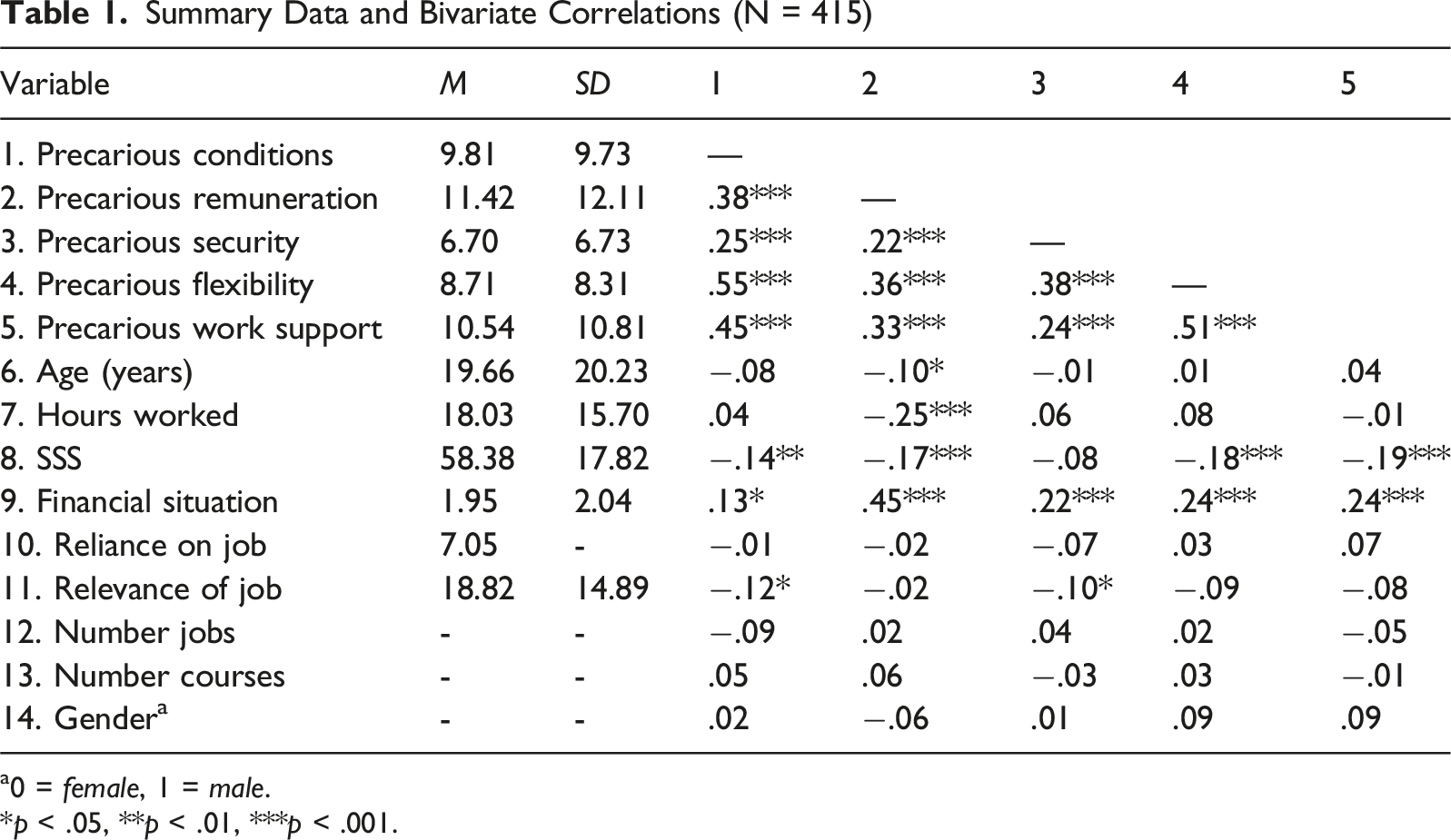
a0 = female, 1 = male.
*p < .05, **p < .01, ***p < .001.
Latent Profile Analysis
Latent Profile Analyses for 1- to 6-Profile Models (N = 412)
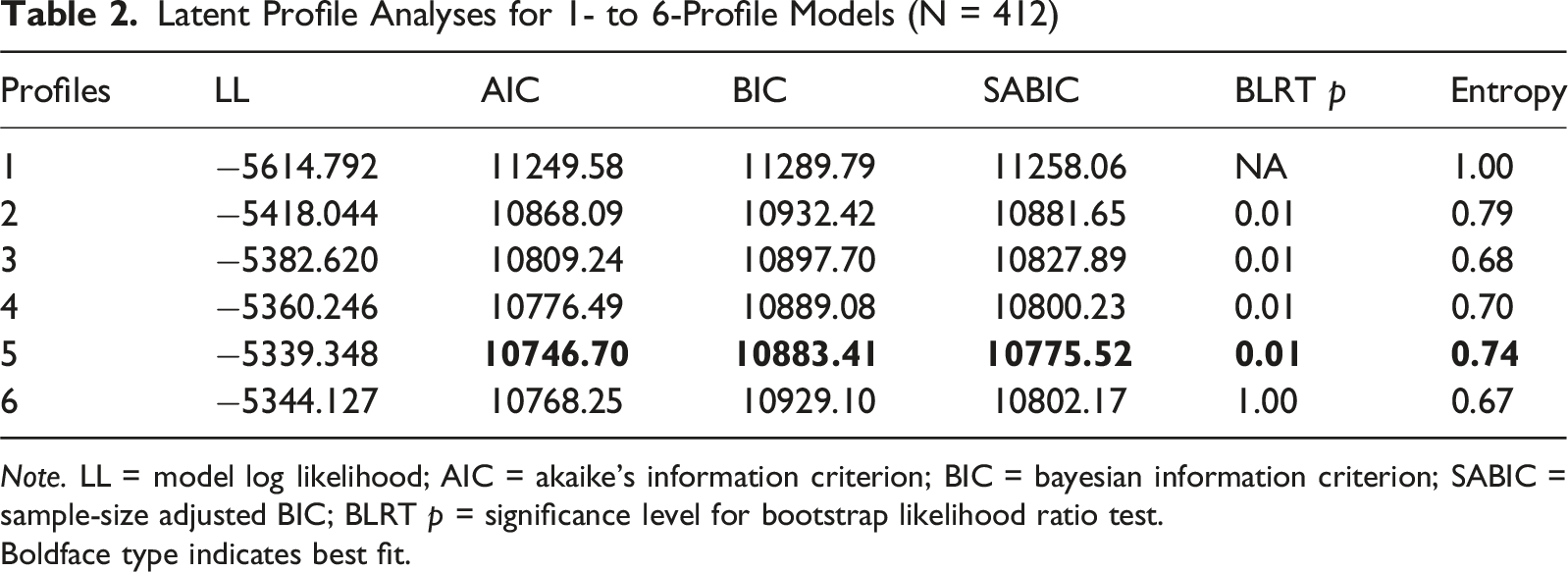
Note. LL = model log likelihood; AIC = akaike’s information criterion; BIC = bayesian information criterion; SABIC = sample-size adjusted BIC; BLRT p = significance level for bootstrap likelihood ratio test.
Boldface type indicates best fit.
To interpret the 5-profile model, we treated precariousness values > ±0.50 SD as being meaningfully different from the mean (cf. Gustafsson et al., 2018). Profile 1 (27.4% of sample; See Figure 1) was characterised by scores on all precariousness indicators falling around the mean (conditions, −.41 SD; remuneration, −.11; security, −.03; flexibility, .12; and support, −.04) and was labelled the average group. Profile 2 (7.3%), with high levels on all indicators (conditions, 1.36; remuneration, 0.87; security, 1.29; flexibility, 1.68; support, 1.71) was labelled high precariousness. Profile 3 (25.0%) had above average scores on precarious conditions (.78) and flexibility (.92), with average scores on all other indicators (remuneration, .45; security, .29; and support, .38), and was labelled inflexible with poor conditions. Profile 4 (26.0%), scored well below average on precarious conditions (−1.00), remuneration (−.64), flexibility (−1.03), and support (−.73), with average levels of security (−.36). It was labelled low precariousness. Last, Profile 5 (14.3%) reported below average precarious flexibility (−.78) and average levels on all other precariousness indicators (conditions, .47; remuneration, .12; security, −.43; and support, −.14) and was labelled the flexible group. 5-Profile solution (N = 412)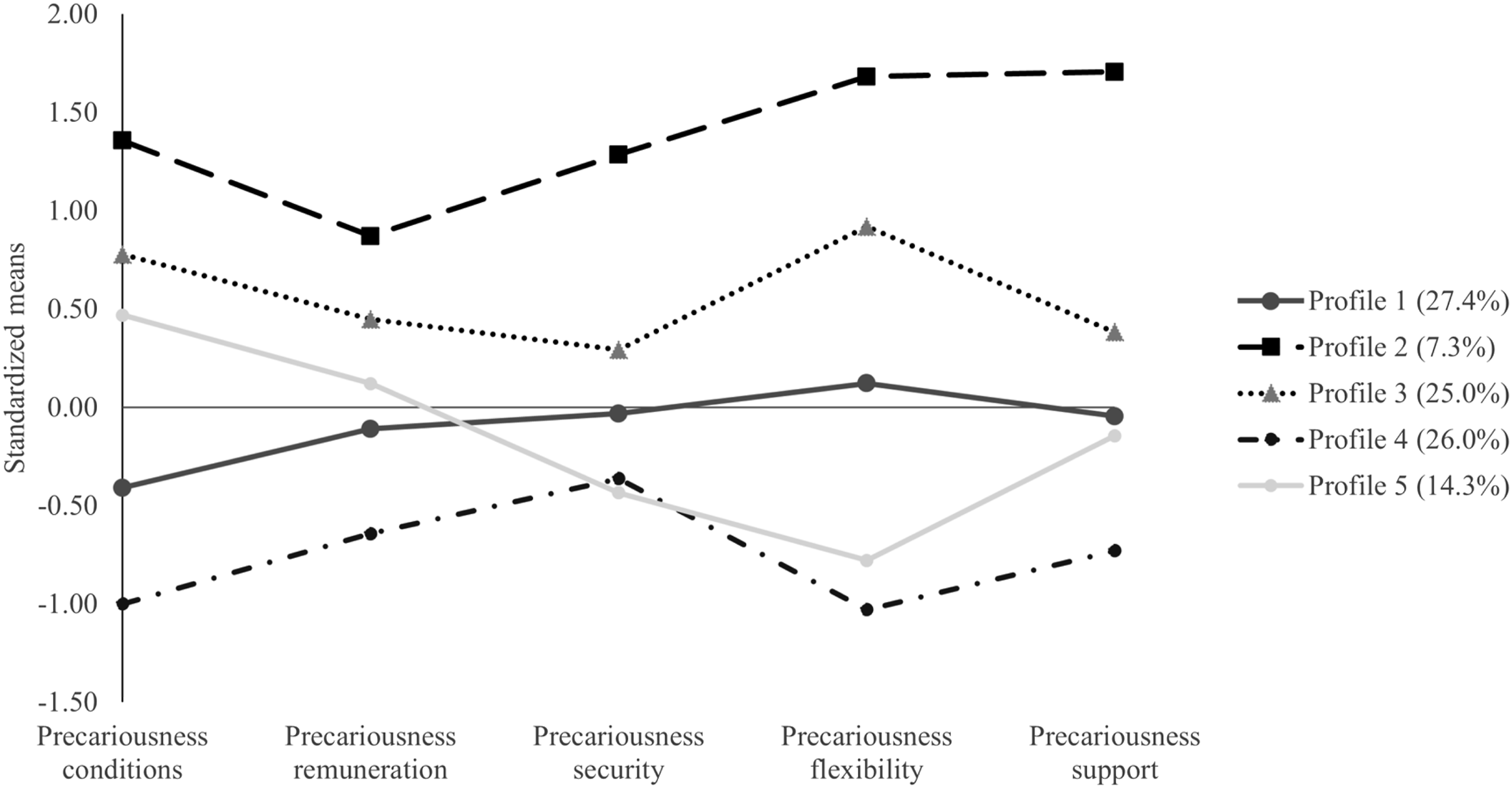
These analyses indicated that only a small group of students reported that they worked in jobs characterized by high scores on all aspects of precariousness (Profile 2; 7.3%), with a larger group reporting that they worked in jobs that were low on precariousness albeit with average security (Profile 4; 26%). There were three “in-between” groups: those who reported their jobs were average, characterized by neither high or low precariousness on any indicator (Profile 1; 27.4%); those who reported high scores on only two indicators of precariousness, flexibility and conditions, with other aspects average (Profile 3; 25.0%); and those who reported good flexibility and average scores on other aspects (Profile 5; 14.3%).
Regarding qualitative similarities/differences, the high (Profile 2) and low precariousness (Profile 4) profiles were largely mirror images of one another. The average profile (Profile 1) was flat. Profiles 3 (inflexible with poor conditions) and 5 (flexible) also largely mirrored each other in their shapes, with Profile 3 returning positive scores (i.e., more precarious) on all indicators and Profile 5 having similar magnitude but negative scores, with the key significant difference being the level of precarious flexibility (Figure 1).
Profile Differences on Study, Career Development, Mental Health, and Biographic Variables
Differences on Outcome and Demographic Variables by Profile (N = 412)
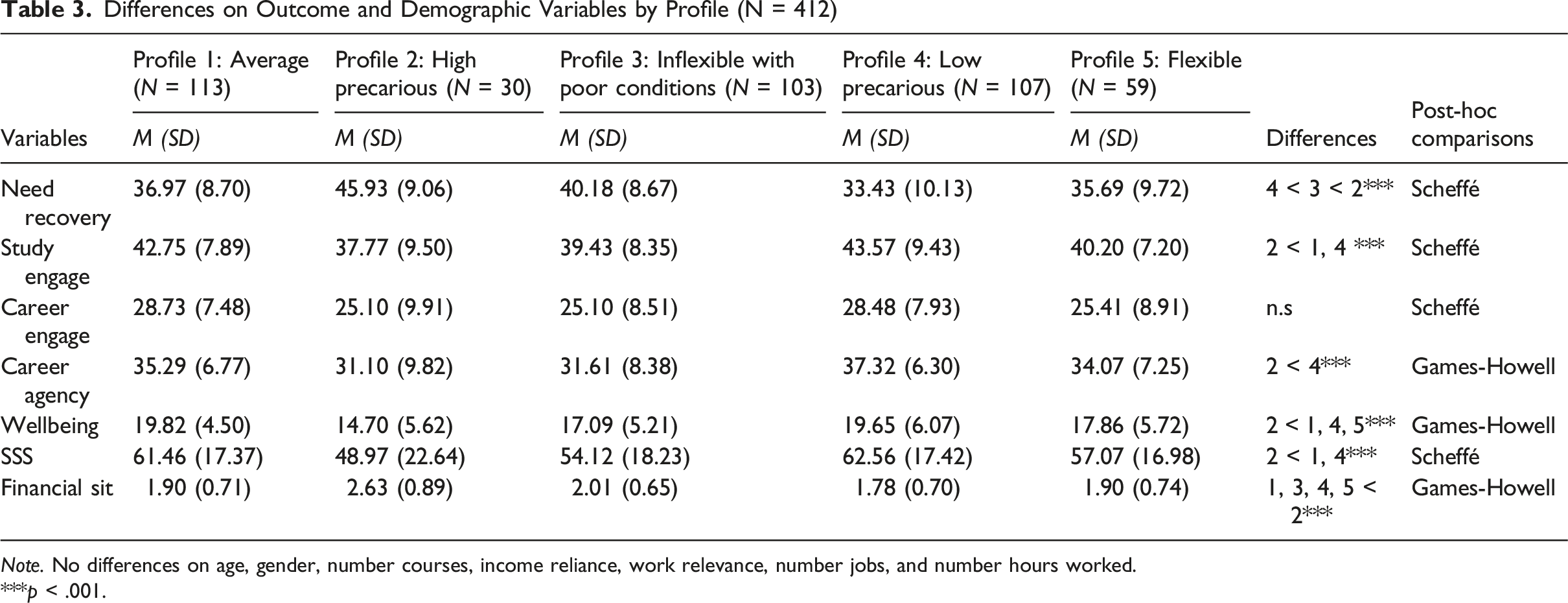
Note. No differences on age, gender, number courses, income reliance, work relevance, number jobs, and number hours worked.
***p < .001.
Discussion
This study set out to identify different profiles based on self-reported characteristics of employment precariousness operating in concert in the working student population and to determine whether the emergent profiles differed on important study, career, mental health, and biographic variables. Five distinct profiles were found (supporting H1), three that differed on the overall extent of reported precariousness (high, average, and low precariousness) and two that varied mainly by the amount of flexibility (inflexible with poor conditions and flexible). There were between-profile differences on levels of study engagement, career agency (but not career engagement), need for recovery from work, and wellbeing. Profiles also differed on reported background SSS and current financial situation. The high precariousness profile had more adverse scores across this range of variables.
Two profiles were defined by high scores on precariousness indicators. These were the high precariousness and inflexible with poor conditions groups. The high precariousness group scored well above average on all indicators of precariousness, while the inflexible with poor conditions group reflected a sub-sample that considered their work as adequate when it came to security, remuneration, and support, but viewed their control over their working conditions as less than satisfactory and reported inadequate flexibility to successfully manage work and study. While the high precariousness profile was the smallest group, together these two profiles comprised just over one third of the sample.
Most students perceived that their employment was average to low across all or most of the precariousness indicators. The low precariousness group reported the most favourable employment experience with below average levels of precariousness in conditions, remuneration, flexibility, and support, and average security. Also, faring well was the flexible group for whom the flexibility afforded to balance work and study was a defining job characteristic, with other characteristics being rated as average in precariousness. Last, the average group rated all indicators as neither particularly high or low in precariousness.
In support of H2a that more precarious profiles would report a greater need for recovery from work, we found that the high precariousness group scored higher on this need than the inflexible with poor conditions group, and they both scored higher than the low precariousness group. Thus, not all indicators of precariousness needed to be above average to increase the need for recovery, but the precariousness of the employment conditions and flexibility appear to be particularly relevant. Flexibility related to their ability to take time off work for holidays, sickness, or study purposes without being penalized. Thus, when working students perceive work to be inflexible or that they would be penalized if they took time off, they needed more time or effort to recover and engage in other life activities. Precarious conditions tapped into similar characteristics related to the worker’s control over their schedules and conditions to better suit their needs. Working students that perceive that they cannot negotiate work hours and conditions to suit their study and other life roles report higher needs for recovery to engage in those other roles.
Thus, job flexibility (e.g., taking time off when study demands are high) and having control over scheduling are critical factors for students. Students should benefit from developing skills in articulating their study needs and being able to negotiate with their employers. This might also benefit employers, who could plan better for times when students were more available versus when they needed time to focus on their studies. Job satisfaction also improves when precariously employed workers are given greater flexibility to modify work schedules to meet planned and unplanned non-work responsibilities (Chen et al., 2020).
The two more precarious groups (high precariousness and inflexible with poor conditions) reported lower study engagement than the average and low precariousness groups (supporting H2a). This is consistent with Clynes et al. (2020) who found that working students studied for fewer hours and were more likely to have to defer or extend assessment deadlines. Our results are consistent also with research that adult workers find precarious jobs more demanding and draining, adversely affecting their engagement in other roles (Rӧnnblad et al., 2019). Precarious or indecent work depletes worker’s energy, requiring more time for recovery from work and, thus, less time and energy to engage in study (Duffy et al., 2016).
Reduced time and energy to invest in other activities should manifest also in reduced career engagement. However, we found no significant between-groups differences in career engagement but found that the high precariousness group reported lower career agency than the low precariousness group (partially supporting H2b). Career engagement assesses proactive engagement in self-management behaviours of planning, exploring (self and careers), networking, human capital and skills development, and positioning (Hirschi et al., 2014). One possibility why this did not differ by employment precariousness is that working students might feel that they are engaging in these behaviours simply by working, regardless of the quality of that work, and through their study. The quality and fit of their study program might be more important than work to behaviours relevant to career self-management.
Career agency is a distinct construct that reflects perceptions of control, confidence in managing career transitions, optimism, and self-awareness (Rottinghaus et al., 2012). This differed in expected ways by precariousness. Similarly, precariously employed adults reported lower control over their career development, more pessimism, and greater difficulty in making career transitions compared to non-precariously employed adults (Henninger et al., 2019). It is possible that erosion of career agency by precarious employment is an important factor in locking workers into ongoing precariousness (Stuth & Jahn, 2020; Urbanaviciute et al., 2020; Worth, 2002).
As expected, the high precariousness group reported significantly lower wellbeing than the groups who experienced lower precariousness (supporting H2c); that is, compared to the average, low precariousness, and flexible groups. Adverse impacts on wellbeing from poor work conditions is a consistent finding (e.g., Canivet et al., 2016). The risk for working students is that impact on wellbeing might affect their academic achievements and, through that, have longstanding consequences for their future. For example, early experiences of job precariousness disrupt important life planning related to finding a partner and starting a family (Chesters & Cuervo, 2019).
The high precariousness group reported lower SSS than the average and low precariousness groups, suggesting that a family background of disadvantage predisposes students to take more precarious work. Universities in Australia, like in other countries, have broadened their student intake to include more students who are disadvantaged economically, socially, and culturally (UNESCO, 2017). This approach to more inclusive education has reduced university entry barriers but not all barriers have been resolved. Those from more disadvantaged backgrounds have fewer family supports, including financial, encouragement for study, and inculcation of positive attitudes on education (Belando-Montoro et al., 2022). These students are not competing on a level playing field with more advantaged students, especially if their history leads them to accept the most precarious jobs. Further, the high precariousness group reported more difficulty in coping with their current financial situation than all other groups. It is likely that this is driven by that group being characterized by the highest score on precarious remuneration. Understanding more about the biographic make-up of the high precariousness group is important so they can be supported to succeed at university and in their career development.
The profiles were not differentiated by gender. Previous research on gender differences was mixed (Gray et al., 2021; Kachi et al., 2014). Our sample comprised well-educated young people, with the majority being female. The null finding for gender might reflect that working students are more equal in quality of employment but also might reflect a lack of variability due to the largely female sample. Age also was not a factor, which might reflect the restriction of range in our sample. Last, the profiles were not differentiated by other variables including the number of courses being taken, number of jobs worked, or the relevance of work to their degree or future career. This suggests that precarious work experiences transcend other student characteristics.
Implications for Theory, Practice, and Policy
The indicators of precariousness were based on theoretical and practical definitions of precarious employment that focus on worker perceptions rather than objective work types (Allan et al., 2021; Campbell & Price, 2016; Creed et al., 2020b; ILO, 2013). These indicators performed largely as expected, with, for example, high scores on all indicators characterizing the most precarious group, which also reported the most adverse functioning and social and financial disadvantage. Those with lowest scores on the precariousness indicators reported more favourable functioning and advantage. Thus, our results support these as important indicators when assessing employment precariousness. Results also support that precarious employment is multidimensional and that assessing it by, for example, the type of work contract (full-time versus casual), will not provide nuanced interpretations of experiences nor tap into nuanced between-group differences.
Today, most students want to or must work while they study, but this is not always positive or benign. Universities should not consider that all working students have the same workplace experiences. The advantage of using the person-centred approach was confirmed by the variability that emerged in the profiles. For example, while we found high, average, and low profiles that would have been able to be identified by a variable-centred approach, we found profiles that were characterized by high or low scores on only one or two of the indicators (i.e., inflexible with poor conditions and flexible groups). Thus, the population of working students is not homogeneous but there are distinct precariousness subgroups (cf. Cho, 2020). Counsellors seeking to assist student workers should have them describe various facets of their workplace experiences, rather than making assumptions that work quality or experiences are the same for all students. This would enable more targeted support or interventions depending on what aspect/s the student finds most precarious.
The high precarious group reported the most disadvantage (i.e., lowest SSS, least comfortable financial situation) reflecting that, consistent with PWT, contextual variables such as economic constraints drive the need to work and to work in less decent situations (Blustein et al., 2020). Life history theories propose that individuals who have unstable, unpredictable backgrounds (e.g., low SSS) tend to generalise these perceptions to their current and future lives, make decisions, and allocate personal resources accordingly, for example, by accepting the first job offer or seeking less desirable work to meet current demands, rather than delaying and selecting work that is a better fit (Hu et al., 2022). Providing interventions that target students from disadvantaged backgrounds might assist them to identify and prioritise their needs (e.g., study versus financial/work needs) and allow them to secure more flexible or less precarious employment.
The quality of students’ workplace experiences have implications for the students themselves (e.g., mental health) but also affect the functioning of the university and indirectly the general community, via lower study engagement and career agency, which have the potential for longer-term adverse outcomes. Remenick and Bergman (2021) suggested that universities consider their policies and practices that dis-incentivize work and, instead, facilitate more supportive employment and develop education policies that use students’ work experiences. Universities should also support students to consider the employment characteristics, especially the flexibility and control over scheduling of shifts and time-off work for study and other important life activities, when selecting a job. These factors affect their capacity to engage in study, recover from work, and be agentic in their career development, as well as their wellbeing. Not all students have the luxury of choosing less precarious or decent work that suits their study needs. Thus, universities might also need to consider more flexible study arrangements that ensure students’ needs to work are better met.
Employers also need to recognise that working students have important study goals. Accommodating their student employees might be strategic for them also as it could build skills, loyalty, and commitment from their student workers over the long term. Better matching of work characteristics should improve functioning in their studies and their work.
Limitations and Future Directions
There are several important limitations that need to be considered in future research. First, the findings were based on an Australian sample and might not translate directly to other contexts. For example, in Australia very few students do not work while studying; thus, it is more of the norm than might be the case in other countries. Despite employment deregulation in Australia contributing to a rise in precariousness, working students in other countries might experience different regulatory protection for salary and conditions. In addition, as noted, our sample comprised mainly female students, which might explain the null result for gender differences. It is unclear also whether the results would be replicated with a more evenly balanced sample of male and female students. Replication across different samples and contexts is important also to validate the profile solution (Spurk et al., 2020).
The study was cross-sectional; thus, it is not possible to make causal statements nor to predict future outcomes of specific precariousness profiles. Longitudinal studies are needed to understand how precariousness profiles might change or remain stable over time and how these predict future outcomes, such as academic and career success. Using Bolck et al.’s (2004) correction method (i.e., BCH method) is recommended for predicting distal outcomes from latent profiles as it better accounts for classification error (Dziak et al., 2016). Longitudinal research could also clarify directions of effects. For example, it might be that declines in wellbeing over time lead to more negative perceptions of work precariousness, regardless of objective changes in work characteristics.
While we considered a range of biographic variables, we did not include any person variables, such as personality. Personality has been implicated in workplace success and longevity and outcomes like wellbeing (Drishti & Carmichael, 2022).
We only focused on paid work and did not include voluntary work or work experience opportunities related to study such as practicums or work integrated learning programs (WIL; Kay et al., 2019). While students might feel more autonomy to terminate volunteer work compared to paid work if it is perceived to be precarious, practicums and WIL are mandated often within degrees, so termination means failure. Precarious experiences in those work environments, and the effects on study, career development, and mental health, are unknown. There could be lessons for universities from research into these work experiences.
Finally, there is no universally agreed definition or measure of precarious employment. We assessed five indicators of perceived employment precariousness, drawing heavily on Creed et al.’s (2020b) measure that was developed for working students. Measures and definitions might need to differ across specific populations and be sufficiently comprehensive or specific for working students who differ from working adults as they generally identify study rather than work as their primary role and prefer part-time or casual to full-time or permanent work (Eastgate et al., 2022). Students have predictable peak demand times during the academic year (e.g., exam periods) and perceptions of precariousness might change depending on the time in the academic calendar.
Despite these limitations, this study provides useful insights into how working students perceive their work, identifying distinct sub-populations that differ on important study, career, mental health, and biographic variables. Student workers are a vulnerable population who combine work and educational demands to invest in a better future for themselves. However, the message is clear that their work experiences are not always positive and have the potential to undermine that future.
Footnotes

Funding
The authors received no financial support for the research, authorship, and/or publication of this article.
Declaration of Conflicting Interests
The authors declared no potential conflicts of interest with respect to the research, authorship, and/or publication of this article.