




Abstract
Satisfaction with academic studies is a subjective indicator of students’ well-being and experiences in the context of studies. However, evidence for the reliability and validity of academic satisfaction measures, particularly their French variants, is still limited, thus restricting the administration of evidence-based assessments of academic satisfaction in many regions. The present study aimed to adapt and validate a French version of the Academic Major Satisfaction Scale (AMSS-F), among the most widely used assessments of one’s overall satisfaction with academic studies. Analysis of the data of 530 French-speaking bachelor’s and master’s students supported the structural validity of the AMSS-F, with measurement invariance established across genders, academic levels, and socioeconomic backgrounds. Moreover, supporting its convergent validity, the AMSS-F was strongly associated with the satisfaction of autonomy needs and commitment to studies, as well as with the satisfaction of competence and relatedness needs. Divergent validity was demonstrated through negative and weaker associations with multiple career decision-making difficulties, as well as trait anxiety and self-esteem. Our findings support using the AMSS-F as a reliable and valid assessment in research and practice to measure academic satisfaction among French-speaking individuals.
Keywords
Introduction
Supporting individuals’ well-being constitutes a fundamental goal of psychological research and practice. In vocational psychology and career counseling, promoting individuals’ career decision-making and development and, consequently, individuals’ well-being constitutes a central objective too. Indeed, contemporary vocational theories emphasize well-being, notably in terms of satisfaction, as an outcome that should be facilitated (in the Psychology of Work Theory: Duffy et al., 2016; in the content-process-context model: Lent & Brown, 2020; in employability research: Presti et al., 2022). In this regard, well-being has typically been investigated in career research and assessed in practice with objective and subjective indicators, such as measures of persistence in occupations, satisfaction with career choices, or satisfaction with life (Diener et al., 1985; Duffy et al., 2016; Holland, 1997; Lent et al., 2015; Spurk et al., 2019), whereas satisfaction has been conceptualized as a subjective evaluation of global well-being or in specific domains of life (Nauta, 2007; Rahmatpour et al., 2019; Sovet et al., 2014).
Among the working population, satisfaction has often been measured in terms of satisfaction at work using a wide range of well-established scales (Judge et al., 1998; Spurk et al., 2019). Among students, satisfaction has been assessed in terms of satisfaction with studies (Nauta, 2007; Sheldon & Hilpert, 2012). However, only a few validated instruments of academic satisfaction are currently available, especially in languages other than English (Rahmatpour et al., 2019). Thus, despite the large proportion of career research conducted among university students, evidence for the reliability and validity of academic satisfaction assessments is still lacking, constituting a significant limitation in researching the experiences of students as well as in supporting students with evidence-based assessments (Hunsley & Mash, 2007).
Among the existing assessments of academic satisfaction, the Academic Major Satisfaction Scale (AMSS; Nauta, 2007) stands out as a robust unidimensional measure of students’ overall satisfaction with their studies. While versions of the AMSS were previously validated in four languages (in English, Nauta, 2007; in Korean, Sovet et al., 2014; in Portuguese, Soares Silva et al., 2021; in Turkish, Erdoğan & Arsal, 2015), some studies faced some difficulties in validating the hypothesized model underlying the AMSS or did not yet directly test its convergent validity with other specific measures of academic satisfaction (Nauta, 2007; Soares Silva et al., 2021; Sovet et al., 2014). Furthermore, evidence for the cross-cultural generalizability of the AMSS in other cultural contexts is needed and is likely to contribute to research and practice. In this regard, no French version of the AMSS has been developed–with psychometrically sound French assessments of academic satisfaction lacking–thus, undermining reliably assessing academic satisfaction in French-speaking regions.
To address these issues, in the present study, we aimed to adapt and validate a French version of the AMSS (i.e., AMSS-F). In doing so, this study sought to contribute to the literature on academic satisfaction and its assessment in several important ways. First, the present study aimed to provide further evidence for the reliability and validity of the AMSS in a novel cultural context. As the AMSS was already validated in four languages and administrated in multiple countries (Erdoğan & Arsal, 2015; Nauta, 2007; Soares Silva et al., 2021; Sovet et al., 2014), demonstrating a similar functioning of the AMSS in the Swiss, French-speaking context would provide additional support for its cross-cultural generalizability. Furthermore, this research sought to broaden the examination of the convergent and divergent validity of the AMSS, with variables specifically related to academic satisfaction or variables that would allow differentiating the AMSS from emotional and personality traits. Moreover, measurement invariance of the AMSS has only been tested to date across genders (Soares Silva et al., 2021; Sovet et al., 2014). This study aimed to further examine the measurement invariance of the AMSS across genders, academic levels, and socioeconomic backgrounds. Finally, the present study sought to fill a gap in both research and practice among university students in French-speaking contexts, where there is currently no reliable and validated measure of academic satisfaction. By validating the AMSS-F, this study addresses the need for a sound assessment for French-speaking students.
Satisfaction With Academic Studies
Satisfaction has been typically conceptualized in career and vocational research as the degree of enjoyment of the environment in which career-related, educational, or occupational activities occur (Lent et al., 2015; Pesch et al., 2018; Rahmatpour et al., 2019; Sovet et al., 2014). Focusing on students’ career-related satisfaction, the terms academic satisfaction or major satisfaction have often been used, referring to the degree of contentment or fulfillment with one’s choice of studies (Nauta, 2007). Research has examined the role academic satisfaction plays in career decision-making and development both as an outcome and a predictor variable. As an outcome variable, academic satisfaction has been predicted, for example, by the congruence between one’s interests and academic environment, in line with Holland’s (1997) person-environment fit theory (Fu et al., 2019; Womack et al., 2018). Indeed, indicative of its importance, various variables have been tested for predicting academic satisfaction, such as vocational identity (Cox et al., 2016), career adaptability (Xu, 2020), and faculty and peer support (Fu et al., 2019; Schenkenfelder et al., 2020).
Further indicative of its importance in vocational research, academic satisfaction has also often been modeled as a predictor variable. Academic satisfaction has been shown to predict academic performance (McIlveen et al., 2013; Nauta, 2007) and persistence in major and university (Lent et al., 2015; Nauta, 2007). Moreover, academic satisfaction has been shown to predict career success, for example, by acting as a resource to develop career competencies and employability and, thereby, achieving eventual career success (Presti et al., 2022). Additionally, not implying specific directionality, academic satisfaction has been associated positively with commitment to studies (Womack et al., 2018) and additional variables related to general well-being, such as overall life satisfaction and positive affect (Lehman & Nauta, 2022; Soares Silva et al., 2021; Sovet et al., 2014). Conversely, academic satisfaction has been associated negatively with subjective distress (Pesch et al., 2018), career commitment anxiety (Nauta, 2007), and negative affect (Lehman & Nauta, 2022; Soares Silva et al., 2021; Sovet et al., 2014). Taken together, previous studies revealed the many links that academic satisfaction has with both academic and career-related variables as well as general well-being variables.
The Operationalization of Academic Satisfaction
Several instruments have been developed to assess academic satisfaction, ranging from single to multiple-item scales, and designed as unidimensional or multidimensional constructs (Nauta, 2007; Rahmatpour et al., 2019). Whereas unidimensional measures offer a global evaluation of academic satisfaction, multidimensional measures assess academic satisfaction in terms of different types of needs that are satisfied (e.g., autonomy, competence, and relatedness needs; Sheldon & Hilpert, 2012) or in terms of specific factors that contribute to satisfaction (e.g., quality of education, social life; Betz et al., 1970; Huebner & Gilman, 2002). Nevertheless, a recent review of 13 scales measuring academic satisfaction has revealed that the reliability and validity of many existing assessments remain insufficient, with most measures also lacking cross-cultural validation and generalizability (Rahmatpour et al., 2019). Moreover, many of the existing assessments of academic satisfaction comprise many items, thereby undermining their utility for research and practice (Nauta, 2007; Rahmatpour et al., 2019).
Among the commonly employed assessments of academic satisfaction, the Academic Major Satisfaction Scale (AMSS) developed by Nauta (2007) stands out as a unidimensional and global measure of satisfaction with academic studies. The operationalization of the AMSS to assess academic satisfaction has been informed by the conceptualization of the Satisfaction with Life Scale (SWLS; Diener et al., 1985). Satisfaction with life, as a concept of subjective well-being (SWB; Diener et al., 1999), refers to cognitive and affective evaluations of one’s overall life. As such, the generated AMSS items sought to target both cognitive and affective dimensions of satisfaction in the academic context tested (Nauta, 2007). In a first study, 20 items were administered to 237 American university students, with structural analyses supporting the retention of only six items that distinguished students who persisted in their field of studies from those who changed within two years. However, to validate the structural validity of the AMSS, multiple error terms among the six AMSS items were allowed to covary. Then, in a second study, the AMSS was administered to 244 American students, with findings revealing a positive correlation with career decision self-efficacy, while a negative relationship was identified with career commitment anxiety and career indecisiveness (Nauta, 2007).
As an efficient instrument for administration due to its composition of only six items, the AMSS has been used in many studies and subsequently adapted in additional linguistic contexts. Indeed, the English version of the AMSS has been employed in multiple countries, such as Australia (McIlveen et al., 2013), Nigeria (Ebulum, 2016), the Philippines (Nerona, 2021), and the USA (Cox et al., 2016; Jadidian & Duffy, 2012; Milsom & Coughlin, 2017; Pesch et al., 2018). In addition, translations of the AMSS have been validated in Brazil (Soares Silva et al., 2021), Korea (Sovet et al., 2014), and Turkey (Erdoğan & Arsal, 2015). Thus, previous studies yielded substantial evidence for the validity of the AMSS as an assessment of academic satisfaction in many cultural contexts.
At the same time, the construct validity of existing versions of the AMSS remains to be further investigated. Specifically, the AMSS is hypothesized to measure the overall satisfaction with one’s choice of academic studies; yet, its convergent validity was argued to be supported in previous studies based on its positive correlations with career decision self-efficacy, satisfaction with life, and positive affect (Nauta, 2007; Soares Silva et al., 2021; Sovet et al., 2014). These variables tap students’ positive emotional experiences regarding career decisions and daily life. However, more clearly establishing the convergent validity of the AMSS would necessitate testing its associations with other measures that are hypothesized to assess the same construct (Campbell & Fiske, 1959; Carlson & Herdman, 2012), namely satisfaction with the choice of academic studies (e.g., commitment making to studies; Lannegrand-Willems et al., 2016; satisfaction of basic psychological needs in studies; Sheldon & Hilpert, 2012). Then, in terms of divergent validity, previous studies reported that AMSS scores are not associated with the need for self-knowledge or the need for career information, but, nevertheless, that AMSS scores are negatively associated with career choice anxiety, general indecisiveness, and negative affect (Nauta, 2007; Soares Silva et al., 2021; Sovet et al., 2014). As such, these results–of meaningful associations with personality-related and emotional career decision-making difficulties–can be interpreted as undermining the divergent validity of the AMSS. Indeed, divergent validity is generally supported by the lack of correlations with constructs designed to measure unrelated variables, rather than by significant correlations with constructs that are expected to function inversely (Campbell & Fiske, 1959; Carlson & Herdman, 2012).
The Swiss Educational Context
The present study was conducted in the French-speaking part of Switzerland. The Swiss educational system is considered highly stratified and characterized by early tracking. Around the age of 12, students are divided into different performance-based tracks, a division which will also impact students’ ability to access subsequent educational pathways (Petrucci et al., 2022). Then, following compulsory education around the age of 15, students are either admitted to academic-oriented high schools, more general education, or vocational education and training. At this stage, admission to academic-oriented high schools is based on students’ previous scholastic performance. Finally, in tertiary education, Swiss higher education maintains a clear distinction between academic universities and vocationally-oriented institutions. Academic universities offer bachelor’s, master’s, and doctoral degrees and focus on providing general knowledge and advanced analytical skills, while professional education offers more specialized, occupation-specific training (Kriesi & Sander, 2024).
Educational systems that are highly stratified and based on tracking, such as the one in Switzerland, have been shown to perpetuate social inequalities (Felouzis & Charmillot, 2013; Petrucci et al., 2022). Indeed, the selectivity of an educational system has been shown to amplify the influence of socioeconomic factors, such as parental educational background, on students’ chances of success (Batruch et al., 2023). In this regard, a significant body of literature has highlighted that first-generation college students (FGCS)—those who are the first in their families to attend university—are often underrepresented in higher education (Ives & Castillo-Montoya, 2020; Toutkoushian et al., 2021). In addition, some studies found that FGCS differ from non-FGCS students in their locus of control, academic engagement, and participation in university social activities (Ives & Castillo-Montoya, 2020; Pascarella et al., 2004). For this reason, we found it relevant to consider whether the measurement of academic satisfaction is affected by parental educational background, a well-established indicator of socioeconomic background in the Swiss context (Batruch et al., 2023; Felouzis & Charmillot, 2013).
The Present Study
Focusing on the experience of university students in the French-speaking part of Switzerland, this study aimed to adapt and validate a French version of the Academic Major Satisfaction Scale (i.e., AMSS-F). While several language versions of the AMSS already exist (Erdoğan & Arsal, 2015; Nauta, 2007; Soares Silva et al., 2021; Sovet et al., 2014), validating the AMSS-F and extending the administration of the AMSS framework to additional cultural contexts will shed light on its cross-cultural validity. Moreover, previous validation studies yielded results that may question the structural, convergent, and divergent validity of the AMSS. In this regard, the development of the AMSS-F is likely to shed light on the generalizability of the AMSS and address previous concerns regarding its reliability and validity.
The adaptation and validation of the AMSS-F first involved ensuring its structural validity (i.e., dimensionality, reliability, and measurement invariance) and then its convergent and divergent validity. In addition to validating the hypothesized 6-item one-factor model and the reliability of its scores, in the present study, we examined the measurement invariance of the AMSS-F. This analysis aims to examine whether the measurement of a latent construct differs across distinctive groups (Chen, 2008). Underlying the issue of measurement invariance is the fairness of measurement across different subpopulations (Rios & Wells, 2014). In this respect, if the measurement of latent scores varies across groups, it may be concluded that the measure contains construct-irrelevant variance that may lead to a systematic bias across groups. In such cases, different AMSS-F thresholds would be needed to determine and compare the degree of academic satisfaction of the compared groups. However, to date, the measurement invariance of the AMSS has been tested only across genders (Soares Silva et al., 2021; Sovet et al., 2014). Thus, to ensure the applicability of the AMSS for use among different groups, the present study examined the measurement invariance of the AMSS-F across genders as well as across academic levels (i.e., bachelor’s vs. master’s students) and different socioeconomic backgrounds (i.e., students whose parents obtained academic degrees vs. students whose parents did not). Examining parental educational background as an indicator of socioeconomic status is especially relevant in the Swiss context, where FGCS are likely to have different academic experiences and success rates from their peers (Pascarella et al., 2004). In line with previous results on the AMSS (Soares Silva et al., 2021; Sovet et al., 2014) as well as other measures of academic satisfaction (Ng et al., 2018; Sheu et al., 2016), we decided to consider any emerged measurement invariance as an indication of poor quality of the AMSS-F rather than representing meaningful construct-related differences.
The overall sample in the present study comprised two distinct subsamples of university students at the bachelor’s or master’s levels. This composition of participants allowed testing the measurement invariance of the AMSS-F across academic levels. At the same time, inspection of the validating variables employed in previous studies on the AMSS revealed the need for more comprehensive convergent and divergent validity analyses of this measure (Nauta, 2007; Soares Silva et al., 2021; Sovet et al., 2014). Thus, we sought to test the construct validity of the AMSS-F based on its associations with a broader range of variables. Therefore, in the present study, convergent and divergent validity were tested using distinct validating variables in each subsample, to keep questionnaire lengths manageable for administration.
Specifically, to test the convergent validity of the AMSS-F, we used both multidimensional (i.e., satisfaction of basic psychological needs in studies; Sheldon & Hilpert, 2012) and unidimensional (i.e., commitment making to studies; Lannegrand-Willems et al., 2016) assessments of academic satisfaction. The Balanced Measure of Psychological Needs (BMPN; Sheldon & Hilpert, 2012) assesses three fundamental psychological needs contributing to satisfaction in any given environment or activity when fulfilled: (a) autonomy, or the experience of volition and self-ownership, (b) competence, or the experience of mastery and effectance, and (c) relatedness, or the experience of closeness and connectedness with others. Replication of previous findings will reflect in the AMSS-F being positively correlated with the three BMPN needs satisfaction subscales, with the highest correlation being with autonomy (Schenkenfelder et al., 2020). In addition, we examined the association between the AMSS-F and the degree of certainty regarding the chosen field of academic studies as measured by the commitment making subscale of the French version of the Vocational Identity Status Assessment (VISA; Lannegrand-Willems et al., 2016). Womack et al. (2018), who did not use the AMSS but rather an alternative 9-item measure of satisfaction, found a strong and positive association between academic satisfaction and commitment to studies. Similar results are expected in this study, indicating that the AMSS measures satisfaction in terms of choice of academic studies.
Finally, to test the divergent validity of the AMSS-F, we included an assessment of four general types of career decision-making difficulties (i.e., self-clarity, knowledge about occupations, career choice importance, and decisiveness) as measured by the Career Decision Profile (CDP; Jones & Lohmann, 1998). Replicating previous studies (Nauta, 2007; Pesch et al., 2018) should result in the AMSS being more highly correlated with decisiveness rather than self-clarity or knowledge about occupations. Then, previous studies found that the AMSS is strongly correlated with career choice anxiety, negative affect, and career decision self-efficacy (Jadidian & Duffy, 2012; Nauta, 2007; Soares Silva et al., 2021; Sovet et al., 2014). Career choice anxiety measures negative emotional experiences towards one’s career choice, whereas negative affect relates to one’s recent general emotional state. To more clearly demonstrate the divergent validity of the AMSS-F, we aimed to show that the AMSS-F does not substantially overlap with and is distinct from emotional traits measured in the present study in terms of trait anxiety. Finally, career decision self-efficacy is considered a self-evaluation of the ability to make career decisions (Nauta, 2007; Sovet et al., 2014; Udayar et al., 2020). In the present study, we included a more general self-evaluation measure, namely the trait variable of self-esteem, referred to as a self-evaluation of self-worth (Saka et al., 2008; Udayar et al., 2020). Negligible associations of the AMSS-F with trait anxiety and self-esteem would lend support for its divergent validity.
Method
Participants and Procedure
Participants in the study were bachelor’s and master’s students of psychology from a university in the French-speaking region of Switzerland. Recruitment was conducted through multiple channels. Initially, an email with the survey link was sent to all students’ institutional emails, followed by a reminder two weeks later. To further promote participation, announcements were shared on the social media platforms of student associations (i.e., Facebook, Instagram, and WhatsApp). Additionally, in-person announcements were made in several courses at the beginning of lectures to encourage participation. Participation took place during the same time period for both bachelor’s and master’s students over the course of four weeks. Participation was voluntary and in line with the ethical guidelines of the Swiss Federal Act on Research involving Human Beings (Human Research Act, HRA). Five hundred thirty-two students agreed to participate and submitted their responses online via Qualtrics. The data of two participants were excluded from the analyses due to missing data in the main study variables. Of the remaining 530 participants whose data were analyzed, 371 were bachelor’s students (70%), and 159 were master’s students (30%). Among bachelor’s students, 362 (98%) reported their age (Mage = 21.91 ± 3.23) and 352 (95%) their gender (84% women and 16% men). Among master’s students, 154 (97%) reported their age (Mage = 26.51 ± 6.27), and 153 (96%) their gender (83% women and 17% men). Finally, in terms of participants’ socioeconomic background, at least one parent of 43% of the participating bachelor’s students and 32% of the participating master’s students obtained an academic degree.
Measures
The items of all main study measures were presented on a 7-point Likert-type scale with word anchors only at the endpoints (from strongly disagree to strongly agree). Different validating variables were used among the bachelor’s and master’s subsamples to keep the administration time manageable and reduce dropout. The BMPN and the VISA commitment subscale were randomly included in either the bachelor’s or master’s questionnaires. In contrast, we included the CDP and the EPCD in the bachelor’s and master’s questionnaires based on the types of difficulties they each measure and how these difficulties relate to each subsample’s expected career decision-making developmental stage. 1
Satisfaction With Academic Studies
Items, skewness, and kurtosis values of the French version of the academic major satisfaction scale (AMSS-F).
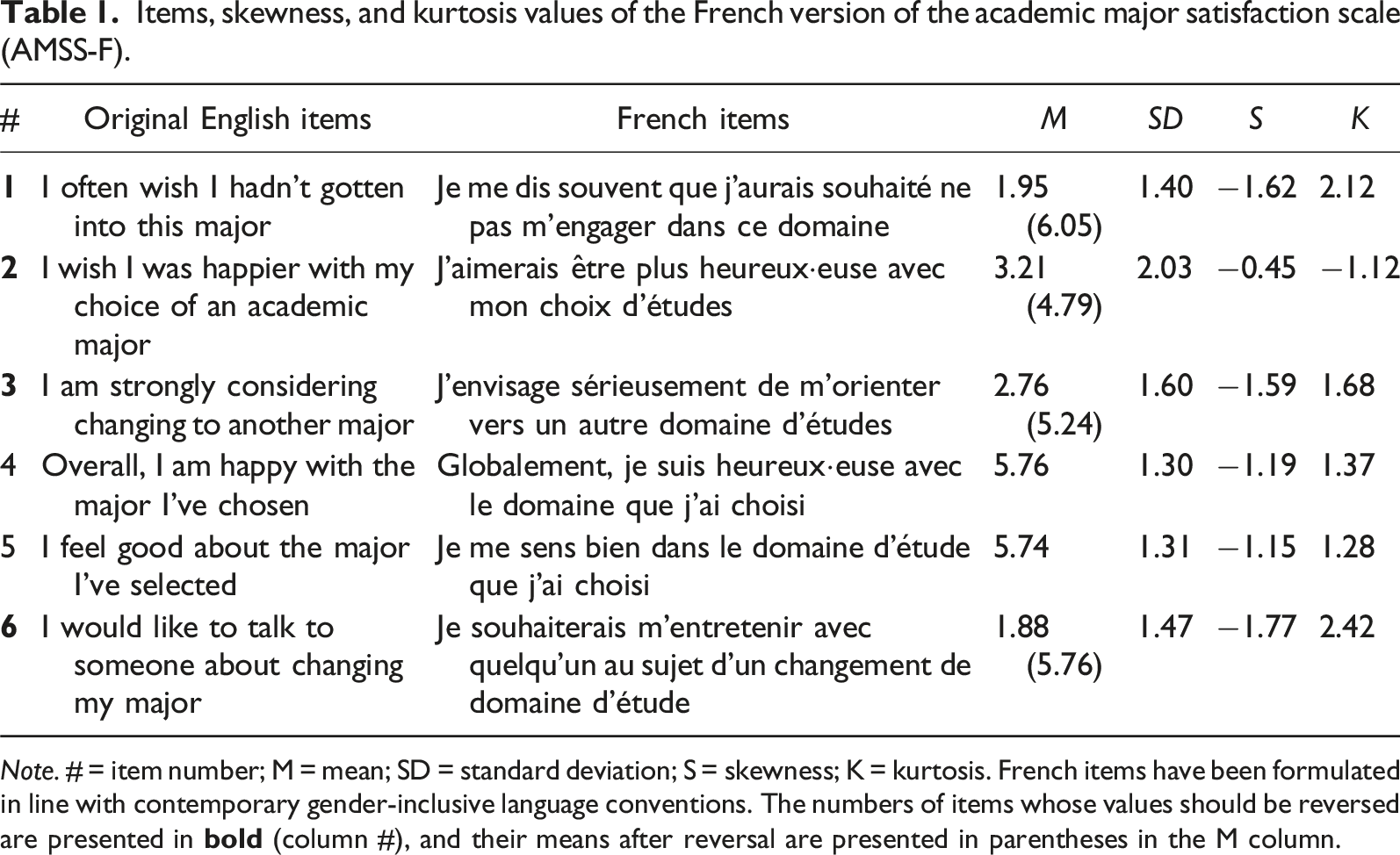
Note. # = item number; M = mean; SD = standard deviation; S = skewness; K = kurtosis. French items have been formulated in line with contemporary gender-inclusive language conventions. The numbers of items whose values should be reversed are presented in
Satisfaction of Autonomy, Competence, and Relatedness Needs
The satisfaction of three basic psychological needs in academic studies was assessed among bachelor’s students using the Balanced Measure of Psychological Needs (BMPN) developed by Sheldon and Hilpert (2012). Specifically, the BMPN consists of three subscales assessing the satisfaction of three fundamental psychological needs: autonomy, competence, and relatedness. In this study, we used a French adaptation of the BMPN, with each subscale comprising three items (items are presented in Supplemental Material A). Higher subscale scores indicate a greater satisfaction of autonomy, competence, and relatedness needs. French BMPN scores correlated in expected directions with school burnout, negative affect, and positive affect (Levin, Duffy et al., 2024). Moreover, Sheldon and Hilpert (2012) found the original BMPN to be a strong predictor of subjective well-being. Sheldon and Hilpert (2012) reported internal reliability estimates of .78, .79, and .78 for autonomy, competence, and relatedness, respectively. In the present study, reliability estimates were .68, .78, and .86.
Career Decision-Making Difficulties
Four subscales from the French version of CDP were used to assess four specific career decision-making difficulties among bachelor’s students (French version: Denault et al., 2019; original version: Jones & Lohmann, 1998). The subscales of self-clarity, knowledge about occupations, career choice importance, and decisiveness include three items each, with higher scores indicating greater difficulty. Jones and Lohmann (1998) reported evidence for the validity of the CDP subscales, linking self-clarity to identity achievement, knowledge about occupations to occupational information, career choice importance to career salience, and decisiveness to goal instability (see also Denault et al., 2019). Denault et al. (2019) reported internal reliability estimates of .83 and .80 for self-clarity and career choice importance (estimates for knowledge about occupations and decisiveness were not reported). In this study, reliability estimates were .82, .62, .64, and .88, for self-clarity, knowledge about occupations, career choice importance, and decisiveness, respectively.
Commitment Making to Studies
To assess master’s students’ commitment to their academic studies, the commitment-making subscale of the French version of the VISA was used (French version: Lannegrand-Willems et al., 2016; original version: Porfeli et al., 2011). Higher scores indicate a higher level of commitment. Lannegrand-Willems et al. (2016) validated the French VISA which replicated the six clusters of identity statuses identified in the original English version. Porfeli et al. (2011) found that more achieved and committed statuses predicted positive work valences and well-being among university students. An identical internal reliability estimate of .81 was reported by Lannegrand-Willems et al. (2016) and replicated in the present study.
Trait Anxiety and Self-Esteem
Two subscales from the validated 25-item French version of the Emotional and Personality-Related Career Decision-Making Difficulties questionnaire (EPCD) were used to measure trait anxiety and self-esteem among master’s students (French version; Rochat et al., 2024; original version; Saka et al., 2008). Rochat et al. (2024) validated the French EPCD in the Swiss context, which correlated in the expected direction with career indecision. Saka et al. (2008) supported the criterion validity of the EPCD by its ability to identify individuals seeking career counseling. Rochat et al. (2024) reported internal reliability estimates of .76 for general anxiety and .87 for self-esteem. In the present study, reliability estimates were of .81 and .84 respectively.
Transparency and Openness
We report all data exclusions, manipulations, and measures in the study. Data and supplemental materials are available at the following link; analysis codes and research materials are available by request from the first author. Data curation, normality analyses, structural and reliability analyses, and descriptive statistics were conducted and calculated in R. The design of the study and its analysis were not preregistered.
Results
Dimensionality
To test the fit of the hypothesized structure underlining the AMSS-F, with six items loading on one common factor (Model 6-1), we conducted confirmatory factor analyses (CFA) using the R package lavaan (Rosseel, 2012). To determine which estimator to use, we first inspected the skewness and kurtosis values for the AMSS-F items and found a substantial divergence from normality for several items (|K| or |S| > 1.50; see Table 1). Thus, because not all items were normally distributed, CFA was estimated using Robust Maximum Likelihood (MLR; Li, 2016). Interpretation of results relied on conventional indices of goodness-of-fit along with their corresponding thresholds (Hu & Bentler, 1999; Weston & Gore, 2006): the comparative fit index (CFI; ≥ .95 for good, ≥ .90 for acceptable), the root mean square error of approximation (RMSEA; ≤ .060 for good, ≤ .080 for acceptable), and the standardized root mean square residual (SRMR; ≤ .060 for good, ≤ .100 for acceptable).
The hypothesized AMSS-F Model 6-1 showed an acceptable fit, CFI = .95, SRMR = .050; however, a RMSEA value of .142 (95% CI [.107–.178]) indicated a poor fit. The inspection of modification indicators suggested the addition of a covariance between the error terms of item 3 (“I am strongly considering changing to another major”) and item 6 (“I would like to talk to someone about changing my major”). Based on this indication, a second modified Model 6-1 was tested with this covariance added, resulting in a good model fit: CFI = .99, RMSEA = .059, 95% CI [.005–.101], SRMR = .027. Thus, this modified Model 6-1 was retained and supported the unidimensional structure underlying the AMSS-F.
Measurement Invariance
To examine whether the AMSS-F functions equivalently across different groups of participants, we conducted three series of measurement analyses based on participants’ gender, academic level, and socioeconomic background. Specifically, each of the three differentiating background variables was divided into two categories: women versus men for gender, bachelor’s students versus master’s students for academic level, and participants with at least one parent with academic education versus those with no such parent for socioeconomic background. Multigroup Confirmatory Factor Analyses (MGCFA) were conducted using the R package lavaan (Rosseel, 2012). Analyses involved the stepwise assessment and comparison of three progressively constraining models: configural, metric, and scalar models. As the respective constraints were applied, changes in CFI and RMSEA fit indices were examined from configural to metric and from metric to scalar models. Changes in fit indices within the following thresholds support invariance: ΔCFI < .01, and ΔRMSEA < .015 or ΔSRMR < .030 for metric invariance, and ΔCFI < .01, and ΔRMSEA < .015 or ΔSRMR < .010 for scalar invariance (Chen, 2007).
Measurement invariance across genders, academic levels, and socioeconomic backgrounds.
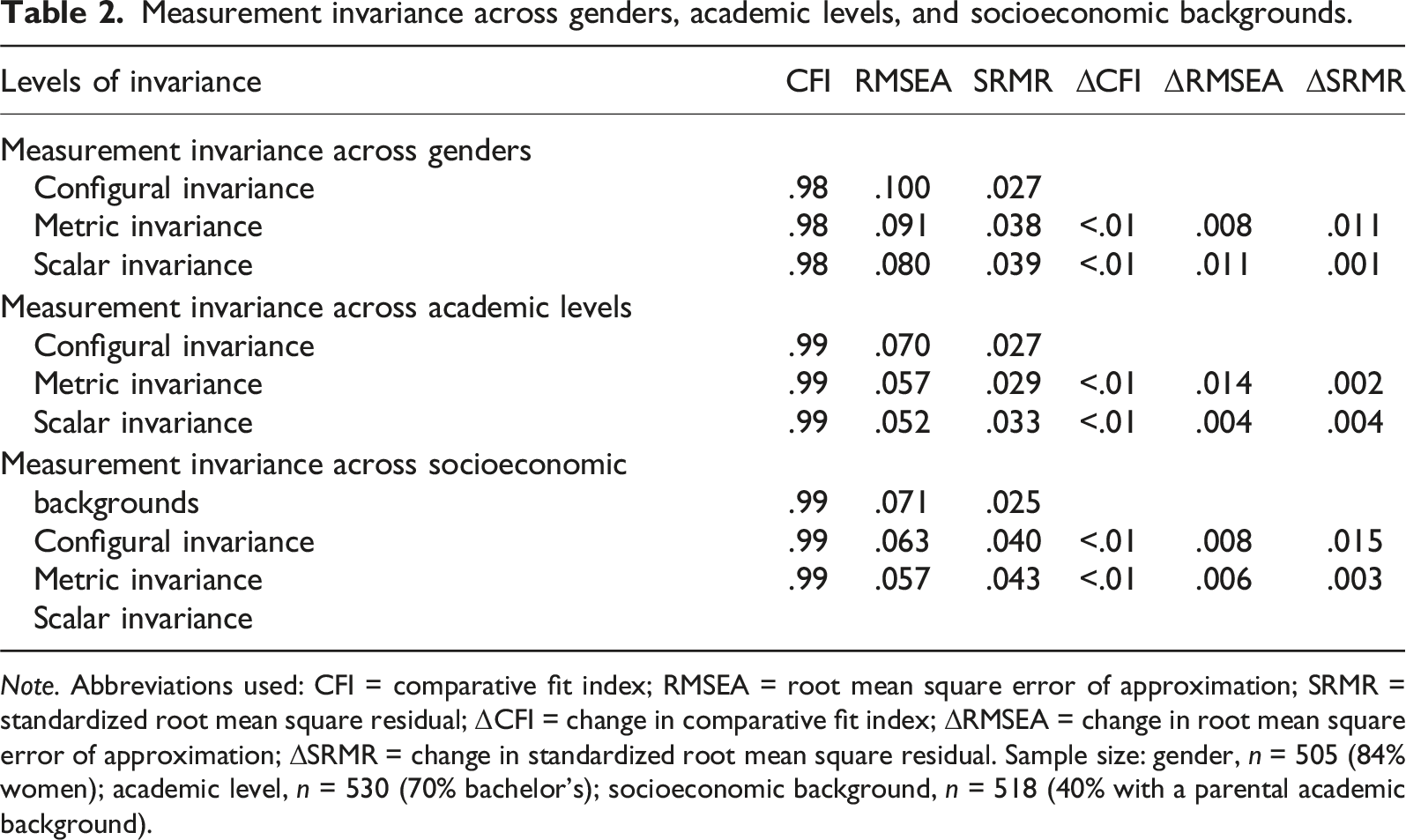
Note. Abbreviations used: CFI = comparative fit index; RMSEA = root mean square error of approximation; SRMR = standardized root mean square residual; ΔCFI = change in comparative fit index; ΔRMSEA = change in root mean square error of approximation; ΔSRMR = change in standardized root mean square residual. Sample size: gender, n = 505 (84% women); academic level, n = 530 (70% bachelor’s); socioeconomic background, n = 518 (40% with a parental academic background).
Convergent and Divergent Validity
Correlation analysis of variables among Bachelor’s students (n = 371).
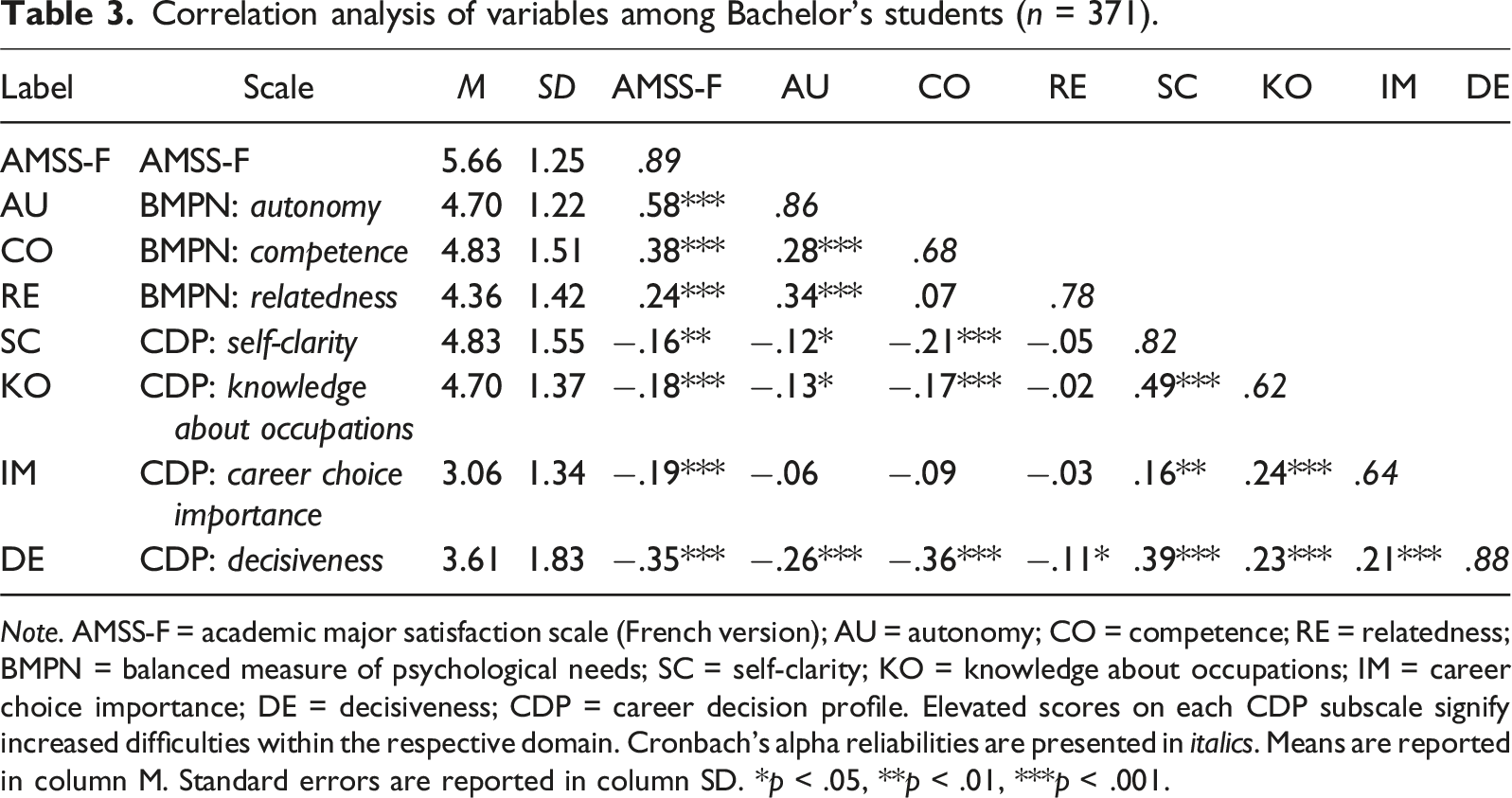
Note. AMSS-F = academic major satisfaction scale (French version); AU = autonomy; CO = competence; RE = relatedness; BMPN = balanced measure of psychological needs; SC = self-clarity; KO = knowledge about occupations; IM = career choice importance; DE = decisiveness; CDP = career decision profile. Elevated scores on each CDP subscale signify increased difficulties within the respective domain. Cronbach’s alpha reliabilities are presented in italics. Means are reported in column M. Standard errors are reported in column SD. *p < .05, **p < .01, ***p < .001.
Correlation analysis of variables among Master’s students (n = 159).
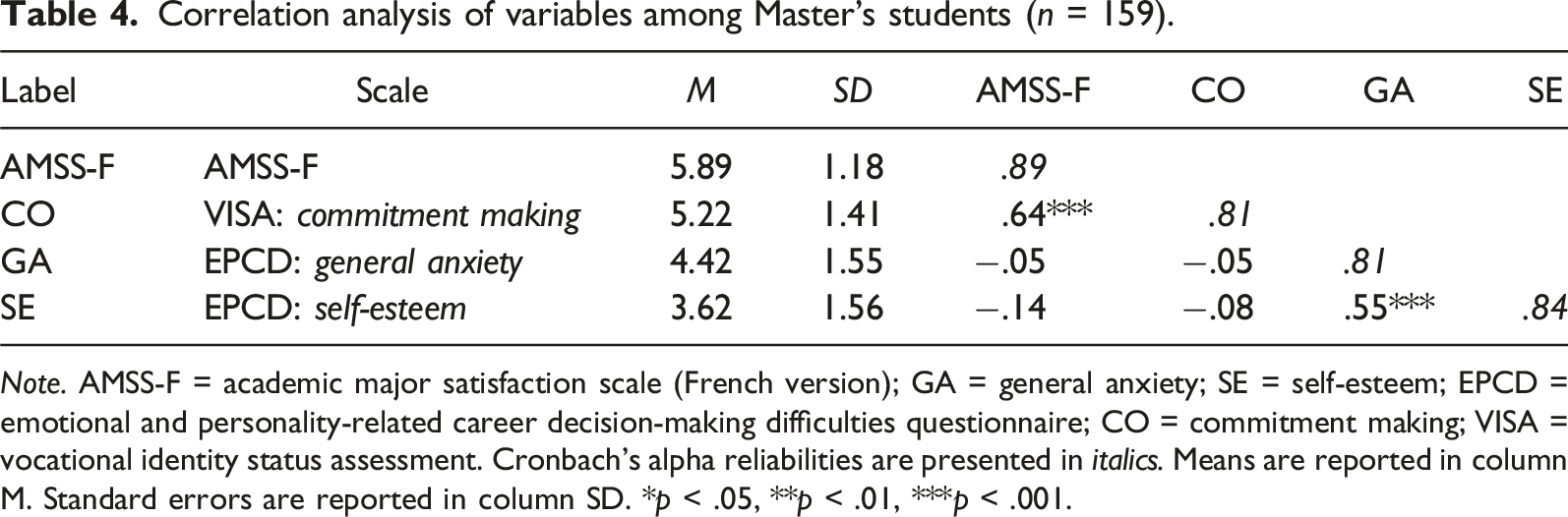
Note. AMSS-F = academic major satisfaction scale (French version); GA = general anxiety; SE = self-esteem; EPCD = emotional and personality-related career decision-making difficulties questionnaire; CO = commitment making; VISA = vocational identity status assessment. Cronbach’s alpha reliabilities are presented in italics. Means are reported in column M. Standard errors are reported in column SD. *p < .05, **p < .01, ***p < .001.
Supplemental Post Hoc Analyses
Following the recommendation of the review team, we conducted two additional series of post hoc analyses to further test and ensure the incremental adequacy of the 6-item composition of the AMSS-F. Rather than allowing the error terms of items 3 and 6 to covary (i.e., the modified Model 6-1), we tested two additional alternative models, in each of which one of these two items (i.e., item 3 or item 6) were excluded. The results of these analyses are detailed in Supplemental Material B, revealing that the two alternative models yielded a similar fit to the modified Model 6-1. We then calculated the correlation and paired sample t-tests between the AMSS-F scores that can be derived with either six or five items, revealing that the scores are practically identical (rs = .99; Cohen’s ds ≤ .06; see Supplemental Material B).
Given the minimal effect of removing one item, we further considered the incremental utility of the two 5-item models. Item 6 was found to be less semantically aligned with the core concept of academic satisfaction and less likely to capture meaningful variance due to a floor effect. Furthermore, the model that includes this item (i.e., Model 5-1a) yielded a mean score that was more different than the mean score derived from the modified Model 6-1, in comparison to the 5-item model excluding this item (i.e., Model 5-1b). Based on these findings, we concluded that Model 5-1b was more appropriate and tested its measurement invariance. As detailed in Supplemental Materials B and C, MGCFA revealed that the measurement of academic satisfaction based on Model 5-1b differs across genders and academic levels. In contrast, as the 6-item model reached measurement invariance across all compared groups, we concluded that the data supports its retention.
Discussion
The present study aimed to adapt and validate a French version of the Academic Major Satisfaction Scale (i.e., AMSS-F) among French-speaking university students. In doing so, this study provides further support for the cross-cultural generalizability of the AMSS, demonstrating that its structure holds among Swiss French-speaking students, in addition to other contexts such as Brazil, Korea, Turkey, and the USA (Erdoğan & Arsal, 2015; Nauta, 2007; Soares Silva et al., 2021; Sovet et al., 2014). Analyses supported the structural validity of the AMSS-F, confirming the hypothesized 6-item unidimensional structure, reliability, and measurement invariance of the AMSS-F across genders, academic levels, and socioeconomic backgrounds. Construct validity of the AMSS-F was supported in terms of convergent validity with satisfaction of basic psychological needs in studies and commitment making to studies. Moreover, construct validity was also supported in terms of divergent validity reflected in nonsignificant to small associations with various career decision-making difficulties and emotional dispositions.
Structural Validity of the AMSS-F
The structural validity of the AMSS-F was examined in terms of its dimensionality, internal reliability, and measurement invariance. Confirmatory factor analyses on the AMSS hypothesized 6-item one-factor model initially revealed inadequate fit, a finding that is, in fact, consistent with previous studies (Nauta, 2007; Sovet et al., 2014). Thus, a modified model that included a covariance between the error terms of two of the four negatively worded AMSS items was tested. This modified model yielded good fit indices, thereby supporting the unidimensional structure underlying the AMSS-F. Compared to our analytical decision, Nauta (2007) and Sovet et al. (2014) introduced multiple covariances between the error terms of the positively and negatively worded items to balance the composition of two positive items and four reverse-scored. As our proposed model is more parsimonious and resulted in a good fit, we did not proceed to test such an alternative model incorporating covariances between additional error terms. Additional post-hoc analyses compared the modified Model 6-1 with two 5-item models, with the results leading to favoring the modified Model 6-1.
Our results also supported the internal consistency and measurement invariance of the AMSS-F. The internal reliability estimate was found to be .89, consistent with the results on other linguistic versions of the scale (.90 in Nauta, 2007; .87 in Soares Silva et al., 2021; .87 in Sovet et al., 2014). For measurement invariance, the AMSS-F structure and the functioning of its scores emerged equivalent across genders, in line with previous findings (Soares Silva et al., 2021; Sovet et al., 2014). In addition, the present study also yielded evidence for the measurement invariance of the AMSS-F across academic levels and socioeconomic backgrounds. Verifying measurement invariance before comparing groups is considered a crucial step to ensure the comparability of obtained scores (Chen, 2008). Thus, our results of consistent measurement invariance of the AMSS-F among students of different academic degrees and varying socioeconomic backgrounds ensure that comparisons of scores are valid and meaningful across these groups. These findings confirm the adequacy of the AMSS in assessing academic satisfaction among first-generation college students (FGCS) in highly stratified educational systems such as the one in Switzerland. Since FGCS may experience their studies differently, our results justify comparing academic satisfaction levels using the AMSS between FGCS and other students (Ives & Castillo-Montoya, 2020; Pascarella et al., 2004).
The replication of previous findings on the internal structure of the AMSS-F (Nauta, 2007; Sovet et al., 2014) provides additional evidence of the cross-cultural validity of the AMSS. Cross-cultural generalizability aims to ensure that rather than be due to a lack of similarities in how academic satisfaction is measured, variations in observed scores across contexts are related to cross-cultural differences. Given the small variability across French dialects in French-speaking countries, we assume that the AMSS-F will function similarly in other countries such as France, Belgium, and Canada. Indeed, Levin et al. (2023) demonstrated that the CDDQ (assessing career indecision) is measurement invariant across Canada, France, and Switzerland. Similarly, the BPNWS (assessing satisfaction of basic psychological needs) was invariant across France and Canada (Brien et al., 2012).
Construct Validity of the AMSS-F
In the present study, we also aimed to revisit and confirm the construct validity of the AMSS. The convergent validity of the AMSS–intended to assess one’s satisfaction with academic studies–was assessed in previous studies based on its correlations with career decision self-efficacy, satisfaction with life, and positive affect (Nauta, 2007; Soares Silva et al., 2021; Sovet et al., 2014). However, these variables relate to individuals’ sense of confidence in the context of career decision-making (i.e., career decision self-efficacy) and general well-being (i.e., satisfaction with life and positive affect). Thus, to evaluate the convergent validity of the AMSS, a more direct evaluation of its associations with overlapping measures of satisfaction in the academic context was warranted. Accordingly, in the present study, we examined the associations of the AMSS with both multi- and unidimensional scales related to satisfaction with academic studies. Our results indicated that academic satisfaction was positively associated with the satisfaction of basic psychological needs in studies, particularly with the satisfaction of the need for autonomy. With Schenkenfelder et al. (2020) reporting similar results, these findings point out that the AMSS is particularly interrelated with the satisfaction of students’ sense of self-ownership and self-direction in their academic pursuits rather than with their sense of mastery and connectedness to others. Taken together, the replication of this finding supports the cross-cultural generalizability of predictors and outcomes of academic satisfaction.
Moreover, in the current study, a strong correlation was observed between the AMSS-F and commitment making to studies, the latter referring to the degree of certainty toward one’s chosen field of studies. Womack et al. (2018) reported similar findings showing that academic satisfaction as measured by a multidimensional questionnaire of major satisfaction (Strapp & Farr, 2010) is highly correlated to commitment with studies as assessed by an adaptation of Meyer et al. (1993) three-component (i.e., affective commitment, continuance commitment, and normative commitment) measure of career commitment. These results reveal, as expected, that higher AMSS scores reflect greater commitment to one’s chosen studies, consistent with Nauta’s (2007) findings on the AMSS predicting students’ persistence in their studies over two years. Altogether, these findings suggest that academic satisfaction may foster sustained engagement and long-term commitment to one’s studies.
In comparison, the divergent validity of the AMSS-F was demonstrated through negligible negative associations with the CDP subscales of self-clarity, knowledge about occupations, and career choice importance. These results are consistent with those of Nauta (2007) who reported nonsignificant correlations between the AMSS, on the one hand, and need for self-knowledge and need for career information (see also Pesch et al., 2018). However, the divergent validity of the AMSS was often demonstrated in previous studies based on the emergence of meaningful associations of the AMSS with only partially overlapping measures such as career choice anxiety, negative affect, and general indecisiveness (Nauta, 2007; Soares Silva et al., 2021; Sovet et al., 2014). For example, Nauta (2007) found that the association between the AMSS and general indecisiveness was moderate and negative (r = −.35), and suggested that this finding may indicate that students experiencing general indecisiveness may be less satisfied with their major because they are uncomfortable committing to any choice. In fact, this explanation is compatible with our finding on the strong associations between the AMSS-F and commitment making to studies.
Nevertheless, to have a more nuanced understanding of the association between academic satisfaction and general indecisiveness, in the present study, we included additional validating variables among master’s students to ensure that the AMSS-F does not overlap with broader measures of general affective dispositions, namely trait anxiety and self-esteem. Our results found no significant association between the AMSS and the two EPCD subscales of general anxiety and self-esteem. Given that previous studies reported meaningful associations of the AMSS with affective states (Nauta, 2007; Sovet et al., 2014), our findings may be interpreted as revealing that academic satisfaction is meaningfully associated with students’ general well-being, on the one hand, but is less likely to be related to affective dispositional traits, on the other. In revisiting Nauta’s (2007) explanation of the link between academic satisfaction and general indecisiveness, our findings may support a reverse causal hypothesis, according to which low academic satisfaction leads to a perception of being indecisive. Such an explanation is, in fact, better aligned with the results of previous studies showing that academic satisfaction is even more strongly correlated with career decision-making self-efficacy than with general indecisiveness (Jadidian & Duffy, 2012; Nauta, 2007; Sovet et al., 2014).
Limitations and Directions for Future Research
Before discussing the implications of this study, its limitations should be acknowledged. First, the sample characteristics of this study should be pointed out, which consisted exclusively of psychology students from one university located in the French-speaking part of Switzerland. This focus also covaries with a gender imbalance in the two analyzed subsamples, which is representative of the low proportion of men who study psychology. Although participants came from all cohorts and represent both the bachelor’s and master’s academic levels, future research should examine the functioning of the French version of the AMSS reported in the present study in additional contexts, including among students of other fields of studies, or among students from other types of higher education institutions (e.g., vocational colleges and universities of applied sciences). Additionally, while we assume that the AMSS-F would perform similarly in other French-speaking countries, this assumption may require further testing across diverse French-speaking cultural and national contexts. Moreover, future studies should test the impact of additional contextual factors on academic satisfaction on the functioning of AMSS-F scores, for example, by considering variables such as costs of studies or labor market conditions. In this regard, in the present study, participants’ socioeconomic background was solely determined based on their parental educational background. Future studies should use additional indicators of socioeconomic background (e.g., income, place of residence, perceived socioeconomic status) to further validate the results of the present study. Finally, the present study did not investigate the temporal evolution of academic satisfaction. From a short-term standpoint, test-retest reliability was not examined in this research. Future studies may include such analyses to further confirm the reliability of AMSS-F scores. Then, from a long-term perspective, the trajectory of academic satisfaction was not explored. Longitudinal studies could enhance our understanding of the AMSS and its language variants, in terms of temporal evolution and stability, as well as predictive validity concerning academic achievement and satisfaction with future careers.
Implications for Research and Practice
Assessing academic satisfaction using the AMSS and its different language variants can be done across diverse cultural and linguistic contexts, using a small number of items allowing a short and efficient administration. For research, the findings of the present study further support using the AMSS as an outcome in testing vocational theories seeking to identify the factors contributing to satisfying career decisions among students (e.g., Lent et al., 2015; Nerona, 2021). Similarly, in testing the effectiveness of career interventions, the AMSS can serve as an outcome variable reflective of an appropriate choice of studies and, therefore, as an indicator of intervention effectiveness. Additionally, the AMSS may help provide a deeper understanding of the predictors of academic satisfaction (e.g., McIlveen et al., 2013; Pesch et al., 2018). In this regard, the finding that the AMSS is more associated with the satisfaction of autonomy rather than competence and relatedness may suggest that self-ownership holds significant importance in the experience of satisfaction and could be a relevant component to cultivate among students and integrate into career interventions (Schenkenfelder et al., 2020).
For practice, our findings support using the AMSS-F as a screening measure to identify students who may be dissatisfied with their chosen current studies and thus benefit from targeted interventions. Early identification of unsatisfied students is critical as previous research has shown that low academic satisfaction is linked to decreased academic performance and elevated risk of dropout and psychological distress (McIlveen et al., 2013; Pesch et al., 2018; Scheunemann et al., 2022). The AMSS can be employed as a tool to monitor and evaluate students’ satisfaction at predetermined time points or as a complementary measure for identifying students at risk of dropout. Moreover, as academic satisfaction is suggested to predict subsequent career-related outcomes (Presti et al., 2022), the AMSS-F can be administered to screen academically unsatisfied students for relevant interventions aimed at preparing students for the school-to-work transition, as well as for monitoring the effects of such career interventions on participating students. Finally, the AMSS can help higher education institutes evaluate the quality of their programs in terms of student satisfaction. For example, when combined with detailed evaluations of satisfaction towards various academic aspects (e.g., quality of teaching, support from faculties), assessing overall satisfaction with academic studies can assist universities in identifying study programs whose students are, on average, less satisfied. Such indications of low satisfaction are likely to support addressing specific areas of concern, thereby fostering a more conducive academic environment.
Conclusion
The present study adapted and validated a French version of the Academic Major Satisfaction Scale (AMSS-F) among French-speaking university students from Switzerland. Our findings provided evidence for the cross-cultural generalizability of previous findings on the AMSS. Results supported the 6-item unidimensional structure, reliability, and measurement invariance of the AMSS-F across genders, academic levels, and socioeconomic backgrounds. In terms of convergent validity, the AMSS-F was strongly associated with the satisfaction of autonomy needs and commitment making to studies, as well as with the satisfaction of competence and relatedness needs. Divergent validity was demonstrated through negative and weaker associations with multiple career decision-making difficulties, as well as trait anxiety and self-esteem. The AMSS-F, as a reliable and valid instrument for measuring academic satisfaction, can be used in research as an outcome or predictor measure and, in practice, as a screening instrument for identifying dissatisfied students or as a quality indicator of study and training programs.
Supplemental Material
Supplemental Material - The French Version of the Academic Major Satisfaction Scale: Structural, Convergent, and Divergent Validity
Supplemental Material for The French Version of the Academic Major Satisfaction Scale: Structural, Convergent, and Divergent Validity by Anne-Céline Christen, André Borges, Koorosh Massoudi, Fabrizio Butera, and Nimrod Levin in Journal of Career Assessment.
Footnotes
Acknowledgments
We thank Lukas Brülisauer and Tanya Wildi for their comments on earlier versions of this paper, and Nicolas Lafaye, Elena Tella, and Marie Vaccaro for their involvement in data collection. The reported study was not pre-registered.
Declaration of Conflicting Interests
The author(s) declared no potential conflicts of interest with respect to the research, authorship, and/or publication of this article.
Funding
The author(s) received no financial support for the research, authorship, and/or publication of this article.

Supplemental Material
Note
References
Supplementary Material
Please find the following supplemental material available below.
For Open Access articles published under a Creative Commons License, all supplemental material carries the same license as the article it is associated with.
For non-Open Access articles published, all supplemental material carries a non-exclusive license, and permission requests for re-use of supplemental material or any part of supplemental material shall be sent directly to the copyright owner as specified in the copyright notice associated with the article.
